

Cryptic pocket formation underlies allosteric modulator selectivity at muscarinic GPCRs
Open accessThe DOI matches its Crossref record; 65 of the 65 references it cites were found in a registry or an index.
Abstract
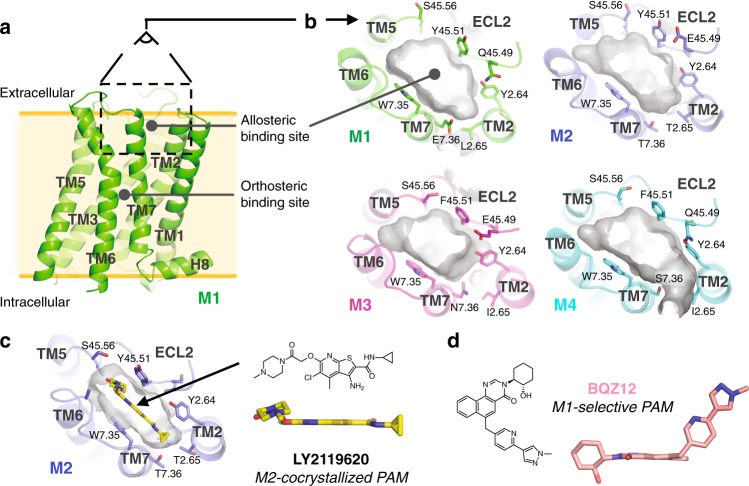
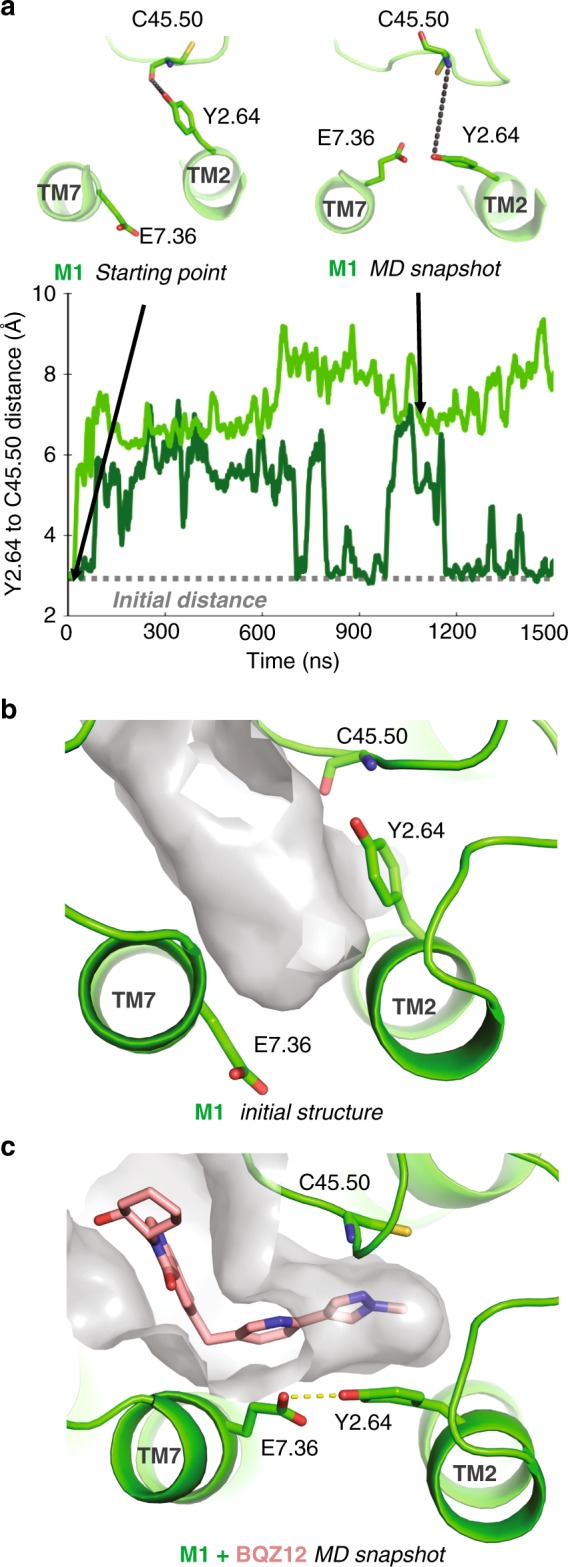
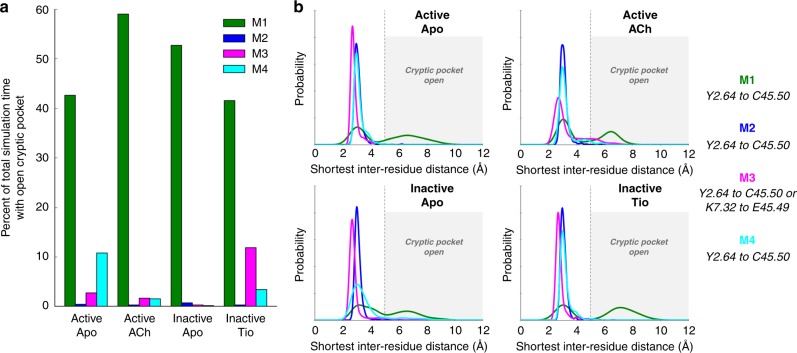
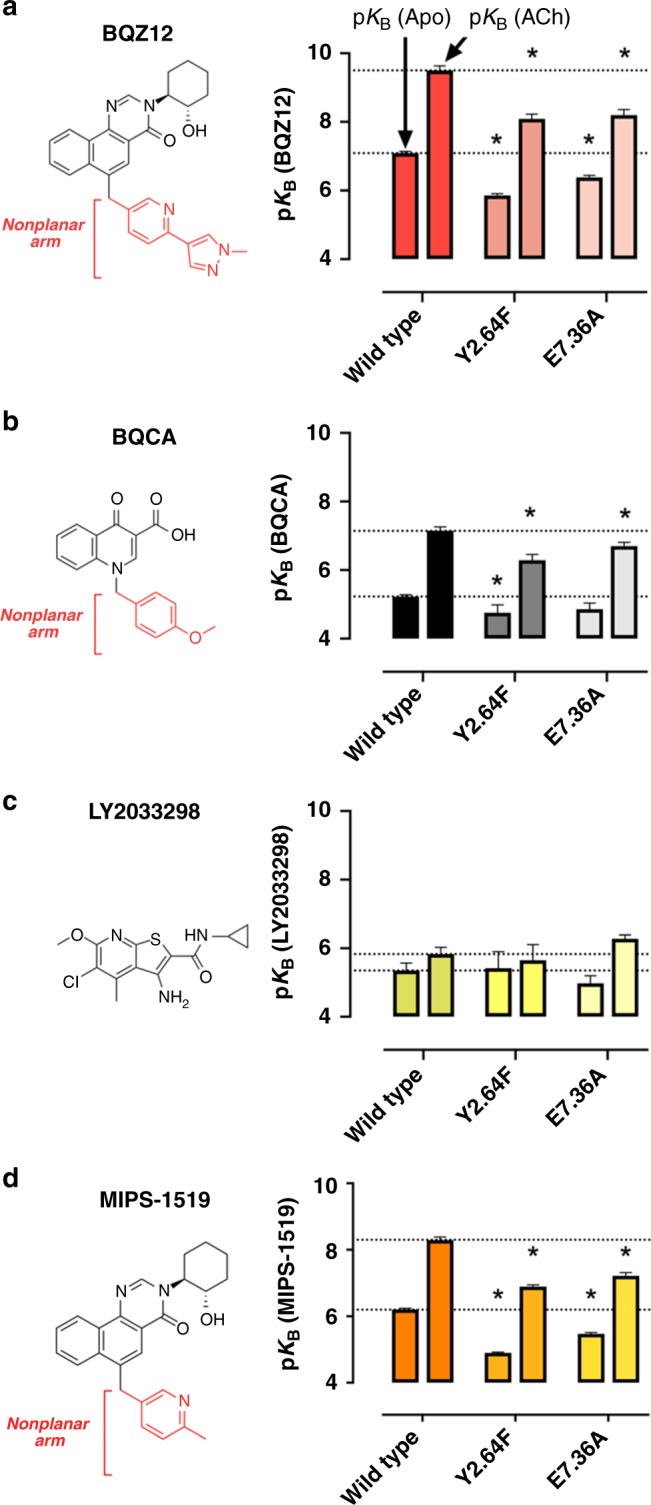
Allosteric modulators are highly desirable as drugs, particularly for G-protein-coupled receptor (GPCR) targets, because allosteric drugs can achieve selectivity between closely related receptors. The mechanisms by which allosteric modulators achieve selectivity remain elusive, however, particularly given recent structures that reveal similar allosteric binding sites across receptors. Here we show that positive allosteric modulators (PAMs) of the M1 muscarinic acetylcholine receptor (mAChR) achieve exquisite selectivity by occupying a dynamic pocket absent in existing crystal structures. This cryptic pocket forms far more frequently in molecular dynamics simulations of the M1 mAChR than in those of other mAChRs. These observations reconcile mutagenesis data that previously appeared contradictory. Further mutagenesis experiments validate our prediction that preventing cryptic pocket opening decreases the affinity of M1-selective PAMs. Our findings suggest opportunities for the design of subtype-specific drugs exploiting cryptic pockets that open in certain receptors but not in other receptors with nearly identical static structures.
Overview
The claims and statistics of this paper haven’t been checked yet.
Free: it reads the open-access text and checks the first 5 claims that cite a source we can check. Create a free account to check every claim.
Integrity signals
Registry
Cites
Statistics
Figures
Verification
Claims the paper makes
The claims and statistics of this paper haven’t been checked yet.
Free: it reads the open-access text and checks the first 5 claims that cite a source we can check. Create a free account to check every claim.
Claims other papers make about this one
Each is checked against this paper’s own text: does it say what the citing paper says it does?
The source backs part of the claim, not all of it — or backs it for a different population, condition or comparison.
In the citing paper
“Compared to orthosteric sites, allosteric sites often have lower conservation and greater diversity,549 providing new avenues for drug development targeting highly homologous subtypes, such as nAChR and mAChR.”
From Recent advances in Alzheimer's disease: Mechanisms, clinical trials and new drug development strategies. (2024) · cites this paper as [549]
Experimental — accuracy not yet measured
Self-check
Percentages, sums and reported differences re-computed from the paper’s own numbers.
The self-check needs the paper’s full text.
Citations
Cites
VMD: visual molecular dynamics
Humphrey, W., Dalke, A., & Schulten, K. (1996) · Journal of Molecular Graphics · doi:10.1016/0263-7855(96)00018-5 · Cited by 66,952
All-Atom Empirical Potential for Molecular Modeling and Dynamics Studies of Proteins
MacKerell, A. D., Bashford, D., Bellott, M., Dunbrack, R. L., Evanseck, J. D., Field, M. J., Fischer, S., Gao, J., Guo, H., Ha, S., et al. (1998) · The Journal of Physical Chemistry B · doi:10.1021/jp973084f · Cited by 14,311
Vanommeslaeghe, K., Hatcher, E., Acharya, C., Kundu, S., Zhong, S., Shim, J., Darian, E., Guvench, O., Lopes, P., Vorobyov, I., et al. (2010) · Journal of Computational Chemistry · doi:10.1002/jcc.21367 · Cited by 7,509
PTRAJ and CPPTRAJ: Software for Processing and Analysis of Molecular Dynamics Trajectory Data
Roe, D. R., & Cheatham, T. E. (2013) · Journal of Chemical Theory and Computation · doi:10.1021/ct400341p · Cited by 7,382
Best, R. B., Zhu, X., Shim, J., Lopes, P. E. M., Mittal, J., Feig, M., & MacKerell, A. D. (2012) · Journal of Chemical Theory and Computation · doi:10.1021/ct300400x · Cited by 4,532
Update of the CHARMM All-Atom Additive Force Field for Lipids: Validation on Six Lipid Types
Klauda, J. B., Venable, R. M., Freites, J. A., O’Connor, J. W., Tobias, D. J., Mondragon-Ramirez, C., Vorobyov, I., MacKerell, A. D., & Pastor, R. W. (2010) · The Journal of Physical Chemistry B · doi:10.1021/jp101759q · Cited by 4,501
CHARMM36 all-atom additive protein force field: Validation based on comparison to NMR data
Huang, J., & MacKerell, A. D. (2013) · Journal of Computational Chemistry · doi:10.1002/jcc.23354 · Cited by 4,430
Salomon-Ferrer, R., Götz, A. W., Poole, D., Le Grand, S., & Walker, R. C. (2013) · Journal of Chemical Theory and Computation · doi:10.1021/ct400314y · Cited by 3,372
Molecular Dynamics Simulation for All
Hollingsworth, S. A., & Dror, R. O. (2018) · Neuron · doi:10.1016/j.neuron.2018.08.011 · Cited by 3,257
Self-citationCrystal structure of the β2 adrenergic receptor–Gs protein complex
Rasmussen, S. G. F., DeVree, B. T., Zou, Y., Kruse, A. C., Chung, K. Y., Kobilka, T. S., Thian, F. S., Chae, P. S., Pardon, E., Calinski, D., et al. (2011) · Nature · doi:10.1038/nature10361 · Cited by 3,009
Cited by
Zhang, J., Zhang, Y., Wang, J., Xia, Y., Zhang, J., & Chen, L. (2024) · Signal Transduction and Targeted Therapy · doi:10.1038/s41392-024-01911-3 · Cited by 1,138
“548 Compared to orthosteric sites, allosteric sites often have lower conservation and greater diversity, 549 providing new avenues for drug development targeting highly homologous subtypes, such as nAChR and mAChR.”
BackgroundCommon activation mechanism of class A GPCRs
Zhou, Q., Yang, D., Wu, M., Guo, Y., Guo, W., Zhong, L., Cai, X., Dai, A., Jang, W., Shakhnovich, E. I., et al. (2019) · eLife · doi:10.7554/elife.50279 · Cited by 632
G protein-coupled receptors (GPCRs): advances in structures, mechanisms and drug discovery
Zhang, M., Chen, T., Lu, X., Lan, X., Chen, Z., & Lu, S. (2024) · Signal Transduction and Targeted Therapy · doi:10.1038/s41392-024-01803-6 · Cited by 491
Meller, A., Ward, M., Borowsky, J., Kshirsagar, M., Lotthammer, J. M., Oviedo, F., Ferres, J. L., & Bowman, G. R. (2023) · Nature Communications · doi:10.1038/s41467-023-36699-3 · Cited by 186
Lazim, R., Suh, D., & Choi, S. (2020) · International Journal of Molecular Sciences · doi:10.3390/ijms21176339 · Cited by 185
PI3K inhibitors: review and new strategies
Zhang, M., Jang, H., & Nussinov, R. (2020) · Chemical Science · doi:10.1039/d0sc01676d · Cited by 178
Muscarinic Acetylcholine Receptor Agonists as Novel Treatments for Schizophrenia
Paul, S. M., Yohn, S. E., Popiolek, M., Miller, A., & Felder, C. C. (2022) · American Journal of Psychiatry · doi:10.1176/appi.ajp.21101083 · Cited by 167
Self-citationRole of artificial intelligence in revolutionizing drug discovery
Rehman, A. U., Li, M., Wu, B., Ali, Y., Rasheed, S., Shaheen, S., Liu, X., Luo, R., & Zhang, J. (2024) · Fundamental Research · doi:10.1016/j.fmre.2024.04.021 · Cited by 209
“Cryptic pockets can target undruggable proteins [ 79 ].”
Ni, D., Wei, J., He, X., Rehman, A. U., Li, X., Qiu, Y., Pu, J., Lu, S., & Zhang, J. (2021) · Chemical Science · doi:10.1039/d0sc05131d · Cited by 147
Accelerating Cryptic Pocket Discovery Using AlphaFold
Meller, A., Bhakat, S., Solieva, S., & Bowman, G. R. (2023) · Journal of Chemical Theory and Computation · doi:10.1021/acs.jctc.2c01189 · Cited by 128
Functional dynamics of G protein-coupled receptors reveal new routes for drug discovery
Conflitti, P., Lyman, E. R., Sansom, M. S. P., Hildebrand, P. W., Gutiérrez‐de‐Terán, H., Carloni, P., Ansell, T. B., Yuan, S., Barth, P., Robinson, A. S., et al. (2025) · Nature Reviews Drug Discovery · doi:10.1038/s41573-024-01083-3 · Cited by 120
“Muscarinic acetylcholine receptors (mAChRs) are classified into five subtypes (M 1 to M 5 ), which have key roles in the central and peripheral nervous systems 45,173,174 .”
InfluentialExtraction of protein dynamics information from cryo-EM maps using deep learning
Matsumoto, S., Ishida, S., Araki, M., Kato, T., Terayama, K., & Okuno, Y. (2021) · Nature Machine Intelligence · doi:10.1038/s42256-020-00290-y · Cited by 78
Computer-Aided Drug Discovery for Undruggable Targets
Sun, Q., Wang, H., Xie, J., Wang, L., Mu, J., Li, J., Ren, Y., & Lai, L. (2025) · Chemical Reviews · doi:10.1021/acs.chemrev.4c00969 · Cited by 83
Along the allostery stream: Recent advances in computational methods for allosteric drug discovery
Ni, D., Chai, Z., Wang, Y., Li, M., Yu, Z., Liu, Y., Lu, S., & Zhang, J. (2022) · WIREs Computational Molecular Science · doi:10.1002/wcms.1585 · Cited by 68
“…MD simulations and conformational landscape analysis, researchers characterized the dynamic ensembles of several critical protein targets, such as β -lactamase 164,173 and M1 muscarinic acetylcholine receptor, 216 and successfully revealed their cryptic allosteric sites and their modulators.”
BackgroundUncovering patterns of atomic interactions in static and dynamic structures of proteinsPreprint
Venkatakrishnan, A., Fonseca, R., Ma, A. K., Hollingsworth, S. A., Chemparathy, A., Hilger, D., Kooistra, A. J., Ahmari, R., Babu, M. M., Kobilka, B. K., et al. (2019) · bioRxiv (Cold Spring Harbor Laboratory) · doi:10.1101/840694 · Cited by 72
“Different conformations of the allosteric binding site can play key roles in determining subtype selectivity, as shown in our recent study (Hollingsworth et al. 2019) .”
ResultSelf-citationStructural basis of efficacy-driven ligand selectivity at GPCRs
Powers, A. S., Pham, V., Burger, W. A. C., Thompson, G. V., Laloudakis, Y. D., Barnes, N. W., Sexton, P. M., Paul, S. M., Christopoulos, A., Thal, D. M., et al. (2023) · Nature Chemical Biology · doi:10.1038/s41589-022-01247-5 · Cited by 58
Self-citationStructure and selectivity engineering of the M 1 muscarinic receptor toxin complex
Maeda, S., Xu, J., Kadji, F. M. N., Clark, M. J., Zhao, J., Tsutsumi, N., Aoki, J., Sunahara, R. K., Inoue, A., García, K. C., et al. (2020) · Science · doi:10.1126/science.aax2517 · Cited by 62
Current Advances in Allosteric Modulation of Muscarinic Receptors
Jakubik, J., & El-Fakahany, E. E. (2020) · Biomolecules · doi:10.3390/biom10020325 · Cited by 48
“A cryptic allosteric binding pocket in the extr cellular domain that is absent in isting cry tal structures has been predicted by simulation of molecular dynamics a d confirmed by mutagenesis experi ents [31].”
BackgroundMethodLopez‐Balastegui, M., Stępniewski, T. M., Kogut, M. M., Pizio, A. D., ROSENKILDE, M. M., Mao, J., & Selent, J. (2024) · British Journal of Pharmacology · doi:10.1111/bph.16495 · Cited by 51
“Crystal structures of the acetylcholine receptor subtypes M 1 , M 2 , M 3 and M 4 show that these receptors have largely identical orthosteric cavities and also a very similar allosteric pocket above the orthosteric binding site (Hollingsworth et al., 2019).”
Opening of a cryptic pocket in β-lactamase increases penicillinase activity
Knoverek, C. R., Mallimadugula, U. L., Singh, S., Rennella, E., Frederick, T. E., Yuwen, T., Raavicharla, S., Kay, L. E., & Bowman, G. R. (2021) · Proceedings of the National Academy of Sciences · doi:10.1073/pnas.2106473118 · Cited by 54
A Supervised Molecular Dynamics Approach to Unbiased Ligand–Protein Unbinding
Deganutti, G., Moro, S., & Reynolds, C. A. (2020) · Journal of Chemical Information and Modeling · doi:10.1021/acs.jcim.9b01094 · Cited by 37
Are insect GPCRs ideal next‐generation pesticides: opportunities and challenges
İyison, N. B., Shahraki, A., Kahveci, K., Düzgün, M. B., & Gün, G. (2021) · FEBS Journal · doi:10.1111/febs.15708 · Cited by 39
Chen, X., Wang, K., Chen, J., Wu, C., Mao, J., Song, Y., Liu, Y., Shao, Z., & Pu, X. (2024) · Nature Communications · doi:10.1038/s41467-024-52399-y · Cited by 35
“This is part of the Nature Communications initiative to facilitate training in peer review and to provide appropriate recognition for Early Career Researchers who co-review manuscripts.”
Meller, A., Lotthammer, J. M., Smith, L. G., Novak, B., Lee, L. A., Kuhn, C. C., Greenberg, L., Leinwand, L. A., Greenberg, M. J., & Bowman, G. R. (2023) · eLife · doi:10.7554/elife.83602 · Cited by 34
“open in excited structural states explored in solution (Zimmerman et al., 2021; Kuzmanic et al., 2020; Bowman et al., 2015; Porter et al., 2019a; Hollingsworth et al., 2019).”
BackgroundA small-molecule activation mechanism that directly opens the KCNQ2 channel
Zhang, S.-Y., Ma, D., Wang, K., Li, Y., Yang, Z., Li, X., Li, J., He, J., Mei, L., Ye, Y., et al. (2024) · Nature Chemical Biology · doi:10.1038/s41589-023-01515-y · Cited by 37
“For instance, the microenvironment within the binding pockets 55 and conformational dynamics 56 , along with distal residues 57 , may influence ligand binding and contribute to selectivity.”
Delineating the Ligand–Receptor Interactions That Lead to Biased Signaling at the μ-Opioid Receptor
Kelly, B., Hollingsworth, S. A., Blakemore, D. C., Owen, R. M., Storer, R. I., Swain, N. A., Aydın, D., Torella, R., Warmus, J. S., & Dror, R. O. (2021) · Journal of Chemical Information and Modeling · doi:10.1021/acs.jcim.1c00585 · Cited by 30
Self-citationDesigning Molecular Spanners to Throw in the Protein Networks
Serapian, S. A., & Colombo, G. (2020) · Chemistry - A European Journal · doi:10.1002/chem.201904523 · Cited by 29
Meller, A., de Oliveira, S. H. P., Davtyan, A., Abramyan, T. M., Bowman, G. R., & van den Bedem, H. (2023) · Frontiers in Molecular Biosciences · doi:10.3389/fmolb.2023.1171143 · Cited by 33
“Next, inspired by recent success in capturing cryptic pocket formation in molecular dynamics simulations, (Hollingsworth et al., 2019; Sztain et al., 2021; Zimmerman et al., 2021; Cruz et al., 2022; Meller et al., 2023b; Meller et al., 2023c), we tested whether simulations launched from the AF structure could reveal c…”
A non-canonical mechanism of GPCR activation
Powers, A. S., Khan, A. A., Paggi, J. M., Latorraca, N. R., Souza, S., Salvo, J. D., Lu, J., Soisson, S. M., Johnston, J. M., Weinglass, A. B., et al. (2024) · Nature Communications · doi:10.1038/s41467-024-54103-6 · Cited by 26
Self-citationNorstictic Acid Is a Selective Allosteric Transcriptional Regulator
Garlick, J. M., Sturlis, S. M., Bruno, P. A., Yates, J. A., Peiffer, A. L., Liu, Y., Goo, L., Bao, L., Salle, S. N. D., Tamayo‐Castillo, G., et al. (2021) · Journal of the American Chemical Society · doi:10.1021/jacs.1c03258 · Cited by 31
Allosteric Effect of Nanobody Binding on Ligand-Specific Active States of the β2 Adrenergic Receptor
Chen, Y., Fleetwood, O., Pérez-Conesa, S., & Delemotte, L. (2021) · Journal of Chemical Information and Modeling · doi:10.1021/acs.jcim.1c00826 · Cited by 24
Entropy drives the ligand recognition in G-protein-coupled receptor subtypes
Yang, X., Zhou, P., Shen, S., Hu, Q., Tian, C., Xia, A., Wang, Y., Yang, Z., Nan, J., Zhou, Y., et al. (2024) · Proceedings of the National Academy of Sciences · doi:10.1073/pnas.2401091121 · Cited by 24
Targeting adhesion G protein-coupled receptors. Current status and future perspectives
Ließmann, F., von Bredow, L., Meiler, J., & Liebscher, I. (2024) · Structure · doi:10.1016/j.str.2024.10.022 · Cited by 21
Jia, L., Li, S., Dai, W., Guo, L., Xu, Z., Scott, A. M., Zhang, Z., Ren, J., Zhang, Q., Dexheimer, T. S., et al. (2021) · Journal of Biological Chemistry · doi:10.1016/j.jbc.2021.101268 · Cited by 19
“Likewise, a similar hydrogen bond is well maintained in all of the available crystal structures of activated muscarinic acetylcholine receptors (mAChRs), serving as a cryptic pocket for mAChR ligands (43).”
BackgroundMeller, A., Kelly, D. G., Smith, L. G., & Bowman, G. R. (2024) · Protein Science · doi:10.1002/pro.4902 · Cited by 18
“Hollingsworth et al. ( 2019) demonstrated that cryptic pocket opening occurs with a much higher probability in the sensitive receptor.”
BackgroundShenol, A., Tenente, R., Lückmann, M., Frimurer, T. M., & Schwartz, T. W. (2024) · Nature Communications · doi:10.1038/s41467-024-49536-y · Cited by 18
Mattheisen, J. M., Limberakis, C., Ruggeri, R. B., Dowling, M., Ende, C. W. A., Ceraudo, E., Huber, T., McClendon, C. L., & Sakmar, T. P. (2023) · Journal of the American Chemical Society · doi:10.1021/jacs.3c00972 · Cited by 17
Huang, J., Tang, G. Q., Liu, N., Li, X., & Lu, S. (2025) · Drug Discovery Today · doi:10.1016/j.drudis.2025.104466 · Cited by 18
Hidden allosteric sites and De-Novo drug design
Rehman, A. U., Lu, S., Khan, A. A., Khurshid, B., Rasheed, S., Wadood, A., & Zhang, J. (2021) · Expert Opinion on Drug Discovery · doi:10.1080/17460441.2022.2017876 · Cited by 18
“Dror group [119] has carried out large-scale MD”
BackgroundUnmasking allosteric-binding sites: novel targets for GPCR drug discovery
Casadó-Anguera, V., & Casadó, V. (2022) · Expert Opinion on Drug Discovery · doi:10.1080/17460441.2022.2085684 · Cited by 18
“drugs targeting cryptic pockets that are open in certain receptor subtypes but closed in others with almost identical static structures [33].”
BackgroundMeller, A., Ward, M. D., Borowsky, J. H., Lotthammer, J. M., Kshirsagar, M., Oviedo, F., Ferres, J. L., & Bowman, G. R. (2022) · bioRxiv (Cold Spring Harbor Laboratory) · doi:10.1101/2022.06.28.497399 · Cited by 16
Design of rigid protein–protein interaction inhibitors enables targeting of undruggable Mcl-1
Hargreaves, D., Carbajo, R. J., Bodnarchuk, M. S., Embrey, K. J., Rawlins, P. B., Packer, M., Degorce, S. L., Hird, A. W., Johannes, J. W., Chiarparin, E., et al. (2023) · Proceedings of the National Academy of Sciences · doi:10.1073/pnas.2221967120 · Cited by 15
“…adjacent pocket in the PPI target interleukin-2 (IL-2), an induced allosteric pocket in the protein kinase P38 MAPK, an induced ligand channel in nonspecific lipid transfer protein (ns-LTP), and a positive allosteric modulator pocket in the GPCR M1 muscarinic acetylcholine receptor (27, 28).”
BackgroundM1/M4 receptors as potential therapeutic treatments for schizophrenia: A comprehensive study
Fu, L., Luo, Y., Niu, L., Lin, Y., Chen, X., Zhang, J., Tang, W., Chen, Y., & Jiao, Y. (2024) · Bioorganic & Medicinal Chemistry · doi:10.1016/j.bmc.2024.117728 · Cited by 13
The Discovery of Cryptic Pockets Increases the Druggability of “Undruggable” Proteins
Mou, M., Yang, W., Huang, G., Yang, X., Zhang, X. L., Kandegama, W., Ashby, C. R., Hao, G., & Gao, Y. (2025) · Medicinal Research Reviews · doi:10.1002/med.70001 · Cited by 15
“The presence of cryptic pockets in the M1 muscarinic receptor, using MD simulation and mutagenesis, was identified between extracellular loop 2 (ECL2), TM2, TM6, and TM7, and in the rearranged during transfection (RET) kinase (K758, L760, E768, and L772) [116, 117].”
Benabderrahmane, M. B., Bureau, R., Voisin‐Chiret, A. S., & Santos, J. S. O. (2021) · Journal of Chemical Information and Modeling · doi:10.1021/acs.jcim.1c00660 · Cited by 12
Chan, W. K. B., Carlson, H. A., & Traynor, J. R. (2023) · Molecular Pharmacology · doi:10.1124/molpharm.122.000612 · Cited by 12
Verkhivker, G. M., Alshahrani, M., & Gupta, G. (2023) · Viruses · doi:10.3390/v15102009 · Cited by 12
“For example, the positive allosteric modulators (PAMs) of the M1 muscarinic acetylcholine receptor (mAChR) showed exquisite selectivity by occupying a dynamic pocket which was absent in existing crystal structures but revealed in MD simulations [72].”
BackgroundMontejo-López, W., Sampieri-Cabrera, R., Nicolás‐Vázquez, M. I., Aceves-Hernández, J. M., & Razo‐Hernández, R. S. (2024) · RSC Advances · doi:10.1039/d3ra07380g · Cited by 11
“77,78 The reduced e ffi cacy of 77-LH-28-1 in TM2 mutants indicates that this region is required for M1-AChR activation, suggesting a di ff erent role for TM2 in bitopic ligand e ffi cacy compared to orthosteric ligands.”
Coquille, S., Pereira, C. S., Roche, J., Santoni, G., Engilberge, S., Brochier‐Armanet, C., Girard, É., Sterpone, F., & Madern, D. (2025) · Molecular Biology and Evolution · doi:10.1093/molbev/msae265 · Cited by 8
Cong, X., Zhang, X., Liang, X., He, X., Tang, Y., Zheng, X., Lu, S., Zhang, J., & Chen, T. (2022) · Computational and Structural Biotechnology Journal · doi:10.1016/j.csbj.2022.05.012 · Cited by 9
“The components of bilayers have been commonly used in other simulations[27,46–48].”
MethodMolecular basis of ligand binding and receptor activation at the human A3 adenosine receptor
Zhang, L., Mobbs, J. I., Bennetts, F. M., Venugopal, H., Nguyen, A. T. N., Christopoulos, A., van der Es, D., Heitman, L. H., May, L. T., Glukhova, A., et al. (2025) · Nature Communications · doi:10.1038/s41467-025-62872-x · Cited by 13
Self-citationAderibigbe, A. O., Pandey, P., & Doerksen, R. J. (2021) · Journal of Biomolecular Structure and Dynamics · doi:10.1080/07391102.2021.1873187 · Cited by 8
“The formation of a cryptic pocket has been proposed to be responsible for the receptor subtype selectivity exhibited by allosteric modulators at the muscarinic receptors (Hollingsworth et al., 2019).”
BackgroundUnravelling the mechanism of neurotensin recognition by neurotensin receptor 1
Asadollahi, K., Rajput, S., de Zhang, L. A., Ang, C., Nie, S., Williamson, N. A., Griffin, M. D. W., Bathgate, R. A. D., Scott, D. J., Weikl, T. R., et al. (2023) · Nature Communications · doi:10.1038/s41467-023-44010-7 · Cited by 7
Photo‐BQCA: Positive Allosteric Modulators Enabling Optical Control of the M 1 Receptor
Gerwe, H., Schaller, E., Sortino, R., Opar, E., Martínez‐Tambella, J., Bermúdez, M., Lane, J. R., Gorostiza, P., & Decker, M. W. (2024) · Angewandte Chemie International Edition · doi:10.1002/anie.202411438 · Cited by 7
CryptoBank: A resource for the identification and prediction of cryptic sites in proteins
Martinez, P. F., Fröhlking, T., Borsatto, A., Oleinikovas, V., Kuzmanic, A., & Gervasio, F. L. (2026) · Science Advances · doi:10.1126/sciadv.ady6364 · Cited by 12
López-Serrano, A. L., Jesus-Perez, J. J. D., Zamora-Cárdenas, R., Ferrer, T., Rodríguez‐Menchaca, A. A., Tristani‐Firouzi, M., Moreno-Galindo, E. G., & Navarro‐Polanco, R. A. (2020) · Biochemical Pharmacology · doi:10.1016/j.bcp.2020.113961 · Cited by 5
Free energy calculations of the functional selectivity of 5-HT2B G protein-coupled receptor
Peters, B. L., Deng, J. N., & Ferguson, A. L. (2020) · PLoS ONE · doi:10.1371/journal.pone.0243313 · Cited by 4
Singh, A., Pettini, F., Gianibbi, B., Das, S., Barisani, D., Purslow, J. A., Furini, S., Spiga, O., & Venditti, V. (2025) · Journal of Molecular Biology · doi:10.1016/j.jmb.2025.169575 · Cited by 3
AI-Driven Design of Miniproteins as Potential Allosteric Modulators
Liu, X., Sun, Y., Xia, Y., Li, H., & Yan, Z. (2026) · Pharmaceuticals · doi:10.3390/ph19030480 · Cited by 3
“Traditional experimental structures obtained by X-ray crystallography or cryo-EM typically represent low-energy or highly populated conformations and may fail to capture excited or low-population states that harbor functional allosteric or cryptic binding sites [14,32].”
Matsumoto, S., Ishida, S., Araki, M., Kato, T., Terayama, K., & Okuno, Y. (2020) · bioRxiv (Cold Spring Harbor Laboratory) · doi:10.1101/2020.02.17.951863 · Cited by 3
Therapeutic implications of target residence time
Kenakin, T. (2026) · Current Opinion in Structural Biology · doi:10.1016/j.sbi.2026.103266 · Cited by 2
Photo‐BQCA: Postiv allostere Modulatoren ermöglichen die optische Kontrolle des M1‐Rezeptors
Gerwe, H., Schaller, E., Sortino, R., Opar, E., Martínez‐Tambella, J., Bermúdez, M., Lane, J. R., Gorostiza, P., & Decker, M. W. (2024) · Angewandte Chemie · doi:10.1002/ange.202411438 · Cited by 2
Opening of a cryptic pocket is not suppressed by excluded volume effects of crowdingPreprint
Mishra, P., Zhang, S., & Bowman, G. R. (2025) · bioRxiv (Cold Spring Harbor Laboratory) · doi:10.1101/2025.11.17.688865 · Cited by 2
Park, J., Lim, H., Lee, Y., Kim, T., Song, H., Lee, S., Heo, Y., Kim, J. S., Namkung, W., & Han, G. (2025) · Bioorganic Chemistry · doi:10.1016/j.bioorg.2025.109285 · Cited by 1
Allostery of atypical modulators at oligomeric G protein-coupled receptors
Shivnaraine, R. V., Kelly, B., Elmslie, G., Huang, X., Yue, D., Seidenberg, M., Wells, J. W., & Ellis, J. (2021) · Scientific Reports · doi:10.1038/s41598-021-88399-x · Cited by 1
Self-citationÅgren, R., & Sahlholm, K. (2021) · Biomedicines · doi:10.3390/biomedicines10010022 · Cited by 1
“Indeed, conformational selection has been reported for orthosteric ligands at the D3R [28] and for allosteric muscarinic receptor ligands [29].”
BackgroundAsadollahi, K., Rajput, S., Jameson, G. N. L., Scott, D. J., & Gooley, P. R. (2023) · Journal of Molecular Biology · doi:10.1016/j.jmb.2023.168244 · Cited by 2
Zhang, S., Mishra, P., Kelly, D. G., Kumar, R., & Bowman, G. R. (2026) · bioRxiv (Cold Spring Harbor Laboratory) · doi:10.64898/2026.05.21.726899 · Cited by 3
Lazim, R., Lee, Y., Nakliang, P., & Choi, S. (2022) · Wiley eBooks · doi:10.1002/9781119564782.ch13
Khaleq, A., & Kabodha, H. (2026) · bioRxiv (Cold Spring Harbor Laboratory) · doi:10.64898/2026.01.05.697778
Nguyen, H. T. M., Khajehali, E., Pham, V., Scott, J. W., Dite, T. A., Dagley, L. F., Murphy, J. M., Thompson, G. V., Tobin, A. B., Thal, D. M., et al. (2026) · ACS Chemical Neuroscience · doi:10.1021/acschemneuro.6c00229
Self-citationSzalai, T. V., Bajusz, D., Orgován, Z., Ábrányi‐Balogh, P., Gadanecz, M., Imre, T., Grant, E. K., Bush, J. T., Kolossváry, I., & Keserű, G. M. (2026) · bioRxiv (Cold Spring Harbor Laboratory) · doi:10.64898/2026.10.07.757394
Structural Determinants of Biologic Recognition Across GPCR Classes
Fiorillo, B., Guarracino, A., Vitale, O., Moraca, F., & Catalanotti, B. (2026) · Cells · doi:10.3390/cells15211958
Metadata
- Authors
- Hollingsworth, S. A., Kelly, B., Valant, C., Michaelis, J. A., Mastromihalis, O., Thompson, G., Venkatakrishnan, A. J., Hertig, S., Scammells, P. J., Sexton, P. M., Felder, C. C., Christopoulos, A., & Dror, R. O.
- Affiliations
- Merck & Co., Inc., Rahway, NJ, USA (United States) (US)
- Stanford University (US)
- Monash University (AU)
- Eli Lilly (United States) (US)
- Corresponding author
- Kelly, Brendan
- Christopoulos, Arthur
- Dror, Ron O.
- ORCID
- Venue
- Nature Communications
- Published
- 2019-07-23
- Volume
- 10
- Issue
- 1
- Pages
- 3289-3289
- ISSN
- 2041-1723 (ISSN-L)
- PMC
- PMC6650467
- OpenAlex
- W2962701388
- Cited by
- 73
- References
- 65
- Citations by year
- 2026: 8 · 2025: 9 · 2024: 15 · 2023: 11 · 2022: 5 · 2021: 13 · 2020: 9 · 2019: 3
- FWCI
- 2.48
- Type
- journal article
- Language
- en
- Open access
- gold
- doi.org
- Licence
- cc-by
- creativecommons.org/licenses/by/4.0 (tdm)
- creativecommons.org/licenses/by/4.0 (vor)
- Locations
- Nature Communications (publishedVersion, cc-by)
- PubMed Central (publishedVersion, cc-by)
- PubMed (publishedVersion)
- Monash University Research Portal (Monash University) (submittedVersion, other-oa)
- RePEc: Research Papers in Economics (submittedVersion)
- DOAJ (DOAJ: Directory of Open Access Journals) (submittedVersion, cc-by-sa)
- DOAJ (DOAJ: Directory of Open Access Journals) (submittedVersion)
- Funders
- U.S. Department of Health & Human Services | National Institutes of Health (R01GM127359)
- Topics
- Life Sciences › Biochemistry, Genetics and Molecular Biology › Molecular Biology › Receptor Mechanisms and Signaling
- Life Sciences › Neuroscience › Cellular and Molecular Neuroscience › Neuroscience and Neuropharmacology Research
- Life Sciences › Pharmacology, Toxicology and Pharmaceutics › Drug Discovery › Computational Drug Discovery Methods
- Keywords
- muscarinic receptors, M1 muscarinic receptor, positive allosteric modulators, cryptic pocket, G protein-coupled receptors, receptor subtype specificity, allosteric site, mutagenesis, molecular dynamics simulation
- MeSH terms
- Allosteric Regulation, Allosteric Site, Ligands, Drug Design, Mutagenesis, Site-Directed, Crystallography, X-Ray, Receptors, G-Protein-Coupled, Receptor, Muscarinic M1, Molecular Dynamics Simulation
About these checks
Registry, retraction, Cites and statistics results are computed, not judged, with one exception: a printed reference that no index lists is read once by a model before it counts as a citation error. Claims are extracted by a model and kept only when their quote appears verbatim in the text; each cited source is then checked, with a model’s help, for whether it says what the claim relies on. Those verdicts can be wrong — read the claim’s quote and the cited source before relying on one.
Statistics and arithmetic are recomputed, not judged.
Confidence bands are shown only for fields calibrated on our annotated test set. None is calibrated yet, so no band is shown.
What counts as a claim ›How we measure confidence ›How we check this ›
Are you an author, or do you see a problem with this page? Request a review
Data sources
Bibliographic data: Semantic Scholar, OpenAlex, Crossref.
Contains information from the Semantic Scholar Academic Graph Datasets, made available under the ODC Attribution License (ODC-BY 1.0).
Semantic Scholar’s data is described in: Kinney, R., et al. (2023). The Semantic Scholar Open Data Platform. arXiv:2301.10140.
