

Acetylation regulates ribonucleotide reductase activity and cancer cell growth
Open accessThe DOI matches its Crossref record; 71 of the 71 references it cites were found in a registry or an index.
Abstract
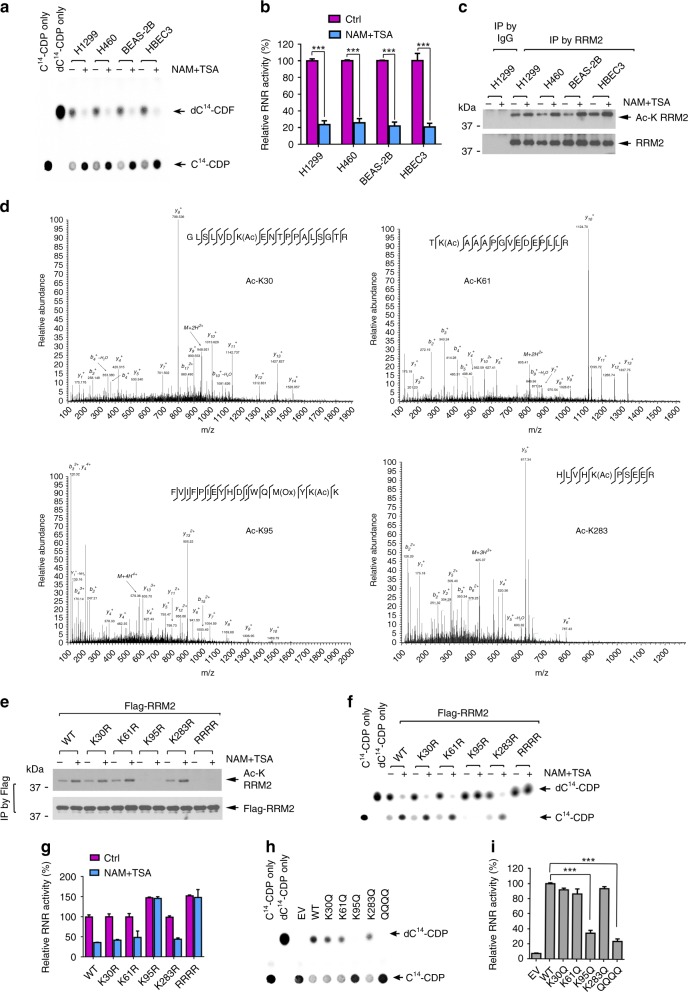
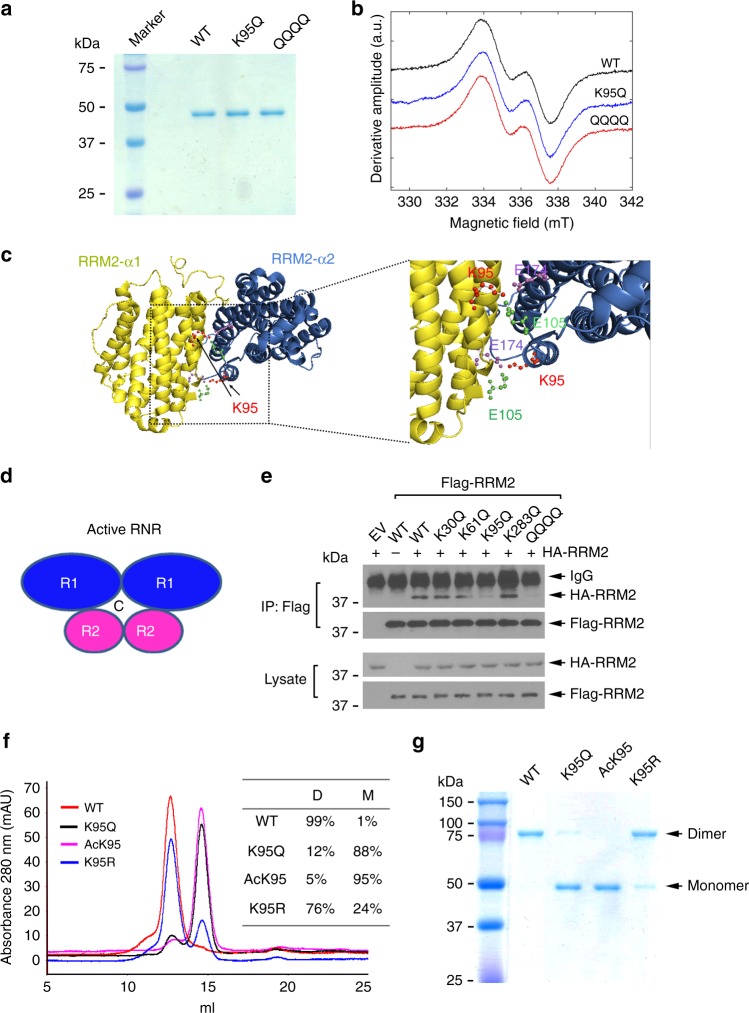
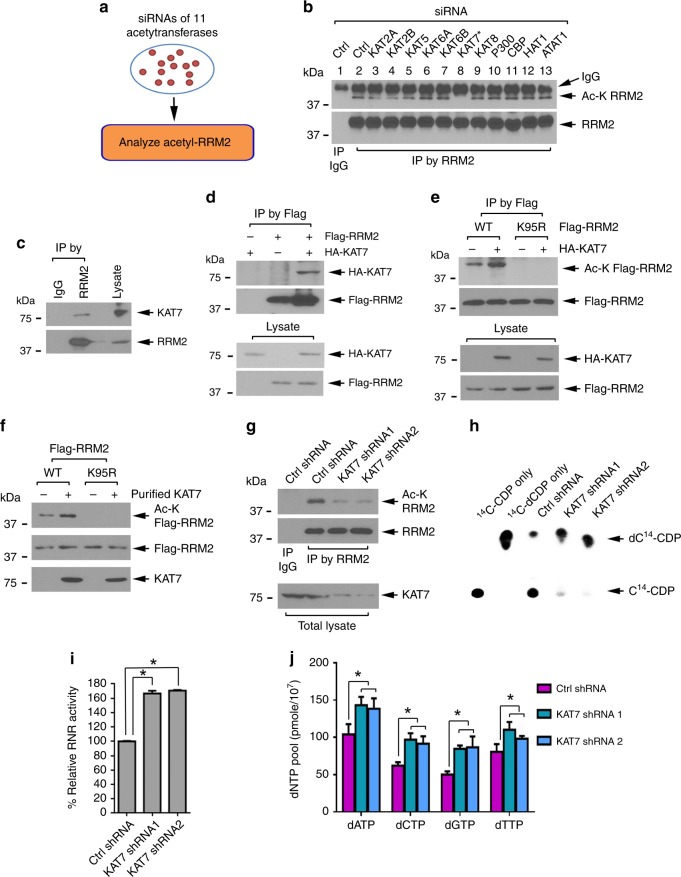
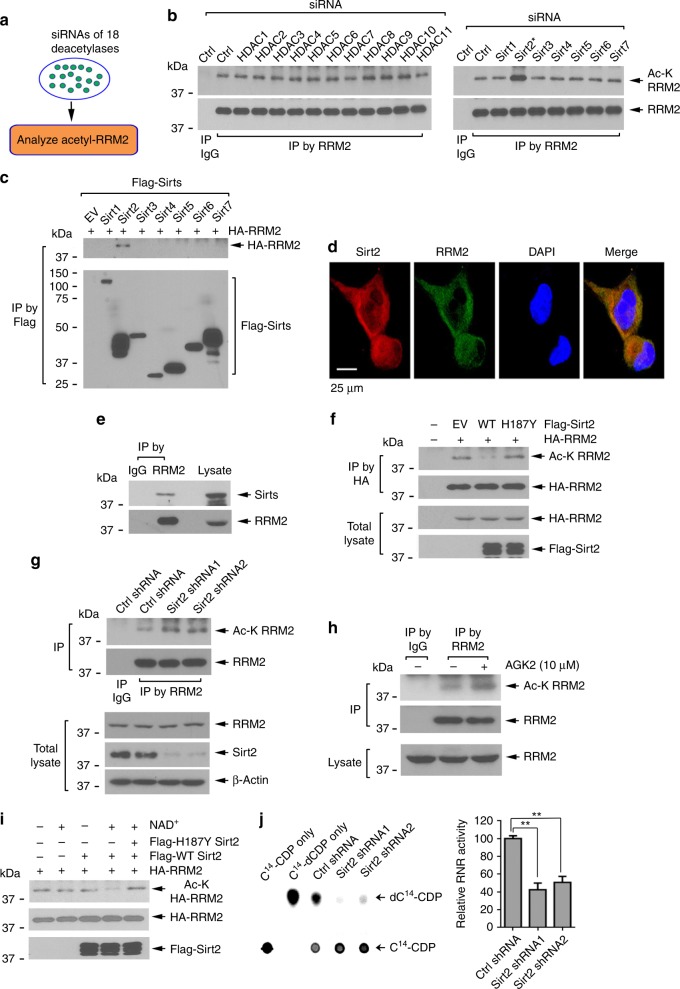
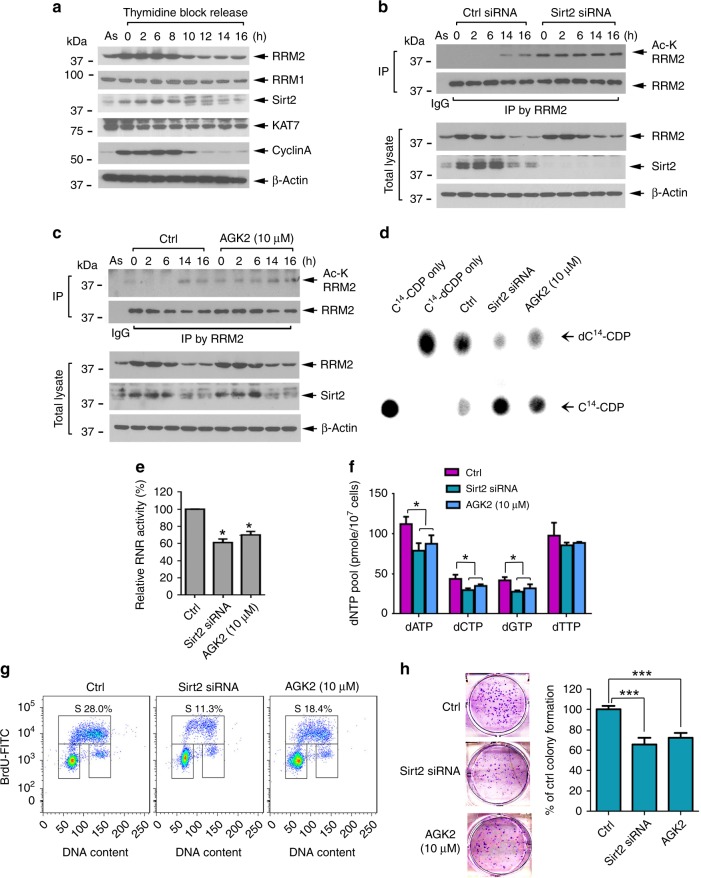
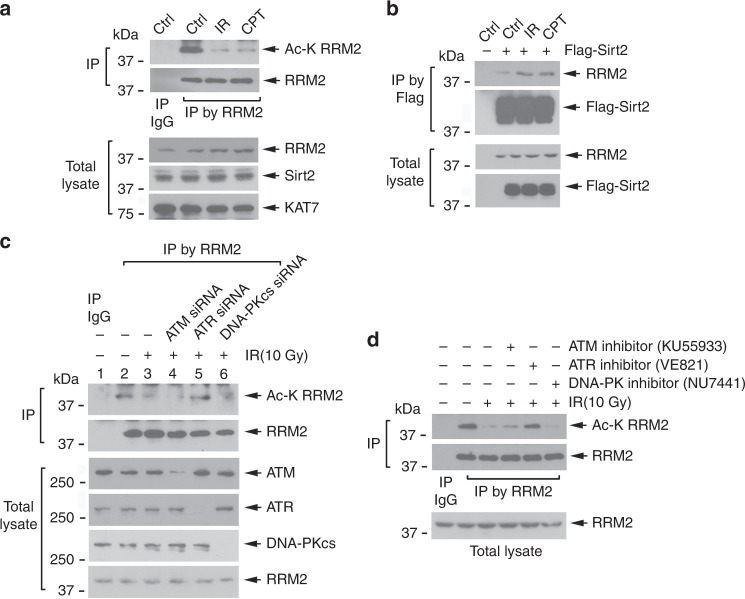
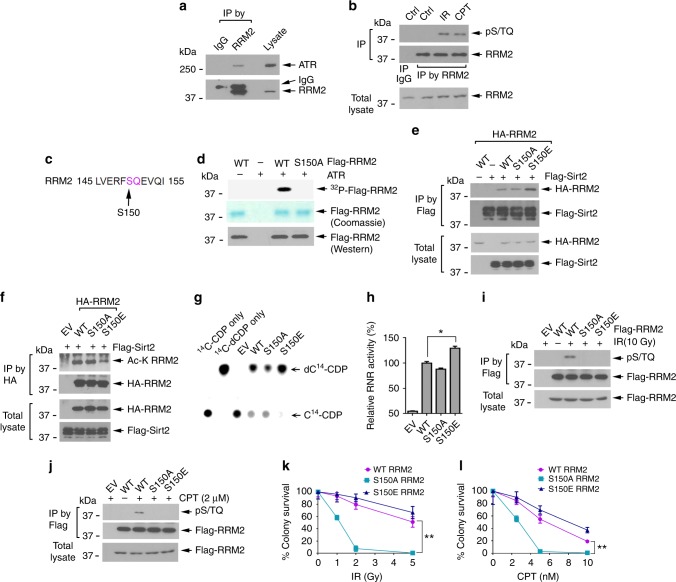
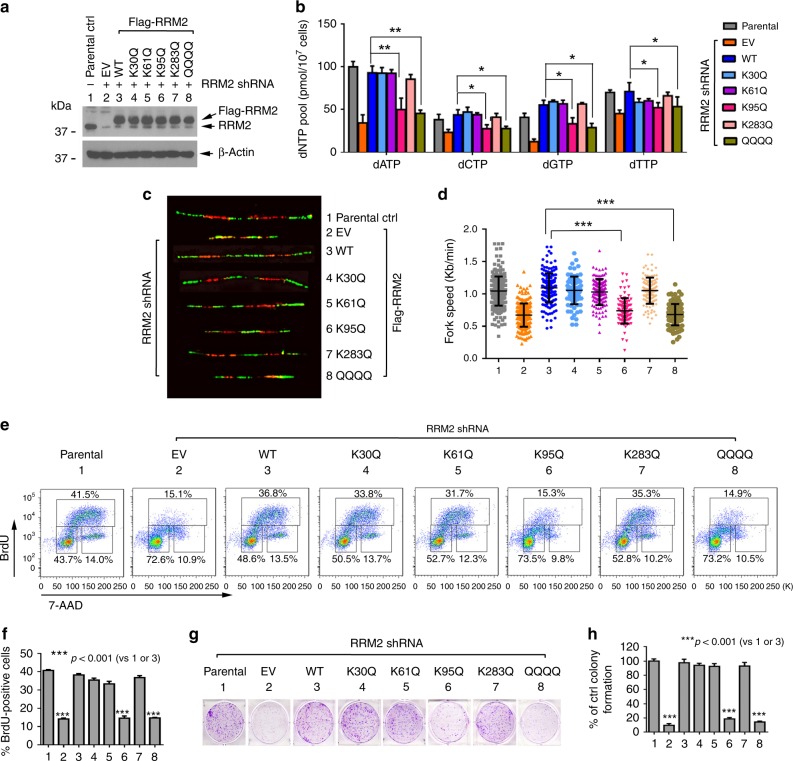
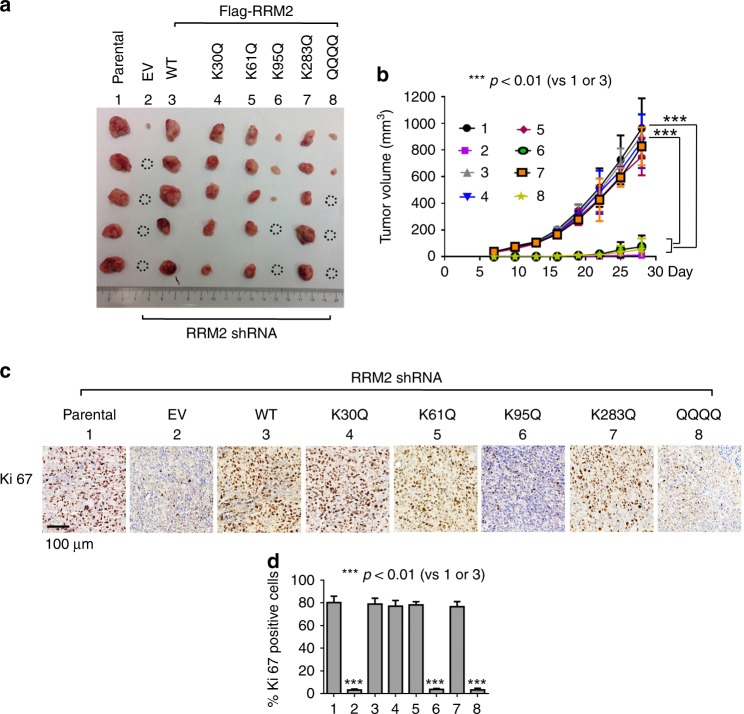
Ribonucleotide reductase (RNR) catalyzes the de novo synthesis of deoxyribonucleoside diphosphates (dNDPs) to provide dNTP precursors for DNA synthesis. Here, we report that acetylation and deacetylation of the RRM2 subunit of RNR acts as a molecular switch that impacts RNR activity, dNTP synthesis, and DNA replication fork progression. Acetylation of RRM2 at K95 abrogates RNR activity by disrupting its homodimer assembly. RRM2 is directly acetylated by KAT7, and deacetylated by Sirt2, respectively. Sirt2, which level peak in S phase, sustains RNR activity at or above a threshold level required for dNTPs synthesis. We also find that radiation or camptothecin-induced DNA damage promotes RRM2 deacetylation by enhancing Sirt2–RRM2 interaction. Acetylation of RRM2 at K95 results in the reduction of the dNTP pool, DNA replication fork stalling, and the suppression of tumor cell growth in vitro and in vivo. This study therefore identifies acetylation as a regulatory mechanism governing RNR activity.
Overview
The claims and statistics of this paper haven’t been checked yet.
Free: it reads the open-access text and checks the first 5 claims that cite a source we can check. Create a free account to check every claim.
Integrity signals
Registry
Cites
Statistics
Figures
Verification
Claims the paper makes
The claims and statistics of this paper haven’t been checked yet.
Free: it reads the open-access text and checks the first 5 claims that cite a source we can check. Create a free account to check every claim.
Claims other papers make about this one
Each is checked against this paper’s own text: does it say what the citing paper says it does?
The cited source says what the claim attributes to it.
In the citing paper
“A previous study showed that acetylation at K95 in human Rrm2 mediates the inactivation of ribonucleotide reductase, leading to DNA replication fork stalling and inhibition of tumor growth (52).”
From Potential role of lysine acetylation in the stepwise adaptation of Candida albicans to fluconazole (2025) · cites this paper as [52]
Self-check
Percentages, sums and reported differences re-computed from the paper’s own numbers.
The self-check needs the paper’s full text.
Citations
Cites
Increased Survival in Pancreatic Cancer with nab-Paclitaxel plus Gemcitabine
Von Hoff, D. D., Ervin, T., Arena, F. P., Chiorean, E. G., Infante, J., Moore, M., Seay, T., Tjulandin, S. A., Ma, W. W., Saleh, M. N., et al. (2013) · New England Journal of Medicine · doi:10.1056/nejmoa1304369 · Cited by 6,712
ATM and ATR Substrate Analysis Reveals Extensive Protein Networks Responsive to DNA Damage
Matsuoka, S., Ballif, B. A., Smogorzewska, A., McDonald, E. R., Hurov, K. E., Luo, J., Bakalarski, C. E., Zhao, Z., Solimini, N., Lerenthal, Y., et al. (2007) · Science · doi:10.1126/science.1140321 · Cited by 3,075
DNA Damage Sensing by the ATM and ATR Kinases
Marechal, A., & Zou, L. (2013) · Cold Spring Harbor Perspectives in Biology · doi:10.1101/cshperspect.a012716 · Cited by 1,514 · cited 2×
“ATM, ATR, and DNA-PKcs play critical roles in DNA damage response signaling pathways 48 .”
BackgroundNordlund, P., & Reichard, P. (2006) · Annual Review of Biochemistry · doi:10.1146/annurev.biochem.75.103004.142443 · Cited by 1,079
A ribonucleotide reductase gene involved in a p53-dependent cell-cycle checkpoint for DNA damage
Tanaka, H., Arakawa, H., Yamaguchi, T., Shiraishi, K., Fukuda, S., Matsui, K., Takei, Y., & Nakamura, Y. (2000) · Nature · doi:10.1038/35003506 · Cited by 904
50 years of protein acetylation: from gene regulation to epigenetics, metabolism and beyond
Verdin, E., & Ott, M. (2015) · Nature Reviews Molecular Cell Biology · doi:10.1038/nrm3931 · Cited by 877
The world of protein acetylation
Drazic, A., Myklebust, L. M., Ree, R., & Arnesen, T. (2016) · Biochimica et Biophysica Acta (BBA) - Proteins and Proteomics · doi:10.1016/j.bbapap.2016.06.007 · Cited by 804
Jordan, A., & Reichard, P. (1998) · Annual Review of Biochemistry · doi:10.1146/annurev.biochem.67.1.71 · Cited by 670
Genetically encoding Nε-acetyllysine in recombinant proteins
Neumann, H., Peak-Chew, S. Y., & Chin, J. W. (2008) · Nature Chemical Biology · doi:10.1038/nchembio.73 · Cited by 592
SIRT2 Maintains Genome Integrity and Suppresses Tumorigenesis through Regulating APC/C Activity
Kim, H.-S., Vassilopoulos, A., Wang, R.-H., Lahusen, T., Xiao, Z., Xu, X., Li, C., Veenstra, T. D., Li, B., Yu, H., et al. (2011) · Cancer Cell · doi:10.1016/j.ccr.2011.09.004 · Cited by 537
Cited by
Xiong, W., Zhang, B., Yu, H., Zhu, L., Yi, L., & Jin, X. (2021) · Advanced Science · doi:10.1002/advs.202100881 · Cited by 159
Ribonucleotide reductase M2 (RRM2): Regulation, function and targeting strategy in human cancer
Zuo, Z., Zhou, Z., Chang, Y., Liu, Y., Shen, Y., Li, Q., & Zhang, L. (2022) · Genes & Diseases · doi:10.1016/j.gendis.2022.11.022 · Cited by 153
“Chen et al found that acetylation/deacetylation of the RRM2 is a molecular switch of RR activity.(98) RRM2 is directly acetylated by KAT7.”
BackgroundZeng, X., Shi, G., He, Q., & Zhu, P. (2021) · Scientific Reports · doi:10.1038/s41598-021-00268-9 · Cited by 86
Multiple Roles of SIRT2 in Regulating Physiological and Pathological Signal Transduction
Zhu, C., Dong, X., Wang, X., Zheng, Y., Qiu, J., Peng, Y., Xu, J., Chai, Z., & Liu, C. (2022) · Genetics Research · doi:10.1155/2022/9282484 · Cited by 77
“On the other hand, SIRT2 maintains the activity of RNR by deacetylating the subunit RRM2 of ribonucleotide reductase (RNR), ensuring a sufficient supply of precursor dNTPs for DNA synthesis and promoting the progress of DNA replication [11].”
BackgroundSIRT2 Contributes to the Regulation of Intestinal Cell Proliferation and Differentiation
Li, C., Zhou, Y., Rychahou, P. G., Weiss, H. L., Lee, E. Y., Perry, C. L., Barrett, T. A., Wang, Q., & Evers, B. M. (2020) · Cellular and Molecular Gastroenterology and Hepatology · doi:10.1016/j.jcmgh.2020.01.004 · Cited by 75
“Deacetylation assay was performed as described.(64) Briefly,”
Yang, P., Lin, L.-S., & Liu, T. (2020) · Biomolecules · doi:10.3390/biom10010117 · Cited by 68
The bidirectional relationship between metabolism and cell cycle control
Diehl, F. F., Sapp, K. M., & Heiden, M. G. V. (2023) · Trends in Cell Biology · doi:10.1016/j.tcb.2023.05.012 · Cited by 65
Metabolic Reprogramming in the Tumor Microenvironment With Immunocytes and Immune Checkpoints
Xu, Y., He, L., Fu, Q., & Hu, J. (2021) · Frontiers in Oncology · doi:10.3389/fonc.2021.759015 · Cited by 53
The role of protein acetylation in carcinogenesis and targeted drug discovery
Yang, J., Song, C., & Zhan, X. (2022) · Frontiers in Endocrinology · doi:10.3389/fendo.2022.972312 · Cited by 42
Acetylation and Deacetylation of DNA Repair Proteins in Cancers
Li, S., Shi, B., Liu, X., & An, H.-X. (2020) · Frontiers in Oncology · doi:10.3389/fonc.2020.573502 · Cited by 38
“Consequently, the acetylation of RRM2 at Lys95 suppressed tumor growth both in vitro and in vivo (124) (Figure 1G).”
BackgroundCheng, B., Li, L., Wu, Y., Luo, T., Tang, C., Wang, Q., Zhou, Q., Wu, J., Lai, Y., Zhu, D., et al. (2023) · Cell & Bioscience · doi:10.1186/s13578-023-01157-6 · Cited by 35
“RRM2 is an enzyme of significant importance in the processes of DNA synthesis and repair [29].”
BackgroundWang, H., He, X., Zhang, L., Dong, H., Huang, F., Xian, J., Li, M., Chen, W., Lu, X., Pathak, K. V., et al. (2022) · Blood · doi:10.1182/blood.2021015108 · Cited by 34
Chen, K., Wang, Y., Dai, X., Luo, J., Hu, S., Zhou, Z., Shi, J., Pan, X., Cao, T., Xia, J., et al. (2024) · Cell Death and Disease · doi:10.1038/s41419-024-06425-y · Cited by 32
“Oncogenic characteristic of SIRT2 was demonstrated in some types of cancer [21 – 23], while others showed the tumor suppressive role of SIRT2 [24 – 28].”
ResultPost-translational lysine ac(et)ylation in health, ageing and disease
Blasl, A., Schulze, S., Qin, C., Graf, L. G., Vogt, R., & Lammers, M. (2021) · Biological Chemistry · doi:10.1515/hsz-2021-0139 · Cited by 32
Self-citationComprehensive Landscape of RRM2 with Immune Infiltration in Pan-Cancer
Zhou, Z., Song, Q., Yang, Y., Wang, L., & Wu, Z. (2022) · Cancers · doi:10.3390/cancers14122938 · Cited by 30
“As the critical component of RR, RRM2 contains tyrosyl radicals necessary to initiate catalysis and participates in the regulation and modification of proteins [11,12].”
BackgroundRole of HDAC6 and Its Selective Inhibitors in Gastrointestinal Cancer
Zhou, B., Liu, D., & Tan, Y. (2021) · Frontiers in Cell and Developmental Biology · doi:10.3389/fcell.2021.719390 · Cited by 29
Emerging role of SIRT2 in non-small cell lung cancer (Review)
Zheng, M., Hu, C., Wu, M., & Chin, Y. E. (2021) · Oncology Letters · doi:10.3892/ol.2021.12992 · Cited by 28
“This deacetylation increases the dNTP pool size and accelerates DNA replication fork progression by enhancing ribonucleotide reductase activity, which ultimately results in an increased cancer cell proliferative rate (32).”
BackgroundZhu, H., Hu, Y. W., Zeng, C., Chang, L., Fujin, G., Wang, W., Yan, F., Zhao, Q., Cao, J., Ying, M., et al. (2020) · Theranostics · doi:10.7150/thno.39151 · Cited by 26
“NAD+-dependent deacetylase SIRT2 is extensively involved in tumor progression, playing drastically different roles in various tumor models, dictated by the substrate(s) of SIRT2 deacetylase activity [27, 34-36].”
BackgroundShakeri, M., Kong, B. C., Zhuang, H., & BOWKER, B. C. (2023) · Animals · doi:10.3390/ani13122038 · Cited by 24
“Data have shown that RRM2 acts as a molecular switch that affects RNR activity and DNA replication [12].”
BackgroundHu, G.-S., Zheng, Z., He, Y., Wang, D.-C., Nie, R.-C., & Liu, W. (2025) · Molecular & Cellular Proteomics · doi:10.1016/j.mcpro.2025.100919 · Cited by 24
“RRM2 is implicated in the progression of various cancers, including breast cancer, lung cancer, liver cancer, kidney cancer, glioma, and pancreatic cancer, among others (71 – 81).”
Tian, L., Chen, C., Guo, Y., Zhang, F., Mi, J., Feng, Q., Lin, S., Xi, N., Tian, J., Yu, L., et al. (2021) · Neoplasia · doi:10.1016/j.neo.2021.05.007 · Cited by 21
Self-citationGuo, G., Wang, Y., Kou, W., & Gan, H. (2022) · Frontiers in Genetics · doi:10.3389/fgene.2022.1062293 · Cited by 21
“The overexpression of RRM2 significantly enhances the invasiveness and metastasis of cancer cells and plays a crucial role in cell proliferation and apoptosis, making it an important anticancer therapeutic target (Aye et al., 2015; Chen et al., 2019; Xiong et al., 2021).”
BackgroundJiang, W., Yuan, X., Zhu, H., He, C., Ge, C., Tang, Q., Xu, C., Hu, B., Huang, C., & Ma, T. (2020) · Frontiers in Immunology · doi:10.3389/fimmu.2020.00231 · Cited by 21
“Alterations in chromatin induced by histone modifiers and readers regulate critical transcriptional programs involved in both normal development and tumor differentiation (16, 17).”
BackgroundTsui, M., Biro, J., Chan, J., Min, W., Dobbs, K., Notarangelo, L. D., & Grunebaum, E. (2022) · Scientific Reports · doi:10.1038/s41598-022-10935-0 · Cited by 18
USP12 promotes nonsmall cell lung cancer progression through deubiquitinating and stabilizing RRM2
Chen, C., Xue, N., Liu, K., He, Q., Wang, C., Guo, Y., Tian, J., Liu, X., Pan, Y., & Chen, G. (2023) · Molecular Carcinogenesis · doi:10.1002/mc.23593 · Cited by 18
“Cellular dNTP concentrations were measured as described before.(20,23) Cells were collected and 0.”
BackgroundMethodSelf-citationZeng, Z., Xu, P., He, Y., Yi, Y., Liu, Z., Cai, J., Huang, L., & Liu, A. (2022) · Oxidative Medicine and Cellular Longevity · doi:10.1155/2022/4155565 · Cited by 16
“We then investigated the effects of the Sirt inhibitor nicotinamide and the HDAC inhibitor trichostatin A on Atp5f1c acetylation [48].”
BackgroundShakeri, M., Choi, J., Harris, C. E., Buhr, R. J., Kong, B. C., Zhuang, H., & BOWKER, B. C. (2024) · American Journal of Veterinary Research · doi:10.2460/ajvr.23.12.0283 · Cited by 15
Shan, J., Wang, Z., Mo, Q., Long, J., Fan, Y., Cheng, L., Zhang, T., Liu, X., & Wang, X. (2022) · Pancreatology · doi:10.1016/j.pan.2022.03.002 · Cited by 15
Chen, Q., Li, L., Liu, L., Liu, Z., Guo, S., Tan, C., Chen, H., & Wang, X. (2023) · Virus Research · doi:10.1016/j.virusres.2023.199190 · Cited by 17
The Metabolic Relationship Between Viral Infection and Cancer
Mullen, P. J., & Christofk, H. R. (2021) · Annual Review of Cancer Biology · doi:10.1146/annurev-cancerbio-070120-090423 · Cited by 15
Still no Rest for the Reductases: Ribonucleotide Reductase (RNR) Structure and Function: An Update
Long, M. J. C., Ly, P., & Aye, Y. (2022) · Sub-cellular biochemistry/Subcellular biochemistry · doi:10.1007/978-3-031-00793-4_5 · Cited by 15
Guo, X., Sun, Z., Jiang, S., Jin, X., & Wang, H. (2021) · Aging · doi:10.18632/aging.202636 · Cited by 16
“Cancer cells rely on extensive dNTP supply to sustain continuous growth; overexpression of RRM2 is closely related to tumorigenesis and disease progression in many cancer types, leading to its recognition as an effective target of anticancer therapies [23, 24].”
BackgroundTsui, M., Min, W., Ng, S., Dobbs, K., Notarangelo, L. D., Dror, Y., & Grunebaum, E. (2021) · Frontiers in Immunology · doi:10.3389/fimmu.2021.748519 · Cited by 11
“R2 is essential for the initiation of nucleotide reduction and has been a target for many hematological malignancies treatments such as hydroxyurea (HU) (21) as well as nicotinamide (NAM) and trichostatin A (TSA) that disrupt RNR homodimer assembly (22).”
BackgroundDashwood, R. H. (2021) · Genes and Environment · doi:10.1186/s41021-021-00180-8 · Cited by 11
Napierala, J. S., Rajapakshe, K., Clark, A. D., Chen, Y.-Y., Huang, S., Mesaros, C., Xu, P. J., Blair, I. A., Hauser, L. A., Farmer, J. M., et al. (2021) · Molecular & Cellular Proteomics · doi:10.1016/j.mcpro.2021.100094 · Cited by 11
Niu, W., & Guo, J. (2023) · ChemBioChem · doi:10.1002/cbic.202300039 · Cited by 11
Maruyama, A., Sato, Y., Nakayama, J., Murai, J., Ishikawa, T., Soga, T., & Makinoshima, H. (2021) · Scientific Reports · doi:10.1038/s41598-021-92948-9 · Cited by 10
Role of BRCA1 in glioblastoma etiology
Harbi, E., & Aschner, M. (2024) · Cellular Oncology · doi:10.1007/s13402-024-01024-7 · Cited by 9
“RRM2, essential for deoxyribonucleotide triphosphates (dNTPs) synthesis, sup - ports DNA replication and repair [ 7 ].”
Zhu, G.-R., Zheng, X., Wang, Z., & Xu, X. (2022) · Biomolecules · doi:10.3390/biom12111655 · Cited by 9
Age-Associated Changes of Sirtuin 2 Expression in CNS and the Periphery
Garmendia-Berges, M., Sola-Sevilla, N., Mera-Delgado, M., & Puerta, E. (2023) · Biology · doi:10.3390/biology12121476 · Cited by 9
“Moreover, it has been corroborated that SIRT2 participates in DNA replication, transcription, and RNA translation by deacetylating crucial substrates such as ATR kinase checkpoint [35], RNR [36], TIF-IB/SL1 [37], and eIF5A [38].”
BackgroundShetty, M. G., Pai, P., Padavu, M., Satyamoorthy, K., & Babitha, K. S. (2024) · European Journal of Medicinal Chemistry · doi:10.1016/j.ejmech.2024.116324 · Cited by 9
Chen, B., Zhang, Y., Niu, Y., Wang, Y., Liu, Y., Ji, H., Han, R., Tian, Y., Liu, X., Kang, X., et al. (2023) · Poultry Science · doi:10.1016/j.psj.2023.103407 · Cited by 9
“RRM2 is an important subunit of ribonucleotide reductase ( RNR ), which affects RNR activity and DNA replication (Tor-rents, 2014; Chen et al., 2019a).”
BackgroundDevelopment of cancer prognostic signature based on pan-cancer proteomics
Huang, W., Chen, J., Weng, W., Xiang, Y., Shi, H., & Shan, Y. (2020) · Bioengineered · doi:10.1080/21655979.2020.1847398 · Cited by 8
Liu, Z., Xue, H., Wang, Z., Zhao, Y., Xu, S., & Dong, X. (2025) · International Journal of Biological Sciences · doi:10.7150/ijbs.106925 · Cited by 8
“The small subunit of ribonucleotide reductase, known as ribonucleotide reductase M2 (RRM2), plays crucial roles in nucleotide metabolism and various processes related to DNA biosynthesis, repair, and replication [15, 16].”
Degtyareva, N. P., Placentra, V. C., Gabel, S. A., Klimczak, L. J., Gordenin, D. A., Wagner, B. A., Buettner, G. R., Mueller, G. A., Smirnova, T. I., & Doetsch, P. W. (2023) · Nucleic Acids Research · doi:10.1093/nar/gkad305 · Cited by 6
Self-citationJin, Y., Dong, J., Li, J., Huang, M., Wang, D., & Tan, X. (2025) · International Journal of Molecular Sciences · doi:10.3390/ijms26178181 · Cited by 6
“RRM2 overexpression activates the Hippo–YAP signaling pathway, promoting cardiomyocyte proliferation [36,37].”
Wang, C., Tian, L., He, Q., Lin, S., Wu, Y., Qiao, Y., Zhu, B., Li, D., & Chen, G. (2023) · Oncogene · doi:10.1038/s41388-023-02812-5 · Cited by 6
Self-citationKohiyama, M., Herrick, J., & Norris, V. (2023) · Life · doi:10.3390/life13091890 · Cited by 6
Huang, H., Ren, L., Zhou, Y., Chen, P., Zhao, H., Li, S., Wang, H., & Li, X. (2025) · BMC Cancer · doi:10.1186/s12885-025-13708-w · Cited by 6
“However, the potential mechanism of KAT7 in promoting HCC progression by regulating nucleotide metabolism remains poorly understood [31].”
RRM1 O-GlcNAcylation inhibition suppresses pancreatic cancer via TK1-mediated replication stress
Tien, S.-C., Shih, M., & Hu, C. (2025) · Cancer Gene Therapy · doi:10.1038/s41417-025-00895-8 · Cited by 5
Zhang, H., Feng, H., Xing, X., Jiang, W., Zhang, C., & Gu, Y. (2024) · ACS Synthetic Biology · doi:10.1021/acssynbio.4c00175 · Cited by 5
Sun, J. K., Wong, G. C., & Chow, H. (2023) · Journal of Neurochemistry · doi:10.1111/jnc.15881 · Cited by 5
Proteomics Identifies LUC7L3 as a Prognostic Biomarker for Hepatocellular Carcinoma
Hou, Y., Wang, S., Zhang, Y., Huang, X., Zhang, X., He, F., Tian, C., & Sun, A. (2024) · Current Issues in Molecular Biology · doi:10.3390/cimb46050247 · Cited by 4
“One mechanism is that camptothecin-induced DNA damage promotes RRM2 deacetylation by enhancing Sirt2-RRM2 interaction, while the acetylation of RRM2 could disrupt RR assembly, which provides tumor cells with abundant dNTPs for DNA repair and survival [48].”
BackgroundZhao, Y., Xue, S., Wei, D., Zhang, J., Zhang, N., Mao, L., Liu, N., Zhao, L., Yan, J., Wang, Y., et al. (2024) · Journal of Experimental & Clinical Cancer Research · doi:10.1186/s13046-024-03174-w · Cited by 4
“As the catalytic subunit of RNR complex, RRM2 was essential for promoting DNA replication and DNA damage repair by producing dNTP in cancer [21, 25].”
BackgroundRibonucleotide reductases in cancer: Mechanisms, clinical progress, and prospects
Chen, S., Huang, Y. H., Zhang, S., Zhang, J., Chen, C., Chen, G., & Zhou, D. (2025) · Cell investigation. · doi:10.1016/j.clnves.2025.100034 · Cited by 5
Self-citationQiu, Z., Wang, X., Ma, J., Zhu, C., Hu, Y.-L., & Da, M. (2025) · World Journal of Gastrointestinal Oncology · doi:10.4251/wjgo.v17.i9.108672 · Cited by 4
“Dysregulation of RRM2 has been implicated in genomic instability[19] and carcinogenesis[20].”
Yu, J., Gu, Z., Zhang, C., Jin, F., Zhang, Q., Lin, S., Li, Y., Chen, L., & He, B. (2024) · Bioorganic Chemistry · doi:10.1016/j.bioorg.2024.107784 · Cited by 3
Zhu, X., Al-Danakh, A., Jian, Y., Safi, M., Luo, S., Chen, Q., Wang, S., & Yang, D. (2024) · Journal of Inflammation Research · doi:10.2147/jir.s478993 · Cited by 4
“41,55,59,60 Research show that dysregulation of RRM2 can impair mitochondrial DNA (mtDNA) synthesis, leading to mitochondrial dysfunction, oxidative damage, and tissue deterioration, which might drive oncogenesis.”
BackgroundMitochondrial sirtuins at the crossroads of energy metabolism and oncogenic transformation
Grabacka, M., & Plonka, P. M. (2021) · Elsevier eBooks · doi:10.1016/b978-0-12-822467-0.00001-2 · Cited by 3
Chen, Q., Luo, Y., Fu, Y., Feng, Z., Lu, L., Jiang, Y., & Xu, D. (2022) · Journal of Fish Diseases · doi:10.1111/jfd.13589 · Cited by 3
Self-citationJayarathna, D. K., Rentería, M. E., Batra, J., & Gandhi, N. S. (2022) · Journal of Cellular Biochemistry · doi:10.1002/jcb.30300 · Cited by 5
“35 The tumour ‐ promoting feature of RRM2 is associated with inducing activities of various oncogenes, including those encoding nuclear factor ‐ κ B, Myc proto ‐ oncogene protein, tyrosine ‐ protein kinase transforming protein Fes and ornithine decarboxylase.”
BackgroundKulagin, K. A., Starodubova, E. S., Osipova, P. J., Lipatova, A. V., Cherdantsev, I. A., Poddubko, S. V., Карпов, В. Л., & Karpov, D. S. (2024) · International Journal of Molecular Sciences · doi:10.3390/ijms25073977 · Cited by 3
“…at several levels by the regulation of gene expression [25–28], oligomerization of subunits, post-translational modifications of subunits [29,30], subcellular localization [31,32], allosteric inhibition by dNTPs [33] as well as through the degradation of subunits [23,34,35] and…”
BackgroundSirtuins, healthspan, and longevity in mammals
Kumar, S., Giblin, W., & Lombard, D. B. (2021) · Elsevier eBooks · doi:10.1016/b978-0-12-815962-0.00005-6 · Cited by 3
Wei, Y., Wei, X., & Zhao, W. (2025) · Biochemistry and Biophysics Reports · doi:10.1016/j.bbrep.2025.102367 · Cited by 1
“1 (RRM2) and 3q28 (TP63), indicating universal amplification events (100 % penetrance) implicating dysregulated dNTP synthesis and epithelial plasticity in therapeutic resistance [49,50].”
Shen, Y., Li, D., Chen, Q., Wang, C., & Yu, L. (2025) · All Life · doi:10.1080/26895293.2025.2595807 · Cited by 1
Yun, S.-Y., Lee, Y. J., Lee, J. W., Hong, H., & Lee, J. (2026) · Genes & Genomics · doi:10.1007/s13258-026-01788-2 · Cited by 1
“Moreover, prior studies on RRM-related biomarkers in NSCLC have yielded inconsistent results, leaving their clinical utility incompletely defined (Maus et al. 2013; Chen et al. 2019 ; Besse et al. 2013; Davidson et al. 2004).”
Is Artesunate the Best Partner of Gemcitabine in Pancreatic Cancer?
Koltai, T. (2022) · European Journal of Clinical Medicine · doi:10.24018/clinicmed.2022.3.3.202 · Cited by 2
The multiple activations in budding yeast S-phase checkpoint are Poisson processes
Gao, X., Zhou, P., & Li, F. (2023) · PNAS Nexus · doi:10.1093/pnasnexus/pgad342 · Cited by 1
“RNR catalyzes a redox reaction to produce natural deoxy-nucleoside diphosphates (dNDPs) required for their subsequent de novo synthesis (26), but the inactivation of RNR induces a reduction of the dNTP pool and the accumulation of single-stranded DNA (ssDNA) in S-phase (27).”
Potential role of lysine acetylation in the stepwise adaptation of Candida albicans to fluconazole
Song, N., Huang, Y., Zhou, X., Li, D., Liu, W., & Li, X. (2025) · Microbiology Spectrum · doi:10.1128/spectrum.02797-24
“A previous study showed that acetylation at K95 in human Rrm2 mediates the inactivation of ribonucleotide reductase, leading to DNA replication fork stalling and inhibition of tumor growth (52).”
Bioavailability and Modes of Action of Novel Metal Based Phenanthroline Drugs
O’Leary, T. (2020) · Arrow - TU Dublin (Technological University Dublin) · doi:10.21427/7sw6-vk06
Jayarathna, D. K. (2023) · Queensland University of Technology · doi:10.5204/thesis.eprints.237470 · Cited by 1
Cheng, B., Li, L., Wu, Y., Luo, T., Tang, C., Wang, Q., Zhou, Q., Wu, J., Lai, Y., Zhu, D., et al. (2023) · Figshare · doi:10.6084/m9.figshare.24571755
Identification of a Novel Dual Hdac/Rr Inhibitor as a Promising Anticancer AgentPreprint
Shetty, M. G., Dey, B., Pai, P., Rao, P., Nayak, U. Y., Ashwini, T., Oruganti, S., Satyamoorthy, K., & Babitha, K. S. (2025) · SSRN Electronic Journal · doi:10.2139/ssrn.5236357
Mao, X., Saad, S. E. A., Lee, N. K., & Fong, I. L. (2025) · Genetics and Molecular Biology · doi:10.1590/1678-4685-gmb-2024-0138
“RRM2 encodes the catalytic subunit of ribonucleotide reductase and is upregulated in response to DNA damage to ensure sufficient deoxynucleoside triphosphates for DNA repair (Zhang et al., 2009; Chen et al., 2019).”
Molecular Targets of Epigenetic Regulators
Amirmahani, F., Kumar, S., & Muthukrishnan, S. D. (2025) · Springer eBooks · doi:10.1007/978-981-96-7336-0_4 · Cited by 1
Zhao, Y., Xue, S., Wei, D., Zhang, J., Zhang, N., Mao, L., Liu, N., Zhao, L., Yan, J., Wang, Y., et al. (2024) · Figshare · doi:10.6084/m9.figshare.26962366
Bioavailability and Modes of Action of Novel Metal Based Phenanthroline Drugs
O’Leary, T. (2020) · Arrow - TU Dublin (Technological University Dublin)
Metabolic control of DNA replication: beyond biosynthetic and bioenergetic needs
Dong, K., Pei, J., Liu, J., Li, Y., Wang, Y., & Feng, Y. (2025) · Epigenetics Insights · doi:10.48130/epi-0025-0015
The Role of Ribonucleotide Reductase in Inherited Purine Disorders
Tsui, M. (2022) · TSpace (University of Toronto)
Xie, Q., Wang, Y., Fernandez, A., Lei, Y., Gong, Y., Hess, J. D., Yang, L., Xin, D., Williams, T. M., Zheng, L., et al. (2026) · Cancer Research · doi:10.1158/0008-5472.can-25-3237
García-Villada, L., Shore, B. A., Kiser, K., Russ, I. G., Gabel, S. A., Mueller, G. A., Degtyareva, N. P., & Doetsch, P. W. (2026) · bioRxiv (Cold Spring Harbor Laboratory) · doi:10.64898/2026.06.04.730102
“Redox stress is implicated in the etiology and progression of many chronic conditions that significantly impact human health (reviewed in (1,2), such as cardiovascular and inflammatory diseases (3), neurodegenerative disorders (4-6), and cancer (7-9), as well as aging (10,11).”
Self-citationResearch progress on lysine acetylation (Review)
Zhang, M., Zhang, Y., Yin, H., Yan, J., Dong, Y., Zhao, X., Cui, T., Lv, B., & Gao, X. (2026) · International Journal of Molecular Medicine · doi:10.3892/ijmm.2026.5976
“Similarly, the acetylation of RRM2 by KAT7 at K95 disrupts its dimerization, functioning as a molecular switch to inhibit dNTP synthesis, stall DNA replication forks, and suppress tumor cell proliferation (145).”
Monroe, D., Kehinde‐Ige, M., Williams, A., Ismayilova, V., Anand, A., Kededa, M., Khanam, R., Kalsi, A., Arbab, A. S., Sakamuro, D., et al. (2026) · International Journal of Molecular Sciences · doi:10.3390/ijms27188045
“This will impair Ribonucleotide Reductase (RNR) function, thereby reducing dNTP synthesis [56].”
Guil‐Luna, S., Sánchez-Montero, M. T., Díaz‐Chacón, A., & Rodríguez‐Ariza, A. (2026) · MedComm · doi:10.1002/mco2.70873
“For instance, during the S phase of interphase, nucleotide synthesis pathways are specifically upregulated to meet the demands of DNA replication, resulting in elevated nucleotide levels throughout the S, G2, and M phases [ 109, 110 ].”
Li, Z., Shinohara, A., Xia, Y., Xu, X., & Takeda, S. (2026) · BioEssays · doi:10.1002/bies.70185
Adaptive Rewiring of Nucleotide Metabolism in Therapeutic Resistance
Dayanc, B., Xu, G., Zhou, X., Chen, J., Mueller, N., Kaur, H., Pham, B., Yoda, S., & Schneider, J. L. (2026) · Cancers · doi:10.3390/cancers18213498
Brzozowski, T. L., Vincent, M. C., & Keri, R. A. (2026) · Journal of Biological Chemistry · doi:10.1016/j.jbc.2026.113710
Segawa, M., Ozawa, A., Nakamura, Y., & Hasegawa, T. (2026) · Food Science and Biotechnology · doi:10.1007/s10068-026-02371-x
Pang, S., Chen, Y., Zhu, X., Guan, X., Ding, S., Yu, D. C., Luan, T., Liu, M., Shi, M., Jiang, S., et al. (2026) · British Journal of Pharmacology · doi:10.1111/bph.70731
Self-citation
Metadata
- Authors
- Chen, G., Luo, Y., Warncke, K., Sun, Y., Yu, D. S., Fu, H., Behera, M., Ramalingam, S. S., Doetsch, P. W., Duong, D. M., Lammers, M., Curran, W. J., & Deng, X.
- Affiliations
- Emory University (US)
- National Institutes of Health (US)
- Universität Greifswald (DE)
- Corresponding author
- Deng, Xingming
- ORCID
- Venue
- Nature Communications
- Published
- 2019-07-19
- Volume
- 10
- Issue
- 1
- Pages
- 3213-3213
- ISSN
- 2041-1723 (ISSN-L)
- PMC
- PMC6642173
- OpenAlex
- W2963368358
- Cited by
- 82
- References
- 71
- Citations by year
- 2026: 6 · 2025: 15 · 2024: 11 · 2023: 14 · 2022: 14 · 2021: 16 · 2020: 6
- FWCI
- 2.98
- Type
- journal article
- Language
- en
- Open access
- gold
- doi.org
- Licence
- cc-by
- creativecommons.org/licenses/by/4.0 (tdm)
- creativecommons.org/licenses/by/4.0 (vor)
- Locations
- Nature Communications (publishedVersion, cc-by)
- Europe PMC (PubMed Central) (publishedVersion, cc-by)
- PubMed Central (publishedVersion, cc-by)
- PubMed (publishedVersion)
- RePEc: Research Papers in Economics (submittedVersion)
- DOAJ (DOAJ: Directory of Open Access Journals) (submittedVersion)
- Funders
- U.S. Department of Health & Human Services | NIH | National Cancer Institute (R01CA193828, R01CA136534, R01CA200905-01A1)
- Topics
- Life Sciences › Biochemistry, Genetics and Molecular Biology › Molecular Biology › Biochemical and Molecular Research
- Life Sciences › Biochemistry, Genetics and Molecular Biology › Molecular Biology › DNA Repair Mechanisms
- Life Sciences › Biochemistry, Genetics and Molecular Biology › Molecular Biology › Epigenetics and DNA Methylation
- Keywords
- ribonucleotide reductase, RRM2, protein acetylation, deacetylation, KAT7, SIRT2, dNTP synthesis, replication fork stalling, DNA damage response, camptothecin, radiation, tumor cell proliferation
- MeSH terms
- Acetylation, Camptothecin, Cell Cycle, Cell Transformation, Neoplastic, DNA Damage, DNA Replication, Humans, Ribonucleoside Diphosphate Reductase, Ribonucleotide Reductases, Gene Expression Regulation, Neoplastic, S Phase, Cell Line, Tumor, Histone Acetyltransferases, Sirtuin 2
About these checks
Registry, retraction, Cites and statistics results are computed, not judged, with one exception: a printed reference that no index lists is read once by a model before it counts as a citation error. Claims are extracted by a model and kept only when their quote appears verbatim in the text; each cited source is then checked, with a model’s help, for whether it says what the claim relies on. Those verdicts can be wrong — read the claim’s quote and the cited source before relying on one.
Statistics and arithmetic are recomputed, not judged.
Confidence bands are shown only for fields calibrated on our annotated test set. None is calibrated yet, so no band is shown.
What counts as a claim ›How we measure confidence ›How we check this ›
Are you an author, or do you see a problem with this page? Request a review
Data sources
Bibliographic data: Semantic Scholar, OpenAlex, Crossref.
Contains information from the Semantic Scholar Academic Graph Datasets, made available under the ODC Attribution License (ODC-BY 1.0).
Semantic Scholar’s data is described in: Kinney, R., et al. (2023). The Semantic Scholar Open Data Platform. arXiv:2301.10140.
