

Acetylation regulates ribonucleotide reductase activity and cancer cell growth
Open accessThe DOI matches its Crossref record; 71 of the 71 references it cites were found in a registry or an index.
Abstract
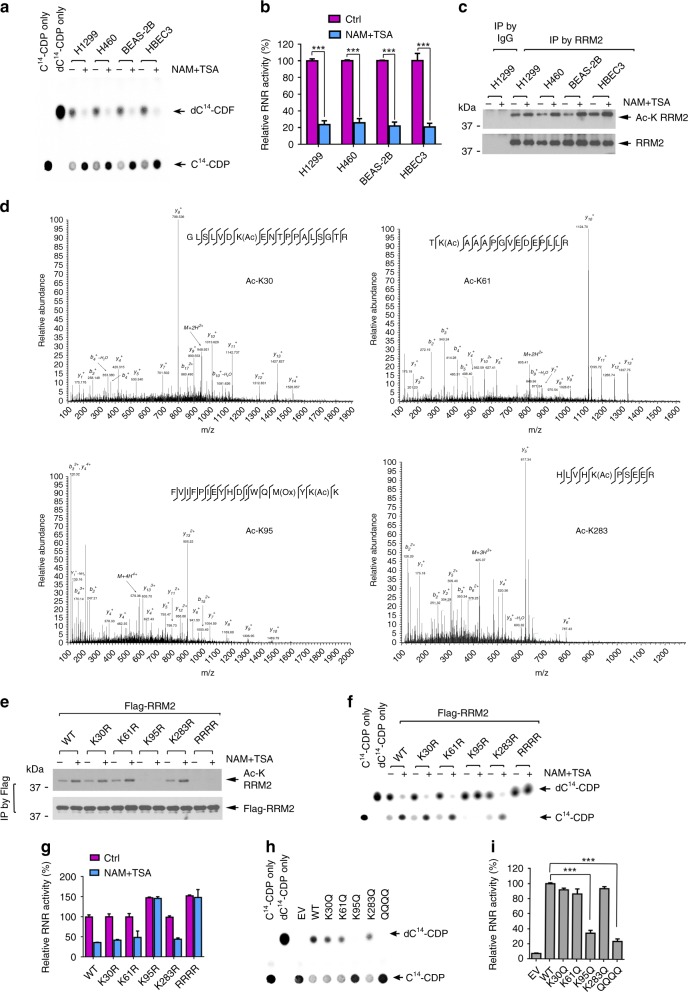
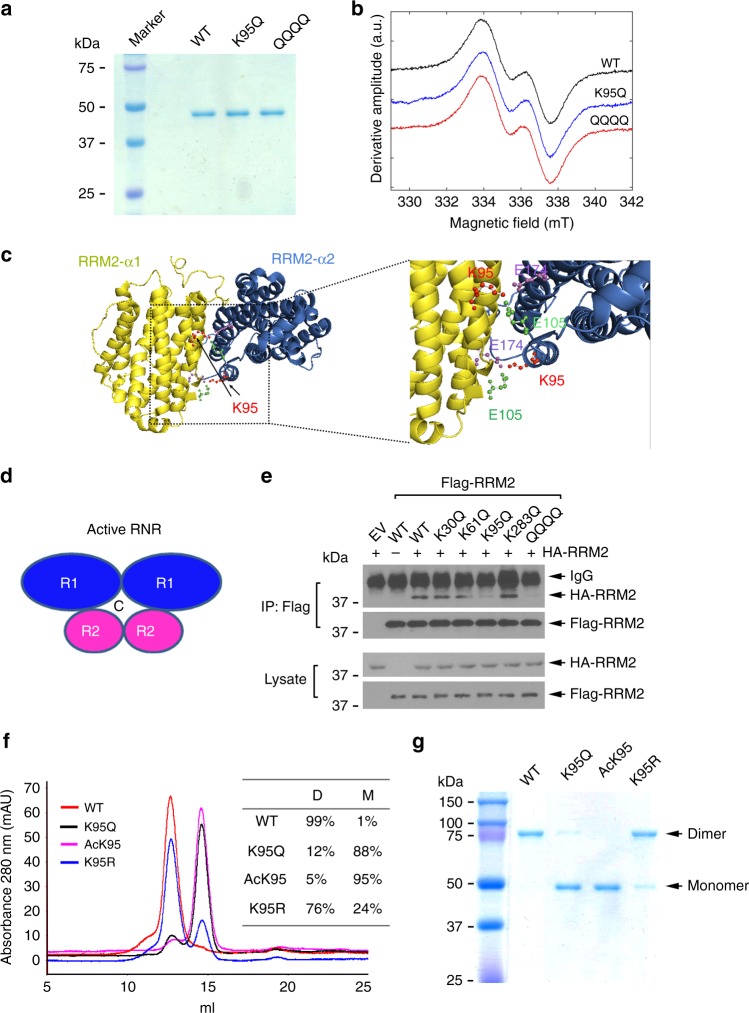
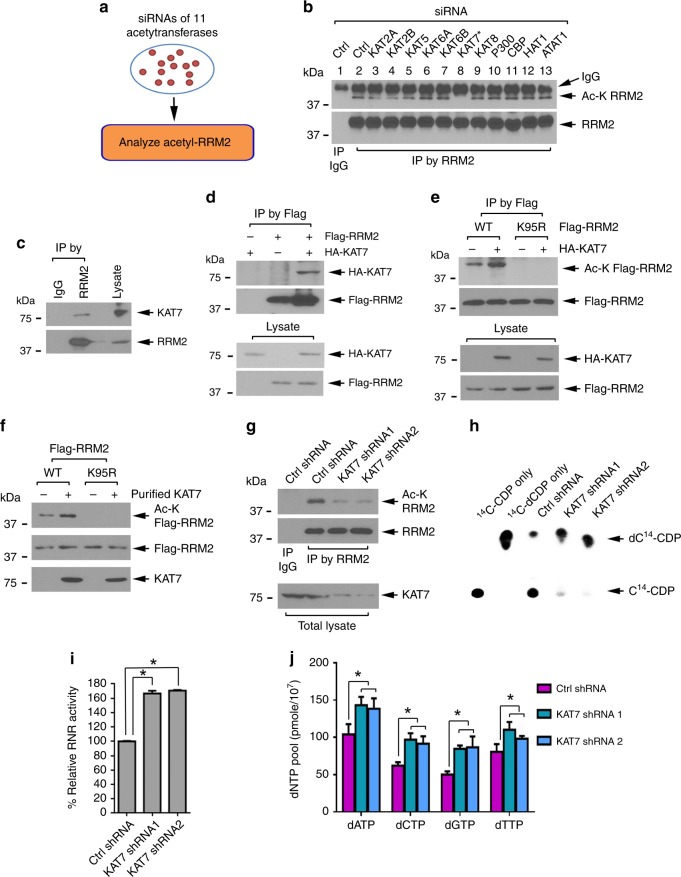
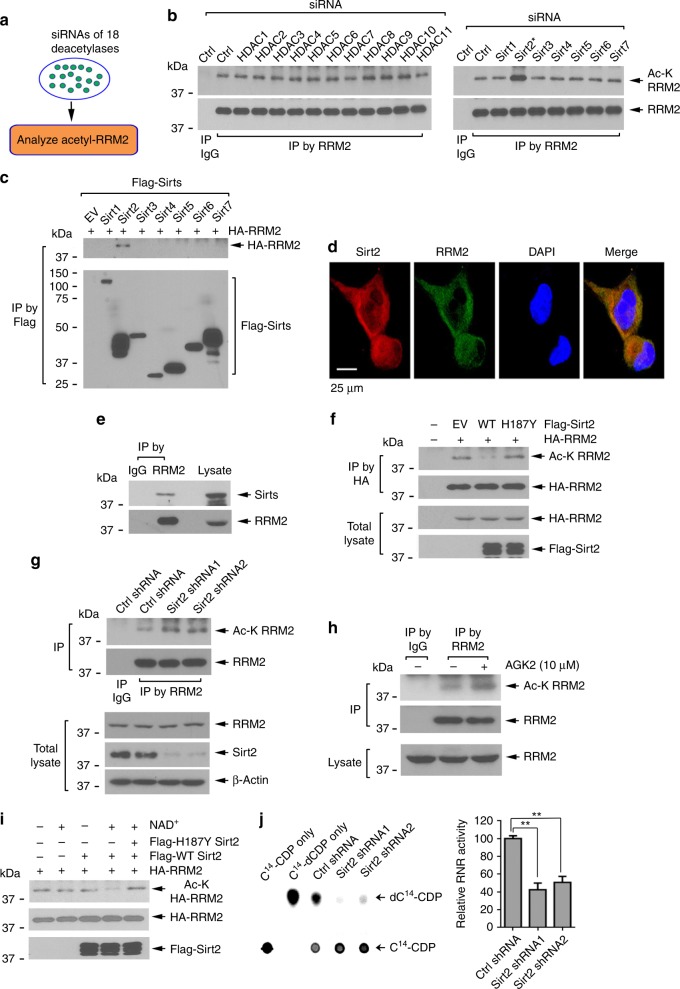
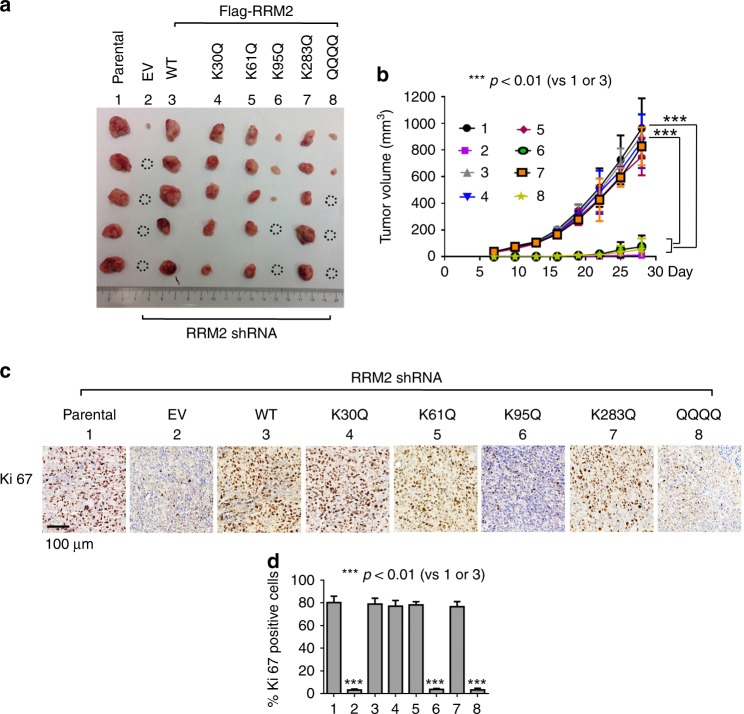
Ribonucleotide reductase (RNR) catalyzes the de novo synthesis of deoxyribonucleoside diphosphates (dNDPs) to provide dNTP precursors for DNA synthesis. Here, we report that acetylation and deacetylation of the RRM2 subunit of RNR acts as a molecular switch that impacts RNR activity, dNTP synthesis, and DNA replication fork progression. Acetylation of RRM2 at K95 abrogates RNR activity by disrupting its homodimer assembly. RRM2 is directly acetylated by KAT7, and deacetylated by Sirt2, respectively. Sirt2, which level peak in S phase, sustains RNR activity at or above a threshold level required for dNTPs synthesis. We also find that radiation or camptothecin-induced DNA damage promotes RRM2 deacetylation by enhancing Sirt2–RRM2 interaction. Acetylation of RRM2 at K95 results in the reduction of the dNTP pool, DNA replication fork stalling, and the suppression of tumor cell growth in vitro and in vivo. This study therefore identifies acetylation as a regulatory mechanism governing RNR activity.
Overview
The claims and statistics of this paper haven’t been checked yet.
Free: it reads the open-access text and checks the first 5 claims that cite a source we can check. Create a free account to check every claim.
Integrity signals
Registry
Cites
Statistics
Figures
Verification
Claims the paper makes
The claims and statistics of this paper haven’t been checked yet.
Free: it reads the open-access text and checks the first 5 claims that cite a source we can check. Create a free account to check every claim.
Claims other papers make about this one
Each is checked against this paper’s own text: does it say what the citing paper says it does?
The cited source says what the claim attributes to it.
In the citing paper
“A previous study showed that acetylation at K95 in human Rrm2 mediates the inactivation of ribonucleotide reductase, leading to DNA replication fork stalling and inhibition of tumor growth (52).”
From Potential role of lysine acetylation in the stepwise adaptation of Candida albicans to fluconazole (2025) · cites this paper as [52]
Self-check
Percentages, sums and reported differences re-computed from the paper’s own numbers.
The self-check needs the paper’s full text.
Citations
Cites
Increased Survival in Pancreatic Cancer with nab-Paclitaxel plus Gemcitabine
Von Hoff, D. D., Ervin, T., Arena, F. P., Chiorean, E. G., Infante, J., Moore, M., Seay, T., Tjulandin, S. A., Ma, W. W., Saleh, M. N., et al. (2013) · New England Journal of Medicine · doi:10.1056/nejmoa1304369 · Cited by 6,712
ATM and ATR Substrate Analysis Reveals Extensive Protein Networks Responsive to DNA Damage
Matsuoka, S., Ballif, B. A., Smogorzewska, A., McDonald, E. R., Hurov, K. E., Luo, J., Bakalarski, C. E., Zhao, Z., Solimini, N., Lerenthal, Y., et al. (2007) · Science · doi:10.1126/science.1140321 · Cited by 3,075
DNA Damage Sensing by the ATM and ATR Kinases
Marechal, A., & Zou, L. (2013) · Cold Spring Harbor Perspectives in Biology · doi:10.1101/cshperspect.a012716 · Cited by 1,514 · cited 2×
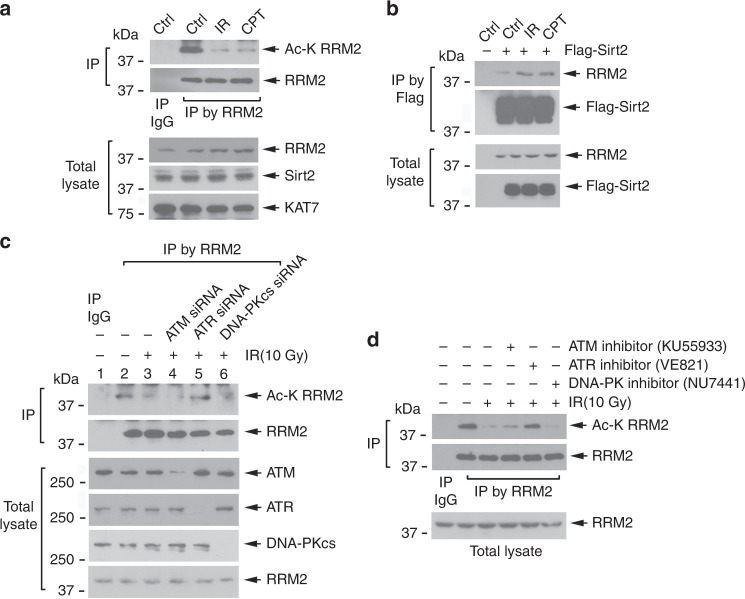
“ATM, ATR, and DNA-PKcs play critical roles in DNA damage response signaling pathways 48 .”
BackgroundNordlund, P., & Reichard, P. (2006) · Annual Review of Biochemistry · doi:10.1146/annurev.biochem.75.103004.142443 · Cited by 1,079
A ribonucleotide reductase gene involved in a p53-dependent cell-cycle checkpoint for DNA damage
Tanaka, H., Arakawa, H., Yamaguchi, T., Shiraishi, K., Fukuda, S., Matsui, K., Takei, Y., & Nakamura, Y. (2000) · Nature · doi:10.1038/35003506 · Cited by 904
50 years of protein acetylation: from gene regulation to epigenetics, metabolism and beyond
Verdin, E., & Ott, M. (2015) · Nature Reviews Molecular Cell Biology · doi:10.1038/nrm3931 · Cited by 877
The world of protein acetylation
Drazic, A., Myklebust, L. M., Ree, R., & Arnesen, T. (2016) · Biochimica et Biophysica Acta (BBA) - Proteins and Proteomics · doi:10.1016/j.bbapap.2016.06.007 · Cited by 804
Jordan, A., & Reichard, P. (1998) · Annual Review of Biochemistry · doi:10.1146/annurev.biochem.67.1.71 · Cited by 670
Genetically encoding Nε-acetyllysine in recombinant proteins
Neumann, H., Peak-Chew, S. Y., & Chin, J. W. (2008) · Nature Chemical Biology · doi:10.1038/nchembio.73 · Cited by 592
SIRT2 Maintains Genome Integrity and Suppresses Tumorigenesis through Regulating APC/C Activity
Kim, H.-S., Vassilopoulos, A., Wang, R.-H., Lahusen, T., Xiao, Z., Xu, X., Li, C., Veenstra, T. D., Li, B., Yu, H., et al. (2011) · Cancer Cell · doi:10.1016/j.ccr.2011.09.004 · Cited by 537
Bourdon, A., Minai, L., Serre, V., Jais, J.-P., Sarzi, E., Aubert, S., Chrétien, D., de Lonlay, P., Paquis-Flucklinger, V., Arakawa, H., et al. (2007) · Nature Genetics · doi:10.1038/ng2040 · Cited by 531
Acetylation of p53 inhibits its ubiquitination by Mdm2
Li, M., Luo, J., Brooks, C. L., & Gu, W. (2002) · Journal of Biological Chemistry · doi:10.1074/jbc.c200578200 · Cited by 503
Ribonucleotide reductase and cancer: biological mechanisms and targeted therapies
Aye, Y., Li, M., Long, M. J. C., & Weiss, R. S. (2015) · Oncogene · doi:10.1038/onc.2014.155 · Cited by 436
D'Angiolella, V., Donato, V., Forrester, F. M., Jeong, Y.-T., Pellacani, C., Kudo, Y., Saraf, A., Florens, L., Washburn, M. P., & Pagano, M. (2012) · Cell · doi:10.1016/j.cell.2012.03.043 · Cited by 395
Harley, M. E., Allan, L. A., Sanderson, H. S., & Clarke, P. R. (2010) · The EMBO Journal · doi:10.1038/emboj.2010.112 · Cited by 353
Buisson, R., Boisvert, J. L., Benes, C. H., & Zou, L. (2015) · Molecular Cell · doi:10.1016/j.molcel.2015.07.029 · Cited by 316
Profiling of UV-induced ATM/ATR signaling pathways
Stokes, M. P., Rush, J., MacNeill, J., Ren, J. M., Sprott, K., Nardone, J., Yang, V., Beausoleil, S. A., Gygi, S. P., Livingstone, M., et al. (2007) · Proceedings of the National Academy of Sciences · doi:10.1073/pnas.0707579104 · Cited by 315
Engström, Y., Eriksson, S., Jildevik, I., Skog, S., Thelander, L., & Tribukait, B. (1985) · Journal of Biological Chemistry · doi:10.1016/s0021-9258(17)39337-7 · Cited by 285
Serrano, L., Martínez-Redondo, P., Marazuela-Duque, A., Vazquez, B. N., Dooley, S. J., Voigt, P., Beck, D. B., Kane-Goldsmith, N., Tong, Q., Rabanal, R. M., et al. (2013) · Genes & Development · doi:10.1101/gad.211342.112 · Cited by 281
Franzolin, E., Pontarin, G., Rampazzo, C., Miazzi, C., Ferraro, P., Palumbo, E., Reichard, P., & Bianchi, V. (2013) · Proceedings of the National Academy of Sciences · doi:10.1073/pnas.1312033110 · Cited by 271
ATR Mediates a Checkpoint at the Nuclear Envelope in Response to Mechanical Stress
Kumar, A., Mazzanti, M., Mistrik, M., Kosar, M., Beznoussenko, G. V., Mironov, A. A., Garrè, M., Parazzoli, D., Shivashankar, G. V., Scita, G., et al. (2014) · Cell · doi:10.1016/j.cell.2014.05.046 · Cited by 238
Jing, H., Hu, J., He, B., Negrón Abril, Y. L., Stupinski, J., Weiser, K., Carbonaro, M., Chiang, Y.-L., Southard, T., Giannakakou, P., et al. (2016) · Cancer Cell · doi:10.1016/j.ccell.2016.02.007 · Cited by 229
Acetylation-Dependent Regulation of Skp2 Function
Inuzuka, H., Gao, D., Finley, L. W. S., Yang, W., Wan, L., Fukushima, H., Chin, Y. R., Zhai, B., Shaik, S., Lau, A. W., et al. (2012) · Cell · doi:10.1016/j.cell.2012.05.038 · Cited by 223
Chen, J., Chan, A. W. H., To, K.-F., Chen, W., Zhang, Z., Ren, J., Song, C., Cheung, Y.-S., Lai, P. B. S., Cheng, S.-H., et al. (2013) · Hepatology · doi:10.1002/hep.26278 · Cited by 214
The histone deacetylase SIRT2 stabilizes Myc oncoproteins
Liu, P. Y., Xu, N., Malyukova, A., Scarlett, C. J., Sun, Y. T., Zhang, X. D., Ling, D., Su, S.-P., Nelson, C., Chang, D. K., et al. (2013) · Cell Death & Differentiation · doi:10.1038/cdd.2012.147 · Cited by 207
Acetylation-regulated interaction between p53 and SET reveals a widespread regulatory mode
Wang, D., Kon, N., Lasso, G., Jiang, L., Leng, W., Zhu, W.-G., Qin, J., Honig, B., & Gu, W. (2016) · Nature · doi:10.1038/nature19759 · Cited by 199
Jing, H., Hu, J., He, B., Negrón Abril, Y. L., Stupinski, J., Weiser, K., Carbonaro, M., Chiang, Y.-L., Southard, T., Giannakakou, P., et al. (2016) · Cancer Cell · doi:10.1016/j.ccell.2016.04.005 · Cited by 190
Ribonucleotide reductase and the regulation of DNA replication: an old story and an ancient heritage
Herrick, J., & Sclavi, B. (2006) · Molecular Microbiology · doi:10.1111/j.1365-2958.2006.05493.x · Cited by 177
Mutant p53 mediates survival of breast cancer cells
Lim, L. Y., Vidnovic, N., Ellisen, L. W., & Leong, C.-O. (2009) · British Journal of Cancer · doi:10.1038/sj.bjc.6605335 · Cited by 175
Fairman, J. W., Wijerathna, S. R., Ahmad, M. F., Xu, H., Nakano, R., Jha, S., Prendergast, J., Welin, R. M., Flodin, S., Roos, A., et al. (2011) · Nature Structural & Molecular Biology · doi:10.1038/nsmb.2007 · Cited by 168
Control of mammalian G protein signaling by N-terminal acetylation and the N-end rule pathway
Park, S.-E., Kim, J.-M., Seok, O.-H., Cho, H., Wadas, B., Kim, S.-Y., Varshavsky, A., & Hwang, C.-S. (2015) · Science · doi:10.1126/science.aaa3844 · Cited by 158
Bao, J., Zheng, L., Zhang, Q., Li, X., Zhang, X., Li, Z., Bai, X., Zhang, Z., Huo, W., Zhao, X., et al. (2016) · Protein & Cell · doi:10.1007/s13238-016-0269-2 · Cited by 156
Functional and Structural Characterization of Rhodopsin Oligomers
Jastrzebska, B., Fotiadis, D., Jang, G.-F., Stenkamp, R. E., Engel, A., & Palczewski, K. (2006) · Journal of Biological Chemistry · doi:10.1074/jbc.m600422200 · Cited by 150
Zhang, Y.-W., Jones, T. L., Martin, S. E., Caplen, N. J., & Pommier, Y. (2009) · Journal of Biological Chemistry · doi:10.1074/jbc.m109.003020 · Cited by 143
Lysine Acetylation Activates 6-Phosphogluconate Dehydrogenase to Promote Tumor Growth
Shan, C., Elf, S., Ji, Q., Kang, H.-B., Zhou, L., Hitosugi, T., Jin, L., Lin, R., Zhang, L., Seo, J. H., et al. (2014) · Molecular Cell · doi:10.1016/j.molcel.2014.06.020 · Cited by 142
Self-citationDesign, Synthesis, and Biological Activity of a Novel Series of Human Sirtuin-2-Selective Inhibitors
Suzuki, T., Khan, M. N. A., Sawada, H., Imai, E., Itoh, Y., Yamatsuta, K., Tokuda, N., Takeuchi, J., Seko, T., Nakagawa, H., et al. (2012) · Journal of Medicinal Chemistry · doi:10.1021/jm3002108 · Cited by 138 · cited 7×
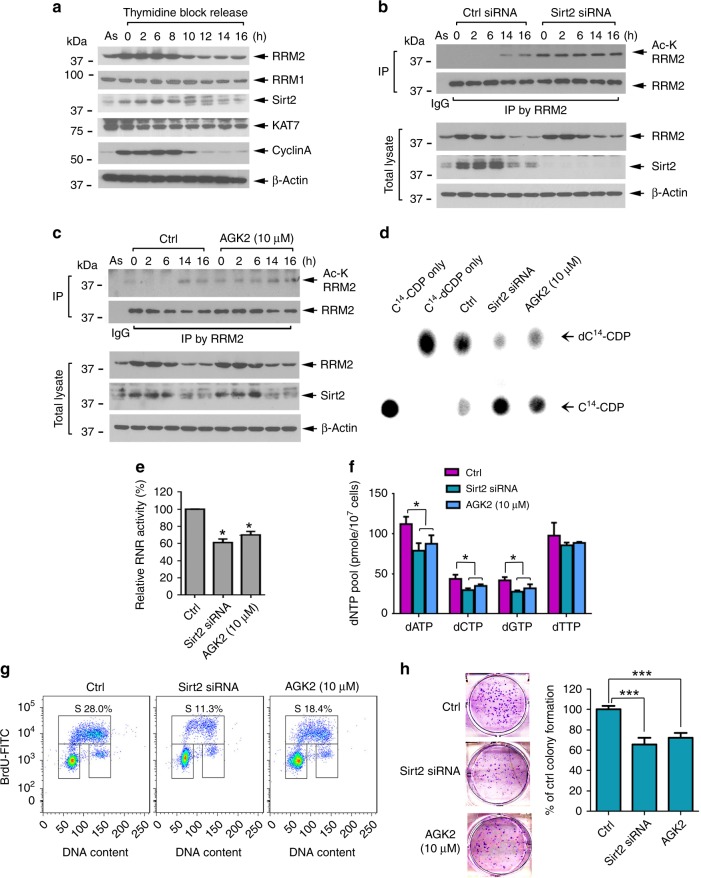
“To further test the effect of Sirt2 on RRM2 deacetylation during the cell cycle, Sirt2 was inhibited by Sirt2 siRNA or Sirt2-speci fi c inhibitor AGK2.”
InfluentialPontarin, G., Ferraro, P., Bee, L., Reichard, P. A., & Bianchi, V. (2012) · Proceedings of the National Academy of Sciences · doi:10.1073/pnas.1211289109 · Cited by 135
Niida, H., Katsuno, Y., Sengoku, M., Shimada, M., Yukawa, M., Ikura, M., Ikura, T., Kohno, K., Shima, H., Suzuki, H., et al. (2010) · Genes & Development · doi:10.1101/gad.1863810 · Cited by 135
Small-Molecule Bcl2 BH4 Antagonist for Lung Cancer Therapy
Han, B., Park, D., Li, R., Xie, M., Owonikoko, T. K., Zhang, G., Sica, G. L., Ding, C., Zhou, J., Magis, A. T., et al. (2015) · Cancer Cell · doi:10.1016/j.ccell.2015.04.010 · Cited by 134
Self-citationFunctional Characterization of Rhodopsin Monomers and Dimers in Detergents
Jastrzebska, B., Maeda, T., Zhu, L., Fotiadis, D., Filipek, S., Engel, A., Stenkamp, R. E., & Palczewski, K. (2004) · Journal of Biological Chemistry · doi:10.1074/jbc.m408691200 · Cited by 134
Regulation of deoxynucleotide metabolism in cancer: novel mechanisms and therapeutic implications
Kohnken, R., Kodigepalli, K. M., & Wu, L. (2015) · Molecular Cancer · doi:10.1186/s12943-015-0446-6 · Cited by 123
Ribonucleotide Reductases: Divergent Evolution of an Ancient Enzyme
Torrents, E., Aloy, P., Gibert, I., & Rodríguez-Trelles, F. (2002) · Journal of Molecular Evolution · doi:10.1007/s00239-002-2311-7 · Cited by 111
Tetrameric acetyl-CoA acetyltransferase 1 is important for tumor growth
Fan, J., Lin, R., Xia, S., Chen, D., Elf, S. E., Liu, S., Pan, Y., Xu, H., Qian, Z., Wang, M., et al. (2016) · Molecular Cell · doi:10.1016/j.molcel.2016.10.014 · Cited by 106
Self-citationHuang, D., Zhang, Y., & Chen, X. (2002) · Journal of Chromatography B · doi:10.1016/s1570-0232(02)00780-8 · Cited by 103
Chabes, A. L., Björklund, S., & Thelander, L. (2004) · Journal of Biological Chemistry · doi:10.1074/jbc.m312482200 · Cited by 101
ATR Plays a Direct Antiapoptotic Role at Mitochondria, which Is Regulated by Prolyl Isomerase Pin1
Hilton, B. A., Li, Z., Musich, P. R., Wang, H., Cartwright, B. M., Serrano, M., Zhou, X. Z., Lu, K. P., & Zou, Y. (2015) · Molecular Cell · doi:10.1016/j.molcel.2015.08.008 · Cited by 95
Lee, H., Yuan, C., Hammet, A., Mahajan, A., Chen, E. S.-W., Wu, M.-R., Su, M., Heierhorst, J., & Tsai, M. (2008) · Molecular Cell · doi:10.1016/j.molcel.2008.05.013 · Cited by 89
Mulder, K. W., Winkler, G. S., & Timmers, H. T. M. (2005) · Nucleic Acids Research · doi:10.1093/nar/gki938 · Cited by 86
Grbeša, I., Pajares, M. J., Martínez‐Terroba, E., Agorreta, J., Mikecin, A., Larráyoz, M., Idoate, M. A., Gall‐Tros̆elj, K., Pío, R., & Montuenga, L. M. (2015) · PLoS ONE · doi:10.1371/journal.pone.0124670 · Cited by 82
Koberna, K., Staněk, D., Malínský, J., Eltsov, M., Pliss, A., Čtrnáctá, V., Cermanová, Š., & Raška, I. (1999) · Chromosoma · doi:10.1007/s004120050384 · Cited by 80
Cellular regulation of ribonucleotide reductase in eukaryotes
Guarino, E., Salguero, I., & Kearsey, S. E. (2014) · Seminars in Cell & Developmental Biology · doi:10.1016/j.semcdb.2014.03.030 · Cited by 78
Aye, Y., & Stubbe, J. (2011) · Proceedings of the National Academy of Sciences · doi:10.1073/pnas.1013274108 · Cited by 77
Small GTP-binding protein Ran is regulated by posttranslational lysine acetylation
de Boor, S., Knyphausen, P., Kuhlmann, N., Wroblowski, S., Brenig, J., Scislowski, L., Baldus, L., Nolte, H., Krüger, M., & Lammers, M. (2015) · Proceedings of the National Academy of Sciences · doi:10.1073/pnas.1505995112 · Cited by 74
Self-citationImmunohistochemical measurement of estrogen receptors in breast cancer tissue samples.
Jonat, W., Maass, H., & Stegner, H.-E. (1986) · PubMed · Cited by 66
ATRIP Deacetylation by SIRT2 Drives ATR Checkpoint Activation by Promoting Binding to RPA-ssDNA
Zhang, H., Head, P. E., Daddacha, W., Park, S.-H., Li, X., Pan, Y., Madden, M. Z., Duong, D. M., Xie, M., Yu, B., et al. (2016) · Cell Reports · doi:10.1016/j.celrep.2016.01.018 · Cited by 66
Self-citationIto, A., Shimazu, T., Maeda, S., Shah, A. A., Tsunoda, T., Iemura, S.-I., Natsume, T., Suzuki, T., Motohashi, H., Yamamoto, M., et al. (2015) · Science Signaling · doi:10.1126/scisignal.aad0667 · Cited by 60
Confirming Specificity of RNAi in Mammalian Cells
Lassus, P., Rodriguez, J., & Lazebnik, Y. A. (2002) · Science Signaling · doi:10.1126/stke.2002.147.pl13 · Cited by 59
Bcl2 Induces DNA Replication Stress by Inhibiting Ribonucleotide Reductase
Xie, M., Yen, Y., Owonikoko, T. K., Ramalingam, S. S., Khuri, F. R., Curran, W. J., Doetsch, P. W., & Deng, X. (2014) · Cancer Research · doi:10.1158/0008-5472.can-13-1536-t · Cited by 58
Self-citationInsights into Lysine Deacetylation of Natively Folded Substrate Proteins by Sirtuins
Knyphausen, P., de Boor, S., Kuhlmann, N., Scislowski, L., Extra, A., Baldus, L., Schacherl, M., Baumann, U., Neundorf, I., & Lammers, M. (2016) · Journal of Biological Chemistry · doi:10.1074/jbc.m116.726307 · Cited by 57
Self-citationMoróte, J., Fernández, S., Alaña, L., Iglesias, C., Planas, J., Reventós, J., y Cajal, S. R., Paciucci, R., & de Torres, I. M. (2008) · Clinical Cancer Research · doi:10.1158/1078-0432.ccr-07-4987 · Cited by 56
ínský, J. M., Koberna, K., ěk, D. S., šata, M. M., Votruba, I., & ška, I. R. (2001) · Journal of Cell Science · doi:10.1242/jcs.114.4.747 · Cited by 55
Placencio, V. R., Ichimura, A., Miyata, T., & DeClerck, Y. A. (2015) · PLoS ONE · doi:10.1371/journal.pone.0133786 · Cited by 52
Rapamycin Induces Bad Phosphorylation in Association with Its Resistance to Human Lung Cancer Cells
Liu, Y., Sun, S., Owonikoko, T. K., Sica, G., Curran, W. J., Khuri, F. R., & Deng, X. (2012) · Molecular Cancer Therapeutics · doi:10.1158/1535-7163.mct-11-0578 · Cited by 50
Self-citationIRBIT is a novel regulator of ribonucleotide reductase in higher eukaryotes
Arnaoutov, A., & Dasso, M. (2014) · Science · doi:10.1126/science.1251550 · Cited by 48
Johansson, R., Jonna, V. R., Kumar, R., Nayeri, N., Lundin, D., Sjöberg, B., Hofer, A., & Logan, D. T. (2016) · Structure · doi:10.1016/j.str.2016.03.025 · Cited by 41 · cited 3×
“RNR enzymes are divided into three classes termed class I, class II, and class III, based on how radicals are generated during the reaction 4 .”
BackgroundInfluentialSirtuin 2 mutations in human cancers impair its function in genome maintenance
Head, P. E., Zhang, H., Bastien, A. J., Koyen, A. E., Withers, A. E., Daddacha, W. B., Cheng, X., & Yu, D. S. (2017) · Journal of Biological Chemistry · doi:10.1074/jbc.m116.772566 · Cited by 41
Self-citationCytoplasmic ATR Activation Promotes Vaccinia Virus Genome Replication
Postigo, A. A., Ramsden, A. E., Howell, M. T., & Way, M. (2017) · Cell Reports · doi:10.1016/j.celrep.2017.04.025 · Cited by 39
Chemical Acetylation and Deacetylation
Fritz, K. S. (2013) · Methods in molecular biology · doi:10.1007/978-1-62703-637-5_13 · Cited by 27
Closing the circle on ribonucleotide reductases
Logan, D. T. (2011) · Nature Structural & Molecular Biology · doi:10.1038/nsmb0311-251 · Cited by 20
Galander, M., Uppsten, M., Uhlin, U., & Lendzian, F. (2006) · Journal of Biological Chemistry · doi:10.1074/jbc.m605089200 · Cited by 17
Johansson, R., Jonna, V. R., Kumar, R., Nayeri, N., Lundin, D., Sjöberg, B., Hofer, A., & Logan, D. T. (2016) · Structure · doi:10.1016/j.str.2016.07.006 · Cited by 4
Cited by
Xiong, W., Zhang, B., Yu, H., Zhu, L., Yi, L., & Jin, X. (2021) · Advanced Science · doi:10.1002/advs.202100881 · Cited by 159
Ribonucleotide reductase M2 (RRM2): Regulation, function and targeting strategy in human cancer
Zuo, Z., Zhou, Z., Chang, Y., Liu, Y., Shen, Y., Li, Q., & Zhang, L. (2022) · Genes & Diseases · doi:10.1016/j.gendis.2022.11.022 · Cited by 153
“Chen et al found that acetylation/deacetylation of the RRM2 is a molecular switch of RR activity.(98) RRM2 is directly acetylated by KAT7.”
BackgroundZeng, X., Shi, G., He, Q., & Zhu, P. (2021) · Scientific Reports · doi:10.1038/s41598-021-00268-9 · Cited by 86
Multiple Roles of SIRT2 in Regulating Physiological and Pathological Signal Transduction
Zhu, C., Dong, X., Wang, X., Zheng, Y., Qiu, J., Peng, Y., Xu, J., Chai, Z., & Liu, C. (2022) · Genetics Research · doi:10.1155/2022/9282484 · Cited by 77
“On the other hand, SIRT2 maintains the activity of RNR by deacetylating the subunit RRM2 of ribonucleotide reductase (RNR), ensuring a sufficient supply of precursor dNTPs for DNA synthesis and promoting the progress of DNA replication [11].”
BackgroundSIRT2 Contributes to the Regulation of Intestinal Cell Proliferation and Differentiation
Li, C., Zhou, Y., Rychahou, P. G., Weiss, H. L., Lee, E. Y., Perry, C. L., Barrett, T. A., Wang, Q., & Evers, B. M. (2020) · Cellular and Molecular Gastroenterology and Hepatology · doi:10.1016/j.jcmgh.2020.01.004 · Cited by 75
“Deacetylation assay was performed as described.(64) Briefly,”
Metadata
- Authors
- Chen, G., Luo, Y., Warncke, K., Sun, Y., Yu, D. S., Fu, H., Behera, M., Ramalingam, S. S., Doetsch, P. W., Duong, D. M., Lammers, M., Curran, W. J., & Deng, X.
- Affiliations
- Emory University (US)
- National Institutes of Health (US)
- Universität Greifswald (DE)
- Corresponding author
- Deng, Xingming
- ORCID
- Venue
- Nature Communications
- Published
- 2019-07-19
- Volume
- 10
- Issue
- 1
- Pages
- 3213-3213
- ISSN
- 2041-1723 (ISSN-L)
- PMC
- PMC6642173
- OpenAlex
- W2963368358
- Cited by
- 82
- References
- 71
- Citations by year
- 2026: 6 · 2025: 15 · 2024: 11 · 2023: 14 · 2022: 14 · 2021: 16 · 2020: 6
- FWCI
- 2.98
- Type
- journal article
- Language
- en
- Open access
- gold
- doi.org
- Licence
- cc-by
- creativecommons.org/licenses/by/4.0 (tdm)
- creativecommons.org/licenses/by/4.0 (vor)
- Locations
- Nature Communications (publishedVersion, cc-by)
- Europe PMC (PubMed Central) (publishedVersion, cc-by)
- PubMed Central (publishedVersion, cc-by)
- PubMed (publishedVersion)
- RePEc: Research Papers in Economics (submittedVersion)
- DOAJ (DOAJ: Directory of Open Access Journals) (submittedVersion)
- Funders
- U.S. Department of Health & Human Services | NIH | National Cancer Institute (R01CA193828, R01CA136534, R01CA200905-01A1)
- Topics
- Life Sciences › Biochemistry, Genetics and Molecular Biology › Molecular Biology › Biochemical and Molecular Research
- Life Sciences › Biochemistry, Genetics and Molecular Biology › Molecular Biology › DNA Repair Mechanisms
- Life Sciences › Biochemistry, Genetics and Molecular Biology › Molecular Biology › Epigenetics and DNA Methylation
- Keywords
- ribonucleotide reductase, RRM2, protein acetylation, deacetylation, KAT7, SIRT2, dNTP synthesis, replication fork stalling, DNA damage response, camptothecin, radiation, tumor cell proliferation
- MeSH terms
- Acetylation, Camptothecin, Cell Cycle, Cell Transformation, Neoplastic, DNA Damage, DNA Replication, Humans, Ribonucleoside Diphosphate Reductase, Ribonucleotide Reductases, Gene Expression Regulation, Neoplastic, S Phase, Cell Line, Tumor, Histone Acetyltransferases, Sirtuin 2
About these checks
Registry, retraction, Cites and statistics results are computed, not judged, with one exception: a printed reference that no index lists is read once by a model before it counts as a citation error. Claims are extracted by a model and kept only when their quote appears verbatim in the text; each cited source is then checked, with a model’s help, for whether it says what the claim relies on. Those verdicts can be wrong — read the claim’s quote and the cited source before relying on one.
Statistics and arithmetic are recomputed, not judged.
Confidence bands are shown only for fields calibrated on our annotated test set. None is calibrated yet, so no band is shown.
What counts as a claim ›How we measure confidence ›How we check this ›
Are you an author, or do you see a problem with this page? Request a review
Data sources
Bibliographic data: Semantic Scholar, OpenAlex, Crossref.
Contains information from the Semantic Scholar Academic Graph Datasets, made available under the ODC Attribution License (ODC-BY 1.0).
Semantic Scholar’s data is described in: Kinney, R., et al. (2023). The Semantic Scholar Open Data Platform. arXiv:2301.10140.
