

Comprehensive characterization of RAS mutations in colon and rectal cancers in old and young patients
Open accessThe DOI matches its Crossref record; 58 of the 58 references it cites were found in a registry or an index.
Abstract
Colorectal cancer (CRC) is increasingly appreciated as a heterogeneous disease, with factors such as microsatellite instability (MSI), cancer subsite within the colon versus rectum, and age of diagnosis associated with specific disease course and therapeutic response. Activating oncogenic mutations in KRAS and NRAS are common in CRC, driving tumor progression and influencing efficacy of both cytotoxic and targeted therapies. The RAS mutational spectrum differs substantially between tumors arising from distinct tissues. Structure-function analysis of relatively common somatic RAS mutations in G12, Q61, and other codons is characterized by differing potency and modes of action. Here we show the mutational profile of KRAS , NRAS , and the less common HRAS in 13,336 CRC tumors, comparing the frequency of specific mutations based on age of diagnosis, MSI status, and colon versus rectum subsite. We identify mutation hotspots, and unexpected differences in mutation spectrum, based on these clinical parameters.
Overview
The claims and statistics of this paper haven’t been checked yet.
Free: it reads the open-access text and checks the first 5 claims that cite a source we can check. Create a free account to check every claim.
Integrity signals
Registry
Cites
Statistics
Figures
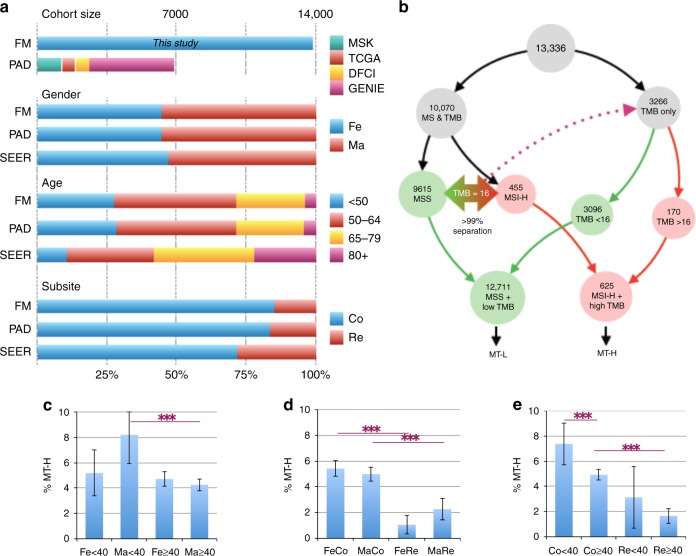
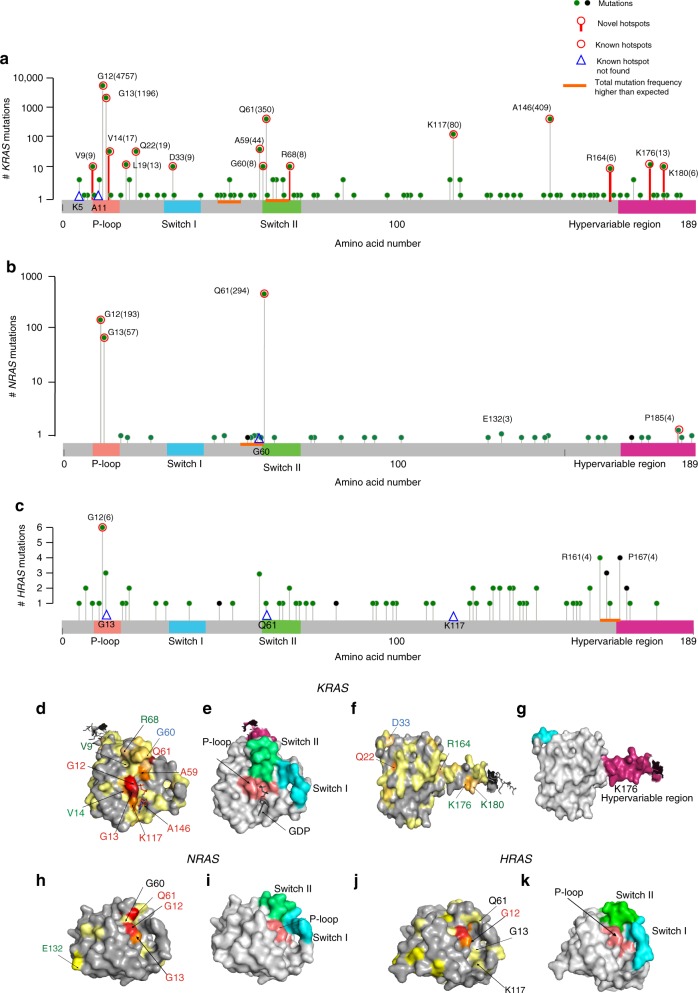
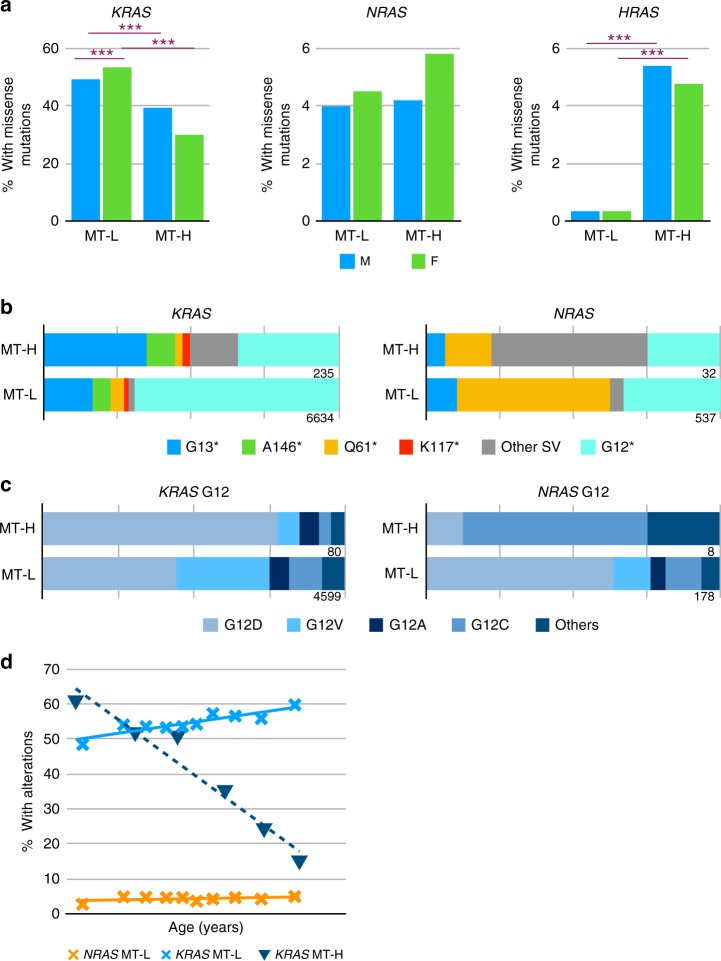
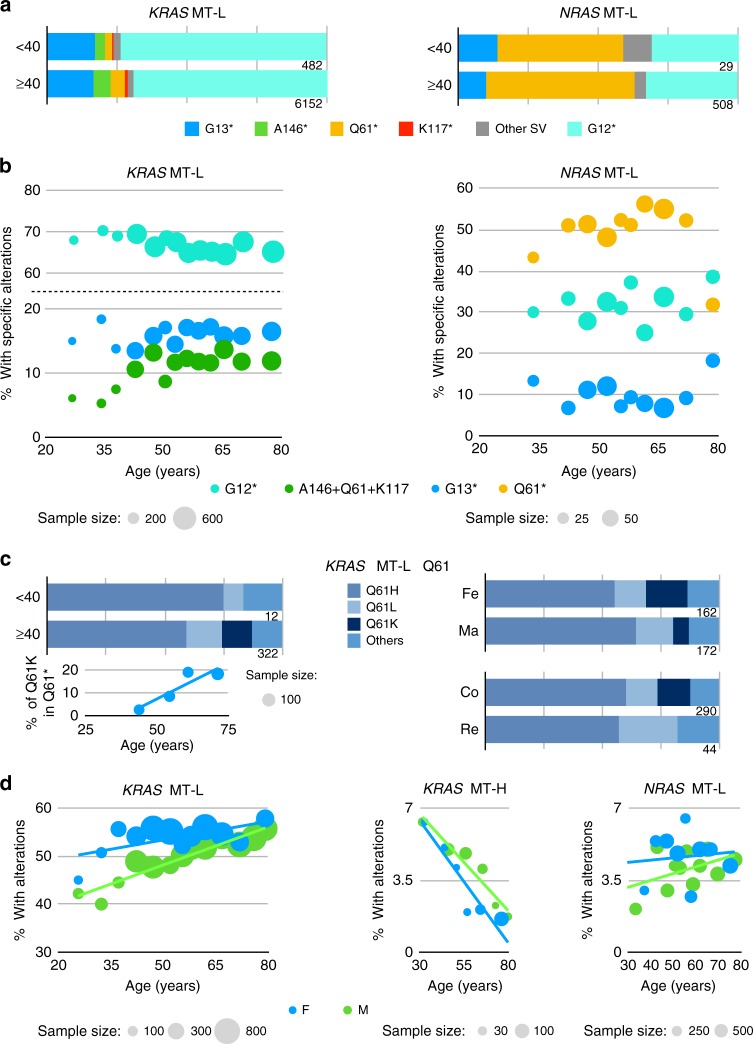
Verification
Claims the paper makes
The claims and statistics of this paper haven’t been checked yet.
Free: it reads the open-access text and checks the first 5 claims that cite a source we can check. Create a free account to check every claim.
Claims other papers make about this one
Each is checked against this paper’s own text: does it say what the citing paper says it does?
In the citing paper
“Following initiating APC mutations, CRC tumors developing via the CIN pathway frequently include activating mutations in KRAS (~40%) and NRAS (3–5%) [21].”
From Recent Advances in Therapeutic Strategies to Improve Colorectal Cancer Treatment (2024) · cites this paper as [21]
Self-check
Percentages, sums and reported differences re-computed from the paper’s own numbers.
The self-check needs the paper’s full text.
Citations
Cites
The PyMOL Molecular Graphics System
DeLano, W. L. (2002) · Medical Entomology and Zoology · Cited by 18,147
Comprehensive molecular characterization of human colon and rectal cancer
The Cancer Genome Atlas Network (2012) · Nature · doi:10.1038/nature11252 · Cited by 8,499
Colorectal cancer statistics, 2017
Siegel, R. L., Miller, K. D., Fedewa, S. A., Ahnen, D. J., Meester, R. G. S., Barzi, A., & Jemal, A. (2017) · CA: A Cancer Journal for Clinicians · doi:10.3322/caac.21395 · Cited by 3,806
K-ras Mutations and Benefit from Cetuximab in Advanced Colorectal Cancer
Karapetis, C. S., Khambata-Ford, S., Jonker, D. J., O'Callaghan, C. J., Tu, D., Tebbutt, N. C., Simes, R. J., Chalchal, H., Shapiro, J. D., Robitaille, S., et al. (2008) · New England Journal of Medicine · doi:10.1056/nejmoa0804385 · Cited by 3,622
Wild-Type KRAS Is Required for Panitumumab Efficacy in Patients With Metastatic Colorectal Cancer
Amado, R. G., Wolf, M., Peeters, M., Van Cutsem, E., Siena, S., Freeman, D. J., Juan, T., Sikorski, R., Suggs, S., Radinsky, R., et al. (2008) · Journal of Clinical Oncology · doi:10.1200/jco.2007.14.7116 · Cited by 3,207
Levin, B., Lieberman, D. A., McFarland, B., Andrews, K. S., Brooks, D., Bond, J., Dash, C., Giardiello, F. M., Glick, S., Johnson, D., et al. (2008) · Gastroenterology · doi:10.1053/j.gastro.2008.02.002 · Cited by 2,990
Panitumumab–FOLFOX4 Treatment and RAS Mutations in Colorectal Cancer
Douillard, J.-Y., Oliner, K. S., Siena, S., Tabernero, J., Burkes, R., Barugel, M., Humblet, Y., Bodoky, G., Cunningham, D., Jassem, J., et al. (2013) · New England Journal of Medicine · doi:10.1056/nejmoa1305275 · Cited by 2,263
Frampton, G. M., Fichtenholtz, A., Otto, G. A., Wang, K., Downing, S. R., He, J., Schnall-Levin, M., White, J., Sanford, E. M., An, P., et al. (2013) · Nature Biotechnology · doi:10.1038/nbt.2696 · Cited by 2,157
Self-citationAACR Project GENIE: Powering Precision Medicine through an International Consortium
The AACR Project GENIE Consortium, The AACR Project GENIE Consortium, André, F., Arnedos, M., Baras, A. S., Baselga, J., Bedard, P. L., Berger, M. F., Bierkens, M., Calvo, F., et al. (2017) · Cancer Discovery · doi:10.1158/2159-8290.cd-17-0151 · Cited by 1,964
RAS Proteins and Their Regulators in Human Disease
Simanshu, D. K., Nissley, D. V., & McCormick, F. (2017) · Cell · doi:10.1016/j.cell.2017.06.009 · Cited by 1,943
Cited by
Items 201–230 of 230
Prognostic and Predictive Factors in Metastatic Colorectal Cancer
Österlund, E. (2024) · doi:10.33063/diva-522642
Ruban, M. S., Болотина, Л. В., Karagodina, Y. B., Игоревна, Д. Т., Kornietskaya, A. L., & Феденко, А. А. (2024) · Medical alphabet · doi:10.33667/2078-5631-2024-7-46-54
Das, S., & Berlin, J. D. (2024) · Hematology/Oncology Clinics of North America · doi:10.1016/j.hoc.2024.08.008
A review on role of oncogene (KRAS) & tumor suppressor gene (TP53) in colorectal cancer
Ram, N., Triveni, K., Akshay, P., Shameera, S., Naik, J. T., Gopinath, T. P. S., & Kumar, J. N. S. (2024) · International Journal of Allied Medical Sciences and Clinical Research · doi:10.61096/ijamscr.v12.iss4.2024.596-599 · Cited by 1
RAS oncogenes in Venezuelan colorectal cancer: detection methods and mutational profile review
Ramírez, C. D., Rodríguez-Carrascal, D., & Puche, R. (2025) · Academia oncology. · doi:10.20935/acadonco7791
Choudhary, R., Das, N., Nayak, B., Tiwari, R., Malekar, A., & Sahare, V. (2025) · Current Drug Discovery Technologies · doi:10.2174/0115701638365059250707070424
Yan, H.-X. W., Jiang, L., Li, Y., Wang, F., Mo, S., Sheng, W., Huang, D., & Peng, J. (2025) · JMIR Formative Research · doi:10.2196/66960 · Cited by 1
“P g i MSI and P g i MSS were based on the findings of Serebriiskii et al [19] and 2 datasets [20,21] on cBioPortal [22,23].”
Microdissection: Insights and progress in the era of precision medicine
Golias, M., Krupova, Z., Defrenaix, P., Heymann, M., & Heymann, D. (2025) · Pathology - Research and Practice · doi:10.1016/j.prp.2025.156328
Adam, R., van Neerven, S. M., Pleguezuelos‐Manzano, C., Simmini, S., Léveillé, N., de Groot, N. E., Holding, A. N., Markowetz, F. M., & Vermeulen, L. (2020) · Figshare · doi:10.6084/m9.figshare.13331702
Meyer, D., Kames, J. M., Bar, H., Komar, A. A., Alexaki, A., Ibla, J. C., Hunt, R., Santana-Quintero, L. V., Golikov, A., DiCuccio, M. N., et al. (2021) · Figshare · doi:10.6084/m9.figshare.15071380
Adam, R., van Neerven, S. M., Pleguezuelos‐Manzano, C., Simmini, S., Léveillé, N., de Groot, N. E., Holding, A. N., Markowetz, F. M., & Vermeulen, L. (2020) · Figshare · doi:10.6084/m9.figshare.13331693
Metabolic Alterations in Colorectal Polyps and their Role in Carcinogenesis
Rebane-Klemm, E. (2023) · TUTL Collection · doi:10.23658/taltech.27/2023
Adam, R., van Neerven, S. M., Pleguezuelos‐Manzano, C., Simmini, S., Léveillé, N., de Groot, N. E., Holding, A. N., Markowetz, F. M., & Vermeulen, L. (2020) · Figshare · doi:10.6084/m9.figshare.13331705
Élez, E., Cubillo, A., Alfonso, P., Middleton, M. R., Chau, I., Alkuzweny, B., Alcasid, A., Zhang, X., & Cutsem, E. V. (2024) · Figshare · doi:10.6084/m9.figshare.25583926
Baselga Bellosillo, L. (2023) · Archivo Digital UPM (Universidad Politécnica de Madrid)
Carcinoma colorrectal e metástases hepáticas - o efeito do microambiente
Oliveira, R. P. C. M. D. (2021) · Portuguese National Funding Agency for Science, Research and Technology (RCAAP Project by FCT) · doi:10.34626/5y07-6z16
Βλάχου, Μ.-Σ. Β., & Βλάχου, Μ.-Σ. Β. (2025) · University of Thessaly Institutional Repository (University of Thessaly)
Loi, P. (2023) · Digital Access to Scholarship at Harvard (DASH) (Harvard University)
Pooled single-cell screen in colorectal cancer defines transcriptional modules linked to oncogenes
Hollek, V., Böhning, F., Vargas, C. F., Sieber, A., Morkel, M., & Blüthgen, N. (2026) · Molecular Systems Biology · doi:10.1038/s44320-025-00186-2
“Detailed mechanistic studies showed common functions, but also functional differences of individual KRAS mutations (Johnson et al, 2022), as also inferred from their non-equivalent distribution in CRC patients of different age, sex, or subsite (Serebriiskii et al, 2019).”
Na, J. E., Kim, T. O., & Park, Y. E. (2026) · Frontiers in Microbiomes · doi:10.3389/frmbi.2026.1687978
Serafimidis, I. (2026) · Frontiers in Oncology · doi:10.3389/fonc.2026.1771549
“In CRC, for example, codon 61 KRAS mutations are enriched in tumors with TP53 alterations and are associated with higher rates of peritoneal metastasis and poorer prognosis compared with KRAS G12 -mutant counterparts (8, 18).”
InfluentialDavid, A. P. L., Galvez, M. I. P., Chua, S. A. A., Leaño, D. M. G., Sacdalan, D. L., & Garcia, R. L. (2026) · Cells · doi:10.3390/cells15040349
“HRAS mutations are less commonly observed in CRC [64].”
Bennett, N. R., King, O. J., Lefevre, J. M., & Durand, A. P. (2022) · Journal of Medical Sciences and Interdisciplinary Research · doi:10.51847/c2qr6arn0j
Wiharjanto, D. E. N., Adnyana, I. B. B. S., & Hayuningrat, P. K. (2026) · International Surgery Journal · doi:10.18203/2349-2902.isj20261562
“14 Furthermore, all subjects in this study received 5 - FU/Oxaliplatin - based adjuvant chemotherapy.”
Kao, T., Lam, S.-H., Chen, S., Tsai, S.-C., Lee, C., Hsu, H., Huang, Y.-C., Chen, Y., Chen, C., & Chen, P. (2026) · Journal of Ethnopharmacology · doi:10.1016/j.jep.2026.122154
Baytar, D. K., Peniche, P. Z., Wang, S., Jan, Y. J., McFarquhar, A., Singhi, A. D., Saeed, A., & Şahin, İ. H. (2026) · Cancers · doi:10.3390/cancers18132158
“KRAS-mutated CRC is increasingly recognized as a heterogeneous disease [14].”
KRAS-mediated CCDC6 degradation drives xCT upregulation and ferroptosis evasion
Criscuolo, D., Catalano, R., Baviello, C., Fioravanti, C., Vigliar, E., Morra, F., Marotta, M., Mimura, J., Iaccarino, A., Pepe, F., et al. (2026) · APOPTOSIS · doi:10.1007/s10495-026-02400-4
“This sustained signaling collectively drives neoplastic transformation and tumor growth [4, 5].”
Mismatch-Engineered CRISPR Transistors for Ultra-Low-Frequency Single-Nucleotide Variant Detection
Chen, C., Ma, H., Xia, H., Zhang, B., Yin, K., Xie, F., Yue, Y., Bai, L., Wen, J., Yang, Y., et al. (2026) · Nano Letters · doi:10.1021/acs.nanolett.6c03317
Abdullah, I., & Ejaz, S. (2026) · Functional & Integrative Genomics · doi:10.1007/s10142-026-02050-4
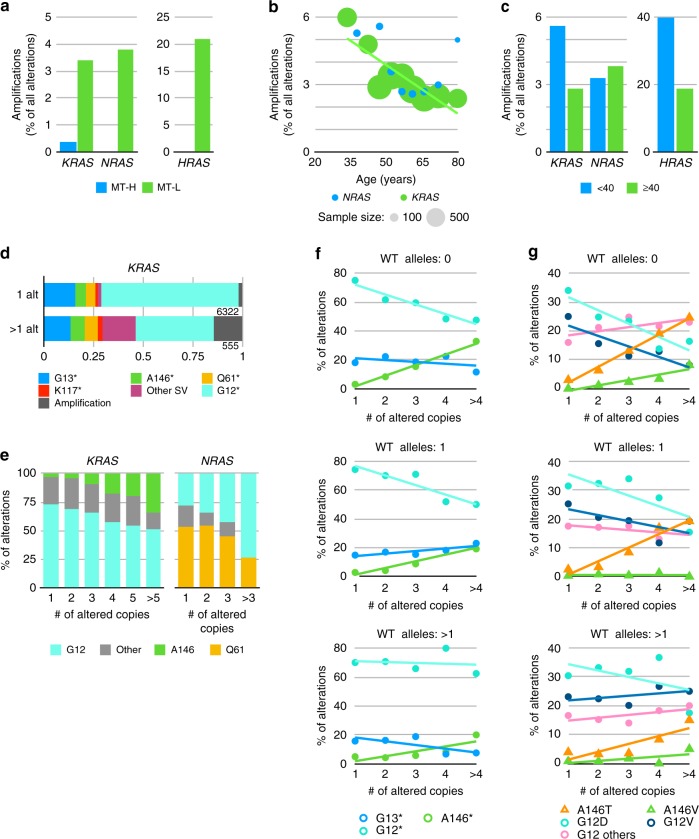
“Although HRAS mutations are rare in CRC (Kim et al. 2025 ), in advanced-stage CRC patients, HRAS mutation frequency was high in tumor of high tumor mutation burden (TMB) in comparison to low TMB tumor (Serebriiskii et al. 2019 ).”
BindingDB (2023) · UC San Diego · doi:10.7270/q2m61q7g
Metadata
- Authors
- Serebriiskii, I. G., Connelly, C., Frampton, G., Newberg, J., Cooke, M., Miller, V., Ali, S., Ross, J. S., Handorf, E., Arora, S., Lieu, C., Golemis, E. A., & Meyer, J. E.
- Affiliations
- Fox Chase Cancer Center (US)
- Foundation Medicine (United States) (US)
- SUNY Upstate Medical University (US)
- University of Colorado Cancer Center (US)
- Corresponding author
- Meyer, Joshua E.
- ORCID
- Venue
- Nature Communications
- Published
- 2019-08-19
- Volume
- 10
- Issue
- 1
- Pages
- 3722-3722
- ISSN
- 2041-1723 (ISSN-L)
- PMC
- PMC6700103
- OpenAlex
- W2969694562
- Semantic Scholar
- d55844319a99030380a64b7f79d0fd567d033609
- Cited by
- 215
- References
- 58
- Citations by year
- 2026: 12 · 2025: 25 · 2024: 44 · 2023: 25 · 2022: 35 · 2021: 42 · 2020: 30 · 2019: 2
- FWCI
- 11.37
- Type
- journal article
- Language
- en
- Open access
- gold
- doi.org
- Licence
- cc-by
- creativecommons.org/licenses/by/4.0 (tdm)
- creativecommons.org/licenses/by/4.0 (vor)
- Locations
- Nature Communications (publishedVersion, cc-by)
- Europe PMC (PubMed Central) (publishedVersion, cc-by)
- PubMed Central (publishedVersion, cc-by)
- PubMed (publishedVersion)
- RePEc: Research Papers in Economics (submittedVersion)
- DOAJ (DOAJ: Directory of Open Access Journals) (submittedVersion, cc-by-sa)
- DOAJ (DOAJ: Directory of Open Access Journals) (submittedVersion)
- TUScholarShare (Temple University) (submittedVersion, cc-by)
- Funders
- Russian Government subsidy to support the Program of Competitive Growth of Kazan Federal University
- U.S. Department of Defense (W81XWH-18-1-0148)
- U.S. Department of Health & Human Services | NIH | Center for Information Technology (CA229259-01, DK108195)
- Colorectal Cancer Alliance
- U.S. Department of Health & Human Services | NIH | National Cancer Institute (P30 CA006927)
- Topics
- Health Sciences › Medicine › Oncology › Colorectal Cancer Treatments and Studies
- Health Sciences › Medicine › Pathology and Forensic Medicine › Genetic factors in colorectal cancer
- Life Sciences › Biochemistry, Genetics and Molecular Biology › Molecular Biology › Protein Kinase Regulation and GTPase Signaling
- Keywords
- RAS mutations, colorectal cancer, KRAS, NRAS, HRAS, colon cancer, rectal cancer, age at diagnosis, microsatellite instability, mutational hotspots, somatic mutations, tumor heterogeneity
- MeSH terms
- Colonic Neoplasms, Female, Humans, Male, Membrane Proteins, Middle Aged, Mutation, Rectal Neoplasms, Structure-Activity Relationship, Genetic Variation, Genome, Human, Proto-Oncogene Proteins p21(ras), GTP Phosphohydrolases, Microsatellite Instability, Mutation Rate
About these checks
Registry, retraction, Cites and statistics results are computed, not judged, with one exception: a printed reference that no index lists is read once by a model before it counts as a citation error. Claims are extracted by a model and kept only when their quote appears verbatim in the text; each cited source is then checked, with a model’s help, for whether it says what the claim relies on. Those verdicts can be wrong — read the claim’s quote and the cited source before relying on one.
Statistics and arithmetic are recomputed, not judged.
Confidence bands are shown only for fields calibrated on our annotated test set. None is calibrated yet, so no band is shown.
What counts as a claim ›How we measure confidence ›How we check this ›
Are you an author, or do you see a problem with this page? Request a review
Data sources
Bibliographic data: Semantic Scholar, OpenAlex, Crossref.
Contains information from the Semantic Scholar Academic Graph Datasets, made available under the ODC Attribution License (ODC-BY 1.0).
Semantic Scholar’s data is described in: Kinney, R., et al. (2023). The Semantic Scholar Open Data Platform. arXiv:2301.10140.
