

Comprehensive characterization of RAS mutations in colon and rectal cancers in old and young patients
Open accessThe DOI matches its Crossref record; 58 of the 58 references it cites were found in a registry or an index.
Abstract
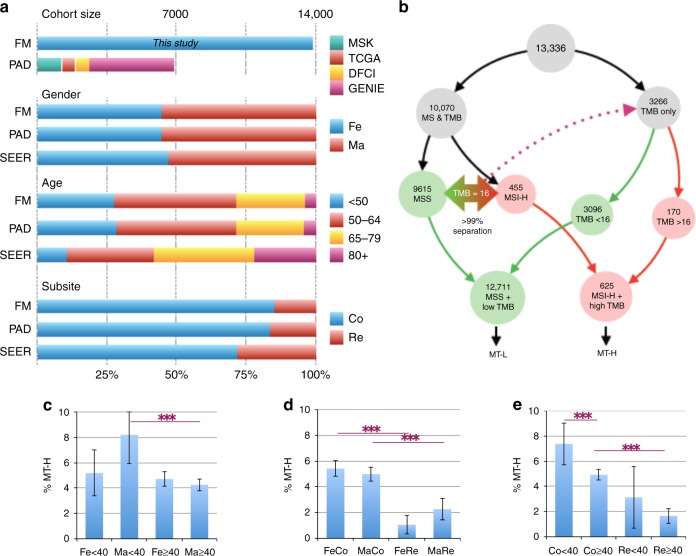
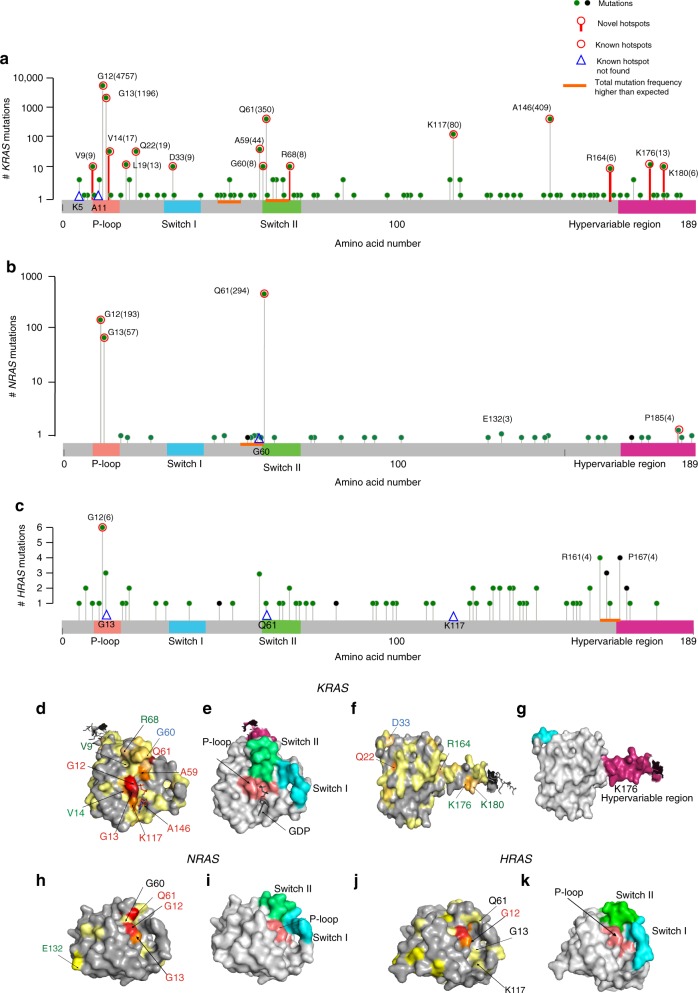
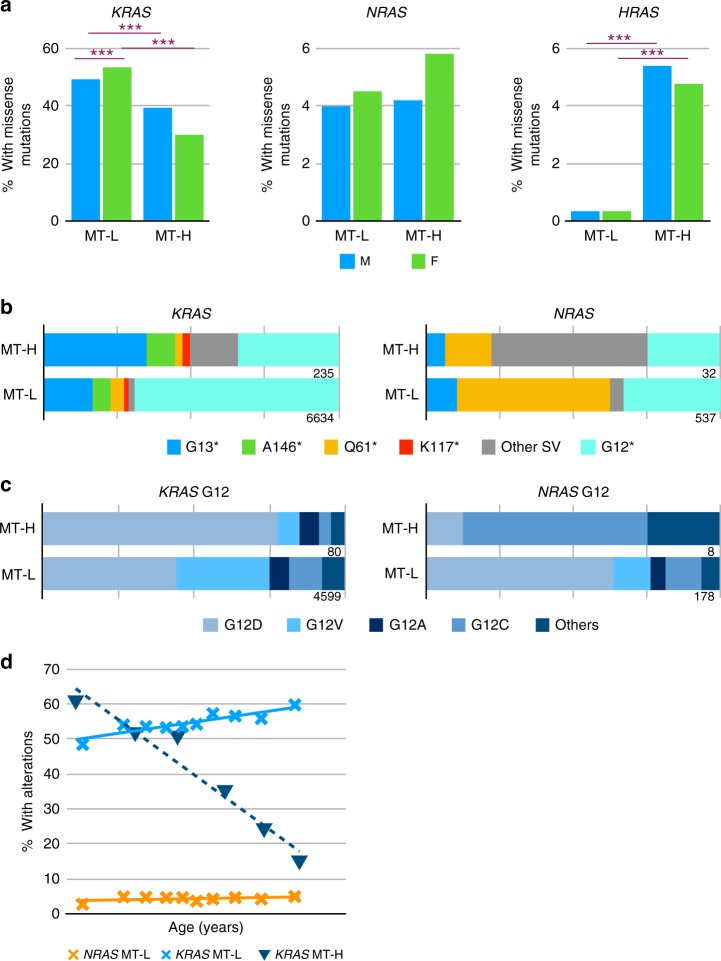
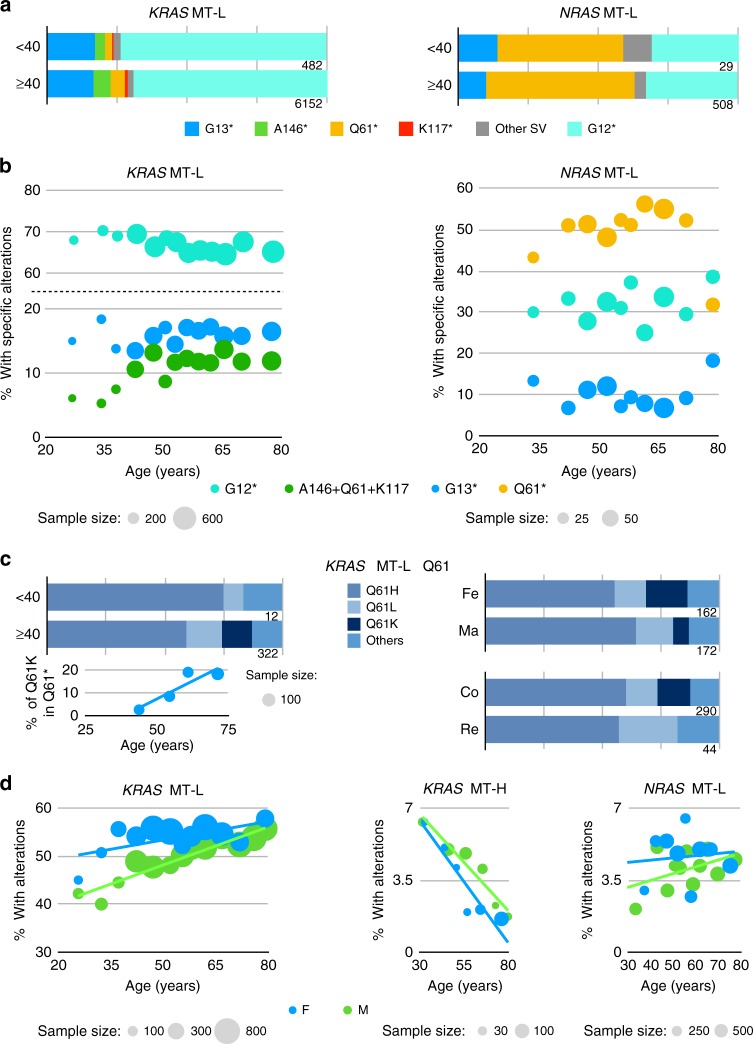
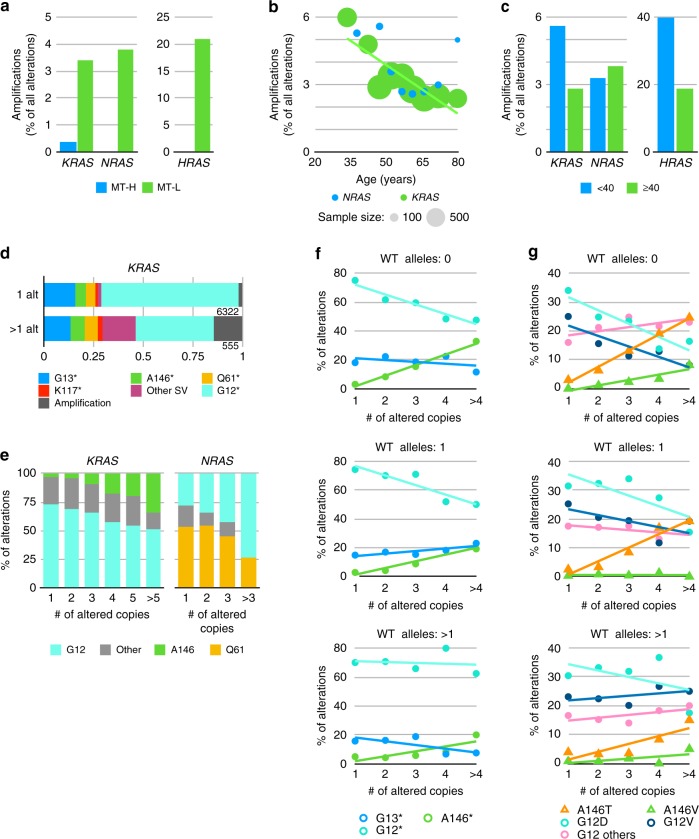
Colorectal cancer (CRC) is increasingly appreciated as a heterogeneous disease, with factors such as microsatellite instability (MSI), cancer subsite within the colon versus rectum, and age of diagnosis associated with specific disease course and therapeutic response. Activating oncogenic mutations in KRAS and NRAS are common in CRC, driving tumor progression and influencing efficacy of both cytotoxic and targeted therapies. The RAS mutational spectrum differs substantially between tumors arising from distinct tissues. Structure-function analysis of relatively common somatic RAS mutations in G12, Q61, and other codons is characterized by differing potency and modes of action. Here we show the mutational profile of KRAS , NRAS , and the less common HRAS in 13,336 CRC tumors, comparing the frequency of specific mutations based on age of diagnosis, MSI status, and colon versus rectum subsite. We identify mutation hotspots, and unexpected differences in mutation spectrum, based on these clinical parameters.
Overview
The claims and statistics of this paper haven’t been checked yet.
Free: it reads the open-access text and checks the first 5 claims that cite a source we can check. Create a free account to check every claim.
Integrity signals
Registry
Cites
Statistics
Figures
Verification
Claims the paper makes
The claims and statistics of this paper haven’t been checked yet.
Free: it reads the open-access text and checks the first 5 claims that cite a source we can check. Create a free account to check every claim.
Claims other papers make about this one
Each is checked against this paper’s own text: does it say what the citing paper says it does?
In the citing paper
“Following initiating APC mutations, CRC tumors developing via the CIN pathway frequently include activating mutations in KRAS (~40%) and NRAS (3–5%) [21].”
From Recent Advances in Therapeutic Strategies to Improve Colorectal Cancer Treatment (2024) · cites this paper as [21]
Self-check
Percentages, sums and reported differences re-computed from the paper’s own numbers.
The self-check needs the paper’s full text.
Citations
Cites
The PyMOL Molecular Graphics System
DeLano, W. L. (2002) · Medical Entomology and Zoology · Cited by 18,147
Comprehensive molecular characterization of human colon and rectal cancer
The Cancer Genome Atlas Network (2012) · Nature · doi:10.1038/nature11252 · Cited by 8,499
Colorectal cancer statistics, 2017
Siegel, R. L., Miller, K. D., Fedewa, S. A., Ahnen, D. J., Meester, R. G. S., Barzi, A., & Jemal, A. (2017) · CA: A Cancer Journal for Clinicians · doi:10.3322/caac.21395 · Cited by 3,806
K-ras Mutations and Benefit from Cetuximab in Advanced Colorectal Cancer
Karapetis, C. S., Khambata-Ford, S., Jonker, D. J., O'Callaghan, C. J., Tu, D., Tebbutt, N. C., Simes, R. J., Chalchal, H., Shapiro, J. D., Robitaille, S., et al. (2008) · New England Journal of Medicine · doi:10.1056/nejmoa0804385 · Cited by 3,622
Wild-Type KRAS Is Required for Panitumumab Efficacy in Patients With Metastatic Colorectal Cancer
Amado, R. G., Wolf, M., Peeters, M., Van Cutsem, E., Siena, S., Freeman, D. J., Juan, T., Sikorski, R., Suggs, S., Radinsky, R., et al. (2008) · Journal of Clinical Oncology · doi:10.1200/jco.2007.14.7116 · Cited by 3,207
Levin, B., Lieberman, D. A., McFarland, B., Andrews, K. S., Brooks, D., Bond, J., Dash, C., Giardiello, F. M., Glick, S., Johnson, D., et al. (2008) · Gastroenterology · doi:10.1053/j.gastro.2008.02.002 · Cited by 2,990
Panitumumab–FOLFOX4 Treatment and RAS Mutations in Colorectal Cancer
Douillard, J.-Y., Oliner, K. S., Siena, S., Tabernero, J., Burkes, R., Barugel, M., Humblet, Y., Bodoky, G., Cunningham, D., Jassem, J., et al. (2013) · New England Journal of Medicine · doi:10.1056/nejmoa1305275 · Cited by 2,263
Frampton, G. M., Fichtenholtz, A., Otto, G. A., Wang, K., Downing, S. R., He, J., Schnall-Levin, M., White, J., Sanford, E. M., An, P., et al. (2013) · Nature Biotechnology · doi:10.1038/nbt.2696 · Cited by 2,157
Self-citationAACR Project GENIE: Powering Precision Medicine through an International Consortium
The AACR Project GENIE Consortium, The AACR Project GENIE Consortium, André, F., Arnedos, M., Baras, A. S., Baselga, J., Bedard, P. L., Berger, M. F., Bierkens, M., Calvo, F., et al. (2017) · Cancer Discovery · doi:10.1158/2159-8290.cd-17-0151 · Cited by 1,964
RAS Proteins and Their Regulators in Human Disease
Simanshu, D. K., Nissley, D. V., & McCormick, F. (2017) · Cell · doi:10.1016/j.cell.2017.06.009 · Cited by 1,943
Cited by
The Frequency of Ras Mutations in Cancer
Prior, I. A., Hood, F. E., & Hartley, J. L. (2020) · Cancer Research · doi:10.1158/0008-5472.can-19-3682 · Cited by 1,130
“from the Foundation Medicine database (40, 41, 44).”
BackgroundMethodAnticancer drug resistance: An update and perspective
Nussinov, R., Tsai, C.-J., & Jang, H. (2021) · Drug Resistance Updates · doi:10.1016/j.drup.2021.100796 · Cited by 386
Chen, P., Li, X., Zhang, R., Liu, S., Xiang, Y., Zhang, M., Chen, X., Pan, T., Yan, L., Feng, J., et al. (2020) · Theranostics · doi:10.7150/thno.44705 · Cited by 403
“RAS mutations are present in about 50% of CRC and they greatly hinder the therapeutic efficacy of EGFR inhibitors [3].”
BackgroundCharacteristics of Early-Onset vs Late-Onset Colorectal Cancer: A Review
Collaborative, R., Zaborowski, A. M., Abdile, A., Adamina, M., Aigner, F., d’Allens, L., Allmer, C., Álvarez, A., Anula, R., Andric, M., et al. (2021) · JAMA Surgery · doi:10.1001/jamasurg.2021.2380 · Cited by 297
“31 Notably, significant differences have also been observed between early-onset and late-onset MSS tumors.”
BackgroundMethodYang, J., Mo, J., Dai, J., Ye, C., Cen, W., Zheng, X., Jiang, L., & Ye, L. (2021) · Cell Death & Disease · doi:10.1038/s41419-021-04367-3 · Cited by 300
“However, KRAS mutations are seen in 36–46% of CRC cases, and they do not benefit from cetuximab treatment [4, 5].”
BackgroundThe emerging role of ferroptosis in intestinal disease
Xu, S., He, Y., Lin, L., Chen, P., Chen, M., & Zhang, S. (2021) · Cell Death & Disease · doi:10.1038/s41419-021-03559-1 · Cited by 258
Metabolic networks in mutant KRAS-driven tumours: tissue specificities and the microenvironment
Kerk, S. A., Papagiannakopoulos, T., Shah, Y. M., & Lyssiotis, C. A. (2021) · Nature Reviews Cancer · doi:10.1038/s41568-021-00375-9 · Cited by 237
Comprehensive Genomic Landscapes in Early and Later Onset Colorectal Cancer
Lieu, C. H., Golemis, E. A., Serebriiskii, I. G., Newberg, J., Hemmerich, A., Connelly, C., Messersmith, W. A., Eng, C., Eckhardt, S. G., Frampton, G., et al. (2019) · Clinical Cancer Research · doi:10.1158/1078-0432.ccr-19-0899 · Cited by 233
Self-citationSexual Dimorphism in Colon Cancer
Abancens, M., Bustos, V., Harvey, H., McBryan, J., & Harvey, B. J. (2020) · Frontiers in Oncology · doi:10.3389/fonc.2020.607909 · Cited by 176
Is cancer biology different in older patients?
Van Herck, Y., Feyaerts, A., Alibhai, S., Papamichael, D., Decoster, L., Lambrechts, Y., Pinchuk, M., Bechter, O., Herrera-Caceres, J., Bibeau, F., et al. (2021) · The Lancet Healthy Longevity · doi:10.1016/s2666-7568(21)00179-3 · Cited by 161
Effect of Aspirin on Cancer Incidence and Mortality in Older Adults
McNeil, J. J., Gibbs, Orchard, S. G., Lockery, J. E., Bernstein, W. B., Cao, Y., Ford, L., Haydon, A., Kirpach, B., Macrae, F., et al. (2021) · JNCI: Journal of the National Cancer Institute · doi:10.1093/jnci/djaa114 · Cited by 152
“Additionally, age has been shown to impact the types of mutations found within specific genes of tumors, such as the greater incidence of the G12 mutation of KRAS in those younger than 40 years compared with the more common Q61 KRAS mutation in older patients (19), along with a difference in the mutated gene itself (2…”
BackgroundFish, J. E., Suarez, C. P. F., Boudreau, É., Herman, A. M., Gutierrez, M. E. C., Gustafson, D., DiStefano, P. V., Cui, M., Chen, Z., de Ruiz, K. B., et al. (2020) · Circulation Research · doi:10.1161/circresaha.119.316500 · Cited by 151
Aspirin Use and Risk of Colorectal Cancer Among Older Adults
Guo, C., Ma, W., Drew, D. A., Cao, Y., Nguyen, L. H., Joshi, A. D., Ng, K., Ogino, S., Meyerhardt, J. A., Song, M., et al. (2021) · JAMA Oncology · doi:10.1001/jamaoncol.2020.7338 · Cited by 118
Aspirin in the Prevention of Colorectal Neoplasia
Drew, D. A., & Chan, A. T. (2020) · Annual Review of Medicine · doi:10.1146/annurev-med-060319-120913 · Cited by 97
“In addition, there is a greater incidence of KRAS A146, K117, and Q61 oncogenic mutations in older patients, whereas in younger patients (<40 years) G12 mutations are more frequent (41).”
BackgroundAssociation of T P53 and CDKN2A Mutation Profile with Tumor Mutation Burden in Head and Neck Cancer
Deneka, A. Y., Baca, Y., Serebriiskii, I. G., Nicolas, É., Parker, M. I., Nguyen, T. T., Xiu, J., Korn, W. M., Demeure, M. J., Wise-Draper, T. M., et al. (2022) · Clinical Cancer Research · doi:10.1158/1078-0432.ccr-21-4316 · Cited by 101
Self-citationStrategies to tackle RAS-mutated metastatic colorectal cancer
Patelli, G., Tosi, F., Amatu, A., Mauri, G., Curaba, A., Patanè, D. A., Pani, A., Scaglione, F., Siena, S., & Sartore-Bianchi, A. (2021) · ESMO Open · doi:10.1016/j.esmoop.2021.100156 · Cited by 86
“Prevalence of KRAS mutations increases with age, except for MSI disease.(13) In addition, acquired RAS mutations have been clearly demonstrated by our group and others to arise under the therapeutic pressure of EGFR blockade as secondary mechanisms of resistance.”
BackgroundRecent Advances in Therapeutic Strategies to Improve Colorectal Cancer Treatment
Gmeiner, W. H. (2024) · Cancers · doi:10.3390/cancers16051029 · Cited by 78
“[21].”
Mathematical model of colorectal cancer initiation
Paterson, C., Clevers, H. C., & Božić, I. (2020) · Proceedings of the National Academy of Sciences · doi:10.1073/pnas.2003771117 · Cited by 82
Precision therapy in RAS mutant colorectal cancer
Dienstmann, R., Connor, K., Byrne, A. T., Fridman, W. H., Lambrechts, D., Sadanandam, A., Trusolino, L., Prehn, J. H. M., Tabernero, J., & Kolch, W. (2020) · Gastroenterology · doi:10.1053/j.gastro.2019.12.051 · Cited by 73
Yue, Y., Hur, J., Cao, Y., Tabung, F. K., Wang, M., Wu, K., Song, M., Zhang, X., Liu, Y., Meyerhardt, J. A., et al. (2021) · Annals of Oncology · doi:10.1016/j.annonc.2021.03.200 · Cited by 69
Yan, W., Qiu, L., Yang, M., Xu, A., Ma, M., Yuan, Q., Ma, X., Liang, W., Li, X., & Lu, Y. (2023) · Cancer Letters · doi:10.1016/j.canlet.2023.216263 · Cited by 75
KRAS G12C Metastatic Colorectal Cancer: Specific Features of a New Emerging Target Population
Schirripa, M., Nappo, F., Cremolini, C., Salvatore, L., Rossini, D., Bensi, M., Businello, G., Pietrantonio, F., Randon, G., Fucà, G., et al. (2020) · Clinical Colorectal Cancer · doi:10.1016/j.clcc.2020.04.009 · Cited by 66
Precision medicine for metastatic colorectal cancer in clinical practice
Riedesser, J. E., Ebert, M. P. A., & Betge, J. (2022) · Therapeutic Advances in Medical Oncology · doi:10.1177/17588359211072703 · Cited by 71
Cenigaonandia‐Campillo, A., Serna‐Blasco, R., Gómez-Ocabo, L., Casado, S. S., Baños‐Herraiz, N., del Puerto‐Nevado, L., Cañas, J. A., Fernández‐Aceñero, M. J., García‐Foncillas, J., & Aguilera, Ó. (2021) · Theranostics · doi:10.7150/thno.51265 · Cited by 69
“Mutated KRAS is reported in approximately 35%-45% of colorectal cancers and >90% of pancreatic ductal adenocarcinoma (PDAC) correlating with abnormal metabolic rates, enhanced glucose uptake and resistance to EGFR-targeted therapies as well as preoperative chemoradiotherapy (CRT) [8-10].”
BackgroundKRAS Mutation Subtypes and Their Association with Other Driver Mutations in Oncogenic Pathways
Mondal, K., Posa, M. K., Shenoy, R. P., & Roychoudhury, S. (2024) · Cells · doi:10.3390/cells13141221 · Cited by 69
“Within G12 variants, the frequency of G12V fractions increases with age, whereas G12A and G12C substitution frequency decreases [143].”
BackgroundInfluentialRecent Updates on the Significance of KRAS Mutations in Colorectal Cancer Biology
László, L., Kurilla, A., Takács, T., Kudlik, G., Koprivanacz, K., Buday, L., & Vas, V. (2021) · Cells · doi:10.3390/cells10030667 · Cited by 58
“Indeed, age is also an important factor in cancer formation, and recently, age-associated features of RAS-driven CRC have also been studied [111].”
BackgroundComprehensive characterization of PTEN mutational profile in a series of 34,129 colorectal cancers
Serebriiskii, I. G., Pavlov, V., Tricarico, R., Andrianov, G., Nicolas, E., Parker, M. I., Newberg, J., Frampton, G., Meyer, J. E., & Golemis, E. A. (2022) · Nature Communications · doi:10.1038/s41467-022-29227-2 · Cited by 55
Self-citationLevin, N., Paria, B. C., Vale, N. R., Yossef, R., Lowery, F. J., Parkhurst, M. R., Yu, Z., Florentin, M., Cafri, G., Gartner, J. J., et al. (2021) · Clinical Cancer Research · doi:10.1158/1078-0432.ccr-21-0849 · Cited by 61
“4 colon cancer express a RAS mutation(19-21,23-28).”
BackgroundGharib, E., & Robichaud, G. A. (2024) · International Journal of Molecular Sciences · doi:10.3390/ijms25179463 · Cited by 65
Most Promising Approaches to Improve Brain AVM Management: ARISE I Consensus Recommendations
Samaniego, E. A., Dabus, G. C., Meyers, P. M., Kan, P. T. M., Frösén, J., Lanzino, G. S., Welch, B. G., Volovici, V., Gonzalez, L. F., Fifi, J. T., et al. (2024) · Stroke · doi:10.1161/strokeaha.124.046725 · Cited by 77
“106 Subsequently, BRAF, a downstream effector of KRAS induces activation of the mitogen-activated protein kinases (MAPKs), and extracellular signal-regulated kinases (ERKs) signaling pathway in brain endothelial cells.”
BackgroundDietary Factors in the Control of Gut Homeostasis, Intestinal Stem Cells, and Colorectal Cancer
Francescangeli, F., Angelis, M. L. D., & Zeuner, A. (2019) · Nutrients · doi:10.3390/nu11122936 · Cited by 56
“The mutational profile of KRAS, NRAS and Harvey rat sarcoma viral oncogene homolog (HRAS) were also recently analyzed in large patient cohorts, pointing to novel associations connecting age, gender and tumor subsite with specific mutations that could be potentially exploited for therapeutic purposes [62].”
BackgroundBanka, S., Bennington, A., Baker, M. J., Rijckmans, E., Clemente, G., Ansor, N. M., Sito, H., Prasad, P., Anyane‐Yeboa, K., Badalato, L., et al. (2022) · Brain · doi:10.1093/brain/awac049 · Cited by 51
“30 Overall, our and previous results suggest that the Q61– R68 region of switch II may be prone to activating mutations throughout the RAS superfamily.”
Allele-Specific PCR for KRAS Mutation Detection Using Phosphoryl Guanidine Modified Primers
Chubarov, A. S., Oscorbin, I. P., Филипенко, М. Л., Lomzov, A. A., & Pyshnyi, D. V. (2020) · Diagnostics · doi:10.3390/diagnostics10110872 · Cited by 45
“Among the G12 codon mutations, the most frequent ones are G12D and G12V in colon and rectal cancers [3].”
BackgroundInfluentialPrognostic and therapeutic impact of the KRAS G12C mutation in colorectal cancer
Qunaj, L., May, M. S., Neugut, A. I., & Herzberg, B. O. (2023) · Frontiers in Oncology · doi:10.3389/fonc.2023.1252516 · Cited by 48
Oliveira, T. D., Goldhardt, T., Edelmann, M., Rogge, T., Rauch, K., Kyuchukov, N. D., Menck, K., Bleckmann, A., Kalucka, J. M., Khan, S., et al. (2021) · Cancers · doi:10.3390/cancers13051011 · Cited by 47
High prevalence of TP53 loss and whole-genome doubling in early-onset colorectal cancer
Kim, J. E., Choi, J., Sung, C.-O., Hong, Y. S., Kim, S. Y., Lee, H.-J., Kim, T. W., & Kim, J. (2021) · Experimental & Molecular Medicine · doi:10.1038/s12276-021-00583-1 · Cited by 45
Discovery of Orally Bioavailable SOS1 Inhibitors for Suppressing KRAS-Driven Carcinoma
He, H., Zhang, Y., Xu, J., Li, Y., Fang, H., Liu, Y., & Zhang, S. (2022) · Journal of Medicinal Chemistry · doi:10.1021/acs.jmedchem.2c00986 · Cited by 42
Wu, J., Mei, W.-J., Xu, S., Ling, Y., Li, W., Kuang, J.-B., Li, H., Hui, H., Li, J., Cai, M., et al. (2022) · EBioMedicine · doi:10.1016/j.ebiom.2022.104120 · Cited by 41
Navarro-Jiménez, M., González, B., Mulet-Margalef, N., Hierro, C., & Alonso, S. (2025) · npj Precision Oncology · doi:10.1038/s41698-025-01166-3 · Cited by 45
“Numerous publications have explored the incidence of KRAS mutations in CRC, some of them analyzing a very large number of samples 36,37 .”
Mizutani, T., Boretto, M., Lim, S., Drost, J., González, D. M., Oka, R., Geurts, M. H., Begthel, H., Korving, J., van Es, J. H., et al. (2024) · Nature Cancer · doi:10.1038/s43018-024-00841-x · Cited by 39
“While KRAS mutations are reportedly more common in low-MSI (MSI-L) relative to MSI-H CRC, the NRAS mutation is equally frequent between MSI-L and MSI-H CRC tumors 42 .”
Molecular-Biology-Driven Treatment for Metastatic Colorectal Cancer
Lai, E., Liscia, N., Donisi, C., Mariani, S., Tolu, S., Pretta, A., Persano, M., Pinna, G., Balconi, F., Pireddu, A., et al. (2020) · Cancers · doi:10.3390/cancers12051214 · Cited by 41
“As for elderly patients, a different incidence of KRAS mutation has been reported according to the microsatellite status of the tumor; indeed, in this population, KRAS mutation seems to be more frequent in the case of microsatellite-stable MSS CRC, especially in males, whereas it seems to be lower in microsatelliteuns…”
BackgroundReview of treatment and therapeutic targets in brain arteriovenous malformation
Pan, P., Weinsheimer, S., Cooke, D. L., Winkler, E. A., Abla, A. A., Kim, H., & Su, H. (2021) · Journal of Cerebral Blood Flow & Metabolism · doi:10.1177/0271678x211026771 · Cited by 38
“Endothelial KRAS activating mutations cause conformational changes in KRAS and render it constitutively active by preventing GTP hydrolysis.(83) BRAF is the downstream effector of KRAS, which is recruited to the cell membrane following KRAS activation.”
BackgroundLuo, W., Dai, W., Li, Q., Mo, S., Han, L., Xiao, X., Gu, R., Xiang, W., Ye, L., Wang, R., et al. (2022) · International Journal of Biological Sciences · doi:10.7150/ijbs.69808 · Cited by 41
“reported that combination of β-elemene, a ferroptosis inducer, with anti-EGFR treatment could trigger ferroptosis to produce anti-tumor effects in CRC patients with RAS mutation [10, 11].”
BackgroundZhou, J., pour, A. F., Deirawan, H., Daaboul, F., Aung, T. N., Beydoun, R., Ahmed, F. S., & Chuang, J. H. (2023) · EBioMedicine · doi:10.1016/j.ebiom.2023.104726 · Cited by 38
“Molecular data pre-processing: 207 genes from 11 canonical cancer pathways 24-31 and the top 11 most commonly mutated genes in TCGA-COAD were selected.”
MethodHuang, X., Huang, J., Du, J., Zhang, N., Long, Z., Yang, Y. Q., Zhong, F., Zheng, B., Shen, Y., Huang, Z., et al. (2021) · Acta Pharmacologica Sinica · doi:10.1038/s41401-021-00612-9 · Cited by 36
Early Onset Colorectal Cancer: Molecular Underpinnings Accelerating Occurrence
Zinkeng, A., Taylor, F. L., Cheong, S. H., Song, H., & Merchant, J. L. (2024) · Cellular and Molecular Gastroenterology and Hepatology · doi:10.1016/j.jcmgh.2024.101425 · Cited by 35
“94,95 However, EO-CRC does not always overlap with the molecular underpinnings involved in LO-CRC tumorigenesis because EO-CRC tumors are less likely to exhibit alterations in the APC and BRAF genes, 75,76,96,97 highlighting the need for further mechanistic investigation.”
Meyer, D., Kames, J. M., Bar, H., Komar, A. A., Alexaki, A., Ibla, J. C., Hunt, R., Santana-Quintero, L. V., Golikov, A., DiCuccio, M. N., et al. (2021) · Genome Medicine · doi:10.1186/s13073-021-00935-6 · Cited by 36
MDM4 inhibits ferroptosis in p53 mutant colon cancer via regulating TRIM21/GPX4 expression
Liu, J., Wei, X., Xie, Y., Yan, Y., Xue, S., Wang, X., Chen, H., Pan, Q., Yan, S., Zheng, X., et al. (2024) · Cell Death and Disease · doi:10.1038/s41419-024-07227-y · Cited by 34
Unveiling ferroptosis as a promising therapeutic avenue for colorectal cancer and colitis treatment
Kao, A. T., Cabanlong, C. V., Padilla, K., & Xue, X. (2024) · Acta Pharmaceutica Sinica B · doi:10.1016/j.apsb.2024.05.025 · Cited by 30
“Recent studies have shown that CRC patients with RAS mutations are resistant to biologics, such as monoclonal antibodies to epidermal growth factor receptor (EGFR) or vascular endothelial growth factor, when used in combination with chemotherapy 22 .”
BackgroundTardito, S., Matis, S., Zocchi, M. R., Benelli, R., & Poggi, A. D. (2024) · International Journal of Molecular Sciences · doi:10.3390/ijms25137131 · Cited by 34
“Only 15% of KRAS mutations are detected in exons 3 and 4 [78,79].”
BackgroundSabe, H. (2023) · Cell Communication and Signaling · doi:10.1186/s12964-023-01130-3 · Cited by 30
Agy, F. E., Bardai, S. E., Otmani, I. E., Benbrahim, Z., Karim, I. M. H., Mazaz, K., Benjelloun, E. B., Ousadden, A., Abkari, M. E., Ibrahimi, S. A., et al. (2021) · PLoS ONE · doi:10.1371/journal.pone.0248522 · Cited by 34
“The prevalence of rare mutations in our cohort is higher than that reported by Rimbert et al recently (15) and other studies [17,22].”
ResultLavacchi, D., Fancelli, S., Roviello, G., Castiglione, F., Caliman, E., Rossi, G., Venturini, J., Pellegrini, E., Brugia, M., Vannini, A., et al. (2022) · Frontiers in Oncology · doi:10.3389/fonc.2022.1055019 · Cited by 30
“Among the different KRAS variants, G12C has been extensively studied in the last few years as the first druggable mutation despite its low frequency in CRC patients (4, 15).”
BackgroundResultFavazza, L. A., Parseghian, C. M., Kaya, C., Nikiforova, M. N., Roy, S., Wald, A. I., Landau, M. S., Proksell, S. S., Dueker, J. M., Johnston, E. R., et al. (2020) · Modern Pathology · doi:10.1038/s41379-020-0560-x · Cited by 30
Multi-Omic Approaches in Colorectal Cancer beyond Genomic Data
Sardo, E., Napolitano, S., Corte, C. M. D., Ciardiello, D., Raucci, A., Arrichiello, G., Troiani, T., Ciardiello, F., Martinelli, E., & Martini, G. (2022) · Journal of Personalized Medicine · doi:10.3390/jpm12020128 · Cited by 29
“V-Ki-ras2 Kirsten rat sarcoma viral oncogene homolog (KRAS) is mutated in 40% of CRC cases, mostly in exon 2, (codons 12 and 13) and less frequently in exon 3 (codon 61) and exon 4 (codon 146), followed by NRAS, which is present in approximately 3–5% of CRC and can be found in exon 3 (codon 61) and exon 2 (codons 12,…”
BackgroundLin, L., Ding, D., Xiao, X., Li, B., Cao, P., & Li, S. (2020) · Journal of Cellular and Molecular Medicine · doi:10.1111/jcmm.15336 · Cited by 25
Erve, I. V. ’., Wesdorp, N. J., Medina, J. E., Ferreira, L., Leal, A., Huiskens, J., Bolhuis, K., van Waesberghe, J. T. M., Swijnenburg, R., van den Broek, D. A., et al. (2021) · JCO Precision Oncology · doi:10.1200/po.21.00223 · Cited by 30
“The level of KRAS oncogene activation can vary depending on the amino acid change, resulting in different biologic and clinical behavior.(11,20) Here, we studied the clinical impact of KRAS mutation variants in a homogenous group of patients with CRLM and demonstrated that patients with CRLM with a KRAS A146–mutated t…”
ResultPerroud, C., Thurian, D., Andres, M., Künzi, A., Wiedemann, G., Zeerleder, S., Bacher, U., Pabst, T., Banz, Y., Porret, N., et al. (2023) · Hematological Oncology · doi:10.1002/hon.3208 · Cited by 24
Jafari, M., Laraqui, A., Baba, W., Benmokhtar, S., Zaitouni, S. E., Ali, A. A., Bounaim, A., Moujahid, M., Tanz, R., Mahfoud, T., et al. (2022) · BMC Cancer · doi:10.1186/s12885-022-10235-w · Cited by 29
“Notably however, the private Foundation Medicine dataset comprising 13,336 colorectal samples reports a KRAS mutation frequency of ≈50% [36].”
BackgroundOncogenic KRAS creates an aspartate metabolism signature in colorectal cancer cells
Doubleday, P. F., Fornelli, L., Ntai, I., & Kelleher, N. L. (2021) · The FEBS Journal · doi:10.1111/febs.16111 · Cited by 23
Osterlund, E., Ristimäki, A., Kytölä, S., Kuopio, T., Heervä, E., Muhonen, T., Halonen, P., Kallio, R., Soveri, L.-M., Sundström, J., et al. (2022) · Frontiers in Oncology · doi:10.3389/fonc.2022.826073 · Cited by 23
“Patients from four Nordic cohorts were included: the prospective real-life Finnish RAXO-study, a population-based data collection cohort of Finnish patients molecularly tested at four hospitals covering all medical care in the surrounding regions (Helsinki, Jyväskylä, Tampere, and Turku), the population-based Scandina…”
BackgroundResultInfluentialKSR1- and ERK-dependent translational regulation of the epithelial-to-mesenchymal transition
Rao, C., Frodyma, D. E., Southekal, S., Svoboda, R. A., Black, A. R., Guda, C., Mizutani, T., Clevers, H. C., Johnson, K. R., Fisher, K. W., et al. (2021) · eLife · doi:10.7554/elife.66608 · Cited by 25
Zhou, X., Kang, J., Zhang, L., & Yue, C. (2023) · Cancer Chemotherapy and Pharmacology · doi:10.1007/s00280-023-04549-0 · Cited by 24
“Among them, KRAS mutations are presented in 3–50% CRC cases [4].”
BackgroundMutational and co-mutational landscape of early onset colorectal cancer
Alshenaifi, J. Y., Vetere, G., Maddalena, G., Yousef, M., White, M. G., Shen, J. P., Vilar, E., Parseghian, C. M., Dasari, A., Morris, V. K., et al. (2025) · Biomarkers · doi:10.1080/1354750x.2024.2447089 · Cited by 25
“…the primary characteristics of eOcRc tumors encompass left-sided origins, an elevated probability of lymph node involvement and metastasis, and a higher prevalence of poor or undifferentiated histology (archambault et al., 2020; lieu et al., 2019; serebriiskii et al., 2019; Willauer et al., 2019).”
LIN28B-mediated PI3K/AKT pathway activation promotes metastasis in colorectal cancer models
Shin, A. E., Sugiura, K., Kariuki, S. W., Cohen, D. A., Flashner, S. P., Klein–Szanto, A. J., Nishiwaki, N., De, D., Vasan, N., Gabre, J. T., et al. (2025) · Journal of Clinical Investigation · doi:10.1172/jci186035 · Cited by 25
“This is particularly important given that KRAS mutations are present in up to 50% of CRC cases and co-occur with PIK3CA mutations (71).”
The Role of Programmed Necrosis in Colorectal Cancer
Yu, Y., Gámez‐Belmonte, R., Patankar, J. V., Liebing, E., & Becker, C. (2022) · Cancers · doi:10.3390/cancers14174295 · Cited by 23
“In addition, targeting ferroptosis has been shown to overcome conventional CRC drug resistance [67,68].”
BackgroundApoptosis Exerts a Vital Role in the Treatment of Colitis-Associated Cancer by Herbal Medicine
Tian, R., Liu, X., Luo, Y., Jiang, S., Liu, H., You, F., Zheng, C., & Wu, J. (2020) · Frontiers in Pharmacology · doi:10.3389/fphar.2020.00438 · Cited by 22
Loi, P., Schade, A. E., Rodriguez, C. L., Krishnan, A., Perurena, N., Nguyen, V. T. M., Xu, Y., Watanabe, M., Davis, R. A., Gardner, A., et al. (2024) · Cancer Discovery · doi:10.1158/2159-8290.cd-23-0866 · Cited by 21
Liu, Y., Tian, S., Yi, B., Feng, Z., Chu, T., Liu, J. H., Zhang, C., Zhang, S., & Wang, Y. (2022) · Frontiers in Oncology · doi:10.3389/fonc.2022.1046143 · Cited by 27
“Cells were seeded in 96-well flat-bottom microtiter plates at a density of 5000 cells per well and treated with different concentrations of PD and CTX in four different groups: (1) cells without drug treatment as the control group; (2) cells treated with PD alone for 48 h; (3) cells treated with CTX alone for 48 h; an…”
BackgroundMethodLiu, Y., Feng, Z., Chu, T.-H., Yi, B., Liu, J., Yu, H., Xue, J., Wang, Y., & Zhang, C. (2024) · Phytomedicine · doi:10.1016/j.phymed.2024.155462 · Cited by 20
Multifunctional Nanovaccine Sensitizes Breast Cancer to Immune Checkpoint Therapy
Peres, C., Matos, A. I., Carreira, B., Moura, L. I. F., Kleiner, R., Vaskovich‐Koubi, D., Reshef, K., Dulberg, S., Verdial, M., Conniot, J., et al. (2024) · Advanced Functional Materials · doi:10.1002/adfm.202401749 · Cited by 21
KRAS Mutants Upregulate Integrin β4 to Promote Invasion and Metastasis in Colorectal Cancer
Choi, S., Kim, J. K., Chen, C., Wu, C., Marco, M. R., Barriga, F. M., O’Rourke, K. P., Pelossof, R., Qu, X., Chang, Q., et al. (2022) · Molecular Cancer Research · doi:10.1158/1541-7786.mcr-21-0994 · Cited by 22
Bao, H., Wang, W., Sun, H. B., & Chen, J. Z. (2023) · SAR and QSAR in environmental research · doi:10.1080/1062936x.2023.2165542 · Cited by 20
Zhang, M., Wang, H., Li, H., Zhou, Y., Peng, R., Liu, J., & Zhao, Q. (2020) · DNA and Cell Biology · doi:10.1089/dna.2020.5574 · Cited by 25
“RAS oncogene activation is one of the important reasons for colorectal carcinogenesis and development, and the family member KRAS is the most commonly mutated oncogene in CRC, accounting for about 40% (Bonnot and Passot, 2019; Serebriiskii et al. , 2019).”
Strelez, C., Perez, R. G., Chlystek, J. S., Cherry, C., Yoon, A. Y., Haliday, B., Shah, C. A., Ghaffarian, K., Sun, R., Jiang, H., et al. (2023) · SSRN Electronic Journal · doi:10.1101/2023.09.14.557797 · Cited by 19
Tumor Biomarker Testing for Metastatic Colorectal Cancer: a Canadian Consensus Practice Guideline
Yu, I. S., Aubin, F., Goodwin, R. A., Loree, J. M., Mather, C. A., Sheffield, B. S., Snow, S. L., & Gill, S. (2022) · Therapeutic Advances in Medical Oncology · doi:10.1177/17588359221111705 · Cited by 18
KRAS inhibition in metastatic colorectal cancer: An update
Nusrat, M., & Yaeger, R. D. (2023) · Current Opinion in Pharmacology · doi:10.1016/j.coph.2022.102343 · Cited by 20
Yu, Z., Su, H., Chen, J., & Hu, G. (2022) · Molecules · doi:10.3390/molecules27175596 · Cited by 16
Phosphoramidate Azole Oligonucleotides for Single Nucleotide Polymorphism Detection by PCR
Chubarov, A. S., Baranovskaya, E. E., Oscorbin, I. P., Yushin, I. I., Филипенко, М. Л., Pyshnyi, D. V., Vasilyeva, S. V., & Lomzov, A. A. (2024) · International Journal of Molecular Sciences · doi:10.3390/ijms25010617 · Cited by 16
Ku70 senses cytosolic DNA and assembles a tumor-suppressive signalosome
Pandey, A., Shen, C. X., Feng, S., Tuipulotu, D. E., Ngo, C., Liu, C., Kurera, M., Mathur, A., Venkataraman, S., Zhang, J., et al. (2024) · Science Advances · doi:10.1126/sciadv.adh3409 · Cited by 15
“Mutations in genes encoding three isoforms of Ras and Raf have been found in most tumor samples from patients with colorectal cancer ( 74–76 ).”
Mukherjee, T., Mohanty, S., Kaur, J., Das, M., Adhikary, K., Chatterjee, P., & Maiti, R. (2024) · Chemical Biology Letters · doi:10.62110/sciencein.cbl.2024.v11.659 · Cited by 19
Braicu, V., Stelian, P., Lazăr, F. O., Verdeş, G., Brebu, D. A., DuŢă, C. C., Fizedean, C. M., Ignuta, F., Dănilă, A.-I., & Cozma, G. V. (2024) · Diseases · doi:10.3390/diseases12040079 · Cited by 16
“RAS mutations refer to alterations in any of the genes in the RAS family (KRAS, NRAS, HRAS) that lead to the production of a constitutively active RAS protein, driving oncogenic signaling pathways that promote cell growth, differentiation, and survival [29].”
BackgroundEarly‐onset colorectal cancer: why it should be high on our list of differentials
Garrett, C., Steffens, D., Solomon, M. J., & Koh, C. (2022) · ANZ Journal of Surgery · doi:10.1111/ans.17698 · Cited by 17
Biomarkers in the development of individualized treatment regimens for colorectal cancer
Crutcher, M. M., & Waldman, S. A. (2022) · Frontiers in Medicine · doi:10.3389/fmed.2022.1062423 · Cited by 15
“KRAS mutations are present in 30–50% of CRC with NRAS mutated in 3–5% and HRAS mutated in <1% (33, 34).”
BackgroundAruquipa, M. P. S., Donadio, M. D. S., & Peixoto, R. D. (2024) · ecancermedicalscience · doi:10.3332/ecancer.2024.1771 · Cited by 23
Huang, Q.-S., Yu, X.-Z., Zhao, R., Huang, L., Wen, J., & Yang, L. (2025) · International Journal of Surgery · doi:10.1097/js9.0000000000003463 · Cited by 16
Mutation-specific effects of NRAS oncogenes in colorectal cancer cells
Kuhn, N. R., Klinger, B., Uhlitz, F., Sieber, A., Rivera, M., Klotz‐Noack, K., Fichtner, I., Hoffmann, J., Blüthgen, N., Falk, C. S., et al. (2020) · Advances in Biological Regulation · doi:10.1016/j.jbior.2020.100778 · Cited by 15
Choi, J., Kim, N., Nam, R. H., Kim, J. W., Song, C., Na, H. Y., & Kang, G. H. (2023) · PLoS ONE · doi:10.1371/journal.pone.0282017 · Cited by 15
“Functional polymorphisms of EGFR had been associated with sex differences in CRC survival [46], and sex affects the mutational frequency of downstream effectors of EGFR in patients with CRC [47].”
BackgroundZwart, K., van der Baan, F. H., Cohen, R., Aparicio, T., de la Fouchardière, C., Lecomte, T., Punt, C. J. A., Sefrioui, D., Verheijden, R. J., Vink, G. R., et al. (2023) · Cancer Medicine · doi:10.1002/cam4.6223 · Cited by 14
The Metabolic Landscape of Breast Cancer and Its Therapeutic Implications
Jiao, Z., Pan, Y., & Chen, F. (2023) · Molecular Diagnosis & Therapy · doi:10.1007/s40291-023-00645-2 · Cited by 16
“Briefly, abnormal mutations of the RAS gene are prevalent in pancreatic ductal adenocarcinomas [151], lung cancer [152], and colon cancer [153] while are relatively rare in BC.”
BackgroundKhan, C., & Rusan, N. M. (2024) · Trends in cancer · doi:10.1016/j.trecan.2024.01.007 · Cited by 13
Spatial Proteomic Profiling of Colorectal Cancer Revealed Its Tumor Microenvironment Heterogeneity
Xie, L., Kong, Q., Ai, M.-L., He, A., Yao, B., Zhang, L., Zhang, K., Zhu, C., Li, Y., Xia, L., et al. (2024) · Journal of Proteome Research · doi:10.1021/acs.jproteome.3c00719 · Cited by 13
Li, H., Yang, Q., Huo, S., Du, Z., Wu, F., Zhao, H., Chen, S., Yang, L., Ma, Z., & Sui, Y. (2021) · Frontiers in Oncology · doi:10.3389/fonc.2021.652262 · Cited by 13
“Previous findings suggested that mutated KRAS continuously activates RAS-RAF-MAPK signaling pathway, which leads to uncontrolled cell proliferation and canceration (46, 47).”
BackgroundKong, D., Li, G., Yang, Z., Cheng, S., Zhang, W., Feng, L., & Zhang, K. (2022) · BMC Cancer · doi:10.1186/s12885-021-09165-w · Cited by 14
“Until recently, the gene targets of precision therapy drugs mainly included MSI [30], BRAF [1], KRAS [7], NRAS [21], HER2 [10], NTRK [23], etc.”
Pfohl, U., Loskutov, J., Bashir, S., Kühn, R., Herter, P., Templin, M. F., Mamlouk, S., Belanov, S., Linnebacher, M., Bürtin, F., et al. (2022) · Cancers · doi:10.3390/cancers14133252 · Cited by 15
“About 53% (33/62) of the CRC PDOs carry a pathogenic KRAS mutation (Table S2), which is concordant with published data [43].”
ResultMillisecond molecular dynamics simulations of KRas-dimer formation and interfaces
Ngo, V. A., & García, A. E. (2022) · Biophysical Journal · doi:10.1016/j.bpj.2022.04.026 · Cited by 14
Adam, R., van Neerven, S. M., Pleguezuelos‐Manzano, C., Simmini, S., Léveillé, N., de Groot, N. E., Holding, A. N., Markowetz, F. M., & Vermeulen, L. (2020) · Cancer Cell International · doi:10.1186/s12935-020-01661-6 · Cited by 18
Perea, J., García, J. L., Corchete, L. A., Tapial, S., López, S. O., López, A. V., García‐Olmo, D., Urioste, M., Goel, A., & González‐Sarmiento, R. (2021) · Scientific Reports · doi:10.1038/s41598-020-79118-z · Cited by 13
Élez, E., Cubillo, A., Alfonso, P., Middleton, M. R., Chau, I., Alkuzweny, B., Alcasid, A., Zhang, X., & Cutsem, E. V. (2024) · BMC Cancer · doi:10.1186/s12885-024-12153-5 · Cited by 14
“Data has shown that MSS mCRC tumors have a distinct etiology and treat-ment recommendations that differ from tumors classified as MSI-H mCRC [5–7].”
BackgroundSisoudiya, S. D., Tukachinsky, H., Keller-Evans, R. B., Schrock, A. B., Huang, R. S. P., Gjoerup, O. V., Pishvaian, M. J., Shroff, R. T., Sokol, E. S., Dennis, L. M., et al. (2025) · npj Precision Oncology · doi:10.1038/s41698-025-00991-w · Cited by 13
Self-citation
Metadata
- Authors
- Serebriiskii, I. G., Connelly, C., Frampton, G., Newberg, J., Cooke, M., Miller, V., Ali, S., Ross, J. S., Handorf, E., Arora, S., Lieu, C., Golemis, E. A., & Meyer, J. E.
- Affiliations
- Fox Chase Cancer Center (US)
- Foundation Medicine (United States) (US)
- SUNY Upstate Medical University (US)
- University of Colorado Cancer Center (US)
- Corresponding author
- Meyer, Joshua E.
- ORCID
- Venue
- Nature Communications
- Published
- 2019-08-19
- Volume
- 10
- Issue
- 1
- Pages
- 3722-3722
- ISSN
- 2041-1723 (ISSN-L)
- PMC
- PMC6700103
- OpenAlex
- W2969694562
- Cited by
- 215
- References
- 58
- Citations by year
- 2026: 12 · 2025: 25 · 2024: 44 · 2023: 25 · 2022: 35 · 2021: 42 · 2020: 30 · 2019: 2
- FWCI
- 11.37
- Type
- journal article
- Language
- en
- Open access
- gold
- doi.org
- Licence
- cc-by
- creativecommons.org/licenses/by/4.0 (tdm)
- creativecommons.org/licenses/by/4.0 (vor)
- Locations
- Nature Communications (publishedVersion, cc-by)
- Europe PMC (PubMed Central) (publishedVersion, cc-by)
- PubMed Central (publishedVersion, cc-by)
- PubMed (publishedVersion)
- RePEc: Research Papers in Economics (submittedVersion)
- DOAJ (DOAJ: Directory of Open Access Journals) (submittedVersion, cc-by-sa)
- DOAJ (DOAJ: Directory of Open Access Journals) (submittedVersion)
- TUScholarShare (Temple University) (submittedVersion, cc-by)
- Funders
- Russian Government subsidy to support the Program of Competitive Growth of Kazan Federal University
- U.S. Department of Defense (W81XWH-18-1-0148)
- U.S. Department of Health & Human Services | NIH | Center for Information Technology (CA229259-01, DK108195)
- Colorectal Cancer Alliance
- U.S. Department of Health & Human Services | NIH | National Cancer Institute (P30 CA006927)
- Topics
- Health Sciences › Medicine › Oncology › Colorectal Cancer Treatments and Studies
- Health Sciences › Medicine › Pathology and Forensic Medicine › Genetic factors in colorectal cancer
- Life Sciences › Biochemistry, Genetics and Molecular Biology › Molecular Biology › Protein Kinase Regulation and GTPase Signaling
- Keywords
- RAS mutations, colorectal cancer, KRAS, NRAS, HRAS, colon cancer, rectal cancer, age at diagnosis, microsatellite instability, mutational hotspots, somatic mutations, tumor heterogeneity
- MeSH terms
- Colonic Neoplasms, Female, Humans, Male, Membrane Proteins, Middle Aged, Mutation, Rectal Neoplasms, Structure-Activity Relationship, Genetic Variation, Genome, Human, Proto-Oncogene Proteins p21(ras), GTP Phosphohydrolases, Microsatellite Instability, Mutation Rate
About these checks
Registry, retraction, Cites and statistics results are computed, not judged, with one exception: a printed reference that no index lists is read once by a model before it counts as a citation error. Claims are extracted by a model and kept only when their quote appears verbatim in the text; each cited source is then checked, with a model’s help, for whether it says what the claim relies on. Those verdicts can be wrong — read the claim’s quote and the cited source before relying on one.
Statistics and arithmetic are recomputed, not judged.
Confidence bands are shown only for fields calibrated on our annotated test set. None is calibrated yet, so no band is shown.
What counts as a claim ›How we measure confidence ›How we check this ›
Are you an author, or do you see a problem with this page? Request a review
Data sources
Bibliographic data: Semantic Scholar, OpenAlex, Crossref.
Contains information from the Semantic Scholar Academic Graph Datasets, made available under the ODC Attribution License (ODC-BY 1.0).
Semantic Scholar’s data is described in: Kinney, R., et al. (2023). The Semantic Scholar Open Data Platform. arXiv:2301.10140.
