

Metabolomic adaptations and correlates of survival to immune checkpoint blockade
Open accessThe DOI matches its Crossref record; 21 of the 21 references it cites were found in a registry or an index.
Abstract
Despite remarkable success of immune checkpoint inhibitors, the majority of cancer patients have yet to receive durable benefits. Here, in order to investigate the metabolic alterations in response to immune checkpoint blockade, we comprehensively profile serum metabolites in advanced melanoma and renal cell carcinoma patients treated with nivolumab, an antibody against programmed cell death protein 1 (PD1). We identify serum kynurenine/tryptophan ratio increases as an adaptive resistance mechanism associated with worse overall survival. This advocates for patient stratification and metabolic monitoring in immunotherapy clinical trials including those combining PD1 blockade with indoleamine 2,3-dioxygenase/tryptophan 2,3-dioxygenase (IDO/TDO) inhibitors.
Overview
The claims and statistics of this paper haven’t been checked yet.
Free: it reads the open-access text and checks the first 5 claims that cite a source we can check. Create a free account to check every claim.
Integrity signals
Registry
Cites
Statistics
Figures
Verification
Claims the paper makes
The claims and statistics of this paper haven’t been checked yet.
Free: it reads the open-access text and checks the first 5 claims that cite a source we can check. Create a free account to check every claim.
Claims other papers make about this one
Each is checked against this paper’s own text: does it say what the citing paper says it does?
In the citing paper
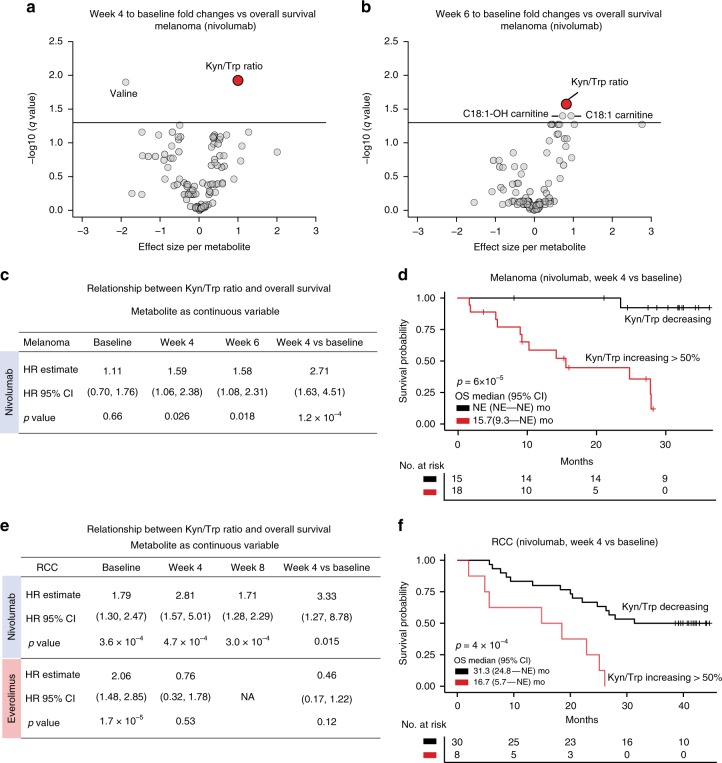
“The increase in the serum kynurenine/tryptophan ratio was associated with worse overall survival in melanoma and RCC patients receiving nivolumab therapy [107].”
From Gut microbiota influence immunotherapy responses: mechanisms and therapeutic strategies (2022) · doi:10.1186/s13045-022-01273-9 · cites this paper as [107]
In the citing paper
“In a subset of patients with melanoma and RCC receiving nivolumab, increases in the Kyn to Trp ratio (by >50%) 4–6 weeks after starting treatment robustly correlated with shorter median OS (P ≤ 0.026).”
From Gut OncoMicrobiome Signatures (GOMS) as next-generation biomarkers for cancer immunotherapy (2023) · cites this paper as [152]
In the citing paper
“The higher ratio of Kyn/Trp leads to the induction of Treg production and the suppression of Teff cell production, as well as poor survival.48 49”
Self-check
Percentages, sums and reported differences re-computed from the paper’s own numbers.
The self-check needs the paper’s full text.
Citations
Cites
Safety, activity, and immune correlates of anti–PD-1 antibody in cancer
Topalian, S. L., Hodi, F. S., Brahmer, J. R., Gettinger, S. N., Smith, D. C., McDermott, D. F., Powderly, J. D., Carvajal, R. D., Sosman, J. A., Atkins, M. B., et al. (2012) · New England Journal of Medicine · doi:10.1056/nejmoa1200690 · Cited by 12,628
Self-citationNivolumab versus docetaxel in advanced nonsquamous non-small-cell lung cancer
Borghaei, H., Paz-Ares, L., Horn, L., Spigel, D. R., Steins, M., Ready, N. E., Chow, L. Q., Vokes, E. E., Felip, E., Holgado, E., et al. (2015) · New England Journal of Medicine · doi:10.1056/nejmoa1507643 · Cited by 9,335
Mutational landscape determines sensitivity to PD-1 blockade in non–small cell lung cancer
Rizvi, N. A., Hellmann, M. D., Snyder, A., Kvistborg, P., Makarov, V., Havel, J. J., Lee, W., Yuan, J., Wong, P., Ho, T. S., et al. (2015) · Science · doi:10.1126/science.aaa1348 · Cited by 7,802
Cancer immunotherapy using checkpoint blockade
Ribas, A., & Wolchok, J. D. (2018) · Science · doi:10.1126/science.aar4060 · Cited by 6,791
Nivolumab versus Everolimus in Advanced Renal-Cell Carcinoma
Motzer, R. J., Escudier, B., McDermott, D. F., George, S., Hammers, H. J., Srinivas, S., Tykodi, S. S., Sosman, J. A., Procopio, G., Plimack, E. R., et al. (2015) · New England Journal of Medicine · doi:10.1056/nejmoa1510665 · Cited by 5,807
Self-citationGenomic correlates of response to CTLA-4 blockade in metastatic melanoma
Van Allen, E. M., Miao, D., Schilling, B., Shukla, S. A., Blank, C., Zimmer, L., Sucker, A., Hillen, U., Geukes Foppen, M. H., Goldinger, S. M., et al. (2015) · Science · doi:10.1126/science.aad0095 · Cited by 2,839
Self-citationTumor and Microenvironment Evolution during Immunotherapy with Nivolumab
Riaz, N., Havel, J. J., Makarov, V., Desrichard, A., Urba, W. J., Sims, J. S., Hodi, F. S., Martín-Algarra, S., Mandal, R., Sharfman, W. H., et al. (2017) · Cell · doi:10.1016/j.cell.2017.09.028 · Cited by 2,401
Self-citationUyttenhove, C., Pilotte, L., Théate, I., Stroobant, V., Colau, D., Parmentier, N., Boon, T., & Van den Eynde, B. J. (2003) · Nature Medicine · doi:10.1038/nm934 · Cited by 2,305
Inhibition of T Cell Proliferation by Macrophage Tryptophan Catabolism
Munn, D. H., Shafizadeh, E., Attwood, J. T., Bondarev, I., Pashine, A., & Mellor, A. L. (1999) · The Journal of Experimental Medicine · doi:10.1084/jem.189.9.1363 · Cited by 1,623
Potential Regulatory Function of Human Dendritic Cells Expressing Indoleamine 2,3-Dioxygenase
Munn, D. H., Sharma, M. D., Lee, J. R., Jhaver, K. G., Johnson, T. S., Keskin, D. B., Marshall, B., Chandler, P., Antonia, S. J., Burgess, R., et al. (2002) · Science · doi:10.1126/science.1073514 · Cited by 1,028
Cited by
Items 101–200 of 223
Cho, B. C., Braña, I., Cirauqui, B., Aksoy, S., Couture, F., Hong, R., Miller, W. H., Chaves-Conde, M., Teixeira, M., Leopold, L. H., et al. (2024) · BMC Cancer · doi:10.1186/s12885-023-11316-0 · Cited by 27
“The increase in circulating kynurenine levels observed with pembrolizumab in the current study is consistent with other analyses that have reported an increase in kynurenine levels in patients with solid tumors receiving PD-1 inhibitors [17, 18].”
BackgroundResultInfluentialA Highlight of the Mechanisms of Immune Checkpoint Blocker Resistance
Huang, Q., Lei, Y., Li, X., Guo, F., & Liu, M. (2020) · Frontiers in Cell and Developmental Biology · doi:10.3389/fcell.2020.580140 · Cited by 25
Molecular and Metabolic Subtypes in Sporadic and Inherited Clear Cell Renal Cell Carcinoma
Czyzyk-Krzeska, M., Figueroa, J. A. L., Gulati, S., Cunningham, J. T., Meller, J., Shamsaei, B., Vemuri, B., & Plas, D. R. (2021) · Genes · doi:10.3390/genes12030388 · Cited by 23
“Increased kynurenine levels correspond with worse survival and are induced in a subset of patients treated with immune checkpoint inhibitors, such as nivolumab [89].”
BackgroundRajasekaran, S., Tangavel, C., Vasudevan, G., Easwaran, M., Raveendran, M., Anand, K. S. S. V., Murugan, C., Nayagam, S. M., Kanna, R. M., & Shetty, A. P. (2022) · The Spine Journal · doi:10.1016/j.spinee.2022.05.001 · Cited by 26
Non-invasive monitoring of low molecular weight biomarkers relevant to skin inflammation and cancer
Jankovskaja, S. (2021) · doi:10.24834/isbn.9789178772230 · Cited by 25
Steeneck, C., Kinzel, O. D., Anderhub, S. J., Hornberger, M., Pinto, S., Morschhaeuser, B., Braun, F. C. M., Kleymann, G., & Hoffmann, T. K. (2020) · ACS Medicinal Chemistry Letters · doi:10.1021/acsmedchemlett.9b00572 · Cited by 20
Discovery and optimization of substituted oxalamides as novel heme-displacing IDO1 inhibitors
Steeneck, C., Kinzel, O. D., Anderhub, S. J., Hornberger, M., Pinto, S., Morschhaeuser, B., Albers, M., Sonnek, C., Czekańska, M., & Hoffmann, T. K. (2020) · Bioorganic & Medicinal Chemistry Letters · doi:10.1016/j.bmcl.2020.127744 · Cited by 19
Morozumi, K., Kawasaki, Y., Maekawa, M., Takasaki, S., Sato, T., Shimada, S., Kawamorita, N., Yamashita, S., Mitsuzuka, K., Mano, N., et al. (2021) · Cancer Science · doi:10.1111/cas.15180 · Cited by 20
Leigh, S., Lynch, C. M. K., Bird, B., Griffin, B. T., Cryan, J. F., & Clarke, G. A. (2022) · Expert Opinion on Drug Metabolism & Toxicology · doi:10.1080/17425255.2022.2043849 · Cited by 19
Immunomodulatory actions of a kynurenine-derived endogenous electrophile
Carreño, M., Pires, M. F., Woodcock, S. R., Brzóska, T., Ghosh, S., Salvatore, S. R., Chang, F., Khoo, N. K. H., Dunn, M., Connors, N., et al. (2022) · Science Advances · doi:10.1126/sciadv.abm9138 · Cited by 20
Hargadon, K. M. (2021) · British Journal of Dermatology · doi:10.1111/bjd.20608 · Cited by 20
Pharmacometabolomics Applied to Personalized Medicine in Urological Cancers
Amaro, F., Carvalho, M. C., Bastos, M. D. L., de Pinho, P. G., & Pinto, J. (2022) · Pharmaceuticals · doi:10.3390/ph15030295 · Cited by 21
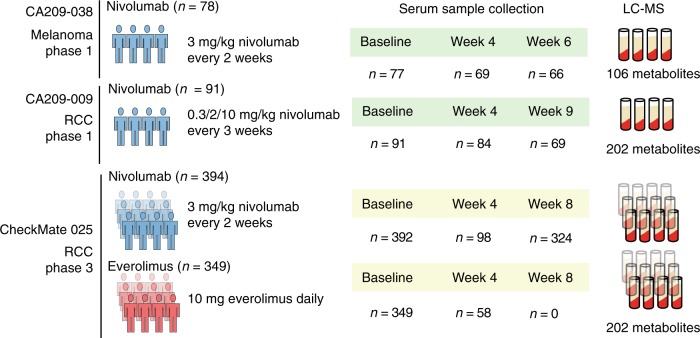
“3/3/10 mg/kg every 3 weeks; phase 3: 3 mg/kg every 2weeks) Arm B- everolimus phase 3 (10 mg per day) 4 and 8 weeks of treatment exposure Lipophilic serum extracts: Arm A Phase 1 trial RCC untreated group, n = 91 treated group (4 weeks), n = 84 treated group (9 weeks), n = 69 Phase 3 trial RCC untreated group, n = 392…”
Method‘Know thyself’ – host factors influencing cancer response to immune checkpoint inhibitors
Gunjur, A., Manrique-Rincón, A., Klein, O., Behren, A., Lawley, T. D., Welsh, S. J., & Adams, D. J. (2022) · The Journal of Pathology · doi:10.1002/path.5907 · Cited by 20
“Gut microbiota are capable of metabolising tryptophan, with levels of its metabolite kynurenine [120] and associated enzymes 3-hydroxyanthranilic acid [121] and indoleamine-pyrrole 2,3-dioxygenase (IDO) [122] all inversely associated with ICI efficacy.”
BackgroundMeireson, A., Ferdinande, L., Haspeslagh, M., Hennart, B., Allorge, D., Ost, P., Sundahl, N., Spaas, M., Demeyer, A., & Brochez, L. (2021) · Frontiers in Immunology · doi:10.3389/fimmu.2021.736498 · Cited by 21
Metabolic rewiring directs melanoma immunology
Sun, N., Tian, Y., Chen, Y., Guo, W., & Li, C. (2022) · Frontiers in Immunology · doi:10.3389/fimmu.2022.909580 · Cited by 25
“Moreover, it is found that the IDO1-induced increase of the Kyn/Trp ratio in peripheral blood is a critical predictive biomarker for drug resistance and poor outcome of patients receiving immune checkpoint blockade (126).”
BackgroundDas, A., Shapiro, D. D., Craig, J. K., & Abel, E. J. (2023) · Nature Reviews Urology · doi:10.1038/s41585-023-00776-5 · Cited by 22
“Kynurenine-to-tryptophan ratio has also been negatively correlated with response to nivolumab in patients with metastatic RCC 27 .”
BackgroundMetabolic heterogeneity in tumor microenvironment – A novel landmark for immunotherapy
Chen, C., Han, P., & Qing, Y. (2024) · Autoimmunity Reviews · doi:10.1016/j.autrev.2024.103579 · Cited by 17
Elmer, D. P., Stockmaier, G., Grund‐Gröschke, S., Strobl, V., Dang, H.-H., Wiederstein, M., Licha, D., Strobl, A., Eglseer, A., Sternberg, C., et al. (2025) · Cell Communication and Signaling · doi:10.1186/s12964-025-02101-6 · Cited by 18
“Resistance to immune checkpoint blockers can involve tryptophan catabolism and the production of immunosuppressive kynurenine metabolites abrogating T cell responses [24].”
Li, T., Shi, J., Wang, L., Qin, X., Zhou, R., Dong, M., Ren, F., Li, X., Zhang, Z., Chen, Y., et al. (2023) · MedComm · doi:10.1002/mco2.355 · Cited by 15
“10,11 Currently, there are several AHR inhibitors that have been developed.”
King, M. E., Yuan, R. T., Chen, J., Pradhan, K., Sariol, I., Li, S. X., Chakraborty, A. D., Ekpenyong, O., Yearley, J. H., Wong, J. C., et al. (2023) · Journal of Biological Chemistry · doi:10.1016/j.jbc.2023.102902 · Cited by 17
“(22) applied liquid chromatography (LC)-MS to measure changes in metabolite levels in serum from patients with melanoma and renal cell carcinoma before and after treatment with nivolumab and revealed that elevated kynurenine metabolism is associated with resistance to anti-PD-1 and decreased overall survival.”
MethodModeling the Th17 and Tregs Paradigm: Implications for Cancer Immunotherapy
Corral‐Jara, K. F., da Silva, G. R., Fierro, N. A., & Soumelis, V. (2021) · Frontiers in Cell and Developmental Biology · doi:10.3389/fcell.2021.675099 · Cited by 17
Tailoring precision immunotherapy: coming to a clinic soon?
Han, S., Shuen, T. W. H., Wang, W.-W., Nazim, E., & Toh, H. C. (2020) · ESMO Open · doi:10.1136/esmoopen-2019-000631 · Cited by 17
Towards a Systems Immunology Approach to Unravel Responses to Cancer Immunotherapy
Bracci, L., Fragale, A., Gabriele, L., & Moschella, F. (2020) · Frontiers in Immunology · doi:10.3389/fimmu.2020.582744 · Cited by 17
“Given the key role of metabolites in modulating T cell function (34) and in affecting the success of immunotherapies (35), a comprehensive analysis of metabolites can effectively complement molecular and phenotyping studies.”
BackgroundGatto, F., Dabestani, S., Bratulić, S., Limeta, A., Maccari, F., Galeotti, F., Volpi, N., Stierner, U. K., Nielsen, J., & Lundstam, S. (2022) · European Urology Open Science · doi:10.1016/j.euros.2022.06.003 · Cited by 15
“Recent developments using methylated cfDNA and metabolomics are promising [11,12], but these assays are complex and the availability of standardized kits remains years away.”
BackgroundHuo, C., Luo, Z., Ning, X.-L., Kang, X., Qin, Y. F., Guo, Y., Li, G., Wang, Z., Li, Y., & Qian, S. (2022) · European Journal of Medicinal Chemistry · doi:10.1016/j.ejmech.2022.114625 · Cited by 14
Biomarkers in the management of lung cancer: changing the practice of thoracic oncology
Melichar, B. (2022) · Clinical Chemistry and Laboratory Medicine (CCLM) · doi:10.1515/cclm-2022-1108 · Cited by 15
“In particular, increased activity of indoleamine 2,3-dioxygenase that is re fl ected in increased circulating kynurenine and decreased tryphophan concentrations has been associated with resistance to the immune checkpoint inhibitors [147].”
BackgroundYang, J., Miao, D., Li, X., Zhao, C., Tan, D., Wu, S., Lu, F., Shi, J., Lv, Q., Ruan, H., et al. (2025) · Frontiers in Cell and Developmental Biology · doi:10.3389/fcell.2025.1664292 · Cited by 15
Choi, H., & Na, K. J. (2021) · Frontiers in Oncology · doi:10.3389/fonc.2021.769393 · Cited by 15
“Metabolic reprogramming in cancer and immune cells due to cancer immunotherapy and/or chemoradiotherapy is a dynamic process that causes a variable response to immunotherapy (7, 11, 12).”
BackgroundDutta, R., Rathor, A., Sharma, H. P., Pandey, H. C., Malik, P. S., Mohan, A., Nambirajan, A., Kumar, R., & Jain, D. (2023) · Scientific Reports · doi:10.1038/s41598-023-30841-3 · Cited by 12
IDO1 Expression in Melanoma Metastases Is Low and Associated With Improved Overall Survival
Lynch, K., Gradecki, S. E., Kwak, M., Meneveau, M. O., Wages, N. A., Gru, A. A., & Slingluff, C. L. (2020) · The American Journal of Surgical Pathology · doi:10.1097/pas.0000000000001622 · Cited by 14
Du, P., Jing, J., & He, X. (2022) · Frontiers in Pharmacology · doi:10.3389/fphar.2022.1091124 · Cited by 15
“PD-1 antibody, and an increased serum kynurenine/tryptophan ratio was related to shorter overall survival in melanoma and renal cell carcinoma (RCC) patients (Li et al., 2019).”
BackgroundLi, F., Hu, H., Li, L., Ding, L., Lu, Z., Mao, X., Wang, R., Luo, W., Lin, Y., Li, Y., et al. (2024) · Biology Direct · doi:10.1186/s13062-024-00576-w · Cited by 13
“Some studies have reported a potential link between dysregulated tryptophan metabolism and immunotherapy resistance [81, 82].”
IDSL.IPA Characterizes the Organic Chemical Space in Untargeted LC/HRMS Data Sets
Baygi, . F., Kumar, Y., & Barupal, D. K. (2022) · Journal of Proteome Research · doi:10.1021/acs.jproteome.2c00120 · Cited by 15
Microbial metabolites for cancer immunotherapy: Current evidence and future directions
Wang, X., Liang, J.-J., Duan, X., & Chen, G. (2025) · Seminars in Cancer Biology · doi:10.1016/j.semcancer.2025.10.005 · Cited by 12
Tao, H., Mao, K., Zhang, Z., Wei, W., Huang, X., Chen, Y., Mei, S., & Tian, X. (2025) · Pharmacological Research · doi:10.1016/j.phrs.2025.108020 · Cited by 13
Li, C., Wu, J., Zhang, L., Wang, F., Xu, L., Zhao, Y., Xiao, Y., Zhuang, F., Hou, L., Zhao, D., et al. (2023) · JTO Clinical and Research Reports · doi:10.1016/j.jtocrr.2023.100556 · Cited by 10
“Several studies have found that metabolites are closely associated with efficacy of immunotherapy in advanced solid tumors.(2,3) Recently, Bessede et al.”
Yuan, H., Bai, Y., Gu, D., Wang, P., Sun, X., Yang, J., Wong, Y. K., Huang, W., Wang, X., Ma, J., et al. (2024) · Nano Today · doi:10.1016/j.nantod.2024.102419 · Cited by 9
Wu, Y., Duan, Q., Zou, Y., Zhu, Q., & Xu, Y. (2021) · Bioorganic & Medicinal Chemistry Letters · doi:10.1016/j.bmcl.2021.128373 · Cited by 9
Vilbert, M., Koch, E. C., Rose, A. A. N., Laister, R. C., Gray, D., Sotov, V., Penny, S. L., Spreafico, A., Hogg, D., Pinto, D. M., et al. (2023) · Cancers · doi:10.3390/cancers15143708 · Cited by 10
“As mentioned above, high circulating levels of sphingomyelin species have recently been linked with resistance to ICI therapy in patients with CM [11].”
BackgroundMethodResultInfluentialWong, M., Barbulescu, P., Coburn, B. A., & Reguera-Nuñez, E. (2021) · Microbes and Infection · doi:10.1016/j.micinf.2021.104804 · Cited by 9
Gatto, F., Bratulić, S., Jonasch, E. W., Limeta, A., Maccari, F., Galeotti, F., Volpi, N., Lundstam, S., Nielsen, J., & Stierner, U. K. (2023) · JCO Precision Oncology · doi:10.1200/po.22.00361 · Cited by 9
“Recent developments using methylated cfDNA or metabolomics are promising, but the availability of standardized kits remains many years away.(10,11)”
BackgroundPrakash, C., Moran, P., & Mahar, R. (2025) · International Journal of Pharmaceutics · doi:10.1016/j.ijpharm.2025.125554 · Cited by 10
Unraveling the Role of the Microbiota in Cancer Immunotherapy: A New Frontier
Wang, S., Li, S., Zhang, M., Liu, R., Ye, X., Mao, S., Yu, J., Xie, X., & Tan, W. (2025) · Research · doi:10.34133/research.0744 · Cited by 13
Facts and Hopes in Using Omics to Advance Combined Immunotherapy Strategies
Augustin, R. C., Cai, W. L., Luke, J. J., & Bao, R. (2024) · Clinical Cancer Research · doi:10.1158/1078-0432.ccr-22-2241 · Cited by 7
Immune Cell Metabolism and Immuno-Oncology
Patel, C. H., & Powell, J. D. (2023) · Annual Review of Cancer Biology · doi:10.1146/annurev-cancerbio-061421-042605 · Cited by 11
Effects of long-term antibiotic treatment on mice urinary aromatic amino acid profiles
Zhu, X., Fu, B., Dong, M., Guo, Y., Cao, Z., & Wu, J. (2021) · Bioscience Reports · doi:10.1042/bsr20203498 · Cited by 8
Omri, L., Naigeon, M., Flippot, R., Gavira, J., Poveda-Ferriols, J. M., Nguyen, D. J. M., Abdi, C., Arroyo-Salgado, A., Chaput, N., de Velasco, G., et al. (2024) · Exploration of Targeted Anti-tumor Therapy · doi:10.37349/etat.2024.00271 · Cited by 9
Aboomar, N. M., Essam, O., Hassan, A., Bassiouny, A. R., & Arafa, R. K. (2024) · Scientific Reports · doi:10.1038/s41598-024-59353-4 · Cited by 7
“For example, a recent study by Li et al. 34 demonstrated that dual inhibition of hIDO1 and hTDO2 using a small molecule inhibitor resulted in enhanced antitumor immune responses and tumor regression in mouse models of melanoma and colon cancer.”
Hasterok, S., Jankovskaja, S., Dahlström, R. M., Prgomet, Z., Ohlsson, L., Björklund, S., & Gustafsson, A. (2024) · Biomolecules · doi:10.3390/biom14070815 · Cited by 11
“Nevertheless, it is established that the overexpression of IDO-1 and the decreased Trp/Kyn ratio exert immunosuppressive effects, resulting in significantly lower patient survival rates [14,15].”
BackgroundTiersma, J. F., Evers, B., Bakker, B. M., Reijngoud, D., de Bruyn, M., de Jong, S., & Jalving, M. (2024) · Cancer Treatment Reviews · doi:10.1016/j.ctrv.2024.102802 · Cited by 8
Leveraging gut microbiota for enhanced immune checkpoint blockade in solid tumor therapy
Hu, J., Feng, T., Zhang, L., Zhou, Q., & Zhu, L. (2025) · Chinese Medical Journal · doi:10.1097/cm9.0000000000003687 · Cited by 8
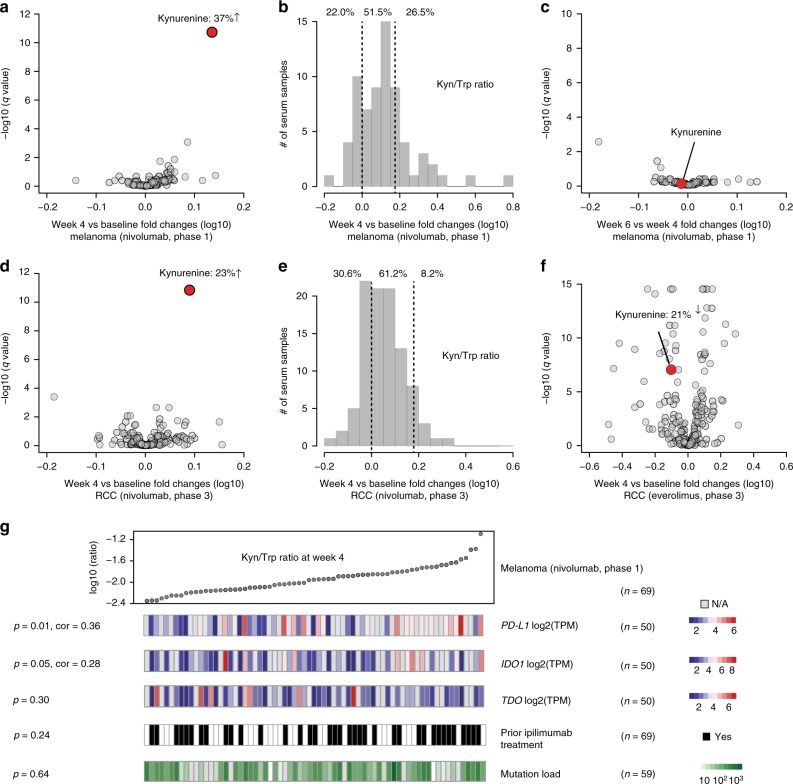
“Li et al [96] stated that kynure-nine, which is a catabolic product of tryptophan, was linked to the most substantial increase in serum metabolite after the treatment with anti-PD-1 antibody.”
Li, Q., Meng, F., Yang, L., García, A. M. D., Parkhats, M. V., Lee, J., Kusamori, K., Nishikawa, M., Gu, H., Li, Q., et al. (2025) · Molecular Pharmaceutics · doi:10.1021/acs.molpharmaceut.5c00342 · Cited by 9
Metabolic determinants of cancer immunotherapy outcomes identified by plasma profiling
Suissa, D., Fidelle, M., Reich, E., Pham, T.-N., Thomas, S., Björk, J. R., Liu, P., Zhao, L., Kitaoka, K., Piard, E., et al. (2026) · Nature Medicine · doi:10.1038/s41591-026-04481-9 · Cited by 10
Self-citationDesigning Novel Immunocombinations in Metastatic Renal Cell Carcinoma
Santoni, M., Massari, F., Aurilio, G., Mollica, V., Cimadamore, A., López-Beltrán, A., Cheng, L., Battelli, N., Nolè, F., & Montironi, R. (2020) · Immunotherapy · doi:10.2217/imt-2020-0144 · Cited by 6
Immunotherapy for hepatocellular carcinoma: molecular pathogenesis and clinical research progress
Li, X., & Xia, F. (2023) · Oncology and Translational Medicine · doi:10.1097/ot9.0000000000000013 · Cited by 6
Genetic Profiles Affect the Biological Effects of Serine on Gastric Cancer Cells
Li, J., Xue, H., Xiang, Z., Song, S., Yan, R., Ji, J. F., Zhu, Z., Wei, C., & Yu, Y. (2020) · Frontiers in Pharmacology · doi:10.3389/fphar.2020.01183 · Cited by 6
Spisarová, M., Melichar, B., Vitásková, D., & Študentová, H. (2020) · Future Oncology · doi:10.2217/fon-2020-0079 · Cited by 6
Bai, R.-L., Wang, N.-Y., Zhao, L., Zhang, Y., & Cui, J. (2021) · Hepatobiliary & pancreatic diseases international · doi:10.1016/j.hbpd.2021.08.012 · Cited by 6
Constructing a consensus serum metabolomePreprint
Chi, Y., Mitchell, J. M., Thapa, M., Zheng, S., Frohock, Z., Li, L., Smirnov, A. A., Du, X., & Li, S. (2025) · bioRxiv (Cold Spring Harbor Laboratory) · doi:10.1101/2025.05.07.652782 · Cited by 6
“Li et al, 2019) and our full HZV029 study (vaccination cohort, 1685 samples).”
Wang, Y., Leung, E. Y., & Tomek, P. (2025) · Bioorganic Chemistry · doi:10.1016/j.bioorg.2025.108219 · Cited by 6
Guo, Z., Yao, Z., Chen, X., Wu, D., Ouyang, Y., Shen, Y., Wang, Y., Zhang, H., Lu, Y., & Lv, W. (2025) · Clinical and Experimental Medicine · doi:10.1007/s10238-025-01906-6 · Cited by 6
“In particular, the tryptophan–kynurenine pathway, catalyzed by IDO1, is often upregulated in HCC. Activation of this pathway depletes local tryptophan while increasing kynurenine levels, leading to T cell exhaustion [33, 34].”
Siddiqa, A., Wang, Y., Thapa, M., Martin, D. E., Cadar, A. N., Bartley, J. M., & Li, S. (2023) · npj Vaccines · doi:10.1038/s41541-023-00682-2 · Cited by 6
Yang, X., She, X., Zhao, Z., Ren, J., Wang, P., Dong, H., Zhao, Q.-S., & Liu, J. (2024) · European Journal of Pharmacology · doi:10.1016/j.ejphar.2024.176522 · Cited by 5
Influence of gut microbiota on systemic immune responses and cancer immunotherapy
Murakonda, S. P., Balusu, S., Chava, H., Murakonda, A. B., Polneedi, R., Bodduluri, S., Gupta, S. C., & Challagundla, K. B. (2025) · International review of cytology · doi:10.1016/bs.ircmb.2024.12.005 · Cited by 6
Precision medicine in medical oncology: hope, disappointment and reality
Bartoušková, M., & Melichar, B. (2020) · Clinical Chemistry and Laboratory Medicine (CCLM) · doi:10.1515/cclm-2020-0231 · Cited by 5
“For example, a rise in kynurenine/tryptophan ratio was reported to be associated with inferior outcome of nivolumab therapy [54].”
BackgroundÇetin, B., Wabl, C. A., & Gümüşay, Ö. (2022) · Current Treatment Options in Oncology · doi:10.1007/s11864-022-00966-0 · Cited by 5
Brochez, L., Krüse, V., Schadendorf, D., Muller, A. J., & Prendergast, G. C. (2021) · Frontiers in Immunology · doi:10.3389/fimmu.2021.789473 · Cited by 5
“These observations align with other findings where baseline Kyn/Trp levels, but also increased levels at week 4 of anti-PD1 immunotherapy, were associated with decreased survival in melanoma and renal cell carcinoma (11).”
ResultHejleh, A. A., Huck, K., Jähne, K., Tan, C. L., Lanz, T. V., Epping, L., Sonner, J., Meuth, S. G., Henneberg, A., Opitz, C. A., et al. (2023) · International Journal of Tryptophan Research · doi:10.1177/11786469231153111 · Cited by 4
Immunobiology and Metabolic Pathways of Renal Cell Carcinoma
Braun, D. A., & Chakraborty, A. A. (2023) · Hematology/Oncology Clinics of North America · doi:10.1016/j.hoc.2023.04.012 · Cited by 4
Self-citationMorin, M., Björklund, S., Nilsson, E. J., & Engblom, J. (2023) · Pharmaceutics · doi:10.3390/pharmaceutics15082031 · Cited by 3
Zhang, J., Liu, J., Kong, K., Li, X., & Zhang, Q. (2023) · Results in Chemistry · doi:10.1016/j.rechem.2023.101285 · Cited by 4
Ali, M., Eid, M., Saliby, R. M., Choi, S. S., McKay, R. R., Siva, S., Braun, D. A., & Chen, Y. (2024) · American Society of Clinical Oncology Educational Book · doi:10.1200/edbk_438658 · Cited by 5
Self-citationHuang, C., Wang, G., Yuan, Y., Zou, Y., Tang, X., Guo, H., Song, H., Gao, W., Wang, A., Yu, Y., et al. (2025) · European Urology · doi:10.1016/j.eururo.2025.09.4148 · Cited by 11
Self-citationMorin, M., Jankovskaja, S., Ruzgas, T. A., Henricson, J., Anderson, C. D., Brinte, A., Engblom, J., & Björklund, S. (2022) · Pharmaceutics · doi:10.3390/pharmaceutics14020313 · Cited by 4
“, Trp/Kyn) significantly decreases in cancerous microenvironments [37] and blood levels [38,39], as”
BackgroundVon Hippel-Lindau: implications in development and disease—response
Cargill, K. R., & Sims‐Lucas, S. (2020) · Annals of Translational Medicine · doi:10.21037/atm.2019.11.46 · Cited by 3
“(targeting immunometabolism) (6), and Xie et al.”
Targeting the Supply Lines of Cancer – A Possible Strategy for Combating the Disease?
Abrahamsen, O., Balslev, E., & Høgdall, E. V. S. (2021) · Anticancer Research · doi:10.21873/anticanres.15055 · Cited by 4
Targeting metabolic reprogramming to overcome immune tolerance in melanoma immunotherapy
Wang, Q., Shi, L., Shi, D., Tai, N., & Wang, X. (2025) · Frontiers in Immunology · doi:10.3389/fimmu.2025.1597770 · Cited by 4
“Additionally, an elevated kynurenine-to-tryptophan (Kyn/Trp) ratio in peripheral blood, driven by IDO1 activity, is associated with resistance development and poor prognosis in patients receiving PD-1 antibody therapy (28).”
Jankovskaja, S., Spégel, P., Nielsen, K., Björklund, S., Bost, J., Engblom, J., Christensen, G. B., Rogova, O., Morin, M., Hædersdal, M., et al. (2025) · PLoS ONE · doi:10.1371/journal.pone.0326457 · Cited by 3
“Recent studies suggest that the conversion of the amino acid Trp to the immunosuppressive derivative Kyn within the tumor microenvironment (TME) contributes to the cancer’s ability to evade the immune system [12,13,15,50].”
Zhang, M., & Jin, W.-L. (2026) · Cancer Letters · doi:10.1016/j.canlet.2026.218351 · Cited by 4
Identification of metabolic dysregulation and biomarkers for clear cell renal cell carcinoma
Zheng, B., Liu, K., Ouyang, Q., Feng, J., Cao, S., Wang, L., Jia, T., Wu, S., Ma, X., Zhang, X., et al. (2024) · Clinical and Translational Medicine · doi:10.1002/ctm2.70142 · Cited by 3
Flippot, R., Gorgeu, V., Pujalte, M., Colomba, É., Alves, C., Cerbone, L., Carril, L., Derosa, L., Escudier, B. J., & Albiges, L. K. (2022) · Bulletin du Cancer · doi:10.1016/s0007-4551(22)00236-3 · Cited by 4
Liu, Y., Xiang, J., Liao, Y., Peng, G., & Shen, C. (2022) · Frontiers in Molecular Neuroscience · doi:10.3389/fnmol.2022.1037835 · Cited by 7
“In addition, tryptophan metabolism, as a new immune checkpoint, can affect the immunotherapeutic outcome (Li et al., 2019).”
BackgroundElayapillai, S. P., Gandhi, A. R., Dogra, S., Saunders, D., Smith, N., Hladik, C., Towner, R. A., Moxley, K. M., & Hannafon, B. N. (2024) · Journal of Pharmacology and Experimental Therapeutics · doi:10.1124/jpet.124.002223 · Cited by 3
“Elevated IDO1 is often associated with negative outcomes such as poor prognosis and resistance to immune checkpoint blockade (Holmgaard et al, 2013; Yu et al, 2018; Li et al, 2019).”
Inhibiting tumor cell-intrinsic UBA6 by inosine augments tumor immunogenicity
He, B., Zhang, L., Jiang, L., Yu, L., Li, Q., Tian, X., He, J.-Q., Zeng, L., Yang, Y., Wang, C., et al. (2021) · doi:10.21203/rs.3.rs-620390/v1 · Cited by 82
Relationship Between Gut Microbiota and Cancer Neuro‐Immunity
Wang, D., Cui, R., You, C., Zheng, W., Wang, L., Yang, Y., Yu, H., & Cui, B. (2026) · Microbial Biotechnology · doi:10.1111/1751-7915.70336 · Cited by 3
Interfacial Self‐assembly of Chiral Selenide Nanomembrane for Enantiospecific Recognition
Meng, D., Li, C., Hao, C., Shi, W., Xu, J., Sun, M., Kuang, H., Xu, C., & Xu, L. (2023) · Angewandte Chemie · doi:10.1002/ange.202311416 · Cited by 2
Cai, L., Rogers, T. J., Jafarabad, R. M., Vu, H. S., Yang, C., Novaresi, N., Galán‐Cobo, A., Girard, L., Ostrin, E. J., Fahrmann, J. F., et al. (2025) · Cancers · doi:10.3390/cancers17101681 · Cited by 5
“Kynurenine, a metabolite in the tryptophan catabolism pathway, has been well-characterized as an immunosuppressive molecule [50,51], acting as an endogenous ligand for the aryl hydrocarbon receptor (AhR) [52].”
Future treatment options in metastatic clear cell renal cell carcinoma
Simonaggio, A., Auvray, M., Rochand, A., Thibault, C., Gervais, C., Oudard, S. M., & Vano, Y. A. (2022) · Bulletin du Cancer · doi:10.1016/s0007-4551(22)00238-7 · Cited by 3
A new frontier in cancer therapy: The intersection of cancer vaccines and metabolomics
Sukareh, F. A., Al-Nemi, R., Karagiannis, P., Asfour, H. N., Verma, A., Jaremko, M., & Emwas, A.-H. M. (2024) · Elsevier eBooks · doi:10.1016/b978-0-443-15526-0.00009-3 · Cited by 1
Liu, F., Qin, Y., Luo, W., Ruan, X., Lu, L., Feng, B., & Yu, J. (2025) · Frontiers in Genetics · doi:10.3389/fgene.2025.1530334 · Cited by 1
“In addition, Trp metabolism, a novel immune checkpoint that can in fl uence the outcome of immunotherapy, is also a potential therapeutic target (Li et al., 2019).”
Chang, A. Y., Huang, C., Tsai, P.-L., Liang, C.-A., Liao, W.-C., Fu, T.-F., & Chang, H. H. (2025) · Frontiers in Nutrition · doi:10.3389/fnut.2025.1539145 · Cited by 1
Gut microbiome‐derived metabolites show promise in cancer research and therapy
Yang, K., Wang, Y., Tang, D., Li, P., & Du, L. (2026) · Interdisciplinary medicine · doi:10.1002/inmd.70096 · Cited by 1
Quintás‐Cardama, A., Sanmartín, E., Garcia-Gimenez, A., Muñoz-Langa, J., Collado, A., Suárez, C., del Muro, X. G., Méndez-Vidal, M. J., García-Sánchez, J., Coloma, C. S., et al. (2026) · Frontiers in Oncology · doi:10.3389/fonc.2026.1639330 · Cited by 1
“In patients with RCC treated with nivolumab, an anti-Programmed cell death protein-1 (PD-1) treatment, kynurenine concentrations and the kynurenine/tryptophan ratio increase signi fi cantly in a subset of patients and correlate with worse survival (13).”
Endogenous metabolite signaling orchestrates tumor immune evasion
Liu, X., Jiang, C., & Li, Y. (2026) · Cell Insight · doi:10.1016/j.cellin.2026.100330 · Cited by 1
Enzymes define pathways and metabolic relationships
Zhan, J. J., Jarrell, Z. R., Kemp, M. L., Weinberg, J., Go, Y.-M., Martin, G. S., & Jones, D. P. (2026) · Next research. · doi:10.1016/j.nexres.2026.102150 · Cited by 2
Tratamiento del cáncer de riñón metastásico
Dumont, C., Flippot, R., Bonnet, C., Gauthier, H., Albiges, L. K., & Culine, S. (2022) · EMC - Urología · doi:10.1016/s1761-3310(22)46756-9 · Cited by 1
Zhang, H., Zhao, G., Zhu, G., & Ye, J. (2023) · Frontiers in Oncology · doi:10.3389/fonc.2022.907464 · Cited by 3
“Immunotherapy has become the latest research hotspot in recent years, and new immune therapeutic targets have also been identified (17, 18).”
BackgroundUne nouvelle place pour les biomarqueurs circulants dans le cancer du rein en 2024 ?
Flippot, R., & Carril-Ajuria, L. (2024) · Bulletin du Cancer · doi:10.1016/s0007-4551(24)00222-4 · Cited by 1
Wijanarko, K. J., Wang, M., & Chow, K. T. (2020) · Royal Society of Chemistry eBooks · doi:10.1039/9781788019958-00303
Metadata
- Authors
- Li, H., Bullock, K., Gurjao, C., Braun, D., Shukla, S. A., Bossé, D., Lalani, A.-K. A., Gopal, S., Jin, C., Horak, C., Wind-Rotolo, M., Signoretti, S., McDermott, D. F., Freeman, G. J., Van Allen, E. M., Schreiber, S. L., Stephen Hodi, F., Sellers, W. R., Garraway, L. A., Clish, C. B., Choueiri, T. K., & Giannakis, M.
- Affiliations
- Broad Institute (US)
- Dana-Farber Cancer Institute (US)
- Bristol-Myers Squibb (United States) (US)
- Beth Israel Deaconess Medical Center (US)
- Brigham and Women's Hospital (US)
- Corresponding author
- Choueiri, Toni K.
- Giannakis, Marios
- ORCID
- Venue
- Nature Communications
- Published
- 2019-09-25
- Volume
- 10
- Issue
- 1
- Pages
- 4346-4346
- ISSN
- 2041-1723 (ISSN-L)
- PMC
- PMC6761178
- OpenAlex
- W2976621574
- Semantic Scholar
- 7862e140d3f55133a84f291c0dcde40d389afdcc
- Cited by
- 218
- References
- 21
- Citations by year
- 2026: 15 · 2025: 24 · 2024: 32 · 2023: 24 · 2022: 37 · 2021: 49 · 2020: 36 · 2019: 1
- FWCI
- 13.17
- Type
- journal article
- Language
- en
- Open access
- gold
- doi.org
- Licence
- cc-by
- creativecommons.org/licenses/by/4.0 (tdm)
- creativecommons.org/licenses/by/4.0 (vor)
- Locations
- Nature Communications (publishedVersion, cc-by)
- PubMed Central (publishedVersion, cc-by)
- PubMed (publishedVersion)
- RePEc: Research Papers in Economics (submittedVersion)
- DOAJ (DOAJ: Directory of Open Access Journals) (submittedVersion)
- DOAJ (DOAJ: Directory of Open Access Journals) (submittedVersion, cc-by-sa)
- Funders
- EIF | Stand Up To Cancer (SU2C-AACR-DT22-17)
- U.S. Department of Health & Human Services | NIH | National Cancer Institute (U01CA217848)
- Topics
- Health Sciences › Medicine › Oncology › Cancer Immunotherapy and Biomarkers
- Life Sciences › Neuroscience › Biological Psychiatry › Tryptophan and brain disorders
- Life Sciences › Biochemistry, Genetics and Molecular Biology › Molecular Biology › Metabolomics and Mass Spectrometry Studies
- Keywords
- immune checkpoint blockade, nivolumab, anti-PD-1 therapy, serum metabolomics, kynurenine/tryptophan ratio, tryptophan metabolism, treatment resistance, melanoma, renal cell carcinoma, overall survival, patient stratification, metabolic monitoring
- MeSH terms
- Everolimus, Nivolumab, Adaptation, Physiological, Aged, Antineoplastic Agents, Carcinoma, Renal Cell, Clinical Trials as Topic, Female, Humans, Kidney Neoplasms, Kynurenine, Male, Melanoma, Middle Aged, Tryptophan, Treatment Outcome, Kaplan-Meier Estimate, Metabolomics, Programmed Cell Death 1 Receptor
About these checks
Registry, retraction, Cites and statistics results are computed, not judged, with one exception: a printed reference that no index lists is read once by a model before it counts as a citation error. Claims are extracted by a model and kept only when their quote appears verbatim in the text; each cited source is then checked, with a model’s help, for whether it says what the claim relies on. Those verdicts can be wrong — read the claim’s quote and the cited source before relying on one.
Statistics and arithmetic are recomputed, not judged.
Confidence bands are shown only for fields calibrated on our annotated test set. None is calibrated yet, so no band is shown.
What counts as a claim ›How we measure confidence ›How we check this ›
Are you an author, or do you see a problem with this page? Request a review
Data sources
Bibliographic data: Semantic Scholar, OpenAlex, Crossref.
Contains information from the Semantic Scholar Academic Graph Datasets, made available under the ODC Attribution License (ODC-BY 1.0).
Semantic Scholar’s data is described in: Kinney, R., et al. (2023). The Semantic Scholar Open Data Platform. arXiv:2301.10140.
