

Destabilization of NOXA mRNA as a common resistance mechanism to targeted therapies
Open accessThe DOI matches its Crossref record; 71 of the 71 references it cites were found in a registry or an index; none of the 65 sources its claims cite is checked for support yet.
Abstract
Most targeted cancer therapies fail to achieve complete tumor regressions or attain durable remissions. To understand why these treatments fail to induce robust cytotoxic responses despite appropriately targeting oncogenic drivers, here we systematically interrogated the dependence of cancer cells on the BCL-2 family of apoptotic proteins after drug treatment. We observe that multiple targeted therapies, including BRAF or EGFR inhibitors, rapidly deplete the pro-apoptotic factor NOXA, thus creating a dependence on the anti-apoptotic protein MCL-1. This adaptation requires a pathway leading to destabilization of the NOXA mRNA transcript. We find that interruption of this mechanism of anti-apoptotic adaptive resistance dramatically increases cytotoxic responses in cell lines and a murine melanoma model. These results identify NOXA mRNA destabilization/MCL-1 adaptation as a non-genomic mechanism that limits apoptotic responses, suggesting that sequencing of MCL-1 inhibitors with targeted therapies could overcome such widespread and clinically important resistance.
Overview
CoChat Summary
TL;DR
Multiple targeted therapies rapidly deplete pro-apoptotic NOXA by destabilizing its mRNA via ZFP36/TTP, shifting MCL-1 binding toward BIM and creating adaptive MCL-1 dependence. Sequential MAPK-pathway inhibition followed by MCL-1 inhibition enhanced apoptosis and tumor regression in cell lines and murine melanoma models.
Key findings
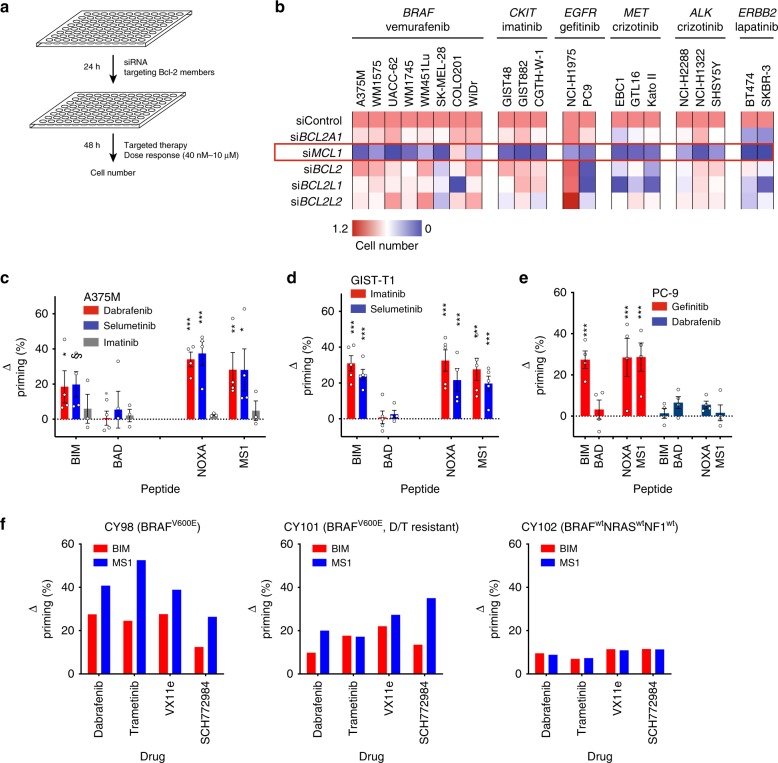
- In an siRNA sensitization screen across 21 cancer cell lines with distinct driver oncoproteins, suppression of MCL1 strongly sensitized most cell lines to targeted therapies independent of lineage, driver, or drug; other anti-apoptotic BCL-2 family members did not consistently affect responses.
- Dynamic BH3 profiling showed increased MCL-1 dependence after BRAF/MEK inhibition in A375M melanoma cells, after imatinib in KIT-mutant GIST, after gefitinib in EGFR-mutant lung cancer, and in freshly obtained primary melanoma cells after BRAF, MEK, or ERK inhibitors; MCL-1 dependence was minimally changed in a BRAF/MEK-resistant patient sample and a BRAF/NRAS wild-type melanoma.
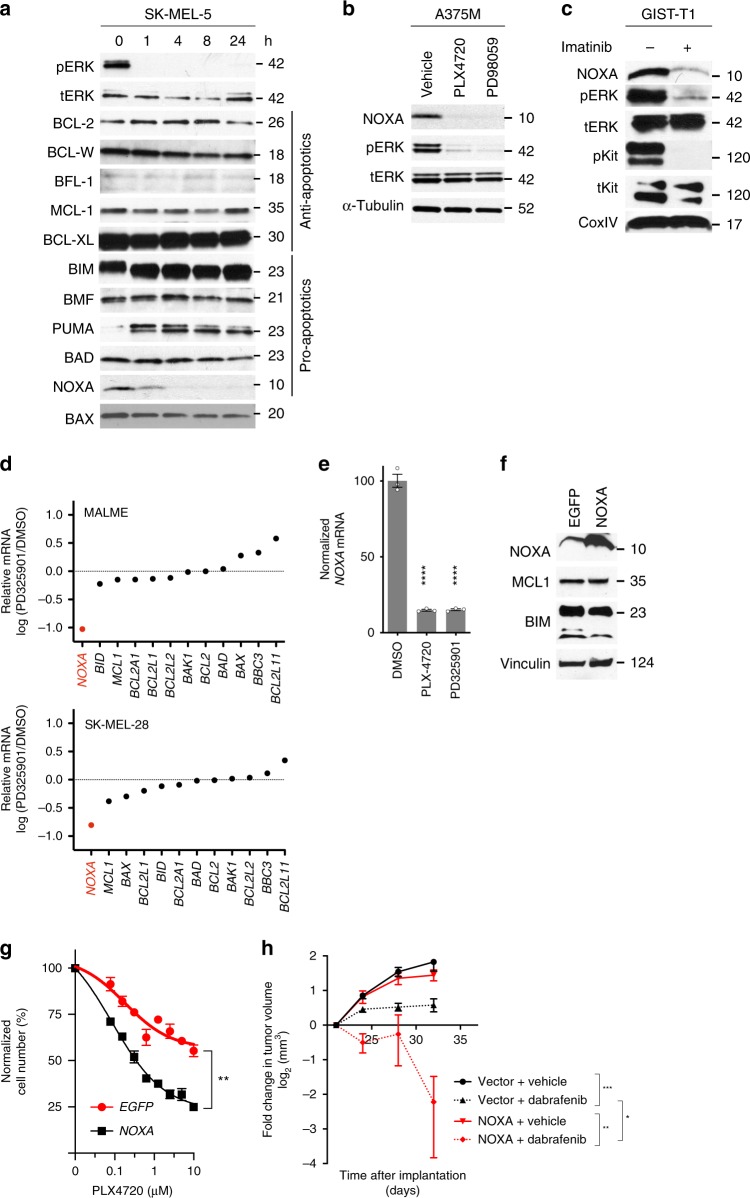
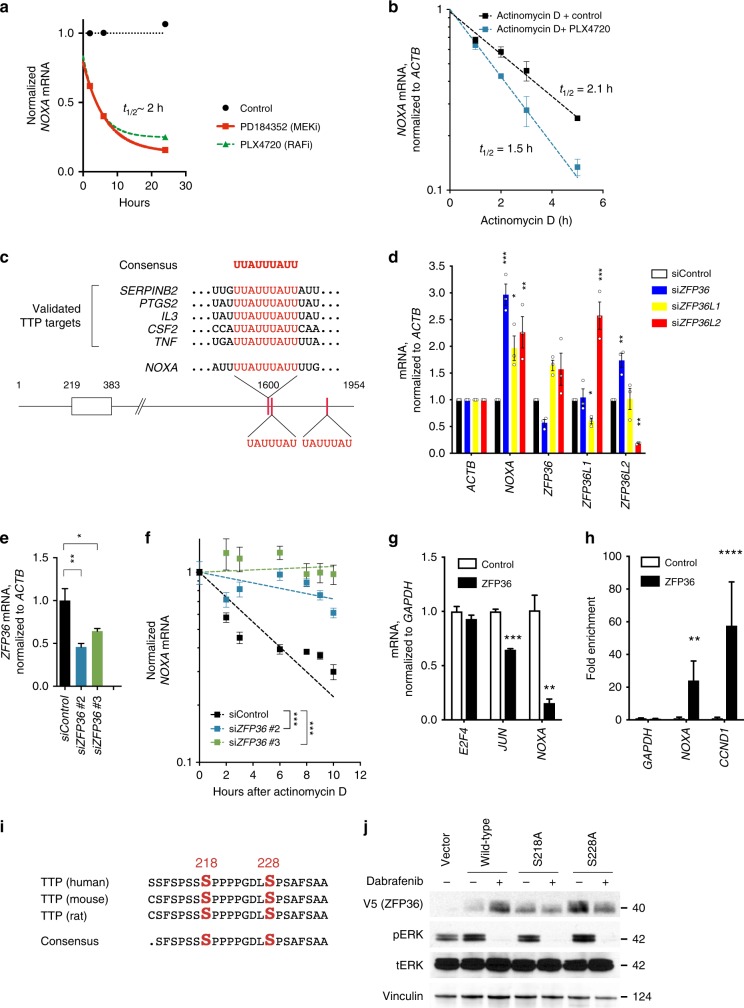
- NOXA mRNA loss was rapid (half-life ~2 h); actinomycin D plus PLX4720 enhanced NOXA mRNA loss, ZFP36 knockdown blocked NOXA mRNA decay, ZFP36 overexpression suppressed NOXA and JUN mRNA, and RNA immunoprecipitation showed ZFP36 associates with NOXA mRNA. BRAF inhibitor treatment increased wild-type ZFP36 levels, whereas ZFP36 mutants lacking phosphorylation sites had higher basal expression that did not increase with drug.
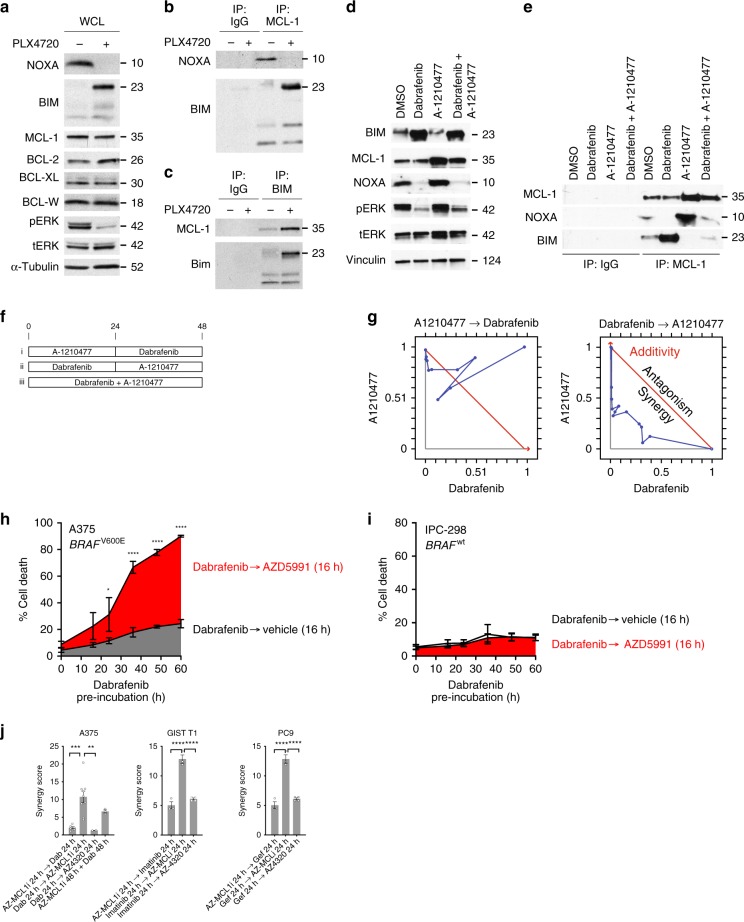
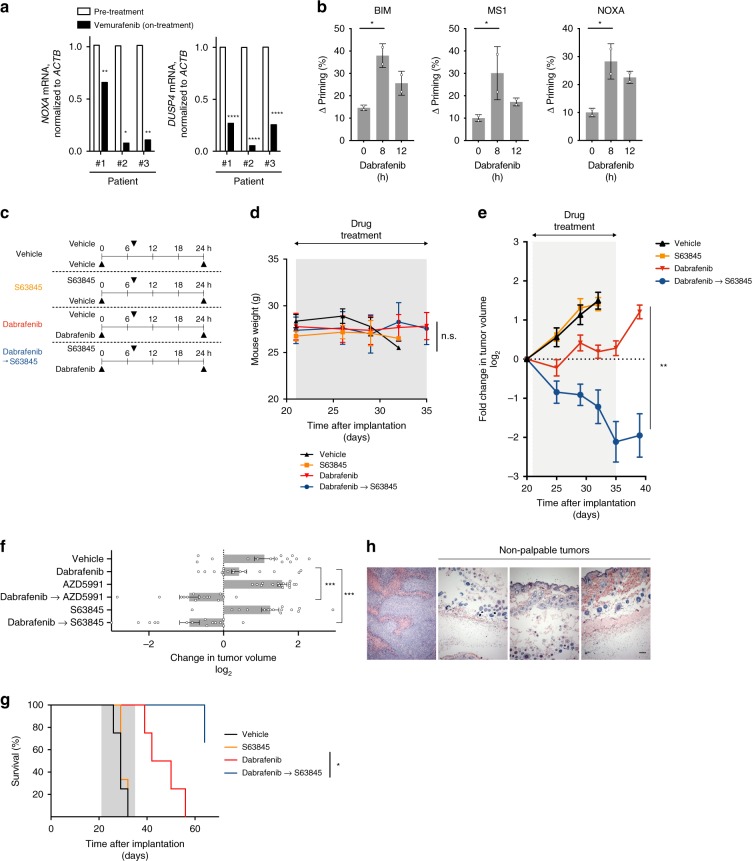
- Sequential dabrafenib followed by AZD5991 produced 88% apoptosis at 60 h versus ≤30% with dabrafenib alone, while the reverse schedule was antagonistic; in vivo, sequential BRAF inhibitor followed by MCL-1 inhibitor S63845 or AZD5991 led to profound tumor regression, prolonged survival, and no pathologic evidence of residual tumors in three evaluated mice. Paired patient biopsies showed NOXA and DUSP4 mRNA suppressed after 10–15 days of vemurafenib.
Methods
- In vitro: siRNA sensitization screen in 21 cancer cell lines using driver inhibitors (PLX4720, imatinib, gefitinib, lapatinib, crizotinib) across 40 nM to 10 µM with cell number measured after 48 h; dynamic BH3 profiling; western blot; qRT-PCR; actinomycin D assays; immunoprecipitation; RNA immunoprecipitation; Annexin-V apoptosis assays.
- Clinical samples: paired melanoma biopsies from BRAF-mutant patients before and 10–15 days after vemurafenib, plus freshly obtained primary melanoma cells; samples collected under IRB-approved protocols.
- Animal experiments: A375M xenografts in Nu/Nu mice treated with dabrafenib 30 mg/kg by oral gavage followed 7 h later by vehicle, AZD5991 100 mg/kg, or S63845 25 mg/kg intravenously daily up to 14 days; tumor volume, survival, and immunohistochemistry assessed. Statistical analyses included Holm–Sidak, ANOVA, t tests, and synergy scores.
Limitations
- Stated: the authors cannot exclude other post-transcriptional mechanisms (e.g., other AU-rich binding proteins) or transcriptional regulation contributing to NOXA expression; because the ZFP36 family includes three AU-binding proteins, further work is needed to clarify the generality of ZFP36 essentiality in NOXA suppression.
- Stated: optimal timing of MCL-1 inhibitors with MAPK inhibitors will require challenging schedule optimization due to drug pharmacokinetics/pharmacodynamics, and BIM levels should also be measured; BH3 profiling is hypothesized as a superior tool for dosing.
- Stated: combined MAPK inhibitor/MCL-1 inhibitor therapy may not be effective where MAPK inhibitor resistance is associated with failure to suppress the MAPK pathway, and targeting adaptive resistance may be most useful before MAPK inhibitor resistance emerges.
- Evident from the text: some primary patient dynamic BH3 profiling data are from n = 1 (Fig. 1f), and paired biopsy analysis is n = 1 with three technical replicates (Fig. 5a); in vivo efficacy is shown in A375M xenograft models rather than spontaneous tumors.
Model-written summary. Check it against the paper before relying on it.
Integrity signals
Registry
Cites
Statistics
Figures
Verification
Claims the paper makes
0 Valid · 0 Not valid · 38 Not checked · 108 Own results and interpretations
A result the paper reports from its own data — it cites no other source for it, so there is none to check. The quote shows it is in the paper.
In the paper
“Concomitant treatment with the MCL-1 inhibitor and BRAF inhibitor had modest synergy in A375M melanoma cells.”
§ Destabilization of NOXA mRNA as a common resistance mechanism to targeted therapies > Results > Targeted therapies create vulnerability to MCL-1 inhibitors
plainstates an association- Asserted: passes — The authors put it forward as true.
- Checkable: passes — It can be checked against evidence.
- Load-bearing: unclear — It is unclear whether the paper’s conclusions depend on it.
- Based: passes — The paper gives a reason why it holds.
A result the paper reports from its own data — it cites no other source for it, so there is none to check. The quote shows it is in the paper.
In the paper
“Expression of NOXA did not affect the levels of MCL-1 or BIM (Fig. 2f).”
§ Destabilization of NOXA mRNA as a common resistance mechanism to targeted therapies > Results > MAPK inhibition suppresses the pro-apoptotic factor NOXA
plain- Asserted: passes — The authors put it forward as true.
- Checkable: passes — It can be checked against evidence.
- Load-bearing: unclear — It is unclear whether the paper’s conclusions depend on it.
- Based: passes — The paper gives a reason why it holds.
A result the paper reports from its own data — it cites no other source for it, so there is none to check. The quote shows it is in the paper.
In the paper
“Comparison of data sets from CKIT-mutant cells treated with imatinib, EGFR-mutant cell lines treated with gefitinib or ALK-mutant tumors treated with crizotinib also exhibited decreased levels of NOXA mRNA (Supplementary Fig. 2j).”
§ Destabilization of NOXA mRNA as a common resistance mechanism to targeted therapies > Results > MAPK inhibition suppresses the pro-apoptotic factor NOXA
plainstates an association- Asserted: passes — The authors put it forward as true.
- Checkable: passes — It can be checked against evidence.
- Load-bearing: passes — The paper’s conclusions depend on it.
- Based: passes — The paper gives a reason why it holds.
A result the paper reports from its own data — it cites no other source for it, so there is none to check. The quote shows it is in the paper.
In the paper
“Treatment of BRAF-mutant primary melanoma cells (Supplementary Table 3) with up to 24 h of BRAF, MEK, or ERK inhibitors induced MCL-1 dependence (Fig. 1f).”
§ Destabilization of NOXA mRNA as a common resistance mechanism to targeted therapies > Results > Targeted therapies induce rapid dependence on MCL-1
plainstates a cause- Asserted: passes — The authors put it forward as true.
- Checkable: passes — It can be checked against evidence.
- Load-bearing: passes — The paper’s conclusions depend on it.
- Based: passes — The paper gives a reason why it holds.
A result the paper reports from its own data — it cites no other source for it, so there is none to check. The quote shows it is in the paper.
In the paper
“Overall apoptotic dependence to BRAF inhibition (BIM peptide) was observed within 8 h (Fig. 5b and Supplementary Fig. 5a).”
§ Destabilization of NOXA mRNA as a common resistance mechanism to targeted therapies > Results > In vivo evaluation of sequential BRAF and MCL-1 inhibition
plainstates a cause- Asserted: passes — The authors put it forward as true.
- Checkable: passes — It can be checked against evidence.
- Load-bearing: passes — The paper’s conclusions depend on it.
- Based: passes — The paper gives a reason why it holds.
72 more claims
Create a free account to see all 146 claims and to verify the 65 references still open.
- It may state two separate claims as one. 42
- Probably not a substantial claim. 31
- The quote only partly states this claim. 2
Self-check
Percentages, sums and reported differences re-computed from the paper’s own numbers.
Each contradiction between two passages listed here was confirmed by an independent check.
Rated major: it would touch a result — a value a result rests on, reported and recomputed p-values on opposite sides of the significance level, two passages that conflict with no sign which is right, or a cited work retracted before this paper was published.
In the paper
§ Destabilization of NOXA mRNA as a common resistance mechanism to targeted therapies > Results > MAPK inhibition destabilize NOXA mRNA via TTP/ZFP36
“Concomitant treatment of actinomycin-treated A375M cells with PLX4720 enhanced the loss of NOXA mRNA (Fig. 3b)”
§ Destabilization of NOXA mRNA as a common resistance mechanism to targeted therapies > Methods > Actinomycin D assay
“MALME melanoma cells (1.25 × 10⁵ mL−1) were plated in 24-well plates. After overnight incubation at 37 °C, Actinomycin D and PLX4720 were added at six time intervals (0, 1, 2, 4, 8, 24 h).”
Rated minor: it would not touch a result — a value no result rests on, a p-value that stays on the same side of the significance level, or a conflict that is clerical, resolved elsewhere in the paper, or outside its own findings.
In the paper
§ Destabilization of NOXA mRNA as a common resistance mechanism to targeted therapies > Results > In vivo evaluation of sequential BRAF and MCL-1 inhibition
“d Weight of mice treated with BRAF inhibitor, MCL1 inhibitor S63845 or sequential administration of BRAF inhibitor followed by MCL1 inhibitors (n = 8 per group).”
§ Destabilization of NOXA mRNA as a common resistance mechanism to targeted therapies > Results > In vivo evaluation of sequential BRAF and MCL-1 inhibition
“For d, e, f, n = 14–16 per group.”
Citations
Cites
Lynch, T. J., Bell, D. W., Sordella, R., Gurubhagavatula, S., Okimoto, R. A., Brannigan, B. W., Harris, P. L., Haserlat, S. M., Supko, J. G., Haluska, F. G., et al. (2004) · New England Journal of Medicine · doi:10.1056/nejmoa040938 · Cited by 11,486
Mutations of the BRAF gene in human cancer
Davies, H., Bignell, G. R., Cox, C., Stephens, P., Edkins, S., Clegg, S., Teague, J., Woffendin, H., Garnett, M. J., Bottomley, W., et al. (2002) · Nature · doi:10.1038/nature00766 · Cited by 10,674
EGFR Mutations in Lung Cancer: Correlation with Clinical Response to Gefitinib Therapy
Paez, J. G., Jänne, P. A., Lee, J. C., Tracy, S., Greulich, H., Gabriel, S., Herman, P., Kaye, F. J., Lindeman, N., Boggon, T. J., et al. (2004) · Science · doi:10.1126/science.1099314 · Cited by 9,368
Improved survival with vemurafenib in melanoma with BRAF V600E mutation
Chapman, P. B., Hauschild, A., Robert, C., Haanen, J. B., Ascierto, P., Larkin, J., Dummer, R., Garbe, C., Testori, A., Maio, M., et al. (2011) · New England Journal of Medicine · doi:10.1056/nejmoa1103782 · Cited by 7,720
Self-citationGefitinib or Chemotherapy for Non–Small-Cell Lung Cancer with Mutated EGFR
Maemondo, M., Inoue, A., Kobayashi, K., Sugawara, S., Oizumi, S., Isobe, H., Gemma, A., Harada, M., Yoshizawa, H., Kinoshita, I., et al. (2010) · New England Journal of Medicine · doi:10.1056/nejmoa0909530 · Cited by 5,525
Gain-of-Function Mutations of c- kit in Human Gastrointestinal Stromal Tumors
Hirota, S., Isozaki, K., Moriyama, Y., Hashimoto, K., Nishida, T., Ishiguro, S., Kawano, K., Hanada, M., Kurata, A., Takeda, M., et al. (1998) · Science · doi:10.1126/science.279.5350.577 · Cited by 4,490
ERBB receptors and cancer: the complexity of targeted inhibitors
Hynes, N. E., & Lane, H. A. (2005) · Nature Reviews Cancer · doi:10.1038/nrc1609 · Cited by 3,313
Oncogenic Signaling Pathways in The Cancer Genome Atlas
Sanchez-Vega, F., Mina, M., Armenia, J., Chatila, W. K., Luna, A., La, K. C., Dimitriadoy, S., Liu, D. L., Kantheti, H. S., Saghafinia, S., et al. (2018) · Cell · doi:10.1016/j.cell.2018.03.035 · Cited by 3,201
Targeting BCL2 with Venetoclax in Relapsed Chronic Lymphocytic Leukemia
Roberts, A. W., Davids, M. S., Pagel, J. M., Kahl, B. S., Puvvada, S. D., Gerecitano, J. F., Kipps, T. J., Anderson, M. A., Brown, J. R., Gressick, L., et al. (2016) · New England Journal of Medicine · doi:10.1056/nejmoa1513257 · Cited by 1,900
Chen, L., Willis, S. N., Wei, A., Smith, B. J., Fletcher, J. I., Hinds, M. G., Colman, P. M., Day, C. L., Adams, J. M., & Huang, D. C. S. (2005) · Molecular Cell · doi:10.1016/j.molcel.2004.12.030 · Cited by 1,816
Cited by
Therapy resistance: opportunities created by adaptive responses to targeted therapies in cancer
Labrie, M., Brugge, J. S., Mills, G. B., & Zervantonakis, I. K. (2022) · Nature Reviews Cancer · doi:10.1038/s41568-022-00454-5 · Cited by 369
The manipulation of apoptosis for cancer therapy using BH3-mimetic drugs
Diepstraten, S. T., Anderson, M. A., Czabotar, P. E., Lessene, G., Strasser, A., & Kelly, G. L. (2022) · Nature Reviews Cancer · doi:10.1038/s41568-021-00407-4 · Cited by 346
Ostrowski, S. M., & Fisher, D. E. (2020) · Hematology/Oncology Clinics of North America · doi:10.1016/j.hoc.2020.08.010 · Cited by 148
Self-citationPalanikumar, L., Karpauskaite, L., Al-Sayegh, M., Chehade, I., Alam, M., Hassan, S., Maity, D., Ali, L., Kalmouni, M., Hunashal, Y., et al. (2021) · Nature Communications · doi:10.1038/s41467-021-23985-1 · Cited by 132
Combinatorial strategies to target RAS-driven cancers
Perurena, N., Situ, L., & Cichowski, K. M. (2024) · Nature reviews. Cancer · doi:10.1038/s41568-024-00679-6 · Cited by 115
Control of RNA Stability in Immunity
Akira, S., & Maeda, K. (2021) · Annual Review of Immunology · doi:10.1146/annurev-immunol-101819-075147 · Cited by 92
Adapted to Survive: Targeting Cancer Cells with BH3 Mimetics
Montero, J., & Haq, R. (2022) · Cancer Discovery · doi:10.1158/2159-8290.cd-21-1334 · Cited by 86
Self-citationMCL1 inhibitors S63845/MIK665 plus Navitoclax synergistically kill difficult-to-treat melanoma cells
Mukherjee, N., Skees, J., Todd, K. J., West, D. A., Lambert, K. A., Robinson, W. A., Amato, C. M., Couts, K. L., Gulick, R. J. V., MacBeth, M. L., et al. (2020) · Cell Death and Disease · doi:10.1038/s41419-020-2646-2 · Cited by 81
Inactivation of Fbxw7 Impairs dsRNA Sensing and Confers Resistance to PD-1 Blockade
Gstalder, C., Liu, D., Miao, D., Lutterbach, B. A., DeVine, A. L., Lin, C., Shettigar, M., Pancholi, P., Buchbinder, E. I., Carter, S. L., et al. (2020) · Cancer Discovery · doi:10.1158/2159-8290.cd-19-1416 · Cited by 79
Self-citationYan, X., Chen, D., Wang, Y., Guo, Y., Tong, C., Wei, J., Zhang, Y., Wu, Z., & Han, W. (2022) · Signal Transduction and Targeted Therapy · doi:10.1038/s41392-022-00915-1 · Cited by 67
Gao, X., Qiao, X., Xing, X., Huang, J., Qian, J., Wang, Y., Zhang, Y., Zhang, X., Li, M., Cui, J., et al. (2020) · Frontiers in Oncology · doi:10.3389/fonc.2020.01563 · Cited by 59
Roles of RNA-binding proteins in immune diseases and cancer
Hashimoto, S., & Kishimoto, T. (2022) · Seminars in Cancer Biology · doi:10.1016/j.semcancer.2022.03.017 · Cited by 54
Kinetic Heterogeneity of Cancer Cell Fractional Killing
Inde, Z., Forcina, G. C., Denton, K., & Dixon, S. J. (2020) · Cell Reports · doi:10.1016/j.celrep.2020.107845 · Cited by 39
Arulananda, S., O’Brien, M., Evangelista, M., Jenkins, L. J., Poh, A. R., Walkiewicz, M., Leong, T. Y.-M., Mariadason, J. M., Cebon, J. S., Balachander, S. B., et al. (2021) · Cell Death Discovery · doi:10.1038/s41420-021-00505-0 · Cited by 38
Self-citationZañudo, J. G. T., Mao, P., Alcon, C., Kowalski, K. J., Johnson, G. N., Xu, G., Baselga, J. M., Scaltriti, M., Letai, A. G., Montero, J., et al. (2021) · Cancer Research · doi:10.1158/0008-5472.can-21-1208 · Cited by 41
Self-citationBcl-2 family inhibitors sensitize human cancer models to therapy
Valentini, E., Martile, M. D., Brignone, M., Caprio, M. D., Manni, I., Chiappa, M., Sergio, I., Chiacchiarini, M., Bazzichetto, C., Conciatori, F., et al. (2023) · Cell Death and Disease · doi:10.1038/s41419-023-05963-1 · Cited by 38
Alcon, C., Kovatcheva, M., Morales-Sánchez, P., López-Polo, V., Torres, T., Puig, S., Lu, A., Samitier, J., Enrich, C., Serrano, M., et al. (2024) · Cell Death and Differentiation · doi:10.1038/s41418-024-01417-z · Cited by 35
Self-citationTrisciuoglio, D., & Bufalo, D. D. (2021) · Drug Discovery Today · doi:10.1016/j.drudis.2021.01.027 · Cited by 35
Coamplification of miR-4728 protects HER2 -amplified breast cancers from targeted therapy
Floros, K. V., Lochmann, T. L., Hu, B., Monterrubio, C., Hughes, M. T., Wells, J. D., Morales, C. B., Ghotra, M. S., Costa, C., Souers, A. J., et al. (2018) · Proceedings of the National Academy of Sciences · doi:10.1073/pnas.1717820115 · Cited by 32
ER+ Breast Cancer Strongly Depends on MCL-1 and BCL-xL Anti-Apoptotic Proteins
Alcon, C., Zañudo, J. G. T., Albert, R., Wagle, N., Scaltriti, M., Letai, A. G., Samitier, J., & Montero, J. (2021) · Cells · doi:10.3390/cells10071659 · Cited by 33
Self-citationIncreased apoptotic sensitivity of glioblastoma enables therapeutic targeting by BH3-mimetics
Koessinger, A. L., Cloix, C., Koessinger, D., Heiland, D. H., Bock, F. J., Strathdee, K. E., Kinch, K., Martínez‐Escardó, L., Paul, N. R., Nixon, C., et al. (2022) · Cell Death and Differentiation · doi:10.1038/s41418-022-01001-3 · Cited by 35
Alcon, C., Manzano-Muñoz, A., Prada, E., Mora, J., Soriano, A., Guillén, G., Gallego, S., Roma, J. M., Samitier, J., Villanueva, A., et al. (2020) · Cell Death and Disease · doi:10.1038/s41419-020-02887-y · Cited by 32
Self-citationTargeting the BCL2 Family: Advances and Challenges in BH3 Mimetic-Based Therapies
Mukherjee, N., Sheetz, J., & Shellman, Y. G. (2025) · International Journal of Molecular Sciences · doi:10.3390/ijms26209859 · Cited by 29
Nocquet, L., Roul, J., Lefebvre, C. C., Duarte, L., Campone, M., Juin, P. P., & Souazé, F. (2024) · Scientific Reports · doi:10.1038/s41598-024-64696-z · Cited by 28
Overcoming MCL-1-driven adaptive resistance to targeted therapies
Wood, K. C. (2020) · Nature Communications · doi:10.1038/s41467-020-14392-z · Cited by 29
Smith, K. H., Budhraja, A., Lynch, J., Roberts, K. G., Panetta, J. C., Connelly, J. P., Turnis, M. E., Pruett‐Miller, S. M., Schuetz, J. D., Mullighan, C. G., et al. (2020) · Molecular Cancer Research · doi:10.1158/1541-7786.mcr-20-0586 · Cited by 24
Müller, D., Mazzeo, P., Koch, R., Bösherz, M.-S., Welter, S., von Hammerstein-Equord, A. F., Hinterthaner, M., Cordes, L., Belharazem, D., Marx, A., et al. (2021) · BMC Medicine · doi:10.1186/s12916-021-02158-3 · Cited by 24
Pan, Y., Cao, S., Wang, Y., Tang, J., Niu, A., Kar, S. A., Jiang, M., Peng, F., Siew, G. M., Lu, W., et al. (2025) · Nature Communications · doi:10.1038/s41467-025-59393-y · Cited by 24
Nie, W., Wang, B., Mi, X., Chen, J., Yu, T., Miao, J., Lin, Y., Yang, T., Ran, M., Hong, Z., et al. (2021) · Small Methods · doi:10.1002/smtd.202001132 · Cited by 23
BH3 mimetics potentiate pro-apoptotic activity of encorafenib in BRAFV600E melanoma cells
Hartman, M. L., Gajos-Michniewicz, A., Talaj, J. A., Mielczarek-Lewandowska, A., & Czyż, M. (2020) · Cancer Letters · doi:10.1016/j.canlet.2020.11.036 · Cited by 22
Karbon, G., Haschka, M. D., Hackl, H., Soratroi, C., Rocamora‐Reverte, L., Parson, W., Fiegl, H., & Villunger, A. (2021) · Cell Death and Disease · doi:10.1038/s41419-021-04415-y · Cited by 22
Sulkshane, P., & Teni, T. R. (2022) · Exploration of Targeted Anti-tumor Therapy · doi:10.37349/etat.2022.00083 · Cited by 22
Peng, Z., Gillissen, B. F., Richter, A., Sinnberg, T. W., Schlaak, M. S., & Eberle, J. (2023) · International Journal of Molecular Sciences · doi:10.3390/ijms24054961 · Cited by 21
Arulananda, S., Lee, E. F., Fairlie, W. D., & John, T. (2020) · Expert Review of Anticancer Therapy · doi:10.1080/14737140.2021.1856660 · Cited by 21
MEK and MCL-1 sequential inhibition synergize to enhance rhabdomyosarcoma treatment
Alcón, C., Martín, F., Prada, E., Mora, J., Soriano, A., Guillén, G., Gallego, S., Roma, J., Samitier, J., Villanueva, A., et al. (2022) · Cell Death Discovery · doi:10.1038/s41420-022-00959-w · Cited by 14
Self-citationBarillé‐Nion, S., Lohard, S., & Juin, P. P. (2020) · Biomolecules · doi:10.3390/biom10081109 · Cited by 18
Microfluidic-based dynamic BH3 profiling predicts anticancer treatment efficacy
Manzano-Muñoz, A., Yeste, J., Ortega, M. A., Martín, F., López, A., Rosell, J., Castro, S., Serrano, C., Samitier, J., Ramón‐Azcón, J., et al. (2022) · npj Precision Oncology · doi:10.1038/s41698-022-00333-0 · Cited by 16
Self-citationEugenol as a potential adjuvant therapy for gingival squamous cell carcinoma
Issa, H., Loubaki, L., Amri, A. A., Zibara, K., Almutairi, M. H., Rouabhia, M., & Semlali, A. (2024) · Scientific Reports · doi:10.1038/s41598-024-60754-8 · Cited by 12
Martín, F., Alcon, C., Marín, E., Morales-Sánchez, P., Manzano-Muñoz, A., Díaz, S., García, M. L. P., Samitier, J., Lu, A., Villanueva, A., et al. (2025) · Cell Death and Disease · doi:10.1038/s41419-025-07513-3 · Cited by 10
Self-citationManzano-Muñoz, A., Alcon, C., Menéndez, P. R., Ramírez, M. R., Seyfried, F., Debatin, K., Meyer, L. H., Samitier, J., & Montero, J. (2021) · Frontiers in Cell and Developmental Biology · doi:10.3389/fcell.2021.695225 · Cited by 10
Self-citationShi, K., Lu, H., Zhang, Z., Fu, Y., Wu, J., Zhou, S., Ma, P., Ye, K., Zhang, S., Shi, H., et al. (2022) · Cell Death and Differentiation · doi:10.1038/s41418-022-01064-2 · Cited by 10
Noxa upregulation and 5‐gene apoptotic biomarker panel in colorectal cancer
Kosmidou, V., Vlassi, M., Anagiotos, K., Raftopoulou, S., Kalogerakou, E., Skarmalioraki, S., Aggeli, C., Choreftaki, T., Zografos, G., & Pintzas, A. (2020) · European Journal of Clinical Investigation · doi:10.1111/eci.13353 · Cited by 7
Hartman, M. L., Koziej, P., Kluszczyńska, K., & Czyż, M. (2023) · Cancers · doi:10.3390/cancers15194799 · Cited by 6
Waldron, N., Silva, D. J., Westaby, D., Jiménez-Vacas, J., Taylor, J., & Sharp, A. (2026) · British Journal of Cancer · doi:10.1038/s41416-026-03441-x · Cited by 5
Small molecule Mcl-1 inhibitor for triple negative breast cancer therapy
Dong, S., & Alahari, S. K. (2024) · Frontiers in Cell and Developmental Biology · doi:10.3389/fcell.2024.1408107 · Cited by 5
Gao, X., Qian, J., Zhang, Y., Wang, H., Cui, J., & Yang, Y. (2023) · Proteome Science · doi:10.1186/s12953-023-00216-7 · Cited by 5
Estudios sobre historia de la policía (III): policía y gentes de malvivir: historias variopintas
Vidal, M. T. (2006) · Dialnet (Universidad de la Rioja) · Cited by 4
Pervaiz, A., Naseem, N., Saleem, T., Raza, S. M., Shaukat, I., Kanwal, K., Sajjad, O., Iqbal, S., Shams, F., Ijaz, B., et al. (2023) · Molecular Biology Reports · doi:10.1007/s11033-023-08477-3 · Cited by 3
Dumont, A., Gautier, F., Josso, V., Batard, Q., Moreau, A., Campone, M., Juin, P. P., & Barillé‐Nion, S. (2026) · Cell Death and Disease · doi:10.1038/s41419-026-08965-x · Cited by 3
Chiou, J., Lee, Y., & Chang, L. (2023) · Biochemical Pharmacology · doi:10.1016/j.bcp.2023.115934 · Cited by 2
Expression profiling of KRAS and NOXA genes as prospective biomarkers in ovarian carcinoma
Abdelnaeem, K., Dawood, R. M., Fotouh, B. E.-S., Ismail, A., Abdalla, M. S., & Ramadan, S. S. (2025) · Scientific Reports · doi:10.1038/s41598-025-17650-6 · Cited by 2
Targeted Therapies for Solid Tumors
Hays, P. V. (2026) · Springer eBooks · doi:10.1007/978-3-032-14437-9_4 · Cited by 1
Bio-mimetic strategies to re-activate apoptotic cell death for cancer treatments
Venerando, A., Lovison, D., & Marco, R. D. (2024) · Exploration of Drug Science · doi:10.37349/eds.2024.00074 · Cited by 1
Understanding and drugging the Bcl-2 transmembrane interactome for tumor treatment
Lucendo, E. (2020) · RiuNet (Universitat Politècnica de València) · doi:10.4995/thesis/10251/155914
Functional Elucidation and Targeting of the Bcl-2 Pro-Survival Proteins in Various Cancers
Kump, K. J. (2020) · Deep Blue (University of Michigan)
Zañudo, J. G. T., Mao, P., Alcon, C., Kowalski, K. J., Johnson, G. N., Xu, G., Baselga, J. M., Scaltriti, M., Letai, A. G., Montero, J., et al. (2023) · doi:10.1158/0008-5472.c.6513486.v1
Self-citationZañudo, J. G. T., Mao, P., Alcon, C., Kowalski, K. J., Johnson, G. N., Xu, G., Baselga, J. M., Scaltriti, M., Letai, A. G., Montero, J., et al. (2023) · doi:10.1158/0008-5472.c.6513486
Self-citationSouazé, F., Nocquet, L., Roul, J., Duarte, L., Campone, M., & Juin, P. P. (2024) · Research Square · doi:10.21203/rs.3.rs-3710495/v1
Souazé, F., Nocquet, L., Roul, J., Duarte, L., Campone, M., & Juin, P. P. (2024) · Research Square · doi:10.21203/rs.3.rs-3710495/v2
Gao, X., Qian, J., Zhang, Y., Wang, H., Cui, J., & Yang, Y. (2023) · Figshare · doi:10.6084/m9.figshare.24186043
Gao, X., Qian, J., Zhang, Y., Wang, H., Cui, J., & Yang, Y. (2023) · Figshare · doi:10.6084/m9.figshare.24186046
Zhou, C., Zhang, J., Luyi, C., Yu, Y., Sun, Y., Pan, Y., Cai, S., & Zhong, P. (2025) · BMC Oral Health · doi:10.1186/s12903-025-06843-0
Müller, D., Mazzeo, P., Koch, R., Bösherz, M.-S., Welter, S., von Hammerstein-Equord, A. F., Hinterthaner, M., Cordes, L., Belharazem, D., Marx, A., et al. (2021) · Figshare · doi:10.6084/m9.figshare.17020815
Müller, D., Mazzeo, P., Koch, R., Bösherz, M.-S., Welter, S., von Hammerstein-Equord, A. F., Hinterthaner, M., Cordes, L., Belharazem, D., Marx, A., et al. (2021) · Figshare · doi:10.6084/m9.figshare.17020809
Gao, X., Qian, J., Zhang, Y., Wang, H., Cui, J., & Yang, Y. (2023) · Figshare · doi:10.6084/m9.figshare.24186040
Gao, X., Qian, J., Zhang, Y., Wang, H., Cui, J., & Yang, Y. (2023) · Figshare · doi:10.6084/m9.figshare.24186037
Exploiting tumour cell dependency on pro-survival BCL2 proteins with BH3 mimetics
Minihane, E.-J. (2020) · Apollo (University of Cambridge) · doi:10.17863/cam.54882
Gao, X., Qian, J., Zhang, Y., Wang, H., 崔杰峰, & Yang, Y. (2023) · Figshare · doi:10.6084/m9.figshare.24186052
Gao, X., Qian, J., Zhang, Y., Wang, H., 崔杰峰, & Yang, Y. (2023) · Figshare · doi:10.6084/m9.figshare.24186049
Tipping the balance: Cell death deregulation in colorectal cancer
Ramesh, P. (2022) · UvA-DARE (University of Amsterdam)
Benito-Jardón, L. (2020) · Docta Complutense (Universidad Complutense de Madrid)
Inhibition of V-ATPase function drives apoptosis via GCN1/GCN2 kinase signalingPreprint
Gallob, F., Lechner, S., Tučková, D., Divoká, P., Tyshchenko, Y., Drpic, D., Hájek, J., Englmaier, L., Delawská, K., Unterlass, M. M., et al. (2026) · bioRxiv (Cold Spring Harbor Laboratory) · doi:10.64898/2026.03.27.714872
Wang, D., Xiao, M., Zhou, K., Yang, P., Huang, X., Miao, R., Fan, J., Zhang, X., & Wang, S. (2026) · Journal of Biological Chemistry · doi:10.1016/j.jbc.2026.113262
BH3 profiling analyses for functional precision medicine
Morales-Sánchez, P., & Montero, J. (2026) · Oncogenesis · doi:10.1038/s41389-026-00647-9
Self-citationDual downregulation of HRK and BAD promotes BCL-xL-mediated docetaxel resistance in prostate cancer
Alcon, C., Manzano-Muñoz, A., de Porras, V. R., Servián, P., Serra, A. A., Fernández-Saorin, M., Lu, A., Samitier, J., Pous, A. F., & Montero, J. (2026) · Oncogenesis · doi:10.1038/s41389-026-00652-y
Self-citationManzano-Muñoz, A., Alcon, C., Menéndez, P., Ramírez, M., Seyfried, F., Debatin, K.-M., Meyer, L. H., Samitier, J., & Montero, J. (2021) · doi:10.3389/fcell.2021.695225.s001
Self-citation
Metadata
- Authors
- Montero, J., Gstalder, C., Kim, D. J., Sadowicz, D., Miles, W., Manos, M., Cidado, J. R., Paul Secrist, J., Tron, A. E., Flaherty, K., Stephen Hodi, F., Yoon, C. H., Letai, A., Fisher, D. E., & Haq, R.
- Affiliations
- Harvard University (US)
- The Ohio State University (US)
- AstraZeneca (United States) (US)
- Brigham and Women's Hospital (US)
- Corresponding author
- Fisher, David E.
- Haq, Rizwan
- ORCID
- Venue
- Nature Communications
- Published
- 2019-11-14
- Volume
- 10
- Issue
- 1
- Pages
- 5157-5157
- ISSN
- 2041-1723 (ISSN-L)
- PMC
- PMC6856172
- OpenAlex
- W2984379013
- Semantic Scholar
- 294c048c543a2351fcdbd41c52e633130703dbdb
- Cited by
- 80
- References
- 71
- Citations by year
- 2026: 7 · 2025: 5 · 2024: 8 · 2023: 16 · 2022: 10 · 2021: 15 · 2020: 16
- FWCI
- 2.68
- Type
- journal article
- Language
- en
- Open access
- gold
- doi.org
- Licence
- cc-by
- creativecommons.org/licenses/by/4.0 (tdm)
- creativecommons.org/licenses/by/4.0 (vor)
- Locations
- Nature Communications (publishedVersion, cc-by)
- Europe PMC (PubMed Central) (publishedVersion, cc-by)
- PubMed (publishedVersion)
- PubMed Central (publishedVersion, cc-by)
- RePEc: Research Papers in Economics (submittedVersion)
- DOAJ (DOAJ: Directory of Open Access Journals) (submittedVersion)
- DOAJ (DOAJ: Directory of Open Access Journals) (submittedVersion, cc-by-sa)
- Funders
- Melanoma Research Alliance
- O’Connor-MacGregor Fund for Melanoma Research
- Topics
- Life Sciences › Biochemistry, Genetics and Molecular Biology › Molecular Biology › Cell death mechanisms and regulation
- Health Sciences › Medicine › Oncology › Cancer-related Molecular Pathways
- Life Sciences › Biochemistry, Genetics and Molecular Biology › Molecular Biology › RNA Research and Splicing
- Keywords
- Noxa, mRNA destabilization, Mcl-1, Bcl-2 family proteins, drug resistance, targeted cancer therapy, BRAF inhibitors, EGFR inhibitors, apoptosis, adaptive resistance, melanoma, Mcl-1 inhibitors
- MeSH terms
- Animals, Base Sequence, Humans, Male, Mice, Nude, RNA, Messenger, Signal Transduction, Apoptosis, Drug Resistance, Neoplasm, Proto-Oncogene Proteins c-bcl-2, RNA Stability, Mitogen-Activated Protein Kinases, Cell Line, Tumor, Proto-Oncogene Proteins B-raf, Tristetraprolin, Molecular Targeted Therapy, Myeloid Cell Leukemia Sequence 1 Protein
About these checks
Registry, retraction, Cites and statistics results are computed, not judged, with one exception: a printed reference that no index lists is read once by a model before it counts as a citation error. Claims are extracted by a model and kept only when their quote appears verbatim in the text; each cited source is then checked, with a model’s help, for whether it says what the claim relies on. Those verdicts can be wrong — read the claim’s quote and the cited source before relying on one.
A language model drew the claims from the paper on 2026-11-20, under version 3 of the claim definition (model deepseek-v4.1-flash, prompt extract-v3).
A second model labelled each claim on 2026-11-20 (model jev-1.13-20260917, definition revision gold-guideline-v0.2).
Statistics and arithmetic are recomputed, not judged.
Confidence bands are shown only for fields calibrated on our annotated test set. None is calibrated yet, so no band is shown.
What counts as a claim ›How we measure confidence ›How we check this ›
Are you an author, or do you see a problem with this page? Request a review
Data sources
Bibliographic data: Semantic Scholar, OpenAlex, Crossref.
Contains information from the Semantic Scholar Academic Graph Datasets, made available under the ODC Attribution License (ODC-BY 1.0).
Semantic Scholar’s data is described in: Kinney, R., et al. (2023). The Semantic Scholar Open Data Platform. arXiv:2301.10140.
