

Moving from drought hazard to impact forecasts
Open accessThe DOI matches its Crossref record; 59 of the 60 references it cites were found in a registry or an index.
Abstract
Present-day drought early warning systems provide the end-users information on the ongoing and forecasted drought hazard (e.g. river flow deficit). However, information on the forecasted drought impacts, which is a prerequisite for drought management, is still missing. Here we present the first study assessing the feasibility of forecasting drought impacts, using machine-learning to relate forecasted hydro-meteorological drought indices to reported drought impacts. Results show that models, which were built with more than 50 months of reported drought impacts, are able to forecast drought impacts a few months ahead. This study highlights the importance of drought impact databases for developing drought impact functions. Our findings recommend that institutions that provide operational drought early warnings should not only forecast drought hazard, but also impacts after developing an impact database.
Overview
The claims and statistics of this paper haven’t been checked yet.
Free: it reads the open-access text and checks the first 5 claims that cite a source we can check. Create a free account to check every claim.
Integrity signals
Registry
Cites
Statistics
Figures
Verification
Claims the paper makes
The claims and statistics of this paper haven’t been checked yet.
Free: it reads the open-access text and checks the first 5 claims that cite a source we can check. Create a free account to check every claim.
Claims other papers make about this one
Each is checked against this paper’s own text: does it say what the citing paper says it does?
The cited source says what the claim attributes to it.
In the citing paper
“For instance, Sutanto et al. (2019) show that RF can forecast drought-affected sectors such as agriculture, energy, or wildfire with several months' lead time.”
From Artificial intelligence for climate prediction of extremes: State of the art, challenges, and future perspectives (2024) · cites this paper as Sutanto et al. (2019)
Self-check
Percentages, sums and reported differences re-computed from the paper’s own numbers.
The self-check needs the paper’s full text.
Citations
Cites
Breiman, L. (2001) · Machine Learning · doi:10.1023/a:1010933404324 · Cited by 133,538 · cited 3×
“Random Forest (RF) is a Machine Learning algorithm that is based on classi fi cation and regression trees 21 and it is a powerful algorithm to develop a predictive model.”
MethodInfluentialClassification and Regression by randomForest
Liaw, A. I., & Wiener, M. C. (2007) · Cited by 18,594
Vicente-Serrano, S. M., Beguería, S., & López-Moreno, J. I. (2010) · Journal of Climate · doi:10.1175/2009jcli2909.1 · Cited by 9,493 · cited 10×
“In the present study, SPI-x, SPEI-x, and SRI-x were calculated for the following accumulation periods: x = 1, 3, 6, and 12 months.”
MethodInfluential(1993) · Cited by 7,699
Mishra, A. K., & Singh, V. P. (2010) · Journal of Hydrology · doi:10.1016/j.jhydrol.2010.07.012 · Cited by 5,436
Global warming and changes in drought
Trenberth, K. E., Dai, A., van der Schrier, G., Jones, P. D., Barichivich, J., Briffa, K. R., & Sheffield, J. (2014) · Nature Climate Change · doi:10.1038/nclimate2067 · Cited by 3,382 · cited 1×
“Such damages and losses are expected to become greater due to the projected increase of drought in multiple regions across the world under global warming 5,6 .”
BackgroundHydrological drought explained
Van Loon, A. F. (2015) · WIREs Water · doi:10.1002/wat2.1085 · Cited by 1,786
Use of a standardized runoff index for characterizing hydrologic drought
Shukla, S., & Wood, A. W. (2008) · Geophysical Research Letters · doi:10.1029/2007gl032487 · Cited by 1,400 · cited 2×
“These observations and simulations were used to de fi ne the historical drought hazard using the drought indices SPI 23 , SPEI 24 , and Standardized Runoff Index (SRI 25 ), with different temporal aggregation periods (1, 3, 6, and 12 months).”
MethodSvoboda, M., LeComte, D., Hayes, M., Heim, R., Gleason, K., Angel, J., Rippey, B., Tinker, R., Palecki, M., Stooksbury, D., et al. (2002) · Bulletin of the American Meteorological Society · doi:10.1175/1520-0477-83.8.1181 · Cited by 1,256
A drought climatology for Europe
Lloyd‐Hughes, B., & Saunders, M. A. (2002) · International Journal of Climatology · doi:10.1002/joc.846 · Cited by 1,199 · cited 1×
“The gamma distribution has quite a fl exible shape parameter, which is applicable to the wide range of accumulated precipitation in EU 53,54 .”
BackgroundCandidate Distributions for Climatological Drought Indices (SPI and SPEI)
Stagge, J. H., Tallaksen, L. M., Gudmundsson, L., Van Loon, A. F., & Stahl, K. (2015) · International Journal of Climatology · doi:10.1002/joc.4267 · Cited by 849 · cited 1×
“The gamma distribution has quite a fl exible shape parameter, which is applicable to the wide range of accumulated precipitation in EU 53,54 .”
BackgroundAnthropogenic warming exacerbates European soil moisture droughts
Samaniego, L., Thober, S., Kumar, R., Wanders, N., Rakovec, O., Pan, M., Zink, M., Sheffield, J., Wood, E. F., & Marx, A. (2018) · Nature Climate Change · doi:10.1038/s41558-018-0138-5 · Cited by 745
Self-citationThe European Flood Alert System – Part 1: Concept and development
Thielen, J., Bartholmes, J., Ramos, M.-H., & de Roo, A. (2009) · Hydrology and Earth System Sciences · doi:10.5194/hess-13-125-2009 · Cited by 549
Integrated environmental modeling: A vision and roadmap for the future
Laniak, G. F., Olchin, G., Goodall, J., Voinov, A., Hill, M., Glynn, P., Whelan, G., Geller, G., Quinn, N., Blind, M., et al. (2013) · Environmental Modelling & Software · doi:10.1016/j.envsoft.2012.09.006 · Cited by 478 · cited 1×
“The top-down part of the combined approach for drought impact forecasting could be broadened by implementing experiences with integrated environmental modeling that are being used for a wide range of scenario analyses 47 , including water resources systems 48,49 .”
BackgroundA new global database of meteorological drought events from 1951 to 2016
Spinoni, J., Barbosa, P., De Jager, A., McCormick, N., Naumann, G., Vogt, J. V., Magni, D., Masante, D., & Mazzeschi, M. (2019) · Journal of Hydrology: Regional Studies · doi:10.1016/j.ejrh.2019.100593 · Cited by 452
A Drought Monitoring and Forecasting System for Sub-Sahara African Water Resources and Food Security
Sheffield, J., Wood, E. F., Chaney, N., Guan, K., Sadri, S., Yuan, X., Olang, L., Amani, A., Ali, A., Demuth, S., et al. (2014) · Bulletin of the American Meteorological Society · doi:10.1175/bams-d-12-00124.1 · Cited by 440
The biggest drought events in Europe from 1950 to 2012
Spinoni, J., Naumann, G., Vogt, J. V., & Barbosa, P. (2015) · Journal of Hydrology: Regional Studies · doi:10.1016/j.ejrh.2015.01.001 · Cited by 408 · cited 2×
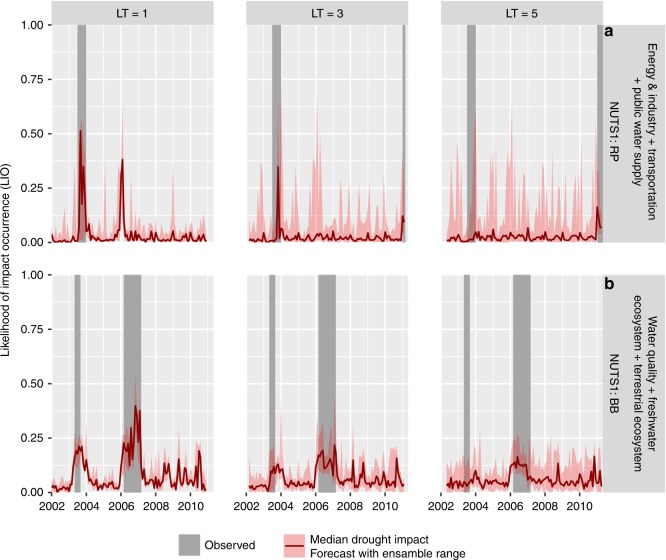
“We also notice some high LIO values but no drought was reported, i.e. the drought year 2008 and 2010 28,31 , which could trigger unneeded preparation measures.”
BackgroundImpacts of European drought events: insights from an international database of text-based reports
Stahl, K., Kohn, I., Blauhut, V., Urquijo, J., De Stefano, L., Acácio, V., Dias, S., Stagge, J. H., Tallaksen, L. M., Kampragou, E., et al. (2016) · Natural Hazards and Earth System Sciences · doi:10.5194/nhess-16-801-2016 · Cited by 382 · cited 15×
“References 16,34 are the fi rst that employed RF to link drought indices and reports from the EDII.”
BackgroundMethodInfluentialSelf-citationPark, S., Im, J., Jang, E., & Rhee, J. (2016) · Agricultural and Forest Meteorology · doi:10.1016/j.agrformet.2015.10.011 · Cited by 340 · cited 2×
“Some studies have utilized RF to monitor and predict meteorological drought hazard based on historical data 56 – 58 .”
MethodDevelopment of a Combined Drought Indicator to detect agricultural drought in Europe
Sepulcre-Canto, G., Horion, S., Singleton, A., Carrao, H., & Vogt, J. (2012) · Natural Hazards and Earth System Sciences · doi:10.5194/nhess-12-3519-2012 · Cited by 334 · cited 2×
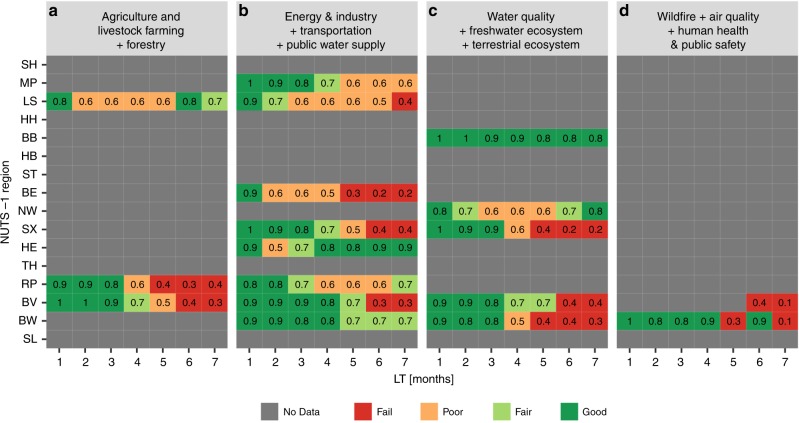
“The European Drought Observatory 7 and the ANYWHERE Drought EWS are encouraged to develop and later encapsulate the drought impact forecast functions for these regions into their drought early warning systems since our study shows that drought impacts can be forecasted a few months in advance.”
BackgroundDrought indicators revisited: the need for a wider consideration of environment and society
Bachmair, S., Stahl, K., Collins, K., Hannaford, J., Acreman, M., Svoboda, M., Knutson, C., Smith, K. H., Wall, N., Fuchs, B., et al. (2016) · WIREs Water · doi:10.1002/wat2.1154 · Cited by 316 · cited 1×
“This missing tangible information, however, is crucial for water managers, stakeholders, and policy makers to better understand and prepare to drought 14 .”
BackgroundModeling drought impact occurrence based on meteorological drought indices in Europe
Stagge, J. H., Kohn, I., Tallaksen, L. M., & Stahl, K. (2015) · Journal of Hydrology · doi:10.1016/j.jhydrol.2015.09.039 · Cited by 303 · cited 1×
“Links between reported drought impacts and drought hazards, derived from standardized meteorological drought indices, e.g. Standardized Precipitation Index (SPI) and Standardized Pre-cipitation Evaporation Index (SPEI), have been established in previous studies 15 – 17 .”
Blauhut, V., Stahl, K., Stagge, J. H., Tallaksen, L. M., De Stefano, L., & Vogt, J. (2016) · Hydrology and Earth System Sciences · doi:10.5194/hess-20-2779-2016 · Cited by 267 · cited 1×
“We suggest to consider the vulnerabilities and exposure of the impacts in each studied region, which can provide a good measure for drought impact forecasting 33 .”
BackgroundSelf-citationRhee, J., & Im, J. (2017) · Agricultural and Forest Meteorology · doi:10.1016/j.agrformet.2017.02.011 · Cited by 245 · cited 2×
“Some studies have utilized RF to monitor and predict meteorological drought hazard based on historical data 56 – 58 .”
MethodForecasting effective drought index using a wavelet extreme learning machine (W-ELM) model
Deo, R. C., Tiwari, M. K., Adamowski, J. F., & Quilty, J. M. (2017) · Stochastic Environmental Research and Risk Assessment · doi:10.1007/s00477-016-1265-z · Cited by 228
Pozzi, W., Sheffield, J., Stefanski, R., Cripe, D., Pulwarty, R., Vogt, J. V., Heim, R. R., Brewer, M. J., Svoboda, M., Westerhoff, R., et al. (2013) · Bulletin of the American Meteorological Society · doi:10.1175/bams-d-11-00176.1 · Cited by 219
How well do meteorological indicators represent agricultural and forest drought across Europe?
Bachmair, S., Tanguy, M., Hannaford, J., & Stahl, K. (2018) · Environmental Research Letters · doi:10.1088/1748-9326/aaafda · Cited by 195 · cited 1×
“Links between accumulation periods of drought indices with certain drought impacts suggest that short accumulation periods are best associated with the meteorological type of drought impacts and vice versa for the hydrological type of drought impacts 35,36 .”
BackgroundA quantitative analysis to objectively appraise drought indicators and model drought impacts
Bachmair, S., Svensson, C., Hannaford, J., Barker, L. J., & Stahl, K. (2016) · Hydrology and Earth System Sciences · doi:10.5194/hess-20-2589-2016 · Cited by 191 · cited 4×
“16,34 .”
BackgroundMethodInfluentialAn analysis of the July 2006 heatwave extent in Europe compared to the record year of 2003
Rebetez, M., Dupont, O., & Giroud, M. (2009) · Theoretical and Applied Climatology · doi:10.1007/s00704-007-0370-9 · Cited by 187 · cited 1×
“Drought in 2003 and 2006 are well-known drought events in Europe because of the impacts and its associated heatwaves 28 – 30 .”
BackgroundSkilful seasonal forecasts of streamflow over Europe?
Arnal, L., Cloke, H. L., Stephens, E., Wetterhall, F., Prudhomme, C., Neumann, J., Krzeminski, B., & Pappenberger, F. (2018) · Hydrology and Earth System Sciences · doi:10.5194/hess-22-2057-2018 · Cited by 186
Seasonal weather forecasts for crop yield modelling in Europe
Cantelaube, P., & Terres, J.-M. (2005) · Tellus A: Dynamic Meteorology and Oceanography · doi:10.3402/tellusa.v57i3.14669 · Cited by 182 · cited 1×
“Attempts to seasonal drought impact forecasting using dynamic climate models in combination with deterministic impact models (top-down approach) are already known for some time for particular purposes, e.g. agricultural crop yields 41 – 44 or navigation on main German rivers 45 .”
BackgroundBlauhut, V., Gudmundsson, L., & Stahl, K. (2015) · Environmental Research Letters · doi:10.1088/1748-9326/10/1/014008 · Cited by 182 · cited 2×
“Links between reported drought impacts and drought hazards, derived from standardized meteorological drought indices, e.g. Standardized Precipitation Index (SPI) and Standardized Pre-cipitation Evaporation Index (SPEI), have been established in previous studies 15 – 17 .”
MethodSelf-citationGeorgi, B., Swart, R. J., Marinova, N., van Hove, B., Jacobs, C. M. J., Klostermann, J. E. M., Kaźmierczak, A., Peltonen, L., Kopperoinen, L., Oinonen, K., et al. (2012) · ORCA Online Research @Cardiff (Cardiff University) · doi:10.2800/41895 · Cited by 175
Exploring the link between drought indicators and impacts
Bachmair, S., Kohn, I., & Stahl, K. (2015) · Natural Hazards and Earth System Sciences · doi:10.5194/nhess-15-1381-2015 · Cited by 160 · cited 1×
“2) 20,32 .”
Pappenberger, F., Thielen, J., & Medico, M. D. (2011) · Hydrological Processes · doi:10.1002/hyp.7772 · Cited by 150
Predicting above normal wildfire activity in southern Europe as a function of meteorological drought
Gudmundsson, L., Rego, F. C., Rocha, M., & Seneviratne, S. I. (2014) · Environmental Research Letters · doi:10.1088/1748-9326/9/8/084008 · Cited by 144
Mount, N. J., Maier, H. R., Toth, E., ELSHORBAGY, A. A., SOLOMATINE, D. P., Chang, F., & Abrahart, R. J. (2016) · Hydrological Sciences Journal · doi:10.1080/02626667.2016.1159683 · Cited by 133
On the Operational Implementation of the European Flood Awareness System (EFAS)
Smith, P. J., Pappenberger, F., Wetterhall, F., Thielen, J., Krzeminski, B., Salamon, P., Muraro, D., Kalaš, M., & Baugh, C. A. (2016) · Elsevier eBooks · doi:10.1016/b978-0-12-801884-2.00011-6 · Cited by 128
Hydrological drought forecasting and skill assessment for the Limpopo River basin, southern Africa
Trambauer, P., Werner, M., Winsemius, H., Maskey, S., Dutra, E., & Uhlenbrook, S. (2015) · Hydrology and earth system sciences · doi:10.5194/hess-19-1695-2015 · Cited by 114 · cited 3×
“This skill score has been used among many studies dealing with probabilistic forecasts 11,13 .”
BackgroundMethodRisk assessment to China’s agricultural drought disaster in county unit
Hao, L., Zhang, X., & Liu, S. (2011) · Natural Hazards · doi:10.1007/s11069-011-0066-4 · Cited by 110
Developing drought impact functions for drought risk management
Bachmair, S., Svensson, C., Prosdocimi, I., Hannaford, J., & Stahl, K. (2017) · Natural hazards and earth system sciences · doi:10.5194/nhess-17-1947-2017 · Cited by 105
Seasonal weather forecasts for crop yield modelling in Europe
Cantelaube, P., & Terres, J. (2005) · Tellus A Dynamic Meteorology and Oceanography · doi:10.1111/j.1600-0870.2005.00125.x · Cited by 92
Seasonal forecasts of droughts in African basins using the Standardized Precipitation Index
Dutra, E., Giuseppe, F. D., Wetterhall, F., & Pappenberger, F. (2013) · Hydrology and earth system sciences · doi:10.5194/hess-17-2359-2013 · Cited by 91 · cited 2×
“This skill score has been used among many studies dealing with probabilistic forecasts 11,13 .”
BackgroundMethodUtility of dynamical seasonal forecasts in predicting crop yield
Semenov, M. A., & Doblas-Reyes, F. J. (2007) · Climate Research · doi:10.3354/cr034071 · Cited by 88
Probabilistic Seasonal Forecasting of African Drought by Dynamical Models
Yuan, X., Wood, E. F., Chaney, N. W., Sheffield, J., Kam, J., Liang, M., & Guan, K. (2013) · Journal of Hydrometeorology · doi:10.1175/jhm-d-13-054.1 · Cited by 86
Kalaugher, E., Bornman, J. F., Clark, A., & Beukes, P. C. (2012) · Environmental Modelling & Software · doi:10.1016/j.envsoft.2012.03.018 · Cited by 84
Ogutu, G., Franssen, W., Supit, I., Omondi, P., & Hutjes, R. (2018) · Agricultural and Forest Meteorology · doi:10.1016/j.agrformet.2017.12.256 · Cited by 81 · cited 1×
“Attempts to seasonal drought impact forecasting using dynamic climate models in combination with deterministic impact models (top-down approach) are already known for some time for particular purposes, e.g. agricultural crop yields 41 – 44 or navigation on main German rivers 45 .”
BackgroundYuan, X., Ma, F., Wang, L., Zheng, Z., Ma, Z., Ye, A., & Peng, S. (2016) · Hydrology and earth system sciences · doi:10.5194/hess-20-2437-2016 · Cited by 80
Impact of the European Russia drought in 2010 on the Caspian Sea level
Arpe, K., Leroy, S. A. G., Lahijani, H. A. K., & Хан, В. М. (2012) · Hydrology and earth system sciences · doi:10.5194/hess-16-19-2012 · Cited by 78 · cited 1×
“We also notice some high LIO values but no drought was reported, i.e. the drought year 2008 and 2010 28,31 , which could trigger unneeded preparation measures.”
BackgroundIntegrated modeling within a Hydrologic Information System: An OpenMI based approach
Castronova, A. M., Goodall, J. L., & Ercan, M. B. (2012) · Environmental Modelling & Software · doi:10.1016/j.envsoft.2012.02.011 · Cited by 70
Meißner, D., Klein, B., & Ionita-Scholz, M. (2017) · Hydrology and earth system sciences · doi:10.5194/hess-21-6401-2017 · Cited by 60
The new ECMWF seasonal forecast system (System 4)
Molteni, F., Stockdale, T., Balmaseda, M., Balsamo, G., Buizza, R., Ferranti, L., Magnusson, L., Mogensen, K. S., Palmer, T., & Vitart, F. (2011) · European Centre for Medium-Range Weather Forecasts · doi:10.21957/4nery093i · Cited by 57
van Hateren, T. C., Sutanto, S. J., & Lanen, H. A. J. V. (2019) · Environment International · doi:10.1016/j.envint.2019.105206 · Cited by 47 · cited 1×
“55 to calculate observed and forecasted drought events using the standardized indices.”
MethodSelf-citationKernel Smoothing For ROC Curve And Estimation For Thyroid Stimulating Hormone
Tazhibi, M., Bashardoost, N., & Ahmadi, M. (2011) · Cited by 44
Shin, D. W., Baigorria, G. A., Lim, Y.-K., Cocke, S. D., LaRow, T. E., O’Brien, J. J., & Jones, J. W. (2009) · Journal of Applied Meteorology and Climatology · doi:10.1175/2009jamc2293.1 · Cited by 37
The 2004–2006 drought in southern Britain
Marsh, T. (2007) · Weather · doi:10.1002/wea.99 · Cited by 32
The Delta Model for Fresh Water Policy Analysis in the Netherlands
Prinsen, G., Weiland, F. S., & Ruijgh, E. (2014) · Water Resources Management · doi:10.1007/s11269-014-0880-z · Cited by 26 · cited 1×
“The top-down part of the combined approach for drought impact forecasting could be broadened by implementing experiences with integrated environmental modeling that are being used for a wide range of scenario analyses 47 , including water resources systems 48,49 .”
BackgroundThe Missing Piece: Drought Impacts Monitoring
Lackstrom, K., Brennan, A., Ferguson, D. B., Crimmins, M. A., Darby, L. S., Dow, K. M., Ingram, K. T., Meadow, A. M., Reges, H. W., Shafer, M. A., et al. (2013) · Cited by 15
The Missing Piece:Drought Impacts MonitoringReport from a Workshop in Tucson, AZMARCH 5-6, 2013
Lackstrom, K., Brennan, A., Ferguson, D. J., Crimmins, M., Darby, L. S., Dow, K. M., Ingram, K. T., Meadow, A. M., Reges, H. W., Shafer, M. A., et al. (2013) · Lincoln (University of Nebraska) · Cited by 5
Research works printed but not linked: 2
- Tallaksen, L. M. & Van Lanen, H. A. J. Hydrological Drought. Processes and Estimation Methods for Streamflow and Groundwater. Development in Water Science (Elsevier Science B.V., 2004).
- Mason I A model for assessment of weather forecasts Aust. Meteor. Mag. 1982 30 291 303
Cited by
Challenges for drought assessment in the Mediterranean region under future climate scenarios
Tramblay, Y., Koutroulis, A., Samaniego, L., Vicente-Serrano, S. M., Volaire, F., Boone, A., Le Page, M., Llasat, M. C., Albergel, C., Burak, S., et al. (2020) · Earth-Science Reviews · doi:10.1016/j.earscirev.2020.103348 · Cited by 690
Artificial intelligence for modeling and understanding extreme weather and climate events
Camps-Valls, G., Fernández-Torres, M.-Á., Cohrs, K.-H., Höhl, A., Castelletti, A., Pacal, A., Robin, C., Martinuzzi, F., Papoutsis, I., Prapas, I., et al. (2025) · Nature Communications · doi:10.1038/s41467-025-56573-8 · Cited by 288
“In recent years, there hasbeen an increasing interest in predicting vegetation state using ML 4 , as a way to estimate the impact of climatic extremes on the evolution of the vegetation state variable 43,44 .”
Impact Forecasting to Support Emergency Management of Natural Hazards
Merz, B., Kuhlicke, C., Kunz, M., Pittore, M., Babeyko, A., Bresch, D. N., Domeisen, D. I. V., Feser, F., Koszalka, I., Kreibich, H., et al. (2020) · Reviews of Geophysics · doi:10.1029/2020rg000704 · Cited by 358
“(3) Further, there are approaches where multiple impacts (e.g., crop yield, energy, and water supply loss due to droughts) are grouped and represented by one variable (Bachmair et al., 2016, 2017; Sutanto et al., 2019).”
BackgroundSutanto, S. J., Vitolo, C., Di Napoli, C., D’Andrea, M., & Van Lanen, H. A. J. (2020) · Environment International · doi:10.1016/j.envint.2019.105276 · Cited by 331
Self-citationA review of Earth Artificial Intelligence
Sun, Z., Sandoval, L., Crystal-Ornelas, R., Mousavi, S. M., Wang, J., Lin, C., Cristea, N., Tong, D., Carande, W. H., Ma, X., et al. (2022) · Computers & Geosciences · doi:10.1016/j.cageo.2022.105034 · Cited by 271
“Some studies used ML to predict drought indicators (Sutanto et al., 2019), such as SPEI and SPI (Belayneh and Adamowski, 2012; Maca and Pech, 2016) and estimate drought severity at ungauged sites (Sadri and Burn, 2012).”
Metadata
- Authors
- Sutanto, S. J., van der Weert, M., Wanders, N., Blauhut, V., & Van Lanen, H. A. J.
- Affiliations
- Wageningen University & Research (NL)
- Utrecht University (NL)
- University of Freiburg (DE)
- Corresponding author
- Sutanto, Samuel J.
- Venue
- Nature Communications
- Published
- 2019-10-30
- Volume
- 10
- Issue
- 1
- Pages
- 4945-4945
- ISSN
- 2041-1723 (ISSN-L)
- PMC
- PMC6821769
- OpenAlex
- W2982405828
- Semantic Scholar
- a7c586b1b49b1b7b2c66e9dc18bca946a0150259
- Cited by
- 144
- References
- 60
- Citations by year
- 2026: 20 · 2025: 26 · 2024: 21 · 2023: 29 · 2022: 12 · 2021: 21 · 2020: 13 · 2019: 2
- FWCI
- 6.31
- Type
- journal article
- Language
- en
- Open access
- gold
- doi.org
- Licence
- cc-by
- creativecommons.org/licenses/by/4.0 (tdm)
- creativecommons.org/licenses/by/4.0 (vor)
- Locations
- Nature Communications (publishedVersion, cc-by)
- PubMed Central (publishedVersion, cc-by)
- PubMed (publishedVersion)
- Socio-Environmental Systems Modeling (acceptedVersion, cc-by)
- DOAJ (DOAJ: Directory of Open Access Journals) (submittedVersion, cc-by-sa)
- DOAJ (DOAJ: Directory of Open Access Journals) (submittedVersion)
- Utrecht University Repository (Utrecht University) (submittedVersion, other-oa)
- Data Archiving and Networked Services (DANS) (submittedVersion, cc-by)
- Funders
- European Commission (HORIZON2020, 198702, 700099)
- Topics
- Physical Sciences › Environmental Science › Global and Planetary Change › Hydrology and Drought Analysis
- Physical Sciences › Environmental Science › Water Science and Technology › Water resources management and optimization
- Physical Sciences › Environmental Science › Global and Planetary Change › Plant Water Relations and Carbon Dynamics
- Keywords
- drought early warning, machine learning, drought management, multi-step forecasting
About these checks
Registry, retraction, Cites and statistics results are computed, not judged, with one exception: a printed reference that no index lists is read once by a model before it counts as a citation error. Claims are extracted by a model and kept only when their quote appears verbatim in the text; each cited source is then checked, with a model’s help, for whether it says what the claim relies on. Those verdicts can be wrong — read the claim’s quote and the cited source before relying on one.
Statistics and arithmetic are recomputed, not judged.
Confidence bands are shown only for fields calibrated on our annotated test set. None is calibrated yet, so no band is shown.
What counts as a claim ›How we measure confidence ›How we check this ›
Are you an author, or do you see a problem with this page? Request a review
Data sources
Bibliographic data: Semantic Scholar, OpenAlex, Crossref.
Contains information from the Semantic Scholar Academic Graph Datasets, made available under the ODC Attribution License (ODC-BY 1.0).
Semantic Scholar’s data is described in: Kinney, R., et al. (2023). The Semantic Scholar Open Data Platform. arXiv:2301.10140.
