

Non-canonical signalling mediates changes in fungal cell wall PAMPs that drive immune evasion
Open accessThe DOI matches its Crossref record; 66 of the 66 references it cites were found in a registry or an index.
Abstract
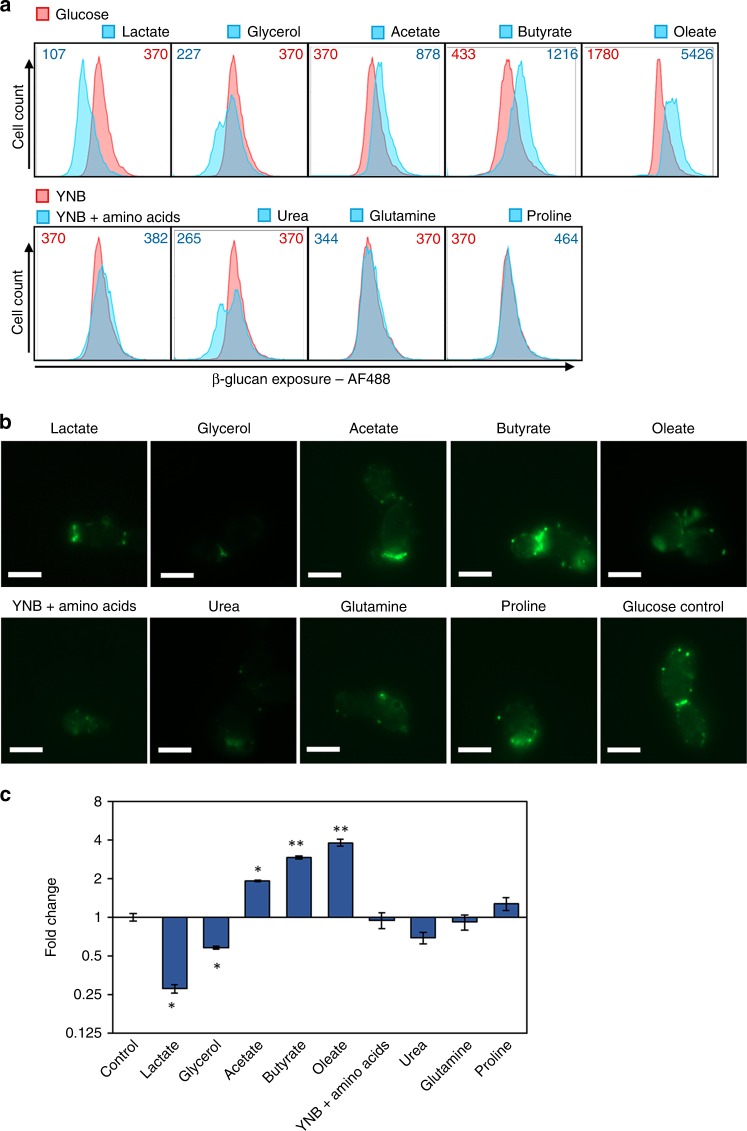
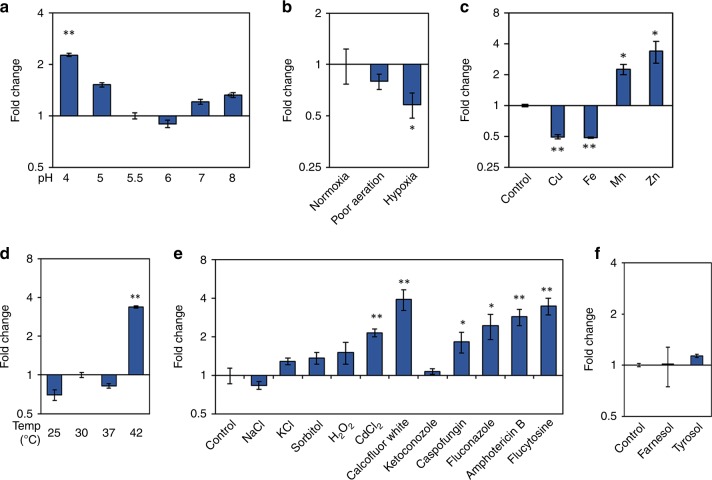
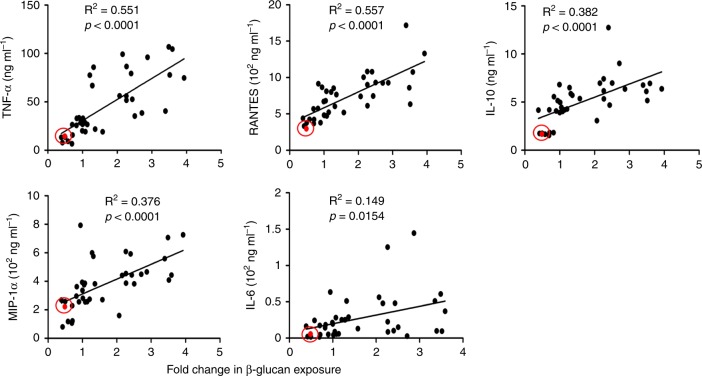
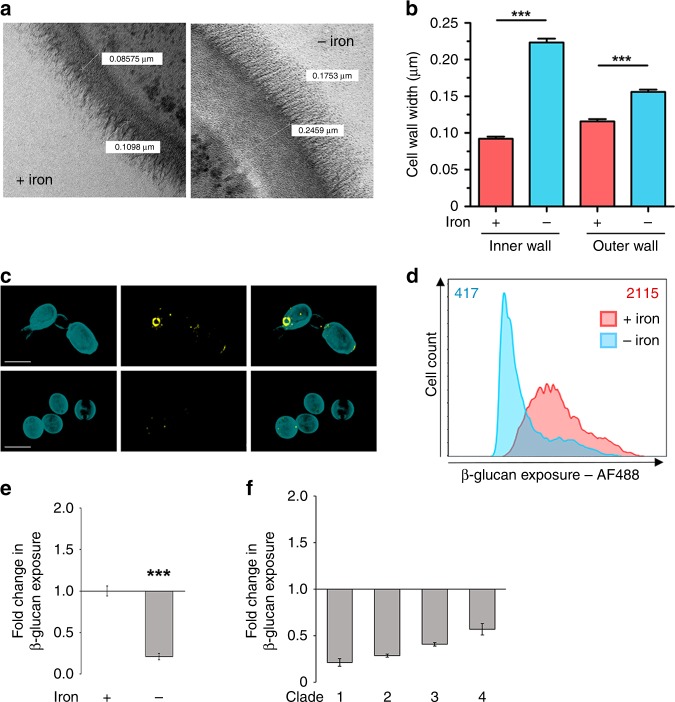
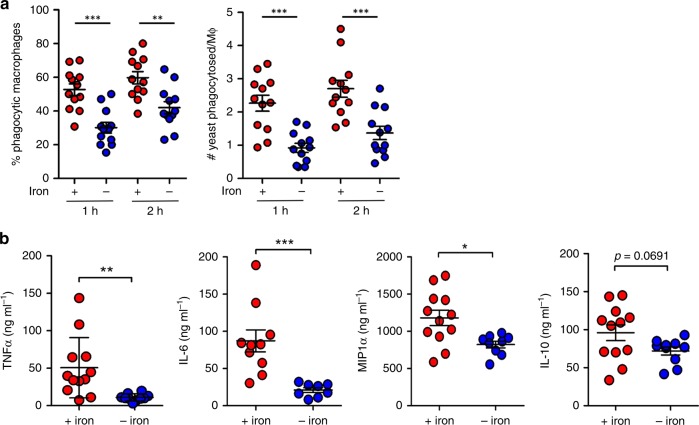
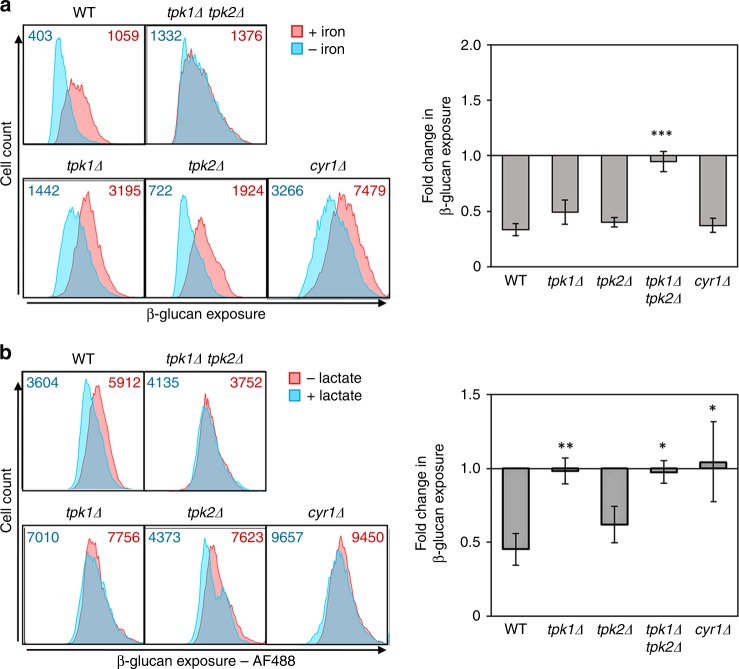
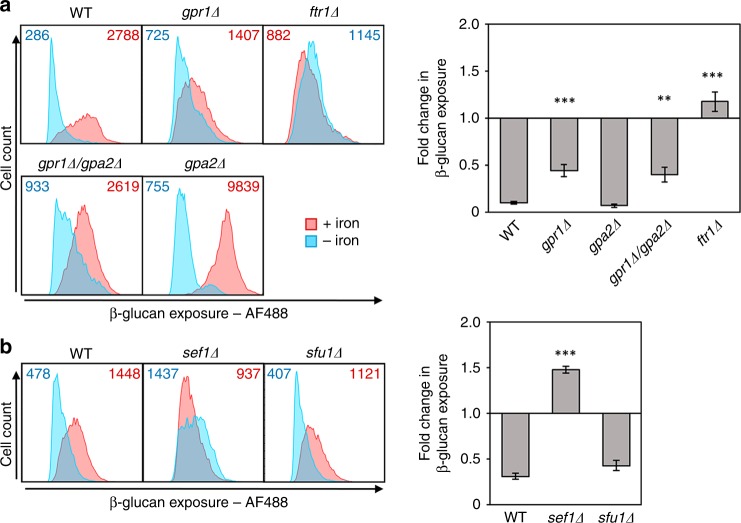
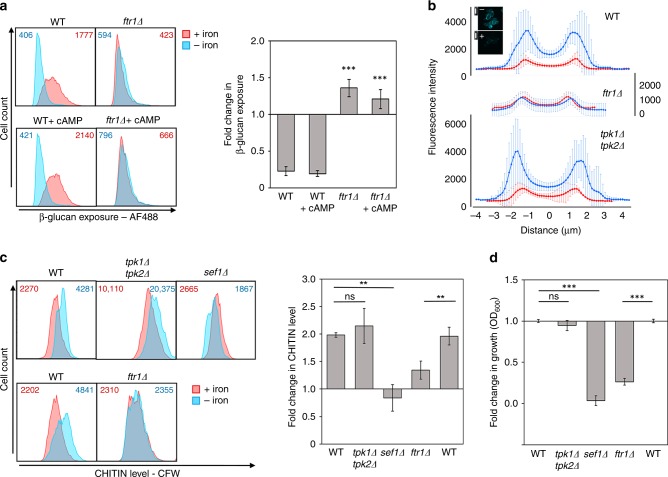
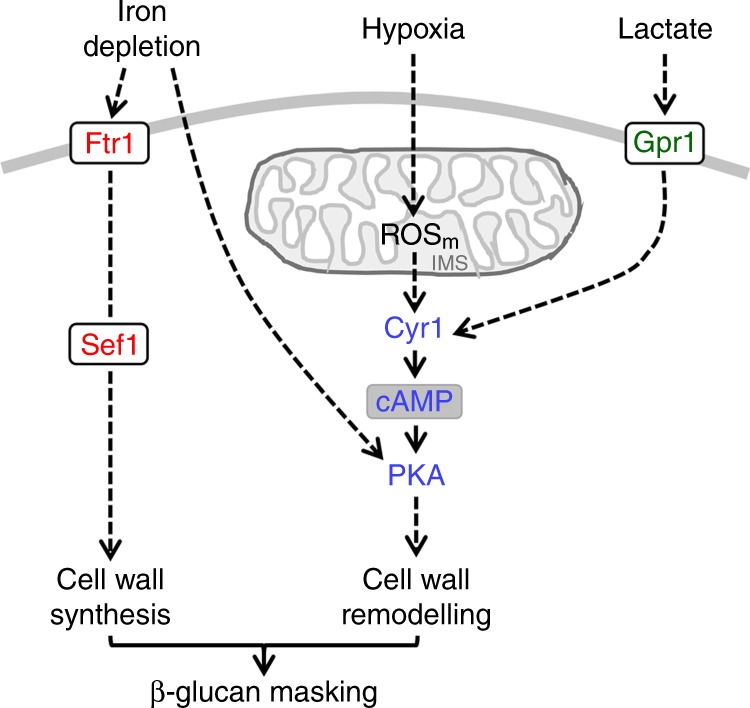
To colonise their host, pathogens must counter local environmental and immunological challenges. Here, we reveal that the fungal pathogen Candida albicans exploits diverse host-associated signals to promote immune evasion by masking of a major pathogen-associated molecular pattern (PAMP), β-glucan. Certain nutrients, stresses and antifungal drugs trigger β-glucan masking, whereas other inputs, such as nitrogen sources and quorum sensing molecules, exert limited effects on this PAMP. In particular, iron limitation triggers substantial changes in the cell wall that reduce β-glucan exposure. This correlates with reduced phagocytosis by macrophages and attenuated cytokine responses by peripheral blood mononuclear cells. Iron limitation-induced β-glucan masking depends on parallel signalling via the iron transceptor Ftr1 and the iron-responsive transcription factor Sef1, and the protein kinase A pathway. Our data reveal that C. albicans exploits a diverse range of specific host signals to trigger protective anticipatory responses against impending phagocytic attack and promote host colonisation.
Overview
The claims and statistics of this paper haven’t been checked yet.
Free: it reads the open-access text and checks the first 5 claims that cite a source we can check. Create a free account to check every claim.
Integrity signals
Registry
Cites
Statistics
Figures
Verification
Claims the paper makes
The claims and statistics of this paper haven’t been checked yet.
Free: it reads the open-access text and checks the first 5 claims that cite a source we can check. Create a free account to check every claim.
Claims other papers make about this one
Each is checked against this paper’s own text: does it say what the citing paper says it does?
The source backs part of the claim, not all of it — or backs it for a different population, condition or comparison.
In the citing paper
“Modulation of iron levels alters C. albicans dissemination, infection severity, membrane ergosterol levels, and host immune response (largely mediated by iron-induced changes in the levels of immunogenic glucans in the cell wall) (22–25).”
From Candida albicans enhances iron uptake to maintain fluconazole resistance (2025) · cites this paper as [25]
Experimental — accuracy not yet measuredIn the citing paper
“The Internalin-family protein (InlJ) of the periodontal pathogen Porphyromonas gingivalis interacts with the C. albicans cell-surface adhesin Als3 that also serves as a ferritin receptor involved in iron uptake and hence regulated by environmental iron [31].”
From High iron-mediated increased oral fungal burden, oral-to-gut transmission, and changes to pathogenicity of Candida albicans in oropharyngeal candidiasis (2022) · cites this paper as [31]
Self-check
Percentages, sums and reported differences re-computed from the paper’s own numbers.
The self-check needs the paper’s full text.
Citations
Cites
Hidden Killers: Human Fungal Infections
Brown, G. D., Denning, D. W., Gow, N. A. R., Levitz, S. M., Netea, M. G., & White, T. C. (2012) · Science Translational Medicine · doi:10.1126/scitranslmed.3004404 · Cited by 4,284
Self-citationOxidative mechanisms in the toxicity of metal ions
Stohs, S. J., & Bagchi, D. (1995) · Free Radical Biology and Medicine · doi:10.1016/0891-5849(94)00159-h · Cited by 4,219
Dectin-1 Mediates the Biological Effects of β-Glucans
Brown, G. D., Herre, J., Williams, D. L., Willment, J. A., Marshall, A. S. J., & Gordon, S. (2003) · The Journal of Experimental Medicine · doi:10.1084/jem.20021890 · Cited by 1,205
Self-citationLeibundGut-Landmann, S., Groß, O., Robinson, M. J., Osorio, F., Slack, E. C., Tsoni, S. V., Schweighoffer, E., Tybulewicz, V., Brown, G. D., Ruland, J., et al. (2007) · Nature Immunology · doi:10.1038/ni1460 · Cited by 1,191
Self-citationDectin-1 is required for β-glucan recognition and control of fungal infection
Taylor, P. R., Tsoni, S. V., Willment, J. A., Dennehy, K. M., Rosas, M., Findon, H., Haynes, K., Steele, C., Botto, M., Gordon, S., et al. (2007) · Nature Immunology · doi:10.1038/ni1408 · Cited by 1,161
Self-citationShort chain fatty acids in the human colon.
Cummings, J. H. (1981) · Gut · doi:10.1136/gut.22.9.763 · Cited by 1,043
Kakhlon, O., & Cabantchik, Z. I. (2002) · Free Radical Biology and Medicine · doi:10.1016/s0891-5849(02)01006-7 · Cited by 839
Human dectin-1 deficiency and mucocutaneous fungal infections
Ferwerda, B., Ferwerda, G., Plantinga, T. S., Willment, J. A., van Spriel, A. B., Venselaar, H., Elbers, C. C., Johnson, M. D., Cambi, A., Huysamen, C., et al. (2009) · New England Journal of Medicine · doi:10.1056/nejmoa0901053 · Cited by 752
Self-citationInteractions of fungal pathogens with phagocytes
Erwig, L. P., & Gow, N. A. R. (2016) · Nature Reviews Microbiology · doi:10.1038/nrmicro.2015.21 · Cited by 626
Self-citationAdaptive prediction of environmental changes by microorganisms
Mitchell, A., Romano, G. H., Groisman, B., Yona, A., Dekel, E., Kupiec, M., Dahan, O., & Pilpel, Y. (2009) · Nature · doi:10.1038/nature08112 · Cited by 581
Research works printed but not linked: 1
- Underhill, D. M. in Immunology of Fungal Infections (eds Brown, G. D. & Netea, M. G.) 429–442 (Springer, 2007).
Cited by
Items 101–122 of 122
Lewtak, K., Dryglewska, M., Wójcik-Mieszawska, S., Skwarek, E., Czaplewska, P., Ścibek-Rejmontowska, W., Korkmaz, H., Wydrych, J., Kaźmierski, W., Skrzypiec, K., et al. (2026) · Scientific Reports · doi:10.1038/s41598-026-52961-2 · Cited by 1
Xu, X., Jiang, B., Xiong, J., Jiang, Y., & Lu, H. (2026) · Vaccine · doi:10.1016/j.vaccine.2026.128864 · Cited by 1
Trentin, G., Martins‐Santana, L., Taborda, C. P., & Almeida, F. (2026) · Frontiers in Immunology · doi:10.3389/fimmu.2026.1912476 · Cited by 1
“The regulatory mechanisms that determine when b -glucan becomes accessible at the cell surface remain only partly resolved (82), indicating that b -glucan should not be viewed simply as an inner-wall component that is always hidden from the host (80, 81).”
The impact of ORF19.36.1 in the pathobiology of Candida albicans
Arita, G. S., Ma, Q., Leaves, I., Pradhan, A., Hickey, E., Dambuza, I. M., Bebes, A., Conrado, P. C. V., Galinari, C. B., Seixas, F. A. V., et al. (2023) · Microbial Pathogenesis · doi:10.1016/j.micpath.2023.106437
Self-citationHeydarian, N., Ferrell, M., Nair, A. S., Roedl, C. C., Peng, Z., Nguyen, T. D., Best, W., Wozniak, K. L., & Rice, C. V. (2024) · ChemMedChem · doi:10.1002/cmdc.202400011
Understanding Fungi-Host Dynamics: The Role of Immuno Suppression and Real-World Clinical Scenario
Mazhar, S. S., Panche, A. N., Mohiuddin, I. M., Deshmukh, R., & Harke, S. N. (2025) · Current Fungal Infection Reports · doi:10.1007/s12281-025-00514-x
“A promising path towards improving antifungal immunotherapies could be to investigate β-glucan masking inhibitors [ 46].”
Snyder, L. F. (2024) · Iowa Research Online (The University of Iowa) · doi:10.25820/etd.007450
Describing The Role Of Zinc And Zinc-independent Ribosomal Proteins In Mycobacterial Physiology
Burger, A. D. (2021) · ScholarSpace (University of Hawaii at Manoa)
Caractérisation de la voie d’inflammation cGAS-STING dans le placenta
Aubé, F.-A. (2024) · Le dépôt institutionnel (Université du Québec à Trois-Rivières)
Fonctions et biosynthèse des β-1,6-glucanes de la paroi cellulaire chez Candida albicans
Bekirian, C. (2024) · theses.fr (ABES) · doi:10.70675/b1028289z0c26z4acaz8f96z18e5c0c94464
Experimental protothecosis in a murine model
Proskurnicka, A., Duk, K., Hutsch, T., Hoser, G., Wrzesień, R., Skirecki, T., Bielecki, J., & Jagielski, T. (2026) · PLoS neglected tropical diseases · doi:10.1371/journal.pntd.0014312
“This speculation is supported by findings in Candida albicans , where cell wall remodeling has been shown to attenuate immune detection and cytokine induction [58,59].”
The prebiotic inulin affects virulence factor expression in Candida albicans
Hickey, E., Pradhan, A., Ma, Q., Leaves, I., Philip-Brookes, A., Duggan, S., Harvey, J. A., Dambuza, I. M., Cherek, P., Yuecel, R., et al. (2026) · mBio · doi:10.1128/mbio.03851-25
“5F), which are required for iron limitation-and hypoxia-induced β(1,3)-glucan masking, respectively (43, 64).”
InfluentialSelf-citationMiyagawa, A., Yamaguchi, T., Oda, M., & Yamamura, H. (2026) · ACS Bio & Med Chem Au · doi:10.1021/acsbiomedchemau.6c00086
Duan, X., Huang, R., Chen, X., Cheng, Q., He, S., Xu, W., & Chen, Y. (2026) · Physiological and Molecular Plant Pathology · doi:10.1016/j.pmpp.2026.103415
Lewtak, K., Fiołka, M. J., Czaplewska, P., Ścibek-Rejmontowska, W., Tkacz, O., Wójcik-Mieszawska, S., Wydrych, J., Buchwald, T., Dryglewska, M., & Kaźmierski, W. (2026) · Scientific Reports · doi:10.1038/s41598-026-63147-1
Organ-specific phenotypes of Candida albicans: implications for immunity and pathogenesis
Morris, E., Sheriff, L., & Drummond, R. A. (2026) · Current Opinion in Microbiology · doi:10.1016/j.mib.2026.102817
Patitz, J. J., Nieuwenhuizen, N. E., Solomatina, A., Bachelot, Y., Krüger, T., Svensson, C., Hoeppener, S., Zimmermann, A.-K., Blango, M. G., Martin, R., et al. (2026) · Journal of Extracellular Vesicles · doi:10.1002/jev2.70363
Wang, R., Peng, X., Liu, W., Song, Z., & Yu, H. (2026) · Virulence · doi:10.1080/21505594.2026.2719264
“In these contexts, the spatial masking of fungal cell wall polysaccharides – such as the coverage of β-glucans by α-glucans or capsular structures – may attenuate Th1/ Th17-associated signaling while relatively enhancing Th2-biased immune pathways [8,139].”
Soni, A., Vrzoňová, R., Paulovičová, L., Bzducha‐Wróbel, A., & Farkaš, P. (2026) · International Journal of Biological Macromolecules · doi:10.1016/j.ijbiomac.2026.154672
Host receptor-mediated responses to Candida albicans : An update
Zhu, H., Wang, X., & Shao, J. (2026) · Medical Mycology · doi:10.1093/mmy/myag111
A zinc-sequestering polymer disrupts zinc homeostasis to suppress fungal viability and virulence
Sun, X., Rong, S., Qiu, Y., Yu, Z., Shen, F., Sun, Y., Lin, Z., Cheng, Y., & Hu, J. (2026) · Journal of Controlled Release · doi:10.1016/j.jconrel.2026.115516
Metadata
- Authors
- Pradhan, A., Avelar, G. M., Bain, J. M., Childers, D., Pelletier, C., Larcombe, D. E., Shekhova, E., Netea, M. G., Brown, G. D., Erwig, L., Gow, N. A. R., & Brown, A. J. P.
- Affiliations
- University of Aberdeen (GB)
- Radboud University Nijmegen (NL)
- University of Exeter (GB)
- Corresponding author
- Brown, Alistair J. P.
- ORCID
- Venue
- Nature Communications
- Published
- 2019-11-22
- Volume
- 10
- Issue
- 1
- Pages
- 5315-5315
- ISSN
- 2041-1723 (ISSN-L)
- PMC
- PMC6876565
- OpenAlex
- W2981959167
- Semantic Scholar
- 0071b313b21a07eda578128be9a78899bf593798
- Cited by
- 119
- References
- 66
- Citations by year
- 2026: 20 · 2025: 17 · 2024: 25 · 2023: 9 · 2022: 19 · 2021: 14 · 2020: 14 · 2019: 1
- FWCI
- 3.97
- Type
- journal article
- Language
- en
- Open access
- gold
- doi.org
- Licence
- cc-by
- creativecommons.org/licenses/by/4.0 (tdm)
- creativecommons.org/licenses/by/4.0 (vor)
- Locations
- Nature Communications (publishedVersion, cc-by)
- PubMed Central (publishedVersion, cc-by)
- PubMed (publishedVersion)
- RePEc: Research Papers in Economics (submittedVersion)
- Aberdeen University Research Archive (Aberdeen University) (submittedVersion)
- DOAJ (DOAJ: Directory of Open Access Journals) (submittedVersion, cc-by-sa)
- DOAJ (DOAJ: Directory of Open Access Journals) (submittedVersion)
- Figshare (submittedVersion, cc-by)
- Open Research Exeter (University of Exeter) (submittedVersion, cc-by)
- Radboud Repository (Radboud University) (submittedVersion)
- Radboud Repository (Radboud University) (submittedVersion, other-oa)
- Funders
- RCUK | Medical Research Council (MR/M026663/1, MR/N006364/1)
- Wellcome Trust (075470, 086827, 093378, 097377, 099197, 101873, 102705, 200208)
- European Commission (H2020-MSCA-ITN-2018-812969)
- Topics
- Life Sciences › Biochemistry, Genetics and Molecular Biology › Molecular Biology › Fungal and yeast genetics research
- Health Sciences › Medicine › Infectious Diseases › Antifungal resistance and susceptibility
- Health Sciences › Medicine › Infectious Diseases › Fungal Infections and Studies
- Keywords
- Candida albicans, immune evasion, pathogen-associated molecular patterns, fungal cell wall, iron limitation, protein kinase A pathway, quorum sensing, phagocytosis, macrophages, cytokine response, host-pathogen interaction
- MeSH terms
- Pathogen-Associated Molecular Pattern Molecules, Animals, Candida albicans, Cell Wall, Fungal Proteins, Humans, Immunity, Innate, Iron, Leukocytes, Mononuclear, Macrophages, Phagocytosis, Signal Transduction, Cytokines, Cyclic AMP-Dependent Protein Kinases, Membrane Transport Proteins, beta-Glucans, Core Binding Factor Alpha 1 Subunit, Mice, Immune Evasion
About these checks
Registry, retraction, Cites and statistics results are computed, not judged, with one exception: a printed reference that no index lists is read once by a model before it counts as a citation error. Claims are extracted by a model and kept only when their quote appears verbatim in the text; each cited source is then checked, with a model’s help, for whether it says what the claim relies on. Those verdicts can be wrong — read the claim’s quote and the cited source before relying on one.
Statistics and arithmetic are recomputed, not judged.
Confidence bands are shown only for fields calibrated on our annotated test set. None is calibrated yet, so no band is shown.
What counts as a claim ›How we measure confidence ›How we check this ›
Are you an author, or do you see a problem with this page? Request a review
Data sources
Bibliographic data: Semantic Scholar, OpenAlex, Crossref.
Contains information from the Semantic Scholar Academic Graph Datasets, made available under the ODC Attribution License (ODC-BY 1.0).
Semantic Scholar’s data is described in: Kinney, R., et al. (2023). The Semantic Scholar Open Data Platform. arXiv:2301.10140.
