

Non-canonical signalling mediates changes in fungal cell wall PAMPs that drive immune evasion
Open accessThe DOI matches its Crossref record; 66 of the 66 references it cites were found in a registry or an index.
Abstract
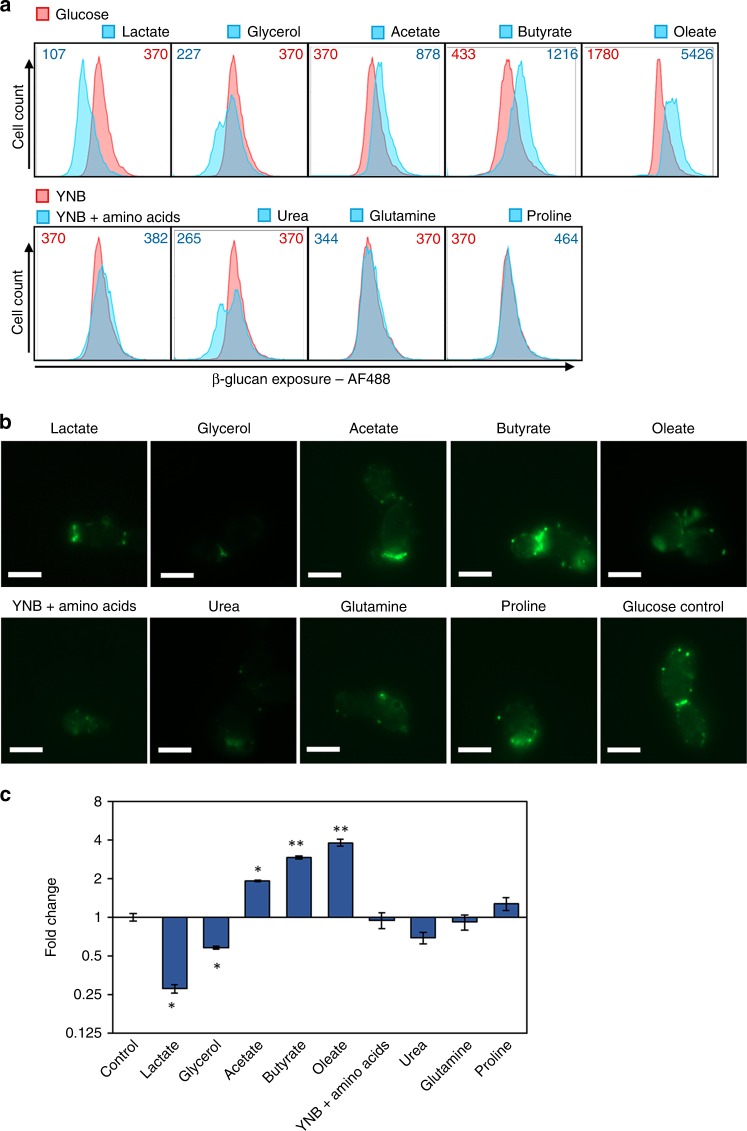
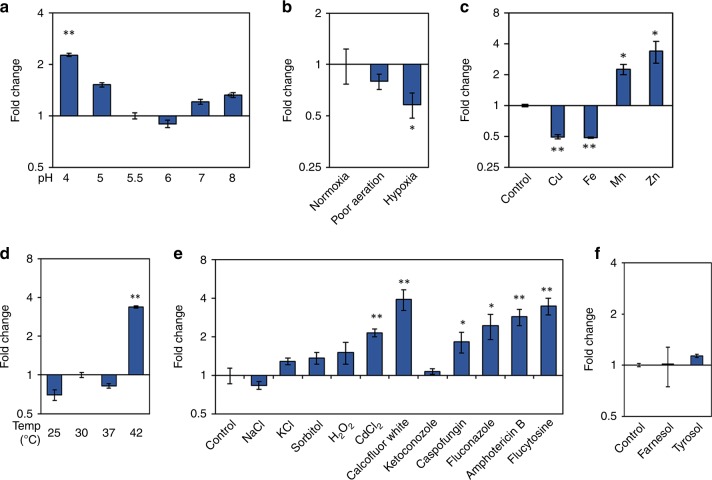
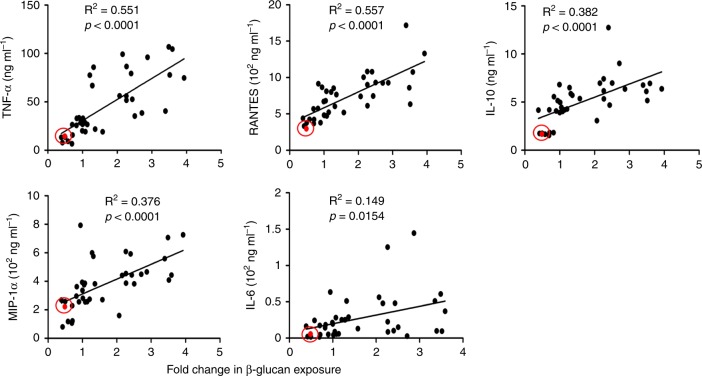
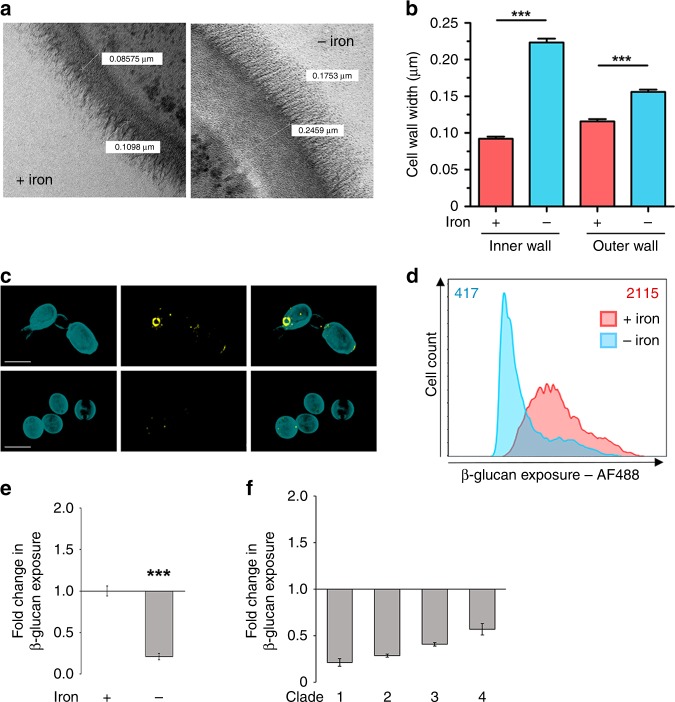
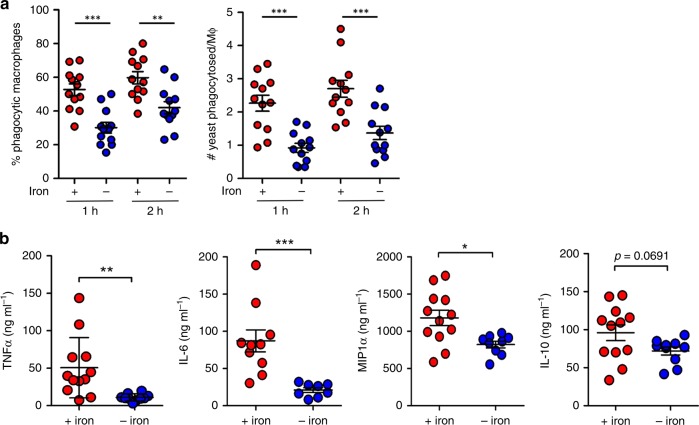
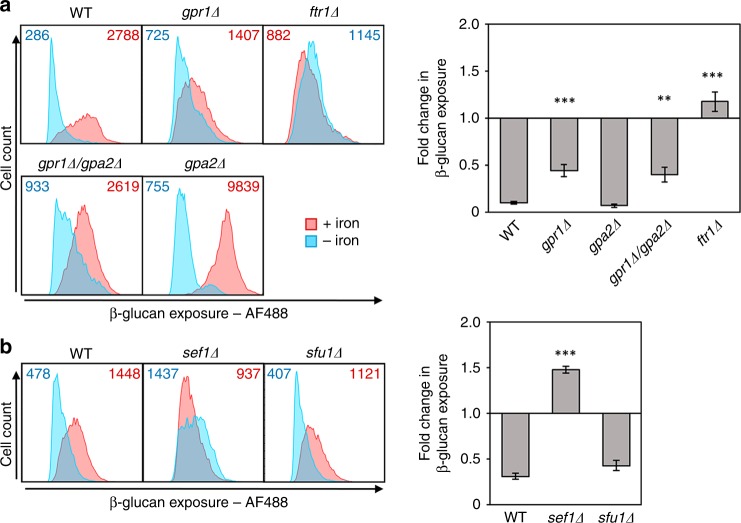
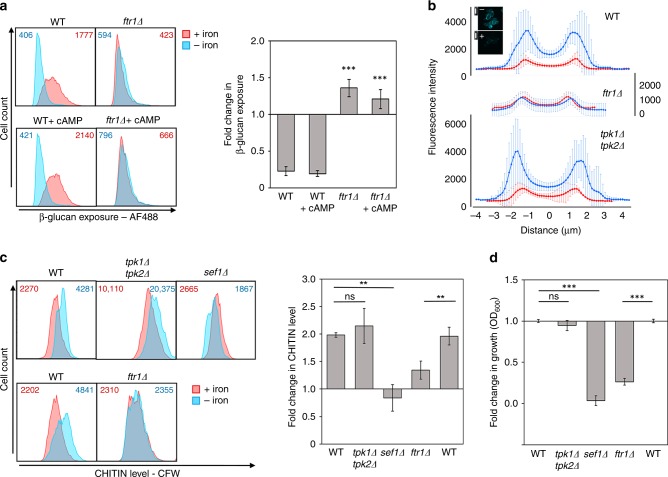
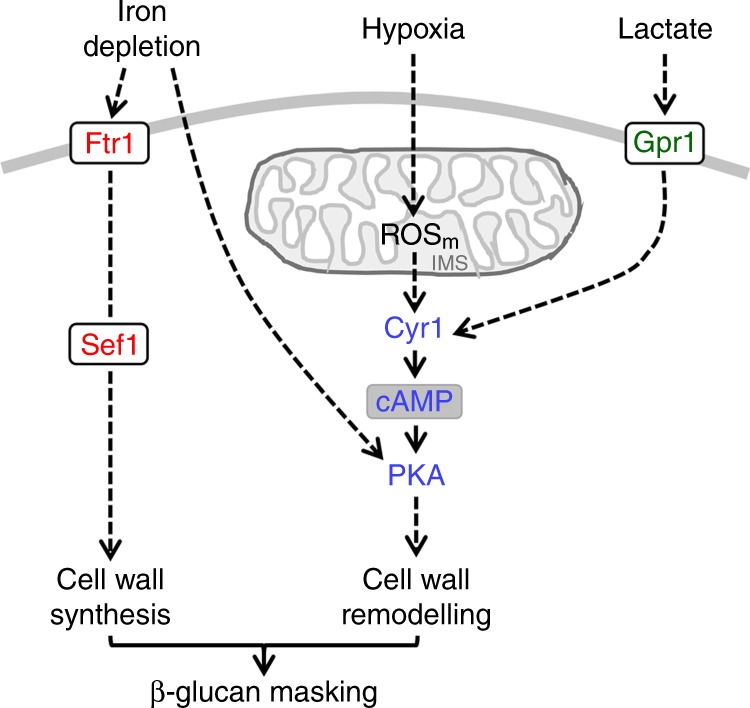
To colonise their host, pathogens must counter local environmental and immunological challenges. Here, we reveal that the fungal pathogen Candida albicans exploits diverse host-associated signals to promote immune evasion by masking of a major pathogen-associated molecular pattern (PAMP), β-glucan. Certain nutrients, stresses and antifungal drugs trigger β-glucan masking, whereas other inputs, such as nitrogen sources and quorum sensing molecules, exert limited effects on this PAMP. In particular, iron limitation triggers substantial changes in the cell wall that reduce β-glucan exposure. This correlates with reduced phagocytosis by macrophages and attenuated cytokine responses by peripheral blood mononuclear cells. Iron limitation-induced β-glucan masking depends on parallel signalling via the iron transceptor Ftr1 and the iron-responsive transcription factor Sef1, and the protein kinase A pathway. Our data reveal that C. albicans exploits a diverse range of specific host signals to trigger protective anticipatory responses against impending phagocytic attack and promote host colonisation.
Overview
The claims and statistics of this paper haven’t been checked yet.
Free: it reads the open-access text and checks the first 5 claims that cite a source we can check. Create a free account to check every claim.
Integrity signals
Registry
Cites
Statistics
Figures
Verification
Claims the paper makes
The claims and statistics of this paper haven’t been checked yet.
Free: it reads the open-access text and checks the first 5 claims that cite a source we can check. Create a free account to check every claim.
Claims other papers make about this one
Each is checked against this paper’s own text: does it say what the citing paper says it does?
The source backs part of the claim, not all of it — or backs it for a different population, condition or comparison.
In the citing paper
“Modulation of iron levels alters C. albicans dissemination, infection severity, membrane ergosterol levels, and host immune response (largely mediated by iron-induced changes in the levels of immunogenic glucans in the cell wall) (22–25).”
From Candida albicans enhances iron uptake to maintain fluconazole resistance (2025) · cites this paper as [25]
Experimental — accuracy not yet measuredIn the citing paper
“The Internalin-family protein (InlJ) of the periodontal pathogen Porphyromonas gingivalis interacts with the C. albicans cell-surface adhesin Als3 that also serves as a ferritin receptor involved in iron uptake and hence regulated by environmental iron [31].”
From High iron-mediated increased oral fungal burden, oral-to-gut transmission, and changes to pathogenicity of Candida albicans in oropharyngeal candidiasis (2022) · cites this paper as [31]
Self-check
Percentages, sums and reported differences re-computed from the paper’s own numbers.
The self-check needs the paper’s full text.
Citations
Cites
Hidden Killers: Human Fungal Infections
Brown, G. D., Denning, D. W., Gow, N. A. R., Levitz, S. M., Netea, M. G., & White, T. C. (2012) · Science Translational Medicine · doi:10.1126/scitranslmed.3004404 · Cited by 4,284
Self-citationOxidative mechanisms in the toxicity of metal ions
Stohs, S. J., & Bagchi, D. (1995) · Free Radical Biology and Medicine · doi:10.1016/0891-5849(94)00159-h · Cited by 4,219
Dectin-1 Mediates the Biological Effects of β-Glucans
Brown, G. D., Herre, J., Williams, D. L., Willment, J. A., Marshall, A. S. J., & Gordon, S. (2003) · The Journal of Experimental Medicine · doi:10.1084/jem.20021890 · Cited by 1,205
Self-citationLeibundGut-Landmann, S., Groß, O., Robinson, M. J., Osorio, F., Slack, E. C., Tsoni, S. V., Schweighoffer, E., Tybulewicz, V., Brown, G. D., Ruland, J., et al. (2007) · Nature Immunology · doi:10.1038/ni1460 · Cited by 1,191
Self-citationDectin-1 is required for β-glucan recognition and control of fungal infection
Taylor, P. R., Tsoni, S. V., Willment, J. A., Dennehy, K. M., Rosas, M., Findon, H., Haynes, K., Steele, C., Botto, M., Gordon, S., et al. (2007) · Nature Immunology · doi:10.1038/ni1408 · Cited by 1,161
Self-citationShort chain fatty acids in the human colon.
Cummings, J. H. (1981) · Gut · doi:10.1136/gut.22.9.763 · Cited by 1,043
Kakhlon, O., & Cabantchik, Z. I. (2002) · Free Radical Biology and Medicine · doi:10.1016/s0891-5849(02)01006-7 · Cited by 839
Human dectin-1 deficiency and mucocutaneous fungal infections
Ferwerda, B., Ferwerda, G., Plantinga, T. S., Willment, J. A., van Spriel, A. B., Venselaar, H., Elbers, C. C., Johnson, M. D., Cambi, A., Huysamen, C., et al. (2009) · New England Journal of Medicine · doi:10.1056/nejmoa0901053 · Cited by 752
Self-citationInteractions of fungal pathogens with phagocytes
Erwig, L. P., & Gow, N. A. R. (2016) · Nature Reviews Microbiology · doi:10.1038/nrmicro.2015.21 · Cited by 626
Self-citationAdaptive prediction of environmental changes by microorganisms
Mitchell, A., Romano, G. H., Groisman, B., Yona, A., Dekel, E., Kupiec, M., Dahan, O., & Pilpel, Y. (2009) · Nature · doi:10.1038/nature08112 · Cited by 581
Research works printed but not linked: 1
- Underhill, D. M. in Immunology of Fungal Infections (eds Brown, G. D. & Netea, M. G.) 429–442 (Springer, 2007).
Cited by
Hsu, S.-K., Li, C.-Y., Lin, I.-L., Syue, W.-J., Chen, Y.-F., Cheng, K.-C., Teng, Y.-N., Lin, Y.-H., Yen, C.-H., & Chiu, C.-C. (2021) · Theranostics · doi:10.7150/thno.62521 · Cited by 484
“However, LPS in gram-negative bacteria is directly recognized by the CARD of caspase-4/5/11 without the requirement for inflammasomes, which triggers noncanonical pyroptosis [80, 81].”
BackgroundPathogenesis and virulence of Candida albicans
Lopes, J. P., & Lionakis, M. S. (2022) · Virulence · doi:10.1080/21505594.2021.2019950 · Cited by 477
Architecture of the dynamic fungal cell wall
Gow, N. A. R., & Lenardon, M. D. (2023) · Nature Reviews Microbiology · doi:10.1038/s41579-022-00796-9 · Cited by 447
Self-citationd'Enfert, C., Kaune, A.-K., Alaban, L.-R., Chakraborty, S., Cole, N., Delavy, M., Kosmala, D., Marsaux, B., Fróis-Martins, R., Morelli, M., et al. (2021) · FEMS Microbiology Reviews · doi:10.1093/femsre/fuaa060 · Cited by 347
Self-citationCandida albicans and Candida glabrata : global priority pathogens
Katsipoulaki, M., Stappers, M. H. T., Malavia-Jones, D., Brunke, S., Hube, B., & Gow, N. A. R. (2024) · Microbiology and Molecular Biology Reviews · doi:10.1128/mmbr.00021-23 · Cited by 180
Self-citationThe pathobiology of human fungal infections
Brown, G. D., Ballou, E. R., Bates, S., Bignell, E., Borman, A. M., Brand, A., Brown, A. J. P., Coelho, C., Cook, P. C., Farrer, R. A., et al. (2024) · Nature Reviews Microbiology · doi:10.1038/s41579-024-01062-w · Cited by 210
“In response to specific environmental signals associated with host niches, such as ambient pH, lactate, iron depletion or hypoxia, C. albicans alters the exposure of β-1,3-glucan and chitin at the cell surface 75,76 .”
Self-citationKumwenda, P., Cottier, F., Hendry, A. C., Kneafsey, D., Keevan, B., Gallagher, H., Tsai, H.-J., & Hall, R. A. (2022) · Cell Reports · doi:10.1016/j.celrep.2021.110183 · Cited by 104
Epitope Shaving Promotes Fungal Immune Evasion
Childers, D. S., Avelar, G. M., Bain, J. M., Pradhan, A., Larcombe, D. E., Netea, M. G., Erwig, L. P., Gow, N. A. R., & Brown, A. J. P. (2020) · mBio · doi:10.1128/mbio.00984-20 · Cited by 80
“…-glucan-containing layer of the C. albicans cell wall and the degree of (cid:2) -glucan exposure at the cell surface: hypoxia and iron limitation are both strong triggers of (cid:2) -glucan masking and yet the former leads to a thin cell wall, while the latter leads to a thick cell wall (16, 17).”
Self-citationBuscaill, P., & van der Hoorn, R. A. L. (2021) · The Plant Cell · doi:10.1093/plcell/koab109 · Cited by 80
Nature of β-1,3-Glucan-Exposing Features on Candida albicans Cell Wall and Their Modulation
de Assis, L. J., Bain, J. M., Liddle, C., Leaves, I., Hacker, C., Peres da Silva, R., Yuecel, R., Bebes, A., Stead, D., Childers, D. S., et al. (2022) · mBio · doi:10.1128/mbio.02605-22 · Cited by 65
“Nevertheless, some b-1,3-glucan becomes exposed at septal junctions and bud scars and in punctate features on the surface of the lateral cell wall of yeast and hyphal cells (45, 47, 48, 70, 71).”
BackgroundMethodInfluentialSelf-citationYadav, B., Mora-Montes, H. M., Wagener, J., Cunningham, I., West, L., Haynes, K., Brown, A. J. P., & Gow, N. A. R. (2020) · The Cell Surface · doi:10.1016/j.tcsw.2020.100042 · Cited by 66
Self-citationSon, S., Nam, J., Kim, A. S., Ahn, J., Park, K. S., Phoo, M. T., Sherren, B., Zou, W., Lee, S., Farokhzad, O. C., et al. (2022) · Nature Biomedical Engineering · doi:10.1038/s41551-022-00973-4 · Cited by 65
“PAMP–PRR interaction is controlled by the geometry, nanoscale arrangement and architecture of PAMP on microbes that dictate the accessibility and availability of PRR engagement 28,29 .”
BackgroundControl of β-glucan exposure by the endo-1,3-glucanase Eng1 in Candida albicans modulates virulence
Yang, M., Solis, N. V., Marshall, M., Garleb, R., Zhou, T., Wang, D., Swidergall, M., Pearlman, E., Filler, S. G., & Liu, H. (2022) · PLOS Pathogens · doi:10.1371/journal.ppat.1010192 · Cited by 62
“Independently of yeast-hypha regulation, culture conditions such as alternative carbon sources are reported to regulate β-glucan protection [10,12].”
BackgroundImmune cells fold and damage fungal hyphae
Bain, J. M., Alonso, M. F., Childers, D. S., Walls, C. A., Mackenzie, K. S., Pradhan, A., Lewis, L. E., Louw, J., Avelar, G. M., Larcombe, D. E., et al. (2021) · Proceedings of the National Academy of Sciences · doi:10.1073/pnas.2020484118 · Cited by 61
Self-citationTripathi, A., Liverani, E., Tsygankov, A. Y., & Puri, S. (2020) · Journal of Biological Chemistry · doi:10.1074/jbc.ra120.013413 · Cited by 56
“A recent study similarly showed at the structural level that high iron decreased the thickness of themannan-containing outer cell wall (34).”
BackgroundResultZinc limitation triggers anticipatory adaptations in Mycobacterium tuberculosis
Dow, A., Sule, P., O’Donnell, T. J., Burger, A., Mattila, J. T., Antonio, B., Vergara, K., Marcantonio, E., Adams, L. G., James, N., et al. (2021) · PLOS Pathogens · doi:10.1371/journal.ppat.1009570 · Cited by 55
“We speculate that Zn limitation triggers an anticipatory response against impending phagocytic attack to promote host colonization, as seen in pathogenic fungi exposed to iron limitation [78].”
BackgroundAustermeier, S., Kasper, L., Westman, J., & Gresnigt, M. S. (2020) · Current Opinion in Microbiology · doi:10.1016/j.mib.2020.05.007 · Cited by 55
CRISPR-Based Genetic Manipulation of Candida Species: Historical Perspectives and Current Approaches
Uthayakumar, D., Sharma, J., Wensing, L. F., & Shapiro, R. S. (2021) · Frontiers in Genome Editing · doi:10.3389/fgeed.2020.606281 · Cited by 57
“Mutants lacking protein kinase A (PKA), iron homeostasis regulators (Ftr1 and Sef1), and phosphatidylserine synthase (Cho1) were generated by the CRISPR-Cas9 system to elucidate the signaling pathways involved in β-glucan masking, revealing that it can be triggered by host nutritional immune responses, such as iron li…”
BackgroundBlack, B., Lee, C., Horianopoulos, L. C., Jung, W. H., & Kronstad, J. W. (2021) · PLOS Pathogens · doi:10.1371/journal.ppat.1009661 · Cited by 51
Vaginal dysbiosis and the potential of vaginal microbiome-directed therapeutics
Valeriano, V. D., Lahtinen, E., Hwang, I., Zhang, Y., Du, J., & Schuppe‐Koistinen, I. (2024) · Frontiers in Microbiomes · doi:10.3389/frmbi.2024.1363089 · Cited by 59
“Other non-canonical strategies promoting colonization and evasion include b - glucan masking, which is triggered by stressors, nutrients, antifungal drugs, and other factors such as nitrogen availability and quorum sensing molecules (Pradhan et al., 2019).”
Epitope shaving promotes fungal immune evasion
Childers, D. S., Avelar, G. M., Bain, J. M., Pradhan, A., Larcombe, D. E., Netea, M. G., Erwig, L. P., Gow, N. A. R., & Brown, A. J. P. (2025) · Figshare · Cited by 46
Self-citationStanford, F. A., & Voigt, K. (2020) · Genes · doi:10.3390/genes11111296 · Cited by 47
“Recently, Pradhan et al. 2019 demonstrated that iron-limitations induces a β-glucan masking phenotype as well as cell wall remodelling and thickening.”
BackgroundFungal resilience and host–pathogen interactions: Future perspectives and opportunities
Brown, A. J. P. (2022) · Parasite Immunology · doi:10.1111/pim.12946 · Cited by 46
“Glucan shaving from the cell surface correlates with reduced recognition by innate immune cells and attenuated cytokine responses.(11,13,34)”
BackgroundSelf-citationFungal cell wall components modulate our immune system
Briard, B., Fontaine, T., Kanneganti, T.-D., Gow, N. A. R., & Papon, N. (2021) · The Cell Surface · doi:10.1016/j.tcsw.2021.100067 · Cited by 42
Self-citationAnticipatory Stress Responses and Immune Evasion in Fungal Pathogens
Pradhan, A., Ma, Q., de Assis, L. J., Leaves, I., Larcombe, D. E., Rondon, A. V. R., Nev, O. A., & Brown, A. J. P. (2020) · Trends in Microbiology · doi:10.1016/j.tim.2020.09.010 · Cited by 46
Self-citation“Under Pressure” – How fungi evade, exploit, and modulate cells of the innate immune system
Lange, T., Kasper, L., Gresnigt, M. S., Brunke, S., & Hube, B. (2023) · Seminars in Immunology · doi:10.1016/j.smim.2023.101738 · Cited by 36
Manipulation of host phagocytosis by fungal pathogens and therapeutic opportunities
Jia, L., González, K., Orasch, T., Schmidt, F., & Brakhage, A. A. (2024) · Nature Microbiology · doi:10.1038/s41564-024-01780-0 · Cited by 47
Childers, D. S., Avelar, G. M., Bain, J. M., Larcombe, D. E., Pradhan, A., Budge, S., Heaney, H., & Brown, A. J. P. (2019) · Current topics in microbiology and immunology · doi:10.1007/82_2019_182 · Cited by 36
Self-citationC‐type lectin receptors in antifungal immunity: Current knowledge and future developments
Hatinguais, R., Willment, J. A., & Brown, G. D. (2022) · Parasite Immunology · doi:10.1111/pim.12951 · Cited by 34
“Notably, changes in concentrations of metabolites such as glucose and iron also affect the composition of the fungal cell wall, with direct consequences on immune recognition that also needs to be taken into account.(58) Local or systemic perturbation of metabolite concentrations could have a strong effect on antifung…”
BackgroundSelf-citationThoughts on the evolution of Core Environmental Responses in yeasts
Brown, A. J. P., Larcombe, D. E., & Pradhan, A. (2020) · Fungal Biology · doi:10.1016/j.funbio.2020.01.003 · Cited by 33
Self-citationDerkacz, D., Bernat, P., & Krasowska, A. (2022) · International Journal of Molecular Sciences · doi:10.3390/ijms23031631 · Cited by 33
“Unmasking of PAMPs on the fungal cell surface can result in the changed host immune response by triggering the production of a different cytokine profile [24].”
BackgroundYugueros, S. I., Peláez, J., Stajich, J., Fuertes-Rabanal, M., Sánchez‐Vallet, A., Largo‐Gosens, A., & Mélida, H. (2024) · The Cell Surface · doi:10.1016/j.tcsw.2024.100127 · Cited by 32
“In this regard, recent studies have demonstrated the enormous adaptability of the fungal cell wall to different stimuli, such as carbon sources (Ballou et al., 2016; Pradhan et al., 2019).”
BackgroundSelisana, S. M. G., Chen, X., Mahfudhoh, E., Bowolaksono, A., Rozaliyani, A., Orihara, K., & Kajiwara, S. (2024) · Medical Microbiology and Immunology · doi:10.1007/s00430-024-00795-y · Cited by 27
Chen, T., Wagner, A. S., & Reynolds, T. B. (2022) · Frontiers in Fungal Biology · doi:10.3389/ffunb.2022.842501 · Cited by 25
“Amphotericin B, a member of the polyene drug class, has also been shown to induce unmasking upon exposure in vitro (Pradhan et al., 2019), although the impact that amphotericin-induced unmasking has on immune stimulation is thus far understudied.”
BackgroundInfluentialLiu, J., Li, Q., Wang, C., Shao, J., Wang, T., Wu, D., Ma, K., Yan, G., & Yin, D. (2020) · Biofouling · doi:10.1080/08927014.2020.1759559 · Cited by 27
“Potential stimulators of b-glucan exposure might be a useful approach to enhance antifungal immunotherapy by increasing the innate and adaptive immune responses (Leventakos et al. 2009; Pradhan et al. 2019).”
BackgroundCaspofungin-induced β(1,3)-glucan exposure in Candida albicans is driven by increased chitin levels
Wagner, A. S., Lumsdaine, S. W., Mangrum, M. M., & Reynolds, T. B. (2023) · mBio · doi:10.1128/mbio.00074-23 · Cited by 26
“In contrast, growth in acidic pH or in the presence of the short-chain fatty acid acetate or butyrate induces unmasking (28, 30, 31).”
BackgroundMicrobial adaptive pathogenicity strategies to the host inflammatory environment
Hitzler, S. U. J., Fernández-Fernández, C., Montaño, D. E., Dietschmann, A., & Gresnigt, M. S. (2024) · FEMS Microbiology Reviews · doi:10.1093/femsre/fuae032 · Cited by 28
“Microbes capable of such adaptive prediction have a fitness benefit even before encountering the actual threat (Mitchell et al. 2009 , Brunke and Hube 2014 , Pradhan et al. 2019 ).”
Fungal Chitin Synthases: Structure, Function, and Regulation
Brain, L. M., Bleackley, M. R., Doblin, M. S., & Anderson, M. A. (2025) · Journal of Fungi · doi:10.3390/jof11110796 · Cited by 26
“Chitin deposition is spatially and temporally controlled by a complex regulatory network that coordinates the expression, transport, and activity of the enzymes responsible for its synthesis, CHSs [16,25,26].”
Correia, I., Wilson, D., Hube, B., & Plá, J. (2020) · Journal of Fungi · doi:10.3390/jof6040230 · Cited by 26
“This result is in line with both the existence of multiple mechanisms involved in killing by macrophages and cell wall changes (as revealed by the accessibility to specific epitopes [31]) in these strains that may influence interactions with immune cells [56].”
ResultAvelar, G. M., Dambuza, I. M., Ricci, L., Yuecel, R., Mackenzie, K. S., Childers, D. S., Bain, J. M., Pradhan, A., Larcombe, D. E., Netea, M. G., et al. (2022) · The Cell Surface · doi:10.1016/j.tcsw.2022.100084 · Cited by 26
“However, even in the absence of phagocytic attack, some β-glucan can become exposed in punctate features on the cell surface and at septal junctions and bud scars (Pradhan et al., 2019; Childers et al., 2020; de Assis et al., 2021).”
BackgroundMethodInfluentialSelf-citationCheng, Q. J., Farrell, K., Fenn, J., Ma, Z., Makanani, S. K., & Siemsen, J. (2024) · Scientific Reports · doi:10.1038/s41598-024-51620-8 · Cited by 28
“Sec-ondly Sec-ondly, it is possible that complex regulatory mechanisms exist in vivo that dampen the TLR-mediated effects 34 ; this would also explain why others have observed that zymosan injection in vivo slightly increases intracellular TNF in splenic macrophages 35 .”
Fc‐conjugated C‐type lectin receptors: Tools for understanding host–pathogen interactions
Willment, J. A. (2021) · Molecular Microbiology · doi:10.1111/mmi.14837 · Cited by 25
“…visually demonstrated the spatial and temporal exposure of β - glucan available to interact with immune cell membrane expressed Dectin - 1 and this has aided our understanding how pathogens through modification of their outer glycans modulate the downstream immune response (Pradhan et al., 2019).”
BackgroundInfluentialIntraspecies Transcriptional Profiling Reveals Key Regulators of Candida albicans Pathogenic Traits
Wang, J. M., Woodruff, A. L., Dunn, M. J., Fillinger, R. J., Bennett, R. J., & Anderson, M. Z. (2021) · mBio · doi:10.1128/mbio.00586-21 · Cited by 25
“albicans cells could promote population fitness during environmental shifts including transitions between different host niches (75).”
BackgroundDependence on Mincle and Dectin-2 Varies With Multiple Candida Species During Systemic Infection
Thompson, A., da Fonseca, D. M., Walker, L. A., Griffiths, J. S., Taylor, P. R., Gow, N. A. R., & Orr, S. J. (2021) · Frontiers in Microbiology · doi:10.3389/fmicb.2021.633229 · Cited by 26
Self-citationLarcombe, D. E., Bohovych, I., Pradhan, A., Ma, Q., Hickey, E., Leaves, I., Cameron, G. A., Avelar, G. M., de Assis, L. J., Childers, D. S., et al. (2023) · PLoS Pathogens · doi:10.1371/journal.ppat.1011505 · Cited by 22
Self-citationElements of dissemination in cryptococcosis
Bednarek, J. M., & Brown, J. C. S. (2024) · mBio · doi:10.1128/mbio.02155-23 · Cited by 22
“It also preemptively induces PAMP remodeling after exposure to host-like environmental conditions (24).”
Post-transcriptional control of fungal cell wall synthesis
Hall, R. A., & Wallace, E. W. J. (2022) · The Cell Surface · doi:10.1016/j.tcsw.2022.100074 · Cited by 24
“been shown to induce glucan masking (Pradhan et al. 2018; Ballou et al. 2016; Pradhan et al. 2019; Lopes et al. 2018), and this masking involves”
BackgroundCandida auris cells form giant lipid droplets to survive in harsh environments
Zheng, Q., Li, C., Hu, T., Bing, J., Nobile, C. J., Chu, H., & Huang, G. (2025) · Communications Biology · doi:10.1038/s42003-025-08204-7 · Cited by 19
“…alsoupregulatedin C. auris cells containing gLDs. Previous studies found that iron limitation could lead to beta-glucan masking and cell wall remodeling in C. albicans 74 , indicating potential links between LD formation, cell wall integrity, and iron metabolism.”
Top five unanswered questions in fungal cell surface research
Gow, N. A. R., Casadevall, A., & Fang, W. (2023) · The Cell Surface · doi:10.1016/j.tcsw.2023.100114 · Cited by 21
“This prompts the activation of non-canonical signaling pathways for immune evasion (Pradhan et al., 2019).”
BackgroundSelf-citationHameed, S., Hans, S., Singh, S., Dhiman, R., Monasky, R. C., Pandey, R. P., Thangamani, S., & Fatima, Z. (2021) · Pathogens · doi:10.3390/pathogens10080942 · Cited by 20
Characterising phagocytes and measuring phagocytosis from live Galleria mellonella larvae
Campbell, J. S., Pearce, J. C., Bebes, A., Pradhan, A., Yuecel, R., Brown, A. J. P., & Wakefield, J. G. (2024) · Virulence · doi:10.1080/21505594.2024.2313413 · Cited by 17
“However, C. albicans modulates immune recognition by masking β-glucan that has become exposed at the fungal cell surface in response to specific environmental signals, including lactate [35,42].”
BackgroundSelf-citationTripathi, A., Nahar, A., Sharma, R., Kanaskie, T., Al-Hebshi, N., & Puri, S. (2022) · Journal of Oral Microbiology · doi:10.1080/20002297.2022.2044110 · Cited by 16
“albicans surface, specifically mannans levels (Figure 3(a) [16,31]) can thus affect periodontal disease and the cariogenic potential in the oral cavity, as well as alter the composition of the early colonizers of the oral cavity [25].”
BackgroundMulti trace element profiling in pathogenic and non-pathogenic fungi
Wehmeier, S., Morrison, E. L., Plato, A., Raab, A., Feldmann, J., Bedekovic, T., Wilson, D., & Brand, A. (2020) · Fungal Biology · doi:10.1016/j.funbio.2020.03.001 · Cited by 16
A CO 2 sensing module modulates β-1,3-glucan exposure in Candida albicans
Avelar, G. M., Pradhan, A., Ma, Q., Hickey, E., Leaves, I., Liddle, C., Rodriguez Rondon, A. V., Kaune, A.-K., Shaw, S., Maufrais, C., et al. (2024) · mBio · doi:10.1128/mbio.01898-23 · Cited by 15
“On one hand, this made sense because cAMP-PKA signaling has been shown to play a key role in the regulation of β-1,3-glucan masking (33, 34).”
BackgroundMethodInfluentialSelf-citationBloom, A. L. M., Goich, D., Knowles, C. M., & Panepinto, J. C. (2021) · mSphere · doi:10.1128/msphere.01281-20 · Cited by 16
“The CEK1-mediated MAPK pathway seems to generally regulate b-1,3-glucan masking (Galan-Diez et al., 2010), signaling through the protein kinase A pathway is required for b-1,3-glucan masking in hypoxic and iron limiting conditions (Pradhan et al., 2018; Pradhan et al., 2019).”
BackgroundChen, M., Cheng, T., Xu, C., Pan, M., Wu, J., Wang, T., Wu, D., Yan, G., Wang, C., & Shao, J. (2022) · Virulence · doi:10.1080/21505594.2022.2035066 · Cited by 16
Piezo1 senses hyphae and initiates host defense against pathogenic fungi
Shi, Y., Yang, B., Linghu, Y., Liu, Y., Li, H., Xing, Y., Wu, B., Gao, Y., Liao, L., Zheng, Y., et al. (2025) · Cell Reports · doi:10.1016/j.celrep.2025.115839 · Cited by 13
Host-pathogen interactions: lessons from phagocytic predation on fungi
Radosa, S., & Hillmann, F. (2021) · Current Opinion in Microbiology · doi:10.1016/j.mib.2021.04.010 · Cited by 13
Tonmoy, M. I. Q., Ahmed, S. F., Hami, I., Shakil, S. K., Verma, A. K., Hasan, M., Reza, H. A., Bahadur, N. M., Rahaman, M. M., & Hossain, M. S. (2022) · Infection Genetics and Evolution · doi:10.1016/j.meegid.2022.105385 · Cited by 13
Cek1 regulates ß(1,3)-glucan exposure through calcineurin effectors in Candida albicans
Wagner, A. S., Lumsdaine, S. W., Mangrum, M. M., King, A. E., Hancock, T. J., Sparer, T. E., & Reynolds, T. B. (2022) · PLOS Genetics · doi:10.1371/journal.pgen.1010405 · Cited by 12
“Similarly, C . albicans senses environmental signals and stressors, such as lactate [29,30], acidic pH [31,32], hypoxia [33], and iron-replete environments [34] and responds by further altering ß(1,3)-glucan exposure.”
Urbanek, A. K., Łapińska, Z., Derkacz, D., & Krasowska, A. (2022) · Pathogens · doi:10.3390/pathogens11111289 · Cited by 16
“Next, we aligned the amino acid sequences of the Erg11 protein derived from isolates of different Candida species known from the available literature with the Erg11p sequence of the C. albicans SC5314 strain (Table S2).”
BackgroundInfluentialDing, J., Lu, M., Liu, X., Feng, M., & Ying, S. (2024) · Microbiological Research · doi:10.1016/j.micres.2024.127661 · Cited by 11
Jaeger, M., Dietschmann, A., Austermeier, S., Dinçer, S., Porschitz, P., Vornholz, L., Maas, R. J. A., Sprenkeler, E. G. G., Ruland, J., Wirtz, S. J., et al. (2024) · Virulence · doi:10.1080/21505594.2024.2333367 · Cited by 11
“While β-glucan in the C. albicans cell wall is widely recognized as an important PAMP that drives fungal recognition mediated by DECTIN-1 and CARD9 [17,76–78] and complement receptor-3 [76,79], the cell wall mannans can interfere with the recognition of β-glucan [61].”
BackgroundSelf-citationMechanisms and regulation of iron uptake and the role of iron in pathogenesis of Candida albicans
Zheng, D., Zhang, X., Ding, J., Yue, D., Yang, F., & Li, Y. (2025) · Critical reviews in microbiology · doi:10.1080/1040841x.2025.2510256 · Cited by 10
“However, no direct regulatory interaction between Hsf1 and the Sef1-Sfu1-Hap43 network has been identified to date. the involvement of tup1 in the regulation of Hap43 reveals that Hap43 primarily represses the expression of SFU1 and genes related to iron utilization, such as those involved in mitochondrial respiration…”
InfluentialTuor, M., Stappers, M. H. T., Desgardin, A., Ruchti, F., Sparber, F., Orr, S. J., Gow, N. A. R., & LeibundGut-Landmann, S. (2025) · Mucosal Immunology · doi:10.1016/j.mucimm.2024.11.004 · Cited by 10
Self-citationMa, Q., Pradhan, A., Leaves, I., Hickey, E., Roselletti, E., Dambuza, I. M., Larcombe, D. E., de Assis, L. J., Wilson, D., Erwig, L. P., et al. (2024) · The Cell Surface · doi:10.1016/j.tcsw.2024.100128 · Cited by 12
“…significantly affect β -1,3-glucan exposure at the C. albicans cell surface, and this influences the ability of innate immune cells to respond to the fungus (Ballou et al., 2016; Childers et al., 2020a; Cottier et al., 2019; Pradhan et al., 2018; Pradhan et al., 2019; Sher-rington et al., 2017).”
InfluentialSelf-citationSun, X., Yu, J., Zhu, C., Mo, X., Sun, Q., Yang, D., Su, C., & Lu, Y. (2023) · eLife · doi:10.7554/elife.84155 · Cited by 9
Chai, X., Jiang, Y., Lu, H. J., & Huang, X. (2025) · Frontiers in Pharmacology · doi:10.3389/fphar.2025.1574990 · Cited by 9
Gifford, H., Bedekovic, T., Helmstetter, N., Gregory, J., Ma, Q., Brand, A., Wilson, D., Rhodes, J. L., Ramsdale, M., Kudoh, T., et al. (2025) · Communications Biology · doi:10.1038/s42003-025-09321-z · Cited by 11
“In other Candida species, such as C. albicans , iron assimilation is understood to be central for in-host survival 114,115 , where deprivation triggers various pathogenic programmes such as alterations in cell surface beta-glucan 116 .”
Wang, Q., Wang, Z., Xu, C., Wu, D., Wang, T., Wang, C., & Shao, J. (2024) · Medical Mycology · doi:10.1093/mmy/myae014 · Cited by 9
Candida albicans enhances iron uptake to maintain fluconazole resistance
Sharma, R., Nahar, A., & Puri, S. (2025) · Infection and Immunity · doi:10.1128/iai.00002-25 · Cited by 8
“Modulation of iron levels alters C. albicans dissemination, infection severity, membrane ergosterol levels, and host immune response (largely mediated by iron-induced changes in the levels of immunogenic glucans in the cell wall) (22–25).”
Yang, B., Vaisvil, B., Schmitt, D. P., Collins, J., Young, E. M., Kapatral, V., & Rao, R. P. (2024) · Infection and Immunity · doi:10.1128/iai.00103-24 · Cited by 9
“…responses (46); however, it is normally masked by the less pro-inflammatory mannan layer but can be exposed during infection (47, 48). β-glucan recognition by its receptor, dectin-1, is required to control systemic infections (49) and plays a major role in anti-Candida immune responses (44).”
BackgroundZeise, K. D., Falkowski, N. R., Stark, K. G., Brown, C. A., & Huffnagle, G. B. (2024) · mBio · doi:10.1128/mbio.02113-24 · Cited by 8
Li, C. R., Meng, Y., Li, H., Du, W., Gao, X., Suo, C., Gao, Y., Ni, Y., Sun, T., Yang, S., et al. (2023) · Emerging Microbes & Infections · doi:10.1080/22221751.2023.2244087 · Cited by 8
“Previous studies have demonstrated that fungal pathogens are able to induce host immune responses via altering cell wall components and other antigens [39,40].”
BackgroundLiao, B., Zhang, C., Shen, J., Chen, D., Wang, J., Chen, X., Zhou, Y., Wei, Y., Shi, Y., Gou, L., et al. (2025) · Applied Microbiology and Biotechnology · doi:10.1007/s00253-025-13411-7 · Cited by 7
“The stresses induced by lactate (Ballou et al. 2016), hypoxia (Avelar et al. 2024), or iron limitation (Pradhan et al. 2019) could activate distinct signaling pathways associated with β−1,3-glucans (Childers et al. 2020).”
Protein kinase A signaling regulates immune evasion by shaving and concealing fungal β-1,3-glucan
Pradhan, A., Nev, O. A., Leaves, I., Nev, O. A., Ma, Q., Milne, G., Patterson, G., Netea, M. G., Erwig, L. P., Farrer, R. A., et al. (2025) · Proceedings of the National Academy of Sciences · doi:10.1073/pnas.2423864122 · Cited by 7
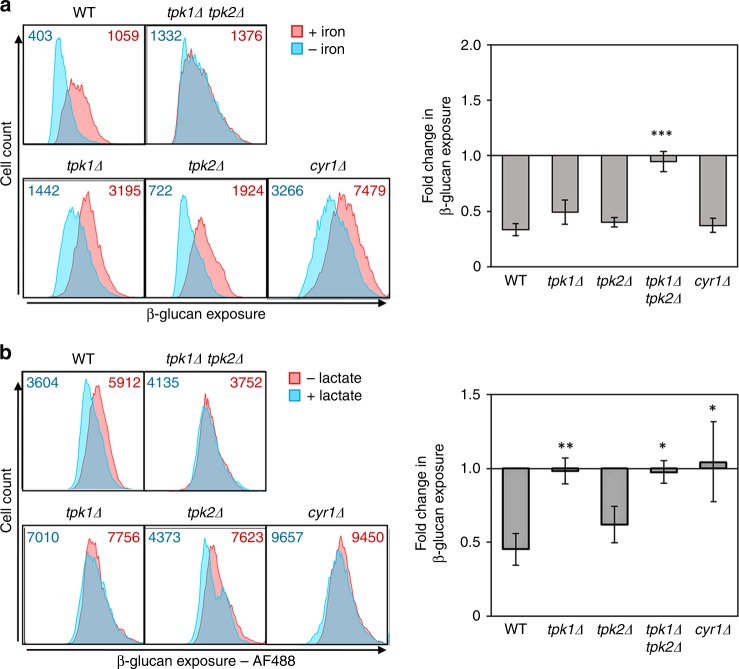
“TPK1 pnas.org and TPK2 encode partially redundant catalytic subunits of PKA (40, 41). β-1 β-1,3 - glucan masking is blocked in C. albicans gpr1 gpa2 and in tpk1 tpk2 double mutants (9, 17), but it is not clear from whether this is due to defects in growth or shaving.”
InfluentialSelf-citationCaspofungin binding to iron compromises its antifungal efficacy against Candida albicans
Pedras, A., Malta-Luís, C., Lima, L. M. P., Mil‐Homens, D., Amaral, C., Duarte, A. G., Antunes, W., Gaspar‐Cordeiro, A., Louro, R. O., Lamosa, P., et al. (2025) · Communications Biology · doi:10.1038/s42003-025-08834-x · Cited by 7
“While the host employs an iron-withholding strategy torestrict the growth of invading microorganisms 23 , this iron-depleted environment triggers changes in the fungal cell wall that promote immune evasion 21,24,25 .”
Patel, N. K., David, M. S., Yang, S., Garg, R., Zhao, H., Cormack, B. P., & Culotta, V. (2024) · Molecular Microbiology · doi:10.1111/mmi.15326 · Cited by 6
“Fe can impact cell wall integrity and both Fe overload and Fe starvation can alter cell wall composition (Tripathi et al. 2020; Pradhan et al. 2019).”
Baicalin promotes β-1,3-glucan exposure in Candida albicans and enhances macrophage response
Pan, Y., Shi, Z., Wang, Y., Chen, F., Yang, Y., Ma, K., & Li, W. (2024) · Frontiers in Cellular and Infection Microbiology · doi:10.3389/fcimb.2024.1487173 · Cited by 9
Lim, S. J., Noor, N. D. M., Sabri, S., Ali, M. S. M., Salleh, A. B., & Oslan, S. N. (2023) · Medical Mycology · doi:10.1093/mmy/myad126 · Cited by 6
Challenges posed by fungi to host immunity: Mechanisms of immune evasion
Gu, Y., Wang, H., Wang, Y.-S., Wang, L., & Jia, X.-M. (2026) · hLife · doi:10.1016/j.hlife.2025.12.008 · Cited by 5
Liu, C., Liu, Y., Wang, Z., Zhu, H., Luo, Q., Wu, D., Wang, T., Hu, M. S., Wang, C., & Shao, J. (2025) · Phytomedicine · doi:10.1016/j.phymed.2025.156613 · Cited by 5
Alonso, M. F., Bain, J. M., Rudkin, F. M., Erwig, L. P., Brown, A. J. P., & Gow, N. A. R. (2022) · The Cell Surface · doi:10.1016/j.tcsw.2022.100082 · Cited by 5
“…cell wall architecture changes as a result of morphological transitions and in response to predation by phagocytes and new environmental cues (Erwig & Gow, 2016; Wheeler et al., 2008; Ene et al., 2012; Hopke et al., 2016; Ballou et al., 2016; Pradhan et al., 2018, 2019; Briard et al., 2021).”
BackgroundSelf-citationHickey, E., Leaves, I., Pradhan, A., Ma, Q., Yuecel, R., Gow, N. A. R., Brown, G. D., & Brown, A. J. P. (2025) · Current Microbiology · doi:10.1007/s00284-025-04400-0 · Cited by 4
“Briefly, thimerosal-fixed cells were stained with 5 μg/ml CFW for 15 min, washed, and the MFI quantified from 10,000 events using a BD Fortessa flow cytometer, as described previously [52].”
InfluentialSelf-citationEditing Candida: Origins and Advances of CRISPR Tools
Schulze, A., Kainz, K., Bauer, M. A., & Carmona‐Gutiérrez, D. (2026) · Biomolecules · doi:10.3390/biom16020245 · Cited by 4
“For example, mutants deficient in key regulators of β -glucan masking revealed how C. albicans modulates its cell wall composition to evade immune recognition [108,109].”
Zhao, Y., Zou, W., Su, C., & Lu, Y. (2026) · iFungi · doi:10.26599/ifungi.2026.9670011 · Cited by 4
New Opportunities for Modern Fungal Biology
Goldman, G. H. (2020) · Frontiers in Fungal Biology · doi:10.3389/ffunb.2020.596090 · Cited by 4
“Genetic transformation systems and genome sequencing has expanded to a plethora of filamentous fungi making possible the progress in the understanding of specific ecological interactions with insects, mammals, and plants revealing highly sophisticated mechanisms of commensalism and pathogenesis, such as those observed…”
BackgroundPattern recognition receptors and the innate immune network
van Hensbergen, V. P., & Hu, X. (2024) · Elsevier eBooks · doi:10.1016/b978-0-12-818619-0.00131-3 · Cited by 9
Yu, J., Meng, J., Shi, Z., Zou, J., & Lai, Z. (2026) · Gut Microbes · doi:10.1080/19490976.2026.2689168 · Cited by 3
Henry, M., Khouas, M., Théberge-Julien, G., Vincent, A. T., Villeneuve, L. R., Rhéaume, É., Tardif, J., & Sellam, A. (2025) · Virulence · doi:10.1080/21505594.2025.2569630 · Cited by 3
“In contrast, Fe starvation leads to the opposite effect, where β-glucan is masked, reducing consequently the recognition by phagocytic macrophages [15].”
InfluentialPelletier, C., & Lorenz, A. (2022) · Methods in molecular biology · doi:10.1007/978-1-0716-2417-3_14 · Cited by 3
Self-citationYue, D., Zheng, D., Yang, L., Bai, Y., Song, Z., Li, D., 于晓芹, & Li, Y. (2025) · Microbial Pathogenesis · doi:10.1016/j.micpath.2025.107370 · Cited by 4
Gu, Y., Wang, Y., Wang, H., & Jia, X.-M. (2026) · iFungi · doi:10.26599/ifungi.2026.9670008 · Cited by 2
Gifford, H., Pradhan, A., Caswall, B. A., Murphy, S. E., Leaves, I., Edmondson, M. B., Chakraborty, T., Wilson, D., Taori, S. K., Gow, N. A. R., et al. (2026) · Nature Communications · doi:10.1038/s41467-026-76954-x · Cited by 3
“The chitin content in the cell walls of C. auris isolates and their seg-regants was compared using previously described methods 108 .”
Self-citationZnaidi, S. (2020) · mSphere · doi:10.1128/msphere.00917-19 · Cited by 2
“albicans’ immune evasion capacity by strongly masking -glucan (24), consistent with its role in C.”
BackgroundGenechten, W. V., Wijnants, S., Vreys, J., & Dijck, P. V. (2022) · bioRxiv (Cold Spring Harbor Laboratory) · doi:10.1101/2022.11.30.518566 · Cited by 3
Lactic Acid Influences Iron Assimilation by a Fungal Pathogen via the Iron Reductive Uptake Pathway
Gomes-Gonçalves, A., Genechten, W. V., Ataíde, P., Barata-Antunes, C., Ghasemi, F., Casal, M., Teixeira, M. C., Ariño, J., Brown, A. J. P., Dijck, P. V., et al. (2025) · MicrobiologyOpen · doi:10.1002/mbo3.70167 · Cited by 1
“Interestingly, iron deprivation also induces β ‐ glucan masking (Pradhan et al. 2019), a process that, as described earlier, has also been attributed to C. albicans exposure to lactate.”
Self-citationThe siderophore transporter Sit1 is involved in the uptake of caspofungin by Candida albicans
Pedras, A., Amaral, C., Conceição, C., Malta-Luís, C., Pissarro, T., Mariano, C. V., Lenis-Rojas, O. A., Ventura, M. R., & Pimentel, C. (2026) · Antimicrobial Agents and Chemotherapy · doi:10.1128/aac.01236-25 · Cited by 1
Induction of collective behavior by β-1,3-glucans in microalgae
Lambert, L., Dorrell, R. G., & Danon, A. (2026) · Science Advances · doi:10.1126/sciadv.aea5313 · Cited by 1
“During this interaction, iron plays an important role, since one of the responses of the host cell, having recognized the pathogen, is to establish a nutritional immunity by de-priving the fungus of iron, an element essential to its functioning and virulence ( 37 ).”
Lewtak, K., Dryglewska, M., Wójcik-Mieszawska, S., Skwarek, E., Czaplewska, P., Ścibek-Rejmontowska, W., Korkmaz, H., Wydrych, J., Kaźmierski, W., Skrzypiec, K., et al. (2026) · Scientific Reports · doi:10.1038/s41598-026-52961-2 · Cited by 1
Metadata
- Authors
- Pradhan, A., Avelar, G. M., Bain, J. M., Childers, D., Pelletier, C., Larcombe, D. E., Shekhova, E., Netea, M. G., Brown, G. D., Erwig, L., Gow, N. A. R., & Brown, A. J. P.
- Affiliations
- University of Aberdeen (GB)
- Radboud University Nijmegen (NL)
- University of Exeter (GB)
- Corresponding author
- Brown, Alistair J. P.
- ORCID
- Venue
- Nature Communications
- Published
- 2019-11-22
- Volume
- 10
- Issue
- 1
- Pages
- 5315-5315
- ISSN
- 2041-1723 (ISSN-L)
- PMC
- PMC6876565
- OpenAlex
- W2981959167
- Cited by
- 119
- References
- 66
- Citations by year
- 2026: 20 · 2025: 17 · 2024: 25 · 2023: 9 · 2022: 19 · 2021: 14 · 2020: 14 · 2019: 1
- FWCI
- 3.97
- Type
- journal article
- Language
- en
- Open access
- gold
- doi.org
- Licence
- cc-by
- creativecommons.org/licenses/by/4.0 (tdm)
- creativecommons.org/licenses/by/4.0 (vor)
- Locations
- Nature Communications (publishedVersion, cc-by)
- PubMed Central (publishedVersion, cc-by)
- PubMed (publishedVersion)
- RePEc: Research Papers in Economics (submittedVersion)
- Aberdeen University Research Archive (Aberdeen University) (submittedVersion)
- DOAJ (DOAJ: Directory of Open Access Journals) (submittedVersion, cc-by-sa)
- DOAJ (DOAJ: Directory of Open Access Journals) (submittedVersion)
- Figshare (submittedVersion, cc-by)
- Open Research Exeter (University of Exeter) (submittedVersion, cc-by)
- Radboud Repository (Radboud University) (submittedVersion)
- Radboud Repository (Radboud University) (submittedVersion, other-oa)
- Funders
- RCUK | Medical Research Council (MR/M026663/1, MR/N006364/1)
- Wellcome Trust (075470, 086827, 093378, 097377, 099197, 101873, 102705, 200208)
- European Commission (H2020-MSCA-ITN-2018-812969)
- Topics
- Life Sciences › Biochemistry, Genetics and Molecular Biology › Molecular Biology › Fungal and yeast genetics research
- Health Sciences › Medicine › Infectious Diseases › Antifungal resistance and susceptibility
- Health Sciences › Medicine › Infectious Diseases › Fungal Infections and Studies
- Keywords
- Candida albicans, immune evasion, pathogen-associated molecular patterns, fungal cell wall, iron limitation, protein kinase A pathway, quorum sensing, phagocytosis, macrophages, cytokine response, host-pathogen interaction
- MeSH terms
- Pathogen-Associated Molecular Pattern Molecules, Animals, Candida albicans, Cell Wall, Fungal Proteins, Humans, Immunity, Innate, Iron, Leukocytes, Mononuclear, Macrophages, Phagocytosis, Signal Transduction, Cytokines, Cyclic AMP-Dependent Protein Kinases, Membrane Transport Proteins, beta-Glucans, Core Binding Factor Alpha 1 Subunit, Mice, Immune Evasion
About these checks
Registry, retraction, Cites and statistics results are computed, not judged, with one exception: a printed reference that no index lists is read once by a model before it counts as a citation error. Claims are extracted by a model and kept only when their quote appears verbatim in the text; each cited source is then checked, with a model’s help, for whether it says what the claim relies on. Those verdicts can be wrong — read the claim’s quote and the cited source before relying on one.
Statistics and arithmetic are recomputed, not judged.
Confidence bands are shown only for fields calibrated on our annotated test set. None is calibrated yet, so no band is shown.
What counts as a claim ›How we measure confidence ›How we check this ›
Are you an author, or do you see a problem with this page? Request a review
Data sources
Bibliographic data: Semantic Scholar, OpenAlex, Crossref.
Contains information from the Semantic Scholar Academic Graph Datasets, made available under the ODC Attribution License (ODC-BY 1.0).
Semantic Scholar’s data is described in: Kinney, R., et al. (2023). The Semantic Scholar Open Data Platform. arXiv:2301.10140.
