

Oxidation and alkylation stresses activate ribosome-quality control
Open accessThe DOI matches its Crossref record; 97 of the 97 references it cites were found in a registry or an index.
Abstract
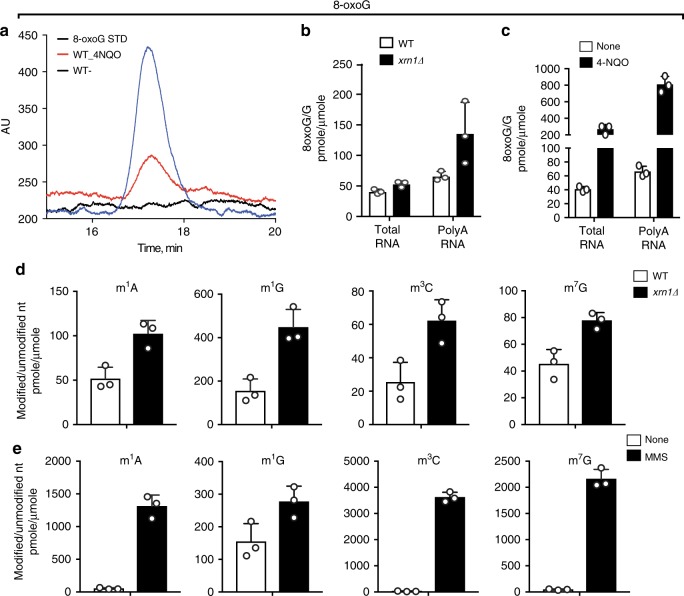
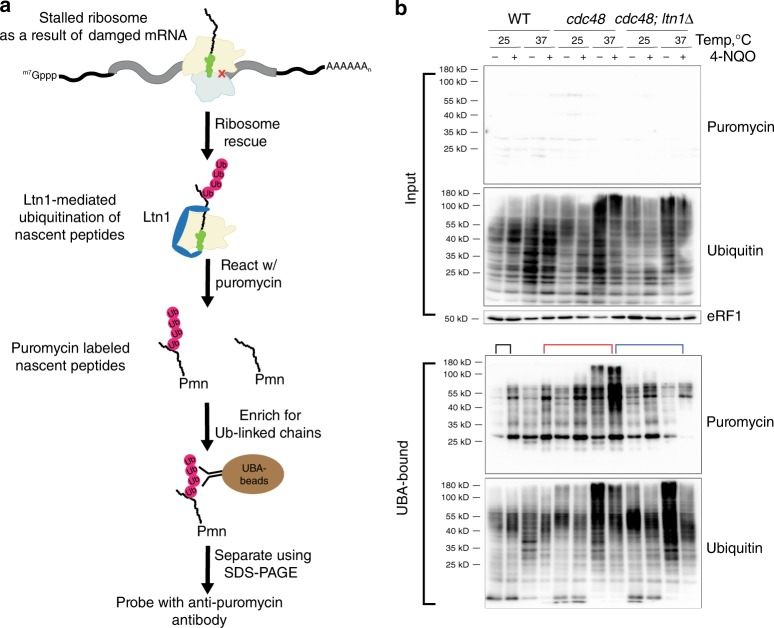
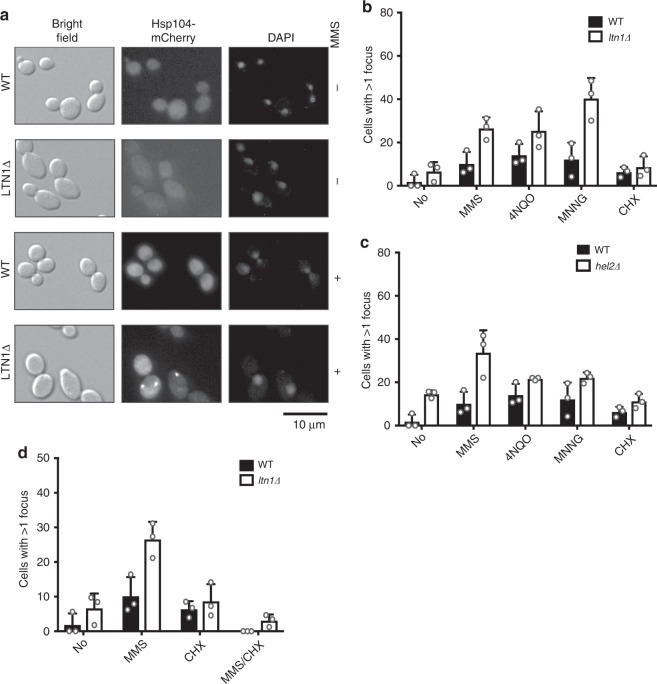
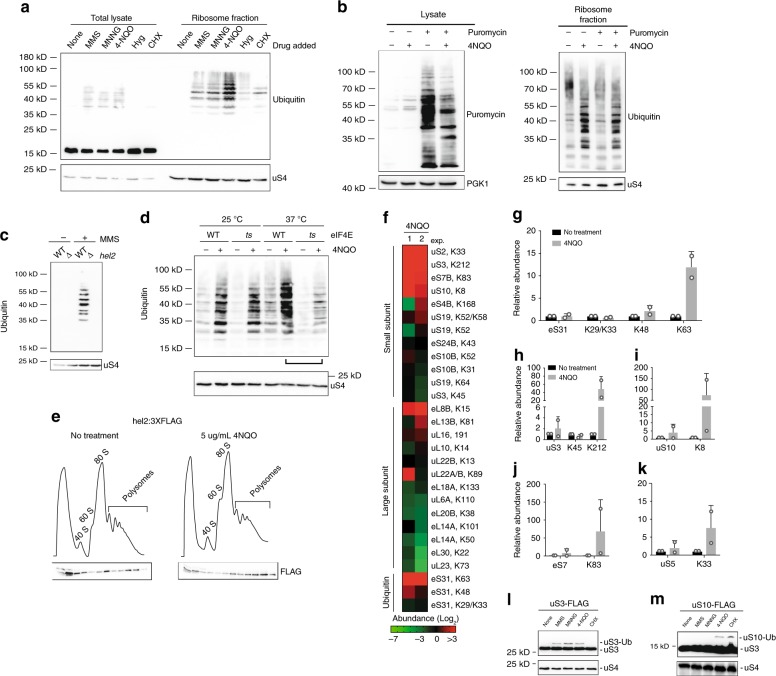
Oxidation and alkylation of nucleobases are known to disrupt their base-pairing properties within RNA. It is, however, unclear whether organisms have evolved general mechanism(s) to deal with this damage. Here we show that the mRNA-surveillance pathway of no-go decay and the associated ribosome-quality control are activated in response to nucleobase alkylation and oxidation. Our findings reveal that these processes are important for clearing chemically modified mRNA and the resulting aberrant-protein products. In the absence of Xrn1, the level of damaged mRNA significantly increases. Furthermore, deletion of LTN1 results in the accumulation of protein aggregates in the presence of oxidizing and alkylating agents. This accumulation is accompanied by Hel2-dependent regulatory ubiquitylation of ribosomal proteins. Collectively, our data highlight the burden of chemically damaged mRNA on cellular homeostasis and suggest that organisms evolved mechanisms to counter their accumulation.
Overview
The claims and statistics of this paper haven’t been checked yet.
Free: it reads the open-access text and checks the first 5 claims that cite a source we can check. Create a free account to check every claim.
Integrity signals
Registry
Cites
Statistics
Figures
Verification
Claims the paper makes
The claims and statistics of this paper haven’t been checked yet.
Free: it reads the open-access text and checks the first 5 claims that cite a source we can check. Create a free account to check every claim.
Claims other papers make about this one
Each is checked against this paper’s own text: does it say what the citing paper says it does?
The source backs part of the claim, not all of it — or backs it for a different population, condition or comparison.
In the citing paper
“Alkylated mRNAs likely induce various RNA degradation pathways, particularly RQC”
From Aberrant RNA methylation triggers recruitment of an alkylation repair complex (2021) · cites this paper as Yan et al., 2019
Experimental — accuracy not yet measured
Self-check
Percentages, sums and reported differences re-computed from the paper’s own numbers.
The self-check needs the paper’s full text.
Citations
Cites
How mitochondria produce reactive oxygen species
Murphy, M. P. (2009) · Biochemical Journal · doi:10.1042/bj20081386 · Cited by 8,207
Eng, J. K., McCormack, A. L., & Yates, J. R. (1994) · Journal of the American Society for Mass Spectrometry · doi:10.1016/1044-0305(94)80016-2 · Cited by 6,484
Oxidative Stress, Caloric Restriction, and Aging
Sohal, R. S., & Weindruch, R. (1996) · Science · doi:10.1126/science.273.5271.59 · Cited by 3,131
MODOMICS: a database of RNA modification pathways. 2017 update
Boccaletto, P., Machnicka, M. A., Purta, E., Piątkowski, P., Bagiński, B., Wirecki, T. K., de Crécy-Lagard, V., Ross, R., Limbach, P. A., Kotter, A., et al. (2018) · Nucleic Acids Research · doi:10.1093/nar/gkx1030 · Cited by 1,782
Systematic and Quantitative Assessment of the Ubiquitin-Modified Proteome
Kim, W., Bennett, E. J., Huttlin, E. L., Guo, A., Li, J., Possemato, A., Sowa, M. E., Rad, R., Rush, J., Comb, M. J., et al. (2011) · Molecular Cell · doi:10.1016/j.molcel.2011.08.025 · Cited by 1,613
Absolute Quantification of Proteins by LCMSE
Silva, J. C., Gorenstein, M. V., Li, G.-Z., Vissers, J. P. C., & Geromanos, S. J. (2006) · Molecular & Cellular Proteomics · doi:10.1074/mcp.m500230-mcp200 · Cited by 1,529
Watts, G. D. J., Wymer, J., Kovach, M. J., Mehta, S. G., Mumm, S., Darvish, D., Pestronk, A., Whyte, M. P., & Kimonis, V. E. (2004) · Nature Genetics · doi:10.1038/ng1332 · Cited by 1,391
Chemical and molecular mechanisms of antioxidants: experimental approaches and model systems
Lü, J., Lin, P. H., Yao, Q., & Chen, C. (2010) · Journal of Cellular and Molecular Medicine · doi:10.1111/j.1582-4934.2009.00897.x · Cited by 1,308
DNA Base Damage by Reactive Oxygen Species, Oxidizing Agents, and UV Radiation
Cadet, J., & Wagner, J. R. (2013) · Cold Spring Harbor Perspectives in Biology · doi:10.1101/cshperspect.a012559 · Cited by 903
Endonucleolytic cleavage of eukaryotic mRNAs with stalls in translation elongation
Doma, M. K., & Parker, R. (2006) · Nature · doi:10.1038/nature04530 · Cited by 760
Cited by
The emerging role of RNA modifications in the regulation of mRNA stability
Boo, S. H., & Kim, Y. K. (2020) · Experimental & Molecular Medicine · doi:10.1038/s12276-020-0407-z · Cited by 581
Ribosome Collisions Trigger General Stress Responses to Regulate Cell Fate
Wu, C. C.-C., Peterson, A., Zinshteyn, B., Regot, S., & Green, R. (2020) · Cell · doi:10.1016/j.cell.2020.06.006 · Cited by 539
“More generally, these data provide a clear example of how other physiological stress such as oxidative and alkylation stresses (Yan and Zaher, 2019; Yan et al., 2019) might be sensed through the action of the ribosome, triggering rapid cellular responses that dictate cell fate decisions.”
8-Oxoguanine: from oxidative damage to epigenetic and epitranscriptional modification
Hahm, J. Y., Park, J., Jang, E.-S., & Chi, S. W. (2022) · Experimental & Molecular Medicine · doi:10.1038/s12276-022-00822-z · Cited by 317
RNA-binding proteins in regulating mRNA stability and translation: roles and mechanisms in cancer
Li, W., Deng, X., & Chen, J. (2022) · Seminars in Cancer Biology · doi:10.1016/j.semcancer.2022.03.025 · Cited by 175
Yan, L. L., & Zaher, H. S. (2021) · Molecular Cell · doi:10.1016/j.molcel.2020.11.033 · Cited by 171
“We note that deletion of HEL2 completely inhibits MMS-mediated ribosomal-protein ubiquitination (Yan et al., 2019) and hence any changes to RNA-expression levels in this strain is likely to be the result of the absence of ribosome modification.”
BackgroundInfluentialSelf-citationKumar, S., & Mohapatra, T. (2021) · Frontiers in Cell and Developmental Biology · doi:10.3389/fcell.2021.628415 · Cited by 174
The ribotoxic stress response drives UV-mediated cell death
Sinha, N. K., McKenney, C. D., Yeow, Z. Y., Li, J. J., Nam, K. H., Yaron, T. M., Johnson, J. L., Huntsman, E. M., Cantley, L. C., Ordureau, A., et al. (2024) · Cell · doi:10.1016/j.cell.2024.05.018 · Cited by 144
Ribosome states signal RNA quality control
D’Orazio, K. N., & Green, R. (2021) · Molecular Cell · doi:10.1016/j.molcel.2021.02.022 · Cited by 143
“For example, much like DNA damage in the nucleus, RNA damage takes the form of broken, crosslinked, or chemically modified nucleotide sequences, any of which would be likely to impede elongation by the ribosome along such an mRNA template (Yan and Zaher, 2019; Yan et al., 2019; Wu et al., 2020).”
BackgroundUnresolved stalled ribosome complexes restrict cell-cycle progression after genotoxic stress
Stoneley, M., Harvey, R. F., Mulroney, T. E., Mordue, R., Jukes‐Jones, R., Cain, K., Lilley, K. S., Sawarkar, R., & Willis, A. E. (2022) · Molecular Cell · doi:10.1016/j.molcel.2022.01.019 · Cited by 113
Quality controls induced by aberrant translation
Inada, T. (2020) · Nucleic Acids Research · doi:10.1093/nar/gkz1201 · Cited by 112
Detecting and Rescuing Stalled Ribosomes
Yip, M. C. J., & Shao, S. (2021) · Trends in Biochemical Sciences · doi:10.1016/j.tibs.2021.03.008 · Cited by 93
Chaperone-directed ribosome repair after oxidative damage
Yang, Y.-M., Jung, Y., Abegg, D., Adibekian, A., Carroll, K. S., & Karbstein, K. (2023) · Molecular Cell · doi:10.1016/j.molcel.2023.03.030 · Cited by 91
Canary in a coal mine: collided ribosomes as sensors of cellular conditions
Kim, K. Q., & Zaher, H. S. (2021) · Trends in Biochemical Sciences · doi:10.1016/j.tibs.2021.09.001 · Cited by 85
Self-citationRNA damage compartmentalization by DHX9 stress granules
Zhou, Y., Panhale, A., Shvedunova, M., Balan, M., Gomez-Auli, A., Holz, H., Seyfferth, J., Helmstädter, M., Kayser, S., Zhao, Y., et al. (2024) · Cell · doi:10.1016/j.cell.2024.02.028 · Cited by 83
Effects of Oxidative Stress on Protein Translation: Implications for Cardiovascular Diseases
Ghosh, A., & Shcherbik, N. (2020) · International Journal of Molecular Sciences · doi:10.3390/ijms21082661 · Cited by 78
Expanding Role of Ubiquitin in Translational Control
Dougherty, S. E., Maduka, A. O., Inada, T., & Silva, G. M. (2020) · International Journal of Molecular Sciences · doi:10.3390/ijms21031151 · Cited by 77
“Hel2 has also been reported to facilitate the K63 polyubiquitination of eS7 after monoubiquitination by the E3 ligase Not4, further supporting its role as an E3 ligase conjugating K63 linkages [139].”
BackgroundInfluentialOxidative Modifications of RNA and Its Potential Roles in Biosystem
Tanaka, M., & Chock, P. B. (2021) · Frontiers in Molecular Biosciences · doi:10.3389/fmolb.2021.685331 · Cited by 70
“This observation indicates that once ribosomes are stalled at the oxidative modified sites of mRNA, a No-Go decay enzyme complex is recruited to the sites and starts to degrade of the mRNA (Simms et al., 2017; Yan et al., 2019) interacting with Rps3/uS3 at the entry tunnel of the ribosomal small subunit (Simms et al.”
BackgroundAltered translation elongation contributes to key hallmarks of aging in the killifish brain
Fraia, D. D., Marino, A., Lee, J. H., Sacramento, E. K., Baumgart, M., Bagnoli, S., Balla, T., Schalk, F., Kamrad, S., Guan, R., et al. (2025) · Science · doi:10.1126/science.adk3079 · Cited by 69
Coupling of translation quality control and mRNA targeting to stress granules
Moon, S. L., Morisaki, T., Stasevich, T. J., & Parker, R. (2020) · The Journal of Cell Biology · doi:10.1083/jcb.202004120 · Cited by 67
“A second possibility, since chemical damage to mRNAs such as oxidation can cause elongation pauses (Simms et al., 2014; Yan et al., 2019), is that damage to the mRNA causes elongation arrest and triggers a requirement for the RQC complex to allow ribosome release.”
BackgroundAlkylative damage of mRNA leads to ribosome stalling and rescue by trans translation in bacteria
Thomas, E. N., Kim, K. Q., McHugh, E. P., Marcinkiewicz, T., & Zaher, H. S. (2020) · eLife · doi:10.7554/elife.61984 · Cited by 59
Self-citationCytoplasmic mRNA decay and quality control machineries in eukaryotes
Dowdle, M. E., & Lykke-Andersen, J. (2025) · Nature Reviews Genetics · doi:10.1038/s41576-024-00810-1 · Cited by 59
“…in various organisms 171,172 , the primary targets of this pathway are thought to be mRNAs that have been rendered non-functional owing to chemical-or irradiation-mediated nucleotide damage 173,174 or aberrant processing, such as premature polyadenylation within the mRNA coding region 167,175 .”
K6-linked ubiquitylation marks formaldehyde-induced RNA-protein crosslinks for resolution
Rahmanto, A. S., Blum, C., Scalera, C., Heidelberger, J. B., Mesitov, M. V., Horn‐Ghetko, D., Gräf, J. F., Mikičić, I., Hobrecht, R., Orekhova, A., et al. (2023) · Molecular Cell · doi:10.1016/j.molcel.2023.10.011 · Cited by 58
Distinct elongation stalls during translation are linked with distinct pathways for mRNA degradation
Veltri, A. J., D'Orazio, K. N., Lessen, L. N., Loll-Krippleber, R., Brown, G. W., & Green, R. (2022) · eLife · doi:10.7554/elife.76038 · Cited by 59
Cellular responses to RNA damage
Cordes, J., Zhao, S., Engel, C. M., & Stingele, J. (2025) · Cell · doi:10.1016/j.cell.2025.01.005 · Cited by 54
Crosstalk between Oxidative Stress and Aging in Neurodegeneration Disorders
Abdelhamid, R. F., & Nagano, S. (2023) · Cells · doi:10.3390/cells12050753 · Cited by 50
Aberrant RNA methylation triggers recruitment of an alkylation repair complex
Tsao, N., Brickner, J. R., Rodell, R., Ganguly, A., Wood, M., Oyeniran, C., Ahmad, T., Sun, H., Bacolla, A., Zhang, L., et al. (2021) · Molecular Cell · doi:10.1016/j.molcel.2021.09.024 · Cited by 46
Decoding of the ubiquitin code for clearance of colliding ribosomes by the RQT complex
Matsuo, Y., Uchihashi, T., & Inada, T. (2023) · Nature Communications · doi:10.1038/s41467-022-35608-4 · Cited by 41
Wu, X., Yang, Z., Wu, J., & Han, J. (2023) · Immunity · doi:10.1016/j.immuni.2023.02.014 · Cited by 43
Jones, J. D., Franco, M. K., Smith, T. J., Snyder, L. R., Anders, A. G., Ruotolo, B. T., Kennedy, R. T., & Koutmou, K. S. (2023) · RSC Chemical Biology · doi:10.1039/d2cb00229a · Cited by 40
A (dis)integrated stress response: Genetic diseases of eIF2α regulators
English, A. M., Green, K. M., & Moon, S. L. (2021) · Wiley Interdisciplinary Reviews - RNA · doi:10.1002/wrna.1689 · Cited by 36
“…stop codon causes nonstop decay (NSD; Frischmeyer et al., 2002; van Hoof et al., 2002), and (3) unresolvable RNA secondary structure (Doma & Parker, 2006), mRNA nucleotide damage (Simms et al., 2014; Yan et al., 2019), or mRNA truncation products (Meaux & Van Hoof, 2006) undergo no-go decay (NGD).”
BackgroundXu, Z., Huang, J., Gao, M., Guo, G., Zeng, S., Chen, X., Wang, X., Gong, Z., & Yan, Y. (2020) · GeroScience · doi:10.1007/s11357-020-00209-w · Cited by 35
“To effectively ensure RNA integrity, cells must have diverse defensive mechanisms to discriminate oxidatively damaged RNA from normal transcripts (Yan et al. 2019a).”
BackgroundInfluentialConserved heterodimeric GTPase Rbg1/Tma46 promotes efficient translation in eukaryotic cells
Zeng, F., Li, X., Pires-Alves, M., Chen, X., Hawk, C. W., & Jin, H. (2021) · Cell Reports · doi:10.1016/j.celrep.2021.109877 · Cited by 35
Simões, V., Cizubu, B. K., Harley, L., Zhou, Y., Pajak, J., Snyder, N. A., Bouvette, J., Borgnia, M. J., Arya, G., Bartesaghi, A., et al. (2022) · Cell Reports · doi:10.1016/j.celrep.2022.110860 · Cited by 35
Ribosome impairment regulates intestinal stem cell identity via ZAKɑ activation
Silva, J., Alkan, F., Ramalho, S., Snieckute, G., Preković, S., García, A. K., Hernández-Pérez, S., van der Kammen, R., Barnum, D., Hoekman, L., et al. (2022) · Nature Communications · doi:10.1038/s41467-022-32220-4 · Cited by 34
Yang, Y., & Karbstein, K. (2024) · Annual Review of Cell and Developmental Biology · doi:10.1146/annurev-cellbio-111822-113326 · Cited by 31
Conserved 5-methyluridine tRNA modification modulates ribosome translocation
Jones, J. D., Franco, M. K., Giles, R. N., Eyler, D. E., Tardu, M., Smith, T. J., Snyder, L. R., Polikanov, Y. S., Kennedy, R. T., Niederer, R. O., et al. (2024) · Proceedings of the National Academy of Sciences · doi:10.1073/pnas.2401743121 · Cited by 27
“The core mechanism of translation elongation is well conserved between bacteria and eukaryotes (26, 27), and prior studies demonstrate that mRNA modifications that slow elongation and/or change mRNA decoding elongation in the reconstituted E. coli system also do so in eukaryotes (28, 29).”
Wollen, K. L., Hagen, L., Vågbø, C. B., Rabe, R., Iveland, T. S., Aas, P. A., Sharma, A., Sporsheim, B., Erlandsen, H. O., Palibrk, V., et al. (2021) · Journal of Translational Medicine · doi:10.1186/s12967-021-02948-6 · Cited by 27
“RQC has been shown to be activated in response to MMS and oxidizing agents in yeast, and mutants defective in RQC components recover poorly subsequent to treatment [89].”
BackgroundKim, K. Q., Li, J. J., Urs, A. N. N., Pacheco, M., Lasehinde, V., Denk, T., Těšina, P., Tomomatsu, S., Matsuo, Y., McDonald, E., et al. (2024) · Molecular Cell · doi:10.1016/j.molcel.2024.10.029 · Cited by 27
Self-citationMcGuffey, J. C., Jackson-Litteken, C. D., Venanzio, G. D., Zimmer, A. A., Lewis, J. M., Distel, J. S., Kim, K. Q., Zaher, H. S., Alfonzo, J. D., Scott, N. E., et al. (2023) · mBio · doi:10.1128/mbio.01416-23 · Cited by 26
“Samples were digested using nuclease P1 (Millipore Sigma, 10 units) at 50°C overnight (73).”
MethodSelf-citationInability to rescue stalled ribosomes results in overactivation of the integrated stress response
Urs, A. N. N., Lasehinde, V., Kim, L., McDonald, E., Yan, L. L., & Zaher, H. S. (2024) · Journal of Biological Chemistry · doi:10.1016/j.jbc.2024.107290 · Cited by 24
Self-citationDysregulated ribosome quality control in human diseases
McGirr, T., Onar, O., & Jafarnejad, S. M. (2024) · FEBS Journal · doi:10.1111/febs.17217 · Cited by 25
“RQC can resolve collided ribosomes formed on adducts, such as 8-oxoG in mRNAs, that result from treatment with oxidizing and alkylating agents or UV radiation [124,125].”
Autophagic Organelles in DNA Damage Response
Kim, J., Lee, S.-M., Kim, H., Lee, H., Seong, K. M., Youn, H., & Youn, B. (2021) · Frontiers in Cell and Developmental Biology · doi:10.3389/fcell.2021.668735 · Cited by 22
Wheeler, H. B., Madrigal, A. A., & Chaim, I. A. (2024) · Proceedings of the National Academy of Sciences · doi:10.1073/pnas.2317860121 · Cited by 20
“XRN1, a 5 ′ - 3 ′ exoribonuclease, degrades 8 O G - RNAs stalled during translation (104).”
Ending a bad start: Triggers and mechanisms of co-translational protein degradation
Eisenack, T., & Trentini, D. B. (2023) · Frontiers in Molecular Biosciences · doi:10.3389/fmolb.2022.1089825 · Cited by 20
“This effect was ablated upon Ltn1 depletion and increased upon Cdc48 knockdown, both findings indicating an activation of RQC (Yan et al., 2019).”
BackgroundThe ubiquitin conjugase Rad6 mediates ribosome pausing during oxidative stress
Meydan, S., Barros, G. C., Simões, V., Harley, L., Cizubu, B. K., Guydosh, N. R., & Silva, G. M. (2023) · Cell Reports · doi:10.1016/j.celrep.2023.113359 · Cited by 20
“…(Figures 3A and 3B), it is possible that oxidative stress induced by other ROSs could lead to ribosome collisions that are targeted by RQC. 61,62 Therefore, different ROSs and their modes of production, abundance, target, and subcellular location could potentially engage unique pathways of…”
BackgroundQuality control and signaling pathways at stalled ribosomes
Chang, W. D., & Choe, Y. (2026) · Experimental & Molecular Medicine · doi:10.1038/s12276-025-01623-w · Cited by 20
“Alkylated bases disrupt canonical Watson – Crick base-pairing interactions, thereby inducing ribosome stalling 22,31 .”
Molecular Highway Patrol for Ribosome Collisions
Iyer, K. V., Müller, M., Tittel, L. S., & Winz, M. (2023) · ChemBioChem · doi:10.1002/cbic.202300264 · Cited by 20
Ribosome Quality Control mitigates the cytotoxicity of ribosome collisions induced by 5-Fluorouracil
Chatterjee, S., Naeli, P., Onar, O., Simms, N., Garzia, A., Hackett, A. P., Coyle, K., Snell, P. H., McGirr, T., Sawant, T. N., et al. (2024) · Nucleic Acids Research · doi:10.1093/nar/gkae849 · Cited by 19
YTHDC1 cooperates with the THO complex to prevent RNA damage-induced DNA breaks
Tsao, N., Lombardi, P. M., Park, A., Olabode, J., Rodell, R., Sun, H., Padmanaban, S., Brickner, J. R., Tsai, M.-S., Pollina, E. A., et al. (2024) · Molecular Cell · doi:10.1016/j.molcel.2025.02.003 · Cited by 19
Taylor, K. E., Miller, L. G., & Contreras, L. M. (2024) · Biochemical Society Transactions · doi:10.1042/bst20230254 · Cited by 17
Full-length direct RNA sequencing uncovers stress granule-dependent RNA decay upon cellular stress
Dar, S. A., Malla, S., Martinek, V., Payea, M. J., Lee, C. T., Martin, J., Khandeshi, A. J., Martindale, J. L., Belair, C., & Maragkakis, M. (2024) · eLife · doi:10.7554/elife.96284.3 · Cited by 18
Insights into the role of collided ribosomes during the activation of the integrated stress response
Urs, A. N. N., Kim, L., & Zaher, H. S. (2025) · Biochemical Society Transactions · doi:10.1042/bst20253034 · Cited by 16
Self-citationRNA–DNA Differences: Mechanisms, Oxidative Stress, Transcriptional Fidelity, and Health Implications
Štolc, V., Preto, O., Karhánek, M., Freund, F., Griko, Y. V., Loftus, D. J., & Ohayon, M. M. (2025) · Antioxidants · doi:10.3390/antiox14050544 · Cited by 16
“Upon ribosomal stalling, RQC facilitates ribosomal subunit dissociation and targets the incomplete polypeptide for ubiquitination and proteasomal degradation, preventing defective protein accumulation [127].”
Chronic stress antagonizes formation of stress granules
Adachi, Y., Williams, A. M., Masuda, M., Taketani, Y., Anderson, P. J., & Ivanov, P. (2025) · iScience · doi:10.1016/j.isci.2025.114556 · Cited by 17
“24 Indeed, low dose SA pre-conditioning induces phosphorylation of eEF2 while ANS does not (Figure 5C).”
Parker, M. D., Brunk, E. S., Getzler, A. J., & Karbstein, K. (2024) · PLoS Biology · doi:10.1371/journal.pbio.3001767 · Cited by 16
“Ribosome collisions are also the initiating events in mRNA QC (S1B Fig, [51,52]). mRNAs that are damaged [53–55] or contain certain “stall-sequences” [56–58] trap ribosomes at these locations.”
Threonine-rich carboxyl-terminal extension drives aggregation of stalled polypeptides
Chang, W. D., Yoon, M.-J., Yeo, K. H. J., & Choe, Y. (2024) · Molecular Cell · doi:10.1016/j.molcel.2024.10.011 · Cited by 15
Structure of a Gcn2 dimer in complex with the large 60S ribosomal subunit
Paternoga, H., Xia, L., Dimitrova-Paternoga, L., Li, S., Yan, L. L., Oestereich, M., Kasvandik, S., Urs, A. N. N., Beckert, B., Tenson, T., et al. (2025) · Proceedings of the National Academy of Sciences · doi:10.1073/pnas.2415807122 · Cited by 15
Self-citationZNF574 is a Quality Control Factor For Defective Ribosome Biogenesis Intermediates
Akers, J. F., LaScola, M., Bothe, A., Suh, H., Jung, C., Stolp, Z. D., Ghosh, T., Yan, L. L., Wang, Y., Macurak, M., et al. (2024) · Molecular Cell · doi:10.1016/j.molcel.2025.04.017 · Cited by 16
Self-citationA ubiquitin language communicates ribosomal distress
Monem, P. C., & Arribere, J. A. (2023) · Seminars in Cell and Developmental Biology · doi:10.1016/j.semcdb.2023.03.009 · Cited by 15
“Several studies have exploited mass spectrometry to characterize the ubiquitinated proteome in a process known as ubiquitin remnant profiling [9,42,44,58,77].”
BackgroundIshibashi, K., Shichino, Y., Han, P., Wakabayashi, K., Mito, M., Inada, T., Kimura, S., Iwasaki, S., & Mishima, Y. (2024) · PLoS Biology · doi:10.1371/journal.pbio.3002887 · Cited by 14
RNF25 confers mRNA damage tolerance by curbing activation of the integrated stress response
Zhao, S., Palma-Chaundler, C. S., Engel, C. M., Cordes, J., Nixdorf, D., Luo, M. Y., Kaya, S., Rahmanto, A. S., van den Heuvel, D., Mackens‐Kiani, T., et al. (2026) · Molecular Cell · doi:10.1016/j.molcel.2026.02.024 · Cited by 14
Processing of RNA Containing 8-Oxo-7,8-Dihydroguanosine (8-oxoG) by the Exoribonuclease Xrn-1
Phillips, C. N., Schowe, S. W., Langeberg, C. J., Siddique, N., Chapman, E. G., & Resendiz, M. J. E. (2021) · Frontiers in Molecular Biosciences · doi:10.3389/fmolb.2021.780315 · Cited by 15
“It is important to note that the observations described herein do not necessarily contradict previous findings correlating the role of Xrn-1 in the decay of oxidized mRNA, (Yan et al., 2019) particularly if one considers the vast differences in experimental conditions where the lack of several factors are not taken in…”
BackgroundResultInfluentialProteostasis regulation through ribosome quality control and no‐go‐decay
Boopathy, L. R. A., Beadle, E., Rico, A. G., & Vera, M. (2023) · Wiley Interdisciplinary Reviews - RNA · doi:10.1002/wrna.1809 · Cited by 15
“Likewise, site-specific oxidative damage triggers the degradation of the damaged mRNA and alkylative damage, resulting in nucleotides such as m1A, m3C, and m1G disrupting base-pairing precluding tRNA decoding and increasing ribosomal stalling (Yan et al., 2019).”
BackgroundCell cycle regulation by the ribotoxic stress response
McKenney, C. D., & Regot, S. (2025) · Trends in Cell Biology · doi:10.1016/j.tcb.2025.04.005 · Cited by 13
Impaired biogenesis of basic proteins impacts multiple hallmarks of the aging brainPreprint
Fraia, D. D., Marino, A., Lee, J. H., Sacramento, E. K., Baumgart, M., Bagnoli, S., da Silva, P. T., Sahu, A. K., Siano, G., Tiessen, M., et al. (2023) · bioRxiv (Cold Spring Harbor Laboratory) · doi:10.1101/2023.07.20.549210 · Cited by 13
Knowles, C. M., Goich, D., Bloom, A. L. M., Kalem, M. C., & Panepinto, J. C. (2023) · mBio · doi:10.1128/mbio.00196-23 · Cited by 11
“Oxidation of mRNAs can lead to decoding errors, and oxidation of ribosomal proteins and rRNA may result in dysfunctional ribosomes (53, 54).”
BackgroundSkinner, A. A., Yang, C., Hincks, K., Wang, H., & Resendiz, M. J. E. (2020) · Biopolymers · doi:10.1002/bip.23410 · Cited by 11
Selective neuronal vulnerability to deficits in RNA processing
Zuniga, G., & Frost, B. E. (2023) · Progress in Neurobiology · doi:10.1016/j.pneurobio.2023.102500 · Cited by 10
RNA damage and its implications in genome stability
Olatunji, M., & Liu, Y. (2025) · DNA repair · doi:10.1016/j.dnarep.2025.103821 · Cited by 11
Li, S., Shounai, O., Kato, M., Ikeuchi, K., & Inada, T. (2025) · Nature Communications · doi:10.1038/s41467-025-66026-x · Cited by 11
“…and Hel2, but not Fap1, were essential for the increase in uS3 ubiquitination observed under previously reported collision-inducing conditions 15,33,34 , such as treat-ment with the alkylating agent methyl methanesulfonate (MMS) or the translation elongation inhibitor cycloheximide (CHX)…”
Burroughs, M. R., Sweet, P., & Contreras, L. M. (2024) · RNA Biology · doi:10.1080/15476286.2024.2427903 · Cited by 9
“This stalling phenomenon has been further shown to result in no-go decay (NGD) processing of modified mRNAs [25].”
RNA Damage Responses in Cellular Homeostasis, Genome Stability, and Disease
Zaher, H. S., & Mosammaparast, N. (2024) · Annual Review of Pathology Mechanisms of Disease · doi:10.1146/annurev-pathmechdis-111523-023516 · Cited by 9
Self-citationMartínez‐Calvo, M., Guerrini, L., Rodríguez, J., Álvarez‐Puebla, R. A., & Mascarenas, J. L. (2020) · The Journal of Physical Chemistry Letters · doi:10.1021/acs.jpclett.0c02148 · Cited by 9
Dynamics of DNA damage-induced nuclear inclusions are regulated by SUMOylation of Btn2
Kumar, A., Mathew, V., & Stirling, P. C. (2024) · Nature Communications · doi:10.1038/s41467-024-47615-8 · Cited by 9
“While the major mechanism of DNA damage via MMS treatment is through the replication fork stalling, there have been reports of MMS alkylating RNA and peptides 25,26 .”
Shen, D., Guo, H., Zhang, F., Chen, X., Tong, X., Li, H., Wu, W., & Mei, S. (2025) · Biosensors and Bioelectronics · doi:10.1016/j.bios.2025.117406 · Cited by 7
Akagawa, M., Sugasawa, K., Ura, K., & Sassa, A. (2025) · Journal of Biological Chemistry · doi:10.1016/j.jbc.2025.108512 · Cited by 8
Yeast elongation factor homolog New1 protects a subset of mRNAs from degradation by no-go decay
Müller, M., Tittel, L. S., Petfalski, E., Iyer, K. V., Kraft, A.-A., Pastore, S., Butto, T., & Winz, M. (2026) · Nucleic Acids Research · doi:10.1093/nar/gkag047 · Cited by 7
“At the mRNA level, translation roadblocks can occur as stable secondary structures [ 4 ], chemical damage, such as oxidation and alkylation [ 5 , 6 ], truncation [ 7 ], as well as poorly translatable codon sequences.”
Is there a localized role for translational quality control?
Meydan, S., & Guydosh, N. R. (2023) · RNA · doi:10.1261/rna.079683.123 · Cited by 7
“…al. 2002; van Hoof et al. 2002; Doma and Parker 2006; Guydosh and Green 2014; Guydosh and Green 2017; D ’ Orazio et al. 2019; Ikeuchi et al. 2019; Simms et al. 2019; Glover et al. 2020), which requires additional ribosome rescue events carried out by PELO (Dom34 in yeast) and associated GTPases…”
BackgroundInfluentialDissecting translation elongation dynamics through ultra-long tracking of single ribosomes
Madern, M. F., Yang, S., Witteveen, O., Bauer, M., & Tanenbaum, M. E. (2024) · doi:10.1101/2024.04.08.588516 · Cited by 7
Gao, Y., Zhu, Y., Sun, Q., & Chen, D. (2024) · Science Bulletin · doi:10.1016/j.scib.2024.01.021 · Cited by 6
Villa, S., Dwivedi, P., Stahl, A., Hinkle, T. B., Rose, C. M., Kirkpatrick, D. S., Tomchik, S. M., Dixit, V. M., & Wolf, F. W. (2024) · Nature Communications · doi:10.1038/s41467-024-51284-y · Cited by 6
Meyer, A. R., García, G., Mikesell, A. R., O'Flanagan, S., Stucky, C. L., & Campbell, Z. T. (2025) · Pain · doi:10.1097/j.pain.0000000000003761 · Cited by 5
Mapping of HOCl-oxidized RNA identifies abasic sites as major damage and oxidation product of oxo8G
Weber, M., Raorane, K., Grampp, C. J., Bourguignon‐Igel, V., Kilz, L.-M., Glänzer, D., Marchand, V., Kreutz, C., Motorin, Y., & Helm, M. (2025) · Nature Communications · doi:10.1038/s41467-025-65108-0 · Cited by 5
Trainor, B. M., Pestov, D. G., & Shcherbik, N. (2021) · RNA · doi:10.1261/rna.078852.121 · Cited by 5
Ye, X., Li, Z., Ye, S., Liang, X., Bao, C., He, M., Wang, H., Xia, L., & Cao, X. (2024) · Organic & Biomolecular Chemistry · doi:10.1039/d4ob00786g · Cited by 5
Full-length direct RNA sequencing uncovers stress-granule dependent RNA decay upon cellular stressPreprint
Dar, S. A., Malla, S., Martinek, V., Payea, M. J., Lee, C. T., Martin, J., Khandeshi, A. J., Martindale, J. L., Belair, C., & Maragkakis, M. (2024) · eLife · doi:10.7554/elife.96284.1 · Cited by 5
Expanding epitranscriptomics to non-enzymatic RNA modifications
Nishikawa, K., David, Y., & Knörlein, A. (2025) · Trends in Chemistry · doi:10.1016/j.trechm.2025.08.005 · Cited by 4
Schowe, S. W., Langeberg, C. J., Chapman, E. G., Brown, K. J., & Resendiz, M. J. E. (2022) · Journal of Visualized Experiments · doi:10.3791/63720 · Cited by 4
Ribosome cooperativity promotes fast and efficient translationPreprint
Madern, M. F., Yang, S., & Tanenbaum, M. E. (2024) · bioRxiv (Cold Spring Harbor Laboratory) · doi:10.1101/2024.04.08.588515 · Cited by 4
Context specific ubiquitin modification of ribosomes regulates translation under oxidative stressPreprint
Dougherty, S. E., Barros, G. C., Foster, M. W., Teo, G., Choi, H., & Silva, G. M. (2024) · bioRxiv (Cold Spring Harbor Laboratory) · doi:10.1101/2024.05.02.592277 · Cited by 4
“2C,D), further supporting that Hel2 mediates ubiquitination of this site (Garshott et al. , 2020; Yan et al. , 2019).”
InfluentialInvestigation of TRMT61B methyltransferase activity on mRNA and its effects on translation
Fang, D., Babich, J. M., Stanton, R., Vock, I. W., Abdallah, K., Zhu, M., Letchuman, R., Li, R., Simon, M. D., Gilbert, W. V., et al. (2026) · Nucleic Acids Research · doi:10.1093/nar/gkag365 · Cited by 3
“These results are consistent with previous reports that also observed inhibitory effects of m 1 A on translation in a variety of organisms (yeast, human cells, bacteria, dinoflagellate, plants) but differing results dependent on RNA region and codon position [ 4 , 6 , 39 , 51 , 53 ].”
The ribosome ubiquitination code: fine-tuning translation under stress
Wooters, H. C., Nimmagadda, N. C., Darnell, A. M., & Silva, G. M. (2025) · Trends in Biochemical Sciences · doi:10.1016/j.tibs.2025.06.009 · Cited by 3
The Role of Ribonucleases in RNA Damage, Inactivation and Degradation
Hia, F., & Takeuchi, O. (2021) · Springer eBooks · doi:10.1007/978-3-030-76571-2_5 · Cited by 3
Spasskaya, D. S., Kulagin, K. A., Grineva, E. N., Osipova, P. J., Poddubko, S. V., Bubis, J. A., Kazakova, E. M., Kusainova, T. T., Gorshkov, V., Kjeldsen, F., et al. (2023) · Journal of Fungi · doi:10.3390/jof9030351 · Cited by 3
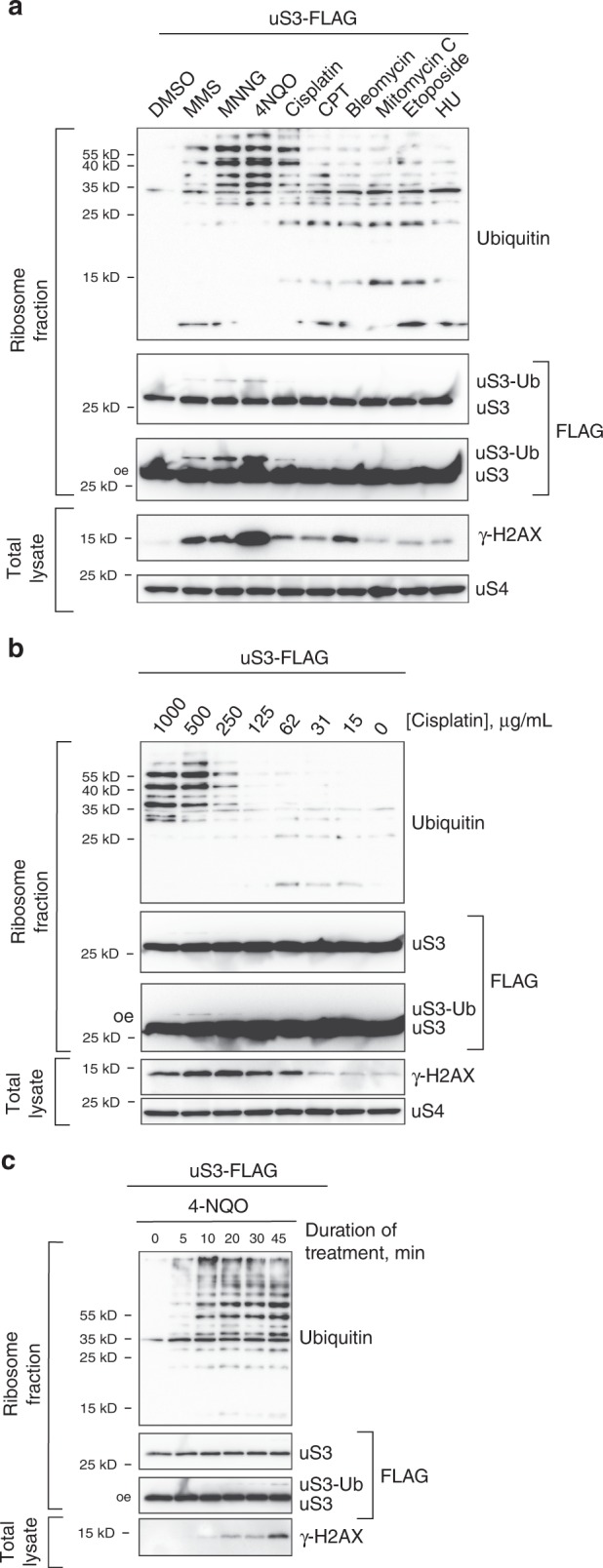
“Moreover, 4-NQO-induced oxidation of RNA nucleobases causes induction of ribosome quality control and activation of the ubiquitin-proteasome system (UPS) via a series of E3 ubiquitin ligases, which, in particular, are required for clearing stalled ribosomes [10].”
BackgroundInfluentialFull-length direct RNA sequencing uncovers stress-granule dependent RNA decay upon cellular stressPreprint
Dar, S. A., Malla, S., Martinek, V., Payea, M. J., Lee, C. T., Martin, J., Khandeshi, A. J., Martindale, J. L., Belair, C., & Maragkakis, M. (2024) · eLife · doi:10.7554/elife.96284.2 · Cited by 3
Translation elongation in the nervous system
Mikesell, A. R., Willis, A. E., Loerch, S., & Campbell, Z. T. (2026) · Trends in Neurosciences · doi:10.1016/j.tins.2026.07.004 · Cited by 2
Marqueurs d’oxydation des acides nucléiques
Baudin, B. (2020) · Revue Francophone des Laboratoires · doi:10.1016/s1773-035x(20)30163-5 · Cited by 2
Helton, N. S., & Moon, S. L. (2022) · Biochemical Society Transactions · doi:10.1042/bst20220549 · Cited by 2
Sa, R., Lin, Z., Huang, J., Wang, Y., Lv, J., Zhang, X., Pan, X., Huang, J., & Zhang, B. (2023) · Research Square · doi:10.21203/rs.3.rs-2580481/v1 · Cited by 2
Sense codon-misassociated eRF1 elicits ribosome stalling and induction of quality controlPreprint
Han, P., Mito, M., Yamashita, A., Ito, T., & Iwasaki, S. (2024) · bioRxiv (Cold Spring Harbor Laboratory) · doi:10.1101/2024.09.01.610654 · Cited by 2
Metadata
- Authors
- Yan, L. L., Simms, C. L., McLoughlin, F., Vierstra, R. D., & Zaher, H. S.
- Affiliations
- Washington University in St. Louis (US)
- Corresponding author
- Zaher, Hani S.
- Venue
- Nature Communications
- Published
- 2019-12-09
- Volume
- 10
- Issue
- 1
- Pages
- 5611-5611
- ISSN
- 2041-1723 (ISSN-L)
- PMC
- PMC6901537
- OpenAlex
- W2993298108
- Semantic Scholar
- 6f09f2ed77a7a4e2ecce85dcebcad872cd0414e5
- Cited by
- 123
- References
- 96
- Citations by year
- 2026: 16 · 2025: 19 · 2024: 31 · 2023: 21 · 2022: 9 · 2021: 14 · 2020: 12 · 2019: 1
- FWCI
- 2.98
- Type
- journal article
- Language
- en
- Open access
- gold
- doi.org
- Licence
- cc-by
- creativecommons.org/licenses/by/4.0 (tdm)
- creativecommons.org/licenses/by/4.0 (vor)
- Locations
- Nature Communications (publishedVersion, cc-by)
- PubMed Central (publishedVersion, cc-by)
- PubMed (publishedVersion)
- RePEc: Research Papers in Economics (submittedVersion)
- DOAJ (DOAJ: Directory of Open Access Journals) (submittedVersion)
- DOAJ (DOAJ: Directory of Open Access Journals) (submittedVersion, cc-by-sa)
- Funders
- U.S. Department of Health & Human Services | NIH | National Institute of General Medical Sciences (R01GM112641)
- Topics
- Life Sciences › Biochemistry, Genetics and Molecular Biology › Molecular Biology › RNA and protein synthesis mechanisms
- Life Sciences › Biochemistry, Genetics and Molecular Biology › Molecular Biology › RNA Research and Splicing
- Life Sciences › Biochemistry, Genetics and Molecular Biology › Cell Biology › Endoplasmic Reticulum Stress and Disease
- Keywords
- ribosome-associated quality control, no-go decay, mRNA surveillance, nucleobase oxidation, chemically modified mRNA, Xrn1, Ltn1, protein aggregates
- MeSH terms
- Alkylation, DNA Damage, Humans, Methyl Methanesulfonate, Mutation, Oxidation-Reduction, Peptides, Polyribosomes, Ribosomal Proteins, Ribosomes, RNA, Messenger, Saccharomyces cerevisiae, 4-Nitroquinoline-1-oxide, Quinolones, Oxidative Stress, DNA Adducts, RNA Stability, Ubiquitin, Saccharomyces cerevisiae Proteins, Ubiquitin-Protein Ligases, Ubiquitination, HEK293 Cells, Protein Aggregates
About these checks
Registry, retraction, Cites and statistics results are computed, not judged, with one exception: a printed reference that no index lists is read once by a model before it counts as a citation error. Claims are extracted by a model and kept only when their quote appears verbatim in the text; each cited source is then checked, with a model’s help, for whether it says what the claim relies on. Those verdicts can be wrong — read the claim’s quote and the cited source before relying on one.
Statistics and arithmetic are recomputed, not judged.
Confidence bands are shown only for fields calibrated on our annotated test set. None is calibrated yet, so no band is shown.
What counts as a claim ›How we measure confidence ›How we check this ›
Are you an author, or do you see a problem with this page? Request a review
Data sources
Bibliographic data: Semantic Scholar, OpenAlex, Crossref.
Contains information from the Semantic Scholar Academic Graph Datasets, made available under the ODC Attribution License (ODC-BY 1.0).
Semantic Scholar’s data is described in: Kinney, R., et al. (2023). The Semantic Scholar Open Data Platform. arXiv:2301.10140.
