

Oxidation and alkylation stresses activate ribosome-quality control
Open accessThe DOI matches its Crossref record; 97 of the 97 references it cites were found in a registry or an index.
Abstract
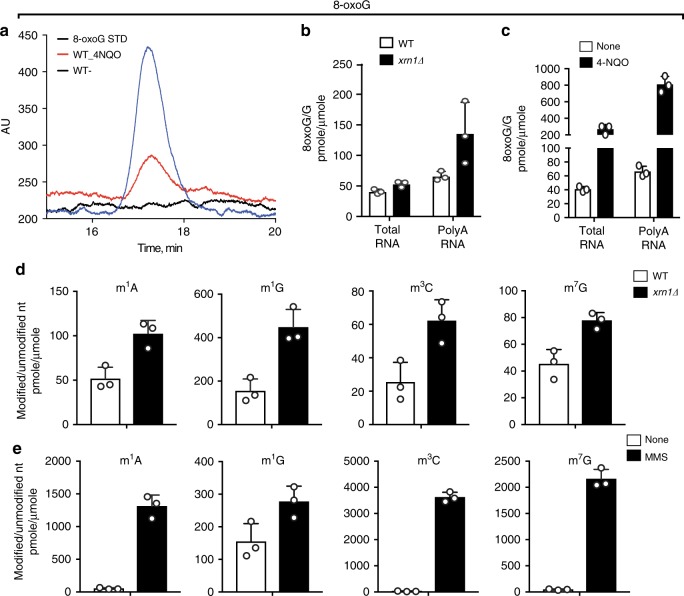
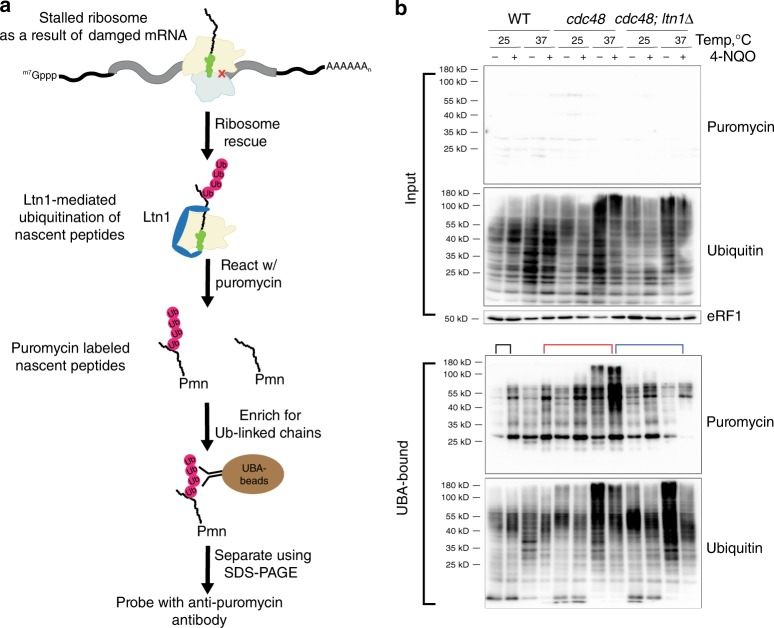
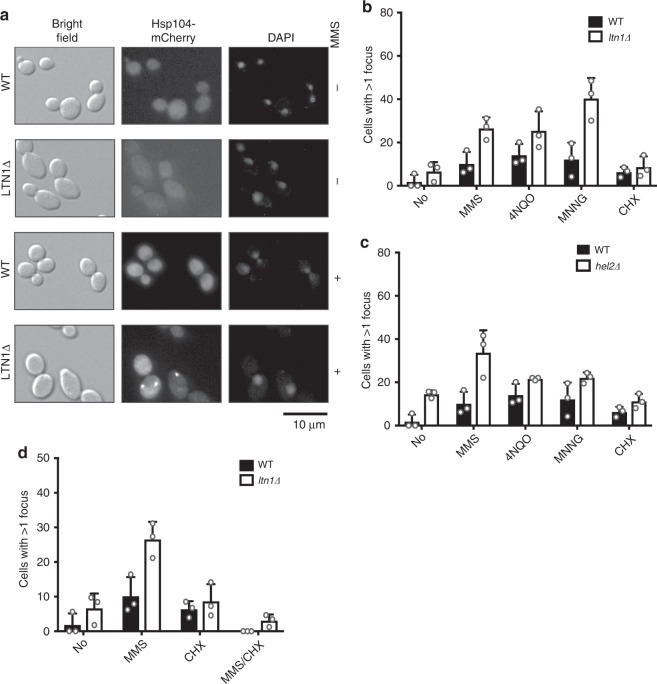
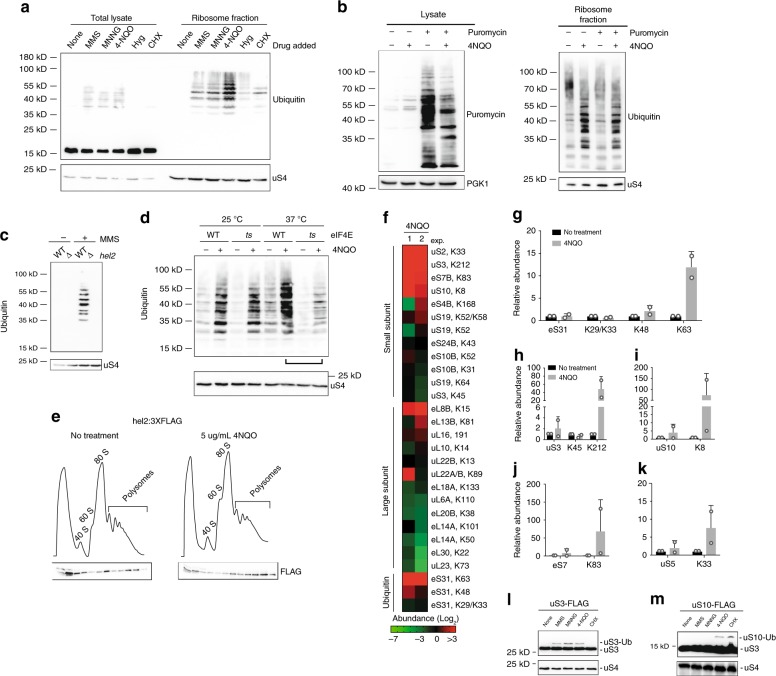
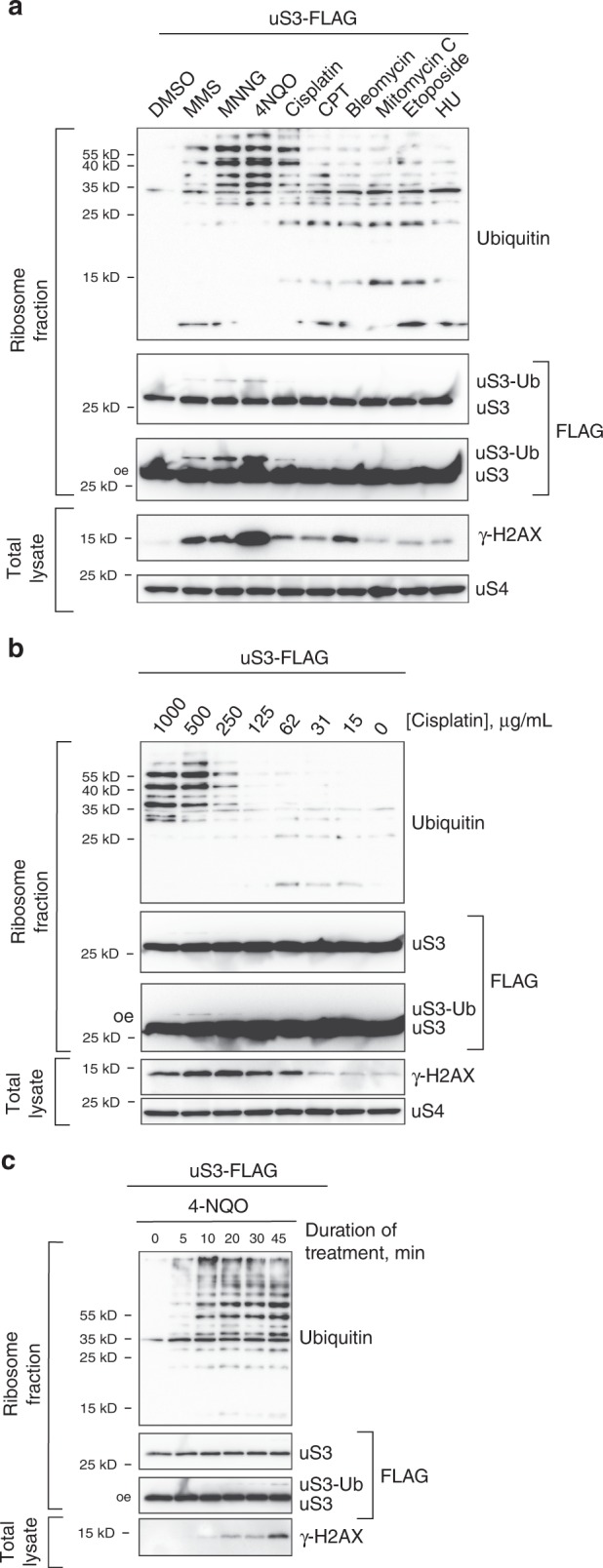
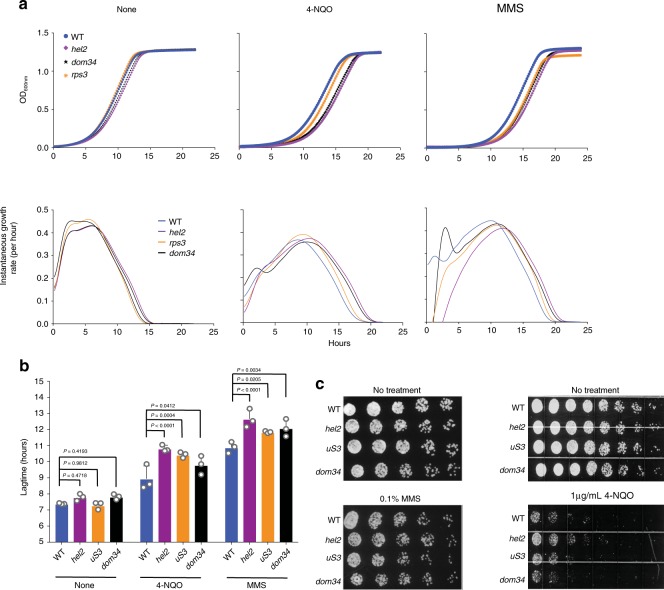
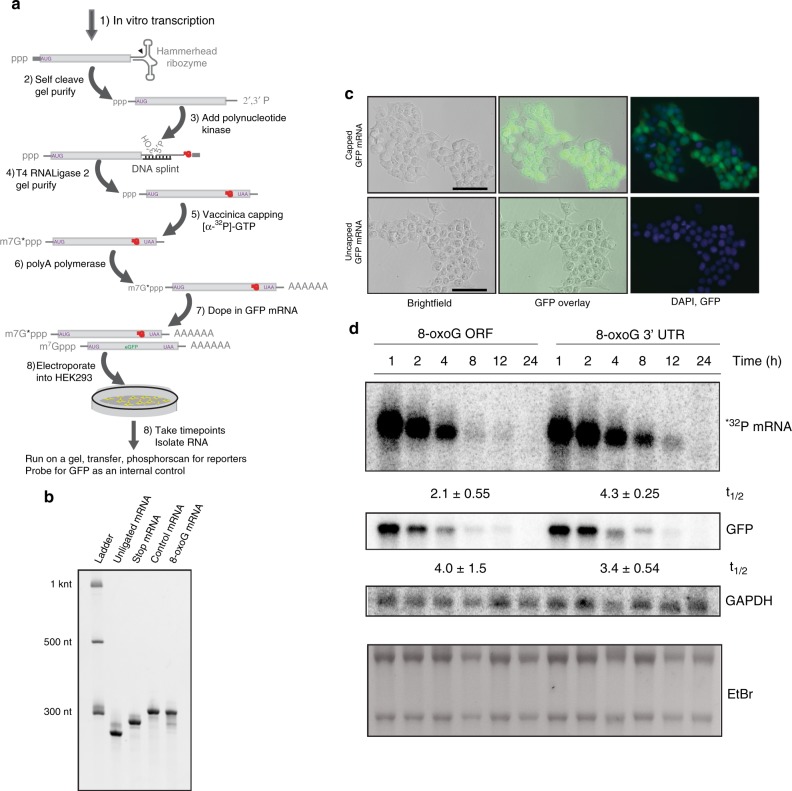
Oxidation and alkylation of nucleobases are known to disrupt their base-pairing properties within RNA. It is, however, unclear whether organisms have evolved general mechanism(s) to deal with this damage. Here we show that the mRNA-surveillance pathway of no-go decay and the associated ribosome-quality control are activated in response to nucleobase alkylation and oxidation. Our findings reveal that these processes are important for clearing chemically modified mRNA and the resulting aberrant-protein products. In the absence of Xrn1, the level of damaged mRNA significantly increases. Furthermore, deletion of LTN1 results in the accumulation of protein aggregates in the presence of oxidizing and alkylating agents. This accumulation is accompanied by Hel2-dependent regulatory ubiquitylation of ribosomal proteins. Collectively, our data highlight the burden of chemically damaged mRNA on cellular homeostasis and suggest that organisms evolved mechanisms to counter their accumulation.
Overview
The claims and statistics of this paper haven’t been checked yet.
Free: it reads the open-access text and checks the first 5 claims that cite a source we can check. Create a free account to check every claim.
Integrity signals
Registry
Cites
Statistics
Figures
Verification
Claims the paper makes
The claims and statistics of this paper haven’t been checked yet.
Free: it reads the open-access text and checks the first 5 claims that cite a source we can check. Create a free account to check every claim.
Claims other papers make about this one
Each is checked against this paper’s own text: does it say what the citing paper says it does?
The source backs part of the claim, not all of it — or backs it for a different population, condition or comparison.
In the citing paper
“Alkylated mRNAs likely induce various RNA degradation pathways, particularly RQC”
From Aberrant RNA methylation triggers recruitment of an alkylation repair complex (2021) · cites this paper as Yan et al., 2019
Experimental — accuracy not yet measured
Self-check
Percentages, sums and reported differences re-computed from the paper’s own numbers.
The self-check needs the paper’s full text.
Citations
Cites
How mitochondria produce reactive oxygen species
Murphy, M. P. (2009) · Biochemical Journal · doi:10.1042/bj20081386 · Cited by 8,207
Eng, J. K., McCormack, A. L., & Yates, J. R. (1994) · Journal of the American Society for Mass Spectrometry · doi:10.1016/1044-0305(94)80016-2 · Cited by 6,484
Oxidative Stress, Caloric Restriction, and Aging
Sohal, R. S., & Weindruch, R. (1996) · Science · doi:10.1126/science.273.5271.59 · Cited by 3,131
MODOMICS: a database of RNA modification pathways. 2017 update
Boccaletto, P., Machnicka, M. A., Purta, E., Piątkowski, P., Bagiński, B., Wirecki, T. K., de Crécy-Lagard, V., Ross, R., Limbach, P. A., Kotter, A., et al. (2018) · Nucleic Acids Research · doi:10.1093/nar/gkx1030 · Cited by 1,782
Systematic and Quantitative Assessment of the Ubiquitin-Modified Proteome
Kim, W., Bennett, E. J., Huttlin, E. L., Guo, A., Li, J., Possemato, A., Sowa, M. E., Rad, R., Rush, J., Comb, M. J., et al. (2011) · Molecular Cell · doi:10.1016/j.molcel.2011.08.025 · Cited by 1,613
Absolute Quantification of Proteins by LCMSE
Silva, J. C., Gorenstein, M. V., Li, G.-Z., Vissers, J. P. C., & Geromanos, S. J. (2006) · Molecular & Cellular Proteomics · doi:10.1074/mcp.m500230-mcp200 · Cited by 1,529
Watts, G. D. J., Wymer, J., Kovach, M. J., Mehta, S. G., Mumm, S., Darvish, D., Pestronk, A., Whyte, M. P., & Kimonis, V. E. (2004) · Nature Genetics · doi:10.1038/ng1332 · Cited by 1,391
Chemical and molecular mechanisms of antioxidants: experimental approaches and model systems
Lü, J., Lin, P. H., Yao, Q., & Chen, C. (2010) · Journal of Cellular and Molecular Medicine · doi:10.1111/j.1582-4934.2009.00897.x · Cited by 1,308
DNA Base Damage by Reactive Oxygen Species, Oxidizing Agents, and UV Radiation
Cadet, J., & Wagner, J. R. (2013) · Cold Spring Harbor Perspectives in Biology · doi:10.1101/cshperspect.a012559 · Cited by 903
Endonucleolytic cleavage of eukaryotic mRNAs with stalls in translation elongation
Doma, M. K., & Parker, R. (2006) · Nature · doi:10.1038/nature04530 · Cited by 760
RNA Oxidation Is a Prominent Feature of Vulnerable Neurons in Alzheimer’s Disease
Nunomura, A., Perry, G., Pappolla, M. A., Wade, R., Hirai, K., Chiba, S., & Smith, M. A. (1999) · The Journal of Neuroscience · doi:10.1523/jneurosci.19-06-01959.1999 · Cited by 722
Alkylation damage in DNA and RNA—repair mechanisms and medical significance
Drabløs, F., Feyzi, E., Aas, P. A., Vaagbø, C. B., Kavli, B., Bratlie, M. S., Peña-Diaz, J., Otterlei, M., Slupphaug, G., & Krokan, H. E. (2004) · DNA Repair · doi:10.1016/j.dnarep.2004.05.004 · Cited by 648
Brandman, O., Stewart-Ornstein, J., Wong, D., Larson, A., Williams, C. C., Li, G.-W., Zhou, S., King, D., Shen, P. S., Weibezahn, J., et al. (2012) · Cell · doi:10.1016/j.cell.2012.10.044 · Cited by 646
Human and bacterial oxidative demethylases repair alkylation damage in both RNA and DNA
Aas, P. A., Otterlei, M., Falnes, P. Ø., Vågbø, C. B., Skorpen, F., Akbari, M., Sundheim, O., Bjørås, M., Slupphaug, G., Seeberg, E., et al. (2003) · Nature · doi:10.1038/nature01363 · Cited by 638
Löbrich, M., Shibata, A., Beucher, A., Fisher, A., Ensminger, M., Goodarzi, A. A., Barton, O., & Jeggo, P. A. (2010) · Cell Cycle · doi:10.4161/cc.9.4.10764 · Cited by 626
Mechanisms of formation, genotoxicity, and mutation of guanine oxidation products
Neeley, W. L., & Essigmann, J. M. (2006) · Chemical Research in Toxicology · doi:10.1021/tx0600043 · Cited by 510
Valosin-containing protein (VCP) is required for autophagy and is disrupted in VCP disease
Ju, J.-S., Fuentealba, R. A., Miller, S. E., Jackson, E., Piwnica-Worms, D., Baloh, R. H., & Weihl, C. C. (2009) · Journal of Cell Biology · doi:10.1083/jcb.200908115 · Cited by 494
Role of a ribosome-associated E3 ubiquitin ligase in protein quality control
Bengtson, M. H., & Joazeiro, C. A. P. (2010) · Nature · doi:10.1038/nature09371 · Cited by 474
ZNF598 Is a Quality Control Sensor of Collided Ribosomes
Juszkiewicz, S., Chandrasekaran, V., Lin, Z., Kraatz, S., Ramakrishnan, V., & Hegde, R. S. (2018) · Molecular Cell · doi:10.1016/j.molcel.2018.08.037 · Cited by 424
An, J., Yang, J., Wang, Y., Wang, Y., Xu, B., Xie, G., Chai, S., Liu, X., Xu, S., Wen, X., et al. (2019) · Frontiers in Genetics · doi:10.3389/fgene.2019.00001 · Cited by 424
Rydberg, B., & Lindahl, T. (1982) · The EMBO Journal · doi:10.1002/j.1460-2075.1982.tb01149.x · Cited by 409
Repairing DNA-methylation damage
Sedgwick, B. (2004) · Nature Reviews Molecular Cell Biology · doi:10.1038/nrm1312 · Cited by 388
Sundaramoorthy, E., Leonard, M., Mak, R., Liao, J., Fulzele, A., & Bennett, E. J. (2017) · Molecular Cell · doi:10.1016/j.molcel.2016.12.026 · Cited by 372
Lebon, V., Petersen, K. F., Cline, G. W., Shen, J., Mason, G. F., Dufour, S., Behar, K. L., Shulman, G. I., & Rothman, D. L. (2002) · The Journal of Neuroscience · doi:10.1523/jneurosci.22-05-01523.2002 · Cited by 371
Principles of Ubiquitin-Dependent Signaling
Oh, E., Akopian, D., & Rape, M. (2018) · Annual Review of Cell and Developmental Biology · doi:10.1146/annurev-cellbio-100617-062802 · Cited by 339
Juszkiewicz, S., & Hegde, R. S. (2017) · Molecular Cell · doi:10.1016/j.molcel.2016.11.039 · Cited by 337
Dom34:Hbs1 Promotes Subunit Dissociation and Peptidyl-tRNA Drop-Off to Initiate No-Go Decay
Shoemaker, C. J., Eyler, D. E., & Green, R. (2010) · Science · doi:10.1126/science.1192430 · Cited by 333
Ribosome Collision Is Critical for Quality Control during No-Go Decay
Simms, C. L., Yan, L. L., & Zaher, H. S. (2017) · Molecular Cell · doi:10.1016/j.molcel.2017.08.019 · Cited by 319
Self-citationUbiquitination of stalled ribosome triggers ribosome-associated quality control
Matsuo, Y., Ikeuchi, K., Saeki, Y., Iwasaki, S., Schmidt, C., Udagawa, T., Sato, F., Tsuchiya, H., Becker, T., Tanaka, K., et al. (2017) · Nature Communications · doi:10.1038/s41467-017-00188-1 · Cited by 317
Collided ribosomes form a unique structural interface to induce Hel2-driven quality control pathways
Ikeuchi, K., Tesina, P., Matsuo, Y., Sugiyama, T., Cheng, J., Saeki, Y., Tanaka, K., Becker, T., Beckmann, R., & Inada, T. (2019) · The EMBO Journal · doi:10.15252/embj.2018100276 · Cited by 315
Schuberth, C., & Buchberger, A. (2005) · Nature Cell Biology · doi:10.1038/ncb1299 · Cited by 314
Ubx2 links the Cdc48 complex to ER-associated protein degradation
Neuber, O., Jarosch, E., Volkwein, C., Walter, J., & Sommer, T. (2005) · Nature Cell Biology · doi:10.1038/ncb1298 · Cited by 300
Itoh, Y., Esaki, T., Shimoji, K., Cook, M., Law, M. J., Kaufman, E., & Sokoloff, L. (2003) · Proceedings of the National Academy of Sciences · doi:10.1073/pnas.0831078100 · Cited by 297
Pisareva, V. P., Skabkin, M. A., Hellen, C. U. T., Pestova, T. V., & Pisarev, A. V. (2011) · The EMBO Journal · doi:10.1038/emboj.2011.93 · Cited by 296
Quantitative analysis of ribonucleoside modifications in tRNA by HPLC-coupled mass spectrometry
Su, D., Chan, C. T. Y., Gu, C., Lim, K. S., Chionh, Y. H., McBee, M. E., Russell, B. S., Babu, I. R., Begley, T. J., & Dedon, P. C. (2014) · Nature Protocols · doi:10.1038/nprot.2014.047 · Cited by 292
Park, E. M., Shigenaga, M. K., Degan, P., Korn, T. S., Kitzler, J. W., Wehr, C. M., Kolachana, P., & Ames, B. N. (1992) · Proceedings of the National Academy of Sciences · doi:10.1073/pnas.89.8.3375 · Cited by 288
Hoffman, D. R., Marion, D. W., Cornatzer, W. E., & Duerre, J. A. (1980) · Journal of Biological Chemistry · doi:10.1016/s0021-9258(19)70381-0 · Cited by 287
Some chemical aspects of dose-response relationships in alkylation mutagenesis
Lawley, P. D. (1974) · Mutation Research · doi:10.1016/0027-5107(74)90102-x · Cited by 284
RNA under attack: Cellular handling of RNA damage
Wurtmann, E. J., & Wolin, S. L. (2009) · Critical Reviews in Biochemistry and Molecular Biology · doi:10.1080/10409230802594043 · Cited by 279
Tsuboi, T., Kuroha, K., Kudo, K., Makino, S., Inoue, E., Kashima, I., & Inada, T. (2012) · Molecular Cell · doi:10.1016/j.molcel.2012.03.013 · Cited by 273
Shoemaker, C. J., & Green, R. (2011) · Proceedings of the National Academy of Sciences · doi:10.1073/pnas.1113956108 · Cited by 271
Defenouillère, Q., Yao, Y., Mouaikel, J., Namane, A., Galopier, A., Decourty, L., Doyen, A., Malabat, C., Saveanu, C., Jacquier, A., et al. (2013) · Proceedings of the National Academy of Sciences · doi:10.1073/pnas.1221724110 · Cited by 248
Cdc48/p97 promotes degradation of aberrant nascent polypeptides bound to the ribosome
Verma, R., Oania, R. S., Kolawa, N. J., & Deshaies, R. J. (2013) · eLife · doi:10.7554/elife.00308 · Cited by 238
Methylation-induced blocks to in vitro DNA replication
Larson, K., Sahm, J., Shenkar, R., & Strauss, B. (1985) · Mutation Research · doi:10.1016/0027-5107(85)90103-4 · Cited by 223
Hydrogen peroxide causes greater oxidation in cellular RNA than in DNA
Hofer, T., Badouard, C., Bajak, E., Ravanat, J.-L., Mattsson, Å., & Cotgreave, I. A. (2005) · Biological Chemistry · doi:10.1515/bc.2005.040 · Cited by 215
An Active Role for the Ribosome in Determining the Fate of Oxidized mRNA
Simms, C. L., Hudson, B. H., Mosior, J. W., Rangwala, A. S., & Zaher, H. S. (2014) · Cell Reports · doi:10.1016/j.celrep.2014.10.042 · Cited by 213
Self-citationThe endonuclease Cue2 cleaves mRNAs at stalled ribosomes during No Go Decay
D'Orazio, K. N., Wu, C. C.-C., Sinha, N., Loll-Krippleber, R., Brown, G. W., & Green, R. (2019) · eLife · doi:10.7554/elife.49117 · Cited by 207
Listerin-Dependent Nascent Protein Ubiquitination Relies on Ribosome Subunit Dissociation
Shao, S., von der Malsburg, K., & Hegde, R. S. (2013) · Molecular Cell · doi:10.1016/j.molcel.2013.04.015 · Cited by 201
Cytosolic Protein Vms1 Links Ribosome Quality Control to Mitochondrial and Cellular Homeostasis
Izawa, T., Park, S.-H., Zhao, L., Hartl, F. U., & Neupert, W. (2017) · Cell · doi:10.1016/j.cell.2017.10.002 · Cited by 198
Bartha, I., Carlson, J. M., Brumme, C. J., McLaren, P. J., Brumme, Z. L., John, M., Haas, D. W., Martinez-Picado, J., Dalmau, J., López-Galíndez, C., et al. (2013) · eLife · doi:10.7554/elife.01123 · Cited by 196
How do cells cope with RNA damage and its consequences?
Yan, L. L., & Zaher, H. S. (2019) · Journal of Biological Chemistry · doi:10.1074/jbc.rev119.006513 · Cited by 181
Self-citationReceptor for activated C kinase 1 stimulates nascent polypeptide‐dependent translation arrest
Kuroha, K., Akamatsu, M., Dimitrova, L., Ito, T., Kato, Y., Shirahige, K., & Inada, T. (2010) · EMBO reports · doi:10.1038/embor.2010.169 · Cited by 177
A universal method to produce in vitro transcripts with homogeneous 3' ends
Schurer, H. (2002) · Nucleic Acids Research · doi:10.1093/nar/gnf055 · Cited by 170
Analysis of Dom34 and Its Function in No-Go Decay
Passos, D. O., Doma, M. K., Shoemaker, C. J., Muhlrad, D., Green, R., Weissman, J. S., Hollien, J., & Parker, R. (2009) · Molecular Biology of the Cell · doi:10.1091/mbc.e09-01-0028 · Cited by 165
Lifespan Control by Redox-Dependent Recruitment of Chaperones to Misfolded Proteins
Hanzén, S., Vielfort, K., Yang, J., Roger, F., Andersson, V., Zamarbide-Forés, S., Andersson, R., Malm, L., Palais, G., Biteau, B., et al. (2016) · Cell · doi:10.1016/j.cell.2016.05.006 · Cited by 164
Vms1 and ANKZF1 peptidyl-tRNA hydrolases release nascent chains from stalled ribosomes
Verma, R., Reichermeier, K. M., Burroughs, A. M., Oania, R. S., Reitsma, J. M., Aravind, L., & Deshaies, R. J. (2018) · Nature · doi:10.1038/s41586-018-0022-5 · Cited by 155
Higgins, R., Gendron, J. M., Rising, L., Mak, R., Webb, K., Kaiser, S. E., Zuzow, N., Riviere, P., Yang, B., Fenech, E., et al. (2015) · Molecular Cell · doi:10.1016/j.molcel.2015.04.026 · Cited by 149
Shen, Z., Wu, W., & Hazen, S. L. (2000) · Biochemistry · doi:10.1021/bi992809y · Cited by 149
Koelewijn, L., Lancaster, T. M., Linden, D., Dima, D. C., Routley, B. C., Magazzini, L., Barawi, K., Brindley, L., Adams, R., Tansey, K. E., et al. (2019) · eLife · doi:10.7554/elife.36011 · Cited by 149
Structure of the Dom34–Hbs1 complex and implications for no-go decay
Chen, L., Muhlrad, D., Hauryliuk, V., Cheng, Z., Lim, M. K., Shyp, V., Parker, R., & Song, H. (2010) · Nature Structural & Molecular Biology · doi:10.1038/nsmb.1922 · Cited by 144
Arima, Y., Nishigori, C., Takeuchi, T., Oka, S., Morimoto, K., Utani, A., & Miyachi, Y. (2006) · Toxicological Sciences · doi:10.1093/toxsci/kfj161 · Cited by 139
Swisher, K. D., & Parker, R. (2010) · PLoS ONE · doi:10.1371/journal.pone.0010006 · Cited by 135
Asc1, Hel2, and Slh1 couple translation arrest to nascent chain degradation
Sitron, C. S., Park, J. H., & Brandman, O. (2017) · RNA · doi:10.1261/rna.060897.117 · Cited by 133
Quantification of oxidized RNAs in Alzheimer's disease
Shan, X., & Lin, C.-L. G. (2006) · Neurobiology of Aging · doi:10.1016/j.neurobiolaging.2005.03.022 · Cited by 125
Berner, N., Reutter, K.-R., & Wolf, D. H. (2018) · Annual Review of Biochemistry · doi:10.1146/annurev-biochem-062917-012749 · Cited by 124
Kuroha, K., Zinoviev, A., Hellen, C. U. T., & Pestova, T. V. (2018) · Molecular Cell · doi:10.1016/j.molcel.2018.08.022 · Cited by 117
A role for ubiquitin in the clearance of nonfunctional rRNAs
Fujii, K., Kitabatake, M., Sakata, T., Miyata, A., & Ohno, M. (2009) · Genes & Development · doi:10.1101/gad.1775609 · Cited by 116
Letzring, D. P., Wolf, A. S., Brule, C. E., & Grayhack, E. J. (2013) · RNA · doi:10.1261/rna.039446.113 · Cited by 115
Common Chemical Inductors of Replication Stress: Focus on Cell‐Based Studies
Vesela, E., Chroma, K., Turi, Z., & Mistrik, M. (2017) · Biomolecules · doi:10.3390/biom7010019 · Cited by 115
Quality control of chemically damaged RNA
Simms, C. L., & Zaher, H. S. (2016) · Cellular and Molecular Life Sciences · doi:10.1007/s00018-016-2261-7 · Cited by 111
Self-citationThe Hbs1-Dom34 Protein Complex Functions in Non-stop mRNA Decay in Mammalian Cells
Saito, S., Hosoda, N., & Hoshino, S.-I. (2013) · Journal of Biological Chemistry · doi:10.1074/jbc.m112.448977 · Cited by 106
Melnikov, S. V., Söll, D. G., Steitz, T. A., & Polikanov, Y. S. (2016) · Nucleic Acids Research · doi:10.1093/nar/gkw246 · Cited by 106
Vms1p is a release factor for the ribosome-associated quality control complex
Zurita Rendón, O., Fredrickson, E. K., Howard, C. J., Van Vranken, J., Fogarty, S., Tolley, N. D., Kalia, R., Osuna, B. A., Shen, P. S., Hill, C. P., et al. (2018) · Nature Communications · doi:10.1038/s41467-018-04564-3 · Cited by 102
Recent Progress on the Molecular Mechanism of Quality Controls Induced by Ribosome Stalling
Ikeuchi, K., Izawa, T., & Inada, T. (2019) · Frontiers in Genetics · doi:10.3389/fgene.2018.00743 · Cited by 95
Sugiyama, T., Li, S., Kato, M., Ikeuchi, K., Ichimura, A., Matsuo, Y., & Inada, T. (2019) · Cell Reports · doi:10.1016/j.celrep.2019.02.067 · Cited by 95
Translation of poly(A) tails leads to precise mRNA cleavage
Guydosh, N. R., & Green, R. (2017) · RNA · doi:10.1261/rna.060418.116 · Cited by 91
Kohda, K., Tada, M., Kasai, H., Nishimura, S., & Kawazoe, Y. (1986) · Biochemical and Biophysical Research Communications · doi:10.1016/s0006-291x(86)80036-5 · Cited by 90
Oxidative RNA Damage and Neurodegeneration
Nunomura, A., Moreira, P., Takeda, A., Smith, M., & Perry, G. (2007) · Current Medicinal Chemistry · doi:10.2174/092986707782794078 · Cited by 90
Cadmium Causes Misfolding and Aggregation of Cytosolic Proteins in Yeast
Jacobson, T., Priya, S., Sharma, S. K., Andersson, S., Jakobsson, S., Tanghe, R., Ashouri, A., Rauch, S., Goloubinoff, P., Christen, P., et al. (2017) · Molecular and Cellular Biology · doi:10.1128/mcb.00490-16 · Cited by 89
Mechanism for recycling tRNAs on stalled ribosomes
Yip, M. C. J., Keszei, A. F. A., Feng, Q., Chu, V., McKenna, M. J., & Shao, S. (2019) · Nature Structural & Molecular Biology · doi:10.1038/s41594-019-0211-4 · Cited by 83
Bellacosa, A., & Moss, E. G. (2003) · Current Biology · doi:10.1016/s0960-9822(03)00408-1 · Cited by 82
Saito, K., Horikawa, W., & Ito, K. (2015) · PLOS Genetics · doi:10.1371/journal.pgen.1005197 · Cited by 74
Prions, Chaperones, and Proteostasis in Yeast
Chernova, T. A., Wilkinson, K. D., & Chernoff, Y. O. (2016) · Cold Spring Harbor Perspectives in Biology · doi:10.1101/cshperspect.a023663 · Cited by 73
Toussaint, M., & Conconi, A. (2006) · Nature Protocols · doi:10.1038/nprot.2006.304 · Cited by 71
Nonsense mRNA suppression via nonstop decay
Arribere, J. A., & Fire, A. Z. (2018) · eLife · doi:10.7554/elife.33292 · Cited by 66
You, C., Dai, X., & Wang, Y. (2017) · Nucleic Acids Research · doi:10.1093/nar/gkx515 · Cited by 56
Eyler, D. E., Wehner, K. A., & Green, R. (2013) · Journal of Biological Chemistry · doi:10.1074/jbc.m113.487090 · Cited by 51
O6-Methylguanosine leads to position-dependent effects on ribosome speed and fidelity
Hudson, B. H., & Zaher, H. S. (2015) · RNA · doi:10.1261/rna.052464.115 · Cited by 51
Self-citationO’Neil, J. D., Ross, E. A., Ridley, M. L., Ding, Q., Tang, T., Rosner, D. R., Crowley, T., Malhi, D., Dean, J. L. E., Smallie, T., et al. (2017) · Molecular and Cellular Biology · doi:10.1128/mcb.00536-16 · Cited by 50
T7 RNA Polymerase Mediates Fast Promoter-Independent Extension of Unstable Nucleic Acid Complexes
Zaher, H. S., & Unrau, P. J. (2004) · Biochemistry · doi:10.1021/bi0497300 · Cited by 43
Self-citationSimms, C. L., Kim, K. Q., Yan, L. L., Qiu, J., & Zaher, H. S. (2018) · PLOS Genetics · doi:10.1371/journal.pgen.1007818 · Cited by 33
Self-citationVågbø, C. B., Svaasand, E. K., Aas, P. A., & Krokan, H. E. (2013) · DNA Repair · doi:10.1016/j.dnarep.2012.11.010 · Cited by 31
Ford, A. E., Denicourt, C., & Morano, K. A. (2019) · Molecular Biology of the Cell · doi:10.1091/mbc.e18-10-0616 · Cited by 15
The endonuclease Cue2 cleaves mRNAs at stalled ribosomes during No Go DecayPreprint
D’Orazio, K. N., Wu, C. C., Sinha, N. K., et al. (2019) · bioRxiv (Cold Spring Harbor Laboratory) · doi:10.1101/671099 · Cited by 14
Crt10 directs the cullin-E3 ligase Rtt101 to nonfunctional 25S rRNA decay
Sakata, T., Fujii, K., Ohno, M., & Kitabatake, M. (2014) · Biochemical and Biophysical Research Communications · doi:10.1016/j.bbrc.2014.12.072 · Cited by 13
How DNA Polymerase X Preferentially Accommodates Incoming dATP Opposite 8-Oxoguanine on the Template
Benitez, B. A. S., Barbati, Z. R., Arora, K., Bogdanovic, J., & Schlick, T. (2013) · Biophysical Journal · doi:10.1016/j.bpj.2013.10.014 · Cited by 13
Mass spectrometry analysis of K63-ubiquitinated targets in response to oxidative stress
Silva, G. M., & Vogel, C. (2015) · Data in Brief · doi:10.1016/j.dib.2015.05.002 · Cited by 10
Cited by
The emerging role of RNA modifications in the regulation of mRNA stability
Boo, S. H., & Kim, Y. K. (2020) · Experimental & Molecular Medicine · doi:10.1038/s12276-020-0407-z · Cited by 581
Ribosome Collisions Trigger General Stress Responses to Regulate Cell Fate
Wu, C. C.-C., Peterson, A., Zinshteyn, B., Regot, S., & Green, R. (2020) · Cell · doi:10.1016/j.cell.2020.06.006 · Cited by 539
“More generally, these data provide a clear example of how other physiological stress such as oxidative and alkylation stresses (Yan and Zaher, 2019; Yan et al., 2019) might be sensed through the action of the ribosome, triggering rapid cellular responses that dictate cell fate decisions.”
8-Oxoguanine: from oxidative damage to epigenetic and epitranscriptional modification
Hahm, J. Y., Park, J., Jang, E.-S., & Chi, S. W. (2022) · Experimental & Molecular Medicine · doi:10.1038/s12276-022-00822-z · Cited by 317
RNA-binding proteins in regulating mRNA stability and translation: roles and mechanisms in cancer
Li, W., Deng, X., & Chen, J. (2022) · Seminars in Cancer Biology · doi:10.1016/j.semcancer.2022.03.025 · Cited by 175
Yan, L. L., & Zaher, H. S. (2021) · Molecular Cell · doi:10.1016/j.molcel.2020.11.033 · Cited by 171
“We note that deletion of HEL2 completely inhibits MMS-mediated ribosomal-protein ubiquitination (Yan et al., 2019) and hence any changes to RNA-expression levels in this strain is likely to be the result of the absence of ribosome modification.”
BackgroundInfluentialSelf-citation
Metadata
- Authors
- Yan, L. L., Simms, C. L., McLoughlin, F., Vierstra, R. D., & Zaher, H. S.
- Affiliations
- Washington University in St. Louis (US)
- Corresponding author
- Zaher, Hani S.
- Venue
- Nature Communications
- Published
- 2019-12-09
- Volume
- 10
- Issue
- 1
- Pages
- 5611-5611
- ISSN
- 2041-1723 (ISSN-L)
- PMC
- PMC6901537
- OpenAlex
- W2993298108
- Cited by
- 123
- References
- 96
- Citations by year
- 2026: 16 · 2025: 19 · 2024: 31 · 2023: 21 · 2022: 9 · 2021: 14 · 2020: 12 · 2019: 1
- FWCI
- 2.98
- Type
- journal article
- Language
- en
- Open access
- gold
- doi.org
- Licence
- cc-by
- creativecommons.org/licenses/by/4.0 (tdm)
- creativecommons.org/licenses/by/4.0 (vor)
- Locations
- Nature Communications (publishedVersion, cc-by)
- PubMed Central (publishedVersion, cc-by)
- PubMed (publishedVersion)
- RePEc: Research Papers in Economics (submittedVersion)
- DOAJ (DOAJ: Directory of Open Access Journals) (submittedVersion)
- DOAJ (DOAJ: Directory of Open Access Journals) (submittedVersion, cc-by-sa)
- Funders
- U.S. Department of Health & Human Services | NIH | National Institute of General Medical Sciences (R01GM112641)
- Topics
- Life Sciences › Biochemistry, Genetics and Molecular Biology › Molecular Biology › RNA and protein synthesis mechanisms
- Life Sciences › Biochemistry, Genetics and Molecular Biology › Molecular Biology › RNA Research and Splicing
- Life Sciences › Biochemistry, Genetics and Molecular Biology › Cell Biology › Endoplasmic Reticulum Stress and Disease
- Keywords
- ribosome-associated quality control, no-go decay, mRNA surveillance, nucleobase oxidation, chemically modified mRNA, Xrn1, Ltn1, protein aggregates
- MeSH terms
- Alkylation, DNA Damage, Humans, Methyl Methanesulfonate, Mutation, Oxidation-Reduction, Peptides, Polyribosomes, Ribosomal Proteins, Ribosomes, RNA, Messenger, Saccharomyces cerevisiae, 4-Nitroquinoline-1-oxide, Quinolones, Oxidative Stress, DNA Adducts, RNA Stability, Ubiquitin, Saccharomyces cerevisiae Proteins, Ubiquitin-Protein Ligases, Ubiquitination, HEK293 Cells, Protein Aggregates
About these checks
Registry, retraction, Cites and statistics results are computed, not judged, with one exception: a printed reference that no index lists is read once by a model before it counts as a citation error. Claims are extracted by a model and kept only when their quote appears verbatim in the text; each cited source is then checked, with a model’s help, for whether it says what the claim relies on. Those verdicts can be wrong — read the claim’s quote and the cited source before relying on one.
Statistics and arithmetic are recomputed, not judged.
Confidence bands are shown only for fields calibrated on our annotated test set. None is calibrated yet, so no band is shown.
What counts as a claim ›How we measure confidence ›How we check this ›
Are you an author, or do you see a problem with this page? Request a review
Data sources
Bibliographic data: Semantic Scholar, OpenAlex, Crossref.
Contains information from the Semantic Scholar Academic Graph Datasets, made available under the ODC Attribution License (ODC-BY 1.0).
Semantic Scholar’s data is described in: Kinney, R., et al. (2023). The Semantic Scholar Open Data Platform. arXiv:2301.10140.
