

SUMOylation inhibitors synergize with FXR agonists in combating liver fibrosis
Open accessThe DOI matches its Crossref record; 64 of the 65 references it cites were found in a registry or an index, and 1 are not checked yet; 16 of the 61 sources its claims cite were checked for support.
Abstract
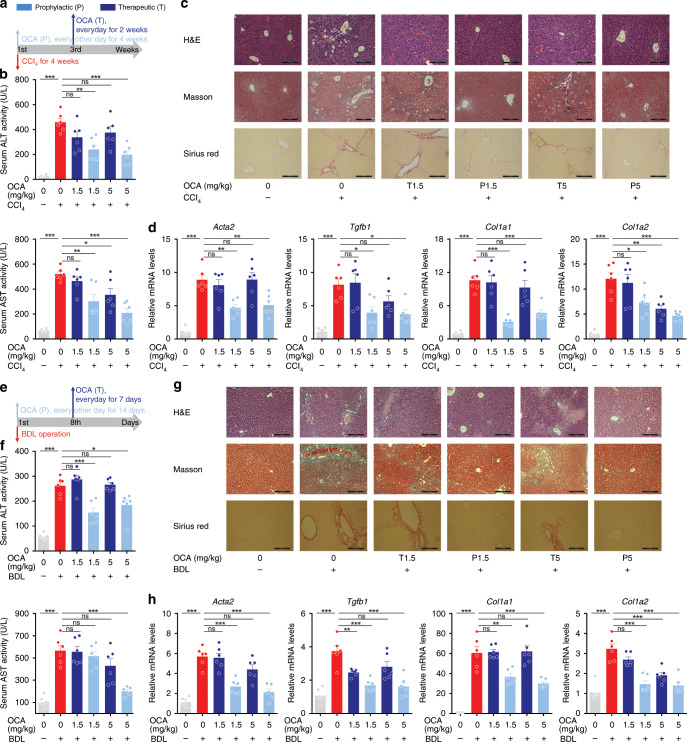
Farnesoid X receptor (FXR) is a promising target for nonalcoholic steatohepatitis (NASH) and fibrosis. Although various FXR agonists have shown anti-fibrotic effects in diverse preclinical animal models, the response rate and efficacies in clinical trials were not optimum. Here we report that prophylactic but not therapeutic administration of obeticholic acid (OCA) prevents hepatic stellate cell (HSC) activation and fibrogenesis. Activated HSCs show limited response to OCA and other FXR agonists due to enhanced FXR SUMOylation. SUMOylation inhibitors rescue FXR signaling and thereby increasing the efficacy of OCA against HSC activation and fibrosis. FXR upregulates Perilipin-1, a direct target gene of FXR, to stabilize lipid droplets and thereby prevent HSC activation. Therapeutic coadministration of OCA and SUMOylation inhibitors drastically impedes liver fibrosis induced by CCl 4, bile duct ligation, and more importantly NASH. In conclusion, we propose a promising therapeutic approach by combining SUMOylation inhibitors and FXR agonists for liver fibrosis.
Verified 2026-10-06 · 1 reference not checked yet
Overview
CoChat Summary
TL;DR
In mouse models of CCl₄-, bile duct ligation-, and NASH-induced liver fibrosis, prophylactic but not therapeutic obeticholic acid (OCA) prevents hepatic stellate cell (HSC) activation and fibrogenesis, while activated HSCs show enhanced FXR SUMOylation that limits FXR agonist response. Combining SUMOylation inhibitors with OCA restores FXR signaling, upregulates the direct FXR target Plin1, stabilizes lipid droplets, and reduces fibrosis.
Key findings
- In the phase III NASH trial cited, liver fibrosis improvement occurred in 18% of patients on 10 mg OCA and 23% on 25 mg OCA versus 12% on placebo; the paper uses this modest response rate to motivate combination therapy.
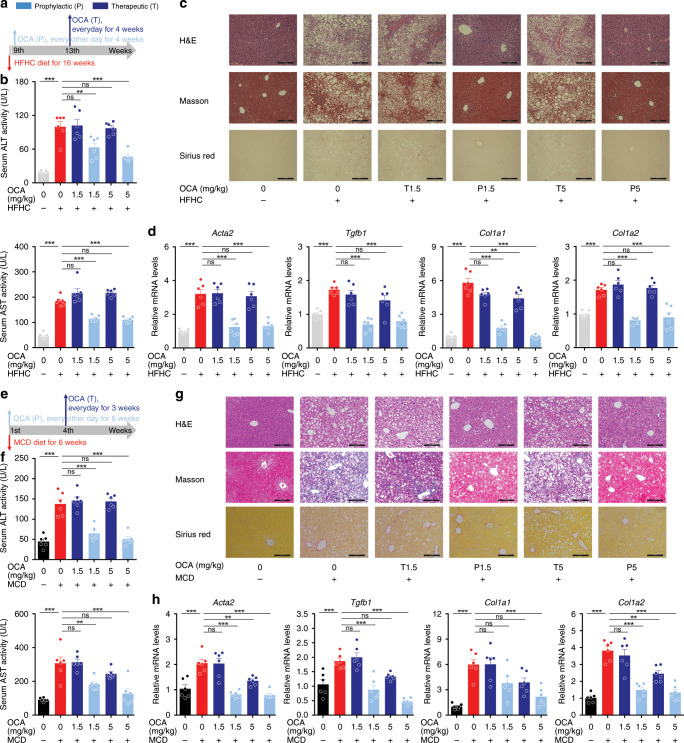
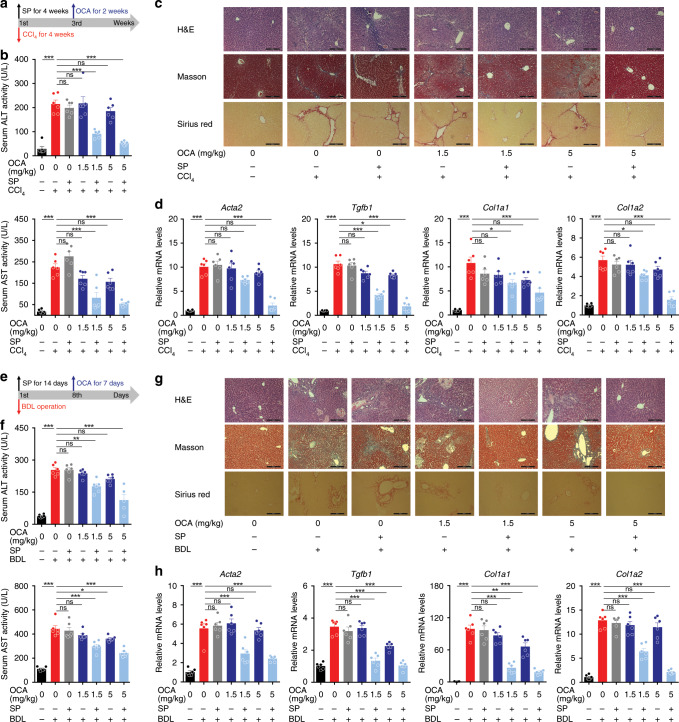
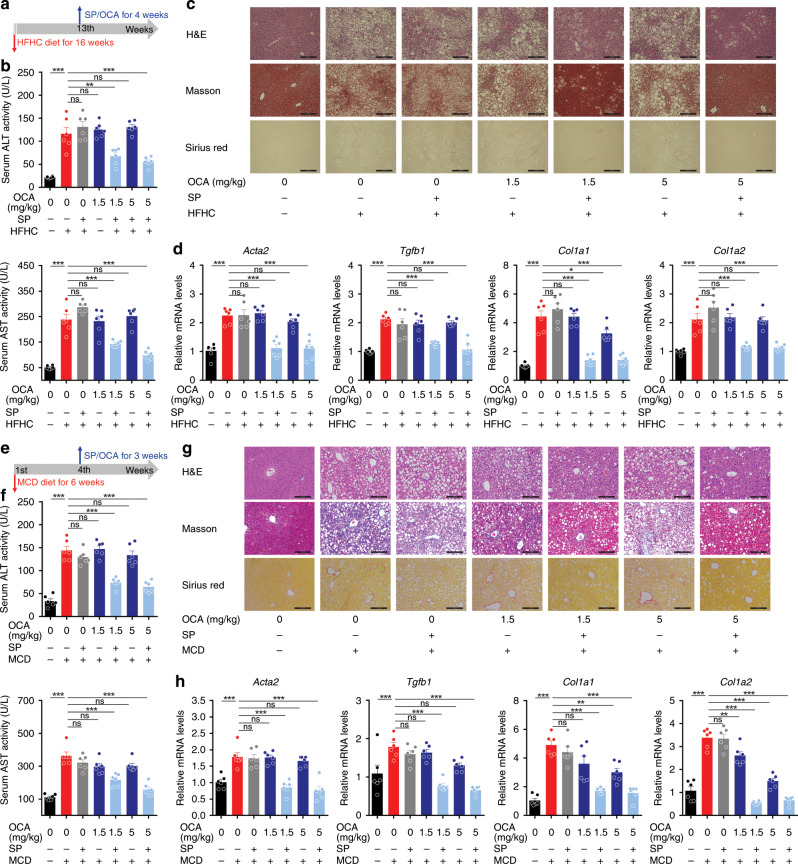
- Prophylactic OCA reduced serum ALT and fibrosis in CCl₄- and BDL-induced models, whereas therapeutic OCA showed marginal effects; similarly, prophylactic but not therapeutic OCA reduced ALT/AST and fibrosis in HFHC and MCD NASH models (n = 6 biological independent samples per experiment).
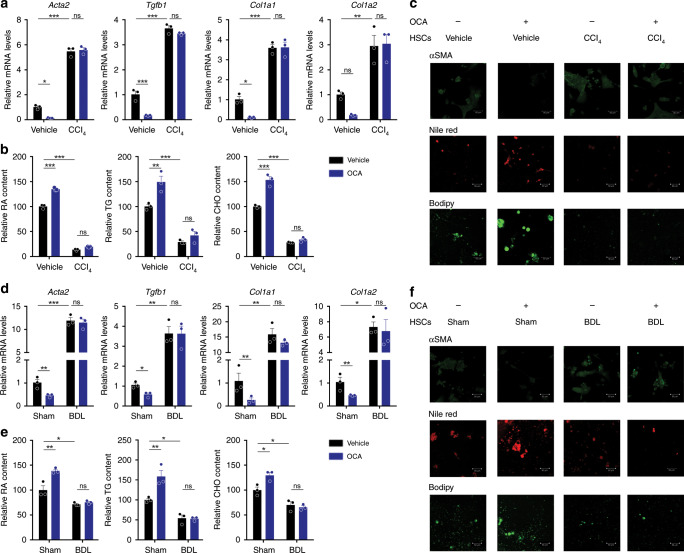
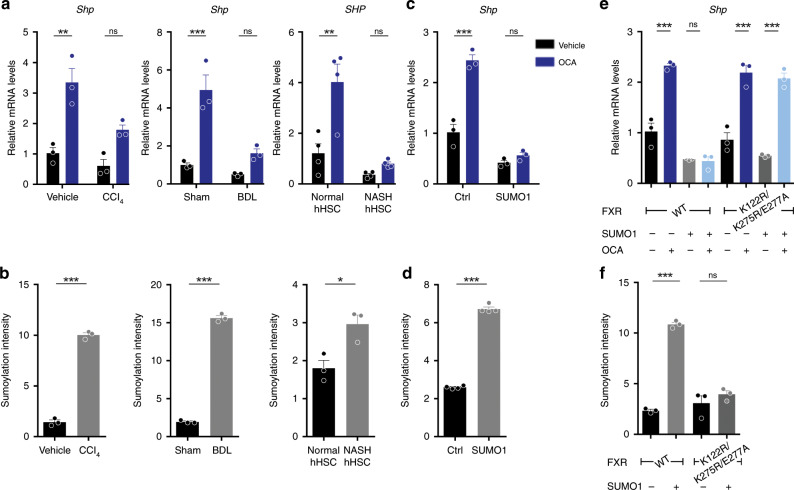
- OCA was effective in quiescent but not activated HSCs; activated HSCs from CCl₄-treated, BDL-operated, and NASH patients had elevated FXR SUMOylation, mainly via SUMO1 at Lys122, Lys275, and Glu277, and a triple SUMO-site mutant FXR was resistant to SUMOylation-caused loss of transcriptional activity.
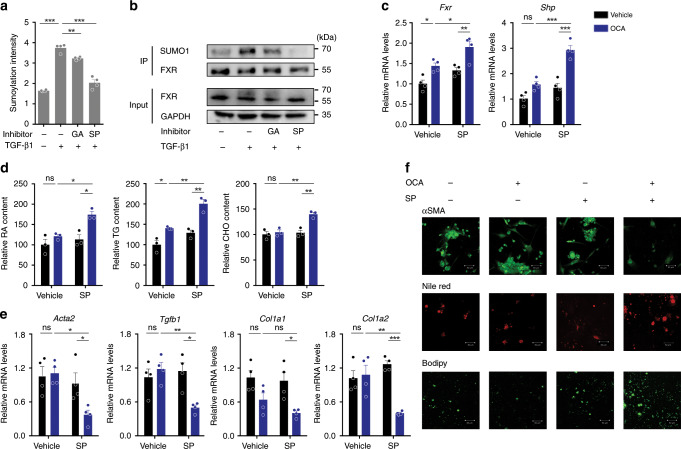
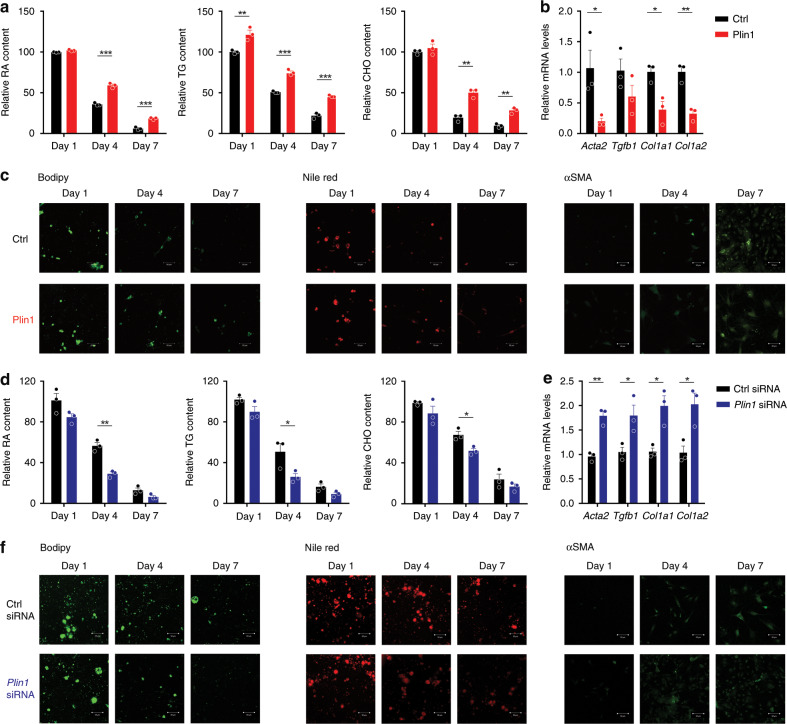
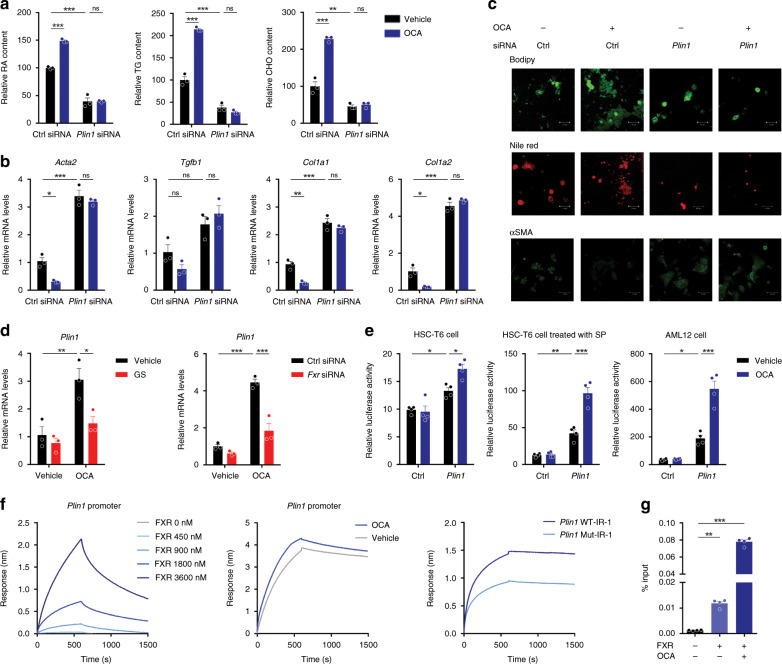
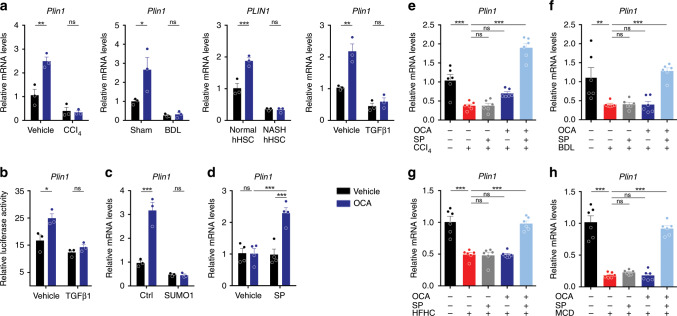
- SUMOylation inhibitors SP and GA inhibited FXR SUMOylation; SP restored OCA-induced Shp expression and anti-fibrotic effects in activated HSCs, and OCA plus SP reduced fibrosis in CCl₄, BDL, HFHC, and MCD models. Plin1 was identified as a direct FXR target gene; Plin1 overexpression increased lipid content and decreased pro-fibrotic genes, while Plin1 knockdown abolished OCA-mediated lipid storage and suppression of pro-fibrotic markers.
Methods
- Male C57BL/6J mice (8 weeks old, ~20 g) were used for CCl₄ (20% CCl₄/mineral oil, 5 ml/kg i.p., three times per week for 4 weeks), BDL, HFHC diet for 16 weeks, and MCD diet for 6 weeks. OCA was given at 1.5 or 5 mg/kg in prophylactic versus therapeutic arms; SP was injected subcutaneously at 200 mg/kg/day.
- Primary murine HSCs were isolated by pronase–collagenase perfusion and density gradient centrifugation; HSC-T6, AML12, and primary human HSCs from healthy donors or NASH patients were also used. Treatments included OCA, GW4064, or WAY-362450 at 5 μM, GA at 50 μM, and SP at 5 μM.
- Main analyses included serum ALT/AST, H&E/Masson/Sirius red histology, RT-PCR, western blot, Co-IP, in vivo SUMOylation assays, biolayer interferometry, luciferase reporter assays, ChIP, and cellular lipid staining/quantification. Statistics used mean ± SEM with two-tailed Student’s t-test or one-way ANOVA with Tukey post hoc analysis; P < 0.05 was significant.
Limitations
- The paper does not state limitations explicitly.
- Evident from the text: efficacy data are preclinical, using rodent fibrosis models and cultured HSCs, with no clinical trial of OCA plus a SUMOylation inhibitor; human HSCs were commercially obtained from healthy donors or NASH patients and used at passages 2–5.
- Evident from the text: in vivo synergy was demonstrated with SP plus OCA, whereas GA plus OCA was shown mainly in cell-based assays; animal experiments used male C57BL/6J mice only.
Model-written summary. Check it against the paper before relying on it.
Integrity signals
Registry
Cites
Statistics
Figures
Verification
Claims the paper makes
11 Valid · 1 Not valid · 26 Not checked · 53 Own results and interpretations
The sources with a verdict support this claim; the rest weren’t checked yet, have no full text we could read, or their verdicts aren’t rated yet.
In the paper
“Farnesoid X receptor (FXR) is a promising target for nonalcoholic steatohepatitis (NASH) and fibrosis.”
- Also stated in: § Introduction · plain
“FXR has been exploited as a promising target for the treatment of various liver diseases11, including liver fibrosis12.”
§ SUMOylation inhibitors synergize with FXR agonists in combating liver fibrosis > Abstract
What the sources say
- Not checked yetcites [11] Fuchs, C. D., Schwabl, P., Reiberger, T. & Trauner, M. Liver capsule: FXR agonists against liver disease. Hepatology 64, 1773 (2016). 27635933 PMC5091632 source
- Supportedcites [12] Ferrell, J. M., Pathak, P., Boehme, S., Gilliland, T. & Chiang, J. Y. L. Deficiency of both Farnesoid X receptor and Takeda G protein-coupled receptor 5 exacerbated liver fibrosis in mice. Hepatology 70, 955–970 (2019). 30664797 PMC6642864 source
The Introduction (page not provided) says that an FXR agonist has been used to treat NASH, which can lead to liver fibrosis. It also reports that loss of FXR together with TGR5 exacerbated fibrosis in mice. These passages support the broad description of FXR as a promising target, without establishing that FXR treatment reverses fibrosis in humans. (LLM, conf=0.88)
plain- Asserted: passes — The authors put it forward as true.
- Checkable: passes — It can be checked against evidence.
- Load-bearing: passes — The paper’s conclusions depend on it.
- Based: passes — The paper gives a reason why it holds.
- Also stated in: § Introduction · plain
The cited sources support only part of this claim — read each source’s verdict below.
In the paper
“Although various FXR agonists have shown anti-fibrotic effects in diverse preclinical animal models, the response rate and efficacies in clinical trials were not optimum.”
- Also stated in: § Prophylactic but not therapeutic OCA dosing impedes fibrosis · plain
“Previous studies on various animal models revealed that FXR agonists exert anti-fibrotic effects36–39, however, clinical trials revealed only modest efficacy in humans.”
§ SUMOylation inhibitors synergize with FXR agonists in combating liver fibrosis > Abstract
What the sources say
- Not checked yetcites [36] Fiorucci, S. et al. Cross-talk between farnesoid-X-receptor (FXR) and peroxisome proliferator-activated receptor gamma contributes to the antifibrotic activity of FXR ligands in rodent models of liver cirrhosis. J. Pharmacol. Exp. Ther. 315, 58–68 (2005). 15980055 source
- Partly supportedcites [37] Fiorucci, S. et al. The nuclear receptor SHP mediates inhibition of hepatic stellate cells by FXR and protects against liver fibrosis. Gastroenterology 127, 1497–1512 (2004). 15521018 sourceExperimental — accuracy not yet measured
Our copy supports FXR-agonist anti-fibrotic activity in preclinical animal models, but for a single agonist only: 6-ECDCA prevented fibrosis in the porcine-serum rat model and promoted its resolution in bile-duct-ligated rats (Background & Aims; Discussion, 'preventive administration of 6-ECDCA protects against liver fibrosis in a dose-dependent manner'; FXR Activation Protects Against Liver Fibrosis in BDL Rats). The 'various FXR agonists' part is not supported and is partly contrary: the paper states that in BDL rats CDCA (3 mg/kg) and UDCA (15 mg/kg) 'failed to protect against liver fibrosis development', and that higher hepatotoxic doses of the natural ligand would be needed. GW4064 appears only as a nonsteroidal FXR ligand that, like 6-ECDCA, protects the liver in a rodent model of cholestasis (credited to refs 25 and 40, i.e. another work) and as an in vitro HSC ligand — not as an in vivo anti-fibrotic agent here. So the breadth implied by 'various agonists' across 'diverse models' overstates what this source reports. (LLM, conf=0.72)
- Partly supportedcites [38] Verbeke, L. et al. FXR agonist obeticholic acid reduces hepatic inflammation and fibrosis in a rat model of toxic cirrhosis. Sci. Rep. 6, 33453 (2016). 27634375 PMC5025787 sourceExperimental — accuracy not yet measured
Our copy does document anti-fibrotic effects of FXR agonism across several preclinical models — the Abstract (Introduction) notes OCA 'has been suggested to reduce fibrosis in two experimental models of early-stage liver fibrosis either by 2 weeks bile-duct ligation or after 12 weeks of treatment with porcine serum', and the Discussion adds Úbeda et al.'s CCl4-induced fibrosis plus this paper's own thioacetamide cirrhotic rat model. However, the plural 'various FXR agonists' is not what the source supports: every positive finding it reports is for the single agonist obeticholic acid (OCA), and it explicitly frames the class result as contested — 'Until now, the antifibrotic potential of FXR agonists has proven highly controversial', contrasted by Fickert et al.'s unaltered fibrotic response in FXR-knock-out mice and by the authors' own failure to detect FXR effects in hepatic stellate cells. The sentence's companion clause about suboptimal clinical response rates/efficacy is likewise not in our copy, which instead points to 'beneficial effects on hepatic fibrosis in recent phase 3 clinical trials with OCA in patients suffering from PBC and NASH'. (LLM, conf=0.78)
- Partly supportedcites [39] Zhou, J. et al. Combined obeticholic acid and apoptosis inhibitor treatment alleviates liver fibrosis. Acta Pharm. Sin. B 9, 526–536 (2019). 31193776 PMC6542786 sourceExperimental — accuracy not yet measured
The Discussion (passage 1) states that 'various FXR agonists were tested for the treatment of fibrosis' and elsewhere reports anti-fibrotic effects of FXR agonism in animal models (Introduction: OCA 'could prevent the development of fibrosis and cirrhosis by inhibiting HSCs activation'; Discussion: OCA 'decelerate[d] thioacetamide-induced fibrogenesis', ref 34 in cirrhotic rats), so the substance of FXR-agonist anti-fibrotic activity in preclinical models is present. However, the same Discussion sentence immediately adds that 'the results and mechanisms from both the preclinical animal models and human clinical trials are somewhat controversial', so the source does not support the unqualified claim that various agonists 'have shown' effects across diverse models — the positive-preclinical/weak-clinical contrast is the citing authors' framing, and the supporting examples in our copy are essentially confined to obeticholic acid rather than multiple agonists. (LLM, conf=0.72)
plainstates a cause- Asserted: passes — The authors put it forward as true.
- Checkable: passes — It can be checked against evidence.
- Load-bearing: passes — The paper’s conclusions depend on it.
- Based: passes — The paper gives a reason why it holds.
- Also stated in: § Prophylactic but not therapeutic OCA dosing impedes fibrosis · plain
The cited sources support only part of this claim — read each source’s verdict below.
In the paper
“In addition, OCA was not effective in decreasing PBC-induced liver fibrosis21,22.”
§ SUMOylation inhibitors synergize with FXR agonists in combating liver fibrosis > Introduction
What the sources say
- Partly supportedcites [21] Nevens, F. et al. A placebo-controlled trial of obeticholic acid in primary biliary cholangitis. N. Engl. J. Med. 375, 631–643 (2016). 27532829 sourceExperimental — accuracy not yet measured
The Secondary End Points (p. 7) report no significant difference from placebo in noninvasive liver-fibrosis measures after 12 months of obeticholic acid treatment. This supports a narrower claim that the trial did not demonstrate a reduction in those measures, but does not establish that OCA is ineffective at reducing liver fibrosis. (LLM, conf=0.87)
- Partly supportedcites [22] Kowdley, K. V. et al. A randomized trial of obeticholic acid monotherapy in patients with primary biliary cholangitis. Hepatology 67, 1890–1902 (2018). 29023915 PMC5947631 sourceExperimental — accuracy not yet measured
The Results (Exploratory Endpoints; page not specified) report no difference between OCA and placebo in changes to the enhanced liver fibrosis score or its components after three months. That supports a lack of improvement in the measured fibrosis markers, but not the broader conclusion that OCA was ineffective at decreasing liver fibrosis itself. (LLM, conf=0.86)
plain- Asserted: passes — The authors put it forward as true.
- Checkable: passes — It can be checked against evidence.
- Load-bearing: passes — The paper’s conclusions depend on it.
- Based: passes — The paper gives a reason why it holds.
- Partly supported
The sources with a verdict support this claim; the rest weren’t checked yet, have no full text we could read, or their verdicts aren’t rated yet.
In the paper
“In phase III clinical trials, OCA, a potent FXR agonist, has reached one of the primary endpoints in NASH-associated fibrosis.”
§ SUMOylation inhibitors synergize with FXR agonists in combating liver fibrosis > Discussion
What the sources say
- Supportedcites [19] Younossi, Z. M. et al. Obeticholic acid for the treatment of non-alcoholic steatohepatitis: interim analysis from a multicentre, randomised, placebo-controlled phase 3 trial. Lancet 394, 2184–2196 (2019). 31813633 source
The Discussion (p. 18) states that OCA 25 mg met the fibrosis-improvement primary endpoint in patients with NASH and stage F2–F3 fibrosis at the month-18 interim analysis of the phase 3 REGENERATE trial. The other primary endpoint, NASH resolution, was not met; the claim says only that one endpoint was reached. (LLM, conf=0.93)
- Not checked yetcites [20] Eslam, M., Alvani, R. & Shiha, G. Obeticholic acid: towards first approval for NASH. Lancet 394, 2131–3133 (2019). 31813639 source
plain- Asserted: passes — The authors put it forward as true.
- Checkable: passes — It can be checked against evidence.
- Load-bearing: passes — The paper’s conclusions depend on it.
- Based: passes — The paper gives a reason why it holds.
- Supported
The cited sources support only part of this claim — read each source’s verdict below.
In the paper
“However, the response rate of OCA treatment to NASH-induced liver fibrosis is only 23%.”
§ SUMOylation inhibitors synergize with FXR agonists in combating liver fibrosis > Discussion
What the sources say
- Partly supportedcites [19] Younossi, Z. M. et al. Obeticholic acid for the treatment of non-alcoholic steatohepatitis: interim analysis from a multicentre, randomised, placebo-controlled phase 3 trial. Lancet 394, 2184–2196 (2019). 31813633 sourceExperimental — accuracy not yet measured
The Summary (p. 4) reports that 23% of patients receiving OCA 25 mg had at least one stage of fibrosis improvement at the month-18 interim analysis. The claim omits the dose, endpoint, and time point, presenting 23% as a general response rate for OCA treatment; the reported rate for OCA 10 mg was 18%. (LLM, conf=0.85)
- Not checked yetcites [20] Eslam, M., Alvani, R. & Shiha, G. Obeticholic acid: towards first approval for NASH. Lancet 394, 2131–3133 (2019). 31813639 source
plain- Asserted: passes — The authors put it forward as true.
- Checkable: passes — It can be checked against evidence.
- Load-bearing: passes — The paper’s conclusions depend on it.
- Based: passes — The paper gives a reason why it holds.
- Partly supported
48 more claims · 4 with their cited sources checked
Create a free account to see all 91 claims and to verify the 45 references still open.
- Probably not a substantial claim. 17
- It may state two separate claims as one. 23
- The quote only partly states this claim. 2
Claims other papers make about this one
Each is checked against this paper’s own text: does it say what the citing paper says it does?
The cited source says what the claim attributes to it.
In the citing paper
“While rodent models have demonstrated a striking reduction in portal hypertension with FXR agonism,130 its effect on HSC activation may possibly be more preventive than therapeutic in vitro.131”
From An integrated view of anti-inflammatory and antifibrotic targets for the treatment of NASH (2023) · cites this paper as [131]
Self-check
Percentages, sums and reported differences re-computed from the paper’s own numbers.
Each contradiction between two passages listed here was confirmed by an independent check.
Rated minor: it would not touch a result — a value no result rests on, a p-value that stays on the same side of the significance level, or a conflict that is clerical, resolved elsewhere in the paper, or outside its own findings.
In the paper
§ SUMOylation inhibitors synergize with FXR agonists in combating liver fibrosis > Results > OCA is effective in quiescent but not activated HSCs
“To this end, primary HSCs were isolated from vehicle-treated or CCl4-treated mice and cultured in vitro to promote their auto-activation.”
§ SUMOylation inhibitors synergize with FXR agonists in combating liver fibrosis > Results > OCA is effective in quiescent but not activated HSCs
“while no obvious effect was observed in cells isolated from CCl4-treated rats (Fig. 3b, c).”
Rated minor: it would not touch a result — a value no result rests on, a p-value that stays on the same side of the significance level, or a conflict that is clerical, resolved elsewhere in the paper, or outside its own findings.
In the paper
§ SUMOylation inhibitors synergize with FXR agonists in combating liver fibrosis > Results > FXR SUMOylation represses Plin1 regulation in activated HSCs
“In line with the results of the typical FXR target gene Shp (Fig. 3a), OCA significantly upregulated Plin1 in quiescent but not activated HSCs (Fig. 10a).”
§ SUMOylation inhibitors synergize with FXR agonists in combating liver fibrosis > Results > OCA is effective in quiescent but not activated HSCs
“a and d mRNA levels of Acta2, Col1a1, Col1a2, and Tgfb1 mRNAs in primary HSCs.”
Citations
Cites
Mechanisms of hepatic stellate cell activation
Tsuchida, T., & Friedman, S. L. (2017) · Nature Reviews Gastroenterology & Hepatology · doi:10.1038/nrgastro.2017.38 · Cited by 2,909
Identification of a nuclear receptor for bile acids
Makishima, M., Okamoto, A. Y., Repa, J. J., Tu, H., Learned, R. M., Luk, A., Hull, M. V., Lustig, K. D., Mangelsdorf, D. J., & Shan, B. (1999) · Science · doi:10.1126/science.284.5418.1362 · Cited by 2,714
Bile Acids: Natural Ligands for an Orphan Nuclear Receptor
Parks, D. J., Blanchard, S. G., Bledsoe, R. K., Chandra, G., Consler, T. G., Kliewer, S. A., Stimmel, J. B., Willson, T. M., Zavacki, A. M., Moore, D. D., et al. (1999) · Science · doi:10.1126/science.284.5418.1365 · Cited by 2,274
Neuschwander-Tetri, B. A., Loomba, R., Sanyal, A. J., Lavine, J. E., Van Natta, M. L., Abdelmalek, M. F., Chalasani, N., Dasarathy, S., Diehl, A. M., Hameed, B., et al. (2015) · The Lancet · doi:10.1016/s0140-6736(14)61933-4 · Cited by 2,237
Targeted Disruption of the Nuclear Receptor FXR/BAR Impairs Bile Acid and Lipid Homeostasis
Sinal, C. J., Tohkin, M., Miyata, M., Ward, J. M., Lambert, G., & Gonzalez, F. J. (2000) · Cell · doi:10.1016/s0092-8674(00)00062-3 · Cited by 1,819
Self-citationEndogenous Bile Acids Are Ligands for the Nuclear Receptor FXR/BAR
Wang, H., Chen, J., Hollister, K., Sowers, L. C., & Forman, B. M. (1999) · Molecular Cell · doi:10.1016/s1097-2765(00)80348-2 · Cited by 1,636
Self-citationLiver inflammation and fibrosis
Koyama, Y., & Brenner, D. A. (2017) · Journal of Clinical Investigation · doi:10.1172/jci88881 · Cited by 1,295
Younossi, Z. M., Ratziu, V., Loomba, R., Rinella, M., Anstee, Q. M., Goodman, Z., Bedossa, P., Geier, A., Beckebaum, S., Newsome, P. N., et al. (2019) · The Lancet · doi:10.1016/s0140-6736(19)33041-7 · Cited by 1,277
A Placebo-Controlled Trial of Obeticholic Acid in Primary Biliary Cholangitis
Nevens, F., Andreone, P., Mazzella, G., Strasser, S. I., Bowlus, C., Invernizzi, P., Drenth, J. P. H., Pockros, P. J., Regula, J., Beuers, U., et al. (2016) · New England Journal of Medicine · doi:10.1056/nejmoa1509840 · Cited by 1,131
Mudaliar, S., Henry, R. R., Sanyal, A. J., Morrow, L., Marschall, H., Kipnes, M., Adorini, L., Sciacca, C. I., Clopton, P., Castelloe, E., et al. (2013) · Gastroenterology · doi:10.1053/j.gastro.2013.05.042 · Cited by 931
Cited by
Hepatic inflammatory responses in liver fibrosis
Hammerich, L., & Tacke, F. (2023) · Nature Reviews Gastroenterology & Hepatology · doi:10.1038/s41575-023-00807-x · Cited by 803
“For example, the FXR agonists obeticholic acid and cilofexor can reduce liver fibrosis in mouse models 238,239 , and a phase III trial of obeticholic acid including 1,968 patients with NASH demonstrated an improvement in liver fibrosis 240 .”
Fleishman, J. S., & Kumar, S. (2024) · Signal Transduction and Targeted Therapy · doi:10.1038/s41392-024-01811-6 · Cited by 544
The role of farnesoid X receptor in metabolic diseases, and gastrointestinal and liver cancer
Sun, L., Cai, J., & Gonzalez, F. J. (2021) · Nature Reviews Gastroenterology & Hepatology · doi:10.1038/s41575-020-00404-2 · Cited by 435
Self-citationThe Power of Plasticity—Metabolic Regulation of Hepatic Stellate Cells
Trivedi, P., Wang, S., & Friedman, S. L. (2021) · Cell Metabolism · doi:10.1016/j.cmet.2020.10.026 · Cited by 427
“Knowledge about the functional roles of perilipins in this cell type is limited, but in general greater perilipin expression reduces HSC activation, possibly by stabilizing retinoid droplets to attenuate their catabolism to fatty acids that provide energy (Lee et al., 2010; Zhou et al., 2020).”
BackgroundAn integrated view of anti-inflammatory and antifibrotic targets for the treatment of NASH
Tacke, F., Puengel, T., Loomba, R., & Friedman, S. L. (2023) · Journal of Hepatology · doi:10.1016/j.jhep.2023.03.038 · Cited by 321
An Overview of Lipid Metabolism and Nonalcoholic Fatty Liver Disease
Pei, K., Gui, T., Kan, D., Feng, H., Jin, Y., Yang, Y., Zhang, Q., Du, Z., Gai, Z., Wu, J., et al. (2020) · BioMed Research International · doi:10.1155/2020/4020249 · Cited by 204
FXR in liver physiology: Multiple faces to regulate liver metabolism
Panzitt, K., & Wagner, M. (2021) · Biochimica et Biophysica Acta (BBA) - Molecular Basis of Disease · doi:10.1016/j.bbadis.2021.166133 · Cited by 157
FXR agonists for MASH therapy: Lessons and perspectives from obeticholic acid
Wang, K., Zhang, Y., Wang, G., Hao, H., & Wang, H. (2024) · Medicinal Research Reviews · doi:10.1002/med.21991 · Cited by 117
“13,14 Thus, this NR is extensively accepted as one of the most promising targets for drug development for MASLD.”
BackgroundSelf-citationBile acid and receptors: biology and drug discovery for nonalcoholic fatty liver disease
Jiao, T., Ma, Y., Guo, X., Ye, Y., & Xie, C. (2022) · Acta Pharmacologica Sinica · doi:10.1038/s41401-022-00880-z · Cited by 136
“FXR directly regulates the expression of perilipin-1 to stabilize lipid droplets and thereby prevents HSC activation [112].”
BackgroundThe Role and Mechanism of Oxidative Stress and Nuclear Receptors in the Development of NAFLD
Hong, T., Chen, Y., Li, X., & Lü, Y. (2021) · Oxidative Medicine and Cellular Longevity · doi:10.1155/2021/6889533 · Cited by 124
Molecular tuning of farnesoid X receptor partial agonism
Merk, D., Sreeramulu, S., Kudlinzki, D., Saxena, K., Linhard, V. L., Gande, S. L., Hiller, F., Lamers, C., Nilsson, E., Aagaard, A., et al. (2019) · Nature Communications · doi:10.1038/s41467-019-10853-2 · Cited by 114
Mouse models of nonalcoholic fatty liver disease (NAFLD): pathomechanisms and pharmacotherapies
Fang, T., Wang, H., Pan, X., Little, P. J., Xu, S., & Weng, J. (2022) · International Journal of Biological Sciences · doi:10.7150/ijbs.65044 · Cited by 114
“A previous study has shown that SUMOylation inhibitors can increase the inhibitory effect of prophylactic obeticholic acid (OCA, an FXR agonist) on HSC activation and fibrosis [50].”
BackgroundSelf-citationRecent advances on FXR-targeting therapeutics
Panzitt, K., Zollner, G., Marschall, H., & Wagner, M. (2022) · Molecular and Cellular Endocrinology · doi:10.1016/j.mce.2022.111678 · Cited by 94
“Sumoylation inhibitors rescue FXR signaling and thereby increase the efficacy of FXR agonists against HSC activation and fibrosis [35].”
BackgroundRadun, R., & Trauner, M. (2021) · Seminars in Liver Disease · doi:10.1055/s-0041-1731707 · Cited by 80
Hepatic stellate cells in the injured liver: Perspectives beyond hepatic fibrosis
Ezhilarasan, D. (2021) · Journal of Cellular Physiology · doi:10.1002/jcp.30582 · Cited by 82
“The farnesoid X receptor (FXR), a ligand‐activated transcriptional factor, negatively regulates the transdifferentiation of activated HSCs, TGF‐β signaling, and collagen synthesis (T. Li et al., 2012; J. Zhou et al., 2020).”
BackgroundSENP1 prevents steatohepatitis by suppressing RIPK1-driven apoptosis and inflammation
Yan, L., Zhang, T., Wang, K., Chen, Z., Yang, Y., Shan, B., Sun, Q., Zhang, M., Zhang, Y., Zhong, Y., et al. (2022) · Nature Communications · doi:10.1038/s41467-022-34993-0 · Cited by 80
Targeting cell-intrinsic metabolism for antifibrotic therapy
Gilgenkrantz, H., Mallat, A., Moreau, R., & Lotersztajn, S. (2021) · Journal of Hepatology · doi:10.1016/j.jhep.2021.02.012 · Cited by 76
Yang, J., Tang, X., Zhu, L., Chen, M., & Sun, L. (2023) · Clinical and Molecular Hepatology · doi:10.3350/cmh.2022.0327 · Cited by 74
“In 2020, Zhou et al.(43) reported that enhanced SUMOylation of FXR in the process of HSC activation and fibrogenesis strongly compromises FXR signaling, providing insight into why OCA alone has limited effects against liver fibrosis.”
Gut Microbial Metabolites on Host Immune Responses in Health and Disease
Yoon, J.-H., Do, J.-S., Velankanni, P., Lee, C., & Kwon, H. (2023) · Immune Network · doi:10.4110/in.2023.23.e6 · Cited by 71
“Although the nuclear farnesoid X receptor (FXR) was initially considered as an orphan receptor, a line of studies has shown it to be specific for BAs, including CDCA, CA, LCA, and DCA, for the modulation of many biological functions (67-69).”
BackgroundThe role of transketolase in human cancer progression and therapy
Hao, S., Meng, Q., Sun, H., Li, Y., Li, Y., Gu, L., Liu, B., Zhang, Y., Zhou, H., Xu, Z., et al. (2022) · Biomedicine & Pharmacotherapy · doi:10.1016/j.biopha.2022.113607 · Cited by 70
Roles of hepatic stellate cells in NAFLD: From the perspective of inflammation and fibrosis
Wang, M., Li, L., Xu, Y., Du, J., & Ling, C. (2022) · Frontiers in Pharmacology · doi:10.3389/fphar.2022.958428 · Cited by 70
“Obeticholic acid (OCA), an FXR agonist, prevents the activation of HSCs and reduces the fiber generates related to protein, such as Col1a1, α-smooth muscle actin, and tissue inhibitors of metalloproteinases-1, -2, significantly contributing to the improvement in liver fibrosis (Zhou et al., 2020).”
BackgroundECM1 attenuates hepatic fibrosis by interfering with mediators of latent TGF-β1 activation
Link, F., Li, Y., Zhao, J., Munker, S., Fan, W., Nwosu, Z. C., Ye, Y., Wang, S., Huang, C., Hammad, S., et al. (2024) · Gut · doi:10.1136/gutjnl-2024-333213 · Cited by 68
Decoding organ fibrosis: mechanistic insights and emerging therapeutic strategies
Chen, X., Zhang, J., Guo, L., Wu, C., Zhou, J., Xu, M., Mo, L., Li, Y., & He, J. (2026) · Signal Transduction and Targeted Therapy · doi:10.1038/s41392-025-02532-0 · Cited by 59
Self-citationThe pathophysiological function of non-gastrointestinal farnesoid X receptor
Yan, N., Yan, T., Xia, Y., Hao, H., Wang, G., & Gonzalez, F. J. (2021) · Pharmacology & Therapeutics · doi:10.1016/j.pharmthera.2021.107867 · Cited by 58
Self-citationBerberine prevents NAFLD and HCC by modulating metabolic disorders
Lin, X., Zhang, J., Chu, Y., Nie, Q., & Zhang, J. (2024) · Pharmacology & Therapeutics · doi:10.1016/j.pharmthera.2024.108593 · Cited by 57
Endothelin-1 in portal hypertension: The intricate role of hepatic stellate cells
Ezhilarasan, D. (2020) · Experimental Biology and Medicine · doi:10.1177/1535370220949148 · Cited by 59
“Hepatic stellate cells express FXR and it negatively regulates their phenotype transdifferentiation and TGF-b-mediated collagen synthesis.(55,56) In a study, treatment with GW4064, a synthetic FXR agonist inhibited the qHSCs transdifferentiation by an inhibition of the upregulation of ET-1 expression.”
BackgroundZhuge, A., Li, S., Yuan, Y., Han, S., Xia, J., Wang, Q., Wang, S., Lou, P., Li, B., & Li, L. (2022) · Redox Biology · doi:10.1016/j.redox.2022.102582 · Cited by 54
Cui, S., Pan, X., Ge, C., Guo, Y., Zhang, P., Yan, T., Zhou, J., He, Q., Cheng, L.-H., Wang, G., et al. (2021) · Chinese Journal of Natural Medicines · doi:10.1016/s1875-5364(21)60039-0 · Cited by 51
Self-citationOverview of the regulation of the class IA PI3K/AKT pathway by SUMO
Vidal, S., Bouzaher, Y. H., Motiam, A. E., Seoane, R., & Rivas, C. (2021) · Seminars in Cell and Developmental Biology · doi:10.1016/j.semcdb.2021.10.012 · Cited by 50
Chen, S., Sun, S., Feng, Y., Li, X., Yin, G., Liang, P., Yu, W., Meng, D., Zhang, X., Liu, H., et al. (2023) · European Journal of Pharmacology · doi:10.1016/j.ejphar.2023.175808 · Cited by 50
Obeticholic Acid and Other Farnesoid-X-Receptor (FXR) Agonists in the Treatment of Liver Disorders
Fiorucci, S., Urbani, G., Distrutti, E., & Biagioli, M. (2025) · Pharmaceuticals · doi:10.3390/ph18091424 · Cited by 47
Current Status of SUMOylation Inhibitors
Brackett, C. M., & Blagg, B. S. J. (2020) · Current Medicinal Chemistry · doi:10.2174/0929867327666200810135039 · Cited by 45
Single cell-resolved study of advanced murine MASH reveals a homeostatic pericyte signaling module
Bendixen, S. M., Jakobsgaard, P. R., Hansen, D., Hejn, K. H., Terkelsen, M. K., Bjerre, F. A., Thulesen, A. P., Eriksen, N. G., Hallenborg, P., Geng, Y., et al. (2024) · Journal of Hepatology · doi:10.1016/j.jhep.2023.11.001 · Cited by 36
Cui, S., Hu, H., Chen, A., Cui, M., Pan, X., Zhang, P., Wang, G., Wang, H., & Hao, H. (2022) · Acta Pharmaceutica Sinica B · doi:10.1016/j.apsb.2022.08.019 · Cited by 41
Self-citationPost-Translational Modifications of FXR; Implications for Cholestasis and Obesity-Related Disorders
Appelman, M. D., van der Veen, S. W., & van Mil, S. W. C. (2021) · Frontiers in Endocrinology · doi:10.3389/fendo.2021.729828 · Cited by 41
“Interestingly, co-incubation of OCA with general SUMOylation inhibitors drastically decreased fibrosis in bile duct ligated mice, as demonstrated by a reduction in hepatic stellate cell activation (87).”
BackgroundPosttranslational control of lipogenesis in the tumor microenvironment
Zhu, Y., Lin, X., Zhou, X., Prochownik, E. V., Wang, X., & Li, Y. (2022) · Journal of Hematology & Oncology · doi:10.1186/s13045-022-01340-1 · Cited by 42
Azizsoltani, A., Hatami, B., Zali, M. R., Mahdavi, V., Baghaei, K., & Alizadeh, E. (2023) · Biomedicine & Pharmacotherapy · doi:10.1016/j.biopha.2023.115777 · Cited by 40
Fu, J., Zhang, P., Sun, Z., Lu, G., Cao, Q., Chen, Y., Wu, W., Zhang, J., Zhuang, C., Sheng, C., et al. (2024) · Acta Pharmaceutica Sinica B · doi:10.1016/j.apsb.2024.02.017 · Cited by 40
Self-citationDiagnostic and therapeutic strategies for non-alcoholic fatty liver disease
Fu, Y., Zhou, Y., Shen, L., Li, X., Zhang, H., Cui, Y., Zhang, K., Li, W., Chen, W., Zhao, S., et al. (2022) · Frontiers in Pharmacology · doi:10.3389/fphar.2022.973366 · Cited by 40
Li, J., Liu, M., Li, Y., Sun, D., Shu, Z., Tan, Q., Guo, S., Xie, R., Gao, L., Ru, H., et al. (2020) · Journal of Medicinal Chemistry · doi:10.1021/acs.jmedchem.0c01065 · Cited by 39
Mo, C., Xie, S., Liu, B., Zhong, W., Zeng, T., Huang, S., Lai, Y., Deng, G., Zhou, C., Yan, W., et al. (2021) · Cell Death and Disease · doi:10.1038/s41419-020-03277-0 · Cited by 38
Wu, J., Zhang, C., He, T., Zhang, S., Wang, Y., Xie, Z., Xu, W., Ding, C., Shuai, Y., Hao, H., et al. (2023) · European Journal of Pharmacology · doi:10.1016/j.ejphar.2023.175618 · Cited by 38
Self-citationGao, Y., Lin, J., Ye, C., Guo, S., & Jiang, C. (2023) · Liver Research · doi:10.1016/j.livres.2023.09.002 · Cited by 36
“115 FXR upregulated perilipin-1 to prevent HSC activation by stabilizing lipid droplets.”
Hu, Y., Tian, X., Zhao, Y., Wang, Z., Lin, M., Sun, R., Wang, Y., Wang, Z., Li, G., Zheng, S., et al. (2024) · Antioxidants and Redox Signaling · doi:10.1089/ars.2022.0137 · Cited by 34
“…ROS and preserving mitochondrial function are essential for cell survival and hepa-tological improvements after I/R. Protein PTMs, including ubiquitination, sumoylation, and acetylation, are crucially involved in the pathogenesis of hepatic diseases (Yamada et al., 2018; Zhou et al., 2020).”
Targetome-guided combination drug discovery as next-generation therapeutics
Liu, P., Huang, F., Zheng, X., & Hao, H. (2025) · Targetome · doi:10.48130/targetome-0025-0002 · Cited by 36
Self-citationLuo, W., Guo, S., Zhou, Y., Zhu, J., Zhao, J., Wang, M., Sang, L.-X., Wang, B., & Chang, B. (2022) · International Journal of Oncology · doi:10.3892/ijo.2022.5407 · Cited by 33
“Therefore, SUMOylation inhibitors rescue FXR signaling, thereby increasing the efficacy of OCA against HSC activation and fibrosis (73).”
BackgroundBile Acids, Gut Microbiome and the Road to Fatty Liver Disease
Hylemon, P. B., Su, L., Zheng, P., Bajaj, J. S., & Zhou, H. (2021) · Comprehensive physiology · doi:10.1002/cphy.c210024 · Cited by 30
Zhang, J., Gao, J., Lin, D., Xiong, J., Wang, J., Chen, J., Lin, B., & Gao, Z. (2021) · Frontiers in Genetics · doi:10.3389/fgene.2021.650536 · Cited by 29
Yu, J., Yang, K., Zheng, J., Zhao, P., Xia, J., Sun, X., & Zhao, W. (2022) · Cell Death and Disease · doi:10.1038/s41419-022-04745-5 · Cited by 29
“FXR agonist and EZH2 inhibitor synergistically inhibits the tumorigenesis of colon cancer cells through cooperatively accelerating FXR nuclear location and upregulating CDX2 expression FXR agonist OCA performs its function by accelerating FXR nuclear translocation and occupancy of its target genes [28].”
The ubiquitin–proteasome system: A potential target for the MASLD
Liu, Y., Qian, M., Li, Y., Dong, X., Wu, Y., Yuan, T., Ma, J., Yang, B., Zhu, H., & He, Q. (2025) · Acta Pharmaceutica Sinica B · doi:10.1016/j.apsb.2025.01.010 · Cited by 29
“Neddylation inhibitor MLN4924 and SUMOylation inhibitor SP have also shown potential in inhibiting MASLD progression 90,91,97 .”
Self-citationIn vitro modeling of liver fibrosis in 3D microtissues using scalable micropatterning system
Zahmatkesh, E., Othman, A., Braun, B., Aspera-Werz, R. H., Ruoß, M., Piryaei, A., Vosough, M., & Nussler, A. K. (2022) · Archives of Toxicology · doi:10.1007/s00204-022-03265-7 · Cited by 24
Mo, C., Xu, X., Zhang, P., Peng, Y., Zhao, X., Chen, S., Guo, F., Xiong, Y., Chu, X., & Xu, X. (2023) · Journal of Medicinal Chemistry · doi:10.1021/acs.jmedchem.3c00456 · Cited by 23
Self-citationRole of FXR in the development of NAFLD and intervention strategies of small molecules
Long, J., Xu, Y., Zhang, X., Wu, B., & Wang, C. (2024) · Archives of Biochemistry and Biophysics · doi:10.1016/j.abb.2024.110024 · Cited by 23
Emerging mechanisms of non-alcoholic steatohepatitis and novel drug therapies
Hao, C. H. E. N., Zhou, Y., Hao, H., & XIONG, J. (2024) · Chinese Journal of Natural Medicines · doi:10.1016/s1875-5364(24)60690-4 · Cited by 23
Self-citationProtein posttranslational modifications in metabolic diseases: basic concepts and targeted therapies
Yang, Y., Wu, J., Zhou, W., Ji, G., & Dang, Y. (2024) · MedComm · doi:10.1002/mco2.752 · Cited by 22
Ma, Y., Lu, L., Tan, K., Li, Z., Guo, T., Wu, Y., Wu, W., Zheng, L., Fan, F., Mo, J., et al. (2022) · Frontiers in Immunology · doi:10.3389/fimmu.2022.875593 · Cited by 22
“NR1H4 (FXR) participates in hepatocyte glucose and lipid metabolism and also inhibits inflammation, fibrosis, and apoptosis (10, 11).”
BackgroundCheng, Z., Li, F., Qie, Y., Sun, J., Wang, Y., Zhao, Y., & Nie, G. (2024) · Nano Letters · doi:10.1021/acs.nanolett.4c04820 · Cited by 22
Sunami, Y., Rebelo, A., & Kleeff, J. H. (2021) · Cancers · doi:10.3390/cancers13174391 · Cited by 22
“FXR upregulates PLIN1 to stabilize LDs and thereby prevents the activation of hepatic stellate cells (HSCs) [40].”
BackgroundUnraveling the Emerging Niche Role of Hepatic Stellate Cell-derived Exosomes in Liver Diseases
Yin, K.-L., Li, M., Song, P., Duan, Y., Ye, W.-T., Tang, W., Kokudo, N., Gao, Q., & Liao, R. (2022) · Journal of Clinical and Translational Hepatology · doi:10.14218/jcth.2022.00326 · Cited by 20
Kang, W. A. N. G., ZHANG, P., Huiyong, S. U. N., Cui, S., Ao, L., Ming, C. U. I., Xu, X., Wang, L., Xu, Y., Wang, G., et al. (2024) · Chinese Journal of Natural Medicines · doi:10.1016/s1875-5364(24)60706-5 · Cited by 20
Self-citationZhu, G., Wang, F., Li, H., Zhang, X., Wu, Q., Liu, Y., Qian, M., Guo, S., Yang, Y., Xue, X., et al. (2021) · Frontiers in Oncology · doi:10.3389/fonc.2021.681366 · Cited by 19
“agonists in combating liver fibrosis (26).”
Wooton‐Kee, C. R. (2023) · Pharmacology & Therapeutics · doi:10.1016/j.pharmthera.2023.108529 · Cited by 18
Chen, S., Hu, Z., Tang, J., Zhu, H., Zheng, Y., Xiao, J., Xu, Y., Wang, Y., Luo, Y., Mo, X., et al. (2024) · Communications Biology · doi:10.1038/s42003-024-06158-w · Cited by 18
“We noticedthat the top enrichedproteins, perilipin 1 12 , SLC10A2, and FABP6 13 , were encoded by genes directly positively regulated by FXR activation.”
Sun, D., Yuan, F., Fu, M.-Z., Zhong, M.-Y., Zhang, S., Lü, Y., Targher, G., Byrne, C. D., Zheng, M., & Yuan, W. (2023) · Molecular Metabolism · doi:10.1016/j.molmet.2023.101841 · Cited by 17
“Although FXR activation can exert important hepato-protective effects against various stress conditions [35,36], very few studies have examined the possible renal protective effects of FXR activation in HFD-fed mice.”
BackgroundLi, B., Hu, J., & Xu, H. (2024) · Frontiers in Immunology · doi:10.3389/fimmu.2024.1455383 · Cited by 16
Insights on post-translational modifications in fatty liver and fibrosis progression
Raju, C. N., & Sankaranarayanan, K. (2025) · Biochimica et Biophysica Acta (BBA) - Molecular Basis of Disease · doi:10.1016/j.bbadis.2025.167659 · Cited by 16
Azizsoltani, A., Niknam, B., Taghizadeh-Teymorloei, M., Ghoodjani, E., Dianat-Moghadam, H., & Alizadeh, E. (2025) · Biomedicine & Pharmacotherapy · doi:10.1016/j.biopha.2025.118249 · Cited by 15
Du, H., Luo, Y., Zhou, N., Wang, T., Wang, R., Wang, Y., & Lv, C. (2025) · Phytomedicine · doi:10.1016/j.phymed.2025.157130 · Cited by 15
Ma, Z.-J., Qiu, Y., Yu, Z.-W., Song, T., Hu, Y., Peng, A., & Qi, R. (2024) · Journal of Advanced Research · doi:10.1016/j.jare.2024.12.016 · Cited by 15
Neddylation of EphB1 Regulates Its Activity and Associates with Liver Fibrosis
Li, R., Zhang, D., Han, Y., Chen, K., Guo, W., Chen, Y., & Wang, S. (2023) · International Journal of Molecular Sciences · doi:10.3390/ijms24043415 · Cited by 15
“The role of SUMOylation in liver fibrosis has been reported in that coadministration of SUMOylation inhibitors increased the efficacy of farnesoid X receptor agonists against HSC activation and fibrosis [25].”
BackgroundShah, R. A., Alkhouri, N., & Kowdley, K. V. (2020) · Expert Opinion on Emerging Drugs · doi:10.1080/14728214.2020.1796968 · Cited by 15
Drug Discovery Inspired from Nuclear Receptor Sensing of Microbial Signals
Guan, X., Zhang, Y.-Y., Zheng, X., & Hao, H. (2021) · Trends in Molecular Medicine · doi:10.1016/j.molmed.2021.03.007 · Cited by 15
Self-citationRETRACTED: Molecular insights into experimental models and therapeutics for cholestasis
Zhang, W., Wu, H., Luo, S., Lu, X., Tan, X., Li, W., Ma, X., & Efferth, T. (2024) · Biomedicine & Pharmacotherapy · doi:10.1016/j.biopha.2024.116594 · Cited by 14
RetractedDiscovery of FXR/PPARγ dual partial agonist
Yamashita, Y., Gohda, K., Iguchi, Y., Fujimori, K., Oda, K., Masuda, A., Une, M., & Teno, N. (2023) · Bioorganic & Medicinal Chemistry · doi:10.1016/j.bmc.2023.117238 · Cited by 14
IGF-Binding Protein 7 and Cadmium-Induced Hepatorenal Fibrosis
Xie, S.-S., Hou, R., Gao, L., Yang, Q., Li, X., Dong, Z.-H., Dong, Y., Li, S., Ma, W., Gao, Y., et al. (2025) · Journal of the American Society of Nephrology · doi:10.1681/asn.0000000698 · Cited by 13
Tang, X., Zhou, Y., Xia, L., Lin, X., Zhu, Y., Chen, M., Wang, J., & Li, Y. (2025) · Molecules · doi:10.3390/molecules30153066 · Cited by 13
Roles of nuclear receptors in hepatic stellate cells
Pu, S., Zhou, H., Liu, Y., Liu, J., Guo, Y., & Zhou, H. (2021) · Expert Review of Gastroenterology & Hepatology · doi:10.1080/17474124.2021.1949288 · Cited by 13
Self-citationHa, S., Yang, Y., Kim, J. W., Son, M., Kim, D., Kim, M., Im, D., Chung, H. Y., & Chung, K. W. (2022) · The Journals of Gerontology Series A · doi:10.1093/gerona/glac148 · Cited by 13
Meng, L., Lv, H., Kong, Q., Li, S., Jiang, N., Yu, C., Duan, Z., Xiao, Y., & Liu, Y. (2024) · European Journal of Pharmacology · doi:10.1016/j.ejphar.2024.176917 · Cited by 13
Cysteine sulfenylation contributes to liver fibrosis via the regulation of EphB2-mediated signaling
Han, Y., Gao, Q., Xu, Y., Chen, K., Li, R., Guo, W., & Wang, S. (2024) · Cell Death and Disease · doi:10.1038/s41419-024-06997-9 · Cited by 12
Wu, T., Qi, Y., Chen, X., Sui, D., & Xu, F. (2023) · Nano Today · doi:10.1016/j.nantod.2023.101887 · Cited by 12
Not So Slim Anymore—Evidence for the Role of SUMO in the Regulation of Lipid Metabolism
Sapir, A. (2020) · Biomolecules · doi:10.3390/biom10081154 · Cited by 12
SUMO : A new perspective to decipher fibrosis
Li, L., Gao, P., Chen, T., Li, N., Zhang, H., Li, M., Chen, Y., Wei, W., Wang, H., & Sun, W. (2024) · Acta Physiologica · doi:10.1111/apha.14240 · Cited by 11
“99 Certain compounds have been found to promote protein SUMOylation, playing a significant role in regulating fibrotic diseases.”
Self-citationRho, H. K., Kim, U., & Song, J. (2025) · BMB Reports · doi:10.5483/bmbrep.2025-0014 · Cited by 11
“Coadministration of SUMOylation inhibitors with obeticholic acid can restore FXR signaling, upregulate PLIN1 to stabilize lipid droplets, and impede MASH as well as bile duct ligation (118).”
Bai, X., Liu, Z., Li, X., Sun, R., & Yu, Z. (2025) · Journal of Translational Medicine · doi:10.1186/s12967-025-07037-6 · Cited by 12
“FXR agonists have been shown to inhibit hepatic fibrosis progression by acting on Perilipin 1 [138].”
Natural Products in the Modulation of Farnesoid X Receptor Against Nonalcoholic Fatty Liver Disease
Wang, J., Yang, N., & Xu, Y. (2024) · The American Journal of Chinese Medicine · doi:10.1142/s0192415x24500137 · Cited by 11
Yan, X., Liu, T., Zhang, R., Ma, Q., & Sun, C. (2024) · Frontiers in Immunology · doi:10.3389/fimmu.2024.1427970 · Cited by 11
“Recent studies provide increasing support for SUMOylation as a viable therapeutic target treating fi brotic diseases through the regulation of transcription factors and key mediators (41 – 43).”
BackgroundSun, S., Zhang, G., Lv, S., & Sun, J. (2024) · Frontiers in Microbiology · doi:10.3389/fmicb.2024.1407991 · Cited by 11
“…formation, liver HDL uptake, and fatty acid β -oxidation, are affected, disrupting lipid metabolism and worsening liver steatosis and fibrosis (Ding et al., 2015); (4) Enhanced HSC activation increases collagen synthesis and deposition, accelerating liver fibrosis progression (Zhou et al., 2020).”
BackgroundTong, Q., Gao, X., Lei, L., Zhang, W., Feng, J., Wang, X., Shen, Z., Liu, Z., Yi, H., Wu, S., et al. (2022) · European Journal of Medicinal Chemistry · doi:10.1016/j.ejmech.2022.114903 · Cited by 11
Sun, Y., Yuan, X., Hu, Z., & Li, Y. (2024) · Biochemical Pharmacology · doi:10.1016/j.bcp.2024.116730 · Cited by 10
The role and mechanism of SUMO modification in liver disease
Li, M., Zhang, J., Li, Z., Zhou, X., Qian, S., Tay, L. J., Zhang, Z., Yang, F., & Huang, Y. (2024) · Biomedicine & Pharmacotherapy · doi:10.1016/j.biopha.2024.116898 · Cited by 10
Effect of FXR agonist GW4064 in the treatment of hilar cholangiocarcinoma in rats
Wang, J., Zhang, M., Luo, M., Qin, S., & Xia, X. (2022) · Scientific Reports · doi:10.1038/s41598-022-23539-5 · Cited by 10
Hua, D., & Wu, X. (2022) · European Journal of Medicinal Chemistry · doi:10.1016/j.ejmech.2022.114227 · Cited by 10
FXR Friend-ChIPs in the Enterohepatic System
Meadows, V., Yang, Z., Basaly, V., & Guo, G. L. (2023) · Seminars in Liver Disease · doi:10.1055/a-2128-5538 · Cited by 9
“Prevention of FXR SUMOylation, in combination with OCA treatment, effectively reduces HSC activation and hepatic fibrosis formation in mice (97).”
BackgroundUBC9-associated SUMOylation contributes to β-catenin activation and kidney fibrosis
Cai, J., Wei, J., Zeng, Y., Yi, M., Zhou, Y., Ai, K., Chen, W., Liu, Y., Chen, G., Chen, A., et al. (2025) · Kidney International · doi:10.1016/j.kint.2025.07.005 · Cited by 8
Chen, A., Zhu, X., Jiang, H., Gong, M., Cui, S., Wang, G., Wang, H., & Hao, H. (2025) · Targetome · doi:10.48130/targetome-0025-0009 · Cited by 9
Self-citationRestoring FXR expression as a novel treatment strategy in liver cancer and other liver disorders
Girisa, S., Aswani, B. S., Manickasamy, M. K., Hegde, M., Alqahtani, M. S., Abbas, M., Sethi, G., & Kunnumakkara, A. B. (2025) · Expert Opinion on Therapeutic Targets · doi:10.1080/14728222.2025.2487465 · Cited by 8
“Hepatic fibrosis is a condition marked by an abnormal accumulation of extracellular matrix (ECM) as a result of chronic liver damage and is caused by factors like bile acid accumulation, viral infections, and liver conditions like alcoholic liver disease and NASH [158].”
Tang, X., Ning, M., Ye, Y., Gu, Y., Yan, H., Leng, Y., & Shen, J. (2021) · Bioorganic & Medicinal Chemistry · doi:10.1016/j.bmc.2021.116280 · Cited by 8
Liu, Z., Chen, L., Chen, M., Linghu, L., Liao, Z., Chen, M., & Wang, G. (2024) · Phytomedicine · doi:10.1016/j.phymed.2024.155759 · Cited by 8
Self-citationm6A modified ATG9A is required in regulating autophagy to promote HSCs activation and liver fibrosis
Huang, T., Shang, Z., Nie, L., Diao, H., Shuai, Q., Ren, J., Xu, J., & Xie, J. (2025) · Cellular Signalling · doi:10.1016/j.cellsig.2025.111619 · Cited by 7
Metadata
- Authors
- Zhou, J., Cui, S., He, Q., Guo, Y., Pan, X., Zhang, P., Huang, N., Ge, C., Wang, G., Gonzalez, F. J., Wang, H., & Hao, H.
- Affiliations
- China Pharmaceutical University (CN)
- National Institutes of Health (US)
- Corresponding author
- Wang, Guangji
- Wang, Hong
- Hao, Haiping
- ORCID
- Venue
- Nature Communications
- Published
- 2020-01-13
- Volume
- 11
- Issue
- 1
- Pages
- 240-240
- ISSN
- 2041-1723 (ISSN-L)
- PMC
- PMC6957516
- OpenAlex
- W3000320209
- Semantic Scholar
- f5d2011971d2b042046c51a9db8c7d11fff71c15
- Cited by
- 154
- References
- 65
- Citations by year
- 2026: 18 · 2025: 24 · 2024: 34 · 2023: 21 · 2022: 27 · 2021: 21 · 2020: 8
- FWCI
- 11.76
- Type
- journal article
- Language
- en
- Open access
- gold
- doi.org
- Licence
- cc-by
- creativecommons.org/licenses/by/4.0 (tdm)
- creativecommons.org/licenses/by/4.0 (vor)
- Locations
- Nature Communications (publishedVersion, cc-by)
- Europe PMC (PubMed Central) (publishedVersion, cc-by)
- PubMed Central (publishedVersion, cc-by)
- PubMed (publishedVersion)
- RePEc: Research Papers in Economics (submittedVersion)
- DOAJ (DOAJ: Directory of Open Access Journals) (submittedVersion)
- DOAJ (DOAJ: Directory of Open Access Journals) (submittedVersion, cc-by-sa)
- Funders
- National Natural Science Foundation of China (81421005, SZSM201801060, 81930109, 91429308, 2018ZX09711002, 81720108032, 81603194, 2015ZX09501010, 81530098, 81430091)
- China Pharmaceutical University (CPU2018GF09, CPU2018GF01, SKLNMZZCX201817, 81530098)
- China Postdoctoral Science Foundation (2017T100423, 2016M600455)
- State Key Laboratory of Natural Medicines (SKLNMZZCX201817, SKLNMZZCX201801)
- Sanming Project of Medicine in Shenzhen (SZSM201801060)
- Overseas Expertise Introduction Project for Discipline Innovation (CPU2018GF09, G20582017001, CPU2018GF01)
- Topics
- Health Sciences › Medicine › Hepatology › Liver physiology and pathology
- Health Sciences › Medicine › Hepatology › Liver Disease Diagnosis and Treatment
- Life Sciences › Pharmacology, Toxicology and Pharmaceutics › Pharmacology › Drug-Induced Hepatotoxicity and Protection
- Keywords
- liver fibrosis, farnesoid X receptor, FXR agonists, obeticholic acid, SUMOylation inhibitors, hepatic stellate cell activation, nonalcoholic steatohepatitis, PLIN1, drug synergy, bile duct ligation, carbon tetrachloride-induced fibrosis
- MeSH terms
- Perilipin-1, Receptor, Farnesoid X-Activated, Animals, Cells, Cultured, Chenodeoxycholic Acid, Disease Models, Animal, Drug Therapy, Combination, Humans, Liver Cirrhosis, Male, Mice, Inbred C57BL, Signal Transduction, Transcriptional Activation, Treatment Outcome, Receptors, Cytoplasmic and Nuclear, Small Ubiquitin-Related Modifier Proteins, Mice, Hepatic Stellate Cells, Sumoylation, Non-alcoholic Fatty Liver Disease, Lipid Droplets
About these checks
Registry, retraction, Cites and statistics results are computed, not judged, with one exception: a printed reference that no index lists is read once by a model before it counts as a citation error. Claims are extracted by a model and kept only when their quote appears verbatim in the text; each cited source is then checked, with a model’s help, for whether it says what the claim relies on. Those verdicts can be wrong — read the claim’s quote and the cited source before relying on one.
The claim verdicts this report counts are experimental: their accuracy is not yet measured.
A language model drew the claims from the paper on 2026-10-06, under version 3 of the claim definition (model deepseek-v4.1-flash, prompt extract-v3).
A second model labelled each claim on 2026-10-06 (model jev-1.13-20260917, definition revision gold-guideline-v0.2).
Cited sources are checked with a language model’s help (gpt-6-sol and qwen3.8-omni-flash).
Statistics and arithmetic are recomputed, not judged.
Confidence bands are shown only for fields calibrated on our annotated test set. None is calibrated yet, so no band is shown.
What counts as a claim ›How we measure confidence ›How we check this ›
Are you an author, or do you see a problem with this page? Request a review
Data sources
Bibliographic data: Semantic Scholar, OpenAlex, Crossref.
Contains information from the Semantic Scholar Academic Graph Datasets, made available under the ODC Attribution License (ODC-BY 1.0).
Semantic Scholar’s data is described in: Kinney, R., et al. (2023). The Semantic Scholar Open Data Platform. arXiv:2301.10140.
