

Temporal inhibition of autophagy reveals segmental reversal of ageing with increased cancer risk
Open accessThe DOI matches its Crossref record; 48 of the 48 references it cites were found in a registry or an index.
Abstract
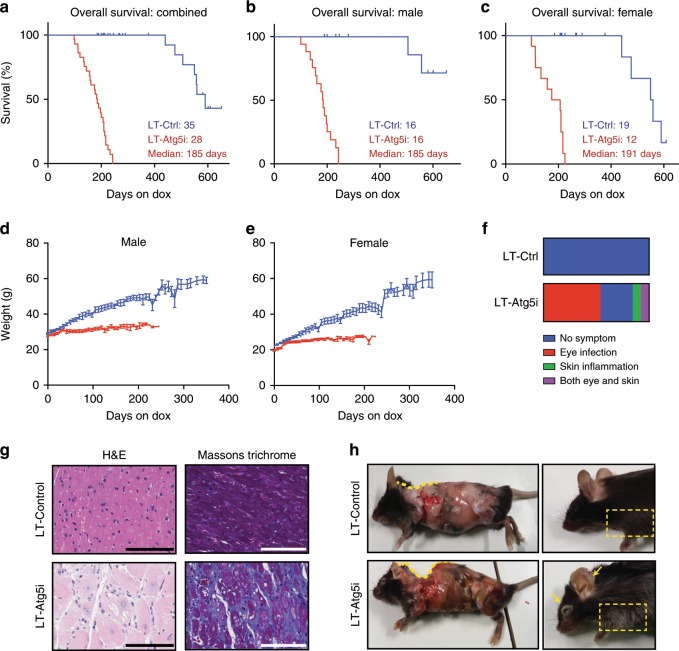
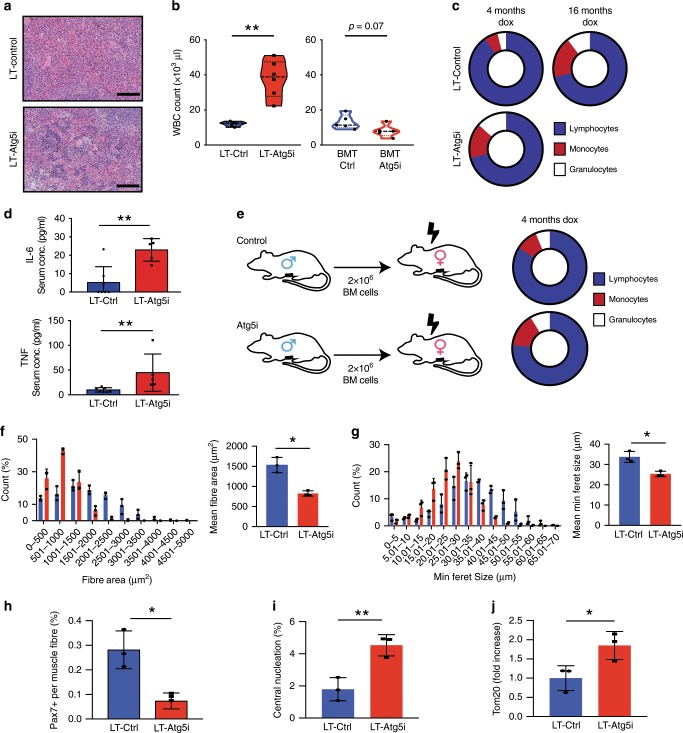
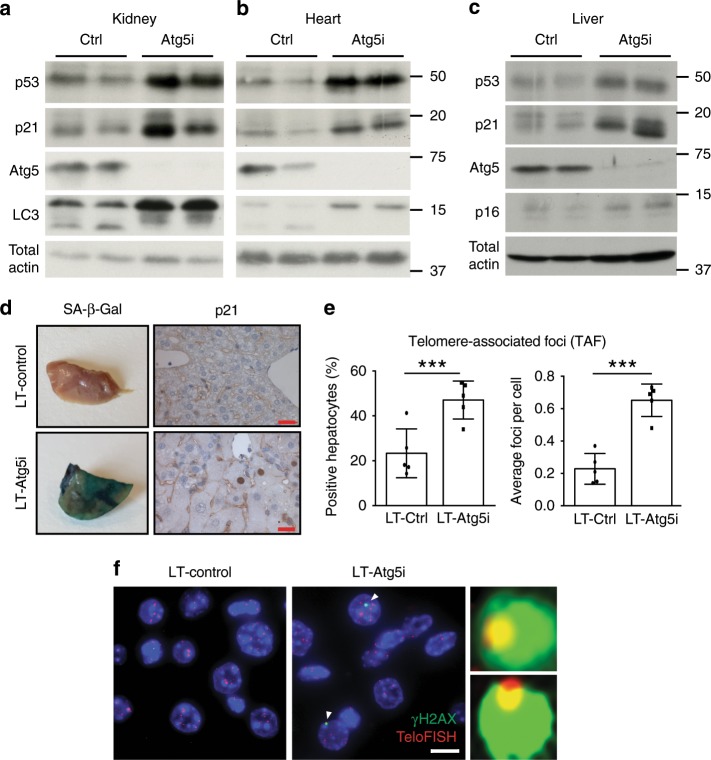
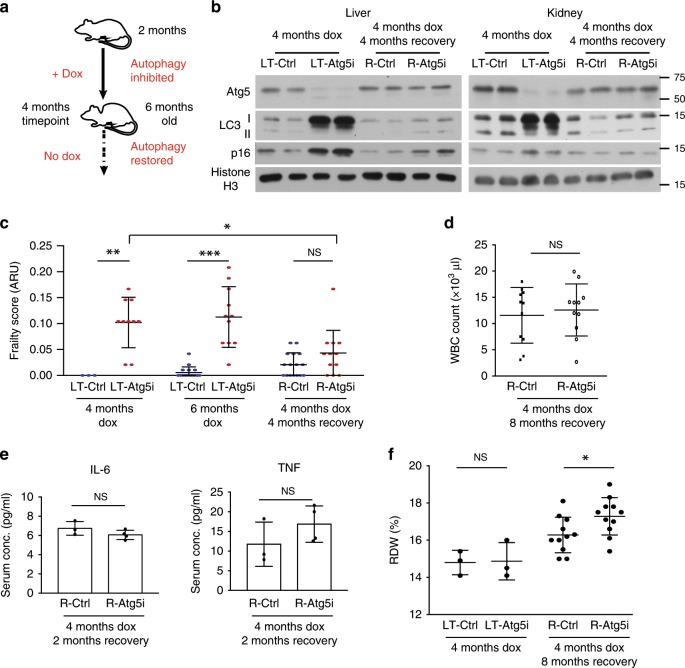
Autophagy is an important cellular degradation pathway with a central role in metabolism as well as basic quality control, two processes inextricably linked to ageing. A decrease in autophagy is associated with increasing age, yet it is unknown if this is causal in the ageing process, and whether autophagy restoration can counteract these ageing effects. Here we demonstrate that systemic autophagy inhibition induces the premature acquisition of age-associated phenotypes and pathologies in mammals. Remarkably, autophagy restoration provides a near complete recovery of morbidity and a significant extension of lifespan; however, at the molecular level this rescue appears incomplete. Importantly autophagy-restored mice still succumb earlier due to an increase in spontaneous tumour formation. Thus, our data suggest that chronic autophagy inhibition confers an irreversible increase in cancer risk and uncovers a biphasic role of autophagy in cancer development being both tumour suppressive and oncogenic, sequentially.
Overview
The claims and statistics of this paper haven’t been checked yet.
Free: it reads the open-access text and checks the first 5 claims that cite a source we can check. Create a free account to check every claim.
Integrity signals
Registry
Cites
Statistics
Figures
Verification
Claims the paper makes
The claims and statistics of this paper haven’t been checked yet.
Free: it reads the open-access text and checks the first 5 claims that cite a source we can check. Create a free account to check every claim.
Claims other papers make about this one
Each is checked against this paper’s own text: does it say what the citing paper says it does?
The source backs part of the claim, not all of it — or backs it for a different population, condition or comparison.
In the citing paper
“its inhibition by genetic manipulation such as the body-wide inducible knockdown or knockout of the essential autophagy genes Atg5 or Atg7 in mice dramatically accelerates signs of cell-autonomous aging as well as inflammation in multiple tissues, thus reducing health span and precipitating premature death.147,148”
From Meta-hallmarks of aging and cancer (2023) · cites this paper as [148]
Experimental — accuracy not yet measuredThe source backs part of the claim, not all of it — or backs it for a different population, condition or comparison.
In the citing paper
“The expression of senescence markers and susceptibility to induction of liver cancer were higher in mice in which the essential autophagy gene Atg5 was silenced than in wild- type mice 42 .”
From Senescence and cancer — role and therapeutic opportunities (2022) · cites this paper as [42]
Experimental — accuracy not yet measuredThe cited source says what the claim attributes to it.
In the citing paper
“Conversely, TAFs accumulate after chronic inflammation47, obesity37,41, mitochondrial dysfunction36 and impaired autophagy48, which are all known to accelerate ageing.”
From Telomere dysfunction in ageing and age-related diseases (2022) · cites this paper as [48]
The cited source says what the claim attributes to it.
In the citing paper
“while precipitating episodes of secondary transformation (Cassidy et al, 2020).”
From Autophagy in major human diseases (2021) · cites this paper as Cassidy et al, 2020
The cited source says what the claim attributes to it.
In the citing paper
“Upon withdrawal of doxycycline, autophagy restoration is accompanied by attenuated systemic inflammation and segmental reduction of aging.”
From Hallmarks of aging: An expanding universe (2023) · cites this paper as [112]
5 more claims about this paper
Create a free account to see every claim other papers make about this one.
Self-check
Percentages, sums and reported differences re-computed from the paper’s own numbers.
The self-check needs the paper’s full text.
Citations
Cites
Loss of autophagy in the central nervous system causes neurodegeneration in mice
Komatsu, M., Waguri, S., Chiba, T., Murata, S., Iwata, J.-I., Tanida, I., Ueno, T., Koike, M., Uchiyama, Y., Kominami, E., et al. (2006) · Nature · doi:10.1038/nature04723 · Cited by 3,500
Premature ageing in mice expressing defective mitochondrial DNA polymerase
Trifunovic, A., Wredenberg, A., Falkenberg, M., Spelbrink, J. N., Rovio, A. T., Bruder, C. E., Bohlooly-Y, M., Gidlöf, S., Oldfors, A., Wibom, R., et al. (2004) · Nature · doi:10.1038/nature02517 · Cited by 2,734
Impairment of starvation-induced and constitutive autophagy in Atg7 -deficient mice
Komatsu, M., Waguri, S., Ueno, T., Iwata, J., Murata, S., Tanida, I., Ezaki, J., Mizushima, N., Ohsumi, Y., Uchiyama, Y., et al. (2005) · The Journal of Cell Biology · doi:10.1083/jcb.200412022 · Cited by 2,331
Promotion of tumorigenesis by heterozygous disruption of the beclin 1 autophagy gene
Qu, X., Yu, J., Bhagat, G., Furuya, N., Hibshoosh, H., Troxel, A., Rosen, J., Eskelinen, E.-L., Mizushima, N., Ohsumi, Y., et al. (2003) · Journal of Clinical Investigation · doi:10.1172/jci20039 · Cited by 2,311
Mitochondrial DNA mutations, oxidative stress, and apoptosis in mammalian aging
Kujoth, G. C., Hiona, A., Pugh, T. D., Someya, S., Panzer, K., Wohlgemuth, S. E., Hofer, T., Seo, A. Y., Sullivan, R., Jobling, W. A., et al. (2005) · Science · doi:10.1126/science.1112125 · Cited by 2,165
Yue, Z., Jin, S., Yang, C., Levine, A. J., & Heintz, N. (2003) · Proceedings of the National Academy of Sciences · doi:10.1073/pnas.2436255100 · Cited by 2,116
Rubinsztein, D. C., Mariño, G., & Kroemer, G. (2011) · Cell · doi:10.1016/j.cell.2011.07.030 · Cited by 2,107
Facing up to the global challenges of ageing
Partridge, L., Deelen, J., & Slagboom, P. E. (2018) · Nature · doi:10.1038/s41586-018-0457-8 · Cited by 1,475
Autophagy maintains stemness by preventing senescence
García-Prat, L., Martínez-Vicente, M., Perdiguero, E., Ortet, L., Rodríguez-Ubreva, J., Rebollo, E., Ruiz-Bonilla, V., Gutarra, S., Ballestar, E., Serrano, A. L., et al. (2016) · Nature · doi:10.1038/nature16187 · Cited by 1,355
Autophagy-deficient mice develop multiple liver tumors
Takamura, A., Komatsu, M., Hara, T., Sakamoto, A., Kishi, C., Waguri, S., Eishi, Y., Hino, O., Tanaka, K., & Mizushima, N. (2011) · Genes & Development · doi:10.1101/gad.2016211 · Cited by 1,342
Cited by
Hallmarks of aging: An expanding universe
López-Otín, C., Blasco, M. A., Partridge, L., Serrano, M., & Kroemer, G. (2023) · Cell · doi:10.1016/j.cell.2022.11.001 · Cited by 6,549
Autophagy in major human diseases
Klionsky, D. J., Petroni, G., Amaravadi, R. K., Baehrecke, E. H., Ballabio, A., Boya, P., Bravo‐San Pedro, J. M., Cadwell, K., Cecconi, F., Choi, A. M. K., et al. (2021) · The EMBO Journal · doi:10.15252/embj.2021108863 · Cited by 1,585
Self-citationSenescence and cancer — role and therapeutic opportunities
Schmitt, C. A., Wang, B., & Demaria, M. (2022) · Nature Reviews Clinical Oncology · doi:10.1038/s41571-022-00668-4 · Cited by 794
Telomere dysfunction in ageing and age-related diseases
Rossiello, F., Jurk, D., Passos, J. F., & d’Adda di Fagagna, F. (2022) · Nature Cell Biology · doi:10.1038/s41556-022-00842-x · Cited by 754
Self-citationMeta-hallmarks of aging and cancer
López-Otín, C., Pietrocola, F., Roiz-Valle, D., Galluzzi, L., & Kroemer, G. (2023) · Cell Metabolism · doi:10.1016/j.cmet.2022.11.001 · Cited by 529
López-Otín, C., & Kroemer, G. (2021) · Cell · doi:10.1016/j.cell.2020.11.034 · Cited by 499
Targeting autophagy in disease: established and new strategies
Kocak, M., Ezazi Erdi, S., Jorba, G., Maestro, I., Farrés, J., Kirkin, V., Martinez, A., & Pless, O. (2022) · Autophagy · doi:10.1080/15548627.2021.1936359 · Cited by 228
“Thus, in line with its tumor-suppressive role, transient inhibition of autophagy in mice accelerated spontaneous tumor formation; however, reflecting its tumor-promoting role, restoration of its function was critical for the higher incidence of tumors as compared to mice in which autophagy was not reactivated [37].”
BackgroundNeutrophils induce paracrine telomere dysfunction and senescence in ROS‐dependent manner
Lagnado, A., Leslie, J., Ruchaud‐Sparagano, M., Victorelli, S., Hirsova, P., Ogrodnik, M., Collins, A. L., Vizioli, M. G., Habiballa, L., Saretzki, G., et al. (2021) · The EMBO Journal · doi:10.15252/embj.2020106048 · Cited by 211
Self-citationWang, Z., Yang, L., Wu, P., Li, X., Tang, Y., Ou, X., Zhang, Y., Xiao, X., Wang, J., & Tang, H. (2022) · Molecular Cancer · doi:10.1186/s12943-022-01498-9 · Cited by 167
“Alterations in autophagy are associated with carcinogenesis of cancers, among which BC was the first cancer genetically correlated with impairment of autophagy [37].”
BackgroundLi, Z.-L., Zhang, H.-L., Huang, Y., Huang, J.-H., Sun, P., Zhou, N.-N., Chen, Y.-H., Mai, J., Wang, Y., Yu, Y., et al. (2020) · Nature Communications · doi:10.1038/s41467-020-17395-y · Cited by 163
Faces of cellular senescence in skin aging
Ho, C. Y., & Dreesen, O. (2021) · Mechanisms of Ageing and Development · doi:10.1016/j.mad.2021.111525 · Cited by 158
Gut OncoMicrobiome Signatures (GOMS) as next-generation biomarkers for cancer immunotherapy
Thomas, A. M., Fidelle, M., Routy, B., Kroemer, G., Wargo, J. A., Segata, N., & Zitvogel, L. (2023) · Nature Reviews Clinical Oncology · doi:10.1038/s41571-023-00785-8 · Cited by 141
Role of hypoxia in cellular senescence
Gao, H., Nepovimova, E., Heger, Z., Valko, M., Wu, Q., Kuca, K., & Adam, V. (2023) · Pharmacological Research · doi:10.1016/j.phrs.2023.106841 · Cited by 132
Small molecule probes for targeting autophagy
Whitmarsh‐Everiss, T., & Laraia, L. (2021) · Nature Chemical Biology · doi:10.1038/s41589-021-00768-9 · Cited by 114
Atg8-Family Proteins—Structural Features and Molecular Interactions in Autophagy and Beyond
Wesch, N., Kirkin, V., & Rogov, V. V. (2020) · Cells · doi:10.3390/cells9092008 · Cited by 101
“Later studies, however, showed that Atg8-/Atg5-/Atg7-mediated autophagy is required for homeostasis of a majority of organ systems [17], while its disruption leads to premature aging in mice [18].”
BackgroundAutophagosome biogenesis and human health
Kawabata, T., & Yoshimori, T. (2020) · Cell Discovery · doi:10.1038/s41421-020-0166-y · Cited by 109
Macroautophagy and aging: The impact of cellular recycling on health and longevity
Nieto-Torres, J. L., & Hansen, M. (2021) · Molecular Aspects of Medicine · doi:10.1016/j.mam.2021.101020 · Cited by 99
TFEB‐dependent lysosome biogenesis is required for senescence
Curnock, R., Yalci, K., Palmfeldt, J., Jäättelä, M., Liu, B., & Carroll, B. (2023) · The EMBO Journal · doi:10.15252/embj.2022111241 · Cited by 97
Autophagy at the intersection of aging, senescence, and cancer
Cassidy, L. D., & Narita, M. (2022) · Molecular Oncology · doi:10.1002/1878-0261.13269 · Cited by 84
Self-citationWu, Q., Tian, A.-L., Li, B., Leduc, M., Forveille, S., Hamley, P., Galloway, W., Xie, W., Liu, P., Zhao, L., et al. (2021) · Journal for ImmunoTherapy of Cancer · doi:10.1136/jitc-2021-002722 · Cited by 83
“…is required for maintaining cellular homeostasis and genomic stability, 9 as well as for facilitating anticancer immunosurveil-lance, 5 meaning that the inhibition of auto-phagy spurs carcinogenesis 10 11 and disabled autophagy actually constitutes a poor prognostic marker in some cancers.”
The hallmarks of aging as a conceptual framework for health and longevity research
Tartiere, A. G., Freije, J. M. P., & López-Otín, C. (2024) · Frontiers in Aging · doi:10.3389/fragi.2024.1334261 · Cited by 120
Autophagy in the cancer-immunity dialogue
Yamazaki, T., Pedro, J. M. B., Galluzzi, L., Kroemer, G., & Pietrocola, F. (2020) · Advanced Drug Delivery Reviews · doi:10.1016/j.addr.2020.12.003 · Cited by 87
Distinguishing between driver and passenger mechanisms of aging
de Magalhães, J. P. (2024) · Nature Genetics · doi:10.1038/s41588-023-01627-0 · Cited by 84
“A recent study in mice showed that autophagy inhibition decreased lifespan and accelerated aging phenotypes 61 .”
Patergnani, S., Missiroli, S., Morciano, G., Perrone, M., Mantovani, C. M., Anania, G., Fiorica, F., Pinton, P., & Giorgi, C. (2021) · Cancers · doi:10.3390/cancers13225622 · Cited by 77
The mTOR–lysosome axis at the centre of ageing
Carosi, J. M., Fourrier, C., Bensalem, J., & Sargeant, T. J. (2021) · FEBS Open Bio · doi:10.1002/2211-5463.13347 · Cited by 72
Targeting Autophagy to Treat Cancer: Challenges and Opportunities
Lim, J., & Murthy, A. (2020) · Frontiers in Pharmacology · doi:10.3389/fphar.2020.590344 · Cited by 63
Telomeres, cellular senescence, and aging: past and future
Eppard, M., Passos, J. F., & Victorelli, S. G. (2023) · Biogerontology · doi:10.1007/s10522-023-10085-4 · Cited by 71
“Conditions known to accelerate aging, such as inflammation (Jurk et al. 2014; Lagnado et al. 2021), obesity (Ogrodnik et al. 2017, 2019), mitochondrial dysfunction (Anderson et al. 2019) and impaired autophagy (Cassidy et al. 2020), have also resulted in increased TAF in vivo.”
Self-citationYang, J. Z., Liu, Y., & Liu, S. (2023) · Cell Death and Disease · doi:10.1038/s41419-023-06032-3 · Cited by 65
“Systemic autophagy inhibition by HCQ or CQ results in additional toxicity and accelerates organ aging to promote tumor formation [127, 128].”
BackgroundThe interplay between autophagy and cGAS-STING signaling and its implications for cancer
Schmid, M., Fischer, P., Engl, M., Widder, J., Gruber, S., & Slade, D. (2024) · Frontiers in Immunology · doi:10.3389/fimmu.2024.1356369 · Cited by 68
Molecular Chaperones and Proteolytic Machineries Regulate Protein Homeostasis in Aging Cells
Margulis, B. A., Цимоха, А. С., Zubova, S. G., & Guzhova, I. V. (2020) · Cells · doi:10.3390/cells9051308 · Cited by 53
“The restoration of macroautophagy abolishes aging and increases life expectancy, but this is also accompanied by a significant increase in the number of spontaneous tumors in mice [71], perhaps because genomic instability increases in old cells [72].”
BackgroundIntersection of immunometabolism and immunosenescence during aging
Lee, K.-A., Robbins, P. D., & Camell, C. D. (2021) · Current Opinion in Pharmacology · doi:10.1016/j.coph.2021.01.003 · Cited by 46
“The hyperactivation of inflammasome and SASP mediated inflammation are likely to be promoted by declining autophagy in aging [12,25].”
BackgroundTargeting Cytoprotective Autophagy to Enhance Anticancer Therapies
Xiao, M., Benoit, A., Hasmim, M., Duhem, C., Vogin, G., Berchem, G., Noman, M. Z., & Janji, B. (2021) · Frontiers in Oncology · doi:10.3389/fonc.2021.626309 · Cited by 44
“Indeed, the process of autophagy seems to both activates and inhibits cellular senescence (144), and chronic inhibition of autophagy appears to increase permanently the risk of cancer (145).”
BackgroundThe hunger strikes back: an epigenetic memory for autophagy
González-Rodríguez, P., Füllgrabe, J., & Joseph, B. (2023) · Cell Death and Differentiation · doi:10.1038/s41418-023-01159-4 · Cited by 48
Ferroptosis, autophagy, tumor and immunity
Xie, Y., Zhou, Y., Wang, J., Lijuan, D., Ren, Y., & Liu, F. (2023) · Heliyon · doi:10.1016/j.heliyon.2023.e19799 · Cited by 44
Xue, H., Zhao, B., Towers, M., Liao, L., Luzete-Monteiro, E., Xu, X., Freeman, C., Peng, H., Tang, H., Havas, A. P., et al. (2024) · Nature Aging · doi:10.1038/s43587-023-00564-1 · Cited by 44
“To determine whether TRi-1 can reverse age-associated inflammation systematically, we measured the serum levels of interleukin-6 (IL-6) and tumor necrosis factor-α (TNF-α), two well-established markers of age-associated inflammation 39,40 .”
Autophagy Roles in Genome Maintenance
Ambrosio, S., & Majello, B. (2020) · Cancers · doi:10.3390/cancers12071793 · Cited by 44
Autophagopathies: from autophagy gene polymorphisms to precision medicine for human diseases
Grosjean, I., Roméo, B., Domdom, M. A., Belaïd, A., D’Andréa, G., Guillot, N., Gherardi, R. K., Gal, J., Milano, G. A., Marquette, C., et al. (2022) · Autophagy · doi:10.1080/15548627.2022.2039994 · Cited by 37
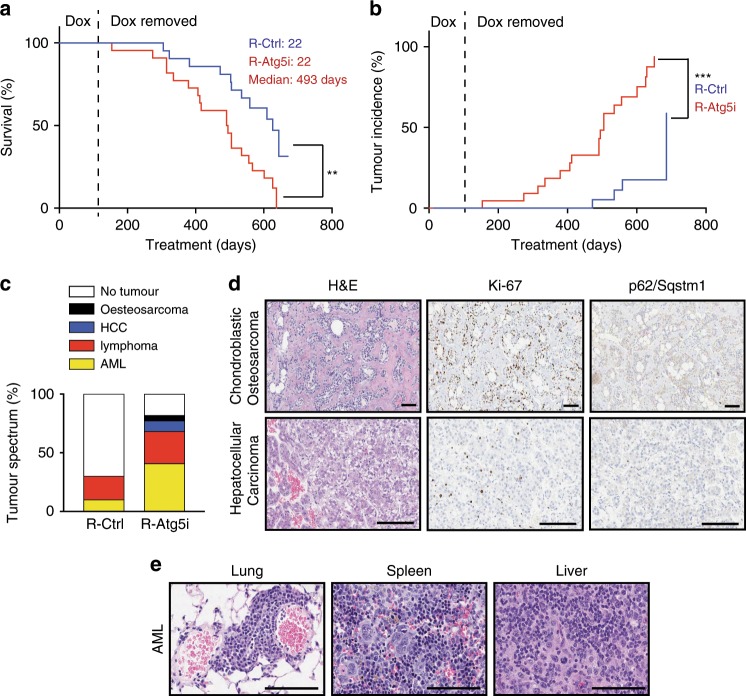
“AML after temporal autophagy inhibition [138]”
BackgroundLuo, N., Zhu, W., Li, X., Fu, M., Zhang, Y., Yang, F., Zhang, Y., Chen, Z., Zhang, Q., Peng, B., et al. (2024) · Neuro-Oncology · doi:10.1093/neuonc/noae153 · Cited by 47
The Intricate Interplay between Cell Cycle Regulators and Autophagy in Cancer
Ziegler, D. V., Huber, K., & Fajas, L. (2021) · Cancers · doi:10.3390/cancers14010153 · Cited by 38
“Indeed, while hepatic inhibition of autophagy through deletion of ATG5 increases the expression of p16INK4A in liver [46], the loss of ATG7 enhances p16 level in satellite muscle stem cells [45].”
BackgroundUnraveling aging from transcriptomics
Huang, Y., Zhu, S., Yao, S., Zhai, H., Liu, C., & Han, J. J. (2024) · Trends in Genetics · doi:10.1016/j.tig.2024.09.006 · Cited by 36
The impact of autophagy during the development and survival of glioblastoma
Simpson, J. E., & Gammoh, N. (2020) · Open Biology · doi:10.1098/rsob.200184 · Cited by 37
“Interestingly, a reversible RNAi mouse model that targets Atg5 expression showed that, while extended autophagy inhibition can accelerate ageing, reactivating autophagy after a period of inhibition can cause increased frequency of spontaneous tumour development [40].”
BackgroundDeleye, Y., Cotte, A. K., Hannou, S. A., Hennuyer, N., Bernard, L., Derudas, B., Caron, S., Legry, V., Vallez, E., Dorchies, E., et al. (2020) · Journal of Biological Chemistry · doi:10.1074/jbc.ra120.012543 · Cited by 35
Liang, X., Zhang, J., Yu, J., Zhao, J., & Yang, S.-S. (2025) · European journal of medical research · doi:10.1186/s40001-025-02562-y · Cited by 36
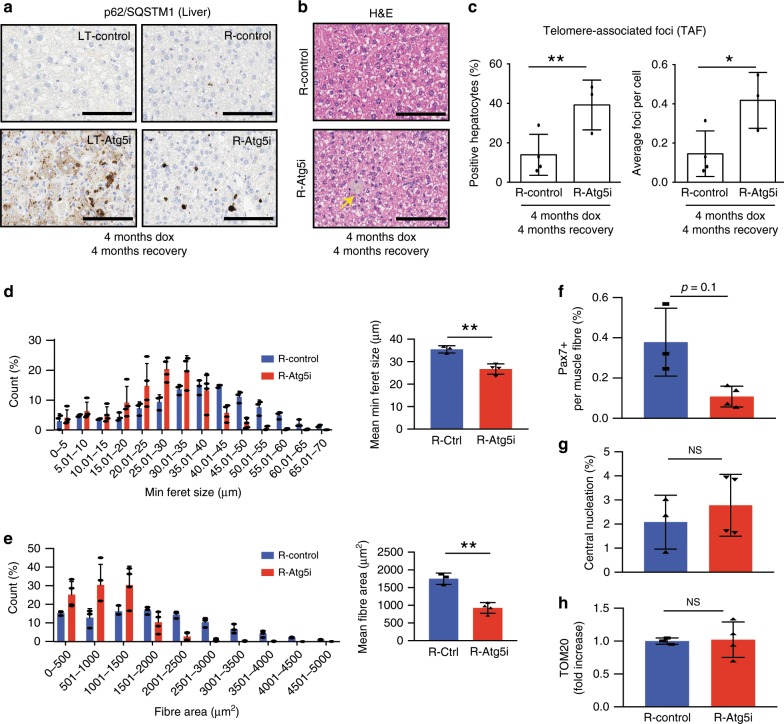
“In the tissues of ATG5i mice chronically treated with doxycycline, there were upregulated senescence markers, positive SA-β-gal staining, and increased telomere-associated γ-H2 AX foci, indicating that the loss of basal autophagy contributes to cellular senescence [53].”
Transient Systemic Autophagy Inhibition Is Selectively and Irreversibly Deleterious to Lung Cancer
Khayati, K., Bhatt, V. D., Lan, T., Alogaili, F., Wang, W., Lopez, E., Hu, Z. S., Gokhale, S., Cassidy, L. D., Narita, M., et al. (2022) · Cancer Research · doi:10.1158/0008-5472.can-22-1039 · Cited by 28
Self-citationImproving intestinal inflammaging to delay aging? A new perspective
Zhang, L., Yan, J., Zhang, C., Feng, S., Zhan, Z., Bao, Y., Zhang, S., & Chao, G. (2023) · Mechanisms of Ageing and Development · doi:10.1016/j.mad.2023.111841 · Cited by 29
Targeting lysosomal quality control as a therapeutic strategy against aging and diseases
He, Y., Fan, Y., Ahmadpoor, X., Wang, Y., Li, Z. A., Zhu, W., & Lin, H. (2024) · Medicinal Research Reviews · doi:10.1002/med.22047 · Cited by 30
“220 These studies demonstrate widespread concern regarding the potential tumorigenicity induced by LQC.”
Targeting immunosenescence for improved tumor immunotherapy
Liu, Z., Zuo, L., Zhou, Z., Liu, S., Ba, Y., Zuo, A., Ren, Y., Zhang, C., Chen, Y., Ma, H., et al. (2024) · MedComm · doi:10.1002/mco2.777 · Cited by 29
Macroautophagy in quiescent and senescent cells: a pathway to longevity?
Murley, A., & Dillin, A. G. (2022) · Trends in Cell Biology · doi:10.1016/j.tcb.2022.10.004 · Cited by 23
Autophagy and senescence, converging roles in pathophysiology as seen through mouse models
(2021) · Advances in Cancer Research · doi:10.1016/bs.acr.2021.02.001 · Cited by 20
Self-citationAberrant NLRP3 Inflammasome Activation Ignites the Fire of Inflammation in Neuromuscular Diseases
Péladeau, C. L., & Sandhu, J. K. (2021) · International Journal of Molecular Sciences · doi:10.3390/ijms22116068 · Cited by 22
Bensalem, J., Teong, X. T., Hattersley, K. J., Hein, L. K., Fourrier, C., Liu, K., Hutchison, A. T., Heilbronn, L. K., & Sargeant, T. J. (2023) · GeroScience · doi:10.1007/s11357-023-00884-5 · Cited by 22
“Reduction of basal autophagy limits tumor-free survival and lifespan in mice [3, 4], and increasing autophagy has the opposite effect [5].”
BackgroundYang, S. Y., Cheng, Y., Liu, M., Tang, J., Li, S., Huang, Y. H., Kou, X., Yao, C., & Yang, D. (2024) · Nano Today · doi:10.1016/j.nantod.2024.102224 · Cited by 20
Intermittent time‐restricted eating may increase autophagic flux in humans: an exploratory analysis
Bensalem, J., Teong, X. T., Hattersley, K. J., Hein, L. K., Fourrier, C., Dang, L. V. P., Singh, S., Liu, K., Wittert, G., Hutchison, A. T., et al. (2025) · The Journal of Physiology · doi:10.1113/jp287938 · Cited by 23
“In this way, it slows biological ageing (Cassidy et al., 2020) and is a downstream effector of CR and IF in animal models (Hansen et al., 2008; Jia & Levine, 2007; Ulgherait et al., 2021).”
Senescence in the ageing skin: a new focus on m TORC 1 and the lysosome
Smith, P., & Carroll, B. (2024) · FEBS Journal · doi:10.1111/febs.17281 · Cited by 21
Dong, C., Hui, P., Wu, Z., Li, J., & Man, X. (2024) · Journal of Cellular and Molecular Medicine · doi:10.1111/jcmm.18225 · Cited by 15
“70 At the same time, low expression of Beclin 1 is an independent indicator of poor prognosis of BLCA.”
BackgroundSeeking Cellular Fitness and Immune Evasion: Autophagy in Pancreatic Carcinoma
Kroemer, G., & Zitvogel, L. (2020) · Cancer Cell · doi:10.1016/j.ccell.2020.05.009 · Cited by 15
The Quest for Eternal Youth: Hallmarks of Aging and Rejuvenating Therapeutic Strategies
Nunkoo, V. S., Cristian, A., Jurcău, A., Diaconu, R. G., & Jurcău, M. C. (2024) · Biomedicines · doi:10.3390/biomedicines12112540 · Cited by 19
Autophagy guided interventions to modify the cardiac phenotype of Danon disease
Yadin, D., Petrover, Z., Shainberg, A., Alcalai, R., Waldman, M., Seidman, J. G., Seidman, C. E., Abraham, N. G., Hochhauser, E., & Arad, M. (2022) · Biochemical Pharmacology · doi:10.1016/j.bcp.2022.115229 · Cited by 18
Emerging roles of p300/CBP in autophagy and autophagy-related human disorders
Xu, Y., & Wan, W. (2023) · Journal of Cell Science · doi:10.1242/jcs.261028 · Cited by 17
Peng, T., Xiang, J., Tian, Y., Tang, X., Wang, L., Gao, L., Luo, O. J., Huang, L., & Chen, G. (2025) · Experimental Gerontology · doi:10.1016/j.exger.2025.112686 · Cited by 13
“In contrast, inhibition of autophagy promotes aging and age-related diseases (Cassidy et al., 2020).”
Immunosenescence and immunotherapy in elderly patients with hepatocellular carcinoma
Zhang, D., Zhu, Y., Shen, Z., Ma, S., Liu, S., & Lu, Z. (2025) · Seminars in Cancer Biology · doi:10.1016/j.semcancer.2025.02.010 · Cited by 15
Autophagy across tissues of aging mice
Carosi, J. M., Martin, A., Hein, L. K., Hassiotis, S., Hattersley, K. J., Turner, B. J., Fourrier, C., Bensalem, J., & Sargeant, T. J. (2025) · PLoS ONE · doi:10.1371/journal.pone.0325505 · Cited by 14
Autophagy does not always decline with ageing
Singh, S., Carosi, J. M., Dang, L. V. P., & Sargeant, T. J. (2025) · Nature Cell Biology · doi:10.1038/s41556-025-01654-5 · Cited by 16
Cell‐Type‐Specific Autophagy in Human Leukocytes
Dang, L. V. P., Martin, A., Carosi, J. M., Gore, J., Singh, S., & Sargeant, T. J. (2025) · The FASEB Journal · doi:10.1096/fj.202402377r · Cited by 13
Nanomaterials intervene in cell senescence to reinforce cancer therapy
Sun, S., Yang, N., Nie, J., Yang, Z., Pei, Z., Ding, R., & Cheng, L. (2025) · Coordination Chemistry Reviews · doi:10.1016/j.ccr.2025.217012 · Cited by 10
Liu, P., Zhao, L., Ferrere, G., Alves-Costa-Silva, C., Ly, P., Wu, Q., Tian, A.-L., Derosa, L., Zitvogel, L., Kepp, O., et al. (2020) · OncoImmunology · doi:10.1080/2162402x.2020.1789284 · Cited by 10
“Indeed, genetically-induced autophagy inhibition (by inducible knockout or knockdown of the essential autophagy genes Atg5 or Atg7) causes a dramatic acceleration of aging that provokes the degeneration of all internal organs and kills young adult mice in 2–3 months.(27,28) No such side effects are known for HCQ treat…”
BackgroundThe two autophagy-related proteins 8a and 8b play distinct physiological roles in Drosophila
Xu, Y., Liu, W., Sun, Z., Yu, Y., Yang, T., Lu, X., Zhang, G., Jiao, J., & Duan, X. (2024) · Genomics · doi:10.1016/j.ygeno.2024.110853 · Cited by 8
Maintenance and Decline of Neuronal Lysosomal Function in Aging
Zhong, R., & Richardson, C. E. (2025) · Cells · doi:10.3390/cells14241976 · Cited by 9
“Dysfunction of macroautophagy is considered a hallmark of aging, meaning that its occurrence correlates with age, and it drives functional decline in aging [59–62].”
Mainz, L., Sarhan, M. A. F. E., Roth, S., Sauer, U., Kalogirou, C., Eckstein, M., Hartmann, E., Seibert, H.-D., Voelker, H.-U., Geppert, C. I., et al. (2022) · Autophagy · doi:10.1080/15548627.2022.2052588 · Cited by 8
“have demonstrated that prolonged RNAi-mediated inhibition of Atg5 causes additional organ alterations and accelerated aging [38].”
BackgroundLuo, Y., Liu, X.-C., Li, Y., Wang, Y., Qiu, M., & Peng, X. (2025) · Phytochemistry Reviews · doi:10.1007/s11101-025-10170-1 · Cited by 15
“( Cassidy et al. 2020; Lo´pez-Otı´n, et al. 2023).”
Ye, D., Zhou, S. Y., Dai, X., Xu, H., Tang, Q., Huang, H., & Bi, F. (2024) · Biochimica et Biophysica Acta (BBA) - Reviews on Cancer · doi:10.1016/j.bbcan.2024.189161 · Cited by 10
Galluzzi, L., & Kroemer, G. (2020) · Trends in Cell Biology · doi:10.1016/j.tcb.2020.02.004 · Cited by 6
A short-lived fish with long-lasting effects: hallmarks of aging in Nothobranchius furzeri
Savel, O., Lehmann, J., Poyraz, Y. K., & Page, M. M. (2026) · Frontiers in Aging · doi:10.3389/fragi.2025.1741819 · Cited by 10
Role of autophagy in liver diseases
Morishita, H., & Komatsu, M. (2022) · Current Opinion in Physiology · doi:10.1016/j.cophys.2022.100594 · Cited by 6
Khazaei, M. R., Bozorgi, M., Khazaei, M., Aftabi, M., & Bozorgi, A. (2024) · PubMed Central · doi:10.22074/cellj.2024.2016930.1458 · Cited by 4
“Autophagy is a highly conserved metabolic pathway in eukaryotic cells associated with degrading damaged organelles and cytoplasmic components like lipids, proteins, and inclusion bodies and recycling them into whole organelles (30).”
BackgroundProteomic characteristics of plasma and blood cells in natural aging rhesus monkeys
Wu, N., Xiao, F., Zhang, J., Chi, Y., Zhai, Y., Chen, B., & Lu, J. (2022) · PROTEOMICS · doi:10.1002/pmic.202200049 · Cited by 6
Loss of chaperone‐mediated autophagy does not alter age‐related bone loss in male mice
Hendrixson, J. A., James, A., Akel, N. S., Laster, D. J., Crawford, J. A., Berryhill, S. B., & Onal, M. (2024) · FASEB BioAdvances · doi:10.1096/fba.2023-00133 · Cited by 3
“For instance, in murine models, global loss of macroautoph-agy decreases lifespan, 37,38 whereas, restoration of mac-roautophagy increases lifespan and healthspan, 39–41 thus establishing disabled macroautophagy as a bona fide hallmark of organismal aging.”
BackgroundA bidirectional crosstalk between autophagy and TP53 determines the pace of aging
Sica, V., & Kroemer, G. (2020) · Molecular & Cellular Oncology · doi:10.1080/23723556.2020.1769434 · Cited by 4
Atg5 /Autophagy inactivation in mouse bone microenvironment promotes tumor development
Trojani, M.-C., Nollet, M., Camuzard, O., Santucci‐Darmanin, S., Breuil, V., Burel‐Vandenbos, F., Fradet, L., Gall, M. L., Salnot, V., Heymann, D., et al. (2026) · Autophagy · doi:10.1080/15548627.2026.2624756 · Cited by 3
“In addition, transient systemic autophagy inhibition through Atg5 downregulation using shRNA was shown to increase cancer risk, stimulating various tumor development including osteosarcoma [61].”
The Dual Role of Autophagy in Cancer: Mechanisms and Therapeutic Strategies
Gao, X.-Z., Qin, Y., Wan, H., Lu, G. X., & Shen, H. (2026) · MedComm – Oncology · doi:10.1002/mog2.70064 · Cited by 3
Reversible suppression of autophagy in a mouse model reveals neuronal resilience
Eguchi, T., Abe, M., Tomita, T., Morishita, H., Saeki, Y., Sakimura, K., Tanaka, K. F., & Mizushima, N. (2026) · Science · doi:10.1126/science.ady3911 · Cited by 5
Dynamic modulation of autophagy: implications for aging and cancer
Cassidy, L. D., & Narita, M. (2020) · Molecular & Cellular Oncology · doi:10.1080/23723556.2020.1754723 · Cited by 3
“In our latest work, Atg5i mice were aged until eight-weeks old, to separate out developmental from tissues homeostatic effects, before being placed on a doxycycline-containing diet to inhibit autophagy.(9) As expected, although they survive premature death due to the neuronal toxicity, mice with autophagy inhibition s…”
BackgroundSelf-citationCutaneous Melanoma in the Context of Aging
Neagu, M. T., Constantin, C., & Zurac, S. (2025) · Medicina · doi:10.3390/medicina61122115 · Cited by 2
“Probably this is the first mention of autophagy as having a biphasic role in oncology, thus being sequentially tumor suppressive and oncogenic [65].”
Cellular senescence during aging and chronic liver diseases
Jurk, D. (2021) · Elsevier eBooks · doi:10.1016/b978-0-12-822514-1.00005-5 · Cited by 2
Self-citationQiu, Q., Tong, X., Zhu, M., Liu, Z., Pang, H., Li, L., Feng, Y., Hu, X., & Gong, C. (2025) · Virulence · doi:10.1080/21505594.2025.2510535 · Cited by 3
“Histone 3 was used as an internal control [44–46].”
Autophagy on the road to longevity and aging
Manifava, M., & Ktistakis, N. T. (2021) · Elsevier eBooks · doi:10.1016/b978-0-12-822003-0.00002-4 · Cited by 3
Self-citationThe Anti-Tumor Effect of Zinc on Renal Cell Carcinoma by Enhancing Autophagy
Yu, Z., Wu, S., Zhao, Q., Guo, Y., Liu, H., & Xiao, H. (2022) · Sains Malaysiana · doi:10.17576/jsm-2022-5112-11 · Cited by 2
Autophagy and Intracellular Membrane Dynamics in Aging and Age-Related Diseases
Minami, S., Nakamura, S., & Yoshimori, T. (2025) · Learning materials in biosciences · doi:10.1007/978-3-031-88121-3_7 · Cited by 1
Xujie, W., Wang, X., & Ying, B. (2025) · Scientific Reports · doi:10.1038/s41598-025-26358-6 · Cited by 2
Multifactorial conceptual model of cancer-related accelerated aging
Lh, M., Weiss, S. M., Ritchie, C. S., Wong, M. L., Hoffmann, T. K., Wallhagen, M. L., & Miaskowski, C. A. (2026) · npj Aging · doi:10.1038/s41514-025-00328-8 · Cited by 4
“Findings from these studies suggest that when these processes are perturbed or alleviated by experimental interventions 127 – 129 , they in fl u-ence the trajectory of aging.”
Health equity engineering: Optimizing hope for a new generation of healthcare
Enders, F., Golembiewski, E. H., Balls‐Berry, J. E., Brooks, T. R., Carr, A. R., Cullen, J. P., DiazGranados, D., Gaba, A., Johnson, L., Menser, T. L., et al. (2024) · Journal of Clinical and Translational Science · doi:10.1017/cts.2024.549 · Cited by 1
Molecular Sub-Typing and Exploration of Key Signalling Pathways Involved in Complicating the Disease
Anto, N. P., Muraleedharan, A., & Mittal, R. (2023) · BENTHAM SCIENCE PUBLISHERS eBooks · doi:10.2174/9789815079784123010006 · Cited by 1
Jaulim, A., Cassidy, L. D., Young, A. R. J., Chan, A. S. L., Warren, A. Y., TAYLOR, A. E. R., Arlt, W., Lan, G., Blayney, M. L., Davidson, O., et al. (2023) · bioRxiv (Cold Spring Harbor Laboratory) · doi:10.1101/2023.07.21.549845 · Cited by 1
“However, the limited permeability of dox through the blood-brain barrier (BBB) means our Atg5i mice (Dow et al. 2012; Cassidy et al. 2020) exhibit no discernible neurotoxic effects upon systemic RNAi activation, thereby providing an opportunity to evaluate the longterm effects of systemic autophagy reduction (Cassidy…”
BackgroundMethodInfluentialSelf-citationTelomeres and cell homeostasis in aging
Victorelli, S. G., & Passos, J. F. (2022) · Elsevier eBooks · doi:10.1016/b978-0-12-823761-8.00029-x
Self-citationMammalian autophagy—focusing on its relationship to disease and aging
Minami, S., & Yoshimori, T. (2024) · Japanese Journal of Thrombosis and Hemostasis · doi:10.2491/jjsth.35.666
Asymmetric Dimethylarginine: A Never-Aging Story
Jarzebska, N., Bornstein, S. R., Tselmin, S., Julius, U., Cellini, B., Siow, R. C. M., Martin, M., Mookerjee, R. P., Mangoni, A. A., Weiss, N., et al. (2025) · Hormone and Metabolic Research · doi:10.1055/a-2537-4692 · Cited by 3
Autophagy-dependent Bidirectional Regulation of EMT by NFκB in Non-Small Cell Lung Cancer Cells
Alvur, Ö., & Akça, H. (2025) · Dicle Medical Journal / Dicle Tip Dergisi · doi:10.5798/dicletip.1840711
Human Longevity: Bringing Radical Disruptive Ideas into Light
Tiwary, V., Kovvali, B., Umair, M. B., & Peleg, S. (2025) · Springer eBooks · doi:10.1007/978-3-031-93623-4_7
Intrauterine heat stress: molecular acclimation and epigenetic transmission in F1 and F2 male mice
Batista, R. I. T. P., Bento, T. F. M., Silva, J. B. G. E., Alfradique, V. A. P., Bartlewski, P. M., & Souza‐Fabjan, J. M. G. (2026) · Reproduction · doi:10.1093/reprod/xaag014
Lu, X., Ni, J., Qian, C., Shi, L., Li, A., You, W., Liu, D., & Xie, Y. (2026) · Journal of Biochemical and Molecular Toxicology · doi:10.1002/jbt.70801
Metadata
- Authors
- Cassidy, L. D., Young, A. R. J., Young, C. N. J., Soilleux, E. J., Fielder, E., Weigand, B. M., Lagnado, A., Brais, R., Ktistakis, N. T., Wiggins, K. A., Pyrillou, K., Clarke, M. C. H., Jurk, D., Passos, J. F., & Narita, M.
- Affiliations
- University of Cambridge (GB)
- Newcastle University (GB)
- Mayo Clinic (US)
- Cambridge University Hospitals NHS Foundation Trust (GB)
- Babraham Institute (GB)
- Tokyo Institute of Technology (JP)
- Corresponding author
- Narita, Masashi
- ORCID
- Venue
- Nature Communications
- Published
- 2020-01-16
- Volume
- 11
- Issue
- 1
- Pages
- 307-307
- ISSN
- 2041-1723 (ISSN-L)
- PMC
- PMC6965206
- OpenAlex
- W3000127343
- Cited by
- 108
- References
- 48
- Citations by year
- 2026: 12 · 2025: 18 · 2024: 19 · 2023: 14 · 2022: 14 · 2021: 16 · 2020: 15
- FWCI
- 10.58
- Type
- journal article
- Language
- en
- Open access
- gold
- doi.org
- Licence
- cc-by
- creativecommons.org/licenses/by/4.0 (tdm)
- creativecommons.org/licenses/by/4.0 (vor)
- Locations
- Nature Communications (publishedVersion, cc-by)
- PubMed Central (publishedVersion, cc-by)
- PubMed (publishedVersion)
- Apollo (University of Cambridge) (submittedVersion)
- RePEc: Research Papers in Economics (submittedVersion)
- DOAJ (DOAJ: Directory of Open Access Journals) (submittedVersion, cc-by-sa)
- DOAJ (DOAJ: Directory of Open Access Journals) (submittedVersion)
- DMU Open Research Archive (De Montfort University) (submittedVersion)
- Apollo (University of Cambridge) (submittedVersion, cc-by)
- Apollo
- Apollo (cc-by)
- Funders
- University of Michigan
- Cancer Research UK (A20976, A17197, C14303, 30038, C20/A20976, 24453, 15890, C14303 / A17197, 15890, 24453)
- British Heart Foundation (FS/18/56/34177, FS/13/3/30038, FS/18/19/33371, FS/18/56/34177A, RG/16/8/32388)
- Academy of Medical Sciences
- University of Cambridge
- Newcastle University
- Fakultet Medicinskih Nauka, Univerziteta U Kragujevcu
- Medical Research Council (MR/M013049/1, MR/M013049, MR/R010013/1)
- Biotechnology and Biological Sciences Research Council (BBS/E/B/000C0432, BBS/E/B/000C0433, BB/K017314/1, BBS/E/B/000C0413, BBS/E/B/000C0434, BB/H022384/1, BB/S013466/1)
- Cancer Research UK Cambridge Institute, University of Cambridge (C14303, C14303/A17197, A17197)
- Topics
- Life Sciences › Biochemistry, Genetics and Molecular Biology › Cell Biology › Autophagy in Disease and Therapy
- Life Sciences › Biochemistry, Genetics and Molecular Biology › Aging › Genetics, Aging, and Longevity in Model Organisms
- Life Sciences › Biochemistry, Genetics and Molecular Biology › Molecular Biology › Metabolism, Diabetes, and Cancer
- Keywords
- autophagy, aging, lifespan extension, cancer risk, autophagy inhibition, tumor suppression, premature aging, quality control
- MeSH terms
- Autophagy-Related Protein 5, Sequestosome-1 Protein, Aging, Animals, Autophagy, Disease Models, Animal, Female, Inflammation, Longevity, Male, Mice, Inbred C57BL, Muscles, Neoplasms, Phenotype, Skin, Bone Marrow Transplantation, Mice, Knockout, Mice
About these checks
Registry, retraction, Cites and statistics results are computed, not judged, with one exception: a printed reference that no index lists is read once by a model before it counts as a citation error. Claims are extracted by a model and kept only when their quote appears verbatim in the text; each cited source is then checked, with a model’s help, for whether it says what the claim relies on. Those verdicts can be wrong — read the claim’s quote and the cited source before relying on one.
Statistics and arithmetic are recomputed, not judged.
Confidence bands are shown only for fields calibrated on our annotated test set. None is calibrated yet, so no band is shown.
What counts as a claim ›How we measure confidence ›How we check this ›
Are you an author, or do you see a problem with this page? Request a review
Data sources
Bibliographic data: Semantic Scholar, OpenAlex, Crossref.
Contains information from the Semantic Scholar Academic Graph Datasets, made available under the ODC Attribution License (ODC-BY 1.0).
Semantic Scholar’s data is described in: Kinney, R., et al. (2023). The Semantic Scholar Open Data Platform. arXiv:2301.10140.
