

Temporal inhibition of autophagy reveals segmental reversal of ageing with increased cancer risk
Open accessThe DOI matches its Crossref record; 48 of the 48 references it cites were found in a registry or an index.
Abstract
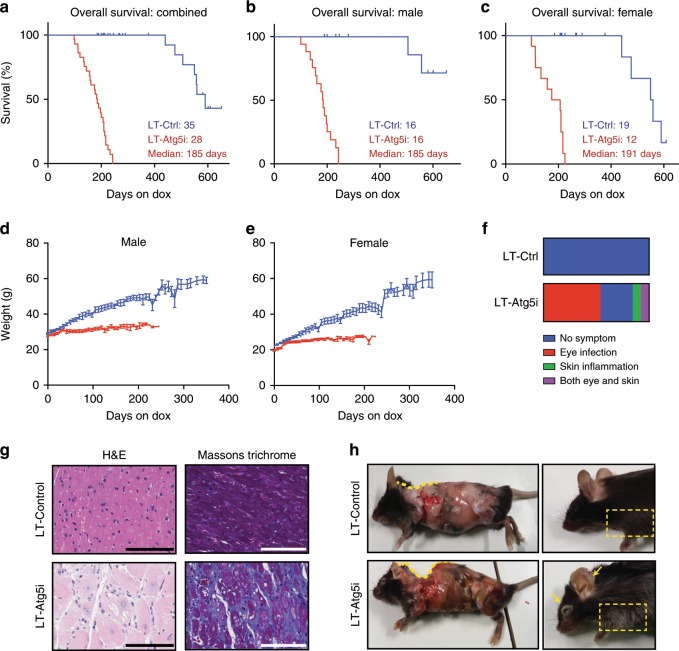
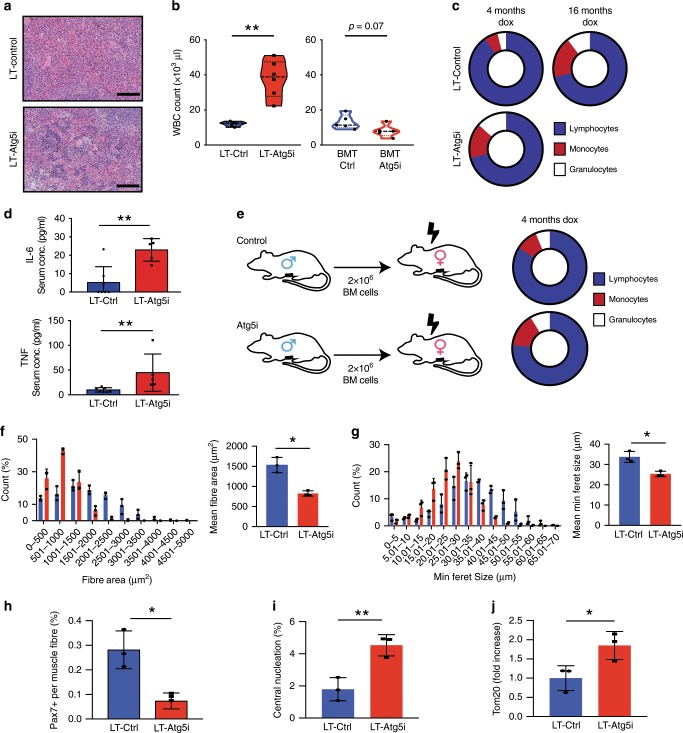
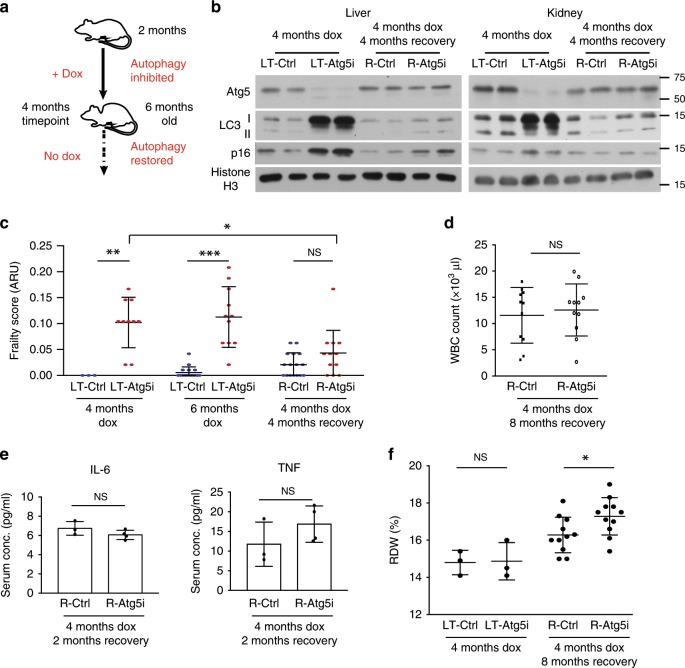
Autophagy is an important cellular degradation pathway with a central role in metabolism as well as basic quality control, two processes inextricably linked to ageing. A decrease in autophagy is associated with increasing age, yet it is unknown if this is causal in the ageing process, and whether autophagy restoration can counteract these ageing effects. Here we demonstrate that systemic autophagy inhibition induces the premature acquisition of age-associated phenotypes and pathologies in mammals. Remarkably, autophagy restoration provides a near complete recovery of morbidity and a significant extension of lifespan; however, at the molecular level this rescue appears incomplete. Importantly autophagy-restored mice still succumb earlier due to an increase in spontaneous tumour formation. Thus, our data suggest that chronic autophagy inhibition confers an irreversible increase in cancer risk and uncovers a biphasic role of autophagy in cancer development being both tumour suppressive and oncogenic, sequentially.
Overview
The claims and statistics of this paper haven’t been checked yet.
Free: it reads the open-access text and checks the first 5 claims that cite a source we can check. Create a free account to check every claim.
Integrity signals
Registry
Cites
Statistics
Figures
Verification
Claims the paper makes
The claims and statistics of this paper haven’t been checked yet.
Free: it reads the open-access text and checks the first 5 claims that cite a source we can check. Create a free account to check every claim.
Claims other papers make about this one
Each is checked against this paper’s own text: does it say what the citing paper says it does?
The source backs part of the claim, not all of it — or backs it for a different population, condition or comparison.
In the citing paper
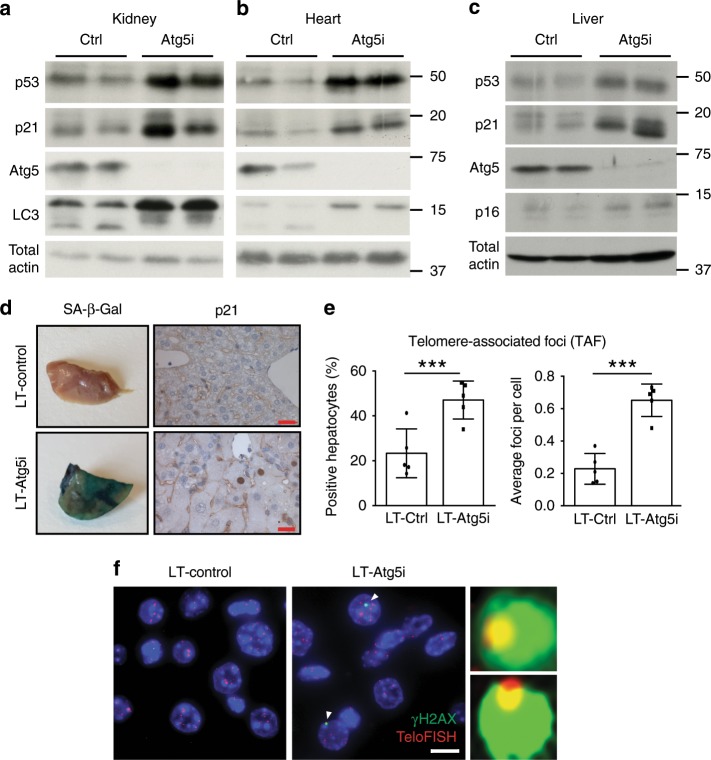
“its inhibition by genetic manipulation such as the body-wide inducible knockdown or knockout of the essential autophagy genes Atg5 or Atg7 in mice dramatically accelerates signs of cell-autonomous aging as well as inflammation in multiple tissues, thus reducing health span and precipitating premature death.147,148”
From Meta-hallmarks of aging and cancer (2023) · cites this paper as [148]
Experimental — accuracy not yet measuredThe source backs part of the claim, not all of it — or backs it for a different population, condition or comparison.
In the citing paper
“The expression of senescence markers and susceptibility to induction of liver cancer were higher in mice in which the essential autophagy gene Atg5 was silenced than in wild- type mice 42 .”
From Senescence and cancer — role and therapeutic opportunities (2022) · cites this paper as [42]
Experimental — accuracy not yet measuredThe cited source says what the claim attributes to it.
In the citing paper
“Conversely, TAFs accumulate after chronic inflammation47, obesity37,41, mitochondrial dysfunction36 and impaired autophagy48, which are all known to accelerate ageing.”
From Telomere dysfunction in ageing and age-related diseases (2022) · cites this paper as [48]
The cited source says what the claim attributes to it.
In the citing paper
“while precipitating episodes of secondary transformation (Cassidy et al, 2020).”
From Autophagy in major human diseases (2021) · cites this paper as Cassidy et al, 2020
The cited source says what the claim attributes to it.
In the citing paper
“Upon withdrawal of doxycycline, autophagy restoration is accompanied by attenuated systemic inflammation and segmental reduction of aging.”
From Hallmarks of aging: An expanding universe (2023) · cites this paper as [112]
5 more claims about this paper
Create a free account to see every claim other papers make about this one.
Self-check
Percentages, sums and reported differences re-computed from the paper’s own numbers.
The self-check needs the paper’s full text.
Citations
Cites
Loss of autophagy in the central nervous system causes neurodegeneration in mice
Komatsu, M., Waguri, S., Chiba, T., Murata, S., Iwata, J.-I., Tanida, I., Ueno, T., Koike, M., Uchiyama, Y., Kominami, E., et al. (2006) · Nature · doi:10.1038/nature04723 · Cited by 3,500
Premature ageing in mice expressing defective mitochondrial DNA polymerase
Trifunovic, A., Wredenberg, A., Falkenberg, M., Spelbrink, J. N., Rovio, A. T., Bruder, C. E., Bohlooly-Y, M., Gidlöf, S., Oldfors, A., Wibom, R., et al. (2004) · Nature · doi:10.1038/nature02517 · Cited by 2,734
Impairment of starvation-induced and constitutive autophagy in Atg7 -deficient mice
Komatsu, M., Waguri, S., Ueno, T., Iwata, J., Murata, S., Tanida, I., Ezaki, J., Mizushima, N., Ohsumi, Y., Uchiyama, Y., et al. (2005) · The Journal of Cell Biology · doi:10.1083/jcb.200412022 · Cited by 2,331
Promotion of tumorigenesis by heterozygous disruption of the beclin 1 autophagy gene
Qu, X., Yu, J., Bhagat, G., Furuya, N., Hibshoosh, H., Troxel, A., Rosen, J., Eskelinen, E.-L., Mizushima, N., Ohsumi, Y., et al. (2003) · Journal of Clinical Investigation · doi:10.1172/jci20039 · Cited by 2,311
Mitochondrial DNA mutations, oxidative stress, and apoptosis in mammalian aging
Kujoth, G. C., Hiona, A., Pugh, T. D., Someya, S., Panzer, K., Wohlgemuth, S. E., Hofer, T., Seo, A. Y., Sullivan, R., Jobling, W. A., et al. (2005) · Science · doi:10.1126/science.1112125 · Cited by 2,165
Yue, Z., Jin, S., Yang, C., Levine, A. J., & Heintz, N. (2003) · Proceedings of the National Academy of Sciences · doi:10.1073/pnas.2436255100 · Cited by 2,116
Rubinsztein, D. C., Mariño, G., & Kroemer, G. (2011) · Cell · doi:10.1016/j.cell.2011.07.030 · Cited by 2,107
Facing up to the global challenges of ageing
Partridge, L., Deelen, J., & Slagboom, P. E. (2018) · Nature · doi:10.1038/s41586-018-0457-8 · Cited by 1,475
Autophagy maintains stemness by preventing senescence
García-Prat, L., Martínez-Vicente, M., Perdiguero, E., Ortet, L., Rodríguez-Ubreva, J., Rebollo, E., Ruiz-Bonilla, V., Gutarra, S., Ballestar, E., Serrano, A. L., et al. (2016) · Nature · doi:10.1038/nature16187 · Cited by 1,355
Autophagy-deficient mice develop multiple liver tumors
Takamura, A., Komatsu, M., Hara, T., Sakamoto, A., Kishi, C., Waguri, S., Eishi, Y., Hino, O., Tanaka, K., & Mizushima, N. (2011) · Genes & Development · doi:10.1101/gad.2016211 · Cited by 1,342
Autophagy Genes Are Essential for Dauer Development and Life-Span Extension in C. elegans
Meléndez, A., Tallóczy, Z., Seaman, M., Eskelinen, E.-L., Hall, D. H., & Levine, B. (2003) · Science · doi:10.1126/science.1087782 · Cited by 1,270
Impact of caloric restriction on health and survival in rhesus monkeys from the NIA study
Mattison, J. A., Roth, G. S., Beasley, T. M., Tilmont, E. M., Handy, A. M., Herbert, R. L., Longo, D. L., Allison, D. B., Young, J. E., Bryant, M., et al. (2012) · Nature · doi:10.1038/nature11432 · Cited by 1,145
Autophagy mediates the mitotic senescence transition
Young, A. R. J., Narita, M., Ferreira, M., Kirschner, K., Sadaie, M., Darot, J. F. J., Tavaré, S., Arakawa, S., Shimizu, S., Watt, F. M., et al. (2009) · Genes & Development · doi:10.1101/gad.519709 · Cited by 1,078
Self-citationMechanisms of Life Span Extension by Rapamycin in the Fruit Fly Drosophila Melanogaster
Bjedov, I., Toivonen, J. M., Kerr, F., Slack, C., Jacobson, J., Foley, A., & Partridge, L. (2010) · Cell Metabolism · doi:10.1016/j.cmet.2009.11.010 · Cited by 1,057
Geriatric muscle stem cells switch reversible quiescence into senescence
Sousa-Victor, P., Gutarra, S., García-Prat, L., Rodriguez-Ubreva, J., Ortet, L., Ruiz-Bonilla, V., Jardí, M., Ballestar, E., González, S., Serrano, A. L., et al. (2014) · Nature · doi:10.1038/nature13013 · Cited by 1,010
Epigenetic mechanisms of longevity and aging
Sen, P., Shah, P. P., Nativio, R., & Berger, S. L. (2016) · Cell · doi:10.1016/j.cell.2016.07.050 · Cited by 956
Hewitt, G., Jurk, D., Marques, F. D. M., Correia-Melo, C., Hardy, T., Gackowska, A., Anderson, R., Taschuk, M., Mann, J., & Passos, J. F. (2012) · Nature Communications · doi:10.1038/ncomms1708 · Cited by 908
Self-citationAutophagy maintains the metabolism and function of young and old stem cells
Ho, T. T., Warr, M. R., Adelman, E. R., Lansinger, O. M., Flach, J., Verovskaya, E. V., Figueroa, M. E., & Passegué, E. (2017) · Nature · doi:10.1038/nature21388 · Cited by 896
Compromised autophagy and neurodegenerative diseases
Menzies, F. M., Fleming, A., & Rubinsztein, D. C. (2015) · Nature Reviews Neuroscience · doi:10.1038/nrn3961 · Cited by 851
Telomeric DNA damage is irreparable and causes persistent DNA-damage-response activation
Fumagalli, M., Rossiello, F., Clerici, M., Barozzi, S., Cittaro, D., Kaplunov, J. M., Bucci, G., Dobreva, M., Matti, V., Beausejour, C. M., et al. (2012) · Nature Cell Biology · doi:10.1038/ncb2466 · Cited by 851
Prediction of acute myeloid leukaemia risk in healthy individuals
Abelson, S., Collord, G., Ng, S. W. K., Weissbrod, O., Mendelson Cohen, N., Niemeyer, E., Barda, N., Zuzarte, P. C., Heisler, L., Sundaravadanam, Y., et al. (2018) · Nature · doi:10.1038/s41586-018-0317-6 · Cited by 850
Chronic inflammation induces telomere dysfunction and accelerates ageing in mice
Jurk, D., Wilson, C., Passos, J. F., Oakley, F., Correia-Melo, C., Greaves, L., Saretzki, G., Fox, C., Lawless, C., Anderson, R., et al. (2014) · Nature Communications · doi:10.1038/ncomms5172 · Cited by 819
Self-citationMitochondria are required for pro-ageing features of the senescent phenotype
Correia‐Melo, C., Marques, F. D., Anderson, R., Hewitt, G., Hewitt, R., Cole, J., Carroll, B. M., Miwa, S., Birch, J., Merz, A., et al. (2016) · The EMBO Journal · doi:10.15252/embj.201592862 · Cited by 796
Self-citationAutophagy as a promoter of longevity: insights from model organisms
Hansen, M., Rubinsztein, D. C., & Walker, D. W. (2018) · Nature Reviews Molecular Cell Biology · doi:10.1038/s41580-018-0033-y · Cited by 754
Metabolic Control of Longevity
López-Otín, C., Galluzzi, L., Freije, J. M. P., Madeo, F., & Kroemer, G. (2016) · Cell · doi:10.1016/j.cell.2016.07.031 · Cited by 753
Overexpression of Atg5 in mice activates autophagy and extends lifespan
Pyo, J.-O., Yoo, S.-M., Ahn, H.-H., Nah, J., Hong, S.-H., Kam, T.-I., Jung, S., & Jung, Y.-K. (2013) · Nature Communications · doi:10.1038/ncomms3300 · Cited by 721
p53 status determines the role of autophagy in pancreatic tumour development
Rosenfeldt, M. T., O’Prey, J., Morton, J. P., Nixon, C., MacKay, G., Mrowinska, A., Au, A., Rai, T. S., Zheng, L., Ridgway, R., et al. (2013) · Nature · doi:10.1038/nature12865 · Cited by 713
Caloric restriction reduces age-related and all-cause mortality in rhesus monkeys
Colman, R. J., Beasley, T. M., Kemnitz, J. W., Johnson, S. C., Weindruch, R., & Anderson, R. M. (2014) · Nature Communications · doi:10.1038/ncomms4557 · Cited by 711
Disruption of the beclin 1–BCL2 autophagy regulatory complex promotes longevity in mice
Fernández, Á. F., Sebti, S., Wei, Y., Zou, Z., Shi, M., McMillan, K. L., He, C., Ting, T., Liu, Y., Chiang, W.-C., et al. (2018) · Nature · doi:10.1038/s41586-018-0162-7 · Cited by 630
Spatial Coupling of mTOR and Autophagy Augments Secretory Phenotypes
Narita, M., Young, A. R. J., Arakawa, S., Samarajiwa, S. A., Nakashima, T., Yoshida, S., Hong, S., Berry, L. S., Reichelt, S., Ferreira, M., et al. (2011) · Science · doi:10.1126/science.1205407 · Cited by 594
Self-citationGuo, J. Y., Karsli-Uzunbas, G., Mathew, R., Aisner, S. C., Kamphorst, J. J., Strohecker, A. M., Chen, G., Price, S., Lu, W., Teng, X., et al. (2013) · Genes & Development · doi:10.1101/gad.219642.113 · Cited by 589
Autophagy is required for glucose homeostasis and lung tumor maintenance
Karsli-Uzunbas, G., Guo, J. Y., Price, S., Teng, X., Laddha, S. V., Khor, S., Kalaany, N. Y., Jacks, T., Chan, C. S., Rabinowitz, J. D., et al. (2014) · Cancer Discovery · doi:10.1158/2159-8290.cd-14-0363 · Cited by 560
Synthetic lethal metabolic targeting of cellular senescence in cancer therapy
Dörr, J. R., Yu, Y., Milanovic, M., Beuster, G., Zasada, C., Däbritz, J. H. M., Lisec, J., Lenze, D., Gerhardt, A., Schleicher, K., et al. (2013) · Nature · doi:10.1038/nature12437 · Cited by 541
A Clinical Frailty Index in Aging Mice: Comparisons With Frailty Index Data in Humans
Whitehead, J. C., Hildebrand, B. A., Sun, M., Rockwood, M. R., Rose, R. A., Rockwood, K., & Howlett, S. E. (2014) · The Journals of Gerontology: Series A · doi:10.1093/gerona/glt136 · Cited by 511
Autophagy-Mediated Tumor Promotion
Guo, J. Y., Xia, B., & White, E. (2013) · Cell · doi:10.1016/j.cell.2013.11.019 · Cited by 499
Autophagy Sustains Mitochondrial Glutamine Metabolism and Growth of Braf V600E–Driven Lung Tumors
Strohecker, A. M., Guo, J. Y., Karsli-Uzunbas, G., Price, S. M., Chen, G. J., Mathew, R., McMahon, M., & White, E. (2013) · Cancer Discovery · doi:10.1158/2159-8290.cd-13-0397 · Cited by 435
Mortensen, M., Ferguson, D. J. P., Edelmann, M., Kessler, B., Morten, K. J., Komatsu, M., & Simon, A. K. (2010) · Proceedings of the National Academy of Sciences · doi:10.1073/pnas.0913170107 · Cited by 387
Yang, A., Herter-Sprie, G., Zhang, H., Lin, E. Y., Biancur, D., Wang, X., Deng, J., Hai, J., Yang, S., Wong, K.-K., et al. (2018) · Cancer Discovery · doi:10.1158/2159-8290.cd-17-0952 · Cited by 349
Autophagy is Required for Dietary Restriction-Mediated Life Span Extension in C. elegans
Jia, K., & Levine, B. (2007) · Autophagy · doi:10.4161/auto.4989 · Cited by 341
Autophagy Impairment Induces Premature Senescence in Primary Human Fibroblasts
Kang, H. T., Lee, K. B., Kim, S. Y., Choi, H. R., & Park, S. C. (2011) · PLoS ONE · doi:10.1371/journal.pone.0023367 · Cited by 254
Lim, Y.-M., Lim, H., Hur, K. Y., Quan, W., Lee, H.-Y., Cheon, H., Ryu, D., Koo, S.-H., Kim, H. L., Kim, J., et al. (2014) · Nature Communications · doi:10.1038/ncomms5934 · Cited by 189
Autophagy limits proliferation and glycolytic metabolism in acute myeloid leukemia
Watson, A., Riffelmacher, T., Stranks, A., Williams, O., De Boer, J., Cain, K., MacFarlane, M., McGouran, J., Kessler, B., Khandwala, S., et al. (2015) · Cell Death Discovery · doi:10.1038/cddiscovery.2015.8 · Cited by 170
Self-citationSimplex PCR Assay for Sex Determination in Mice
Clapcote, S. J., & Roder, J. C. (2005) · BioTechniques · doi:10.2144/05385bm05 · Cited by 153
Practical pathology of aging mice
Pettan-Brewer, C., & M. Treuting, P. (2011) · Pathobiology of Aging & Age-related Diseases · doi:10.3402/pba.v1i0.7202 · Cited by 151
Strategies and Challenges in Clinical Trials Targeting Human Aging
Newman, J. C., Milman, S., Hashmi, S. K., Austad, S. N., Kirkland, J. L., Halter, J. B., & Barzilai, N. (2016) · The Journals of Gerontology Series A: Biological Sciences and Medical Sciences · doi:10.1093/gerona/glw149 · Cited by 138
Sinadinos, A., Young, C. N. J., Al-Khalidi, R., Teti, A., Kalinski, P., Mohamad, S., Floriot, L., Henry, T., Tozzi, G., Jiang, T., et al. (2015) · PLOS Medicine · doi:10.1371/journal.pmed.1001888 · Cited by 65
Self-citationA novel Atg5-shRNA mouse model enables temporal control of Autophagy in vivo
Cassidy, L. D., Young, A. R., Pérez-Mancera, P. A., Nimmervoll, B., Jaulim, A., Chen, H.-C., McIntyre, D. J. O., Brais, R., Ricketts, T., Pacey, S., et al. (2018) · Autophagy · doi:10.1080/15548627.2018.1458172 · Cited by 40
Self-citationLoss of Ultra-Violet Transparency in Glasses
English, S. A. (1930) · Nature · doi:10.1038/125085a0 · Cited by 5
Cited by
Hallmarks of aging: An expanding universe
López-Otín, C., Blasco, M. A., Partridge, L., Serrano, M., & Kroemer, G. (2023) · Cell · doi:10.1016/j.cell.2022.11.001 · Cited by 6,549
Autophagy in major human diseases
Klionsky, D. J., Petroni, G., Amaravadi, R. K., Baehrecke, E. H., Ballabio, A., Boya, P., Bravo‐San Pedro, J. M., Cadwell, K., Cecconi, F., Choi, A. M. K., et al. (2021) · The EMBO Journal · doi:10.15252/embj.2021108863 · Cited by 1,585
Self-citationSenescence and cancer — role and therapeutic opportunities
Schmitt, C. A., Wang, B., & Demaria, M. (2022) · Nature Reviews Clinical Oncology · doi:10.1038/s41571-022-00668-4 · Cited by 794
Telomere dysfunction in ageing and age-related diseases
Rossiello, F., Jurk, D., Passos, J. F., & d’Adda di Fagagna, F. (2022) · Nature Cell Biology · doi:10.1038/s41556-022-00842-x · Cited by 754
Self-citationMeta-hallmarks of aging and cancer
López-Otín, C., Pietrocola, F., Roiz-Valle, D., Galluzzi, L., & Kroemer, G. (2023) · Cell Metabolism · doi:10.1016/j.cmet.2022.11.001 · Cited by 529
Metadata
- Authors
- Cassidy, L. D., Young, A. R. J., Young, C. N. J., Soilleux, E. J., Fielder, E., Weigand, B. M., Lagnado, A., Brais, R., Ktistakis, N. T., Wiggins, K. A., Pyrillou, K., Clarke, M. C. H., Jurk, D., Passos, J. F., & Narita, M.
- Affiliations
- University of Cambridge (GB)
- Newcastle University (GB)
- Mayo Clinic (US)
- Cambridge University Hospitals NHS Foundation Trust (GB)
- Babraham Institute (GB)
- Tokyo Institute of Technology (JP)
- Corresponding author
- Narita, Masashi
- ORCID
- Venue
- Nature Communications
- Published
- 2020-01-16
- Volume
- 11
- Issue
- 1
- Pages
- 307-307
- ISSN
- 2041-1723 (ISSN-L)
- PMC
- PMC6965206
- OpenAlex
- W3000127343
- Semantic Scholar
- bdf3608207b8aed46ec14f8daee64e867ef4ba0e
- Cited by
- 108
- References
- 48
- Citations by year
- 2026: 12 · 2025: 18 · 2024: 19 · 2023: 14 · 2022: 14 · 2021: 16 · 2020: 15
- FWCI
- 10.58
- Type
- journal article
- Language
- en
- Open access
- gold
- doi.org
- Licence
- cc-by
- creativecommons.org/licenses/by/4.0 (tdm)
- creativecommons.org/licenses/by/4.0 (vor)
- Locations
- Nature Communications (publishedVersion, cc-by)
- PubMed Central (publishedVersion, cc-by)
- PubMed (publishedVersion)
- Apollo (University of Cambridge) (submittedVersion)
- RePEc: Research Papers in Economics (submittedVersion)
- DOAJ (DOAJ: Directory of Open Access Journals) (submittedVersion, cc-by-sa)
- DOAJ (DOAJ: Directory of Open Access Journals) (submittedVersion)
- DMU Open Research Archive (De Montfort University) (submittedVersion)
- Apollo (University of Cambridge) (submittedVersion, cc-by)
- Apollo
- Apollo (cc-by)
- Funders
- University of Michigan
- Cancer Research UK (A20976, A17197, C14303, 30038, C20/A20976, 24453, 15890, C14303 / A17197, 15890, 24453)
- British Heart Foundation (FS/18/56/34177, FS/13/3/30038, FS/18/19/33371, FS/18/56/34177A, RG/16/8/32388)
- Academy of Medical Sciences
- University of Cambridge
- Newcastle University
- Fakultet Medicinskih Nauka, Univerziteta U Kragujevcu
- Medical Research Council (MR/M013049/1, MR/M013049, MR/R010013/1)
- Biotechnology and Biological Sciences Research Council (BBS/E/B/000C0432, BBS/E/B/000C0433, BB/K017314/1, BBS/E/B/000C0413, BBS/E/B/000C0434, BB/H022384/1, BB/S013466/1)
- Cancer Research UK Cambridge Institute, University of Cambridge (C14303, C14303/A17197, A17197)
- Topics
- Life Sciences › Biochemistry, Genetics and Molecular Biology › Cell Biology › Autophagy in Disease and Therapy
- Life Sciences › Biochemistry, Genetics and Molecular Biology › Aging › Genetics, Aging, and Longevity in Model Organisms
- Life Sciences › Biochemistry, Genetics and Molecular Biology › Molecular Biology › Metabolism, Diabetes, and Cancer
- Keywords
- autophagy, aging, lifespan extension, cancer risk, autophagy inhibition, tumor suppression, premature aging, quality control
- MeSH terms
- Autophagy-Related Protein 5, Sequestosome-1 Protein, Aging, Animals, Autophagy, Disease Models, Animal, Female, Inflammation, Longevity, Male, Mice, Inbred C57BL, Muscles, Neoplasms, Phenotype, Skin, Bone Marrow Transplantation, Mice, Knockout, Mice
About these checks
Registry, retraction, Cites and statistics results are computed, not judged, with one exception: a printed reference that no index lists is read once by a model before it counts as a citation error. Claims are extracted by a model and kept only when their quote appears verbatim in the text; each cited source is then checked, with a model’s help, for whether it says what the claim relies on. Those verdicts can be wrong — read the claim’s quote and the cited source before relying on one.
Statistics and arithmetic are recomputed, not judged.
Confidence bands are shown only for fields calibrated on our annotated test set. None is calibrated yet, so no band is shown.
What counts as a claim ›How we measure confidence ›How we check this ›
Are you an author, or do you see a problem with this page? Request a review
Data sources
Bibliographic data: Semantic Scholar, OpenAlex, Crossref.
Contains information from the Semantic Scholar Academic Graph Datasets, made available under the ODC Attribution License (ODC-BY 1.0).
Semantic Scholar’s data is described in: Kinney, R., et al. (2023). The Semantic Scholar Open Data Platform. arXiv:2301.10140.
