

The DOI matches its Crossref record; 93 of the 93 references it cites were found in a registry or an index; 1 of the 100 sources its claims cite were checked for support.
Developing a new class of engineered live bacterial therapeutics to treat human diseases
Open accessAbstract
A complex interplay of metabolic and immunological mechanisms underlies many diseases that represent a substantial unmet medical need. There is an increasing appreciation of the role microbes play in human health and disease, and evidence is accumulating that a new class of live biotherapeutics comprised of engineered microbes could address specific mechanisms of disease. Using the tools of synthetic biology, nonpathogenic bacteria can be designed to sense and respond to environmental signals in order to consume harmful compounds and deliver therapeutic effectors. In this perspective, we describe considerations for the design and development of engineered live biotherapeutics to achieve regulatory and patient acceptance.
Overview
AI snapshot
Written from the paper’s full text.
TL;DR
This Perspective argues that engineered live biotherapeutic products (LBPs), especially nonpathogenic bacterial chassis such as *E. coli* Nissle 1917 and *Lactococcus lactis*, can sense and respond to disease environments and deliver therapeutic effectors. It reviews regulatory, design, testing, biomarker, manufacturing, and formulation considerations needed to translate engineered microbes into approved medicines.
Key findings
- As of the paper, no recombinant LBP has been approved for medicinal use; recombinant LBPs in the United States are regulated by FDA/CBER, the FDA issued 2016 guidance on early clinical trials with LBPs, and the European Pharmacopoeia Supplement 9.7 set LBP quality standards effective April 2019.
- Table 1 lists 13 engineered bacterial therapeutics in clinical development across chassis including *L. lactis*, *Listeria monocytogenes*, *Bifidobacterium longum*, *Staphylococcus epidermidis*, *E. coli* Nissle 1917, and *Salmonella* Typhi Ty21a; phases range from Phase 1 to Phase 2b, and SYNB1020 is listed as discontinued.
- SYNB1618, an EcN strain engineered to degrade phenylalanine via phenylalanine ammonia lyase (PAL) and L-amino acid deaminase (LAAD), lowered blood Phe in a mouse PKU model and produced dose-dependent urinary hippuric acid in healthy non-human primates; a Phase 1/2a dose escalation in healthy volunteers and PKU patients (NCT03516487) showed it was generally well tolerated and produced dose-dependent hippuric acid.
- Preclinical examples support engineered EcN and other strains for gut infections, metabolic disorders, and solid tumors, but design trade-offs include biocontainment, genetic stability, colonization versus non-colonizing dosing, and manufacturing/formulation constraints.
Methods
- Design: Perspective/narrative review, not primary research; no systematic review or meta-analysis methods are stated.
- Data or sample: literature synthesis plus Table 1 of engineered bacterial therapeutics in clinical development, with cited preclinical and clinical examples.
- Main analysis: qualitative discussion of regulatory pathways, strain design, testing strategies, biomarkers, manufacturability, dosing, and formulations.
Limitations
- Stated: lack of clear mechanistic understanding of disease pathophysiology and a paucity of disease- and effector-related biomarkers to establish dose-response relationships and target engagement; non-colonizing organisms require frequent dosing due to short residence time; few synthetic biology tools exist for strict anaerobes/commensals; regulatory guidance is general with minimal precedent.
- Stated: manufacturing and clinical trade-offs, including possible viability losses from lyophilization/spray drying, constraints on biomass processes from environmental sensors, and genetic instability under selective pressure.
- Evident: as a Perspective, it reports no original data, systematic search, or quantitative synthesis; Table 1 is a point-in-time list and may not be exhaustive; most cited therapeutic outcomes are preclinical or early-phase clinical.
Model-written summary. Check it against the paper before relying on it.
Integrity signals
Registry
Cites
Statistics
Figures
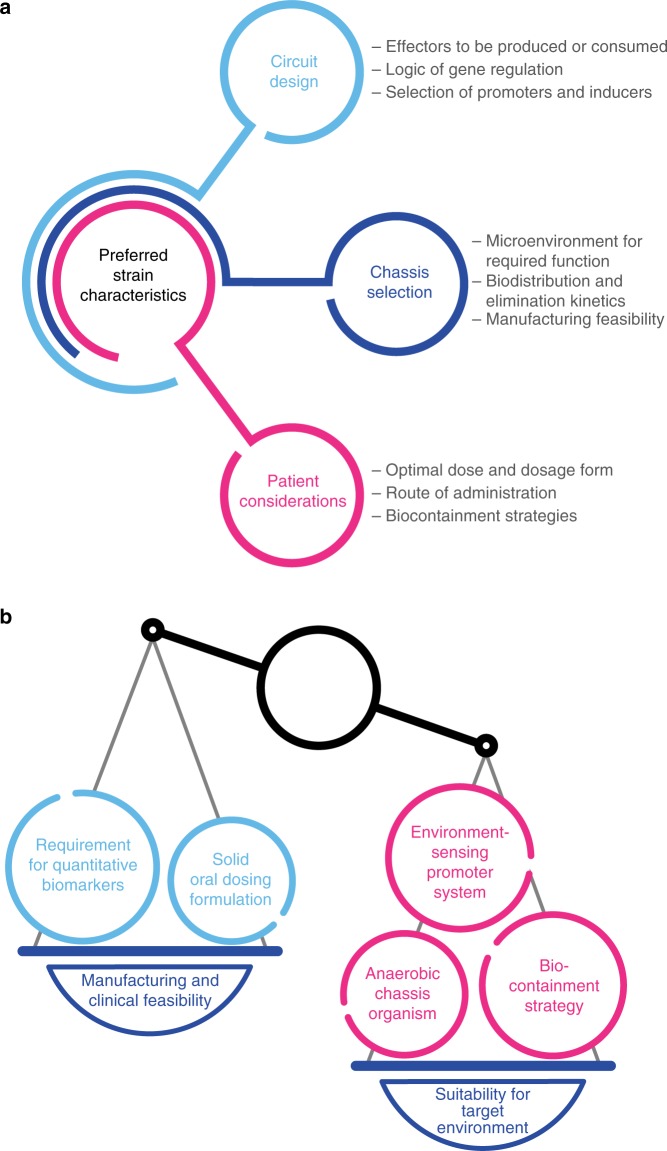
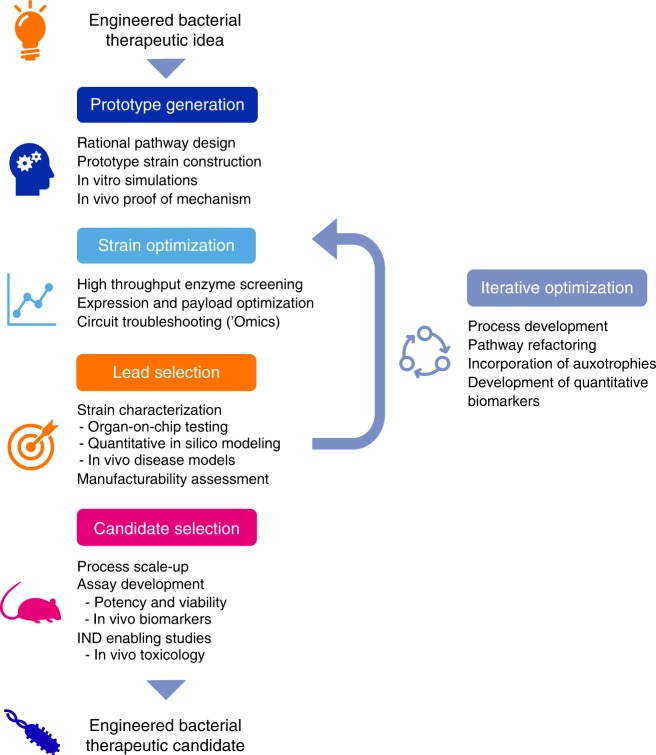
Verification
Claims the paper makes
66 Not checked yet · 19 Own interpretation · 7 No basis given · 1 Partly supported · accuracy not yet measured
The cited sources support only part of this claim — read each source’s verdict below.
In the paper
“In recent years, significant advances have been made in organ-on-chip microfluidic systems that enable investigators to study the effects of engineered microbes on various human tissues, including the permeability of microbial effectors across epithelial barriers and effects on tissue viability78.”
§ Developing a new class of engineered live bacterial therapeutics to treat human diseases > Testing strategies for engineered therapeutic organisms
What the sources say
- Partly supportedcites [78] Kasendra, M. et al. Development of a primary human small intestine-on-a-Chip using biopsy-derived organoids. Sci. Rep. 8, 1–14 (2018). sourceExperimental — accuracy not yet measured
Split into 2 atoms — 1 confirmed, 1 partially supported, 0 disputed, 0 misattributed, 0 unverifiable. Expand the claim to see per-atom verdicts.
plaindirect- Asserted: passes — The authors put it forward as true.
- Checkable: passes — It can be checked against evidence.
- Load-bearing: unclear — It is unclear whether the paper’s conclusions depend on it.
- Based: passes — The paper gives a reason why it holds.
- Partly supported
In the paper
“Since the human colon is an anaerobic environment48, pathways and enzymes that do not require oxygen are preferred.”
§ Developing a new class of engineered live bacterial therapeutics to treat human diseases > Design of engineered therapeutic strains for the human gut
What the sources say
- Not checked yetcites [48] Molly, K., Vande Woestyne, M. & Verstraete, W. Development of a 5-step multi-chamber reactor as a simulation of the human intestinal microbial ecosystem. Appl. Microbiol. Biotechnol. 39, 254–258 (1993). source
plain- Asserted: passes — The authors put it forward as true.
- Checkable: passes — It can be checked against evidence.
- Load-bearing: passes — The paper’s conclusions depend on it.
- Based: passes — The paper gives a reason why it holds.
In the paper
“For example, Hwang et. al. demonstrated that the EcN-based gastrointestinal delivery of anti-biofilm enzyme, dispersin B (DspB), resulted in a reduction of pre-colonized P. aeruginosa abundance in both nematode and murine models29.”
§ Developing a new class of engineered live bacterial therapeutics to treat human diseases > Design of engineered therapeutic strains for the human gut
What the sources say
- Not checked yetcites [29] Hwang, I. Y. et al. Engineered probiotic Escherichia coli can eliminate and prevent Pseudomonas aeruginosa gut infection in animal models. Nat. Commun. 8, 15028 (2017). source
boosteddirect- Asserted: passes — The authors put it forward as true.
- Checkable: passes — It can be checked against evidence.
- Load-bearing: unclear — It is unclear whether the paper’s conclusions depend on it.
- Based: passes — The paper gives a reason why it holds.
A conclusion the paper draws from its own results — it cites no other source for it, so there is none to check. The quote shows it is in the paper.
In the paper
“Engineered bacterial therapeutics possess a potential advantage over alternative microbiota-directed therapeutic approaches, such as fecal microbiota transplants or defined consortia of naturally occurring species, in that genetic engineering can confer functions that are not expressed by the endogenous microbiota.”
§ Developing a new class of engineered live bacterial therapeutics to treat human diseases > Design of engineered therapeutic strains for the human gut
hedgedconditional- Asserted: passes — The authors put it forward as true.
- Checkable: passes — It can be checked against evidence.
- Load-bearing: passes — The paper’s conclusions depend on it.
- Based: passes — The paper gives a reason why it holds.
None of the sources cited for this claim have been checked yet.
In the paper
“Notably, members of the microbial community inhabiting the human gastrointestinal tract (termed the gut microbiota) contribute to several metabolic and immune-mediated diseases, including obesity2, malnutrition3, intestinal inflammatory disease4, as well as to anti-cancer immunity5,6.”
§ Developing a new class of engineered live bacterial therapeutics to treat human diseases > Introduction
What the sources say
- Not checked yetcites [2] Turnbaugh, P. J. et al. An obesity-associated gut microbiome with increased capacity for energy harvest. Nature 444, 1027–1031 (2006). source
- Not checked yetcites [3] Blanton, L. V., Barratt, M. J., Charbonneau, M. R., Ahmed, T. & Gordon, J. I. Childhood undernutrition, the gut microbiota, and microbiota-directed therapeutics. Science 352, 1533 (2016). source
- Not checked yetcites [4] Mazmanian, S. K., Round, J. L. & Kasper, D. L. A microbial symbiosis factor prevents intestinal inflammatory disease. Nature 453, 620–625 (2008). source
plaindirect- Asserted: passes — The authors put it forward as true.
- Checkable: passes — It can be checked against evidence.
- Load-bearing: passes — The paper’s conclusions depend on it.
- Based: passes — The paper gives a reason why it holds.
None of the sources cited for this claim have been checked yet.
In the paper
“In both the United States and Europe, development of LBPs requires the demonstration of quality by establishing safety, reliability, robustness, and consistency of each batch produced10,13.”
§ Developing a new class of engineered live bacterial therapeutics to treat human diseases > Regulatory considerations for live biotherapeutic products
What the sources say
- Not checked yetcites [10] U.S. Department of Health and Human Services, Food and Drug Administration Guidance for Industry. Early clinical trials with live biotherapeutic products: Chemistry, manufacturing, and control information. www.fda.gov/downloads/Biologi%E2%80%A6/UCM292704.pdf (2016).
- Not checked yetcites [13] The European Pharmacopoeia Commission. Live biotherapeutic products for human use 9.7 (2019).
plain- Asserted: passes — The authors put it forward as true.
- Checkable: passes — It can be checked against evidence.
- Load-bearing: unclear — It is unclear whether the paper’s conclusions depend on it.
- Based: passes — The paper gives a reason why it holds.
None of the sources cited for this claim have been checked yet.
In the paper
“Regulating effector expression in response to bacterial quorum sensing molecules29, pH30, specific carbon sources31–33, temperature34, or combinations of these signals may allow for exquisitely tuned effector functions in various intestinal microenvironments7.”
§ Developing a new class of engineered live bacterial therapeutics to treat human diseases > Design of engineered therapeutic strains for the human gut
What the sources say
- Not checked yetcites [7] Pedrolli, D. B. et al. Engineering microbial living therapeutics: the synthetic biology toolbox. Trends Biotechnol. 37, 100–115 (2019). source
- Not checked yetcites [29] Hwang, I. Y. et al. Engineered probiotic Escherichia coli can eliminate and prevent Pseudomonas aeruginosa gut infection in animal models. Nat. Commun. 8, 15028 (2017). source
- Not checked yetcites [30] Chou, C., Aristidou, A. A., Meng, S., Bennett, G. N. & San, K. Characterization of a pH-inducible promoter system for high-level expression of recombinant proteins in Escherichia coli. Biotechnol. Bioeng. 47, 186–192 (1995). source
hedgedconditional- Asserted: passes — The authors put it forward as true.
- Checkable: passes — It can be checked against evidence.
- Load-bearing: passes — The paper’s conclusions depend on it.
- Based: passes — The paper gives a reason why it holds.
In the paper
“For example, several anaerobic-inducible promoters have been characterized in E. coli27, which allow for induction of engineered circuits in the anoxic gut environment, without undesired activation during production of biomass.”
§ Developing a new class of engineered live bacterial therapeutics to treat human diseases > Design of engineered therapeutic strains for the human gut
What the sources say
- Not checked yetcites [27] Khosla, C. & Bailey, J. E. Characterization of the oxygen-dependent promoter of the Vitreoscilla hemoglobin gene in Escherichia coli. J. Bacteriol. 171, 5995–6004 (1989). source
plaindirect- Asserted: passes — The authors put it forward as true.
- Checkable: passes — It can be checked against evidence.
- Load-bearing: passes — The paper’s conclusions depend on it.
- Based: passes — The paper gives a reason why it holds.
In the paper
“Another group has engineered EcN to express genes responsible for the conversion of fructose, a prevalent sugar in the Western diet that contributes to metabolic disorders and cardiovascular disease, to mannitol, a prebiotic that has been demonstrated to confer protection against metabolic syndrome38.”
§ Developing a new class of engineered live bacterial therapeutics to treat human diseases > Design of engineered therapeutic strains for the human gut
What the sources say
- Not checked yetcites [38] Somabhai, C. A., Raghuvanshi, R. & Nareshkumar, G. Genetically engineered Escherichia coli Nissle 1917 synbiotics reduce metabolic effects induced by chronic consumption of dietary fructose. PLoS ONE 11, e0164860 (2016). source
boosteddirect- Asserted: passes — The authors put it forward as true.
- Checkable: passes — It can be checked against evidence.
- Load-bearing: unclear — It is unclear whether the paper’s conclusions depend on it.
- Based: passes — The paper gives a reason why it holds.
None of the sources cited for this claim have been checked yet.
In the paper
“Other groups have reported the successful production of antimicrobial peptides from EcN that are effective for significantly decreasing murine colonization by Enterococcal species36 or Salmonella typhimurium28.”
§ Developing a new class of engineered live bacterial therapeutics to treat human diseases > Design of engineered therapeutic strains for the human gut
What the sources say
- Not checked yetcites [36] Geldart, K. G. et al. Engineered E. coli Nissle 1917 for the reduction of vancomycin-resistant Enterococcus in the intestinal tract. Bioeng. Transl. Med. 3, 197–208 (2018). source
- Not checked yetcites [28] Palmer, J. D. et al. Engineered probiotic for the inhibition of Salmonella via tetrathionate-induced production of Microcin H47. ACS Infect. Dis. 4, 39–45 (2018). source
plaindirect- Asserted: passes — The authors put it forward as true.
- Checkable: passes — It can be checked against evidence.
- Load-bearing: unclear — It is unclear whether the paper’s conclusions depend on it.
- Based: passes — The paper gives a reason why it holds.
- Probably not a substantial claim. 28
- It may state two separate claims as one. 30
The paper states this without a source or data behind it here, so there is nothing to check it against. The quote shows it is in the paper.
In the paper
“Indeed, several recombinant bacterial therapeutics are currently being explored clinically (Table 1), and patients are actively enrolling in these trials and accepting the associated risks.”
§ Developing a new class of engineered live bacterial therapeutics to treat human diseases > Perspective and future developments
plain- Asserted: passes — The authors put it forward as true.
- Checkable: passes — It can be checked against evidence.
- Load-bearing: fails — The paper’s conclusions may not depend on it.
- Based: fails — The paper may give no reason why it holds.
Probably not a substantial claim. The paper’s conclusions may not depend on it. The paper may give no reason why it holds. It may state two separate claims as one.
The paper states this without a source or data behind it here, so there is nothing to check it against. The quote shows it is in the paper.
In the paper
“Several engineered live bacterial therapeutics are currently entering early or mid-stage clinical development and are poised to deliver the proof of concept needed to unlock the potential for this new class of therapeutics.”
§ Developing a new class of engineered live bacterial therapeutics to treat human diseases > Perspective and future developments
plain- Asserted: passes — The authors put it forward as true.
- Checkable: passes — It can be checked against evidence.
- Load-bearing: passes — The paper’s conclusions depend on it.
- Based: fails — The paper may give no reason why it holds.
Probably not a substantial claim. The paper may give no reason why it holds.
In the paper
“Escherichia coli Nissle 1917 (EcN) has been used as a probiotic since its isolation over 100 years ago21.”
§ Developing a new class of engineered live bacterial therapeutics to treat human diseases > Design of engineered therapeutic strains for the human gut
What the sources say
- Not checked yetcites [21] Beimfohr, C. A review of research conducted with probiotic E. coli marketed as symbioflor. Int. J. Bacteriol. 2016, 3535621 (2016). source
plain- Asserted: passes — The authors put it forward as true.
- Checkable: passes — It can be checked against evidence.
- Load-bearing: fails — The paper’s conclusions may not depend on it.
- Based: passes — The paper gives a reason why it holds.
Probably not a substantial claim. The paper’s conclusions may not depend on it.
None of the sources cited for this claim have been checked yet.
In the paper
“Similar to EcN, these genera do not colonize the human gut, thus allowing for predictive pharmacokinetic profiling of therapeutic strains41,42.”
§ Developing a new class of engineered live bacterial therapeutics to treat human diseases > Design of engineered therapeutic strains for the human gut
What the sources say
- Not checked yetcites [41] Song, A. A., In, L. L. A., Lim, S. H. E. & Rahim, R. A. A review on Lactococcus lactis: from food to factory. Microb. Cell Factories 16, 55 (2017). source
- Not checked yetcites [42] Vesa, Pochart & Marteau. Pharmacokinetics of Lactobacillus plantarum NCIMB 8826, Lactobacillus fermentum KLD, and Lactococcus lactis MG 1363 in the human gastrointestinal tract. Aliment. Pharmacol. Ther. 14, 823–828 (2000). source
plaindirect- Asserted: passes — The authors put it forward as true.
- Checkable: passes — It can be checked against evidence.
- Load-bearing: passes — The paper’s conclusions depend on it.
- Based: passes — The paper gives a reason why it holds.
It may state two separate claims as one.
The paper states this without a source or data behind it here, so there is nothing to check it against. The quote shows it is in the paper.
In the paper
“Acto Bio Therapeutics currently has three engineered candidate strains in clinical development using the chassis organism Lactococcus lactis (Table 1).”
§ Developing a new class of engineered live bacterial therapeutics to treat human diseases > Design of engineered therapeutic strains for the human gut
plain- Asserted: passes — The authors put it forward as true.
- Checkable: passes — It can be checked against evidence.
- Load-bearing: fails — The paper’s conclusions may not depend on it.
- Based: passes — The paper gives a reason why it holds.
Probably not a substantial claim. The paper’s conclusions may not depend on it.
None of the sources cited for this claim have been checked yet.
In the paper
“They must also be studied in well-controlled clinical trials in the intended patient population to establish safety and efficacy10–12.”
§ Developing a new class of engineered live bacterial therapeutics to treat human diseases > Regulatory considerations for live biotherapeutic products
What the sources say
- Not checked yetcites [10] U.S. Department of Health and Human Services, Food and Drug Administration Guidance for Industry. Early clinical trials with live biotherapeutic products: Chemistry, manufacturing, and control information. www.fda.gov/downloads/Biologi%E2%80%A6/UCM292704.pdf (2016).
- Not checked yetcites [11] Deal, C. Science and Regulation of Live Microbiome-Based Products Used to Prevent, Treat, or Cure Diseases in Humans - 09/17/2018 - 09/17/2018. (U.S. Food and Drug Administration, 2019). http://www.fda.gov/vaccines-blood-biologics/workshops-meetings-conferences-biologics/science-and-regulation-live-microbiome-based-products-used-prevent-treat-or-cure-diseases-humans.
- Not checked yetcites [12] Ross, J. J. et al. Considerations in the development of live biotherapeutic products for clinical use. Curr. Issues Mol. Biol. 10, 13–16 (2008).
plain- Asserted: passes — The authors put it forward as true.
- Checkable: passes — It can be checked against evidence.
- Load-bearing: fails — The paper’s conclusions may not depend on it.
- Based: passes — The paper gives a reason why it holds.
Probably not a substantial claim. The paper’s conclusions may not depend on it.
A conclusion the paper draws from its own results — it cites no other source for it, so there is none to check. The quote shows it is in the paper.
In the paper
“However, the genetic stability of an engineered live bacterial therapeutic is a concern for organisms that are intended to replicate within and/or colonize the patient’s microbiota, and it may be possible for the strain to transfer engineered genetic material to other members of the endogenous microbiota.”
§ Developing a new class of engineered live bacterial therapeutics to treat human diseases > Design of engineered therapeutic strains for the human gut
hedgedconditional- Asserted: passes — The authors put it forward as true.
- Checkable: passes — It can be checked against evidence.
- Load-bearing: passes — The paper’s conclusions depend on it.
- Based: unclear — It is unclear why the paper says it holds.
It may state two separate claims as one.
A conclusion the paper draws from its own results — it cites no other source for it, so there is none to check. The quote shows it is in the paper.
In the paper
“However, the need for strict anaerobiosis may complicate manufacturing of these organisms.”
§ Developing a new class of engineered live bacterial therapeutics to treat human diseases > Design of engineered therapeutic strains for the human gut
hedgedconditional- Asserted: passes — The authors put it forward as true.
- Checkable: passes — It can be checked against evidence.
- Load-bearing: fails — The paper’s conclusions may not depend on it.
- Based: fails — The paper may give no reason why it holds.
Probably not a substantial claim. The paper’s conclusions may not depend on it. The paper may give no reason why it holds.
A conclusion the paper draws from its own results — it cites no other source for it, so there is none to check. The quote shows it is in the paper.
In the paper
“However, if there is a risk that the organism may reach other tissues, additional studies could be required to support the safety of the LBP.”
§ Developing a new class of engineered live bacterial therapeutics to treat human diseases > Regulatory considerations for live biotherapeutic products
hedgedconditional- Asserted: passes — The authors put it forward as true.
- Checkable: fails — It may be too vague to check against evidence.
- Load-bearing: fails — The paper’s conclusions may not depend on it.
- Based: passes — The paper gives a reason why it holds.
Probably not a substantial claim. It may be too vague to check against evidence. The paper’s conclusions may not depend on it.
None of the sources cited for this claim have been checked yet.
In the paper
“Additionally, EcN may interact with the intestinal epithelium to stimulate anti-inflammatory activities24, as well as to restore and maintain intestinal barrier function25.”
§ Developing a new class of engineered live bacterial therapeutics to treat human diseases > Design of engineered therapeutic strains for the human gut
What the sources say
- Not checked yetcites [24] Fábrega, M. J. et al. Intestinal anti-inflammatory effects of outer membrane vesicles from Escherichia coli Nissle 1917 in DSS-experimental colitis in mice. Front. Microbiol. 8, 1274 (2017). source
- Not checked yetcites [25] Guo, S. et al. Escherichia coli Nissle 1917 protects intestinal barrier function by inhibiting NF-κB-mediated activation of the MLCK-P-MLC signaling pathway. Mediators Inflamm. 2019, 5796491 (2019). source
hedgedconditional- Asserted: passes — The authors put it forward as true.
- Checkable: passes — It can be checked against evidence.
- Load-bearing: unclear — It is unclear whether the paper’s conclusions depend on it.
- Based: passes — The paper gives a reason why it holds.
It may state two separate claims as one.
In the paper
“Recently, Shepherd et al. engineered Bacteroides ovatus to metabolize porphyran, a marine polysaccharide that is rarely encountered in a Western diet44. The resulting strain, B. ovatus NB001, was shown to stably engraft in the colonic microbiota of mice supplemented with porphyran in the diet, and the fecal abundance of this strain was titratable by modulating dietary porphyran44.”
§ Developing a new class of engineered live bacterial therapeutics to treat human diseases > Design of engineered therapeutic strains for the human gut
What the sources say
- Not checked yetcites [44] Shepherd, E. S., DeLoache, W. C., Pruss, K. M., Whitaker, W. R. & Sonnenburg, J. L. An exclusive metabolic niche enables strain engraftment in the gut microbiota. Nature 557, 434–438 (2018). source
plaindirect- Asserted: passes — The authors put it forward as true.
- Checkable: passes — It can be checked against evidence.
- Load-bearing: unclear — It is unclear whether the paper’s conclusions depend on it.
- Based: passes — The paper gives a reason why it holds.
It may state two separate claims as one.
None of the sources cited for this claim have been checked yet.
In the paper
“Many bacterial species have been evolutionarily selected for metabolic function within the mammalian gastrointestinal tract, and some probiotic organisms have a long history of safe use in humans18,19.”
§ Developing a new class of engineered live bacterial therapeutics to treat human diseases > Design of engineered therapeutic strains for the human gut
What the sources say
- Not checked yetcites [18] Sonnenborn, U. Escherichia coli strain Nissle 1917-from bench to bedside and back: history of a special Escherichia coli strain with probiotic properties. FEMS Microbiol. Lett. 363, fnw212 (2016). source
- Not checked yetcites [19] Schultz, M. Clinical use of E. coli Nissle 1917 in inflammatory bowel disease. Inflamm. Bowel Dis. 14, 1012–1018 (2008). source
plain- Asserted: passes — The authors put it forward as true.
- Checkable: passes — It can be checked against evidence.
- Load-bearing: passes — The paper’s conclusions depend on it.
- Based: passes — The paper gives a reason why it holds.
It may state two separate claims as one.
A conclusion the paper draws from its own results — it cites no other source for it, so there is none to check. The quote shows it is in the paper.
In the paper
“While this genetic transfer is unlikely to be directly harmful to the patient, it may eliminate the competitive advantage of the engineered strain and undermine the efficacy of treatment.”
§ Developing a new class of engineered live bacterial therapeutics to treat human diseases > Design of engineered therapeutic strains for the human gut
hedgedconditional- Asserted: passes — The authors put it forward as true.
- Checkable: passes — It can be checked against evidence.
- Load-bearing: passes — The paper’s conclusions depend on it.
- Based: passes — The paper gives a reason why it holds.
It may state two separate claims as one.
None of the sources cited for this claim have been checked yet.
In the paper
“LBPs are distinguished from probiotic supplements on the basis of their labeling claims, as most probiotics are regulated as dietary supplements and cannot make claims to treat or prevent disease10–12.”
§ Developing a new class of engineered live bacterial therapeutics to treat human diseases > Regulatory considerations for live biotherapeutic products
What the sources say
- Not checked yetcites [10] U.S. Department of Health and Human Services, Food and Drug Administration Guidance for Industry. Early clinical trials with live biotherapeutic products: Chemistry, manufacturing, and control information. www.fda.gov/downloads/Biologi%E2%80%A6/UCM292704.pdf (2016).
- Not checked yetcites [11] Deal, C. Science and Regulation of Live Microbiome-Based Products Used to Prevent, Treat, or Cure Diseases in Humans - 09/17/2018 - 09/17/2018. (U.S. Food and Drug Administration, 2019). http://www.fda.gov/vaccines-blood-biologics/workshops-meetings-conferences-biologics/science-and-regulation-live-microbiome-based-products-used-prevent-treat-or-cure-diseases-humans.
- Not checked yetcites [12] Ross, J. J. et al. Considerations in the development of live biotherapeutic products for clinical use. Curr. Issues Mol. Biol. 10, 13–16 (2008).
plaindirect- Asserted: passes — The authors put it forward as true.
- Checkable: passes — It can be checked against evidence.
- Load-bearing: fails — The paper’s conclusions may not depend on it.
- Based: passes — The paper gives a reason why it holds.
Probably not a substantial claim. The paper’s conclusions may not depend on it.
None of the sources cited for this claim have been checked yet.
In the paper
“Engineered LBPs can be designed to perform natural biological processes, such as the assimilation of ammonia into amino acids, at significantly increased rates14 and to produce effectors that are not native to bacteria, including human proteins16.”
§ Developing a new class of engineered live bacterial therapeutics to treat human diseases > Design of engineered therapeutic strains for the human gut
What the sources say
- Not checked yetcites [14] Kurtz, C. B. et al. An engineered E. coli Nissle improves hyperammonemia and survival in mice and shows dose-dependent exposure in healthy humans. Sci. Transl. Med. 11, eaau7975 (2019). source
- Not checked yetcites [16] Braat, H. et al. A phase I trial with transgenic bacteria expressing interleukin-10 in Crohn’s disease. Clin. Gastroenterol. Hepatol. 4, 754–759 (2006). source
plaindirect- Asserted: passes — The authors put it forward as true.
- Checkable: passes — It can be checked against evidence.
- Load-bearing: passes — The paper’s conclusions depend on it.
- Based: passes — The paper gives a reason why it holds.
It may state two separate claims as one.
A conclusion the paper draws from its own results — it cites no other source for it, so there is none to check. The quote shows it is in the paper.
In the paper
“Gene cassettes conferring the ability to utilize porphyran, for example, could be horizontally transferred to other members of the gut microbiota.”
§ Developing a new class of engineered live bacterial therapeutics to treat human diseases > Design of engineered therapeutic strains for the human gut
hedgedconditional- Asserted: passes — The authors put it forward as true.
- Checkable: passes — It can be checked against evidence.
- Load-bearing: passes — The paper’s conclusions depend on it.
- Based: fails — The paper may give no reason why it holds.
Probably not a substantial claim. The paper may give no reason why it holds.
In the paper
“Moreover, while the colon harbors a diverse microbiota, these organisms are predominantly localized to a loosely adherent layer of mucus49.”
§ Developing a new class of engineered live bacterial therapeutics to treat human diseases > Design of engineered therapeutic strains for the human gut
What the sources say
- Not checked yetcites [49] Welch, J. L. M., Hasegawa, Y., McNulty, N. P., Gordon, J. I. & Borisy, G. G. Spatial organization of a model 15-member human gut microbiota established in gnotobiotic mice. Proc. Natl Acad. Sci. USA 114, E9105–E9114 (2017). source
plain- Asserted: passes — The authors put it forward as true.
- Checkable: passes — It can be checked against evidence.
- Load-bearing: passes — The paper’s conclusions depend on it.
- Based: passes — The paper gives a reason why it holds.
It may state two separate claims as one.
In the paper
“Studies of radiolabeled E. coli in gnotobiotic mice have demonstrated that mucus-adherent E. coli display significantly higher rates of replication than those in the colonic lumen50. Interestingly, no differences in replication rates were observed for Bacteroides thetaiotaomicron50.”
§ Developing a new class of engineered live bacterial therapeutics to treat human diseases > Design of engineered therapeutic strains for the human gut
What the sources say
- Not checked yetcites [50] Li, H. et al. The outer mucus layer hosts a distinct intestinal microbial niche. Nat. Commun. 6, 8292 (2015). source
boosted- Asserted: passes — The authors put it forward as true.
- Checkable: passes — It can be checked against evidence.
- Load-bearing: unclear — It is unclear whether the paper’s conclusions depend on it.
- Based: passes — The paper gives a reason why it holds.
It may state two separate claims as one.
In the paper
“Strict anaerobes, including Bacteroides spp., may be useful chassis organisms due to their abundance in the colonic microbiota of humans, as well as their capacity to consume complex dietary and host-derived glycans51.”
§ Developing a new class of engineered live bacterial therapeutics to treat human diseases > Design of engineered therapeutic strains for the human gut
What the sources say
- Not checked yetcites [51] Grondin, J. M., Tamura, K., Déjean, G., Abbott, D. W. & Brumer, H. Polysaccharide Utilization Loci: Fueling Microbial Communities. J. Bacteriol. https://doi.org/10.1128/JB.00860-16 (2017). source
hedgedconditional- Asserted: passes — The authors put it forward as true.
- Checkable: passes — It can be checked against evidence.
- Load-bearing: passes — The paper’s conclusions depend on it.
- Based: passes — The paper gives a reason why it holds.
It may state two separate claims as one.
In the paper
“Chen et al. demonstrated that an N-acylphosphatidylethanolamine (NAPE)-producing strain of EcN could significantly ameliorate symptoms associated with high-fat diet feeding in mice. Mice treated with this recombinant EcN displayed reduced adiposity, insulin resistance, and hepatosteatosis compared to animals treated with an unengineered EcN control37.”
§ Developing a new class of engineered live bacterial therapeutics to treat human diseases > Design of engineered therapeutic strains for the human gut
What the sources say
- Not checked yetcites [37] Chen, Z. et al. Incorporation of therapeutically modified bacteria into gut microbiota inhibits obesity. J. Clin. Invest. 124, 3391–3406 (2014). source
boosteddirect- Asserted: passes — The authors put it forward as true.
- Checkable: passes — It can be checked against evidence.
- Load-bearing: unclear — It is unclear whether the paper’s conclusions depend on it.
- Based: passes — The paper gives a reason why it holds.
It may state two separate claims as one.
In the paper
“In 2016, the FDA issued a guidance document describing the regulatory considerations for conducting clinical trials with LBPs10.”
§ Developing a new class of engineered live bacterial therapeutics to treat human diseases > Regulatory considerations for live biotherapeutic products
What the sources say
- Not checked yetcites [10] U.S. Department of Health and Human Services, Food and Drug Administration Guidance for Industry. Early clinical trials with live biotherapeutic products: Chemistry, manufacturing, and control information. www.fda.gov/downloads/Biologi%E2%80%A6/UCM292704.pdf (2016).
plain- Asserted: passes — The authors put it forward as true.
- Checkable: passes — It can be checked against evidence.
- Load-bearing: fails — The paper’s conclusions may not depend on it.
- Based: passes — The paper gives a reason why it holds.
Probably not a substantial claim. The paper’s conclusions may not depend on it.
In the paper
“The European Pharmacopeia published a monograph setting the quality standards for LBPs for human use, in European Pharmacopoeia, Supplement 9.7; effective in April 201913.”
§ Developing a new class of engineered live bacterial therapeutics to treat human diseases > Regulatory considerations for live biotherapeutic products
What the sources say
- Not checked yetcites [13] The European Pharmacopoeia Commission. Live biotherapeutic products for human use 9.7 (2019).
plain- Asserted: passes — The authors put it forward as true.
- Checkable: passes — It can be checked against evidence.
- Load-bearing: fails — The paper’s conclusions may not depend on it.
- Based: passes — The paper gives a reason why it holds.
Probably not a substantial claim. The paper’s conclusions may not depend on it.
A conclusion the paper draws from its own results — it cites no other source for it, so there is none to check. The quote shows it is in the paper.
In the paper
“However, chemically inducible promoters are less amenable to intratumoral applications, since achieving an effective concentration of the inducer molecule in situ may be challenging, and some such compounds are not Generally Regarded As Safe (GRAS) for human use.”
§ Developing a new class of engineered live bacterial therapeutics to treat human diseases > Design of engineered therapeutic strains for solid tumors
plaindirect- Asserted: passes — The authors put it forward as true.
- Checkable: passes — It can be checked against evidence.
- Load-bearing: passes — The paper’s conclusions depend on it.
- Based: passes — The paper gives a reason why it holds.
It may state two separate claims as one.
None of the sources cited for this claim have been checked yet.
In the paper
“In recent years, automated parallel bioreactor systems have accelerated fermentation process development by combining smaller volumes and higher throughput to enable greater iteration than traditional benchtop bioreactors84–86.”
§ Developing a new class of engineered live bacterial therapeutics to treat human diseases > Manufacturability of engineered live bacterial therapeutics
What the sources say
- Not checked yetcites [84] Xu, P. et al. Characterization of TAP Ambr 250 disposable bioreactors, as a reliable scale-down model for biologics process development. Biotechnol. Prog. 33, 478–489 (2017). source
- Not checked yetcites [85] Sandner, V., Pybus, L. P., McCreath, G. & Glassey, J. Scale-down model development in ambr systems: an industrial perspective. Biotechnol. J. 14, e1700766 (2019). source
- Not checked yetcites [86] Manahan, M. et al. Scale-down model qualification of ambr® 250 high-throughput mini-bioreactor system for two commercial-scale mAb processes. Biotechnol. Prog. https://doi.org/10.1002/btpr.2870 (2019). source
plaindirect- Asserted: passes — The authors put it forward as true.
- Checkable: passes — It can be checked against evidence.
- Load-bearing: fails — The paper’s conclusions may not depend on it.
- Based: passes — The paper gives a reason why it holds.
Probably not a substantial claim. The paper’s conclusions may not depend on it.
The paper states this without a source or data behind it here, so there is nothing to check it against. The quote shows it is in the paper.
In the paper
“The selection of an appropriate animal model depends on the question being addressed, as the translational value of animal models varies by species and genotype.”
§ Developing a new class of engineered live bacterial therapeutics to treat human diseases > Testing strategies for engineered therapeutic organisms
plaincorrelational- Asserted: passes — The authors put it forward as true.
- Checkable: passes — It can be checked against evidence.
- Load-bearing: unclear — It is unclear whether the paper’s conclusions depend on it.
- Based: passes — The paper gives a reason why it holds.
It may state two separate claims as one.
In the paper
“Human gastrointestinal anatomy and physiology is more closely approximated by pigs and non-human primates than by rodent models80, but models of disease states may be unavailable in these large animal species.”
§ Developing a new class of engineered live bacterial therapeutics to treat human diseases > Testing strategies for engineered therapeutic organisms
What the sources say
- Not checked yetcites [80] Hatton, G. B., Yadav, V., Basit, A. W. & Merchant, H. A. Animal farm: considerations in animal gastrointestinal physiology and relevance to drug delivery in humans. J. Pharm. Sci. 104, 2747–2776 (2015). source
plaincorrelational- Asserted: passes — The authors put it forward as true.
- Checkable: passes — It can be checked against evidence.
- Load-bearing: unclear — It is unclear whether the paper’s conclusions depend on it.
- Based: passes — The paper gives a reason why it holds.
It may state two separate claims as one.
A conclusion the paper draws from its own results — it cites no other source for it, so there is none to check. The quote shows it is in the paper.
In the paper
“Moreover, these in vitro simulations can elucidate the kinetics of engineered circuit regulation and function over timescales that are relevant to human biology.”
§ Developing a new class of engineered live bacterial therapeutics to treat human diseases > Testing strategies for engineered therapeutic organisms
plaindirect- Asserted: passes — The authors put it forward as true.
- Checkable: passes — It can be checked against evidence.
- Load-bearing: passes — The paper’s conclusions depend on it.
- Based: fails — The paper may give no reason why it holds.
Probably not a substantial claim. The paper may give no reason why it holds.
In the paper
“In a similar study, Wei et al. engineered Bifidobacterium longum to express the proapoptotic compound, tumstatin68. This strain was shown to inhibit tumor growth in a mouse model by various routes of administration68.”
§ Developing a new class of engineered live bacterial therapeutics to treat human diseases > Design of engineered therapeutic strains for solid tumors
What the sources say
- Not checked yetcites [68] Wei, C. et al. Bifidobacteria expressing tumstatin protein for antitumor therapy in tumor-bearing mice. Technol. Cancer Res. Treat. 15, 498–508 (2016). source
plaindirect- Asserted: passes — The authors put it forward as true.
- Checkable: passes — It can be checked against evidence.
- Load-bearing: unclear — It is unclear whether the paper’s conclusions depend on it.
- Based: passes — The paper gives a reason why it holds.
It may state two separate claims as one.
A conclusion the paper draws from its own results — it cites no other source for it, so there is none to check. The quote shows it is in the paper.
In the paper
“While several examples of effectors have shown promise preclinically, rigorous clinical trials will be required to determine whether these results translate to heterogeneous human cancers that have been recalcitrant to current modes of therapy.”
§ Developing a new class of engineered live bacterial therapeutics to treat human diseases > Design of engineered therapeutic strains for solid tumors
plainconditional- Asserted: passes — The authors put it forward as true.
- Checkable: fails — It may be too vague to check against evidence.
- Load-bearing: fails — The paper’s conclusions may not depend on it.
- Based: passes — The paper gives a reason why it holds.
Probably not a substantial claim. It may be too vague to check against evidence. The paper’s conclusions may not depend on it. It may state two separate claims as one.
A conclusion the paper draws from its own results — it cites no other source for it, so there is none to check. The quote shows it is in the paper.
In the paper
“To help address these concerns, nutritional auxotrophies or kill switches can be utilized in engineered strains to prevent replication inside the host organism as well as to control the duration of therapeutic activity and limit the potential toxicity of an engineered strain to patients.”
§ Developing a new class of engineered live bacterial therapeutics to treat human diseases > Design of engineered therapeutic strains for solid tumors
plaindirect- Asserted: passes — The authors put it forward as true.
- Checkable: passes — It can be checked against evidence.
- Load-bearing: passes — The paper’s conclusions depend on it.
- Based: fails — The paper may give no reason why it holds.
Probably not a substantial claim. The paper may give no reason why it holds. It may state two separate claims as one.
The paper states this without a source or data behind it here, so there is nothing to check it against. The quote shows it is in the paper.
In the paper
“However, the requirements for clinical development of engineered biotherapeutics, including diligent toxicology studies and adherence to regulatory guidelines, do not scale similarly and represent significant cost and effort for each candidate strain.”
§ Developing a new class of engineered live bacterial therapeutics to treat human diseases > Testing strategies for engineered therapeutic organisms
plain- Asserted: passes — The authors put it forward as true.
- Checkable: passes — It can be checked against evidence.
- Load-bearing: passes — The paper’s conclusions depend on it.
- Based: fails — The paper may give no reason why it holds.
Probably not a substantial claim. The paper may give no reason why it holds. It may state two separate claims as one.
In the paper
“Oral administration of SYNB1618 was shown to significantly lower blood Phe concentrations in a mouse model of PKU, as well as to result in dose-dependent production of the PAL-specific urinary biomarker, hippuric acid, in healthy non-human primates.”
§ Developing a new class of engineered live bacterial therapeutics to treat human diseases > Design of engineered therapeutic strains for the human gut
What the sources say
- Not checked yetcites [54] Isabella, V. M. et al. Development of a synthetic live bacterial therapeutic for the human metabolic disease phenylketonuria. Nat. Biotechnol. 36, 857–864 (2018). source
plaindirect- Asserted: passes — The authors put it forward as true.
- Checkable: passes — It can be checked against evidence.
- Load-bearing: passes — The paper’s conclusions depend on it.
- Based: passes — The paper gives a reason why it holds.
It may state two separate claims as one.
None of the sources cited for this claim have been checked yet.
In the paper
“For example, E. coli has been shown to colonize the region surrounding the necrotic core of tumors after intravenous injection9, and several reports have demonstrated the use of engineered E. coli strains to treat solid tumors in preclinical models15,62–65.”
§ Developing a new class of engineered live bacterial therapeutics to treat human diseases > Design of engineered therapeutic strains for solid tumors
What the sources say
- Not checked yetcites [9] Stritzker, J. et al. Tumor-specific colonization, tissue distribution, and gene induction by probiotic Escherichia coli Nissle 1917 in live mice. Int. J. Med. Microbiol. IJMM 297, 151–162 (2007). source
- Not checked yetcites [15] Chowdhury, S. et al. Programmable bacteria induce durable tumor regression and systemic antitumor immunity. Nat. Med. 25, 1057–1063 (2019). source
- Not checked yetcites [62] Yamada, T. et al. Apoptosis or growth arrest: modulation of tumor suppressor p53’s specificity by bacterial redox protein azurin. Proc. Natl Acad. Sci. USA 101, 4770–4775 (2004). source
- Not checked yetcites [63] Zhang, Y. et al. Escherichia coli Nissle 1917 targets and restrains mouse B16 Melanoma and 4T1 breast tumors through expression of Azurin protein. Appl. Environ. Microbiol. 78, 7603–7610 (2012). source
- Not checked yetcites [64] Li, R. et al. Expressing cytotoxic compounds in Escherichia coli Nissle 1917 for tumor-targeting therapy. Res. Microbiol. 170, 74–79 (2019). source
- Not checked yetcites [65] Ho, C. L. et al. Engineered commensal microbes for diet-mediated colorectal-cancer chemoprevention. Nat. Biomed. Eng. 2, 27–37 (2018). source
boosteddirect- Asserted: passes — The authors put it forward as true.
- Checkable: passes — It can be checked against evidence.
- Load-bearing: passes — The paper’s conclusions depend on it.
- Based: passes — The paper gives a reason why it holds.
It may state two separate claims as one.
A conclusion the paper draws from its own results — it cites no other source for it, so there is none to check. The quote shows it is in the paper.
In the paper
“However, the selection of engineered therapeutic effectors is likely to be critical for efficacy in patients.”
§ Developing a new class of engineered live bacterial therapeutics to treat human diseases > Design of engineered therapeutic strains for solid tumors
hedgedconditional- Asserted: passes — The authors put it forward as true.
- Checkable: fails — It may be too vague to check against evidence.
- Load-bearing: passes — The paper’s conclusions depend on it.
- Based: fails — The paper may give no reason why it holds.
Probably not a substantial claim. It may be too vague to check against evidence. The paper may give no reason why it holds.
In the paper
“For example, while mice are readily available for preclinical studies, the oral bioavailability of small molecule drugs in humans and rodents have demonstrated poor correlation80.”
§ Developing a new class of engineered live bacterial therapeutics to treat human diseases > Testing strategies for engineered therapeutic organisms
What the sources say
- Not checked yetcites [80] Hatton, G. B., Yadav, V., Basit, A. W. & Merchant, H. A. Animal farm: considerations in animal gastrointestinal physiology and relevance to drug delivery in humans. J. Pharm. Sci. 104, 2747–2776 (2015). source
boostedcorrelational- Asserted: passes — The authors put it forward as true.
- Checkable: passes — It can be checked against evidence.
- Load-bearing: unclear — It is unclear whether the paper’s conclusions depend on it.
- Based: passes — The paper gives a reason why it holds.
It may state two separate claims as one.
In the paper
“In another report, Chowdhury et al. engineered a non-pathogenic E. coli strain to lyse specifically within the tumor microenvironment and release an anti-CD47 antagonist nanobody. The authors demonstrated the activation of tumor-infiltrating T cells, tumor regression, and long-term survival in a syngeneic tumor model in mice, as well as abscopal effects on untreated tumors15.”
§ Developing a new class of engineered live bacterial therapeutics to treat human diseases > Design of engineered therapeutic strains for solid tumors
What the sources say
- Not checked yetcites [15] Chowdhury, S. et al. Programmable bacteria induce durable tumor regression and systemic antitumor immunity. Nat. Med. 25, 1057–1063 (2019). source
boosteddirect- Asserted: passes — The authors put it forward as true.
- Checkable: passes — It can be checked against evidence.
- Load-bearing: unclear — It is unclear whether the paper’s conclusions depend on it.
- Based: passes — The paper gives a reason why it holds.
It may state two separate claims as one.
In the paper
“Quantitative systems pharmacology approaches have been widely used to accelerate drug development for other modalities, including small molecules and recombinant proteins, by modeling the pharmacokinetic and pharmacodynamic properties of drug candidates across a wide assortment of therapeutic indications82.”
§ Developing a new class of engineered live bacterial therapeutics to treat human diseases > Testing strategies for engineered therapeutic organisms
What the sources say
- Not checked yetcites [82] Milligan, P. A. et al. Model-based drug development: a rational approach to efficiently accelerate drug development. Clin. Pharmacol. Ther. 93, 502–514 (2013). source
plaindirect- Asserted: passes — The authors put it forward as true.
- Checkable: passes — It can be checked against evidence.
- Load-bearing: fails — The paper’s conclusions may not depend on it.
- Based: passes — The paper gives a reason why it holds.
Probably not a substantial claim. The paper’s conclusions may not depend on it.
None of the sources cited for this claim have been checked yet.
In the paper
“Zhang et al. developed a strain of EcN to express azurin, a small bacterial protein that induces apoptosis in tumor cells62. This engineered strain suppressed the growth of tumors and prevented pulmonary metastasis in mice63.”
§ Developing a new class of engineered live bacterial therapeutics to treat human diseases > Design of engineered therapeutic strains for solid tumors
What the sources say
- Not checked yetcites [62] Yamada, T. et al. Apoptosis or growth arrest: modulation of tumor suppressor p53’s specificity by bacterial redox protein azurin. Proc. Natl Acad. Sci. USA 101, 4770–4775 (2004). source
- Not checked yetcites [63] Zhang, Y. et al. Escherichia coli Nissle 1917 targets and restrains mouse B16 Melanoma and 4T1 breast tumors through expression of Azurin protein. Appl. Environ. Microbiol. 78, 7603–7610 (2012). source
plaindirect- Asserted: passes — The authors put it forward as true.
- Checkable: passes — It can be checked against evidence.
- Load-bearing: unclear — It is unclear whether the paper’s conclusions depend on it.
- Based: passes — The paper gives a reason why it holds.
It may state two separate claims as one.
In the paper
“More recently, Ho et al. engineered EcN for the treatment of colorectal cancer by expressing HlpA, a protein that binds specifically to a heparan sulphate proteoglycan, enabling engineered EcN to specifically target polyps in a murine colorectal cancer model65.”
§ Developing a new class of engineered live bacterial therapeutics to treat human diseases > Design of engineered therapeutic strains for solid tumors
What the sources say
- Not checked yetcites [65] Ho, C. L. et al. Engineered commensal microbes for diet-mediated colorectal-cancer chemoprevention. Nat. Biomed. Eng. 2, 27–37 (2018). source
plaindirect- Asserted: passes — The authors put it forward as true.
- Checkable: passes — It can be checked against evidence.
- Load-bearing: unclear — It is unclear whether the paper’s conclusions depend on it.
- Based: passes — The paper gives a reason why it holds.
It may state two separate claims as one.
A conclusion the paper draws from its own results — it cites no other source for it, so there is none to check. The quote shows it is in the paper.
In the paper
“Engineered LBPs have the potential for delivering a living medicine that can sense signals within the patient, respond at the site of disease, and alleviate concerns of systemic exposure and toxicity.”
§ Developing a new class of engineered live bacterial therapeutics to treat human diseases > Perspective and future developments
hedgedconditional- Asserted: passes — The authors put it forward as true.
- Checkable: fails — It may be too vague to check against evidence.
- Load-bearing: passes — The paper’s conclusions depend on it.
- Based: fails — The paper may give no reason why it holds.
Probably not a substantial claim. It may be too vague to check against evidence. The paper may give no reason why it holds. It may state two separate claims as one.
In the paper
“In this case, assessment of viability using commercial live/dead stains to detect intact cell membranes may be more appropriate for enumerating cells in the drug product88.”
§ Developing a new class of engineered live bacterial therapeutics to treat human diseases > Manufacturability of engineered live bacterial therapeutics
What the sources say
- Not checked yetcites [88] Boulos, L., Prévost, M., Barbeau, B., Coallier, J. & Desjardins, R. LIVE/DEAD® BacLightTM: application of a new rapid staining method for direct enumeration of viable and total bacteria in drinking water. J. Microbiol. Methods 37, 77–86 (1999). source
hedgedconditional- Asserted: passes — The authors put it forward as true.
- Checkable: fails — It may be too vague to check against evidence.
- Load-bearing: fails — The paper’s conclusions may not depend on it.
- Based: passes — The paper gives a reason why it holds.
Probably not a substantial claim. It may be too vague to check against evidence. The paper’s conclusions may not depend on it.
A conclusion the paper draws from its own results — it cites no other source for it, so there is none to check. The quote shows it is in the paper.
In the paper
“Since no recombinant LBPs have been approved for use in humans, the field will be greatly advanced by the first proof of concept demonstration of an engineered bacterial therapeutic delivering a clinically meaningful impact on disease in patients.”
§ Developing a new class of engineered live bacterial therapeutics to treat human diseases > Perspective and future developments
plaindirect- Asserted: passes — The authors put it forward as true.
- Checkable: fails — It may be too vague to check against evidence.
- Load-bearing: passes — The paper’s conclusions depend on it.
- Based: passes — The paper gives a reason why it holds.
Probably not a substantial claim. It may be too vague to check against evidence.
- Rests on an assumption: No recombinant live biotherapeutic products have been approved for use in humans.
In the paper
“However, it may be desirable to establish longer-term colonization by live bacterial therapeutics in the gastrointestinal tract44 to allow for continuous delivery of a therapeutic effector, thereby reducing the need for repeat dosing and enabling lower efficacious bacterial dose levels.”
§ Developing a new class of engineered live bacterial therapeutics to treat human diseases > Limitations for developing engineered bacterial therapies
What the sources say
- Not checked yetcites [44] Shepherd, E. S., DeLoache, W. C., Pruss, K. M., Whitaker, W. R. & Sonnenburg, J. L. An exclusive metabolic niche enables strain engraftment in the gut microbiota. Nature 557, 434–438 (2018). source
hedgedconditional- Asserted: passes — The authors put it forward as true.
- Checkable: passes — It can be checked against evidence.
- Load-bearing: passes — The paper’s conclusions depend on it.
- Based: passes — The paper gives a reason why it holds.
Probably not a substantial claim. It may state two separate claims as one.
A conclusion the paper draws from its own results — it cites no other source for it, so there is none to check. The quote shows it is in the paper.
In the paper
“Finally, expansion of the tools for synthetic biology, to allow commensal organisms to be considered as chassis for engineered bacterial therapeutics, could enhance compatibility of the strain with the human host.”
§ Developing a new class of engineered live bacterial therapeutics to treat human diseases > Limitations for developing engineered bacterial therapies
hedgedconditional- Asserted: passes — The authors put it forward as true.
- Checkable: fails — It may be too vague to check against evidence.
- Load-bearing: passes — The paper’s conclusions depend on it.
- Based: fails — The paper may give no reason why it holds.
Probably not a substantial claim. It may be too vague to check against evidence. The paper may give no reason why it holds.
- Rests on an assumption: Current bacterial synthetic biology tools are most advanced for strains of E. coli and Lactobacillus, but there are comparatively few engineering tools for the diverse set of strict anaerobes that reside in the colon.
In the paper
“Odor and color masking may also be needed for any LBP to ensure patient compliance93.”
§ Developing a new class of engineered live bacterial therapeutics to treat human diseases > Considerations for dosing and formulations
What the sources say
- Not checked yetcites [93] Tan, X., Feldman, S. R., Chang, J. & Balkrishnan, R. Topical drug delivery systems in dermatology: a review of patient adherence issues. Expert Opin. Drug Deliv. 9, 1263–1271 (2012). source
hedgedconditional- Asserted: passes — The authors put it forward as true.
- Checkable: fails — It may be too vague to check against evidence.
- Load-bearing: fails — The paper’s conclusions may not depend on it.
- Based: passes — The paper gives a reason why it holds.
Probably not a substantial claim. It may be too vague to check against evidence. The paper’s conclusions may not depend on it.
None of the sources cited for this claim have been checked yet.
In the paper
“Technological advances including microencapsulation and cryoprotectants could improve the stability of future LBP formulations90,91, and buffering may be considered to preserve cell activity and viability in the stomach.”
§ Developing a new class of engineered live bacterial therapeutics to treat human diseases > Considerations for dosing and formulations
What the sources say
- Not checked yetcites [90] Yus, C. et al. Targeted release of probiotics from enteric microparticulated formulations. Polymers 11, 1668 (2019). source
- Not checked yetcites [91] Guowei, S. et al. Comprehensive optimization of composite cryoprotectant for Saccharomyces boulardii during freeze-drying and evaluation of its storage stability. Prep. Biochem. Biotechnol. 49, 846–857 (2019). source
hedgedconditional- Asserted: passes — The authors put it forward as true.
- Checkable: passes — It can be checked against evidence.
- Load-bearing: fails — The paper’s conclusions may not depend on it.
- Based: passes — The paper gives a reason why it holds.
Probably not a substantial claim. The paper’s conclusions may not depend on it.
A conclusion the paper draws from its own results — it cites no other source for it, so there is none to check. The quote shows it is in the paper.
In the paper
“In other words, engineered microbes could act as biological thermostats and synthesize therapeutic effectors only as needed.”
§ Developing a new class of engineered live bacterial therapeutics to treat human diseases > Perspective and future developments
hedgedconditional- Asserted: passes — The authors put it forward as true.
- Checkable: passes — It can be checked against evidence.
- Load-bearing: passes — The paper’s conclusions depend on it.
- Based: passes — The paper gives a reason why it holds.
Probably not a substantial claim. It may state two separate claims as one.
In the paper
“However, for outpatient studies, formulations that require frozen storage and at-home reconstitution present challenges for patients, potentially leading to compliance issues89 and risks of product instability.”
§ Developing a new class of engineered live bacterial therapeutics to treat human diseases > Considerations for dosing and formulations
What the sources say
- Not checked yetcites [89] Shahiwala, A. Formulation approaches in enhancement of patient compliance to oral drug therapy. Expert Opin. Drug Deliv. 8, 1521–1529 (2011). source
plainconditional- Asserted: passes — The authors put it forward as true.
- Checkable: passes — It can be checked against evidence.
- Load-bearing: passes — The paper’s conclusions depend on it.
- Based: passes — The paper gives a reason why it holds.
It may state two separate claims as one.
In the paper
“LBP formulations must also be palatable to patients to ensure compliance with dosing89.”
§ Developing a new class of engineered live bacterial therapeutics to treat human diseases > Considerations for dosing and formulations
What the sources say
- Not checked yetcites [89] Shahiwala, A. Formulation approaches in enhancement of patient compliance to oral drug therapy. Expert Opin. Drug Deliv. 8, 1521–1529 (2011). source
plaindirect- Asserted: passes — The authors put it forward as true.
- Checkable: passes — It can be checked against evidence.
- Load-bearing: fails — The paper’s conclusions may not depend on it.
- Based: passes — The paper gives a reason why it holds.
Probably not a substantial claim. The paper’s conclusions may not depend on it.
A conclusion the paper draws from its own results — it cites no other source for it, so there is none to check. The quote shows it is in the paper.
In the paper
“Predicting the translational potential of engineered bacterial therapeutics necessitates a move toward mathematical frameworks for integrating data from in vitro and in vivo model systems to predict the behavior of engineered strains in these dynamic conditions.”
§ Developing a new class of engineered live bacterial therapeutics to treat human diseases > Testing strategies for engineered therapeutic organisms
plaindirect- Asserted: passes — The authors put it forward as true.
- Checkable: fails — It may be too vague to check against evidence.
- Load-bearing: passes — The paper’s conclusions depend on it.
- Based: passes — The paper gives a reason why it holds.
Probably not a substantial claim. It may be too vague to check against evidence.
- Rests on an assumption: The function of engineered biotherapeutic strains in the host environment is a complex, dynamic system.
- Rests on an assumption: In oral administration of an engineered organism, strain activity is a function of gastric emptying, changing intestinal pH, oxygen and nutrient availability, strain viability, and dose.
In the paper
“Hydrogel formulations have also been used for delivery of intratumoral drugs and may improve the concentration of the LBP within the tumor92.”
§ Developing a new class of engineered live bacterial therapeutics to treat human diseases > Considerations for dosing and formulations
What the sources say
- Not checked yetcites [92] Fakhari, A. & Anand Subramony, J. Engineered in-situ depot-forming hydrogels for intratumoral drug delivery. J. Control. Release 220, 465–475 (2015). source
hedgedconditional- Asserted: passes — The authors put it forward as true.
- Checkable: passes — It can be checked against evidence.
- Load-bearing: unclear — It is unclear whether the paper’s conclusions depend on it.
- Based: passes — The paper gives a reason why it holds.
It may state two separate claims as one.
The paper relies on this without support.
Many diseases that represent a substantial unmet medical need are underlain by a complex interplay of metabolic and immunological mechanisms.
“A complex interplay of metabolic and immunological mechanisms underlies many diseases that represent a substantial unmet medical need.”
The paper relies on this without support.
The FDA has not approved a live biotherapeutic product for medicinal use to date.
“the FDA has not approved a live biotherapeutic product for medicinal use to date.”
The paper relies on this without support.
There is no published guidance that outlines toxicology requirements for LBPs specifically.
“Since there is no published guidance that outlines toxicology requirements for LBPs specifically”
The paper relies on this without support.
The specific requirements for development of engineered live bacterial therapeutics in the European Union remain to be defined and may differ from those in the United States.
“The specific requirements for development of engineered live bacterial therapeutics in the European Union remain to be defined and may differ from those in the United States.”
The paper relies on this without support.
Solid tumors display abnormal blood vessel architecture, resulting in the development of hypoxic regions and a necrotic core that can serve as suitable habitats for obligate and facultative anaerobic bacteria.
“Solid tumors display abnormal blood vessel architecture, resulting in the development of hypoxic regions and a necrotic core that can serve as suitable habitats for obligate and facultative anaerobic bacteria.”
The paper relies on this without support.
Environmental conditions, including pH, oxygen concentration, and nutrient availability, are major determinants of strain viability and metabolism.
“Environmental conditions, including pH, oxygen concentration, and nutrient availability, are major determinants of strain viability and metabolism”
The paper relies on this without support.
The function of engineered biotherapeutic strains in the host environment is a complex, dynamic system.
“The function of engineered biotherapeutic strains in the host environment represents a complex, dynamic system.”
The paper relies on this without support.
In oral administration of an engineered organism, strain activity is a function of gastric emptying, changing intestinal pH, oxygen and nutrient availability, strain viability, and dose.
“In the case of oral administration of an engineered organism, strain activity is a function of gastric emptying, changing intestinal pH, oxygen and nutrient availability, strain viability, and dose.”
The paper relies on this without support.
The absence of quantitative biomarkers severely limits the information available to investigators about the function of an engineered live bacterial therapeutic in humans prior to efficacy studies in patients.
“Conversely, the absence of quantitative biomarkers can severely limit the information available to investigators about the function of an engineered live bacterial therapeutic in humans prior to efficacy studies in patients.”
The paper relies on this without support.
The scale of manufacturing necessary for bacterial therapeutics is determined largely by dosing requirements, and the efficacious dose of an engineered bacterial strain depends on both its encoded mechanism of action and its route of administration.
“The scale of manufacturing that is necessary for bacterial therapeutics will be determined largely by dosing requirements, and the efficacious dose of an engineered bacterial strain, in turn, is likely to be dependent on both its encoded mechanism of action and its route of administration.”
The paper relies on this without support.
The inclusion of engineered genetic circuits encoding novel effector functions may come at a cost to bacterial fitness and/or growth rates, leading to selective pressure for strain variants that have lost the engineered function and its associated fitness costs.
“The inclusion of engineered genetic circuits encoding novel effector functions may come at a cost to bacterial fitness and/or growth rates, and this can lead to selective pressure for strain variants that have lost the engineered function and its associated fitness costs.”
The paper relies on this without support.
A quantifiable relationship between the effectors expressed by an engineered organism and the underlying mechanisms of disease is necessary in order to engineer an optimal strain.
“A quantifiable relationship between the effectors expressed by an engineered organism and the underlying mechanisms of disease is necessary in order to engineer an optimal strain, but there remains a paucity of disease- and effector-related biomarkers to establish dose-response relationships, as well as target engagement at the site of action.”
The paper relies on this without support.
There remains a paucity of disease- and effector-related biomarkers to establish dose-response relationships and target engagement at the site of action.
“A quantifiable relationship between the effectors expressed by an engineered organism and the underlying mechanisms of disease is necessary in order to engineer an optimal strain, but there remains a paucity of disease- and effector-related biomarkers to establish dose-response relationships, as well as target engagement at the site of action.”
The paper relies on this without support.
Current bacterial synthetic biology tools are most advanced for strains of E. coli and Lactobacillus, but there are comparatively few engineering tools for the diverse set of strict anaerobes that reside in the colon.
“Current bacterial synthetic biology tools are most advanced for strains of E. coli and Lactobacillus, but there are comparatively few engineering tools for the diverse set of strict anaerobes that reside in the colon.”
The paper relies on this without support.
No recombinant live biotherapeutic products have been approved for use in humans.
“Since no recombinant LBPs have been approved for use in humans, the field will be greatly advanced by the first proof of concept demonstration of an engineered bacterial therapeutic delivering a clinically meaningful impact on disease in patients.”
Claims other papers make about this one
Each is checked against this paper’s own text: does it say what the citing paper says it does?
In the citing paper
“Regulatory challenges for BCT agents are considerable (Fig. 5A), and despite ongoing clinical trials (e.g. NCT04167137), they have yet to be commercially surmounted (151).”
From The microbiome and human cancer (2021) · cites this paper as [151]
Self-check
Percentages, sums and reported differences re-computed from the paper’s own numbers.
Each contradiction between two passages listed here was confirmed by an independent check.
Rated minor: it would not touch a result — a value no result rests on, a p-value that stays on the same side of the significance level, or a conflict that is clerical, resolved elsewhere in the paper, or outside its own findings.
In the paper
§ Developing a new class of engineered live bacterial therapeutics to treat human diseases > Design of engineered therapeutic strains for the human gut
“Acto Bio Therapeutics currently has three engineered candidate strains in clinical development using the chassis organism Lactococcus lactis (Table 1).”
§ Developing a new class of engineered live bacterial therapeutics to treat human diseases > Design of engineered therapeutic strains for the human gut
“| AG013 | Lactococcus lactis | Oral mucositis | Oragenics | Phase 2b | | AG014 | Lactococcus lactis | Gastrointestinal Inflammation in Primary Immunodeficiency | ActoBio Therapeutics | Phase 1 | | AG019 | Lactococcus lactis | Type 1 Diabetes Mellitus | ActoBio Therapeutics | Phase 1b/2a |”
Rated minor: it would not touch a result — a value no result rests on, a p-value that stays on the same side of the significance level, or a conflict that is clerical, resolved elsewhere in the paper, or outside its own findings.
In the paper
§ Developing a new class of engineered live bacterial therapeutics to treat human diseases > Design of engineered therapeutic strains for the human gut
“Table: Table 1 Engineered bacterial therapeutics currently in clinical development.”
§ Developing a new class of engineered live bacterial therapeutics to treat human diseases > Design of engineered therapeutic strains for the human gut
“| SYNB1020 | E. coli Nissle 1917 | Hyperammonemia | Synlogic | Discontinued |”
Citations
Cites
1 retracted
RETRACTED: Bifidobacteria Expressing Tumstatin Protein for Antitumor Therapy in Tumor-Bearing Mice
Wei, C., Xun, A. Y., Wei, X. X., Yao, J., Wang, J. Y., Shi, R. Y., Yang, G. H., Li, Y. X., Xu, Z. L., Lai, M. G., et al. (2016) · Technology in Cancer Research & Treatment · doi:10.1177/1533034615581977 · Cited by 75
RetractedAn obesity-associated gut microbiome with increased capacity for energy harvest
Turnbaugh, P. J., Ley, R. E., Mahowald, M. A., Magrini, V., Mardis, E. R., & Gordon, J. I. (2006) · Nature · doi:10.1038/nature05414 · Cited by 12,444
A standardised static in vitro digestion method suitable for food – an international consensus
Minekus, M., Alminger, M., Alvito, P., Ballance, S., Bohn, T., Bourlieu, C., Carrière, F., Boutrou, R., Corredig, M., Dupont, D., et al. (2014) · Food Funct. · doi:10.1039/c3fo60702j · Cited by 5,824
Gut microbiome modulates response to anti-PD-1 immunotherapy in melanoma patients
Gopalakrishnan, V., Spencer, C. N., Nezi, L., Reuben, A., Andrews, M. C., Karpinets, T. V., Prieto, P. A., Vicente, D., Hoffman, K., Wei, S. C., et al. (2018) · Science · doi:10.1126/science.aan4236 · Cited by 4,812
LPS/TLR4 signal transduction pathway
Lu, Y.-C., Yeh, W.-C., & Ohashi, P. S. (2008) · Cytokine · doi:10.1016/j.cyto.2008.01.006 · Cited by 3,301
The commensal microbiome is associated with anti-PD-1 efficacy in metastatic melanoma patients
Matson, V., Fessler, J., Bao, R., Chongsuwat, T., Zha, Y., Alegre, M.-L., Luke, J. J., & Gajewski, T. F. (2018) · Science · doi:10.1126/science.aao3290 · Cited by 3,107
A microbial symbiosis factor prevents intestinal inflammatory disease
Mazmanian, S. K., Round, J. L., & Kasper, D. L. (2008) · Nature · doi:10.1038/nature07008 · Cited by 2,340
The gut microbiome in health and in disease
Shreiner, A. B., Kao, J. Y., & Young, V. B. (2014) · Current Opinion in Gastroenterology · doi:10.1097/mog.0000000000000139 · Cited by 1,764
Emerging applications of metabolomics in drug discovery and precision medicine
Wishart, D. S. (2016) · Nature Reviews Drug Discovery · doi:10.1038/nrd.2016.32 · Cited by 1,543
Glycan foraging in vivo by an intestine-adapted bacterial symbiont
Sonnenburg, J. L., Xu, J., Leip, D. D., Chen, C.-H., Westover, B. P., Weatherford, J., Buhler, J. D., & Gordon, J. I. (2005) · Science · doi:10.1126/science.1109051 · Cited by 1,184
Research works printed but not linked: 1
- Deal, C. Science and Regulation of Live Microbiome-Based Products Used to Prevent, Treat, or Cure Diseases in Humans - 09/17/2018 - 09/17/2018. (U.S. Food and Drug Administration, 2019). http://www.fda.gov/vaccines-blood-biologics/workshops-meetings-conferences-biologics/science-and-regulation-live-microbiome-based-products-used-prevent-treat-or-cure-diseases-humans.
Cited by
Sorted by citations
Immunology of COVID-19: Current State of the Science
Vabret, N., Britton, G. J., Gruber, C., Hegde, S., Kim, J., Kuksin, M., Levantovsky, R., Malle, L., Moreira, A., Park, M. D., et al. (2020) · Immunity · doi:10.1016/j.immuni.2020.05.002 · Cited by 1,623
The evolution of commercial drug delivery technologies
Vargason, A. M., Anselmo, A. C., & Mitragotri, S. (2021) · Nature Biomedical Engineering · doi:10.1038/s41551-021-00698-w · Cited by 1,361
The microbiome and human cancer
Sepich-Poore, G. D., Zitvogel, L., Straussman, R., Hasty, J., Wargo, J. A., & Knight, R. (2021) · Science · doi:10.1126/science.abc4552 · Cited by 1,332
“, NCT04167137), they have yet to be commercially surmounted (151).”
BackgroundZhou, J., Li, M., Chen, Q., Li, X., Chen, L., Dong, Z., Zhu, W., Yang, Y., Liu, Z., & Chen, Q. (2022) · Nature Communications · doi:10.1038/s41467-022-31171-0 · Cited by 725
Function and therapeutic value of astrocytes in neurological diseases
Lee, H.-G., Wheeler, M. A., & Quintana, F. J. (2022) · Nature Reviews Drug Discovery · doi:10.1038/s41573-022-00390-x · Cited by 662
Metadata
- Authors
- Charbonneau, M. R., Isabella, V. M., Li, N., & Kurtz, C. B.
- Affiliations
- Synlogic (United States) (US)
- Corresponding author
- Kurtz, Caroline B.
- Venue
- Nature Communications
- Published
- 2020-04-08
- Volume
- 11
- Issue
- 1
- Pages
- 1738-1738
- ISSN
- 2041-1723 (ISSN-L)
- PMC
- PMC7142098
- OpenAlex
- W3015470929
- Semantic Scholar
- fd09d1caf6d781e75ee50298036a345bc462225d
- Cited by
- 523
- References
- 93
- Citations by year
- 2026: 118 · 2025: 114 · 2024: 78 · 2023: 61 · 2022: 68 · 2021: 64 · 2020: 18
- FWCI
- 5.87
- Type
- journal article
- Language
- en
- Open access
- gold
- doi.org
- Locations
- Nature Communications (publishedVersion, cc-by)
- PubMed Central (publishedVersion, cc-by)
- PubMed (publishedVersion)
- RePEc: Research Papers in Economics (submittedVersion)
- DOAJ (DOAJ: Directory of Open Access Journals) (submittedVersion, cc-by-sa)
- Topics
- Life Sciences › Biochemistry, Genetics and Molecular Biology › Biotechnology › Bacterial Cancer Therapy
- Life Sciences › Agricultural and Biological Sciences › Food Science › Probiotics and Fermented Foods
- Life Sciences › Biochemistry, Genetics and Molecular Biology › Molecular Biology › Microbial Metabolic Engineering and Bioproduction
- Keywords
- live biotherapeutic products, synthetic biology, non-pathogenic bacteria, metabolic disorders, immune disorders, regulatory considerations, patient acceptance
- MeSH terms
- Bacteria, Disease, Genetic Engineering, Humans, Neoplasms, Biomarkers, Gastrointestinal Tract
About these checks
Registry, retraction, Cites and statistics results are computed, not judged, with one exception: a printed reference that no index lists is read once by a model before it counts as a citation error. Claims are extracted by a model and kept only when their quote appears verbatim in the text; each cited source is then checked, with a model’s help, for whether it says what the claim relies on. Those verdicts can be wrong — read the claim’s quote and the cited source before relying on one.
A language model drew the claims from the paper on 2026-10-07, under version 3 of the claim definition (model deepseek-v4.1-flash, prompt extract-v3).
A second model labelled each claim on 2026-10-07 (model jev-1.13-20260917, definition revision gold-guideline-v0.2).
Cited sources are checked with a language model’s help (gpt-6-sol).
Statistics and arithmetic are recomputed, not judged.
Confidence bands are shown only for fields calibrated on our annotated test set. None is calibrated yet, so no band is shown.
What counts as a claim ›How we measure confidence ›How we check this ›
Are you an author, or do you see a problem with this page? Request a review
