

Spatially resolved analyses link genomic and immune diversity and reveal unfavorable neutrophil activation in melanoma
Open accessThe DOI matches its Crossref record; 92 of the 92 references it cites were found in a registry or an index.
Abstract
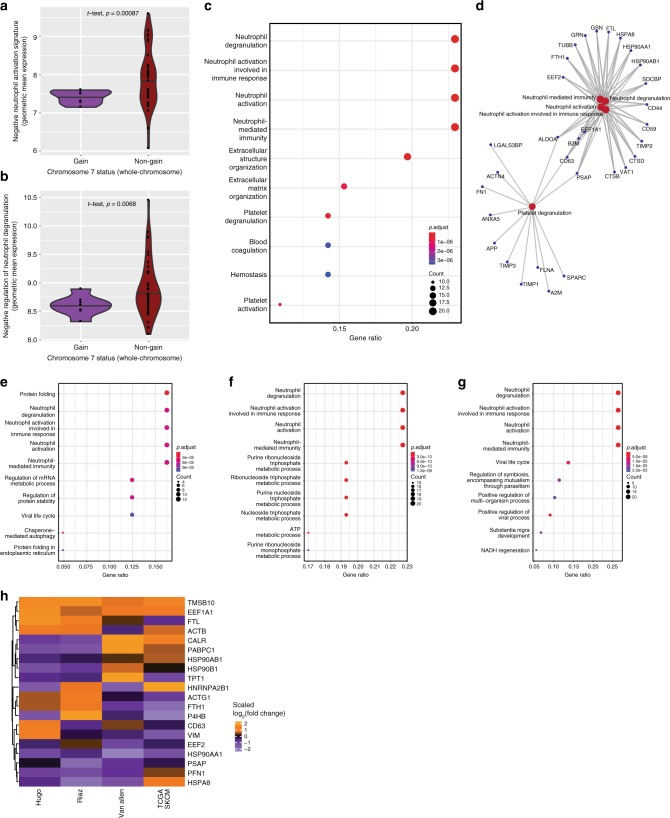
Complex tumor microenvironmental (TME) features influence the outcome of cancer immunotherapy (IO). Here we perform immunogenomic analyses on 67 intratumor sub-regions of a PD-1 inhibitor-resistant melanoma tumor and 2 additional metastases arising over 8 years, to characterize TME interactions. We identify spatially distinct evolution of copy number alterations influencing local immune composition. Sub-regions with chromosome 7 gain display a relative lack of leukocyte infiltrate but evidence of neutrophil activation, recapitulated in The Cancer Genome Atlas (TCGA) samples, and associated with lack of response to IO across three clinical cohorts. Whether neutrophil activation represents cause or consequence of local tumor necrosis requires further study. Analyses of T-cell clonotypes reveal the presence of recurrent priming events manifesting in a dominant T-cell clonotype over many years. Our findings highlight the links between marked levels of genomic and immune heterogeneity within the physical space of a tumor, with implications for biomarker evaluation and immunotherapy response.
Overview
The claims and statistics of this paper haven’t been checked yet.
Free: it reads the open-access text and checks the first 5 claims that cite a source we can check. Create a free account to check every claim.
Integrity signals
Registry
Cites
Statistics
Figures
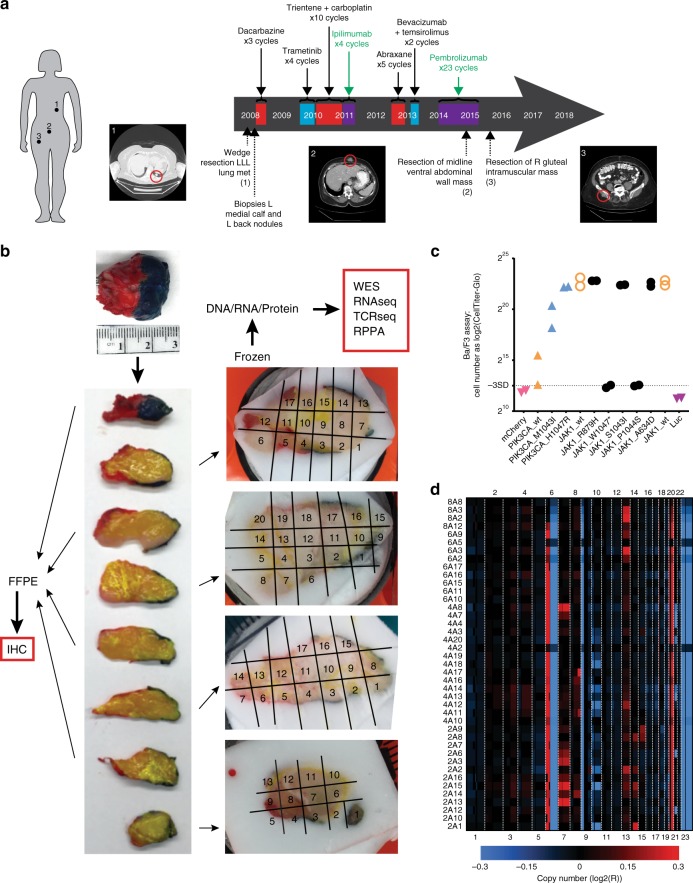
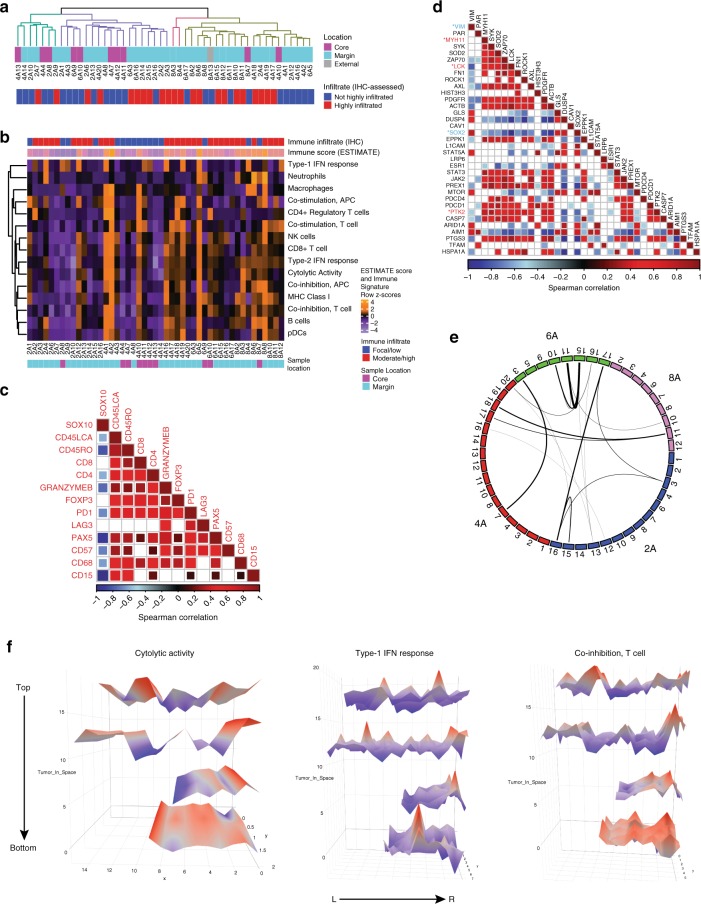
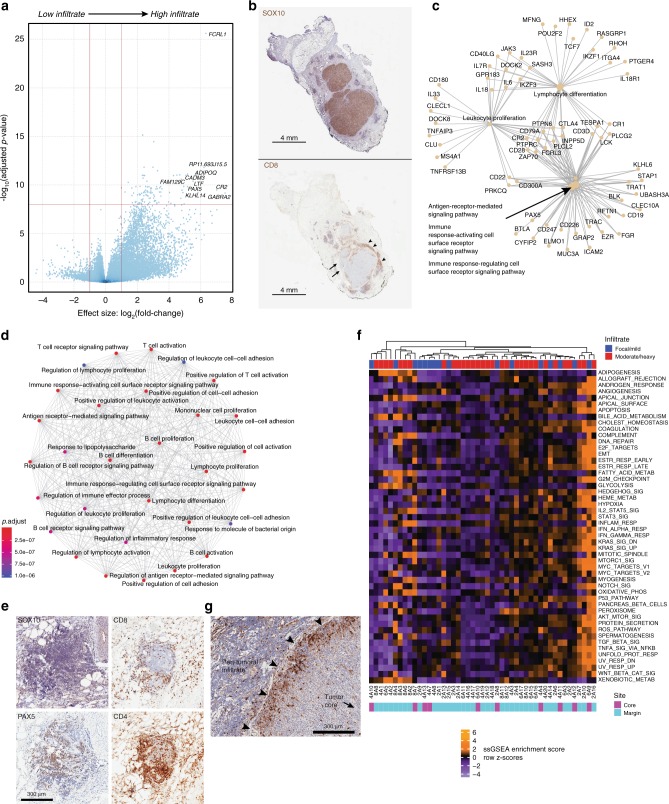
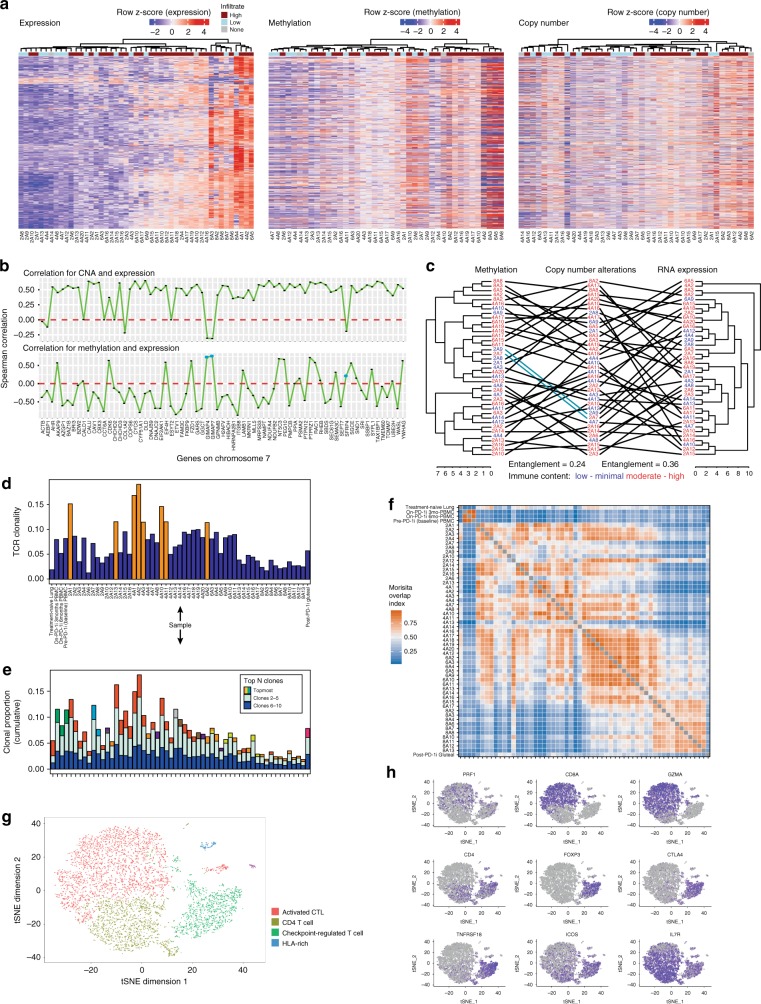
Verification
Claims the paper makes
The claims and statistics of this paper haven’t been checked yet.
Free: it reads the open-access text and checks the first 5 claims that cite a source we can check. Create a free account to check every claim.
Claims other papers make about this one
Each is checked against this paper’s own text: does it say what the citing paper says it does?
The check wasn’t confident either way, so it gives no verdict — never disputed.
In the citing paper
“This has also been observed in other cancer types such as melanoma”
From Hallmarks of response, resistance, and toxicity to immune checkpoint blockade (2021) · cites this paper as Mitra et al., 2020
Experimental — accuracy not yet measured
Self-check
Percentages, sums and reported differences re-computed from the paper’s own numbers.
The self-check needs the paper’s full text.
Citations
Cites
Moderated estimation of fold change and dispersion for RNA-seq data with DESeq2
Love, M. I., Huber, W., & Anders, S. (2014) · Genome Biology · doi:10.1186/s13059-014-0550-8 · Cited by 95,106
Fast and accurate short read alignment with Burrows-Wheeler transform
Li, H., & Durbin, R. (2009) · Bioinformatics · doi:10.1093/bioinformatics/btp324 · Cited by 58,607
limma powers differential expression analyses for RNA-sequencing and microarray studies
Ritchie, M. E., Phipson, B., Wu, D., Hu, Y., Law, C. W., Shi, W., & Smyth, G. K. (2015) · Nucleic Acids Research · doi:10.1093/nar/gkv007 · Cited by 40,458
clusterProfiler: an R Package for Comparing Biological Themes Among Gene Clusters
Yu, G., Wang, L.-G., Han, Y., & He, Q.-Y. (2012) · OMICS: A Journal of Integrative Biology · doi:10.1089/omi.2011.0118 · Cited by 36,259
(2008) · Journal of Machine Learning Research · Cited by 33,051
HTSeq—a Python framework to work with high-throughput sequencing data
Anders, S., Pyl, P. T., & Huber, W. (2015) · Bioinformatics · doi:10.1093/bioinformatics/btu638 · Cited by 21,464
GSVA: gene set variation analysis for microarray and RNA-Seq data
Hänzelmann, S., Castelo, R., & Guinney, J. (2013) · BMC Bioinformatics · doi:10.1186/1471-2105-14-7 · Cited by 15,440
ANNOVAR: functional annotation of genetic variants from high-throughput sequencing data
Wang, K., Li, M., & Hakonarson, H. (2010) · Nucleic Acids Research · doi:10.1093/nar/gkq603 · Cited by 14,621
Robust enumeration of cell subsets from tissue expression profiles
Newman, A. M., Liu, C. L., Green, M. R., Gentles, A. J., Feng, W., Xu, Y., Hoang, C. D., Diehn, M., & Alizadeh, A. A. (2015) · Nature Methods · doi:10.1038/nmeth.3337 · Cited by 13,224
Kim, D., Pertea, G., Trapnell, C., Pimentel, H., Kelley, R., & Salzberg, S. L. (2013) · Genome Biology · doi:10.1186/gb-2013-14-4-r36 · Cited by 12,668
Cited by
Hallmarks of response, resistance, and toxicity to immune checkpoint blockade
Morad, G., Helmink, B. A., Sharma, P., & Wargo, J. A. (2021) · Cell · doi:10.1016/j.cell.2021.09.020 · Cited by 1,648
Overcoming resistance to tumor-targeted and immune-targeted therapies
Aldea, M., Andre, F., Marabelle, A., Dogan, S., Barlesi, F., & Soria, J.-C. (2021) · Cancer Discovery · doi:10.1158/2159-8290.cd-20-1638 · Cited by 311
Spatial CRISPR genomics identifies regulators of the tumor microenvironment
Dhainaut, M., Rose, S. A., Akturk, G., Wroblewska, A., Nielsen, S. R., Park, E. S., Buckup, M., Roudko, V., Pia, L., Sweeney, R., et al. (2022) · Cell · doi:10.1016/j.cell.2022.02.015 · Cited by 281
Li, Y., Gu, J., Xu, F., Zhu, Q., Chen, Y., Ge, D., & Lu, C. (2020) · Briefings in Bioinformatics · doi:10.1093/bib/bbaa225 · Cited by 168
Wu, C.-C., Wang, Y., Livingston, J. A., Zhang, J., & Futreal, P. A. (2022) · Nature Communications · doi:10.1038/s41467-021-27651-4 · Cited by 86
How Neutrophils Shape the Immune Response: Reassessing Their Multifaceted Role in Health and Disease
Shafqat, A., Khan, J. A., Alkachem, A. Y., Sabur, H., AlKattan, K. M., Yaqinuddin, A., & Sing, G. K. (2023) · International Journal of Molecular Sciences · doi:10.3390/ijms242417583 · Cited by 97
“…sample, Mitra et al. reported that tumor regions harboring a subclonal gain of chromosome 7 exhibit an accumulation of immuno-suppressive TANs in the TME, the transcriptomic signature of which was associated with resistance to immune checkpoint inhibitors like anti-CTLA4 and anti-PD-1 [262].”
BackgroundJohn, M., Helal, M., Duell, J., Mattavelli, G., Stanojkovska, E., Afrin, N., Leipold, A. M., Steinhardt, M., Zhou, X., Žihala, D., et al. (2024) · Blood · doi:10.1182/blood.2024024590 · Cited by 84
Ng, M. F., Simmons, J. L., & Boyle, G. M. (2022) · Cancers · doi:10.3390/cancers14123030 · Cited by 72
“In a sophisticated study, a metastatic lesion from a patient that had undergone multiple treatment regimens was divided into several regions in which deep targeted DNA sequencing was performed [90].”
BackgroundYang, C. G., Zhang, S., Cheng, Z., Liu, Z., Zhang, L., Jiang, K., Geng, H., Qian, R., Wang, J., Huang, X., et al. (2022) · Genome Medicine · doi:10.1186/s13073-022-01143-6 · Cited by 51
“However, the approach used in the study only generated approximate spatial information without exact coordinates, limiting the possibilities for downstream quantitative analysis [71].”
BackgroundMethodLin, W., Beasley, A. B., Ardakani, N. M., Denisenko, E., Calapre, L., Jones, M., Wood, B. A., Warburton, L., Forrest, A. R. R., & Gray, E. S. (2021) · Molecular Case Studies · doi:10.1101/mcs.a006111 · Cited by 35
“A recent study in cutaneous melanoma demonstrated that CNVs can influence the local immune composition, and Chromosome 7 gain was attributed to a low-leukocyte infiltrate in the tumor microenvironment (Mitra et al. 2020).”
BackgroundTumor cell heterogeneity drives spatial organization of the intratumoral immune response
Tanaka, M., Lum, L., Hu, K. H., Chaudhary, P., Hughes, S., Ledezma-Soto, C., Samad, B., Superville, D. A., Ng, K., Chumber, A. K., et al. (2025) · The Journal of Experimental Medicine · doi:10.1084/jem.20242282 · Cited by 37
Weide, L. M., Schedel, F., & Weishaupt, C. (2023) · Biology · doi:10.3390/biology12060822 · Cited by 21
“NETs in or near necrotic areas also appear in other cancers and diseases [21,31].”
Neutrophils in cancer, a love–hate affair
Cerezo‐Wallis, D., & Ballesteros, I. (2021) · FEBS Journal · doi:10.1111/febs.16022 · Cited by 21
Gauttier, V., Morello, A., Girault, I., Mary, C., Belarif, L., Desselle, A., Wilhelm, E., Bourquard, T., Pengam, S., Teppaz, G., et al. (2020) · bioRxiv (Cold Spring Harbor Laboratory) · doi:10.1101/2020.08.14.240093 · Cited by 20
Spiliopoulou, P., Vornicova, O., Genta, S., & Spreafico, A. (2023) · International Journal of Molecular Sciences · doi:10.3390/ijms24021294 · Cited by 20
Zhao, X., Liu, B., William, W. N., Tsanov, K. M., Ho, Y.-J., Barriga, F. M., Lim, R. J., Trifas, M., Khandekar, A., Du, Y., et al. (2024) · Journal of Thoracic Oncology · doi:10.1016/j.jtho.2024.12.020 · Cited by 20
Innate myeloid cells in the tumor microenvironment
Duhan, V., & Smyth, M. J. (2021) · Current Opinion in Immunology · doi:10.1016/j.coi.2021.01.001 · Cited by 15
Xiao, N., Liu, H., Zhang, C., Chen, H., Li, Y., Li, Y., Liu, H., & Wan, J. (2024) · Journal of Advanced Research · doi:10.1016/j.jare.2024.10.008 · Cited by 14
“By analyzing multi-regional sequencing data in different spaces, Mitra et al. reconstructed a significant relationship between genome and immune heterogeneity [36].”
Different Response to Immunotherapy According to Melanoma Histologic Subtype
Pala, L., Conforti, F., Pagan, E., Bagnardi, V., Pas, T. M. D., Mazzarol, G., Barberis, M. C. P., Pennacchioli, E., Orsolini, G., Prestianni, P., et al. (2021) · Journal of Immunotherapy · doi:10.1097/cji.0000000000000403 · Cited by 9
Dhainaut, M., Rose, S. A., Aktürk, G., Wroblewska, A., Park, E. S., Nielsen, S. R., Buckup, M., Roudko, V., Pia, L., Bérichel, J. L., et al. (2021) · bioRxiv (Cold Spring Harbor Laboratory) · doi:10.1101/2021.07.13.451021 · Cited by 4
“…single cell genome sequencing has revealed that many genetically distinct sub-clones exist in proximity in tumors (Minussi et al., 2021), but how different mutations influence the TME (Galluzzi et al., 2018; Mitra et al., 2020), or how neighboring clones influence one another is not well-defined.”
BackgroundKumar, S., Pelster, M. S., Hasanov, M., Guerrieri, R. A., Hudgens, C. W., Ledesma, D. A., Wang, F., Fischer, G. M., Simon, J. M., Haydu, L. E., et al. (2025) · Acta Neuropathologica Communications · doi:10.1186/s40478-025-01978-1 · Cited by 2
“However, the finding presented in our study is consistent with studies that have associated neutrophils with tumor progression and therapeutic resistance in melanoma patients, albeit in the setting of non-CNS tumors [38].”
Cooperativity in melanoma metastasis
Ng, M. F. (2023) · Queensland University of Technology · doi:10.5204/thesis.eprints.242136
Yang, C. G., Zhang, S., Cheng, Z., Liu, Z., Zhang, L., Jiang, K., Geng, H., Qian, R., Wang, J., Huang, X., et al. (2023) · Figshare · doi:10.6084/m9.figshare.22608866
Yang, C., Zhang, S., Cheng, Z., Liu, Z., Zhang, L., Jiang, K., Geng, H., Qian, R., Wang, J., Huang, X., et al. (2023) · Figshare · doi:10.6084/m9.figshare.22608860
Yang, C., Zhang, S., Cheng, Z., Liu, Z., Zhang, L., Jiang, K., Geng, H., Qian, R., Wang, J., Huang, X., et al. (2023) · Figshare · doi:10.6084/m9.figshare.22608857
Neutrophil-driven immunosuppression in cancer
Wang, C., Yu, H., Wu, K., & Zhao, Y. (2026) · Cell Insight · doi:10.1016/j.cellin.2026.100356
“Mitra and colleagues used spatially resolved analyses to demonstrate that unfavorable neutrophil activation patterns in melanoma are tied to genomic and immune diversity (Mitra et al., 2020), linking neutrophil spatial distribution to tumor genetics and immune evasion.”
Integrating AI, RNA Vaccines, and CAR‐T Cells for Personalized Treatment
Haykal, D., & Dréno, B. (2026) · Journal of Immunology Research · doi:10.1155/jimr/2275385
“…including immune-related pro fi les (e.g., IFN γ , CD8A, and PD-L1), proliferation and differentiation markers (e.g., MITF and PRAME), and invasion-associated pathways (e.g., AXL and extracellular matrix genes), have demonstrated prognostic and predictive value for immunotherapy response [54, 55].”
Metadata
- Authors
- Mitra, A., Andrews, M. C., Roh, W., De Macedo, M. P., Hudgens, C. W., Carapeto, F., Singh, S., Reuben, A., Wang, F., Mao, X., Song, X., Wani, K., Tippen, S., Ng, K.-S., Schalck, A., Sakellariou-Thompson, D. A., Chen, E., Reddy, S. M., Spencer, C. N., Wiesnoski, D., Little, L. D., Gumbs, C., Cooper, Z. A., Burton, E. M., Hwu, P., Davies, M. A., Zhang, J., Bernatchez, C., Navin, N., Sharma, P., Allison, J. P., Wargo, J. A., Yee, C., Tetzlaff, M. T., Hwu, W.-J., Lazar, A. J., & Futreal, P. A.
- Affiliations
- The University of Texas MD Anderson Cancer Center (US)
- Broad Institute (US)
- Parker Institute for Cancer Immunotherapy (US)
- AstraZeneca (United States) (US)
- Corresponding author
- Futreal, P. Andrew
- ORCID
- Mitra, Akash
- Andrews, Miles C.
- Roh, Whijae
- De Macedo, Marianna Petaccia
- Hudgens, Courtney W.
- Carapeto, Fernando
- Singh, Shailbala
- Reuben, Alexandre
- Wang, Feng
- Song, Xingzhi
- Wani, Khalida
- Ng, Kwok-Shing
- Schalck, Aislyn
- Chen, Eveline
- Reddy, Sangeetha M.
- Spencer, Christine N.
- Wiesnoski, Diana
- Little, Latasha D.
- Gumbs, Curtis
- Cooper, Zachary A.
- Burton, Elizabeth M.
- Hwu, Patrick
- Davies, Michael A.
- Zhang, Jianhua
- Bernatchez, Chantale
- Navin, Nicholas
- Sharma, Padmanee
- Allison, James P.
- Wargo, Jennifer A.
- Yee, Cassian
- Tetzlaff, Michael T.
- Hwu, Wen-Jen
- Lazar, Alexander J.
- Futreal, P. Andrew
- Venue
- Nature Communications
- Published
- 2020-04-15
- Volume
- 11
- Issue
- 1
- Pages
- 1839-1839
- ISSN
- 2041-1723 (ISSN-L)
- PMC
- PMC7160105
- OpenAlex
- W3016947983
- Cited by
- 27
- References
- 92
- Citations by year
- 2026: 2 · 2025: 2 · 2024: 3 · 2023: 6 · 2022: 4 · 2021: 7 · 2020: 3
- FWCI
- 1.90
- Type
- journal article
- Language
- en
- Open access
- gold
- doi.org
- Licence
- cc-by
- creativecommons.org/licenses/by/4.0 (tdm)
- creativecommons.org/licenses/by/4.0 (vor)
- Locations
- Nature Communications (publishedVersion, cc-by)
- PubMed Central (publishedVersion, cc-by)
- PubMed (publishedVersion)
- RePEc: Research Papers in Economics (submittedVersion)
- DOAJ (DOAJ: Directory of Open Access Journals) (submittedVersion, cc-by-sa)
- Funders
- Amgen
- Bristol-Myers Squibb
- AstraZeneca
- GlaxoSmithKline
- Sanofi
- Cancer Prevention and Research Institute of Texas (RP170067, R1205)
- Gilead Sciences
- Parker Institute for Cancer Immunotherapy
- Myriad Genetics
- Astellas Pharma
- Genentech
- EMD Serono
- University of Texas MD Anderson Cancer Center (#CA16672, RP170067)
- Merck Sharp and Dohme
- Kite Pharma
- Medical Research Council
- National Health and Medical Research Council (1148680)
- National Cancer Institute (CA-16672, P30CA016672)
- National Institute of Arthritis and Musculoskeletal and Skin Diseases (T32AR065971)
- Topics
- Health Sciences › Medicine › Oncology › Cancer Immunotherapy and Biomarkers
- Life Sciences › Biochemistry, Genetics and Molecular Biology › Cancer Research › Cancer Genomics and Diagnostics
- Health Sciences › Medicine › Oncology › Cutaneous Melanoma Detection and Management
- Keywords
- melanoma, tumor microenvironment, spatial heterogeneity, neutrophil activation, anti-PD-1 resistance, copy number alterations, chromosome 7 gain, T cell clonotypes, T cell priming, immunotherapy response, metastasis, genomic heterogeneity, immune heterogeneity
- MeSH terms
- Humans, Melanoma, Mutation, Biomarkers, Tumor, Neutrophil Activation, Genomics, DNA Copy Number Variations, Tumor Microenvironment
About these checks
Registry, retraction, Cites and statistics results are computed, not judged, with one exception: a printed reference that no index lists is read once by a model before it counts as a citation error. Claims are extracted by a model and kept only when their quote appears verbatim in the text; each cited source is then checked, with a model’s help, for whether it says what the claim relies on. Those verdicts can be wrong — read the claim’s quote and the cited source before relying on one.
Statistics and arithmetic are recomputed, not judged.
Confidence bands are shown only for fields calibrated on our annotated test set. None is calibrated yet, so no band is shown.
What counts as a claim ›How we measure confidence ›How we check this ›
Are you an author, or do you see a problem with this page? Request a review
Data sources
Bibliographic data: Semantic Scholar, OpenAlex, Crossref.
Contains information from the Semantic Scholar Academic Graph Datasets, made available under the ODC Attribution License (ODC-BY 1.0).
Semantic Scholar’s data is described in: Kinney, R., et al. (2023). The Semantic Scholar Open Data Platform. arXiv:2301.10140.
