

The DOI matches its Crossref record; 44 of the 44 references it cites were found in a registry or an index.
Labeled oxytocin administered via the intranasal route reaches the brain in rhesus macaques
Open accessAbstract
Oxytocin may have promise as a treatment for neuropsychiatric disorders. Its therapeutic effect may depend on its ability to enter the brain and bind to the oxytocin receptor. To date, the brain tissue penetrance of intranasal oxytocin has not been demonstrated. In this nonhuman primate study, we administer deuterated oxytocin intranasally and intravenously to rhesus macaques and measure, with mass spectrometry, concentrations of labeled (exogenously administered) and endogenous oxytocin in 12 brain regions two hours after oxytocin administration. Labeled oxytocin is quantified after intranasal (not intravenous) administration in brain regions (orbitofrontal cortex, striatum, brainstem, and thalamus) that lie in the trajectories of the olfactory and trigeminal nerves. These results suggest that intranasal administration bypasses the blood–brain barrier, delivering oxytocin to specific brain regions, such as the striatum, where oxytocin acts to impact motivated behaviors. Further, high concentrations of endogenous oxytocin are in regions that overlap with projection fields of oxytocinergic neurons.
Overview
The claims and statistics of this paper haven’t been checked yet.
Run the check — free, no account needed. It reads the open-access text and checks the sources it cites.
Integrity signals
Registry
Cites
Statistics
Figures
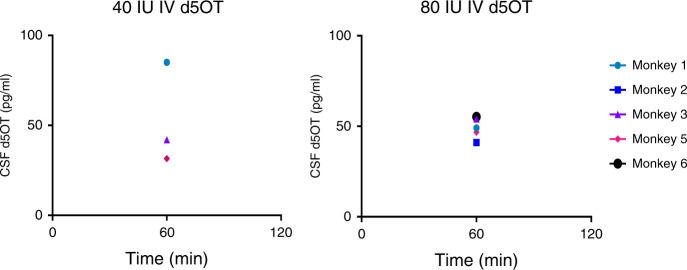
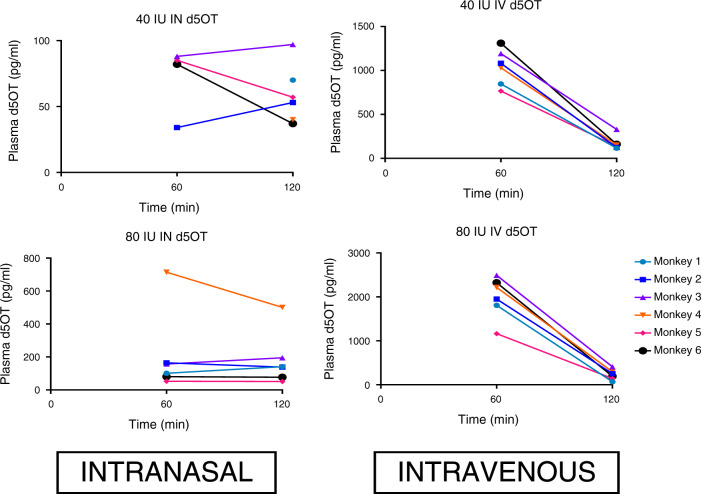
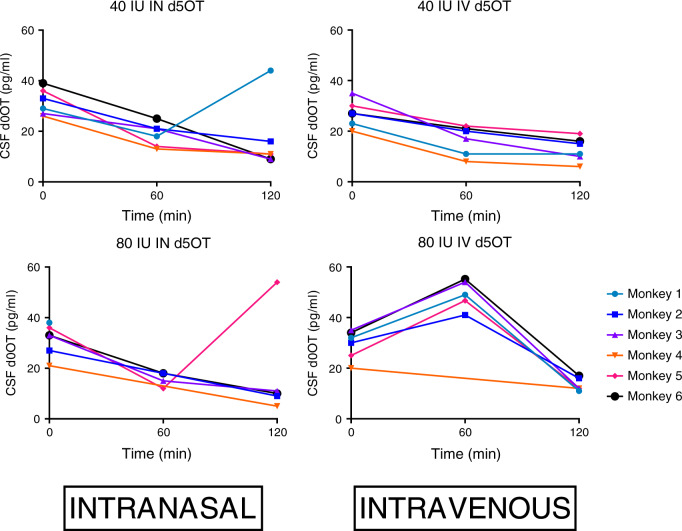
Verification
Claims the paper makes
The claims and statistics of this paper haven’t been checked yet.
Run the check — free, no account needed. It reads the open-access text and checks the sources it cites.
Claims other papers make about this one
Each is checked against this paper’s own text: does it say what the citing paper says it does?
The source backs part of the claim, not all of it — or backs it for a different population, condition or comparison.
In the citing paper
“There is uncertainty regarding absorption, brain penetration, and time course of effects with intranasal oxytocin35,36 that may be amplified by differences among specific preparations of intranasal oxytocin.”
From Intranasal Oxytocin in Children and Adolescents with Autism Spectrum Disorder (2021) · cites this paper as [35]
Experimental — accuracy not yet measured
Self-check
Percentages, sums and reported differences re-computed from the paper’s own numbers.
The self-check needs the paper’s full text.
Citations
Cites
Oxytocin and vasopressin in the human brain: social neuropeptides for translational medicine
Meyer-Lindenberg, A., Domes, G., Kirsch, P., & Heinrichs, M. (2011) · Nature Reviews Neuroscience · doi:10.1038/nrn3044 · Cited by 1,688
Diffusion in Brain Extracellular Space
Syková, E., & Nicholson, C. (2008) · Physiological Reviews · doi:10.1152/physrev.00027.2007 · Cited by 1,481
Intranasal delivery of biologics to the central nervous system
Lochhead, J. J., & Thorne, R. G. (2012) · Advanced Drug Delivery Reviews · doi:10.1016/j.addr.2011.11.002 · Cited by 1,214
Evoked axonal oxytocin release in the central amygdala attenuates fear response
Knobloch, H. S., Charlet, A., Hoffmann, L. C., Eliava, M., Khrulev, S., Cetin, A. H., Osten, P., Schwarz, M. K., Seeburg, P. H., Stoop, R., et al. (2012) · Neuron · doi:10.1016/j.neuron.2011.11.030 · Cited by 1,049
Dendritic peptide release and peptide-dependent behaviours
Ludwig, M., & Leng, G. (2006) · Nature Reviews Neuroscience · doi:10.1038/nrn1845 · Cited by 945
Evaluation of intranasal delivery route of drug administration for brain targeting
Erdő, F., Bors, L. A., Farkas, D., Bajza, Á., & Gizurarson, S. S. (2018) · Brain Research Bulletin · doi:10.1016/j.brainresbull.2018.10.009 · Cited by 773
Liu, Y., & Wang, Z. X. (2003) · Neuroscience · doi:10.1016/s0306-4522(03)00555-4 · Cited by 580
Gating of social reward by oxytocin in the ventral tegmental area
Hung, L. W., Neuner, S., Polepalli, J. S., Beier, K. T., Wright, M., Walsh, J. J., Lewis, E. M., Luo, L., Deisseroth, K., Dölen, G., et al. (2017) · Science · doi:10.1126/science.aan4994 · Cited by 578
Prefrontal Cortex and Social Cognition in Mouse and Man
Bicks, L. K., Koike, H., Akbarian, S., & Morishita, H. (2015) · Frontiers in Psychology · doi:10.3389/fpsyg.2015.01805 · Cited by 529
Increased brain and plasma oxytocin after nasal and peripheral administration in rats and mice
Neumann, I. D., Maloumby, R., Beiderbeck, D. I., Lukas, M., & Landgraf, R. (2013) · Psychoneuroendocrinology · doi:10.1016/j.psyneuen.2013.03.003 · Cited by 511
Research works printed but not linked: 1
- Tung, R. The development of deuterium-containing drugs. Innov. Pharm. Technol. 32, 24–28 (2010).
Cited by
Sorted by citations
Is oxytocin “nature’s medicine”
Carter, C. S., Kenkel, W. M., MacLean, E. L., Wilson, S. R., Perkeybile, A. M., Yee, J. R., Ferris, C. F., Nazarloo, H. P., Porges, S. W., Davis, J. M., et al. (2020) · Pharmacological Reviews · doi:10.1124/pr.120.019398 · Cited by 394
Drug Addiction: Hyperkatifeia/Negative Reinforcement as a Framework for Medications Development
Koob, G. F. (2021) · Pharmacological Reviews · doi:10.1124/pharmrev.120.000083 · Cited by 337
Intranasal Oxytocin in Children and Adolescents with Autism Spectrum Disorder
Sikich, L., Kolevzon, A., King, B. H., McDougle, C. J., Sanders, K. B., Kim, S.-J., Spanos, M., Chandrasekhar, T., Trelles, M. D. P., Rockhill, C. M., et al. (2021) · New England Journal of Medicine · doi:10.1056/nejmoa2103583 · Cited by 298
Quintana, D. S., Lischke, A., Grace, S., Scheele, D., Ma, Y., & Becker, B. (2021) · Molecular Psychiatry · doi:10.1038/s41380-020-00864-7 · Cited by 263
Brain oxytocin: how puzzle stones from animal studies translate into psychiatry
Grinevich, V., & Neumann, I. D. (2020) · Molecular Psychiatry · doi:10.1038/s41380-020-0802-9 · Cited by 201
Advances in human oxytocin measurement: challenges and proposed solutions
Tabak, B. A., Leng, G., Szeto, A., Parker, K. J., Verbalis, J. G., Ziegler, T. E., Lee, M. R., Neumann, I. D., & Mendez, A. J. (2023) · Molecular Psychiatry · doi:10.1038/s41380-022-01719-z · Cited by 170
Self-citationOxytocin and the Neurobiology of Prosocial Behavior
Marsh, N., Marsh, A. A., Lee, M. R., & Hurlemann, R. (2020) · The Neuroscientist · doi:10.1177/1073858420960111 · Cited by 159
Self-citationThe Effects of Oxytocin on Appetite Regulation, Food Intake and Metabolism in Humans
Kerem, L., & Lawson, E. A. (2021) · International Journal of Molecular Sciences · doi:10.3390/ijms22147737 · Cited by 104
Nose-to-brain/spinal cord delivery kinetics of liposomes with different surface properties
Kurano, T., Kanazawa, T., Ooba, A., Masuyama, Y., Maruhana, N., Yamada, M., Iioka, S., Ibaraki, H., Kosuge, Y., Kondo, H., et al. (2022) · Journal of Controlled Release · doi:10.1016/j.jconrel.2022.03.017 · Cited by 73
Improving the precision of intranasal oxytocin research
Winterton, A., Westlye, L. T., Steen, N. E., Andreassen, O. A., & Quintana, D. S. (2020) · Nature Human Behaviour · doi:10.1038/s41562-020-00996-4 · Cited by 65
Kou, J., Zhang, Y., Zhou, F., Gao, Z., Yao, S., Zhao, W., Li, H., Lei, Y., Gao, S., Kendrick, K. M., et al. (2022) · Psychotherapy and Psychosomatics · doi:10.1159/000521348 · Cited by 55
Yao, S., & Kendrick, K. M. (2022) · Pharmaceutics · doi:10.3390/pharmaceutics14020323 · Cited by 55
Buckley, S. J., Uvnäs‐Moberg, K., Pajalić, Z., Luegmair, K., Ekström, A., Dencker, A., Massarotti, C., Kotłowska, A., Callaway, L. K., Morano, S., et al. (2023) · BMC Pregnancy and Childbirth · doi:10.1186/s12884-022-05221-w · Cited by 58
Schmitt, L., Smith, E. G., Pedapati, E. V., Horn, P. S., Will, M., Lamy, M., Barber, L., Trebley, J., Meyer, K., Heiman, M. L., et al. (2023) · Scientific Reports · doi:10.1038/s41598-023-30909-0 · Cited by 58
Oxytocin—a social peptide? Deconstructing the evidence
Leng, G., Leng, R., & Ludwig, M. (2022) · Philosophical Transactions of the Royal Society B Biological Sciences · doi:10.1098/rstb.2021.0055 · Cited by 51
How does oxytocin modulate human behavior?
Yao, S., & Kendrick, K. M. (2025) · Molecular Psychiatry · doi:10.1038/s41380-025-02898-1 · Cited by 61
Chronic oxytocin-driven alternative splicing of Crfr2α induces anxiety
Winter, J. J., Meyer, M., Berger, I., Royer, M., Bianchi, M., Kuffner, K., Peters, S., Stang, S., Langgartner, D., Hartmann, F., et al. (2021) · Molecular Psychiatry · doi:10.1038/s41380-021-01141-x · Cited by 46
Arginine vasopressin deficiency: diagnosis, management and the relevance of oxytocin deficiency
Atila, C., Refardt, J. C., & Christ‐Crain, M. (2024) · Nature Reviews Endocrinology · doi:10.1038/s41574-024-00985-x · Cited by 52
Martins, D., Paduraru, M., & Paloyelis, Y. (2021) · British Journal of Pharmacology · doi:10.1111/bph.15451 · Cited by 42
Zhao, F., Zhang, H., Wang, P., Cui, W., Xu, K., Chen, D., Hu, M., Li, Z., Geng, X., & Wei, S. (2022) · Frontiers in Neuroscience · doi:10.3389/fnins.2022.919890 · Cited by 44
Intrinsic, dynamic and effective connectivity among large-scale brain networks modulated by oxytocin
Jiang, X., Ma, X., Geng, Y., Zhao, Z., Zhou, F., Zhao, W., Yao, S., Yang, S., Zhao, Z., Becker, B., et al. (2020) · NeuroImage · doi:10.1016/j.neuroimage.2020.117668 · Cited by 39
Oxytocin and vasopressin signaling in health and disease
Perisic, M., Woolcock, K., Hering, A., Mendel, H. C., & Muttenthaler, M. (2024) · Trends in Biochemical Sciences · doi:10.1016/j.tibs.2024.01.010 · Cited by 42
Yeomans, D. C., Hanson, L. R., Carson, D. S., Tunstall, B. J., Lee, M. R., Tzabazis, A., Jacobs, D. L., & Frey, W. H. (2021) · Translational Psychiatry · doi:10.1038/s41398-021-01511-7 · Cited by 42
Self-citationIntranasal Administration for Pain: Oxytocin and Other Polypeptides
Bharadwaj, V. N., Tzabazis, A., Klukinov, M., Manering, N. A., & Yeomans, D. C. (2021) · Pharmaceutics · doi:10.3390/pharmaceutics13071088 · Cited by 43
“Less is more”: A dose-response account of intranasal oxytocin pharmacodynamics in the human brain
Martins, D., Brodmann, K., Veronese, M., Dipasquale, O., Mazibuko, N., Schuschnig, U., Zelaya, F. O., Fotopoulou, A., & Paloyelis, Y. (2022) · Progress in Neurobiology · doi:10.1016/j.pneurobio.2022.102239 · Cited by 43
Kou, J., Lan, C., Zhang, Y., Wang, Q., Zhou, F., Zhao, Z., Montag, C., Yao, S., Becker, B., & Kendrick, K. M. (2021) · Translational Psychiatry · doi:10.1038/s41398-021-01241-w · Cited by 39
Structure-function relationships of the disease-linked A218T oxytocin receptor variant
Meyer, M., Jurek, B., Alfonso‐Prieto, M., Ribeiro, R. P., Milenkovic, V. M., Winter, J. J., Hoffmann, P., Wetzel, C. H., Giorgetti, A., Carloni, P., et al. (2022) · Molecular Psychiatry · doi:10.1038/s41380-021-01241-8 · Cited by 32
Marvar, P. J., Andero, R., Hurlemann, R., Lago, T. R., Zelikowsky, M., & Dabrowska, J. (2021) · Journal of Neuroscience · doi:10.1523/jneurosci.1647-20.2020 · Cited by 29
Neuroimaging and behavioral evidence of sex-specific effects of oxytocin on human sociality
Procyshyn, T. L., Dupertuys, J., & Bartz, J. A. (2024) · Trends in Cognitive Sciences · doi:10.1016/j.tics.2024.06.010 · Cited by 30
Althammer, F., Eliava, M., & Grinevich, V. (2021) · Handbook of clinical neurology · doi:10.1016/b978-0-12-820107-7.00003-3 · Cited by 34
Munesue, S., Liang, M., Harashima, A., Zhong, J., Furuhara, K., Boitsova, E. B., Михайлович, Ч. С., Gerasimenko, M., Yuhi, T., Yamamoto, Y., et al. (2021) · Journal of Neuroendocrinology · doi:10.1111/jne.12963 · Cited by 32
The Oxytocin System and Implications for Oxytocin Deficiency in Hypothalamic-Pituitary Disease
Aulinas, A., & Lawson, E. A. (2025) · Endocrine Reviews · doi:10.1210/endrev/bnaf008 · Cited by 31
Oxytocin modulates neurocomputational mechanisms underlying prosocial reinforcement learning
Martins, D., Lockwood, P. L., Cutler, J., Moran, R., & Paloyelis, Y. (2022) · Progress in Neurobiology · doi:10.1016/j.pneurobio.2022.102253 · Cited by 26
Therapeutic uses of oxytocin in stress-related neuropsychiatric disorders
Zhang, S., Zhang, Y., Shi, D., & Wang, Z. (2023) · Cell & Bioscience · doi:10.1186/s13578-023-01173-6 · Cited by 29
Oxytocin for Autism Spectrum Disorder — Down, but Not Out
Geschwind, D. H. (2021) · New England Journal of Medicine · doi:10.1056/nejme2110158 · Cited by 25
Guoynes, C. D., & Marler, C. A. (2021) · PLoS ONE · doi:10.1371/journal.pone.0244033 · Cited by 31
Oral Administration of Oxytocin, Like Intranasal Administration, Decreases Top-Down Social Attention
Zhuang, Q., Zheng, X., Yao, S., Zhao, W., Becker, B., Xu, X., & Kendrick, K. M. (2022) · The International Journal of Neuropsychopharmacology · doi:10.1093/ijnp/pyac059 · Cited by 27
Intranasal administration nanosystems for brain-targeted drug delivery
Jiang, Y., Pan, X., Yu, T., & Wang, H. (2023) · Nano Research · doi:10.1007/s12274-023-6026-y · Cited by 30
Alcohol and oxytocin: Scrutinizing the relationship
Ryabinin, A. E., & Fulenwider, H. D. (2021) · Neuroscience & Biobehavioral Reviews · doi:10.1016/j.neubiorev.2021.06.009 · Cited by 24
Quintana, D. S. (2021) · Psychoneuroendocrinology · doi:10.1016/j.psyneuen.2021.105642 · Cited by 22
King, C. E., Griffin, W. C., Lopez, M. F., & Becker, H. C. (2021) · Neuropsychopharmacology · doi:10.1038/s41386-021-01046-x · Cited by 21
Oxytocin Increases Prosocial Behavior in Groups of African Lions
Burkhart, J. C., Gupta, S., Borrego, N., Heilbronner, S. R., & Packer, C. (2021) · iScience · doi:10.1016/j.isci.2022.104049 · Cited by 19
Berger, R., Hurlemann, R., Shamay‐Tsoory, S., Kanterman, A., Brauser, M., Gorni, J., Luhmann, M., Schramm, E., Schultz, J., Philipsen, A., et al. (2024) · Psychotherapy and Psychosomatics · doi:10.1159/000538752 · Cited by 22
The potential role of oxytocin in addiction: What is the target process?
Sanna, F., & Luca, M. A. D. (2021) · Current Opinion in Pharmacology · doi:10.1016/j.coph.2021.03.002 · Cited by 18
Coenjaerts, M., Adrovic, B., Trimborn, I., Philipsen, A., Hurlemann, R., & Scheele, D. (2023) · Scientific Reports · doi:10.1038/s41598-023-29754-y · Cited by 17
Spanos, M., Chandrasekhar, T., Kim, S., Hamer, R. M., King, B. H., McDougle, C. J., Sanders, K. B., Gregory, S. G., Kolevzon, A. L., Veenstra-VanderWeele, J. M., et al. (2020) · Contemporary Clinical Trials · doi:10.1016/j.cct.2020.106103 · Cited by 24
Chen, Y., Zou, H., Hou, X., Lan, C., Wang, J., Qing, Y., Chen, W., Yao, S., & Kendrick, K. M. (2023) · eLife · doi:10.7554/elife.85847 · Cited by 18
Flanagan, J. C., Nietert, P. J., Sippel, L., Jarnecke, A. M., Kirby, C., Hogan, J. N., Massa, A. A., Brower, J., Back, S. E., & Parrott, D. (2022) · Journal of Psychiatric Research · doi:10.1016/j.jpsychires.2022.06.011 · Cited by 16
Oxytocin in neurodevelopmental disorders: Autism spectrum disorder and Prader-Willi syndrome
Josselsohn, A., Zhao, Y., Espinoza, D., & Hollander, E. (2024) · Pharmacology & Therapeutics · doi:10.1016/j.pharmthera.2024.108734 · Cited by 16
Potretzke, S., Zhang, Y., Li, J., Fecteau, K. M., Erikson, D. W., Hibert, M., & Ryabinin, A. E. (2022) · Neuropsychopharmacology · doi:10.1038/s41386-022-01490-3 · Cited by 17
Self-citationBrackley, A. D., & Toney, G. M. (2021) · Journal of Pharmacology and Experimental Therapeutics · doi:10.1124/jpet.121.000535 · Cited by 14
Peripartum effects of synthetic oxytocin: The good, the bad, and the unknown
Rashidi, M., Maier, E., Dekel, S., Sütterlin, M., Wolf, R. C., Ditzen, B., Grinevich, V., & Herpertz, S. C. (2022) · Neuroscience & Biobehavioral Reviews · doi:10.1016/j.neubiorev.2022.104859 · Cited by 18
Intranasal oxytocin affects the stress response to social isolation in sheep
Damián, J. P., de Soto, L., Espindola, D., Gil, J., & van Lier, E. (2020) · Physiology & Behavior · doi:10.1016/j.physbeh.2020.113282 · Cited by 18
Coenjaerts, M., Trimborn, I., Adrovic, B., Stoffel‐Wagner, B., Cahill, L. F., Philipsen, A., Hurlemann, R., & Scheele, D. (2022) · NeuroImage · doi:10.1016/j.neuroimage.2022.119689 · Cited by 17
Human creativity: Functions, mechanisms, and social conditioning
Dreu, C. K. W. D., Nijstad, B. A., & Baas, M. (2023) · Advances in experimental social psychology · doi:10.1016/bs.aesp.2023.11.004 · Cited by 16
Inutsuka, A., Ino, D., & Onaka, T. (2020) · Peptides · doi:10.1016/j.peptides.2020.170456 · Cited by 16
Oxytocin modulates local topography of human functional connectome in healthy men at rest
Martins, D., Dipasquale, O., & Paloyelis, Y. (2021) · Communications Biology · doi:10.1038/s42003-020-01610-z · Cited by 15
Guoynes, C. D., & Marler, C. A. (2021) · Physiology & Behavior · doi:10.1016/j.physbeh.2022.113773 · Cited by 13
Razo, R. A., Vázquez, M. D. L. V., Turcanu, P., Legrand, M., Lau, A. R., Weinstein, T. A. R., Goetze, L. R., & Bales, K. L. (2022) · Frontiers in Behavioral Neuroscience · doi:10.3389/fnbeh.2022.877631 · Cited by 13
Selective sub-nucleus effects of intra-amygdala oxytocin on fear extinction
Gunduz‐Cinar, O., Brockway, E. T., Castillo, L. I., Pollack, G. A., Erguven, T., & Holmes, A. (2020) · Behavioural Brain Research · doi:10.1016/j.bbr.2020.112798 · Cited by 14
Gene Targeting to the Cerebral Cortex Following Intranasal Administration of Polyplexes
Petkova, A., Kubajewska, I., Vaideanu, A., Schätzlein, A. G., & Uchegbu, I. F. (2022) · Pharmaceutics · doi:10.3390/pharmaceutics14061136 · Cited by 15
Brain areas affected by intranasal oxytocin show higher oxytocin receptor expression
Habets, P. C., Mclain, C., & Meijer, O. C. (2021) · European Journal of Neuroscience · doi:10.1111/ejn.15447 · Cited by 11
Xu, D., Li, Q., Zhuang, Q., Zhang, Y., Yao, S., Zhao, W., & Kendrick, K. M. (2022) · Frontiers in Neuroscience · doi:10.3389/fnins.2022.1022101 · Cited by 15
Zhang, Y., Wang, X., Niu, X., Wang, H., Wu, Y., Li, C., Wang, H., Shen, L., Wang, D., Lin, F., et al. (2024) · Journal of Nanobiotechnology · doi:10.1186/s12951-024-02847-0 · Cited by 12
Higashida, H., Furuhara, K., Lopatina, O. L., Gerasimenko, M., Hori, O., Hattori, T., Hayashi, Y., Михайлович, Ч. С., Shabalova, A. A., Salmina, A. B., et al. (2022) · Frontiers in Neuroscience · doi:10.3389/fnins.2022.858070 · Cited by 13
Effects of Oxytocin on Emotion Recognition in Schizophrenia
Andari, E., Massa, N., Fargotstein, M., Taylor, N. B., Halverson, D. M., Owens, A. V., Currin, D. L., Bhattacharya, A., Gitman, D., Cuthbert, B. C., et al. (2021) · Journal of Clinical Psychopharmacology · doi:10.1097/jcp.0000000000001367 · Cited by 14
Intranasal oxytocin as a treatment for anxiety and autism: From subclinical to clinical applications
Yin, H., Jiang, M., Han, T., & Xu, X. (2024) · Peptides · doi:10.1016/j.peptides.2024.171211 · Cited by 11
Hohl, C. H., Zilcha‐Mano, S., & Delgadillo, J. (2024) · Neuroscience & Biobehavioral Reviews · doi:10.1016/j.neubiorev.2024.105935 · Cited by 13
Patterson, J. T., Koob, G. F., & Anderson, R. I. (2022) · Biological Psychiatry · doi:10.1016/j.biopsych.2022.02.011 · Cited by 11
Territorial blueprint in the hippocampal system
Wirth, S., Soumier, A., Eliava, M., Derdikman, D., Wagner, S., Grinevich, V., & Sirigu, A. (2021) · Trends in Cognitive Sciences · doi:10.1016/j.tics.2021.06.005 · Cited by 10
Oxytocin increases perceived competence and social-emotional engagement with brands
Barraza, J. A., Hu, X., Terris, E. T., Wang, C., & Zak, P. J. (2021) · PLoS ONE · doi:10.1371/journal.pone.0260589 · Cited by 13
Vardanjani, M. M., Ghasemian, S., Sheibani, V., & Mansouri, F. A. (2021) · Behavioural Brain Research · doi:10.1016/j.bbr.2021.113409 · Cited by 10
Erikson, D. W., Blue, S. W., Kaucher, A. V., & Shnitko, T. A. (2021) · Peptides · doi:10.1016/j.peptides.2021.170544 · Cited by 9
Self-citationBernhard, A., Kirchner, M., Martinelli, A., Ackermann, K., Kohls, G., González-Madruga, K., Wells, A. E., Fernández‐Rivas, A., de Artaza, M. G., Raschle, N. M., et al. (2021) · European Neuropsychopharmacology · doi:10.1016/j.euroneuro.2021.03.016 · Cited by 11
Raby, W. N., Heller, M., Milliaressis, D., Choi, C. J., Basaraba, C. N., Pavlicová, M., Alschuler, D. M., LEVIN, F. R., Church, S., & Nunes, E. V. (2021) · Drug and Alcohol Dependence Reports · doi:10.1016/j.dadr.2021.100016 · Cited by 9
Marcet‐Rius, M., Bienboire‐Frosini, C., Lezama-García, K., Domínguez-Oliva, A., Olmos-Hernández, A. S., Mora‐Medina, P., Hernández-Ávalos, I., Casas-Alvarado, A., & Gazzano, A. (2023) · Animals · doi:10.3390/ani13040768 · Cited by 8
Barriers and Breakthroughs in Targeting the Oxytocin System to Treat Alcohol Use Disorder
Ryabinin, A. E., & Zhang, Y. (2022) · Frontiers in Psychiatry · doi:10.3389/fpsyt.2022.842609 · Cited by 8
Neuroimaging genetics of oxytocin: A transcriptomics-informed systematic review
Prata, D. P., & Silva, M. (2022) · Neuroscience & Biobehavioral Reviews · doi:10.1016/j.neubiorev.2022.104912 · Cited by 7
Oxytocin and eating disorders: Knowledge gaps and future directions
Russell, J. D., & Hunt, G. E. (2023) · Psychoneuroendocrinology · doi:10.1016/j.psyneuen.2023.106290 · Cited by 7
Intranasal oxytocin suppresses seizure-like behaviors in a mouse model of NGLY1 deficiency
Makita, Y., Asahina, M., Fujinawa, R., Yukitake, H., & Suzuki, T. (2024) · Communications Biology · doi:10.1038/s42003-024-06131-7 · Cited by 6
From Parental Behavior to Sexual Function: Recent Advances in Oxytocin Research
Dale, J. K., Harberson, M. T., & Hill, J. W. (2024) · Current Sexual Health Reports · doi:10.1007/s11930-024-00386-1 · Cited by 7
Behavior and heart rate variability after intranasal administration of oxytocin in Holstein steers
Yoshida, M., Momita, K., Kuwahara, M., Kasuya, E., Sutoh, M., & Yayou, K. (2023) · Journal of Veterinary Medical Science · doi:10.1292/jvms.22-0323 · Cited by 5
Unraveling oxytocin’s peripheral vs. central mechanisms
Reichel, C. M. (2020) · Neuropsychopharmacology · doi:10.1038/s41386-020-0742-8 · Cited by 6
Merz, T., McCook, O., Denoix, N., Radermacher, P., Waller, C., & Kapapa, T. (2021) · International Journal of Molecular Sciences · doi:10.3390/ijms22179192 · Cited by 6
Guoynes, C. D., & Marler, C. A. (2022) · General and Comparative Endocrinology · doi:10.1016/j.ygcen.2023.114230 · Cited by 5
Winterdahl, M., Nielsen, E. N., Hansen, S. B., Dias, A. H., Vendelbo, M. H., Jakobsen, S., & Yeomans, D. C. (2025) · EJNMMI Research · doi:10.1186/s13550-025-01329-0 · Cited by 4
Zablocki‐Thomas, P., Lau, A. R., Witczak, L. R., Dufek, M. E., Wright, A., Savidge, L. E., Paulus, J. P., BAXTER, A. B., Karaskiewicz, C. L., Seelke, A. M. H., et al. (2023) · Journal of Neuroendocrinology · doi:10.1111/jne.13339 · Cited by 3
Meisner, O. C., Monte, O. D., Fagan, N., Nandy, A. S., & Chang, S. W. C. (2025) · Journal of Neuroscience · doi:10.1523/jneurosci.2416-24.2025 · Cited by 4
“Less is more”: a dose-response account of intranasal oxytocin pharmacodynamics in the human brainPreprint
Martins, D., Broadmann, K., Veronese, M., Dipasquale, O., Mazibuko, N., Schuschnig, U., Zelaya, F., Fotopoulou, A., & Paloyelis, Y. (2021) · bioRxiv (Cold Spring Harbor Laboratory) · doi:10.1101/2021.01.18.427062 · Cited by 7
Henningsson, S., Leknes, S., Asperholm, M., Eikemo, M., & Westberg, L. (2021) · Biological Psychology · doi:10.1016/j.biopsycho.2021.108164 · Cited by 4
Wang, S., Wang, J., Zhang, X., Xu, S., Peng, Q., Li, Y., Ding, R., Jiang, B., Wang, S., Zhang, S., et al. (2025) · CNS Neuroscience & Therapeutics · doi:10.1111/cns.70372 · Cited by 3
Oxytocin and opioid antagonists: A dual approach to improving social behavior
Monte, O. D., Gangopadhyay, P., Putnam, P. T., & Chang, S. W. C. (2025) · Annals of the New York Academy of Sciences · doi:10.1111/nyas.15376 · Cited by 3
The therapeutic pipeline in migraine: What does the future hold?
Gamal‐Eltrabily, M., Salinas-Abarca, A. B., Romero‐Reyes, M., & Akerman, S. (2025) · Neurotherapeutics · doi:10.1016/j.neurot.2025.e00826 · Cited by 3
Non-Invasive Brain Delivery of G4 70/30 PAMAM Dendrimers via the Intranasal Route
Khiabani, N. A., Elmhirst, A. R.-J., Dubey, O., Poudel, A., Singh, M., Monville, H., Sahouri, A., Alani, Y., Swanson, D. R., Dunbar, G. L., et al. (2026) · ACS Chemical Neuroscience · doi:10.1021/acschemneuro.5c00787 · Cited by 3
Oxytocin Reduces Methylphenidate-Induced Dorsal Striatal Dopamine Release in Male Rhesus Macaques
Lee, M. R., Kojori, E. S., Dieckmann, W., Singley, E., Mattison, J. A., Herscovitch, P., & Leggio, L. (2024) · The International Journal of Neuropsychopharmacology · doi:10.1093/ijnp/pyae056 · Cited by 3
Self-citationAlcohol Use Disorder and Posttraumatic Stress Disorder: A Relationship Unbonded by Oxytocin Blockade
Vendruscolo, L. F., Lee, M. R., & Leggio, L. (2023) · Biological Psychiatry · doi:10.1016/j.biopsych.2023.04.012 · Cited by 3
Self-citationSorenson, K., Kendall, E., Grell, H., Kang, M., Shaffer, C. L., & Hwang, S. (2023) · Journal of Psychiatry and Brain Science · doi:10.20900/jpbs.20230008 · Cited by 3
Oxytocin enhances creativity specifically in approach-motivated individuals
Yang, C., Guo, Z., & Cheng, L. (2025) · Social Cognitive and Affective Neuroscience · doi:10.1093/scan/nsaf004 · Cited by 3
Kalugin, P. N., Soden, P. A., Massengill, C. I., Amsalem, O., Porniece, M., Stolberg, Z. B., Guarino, D. C., Tingley, D., Zhang, S. X., Benson, J. C., et al. (2026) · Neuron · doi:10.1016/j.neuron.2026.07.008 · Cited by 2
Karpova, I. V., Litvinova, M. V., Tissen, I. Y., Бычков, Э. Р., & Shabanov, P. D. (2024) · Психофармакология и биологическая наркология · doi:10.17816/phbn636982 · Cited by 2
Metadata
- Authors
- Lee, M. R., Shnitko, T. A., Blue, S. W., Kaucher, A. V., Winchell, A. J., Erikson, D. W., Grant, K. A., & Leggio, L.
- Affiliations
- National Institutes of Health (US)
- Oregon National Primate Research Center (US)
- Corresponding author
- Lee, M. R.
- Venue
- Nature Communications
- Published
- 2020-06-03
- Volume
- 11
- Issue
- 1
- Pages
- 2783-2783
- ISSN
- 2041-1723 (ISSN-L)
- PMC
- PMC7270110
- OpenAlex
- W3031412498
- Cited by
- 132
- References
- 44
- Citations by year
- 2026: 9 · 2025: 15 · 2024: 15 · 2023: 19 · 2022: 27 · 2021: 34 · 2020: 13
- FWCI
- 25.40
- Type
- journal article
- Language
- en
- Open access
- gold
- doi.org
- Locations
- Nature Communications (publishedVersion, cc-by)
- PubMed Central (publishedVersion, cc-by)
- PubMed (publishedVersion)
- RePEc: Research Papers in Economics (submittedVersion)
- DOAJ (DOAJ: Directory of Open Access Journals) (submittedVersion, cc-by-sa)
- Funders
- National Institutes of Health (OD-011092, P51OD011092)
- National Institute on Alcohol Abuse and Alcoholism (ZIAAA000218, AA 019431, AA000218, R03AA028071, R24AA019431)
- National Institute on Drug Abuse (ZIA-AA000218, AA000218)
- NIH Office of the Director (P51 OD011092, OD011092)
- Topics
- Life Sciences › Neuroscience › Endocrine and Autonomic Systems › Neuroendocrine regulation and behavior
- Life Sciences › Neuroscience › Sensory Systems › Olfactory and Sensory Function Studies
- Life Sciences › Pharmacology, Toxicology and Pharmaceutics › Pharmaceutical Science › Advanced Drug Delivery Systems
- Keywords
- oxytocin, intranasal administration, brain penetration, rhesus monkeys, blood-brain barrier bypass, olfactory pathway, trigeminal pathway, striatum, orbitofrontal cortex, thalamus, brainstem, endogenous oxytocin, oxytocin receptor, motivated behavior, neuropsychiatric disorders
- MeSH terms
- Administration, Intranasal, Animals, Brain, Dose-Response Relationship, Drug, Female, Macaca mulatta, Male, Oxytocin, Staining and Labeling, Limit of Detection
About these checks
Registry, retraction, Cites and statistics results are computed, not judged, with one exception: a printed reference that no index lists is read once by a model before it counts as a citation error. Claims are extracted by a model and kept only when their quote appears verbatim in the text; each cited source is then checked, with a model’s help, for whether it says what the claim relies on. Those verdicts can be wrong — read the claim’s quote and the cited source before relying on one.
Statistics and arithmetic are recomputed, not judged.
Confidence bands are shown only for fields calibrated on our annotated test set. None is calibrated yet, so no band is shown.
What counts as a claim ›How we measure confidence ›How we check this ›
Are you an author, or do you see a problem with this page? Request a review
