

Proimmunogenic impact of MEK inhibition synergizes with agonist anti-CD40 immunostimulatory antibodies in tumor therapy
Open accessThe DOI matches its Crossref record; 73 of the 73 references it cites were found in a registry or an index.
Abstract
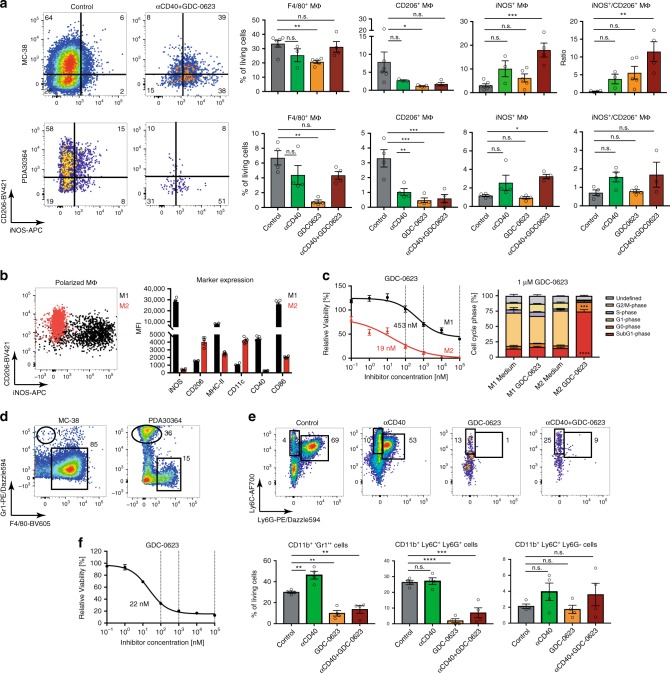
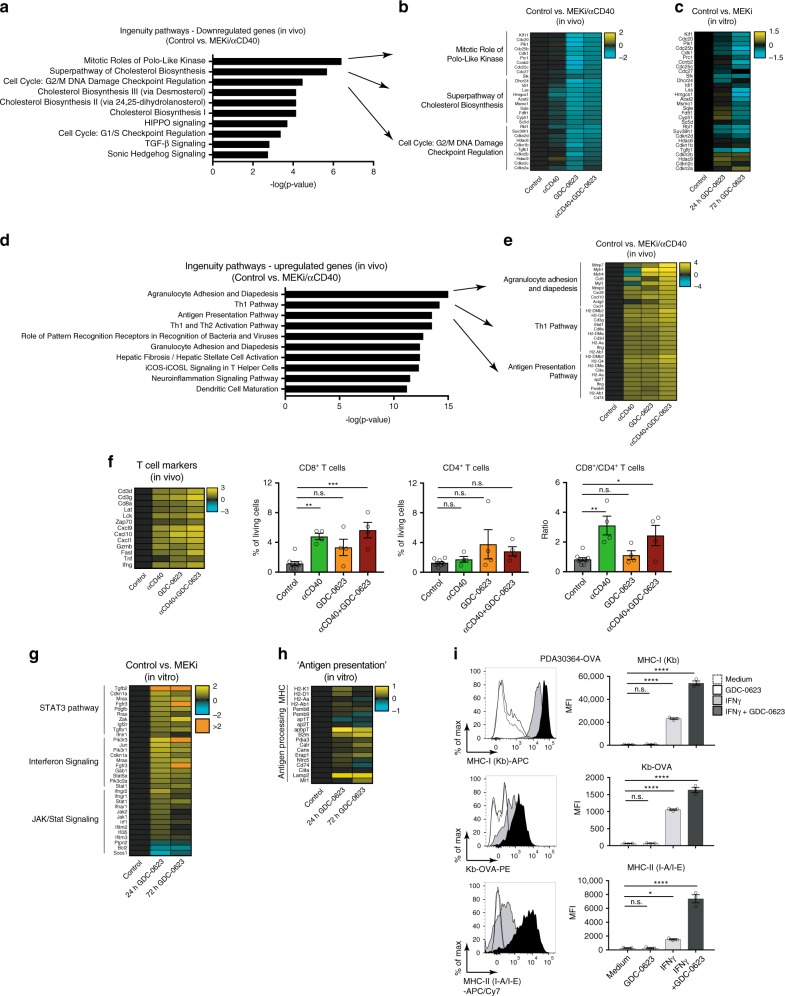
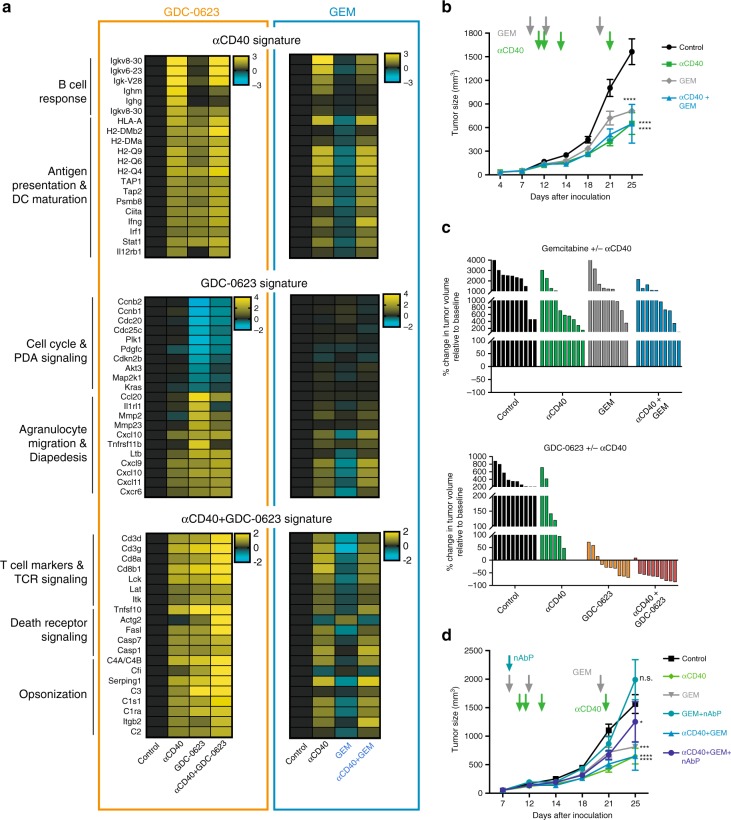
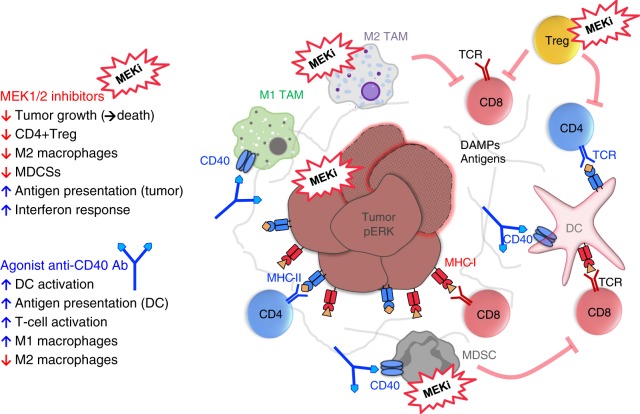
Cancer types with lower mutational load and a non-permissive tumor microenvironment are intrinsically resistant to immune checkpoint blockade. While the combination of cytostatic drugs and immunostimulatory antibodies constitutes an attractive concept for overcoming this refractoriness, suppression of immune cell function by cytostatic drugs may limit therapeutic efficacy. Here we show that targeted inhibition of mitogen-activated protein kinase (MAPK) kinase (MEK) does not impair dendritic cell-mediated T cell priming and activation. Accordingly, combining MEK inhibitors (MEKi) with agonist antibodies (Abs) targeting the immunostimulatory CD40 receptor results in potent synergistic antitumor efficacy. Detailed analysis of the mechanism of action of MEKi shows that this drug exerts multiple pro-immunogenic effects, including the suppression of M2-type macrophages, myeloid derived suppressor cells and T-regulatory cells. The combination of MEK inhibition with agonist anti-CD40 Ab is therefore a promising therapeutic concept, especially for the treatment of mutant Kras-driven tumors such as pancreatic ductal adenocarcinoma.
Overview
The claims and statistics of this paper haven’t been checked yet.
Free: it reads the open-access text and checks the first 5 claims that cite a source we can check. Create a free account to check every claim.
Integrity signals
Registry
Cites
Statistics
Figures
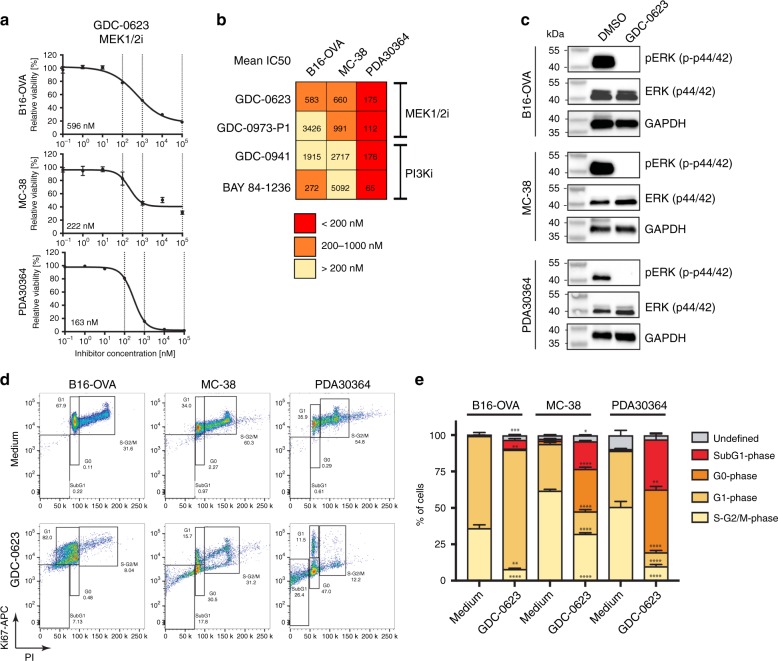
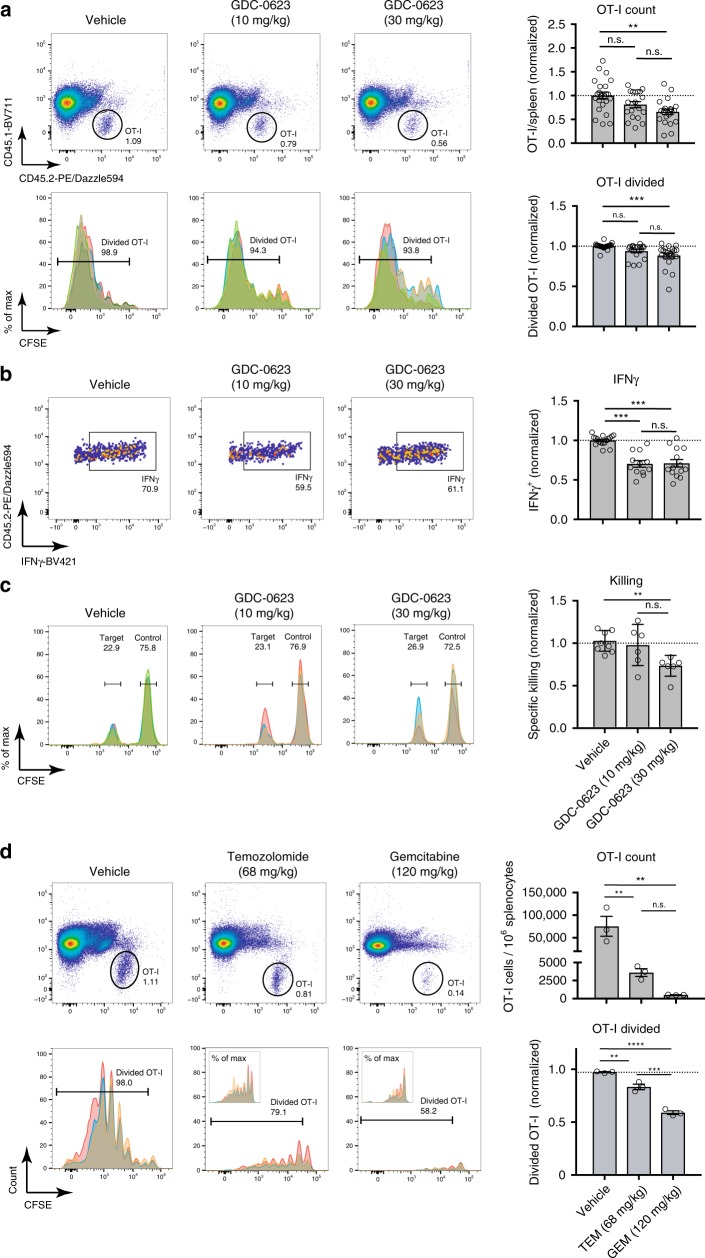
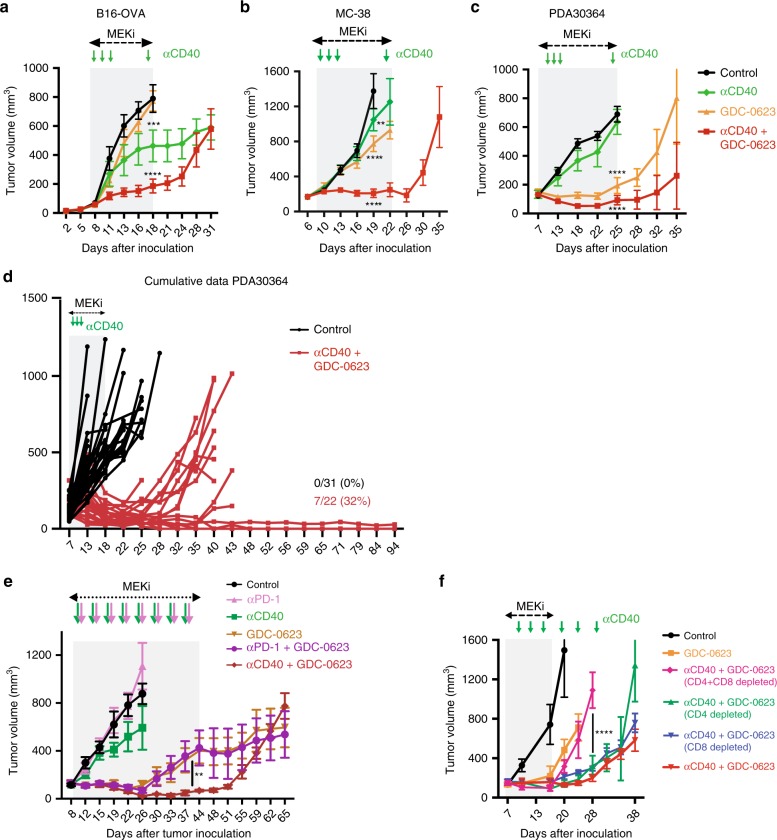
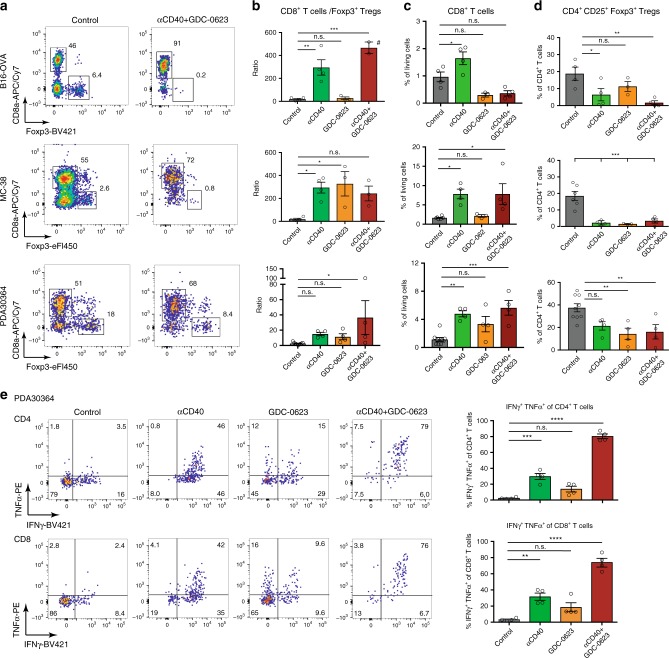
Verification
Claims the paper makes
The claims and statistics of this paper haven’t been checked yet.
Free: it reads the open-access text and checks the first 5 claims that cite a source we can check. Create a free account to check every claim.
Claims other papers make about this one
Each is checked against this paper’s own text: does it say what the citing paper says it does?
In the citing paper
“the TME of tumors treated with BRAF or MEK inhibitors is enriched in T cells expressing IFNG and the immunostimulatory receptor CD40 ligand (CD40LG) (Ho et al., 2014) but depleted of MDSCs and immunosuppressive tumor-associated macrophages (TAMs) (Allegrezza et al., 2016a; Baumann et al., 2020; Poon et al., 2017)”
From Immunomodulation by targeted anticancer agents (2021) · cites this paper as Baumann et al., 2020
Self-check
Percentages, sums and reported differences re-computed from the paper’s own numbers.
The self-check needs the paper’s full text.
Citations
Cites
Fast and accurate short read alignment with Burrows-Wheeler transform
Li, H., & Durbin, R. (2009) · Bioinformatics · doi:10.1093/bioinformatics/btp324 · Cited by 58,607
The Genome Analysis Toolkit: A MapReduce framework for analyzing next-generation DNA sequencing data
McKenna, A., Hanna, M., Banks, E., Sivachenko, A., Cibulskis, K., Kernytsky, A., Garimella, K., Altshuler, D., Gabriel, S., Daly, M., et al. (2010) · Genome Research · doi:10.1101/gr.107524.110 · Cited by 27,895
BEDTools: a flexible suite of utilities for comparing genomic features
Quinlan, A. R., & Hall, I. M. (2010) · Bioinformatics · doi:10.1093/bioinformatics/btq033 · Cited by 27,437
ANNOVAR: functional annotation of genetic variants from high-throughput sequencing data
Wang, K., Li, M., & Hakonarson, H. (2010) · Nucleic Acids Research · doi:10.1093/nar/gkq603 · Cited by 14,621
A framework for variation discovery and genotyping using next-generation DNA sequencing data
DePristo, M. A., Banks, E., Poplin, R., Garimella, K. V., Maguire, J. R., Hartl, C., Philippakis, A. A., del Angel, G., Rivas, M. A., Hanna, M., et al. (2011) · Nature Genetics · doi:10.1038/ng.806 · Cited by 11,456
Causal analysis approaches in Ingenuity Pathway Analysis
Krämer, A., Green, J., Pollard, J., & Tugendreich, S. (2014) · Bioinformatics · doi:10.1093/bioinformatics/btt703 · Cited by 5,724
Sensitive detection of somatic point mutations in impure and heterogeneous cancer samples
Cibulskis, K., Lawrence, M. S., Carter, S. L., Sivachenko, A., Jaffe, D., Sougnez, C., Gabriel, S., Meyerson, M., Lander, E. S., & Getz, G. (2013) · Nature Biotechnology · doi:10.1038/nbt.2514 · Cited by 4,981
Giard, D. J., Aaronson, S. A., Todaro, G. J., Arnstein, P., Kersey, J. H., Dosik, H., & Parks, W. P. (1973) · JNCI: Journal of the National Cancer Institute · doi:10.1093/jnci/51.5.1417 · Cited by 2,289
Integrated genomic characterization of pancreatic ductal adenocarcinoma
Raphael, B. J., Hruban, R. H., Aguirre, A. J., Moffitt, R. A., Yeh, J. J., Stewart, C., Robertson, A. G., Cherniack, A. D., Gupta, M., Getz, G., et al. (2017) · Cancer Cell · doi:10.1016/j.ccell.2017.07.007 · Cited by 2,019
Cella, M., Scheidegger, D., Palmer-Lehmann, K., Lane, P., Lanzavecchia, A., & Alber, G. (1996) · The Journal of experimental medicine · doi:10.1084/jem.184.2.747 · Cited by 1,983
Cited by
Molecular alterations and targeted therapy in pancreatic ductal adenocarcinoma
Qian, Y., Gong, Y., Fan, Z., Luo, G., Huang, Q., Deng, S., Cheng, H., Jin, K., Ni, Q., Yu, X., et al. (2020) · Journal of Hematology & Oncology · doi:10.1186/s13045-020-00958-3 · Cited by 312
“The application of GDC-0623 (cobimetinib), a MEK inhibitor, with an anti-CD40 antibody in murine models produced striking synergistic effects [69].”
BackgroundEmerging strategies to target RAS signaling in human cancer therapy
Chen, K., Zhang, Y., Qian, L., & Wang, P. (2021) · Journal of Hematology & Oncology · doi:10.1186/s13045-021-01127-w · Cited by 226
Immunomodulation by targeted anticancer agents
Petroni, G., Buqué, A., Zitvogel, L., Kroemer, G., & Galluzzi, L. (2021) · Cancer Cell · doi:10.1016/j.ccell.2020.11.009 · Cited by 212
Targeting oncogene and non-oncogene addiction to inflame the tumour microenvironment
Petroni, G., Buqué, A., Coussens, L. M., & Galluzzi, L. (2022) · Nature Reviews Drug Discovery · doi:10.1038/s41573-022-00415-5 · Cited by 160
PD-1 and PD-L1 inhibitors in cold colorectal cancer: challenges and strategies
Lin, K. X., Istl, A. C., Quan, D., Skaro, A. I., Tang, E. S.-T., & Zheng, X. (2023) · Cancer Immunology Immunotherapy · doi:10.1007/s00262-023-03520-5 · Cited by 180
“MEKi may also have effects on the immunogenicity of the TME by acting on both tumor and immune cells [49, 50, 72, 141–143].”
BackgroundCharacterization of single neurons reprogrammed by pancreatic cancer
Thiel, V., Renders, S., Panten, J., Dross, N., Bauer, K., Azorín, D. D., Henriques, V., Vogel, V., Klein, C., Leppä, A., et al. (2025) · Nature · doi:10.1038/s41586-025-08735-3 · Cited by 180
Self-citationThe expanding role for small molecules in immuno-oncology
Offringa, R., Kötzner, L., Huck, B. R., & Urbahns, K. (2022) · Nature Reviews Drug Discovery · doi:10.1038/s41573-022-00538-9 · Cited by 150
Self-citationTumor-Associated Macrophages: A Potential Target for Cancer Therapy
Tan, Y., Wang, M., Zhang, Y., Ge, S., Zhong, F., Xia, G., & Sun, C. (2021) · Frontiers in Oncology · doi:10.3389/fonc.2021.693517 · Cited by 165
“For instance, it was observed that the TLR7/8 agonist can induce MDSCs to differentiate into tumoricidal macrophages, which makes it a potential agent for treatment of oxaliplatinresistant colorectal carcinoma (140).”
BackgroundInfluentialBarnestein, R., Galland, L., Kalfeist, L., Ghiringhelli, F., Ladoire, S., & Limagne, E. (2022) · OncoImmunology · doi:10.1080/2162402x.2022.2120676 · Cited by 124
“In addition, it also increases the CD8/Treg ratio.(209) Taken together, these data suggest the growing interest of anti-MEK in improving the responsiveness to immunotherapy as highlighted in the study NCT04044430 (combining encorafenib, binimetinib, and nivolumab in BRAF-mutated CRC).”
BackgroundKurt, F. G. Ö., Lasser, S., Arkhypov, I., Utikal, J. S., & Umansky, V. (2023) · Journal of Clinical Investigation · doi:10.1172/jci170762 · Cited by 122
MEK inhibitors for neurofibromatosis type 1 manifestations: Clinical evidence and consensus
de Blank, P. M. K., Gross, A. M., Akshintala, S., Blakeley, J. O., Bollag, G. E., Cannon, A. D., Dombi, E., Fangusaro, J., Gelb, B. D., Hargrave, D. R., et al. (2022) · Neuro-Oncology · doi:10.1093/neuonc/noac165 · Cited by 122
Tumor-infiltrating CD8+ T cell antitumor efficacy and exhaustion: molecular insights
Kumar, S., Singh, S. K., Rana, B., & Rana, A. (2021) · Drug Discovery Today · doi:10.1016/j.drudis.2021.01.002 · Cited by 120
Harnessing the potential of CD40 agonism in cancer therapy
Zhou, Y., Richmond, A. J., & Yan, C. W. (2023) · Cytokine & Growth Factor Reviews · doi:10.1016/j.cytogfr.2023.11.002 · Cited by 63
Mechanisms Governing Immunotherapy Resistance in Pancreatic Ductal Adenocarcinoma
Schmiechen, Z. C., & Stromnes, I. M. (2021) · Frontiers in Immunology · doi:10.3389/fimmu.2020.613815 · Cited by 68
The role of macrophages in the tumor microenvironment and tumor metabolism
Sadhukhan, P., & Seiwert, T. Y. (2023) · Seminars in Immunopathology · doi:10.1007/s00281-023-00988-2 · Cited by 54
“The combination of CD40 agonists and MEK inhibitors has been shown to inhibit M2-like macrophages, T cell exhaustion, and MDSC functioning, which can lead to the inhibition of cancer growth and progression [186, 187].”
BackgroundAvery, T. Y., Köhler, N., Zeiser, R., Brummer, T., & Ruess, D. A. (2022) · Frontiers in Oncology · doi:10.3389/fonc.2022.931774 · Cited by 54
Baumann, D., Drebant, J., Hägele, T., Burger, L., Serger, C., Lauenstein, C., Dudys, P., Erdmann, G., & Offringa, R. (2021) · Journal for ImmunoTherapy of Cancer · doi:10.1136/jitc-2020-002319 · Cited by 48
Self-citationFacts and Hopes of CD40 Agonists in Cancer Immunotherapy
McVey, J. C., & Beatty, G. L. (2025) · Clinical Cancer Research · doi:10.1158/1078-0432.ccr-24-1660 · Cited by 54
Su, P., Li, O., Ke, K., Jiang, Z., Wu, J., Wang, Y., Mou, Y., & Jin, W. (2024) · International Journal of Oncology · doi:10.3892/ijo.2024.5648 · Cited by 47
“In addition, it has been shown that MEK inhibitors improve the anti‑tumor efficacy of CD40 agonists by inhibiting the immunosuppressive activity of M2 TAMs, Tregs and MDSCs, and increasing the tumoricidal immune response (184).”
BackgroundHan, J., Dong, L., Wu, M., & Ma, F. (2023) · Frontiers in Immunology · doi:10.3389/fimmu.2023.1160340 · Cited by 39
Pellegrino, M., Secli, V., D’Amico, S., Petrilli, L. L., Caforio, M., Folgiero, V., Tumino, N., Vacca, P., Vinci, M., Fruci, D., et al. (2024) · Frontiers in Immunology · doi:10.3389/fimmu.2024.1356321 · Cited by 37
Zhou, L., Huntington, K. E., Zhang, S., Carlsen, L., So, E. Y., Parker, C., Şahin, İ., Safran, H. P., Kamle, S., Lee, C.-M., et al. (2020) · Oncotarget · doi:10.18632/oncotarget.27799 · Cited by 27
“MEKi have also been shown to not inhibit dendritic cell priming by T-cells and to promote synergistic anti-tumor immunity when combined with an immunostimulatory CD40 agonist [55].”
BackgroundHeumann, T. R., & Azad, N. S. (2021) · Cancer and Metastasis Reviews · doi:10.1007/s10555-021-09981-3 · Cited by 28
Li, Z.-J., He, B., Domenichini, A., Satiaputra, J., Wood, K. H., Lakhiani, D. D., Bashaw, A. A., Nilsson, L. M., Li, J., Bastow, E. R., et al. (2024) · Journal of Clinical Investigation · doi:10.1172/jci179860 · Cited by 29
Zheng, Y., Liu, Y., Zhang, F., Chen, S., Chen, X., Zhang, M., Sun, M., Sun, Y., & Xing, L. (2022) · Translational research · doi:10.1016/j.trsl.2022.08.005 · Cited by 25
Pharmacological modulation of myeloid-derived suppressor cells to dampen inflammation
van Geffen, C., Heiss, C., Deißler, A., & Kolahian, S. (2022) · Frontiers in Immunology · doi:10.3389/fimmu.2022.933847 · Cited by 24
Metabolic regulation of immune responses to cancer
Wißfeld, J., Werner, A., Yan, X., ten Bosch, N., & Cui, G. (2022) · Cancer Biology and Medicine · doi:10.20892/j.issn.2095-3941.2022.0381 · Cited by 27
Photon versus carbon ion irradiation: immunomodulatory effects exerted on murine tumor cell lines
Hartmann, L., Schröter, P., Osen, W., Baumann, D., Offringa, R., Moustafa, M., Will, R. D., Debus, J., Brons, S., Rieken, S., et al. (2020) · Scientific Reports · doi:10.1038/s41598-020-78577-8 · Cited by 21
Self-citationHyun, G. H., Jeong, D., Yang, Y. Y., Cho, I. H., Ha, Y., Xing, X., Abbott, D. W., Hsieh, Y. S. Y., Kang, Y. P., Cha, J., et al. (2023) · ACS Nano · doi:10.1021/acsnano.3c01645 · Cited by 20
Norgard, R. J., Budhani, P., O’Brien, S. A., Xia, Y., Egan, J. N., Flynn, B., Tagore, J. R., Seco, J., Peet, G. W., Mikucka, A., et al. (2024) · Cancer Research Communications · doi:10.1158/2767-9764.crc-24-0172 · Cited by 18
“Yet,thesestudiesrequiredmultipledoses ofaCD40fordurableresponses(52).”
Schröter, P., Hartmann, L., Osen, W., Baumann, D., Offringa, R., Eisel, D., Debus, J., Eichmüller, S. B., & Rieken, S. (2020) · Scientific Reports · doi:10.1038/s41598-020-57456-2 · Cited by 17
Self-citationFine-tuning of MEK signaling is pivotal for limiting B and T cell activation
Houde, N., Beuret, L., Bonaud, A., Fortier-Beaulieu, S.-P., Truchon-Landry, K., Aoidi, R., Pic, É., Alouche, N., Rondeau, V., Schlecht‐Louf, G., et al. (2022) · Cell Reports · doi:10.1016/j.celrep.2021.110223 · Cited by 16
PIKfyve, expressed by CD11c-positive cells, controls tumor immunity
Choi, J. E., Qiao, Y., Kryczek, I., Yu, J., Gurkan, J. K., Bao, Y., Gondal, M. N., Tien, J. C.-Y., Maj, T., Yazdani, S., et al. (2024) · Nature Communications · doi:10.1038/s41467-024-48931-9 · Cited by 29
Degan, S., May, B. L., Jin, Y. J., Hammouda, M. B., Sun, H., Zhang, G., Wang, Y., Erdmann, D., Warren, W. S., & Zhang, J. Y. (2022) · Frontiers in Oncology · doi:10.3389/fonc.2022.782877 · Cited by 18
“Host immunity is crucial for the anti-melanoma activity of BRAF and MEK inhibitors (50, 51).”
Zhou, L., Huntington, K. E., Zhang, S., Carlsen, L., So, E. Y., Parker, C., Şahin, İ., Safran, H. P., Kamle, S., Lee, C. M., et al. (2020) · bioRxiv (Cold Spring Harbor Laboratory) · doi:10.1101/2020.08.02.230839 · Cited by 13
Back to the Future: Spatiotemporal Determinants of NK Cell Antitumor Function
Li, J. H., & O’Sullivan, T. E. (2022) · Frontiers in Immunology · doi:10.3389/fimmu.2021.816658 · Cited by 12
Jankelow, A. M., Almeida-Porada, G. D., Atala, A., Sawyer, S. W., & Porada, C. D. (2025) · Stem Cells Translational Medicine · doi:10.1093/stcltm/szaf055 · Cited by 14
Associating Immunotherapy and Targeted Therapies: Facts and Hopes
Ladoire, S., Rébé, C., & Ghiringhelli, F. (2022) · Clinical Cancer Research · doi:10.1158/1078-0432.ccr-22-1184 · Cited by 11
Small molecule inhibitors targeting regulatory T cells for cancer treatment
García‐Díaz, N., Wei, Q., & Taskén, K. (2023) · European Journal of Immunology · doi:10.1002/eji.202350448 · Cited by 10
Targeting pathological ERK1/2 signaling in cancer and beyond
Schanbacher, C., Goebeler, M.-E., Gerull, B., & Lorenz, K. (2025) · Trends in Molecular Medicine · doi:10.1016/j.molmed.2025.08.001 · Cited by 15
Zhou, Q., Chen, D., Zhang, J., Xiang, J.-F., Zhang, T., Wang, H., & Zhang, Y. (2022) · Journal of Pancreatology · doi:10.1097/jp9.0000000000000109 · Cited by 9
“Although inhibiting Kras downstream MAPK/ERK or PI3K pathway did not affect the function of DCs or T cells,[16] when combined with CD40 agonist (αCD40), the treatment could increase CD8+ T/Treg ratio, total and activated CD8+ T cells, M1 macrophages, proinflammatory signal pathways, and reduce Tregs, M2 macrophages.[1…”
BackgroundImataka, G., Kuwashima, S., Hayashi, S., Ogino, K., Hoshiyama, E., Naruse, K., & Shiraishi, H. (2025) · Journal of Clinical Medicine · doi:10.3390/jcm14145071 · Cited by 10
“Currently, distinctions among MEKi in terms of formulation (particularly child-friendly options), regulatory approval, insurance availability, and NF1-specific clinical experience may be the most critical factors influencing their use [16–18].”
Identification of TRDV-TRAJ V domains in human and mouse T-cell receptor repertoires
Volkmar, M., Fakhr, E., Zens, S., Bury, A., Offringa, R., Gordon, J., Huduti, E., Wölfel, T., & Wölfel, C. (2023) · Frontiers in Immunology · doi:10.3389/fimmu.2023.1286688 · Cited by 7
Self-citationDong, L., Choi, H., Budhu, S., Schulze, I., Verma, S., Mangarin, L. M. B., Navarro, V. E., Mehanna, N., Khan, J. F., Venkatesh, D., et al. (2024) · Cancer Immunology Research · doi:10.1158/2326-6066.cir-23-0729 · Cited by 7
MAPK and STAT3 Inhibitors Modulate FoxP3 Expression and Regulatory T Cell Function
García‐Díaz, N., Solli, E., Hajjar, E., Cornillot-Clément, S., Landskron, J., Ahmad, R., Wei, Q., & Taskén, K. (2025) · European Journal of Immunology · doi:10.1002/eji.202451225 · Cited by 8
Lai, F., Fang, Y., Cheng, C., Zhong, X., Zheng, W., Lan, S., Peng, Q., Cai, X., Cao, T., Zhong, C., et al. (2024) · Current Medicinal Chemistry · doi:10.2174/0109298673279399240102095116 · Cited by 9
Oncogenic dependency plays a dominant role in the immune response to cancer
Li, J., D’Amico, S., Kirillov, V., Petrenko, O., & Reich, N. C. (2023) · Proceedings of the National Academy of Sciences · doi:10.1073/pnas.2308635120 · Cited by 6
“These results are consistent with earlier reports that MEK inhibition does not perturb T cell function in vivo in tumor therapy (39, 48, 49).”
BackgroundResultC5aR plus MEK inhibition durably targets the tumor milieu and reveals tumor cell phagocytosis
Perrino, M. R., Ahmari, N., Hall, A., Jackson, M., Na, Y., Pundavela, J., Szabo, S., Woodruff, T. M., Dombi, E., Kim, M., et al. (2024) · Life Science Alliance · doi:10.26508/lsa.202302229 · Cited by 5
“Recent studies, including Baumann et al (2020), have demonstrated that MEK inhibitors can enhance the phagocytic activity of macrophages.”
BackgroundResultXie, D., Yang, C. C.-K., Gao, S., Li, J., Yang, J., Li, X., Jiang, R., Cao, F., Zhang, S., Wang, L., et al. (2026) · International Journal of Molecular Sciences · doi:10.3390/ijms27073287 · Cited by 6
Exploration of Kras Mutations and Their Potential for Being a Target Molecule in Cancer Chemotherapy
Chinthareddy, A., & Oroszi, T. L. (2023) · Journal of Cancer Therapy · doi:10.4236/jct.2023.146022 · Cited by 5
Li, H., Zhang, C., Zhu, N., Shi, Y., & Li, Q. (2024) · Journal of Cancer · doi:10.7150/jca.103708 · Cited by 5
“Previous studies consistently reported that the expressions of LAG-3, PD-1, PD-L1, CD28, CD80, CD27 and CTLA-4 were relevant to the immunosuppression in the tumor microenvironment [48-50].”
Keshavarz, F., Soltanshahi, M., Ayadilord, M., Mortazavi, F. S., Shabani, M., & Jalali, S. A. (2026) · Cancer Cell International · doi:10.1186/s12935-025-04141-x · Cited by 6
Searles, S. C., Chen, W., Yee, J. D., Lee, P., Lee, C. K., Caron, C., Mousovich‐Neto, F., Matei, I. R., Lyden, D. C., & Bui, J. D. (2024) · Journal of Extracellular Vesicles · doi:10.1002/jev2.12515 · Cited by 6
Wilhelmsson, M., Foo, J. C., Yeung, R. S. M., Kritzinger, F. E., McKeown, T., Coblentz, A. C., Ertl-Wagner, B. B., Tabori, U. Y., Bartels, U. K., & Das, A. (2023) · Pediatric Blood & Cancer · doi:10.1002/pbc.30619 · Cited by 4
Kehm, H., Zens, S., Baumann, D., Meng, Z., de Ru, A. H., Tjokrodirijo, R. T. N., Vent, C., Murawjew, O., Braun, S., Weiß, A., et al. (2026) · Science Advances · doi:10.1126/sciadv.adr6132 · Cited by 3
Self-citationEvolution of Systemic Therapy in Metastatic Pancreatic Ductal Adenocarcinoma
Kamgar, M., Chakrabarti, S., Shreenivas, A. V., & George, B. (2021) · Surgical Oncology Clinics of North America · doi:10.1016/j.soc.2021.06.004 · Cited by 3
Rodriguez-Ehrenfried, A., Zens, S., Steffens, L. K., Kehm, H., Paul, A., Lauenstein, C., Volkmar, M., Poschke, I. C., Meng, Z., & Offringa, R. (2024) · BIO-PROTOCOL · doi:10.21769/bioprotoc.4972 · Cited by 4
“…are applied: Representative example of an experiment involving the functional testing of TCRs isolated from a transplantable mouse pancreatic ductal adenocarcinoma (PDAC) model expressing the chicken ovalbumin (OVA) neoantigen [18], approximately 50% of which were found directed against OVA [28].”
MethodSelf-citationPlanchak, S., Welch, E. C., Phelps, B., Phelps, J., Moyers, A. H., Whitehead, K., Murphy, J., Tapinos, N., & Tripathi, A. (2025) · Cellular and Molecular Bioengineering · doi:10.1007/s12195-025-00850-5 · Cited by 3
“Attempts have been made to automate tissue dissociation using platforms like Miltenyi GentleMACS, Omni Tissue Homogenizer, S2 Genomics Singulator, or Cytiva VIA Extractor (Table 1) [60–63].”
Wang, Y., Ohnuki, H., Tran, A. D., Wang, D., Ha, T., Feng, J., Sim, M., Barnhill, R. L., Lugassy, C., Sargen, M. R., et al. (2025) · Journal of Clinical Investigation · doi:10.1172/jci181609 · Cited by 3
Tominaga, H., Matsuzaki, J., Oikawa, C., Toyoshima, K., Manabe, H., Ozawa, E., Shimamura, A., Yokoyama, R., Serizawa, Y., Ochiya, T., et al. (2021) · Cancers · doi:10.3390/cancers13164220 · Cited by 2
“immunostimulatory CD40 receptor plus MEK inhibitors suppressing M2 macrophages, bone marrow-derived suppressor cells, and T regulatory cells generates a potent synergistic anti-tumor effect [69].”
BackgroundLiu, L., 陈颖君, Guo, M., Yun, F., Li, X., Chen, L., Li, Y. M., & Li, F. (2026) · Frontiers in Pharmacology · doi:10.3389/fphar.2026.1782130 · Cited by 1
Cheng, W., Huang, Z., Hao, Y., Hua, H., Zhang, B., Li, X., Fu, F., Yang, J., Zheng, K., Zhang, X., et al. (2024) · Immunology Letters · doi:10.1016/j.imlet.2024.106882 · Cited by 1
Li, H., Zhu, N., Shi, Y., Liu, Q., Gu, J., & Li, Q. (2022) · Research Square · doi:10.21203/rs.3.rs-2219062/v1 · Cited by 1
Das, A., Wilhelmsson, M., Foo, J. C., Yeung, R. S. M., Kritzinger, F. E., McKeown, T., Coblentz, A. C., Ertl-Wagner, B. B., Tabori, U. Y., & Bartels, U. K. (2023) · doi:10.22541/au.168915071.18027555/v1 · Cited by 1
Ras and Ras Signaling as a Therapeutic Target in Cancer
Sliker, B. H., & Campbell, P. M. (2021) · Elsevier eBooks · doi:10.1016/b978-0-12-820472-6.00006-2
Relatlimab and nivolumab in untreated advanced melanoma
Ganguly, S., & Gogia, A. (2022) · Cancer Research Statistics and Treatment · doi:10.4103/crst.crst_71_22
Immune-Checkpoint Inhibitors: A New Line of Attack in Triple-Negative Breast Cancer
Jarroudi, O. A., Bairi, K. E., Curigliano, G., & Afqir, S. (2023) · Cancer treatment and research · doi:10.1007/978-3-031-33602-7_2 · Cited by 1
Immune-oncology potential of KRAS inhibitors
Molina‐Arcas, M., Boumelha, J., & Downward, J. (2024) · Elsevier eBooks · doi:10.1016/b978-0-443-21861-3.00013-9
Ran, S., Wang, S., Li, R., Lai, L., Yu, J., Zhang, X., Li, Y., Ye, W., Zong, J., Li, X., et al. (2026) · Journal of Translational Medicine · doi:10.1186/s12967-026-08023-2 · Cited by 1
Adjuvant intrinsic dendritic cells targeting vaccines
Ceglia, V. (2021) · theses.fr (ABES) · doi:10.70675/759176f1zd3faz43d3zab70z79d7079deee8
CD40 Agonism in Pancreatic Ductal Adenocarcinoma: Expression, Biology, and Therapeutic Targeting
Kucukcelebi, S., van Diepen, A. E., de Vos‐Geelen, J., van Eijck, C. H. J., van Montfoort, N., & van Eijck, C. W. F. (2026) · Cancers · doi:10.3390/cancers18111743
“CD40 expression has also been reported on subsets of myeloid-derived suppressor cells (MDSCs), in which CD40 engagement may modulate suppressive or effector functions in a context-dependent manner [52–54].”
Akinsipe, T., Odewumi, C. O., Latinwo, L. M., Aghimien, O. O., Musa, M. A., IGBINOBA, P. O., Simons, A. L., & Aghimien, M. O. (2026) · Oncology Reviews · doi:10.3389/or.2026.1814540 · Cited by 1
“Moreover, MEK inhibitors may enhance immune checkpoint therapy, such as anti-PD-1/PD-L1, and enhance antigen presentation by dendritic cells (86, 87).”
Heumann, T. R., Lu, J., Wang, H., Phelps, M. A., Zhu, Q., Anders, R. A., Mitchell, S., Leatherman, J. M., Abbott, N., Kim, K., et al. (2026) · Clinical Cancer Research · doi:10.1158/1078-0432.ccr-25-4893 · Cited by 2
“For example, in immunocompetent mice, 4-1BB agonist antibodies rescued T-cell function in the setting of systemic MEKi and elicited efficacy in sub-cutaneous tumor models (8, 16, 18).”
Lu, D., Osgood, T., Ma, S., Zhang, H., Kanke, M., Tan, J. A., Paudel, S. N., Zhou, H., Estrada, J., Yamawaki, T., et al. (2026) · Cancer Immunology Research · doi:10.1158/2326-6066.cir-25-0794 · Cited by 1
“Prior studies demonstrated that both KRAS (19) and MEK inhibition (10, 68) increase T-cell infiltration, but the molecular mediators of this phenomenon remain unclear.”
Mobarak, N., Alanazi, F., Albijadi, A., & Alruwaili, N. (2026) · Pediatric Blood & Cancer · doi:10.1002/1545-5017.70521
Metadata
- Authors
- Baumann, D., Hägele, T., Mochayedi, J., Drebant, J., Vent, C., Blobner, S., Noll, J. H., Nickel, I., Schumacher, C., Boos, S. L., Daniel, A. S., Wendler, S., Volkmar, M., Strobel, O., & Offringa, R.
- Affiliations
- German Cancer Research Center (DE)
- University Hospital Heidelberg (DE)
- Corresponding author
- Offringa, Rienk
- ORCID
- Venue
- Nature Communications
- Published
- 2020-05-01
- Volume
- 11
- Issue
- 1
- Pages
- 2176-2176
- ISSN
- 2041-1723 (ISSN-L)
- PMC
- PMC7195409
- OpenAlex
- W3022874852
- Cited by
- 76
- References
- 73
- Citations by year
- 2026: 10 · 2025: 8 · 2024: 13 · 2023: 13 · 2022: 15 · 2021: 10 · 2020: 7
- FWCI
- 4.06
- Type
- journal article
- Language
- en
- Open access
- gold
- doi.org
- Licence
- cc-by
- creativecommons.org/licenses/by/4.0 (tdm)
- creativecommons.org/licenses/by/4.0 (vor)
- Locations
- Nature Communications (publishedVersion, cc-by)
- PubMed Central (publishedVersion, cc-by)
- PubMed (publishedVersion)
- RePEc: Research Papers in Economics (submittedVersion)
- DOAJ (DOAJ: Directory of Open Access Journals) (submittedVersion, cc-by-sa)
- Open access LMU (Ludwid Maxmilian's Universitat Munchen) (submittedVersion, cc-by)
- Funders
- Deutsches Krebsforschungszentrum
- K.H. Bauer foundation
- Federal Ministry of Education and Research
- K.H. Bauer foundation Federal Ministry of Education and Research
- K.H. Bauer foundation The European Union
- Topics
- Health Sciences › Medicine › Oncology › Cancer Immunotherapy and Biomarkers
- Life Sciences › Immunology and Microbiology › Immunology › Immunotherapy and Immune Responses
- Life Sciences › Biochemistry, Genetics and Molecular Biology › Molecular Biology › Melanoma and MAPK Pathways
- Keywords
- MEK inhibition, MAPK kinase, combination immunotherapy, tumor microenvironment, myeloid-derived suppressor cells, regulatory T cells, KRAS-mutant tumors, pancreatic ductal adenocarcinoma, immune checkpoint inhibitor resistance, cytostatic agents
- MeSH terms
- Adenocarcinoma, Animals, Antibodies, Monoclonal, Antineoplastic Combined Chemotherapy Protocols, Cell Survival, Dendritic Cells, Drug Synergism, Humans, Macrophages, Male, Mice, Inbred C57BL, T-Lymphocytes, CD40 Antigens, Gene Expression Profiling, Mitogen-Activated Protein Kinase Kinases, Carcinoma, Pancreatic Ductal, Cell Line, Tumor, Protein Kinase Inhibitors, Cell Proliferation, Mice, Biomarkers, Pharmacological, Transcriptome
About these checks
Registry, retraction, Cites and statistics results are computed, not judged, with one exception: a printed reference that no index lists is read once by a model before it counts as a citation error. Claims are extracted by a model and kept only when their quote appears verbatim in the text; each cited source is then checked, with a model’s help, for whether it says what the claim relies on. Those verdicts can be wrong — read the claim’s quote and the cited source before relying on one.
Statistics and arithmetic are recomputed, not judged.
Confidence bands are shown only for fields calibrated on our annotated test set. None is calibrated yet, so no band is shown.
What counts as a claim ›How we measure confidence ›How we check this ›
Are you an author, or do you see a problem with this page? Request a review
Data sources
Bibliographic data: Semantic Scholar, OpenAlex, Crossref.
Contains information from the Semantic Scholar Academic Graph Datasets, made available under the ODC Attribution License (ODC-BY 1.0).
Semantic Scholar’s data is described in: Kinney, R., et al. (2023). The Semantic Scholar Open Data Platform. arXiv:2301.10140.
