

The mutational impact of culturing human pluripotent and adult stem cells
Open accessPublished version of a preprint
The DOI matches its Crossref record; 55 of the 57 references it cites were found in a registry or an index.
Abstract
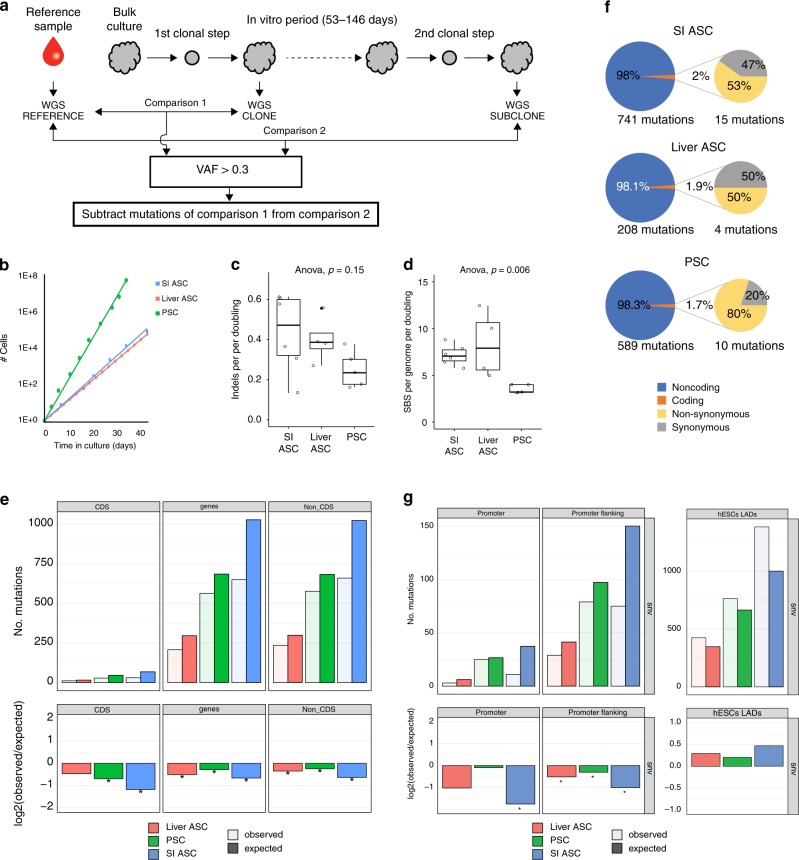
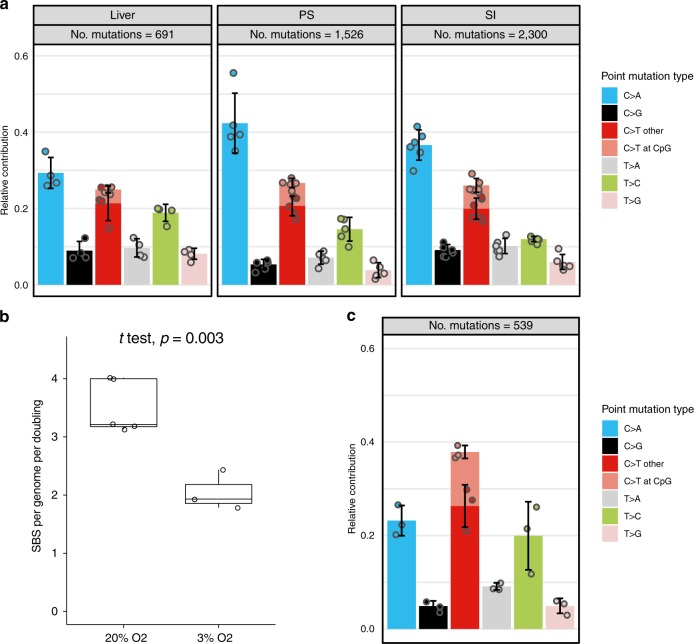
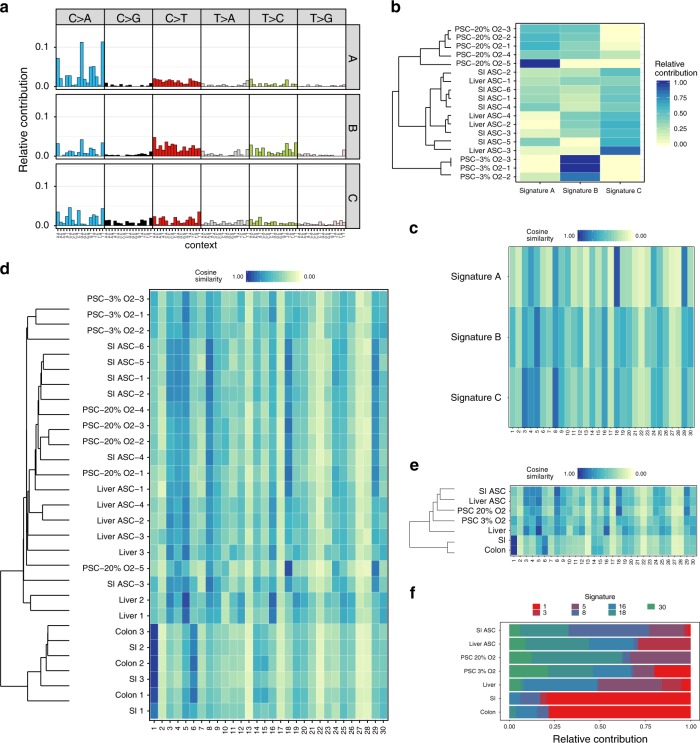
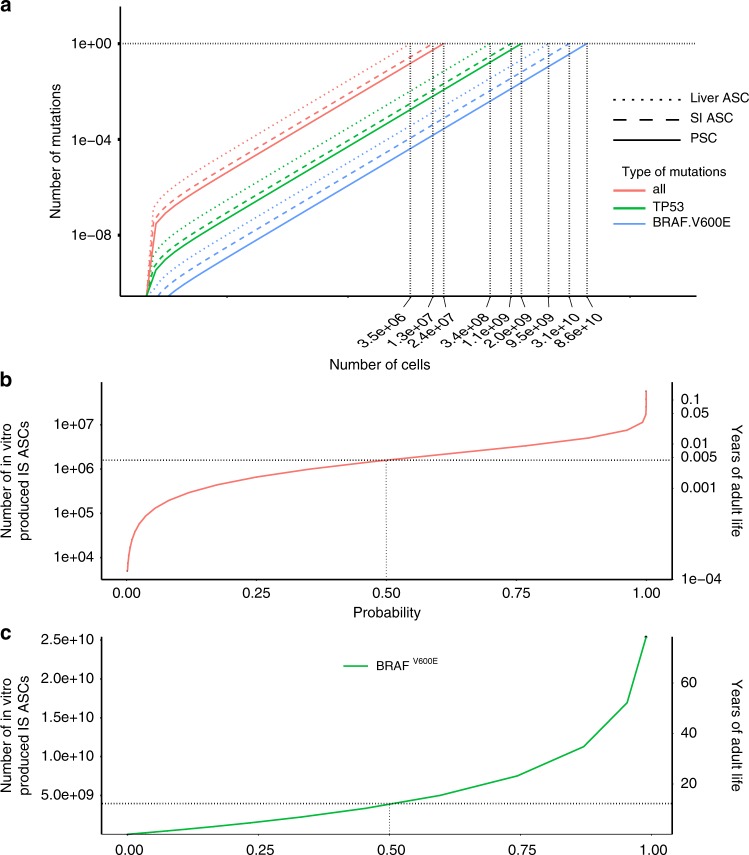
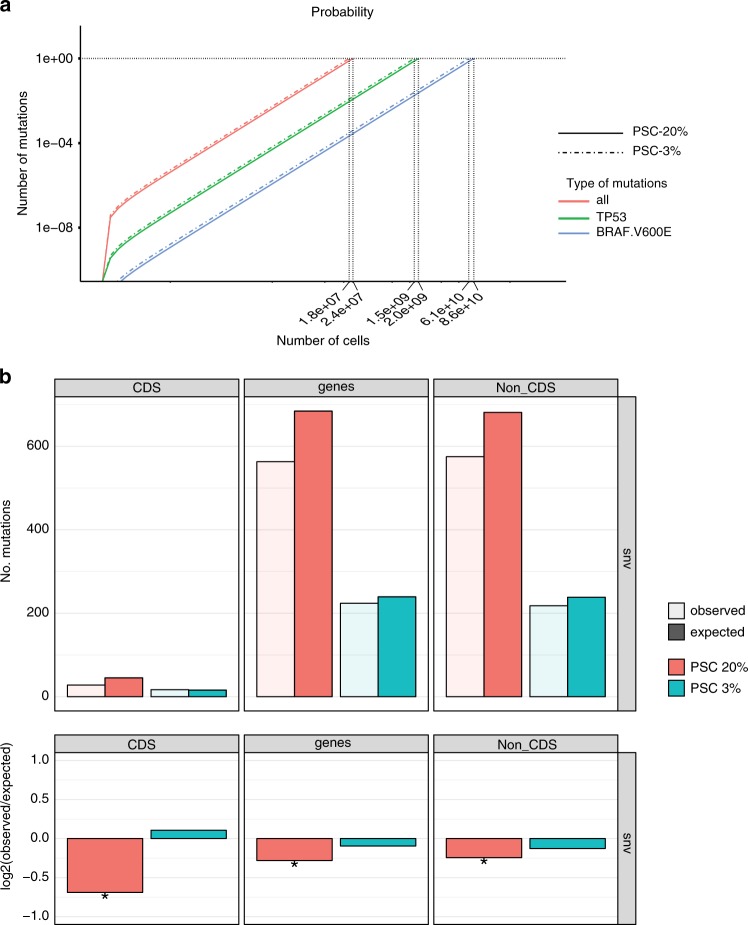
Genetic changes acquired during in vitro culture pose a risk for the successful application of stem cells in regenerative medicine. To assess the genetic risks induced by culturing, we determined all mutations in individual human stem cells by whole genome sequencing. Individual pluripotent, intestinal, and liver stem cells accumulate 3.5 ± 0.5, 7.2 ± 1.1 and 8.3 ± 3.6 base substitutions per population doubling, respectively. The annual in vitro mutation accumulation rate of adult stem cells is nearly 40-fold higher than the in vivo mutation accumulation rate. Mutational signature analysis reveals that in vitro induced mutations are caused by oxidative stress. Reducing oxygen tension in culture lowers the mutational load. We use the mutation rates, spectra, and genomic distribution to model the accumulation of oncogenic mutations during typical in vitro expansion, manipulation or screening experiments using human stem cells. Our study provides empirically defined parameters to assess the mutational risk of stem cell based therapies.
Overview
The claims and statistics of this paper haven’t been checked yet.
Free: it reads the open-access text and checks the first 5 claims that cite a source we can check. Create a free account to check every claim.
Integrity signals
Registry
Cites
Statistics
Figures
Verification
Claims the paper makes
The claims and statistics of this paper haven’t been checked yet.
Free: it reads the open-access text and checks the first 5 claims that cite a source we can check. Create a free account to check every claim.
Claims other papers make about this one
Each is checked against this paper’s own text: does it say what the citing paper says it does?
The source backs part of the claim, not all of it — or backs it for a different population, condition or comparison.
In the citing paper
“Although the mutational burden comes mostly from starting cells, the cell culture, passaging reagents, and passaging method could impact the mutational rate [13,14,15,54,55].”
From Overcoming the Variability of iPSCs in the Manufacturing of Cell-Based Therapies (2023) · cites this paper as [55]
Experimental — accuracy not yet measured
Self-check
Percentages, sums and reported differences re-computed from the paper’s own numbers.
The self-check needs the paper’s full text.
Citations
Cites
STAR: ultrafast universal RNA-seq aligner
Dobin, A., Davis, C. A., Schlesinger, F., Drenkow, J., Zaleski, C., Jha, S., Batut, P., Chaisson, M., & Gingeras, T. R. (2013) · Bioinformatics · doi:10.1093/bioinformatics/bts635 · Cited by 51,709
Cingolani, P., Platts, A., Wang, L. L., Coon, M., Nguyen, T., Wang, L., Land, S. J., Lu, X., & Ruden, D. M. (2012) · Fly · doi:10.4161/fly.19695 · Cited by 11,816
Signatures of mutational processes in human cancer
Initiative, A. P. C. G., Alexandrov, L. B., ICGC Breast Cancer Consortium, ICGC MMML-Seq Consortium, PedBrain, I., Nik-Zainal, S., Wedge, D. C., Aparicio, S. A. J. R., Behjati, S., Biankin, A. V., et al. (2013) · Nature · doi:10.1038/nature12477 · Cited by 9,660
dbSNP: the NCBI database of genetic variation
Sherry, S. T. (2001) · Nucleic Acids Research · doi:10.1093/nar/29.1.308 · Cited by 7,502
Van der Auwera, G. A., Carneiro, M. O., Hartl, C., Poplin, R., del Angel, G., Levy‐Moonshine, A., Jordan, T., Shakir, K., Roazen, D., Thibault, J., et al. (2013) · Current Protocols in Bioinformatics · doi:10.1002/0471250953.bi1110s43 · Cited by 6,687
Predicting the Functional Effect of Amino Acid Substitutions and Indels
Choi, Y., Sims, G. E., Murphy, S., Miller, J. R., & Chan, A. P. (2012) · PLoS ONE · doi:10.1371/journal.pone.0046688 · Cited by 2,890
Highly Recurrent TERT Promoter Mutations in Human Melanoma
Huang, F. W., Hodis, E., Xu, M. J., Kryukov, G. V., Chin, L., & Garraway, L. A. (2013) · Science · doi:10.1126/science.1229259 · Cited by 1,816
TERT Promoter Mutations in Familial and Sporadic Melanoma
Horn, S., Figl, A., Rachakonda, P. S., Fischer, C., Sucker, A., Gast, A., Kadel, S., Moll, I., Nagore, E., Hemminki, K., et al. (2013) · Science · doi:10.1126/science.1230062 · Cited by 1,799
Drost, J., & Clevers, H. (2018) · Nature Reviews Cancer · doi:10.1038/s41568-018-0007-6 · Cited by 1,790
Long-Term Culture of Genome-Stable Bipotent Stem Cells from Adult Human Liver
Huch, M., Gehart, H., van Boxtel, R., Hamer, K., Blokzijl, F., Verstegen, M. M. A., Ellis, E., van Wenum, M., Fuchs, S. A., de Ligt, J., et al. (2015) · Cell · doi:10.1016/j.cell.2014.11.050 · Cited by 1,619
Self-citation
Cited by
Items 101–132 of 132
Nature of spontaneously arising single base substitutions in normal cells
Takeda, S., & Luan, Y. (2021) · Genome Instability & Disease · doi:10.1007/s42764-021-00056-9 · Cited by 2
An update on clinical applications of iPSCs from a genomic point of view
Yoshihara, M., & Murakawa, Y. (2022) · Elsevier eBooks · doi:10.1016/b978-0-323-99892-5.00001-3 · Cited by 2
Physiological media and oxygen levels modulate cancer hallmarks in cultured breast cancer cells
Wiebe, J. E., Alva, R., Moradi, F., Alderman, S., Liang, P., & Stuart, J. A. (2026) · FEBS Journal · doi:10.1111/febs.70629 · Cited by 2
(2025) · Newborn · doi:10.5005/jp-journals-11002-0137 · Cited by 2
Truszkowski, L., Bottini, S., Bianchi, S., Scrivano, M. G., Ramondo, G. F., Belluci, L., Bell, H., Becca, S., Snijders, K. E., Savoré, G., et al. (2025) · Open Research Europe · doi:10.12688/openreseurope.18245.2 · Cited by 2
Mutagenic bypass of uracil-derived abasic sites underlies the SBS17 mutational signaturePreprint
Ciccio, S. D., van Strien, J., Jiang, Y., Abbasi, A., Bakker, L. V., Weertman, N., Leiteris, L., Willems, J., Alexandrov, L. B., & Garaycoechea, J. I. (2026) · bioRxiv (Cold Spring Harbor Laboratory) · doi:10.64898/2026.08.21.746158 · Cited by 1
Mutational Signatures in Cancer Genomics and Toxicology
Zhivagui, M., & Zavadil, J. (2025) · Elsevier eBooks · doi:10.1016/b978-0-323-95488-4.00216-3 · Cited by 1
Fiacco, E., Landi, S., Zasso, J., Ambrosini, C., & Fagà, G. (2024) · Current Protocols · doi:10.1002/cpz1.979 · Cited by 1
Depletion of TP53 in Human Pluripotent Stem Cells Triggers Malignant‐Like Behavior
Montilla‐Rojo, J., Eleveld, T. F., van Soest, M., Hillenius, S., Timmerman, D. M., Gillis, A., Roelen, B. A. J., Mummery, C. L., Looijenga, L. H. J., & Salvatori, D. C. F. (2025) · Advanced Biology · doi:10.1002/adbi.202400538 · Cited by 1
Ven, A. L., Vanhuele, S., Ganier, O., Houy, A., Kahn, A., Rodrigues, M. J., Stern, M., Guérois, R., & Silveira, A. B. (2026) · Nucleic Acids Research · doi:10.1093/nar/gkag771
Gutiérrez‐Rebolledo, G. A., Pérez-González, M. Z., Sánchez‒Ramos, M., & Cruz‐Sosa, F. (2025) · Elsevier eBooks · doi:10.1016/b978-0-443-23998-4.00010-5
Avaliação do potencial oncogênico e imunomodulador de células estromais mesenquimais com trissomia 5
Marodin, M. S. J. (2022) · Digital Library of Theses and Dissertations (Universidade de São Paulo) · doi:10.11606/d.41.2022.tde-29112022-161747
Cryoaerosolization Enables Scalable Vitrification-Based Cell CryopreservationPreprint
Kangas, J. R., Ojha, A., Jiang, M., Shameem, M., Singh, B. N., Bischof, J. C., & Hogan, C. J. (2026) · bioRxiv (Cold Spring Harbor Laboratory) · doi:10.64898/2026.07.24.740597
Dysregulation of immune tolerance to autologous iPSCs and their differentiated derivatives (review)
Bogomiakova, M. E., Bogomazova, A. N., & Lagarkova, M. A. (2024) · Biochemistry (Moscow) · doi:10.31857/s0320972524050036
Delocalized DNA holes imprint mutation position in mismatch-repair-deficient cancersPreprint
Sung, J., & Cheong, J. (2026) · bioRxiv (Cold Spring Harbor Laboratory) · doi:10.64898/2026.10.14.759081
Towards functional kidney organoids: Insights from kidney organoid and fetal kidney development
Schumacher, A. (2023) · Research Publications (Maastricht University) · doi:10.26481/dis.20230926as
Estudo de vírus oncolítico em modelo in vitro de glioblastoma desenvolvido em organoide cerebral
Ferreira, R. S. (2022) · Digital Library of Theses and Dissertations (Universidade de São Paulo) · doi:10.11606/d.41.2022.tde-22032023-180529
Singh, M., Schümann, M., Elli, L., & Luciani, F. (2026) · Digestive and Liver Disease · doi:10.1016/j.dld.2026.10.001
Misra, P. S. (2024) · TSpace (University of Toronto)
Mimicking Islet Development with Human Pluripotent Stem Cells
Faust, A. L., Veres, A., & Melton, D. A. (2023) · Springer eBooks · doi:10.1007/978-3-031-41943-0_1
Recent Progress in Characterizing Germline Mutations and Their Transmission Across Generations
Katanaya, A., Takano, T., Hosokawa, M., Jinghang, L., & Chuma, S. (2026) · Advances in experimental medicine and biology · doi:10.1007/978-981-92-1439-6_2
From Drugs to Gene Editing for Developmental Epileptic Encephalopathies
Weuring, W. J. (2022) · Utrecht University Repository (Utrecht University) · doi:10.33540/1360
Rôle du système nerveux entérique dans le développement et la maturation de l’intestin
Loffet, E. A. (2021) · theses.fr (ABES) · doi:10.70675/796f1443z258ez4150z8556zdbd3f0f8b0f1
Physiological Oxygen and Media Conditions Influence Breast Cancer Hallmarks in Vitro
Wiebe, J. (2026) · Brock University Digital Repository (Brock University)
Szadkowska, P. R., & Szadkowska, P. R. (2023) · RCIN (Digital Repository of the Scientifics Institutes) (Institute of Archaeology and Ethnology of the Polish Academy of Sciences)
Fertility Preservation and Restoration in Oncologic and Non-Oncologic Patients
(2026) · Frontiers research topics · doi:10.3389/978-2-8325-8961-8
Ali, S., Arshad, M., Nazakat, L., Zia, S., & Iqbal, H. (2026) · Regenerative Engineering and Translational Medicine · doi:10.1007/s40883-026-00642-x
Huber, A. R., Hoeck, A. V., & Boxtel, R. V. (2021) · doi:10.3389/fgene.2021.760039.s001
Preclinical Models of Rare Pediatric Sarcomas: Ewing sarcoma and Ewing-like sarcomas
Bleijs, M. W. (2022) · Utrecht University Repository (Utrecht University) · doi:10.33540/993
Towards defining roles for PIERCE1 and C15ORF65 in multiciliated cells through gene editing
Chowdhury, M. M. K. (2022) · White Rose eTheses Online (University of Leeds, The University of Sheffield, University of York)
Metadata
- Authors
- Kuijk, E., Jager, M., van der Roest, B., Locati, M. D., Van Hoeck, A., Korzelius, J., Janssen, R., Besselink, N., Boymans, S., van Boxtel, R., & Cuppen, E.
- Affiliations
- University Medical Center Utrecht (NL)
- Leibniz Institute on Aging - Fritz Lipmann Institute (FLI) (DE)
- Corresponding author
- Kuijk, Ewart
- Cuppen, Edwin
- ORCID
- Venue
- Nature Communications
- Published
- 2020-05-19
- Volume
- 11
- Issue
- 1
- Pages
- 2493-2493
- ISSN
- 2041-1723 (ISSN-L)
- PMC
- PMC7237696
- OpenAlex
- W3028024776
- Semantic Scholar
- 98bc03e6d9b62c1d3d09b31427d69ffcd0a1de30
- Cited by
- 124
- References
- 56
- Citations by year
- 2026: 9 · 2025: 17 · 2024: 17 · 2023: 25 · 2022: 15 · 2021: 33 · 2020: 5
- FWCI
- 6.30
- Type
- journal article
- Language
- en
- Update notices
- correction (2020-08-04)
- Open access
- gold
- doi.org
- Licence
- cc-by
- creativecommons.org/licenses/by/4.0 (tdm)
- creativecommons.org/licenses/by/4.0 (vor)
- Locations
- Nature Communications (publishedVersion, cc-by)
- bioRxiv (Cold Spring Harbor Laboratory) (acceptedVersion, cc-by-nc)
- PubMed Central (publishedVersion, cc-by)
- PubMed (publishedVersion)
- Kent Academic Repository (University of Kent) (acceptedVersion)
- Kent Academic Repository (University of Kent) (submittedVersion, cc-by)
- RePEc: Research Papers in Economics (submittedVersion)
- DOAJ (DOAJ: Directory of Open Access Journals) (submittedVersion, cc-by-sa)
- Utrecht University Repository (Utrecht University) (submittedVersion, other-oa)
- Funders
- Nederlandse Organisatie voor Wetenschappelijk Onderzoek (Gravitation Program Cancer Genomics.nl)
- ZonMw (93512003)
- Topics
- Life Sciences › Biochemistry, Genetics and Molecular Biology › Molecular Biology › Pluripotent Stem Cells Research
- Life Sciences › Biochemistry, Genetics and Molecular Biology › Cancer Research › Cancer Genomics and Diagnostics
- Life Sciences › Biochemistry, Genetics and Molecular Biology › Cancer Research › Carcinogens and Genotoxicity Assessment
- Keywords
- in vitro mutagenesis, stem cell culture, human pluripotent stem cells, adult stem cells, intestinal stem cells, liver stem cells, mutational signatures, oxidative stress, oxygen partial pressure, oncogenic mutations, stem cell therapy safety, whole genome sequencing
- MeSH terms
- Mutation Accumulation, Whole Genome Sequencing, Adult, Algorithms, Cells, Cultured, DNA Mutational Analysis, Humans, Intestines, Liver, Models, Genetic, Mutation, Regenerative Medicine, Adult Stem Cells, Induced Pluripotent Stem Cells, Mutation Rate
About these checks
Registry, retraction, Cites and statistics results are computed, not judged, with one exception: a printed reference that no index lists is read once by a model before it counts as a citation error. Claims are extracted by a model and kept only when their quote appears verbatim in the text; each cited source is then checked, with a model’s help, for whether it says what the claim relies on. Those verdicts can be wrong — read the claim’s quote and the cited source before relying on one.
Statistics and arithmetic are recomputed, not judged.
Confidence bands are shown only for fields calibrated on our annotated test set. None is calibrated yet, so no band is shown.
What counts as a claim ›How we measure confidence ›How we check this ›
Are you an author, or do you see a problem with this page? Request a review
Data sources
Bibliographic data: Semantic Scholar, OpenAlex, Crossref.
Contains information from the Semantic Scholar Academic Graph Datasets, made available under the ODC Attribution License (ODC-BY 1.0).
Semantic Scholar’s data is described in: Kinney, R., et al. (2023). The Semantic Scholar Open Data Platform. arXiv:2301.10140.
