

The mutational impact of culturing human pluripotent and adult stem cells
Open accessPublished version of a preprint
The DOI matches its Crossref record; 56 of the 57 references it cites were found in a registry or an index.
Abstract
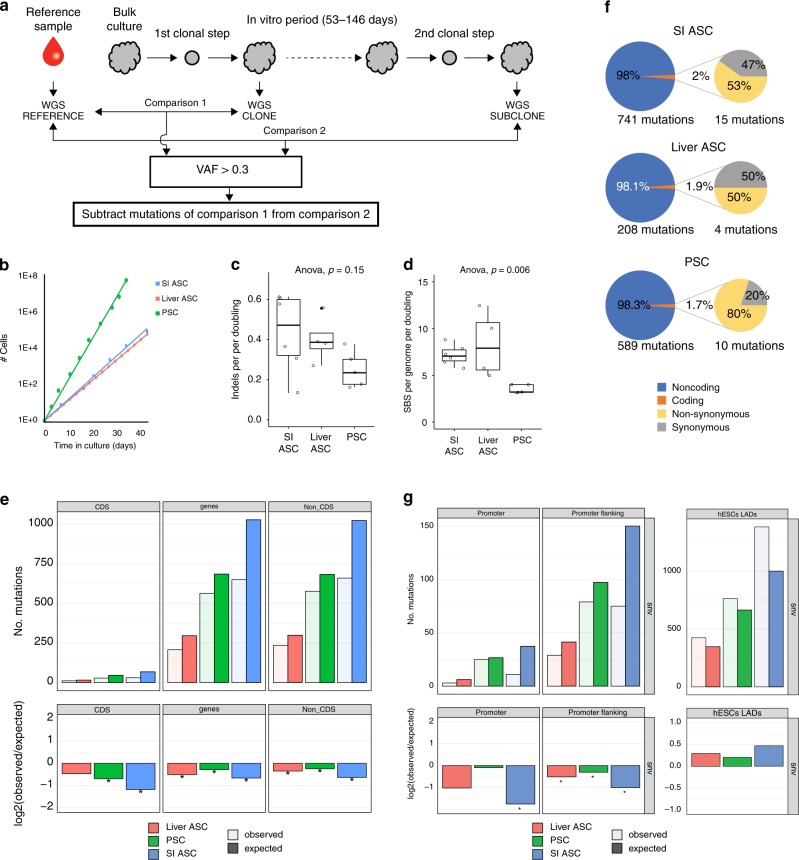
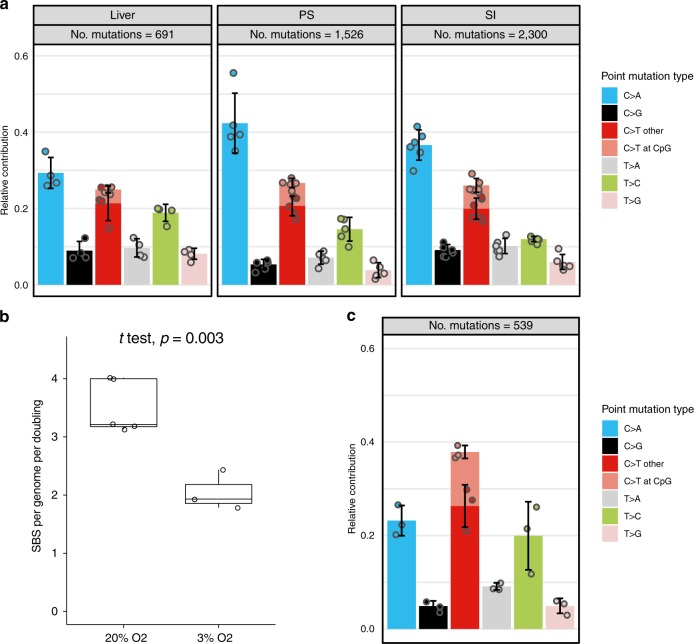
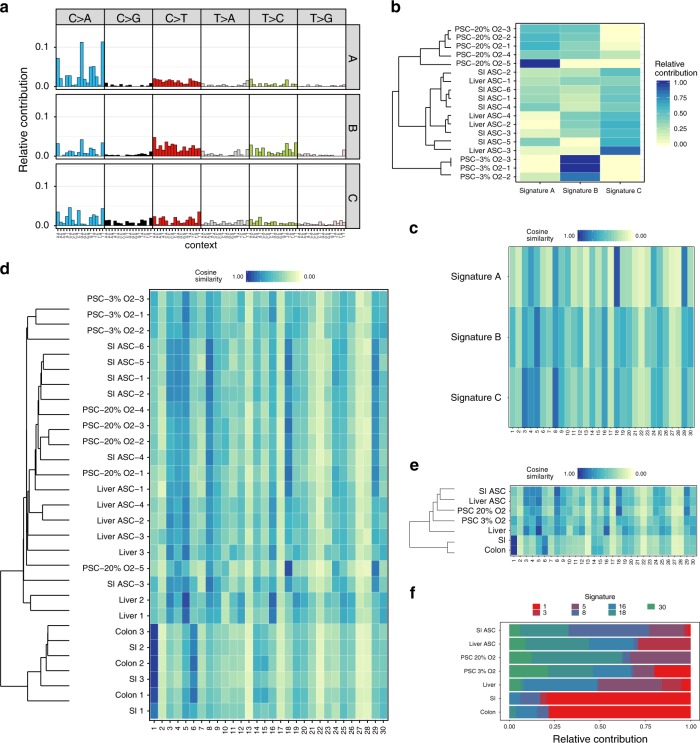
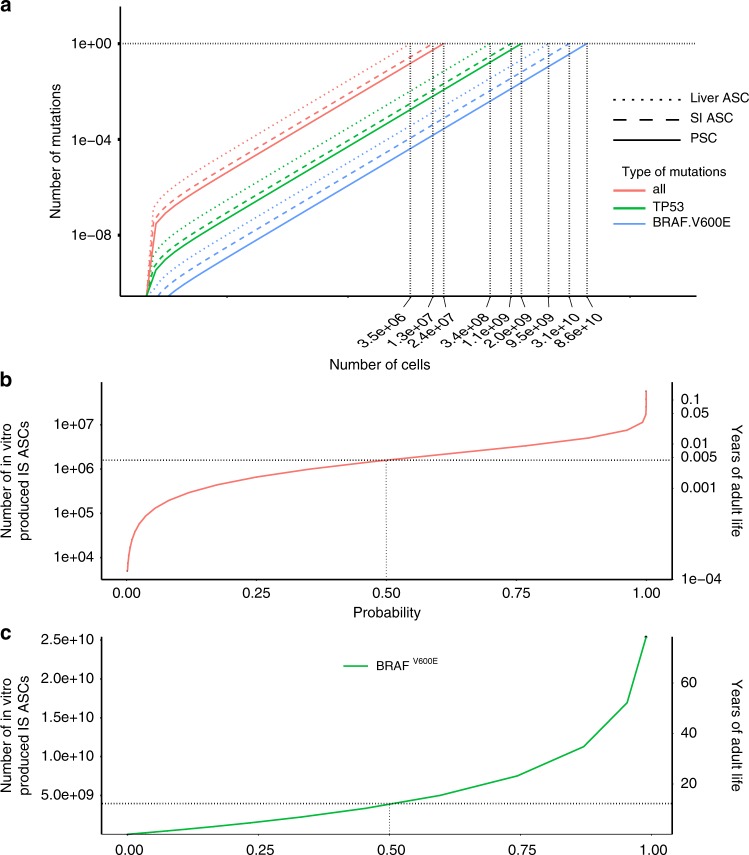
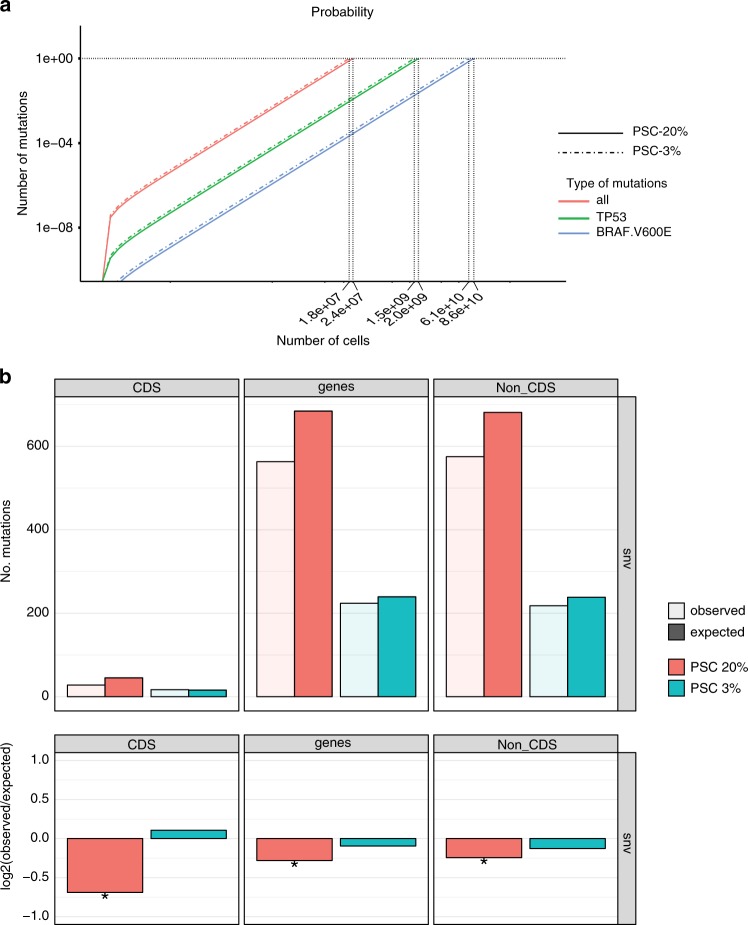
Genetic changes acquired during in vitro culture pose a risk for the successful application of stem cells in regenerative medicine. To assess the genetic risks induced by culturing, we determined all mutations in individual human stem cells by whole genome sequencing. Individual pluripotent, intestinal, and liver stem cells accumulate 3.5 ± 0.5, 7.2 ± 1.1 and 8.3 ± 3.6 base substitutions per population doubling, respectively. The annual in vitro mutation accumulation rate of adult stem cells is nearly 40-fold higher than the in vivo mutation accumulation rate. Mutational signature analysis reveals that in vitro induced mutations are caused by oxidative stress. Reducing oxygen tension in culture lowers the mutational load. We use the mutation rates, spectra, and genomic distribution to model the accumulation of oncogenic mutations during typical in vitro expansion, manipulation or screening experiments using human stem cells. Our study provides empirically defined parameters to assess the mutational risk of stem cell based therapies.
Overview
The claims and statistics of this paper haven’t been checked yet.
Free: it reads the open-access text and checks the first 5 claims that cite a source we can check. Create a free account to check every claim.
Integrity signals
Registry
Cites
Statistics
Figures
Verification
Claims the paper makes
The claims and statistics of this paper haven’t been checked yet.
Free: it reads the open-access text and checks the first 5 claims that cite a source we can check. Create a free account to check every claim.
Claims other papers make about this one
Each is checked against this paper’s own text: does it say what the citing paper says it does?
The source backs part of the claim, not all of it — or backs it for a different population, condition or comparison.
In the citing paper
“Although the mutational burden comes mostly from starting cells, the cell culture, passaging reagents, and passaging method could impact the mutational rate [13,14,15,54,55].”
From Overcoming the Variability of iPSCs in the Manufacturing of Cell-Based Therapies (2023) · cites this paper as [55]
Experimental — accuracy not yet measured
Self-check
Percentages, sums and reported differences re-computed from the paper’s own numbers.
The self-check needs the paper’s full text.
Citations
Cites
STAR: ultrafast universal RNA-seq aligner
Dobin, A., Davis, C. A., Schlesinger, F., Drenkow, J., Zaleski, C., Jha, S., Batut, P., Chaisson, M., & Gingeras, T. R. (2013) · Bioinformatics · doi:10.1093/bioinformatics/bts635 · Cited by 51,709
Cingolani, P., Platts, A., Wang, L. L., Coon, M., Nguyen, T., Wang, L., Land, S. J., Lu, X., & Ruden, D. M. (2012) · Fly · doi:10.4161/fly.19695 · Cited by 11,816
Signatures of mutational processes in human cancer
Initiative, A. P. C. G., Alexandrov, L. B., ICGC Breast Cancer Consortium, ICGC MMML-Seq Consortium, PedBrain, I., Nik-Zainal, S., Wedge, D. C., Aparicio, S. A. J. R., Behjati, S., Biankin, A. V., et al. (2013) · Nature · doi:10.1038/nature12477 · Cited by 9,660
dbSNP: the NCBI database of genetic variation
Sherry, S. T. (2001) · Nucleic Acids Research · doi:10.1093/nar/29.1.308 · Cited by 7,502
Van der Auwera, G. A., Carneiro, M. O., Hartl, C., Poplin, R., del Angel, G., Levy‐Moonshine, A., Jordan, T., Shakir, K., Roazen, D., Thibault, J., et al. (2013) · Current Protocols in Bioinformatics · doi:10.1002/0471250953.bi1110s43 · Cited by 6,687
Predicting the Functional Effect of Amino Acid Substitutions and Indels
Choi, Y., Sims, G. E., Murphy, S., Miller, J. R., & Chan, A. P. (2012) · PLoS ONE · doi:10.1371/journal.pone.0046688 · Cited by 2,890
Highly Recurrent TERT Promoter Mutations in Human Melanoma
Huang, F. W., Hodis, E., Xu, M. J., Kryukov, G. V., Chin, L., & Garraway, L. A. (2013) · Science · doi:10.1126/science.1229259 · Cited by 1,816
TERT Promoter Mutations in Familial and Sporadic Melanoma
Horn, S., Figl, A., Rachakonda, P. S., Fischer, C., Sucker, A., Gast, A., Kadel, S., Moll, I., Nagore, E., Hemminki, K., et al. (2013) · Science · doi:10.1126/science.1230062 · Cited by 1,799
Drost, J., & Clevers, H. (2018) · Nature Reviews Cancer · doi:10.1038/s41568-018-0007-6 · Cited by 1,790
Long-Term Culture of Genome-Stable Bipotent Stem Cells from Adult Human Liver
Huch, M., Gehart, H., van Boxtel, R., Hamer, K., Blokzijl, F., Verstegen, M. M. A., Ellis, E., van Wenum, M., Fuchs, S. A., de Ligt, J., et al. (2015) · Cell · doi:10.1016/j.cell.2014.11.050 · Cited by 1,619
Self-citationLgr5+ve Stem Cells Drive Self-Renewal in the Stomach and Build Long-Lived Gastric Units In Vitro
Barker, N., Huch, M., Kujala, P., van de Wetering, M., Snippert, H. J., van Es, J. H., Sato, T., Stange, D. E., Begthel, H., van den Born, M., et al. (2010) · Cell Stem Cell · doi:10.1016/j.stem.2009.11.013 · Cited by 1,547
Chemically defined conditions for human iPSC derivation and culture
Chen, G., Gulbranson, D. R., Hou, Z., Bolin, J. M., Ruotti, V., Probasco, M. D., Smuga-Otto, K., Howden, S. E., Diol, N. R., Propson, N. E., et al. (2011) · Nature Methods · doi:10.1038/nmeth.1593 · Cited by 1,447
Deciphering Signatures of Mutational Processes Operative in Human Cancer
Alexandrov, L. B., Nik-Zainal, S., Wedge, D. C., Campbell, P. J., & Stratton, M. R. (2013) · Cell Reports · doi:10.1016/j.celrep.2012.12.008 · Cited by 1,277
Recurrent gain of chromosomes 17q and 12 in cultured human embryonic stem cells
Draper, J. S., Smith, K., Gokhale, P., Moore, H. D., Maltby, E., Johnson, J., Meisner, L., Zwaka, T. P., Thomson, J. A., & Andrews, P. W. (2004) · Nature Biotechnology · doi:10.1038/nbt922 · Cited by 1,021
Boeva, V., Popova, T., Bleakley, K., Chiche, P., Cappo, J., Schleiermacher, G., Janoueix-Lerosey, I., Delattre, O., & Barillot, E. (2012) · Bioinformatics · doi:10.1093/bioinformatics/btr670 · Cited by 1,007
Tissue-specific mutation accumulation in human adult stem cells during life
Blokzijl, F., de Ligt, J., Jager, M., Sasselli, V., Roerink, S., Sasaki, N., Huch, M., Boymans, S., Kuijk, E., Prins, P., et al. (2016) · Nature · doi:10.1038/nature19768 · Cited by 935
Self-citationLaurent, L. C., Ulitsky, I., Slavin, I., Tran, H., Schork, A., Morey, R., Lynch, C., Harness, J. V., Lee, S., Barrero, M. J., et al. (2011) · Cell stem cell · doi:10.1016/j.stem.2010.12.003 · Cited by 890
Mutagenesis by 8-oxoguanine: an enemy within
Grollman, A. P., & Moriya, M. (1993) · Trends in Genetics · doi:10.1016/0168-9525(93)90089-z · Cited by 807
Identification and classification of chromosomal aberrations in human induced pluripotent stem cells
Mayshar, Y., Ben-David, U., Lavon, N., Biancotti, J.-C., Yakir, B., Clark, A. T., Plath, K., Lowry, W. E., & Benvenisty, N. (2010) · Cell stem cell · doi:10.1016/j.stem.2010.07.017 · Cited by 756
Induced pluripotent stem cells in disease modelling and drug discovery
Rowe, R. G., & Daley, G. Q. (2019) · Nature Reviews Genetics · doi:10.1038/s41576-019-0100-z · Cited by 670
MutationalPatterns: comprehensive genome-wide analysis of mutational processes
Blokzijl, F., Janssen, R., van Boxtel, R., & Cuppen, E. (2018) · Genome Medicine · doi:10.1186/s13073-018-0539-0 · Cited by 660
Self-citationAdaptation to culture of human embryonic stem cells and oncogenesis in vivo
Baker, D. E. C., Harrison, N. J., Maltby, E., Smith, K., Moore, H. D., Shaw, P. J., Heath, P. R., Holden, H., & Andrews, P. W. (2007) · Nature Biotechnology · doi:10.1038/nbt1285 · Cited by 636
Pluripotent stem cells in disease modelling and drug discovery
Avior, Y., Sagi, I., & Benvenisty, N. (2016) · Nature Reviews Molecular Cell Biology · doi:10.1038/nrm.2015.27 · Cited by 592
Initiative, T. I. S. C. (2011) · Nature Biotechnology · doi:10.1038/nbt.2051 · Cited by 577
Cancer Genome Interpreter annotates the biological and clinical relevance of tumor alterations
Tamborero, D., Rubio-Perez, C., Deu-Pons, J., Schroeder, M. P., Vivancos, A., Rovira, A., Tusquets, I., Albanell, J., Rodon, J., Tabernero, J., et al. (2018) · Genome Medicine · doi:10.1186/s13073-018-0531-8 · Cited by 519
Human pluripotent stem cells recurrently acquire and expand dominant negative P53 mutations
Merkle, F. T., Ghosh, S., Kamitaki, N., Mitchell, J., Avior, Y., Mello, C., Kashin, S., Mekhoubad, S., Ilic, D., Charlton, M., et al. (2017) · Nature · doi:10.1038/nature22312 · Cited by 506
A census of amplified and overexpressed human cancer genes
Santarius, T., Shipley, J., Brewer, D., Stratton, M. R., & Cooper, C. S. (2010) · Nature Reviews Cancer · doi:10.1038/nrc2771 · Cited by 482
Drost, J., van Boxtel, R., Blokzijl, F., Mizutani, T., Sasaki, N., Sasselli, V., de Ligt, J., Behjati, S., Grolleman, J. E., van Wezel, T., et al. (2017) · Science · doi:10.1126/science.aao3130 · Cited by 461
Self-citationPluripotent stem cells in regenerative medicine: challenges and recent progress
Tabar, V., & Studer, L. (2014) · Nature Reviews Genetics · doi:10.1038/nrg3563 · Cited by 458
Zerbino, D. R., Wilder, S. P., Johnson, N., Juettemann, T., & Flicek, P. R. (2015) · Genome Biology · doi:10.1186/s13059-015-0621-5 · Cited by 429
Generation of induced pluripotent stem cells from urine
Zhou, T., Benda, C., Duzinger, S., Huang, Y., Li, X., Li, Y., Guo, X., Cao, G., Chen, S., Hao, L., et al. (2011) · Journal of the American Society of Nephrology · doi:10.1681/asn.2011010106 · Cited by 421
Next-Generation Regenerative Medicine: Organogenesis from Stem Cells in 3D Culture
Sasai, Y. (2013) · Cell Stem Cell · doi:10.1016/j.stem.2013.04.009 · Cited by 401
Karyotypic abnormalities in human induced pluripotent stem cells and embryonic stem cells
Taapken, S. M., Nisler, B. S., Newton, M. A., Sampsell-Barron, T. L., Leonhard, K. A., McIntire, E. M., & Montgomery, K. D. (2011) · Nature Biotechnology · doi:10.1038/nbt.1835 · Cited by 327
Li, T.-S., Cheng, K., Lee, S.-T., Matsushita, S., Davis, D., Malliaras, K., Zhang, Y., Matsushita, N., Smith, R. R., & Marbán, E. (2010) · Stem Cells · doi:10.1002/stem.532 · Cited by 263
Ben-David, U., Mayshar, Y., & Benvenisty, N. (2011) · Cell Stem Cell · doi:10.1016/j.stem.2011.06.013 · Cited by 245
Human Embryonic Stem Cells Have Enhanced Repair of Multiple Forms of DNA Damage
Maynard, S., Swistowska, A. M., Lee, J. W., Liu, Y., Liu, S.-T., Da Cruz, A. B., Rao, M., de Souza-Pinto, N. C., Zeng, X., & Bohr, V. A. (2008) · Stem Cells · doi:10.1634/stemcells.2007-1041 · Cited by 220
Viel, A., Bruselles, A., Meccia, E., Fornasarig, M., Quaia, M., Canzonieri, V., Policicchio, E., Urso, E. D., Agostini, M., Genuardi, M., et al. (2017) · EBioMedicine · doi:10.1016/j.ebiom.2017.04.022 · Cited by 217
Recurrent copy number variations in human induced pluripotent stem cells
Martins-Taylor, K., Nisler, B. S., Taapken, S. M., Compton, T., Crandall, L., Montgomery, K. D., Lalande, M., & Xu, R.-H. (2011) · Nature Biotechnology · doi:10.1038/nbt.1890 · Cited by 213
Organoids for Drug Discovery and Personalized Medicine
Takahashi, T. (2019) · Annual Review of Pharmacology and Toxicology · doi:10.1146/annurev-pharmtox-010818-021108 · Cited by 199
DNA Damage Responses in Human Induced Pluripotent Stem Cells and Embryonic Stem Cells
Momcilovic, O., Knobloch, L., Fornsaglio, J., Varum, S., Easley, C., & Schatten, G. (2010) · PLoS ONE · doi:10.1371/journal.pone.0013410 · Cited by 173
Li, T.-S., & Marbán, E. (2010) · Stem Cells · doi:10.1002/stem.438 · Cited by 171
Avery, S., Hirst, A. J., Baker, D., Lim, C. Y., Alagaratnam, S., Skotheim, R. I., Lothe, R. A., Pera, M. F., Colman, A., Robson, P., et al. (2013) · Stem Cell Reports · doi:10.1016/j.stemcr.2013.10.005 · Cited by 167
Pilati, C., Shinde, J., Alexandrov, L. B., Assié, G., André, T., Hélias‐Rodzewicz, Z., Ducoudray, R., Le Corre, D., Zucman‐Rossi, J., Emile, J., et al. (2017) · The Journal of Pathology · doi:10.1002/path.4880 · Cited by 150
BRAF Mutation in Colorectal Cancer: An Update: Supplementary Issue: Biomarkers for Colon Cancer
Barras, D. (2015) · Biomarkers in Cancer · doi:10.4137/bic.s25248 · Cited by 138
Nguyen, H. T., Geens, M., Mertzanidou, A., Jacobs, K., Heirman, C., Breckpot, K., & Spits, C. (2014) · MHR: Basic science of reproductive medicine · doi:10.1093/molehr/gat077 · Cited by 117
Protecting genomic integrity in somatic cells and embryonic stem cells
Hong, Y., Cervantes, R. B., Tichy, E. D., Tischfield, J. A., & Stambrook, P. J. (2006) · Mutation research. Fundamental and molecular mechanisms of mutagenesis · doi:10.1016/j.mrfmmm.2006.06.006 · Cited by 112
Human pluripotent stem cells in drug discovery and predictive toxicology
Laustriat, D., Gide, J., & Peschanski, M. (2010) · Biochemical Society Transactions · doi:10.1042/bst0381051 · Cited by 101
Ghule, P. N., Medina, R., Lengner, C. J., Mandeville, M., Qiao, M., Dominski, Z., Lian, J. B., Stein, J. L., van Wijnen, A. J., & Stein, G. S. (2011) · Journal of Cellular Physiology · doi:10.1002/jcp.22440 · Cited by 95
Kwon, E. M., Connelly, J. P., Hansen, N. F., Donovan, F. X., Winkler, T., Davis, B. W., Alkadi, H., Chandrasekharappa, S. C., Dunbar, C. E., Mullikin, J. C., et al. (2017) · Proceedings of the National Academy of Sciences · doi:10.1073/pnas.1616035114 · Cited by 76
Cancer Genome Interpreter annotates the biological and clinical relevance of tumor alterations
Tamborero, D., Rubio-Perez, C., Deu-Pons, J., Schroeder, M. P., Vivancos, A., Rovira, A., Tusquets, I., Albanell, J., Rodon, J., Tabernero, J., et al. (2017) · bioRxiv (Cold Spring Harbor Laboratory) · doi:10.1101/140475 · Cited by 74
Jager, M., Blokzijl, F., Sasselli, V., Boymans, S., Janssen, R., Besselink, N., Clevers, H., van Boxtel, R., & Cuppen, E. (2018) · Nature Protocols · doi:10.1038/nprot.2017.111 · Cited by 66
Self-citationMechanisms maintaining genomic integrity in embryonic stem cells and induced pluripotent stem cells
Tichy, E. D. (2011) · Experimental Biology and Medicine · doi:10.1258/ebm.2011.011107 · Cited by 64
Hotspots of De Novo Point Mutations in Induced Pluripotent Stem Cells
Yoshihara, M., Araki, R., Kasama, Y., Sunayama, M., Abe, M., Nishida, K., Kawaji, H., Hayashizaki, Y., & Murakawa, Y. (2017) · Cell Reports · doi:10.1016/j.celrep.2017.09.060 · Cited by 48
Vv, S., An, S., & Sebelev, K. I. (1986) · PubMed · Cited by 41
Guo, C., Kawakatsu, M., Idemitsu, M., Urata, Y., Goto, S., Ono, Y., Hamano, K., & Li, T. (2013) · Journal of Cellular Physiology · doi:10.1002/jcp.24389 · Cited by 35
Early divergence of mutational processes in human fetal tissues
Kuijk, E., Blokzijl, F., Jager, M., Besselink, N. J. M., Boymans, S., Lopes, S. M. C. D. S., van Boxtel, R., & Cuppen, E. P. J. G. (2019) · Science Advances · doi:10.1126/sciadv.aaw1271 · Cited by 34
Self-citationGenome stability of programmed stem cell products
Martin, U. (2017) · Advanced Drug Delivery Reviews · doi:10.1016/j.addr.2017.09.004 · Cited by 26
Cited by
Drost, J., van Boxtel, R., Blokzijl, F., Mizutani, T., Sasaki, N., Sasselli, V., de Ligt, J., Behjati, S., Grolleman, J. E., van Wezel, T., et al. (2017) · Science · doi:10.1126/science.aao3130 · Cited by 461
Self-citationMutational signatures: emerging concepts, caveats and clinical applications
Koh, G., Degasperi, A., Zou, X., Momen, S., & Nik-Zainal, S. (2021) · Nature Reviews Cancer · doi:10.1038/s41568-021-00377-7 · Cited by 287
Climate change risks pushing one-third of global food production outside the safe climatic space
Kummu, M., Heino, M., Taka, M., Varis, O., & Viviroli, D. (2021) · One Earth · doi:10.1016/j.oneear.2021.04.017 · Cited by 197
CRISPR-Cas Tools and Their Application in Genetic Engineering of Human Stem Cells and Organoids
Hendriks, D., Clevers, H., & Artegiani, B. (2020) · Cell Stem Cell · doi:10.1016/j.stem.2020.10.014 · Cited by 192
Thompson, O., von Meyenn, F., Hewitt, Z., Alexander, J. J., Wood, A., Weightman, R., Gregory, S., Krueger, F., Andrews, S., Barbaric, I., et al. (2020) · Nature Communications · doi:10.1038/s41467-020-15271-3 · Cited by 152
Metadata
- Authors
- Kuijk, E., Jager, M., van der Roest, B., Locati, M. D., Van Hoeck, A., Korzelius, J., Janssen, R., Besselink, N., Boymans, S., van Boxtel, R., & Cuppen, E.
- Affiliations
- University Medical Center Utrecht (NL)
- Leibniz Institute on Aging - Fritz Lipmann Institute (FLI) (DE)
- Corresponding author
- Kuijk, Ewart
- Cuppen, Edwin
- ORCID
- Venue
- Nature Communications
- Published
- 2020-05-19
- Volume
- 11
- Issue
- 1
- Pages
- 2493-2493
- ISSN
- 2041-1723 (ISSN-L)
- PMC
- PMC7237696
- OpenAlex
- W3028024776
- Cited by
- 124
- References
- 56
- Citations by year
- 2026: 9 · 2025: 17 · 2024: 17 · 2023: 25 · 2022: 15 · 2021: 33 · 2020: 5
- FWCI
- 6.30
- Type
- journal article
- Language
- en
- Update notices
- correction (2020-08-04)
- Open access
- gold
- doi.org
- Licence
- cc-by
- creativecommons.org/licenses/by/4.0 (tdm)
- creativecommons.org/licenses/by/4.0 (vor)
- Locations
- Nature Communications (publishedVersion, cc-by)
- bioRxiv (Cold Spring Harbor Laboratory) (acceptedVersion, cc-by-nc)
- PubMed Central (publishedVersion, cc-by)
- PubMed (publishedVersion)
- Kent Academic Repository (University of Kent) (acceptedVersion)
- Kent Academic Repository (University of Kent) (submittedVersion, cc-by)
- RePEc: Research Papers in Economics (submittedVersion)
- DOAJ (DOAJ: Directory of Open Access Journals) (submittedVersion, cc-by-sa)
- Utrecht University Repository (Utrecht University) (submittedVersion, other-oa)
- Funders
- Nederlandse Organisatie voor Wetenschappelijk Onderzoek (Gravitation Program Cancer Genomics.nl)
- ZonMw (93512003)
- Topics
- Life Sciences › Biochemistry, Genetics and Molecular Biology › Molecular Biology › Pluripotent Stem Cells Research
- Life Sciences › Biochemistry, Genetics and Molecular Biology › Cancer Research › Cancer Genomics and Diagnostics
- Life Sciences › Biochemistry, Genetics and Molecular Biology › Cancer Research › Carcinogens and Genotoxicity Assessment
- Keywords
- in vitro mutagenesis, stem cell culture, human pluripotent stem cells, adult stem cells, intestinal stem cells, liver stem cells, mutational signatures, oxidative stress, oxygen partial pressure, oncogenic mutations, stem cell therapy safety, whole genome sequencing
- MeSH terms
- Mutation Accumulation, Whole Genome Sequencing, Adult, Algorithms, Cells, Cultured, DNA Mutational Analysis, Humans, Intestines, Liver, Models, Genetic, Mutation, Regenerative Medicine, Adult Stem Cells, Induced Pluripotent Stem Cells, Mutation Rate
About these checks
Registry, retraction, Cites and statistics results are computed, not judged, with one exception: a printed reference that no index lists is read once by a model before it counts as a citation error. Claims are extracted by a model and kept only when their quote appears verbatim in the text; each cited source is then checked, with a model’s help, for whether it says what the claim relies on. Those verdicts can be wrong — read the claim’s quote and the cited source before relying on one.
Statistics and arithmetic are recomputed, not judged.
Confidence bands are shown only for fields calibrated on our annotated test set. None is calibrated yet, so no band is shown.
What counts as a claim ›How we measure confidence ›How we check this ›
Are you an author, or do you see a problem with this page? Request a review
Data sources
Bibliographic data: Semantic Scholar, OpenAlex, Crossref.
Contains information from the Semantic Scholar Academic Graph Datasets, made available under the ODC Attribution License (ODC-BY 1.0).
Semantic Scholar’s data is described in: Kinney, R., et al. (2023). The Semantic Scholar Open Data Platform. arXiv:2301.10140.
