

Immunotherapy with engineered bacteria by targeting the STING pathway for anti-tumor immunity
Open accessThe DOI matches its Crossref record; 50 of the 50 references it cites were found in a registry or an index.
Abstract
Synthetic biology is a powerful tool to create therapeutics which can be rationally designed to enable unique and combinatorial functionalities. Here we utilize non-pathogenic E coli Nissle as a versatile platform for the development of a living biotherapeutic for the treatment of cancer. The engineered bacterial strain, referred to as SYNB1891, targets STING-activation to phagocytic antigen-presenting cells (APCs) in the tumor and activates complementary innate immune pathways. SYNB1891 treatment results in efficacious antitumor immunity with the formation of immunological memory in murine tumor models and robust activation of human APCs. SYNB1891 is designed to meet manufacturability and regulatory requirements with built in biocontainment features which do not compromise its efficacy. This work provides a roadmap for the development of future therapeutics and demonstrates the transformative potential of synthetic biology for the treatment of human disease when drug development criteria are incorporated into the design process for a living medicine.
Overview
The claims and statistics of this paper haven’t been checked yet.
Free: it reads the open-access text and checks the first 5 claims that cite a source we can check. Create a free account to check every claim.
Integrity signals
Registry
Cites
Statistics
Figures
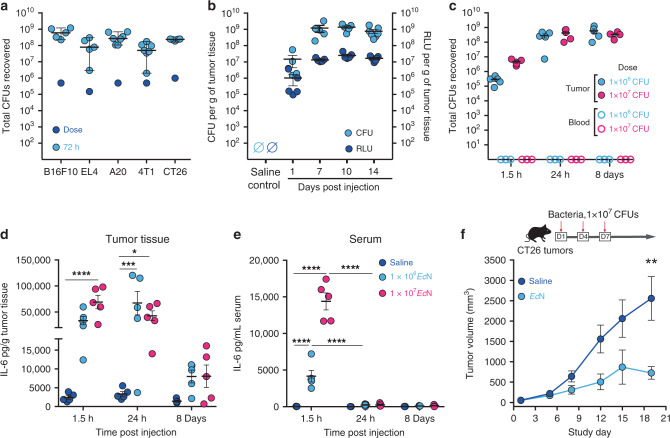
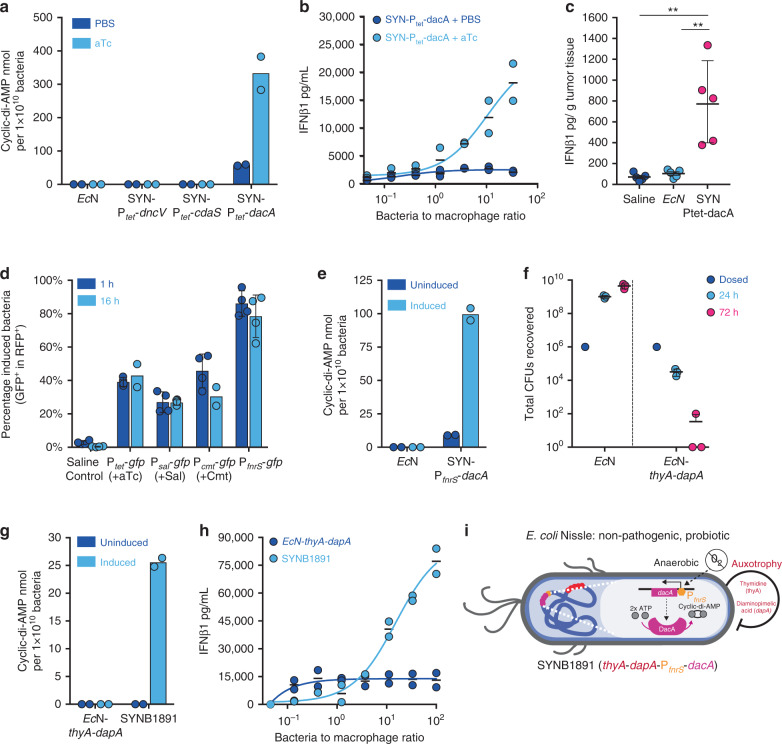
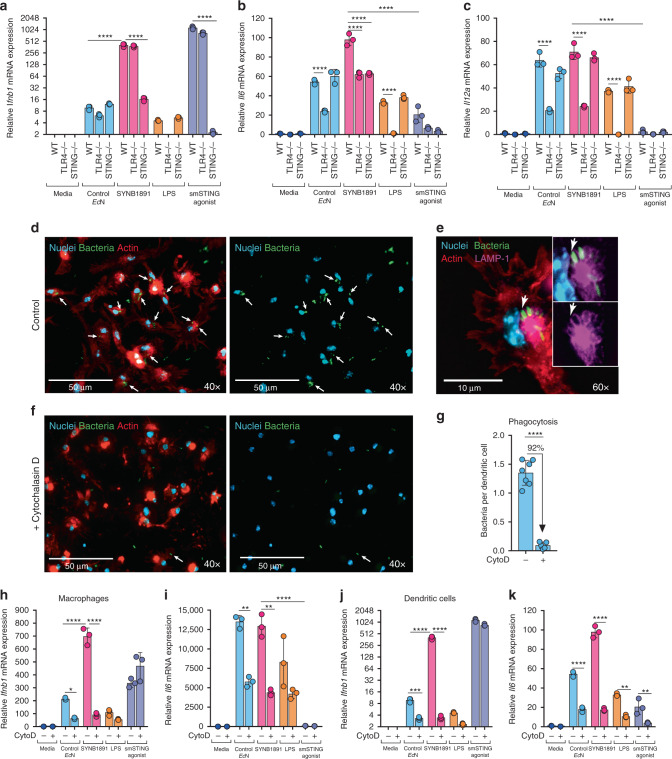
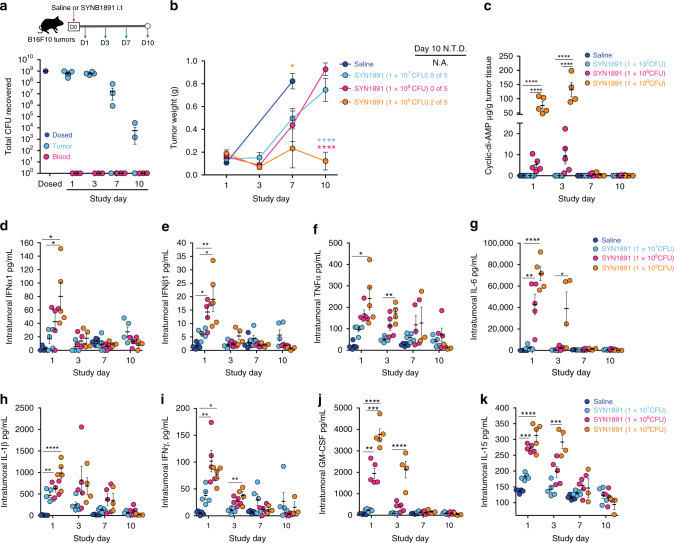
Verification
Claims the paper makes
The claims and statistics of this paper haven’t been checked yet.
Free: it reads the open-access text and checks the first 5 claims that cite a source we can check. Create a free account to check every claim.
Claims other papers make about this one
Each is checked against this paper’s own text: does it say what the citing paper says it does?
In the citing paper
“SYNB1891 has been modified to express the STING agonist cyclic adenosine diphosphate ribose (CADPR), which can stimulate expression of IFNs and achieve antitumor effects [151].”
From Gut microbiota influence immunotherapy responses: mechanisms and therapeutic strategies (2022) · doi:10.1186/s13045-022-01273-9 · cites this paper as [151]
Self-check
Percentages, sums and reported differences re-computed from the paper’s own numbers.
The self-check needs the paper’s full text.
Citations
Cites
Zou, W., Wolchok, J. D., & Chen, L. (2016) · Science Translational Medicine · doi:10.1126/scitranslmed.aad7118 · Cited by 2,400
Immune checkpoint inhibitors: recent progress and potential biomarkers
Darvin, P., Toor, S. M., Sasidharan Nair, V., & Elkord, E. (2018) · Experimental & Molecular Medicine · doi:10.1038/s12276-018-0191-1 · Cited by 2,035
STING-Dependent Cytosolic DNA Sensing Mediates Innate Immune Recognition of Immunogenic Tumors
Woo, S.-R., Fuertes, M. B., Corrales, L., Spranger, S., Furdyna, M. J., Leung, M. Y. K., Duggan, R., Wang, Y., Barber, G. N., Fitzgerald, K. A., et al. (2014) · Immunity · doi:10.1016/j.immuni.2014.10.017 · Cited by 1,917
Corrales, L., Glickman, L. H., McWhirter, S. M., Kanne, D. B., Sivick, K. E., Katibah, G. E., Woo, S.-R., Lemmens, E., Banda, T., Leong, J. J., et al. (2015) · Cell Reports · doi:10.1016/j.celrep.2015.04.031 · Cited by 1,560
Tumour-targeting bacteria engineered to fight cancer
Zhou, S., Gravekamp, C., Bermudes, D., & Liu, K. (2018) · Nature Reviews Cancer · doi:10.1038/s41568-018-0070-z · Cited by 821
Diner, E. J., Burdette, D. L., Wilson, S. C., Monroe, K. M., Kellenberger, C. A., Hyodo, M., Hayakawa, Y., Hammond, M. C., & Vance, R. E. (2013) · Cell Reports · doi:10.1016/j.celrep.2013.05.009 · Cited by 767
The toxins of William B. Coley and the treatment of bone and soft-tissue sarcomas.
McCarthy, E. F. (2006) · Europe PMC (PubMed Central) · Cited by 747
STING agonist formulated cancer vaccines can cure established tumors resistant to PD-1 blockade
Fu, J., Kanne, D. B., Leong, M., Glickman, L. H., McWhirter, S. M., Lemmens, E., Mechette, K., Leong, J. J., Lauer, P., Liu, W., et al. (2015) · Science Translational Medicine · doi:10.1126/scitranslmed.aaa4306 · Cited by 720
Engineered probiotics for local tumor delivery of checkpoint blockade nanobodies
Gurbatri, C. R., Lia, I., Vincent, R., Coker, C., Castro, S., Treuting, P. M., Hinchliffe, T. E., Arpaia, N., & Danino, T. (2020) · Science Translational Medicine · doi:10.1126/scitranslmed.aax0876 · Cited by 647
Isabella, V. M., Ha, B. N., Castillo, M. J., Lubkowicz, D. J., Rowe, S. E., Millet, Y. A., Anderson, C. L., Li, N., Fisher, A. B., West, K. A., et al. (2018) · Nature Biotechnology · doi:10.1038/nbt.4222 · Cited by 605
Self-citation
Cited by
Items 201–300 of 456
Engineered Bacteria: General Overview as Therapeutic Agent and a Novel Drug Delivery System
Patil, P. L., Gharat, S. K., Jadhav, K. R., & Kadam, V. J. (2022) · Current Pharmaceutical Biotechnology · doi:10.2174/1389201024666221220113517 · Cited by 18
Jiang, Y., Li, X., Qian, F., Sun, B., Wang, X., Zhang, Y., Zhang, D., Geng, M., Xie, Z., & Yang, S. (2023) · Research · doi:10.34133/research.0102 · Cited by 24
Engineering Bacteria as Living Therapeutics in Cancer Therapy
Chen, J., Chen, J., Chen, Y., Yuan, W., Zhang, J., Wang, G., & Dai, Z. (2025) · Advanced Science · doi:10.1002/advs.202507820 · Cited by 28
STINGing Cancer: Development, Clinical Application, and Targeted Delivery of STING Agonists
Nerdinger, Y. G., Binder, A. K., Bremm, F., Feuchter, N., Schaft, N., & Dörrie, J. (2025) · International Journal of Molecular Sciences · doi:10.3390/ijms26189008 · Cited by 21
Niu, L., Deng, Z., Jin, Y., Guan, N., & Ye, H. (2025) · Protein & Cell · doi:10.1093/procel/pwaf085 · Cited by 30
Novel emerging nano-assisted anti-cancer strategies based on the STING pathway
Li, X., Wang, H., Chen, Y., Li, Z., Liu, S., Guan, W., Lin, Y., Cao, C., Zheng, W., & Wu, J. (2023) · Acta Materia Medica · doi:10.15212/amm-2023-0023 · Cited by 23
Accelerating Genetic Sensor Development, Scale-up, and Deployment Using Synthetic Biology
Joshi, S. H.-N., Jenkins, C., Ulaeto, D., & Gorochowski, T. E. (2024) · BioDesign Research · doi:10.34133/bdr.0037 · Cited by 26
Zhang, X., Zang, Z., Liang, Z., Xu, X., Zheng, J., Liang, N., Shabiti, S., Wang, Z., Yu, S., Wang, Y., et al. (2025) · ACS Nano · doi:10.1021/acsnano.4c16740 · Cited by 20
Living Bacteria: A New Vehicle for Vaccine Delivery in Cancer Immunotherapy
Yang, M., Zhong, P., & Wei, P. (2025) · International Journal of Molecular Sciences · doi:10.3390/ijms26052056 · Cited by 18
Shaping Neonatal Immunization by Tuning the Delivery of Synergistic Adjuvants via Nanocarriers
Barman, S., Borriello, F., Brook, B., Pietrasanta, C., Leon, M. D., Sweitzer, C., Menon, M., van Haren, S. D., Soni, D., Saito, Y., et al. (2022) · ACS Chemical Biology · doi:10.1021/acschembio.2c00497 · Cited by 18
Gao, P., Duan, Z., Xu, G., Gong, Q., Wang, J., Luo, K., & Chen, J. (2024) · Advanced Materials · doi:10.1002/adma.202405075 · Cited by 18
Woo, S., Kim, S. K., Lee, S., & Lee, D. (2025) · Journal of Biological Engineering · doi:10.1186/s13036-025-00479-y · Cited by 25
Monie, D. D., Bhandarkar, A. R., Parney, I. F., Correia, C., Sarkaria, J. N., Vile, R. G., & Li, H. (2021) · Neurosurgical FOCUS · doi:10.3171/2020.12.focus20855 · Cited by 16
Current advances of biocontainment strategy in synthetic biology
Zhu, X., Zhang, Z., Jia, B., & Yuan, Y. (2022) · Chinese Journal of Chemical Engineering · doi:10.1016/j.cjche.2022.07.019 · Cited by 19
Setting “cold” tumors on fire: Cancer therapy with live tumor-targeting bacteria
Manole, S., Nguyen, D.-H., Min, J.-J., Zhou, S., & Forbes, N. (2024) · Med · doi:10.1016/j.medj.2024.11.002 · Cited by 20
Meng, T., Ma, W., Fan, M., Tang, W., & Duan, X. (2022) · Analytical Chemistry · doi:10.1021/acs.analchem.2c01200 · Cited by 16
Nano-STING agonist-decorated microrobots boost innate and adaptive anti-tumor immunity
Wang, Y., Li, Z., Chen, Y., Barrett, A., Mo, F., & Hu, Q. (2023) · Nano Research · doi:10.1007/s12274-023-5737-4 · Cited by 16
Engineered bacteria potentiate cancer immunotherapy
Sun, M., Yang, J.-Z., Li, L., Li, Y., Li, W., & Ding, J. (2025) · Chinese Chemical Letters · doi:10.1016/j.cclet.2025.111093 · Cited by 18
Nano-delivery of STING agonists: Unraveling the potential of immunotherapy
Zhang, M., Ji, Y., Liu, M., Dai, Y., Zhang, H., Tong, S., Cai, Y., Liu, M., & Qu, N. (2025) · Acta Biomaterialia · doi:10.1016/j.actbio.2025.03.054 · Cited by 16
Akbariqomi, M., Zarandi, P. K., Abedi, A., Moghaddam, M. M., & Fooladi, A. A. I. (2025) · Microbial Cell Factories · doi:10.1186/s12934-025-02838-2 · Cited by 17
Tumor-targeting bacteria as immune stimulants – the future of cancer immunotherapy?
Mowday, A. M., van de Laak, J., Fu, Z., Henare, K. L., Dubois, L. J., Lambin, P., Theys, J., & Patterson, A. V. (2024) · Critical Reviews in Microbiology · doi:10.1080/1040841x.2024.2311653 · Cited by 19
Gulig, P. A., Swindle, S., Fields, M. A., & Eisenman, D. (2024) · Applied Biosafety · doi:10.1089/apb.2024.0002 · Cited by 24
Path to bacteriotherapy: From bacterial engineering to therapeutic perspectives
Liu, J., He, C., Tan, W., & Zheng, J. H. (2024) · Life Sciences · doi:10.1016/j.lfs.2024.122897 · Cited by 15
Towards Understanding Tumour Colonisation by Probiotic Bacterium E. coli Nissle 1917
Radford, G., Vrbanac, L., de Nys, R., Worthley, D. L., Wright, J. A., Hasty, J., & Woods, S. L. (2024) · Cancers · doi:10.3390/cancers16172971 · Cited by 21
Li, J., Yang, R., Yuan, Y., Ren, H., Fang, C., Lovell, J. F., & Zhang, Y. (2024) · Advanced Functional Materials · doi:10.1002/adfm.202414994 · Cited by 20
Gao, P., Li, X., Duan, Z., Wang, Y., Li, Y., Wang, J., Luo, K., & Chen, J. (2025) · MedComm · doi:10.1002/mco2.70274 · Cited by 21
Intratumoral microbiota: implications for cancer progression and treatment
Xie, Z., Wu, Z., Liu, Y., Gu, Y., Niu, J., & Lv, K. (2025) · Frontiers in Microbiology · doi:10.3389/fmicb.2025.1551515 · Cited by 23
Synthetic microbial consortia based on quorum-sensing for disease therapy
Guo, Y., Gao, M., Jiang, L., Huang, H., Kang, G., & Yu, H. (2025) · Bioresources and Bioprocessing · doi:10.1186/s40643-025-00962-w · Cited by 19
Reprogramming a Doxycycline-Inducible Gene Switch System for Bacteria-Mediated Cancer Therapy
Ngo, H. T.-T., Nguyen, D.-H., You, S.-H., Nguyen, K. V., Kim, S. Y., Hong, Y., & Min, J. (2023) · Molecular Imaging and Biology · doi:10.1007/s11307-023-01879-6 · Cited by 15
Cellular-Membrane-Derived Vesicles for Cancer Immunotherapy
An, X., Zeng, Y., Liu, C., & Liu, G. (2023) · Pharmaceutics · doi:10.3390/pharmaceutics16010022 · Cited by 16
Nano-armor modification of bacteria through supramolecular interactions for disease treatment
Cao, X., Wang, Y., Wang, Q., Huang, Y., Ding, Y., & Mao, Z. (2024) · Coordination Chemistry Reviews · doi:10.1016/j.ccr.2024.216165 · Cited by 15
Recent advancements in cGAS-STING activation, tumor immune evasion, and therapeutic implications
Islam, M. S., Islam, M. S., Akhand, M. R. N., Park, B., & Akanda, M. R. (2024) · Medical Oncology · doi:10.1007/s12032-024-02539-7 · Cited by 17
Methods of DNA introduction for the engineering of commensal microbes
Liu, D., Siguenza, N., Zarrinpar, A., & Ding, Y. (2022) · Engineering Microbiology · doi:10.1016/j.engmic.2022.100048 · Cited by 16
Whelan, J. T., Singaravelu, R., Wang, F., Pelin, A., Tamming, L. A., Pugliese, G., Martin, N. T., Crupi, M. J. F., Petryk, J., Austin, B., et al. (2023) · Frontiers in Immunology · doi:10.3389/fimmu.2022.1050250 · Cited by 17
The Sunrise of Tertiary Lymphoid Structures in Cancer
Rochefort, J., Marodon, G., Teillaud, J., & Dieu‐Nosjean, M. (2025) · Immunological Reviews · doi:10.1111/imr.70046 · Cited by 16
Precision targeting of STING: Challenges, innovations, and clinical outlook for cancer therapy
Shi, J., Zhang, Y., Zhao, N., Seki, E., Ma, L., Kocic, G. M., Li, X., Terzić, J., & Zheng, T. (2025) · The Innovation · doi:10.1016/j.xinn.2025.101074 · Cited by 51
Zi, G., Zhou, W., Zhou, L., Wang, L., Zheng, P., & Wei, S. (2025) · Pharmaceutics · doi:10.3390/pharmaceutics17101349 · Cited by 16
Chen, W., Zhu, Y., Chen, J., Jing, X., Xiong, Y., Zou, L., Li, J., Liu, Q., Li, Y., Huang, Y., et al. (2023) · Advanced Functional Materials · doi:10.1002/adfm.202307001 · Cited by 14
Feng, J., Liu, Y., Zheng, X., Gao, M., Wang, L., Rodrigues, L. R., Wen, Y., Pan, H., Li, G., Zhang, L. J., et al. (2024) · Carbohydrate Polymers · doi:10.1016/j.carbpol.2024.122031 · Cited by 13
Engineering bacterial theranostics: from logic gates to in vivo applications
Armstrong, A., & Isalan, M. (2024) · Frontiers in Bioengineering and Biotechnology · doi:10.3389/fbioe.2024.1437301 · Cited by 18
Anti-tumor activity of an αPD-L1-PE38 immunotoxin delivered by engineered Nissle 1917
Li, X., Wang, Y., Wang, Y., Xie, H., Gong, R., Wu, X., Chen, J., Sun, C., & Gu, Y. (2025) · International Journal of Biological Macromolecules · doi:10.1016/j.ijbiomac.2025.139537 · Cited by 17
Probiotic-guided CAR-T cells for universal solid tumor targetingPreprint
Vincent, R. L., Gurbatri, C. R., Redenti, A., Coker, C., Arpaia, N., & Danino, T. (2021) · bioRxiv (Cold Spring Harbor Laboratory) · doi:10.1101/2021.10.10.463366 · Cited by 13
Zhang, Y., Wu, Y., Zhao, X., Ye, Q., Cao, L., Liu, M., Gao, B., Niu, Q., Chen, N., Duan, Z., et al. (2025) · Acta Pharmaceutica Sinica B · doi:10.1016/j.apsb.2025.07.028 · Cited by 13
Zhao, L., Xin, J., Hu, M., Xue, C., & Dong, N. (2025) · Journal of Advanced Research · doi:10.1016/j.jare.2025.10.028 · Cited by 19
Zhang, H., Sun, J., Xie, A., Yang, H., Li, Y., Mei, Y., Li, J., Xiao, L., Liu, Y., & Liang, Y. (2024) · Food Bioscience · doi:10.1016/j.fbio.2024.105727 · Cited by 12
Precision tumor treatment utilizing bacteria: principles and future perspectives
Liu, Z., Wang, L., Wu, P., & Yuan, L. (2025) · Applied Microbiology and Biotechnology · doi:10.1007/s00253-024-13378-x · Cited by 14
Huang, Z., Zhu, J., Bu, X., Lu, S., Luo, Y., Liu, T., Duan, N., Wang, W., Wang, Y., & Wang, X. (2025) · npj Biofilms and Microbiomes · doi:10.1038/s41522-025-00688-9 · Cited by 18
Enabling technologies for in situ biomanufacturing using probiotic yeast
Parker, W., Taylor, A., Razdan, A., Escarce, J., & Crook, N. (2025) · Advanced Drug Delivery Reviews · doi:10.1016/j.addr.2025.115605 · Cited by 11
Wang, X., Shi, G., Zhu, X., Liu, Z., Liu, M., Wu, Z., He, Z., Li, K., Zhang, T., Liu, H., et al. (2025) · ACS Nano · doi:10.1021/acsnano.5c03960 · Cited by 13
Yuan, S., Yang, X., Bremmer, A., Wang, Y., Li, S., Chen, Y., You, Y., & Hu, Q. (2025) · Proceedings of the National Academy of Sciences · doi:10.1073/pnas.2507711122 · Cited by 13
STING Agonists in Head and Neck Squamous Cell Carcinoma
Wallington, D. G., Contessa, J. N., & Hayman, T. J. (2022) · The Cancer Journal · doi:10.1097/ppo.0000000000000620 · Cited by 12
The Biocatalysis in Cancer Therapy
Liu, J., Ren, H., Tang, T., Wang, J., Fang, J., Huang, C., Zheng, Z., & Qin, B. Y. (2023) · ACS Catalysis · doi:10.1021/acscatal.3c01363 · Cited by 13
Yanamandra, A. K., Bhusari, S. A., del Campo, A., Sankaran, S., & Qu, B. (2023) · Biomaterials Advances · doi:10.1016/j.bioadv.2023.213554 · Cited by 15
Expectations for employing Escherichia coli Nissle 1917 in food science and nutrition
Hu, M., Zhang, T., Miao, M., Li, K., Luan, Q., & Sun, G. (2024) · Critical Reviews in Food Science and Nutrition · doi:10.1080/10408398.2023.2301416 · Cited by 14
Harnessing cGAS‐STING Pathway for Cancer Immunotherapy: From Bench to Clinic
Lee, D., Huntoon, K. M., Kang, M., Lü, Y., Gallup, T. D., Jiang, W., & Kim, B. Y. S. (2022) · Advanced Therapeutics · doi:10.1002/adtp.202200040 · Cited by 12
Synthetic engineered bacteria for cancer therapy
Gong, T., & Wu, J. (2023) · Expert Opinion on Drug Delivery · doi:10.1080/17425247.2023.2241367 · Cited by 12
Bacteria-based cancer therapy: Looking forward
Tieu, M., Pham, D., & Cho, S. (2024) · Biochimica et Biophysica Acta (BBA) - Reviews on Cancer · doi:10.1016/j.bbcan.2024.189112 · Cited by 12
Pan, X., Liu, F., Kang, R., Hu, Z., Pang, Y., Shen, Z., Zhou, X., Zhang, J., & Shen, Q. (2024) · Advanced Functional Materials · doi:10.1002/adfm.202409736 · Cited by 12
Zhang, H., Chen, L., Chen, Q., Chen, Q., & Zhou, J. (2024) · Advanced Healthcare Materials · doi:10.1002/adhm.202402272 · Cited by 11
Lu, Y., Li, Z., Zhu, X., Zeng, Q., Liu, S., & Guan, W. (2025) · International Journal of Nanomedicine · doi:10.2147/ijn.s503780 · Cited by 13
Ahmadishoar, S., Saeed, S. M., Mahdi, M. S., Taher, W. M., Alwan, M., Jawad, M. J., Hamad, A. K., & Gandomkar, H. (2025) · Journal of drug targeting · doi:10.1080/1061186x.2025.2489979 · Cited by 15
Waanders, L., van der Donk, L. E. H., Ates, L. S., Maaskant, J. J., van Hamme, J. L., Eldering, E., van Bruggen, J. A. C., Rietveld, J. M., Bitter, W., Geijtenbeek, T. B. H., et al. (2023) · Journal for ImmunoTherapy of Cancer · doi:10.1136/jitc-2022-005839 · Cited by 14
Engineering Living Immunotherapeutic Agents for Improved Cancer Treatment
Gwisai, T., Günther, S., Mirkhani, N., Vizovišek, M., Menghini, S., Jacobs, M., Christiansen, M. G., Oberhuber, I., Poc, P., & Schuerle, S. (2023) · Advanced Therapeutics · doi:10.1002/adtp.202300302 · Cited by 11
Wang, Z., Dai, Y., Azi, F., Dong, M., & Xia, X. (2024) · Antioxidants · doi:10.3390/antiox13030259 · Cited by 12
Nanomaterial‐assisted oncolytic bacteria in solid tumor diagnosis and therapeutics
Zeng, X., Chen, Q., & Chen, T. (2024) · Bioengineering & Translational Medicine · doi:10.1002/btm2.10672 · Cited by 10
Wang, X., Zhan, Z., Wang, Z., Zhang, Y., Zhao, K., Han, L., Zhou, X., Guo, Y., Fan, F., Ding, J., et al. (2024) · MedComm · doi:10.1002/mco2.70001 · Cited by 14
Synthetically programmed antioxidant delivery by a domesticated skin commensal
Nevot, G., Santos‐Moreno, J., Sanz, N. C., Toloza, L., Parra-Cid, C., Jansen, P. A. M., Barbier, I., Ledesma‐Amaro, R., van den Bogaard, E. H. J., & Güell, M. (2025) · Cell Systems · doi:10.1016/j.cels.2025.101169 · Cited by 14
Gao, X., Sun, Y., Yang, Y., Yang, X. X., Liu, Q., Guo, X., Wu, L., & Wang, Q. (2025) · International Journal of Biological Macromolecules · doi:10.1016/j.ijbiomac.2025.142250 · Cited by 13
Dong, P.-S., Zhou, Y., Yu, W., Zou, J.-H., Tian, Y., Fan, J., Zheng, D., & Zhao, Y. (2025) · Science China Materials · doi:10.1007/s40843-025-3438-6 · Cited by 13
Cable, J., Leonard, J. N., Lu, T. K., Xie, Z., Chang, M. W., Fernández, L. Á., Lora, J. M., Kaufman, H. L., Quintana, F. J., Geiger, R., et al. (2021) · Annals of the New York Academy of Sciences · doi:10.1111/nyas.14710 · Cited by 10
Self-citationPantoja‐Angles, A., Ali, Z., & Mahfouz, M. M. (2022) · ACS Synthetic Biology · doi:10.1021/acssynbio.1c00516 · Cited by 9
Alnukhali, M., Altabbakh, O., Farooqi, A. A., Pollack, A. S., Daunert, S., Deo, S. K., & Tao, W. (2024) · Current Medicinal Chemistry · doi:10.2174/0109298673273303231208071403 · Cited by 10
Functional modification of gut bacteria for disease diagnosis and treatment
Zheng, B., Li, M., Zhang, T., Li, B., Li, Q., Saiding, Q., Chen, W., Guo, M., Koo, S., Ji, X., et al. (2024) · Med · doi:10.1016/j.medj.2024.06.003 · Cited by 9
Nanomaterial combined engineered bacteria for intelligent tumor immunotherapy
Qin, S., He, G., & Yang, J. (2024) · Journal of Materials Chemistry B · doi:10.1039/d4tb00741g · Cited by 11
Bacterial-based drug delivery systems: A new way to combat infectious disease
TabibzadehTehrani, P., Nazari, M., Rastgoo, P., Bolouri, N. S., HeydariKarsaf, R., Hadiani, A., & Mohsenipour, Z. (2025) · Medicine in Drug Discovery · doi:10.1016/j.medidd.2025.100205 · Cited by 12
Xian, Y., Chen, Z., Lan, Z., Zhang, C., Sun, H., Liu, Z., Kong, P., Liang, Y., Zhao, Y., Liu, S. M., et al. (2025) · Gut Microbes · doi:10.1080/19490976.2025.2557978 · Cited by 12
Microbiome engineering: unlocking therapeutic potential in inflammatory bowel disease
Chen, K., Huang, L.-B., Yang, M., Yue, N.-N., Luo, D., Zhang, Y., Tian, C., Song, Y., Wei, D., Shi, R., et al. (2025) · Frontiers in Microbiology · doi:10.3389/fmicb.2025.1610029 · Cited by 17
Modulating Oral Delivery and Gastrointestinal Kinetics of Recombinant Proteins via Engineered Fungi
Heavey, M. K., & Anselmo, A. C. (2021) · The AAPS Journal · doi:10.1208/s12248-021-00606-9 · Cited by 10
Mining the Gut Microbiota for Microbial-Based Therapeutic Strategies in Cancer Immunotherapy
Li, B., Gong, T., Hao, Y., Zhou, X., & Cheng, L. (2021) · Frontiers in Oncology · doi:10.3389/fonc.2021.721249 · Cited by 9
Wang, Y., Qiu, Y., Chen, S., Huang, J., Hu, X., Chen, J., Wang, S., Yang, X., Zhang, Y., & Zhu, Y. (2023) · Chemical Engineering Journal · doi:10.1016/j.cej.2023.145676 · Cited by 9
Wei, Y., Zhang, Z., Xue, T., Lin, Z., Chen, X., Tian, Y., Li, Y., Jing, Z., Fang, W., Fang, T., et al. (2024) · ACS Synthetic Biology · doi:10.1021/acssynbio.3c00569 · Cited by 9
Dynamic Gene Expression Mitigates Mutational Escape in Lysis-Driven Bacteria Cancer Therapy
Liguori, F., Pellicciotta, N., Milanetti, E., Windemuth, S. X., Ruocco, G., Leonardo, R. D., & Danino, T. (2024) · BioDesign Research · doi:10.34133/bdr.0049 · Cited by 11
Multifaceted metabolic role of infections in the tumor microenvironment
Willenbockel, H. F., Dowerg, B., & Cordes, T. (2024) · Current Opinion in Biotechnology · doi:10.1016/j.copbio.2024.103183 · Cited by 8
Unraveling the Role of the Microbiota in Cancer Immunotherapy: A New Frontier
Wang, S., Li, S., Zhang, M., Liu, R., Ye, X., Mao, S., Yu, J., Xie, X., & Tan, W. (2025) · Research · doi:10.34133/research.0744 · Cited by 13
Synthetic biology approaches to enhance cancer immune responses
Liu, S., Zhong, Z., Tu, Q., & Jin, M. (2025) · Frontiers in Immunology · doi:10.3389/fimmu.2025.1698158 · Cited by 10
Ma, C., Li, G., Sun, T., Tang, X., Qiu, T., Song, J., Wang, H., Zhang, Y., & Jiang, T. (2026) · PLoS Biology · doi:10.1371/journal.pbio.3003657 · Cited by 9
Hurt, R. C., Buss, M. T., Duan, M., Wong, K., You, M. Y., Sawyer, D. P., Swift, M., Dutka, P., Barturen‐Larrea, P., Mittelstein, D. R., et al. (2021) · bioRxiv (Cold Spring Harbor Laboratory) · doi:10.1101/2021.04.26.441537 · Cited by 10
Progress of engineered bacteria for tumour therapy
Xia, X., Zhang, J., Zhao, B., Zhang, M., Chen, Z.-R., Zhang, B., Ji, Y.-L., Wang, X., Xiong, W., Li, J., et al. (2024) · International Immunopharmacology · doi:10.1016/j.intimp.2024.111935 · Cited by 10
Bacterial Expression of Promelittin for Safe and Effective Tumor Therapy
Xu, W., Chen, H., Duan, Y., Ge, D., Ren, D., Zhao, S., Liu, Y., Ma, L., & Zhang, C. (2023) · ACS Applied Materials & Interfaces · doi:10.1021/acsami.3c11457 · Cited by 8
Bioengineered therapeutic systems for improving antitumor immunity
Cao, Y., Yan, W., Yi, W., Yin, Q., & Li, Y. (2024) · National Science Review · doi:10.1093/nsr/nwae404 · Cited by 11
Li, Y., Wang, X., Ye, F., Hong, X., Chen, Y., Huang, J., Liu, J., Huang, X., Liang, L., Guo, Y., et al. (2025) · Biomedicine & Pharmacotherapy · doi:10.1016/j.biopha.2025.118046 · Cited by 7
Chang, X., Liu, X., Wang, X., Ma, L., Liang, J., & Li, Y. (2025) · Frontiers in Microbiology · doi:10.3389/fmicb.2025.1545334 · Cited by 9
Chemotherapy modulation by a cancer-associated microbiota metabolite
Martínez‐Martínez, D., Peres, T. V., Gehling, K., Quintaneiro, L. M., Cabrera, C., Cherevatenko, M., Cutty, S. J., Best, L., Μαρίνος, Γ., Zimmerman, J., et al. (2025) · Cell Systems · doi:10.1016/j.cels.2025.101397 · Cited by 12
Bacteria as living biosensors for DNA
O’Connor, K., Steppe, P., Worthley, D. L., Hasty, J., & Cooper, R. M. (2025) · Nature Reviews Bioengineering · doi:10.1038/s44222-025-00369-4 · Cited by 11
Sun, J., Ma, S., Xu, J., Abudureyimu, M., An, Y., Xu, J., Zhang, S.-H., Zhang, Z., Guo, C.-X., Liu, B.-L., et al. (2025) · Journal of Controlled Release · doi:10.1016/j.jconrel.2025.114514 · Cited by 11
Wang, C., Luo, L., Dai, Z., Zhang, W., Ma, Y., & Wang, J. (2025) · Journal of Biological Engineering · doi:10.1186/s13036-025-00608-7 · Cited by 8
Engineering Escherichia coli Nissle 1917 to scavenge lactate enhances anti-tumor immunity
Li, X., Wang, Y., Xie, H., Sun, C., Chen, J., Zhang, B., Wang, W., & Gu, Y. (2026) · Journal of Controlled Release · doi:10.1016/j.jconrel.2026.114738 · Cited by 8
Pierro, F. D., Thacharodi, A., Kumaraswami, M., Suvorov, A. N., Zupet, J., & Zerbinati, N. (2026) · Microbial Cell Factories · doi:10.1186/s12934-026-02997-w · Cited by 12
Unravelling the potential of microbots in cancer therapy
Shah, S., Famta, P., Srinivasarao, D. A., Shahrukh, S., Jain, N., Vambhurkar, G. B., Singh, S. B., & Srivastava, S. K. (2023) · Applied Materials Today · doi:10.1016/j.apmt.2023.101887 · Cited by 9
Asensio‐Calavia, A., Ceballos, A., Méndez‐Pérez, A., Álvarez, B., & Fernández, L. Á. (2023) · Microbial Biotechnology · doi:10.1111/1751-7915.14328 · Cited by 9
Metadata
- Authors
- Leventhal, D. S., Sokolovska, A., Li, N., Plescia, C., Kolodziej, S. A., Gallant, C. W., Christmas, R., Gao, J.-R., James, M. J., Abin-Fuentes, A., Momin, M., Bergeron, C., Fisher, A., Miller, P. F., West, K. A., & Lora, J. M.
- Affiliations
- Synlogic (United States) (US)
- Corresponding author
- Leventhal, Daniel S.
- Sokolovska, Anna
- ORCID
- Venue
- Nature Communications
- Published
- 2020-06-01
- Volume
- 11
- Issue
- 1
- Pages
- 2739-2739
- ISSN
- 2041-1723 (ISSN-L)
- PMC
- PMC7264239
- OpenAlex
- W3030200736
- Cited by
- 458
- References
- 50
- Citations by year
- 2026: 71 · 2025: 101 · 2024: 96 · 2023: 71 · 2022: 61 · 2021: 50 · 2020: 5
- FWCI
- 24.20
- Type
- journal article
- Language
- en
- Open access
- gold
- doi.org
- Licence
- cc-by
- creativecommons.org/licenses/by/4.0 (tdm)
- creativecommons.org/licenses/by/4.0 (vor)
- Locations
- Nature Communications (publishedVersion, cc-by)
- PubMed Central (publishedVersion, cc-by)
- PubMed (publishedVersion)
- RePEc: Research Papers in Economics (submittedVersion)
- DOAJ (DOAJ: Directory of Open Access Journals) (submittedVersion, cc-by-sa)
- Topics
- Life Sciences › Biochemistry, Genetics and Molecular Biology › Biotechnology › Bacterial Cancer Therapy
- Life Sciences › Immunology and Microbiology › Immunology › Immunotherapy and Immune Responses
- Health Sciences › Medicine › Oncology › Cancer Immunotherapy and Biomarkers
- Keywords
- STING pathway, engineered bacteria, cancer immunotherapy, antigen-presenting cells, innate immune activation, immunological memory, biocontainment, synthetic biology, tumor immunology
- MeSH terms
- STING Protein, Animals, Antigen-Presenting Cells, Escherichia coli, Genetic Engineering, Humans, Immunotherapy, Interferon Type I, Membrane Proteins, Mice, Inbred BALB C, Mice, Inbred C57BL, Neoplasms, Phagocytes, Signal Transduction, Mice, Knockout, Cell Line, Tumor, Mice, Synthetic Biology
About these checks
Registry, retraction, Cites and statistics results are computed, not judged, with one exception: a printed reference that no index lists is read once by a model before it counts as a citation error. Claims are extracted by a model and kept only when their quote appears verbatim in the text; each cited source is then checked, with a model’s help, for whether it says what the claim relies on. Those verdicts can be wrong — read the claim’s quote and the cited source before relying on one.
Statistics and arithmetic are recomputed, not judged.
Confidence bands are shown only for fields calibrated on our annotated test set. None is calibrated yet, so no band is shown.
What counts as a claim ›How we measure confidence ›How we check this ›
Are you an author, or do you see a problem with this page? Request a review
Data sources
Bibliographic data: Semantic Scholar, OpenAlex, Crossref.
Contains information from the Semantic Scholar Academic Graph Datasets, made available under the ODC Attribution License (ODC-BY 1.0).
Semantic Scholar’s data is described in: Kinney, R., et al. (2023). The Semantic Scholar Open Data Platform. arXiv:2301.10140.
