

Immunotherapy with engineered bacteria by targeting the STING pathway for anti-tumor immunity
Open accessThe DOI matches its Crossref record; 50 of the 50 references it cites were found in a registry or an index.
Abstract
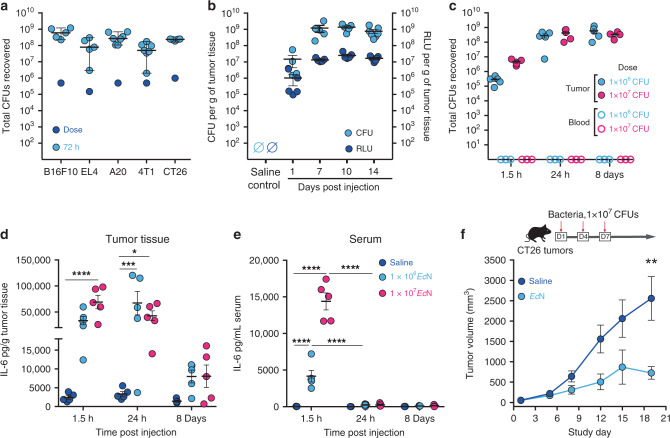
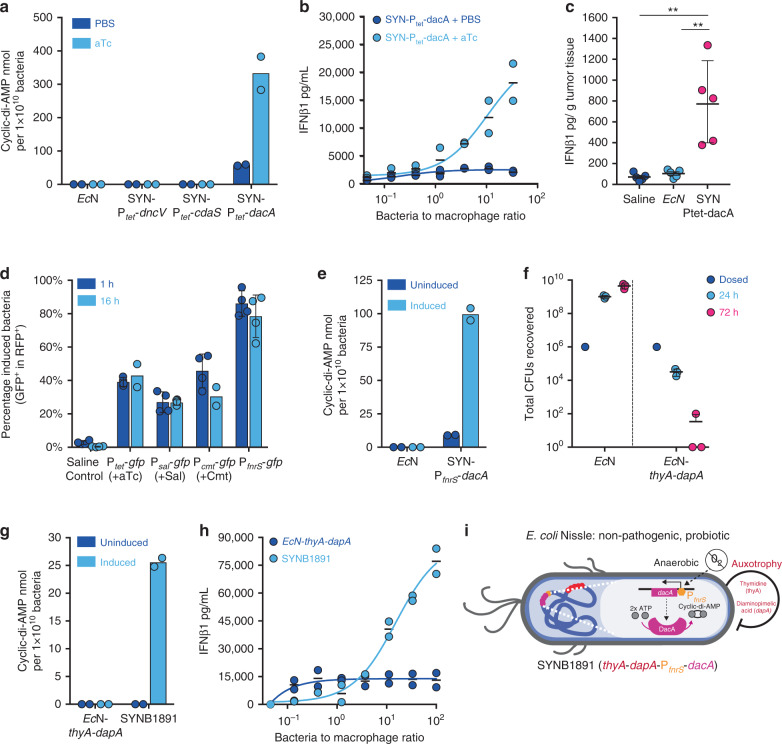
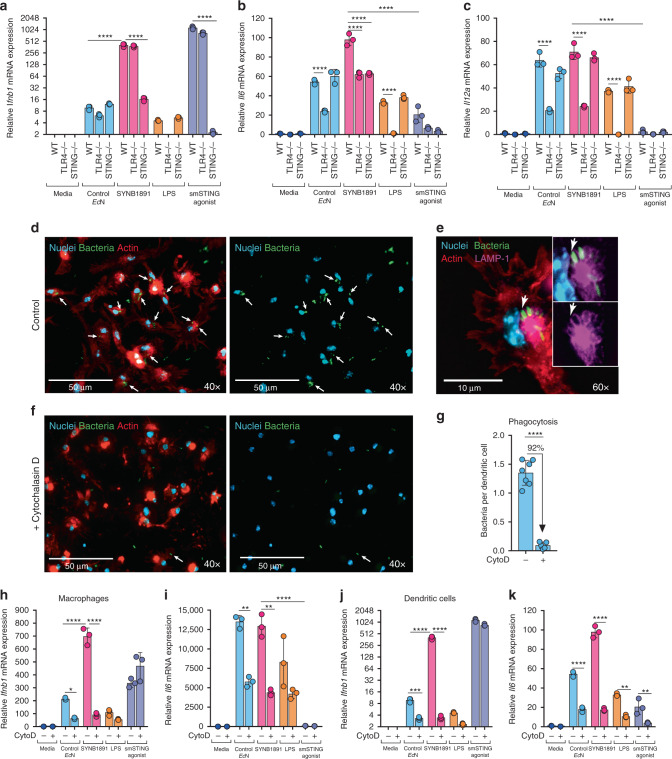
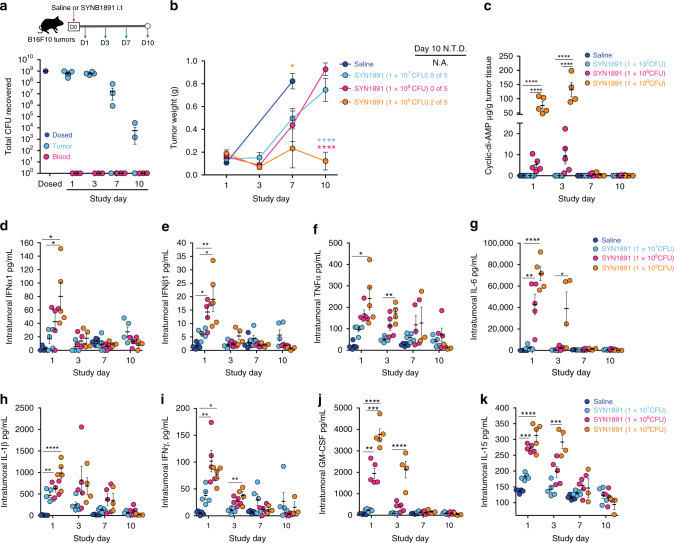
Synthetic biology is a powerful tool to create therapeutics which can be rationally designed to enable unique and combinatorial functionalities. Here we utilize non-pathogenic E coli Nissle as a versatile platform for the development of a living biotherapeutic for the treatment of cancer. The engineered bacterial strain, referred to as SYNB1891, targets STING-activation to phagocytic antigen-presenting cells (APCs) in the tumor and activates complementary innate immune pathways. SYNB1891 treatment results in efficacious antitumor immunity with the formation of immunological memory in murine tumor models and robust activation of human APCs. SYNB1891 is designed to meet manufacturability and regulatory requirements with built in biocontainment features which do not compromise its efficacy. This work provides a roadmap for the development of future therapeutics and demonstrates the transformative potential of synthetic biology for the treatment of human disease when drug development criteria are incorporated into the design process for a living medicine.
Overview
The claims and statistics of this paper haven’t been checked yet.
Free: it reads the open-access text and checks the first 5 claims that cite a source we can check. Create a free account to check every claim.
Integrity signals
Registry
Cites
Statistics
Figures
Verification
Claims the paper makes
The claims and statistics of this paper haven’t been checked yet.
Free: it reads the open-access text and checks the first 5 claims that cite a source we can check. Create a free account to check every claim.
Claims other papers make about this one
Each is checked against this paper’s own text: does it say what the citing paper says it does?
In the citing paper
“SYNB1891 has been modified to express the STING agonist cyclic adenosine diphosphate ribose (CADPR), which can stimulate expression of IFNs and achieve antitumor effects [151].”
From Gut microbiota influence immunotherapy responses: mechanisms and therapeutic strategies (2022) · doi:10.1186/s13045-022-01273-9 · cites this paper as [151]
Self-check
Percentages, sums and reported differences re-computed from the paper’s own numbers.
The self-check needs the paper’s full text.
Citations
Cites
Zou, W., Wolchok, J. D., & Chen, L. (2016) · Science Translational Medicine · doi:10.1126/scitranslmed.aad7118 · Cited by 2,400
Immune checkpoint inhibitors: recent progress and potential biomarkers
Darvin, P., Toor, S. M., Sasidharan Nair, V., & Elkord, E. (2018) · Experimental & Molecular Medicine · doi:10.1038/s12276-018-0191-1 · Cited by 2,035
STING-Dependent Cytosolic DNA Sensing Mediates Innate Immune Recognition of Immunogenic Tumors
Woo, S.-R., Fuertes, M. B., Corrales, L., Spranger, S., Furdyna, M. J., Leung, M. Y. K., Duggan, R., Wang, Y., Barber, G. N., Fitzgerald, K. A., et al. (2014) · Immunity · doi:10.1016/j.immuni.2014.10.017 · Cited by 1,917
Corrales, L., Glickman, L. H., McWhirter, S. M., Kanne, D. B., Sivick, K. E., Katibah, G. E., Woo, S.-R., Lemmens, E., Banda, T., Leong, J. J., et al. (2015) · Cell Reports · doi:10.1016/j.celrep.2015.04.031 · Cited by 1,560
Tumour-targeting bacteria engineered to fight cancer
Zhou, S., Gravekamp, C., Bermudes, D., & Liu, K. (2018) · Nature Reviews Cancer · doi:10.1038/s41568-018-0070-z · Cited by 821
Diner, E. J., Burdette, D. L., Wilson, S. C., Monroe, K. M., Kellenberger, C. A., Hyodo, M., Hayakawa, Y., Hammond, M. C., & Vance, R. E. (2013) · Cell Reports · doi:10.1016/j.celrep.2013.05.009 · Cited by 767
The toxins of William B. Coley and the treatment of bone and soft-tissue sarcomas.
McCarthy, E. F. (2006) · Europe PMC (PubMed Central) · Cited by 747
STING agonist formulated cancer vaccines can cure established tumors resistant to PD-1 blockade
Fu, J., Kanne, D. B., Leong, M., Glickman, L. H., McWhirter, S. M., Lemmens, E., Mechette, K., Leong, J. J., Lauer, P., Liu, W., et al. (2015) · Science Translational Medicine · doi:10.1126/scitranslmed.aaa4306 · Cited by 720
Engineered probiotics for local tumor delivery of checkpoint blockade nanobodies
Gurbatri, C. R., Lia, I., Vincent, R., Coker, C., Castro, S., Treuting, P. M., Hinchliffe, T. E., Arpaia, N., & Danino, T. (2020) · Science Translational Medicine · doi:10.1126/scitranslmed.aax0876 · Cited by 647
Isabella, V. M., Ha, B. N., Castillo, M. J., Lubkowicz, D. J., Rowe, S. E., Millet, Y. A., Anderson, C. L., Li, N., Fisher, A. B., West, K. A., et al. (2018) · Nature Biotechnology · doi:10.1038/nbt.4222 · Cited by 605
Self-citation
Cited by
Zhou, J., Li, M., Chen, Q., Li, X., Chen, L., Dong, Z., Zhu, W., Yang, Y., Liu, Z., & Chen, Q. (2022) · Nature Communications · doi:10.1038/s41467-022-31171-0 · Cited by 695
Gut microbiota influence immunotherapy responses: mechanisms and therapeutic strategies
(2022) · doi:10.1186/s13045-022-01273-9 · Cited by 495
Engineering bacteria as interactive cancer therapies
Gurbatri, C. R., Arpaia, N., & Danino, T. (2022) · Science · doi:10.1126/science.add9667 · Cited by 447
Meric-Bernstam, F., Sweis, R. F., Hodi, F. S., Messersmith, W. A., Andtbacka, R. H. I., Ingham, M., Lewis, N., Chen, X., Pelletier, M., Chen, X., et al. (2022) · Clinical Cancer Research · doi:10.1158/1078-0432.ccr-21-1963 · Cited by 418
STING Agonists as Cancer Therapeutics
Amouzegar, A., Chelvanambi, M., Filderman, J., Storkus, W., & Luke, J. (2021) · Cancers · doi:10.3390/cancers13112695 · Cited by 395
Chemical and Biomolecular Strategies for STING Pathway Activation in Cancer Immunotherapy
Garland, K. M., Sheehy, T. L., & Wilson, J. T. (2022) · Chemical Reviews · doi:10.1021/acs.chemrev.1c00750 · Cited by 357
Engineering living therapeutics with synthetic biology
Cubillos-Ruiz, A., Guo, T., Sokolovska, A., Miller, P. F., Collins, J. J., Lu, T. K., & Lora, J. M. (2021) · Nature Reviews Drug Discovery · doi:10.1038/s41573-021-00285-3 · Cited by 356
Self-citationBacteria in cancer initiation, promotion and progression
El Tekle, G., & Garrett, W. S. (2023) · Nature Reviews Cancer · doi:10.1038/s41568-023-00594-2 · Cited by 343
Type I interferon-mediated tumor immunity and its role in immunotherapy
Yu, R., Zhu, B., & Chen, D. (2022) · Cellular and Molecular Life Sciences · doi:10.1007/s00018-022-04219-z · Cited by 309
Bacteria‐Based Cancer Immunotherapy
Huang, X., Pan, J., Xu, F., Shao, B., Wang, Y., Guo, X., & Zhou, S. (2021) · Advanced Science · doi:10.1002/advs.202003572 · Cited by 304
Akolpoglu, M. B., Alapan, Y., Dogan, N. O., Baltaci, S. F., Yasa, O., Aybar Tural, G., & Sitti, M. (2022) · Science Advances · doi:10.1126/sciadv.abo6163 · Cited by 293
The gut microbiome in Alzheimer’s disease: what we know and what remains to be explored
Chandra, S., Sisodia, S. S., & Vassar, R. J. (2023) · Molecular Neurodegeneration · doi:10.1186/s13024-023-00595-7 · Cited by 278
Probiotic-guided CAR-T cells for solid tumor targeting
Vincent, R. L., Gurbatri, C. R., Li, F., Vardoshvili, A., Coker, C., Im, J., Ballister, E. R., Rouanne, M., Savage, T., de los Santos-Alexis, K., et al. (2023) · Science · doi:10.1126/science.add7034 · Cited by 273
Ultrasound-controllable engineered bacteria for cancer immunotherapy
Abedi, M. H., Yao, M. S., Mittelstein, D. R., Bar-Zion, A., Swift, M. B., Lee-Gosselin, A., Barturen-Larrea, P., Buss, M. T., & Shapiro, M. G. (2022) · Nature Communications · doi:10.1038/s41467-022-29065-2 · Cited by 260
Li, Z., Wang, Y., Liu, J., Rawding, P., Bu, J., Hong, S., & Hu, Q. (2021) · Advanced Materials · doi:10.1002/adma.202102580 · Cited by 244
Emerging strategies for engineering Escherichia coli Nissle 1917-based therapeutics
Lynch, J. P., Goers, L., & Lesser, C. F. (2022) · Trends in Pharmacological Sciences · doi:10.1016/j.tips.2022.02.002 · Cited by 230
Exploiting bacteria for cancer immunotherapy
Kwon, S.-Y., Thi-Thu Ngo, H., Son, J., Hong, Y., & Min, J.-J. (2024) · Nature Reviews Clinical Oncology · doi:10.1038/s41571-024-00908-9 · Cited by 201
“Modification of the E. coli strain Nissle 1917 (EcN) for delivery of cyclic di-AMP (a STING agonist) has been shown to promote antigen presentation and type I interferon production by DCs, leading to enhanced T cell activation and antitumour immunity in mouse models 148 .”
Lactate limits CNS autoimmunity by stabilizing HIF-1α in dendritic cells
Sanmarco, L. M., Rone, J. M., Polonio, C. M., Fernandez Lahore, G., Giovannoni, F., Ferrara, K., Gutierrez-Vazquez, C., Li, N., Sokolovska, A., Plasencia, A., et al. (2023) · Nature · doi:10.1038/s41586-023-06409-6 · Cited by 193
Self-citationLuke, J. J., Piha-Paul, S. A., Medina, T., Verschraegen, C. F., Varterasian, M., Brennan, A. M., Riese, R. J., Sokolovska, A., Strauss, J., Hava, D. L., et al. (2023) · Clinical Cancer Research · doi:10.1158/1078-0432.ccr-23-0118 · Cited by 173
Self-citationApplications of synthetic biology in medical and pharmaceutical fields
Yan, X., Liu, X., Zhao, C., & Chen, G.-Q. (2023) · Signal Transduction and Targeted Therapy · doi:10.1038/s41392-023-01440-5 · Cited by 179
Critical role of the gut microbiota in immune responses and cancer immunotherapy
Li, Z., Xiong, W., Liang, Z., Wang, J., Zeng, Z., Kołat, D., Li, X., Zhou, D., Xu, X., & Zhao, L. (2024) · Journal of Hematology & Oncology · doi:10.1186/s13045-024-01541-w · Cited by 176
“To date, multiple reports have demonstrated the reliable delivery of antitumor benefits by engineered bacterial strains in many different contexts [381–385].”
BackgroundDelivery of STING agonists for adjuvanting subunit vaccines
Van Herck, S., Feng, B., & Tang, L. (2021) · Advanced Drug Delivery Reviews · doi:10.1016/j.addr.2021.114020 · Cited by 175
Acoustically triggered mechanotherapy using genetically encoded gas vesicles
Bar-Zion, A., Nourmahnad, A., Mittelstein, D. R., Shivaei, S., Yoo, S., Buss, M. T., Hurt, R. C., Malounda, D., Abedi, M. H., Lee-Gosselin, A., et al. (2021) · Nature Nanotechnology · doi:10.1038/s41565-021-00971-8 · Cited by 166
Enhancing the tropism of bacteria via genetically programmed biosensors
Chien, T., Harimoto, T., Kepecs, B., Gray, K., Coker, C., Hou, N., Pu, K., Azad, T., Nolasco, A., Pavlicova, M., et al. (2021) · Nature Biomedical Engineering · doi:10.1038/s41551-021-00772-3 · Cited by 164
Modulating gut microbiome in cancer immunotherapy: Harnessing microbes to enhance treatment efficacy
Kang, X., Lau, H. C.-H., & Yu, J. Q. (2024) · Cell Reports Medicine · doi:10.1016/j.xcrm.2024.101478 · Cited by 197
Tweak to Treat: Reprograming Bacteria for Cancer Treatment
Sieow, B. F.-L., Wun, K. S., Yong, W. P., Hwang, I. Y., & Chang, M. W. (2021) · Trends in Cancer · doi:10.1016/j.trecan.2020.11.004 · Cited by 158
Gut microbiota shapes cancer immunotherapy responses
Lei, W., Zhou, K., Lei, Y., Li, Q., & Zhu, H. (2025) · npj Biofilms and Microbiomes · doi:10.1038/s41522-025-00786-8 · Cited by 196
Yan, X., Liu, X.-Y., Zhang, D., Zhang, Y., Li, Z., Liu, X., Wu, F., & Chen, G. (2021) · Cellular and Molecular Immunology · doi:10.1038/s41423-021-00760-2 · Cited by 162
Ma, J., Lyu, Y., Liu, X., Jia, X., Cui, F., Wu, X., Deng, S., & Yue, C. (2022) · Microbial Cell Factories · doi:10.1186/s12934-022-01799-0 · Cited by 142
Chen, H., Li, Y., Wang, Y., Ning, P., Shen, Y., Wei, X., Feng, Q., Liu, Y., Li, Z., Xu, C., et al. (2022) · ACS Nano · doi:10.1021/acsnano.1c11601 · Cited by 144
Role of the microbiota in response to and recovery from cancer therapy
Blake, S. J., Wolf, Y., Boursi, B., & Lynn, D. J. (2023) · Nature reviews. Immunology · doi:10.1038/s41577-023-00951-0 · Cited by 158
Bacterial-based cancer therapy: An emerging toolbox for targeted drug/gene delivery
Lin, D., Feng, X., Mai, B., Li, X., Wang, F., Liu, J.-X., Liu, X., Zhang, K., & Wang, X. (2021) · Biomaterials · doi:10.1016/j.biomaterials.2021.121124 · Cited by 141
Ma, J., Huang, L., Hu, D., Zeng, S., Han, Y., & Shen, H. (2021) · Journal of Experimental & Clinical Cancer Research · doi:10.1186/s13046-021-02128-w · Cited by 153
Theranostic cells: emerging clinical applications of synthetic biology
McNerney, M. P., Doiron, K. E., Ng, T. L., Chang, T. Z., & Silver, P. A. (2021) · Nature Reviews Genetics · doi:10.1038/s41576-021-00383-3 · Cited by 142
Hurt, R. C., Buss, M. T., Duan, M., Wong, K., You, M. Y., Sawyer, D. P., Swift, M., Dutka, P., Barturen‐Larrea, P., Mittelstein, D. R., et al. (2023) · Nature Biotechnology · doi:10.1038/s41587-022-01581-y · Cited by 137
Next generation probiotics: Engineering live biotherapeutics
Murali, S. K., & Mansell, T. J. (2024) · Biotechnology Advances · doi:10.1016/j.biotechadv.2024.108336 · Cited by 153
Liu, D., Liang, S., Ma, K., Meng, Q., Li, X., Wei, J., Zhou, M., Yun, K., Pan, Y., Rao, L., et al. (2024) · Advanced Materials · doi:10.1002/adma.202304845 · Cited by 120
Bacterial therapies at the interface of synthetic biology and nanomedicine
Hahn, J., Ding, S., Im, J., Harimoto, T., Leong, K. W., & Danino, T. (2023) · Nature Reviews Bioengineering · doi:10.1038/s44222-023-00119-4 · Cited by 139
Xu, J., Ma, Q., Zhang, Y., Fei, Z., Sun, Y., Fan, Q., Liu, B., Bai, J., Yu, Y., Chu, J., et al. (2022) · Nature Communications · doi:10.1038/s41467-021-27750-2 · Cited by 129
Wang, B., Yu, W., Jiang, H., Meng, X., Tang, D., & Liu, D. (2024) · Frontiers in Immunology · doi:10.3389/fimmu.2024.1485546 · Cited by 160
Zhao, Y., Dong, Y., Yang, S., Tu, Y., Wang, C., Li, J., Yuan, Y., & Lian, Z.-X. (2022) · ACS Central Science · doi:10.1021/acscentsci.2c00163 · Cited by 120
Cell/Bacteria‐Based Bioactive Materials for Cancer Immune Modulation and Precision Therapy
Pan, H., Zheng, M., Ma, A.-Q., Liu, L., & Cai, L. (2021) · Advanced Materials · doi:10.1002/adma.202100241 · Cited by 115
Customized materials-assisted microorganisms in tumor therapeutics
Chen, Q., Qiao, J., Liu, X., Zhang, C., & Zhang, X. (2021) · Chemical Society Reviews · doi:10.1039/d0cs01571g · Cited by 112
cGAS-STING pathway mediates activation of dendritic cell sensing of immunogenic tumors
Li, G., Zhao, X., Zheng, Z., Zhang, H., Wu, Y., Shen, Y., & Chen, Q. (2024) · Cellular and Molecular Life Sciences · doi:10.1007/s00018-024-05191-6 · Cited by 121
From Design to Clinic: Engineered Nanobiomaterials for Immune Normalization Therapy of Cancer
Saeed, M., Chen, F., Ye, J., Shi, Y., Lammers, T., Geest, B. G. D., Xu, Z. P., & Yu, H. (2021) · Advanced Materials · doi:10.1002/adma.202008094 · Cited by 108
Kim, S., Park, S., Hwang, S.-H., Lee, E.-Y., Kim, J.-H., Lee, G. S., Lee, G., Chang, D., Lee, J. G., Hwang, J., et al. (2023) · Cell Host & Microbe · doi:10.1016/j.chom.2023.05.007 · Cited by 121
Gupta, K. H., Nowicki, C. A., Giurini, E. F., Marzo, A. L., & Zloza, A. (2021) · Vaccines · doi:10.3390/vaccines9121497 · Cited by 121
Bacteria and bacterial derivatives as delivery carriers for immunotherapy
Kang, S., Nguyen, D.-H., Yoo, S. W., & Min, J. (2021) · Advanced Drug Delivery Reviews · doi:10.1016/j.addr.2021.114085 · Cited by 106
Promising dawn in tumor microenvironment therapy: engineering oral bacteria
Wang, Z., Sun, W., Hua, R., Wang, Y., Li, Y., & Zhang, H. (2024) · International Journal of Oral Science · doi:10.1038/s41368-024-00282-3 · Cited by 97
Bacterial nanotechnology as a paradigm in targeted cancer therapeutic delivery and immunotherapy
Gholami, A., Mohkam, M., Soleimanian, S., Sadraeian, M., & Lauto, A. (2024) · Microsystems & Nanoengineering · doi:10.1038/s41378-024-00743-z · Cited by 105
Engineered Living Materials for Advanced Diseases Therapy
Xue, D. Q., Wu, W. H., Pan, P., & Zhang, X. (2023) · Advanced Materials · doi:10.1002/adma.202304963 · Cited by 102
Elkrief, A., Pidgeon, R., Vareki, S. M., Messaoudene, M., Castagner, B., & Routy, B. (2025) · Nature Reviews Drug Discovery · doi:10.1038/s41573-025-01211-7 · Cited by 109
Plasmid Vectors for in Vivo Selection-Free Use with the Probiotic E. coli Nissle 1917
Kan, A., Gelfat, I., Emani, S. S., Praveschotinunt, P., & Joshi, N. S. (2020) · ACS Synthetic Biology · doi:10.1021/acssynbio.0c00466 · Cited by 86
Lipid-based nanosystems: the next generation of cancer immune therapy
Cheng, Z., Fobian, S., Gurrieri, E., Amin, M., D’Agostino, V., Falahati, M., Zalba, S., Debets, R., Garrido, M. J., Saeed, M., et al. (2024) · Journal of Hematology & Oncology · doi:10.1186/s13045-024-01574-1 · Cited by 106
Kong, X., Zuo, H., Huang, H., Zhang, Q., Chen, J., He, C., & Hu, Y. (2022) · Journal of Advanced Research · doi:10.1016/j.jare.2022.05.006 · Cited by 87
cGAS-STING signaling in the tumor microenvironment
Liu, Z., Wang, D., Zhang, J., Xiang, P., Zeng, Z., Xiong, W., & Shi, L. (2023) · Cancer Letters · doi:10.1016/j.canlet.2023.216409 · Cited by 90
Li, Y., He, M., Wang, Z., Duan, Z., Guo, Z., Wang, Z., Gong, R., Chu, T., Cai, J., & Gao, B. (2021) · Cellular and Molecular Immunology · doi:10.1038/s41423-021-00801-w · Cited by 85
Bacterially mediated drug delivery and therapeutics: Strategies and advancements
Wu, L., Bao, F., Li, L., Yin, X., & Hua, Z. (2022) · Advanced Drug Delivery Reviews · doi:10.1016/j.addr.2022.114363 · Cited by 84
Genetically engineered bacterium: Principles, practices, and prospects
Liu, Y., Feng, J., Pan, H., Zhang, X., & Zhang, Y. (2022) · Frontiers in Microbiology · doi:10.3389/fmicb.2022.997587 · Cited by 92
The heightened importance of the microbiome in cancer immunotherapy
Villemin, C., Six, A., Neville, B. A., Lawley, T. D., Robinson, M. J., & Bakdash, G. (2023) · Trends in Immunology · doi:10.1016/j.it.2022.11.002 · Cited by 73
Engineered Bacteria-Based Living Materials for Biotherapeutic Applications
Omer, R., Mohsin, M. Z., Mohsin, A., Mushtaq, B. S., Huang, X., Guo, M., Zhuang, Y., & Huang, J. (2022) · Frontiers in Bioengineering and Biotechnology · doi:10.3389/fbioe.2022.870675 · Cited by 80
King, A. M., Zhang, Z., Glassey, E., Siuti, P., Clardy, J., & Voigt, C. A. (2023) · Nature Microbiology · doi:10.1038/s41564-023-01524-6 · Cited by 75
Pei, P., Zhang, Y., Jiang, Y., Shen, W., Chen, H., Yang, S., Zhang, Y., Yi, X., & Yang, K. (2022) · ACS Nano · doi:10.1021/acsnano.2c04982 · Cited by 72
Microbiome engineering: engineered live biotherapeutic products for treating human disease
Rutter, J. W., Dekker, L., Owen, K. A., & Barnes, C. P. (2022) · Frontiers in Bioengineering and Biotechnology · doi:10.3389/fbioe.2022.1000873 · Cited by 83
Integrating Systems and Synthetic Biology to Understand and Engineer Microbiomes
Leggieri, P. A., Liu, Y., Hayes, M. M., Connors, B., Seppälä, S., O’Malley, M., & Venturelli, O. S. (2021) · Annual Review of Biomedical Engineering · doi:10.1146/annurev-bioeng-082120-022836 · Cited by 78
Activation of Stimulation of Interferon Genes (STING) Signal and Cancer Immunotherapy
Luo, K.-W., Li, N., Ye, W., Gao, H., Luo, X., & Cheng, B. (2022) · Molecules · doi:10.3390/molecules27144638 · Cited by 75
Self-citationBacteria-based immunotherapy for cancer: a systematic review of preclinical studies
Zhou, M., Tang, Y., Xu, W., Hao, X., Li, Y., Huang, S. Q., Xiang, D., & Wu, J. (2023) · Frontiers in Immunology · doi:10.3389/fimmu.2023.1140463 · Cited by 92
The role of the gut microbiota in tumor, immunity, and immunotherapy
Xie, Y., & Liu, F. (2024) · Frontiers in Immunology · doi:10.3389/fimmu.2024.1410928 · Cited by 77
Genetically Engineered Microorganisms and Their Impact on Human Health
Mahdizade Ari, M., Dadgar, L., Elahi, Z., Ghanavati, R., & Taheri, B. (2024) · International Journal of Clinical Practice · doi:10.1155/2024/6638269 · Cited by 67
Harnessing bacteria for tumor therapy: Current advances and challenges
Guo, L., Ding, J., & Zhou, W. (2023) · Chinese Chemical Letters · doi:10.1016/j.cclet.2023.108557 · Cited by 84
Lan, Y.-J., Tan, S., Cheng, S., Ting, W., Xue, C., Lin, T.-H., Cai, M.-Z., Chen, P., & Ng, I. (2021) · Biochemical Engineering Journal · doi:10.1016/j.bej.2021.107952 · Cited by 69
Fecal microbiota transplantation: Uses, questions, and ethics
Grigoryan, Z., Shen, M. J., Twardus, S. W., Beuttler, M. M., Chen, L. A., & Bateman-House, A. (2020) · Medicine in Microecology · doi:10.1016/j.medmic.2020.100027 · Cited by 70
Inda, M. E., & Lu, T. K. (2020) · Annual Review of Microbiology · doi:10.1146/annurev-micro-022620-081059 · Cited by 69
Bao, P., Zheng, Z., Ye, J., & Zhang, X. (2022) · Nano Letters · doi:10.1021/acs.nanolett.1c03996 · Cited by 59
Chen, W., Song, Y., Bai, S., He, C., Guo, Z., Zhu, Y., Zhang, Z., & Sun, X. (2023) · ACS Nano · doi:10.1021/acsnano.3c00363 · Cited by 60
Chimeric Exosomes Functionalized with STING Activation for Personalized Glioblastoma Immunotherapy
Bao, P., Gu, H.-Y., Ye, J., He, J., Zhong, Z., Yu, A., & Zhang, X. (2023) · Advanced Science · doi:10.1002/advs.202306336 · Cited by 69
Synergistic Brilliance: Engineered Bacteria and Nanomedicine Unite in Cancer Therapy
Zhou, Y., Li, Q., Wu, Y., Zhang, W., Ding, L., Ji, C., Li, P., Chen, T., Feng, L., Tang, B. Z., et al. (2024) · Advanced Materials · doi:10.1002/adma.202313953 · Cited by 68
Zhang, J., Wan, S., Zhou, H., Du, J., Li, Y., Zhu, H., Weng, L., Ding, X., & Wang, L. (2024) · ACS Nano · doi:10.1021/acsnano.3c13194 · Cited by 61
Multimodal oncolytic bacteria by coating with tumor cell derived nanoshells
Liu, R., Cao, Z., Wang, L., Wang, X., Lin, S., Wu, F. Q., Pang, Y., & Liu, J. (2022) · Nano Today · doi:10.1016/j.nantod.2022.101537 · Cited by 57
Bacteria-based bioactive materials for cancer imaging and therapy
Chen, Y., Li, Z.-H., Zeng, X., & Zhang, X. (2023) · Advanced Drug Delivery Reviews · doi:10.1016/j.addr.2023.114696 · Cited by 54
Programming the lifestyles of engineered bacteria for cancer therapy
Fu, S., Zhang, R., Gao, Y., Xiong, J., Li, Y., Pu, L., Xia, A., & Jin, F. (2023) · National Science Review · doi:10.1093/nsr/nwad031 · Cited by 64
Liu, W., Zhou, X., Yao, Q., Chen, C., Zhang, Q. H., Ding, K., Li, L., & Zeng, Z. (2023) · Journal of Clinical Investigation · doi:10.1172/jci157937 · Cited by 61
Microbe-material hybrids for therapeutic applications
Chen, M., Xia, L., Wu, C., Wang, Z., Ding, L. S., Xie, Y., Feng, W., & Chen, Y. (2024) · Chemical Society Reviews · doi:10.1039/d3cs00655g · Cited by 62
Hypoxic Tumor Radiosensitization Using Engineered Probiotics
Huang, C., Wang, X., Liu, L., Jiang, W., Liu, W., Ma, W., & Zhao, H. (2021) · Advanced Healthcare Materials · doi:10.1002/adhm.202002207 · Cited by 59
Engineered bacteria as drug delivery vehicles: Principles and prospects
Zhou, Y., & Han, Y. C. (2022) · Engineering Microbiology · doi:10.1016/j.engmic.2022.100034 · Cited by 56
Targeting STING in cancer: Challenges and emerging opportunities
Zhao, K., Huang, J., Zhao, Y., Wang, S., Xu, J., & Yin, K. (2023) · Biochimica et Biophysica Acta (BBA) - Reviews on Cancer · doi:10.1016/j.bbcan.2023.188983 · Cited by 63
Cao, F., Jin, L., Zhang, C., Gao, Y., Qian, Z., Wen, H., Yang, S., Ye, Z., Hong, L., Huang, Y., et al. (2023) · Advanced Materials · doi:10.1002/adma.202304257 · Cited by 66
Harnessing Engineered Immune Cells and Bacteria as Drug Carriers for Cancer Immunotherapy
Jiang, J., Huang, Y., Zeng, Z., & Zhao, C. (2023) · ACS Nano · doi:10.1021/acsnano.2c07607 · Cited by 60
The interplay between autophagy and cGAS-STING signaling and its implications for cancer
Schmid, M., Fischer, P., Engl, M., Widder, J., Gruber, S., & Slade, D. (2024) · Frontiers in Immunology · doi:10.3389/fimmu.2024.1356369 · Cited by 68
Advances of bacteria-based delivery systems for modulating tumor microenvironment
Li, S., Yue, H., Wang, S., Li, X., Wang, X., Guo, P., Ma, G., & Wei, W. (2022) · Advanced Drug Delivery Reviews · doi:10.1016/j.addr.2022.114444 · Cited by 51
Delivery of STING agonists for cancer immunotherapy
Wang, J., Meng, F., & Yeo, Y. (2024) · Current Opinion in Biotechnology · doi:10.1016/j.copbio.2024.103105 · Cited by 53
Patel, J. R., Oh, J., Wang, S., Crawford, J. M., & Isaacs, F. J. (2022) · Cell · doi:10.1016/j.cell.2022.03.008 · Cited by 58
Mortzfeld, B. M., Palmer, J. D., Bhattarai, S., Dupre, H. L., Mercado-Lubio, R., Silby, M., Bang, C., McCormick, B. A., & Bucci, V. (2021) · bioRxiv · doi:10.1080/19490976.2022.2127633 · Cited by 42
Escherichiacoli Nissle 1917 as a Novel Microrobot for Tumor-Targeted Imaging and Therapy
Liu, Q., Gai, Y., Chen, Y., Lan, X., & Jiang, D. (2021) · Pharmaceutics · doi:10.3390/pharmaceutics13081226 · Cited by 50
Bacteria-based immune therapies for cancer treatment
Howell, L. M., & Forbes, N. S. (2021) · Seminars in Cancer Biology · doi:10.1016/j.semcancer.2021.09.006 · Cited by 48
Xia, L., Zhu, X., Wang, Y., & Lü, S. (2024) · Cancer Letters · doi:10.1016/j.canlet.2024.217123 · Cited by 56
Microbiota in cancer: current understandings and future perspectives
Yao, Y., Zhu, Y., Chen, K., Chen, J., Li, Y., Li, D., & Wei, P. (2026) · Signal Transduction and Targeted Therapy · doi:10.1038/s41392-025-02335-3 · Cited by 61
Effendi, S. S. W., & Ng, I. (2022) · Critical Reviews in Microbiology · doi:10.1080/1040841x.2022.2109405 · Cited by 50
Xu, H., Wedn, A. M., Wang, J., Gu, Y., Liu, H., Zhang, J., Lin, Z., Zhou, R., Pang, X., & Cui, Y. (2024) · Pharmacological Research · doi:10.1016/j.phrs.2024.107063 · Cited by 51
Pan-cancer atlas of tumor-resident microbiome, immunity and prognosis
Sheng, D., Jin, C., Yue, K., Yue, M., Liang, Y., Xue, X., Li, P., Zhao, G., & Zhang, L. (2024) · Cancer Letters · doi:10.1016/j.canlet.2024.217077 · Cited by 48
Metadata
- Authors
- Leventhal, D. S., Sokolovska, A., Li, N., Plescia, C., Kolodziej, S. A., Gallant, C. W., Christmas, R., Gao, J.-R., James, M. J., Abin-Fuentes, A., Momin, M., Bergeron, C., Fisher, A., Miller, P. F., West, K. A., & Lora, J. M.
- Affiliations
- Synlogic (United States) (US)
- Corresponding author
- Leventhal, Daniel S.
- Sokolovska, Anna
- ORCID
- Venue
- Nature Communications
- Published
- 2020-06-01
- Volume
- 11
- Issue
- 1
- Pages
- 2739-2739
- ISSN
- 2041-1723 (ISSN-L)
- PMC
- PMC7264239
- OpenAlex
- W3030200736
- Cited by
- 458
- References
- 50
- Citations by year
- 2026: 71 · 2025: 101 · 2024: 96 · 2023: 71 · 2022: 61 · 2021: 50 · 2020: 5
- FWCI
- 24.20
- Type
- journal article
- Language
- en
- Open access
- gold
- doi.org
- Licence
- cc-by
- creativecommons.org/licenses/by/4.0 (tdm)
- creativecommons.org/licenses/by/4.0 (vor)
- Locations
- Nature Communications (publishedVersion, cc-by)
- PubMed Central (publishedVersion, cc-by)
- PubMed (publishedVersion)
- RePEc: Research Papers in Economics (submittedVersion)
- DOAJ (DOAJ: Directory of Open Access Journals) (submittedVersion, cc-by-sa)
- Topics
- Life Sciences › Biochemistry, Genetics and Molecular Biology › Biotechnology › Bacterial Cancer Therapy
- Life Sciences › Immunology and Microbiology › Immunology › Immunotherapy and Immune Responses
- Health Sciences › Medicine › Oncology › Cancer Immunotherapy and Biomarkers
- Keywords
- STING pathway, engineered bacteria, cancer immunotherapy, antigen-presenting cells, innate immune activation, immunological memory, biocontainment, synthetic biology, tumor immunology
- MeSH terms
- STING Protein, Animals, Antigen-Presenting Cells, Escherichia coli, Genetic Engineering, Humans, Immunotherapy, Interferon Type I, Membrane Proteins, Mice, Inbred BALB C, Mice, Inbred C57BL, Neoplasms, Phagocytes, Signal Transduction, Mice, Knockout, Cell Line, Tumor, Mice, Synthetic Biology
About these checks
Registry, retraction, Cites and statistics results are computed, not judged, with one exception: a printed reference that no index lists is read once by a model before it counts as a citation error. Claims are extracted by a model and kept only when their quote appears verbatim in the text; each cited source is then checked, with a model’s help, for whether it says what the claim relies on. Those verdicts can be wrong — read the claim’s quote and the cited source before relying on one.
Statistics and arithmetic are recomputed, not judged.
Confidence bands are shown only for fields calibrated on our annotated test set. None is calibrated yet, so no band is shown.
What counts as a claim ›How we measure confidence ›How we check this ›
Are you an author, or do you see a problem with this page? Request a review
Data sources
Bibliographic data: Semantic Scholar, OpenAlex, Crossref.
Contains information from the Semantic Scholar Academic Graph Datasets, made available under the ODC Attribution License (ODC-BY 1.0).
Semantic Scholar’s data is described in: Kinney, R., et al. (2023). The Semantic Scholar Open Data Platform. arXiv:2301.10140.
