

Modular gateway-ness connectivity and structural core organization in maritime network science
Open accessThe DOI matches its Crossref record; 57 of the 57 references it cites were found in a registry or an index.
Abstract
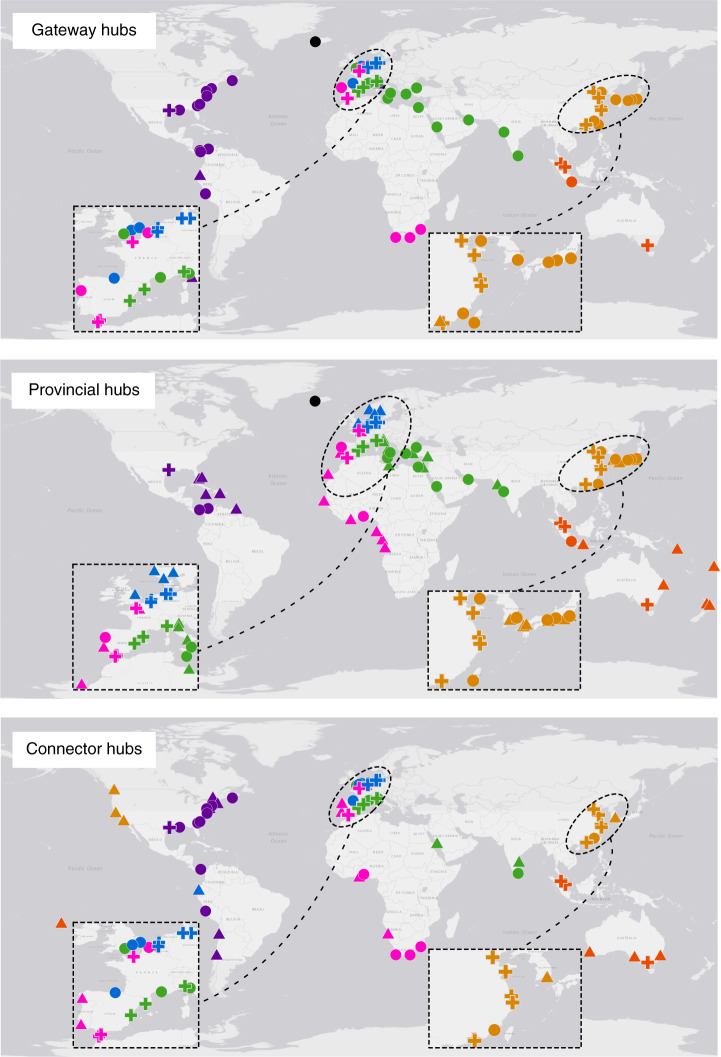
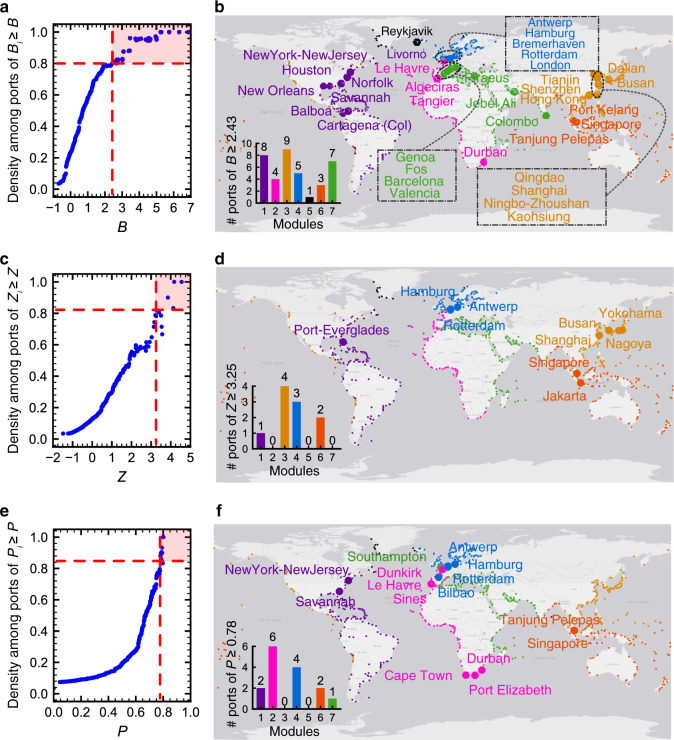
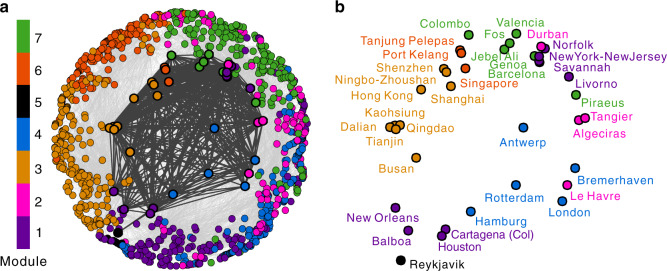
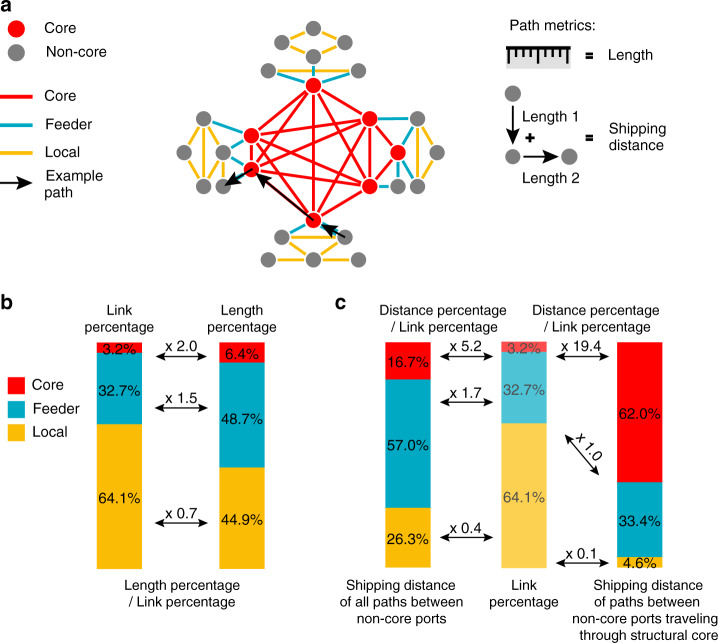
Around 80% of global trade by volume is transported by sea, and thus the maritime transportation system is fundamental to the world economy. To better exploit new international shipping routes, we need to understand the current ones and their complex systems association with international trade. We investigate the structure of the global liner shipping network (GLSN), finding it is an economic small-world network with a trade-off between high transportation efficiency and low wiring cost. To enhance understanding of this trade-off, we examine the modular segregation of the GLSN; we study provincial-, connector-hub ports and propose the definition of gateway-hub ports, using three respective structural measures. The gateway-hub structural-core organization seems a salient property of the GLSN, which proves importantly associated to network integration and function in realizing the cargo transportation of international trade. This finding offers new insights into the GLSN’s structural organization complexity and its relevance to international trade.
Overview
The claims and statistics of this paper haven’t been checked yet.
Free: it reads the open-access text and checks the first 5 claims that cite a source we can check. Create a free account to check every claim.
Integrity signals
Registry
Cites
Statistics
Figures
Verification
Claims the paper makes
The claims and statistics of this paper haven’t been checked yet.
Free: it reads the open-access text and checks the first 5 claims that cite a source we can check. Create a free account to check every claim.
Self-check
Percentages, sums and reported differences re-computed from the paper’s own numbers.
The self-check needs the paper’s full text.
Citations
Cites
Collective dynamics of ‘small-world’ networks
Watts, D. J., & Strogatz, S. H. (1998) · Nature · doi:10.1038/30918 · Cited by 43,060
Emergence of Scaling in Random Networks
Barabási, A.-L., & Albert, R. (1999) · Science · doi:10.1126/science.286.5439.509 · Cited by 36,135
Fast unfolding of communities in large networks
Blondel, V. D., Guillaume, J.-L., Lambiotte, R., & Lefebvre, E. (2008) · Journal of Statistical Mechanics: Theory and Experiment · doi:10.1088/1742-5468/2008/10/p10008 · Cited by 21,424
The Structure and Function of Complex Networks
Newman, M. E. J. (2003) · SIAM Review · doi:10.1137/s003614450342480 · Cited by 18,719 · cited 1×
“����� ) is characterized by evaluating for each 24 individual node i the efficiency of 𝐺�, the subgraph consisting of the neighbors of i. It is defined as follows: 𝐸�����= 1 � ∑ 𝐸 (𝐺�) �∈𝐺𝐸 (𝐺����𝑎�) (7) where 𝐸 (𝐺�) is the efficiency of the subgraph of the neighbors of i, and 𝐸 (𝐺������) that of the ideal case for th…”
Centrality in social networks conceptual clarification
Freeman, L. C. (1978) · Social Networks · doi:10.1016/0378-8733(78)90021-7 · Cited by 17,062
Finding and evaluating community structure in networks
Newman, M. E. J., & Girvan, M. (2004) · Physical Review E · doi:10.1103/physreve.69.026113 · Cited by 13,931
Modularity and community structure in networks
Newman, M. E. J. (2006) · Proceedings of the National Academy of Sciences · doi:10.1073/pnas.0601602103 · Cited by 12,256
Complex networks: structure and dynamics
BOCCALETTI, S., LATORA, V, MORENO, Y., CHAVEZ, M., & HWANG, D. (2006) · Physics Reports · doi:10.1016/j.physrep.2005.10.009 · Cited by 11,010
A Set of Measures of Centrality Based on Betweenness
Freeman, L. C. (1977) · Sociometry · doi:10.2307/3033543 · Cited by 10,295
Burt, R. S. (1992) · doi:10.4159/9780674029095 · Cited by 9,093
Research works printed but not linked: 4
- UNCTAD. Review of Maritime Transport 2017. https://unctad.org/en/pages/publicationwebflyer.aspx?publicationid=1890 (2017).
- Bar-Yam Y Dynamics of Complex Systems 1997 Cambridge, MA Westview Press
- Deng W-B Guo L Li W Cai X Worldwide marine transportation network: efficiency and container throughput Chin. Phys. Lett. 2009 26 242 245
- Fujita M Krugman PR Venables AJ The Spatial Economy: Cities, Regions, and International Trade 2001 Cambridge, MA The MIT Press
Cited by
Items 101–139 of 139
Gu, S., & Ge, J. (2026) · Maritime Policy & Management · doi:10.1080/03088839.2026.2644182 · Cited by 1
Zhao, X., Du, L., Deng, W., Xu, X., & Xu, M. (2026) · Physica A Statistical Mechanics and its Applications · doi:10.1016/j.physa.2026.131533 · Cited by 1
Self-citationAn unsupervised-learning-based method for cost-constrained complex network dismantling
Hong, L., Qing, F., Liu, Y., & Liu, K. (2026) · Physica A Statistical Mechanics and its Applications · doi:10.1016/j.physa.2026.131564 · Cited by 1
Zhang, L., Fan, X., Liao, S., & Lai, K.-H. (2026) · Transportation Research Part E Logistics and Transportation Review · doi:10.1016/j.tre.2026.105009 · Cited by 1
How Does a Port Build Influence? Diffusion Patterns in Global Oil Transportation
Peng, P., Claramunt, C., Cheng, S., & Lu, F. (2022) · Sensors · doi:10.3390/s22228595 · Cited by 1
“About 80% of global trade volume and more than 70% of global trade value are transported by maritime transportation and are handled by ports worldwide [1].”
BackgroundApplication of Social Network Analysis in Transportation Network Based on AIS Data
Ouyang, P., Zuo, Y., Jiang, J., & Jia, P. (2024) · International Conference on Information Science and Technology · doi:10.1109/icist63249.2024.10805476 · Cited by 1
“Xu et al. studied the global liner shipping network structure and proposed a new concept of "gateway-hub" ports, which provided new insights into understanding the structural organizational complexity of GLSN and its correlation with international trade [2] .”
Network representation for incomplete or sequential data
LaRock, T. (2021) · Digital Repository Service (Northeastern University) · doi:10.17760/d20429190
Stamatopoulos, G. (2023) · UPCommons institutional repository (Universitat Politècnica de Catalunya) · doi:10.5821/dissertation-2117-403631
Innovative MADM Framework for Strengthening Port Resilience Against Extreme Weather
Prihartanto, E., Rohman, M. A., & Wiguna, P. A. (2025) · International Journal of Safety and Security Engineering · doi:10.18280/ijsse.150111
“By knowing the quality of port infrastructure, service users can make better decisions regarding port selection, shipping routes, and the types of services needed [11].”
Yang, Z., Zhao, X., Zhang, E., & lian, F. (2025) · SSRN Electronic Journal · doi:10.2139/ssrn.5236433
Zhang, Y.-T., Chen, M.-L., & Yue, H. (2025) · SSRN Electronic Journal · doi:10.2139/ssrn.5402381
Assessing Maritime Assets Using Cyber Risk Framework Based on MITRE CAPEC
Keleştemur, S. A., Elmas, G., Özdemir, İ., & Köseoğlu, A. M. (2025) · Green energy and technology · doi:10.1007/978-3-031-89869-3_16
A Comparative Analysis of Voyage Charter Parties and Liner Bills of Lading in Maritime Trade
Dimitrakiev, D., Kostadinov, O., & Koritarov, T. D. (2025) · TransNav the International Journal on Marine Navigation and Safety of Sea Transportation · doi:10.12716/1001.19.02.18
“The transportation of goods by sea is a crucial component of global trade[1].”
Moon, S., Liang, J., Lee, H. J., Maalouf, A., Yu, Z., Moza, S., Zhang, Y., & Lu, H. (2025) · bioRxiv (Cold Spring Harbor Laboratory) · doi:10.1101/2025.11.02.686048
Silva, I. M. (2023) · Portuguese National Funding Agency for Science, Research and Technology (RCAAP Project by FCT)
Revealing implicit competition and functional similarity in trade-logistics networks
yong, H., Yang, Y. U., Zhang, H., Zhang, L., Chen, J., & Guo, J. (2025) · Transportation Research Part E Logistics and Transportation Review · doi:10.1016/j.tre.2025.104650
Irfan, D. A., & Ahmad, A. (2025) · Journal of Nautical Eye and Strategic Studies · doi:10.58932/mulg0054
Complexity Analysis of Northeast Asian Freight Port and Shipping Network Based on AIS Data
杨, 振. (2026) · Sustainable Development · doi:10.12677/sd.2026.163115
Expert Judgment in Scenario Simulation for Container Terminals and Supply Chains
Shamlua, F., Gotelli, M., & Jiménez, E. (2026) · Procedia Computer Science · doi:10.1016/j.procs.2026.02.149
Concentration and distribution of container flows in Mauritania’s maritime system (2019–2022)
Bouka, M., & ISMAIL, M. A. K. M. (2026) · Research in Transportation Business & Management · doi:10.1016/j.rtbm.2026.101894
A multi‐network approach to assess how physical templates shape stream fish ecological strategies
Cetra, M., & Almeida, R. D. S. (2026) · Ecological Solutions and Evidence · doi:10.1002/2688-8319.70246
Haq, A., Saad, S., Rasheed, K., Jamal, H., Ammad, S., & Nasir, A. R. (2026) · Structural Control and Health Monitoring · doi:10.1155/stc/5568505
“When the correlation is significant, it implies a substantial linear connection between the variables [79], [80].”
Xu, K., Zhou, Y., Sun, X., & Liu, J. (2026) · Chaos Solitons & Fractals · doi:10.1016/j.chaos.2026.118363
Xu, K., Liu, J., Zhou, Y., & Xia, H. (2026) · Reliability Engineering & System Safety · doi:10.1016/j.ress.2026.112789
Self-citationLi, Y., Yue, J., & Huang, Q. (2026) · Systems · doi:10.3390/systems14050498
Multi-scale structure of cruise shipping networks: a case study of the Mediterranean
Bo, A., & Wang, C. (2026) · Maritime Policy & Management · doi:10.1080/03088839.2026.2677713
The reliability of shipping connectivity in enhancing China's global value chain participation
Li, Y., Xia, X., Wang, Y., & Huang, Q. (2026) · Research in Transportation Business & Management · doi:10.1016/j.rtbm.2026.101738
Effective global maritime supply: Determinants, dynamics, and economic impacts
Li, Y., Xu, S., Xia, S., Ma, Z., & Bai, X. (2026) · Transport Policy · doi:10.1016/j.tranpol.2026.104346
Maritime hub-corridors: examining the spatial structure in global maritime networks
Kim, W., Kim, H., & Jung, P. H. (2026) · Journal of Geographical Systems · doi:10.1007/s10109-026-00519-1
Vessel ETA Prediction Integrating BiLSTM with Attention Mechanism Using AIS Data
Cheng, C., Zhao, Q., Li, D., Wang, X., Sun, D., & Yan, Y. (2026) · Journal of Marine Science and Engineering · doi:10.3390/jmse14181693
Jiang, R., Yang, Q., & Chen, J. (2026) · Ocean & Coastal Management · doi:10.1016/j.ocecoaman.2026.108377
Network-based modeling of cocaine trafficking flows and displacement effectsPreprint
A., H., Peters, Oetker, F., Roks, R., Lindelauf, R. H. A., Fokkink, R., & Wang, H. (2026) · arXiv (Cornell University) · doi:10.48550/arxiv.2609.26864
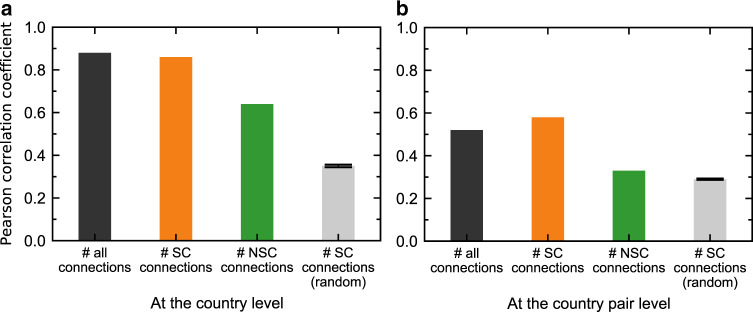
“To determine the latter, we will consider all shipping connections between countries that are present in the Global Liner Shipping Network (GLSN) at the country level [43–45].”
Zuo, Y., Wang, Z., & Ying, J. (2026) · Sustainability · doi:10.3390/su181910022
Qin, Y., & Guo, J. (2026) · Journal of Transport Geography · doi:10.1016/j.jtrangeo.2026.104870
Investigating the position of South African ports in the global liner shipping networks
Myataza, S. (2026) · Nelson Mandela University Research Repository
Zhang, L., Xu, Y., & Ren, J. (2026) · Lecture notes in computer science · doi:10.1007/978-3-032-42081-7_19
Guanqiong, Y., Guo, Z., & Yang, Y. (2026) · Maritime Policy & Management · doi:10.1080/03088839.2026.2750885
Green and digital shipping corridors: AIS-informed infrastructure and operational coordination
Liu, Y., Sugishita, K., Hanaoka, S., Lee, K., Liu, L., Nguyen, S. C., & Yan, R. (2026) · Transportation Research Part E Logistics and Transportation Review · doi:10.1016/j.tre.2026.105372
Resilience assessment of the liner shipping network with community structure
Xie, Y., Feng, Y., Wang, J., Jiang, Y., Peng, Z., & Jin, L. (2026) · Maritime Policy & Management · doi:10.1080/03088839.2026.2759237
Metadata
- Authors
- Xu, M., Pan, Q., Muscoloni, A., Xia, H., & Cannistraci, C. V.
- Affiliations
- Dalian University of Technology (CN)
- Center for Systems Biology Dresden (DE)
- Corresponding author
- Xu, Mengqiao
- Xia, Haoxiang
- Cannistraci, Carlo Vittorio
- Venue
- Nature Communications
- Published
- 2020-06-05
- Volume
- 11
- Issue
- 1
- Pages
- 2849-2849
- ISSN
- 2041-1723 (ISSN-L)
- PMC
- PMC7275034
- OpenAlex
- W3033381188
- Semantic Scholar
- a366f9c3309033d1bd8e597b6a5c375212223158
- Cited by
- 103
- References
- 54
- Citations by year
- 2026: 25 · 2025: 32 · 2024: 21 · 2023: 11 · 2022: 9 · 2021: 4 · 2020: 1
- FWCI
- 2.64
- Type
- journal article
- Language
- en
- Open access
- gold
- doi.org
- Licence
- cc-by
- creativecommons.org/licenses/by/4.0 (tdm)
- creativecommons.org/licenses/by/4.0 (vor)
- Locations
- Nature Communications (publishedVersion, cc-by)
- PubMed Central (publishedVersion, cc-by)
- PubMed (publishedVersion)
- arXiv (Cornell University) (submittedVersion)
- DOAJ (DOAJ: Directory of Open Access Journals) (submittedVersion, cc-by-sa)
- arXiv (Cornell University)
- Funders
- National Natural Science Foundation of China (71421001], 2018J11CY009, 71871042, 71533001)
- China Postdoctoral Science Foundation (2017M621141)
- Technische Universität Dresden
- Topics
- Physical Sciences › Physics and Astronomy › Statistical and Nonlinear Physics › Complex Network Analysis Techniques
- Physical Sciences › Engineering › Industrial and Manufacturing Engineering › Maritime Ports and Logistics
- Social Sciences › Urban Studies › Global Urban Networks and Dynamics
- Keywords
- maritime transport, modular network architecture, small-world networks, wiring cost, transport efficiency, international trade, freight transport
About these checks
Registry, retraction, Cites and statistics results are computed, not judged, with one exception: a printed reference that no index lists is read once by a model before it counts as a citation error. Claims are extracted by a model and kept only when their quote appears verbatim in the text; each cited source is then checked, with a model’s help, for whether it says what the claim relies on. Those verdicts can be wrong — read the claim’s quote and the cited source before relying on one.
Statistics and arithmetic are recomputed, not judged.
Confidence bands are shown only for fields calibrated on our annotated test set. None is calibrated yet, so no band is shown.
What counts as a claim ›How we measure confidence ›How we check this ›
Are you an author, or do you see a problem with this page? Request a review
Data sources
Bibliographic data: Semantic Scholar, OpenAlex, Crossref.
Contains information from the Semantic Scholar Academic Graph Datasets, made available under the ODC Attribution License (ODC-BY 1.0).
Semantic Scholar’s data is described in: Kinney, R., et al. (2023). The Semantic Scholar Open Data Platform. arXiv:2301.10140.
