

Transcriptomics and proteomics reveal a cooperation between interferon and T-helper 17 cells in neuromyelitis optica
Open accessThe DOI matches its Crossref record; 57 of the 57 references it cites were found in a registry or an index.
Abstract
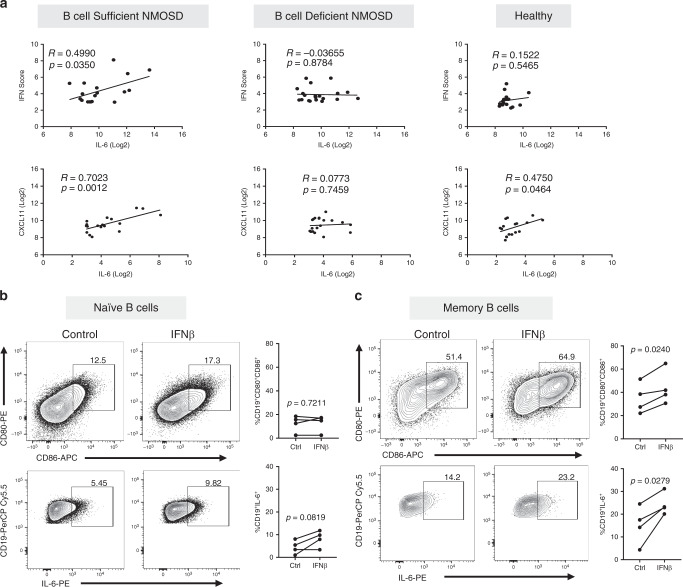
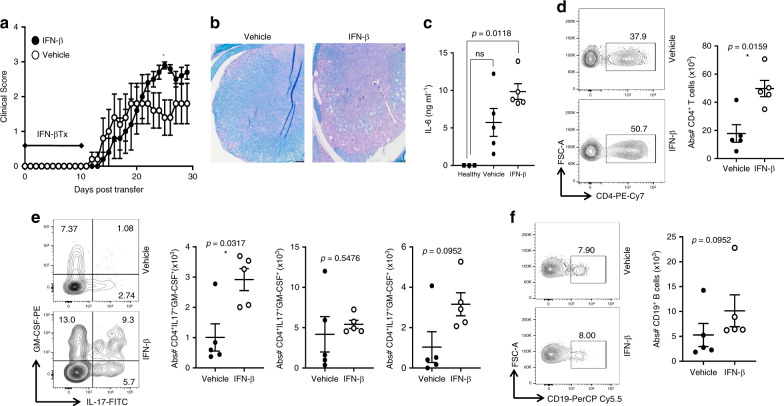
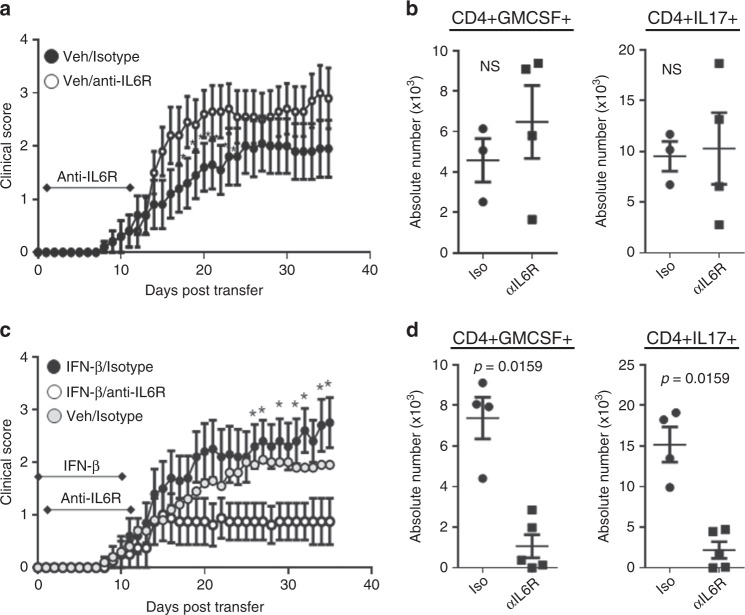
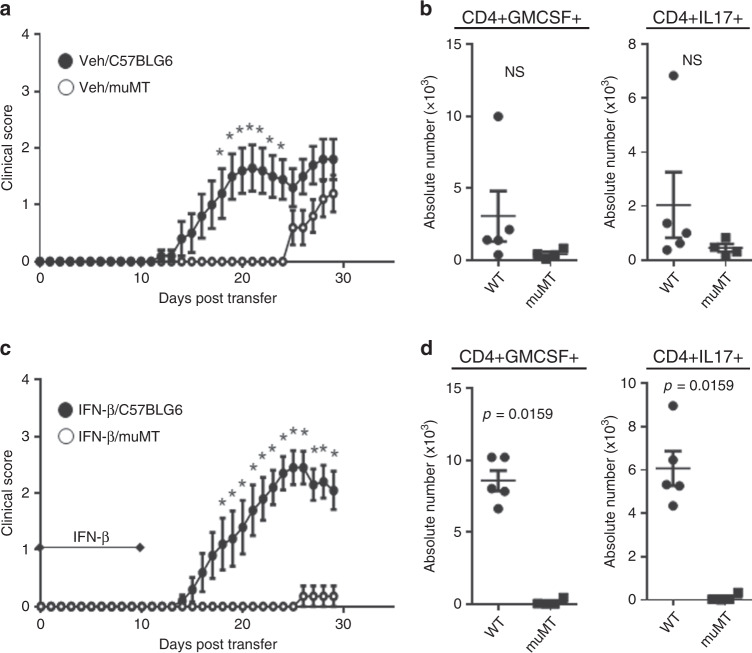
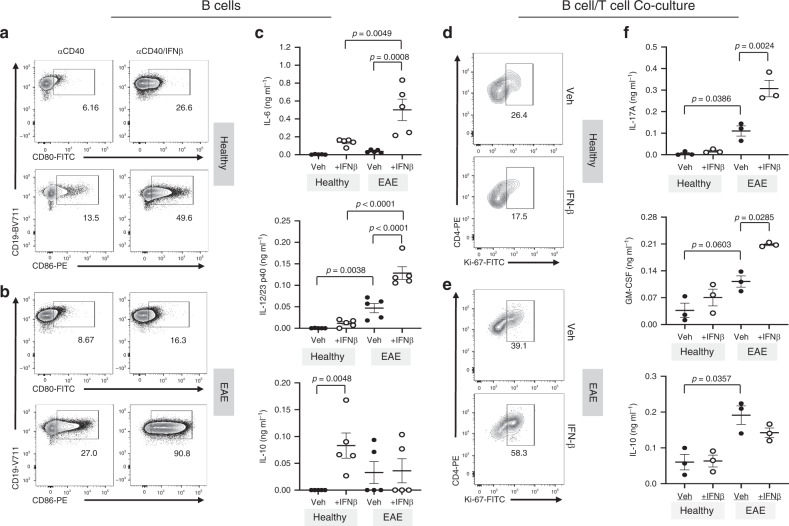
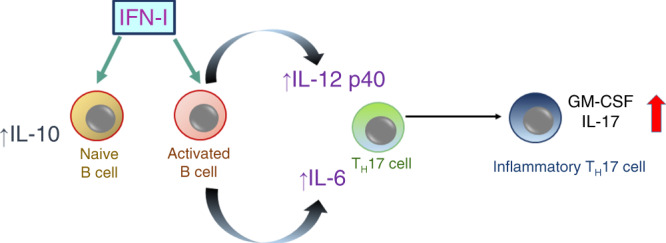
Type I interferon (IFN-I) and T helper 17 (TH17) drive pathology in neuromyelitis optica spectrum disorder (NMOSD) and in TH17-induced experimental autoimmune encephalomyelitis (TH17-EAE). This is paradoxical because the prevalent theory is that IFN-I inhibits TH17 function. Here we report that a cascade involving IFN-I, IL-6 and B cells promotes TH17-mediated neuro-autoimmunity. In NMOSD, elevated IFN-I signatures, IL-6 and IL-17 are associated with severe disability. Furthermore, IL-6 and IL-17 levels are lower in patients on anti-CD20 therapy. In mice, IFN-I elevates IL-6 and exacerbates TH17-EAE. Strikingly, IL-6 blockade attenuates disease only in mice treated with IFN-I. By contrast, B-cell-deficiency attenuates TH17-EAE in the presence or absence of IFN-I treatment. Finally, IFN-I stimulates B cells to produce IL-6 to drive pathogenic TH17 differentiation in vitro. Our data thus provide an explanation for the paradox surrounding IFN-I and TH17 in neuro-autoimmunity, and may have utility in predicting therapeutic response in NMOSD.
Overview
The claims and statistics of this paper haven’t been checked yet.
Free: it reads the open-access text and checks the first 5 claims that cite a source we can check. Create a free account to check every claim.
Integrity signals
Registry
Cites
Statistics
Figures
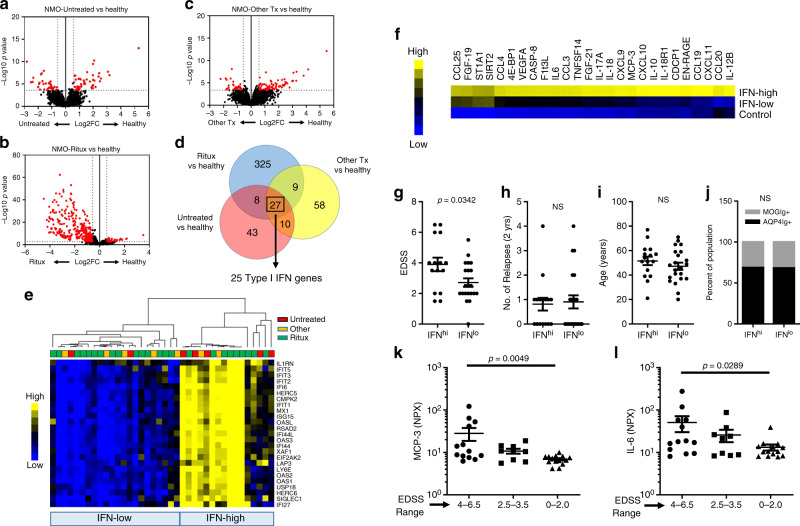
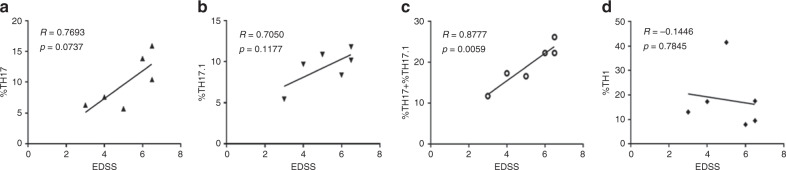
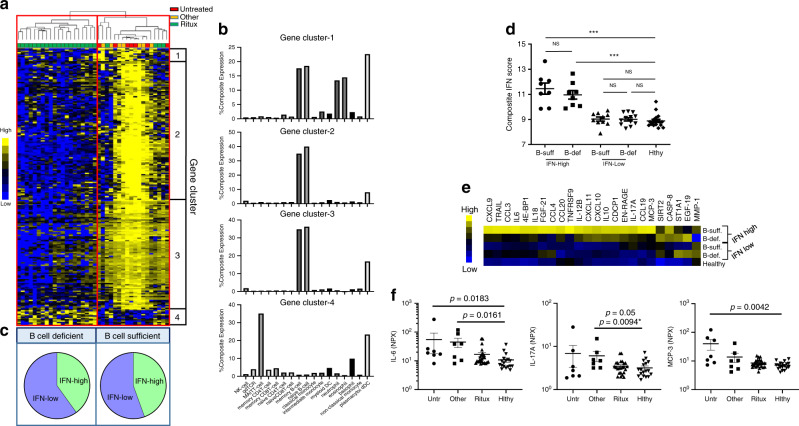
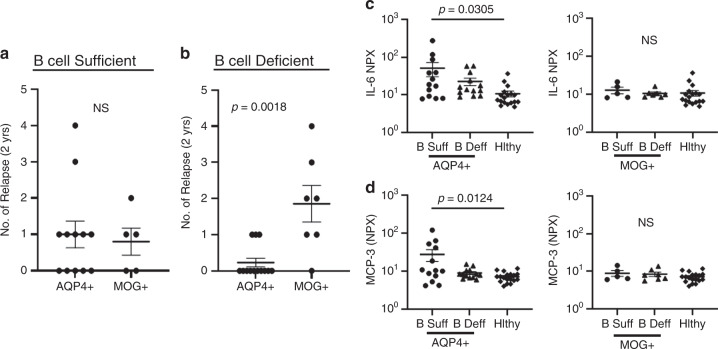
Verification
Claims the paper makes
The claims and statistics of this paper haven’t been checked yet.
Free: it reads the open-access text and checks the first 5 claims that cite a source we can check. Create a free account to check every claim.
Claims other papers make about this one
Each is checked against this paper’s own text: does it say what the citing paper says it does?
The source backs part of the claim, not all of it — or backs it for a different population, condition or comparison.
In the citing paper
“Previous studies in AIDs, including NMOSD, mainly identify T cells with pro-inflammatory or B cell helper function. 16,24-31”
From Autoantigen-specific CD4+ T cells acquire an exhausted phenotype and persist in human antigen-specific autoimmune diseases (2024) · cites this paper as [27]
Experimental — accuracy not yet measuredThe source backs part of the claim, not all of it — or backs it for a different population, condition or comparison.
In the citing paper
“Auto-Th cells with a pro-inflammatory or B cell helper profile are seen in AID patients, 16,24-31 but comprehensive ex vivo analyses are missing.”
From Autoantigen-specific CD4+ T cells acquire an exhausted phenotype and persist in human antigen-specific autoimmune diseases (2024) · cites this paper as [27]
Experimental — accuracy not yet measuredThe cited source says what the claim attributes to it.
In the citing paper
“In any case, the long-term persistence of (re-)activatable autoantigen-specific ThEx cells in patients in remission may well explain the less-than-perfect treatment efficacy of steroid-sparing agents, 64-67 depletion of CD19/CD20 memory B cells, 68,69 as well as exacerbation of disease by b -IFN. 27,70”
From Autoantigen-specific CD4+ T cells acquire an exhausted phenotype and persist in human antigen-specific autoimmune diseases (2024) · cites this paper as [27]
Self-check
Percentages, sums and reported differences re-computed from the paper’s own numbers.
The self-check needs the paper’s full text.
Citations
Cites
Moderated estimation of fold change and dispersion for RNA-seq data with DESeq2
Love, M. I., Huber, W., & Anders, S. (2014) · Genome Biology · doi:10.1186/s13059-014-0550-8 · Cited by 95,106
Trimmomatic: a flexible trimmer for Illumina sequence data
Bolger, A. M., Lohse, M., & Usadel, B. (2014) · Bioinformatics · doi:10.1093/bioinformatics/btu170 · Cited by 65,548
The Sequence Alignment/Map format and SAMtools
Li, H., Handsaker, B., Wysoker, A., Fennell, T., Ruan, J., Homer, N., Marth, G., Abecasis, G., Durbin, R., & 1000 Genome Project Data Processing Subgroup (2009) · Bioinformatics · doi:10.1093/bioinformatics/btp352 · Cited by 62,041
featureCounts: an efficient general purpose program for assigning sequence reads to genomic features
Liao, Y., Smyth, G. K., & Shi, W. (2014) · Bioinformatics · doi:10.1093/bioinformatics/btt656 · Cited by 27,219
HISAT: a fast spliced aligner with low memory requirements
Kim, D., Langmead, B., & Salzberg, S. L. (2015) · Nature Methods · doi:10.1038/nmeth.3317 · Cited by 24,112
Cluster analysis and display of genome-wide expression patterns
Eisen, M. B., Spellman, P. T., Brown, P. O., & Botstein, D. (1998) · Proceedings of the National Academy of Sciences · doi:10.1073/pnas.95.25.14863 · Cited by 16,184
International consensus diagnostic criteria for neuromyelitis optica spectrum disorders
Wingerchuk, D. M., Banwell, B., Bennett, J. L., Cabre, P., Carroll, W., Chitnis, T., de Seze, J., Fujihara, K., Greenberg, B., Jacob, A., et al. (2015) · Neurology · doi:10.1212/wnl.0000000000001729 · Cited by 4,649
Veldhoen, M., Hocking, R. J., Atkins, C. J., Locksley, R. M., & Stockinger, B. (2006) · Immunity · doi:10.1016/j.immuni.2006.01.001 · Cited by 3,605
Virus interference. I. the interferon
Isaacs, A., & Lindenmann, J. (1957) · Proceedings of the Royal Society of London. Series B - Biological Sciences · doi:10.1098/rspb.1957.0048 · Cited by 3,451
A subcellular map of the human proteome
Thul, P. J., Åkesson, L., Wiking, M., Mahdessian, D., Geladaki, A., Ait Blal, H., Alm, T., Asplund, A., Björk, L., Breckels, L. M., et al. (2017) · Science · doi:10.1126/science.aal3321 · Cited by 2,813
Cited by
Aliyu, M., Zohora, F. T., Anka, A. U., Ali, K., Maleknia, S., Saffarioun, M., & Azizi, G. (2022) · International Immunopharmacology · doi:10.1016/j.intimp.2022.109130 · Cited by 401
Ringelstein, M., Ayzenberg, I., Lindenblatt, G., Fischer, K., Gahlen, A., Novi, G., Hayward-Könnecke, H., Schippling, S., Rommer, P. S., Kornek, B., et al. (2022) · Neurology Neuroimmunology & Neuroinflammation · doi:10.1212/nxi.0000000000001100 · Cited by 160
Self-citationNMOSD and MOGAD: an evolving disease spectrum
Uzawa, A., Oertel, F. C., Mori, M., Paul, F., & Kuwabara, S. (2024) · Nature Reviews Neurology · doi:10.1038/s41582-024-01014-1 · Cited by 154
“Type I interferon has been shown to stimulate IL-6 and IL-12p40 expression from activated B cells, leading to the proliferation of inflammatory T H 17 cells in AQP4-IgG-seropositive NMOSD 106 .”
Self-citationAsseyer, S., Cooper, G., & Paul, F. (2020) · Frontiers in Neurology · doi:10.3389/fneur.2020.00778 · Cited by 100
Self-citationRen, A. H., Diamandis, E. P., & Kulasingam, V. (2021) · Molecular & Cellular Proteomics · doi:10.1016/j.mcpro.2021.100155 · Cited by 89
Saggau, C., Bacher, P., Esser, D., Rasa, M., Meise, S., Mohr, N., Kohlstedt, N., Hutloff, A., Schacht, S.-S., Dargvainiene, J., et al. (2024) · Immunity · doi:10.1016/j.immuni.2024.08.005 · Cited by 79
Self-citationYamamura, T., Weinshenker, B. G., Yeaman, M. R., Seze, J. D., Patti, F., Lobo, P., von Büdingen, H.-C., Kou, X., Weber, K., & Greenberg, B. M. (2022) · Multiple Sclerosis and Related Disorders · doi:10.1016/j.msard.2022.104025 · Cited by 70
Shi, M., Chu, F., Jin, T., & Zhu, J. (2022) · CNS Neuroscience & Therapeutics · doi:10.1111/cns.13836 · Cited by 56
Review of approved NMO therapies based on mechanism of action, efficacy and long-term effects
Brod, S. A. (2020) · Multiple Sclerosis and Related Disorders · doi:10.1016/j.msard.2020.102538 · Cited by 53
“plement-independent cell-mediated cytotoxicity from NK and cytotoxic T cells (Ratelade and Verkman, 2012) and IFN I and Th17 cells (Agasing et al., 2020).”
Schindler, P., Aktaş, O., Ringelstein, M., Wildemann, B., Jarius, S., Paul, F., & Ruprecht, K. (2022) · Expert Review of Clinical Immunology · doi:10.1080/1744666x.2023.2148657 · Cited by 45
Self-citationChen, W., Yu, H., Hao, Y., Liu, W., Wang, R., Huang, Y., Wu, J., Feng, L., Guan, Y., Huang, L., et al. (2023) · ACS Nano · doi:10.1021/acsnano.3c03765 · Cited by 44
Murata, H., Kinoshita, M., Yasumizu, Y., Motooka, D., Beppu, S., Shiraishi, N., Sugiyama, Y., Kihara, K., Tada, S., Koda, T., et al. (2022) · Neurology Neuroimmunology & Neuroinflammation · doi:10.1212/nxi.0000000000001149 · Cited by 44
“On the other hand, in patients with SLE, anifrolumab, a monoclonal antibody against IFN-1 receptor subunit 1, is currently undergoing clinical trials and has shown efficacy against the placebo.32 Our results suggest that the regulation of IFN-1 and, potentially, NETosis and cfDNA may be applicable to the treatment of…”
BackgroundMethodInfluentialMaciak, K., Pietrasik, S., Dziedzic, A., Redlicka, J., Saluk, J., Bijak, M., Wlodarczyk, T. W., & Miller, E. D. (2021) · International Journal of Molecular Sciences · doi:10.3390/ijms22168946 · Cited by 37
“They suggested that IFN-I stimulates the production of IL-6 by B cells, subsequently driving the pathogenic Th17 differentiation in vitro [82].”
BackgroundInebilizumab: A Review in Neuromyelitis Optica Spectrum Disorder
Nie, T., & Blair, H. A. (2022) · CNS Drugs · doi:10.1007/s40263-022-00949-7 · Cited by 43
“Some B cells also produce IL-6, which is elevated in patients with NMOSD [4].”
BackgroundType I interferon‐activated microglia are critical for neuromyelitis optica pathology
Włodarczyk, A., Khorooshi, R., Marczynska, J., Holtman, I. R., Burton, M., Jensen, K. N., Blaabjerg, M., Meyer, M., Thomassen, M., Eggen, B. J. L., et al. (2020) · Glia · doi:10.1002/glia.23938 · Cited by 35
“Like the other NMO spectrum disorders (NMOSD), NMO most often manifests with optic neuritis and transverse myelitis (Trebst et al., 2014).”
BackgroundContentti, E. C., Delgado‐García, G. R., Criniti, J. M., López, P. A., Pettinicchi, J. P., Cristiano, E., Míguez, J., Díaz, E. P. C., Pucha, M. O. Á., Zambrano, J. E. M., et al. (2021) · Frontiers in Immunology · doi:10.3389/fimmu.2021.628024 · Cited by 35
“Neutrophilto-lymphocyte ratio (NLR) represents a combination of two of these markers, and is superior to other WBC-derived parameters, due to its stability (3, 4).”
BackgroundOstendorf, L., Dittert, P., Biesen, R., Duchow, A. S., Stiglbauer, V., Ruprecht, K., Bellmann–Strobl, J., Seelow, D., Stenzel, W., Niesner, R. A., et al. (2021) · Scientific Reports · doi:10.1038/s41598-021-89786-0 · Cited by 36
Self-citationLi, J., Xiao, Y., Zhang, Y., Li, S., Zhao, M., Xia, T., & Meng, H. (2023) · ACS Nano · doi:10.1021/acsnano.2c10388 · Cited by 32
Arellano, G., Loda, E., Chen, Y., Neef, T., Cogswell, A. C., Primer, G., Joy, G., Kaschke, K., Wills, S., Podojil, J. R., et al. (2023) · Brain · doi:10.1093/brain/awad373 · Cited by 32
Bauer, A., Rudzki, D., Berek, K., Dinoto, A., Lechner, C., Wendel, E., Hegen, H., Deisenhammer, F., Berger, T., Höftberger, R., et al. (2022) · Frontiers in Immunology · doi:10.3389/fimmu.2022.1037812 · Cited by 30
“especially IL-6 was of particular interest, as it promotes Th17 cell differentiation (12), the production of AQP4-targeting antibodies in NMOSD by plasmablasts (13) and, thus, increases blood-brain barrier permeability and facilitates CNS inflammation (14).”
BackgroundTreatment and Relapse Prevention of Typical and Atypical Optic Neuritis
Saitakis, G., & Chwalisz, B. K. (2022) · International Journal of Molecular Sciences · doi:10.3390/ijms23179769 · Cited by 37
“More specifically, IFN-β increases the relapse rate and promotes severe exacerbations, possibly by increasing the production of BAFF and IL-17 [133]—Figure 7.”
BackgroundNakajima, A., Yanagimura, F., Saji, E., Shimizu, H., Toyoshima, Y., Yanagawa, K., Arakawa, M., Hokari, M., Yokoseki, A., Wakasugi, T., et al. (2024) · Acta Neuropathologica · doi:10.1007/s00401-024-02725-x · Cited by 29
“We therefore hypothesize that type I IFN, secreted in a coordinated manner with activated/ netting neutrophils, induces B cells to drive the pathogenic T H 17/T C 17 signature in situ via production of IL-6 in the extremely early stages of acute NMOSD attacks [1].”
InfluentialLiu, K., Hoover, A. R., Krawic, J. R., DeVette, C. I., Sun, X.-H., Hildebrand, W. H., Lang, M. L., Axtell, R. C., & Chen, W. R. (2021) · Theranostics · doi:10.7150/thno.65773 · Cited by 20
“Strikingly, this immunological cascade was reported to drive inflammation in certain autoimmune diseases that have increased expression of type I IFN inducible genes [45-47].”
BackgroundSelf-citationMyelin-reactive B cells exacerbate CD4+ T cell-driven CNS autoimmunity in an IL-23-dependent manner
Fazazi, M. R., Doss, P. M. I. A., Pereira, R., Fudge, N., Regmi, A., Joly-Beauparlant, C., Akbar, I., Yeola, A. P., Mailhot, B., Baillargeon, J., et al. (2024) · Nature Communications · doi:10.1038/s41467-024-49259-0 · Cited by 21
Liu, Y., Zhang, H., Zhang, T., Yuan, M., Chen, D., Zeng, P., Huang, Z., Jia, D., Yang, G., Shi, F., et al. (2021) · Frontiers in Immunology · doi:10.3389/fimmu.2021.703931 · Cited by 23
Nishiyama, S., Wright, A. E., Lotan, I., Mikami, T., Paul, F., Aoki, M., & Levy, M. (2022) · Journal of Neuroinflammation · doi:10.1186/s12974-022-02661-1 · Cited by 20
“The immunopathogenesis of neuromyelitis optica spectrum disorder (NMOSD) has been shown to involve many components of the adaptive immune system including T cells (1, 2), B cells (3), monocytes (4), as well as the innate immune system, including complement (5), granulocytes (6), plasmablasts (7), and antibodies (8).”
Self-citationEmerging drugs for the treatment of neuromyelitis optica
Duchow, A. S., Chien, C., Paul, F., & Bellmann–Strobl, J. (2020) · Expert Opinion on Emerging Drugs · doi:10.1080/14728214.2020.1803828 · Cited by 20
Self-citationSatralizumab in the Treatment of Neuromyelitis Optica Spectrum Disorder
Duchow, A. S., & Bellmann–Strobl, J. (2020) · Neurodegenerative Disease Management · doi:10.2217/nmt-2020-0046 · Cited by 20
Yu, M., Shi, Z., Zhang, W., Zhu, L. D., Tang, S., Chen, H., Wang, X., Du, Q., Li, S. C., Zhang, Y., et al. (2023) · Neurology Neuroimmunology & Neuroinflammation · doi:10.1212/nxi.0000000000200134 · Cited by 19
“9,39 To investigate the changes in cellular levels of patients with NMOSD, we compared the di ff erences in scRNA-seq results between whole blood samples from 1 patient with NMOSD and 3 HCs from the Gene Expression Omnibus database.”
BackgroundResultLiu, C., Shi, M., Zhu, M., Chu, F., Jin, T., & Zhu, J. (2021) · Autoimmunity Reviews · doi:10.1016/j.autrev.2021.102921 · Cited by 21
Nishiyama, S., Seok, J. M., Wright, A. E., Lotan, I., Mikami, T., Drosu, N. C., Bobrowski‐Khoury, N., Anderson, M. R., Bilodeau, P., Schindler, P., et al. (2024) · Scientific Reports · doi:10.1038/s41598-024-53661-5 · Cited by 19
“Production of a pathogenic antibody by plasmablasts implies that one or more mature AQP4-autoreactive B cell clones is stimulated by an AQP4-autoreactive T cell 4 , and that break in tolerance leads to such autoimmunity against AQP4.”
BackgroundSelf-citationPain Symptoms in Optic Neuritis
Yang, X., Li, X., Lai, M., Wang, J., Tan, S., & Chan, H. H. (2022) · Frontiers in Pain Research · doi:10.3389/fpain.2022.865032 · Cited by 22
Jiang, Y., Dai, S., Pang, R., Qin, L., Zhang, M., Liu, H., Wang, X., Zhang, J., Peng, G., Wang, Y., et al. (2024) · Frontiers in Immunology · doi:10.3389/fimmu.2024.1322125 · Cited by 20
“Compared with HCs, NMOSD patients had exhibited elevated levels of the in fl ammatory cytokines IFN-g , IL-6, IL-8 (Figure 5E; Supplementary Figure 24).”
BackgroundInfluentialYang, X., Zhangyi, Z., Yu, A., Zhou, Q., Xia, A., Qiu, J., Cai, M., Chu, X., Li, L., Feng, Z., et al. (2024) · CNS Neuroscience & Therapeutics · doi:10.1111/cns.14847 · Cited by 15
Yang, S., Zhang, C., Zhang, T.-X., Feng, B., Jia, D., Han, S., Li, T., Shen, Y., Yan, G., & Zhang, C. (2022) · Journal of Neurology · doi:10.1007/s00415-022-11364-9 · Cited by 15
“Thus, IL-6 signaling inhibition reduces the AQP4-ab level, blood–brain barrier permeability, and pro-inflammatory T helper 17 cell activity [15, 20, 21].”
BackgroundEmerging Roles of T Helper Cells in Non-Infectious Neuroinflammation: Savior or Sinner
Liu, W., Fan, M., Lu, W., Zhu, W., Meng, L., & Lu, S. (2022) · Frontiers in Immunology · doi:10.3389/fimmu.2022.872167 · Cited by 20
Xu, L., Xu, H., & Tang, C. (2024) · Neural Regeneration Research · doi:10.4103/nrr.nrr-d-23-01325 · Cited by 18
“Another early rodent model transplanted AQP4-specific T cells into naïve animals; however, this method was not able to induce the characteristic AQP4 loss unless AQP4-IgG was co-injected (Pohl et al., 2013; Jones et al., 2015; Zeka et al., 2016; Agasing et al., 2020; Shi et al., 2021).”
BackgroundChu, F., Shi, M., & Zhu, J. (2025) · Autoimmunity Reviews · doi:10.1016/j.autrev.2025.103761 · Cited by 19
Cui, C., Ruan, Y., & Qiu, W. (2020) · Journal of Clinical Neuroscience · doi:10.1016/j.jocn.2020.11.011 · Cited by 14
Gawde, S., Siebert, N., Ruprecht, K., Kumar, G., Ko, R. M., Massey, K., Guthridge, J. M., Mao‐Draayer, Y., Schindler, P., Hastermann, M., et al. (2024) · Neurology Neuroimmunology & Neuroinflammation · doi:10.1212/nxi.0000000000200268 · Cited by 13
“21 We also observed a signi fi cant increase in the B-cell/ T-follicular helper (TFH) chemokine CXCL13 in noBCD AQP4-NMOSD compared with noBCD MOGAD, noBCD SN-NMOSD, and healthy controls (eFigure 1C).”
BackgroundSelf-citationSerum molecular biomarkers in neuromyelitis optica and multiple sclerosis
Fu, C., Gao, C., Zhang, H., Mao, Y., Lu, J.-Q., Petritis, B. O., Huang, A., Yang, X., Long, Y., & Huang, R. (2022) · Multiple Sclerosis and Related Disorders · doi:10.1016/j.msard.2022.103527 · Cited by 13
Raya, A. A., & Abou-Raya, S. (2023) · International Journal of Rheumatic Diseases · doi:10.1111/1756-185x.14973 · Cited by 12
“1,4,7,9 9 Furthermore, AQP4-binding antibodies impair glutamate transport by down-regulating excitatory amino acid transporter 2 (EAAT2) which is primarily responsible for the clearance of extra - cellular glutamate to prevent neuronal excitotoxicity and hyper-excitability.”
Group 2 innate lymphoid cells suppress the pathology of neuromyelitis optica spectrum disorder
Kong, Y., Li, H., Wang, D., Gao, X., Yang, C., Li, M., Chang, T., & Liu, Q. (2021) · The FASEB Journal · doi:10.1096/fj.202100673r · Cited by 10
Can Immune Tolerance Be Re-established in Neuromyelitis Optica?
Loda, E., Arellano, G., Perez-Giraldo, G., Miller, S. D., & Balabanov, R. (2021) · Frontiers in Neurology · doi:10.3389/fneur.2021.783304 · Cited by 12
“Various studies also indicate that Th17 cells specific to AQP4 may also be involved in the disease pathogenesis (34, 35).”
BackgroundFong, C. C., Spencer, J., Howlett-Prieto, Q., Feng, X., & Reder, A. T. (2023) · Frontiers in Neurology · doi:10.3389/fneur.2023.1158487 · Cited by 12
A T H 17-intrinsic IL-1β–STAT5 axis drives steroid resistance in autoimmune neuroinflammation
Miller-Little, W. A., Chen, X., Salazar, V., Liu, C., Bulek, K., Zhou, J. Y., Xiao, L., Stüve, O., Stappenbeck, T. S., Dubyak, G., et al. (2024) · Science Immunology · doi:10.1126/sciimmunol.abq1558 · Cited by 12
Research and progress on biomarkers of neuromyelitis optica spectrum disorders
Wang, J., Liu, J., Li, R., & Wang, C. (2020) · Journal of Receptors and Signal Transduction · doi:10.1080/10799893.2020.1830109 · Cited by 11
“Since T cells are required for B cells to produce antibodies [48], researchers [49,50] detected T cell subsets and cytokines of NMOSD patients and found that in AQP4-IgG (þ) NMOSD Th17 cells can secrete more pro-inflammatory cytokines IL-6 and IL-21.”
BackgroundContribution of germline and somatic mutations to risk of neuromyelitis optica spectrum disorder
Yata, T., Sato, G. R., Ogawa, K., Naito, T., Sonehara, K., Saiki, R., Edahiro, R., Namba, S., Watanabe, M., Shirai, Y., et al. (2025) · Cell Genomics · doi:10.1016/j.xgen.2025.100776 · Cited by 12
“IFN-Ihasbothpro-andanti-inflammatoryfunctions,depending onthepathologiccontext 47,48 :interferonbeta,amember of IFN-I, stimulates B cells to produce inflammatory cytokines, 49 whilereduces differentiation of inflammatory T cells.”
Liu, L., Guo, K., & Yang, D. (2025) · Frontiers in Neurology · doi:10.3389/fneur.2025.1559172 · Cited by 11
Autoimmune-mediated astrocytopathy
Kinoshita, M., & Okuno, T. (2023) · Inflammation and Regeneration · doi:10.1186/s41232-023-00291-5 · Cited by 10
Xie, Z., Zhou, Q., Hu, J., He, L., Meng, H., Liu, X., Sun, G., Luo, Z., Feng, Y., Li, L., et al. (2024) · Journal of Translational Medicine · doi:10.1186/s12967-024-05801-8 · Cited by 10
“The proportion of IL-22-secreting CD4T cells and Th17 cells in the blood is also elevated in NMOSD [12, 13], and Th17 cells have a positive correlation with disease severity [14, 15].”
BackgroundMaria, Z., Turner, E., Agasing, A. M., Kumar, G., & Axtell, R. C. (2021) · International Journal of Molecular Sciences · doi:10.3390/ijms22062924 · Cited by 9
Self-citationZhang, X., Liu, X., Yu, H., Deng, B., Zhang, Y., & Chen, X. (2022) · Multiple Sclerosis and Related Disorders · doi:10.1016/j.msard.2022.103786 · Cited by 7
Pucchio, A., Krance, S. H., Pur, D. R., Bhatti, J., Bassi, A., Manichavagan, K., Brahmbhatt, S., Aggarwal, I., Singh, P., Virani, A., et al. (2023) · Graefe s Archive for Clinical and Experimental Ophthalmology · doi:10.1007/s00417-023-06100-6 · Cited by 11
Early involvement of peripherally derived monocytes in inflammation in an NMO-like mouse model
Kim, M., Kim, W., Cha, H., Kim, B., Kwon, Y. N., & Kim, S. M. (2024) · Scientific Reports · doi:10.1038/s41598-024-51759-4 · Cited by 10
Luo, J., Yu, J., Sui, Z., Zhong, Y., Zheng, Q., & Li, L. (2022) · International Immunopharmacology · doi:10.1016/j.intimp.2022.109004 · Cited by 7
Abboud, H., Steingo, B., Vargas, D. L., Patel, J. Y., Nealon, N., Willis, M. A., Mao‐Draayer, Y., Khaitov, D., Tsai, M., Kim, A. H., et al. (2025) · Journal of Neuroimmunology · doi:10.1016/j.jneuroim.2025.578585 · Cited by 9
“These cytokines can accelerate the maturation of antibody-producing plasmablasts and plasma cells before complete B-cell depletion is achieved, typically in the initial weeks following treatment (Agasing et al., 2020; Mears et al., 2023; Shi et al., 2021).”
Self-citationAgasing, A. M., Quinn, J. L., Kumar, G., & Axtell, R. C. (2021) · Cells · doi:10.3390/cells10082139 · Cited by 6
“We recently reported that in vivo administration of IFN-β exacerbated paralysis and elevated GM-CSF+ TH cells in CNS mice with TH17-EAE [15].”
BackgroundSelf-citationPathogenic Roles of Age‐Associated B Cells in Neuromyelitis Optica Spectrum Disorder
Amano, E., Sato, W., & Yamamura, T. (2025) · Clinical and Experimental Neuroimmunology · doi:10.1111/cen3.70012 · Cited by 4
Type I Interferon Signaling Augments Autoimmunity in Neuromyelitis Optica Spectrum Disorder
Zhang, T., Yang, X., Gao, X., Du, X., Lian, X., Shao, N., Liu, Y., Huang, Z., Jia, D., Lau, A. Y. L., et al. (2025) · Advanced Science · doi:10.1002/advs.202500942 · Cited by 5
Huang, W., Lin, R., Zeng, X., Wang, H., & Yan, J. (2025) · Frontiers in Immunology · doi:10.3389/fimmu.2025.1665688 · Cited by 5
Yamamura, R., Kinoshita, M., Yasumizu, Y., Yata, T., Kihara, K., Motooka, D., Shiraishi, N., Sugiyama, Y., Beppu, S., Murata, H., et al. (2025) · Frontiers in Immunology · doi:10.3389/fimmu.2025.1508977 · Cited by 3
Ho, M., Zhang, C., Coombes, B. J., Biernacka, J. M., Skime, M. K., Croarkin, P. E., Oesterle, T., Karpyak, V. M., Li, H., & Weinshilboum, R. M. (2025) · Journal of Proteomics and Genomics research · doi:10.14302/issn.2326-0793.jpgr-25-5405 · Cited by 3
Liu, J., Wang, G., Shi, M., Guo, R., Yuan, C., Wang, Y., Mehmood, A., Zhang, L., & Li, B. (2024) · Molecular Neurobiology · doi:10.1007/s12035-024-04588-5 · Cited by 8
“Moreover, the immunopathogenesis of NMOSD is related to numerous immune cells, such as T cells [57, 58], B cells [59], and monocytes [60].”
Case Report: Interferon-Alpha-Induced Neuromyelitis Optica Spectrum Disorder
Rao, J., Xu, N., Sun, J., Li, Y., & Fu, F. (2022) · Frontiers in Neurology · doi:10.3389/fneur.2022.872684 · Cited by 5
“The most widely used animal models of autoinflammatory demyelinating disorders are referred to as experimental autoimmune encephalomyelitis (EAE) and can be divided into two clusters according to the passive transfer of myelin-specific TH1 or TH17 cells (TH1-EAE and TH17-EAE, respectively) (39, 40).”
BackgroundInfluentialLi, X., Xue, B., Li, J., Xie, D., Pan, J., Zhu, L.-B., Tong, Q., Lin, J., Zhang, X., Xia, J., et al. (2025) · Annals of Clinical and Translational Neurology · doi:10.1002/acn3.70128 · Cited by 2
Zhao, H., Liu, Y., & Chen, X. (2026) · Journal of Neuroinflammation · doi:10.1186/s12974-026-03709-2 · Cited by 4
“Peripheral immune profiling reveals enhanced type I interferon signaling, skewing toward Th17 responses, and impaired Treg function [122, 123], high-lighting a profoundly proinflammatory immune milieu.”
Serum and CSF cytokine profile impact clinical phenotype in pediatric MOGAD
Ohashi, E., Kohyama, K., Mori, T., Matsuda, S., Nishida, H., Miyama, S., Hayakawa, I., Abe, Y., Yamada, N., Suzuki, M., et al. (2026) · Journal of Neuroinflammation · doi:10.1186/s12974-026-03795-2 · Cited by 2
“In humans, AQP4-positive NMOSD has been demonstrated to exhibit a substantial proportion of Th17 cells and elevated levels of IL-17, which play an important role in immune pathogenesis [24].”
Rejdak, K., & Papuć, E. (2021) · European Journal of Neurology · doi:10.1111/ene.15012 · Cited by 2
“IL- 6 and IL17 are associated with severe disability in NMOSD [14].”
BackgroundYamamoto, M., Okuno, T., Piao, J., Shimizu, M., Miyamoto, K., Nukui, T., Kinoshita, M., Koda, T., Haryuni, R. D., Mochizuki, H., et al. (2022) · Journal of Clinical Neuroscience · doi:10.1016/j.jocn.2022.12.005 · Cited by 3
Interleukin-6-induced neuroinflammation is exacerbated by subclinical levels of interferon-α
Songkhunawej, P., & Hofer, M. J. (2025) · Frontiers in Neuroscience · doi:10.3389/fnins.2025.1586400 · Cited by 2
MECHANISM OF RITUXIMAB IN THE TREATMENT OF NEUROMYELITIS OPTICA
YUAN, C. (2022) · FARMACIA · doi:10.31925/farmacia.2022.4.8 · Cited by 2
Allushi, B., Chlebicz, M., Kumar, G., Massey, K., Labombarde, J. G., Turner, S., Miller, R., Williams, A. P., Quinn, A., Kovats, S., et al. (2025) · The Journal of Immunology · doi:10.1093/jimmun/vkaf085 · Cited by 2
Self-citationTsaktanis, T., Ammon, L., Lößlein, L., Peter, A., Vandrey, O., Naumann, U. J., Behne, M. K., Cook, L. J., Levy, M., Yeaman, M. R., et al. (2025) · Neurology Neuroimmunology & Neuroinflammation · doi:10.1212/nxi.0000000000200457 · Cited by 1
Glial-mediated pathogenesis and intervention strategies in neuromyelitis optica spectrum disorder
Zhang, Z., Li, F., Li, X., & Wei, H. (2025) · Multiple Sclerosis and Related Disorders · doi:10.1016/j.msard.2025.106666 · Cited by 2
Brandl, S., Yu, Q., Hagenbuchner, J., Endmayr, V., Höftberger, R., Bradl, M., & Reindl, M. (2025) · Scientific Reports · doi:10.1038/s41598-025-27335-9 · Cited by 1
Abboud, H., Steingo, B., Vargas, D. L., Patel, J. Y., Willis, M. A., Mao‐Draayer, Y., Khaitov, D., Avila-Ornelas, J., Subei, A. M., Reed, C., et al. (2025) · Multiple Sclerosis Journal - Experimental Translational and Clinical · doi:10.1177/20552173251386895 · Cited by 3
Self-citationDissecting NMOSD pathogenesis through animal models: a mechanism-oriented systems perspective
Qiu, S., Zhang, Y., Wang, X., Wang, D., Zang, X., Yang, Q., Qv, Y., Wang, S., & Han, X. (2026) · Frontiers in Immunology · doi:10.3389/fimmu.2026.1793855 · Cited by 2
“Agasing and colleagues identi fi ed an IFN-high subgroup in NMOSD and proposed that IFN-I promotes pathogenic Th17 differentiation by inducing IL-6 production in B cells; consistent with this, in Th17-driven EAE, IFN-b can upregulate IL-6 and exacerbate disease (91).”
Genetic Insights Into Neuromyelitis Optica Spectrum Disorder
Murata, H., & Kinoshita, M. (2025) · Clinical and Experimental Neuroimmunology · doi:10.1111/cen3.70024 · Cited by 1
Serum Molecular Biomarkers in Neuromyelitis Optical and Multiple SclerosisPreprint
Fu, C., Gao, C., Zhang, H., Mao, Y., Lu, J.-Q., Petritis, B. O., Huang, A., Yang, X., Long, Y., & Huang, R. (2021) · Research Square · doi:10.21203/rs.3.rs-181367/v1
Other omics approaches to the study of rare diseases
Gatta, G. D. (2021) · Elsevier eBooks · doi:10.1016/b978-0-12-820140-4.00008-9
Li, S., Fu, J., Xu, F., Yu, L., Yu, Q., & Yu, N. (2022) · Turkish Journal of Biochemistry · doi:10.1515/tjb-2022-0061
Nishiyama, S., Wright, A. E., Lotan, I., Mikami, T., Paul, F., Aoki, M., & Levy, M. (2022) · Research Square · doi:10.21203/rs.3.rs-2143780/v1
Self-citationWei, Q., Su, M., Zhao, C., Wang, M., Yang, S., Wu, Z., Liu, F., Liu, N., Cui, L., Zhao, Y., et al. (2025) · Journal of Proteome Research · doi:10.1021/acs.jproteome.5c00448
Characteristics of peripheral blood lymphocyte subsets in patients with neuromyelitis opticaPreprint
Shi, Q. W. (2025) · Research Square · doi:10.21203/rs.3.rs-7291609/v1
NMOSD : Adaptive Immunity Revisited
Akatani, R., & Chihara, N. (2025) · Clinical and Experimental Neuroimmunology · doi:10.1111/cen3.70030 · Cited by 1
Nishiyama, S., Wright, A. E., Lotan, I., Mikami, T., Paul, F., Aoki, M., & Levy, M. (2023) · Figshare · doi:10.6084/m9.figshare.22605020
Self-citationNishiyama, S., Wright, A. E., Lotan, I., Mikami, T., Paul, F., Aoki, M., & Levy, M. (2023) · Figshare · doi:10.6084/m9.figshare.22605023
Self-citationNishiyama, S., Wright, A. E., Lotan, I., Mikami, T., Paul, F., Aoki, M., & Levy, M. (2023) · Figshare · doi:10.6084/m9.figshare.22605017
Self-citationNishiyama, S., Wright, A. E., Lotan, I., Mikami, T., Paul, F., Aoki, M., & Levy, M. (2023) · Figshare · doi:10.6084/m9.figshare.22605014
Self-citationRemnant cholesterol and lipid ratios predict the relapse of neuromyelitis optica spectrum disorder
Wang, Z., Huang, T., Cui, B., Cheng, J., Pang, X., Zhang, M., Guo, J., & Meng, H. (2026) · Lipids in Health and Disease · doi:10.1186/s12944-025-02846-6 · Cited by 1
“This process pro‑ motes the activation of the IFN‑1 signalling pathway and is associated with greater neurological impairment and severe disability in patients with NMOSD [52, 53].”
Ikeguchi, R., Shimizu, Y., & Todo, K. (2026) · Internal Medicine · doi:10.2169/internalmedicine.6772-25
Sanabria‐Castro, A., Reyes, J. D. V., Madrigal‐Gamboa, V., & Chin-Cheng, R. (2026) · Neuroglia · doi:10.3390/neuroglia7020012
“In addition, this cytokine promotes the survival of plasmablasts, a B-cell subpopulation capable of producing and secreting autoantibodies, including AQP4-AB [29,54,223].”
Integrative Transcriptomics Uncovers IFN-β Signature and IFITM3 as Putative Molecular Mediator in MS
Maglione, A., Rosso, R., Rolla, S., Virgilio, E., & Clerico, M. (2026) · International Journal of Molecular Sciences · doi:10.3390/ijms27125329
“…and molecular biomarkers may help predict responsiveness to IFN-β therapy across different phenotypes of MS. Importantly, accumulating evidence indicates that endogenous interferon signaling is intrinsically altered in MS, with patients exhibiting reduced baseline serum IFN levels [27,28].”
Bach, E., Breschi, A., Wang, Y., Carroll, M. K., Luk, W., Han, A., Short, S., Cimermančič, P., Drake, K., Cook, L. J., et al. (2026) · Neurology Neuroimmunology & Neuroinflammation · doi:10.1212/nxi.0000000000200611
“44,45 While these studies di ff er from ours in objectives, designs, proteomic measurement technologies, and analytical approaches, this growing body of work will contribute to a more comprehensive understanding of NMOSD disease.”
Biomarkers for myelin oligodendrocyte glycoprotein-associated disease: recent advances and future
Zheng, Q., Wen, M., Zheng, X., Wen, L., Cheng, R., Gao, Y., Yuan, C., & Shang, P. (2026) · Frontiers in Immunology · doi:10.3389/fimmu.2026.1807565
“The excessive release of IL-6 may lead to the excessive activation of T helper 17 (Th17) cells, thereby increasing the permeability of the BBB and promoting the in fl ammatory response in MOGAD (106, 107).”
Li, L., Shao, Y., Cai, H., & Li, Y. (2026) · Frontiers in Immunology · doi:10.3389/fimmu.2026.1957990
“These primed cells subsequently breach the blood – brain barrier (BBB) and in fi ltrate the CNS parenchyma, thus amplifying neuroin fl ammation through proin fl ammatory cytokine networks, complement activation, and the recruitment of monocytes and neutrophils (4 – 6).”
Hyun, D., 명준형, Park, J.-W., Leow, W. L., Cho, Y., Lee, H., Lee, H., Lee, J., Kim, B.-J., & Hong, S. (2026) · Frontiers in Immunology · doi:10.3389/fimmu.2026.1899823
Metadata
- Authors
- Agasing, A. M., Wu, Q., Khatri, B., Borisow, N., Ruprecht, K., Brandt, A. U., Gawde, S., Kumar, G., Quinn, J. L., Ko, R. M., Mao-Draayer, Y., Lessard, C. J., Paul, F., & Axtell, R. C.
- Affiliations
- Oklahoma Medical Research Foundation (US)
- University of Michigan (US)
- Max Delbrück Center (DE)
- Stiftung Charité (DE)
- University of California, Irvine (US)
- Corresponding author
- Axtell, Robert C.
- ORCID
- Venue
- Nature Communications
- Published
- 2020-06-05
- Volume
- 11
- Issue
- 1
- Pages
- 2856-2856
- ISSN
- 2041-1723 (ISSN-L)
- PMC
- PMC7275086
- OpenAlex
- W3033198321
- Semantic Scholar
- 174248a6ca73ddfef6dc6c912195e6bc50d7102b
- Cited by
- 98
- References
- 57
- Citations by year
- 2026: 11 · 2025: 20 · 2024: 13 · 2023: 12 · 2022: 20 · 2021: 15 · 2020: 7
- FWCI
- 8.87
- Type
- journal article
- Language
- en
- Open access
- gold
- doi.org
- Licence
- cc-by
- creativecommons.org/licenses/by/4.0 (tdm)
- creativecommons.org/licenses/by/4.0 (vor)
- Locations
- Nature Communications (publishedVersion, cc-by)
- PubMed Central (publishedVersion, cc-by)
- PubMed (publishedVersion)
- MDC Repository (Max-Delbrueck-Center for Molecular Medicine) (acceptedVersion)
- RePEc: Research Papers in Economics (submittedVersion)
- DOAJ (DOAJ: Directory of Open Access Journals) (submittedVersion, cc-by-sa)
- Funders
- National Multiple Sclerosis Society (RG-1602-07722)
- Multiple Sclerosis Society
- Deutsche Forschungsgemeinschaft
- Bundesministerium für Bildung und Forschung
- National Institutes of Health (RG-1602-07722)
- National Eye Institute (R01EY027346)
- National Institute of Allergy and Infectious Diseases (R01AI137047)
- Topics
- Health Sciences › Medicine › Clinical Neurology › Multiple Sclerosis Research Studies
- Life Sciences › Immunology and Microbiology › Immunology › Psoriasis: Treatment and Pathogenesis
- Life Sciences › Immunology and Microbiology › Immunology › interferon and immune responses
- Keywords
- neuromyelitis optica spectrum disorder, type I interferon, Th17 cells, interleukin-6, IL-17, B cells, anti-CD20 therapy, experimental autoimmune encephalomyelitis, Th17 cell differentiation, disability
- MeSH terms
- Adult, Animals, B-Lymphocytes, Encephalomyelitis, Autoimmune, Experimental, Female, Humans, Interferon Type I, Male, Middle Aged, Neuromyelitis Optica, Autoimmunity, Interleukin-6, Interleukin-17, Gene Expression Profiling, Proteomics, Mice, Th17 Cells
About these checks
Registry, retraction, Cites and statistics results are computed, not judged, with one exception: a printed reference that no index lists is read once by a model before it counts as a citation error. Claims are extracted by a model and kept only when their quote appears verbatim in the text; each cited source is then checked, with a model’s help, for whether it says what the claim relies on. Those verdicts can be wrong — read the claim’s quote and the cited source before relying on one.
Statistics and arithmetic are recomputed, not judged.
Confidence bands are shown only for fields calibrated on our annotated test set. None is calibrated yet, so no band is shown.
What counts as a claim ›How we measure confidence ›How we check this ›
Are you an author, or do you see a problem with this page? Request a review
Data sources
Bibliographic data: Semantic Scholar, OpenAlex, Crossref.
Contains information from the Semantic Scholar Academic Graph Datasets, made available under the ODC Attribution License (ODC-BY 1.0).
Semantic Scholar’s data is described in: Kinney, R., et al. (2023). The Semantic Scholar Open Data Platform. arXiv:2301.10140.
