

Transcriptomics and proteomics reveal a cooperation between interferon and T-helper 17 cells in neuromyelitis optica
Open accessThe DOI matches its Crossref record; 57 of the 57 references it cites were found in a registry or an index.
Abstract
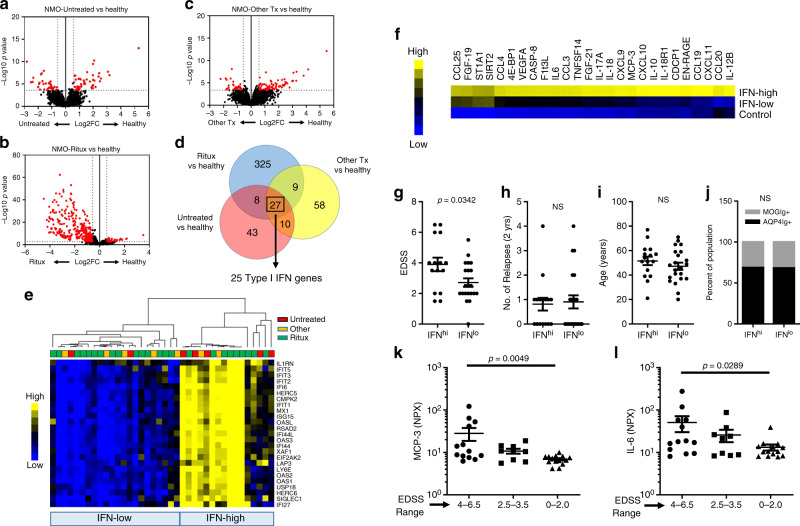
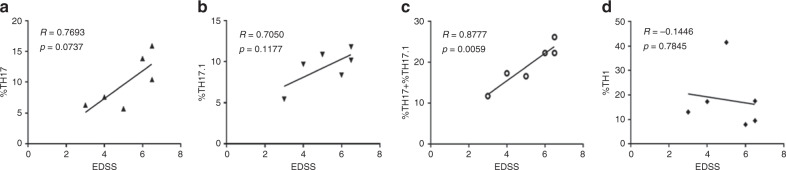
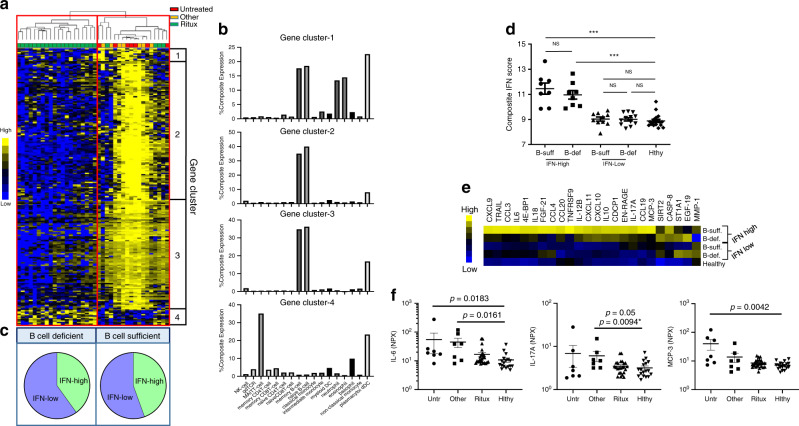
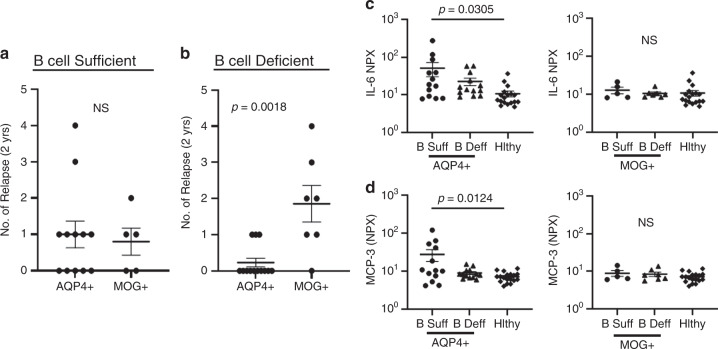
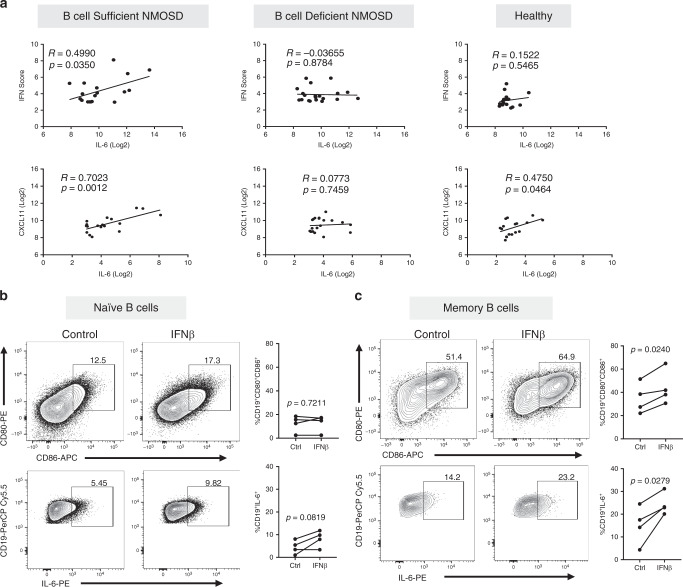
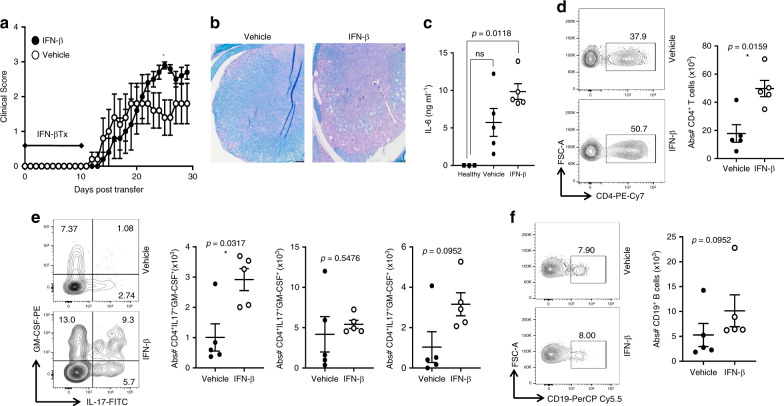
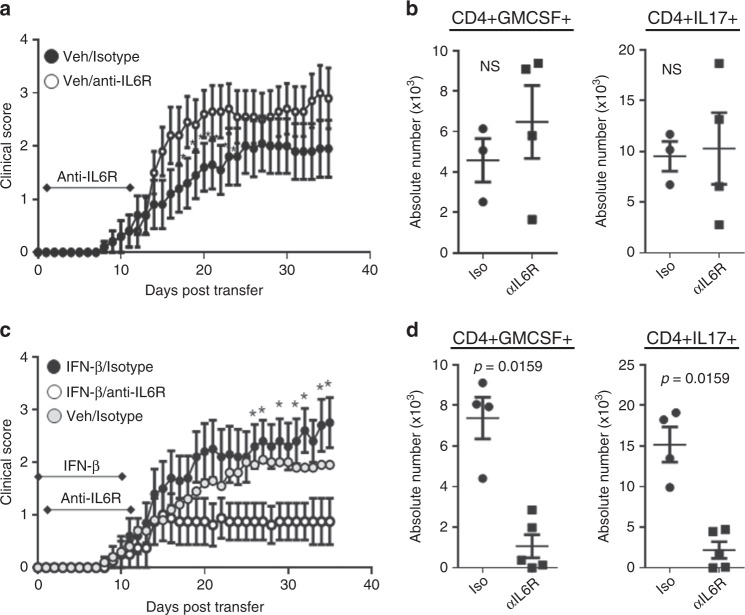
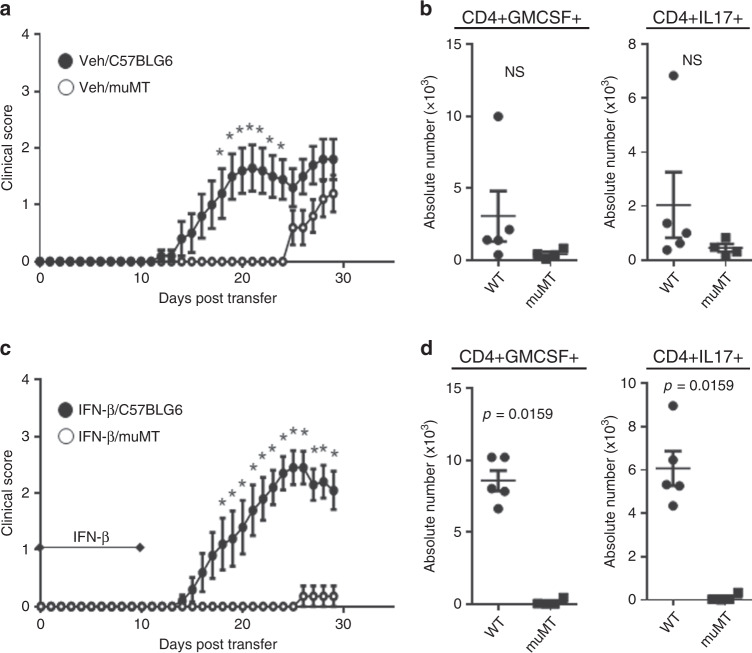
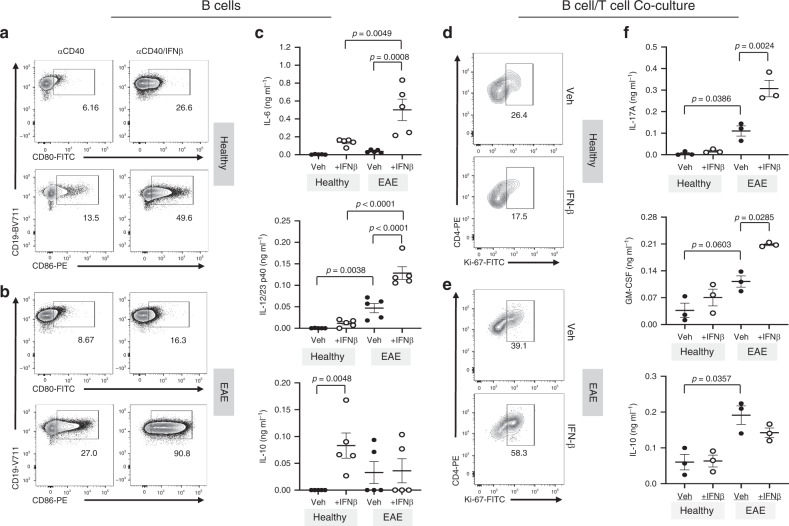
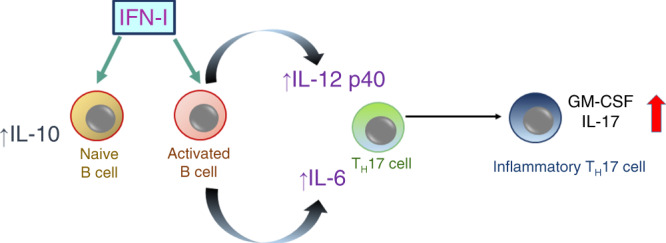
Type I interferon (IFN-I) and T helper 17 (TH17) drive pathology in neuromyelitis optica spectrum disorder (NMOSD) and in TH17-induced experimental autoimmune encephalomyelitis (TH17-EAE). This is paradoxical because the prevalent theory is that IFN-I inhibits TH17 function. Here we report that a cascade involving IFN-I, IL-6 and B cells promotes TH17-mediated neuro-autoimmunity. In NMOSD, elevated IFN-I signatures, IL-6 and IL-17 are associated with severe disability. Furthermore, IL-6 and IL-17 levels are lower in patients on anti-CD20 therapy. In mice, IFN-I elevates IL-6 and exacerbates TH17-EAE. Strikingly, IL-6 blockade attenuates disease only in mice treated with IFN-I. By contrast, B-cell-deficiency attenuates TH17-EAE in the presence or absence of IFN-I treatment. Finally, IFN-I stimulates B cells to produce IL-6 to drive pathogenic TH17 differentiation in vitro. Our data thus provide an explanation for the paradox surrounding IFN-I and TH17 in neuro-autoimmunity, and may have utility in predicting therapeutic response in NMOSD.
Overview
The claims and statistics of this paper haven’t been checked yet.
Free: it reads the open-access text and checks the first 5 claims that cite a source we can check. Create a free account to check every claim.
Integrity signals
Registry
Cites
Statistics
Figures
Verification
Claims the paper makes
The claims and statistics of this paper haven’t been checked yet.
Free: it reads the open-access text and checks the first 5 claims that cite a source we can check. Create a free account to check every claim.
Claims other papers make about this one
Each is checked against this paper’s own text: does it say what the citing paper says it does?
The source backs part of the claim, not all of it — or backs it for a different population, condition or comparison.
In the citing paper
“Previous studies in AIDs, including NMOSD, mainly identify T cells with pro-inflammatory or B cell helper function. 16,24-31”
From Autoantigen-specific CD4+ T cells acquire an exhausted phenotype and persist in human antigen-specific autoimmune diseases (2024) · cites this paper as [27]
Experimental — accuracy not yet measuredThe source backs part of the claim, not all of it — or backs it for a different population, condition or comparison.
In the citing paper
“Auto-Th cells with a pro-inflammatory or B cell helper profile are seen in AID patients, 16,24-31 but comprehensive ex vivo analyses are missing.”
From Autoantigen-specific CD4+ T cells acquire an exhausted phenotype and persist in human antigen-specific autoimmune diseases (2024) · cites this paper as [27]
Experimental — accuracy not yet measuredThe cited source says what the claim attributes to it.
In the citing paper
“In any case, the long-term persistence of (re-)activatable autoantigen-specific ThEx cells in patients in remission may well explain the less-than-perfect treatment efficacy of steroid-sparing agents, 64-67 depletion of CD19/CD20 memory B cells, 68,69 as well as exacerbation of disease by b -IFN. 27,70”
From Autoantigen-specific CD4+ T cells acquire an exhausted phenotype and persist in human antigen-specific autoimmune diseases (2024) · cites this paper as [27]
Self-check
Percentages, sums and reported differences re-computed from the paper’s own numbers.
The self-check needs the paper’s full text.
Citations
Cites
Moderated estimation of fold change and dispersion for RNA-seq data with DESeq2
Love, M. I., Huber, W., & Anders, S. (2014) · Genome Biology · doi:10.1186/s13059-014-0550-8 · Cited by 95,106
Trimmomatic: a flexible trimmer for Illumina sequence data
Bolger, A. M., Lohse, M., & Usadel, B. (2014) · Bioinformatics · doi:10.1093/bioinformatics/btu170 · Cited by 65,548
The Sequence Alignment/Map format and SAMtools
Li, H., Handsaker, B., Wysoker, A., Fennell, T., Ruan, J., Homer, N., Marth, G., Abecasis, G., Durbin, R., & 1000 Genome Project Data Processing Subgroup (2009) · Bioinformatics · doi:10.1093/bioinformatics/btp352 · Cited by 62,041
featureCounts: an efficient general purpose program for assigning sequence reads to genomic features
Liao, Y., Smyth, G. K., & Shi, W. (2014) · Bioinformatics · doi:10.1093/bioinformatics/btt656 · Cited by 27,219
HISAT: a fast spliced aligner with low memory requirements
Kim, D., Langmead, B., & Salzberg, S. L. (2015) · Nature Methods · doi:10.1038/nmeth.3317 · Cited by 24,112
Cluster analysis and display of genome-wide expression patterns
Eisen, M. B., Spellman, P. T., Brown, P. O., & Botstein, D. (1998) · Proceedings of the National Academy of Sciences · doi:10.1073/pnas.95.25.14863 · Cited by 16,184
International consensus diagnostic criteria for neuromyelitis optica spectrum disorders
Wingerchuk, D. M., Banwell, B., Bennett, J. L., Cabre, P., Carroll, W., Chitnis, T., de Seze, J., Fujihara, K., Greenberg, B., Jacob, A., et al. (2015) · Neurology · doi:10.1212/wnl.0000000000001729 · Cited by 4,649
Veldhoen, M., Hocking, R. J., Atkins, C. J., Locksley, R. M., & Stockinger, B. (2006) · Immunity · doi:10.1016/j.immuni.2006.01.001 · Cited by 3,605
Virus interference. I. the interferon
Isaacs, A., & Lindenmann, J. (1957) · Proceedings of the Royal Society of London. Series B - Biological Sciences · doi:10.1098/rspb.1957.0048 · Cited by 3,451
A subcellular map of the human proteome
Thul, P. J., Åkesson, L., Wiking, M., Mahdessian, D., Geladaki, A., Ait Blal, H., Alm, T., Asplund, A., Björk, L., Breckels, L. M., et al. (2017) · Science · doi:10.1126/science.aal3321 · Cited by 2,813
RSeQC: quality control of RNA-seq experiments
Wang, L., Wang, S., & Li, W. (2012) · Bioinformatics · doi:10.1093/bioinformatics/bts356 · Cited by 2,788
Paty, D. W., Li, D. K. B., the UBC MS/MRI Study Group, & the IFNB Multiple Sclerosis Study Group (1993) · Neurology · doi:10.1212/wnl.43.4.662 · Cited by 1,967
Ruiter, A. M., Meilof, J. F., Somanje-Bolweg, R. R. J., van Gorsel, E., & Kalkers, N. F. (2017) · Case Reports in Neurology · doi:10.1159/000455942 · Cited by 1,762
arrayQualityMetrics—a bioconductor package for quality assessment of microarray data
Kauffmann, A., Gentleman, R., & Huber, W. (2009) · Bioinformatics · doi:10.1093/bioinformatics/btn647 · Cited by 946
in cooperation with the Neuromyelitis Optica Study Group (NEMOS), Jarius, S., Ruprecht, K., Kleiter, I., Borisow, N., Asgari, N., Pitarokoili, K., Pache, F., Stich, O., Beume, L.-A., et al. (2016) · Journal of Neuroinflammation · doi:10.1186/s12974-016-0718-0 · Cited by 899
Self-citationINTERFEROME v2.0: an updated database of annotated interferon-regulated genes
Rusinova, I., Forster, S., Yu, S., Kannan, A., Masse, M., Cumming, H., Chapman, R., & Hertzog, P. J. (2012) · Nucleic Acids Research · doi:10.1093/nar/gks1215 · Cited by 878
Bettelli, E., Pagany, M., Weiner, H. L., Linington, C., Sobel, R. A., & Kuchroo, V. K. (2003) · The Journal of Experimental Medicine · doi:10.1084/jem.20021603 · Cited by 825
Trial of Satralizumab in Neuromyelitis Optica Spectrum Disorder
Yamamura, T., Kleiter, I., Fujihara, K., Palace, J., Greenberg, B., Zakrzewska-Pniewska, B., Patti, F., Tsai, C.-P., Saiz, A., Yamazaki, H., et al. (2019) · New England Journal of Medicine · doi:10.1056/nejmoa1901747 · Cited by 664
B cell depletion therapy ameliorates autoimmune disease through ablation of IL-6–producing B cells
Barr, T. A., Shen, P., Brown, S., Lampropoulou, V., Roch, T., Lawrie, S., Fan, B., O’Connor, R. A., Anderton, S. M., Bar-Or, A., et al. (2012) · Journal of Experimental Medicine · doi:10.1084/jem.20111675 · Cited by 649
Differential regulation of central nervous system autoimmunity by TH1 and TH17 cells
Stromnes, I. M., Cerretti, L. M., Liggitt, D., Harris, R. A., & Goverman, J. M. (2008) · Nature Medicine · doi:10.1038/nm1715 · Cited by 630
Isaacs, A., & Lindenmann, J. (2015) · The Journal of Immunology · doi:10.1093/jimmunol/195.5.1911 · Cited by 602
Kroenke, M. A., Carlson, T. J., Andjelkovic, A. V., & Segal, B. M. (2008) · The Journal of Experimental Medicine · doi:10.1084/jem.20080159 · Cited by 579
Proinflammatory T helper type 17 cells are effective B-cell helpers
Mitsdoerffer, M., Lee, Y., Jäger, A., Kim, H.-J., Korn, T., Kolls, J. K., Cantor, H., Bettelli, E., & Kuchroo, V. K. (2010) · Proceedings of the National Academy of Sciences · doi:10.1073/pnas.1009234107 · Cited by 534
Axtell, R. C., de Jong, B. A., Boniface, K., van der Voort, L. F., Bhat, R., De Sarno, P., Naves, R., Han, M., Zhong, F., Castellanos, J. G., et al. (2010) · Nature Medicine · doi:10.1038/nm.2110 · Cited by 534
Self-citationMader, S., Gredler, V., Schanda, K., Rostasy, K., Dujmovic, I., Pfaller, K., Lutterotti, A., Jarius, S., Di Pauli, F., Kuenz, B., et al. (2011) · Journal of Neuroinflammation · doi:10.1186/1742-2094-8-184 · Cited by 449
Molnarfi, N., Schulze-Topphoff, U., Weber, M. S., Patarroyo, J. C., Prod’homme, T., Varrin-Doyer, M., Shetty, A., Linington, C., Slavin, A. J., Hidalgo, J., et al. (2013) · Journal of Experimental Medicine · doi:10.1084/jem.20130699 · Cited by 418
Trans-presentation of IL-6 by dendritic cells is required for the priming of pathogenic TH17 cells
Heink, S., Yogev, N., Garbers, C., Herwerth, M., Aly, L., Gasperi, C., Husterer, V., Croxford, A. L., Möller-Hackbarth, K., Bartsch, H. S., et al. (2017) · Nature Immunology · doi:10.1038/ni.3632 · Cited by 386
T‐helper 17 cells expand in multiple sclerosis and are inhibited by interferon‐β
Durelli, L., Conti, L., Clerico, M., Boselli, D., Contessa, G., Ripellino, P., Ferrero, B., Eid, P., & Novelli, F. (2009) · Annals of Neurology · doi:10.1002/ana.21652 · Cited by 375
Serada, S., Fujimoto, M., Mihara, M., Koike, N., Ohsugi, Y., Nomura, S., Yoshida, H., Nishikawa, T., Terabe, F., Ohkawara, T., et al. (2008) · Proceedings of the National Academy of Sciences · doi:10.1073/pnas.0802218105 · Cited by 349
Varrin‐Doyer, M., Spencer, C. M., Schulze‐Topphoff, U., Nelson, P. A., Stroud, R. M., C. Cree, B. A., & Zamvil, S. S. (2012) · Annals of Neurology · doi:10.1002/ana.23651 · Cited by 341
Palace, J., Leite, M. I., Nairne, A., & Vincent, A. (2010) · Archives of Neurology · doi:10.1001/archneurol.2010.188 · Cited by 322
Pfeifle, R., Rothe, T., Ipseiz, N., Scherer, H. U., Culemann, S., Harre, U., Ackermann, J. A., Seefried, M., Kleyer, A., Uderhardt, S., et al. (2017) · Nature Immunology · doi:10.1038/ni.3579 · Cited by 321
Zamvil, S. S., & Slavin, A. J. (2015) · Neurology Neuroimmunology & Neuroinflammation · doi:10.1212/nxi.0000000000000062 · Cited by 276
IFN-β Inhibits Human Th17 Cell Differentiation
Ramgolam, V. S., Sha, Y., Jin, J., Zhang, X., & Markovic-Plese, S. (2009) · The Journal of Immunology · doi:10.4049/jimmunol.0803227 · Cited by 229
Diagnosis and Treatment of NMO Spectrum Disorder and MOG-Encephalomyelitis
Borisow, N., Mori, M., Kuwabara, S., Scheel, M., & Paul, F. (2018) · Frontiers in Neurology · doi:10.3389/fneur.2018.00888 · Cited by 227
Self-citationMatsushita, T., Tateishi, T., Isobe, N., Yonekawa, T., Yamasaki, R., Matsuse, D., Murai, H., & Kira, J.-I. (2013) · PLoS ONE · doi:10.1371/journal.pone.0061835 · Cited by 219
Jarius, S., Probst, C., Borowski, K., Franciotta, D., Wildemann, B., Stoecker, W., & Wandinger, K. P. (2010) · Journal of the Neurological Sciences · doi:10.1016/j.jns.2010.01.002 · Cited by 213
IFNβ-1b may severely exacerbate Japanese optic-spinal MS in neuromyelitis optica spectrum
Shimizu, J., Hatanaka, Y., Hasegawa, M., Iwata, A., Sugimoto, I., Date, H., Goto, J., Shimizu, T., Takatsu, M., Sakurai, Y., et al. (2010) · Neurology · doi:10.1212/wnl.0b013e3181f8832e · Cited by 188
MOG antibody disease: A review of MOG antibody seropositive neuromyelitis optica spectrum disorder
Narayan, R., Simpson, A., Fritsche, K., Salama, S., Pardo, S., Mealy, M., Paul, F., & Levy, M. (2018) · Multiple Sclerosis and Related Disorders · doi:10.1016/j.msard.2018.07.025 · Cited by 187
Self-citationDurozard, P., Rico, A., Boutiere, C., Maarouf, A., Lacroix, R., Cointe, S., Fritz, S., Brunet, C., Pelletier, J., Marignier, R., et al. (2020) · Annals of Neurology · doi:10.1002/ana.25648 · Cited by 168
Multiple Sklerose: Neu entdeckter Signalmechanismus macht T-Zellen pathogen
(2017) · Fortschritte der Neurologie · Psychiatrie · doi:10.1055/s-0042-123476 · Cited by 155
Okuda, Y., Sakoda, S., Fujimura, H., Saeki, Y., Kishimoto, T., & Yanagihara, T. (1999) · Journal of Neuroimmunology · doi:10.1016/s0165-5728(99)00139-3 · Cited by 148
Kothur, K., Wienholt, L. A., Tantsis, E. M., Earl, J. W., Bandodkar, S., Prelog, K., Tea, F., Ramanathan, S., Brilot, F., & Dale, R. C. (2016) · PLoS ONE · doi:10.1371/journal.pone.0149411 · Cited by 112
Uzawa, A., Mori, M., Hayakawa, S., Masuda, S., & Kuwabara, S. (2010) · European Journal of Neurology · doi:10.1111/j.1468-1331.2009.02897.x · Cited by 101
El-Sherbiny, Y. M., Psarras, A., Yusof, M. Y. M., Hensor, E. M. A., Tooze, R. M., Doody, G. M., Mohamed, A. A. A., McGonagle, D., Wittmann, M., Emery, P., et al. (2018) · Scientific Reports · doi:10.1038/s41598-018-24198-1 · Cited by 99
Parker Harp, C. R., Archambault, A. S., Sim, J., Ferris, S. T., Mikesell, R. J., Koni, P. A., Shimoda, M., Linington, C., Russell, J. H., & Wu, G. F. (2015) · The Journal of Immunology · doi:10.4049/jimmunol.1402236 · Cited by 97
Herges, K., de Jong, B. A., Kolkowitz, I., Dunn, C., Mandelbaum, G., Ko, R. M., Maini, A., Han, M. H., Killestein, J., Polman, C., et al. (2012) · Multiple Sclerosis Journal · doi:10.1177/1352458512440060 · Cited by 87
Self-citationSagan, S. A., Winger, R. C., Cruz-Herranz, A., Nelson, P. A., Hagberg, S., Miller, C. N., Spencer, C. M., Ho, P. P., Bennett, J. L., Levy, M., et al. (2016) · Proceedings of the National Academy of Sciences · doi:10.1073/pnas.1617859114 · Cited by 79
Role of TFH Cells in Promoting T Helper 17-Induced Neuroinflammation
Quinn, J. L., Kumar, G., Agasing, A., Ko, R. M., & Axtell, R. C. (2018) · Frontiers in Immunology · doi:10.3389/fimmu.2018.00382 · Cited by 79
Self-citationType I interferon signature is high in lupus and neuromyelitis optica but low in multiple sclerosis
Feng, X., Reder, N. P., Yanamandala, M., Hill, A., Franek, B. S., Niewold, T. B., Reder, A. T., & Javed, A. (2012) · Journal of the Neurological Sciences · doi:10.1016/j.jns.2011.09.032 · Cited by 72
Janus‐like effects of type I interferon in autoimmune diseases
Axtell, R. C., & Raman, C. (2012) · Immunological Reviews · doi:10.1111/j.1600-065x.2012.01131.x · Cited by 47
Self-citationCytokine profiles show heterogeneity of interferon-β response in multiple sclerosis patients
Hegen, H., Adrianto, I., Lessard, C. J., Millonig, A., Bertolotto, A., Comabella, M., Giovannoni, G., Guger, M., Hoelzl, M., Khalil, M., et al. (2016) · Neurology Neuroimmunology & Neuroinflammation · doi:10.1212/nxi.0000000000000202 · Cited by 46
Self-citationInvestigational drugs in development to prevent neuromyelitis optica relapses
Paul, F., Murphy, O., Pardo, S., & Levy, M. (2018) · Expert Opinion on Investigational Drugs · doi:10.1080/13543784.2018.1443077 · Cited by 46
Self-citationShaygannejad, V., Fayyazi, E., Badihian, S., Mirmosayyeb, O., Manouchehri, N., Ashtari, F., & Asgari, N. (2019) · Journal of Neurology · doi:10.1007/s00415-019-09180-9 · Cited by 40
Interferons in the Treatment of Solid Tumors
Moschos, S. J., Varanasi, S. M., & Kirkwood, J. M. (2005) · Springer eBooks · doi:10.1007/0-387-24361-5_9 · Cited by 38
Interferon Alpha Association with Neuromyelitis Optica
Asgari, N., Voss, A., Steenstrup, T., Kyvik, K. O., Stenager, E., & Lillevang, S. T. (2013) · Clinical and Developmental Immunology · doi:10.1155/2013/713519 · Cited by 22
Immunoregulatory Effects of Interferon-β in Suppression of Th17 cells
Pennell, L. M., & Fish, E. N. (2014) · Journal of Interferon & Cytokine Research · doi:10.1089/jir.2013.0088 · Cited by 15
Cited by
Aliyu, M., Zohora, F. T., Anka, A. U., Ali, K., Maleknia, S., Saffarioun, M., & Azizi, G. (2022) · International Immunopharmacology · doi:10.1016/j.intimp.2022.109130 · Cited by 401
Ringelstein, M., Ayzenberg, I., Lindenblatt, G., Fischer, K., Gahlen, A., Novi, G., Hayward-Könnecke, H., Schippling, S., Rommer, P. S., Kornek, B., et al. (2022) · Neurology Neuroimmunology & Neuroinflammation · doi:10.1212/nxi.0000000000001100 · Cited by 160
Self-citationNMOSD and MOGAD: an evolving disease spectrum
Uzawa, A., Oertel, F. C., Mori, M., Paul, F., & Kuwabara, S. (2024) · Nature Reviews Neurology · doi:10.1038/s41582-024-01014-1 · Cited by 154
“Type I interferon has been shown to stimulate IL-6 and IL-12p40 expression from activated B cells, leading to the proliferation of inflammatory T H 17 cells in AQP4-IgG-seropositive NMOSD 106 .”
Self-citationAsseyer, S., Cooper, G., & Paul, F. (2020) · Frontiers in Neurology · doi:10.3389/fneur.2020.00778 · Cited by 100
Self-citationRen, A. H., Diamandis, E. P., & Kulasingam, V. (2021) · Molecular & Cellular Proteomics · doi:10.1016/j.mcpro.2021.100155 · Cited by 89
Metadata
- Authors
- Agasing, A. M., Wu, Q., Khatri, B., Borisow, N., Ruprecht, K., Brandt, A. U., Gawde, S., Kumar, G., Quinn, J. L., Ko, R. M., Mao-Draayer, Y., Lessard, C. J., Paul, F., & Axtell, R. C.
- Affiliations
- Oklahoma Medical Research Foundation (US)
- University of Michigan (US)
- Max Delbrück Center (DE)
- Stiftung Charité (DE)
- University of California, Irvine (US)
- Corresponding author
- Axtell, Robert C.
- ORCID
- Venue
- Nature Communications
- Published
- 2020-06-05
- Volume
- 11
- Issue
- 1
- Pages
- 2856-2856
- ISSN
- 2041-1723 (ISSN-L)
- PMC
- PMC7275086
- OpenAlex
- W3033198321
- Cited by
- 98
- References
- 57
- Citations by year
- 2026: 11 · 2025: 20 · 2024: 13 · 2023: 12 · 2022: 20 · 2021: 15 · 2020: 7
- FWCI
- 8.87
- Type
- journal article
- Language
- en
- Open access
- gold
- doi.org
- Licence
- cc-by
- creativecommons.org/licenses/by/4.0 (tdm)
- creativecommons.org/licenses/by/4.0 (vor)
- Locations
- Nature Communications (publishedVersion, cc-by)
- PubMed Central (publishedVersion, cc-by)
- PubMed (publishedVersion)
- MDC Repository (Max-Delbrueck-Center for Molecular Medicine) (acceptedVersion)
- RePEc: Research Papers in Economics (submittedVersion)
- DOAJ (DOAJ: Directory of Open Access Journals) (submittedVersion, cc-by-sa)
- Funders
- National Multiple Sclerosis Society (RG-1602-07722)
- Multiple Sclerosis Society
- Deutsche Forschungsgemeinschaft
- Bundesministerium für Bildung und Forschung
- National Institutes of Health (RG-1602-07722)
- National Eye Institute (R01EY027346)
- National Institute of Allergy and Infectious Diseases (R01AI137047)
- Topics
- Health Sciences › Medicine › Clinical Neurology › Multiple Sclerosis Research Studies
- Life Sciences › Immunology and Microbiology › Immunology › Psoriasis: Treatment and Pathogenesis
- Life Sciences › Immunology and Microbiology › Immunology › interferon and immune responses
- Keywords
- neuromyelitis optica spectrum disorder, type I interferon, Th17 cells, interleukin-6, IL-17, B cells, anti-CD20 therapy, experimental autoimmune encephalomyelitis, Th17 cell differentiation, disability
- MeSH terms
- Adult, Animals, B-Lymphocytes, Encephalomyelitis, Autoimmune, Experimental, Female, Humans, Interferon Type I, Male, Middle Aged, Neuromyelitis Optica, Autoimmunity, Interleukin-6, Interleukin-17, Gene Expression Profiling, Proteomics, Mice, Th17 Cells
About these checks
Registry, retraction, Cites and statistics results are computed, not judged, with one exception: a printed reference that no index lists is read once by a model before it counts as a citation error. Claims are extracted by a model and kept only when their quote appears verbatim in the text; each cited source is then checked, with a model’s help, for whether it says what the claim relies on. Those verdicts can be wrong — read the claim’s quote and the cited source before relying on one.
Statistics and arithmetic are recomputed, not judged.
Confidence bands are shown only for fields calibrated on our annotated test set. None is calibrated yet, so no band is shown.
What counts as a claim ›How we measure confidence ›How we check this ›
Are you an author, or do you see a problem with this page? Request a review
Data sources
Bibliographic data: Semantic Scholar, OpenAlex, Crossref.
Contains information from the Semantic Scholar Academic Graph Datasets, made available under the ODC Attribution License (ODC-BY 1.0).
Semantic Scholar’s data is described in: Kinney, R., et al. (2023). The Semantic Scholar Open Data Platform. arXiv:2301.10140.
