

Breast cancer colonization by Fusobacterium nucleatum accelerates tumor growth and metastatic progression
Open accessThe DOI matches its Crossref record; 55 of the 57 references it cites were found in a registry or an index.
Abstract
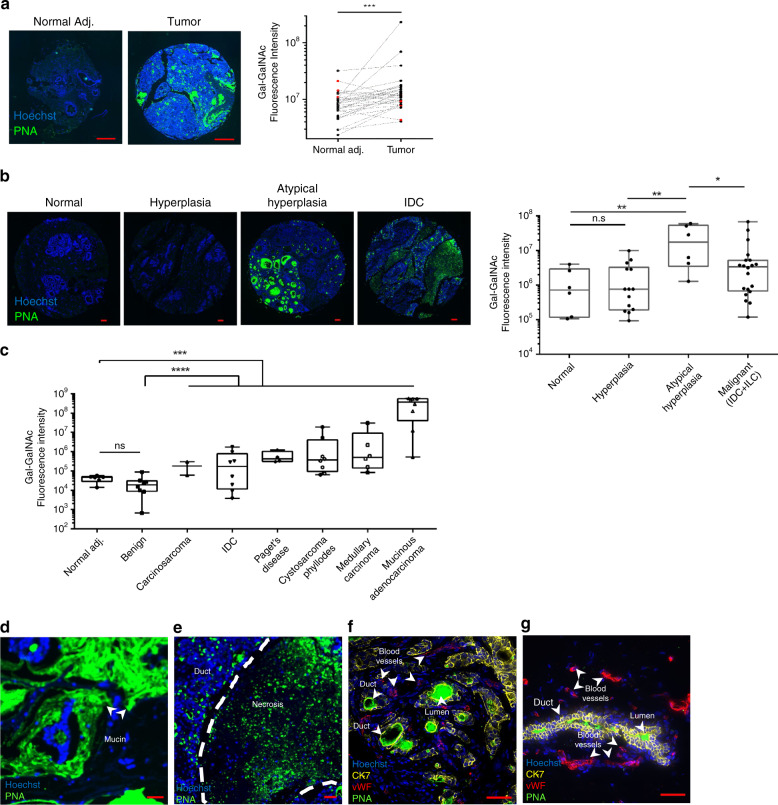
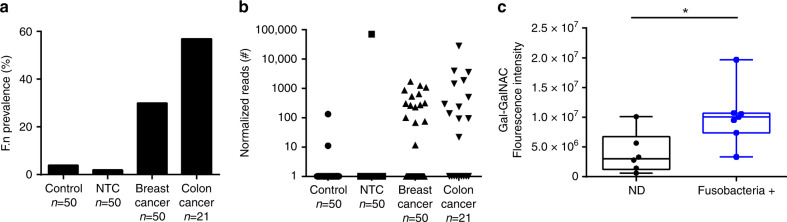
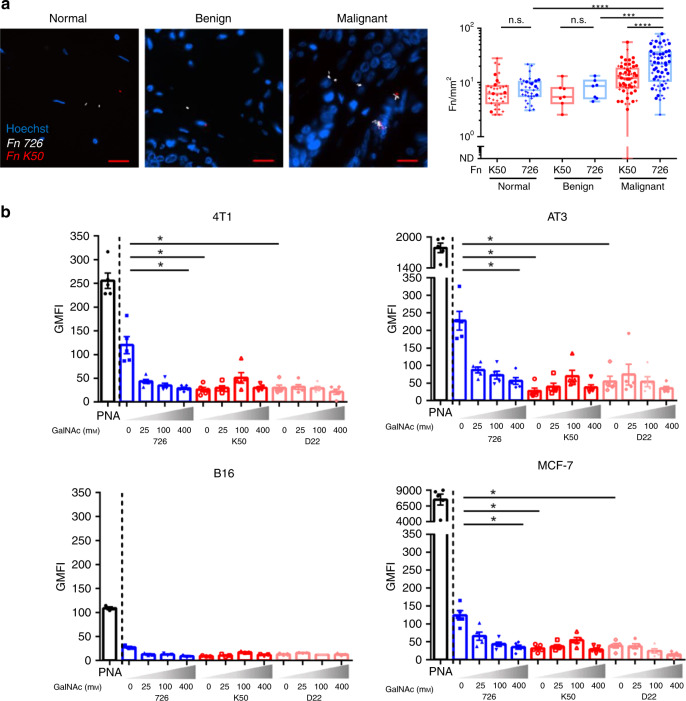
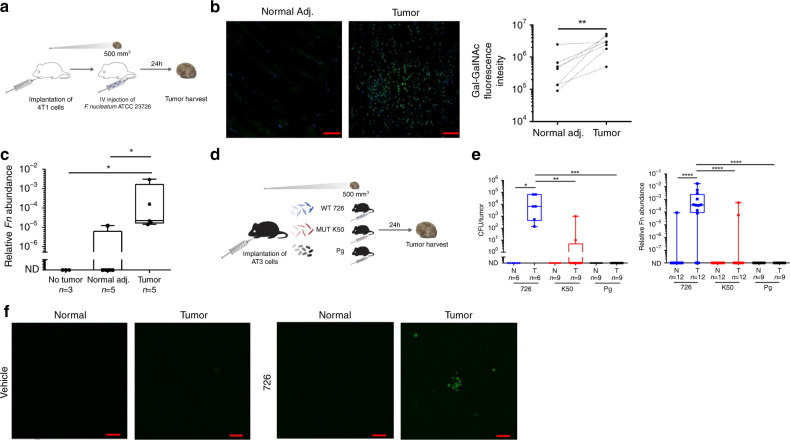
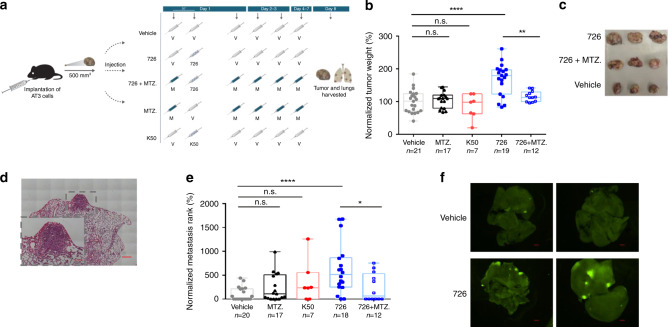
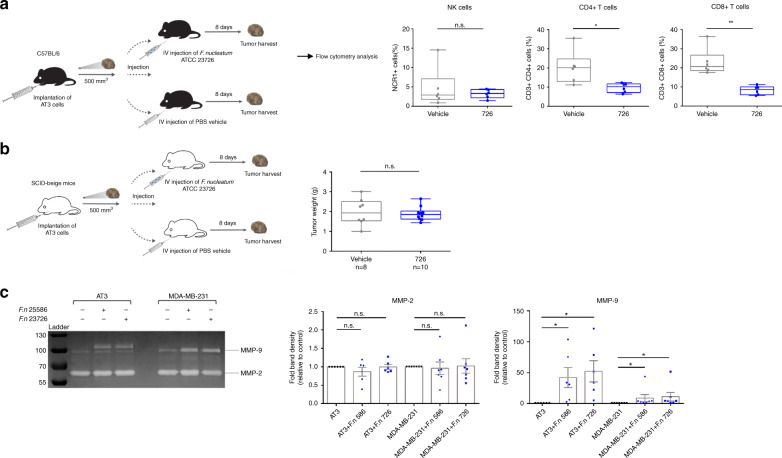
Fusobacterium nucleatum is an oral anaerobe recently found to be prevalent in human colorectal cancer (CRC) where it is associated with poor treatment outcome. In mice, hematogenous F. nucleatum can colonize CRC tissue using its lectin Fap2, which attaches to tumor-displayed Gal-GalNAc. Here, we show that Gal-GalNAc levels increase as human breast cancer progresses, and that occurrence of F. nucleatum gDNA in breast cancer samples correlates with high Gal-GalNAc levels. We demonstrate Fap2-dependent binding of the bacterium to breast cancer samples, which is inhibited by GalNAc. Intravascularly inoculated Fap2-expressing F. nucleatum ATCC 23726 specifically colonize mice mammary tumors, whereas Fap2-deficient bacteria are impaired in tumor colonization. Inoculation with F. nucleatum suppresses accumulation of tumor infiltrating T cells and promotes tumor growth and metastatic progression, the latter two of which can be counteracted by antibiotic treatment. Thus, targeting F. nucleatum or Fap2 might be beneficial during treatment of breast cancer.
Overview
The claims and statistics of this paper haven’t been checked yet.
Free: it reads the open-access text and checks the first 5 claims that cite a source we can check. Create a free account to check every claim.
Integrity signals
Registry
Cites
Statistics
Figures
Verification
Claims the paper makes
The claims and statistics of this paper haven’t been checked yet.
Free: it reads the open-access text and checks the first 5 claims that cite a source we can check. Create a free account to check every claim.
Claims other papers make about this one
Each is checked against this paper’s own text: does it say what the citing paper says it does?
The source backs part of the claim, not all of it — or backs it for a different population, condition or comparison.
In the citing paper
“Mechanistic studies of live microbiota within diverse tumor types have been limited, particularly outside the aerodigestive tract, but many of their effects on the TME appear to suppress local antitumor immunity (15, 23, 34, 46, 75, 101, 102).”
From The microbiome and human cancer (2021) · cites this paper as [34]
Experimental — accuracy not yet measuredThe source backs part of the claim, not all of it — or backs it for a different population, condition or comparison.
In the citing paper
“Immunologically, intratumor microbes often create tolerogenic programming through PRR ligation with lower proportions of TILs, including CD8+ T cells, and occasionally more CD4+CD25+FoxP3+ Tregs, as observed in colorectal, pancreatic, breast, and lung cancers (18, 23, 34, 46, 75, 101, 102).”
From The microbiome and human cancer (2021) · cites this paper as [34]
Experimental — accuracy not yet measuredThe cited source says what the claim attributes to it.
In the citing paper
“Parhi et al. found that F. nucleatum accumulated specifically within tumors and reduced the number of tumor-infiltrating CD4+ and CD8+ T cells, indicating that F. nucleatum-mediated changes in the TIME contributed significantly to tumor growth.336”
From Drug repurposing for cancer therapy (2024) · cites this paper as [336]
In the citing paper
“Emerging evidence also suggests the existence and functional activity of intratumoral bacteria, with overlapping immunohistochemistry, immunofluorescence, electron microscopy, and sequencing data on them in ~10 cancer types.”
From The microbiome and human cancer (2021) · cites this paper as [34]
In the citing paper
“In breast cancer, experiments comparing SCID-beige and C57BL/6 mice with intratumor Fusobacterium suggested lymphoid-lineage cells as key mediators of intratumor microbiota-derived effects on tumor immunosurveillance (34).”
From The microbiome and human cancer (2021) · cites this paper as [34]
2 more claims about this paper
Create a free account to see every claim other papers make about this one.
Self-check
Percentages, sums and reported differences re-computed from the paper’s own numbers.
The self-check needs the paper’s full text.
Citations
Cites
Bray, F., Ferlay, J., Soerjomataram, I., Siegel, R. L., Torre, L. A., & Jemal, A. (2018) · CA: A Cancer Journal for Clinicians · doi:10.3322/caac.21492 · Cited by 84,109
Subramanian, A., Tamayo, P., Mootha, V. K., Mukherjee, S., Ebert, B. L., Gillette, M. A., Paulovich, A., Pomeroy, S. L., Golub, T. R., Lander, E. S., et al. (2005) · Proceedings of the National Academy of Sciences · doi:10.1073/pnas.0506580102 · Cited by 53,625
Robinson, M. D., McCarthy, D. J., & Smyth, G. K. (2010) · Bioinformatics · doi:10.1093/bioinformatics/btp616 · Cited by 41,364
A Simple Sequentially Rejective Multiple Test Procedure
(1979) · Scandinavian Journal of Statistics · doi:10.2307/4615733 · Cited by 21,526
Siegel, R. L., Miller, K. D., & Jemal, A. (2016) · CA: A Cancer Journal for Clinicians · doi:10.3322/caac.21332 · Cited by 16,003
Mootha, V. K., Lindgren, C. M., Eriksson, K.-F., Subramanian, A., Sihag, S., Lehar, J., Puigserver, P., Carlsson, E., Ridderstråle, M., Laurila, E., et al. (2003) · Nature Genetics · doi:10.1038/ng1180 · Cited by 10,197
McCarthy, D. J., Chen, Y., & Smyth, G. K. (2012) · Nucleic Acids Research · doi:10.1093/nar/gks042 · Cited by 5,195
Kostic, A. D., Chun, E., Robertson, L., Glickman, J. N., Gallini, C. A., Michaud, M., Clancy, T. E., Chung, D. C., Lochhead, P., Hold, G. L., et al. (2013) · Cell Host & Microbe · doi:10.1016/j.chom.2013.07.007 · Cited by 2,718
Rubinstein, M. R., Wang, X., Liu, W., Hao, Y., Cai, G., & Han, Y. W. (2013) · Cell Host & Microbe · doi:10.1016/j.chom.2013.07.012 · Cited by 2,476
The human tumor microbiome is composed of tumor type–specific intracellular bacteria
Nejman, D., Livyatan, I., Fuks, G., Gavert, N., Zwang, Y., Geller, L. T., Rotter-Maskowitz, A., Weiser, R., Mallel, G., Gigi, E., et al. (2020) · Science · doi:10.1126/science.aay9189 · Cited by 2,464
Self-citation
Cited by
Items 501–600 of 785
Feng, J., Yang, K., Liu, X., Song, M. S., Zhan, P., Zhang, M., Chen, J., & Liu, J. (2023) · PeerJ · doi:10.7717/peerj.16304 · Cited by 4
Higashimoto, I., Fujishima, F., Ishida, H., Taniyama, Y., Ozawa, Y., Nakamura, T., Nakaya, N., Sato, C., Okamoto, H., Tsunokake, J., et al. (2025) · Pathology International · doi:10.1111/pin.13505 · Cited by 4
Parhi, L., Shhadeh, A., Maalouf, N., Alon‐Maimon, T., Scaiewicz, V., & Bachrach, G. (2023) · BIO-PROTOCOL · doi:10.21769/bioprotoc.4635 · Cited by 4
Self-citationRen, Y., Ye, J., Shi, L., Le, K., & Wang, Y. (2024) · Journal of Oral Microbiology · doi:10.1080/20002297.2024.2442245 · Cited by 4
Debbarma, A., Mansolf, M., Khatri, V. A., Valentino, J. A., & Sapi, E. (2023) · Microorganisms · doi:10.3390/microorganisms11061475 · Cited by 4
Liu, X., Yao, Y., Xiao, A., Cao, D., Zhang, J., Shi, Y., Zhong, Q., He, Z., & Wu, W. (2025) · Frontiers in Cellular and Infection Microbiology · doi:10.3389/fcimb.2025.1549319 · Cited by 4
Cosi, V., Jung, J., Popella, L., Ponath, F., Ghosh, C., Barquist, L., & Vogel, J. (2025) · mBio · doi:10.1128/mbio.00524-25 · Cited by 4
Self-citationNandi, D., Parida, S., Verma, D., Foley, J. R., Stewart, T. M., Korangath, P. C., Thatikonda, S., Siddharth, S., Wu, Q., Yi, M., et al. (2026) · Cancer Research · doi:10.1158/0008-5472.can-25-2086 · Cited by 4
Gutmacher, E., Sárai, B. Z., Martineková, P., Kiss‐Dala, S., Agócs, G., Hegyi, P., Bródy, A., & Zsembery, Á. (2025) · Scientific Reports · doi:10.1038/s41598-025-07465-w · Cited by 3
Fang, J., Wu, M., Shen, H., Liu, W., & Zhang, T. (2025) · Frontiers in Oncology · doi:10.3389/fonc.2025.1616928 · Cited by 3
Intratumoral Microbiota in Tumor: Current Understandings and Future Perspectives
Chen, J., Bai, Y., Shen, L., Ying, J., Xu, J. Q., Tang, J., & Bao, Y.-J. (2026) · MedComm · doi:10.1002/mco2.70825 · Cited by 3
Deng, X., Yang, H., Tian, L., Ling, J., Ruan, H., Ge, A., Liu, L., & Fan, H. (2024) · Frontiers in Microbiology · doi:10.3389/fmicb.2024.1393422 · Cited by 3
Fu, J., Lin, H., Li, S., Yu, X., Jin, Y., Mei, J., Zhu, Y., & Xia, T. (2025) · BIO Integration · doi:10.15212/bioi-2025-0040 · Cited by 3
Bulale, S., Shi, K., Wang, Y., Song, L., Zhang, M., Gong, Z., Zhao, Y., Xiong, Y., & He, L. (2025) · Sensors and Actuators B Chemical · doi:10.1016/j.snb.2025.138367 · Cited by 3
Zaman, S., Chobrutskiy, B. I., Quach, J. U., & Blanck, G. (2023) · Journal of Gastrointestinal Cancer · doi:10.1007/s12029-023-00935-2 · Cited by 3
Won, K., Jin, P.-R., Davis, L., Orjala, J., Armstrong, A. T., Wang, W. H., Kothandaraman, H., Utturkar, S. M., Bae, D., Jeong, B., et al. (2025) · bioRxiv (Cold Spring Harbor Laboratory) · doi:10.1101/2025.09.25.678601 · Cited by 3
Bacteria modulate tumor-associated macrophages to combat cancer
Chen, Z., Li, J., Wang, J. J., Bai, Y., Zhang, Z., Chen, G., Cao, X. T., & Jin, D. (2025) · Critical Reviews in Oncology/Hematology · doi:10.1016/j.critrevonc.2025.104983 · Cited by 3
Fusobacterium nucleatum and Malignant Tumors of the Digestive Tract: A Mechanistic Overview
Lai, Y., Mi, J., & Feng, Q. (2022) · Bioengineering · doi:10.3390/bioengineering9070285 · Cited by 3
Oral and intestinal flora translocation and tumor development
Ye, Z., Gao, L., Guo, Z., & Wang, Q. (2025) · Journal of Cancer Research and Therapeutics · doi:10.4103/jcrt.jcrt_50_24 · Cited by 3
Relevance of the Human Microbiome in Breast Cancer: A Global Bibliometric and Visual Analysis
Javed, F., Ahmad, S., Issrani, R., Zeeshan, H. M., Iqbal, A., Syed, E., Alam, M. K., & Prabhu, N. (2024) · Scientifica · doi:10.1155/sci5/5518835 · Cited by 3
Cross-kingdom signals: microbial, metabolites, and immune cells on the gut-breast axis
Cheong, K., Li, J., Wang, M., Wang, D., & Zhong, S. (2026) · Critical Reviews in Food Science and Nutrition · doi:10.1080/10408398.2026.2681931 · Cited by 3
Revision of potential prognostic markers of cholangiocarcinoma for clinical practice
Saengboonmee, C., Obchoei, S., Sawanyawisuth, K., & Wongkham, S. (2023) · Expert Review of Anticancer Therapy · doi:10.1080/14737140.2023.2203386 · Cited by 3
Integrating ANI and phylogenies for re-evaluation of Fusobacterium taxonomy and disease associations
Bi, D., Wu, Y., Ji, G., Zhu, X., Li, H., Xie, R., Gao, Y., Deng, Z., Han, D., Qin, H., et al. (2026) · Nature Communications · doi:10.1038/s41467-026-70540-x · Cited by 3
Lan, X., Zhang, F., Cui, G., Hu, B., Lai, Y., Lin, H., Huang, H., Zhou, D., Yu, M., & Yao, G. (2025) · Materials Today Bio · doi:10.1016/j.mtbio.2025.102493 · Cited by 3
Yuan, X., HUANG, H., Wang, Z., Lau, H., Huang, Q., Shen, Y., Zhang, M., Tao, L., Gong, H., Hsueh, C., et al. (2026) · Communications Biology · doi:10.1038/s42003-026-09913-3 · Cited by 3
Fang, H., Jin, Y., Yang, M., Li, Y., Shu, Y., Si, Z., Cheng, Z., Zhao, F., Zhu, H., Liu, Y., et al. (2025) · International Journal of Biological Macromolecules · doi:10.1016/j.ijbiomac.2025.148363 · Cited by 3
Ismail, F., Mansoor, U., Qadri, H. M., Zaman, M., Ali, A., Asif, M., Kaleem, M., Khan, H., Bashir, R. A., Irshad, S., et al. (2025) · Cureus · doi:10.7759/cureus.89421 · Cited by 3
Protocols for genetic labeling and tracing of Staphylococcus xylosus during tumor progression
Dong, T., Fu, A., & Cai, S. (2022) · STAR Protocols · doi:10.1016/j.xpro.2022.101624 · Cited by 3
Role of Human Microbiome in Development and Management of Head and Neck Squamous Cell Carcinoma
Palkovský, M., Modráčková, N., Bunešová, V., Liberko, M., Hlodáková, A., & Soumarová, R. (2025) · Cancers · doi:10.3390/cancers17132238 · Cited by 2
Advanced computational analysis in metagenomic studies to support precision medicine
Piccinno, G., & Asnicar, F. (2026) · Clinical Microbiology and Infection · doi:10.1016/j.cmi.2026.02.018 · Cited by 2
Chowdhary, R., Goyal, M. K., Arora, K., Sehgal, T., Dawer, P., Anirudh, Berinstein, J. A., Bishu, S., & Matt-Amaral, L. B. (2026) · JGH Open · doi:10.1002/jgh3.70409 · Cited by 2
Li, L., Shi, X., Liu, M., Xu, T., Chen, Y., Wang, R., Zhang, Q., & Li, D. (2026) · Pathogens · doi:10.3390/pathogens15070687 · Cited by 2
Engineering breast cancer tumor microenvironment: advanced fabrication for 3D in vitro models
Pitton, M., Draghi, L., & Farè, S. (2026) · Biofabrication · doi:10.1088/1758-5090/ae3987 · Cited by 2
Microbiome-mediated immune modulation in tumor microenvironment
Richards, J., Davis, E. L., Shakila, L., Narayanan, J., Aggarwal, S., Mishra, A., Venkata, K. K. M., Walther, B. K., & Dominic, A. (2025) · International review of cytology · doi:10.1016/bs.ircmb.2024.12.012 · Cited by 2
Applying principles of vaccine development to oncomicrobial vaccines
Despins, C. A., Viegas, N. J., & Holt, R. A. (2025) · Blood Advances · doi:10.1182/bloodadvances.2024015610 · Cited by 2
Bacteria-Based Roles in Solid Tumors: Potential for Prevention and Treatment
Huang, J., Zhang, A., Sun, J., Fu, Y., Li, W., & Wang, Y. (2025) · Pathogens · doi:10.3390/pathogens14090874 · Cited by 2
The effect of bacteria on tumor metastasis
Yu, J., Meng, Q., Chen, Y., Ji, F., & Wang, L. (2024) · Chinese Science Bulletin (Chinese Version) · doi:10.1360/tb-2023-1358 · Cited by 2
Harnessing engineered bacteria for revolutionizing cancer immunotherapy
Zhou, K., Cao, L., Luo, H.-Y., Wang, K.-N., Song, Z., & Bu, L. (2026) · Advanced Composites and Hybrid Materials · doi:10.1007/s42114-026-01664-3 · Cited by 2
Immune-oncology-microbiome axis may result in AKP or anti-AKP effects in intratumor microbiomesPreprint
Ma, Z. S. (2024) · medRxiv · doi:10.1101/2024.03.23.24304783 · Cited by 2
Mucosal immunity in cancer metastasis: roles, mechanisms, and therapeutic implications
Miao, Y., Cui, D., Bi, Y., & Zhang, R. (2026) · Frontiers in Immunology · doi:10.3389/fimmu.2026.1809558 · Cited by 2
Ding, L., Li, S., Li, X.-Y., Sun, X., Sun, T.-Y., & Hu, G.-J. (2021) · Evidence-based Complementary and Alternative Medicine · doi:10.1155/2021/9952060 · Cited by 2
The Outcome of Intracellular Selenomonas sputigena and its Impact on Gingival Keratinocytes
Hawkes, C. G., Chiarelli, T. J., Abdallah, D. N., Way, G. W., Zhou, H., Carlyon, J. A., & Miller, D. P. (2026) · Molecular Oral Microbiology · doi:10.1111/omi.70021 · Cited by 2
The human microbiome reshapes the breast cancer immune-metabolic-hormonal microenvironment
Wang, Q., 张富荣, Xin, Y., Yang, R., Tang, Z., Wu, Z., & Ming, J. (2026) · Frontiers in Immunology · doi:10.3389/fimmu.2026.1774211 · Cited by 2
Duan, Y., Ma, F., Guo, B., Chen, Z., Liu, Y., Jiang, X., Rong, Z., Zou, Y., Zhang, H., Wang, T., et al. (2023) · Research Square · doi:10.21203/rs.3.rs-2783293/v1 · Cited by 2
Fusobacterium nucleatum in cancer: from bystander to driver
Zhong, Z.-W., Lu, Y.-Q., Duan, Y., Ma, J. Y., & Liu, N. (2026) · Gut · doi:10.1136/gutjnl-2025-338000 · Cited by 2
McGregor, A. K., Do, L. T. M., Gauvin, A., & Wolthers, K. R. (2025) · Archives of Biochemistry and Biophysics · doi:10.1016/j.abb.2025.110520 · Cited by 2
Ma, Q., Zeng, X., Li, X., You, L., Fu, X., You, F., & Ren, Y. (2023) · Chinese Science Bulletin (Chinese Version) · doi:10.1360/tb-2023-0474 · Cited by 2
The role of human microbiota in breast cancer pathogenesis and treatment
Qiu, J., Wang, X., Li, M. M., Guo, J., Ning, S., Gao, Y., Zhang, X., Meng, X., Chen, Y., & Zhou, Y. (2026) · iMeta · doi:10.1002/imt2.70142 · Cited by 2
Qu, J., Zhang, F., Wang, L., Zhang, Y., & Wang, Y. (2025) · AMB Express · doi:10.1186/s13568-025-01989-0 · Cited by 2
Oh, H. N., & Hur, H. (2026) · Oncology Reports · doi:10.3892/or.2026.9071 · Cited by 2
Biosynthesis of meso-lanthionine in Fusobacterium nucleatum
Darbyshire, A., Mothersole, R., & Wolthers, K. R. (2023) · Archives of Biochemistry and Biophysics · doi:10.1016/j.abb.2023.109666 · Cited by 2
Wang, S., Su, Z., Zhang, X., Wang, S., Chen, X., Xu, X., He, B., & Zheng, Y. (2026) · Bioactive Materials · doi:10.1016/j.bioactmat.2026.03.059 · Cited by 2
Breast Cancer and Microbiota: A Literature Review
Raheema, R. H., Raheema, L. H., Chabuck, Z. A. G., Yasir, Q. D., & AL-Naqeeb, M. M. N. (2024) · Medical Journal of Babylon · doi:10.4103/mjbl.mjbl_1640_23 · Cited by 2
Mao, Y., Xie, F., Chu, X., Zhang, W., Dou, K., Hu, B., Fu, L., 丁致薰, Zhu, S., Cao, W., et al. (2026) · Molecular Cancer · doi:10.1186/s12943-026-02731-5 · Cited by 2
Xie, Y., Wang, J., Li, C., Wang, M., Sun, J., Chang, J., Lin, J., & Li, C. (2024) · Angewandte Chemie · doi:10.1002/ange.202417592 · Cited by 2
Disease- and chemotherapy-associated salivary microbiome changes in breast cancer patients
Kaja, E., Grupińska, J., Budzyń, M., Ciomborowska-Basheer, J., Szwed, A., Makałowska, I., Papadovasilakis, Z., & Formanowicz, D. (2026) · Breast Cancer Research and Treatment · doi:10.1007/s10549-026-07902-y · Cited by 2
Feng, Q., Zakaria, S., Morrison, D., Tram, K., Gu, J., Salena, B. J., & Li, Y. (2023) · Angewandte Chemie · doi:10.1002/ange.202306272 · Cited by 2
Bacteria in the blood of healthy stray dogs infested by ticks in northern Mexico
García, F. M., Barraza-Guerrero, S. I., la Peña, C. G.-D., Aguillón-Gutiérrez, D. R., Siller-Rodríguez, Q. K., Herrera, C., Vaca‐Paniagua, F., Velásquez, C. E. D., Montoya, A. H. D. L. C., & Valenzuela-Núñez, L. M. (2024) · Journal of Advanced Veterinary and Animal Research · doi:10.5455/javar.2024.k757 · Cited by 2
Cancer and the gut microbiome: the oncogenic impact of dysbiosis
Aden, D., Darji, K., & Zaheer, S. (2026) · Surgical and Experimental Pathology · doi:10.1186/s42047-026-00244-5 · Cited by 1
Masset, M. E. G., Canto, F. B., & Monteiro, A. C. (2025) · IntechOpen eBooks · doi:10.5772/intechopen.1010215 · Cited by 1
Bhargava, V., Gupta, S., Yadav, C., Panchal, I., Mathur, N., Kumar, R., Khangembam, C. D., & Lata, P. (2026) · Progress in Biophysics and Molecular Biology · doi:10.1016/j.pbiomolbio.2026.07.011 · Cited by 1
Microbiome dysbiosis and its modulation in cancer development, prevention and therapy
Dixit, S., Welker, A., Ortiz, D., Athanasouli, M., & Stein‐Thoeringer, C. K. (2026) · Frontiers in Oncology · doi:10.3389/fonc.2026.1852716 · Cited by 1
Link between dysbiosis and cancer: Contributing mechanisms and factors
Turner, N., Colunga-Minutti, J., Alekseev, S., Jenq, R. R., & Nurieva, R. (2025) · International review of cytology · doi:10.1016/bs.ircmb.2024.12.004 · Cited by 1
Microbiota as a modulator of drug response: targeting microbial–drug crosstalk in cancer therapy
Zhao, T., Liu, M., Qiu, L. X., Zhang, H., Zhang, N., Liu, Z., Xia, Z., Luo, P., Huang, J., & Cheng, Q. (2026) · Gut Microbes · doi:10.1080/19490976.2026.2651930 · Cited by 1
Neuman, H., Turjeman, S., & Koren, O. (2022) · Elsevier eBooks · doi:10.1016/b978-0-12-821618-7.00040-7 · Cited by 1
Peixun, Z., Fan, Y., Liu, H., Jin, Y., Yizinaer, A., Abudourousuli, A., & Zhang, Y. (2026) · BMC Gastroenterology · doi:10.1186/s12876-026-04981-5 · Cited by 1
Tan, R., Zhu, Y., Chen, Z., Feng, X., Liang, Y., Zhang, S., Abuduxiku, N., Liao, G., & Yang, L. (2025) · BMC Cancer · doi:10.1186/s12885-025-14188-8 · Cited by 1
Seenivasan, S. N., Vasudevan, S. A., Durairaj, K., Ayothi, P., Raghupathy, A. K., Gajendhran, B., Bhaskar, M. K., Manivel, G., Rajan, F., Selvan, E., et al. (2026) · Research Square · doi:10.21203/rs.3.rs-8921895/v1 · Cited by 1
Takle, S. T., Grøndal, S. M., Lien, M. E., Lianto, P., Deng, W., Lillestøl, R., Lønning, P. E., Lorens, J. B., Knappskog, S., & Halberg, N. (2024) · bioRxiv (Cold Spring Harbor Laboratory) · doi:10.1101/2024.08.08.607253 · Cited by 1
El-Hadedy, D. E., Moran, G. P., & Al-Hebshi, N. N. (2025) · bioRxiv (Cold Spring Harbor Laboratory) · doi:10.1101/2025.10.01.679755 · Cited by 1
Bacteroides , Porphyromonas , Prevotella , Fusobacterium , and Other Anaerobic Gram‐Negative Rods
Conrads, G., Nagy, E., & Könönen, E. (2023) · Wiley eBooks · doi:10.1002/9781683674849.mcm0057 · Cited by 1
The Oral Microbiome in the Development of Oral Cancer
Сергеевна, К. Е., Schegoleva, A. A., Kononova, L. A., & Denisov, E. V. (2024) · Molecular Biology · doi:10.1134/s0026893324020092 · Cited by 1
Liu, X., Cai, R., Meng, Y., Xu, Y., Wang, B., Liu, M., Wang, Y., Yu, Y., Lu, C., Wei, Y., et al. (2026) · Critical Reviews in Oncology/Hematology · doi:10.1016/j.critrevonc.2026.105220 · Cited by 1
Hunter, J. G. L., Roach, A., Nieves, L. M., Islas, A. K. F., Islas, A., & DiPalma, M. P. (2026) · Frontiers in Immunology · doi:10.3389/fimmu.2026.1820477 · Cited by 1
The microbiome role in modulating immune response — perspectives for cancer immunotherapy
Mrowiec, P., Chmiel, A., Czekajewska, J., Banach, M., Skiba‐Kurek, I., & Olechowska‐Jarząb, A. (2025) · Nowotwory Journal of Oncology · doi:10.5603/njo.104072 · Cited by 1
Zhang, X., Sun, S., Cheng, S., Dai, J., Du, F., Wang, J., Wei, D., Yan, Y., & Liu, Y. (2025) · Frontiers in Cellular and Infection Microbiology · doi:10.3389/fcimb.2025.1601688 · Cited by 1
Probiotics and the immune landscape: An ally in breast cancer combination therapy
Tokallou, M. A., Mahmoudi, M., Kheder, R. K., Azghadi, S. F., Rastgoo, E., Sabouri, A., & Esmaeili, S. (2025) · Nutrition · doi:10.1016/j.nut.2025.113011 · Cited by 1
Intratumoral microbiota: Distribution, mechanisms, and therapeutic implications
Ge, J., Gao, L., & Yu, L. (2026) · Critical Reviews in Oncology/Hematology · doi:10.1016/j.critrevonc.2026.105128 · Cited by 1
The dialogue between breast cancer and microorganisms
Zeng, Y., Jiang, Y., Huang, Y., Yin, S., Yang, Z., & Zhang, F. (2026) · Frontiers in Cellular and Infection Microbiology · doi:10.3389/fcimb.2026.1738739 · Cited by 1
The intratumoral microbiome as an emerging hub in cancer pathogenesis and precision oncology
Sun, J., Song, S., Luo, S., Qing, F. A. N., Li, X., Liu, H., & Wu, G. (2026) · Molecular Cancer · doi:10.1186/s12943-026-02762-y · Cited by 1
RadD from Fusobacterium nucleatum engages NKp46 to promote antitumor cytotoxicity
Rishiq, A., Galaski, J., Bsoul, R., Liu, M., Darawshe, R., Lux, R., Bachrach, G., & Mandelboim, O. (2026) · eLife · doi:10.7554/elife.108439 · Cited by 1
Self-citationCharacterization of the OMP biogenesis machinery in Fusobacterium nucleatum
Cottom, C. O., Heinz, E., Erramilli, S. K., Kossiakoff, A. A., Slade, D. J., & Noinaj, N. (2025) · Structure · doi:10.1016/j.str.2025.08.008 · Cited by 1
Metaplasia creates a permissive niche for select Fusobacterium species in the stomach
Gómez-Garzón, C., O'Brien, V. P., Chen, Q., Garman, K. S., & Salama, N. R. (2026) · mBio · doi:10.1128/mbio.01747-26 · Cited by 1
Microbial Differences in Prostate Lesions Between Black and White American Men
Verma, S., Gupta, K., Qiao, X., Shen, D. L., MacLennan, G. T., Suryavanshi, M. V., Zhang, L., Miller, A. W., & Gupta, S. (2026) · The Prostate · doi:10.1002/pros.70200 · Cited by 1
[Gut microbiota involved in cancer invasion and metastasis].
Siqing, H., Yang, Q., & Wen, Z. (2025) · PubMed Central · doi:10.11817/j.issn.1672-7347.2025.250361 · Cited by 1
Lim, S. L., Hsueh, W.-H., Wu, N.-H., Hodges, C., Vuong, C. A., Smith, K., Hsiao, J., Chang, J. S.-M., Chang, J., Chen, J., et al. (2025) · bioRxiv (Cold Spring Harbor Laboratory) · doi:10.1101/2025.01.08.631950 · Cited by 1
Fang, Y., Yang, S., Xie, Y., Wang, Y., Sui, B., Chen, Y., Yuan, X., & Zhang, Y. (2026) · International Journal of Molecular Sciences · doi:10.3390/ijms27146308 · Cited by 1
Wang, Z., Tan, W., Zhang, P., Xiong, H., Zhu, L., Cui, J., Li, L., Guo, C., He, L., Huang, J., et al. (2026) · Scientific Reports · doi:10.1038/s41598-026-43935-5 · Cited by 1
Microbiome disharmony: a catalyst in breast cancer progression and influencing surgical outcomes
Raman, A. I. N. D., Shivam, R. A. J. U., & Verma, S. R. (2026) · Minerva Biotechnology and Biomolecular Research · doi:10.23736/s2724-542x.25.03274-2 · Cited by 1
Dieleman, S., Bruggeling, C. E., Le, P. D., Hillege, L. E., Bernardino, C. C. T., Ziemons, J., Cremers, R., Jacquerie, A., Gusinac, A., Ederveen, T. H. A., et al. (2026) · npj Breast Cancer · doi:10.1038/s41523-026-01004-0 · Cited by 1
The Intratumoral Microbiota in Breast Cancer: Roles in Progression, Immunity, and Therapy
Wei, Z., Cai, J., Wang, S., Li, Y., Luo, L., Chen, J., Li, F., Nie, H., Gong, K., & CAI, M. (2026) · Oncology Research Featuring Preclinical and Clinical Cancer Therapeutics · doi:10.32604/or.2026.079281 · Cited by 1
Microbial Omens: The Predictive Power of Microbiome Signatures in Cancer Risk
Fakruddin, M., Oyshe, I. I., Islam, S. M. B. U., Safa, A., Jime, J. S., Bulbul, N., & Shishir, M. A. (2025) · Mikrobiolohichnyi Zhurnal · doi:10.15407/microbiolj87.03.099 · Cited by 1
Saunier, S. (2023) · VTechWorks (Virginia Tech) · Cited by 1
Ahmet, R. A. M., Nascu, A. G., Camen, G. C., Obleagă, C. V., & Mirea, C. S. (2026) · Medicina · doi:10.3390/medicina62071266 · Cited by 1
Gomes, M. D. C. M., Ribeiro-Júnior, R. S., Pimenta, T. M., Martins, B. D. S., Rodrigues, M. M. D., Aguilar, W., dos Santos, D. Z., Figueiredo, M. F., Lopes, G. D. R. S., de Matos, J. D. M., et al. (2023) · International journal of odontostomatology · doi:10.4067/s0718-381x2023000400511 · Cited by 1
Oncobiomics – Karzinogenese, Diagnostik, Therapie
Spalinger, M. R., & Scharl, M. M. (2024) · Springer eBooks · doi:10.1007/978-3-662-68455-9_19
Potential mechanisms of intestinal microbes in bone metastasis of breast cancer
Gile, N., & Johnston, L. J. (2025) · Asia-Pacific Journal of Oncology · doi:10.32948/ajo.2025.03.20
Zhong, W., Wu, K., Long, Z., Zhou, X., Zhong, C., Wang, S., Lai, H., Guo, Y., Lv, D., Lü, J., et al. (2022) · Figshare · doi:10.6084/m9.figshare.20088203
Zeng, Q., Ye, Y., Wu, K., Wang, K., Zhou, X., Zhou, W., Zhao, S., Zhang, T., & Chen, T. (2026) · Genes & Diseases · doi:10.1016/j.gendis.2026.102260
Association of root canal bacteria with breast cancer: a systematic review and meta-analysis
Kaur, J., Gautam, G., Ashinze, P. T., Singh, J., & Nwafor, K. (2026) · Holistic Integrative Oncology · doi:10.1007/s44178-026-00254-z
Metadata
- Authors
- Parhi, L., Alon-Maimon, T., Sol, A., Nejman, D., Shhadeh, A., Fainsod-Levi, T., Yajuk, O., Isaacson, B., Abed, J., Maalouf, N., Nissan, A., Sandbank, J., Yehuda-Shnaidman, E., Ponath, F., Vogel, J., Mandelboim, O., Granot, Z., Straussman, R., & Bachrach, G.
- Affiliations
- Hebrew University of Jerusalem (IL)
- Weizmann Institute of Science (IL)
- Sheba Medical Center (IL)
- Maccabi Healthcare Services (IL)
- Helmholtz Institute for RNA-based Infection Research (DE)
- University of Würzburg (DE)
- Corresponding author
- Bachrach, Gilad
- ORCID
- Venue
- Nature Communications
- Published
- 2020-06-26
- Volume
- 11
- Issue
- 1
- Pages
- 3259-3259
- ISSN
- 2041-1723 (ISSN-L)
- PMC
- PMC7320135
- OpenAlex
- W3037222958
- Cited by
- 716
- References
- 57
- Citations by year
- 2026: 106 · 2025: 173 · 2024: 156 · 2023: 123 · 2022: 107 · 2021: 45 · 2020: 6
- FWCI
- 36.62
- Type
- journal article
- Language
- en
- Open access
- gold
- doi.org
- Licence
- cc-by
- creativecommons.org/licenses/by/4.0 (tdm)
- creativecommons.org/licenses/by/4.0 (vor)
- Locations
- Nature Communications (publishedVersion, cc-by)
- PubMed Central (publishedVersion, cc-by)
- PubMed (publishedVersion)
- RePEc: Research Papers in Economics (submittedVersion)
- DOAJ (DOAJ: Directory of Open Access Journals) (submittedVersion, cc-by-sa)
- HZI (Helmholtz Centre for Infection Research) (submittedVersion, cc-by-nc-sa)
- Funders
- Israel Cancer Research Fund (Project grant)
- Israel Science Foundation (Moked grant)
- Israel Ministry of Science and Technology Personalized Medicine grant
- Topics
- Life Sciences › Biochemistry, Genetics and Molecular Biology › Biotechnology › Bacterial Cancer Therapy
- Life Sciences › Biochemistry, Genetics and Molecular Biology › Molecular Biology › Gut microbiota and health
- Health Sciences › Dentistry › Periodontics › Oral microbiology and periodontitis research
- Keywords
- Fusobacterium nucleatum, breast cancer, tumor colonization, tumor-associated bacteria, tumor growth, metastasis, tumor-infiltrating T cells, antibiotic therapy, oral microbiota
- MeSH terms
- Animals, Anti-Bacterial Agents, Bacterial Proteins, Breast Neoplasms, Disease Models, Animal, DNA, Bacterial, Female, Galactosamine, Galactose, Humans, Immunity, Lung Neoplasms, Mice, Inbred BALB C, Neoplasm Metastasis, Colony Count, Microbial, Genome, Bacterial, Fusobacterium nucleatum, Disease Progression, Cell Line, Tumor, Cell Proliferation
About these checks
Registry, retraction, Cites and statistics results are computed, not judged, with one exception: a printed reference that no index lists is read once by a model before it counts as a citation error. Claims are extracted by a model and kept only when their quote appears verbatim in the text; each cited source is then checked, with a model’s help, for whether it says what the claim relies on. Those verdicts can be wrong — read the claim’s quote and the cited source before relying on one.
Statistics and arithmetic are recomputed, not judged.
Confidence bands are shown only for fields calibrated on our annotated test set. None is calibrated yet, so no band is shown.
What counts as a claim ›How we measure confidence ›How we check this ›
Are you an author, or do you see a problem with this page? Request a review
Data sources
Bibliographic data: Semantic Scholar, OpenAlex, Crossref.
Contains information from the Semantic Scholar Academic Graph Datasets, made available under the ODC Attribution License (ODC-BY 1.0).
Semantic Scholar’s data is described in: Kinney, R., et al. (2023). The Semantic Scholar Open Data Platform. arXiv:2301.10140.
