

Breast cancer colonization by Fusobacterium nucleatum accelerates tumor growth and metastatic progression
Open accessThe DOI matches its Crossref record; 55 of the 57 references it cites were found in a registry or an index.
Abstract
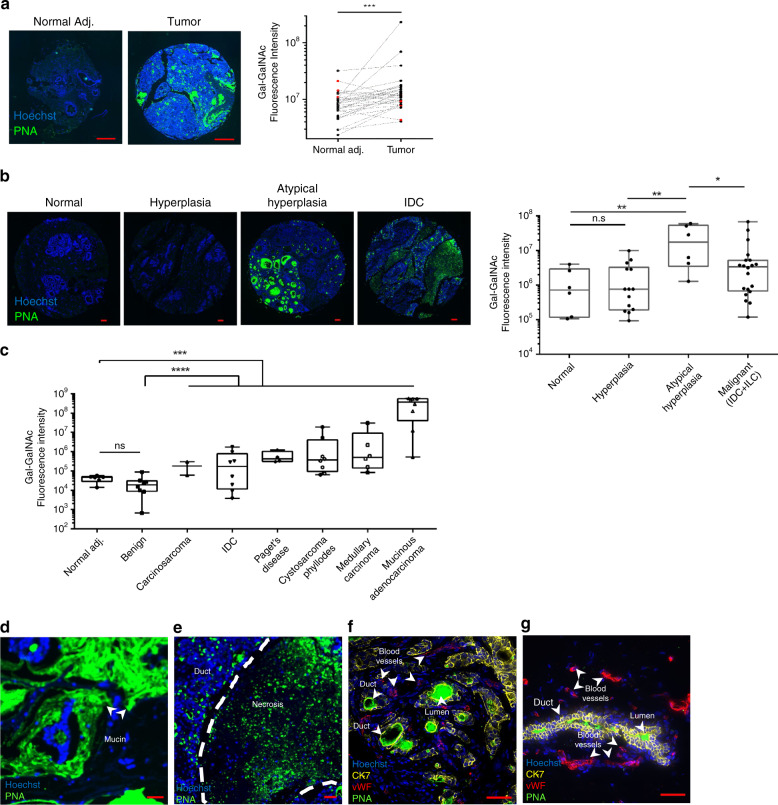
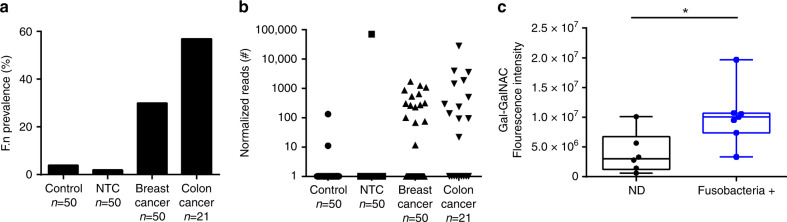
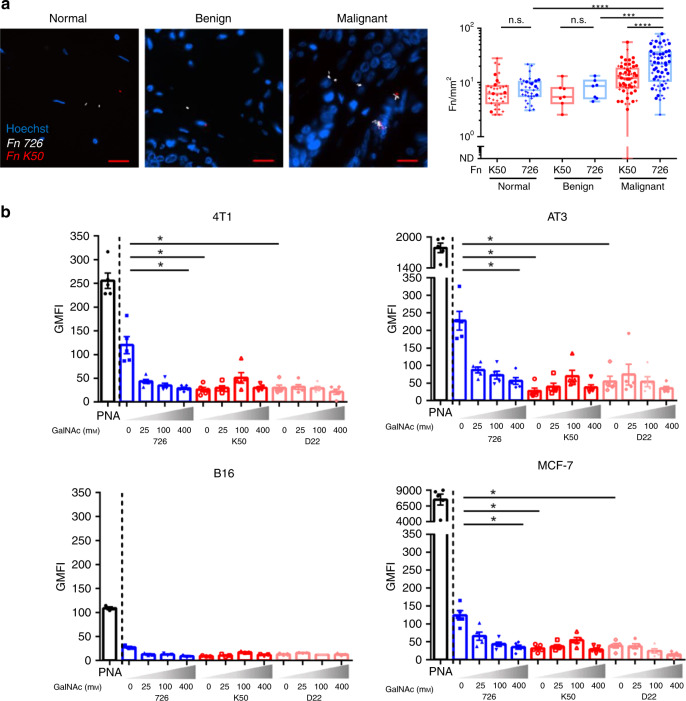
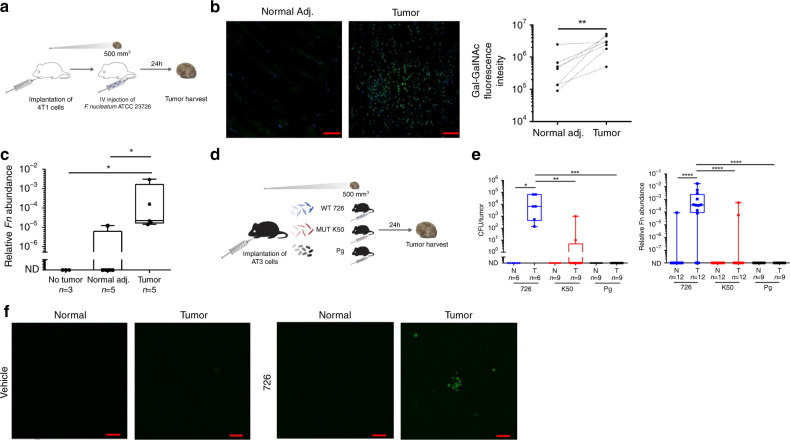
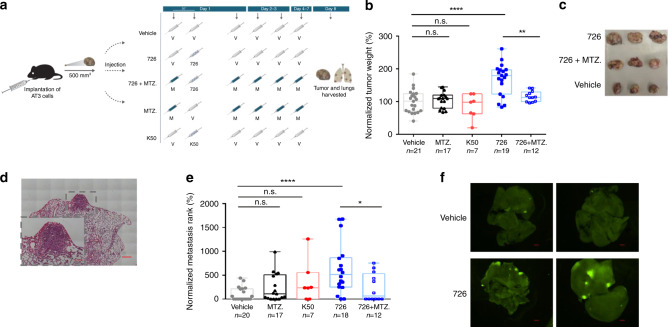
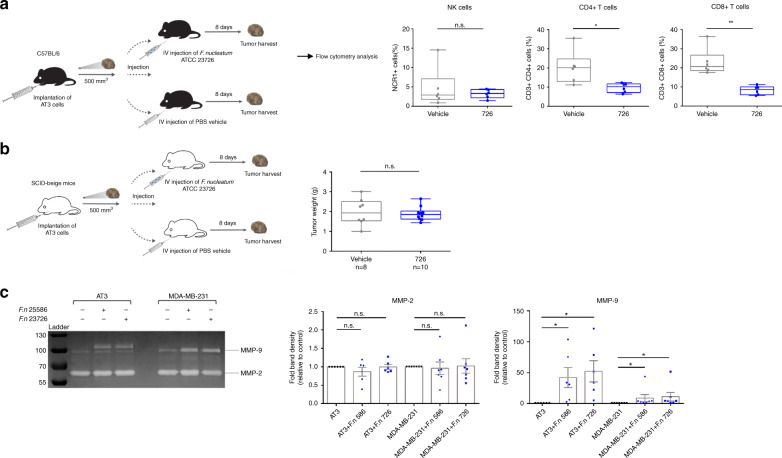
Fusobacterium nucleatum is an oral anaerobe recently found to be prevalent in human colorectal cancer (CRC) where it is associated with poor treatment outcome. In mice, hematogenous F. nucleatum can colonize CRC tissue using its lectin Fap2, which attaches to tumor-displayed Gal-GalNAc. Here, we show that Gal-GalNAc levels increase as human breast cancer progresses, and that occurrence of F. nucleatum gDNA in breast cancer samples correlates with high Gal-GalNAc levels. We demonstrate Fap2-dependent binding of the bacterium to breast cancer samples, which is inhibited by GalNAc. Intravascularly inoculated Fap2-expressing F. nucleatum ATCC 23726 specifically colonize mice mammary tumors, whereas Fap2-deficient bacteria are impaired in tumor colonization. Inoculation with F. nucleatum suppresses accumulation of tumor infiltrating T cells and promotes tumor growth and metastatic progression, the latter two of which can be counteracted by antibiotic treatment. Thus, targeting F. nucleatum or Fap2 might be beneficial during treatment of breast cancer.
Overview
The claims and statistics of this paper haven’t been checked yet.
Free: it reads the open-access text and checks the first 5 claims that cite a source we can check. Create a free account to check every claim.
Integrity signals
Registry
Cites
Statistics
Figures
Verification
Claims the paper makes
The claims and statistics of this paper haven’t been checked yet.
Free: it reads the open-access text and checks the first 5 claims that cite a source we can check. Create a free account to check every claim.
Claims other papers make about this one
Each is checked against this paper’s own text: does it say what the citing paper says it does?
The source backs part of the claim, not all of it — or backs it for a different population, condition or comparison.
In the citing paper
“Mechanistic studies of live microbiota within diverse tumor types have been limited, particularly outside the aerodigestive tract, but many of their effects on the TME appear to suppress local antitumor immunity (15, 23, 34, 46, 75, 101, 102).”
From The microbiome and human cancer (2021) · cites this paper as [34]
Experimental — accuracy not yet measuredThe source backs part of the claim, not all of it — or backs it for a different population, condition or comparison.
In the citing paper
“Immunologically, intratumor microbes often create tolerogenic programming through PRR ligation with lower proportions of TILs, including CD8+ T cells, and occasionally more CD4+CD25+FoxP3+ Tregs, as observed in colorectal, pancreatic, breast, and lung cancers (18, 23, 34, 46, 75, 101, 102).”
From The microbiome and human cancer (2021) · cites this paper as [34]
Experimental — accuracy not yet measuredThe cited source says what the claim attributes to it.
In the citing paper
“Parhi et al. found that F. nucleatum accumulated specifically within tumors and reduced the number of tumor-infiltrating CD4+ and CD8+ T cells, indicating that F. nucleatum-mediated changes in the TIME contributed significantly to tumor growth.336”
From Drug repurposing for cancer therapy (2024) · cites this paper as [336]
In the citing paper
“Emerging evidence also suggests the existence and functional activity of intratumoral bacteria, with overlapping immunohistochemistry, immunofluorescence, electron microscopy, and sequencing data on them in ~10 cancer types.”
From The microbiome and human cancer (2021) · cites this paper as [34]
In the citing paper
“In breast cancer, experiments comparing SCID-beige and C57BL/6 mice with intratumor Fusobacterium suggested lymphoid-lineage cells as key mediators of intratumor microbiota-derived effects on tumor immunosurveillance (34).”
From The microbiome and human cancer (2021) · cites this paper as [34]
2 more claims about this paper
Create a free account to see every claim other papers make about this one.
Self-check
Percentages, sums and reported differences re-computed from the paper’s own numbers.
The self-check needs the paper’s full text.
Citations
Cites
Bray, F., Ferlay, J., Soerjomataram, I., Siegel, R. L., Torre, L. A., & Jemal, A. (2018) · CA: A Cancer Journal for Clinicians · doi:10.3322/caac.21492 · Cited by 84,109
Subramanian, A., Tamayo, P., Mootha, V. K., Mukherjee, S., Ebert, B. L., Gillette, M. A., Paulovich, A., Pomeroy, S. L., Golub, T. R., Lander, E. S., et al. (2005) · Proceedings of the National Academy of Sciences · doi:10.1073/pnas.0506580102 · Cited by 53,625
Robinson, M. D., McCarthy, D. J., & Smyth, G. K. (2010) · Bioinformatics · doi:10.1093/bioinformatics/btp616 · Cited by 41,364
A Simple Sequentially Rejective Multiple Test Procedure
(1979) · Scandinavian Journal of Statistics · doi:10.2307/4615733 · Cited by 21,526
Siegel, R. L., Miller, K. D., & Jemal, A. (2016) · CA: A Cancer Journal for Clinicians · doi:10.3322/caac.21332 · Cited by 16,003
Mootha, V. K., Lindgren, C. M., Eriksson, K.-F., Subramanian, A., Sihag, S., Lehar, J., Puigserver, P., Carlsson, E., Ridderstråle, M., Laurila, E., et al. (2003) · Nature Genetics · doi:10.1038/ng1180 · Cited by 10,197
McCarthy, D. J., Chen, Y., & Smyth, G. K. (2012) · Nucleic Acids Research · doi:10.1093/nar/gks042 · Cited by 5,195
Kostic, A. D., Chun, E., Robertson, L., Glickman, J. N., Gallini, C. A., Michaud, M., Clancy, T. E., Chung, D. C., Lochhead, P., Hold, G. L., et al. (2013) · Cell Host & Microbe · doi:10.1016/j.chom.2013.07.007 · Cited by 2,718
Rubinstein, M. R., Wang, X., Liu, W., Hao, Y., Cai, G., & Han, Y. W. (2013) · Cell Host & Microbe · doi:10.1016/j.chom.2013.07.012 · Cited by 2,476
The human tumor microbiome is composed of tumor type–specific intracellular bacteria
Nejman, D., Livyatan, I., Fuks, G., Gavert, N., Zwang, Y., Geller, L. T., Rotter-Maskowitz, A., Weiser, R., Mallel, G., Gigi, E., et al. (2020) · Science · doi:10.1126/science.aay9189 · Cited by 2,464
Self-citation
Cited by
The microbiome and human cancer
Sepich-Poore, G. D., Zitvogel, L., Straussman, R., Hasty, J., Wargo, J. A., & Knight, R. (2021) · Science · doi:10.1126/science.abc4552 · Cited by 1,332
Self-citationGanesh, K., & Massagué, J. (2021) · Nature Medicine · doi:10.1038/s41591-020-01195-4 · Cited by 1,051
Tumor-resident intracellular microbiota promotes metastatic colonization in breast cancer
Fu, A., Yao, B., Dong, T., Chen, Y., Yao, J., Liu, Y., Li, H., Bai, H., Liu, X., Zhang, Y., et al. (2022) · Cell · doi:10.1016/j.cell.2022.02.027 · Cited by 981
Breast cancer: pathogenesis and treatments
Xiong, X., Zheng, L.-W., Ding, Y., Chen, Y.-F., Cai, Y.-W., Wang, L.-P., Huang, L., Liu, C.-C., Shao, Z.-M., & Yu, K.-D. (2025) · Signal Transduction and Targeted Therapy · doi:10.1038/s41392-024-02108-4 · Cited by 958
Effect of the intratumoral microbiota on spatial and cellular heterogeneity in cancer
Galeano Niño, J. L., Wu, H., LaCourse, K. D., Kempchinsky, A. G., Baryiames, A., Barber, B., Futran, N., Houlton, J., Sather, C., Sicinska, E., et al. (2022) · Nature · doi:10.1038/s41586-022-05435-0 · Cited by 887
Cullin, N., Azevedo Antunes, C., Straussman, R., Stein-Thoeringer, C. K., & Elinav, E. (2021) · Cancer Cell · doi:10.1016/j.ccell.2021.08.006 · Cited by 578
Self-citationPan-cancer analyses reveal cancer-type-specific fungal ecologies and bacteriome interactions
Narunsky-Haziza, L., Sepich-Poore, G. D., Livyatan, I., Asraf, O., Martino, C., Nejman, D., Gavert, N., Stajich, J. E., Amit, G., González, A., et al. (2022) · Cell · doi:10.1016/j.cell.2022.09.005 · Cited by 538
“Recent studies found metabolically active, immunoreactive, intracellular, and cancer type-specific communities of bacteria and viruses in tumor tissues (Geller et al., 2017; Kalaora et al., 2021; Le Noci et al., 2018; Mima et al., 2015; Nejman et al., 2020; Parhi et al., 2020; Poore et al., 2020; Pushalkar et al., 201…”
BackgroundSelf-citation(2023) · doi:10.1038/s41392-022-01304-4 · Cited by 460
“nucleatum obviously decreased the accumulation of tumor-infiltrated T cells, and promoted the growth and metastasis of breast cancer.(104) Moreover, F.”
BackgroundIdentification of bacteria-derived HLA-bound peptides in melanoma
Kalaora, S., Nagler, A., Nejman, D., Alon, M., Barbolin, C., Barnea, E., Ketelaars, S. L. C., Cheng, K., Vervier, K., Shental, N., et al. (2021) · Nature · doi:10.1038/s41586-021-03368-8 · Cited by 457
Self-citationDrug repurposing for cancer therapy
Xia, Y., Sun, M., Huang, H., & Jin, W.-L. (2024) · Signal Transduction and Targeted Therapy · doi:10.1038/s41392-024-01808-1 · Cited by 443
“336 In addition, the F. nucleatum DNA load in MSI-high CRC tumors was found to be inversely correlated with the density of tumor-in fi ltrating FOXP3 + T cells, and positively correlated with the ratio of M2-like TAMs to total TAMs, suggesting that F. nucleatum primarily promotes tumor progression…”
ResultBacteria in cancer initiation, promotion and progression
El Tekle, G., & Garrett, W. S. (2023) · Nature Reviews Cancer · doi:10.1038/s41568-023-00594-2 · Cited by 343
The gut microbial metabolite formate exacerbates colorectal cancer progression
Ternes, D., Tsenkova, M., Pozdeev, V. I., Meyers, M., Koncina, E., Atatri, S., Schmitz, M., Karta, J., Schmoetten, M., Heinken, A., et al. (2022) · Nature Metabolism · doi:10.1038/s42255-022-00558-0 · Cited by 333
Tumor microenvironment signaling and therapeutics in cancer progression
Goenka, A., Khan, F., Verma, B., Sinha, P., Dmello, C. C., Jogalekar, M. P., Gangadaran, P., & Ahn, B. (2023) · Cancer Communications · doi:10.1002/cac2.12416 · Cited by 323
Mechanism of the Gut Microbiota Colonization Resistance and Enteric Pathogen Infection
Khan, I., Bai, Y., Zha, L., Ullah, N., Ullah, H., Shah, S. R. H., Sun, H., & Zhang, C. (2021) · Frontiers in Cellular and Infection Microbiology · doi:10.3389/fcimb.2021.716299 · Cited by 291
“Various previous studies reported the relevance of the gut microbiota in host health outcomes and their disruption with multiple chronic metabolic and inflammatory diseases (Benıt́ez-Páez et al., 2020; Lapidot et al., 2020; Parhi et al., 2020; Ryan et al., 2020), where microbial–host, microbial–environmental, and/or m…”
BackgroundAn umbrella review of the evidence linking oral health and systemic noncommunicable diseases
Botelho, J., Mascarenhas, P., Viana, J., Proença, L., Orlandi, M., Leira, Y., Chambrone, L., Mendes, J. J., & Machado, V. (2022) · Nature Communications · doi:10.1038/s41467-022-35337-8 · Cited by 260
Intratumoural microbiota: a new frontier in cancer development and therapy
Cao, Y., Xia, H., Tan, X., Shi, C., Ma, Y., Meng, D., Zhou, M., Lv, Z., Wang, S., & Jin, Y. (2024) · Signal Transduction and Targeted Therapy · doi:10.1038/s41392-023-01693-0 · Cited by 253
Zhong, W., Wu, K., Long, Z., Zhou, X., Zhong, C., Wang, S., Lai, H., Guo, Y., Lv, D., Lu, J., et al. (2022) · Microbiome · doi:10.1186/s40168-022-01289-w · Cited by 223
A pan-cancer analysis of the microbiome in metastatic cancer
Battaglia, T. W., Mimpen, I. L., Traets, J. J. H., van Hoeck, A., Zeverijn, L. J., Geurts, B. S., de Wit, G. F., Noë, M., Hofland, I., Vos, J. L., et al. (2024) · Cell · doi:10.1016/j.cell.2024.03.021 · Cited by 218
“40,41 Furthermore, we found how the presence of specific bacteria was associated with the tumor-infiltrating immune compartment.”
Microbiota in Tumors: From Understanding to Application
Xie, Y., Xie, F., Zhou, X., Zhang, L., Yang, B., Huang, J., Wang, F., Yan, H., Zeng, L., Zhang, L., et al. (2022) · Advanced Science · doi:10.1002/advs.202200470 · Cited by 209
Exploiting bacteria for cancer immunotherapy
Kwon, S.-Y., Thi-Thu Ngo, H., Son, J., Hong, Y., & Min, J.-J. (2024) · Nature Reviews Clinical Oncology · doi:10.1038/s41571-024-00908-9 · Cited by 201
Fusobacterium nucleatum and oral cancer: a critical review
McIlvanna, E., Linden, G. J., Craig, S. G., Lundy, F. T., & James, J. A. (2021) · BMC Cancer · doi:10.1186/s12885-021-08903-4 · Cited by 198
Fusobacterium nucleatum and cancer
Alon‐Maimon, T., Mandelboim, O., & Bachrach, G. (2022) · Periodontology 2000 · doi:10.1111/prd.12426 · Cited by 194
Self-citationThe role of oral bacteria in inflammatory bowel disease
Read, E., Curtis, M. A., & Neves, J. F. (2021) · Nature Reviews Gastroenterology & Hepatology · doi:10.1038/s41575-021-00488-4 · Cited by 193
New Insights Into the Cancer–Microbiome–Immune Axis: Decrypting a Decade of Discoveries
Jain, T., Sharma, P., Are, A. C., Vickers, S. M., & Dudeja, V. (2021) · Frontiers in Immunology · doi:10.3389/fimmu.2021.622064 · Cited by 183
“(33) Orthotopic injection (mammary fat pad)”
BackgroundInfluentialMore Than Just a Periodontal Pathogen –the Research Progress on Fusobacterium nucleatum
Chen, Y., Huang, Z., Tang, Z., Huang, Y., Huang, M., Liu, H., Ziebolz, D., Schmalz, G., Jia, B., & Zhao, J. (2022) · Frontiers in Cellular and Infection Microbiology · doi:10.3389/fcimb.2022.815318 · Cited by 179
Hong, M., Li, Z., Liu, H., Zheng, S., Zhang, F., Zhu, J., Shi, H., Ye, H., Chou, Z., Gao, L., et al. (2023) · Cell Host & Microbe · doi:10.1016/j.chom.2023.03.018 · Cited by 176
Liu, X., Sun, M., Pu, F., Ren, J., & Qu, X. (2023) · Journal of the American Chemical Society · doi:10.1021/jacs.3c09472 · Cited by 155
Periodontitis and risk of cancer: Mechanistic evidence
Baima, G., Minoli, M., Michaud, D. S., Aimetti, M., Sanz, M., Loos, B. G., & Romandini, M. (2023) · Periodontology 2000 · doi:10.1111/prd.12540 · Cited by 155
Ma, J., Huang, L., Hu, D., Zeng, S., Han, Y., & Shen, H. (2021) · Journal of Experimental & Clinical Cancer Research · doi:10.1186/s13046-021-02128-w · Cited by 153
Fan, Z., Tang, P., Li, C., Yang, Q., Xu, Y., Su, C., & Li, L. (2023) · Journal of Oral Microbiology · doi:10.1080/20002297.2022.2145729 · Cited by 150
Emerging roles of intratumor microbiota in cancer metastasis
Fu, A., Yao, B., Dong, T., & Cai, S. (2022) · Trends in Cell Biology · doi:10.1016/j.tcb.2022.11.007 · Cited by 150
Microbiota Effects on Carcinogenesis: Initiation, Promotion, and Progression
Lopez, L. R., Bleich, R. M., & Arthur, J. C. (2020) · Annual Review of Medicine · doi:10.1146/annurev-med-080719-091604 · Cited by 149
Wang, S., Liu, Y., Li, J., Zhao, L., Yan, W., Lin, B., Guo, X., & Wei, Y. (2021) · Frontiers in Cell and Developmental Biology · doi:10.3389/fcell.2021.710165 · Cited by 146
Sadrekarimi, H., Gardanova, Z. R., Bakhshesh, M., Ebrahimzadeh, F., Yaseri, A. F., Thangavelu, L. P., Hasanpoor, Z., Zadeh, F. A., & Kahrizi, M. S. (2022) · Journal of Translational Medicine · doi:10.1186/s12967-022-03492-7 · Cited by 143
Wang, Y., Guo, H., Gao, X., & Wang, J. (2021) · Frontiers in Oncology · doi:10.3389/fonc.2021.754788 · Cited by 143
Udayasuryan, B., Ahmad, R. N., Nguyen, T. T. D., Umaña, A., Monét Roberts, L., Sobol, P., Jones, S. D., Munson, J. M., Slade, D. J., & Verbridge, S. S. (2022) · Science Signaling · doi:10.1126/scisignal.abn4948 · Cited by 141
Bacterial-based cancer therapy: An emerging toolbox for targeted drug/gene delivery
Lin, D., Feng, X., Mai, B., Li, X., Wang, F., Liu, J.-X., Liu, X., Zhang, K., & Wang, X. (2021) · Biomaterials · doi:10.1016/j.biomaterials.2021.121124 · Cited by 141
Costa, D. A., Nobre, J. G., Batista, M. V., Ribeiro, C., Callé, C., Cortés, A., Marhold, M., Negreiros, I., Borralho, P., Brito, M., et al. (2021) · Frontiers in Microbiology · doi:10.3389/fmicb.2021.584332 · Cited by 140
Current understanding of the intratumoral microbiome in various tumors
Xue, C., Chu, Q., Zheng, Q., Yuan, X., Su, Y., Bao, Z., Lu, J., & Li, L. (2023) · Cell Reports Medicine · doi:10.1016/j.xcrm.2022.100884 · Cited by 135
Fusobacterium nucleatum outer membrane vesicles activate autophagy to promote oral cancer metastasis
Chen, G., Gao, C., Jiang, S., Qiaoling, C., Li, R., Sun, Q., Xiao, C., Xu, Y., Wu, B., & Zhou, H. (2023) · Journal of Advanced Research · doi:10.1016/j.jare.2023.04.002 · Cited by 129
Sun, J., Tang, Q., Yu, S., Xie, M., Zheng, W., Chen, G., Yin, Y., Huang, X., Wo, K., Lei, H., et al. (2023) · EBioMedicine · doi:10.1016/j.ebiom.2023.104444 · Cited by 129
Biological biomarkers of oral cancer
Radaic, A., Kamarajan, P., Cho, A., Wang, S., Hung, G., Najarzadegan, F., Wong, D. T., Ton‐That, H., Wang, C., & Kapila, Y. L. (2023) · Periodontology 2000 · doi:10.1111/prd.12542 · Cited by 128
Zhang, T., Li, Y., Zhai, E., Zhao, R., Qian, Y., Huang, Z., Liu, Y., Zhao, Z., Xu, X., Liu, J., et al. (2025) · Cancer Research · doi:10.1158/0008-5472.can-24-2580 · Cited by 127
Li, Y., Xing, S., Chen, F., Li, Q., Dou, S., Huang, Y., An, J., Liu, W., & Zhang, G. (2023) · Nature Communications · doi:10.1038/s41467-023-40987-3 · Cited by 122
Chen, L., Zhao, R., Shen, J., Liu, N., Zheng, Z., Yu, M., Zhu, J., Zhang, L., Wang, Y., Fang, H., et al. (2023) · Advanced Materials · doi:10.1002/adma.202306281 · Cited by 117
Zheng, X., Liu, R., Zhou, C., Yu, H., Luo, W., Zhu, J., Liu, J., Zhang, Z., Xie, N., Peng, X., et al. (2021) · Cancer Research · doi:10.1158/0008-5472.can-21-2273 · Cited by 116
The Cancer Microbiome: Recent Highlights and Knowledge Gaps
Knippel, R. J., Drewes, J. L., & Sears, C. L. (2021) · Cancer Discovery · doi:10.1158/2159-8290.cd-21-0324 · Cited by 110
Doocey, C. M., Finn, K., Murphy, C. P., & Guinane, C. M. (2022) · BMC Microbiology · doi:10.1186/s12866-022-02465-6 · Cited by 110
The gut microbiota in breast cancer development and treatment: The good, the bad, and the useful!
Nandi, D., Parida, S., & Sharma, D. (2023) · Gut Microbes · doi:10.1080/19490976.2023.2221452 · Cited by 109
Proteomics, Personalized Medicine and Cancer
Su, M., Zhang, Z., Zhou, L., Han, C., Huang, C., & Nice, E. C. (2021) · Cancers · doi:10.3390/cancers13112512 · Cited by 106
The human microbiome and cancer: a diagnostic and therapeutic perspective
Kandalai, S., Li, H., Zhang, N., Peng, H., & Zheng, Q. (2023) · Cancer Biology & Therapy · doi:10.1080/15384047.2023.2240084 · Cited by 101
Promising dawn in tumor microenvironment therapy: engineering oral bacteria
Wang, Z., Sun, W., Hua, R., Wang, Y., Li, Y., & Zhang, H. (2024) · International Journal of Oral Science · doi:10.1038/s41368-024-00282-3 · Cited by 97
The Emerging Role of the Microbiota in Breast Cancer Progression
Bernardo, G., Noci, V. L., Modica, M. D., Montanari, E., Triulzi, T., Pupa, S. M., Tagliabue, E., Sommariva, M., & Sfondrini, L. (2023) · Cells · doi:10.3390/cells12151945 · Cited by 93
Tumor microbiome – an integral part of the tumor microenvironment
Čierniková, S., Ševčíková, A., Števurková, V., & Mego, M. (2022) · Frontiers in Oncology · doi:10.3389/fonc.2022.1063100 · Cited by 93
Dysbiosis of skin microbiome and gut microbiome in melanoma progression
Mekadim, C., Skalnikova, H. K., Cizkova, J., Cizkova, V., Palanova, A., Horak, V., & Mrazek, J. (2022) · BMC Microbiology · doi:10.1186/s12866-022-02458-5 · Cited by 93
Kwak, S.-B., Kim, S. J., Kim, J., Kang, Y.-L., Ko, C. W., Kim, I., & Park, J. (2022) · Experimental & Molecular Medicine · doi:10.1038/s12276-022-00784-2 · Cited by 93
Melanoma and microbiota: Current understanding and future directions
Routy, B., Jackson, T., Mählmann, L., Baumgartner, C. K., Blaser, M., Byrd, A., Corvaia, N., Couts, K., Davar, D., Derosa, L., et al. (2024) · Cancer Cell · doi:10.1016/j.ccell.2023.12.003 · Cited by 89
Oral, Tongue-Coating Microbiota, and Metabolic Disorders: A Novel Area of Interactive Research
Li, Y., Cui, J., Liu, Y., Chen, K., Huang, L., & Liu, Y. (2021) · Frontiers in Cardiovascular Medicine · doi:10.3389/fcvm.2021.730203 · Cited by 89
The Role of the Microbiome in the Etiopathogenesis of Colon Cancer
Tekle, G. E., Andreeva, N., & Garrett, W. S. (2024) · Annual Review of Physiology · doi:10.1146/annurev-physiol-042022-025619 · Cited by 88
Chen, G., Sun, Q., Qiaoling, C., & Zhou, H. (2022) · Frontiers in Microbiology · doi:10.3389/fmicb.2022.815638 · Cited by 87
Fusobacterium nucleatum: ecology, pathogenesis and clinical implications
Jiang, S., Chen, Y., & Fang, J. (2025) · Nature Reviews Microbiology · doi:10.1038/s41579-025-01237-z · Cited by 86
The role of gut microbiota in patients with benign and malignant brain tumors: a pilot study
Jiang, H., Zeng, W. G., Zhang, X., Pei, Y., Zhang, H., & Li, Y. (2022) · Bioengineered · doi:10.1080/21655979.2022.2049959 · Cited by 86
Statistical normalization methods in microbiome data with application to microbiome cancer research
Xia, Y. (2023) · Gut Microbes · doi:10.1080/19490976.2023.2244139 · Cited by 83
Antibiotic-induced disturbances of the gut microbiota result in accelerated breast tumor growth
McKee, A. M., Kirkup, B. M., Madgwick, M., Fowler, W. J., Price, C. A., Dreger, S. A., Ansorge, R., Makin, K. A., Caim, S., Le Gall, G., et al. (2021) · iScience · doi:10.1016/j.isci.2021.103012 · Cited by 81
Fusobacterium nucleatum in tumors: from tumorigenesis to tumor metastasis and tumor resistance
Ye, C., Liu, X., Liu, Z., Pan, C., Zhang, X., Zhao, Z., & Sun, H. (2024) · Cancer Biology & Therapy · doi:10.1080/15384047.2024.2306676 · Cited by 81
Senthakumaran, T., Moen, A. E. F., Tannæs, T. M., Endres, A., Brackmann, S. A., Rounge, T. B., Bemanian, V., & Tunsjø, H. S. (2023) · European Journal of Clinical Microbiology & Infectious Diseases · doi:10.1007/s10096-023-04551-7 · Cited by 81
Intratumor microbiome in cancer progression: current developments, challenges and future trends
Liu, J., & Zhang, Y. (2022) · Biomarker Research · doi:10.1186/s40364-022-00381-5 · Cited by 80
The Role of The Tumor Microbiome in Tumor Development and Its Treatment
Chen, Y., Wu, F., Wu, P., Xing, H., & Ma, T. (2022) · Frontiers in Immunology · doi:10.3389/fimmu.2022.935846 · Cited by 77
Li, G., Sun, Y., Huang, Y., Lian, J., Wu, S., Luo, D., & Gong, H. (2023) · BMC Cancer · doi:10.1186/s12885-023-10844-z · Cited by 77
Xie, Y., Wang, J., Li, C., Wang, M., Sun, J., Chang, J., Lin, J., & Li, C. (2024) · Angewandte Chemie International Edition · doi:10.1002/anie.202417592 · Cited by 77
Nie, F., Zhang, J., Tian, H., Zhao, J., Gong, P., Wang, H., Wang, S., Yang, P., & Yang, C. (2024) · Cell Death and Disease · doi:10.1038/s41419-024-06640-7 · Cited by 76
Guo, S., Chen, F., Li, L., Dou, S., Li, Q., Huang, Y., Li, Z., Liu, W., & Zhang, G. (2023) · Journal of Advanced Research · doi:10.1016/j.jare.2023.08.014 · Cited by 75
Role of oral microbiome in oral oncogenesis, tumor progression, and metastasis
Li, R., Li, X., Gong, T., Liu, J., Li, Y., Zhou, X., Li, Y., & Zheng, X. M. (2022) · Molecular Oral Microbiology · doi:10.1111/omi.12403 · Cited by 75
Intratumoral microbiota in orchestrating cancer immunotherapy response
Zou, Y., Zhang, H., Liu, F., Chen, Z., & Tang, H. (2024) · Journal of Translational Internal Medicine · doi:10.1515/jtim-2024-0038 · Cited by 74
Campylobacter jejuni-derived cytolethal distending toxin promotes colorectal cancer metastasis
He, Z., Yu, J., Gong, J., Wu, J., Zong, X., Luo, Z., He, X., Cheng, W. M., Liu, Y., Liu, C., et al. (2024) · Cell Host & Microbe · doi:10.1016/j.chom.2024.11.006 · Cited by 72
The effect of the intratumoral microbiome on tumor occurrence, progression, prognosis and treatment
Gao, F., Yu, B., Rao, B., Sun, Y. H., Yu, J., Wang, D., Cui, G., & Ren, Z. (2022) · Frontiers in Immunology · doi:10.3389/fimmu.2022.1051987 · Cited by 71
Dadgar-Zankbar, L., Elahi, Z., Shariati, A., Khaledi, A., Razavi, S., & Khoshbayan, A. (2024) · Cell Communication and Signaling · doi:10.1186/s12964-024-01909-y · Cited by 71
Radaic, A., Ganther, S., Kamarajan, P., Grandis, J. R., Yom, S. S., & Kapila, Y. L. (2021) · Periodontology 2000 · doi:10.1111/prd.12388 · Cited by 71
The Impact of Gut Microbiota-Derived Metabolites on the Tumor Immune Microenvironment
Luu, M., Schütz, B., Lauth, M., & Visekruna, A. (2023) · Cancers · doi:10.3390/cancers15051588 · Cited by 70
FOXP3+ regulatory T cells and the immune escape in solid tumours
Qiu, Y., Ke, S., Chen, J., Qin, Z., Zhang, W., Yuan, Y., Meng, D., Zhao, G., Wu, K., Li, B., et al. (2022) · Frontiers in Immunology · doi:10.3389/fimmu.2022.982986 · Cited by 70
Geng, S., Guo, P., Li, X., Shi, Y., Wang, J., Cao, M., Zhang, Y., Zhang, K., Li, A., Song, H., et al. (2024) · ACS Nano · doi:10.1021/acsnano.3c12687 · Cited by 69
Bernardo, G., Noci, V. L., Ottaviano, E., Cecco, L. D., Camisaschi, C., Guglielmetti, S., Modica, M. D., Gargari, G., Bianchi, F., Indino, S., et al. (2022) · Cancer Letters · doi:10.1016/j.canlet.2022.216041 · Cited by 69
Fusobacterium nucleatum CbpF Mediates Inhibition of T Cell Function Through CEACAM1 Activation
Galaski, J., Shhadeh, A., Umaña, A., Yoo, C. C., Arpinati, L., Isaacson, B., Berhani, O., Singer, B. B., Slade, D. J., Bachrach, G., et al. (2021) · Frontiers in Cellular and Infection Microbiology · doi:10.3389/fcimb.2021.692544 · Cited by 68
Self-citationDecoding the interplay between genetic and non-genetic drivers of metastasis
Karras, P., Black, J. R., McGranahan, N., & Marine, J. (2024) · Nature · doi:10.1038/s41586-024-07302-6 · Cited by 68
Cao, C., Yue, S., Lü, A., & Liang, C. (2024) · Pharmacological Research · doi:10.1016/j.phrs.2024.107321 · Cited by 67
Shao, W., Fujiwara, N., Mouri, Y., Kisoda, S., Yoshida, K., Yoshida, K., Yumoto, H., Ozaki, K., Ishimaru, N., & Kudo, Y. (2021) · Scientific Reports · doi:10.1038/s41598-021-94384-1 · Cited by 67
Pagadala, M. S., Sears, T. J., Wu, V. H., Pérez‐Guijarro, E., Kim, H., Castro, A., Talwar, J. V., González-Colín, C., Cao, S., Schmiedel, B. J., et al. (2023) · Nature Communications · doi:10.1038/s41467-023-38271-5 · Cited by 66
Role of Gut Microbiota in Breast Cancer and Drug Resistance
Sathiyapriya, V., Parida, S., Lingipilli, B. T., Ramalingam, K., Podipireddy, D. R., & Muniraj, N. (2023) · Pathogens · doi:10.3390/pathogens12030468 · Cited by 65
Wang, M., Yu, F., & Li, P. (2023) · Frontiers in Immunology · doi:10.3389/fimmu.2023.1269054 · Cited by 64
The tumor microbiome in cancer progression: mechanisms and therapeutic potential
Zhang, W., Xiang, Y., Ren, H., Liu, Y., Wang, Q., Ran, M., Zhou, W., Lu, T., Zheng, X., Qiao, C., et al. (2025) · Molecular Cancer · doi:10.1186/s12943-025-02403-w · Cited by 64
Therapeutic potential and limitations of curcumin as antimetastatic agent
Dytrych, P., Kejík, Z., Hajduch, J., Kaplánek, R., Veselá, K., Kučnirová, K., Skaličková, M., Venhauerova, A., Hoskovec, D., Martasek, P., et al. (2023) · Biomedicine & Pharmacotherapy · doi:10.1016/j.biopha.2023.114758 · Cited by 64
Liu, Z., Zhang, D., & Chen, S. (2024) · Journal of Experimental & Clinical Cancer Research · doi:10.1186/s13046-024-03034-7 · Cited by 63
Tumor microbiome: roles in tumor initiation, progression, and therapy
Zhang, S., Huang, J., Jiang, Z., Tong, H., Ma, X., & Liu, Y. (2025) · Molecular Biomedicine · doi:10.1186/s43556-025-00248-9 · Cited by 63
Wang, N., Wu, S., Huang, L., Hu, Y., He, X., He, J., Hu, B., Xu, Y., Rong, Y., Yuan, C., et al. (2025) · Journal of Biomedical Science · doi:10.1186/s12929-025-01117-x · Cited by 62
“In breast cancer, F. nucleatum leverages its lectin Fap2 to selectively colonize the TME, promoting tumor growth by inhibiting the accumulation of tumor-infiltrating T cells [74].”
Sheng, D., Yue, K., Li, H., Zhao, L., Zhao, G., Jin, C., & Zhang, L. (2023) · Microbiology Spectrum · doi:10.1128/spectrum.03549-22 · Cited by 62
Intratumoral Microbiota as a Target for Advanced Cancer Therapeutics
Peng, F., Hu, M., Su, Z., Hu, L., Guo, L., & Yang, K. (2024) · Advanced Materials · doi:10.1002/adma.202405331 · Cited by 62
Li, Y., Sun, H., Cao, D. S., Guo, Y., Wu, D., Yang, M., Wang, H., Shao, X., Li, Y., & Liang, Y. (2025) · International Journal of Nanomedicine · doi:10.2147/ijn.s497510 · Cited by 62
Zhang, J., Wan, S., Zhou, H., Du, J., Li, Y., Zhu, H., Weng, L., Ding, X., & Wang, L. (2024) · ACS Nano · doi:10.1021/acsnano.3c13194 · Cited by 61
Parhi, L., Abed, J., Shhadeh, A., Alon‐Maimon, T., Udi, S., Ben‐Arye, S. L., Tam, J., Parnas, O., Padler‐Karavani, V., Goldman‐Wohl, D., et al. (2022) · Cell Reports · doi:10.1016/j.celrep.2022.110537 · Cited by 61
Self-citationMicrobiota in cancer: current understandings and future perspectives
Yao, Y., Zhu, Y., Chen, K., Chen, J., Li, Y., Li, D., & Wei, P. (2026) · Signal Transduction and Targeted Therapy · doi:10.1038/s41392-025-02335-3 · Cited by 61
Metadata
- Authors
- Parhi, L., Alon-Maimon, T., Sol, A., Nejman, D., Shhadeh, A., Fainsod-Levi, T., Yajuk, O., Isaacson, B., Abed, J., Maalouf, N., Nissan, A., Sandbank, J., Yehuda-Shnaidman, E., Ponath, F., Vogel, J., Mandelboim, O., Granot, Z., Straussman, R., & Bachrach, G.
- Affiliations
- Hebrew University of Jerusalem (IL)
- Weizmann Institute of Science (IL)
- Sheba Medical Center (IL)
- Maccabi Healthcare Services (IL)
- Helmholtz Institute for RNA-based Infection Research (DE)
- University of Würzburg (DE)
- Corresponding author
- Bachrach, Gilad
- ORCID
- Venue
- Nature Communications
- Published
- 2020-06-26
- Volume
- 11
- Issue
- 1
- Pages
- 3259-3259
- ISSN
- 2041-1723 (ISSN-L)
- PMC
- PMC7320135
- OpenAlex
- W3037222958
- Cited by
- 716
- References
- 57
- Citations by year
- 2026: 106 · 2025: 173 · 2024: 156 · 2023: 123 · 2022: 107 · 2021: 45 · 2020: 6
- FWCI
- 36.62
- Type
- journal article
- Language
- en
- Open access
- gold
- doi.org
- Licence
- cc-by
- creativecommons.org/licenses/by/4.0 (tdm)
- creativecommons.org/licenses/by/4.0 (vor)
- Locations
- Nature Communications (publishedVersion, cc-by)
- PubMed Central (publishedVersion, cc-by)
- PubMed (publishedVersion)
- RePEc: Research Papers in Economics (submittedVersion)
- DOAJ (DOAJ: Directory of Open Access Journals) (submittedVersion, cc-by-sa)
- HZI (Helmholtz Centre for Infection Research) (submittedVersion, cc-by-nc-sa)
- Funders
- Israel Cancer Research Fund (Project grant)
- Israel Science Foundation (Moked grant)
- Israel Ministry of Science and Technology Personalized Medicine grant
- Topics
- Life Sciences › Biochemistry, Genetics and Molecular Biology › Biotechnology › Bacterial Cancer Therapy
- Life Sciences › Biochemistry, Genetics and Molecular Biology › Molecular Biology › Gut microbiota and health
- Health Sciences › Dentistry › Periodontics › Oral microbiology and periodontitis research
- Keywords
- Fusobacterium nucleatum, breast cancer, tumor colonization, tumor-associated bacteria, tumor growth, metastasis, tumor-infiltrating T cells, antibiotic therapy, oral microbiota
- MeSH terms
- Animals, Anti-Bacterial Agents, Bacterial Proteins, Breast Neoplasms, Disease Models, Animal, DNA, Bacterial, Female, Galactosamine, Galactose, Humans, Immunity, Lung Neoplasms, Mice, Inbred BALB C, Neoplasm Metastasis, Colony Count, Microbial, Genome, Bacterial, Fusobacterium nucleatum, Disease Progression, Cell Line, Tumor, Cell Proliferation
About these checks
Registry, retraction, Cites and statistics results are computed, not judged, with one exception: a printed reference that no index lists is read once by a model before it counts as a citation error. Claims are extracted by a model and kept only when their quote appears verbatim in the text; each cited source is then checked, with a model’s help, for whether it says what the claim relies on. Those verdicts can be wrong — read the claim’s quote and the cited source before relying on one.
Statistics and arithmetic are recomputed, not judged.
Confidence bands are shown only for fields calibrated on our annotated test set. None is calibrated yet, so no band is shown.
What counts as a claim ›How we measure confidence ›How we check this ›
Are you an author, or do you see a problem with this page? Request a review
Data sources
Bibliographic data: Semantic Scholar, OpenAlex, Crossref.
Contains information from the Semantic Scholar Academic Graph Datasets, made available under the ODC Attribution License (ODC-BY 1.0).
Semantic Scholar’s data is described in: Kinney, R., et al. (2023). The Semantic Scholar Open Data Platform. arXiv:2301.10140.
