

Breast cancer colonization by Fusobacterium nucleatum accelerates tumor growth and metastatic progression
Open accessThe DOI matches its Crossref record; 55 of the 57 references it cites were found in a registry or an index.
Abstract
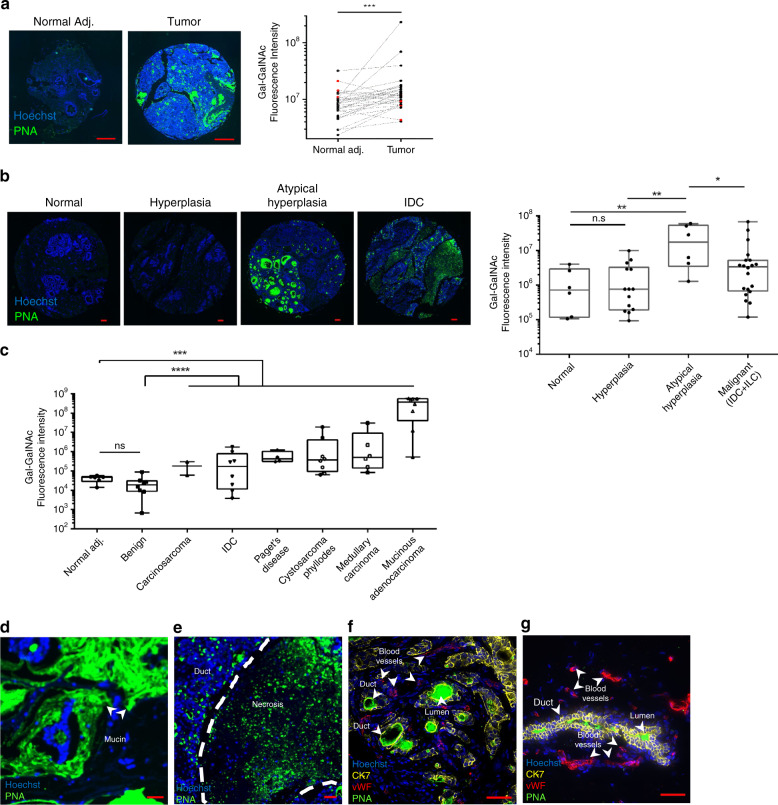
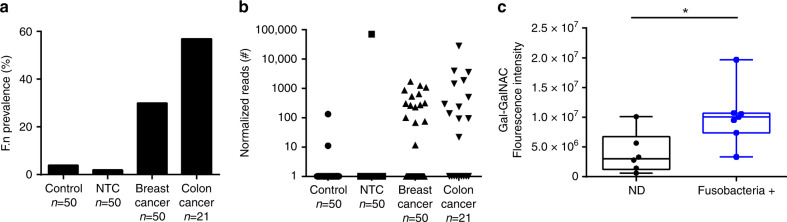
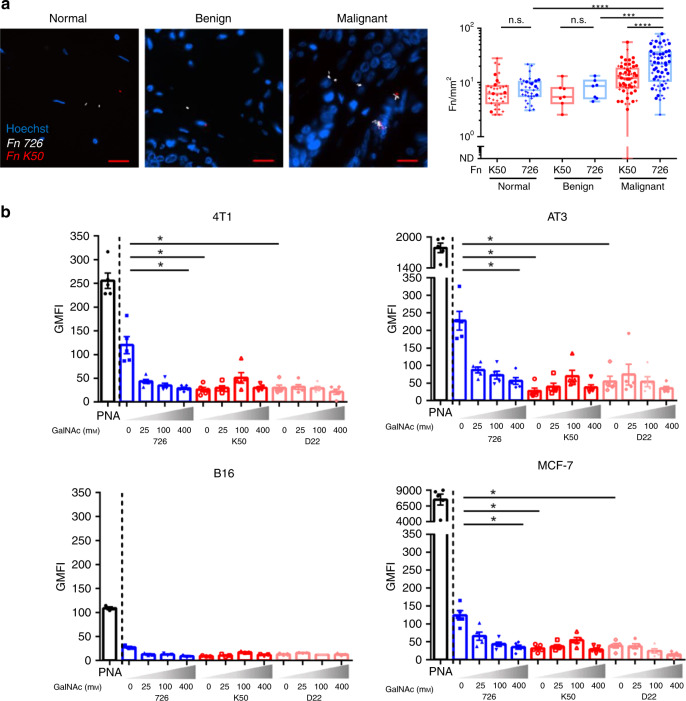
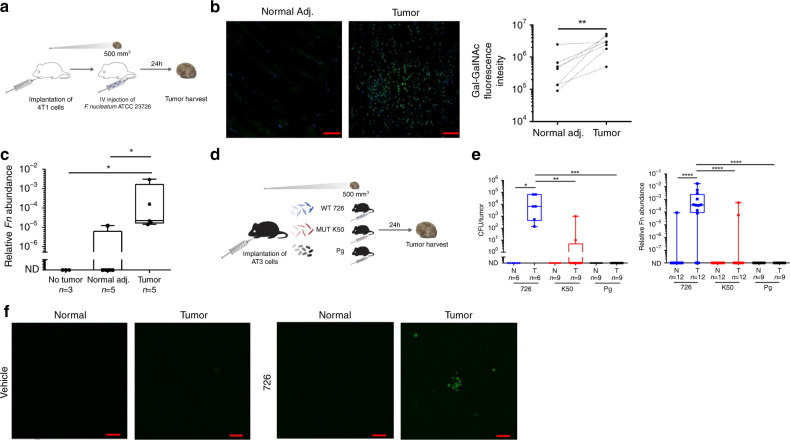
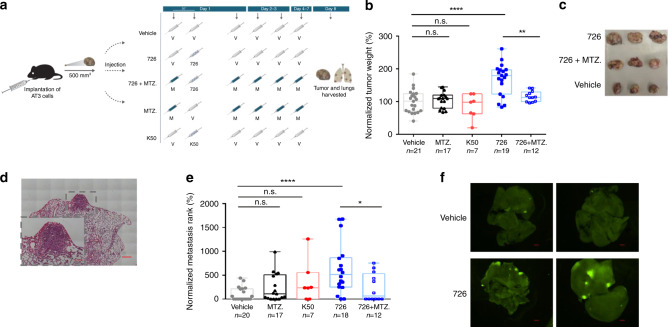
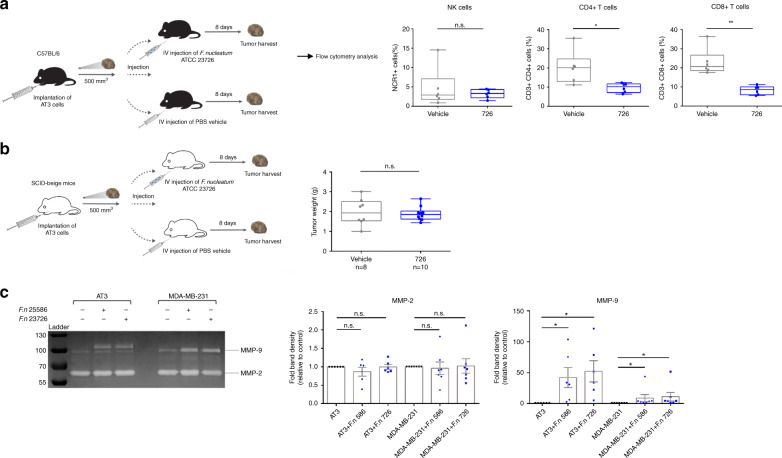
Fusobacterium nucleatum is an oral anaerobe recently found to be prevalent in human colorectal cancer (CRC) where it is associated with poor treatment outcome. In mice, hematogenous F. nucleatum can colonize CRC tissue using its lectin Fap2, which attaches to tumor-displayed Gal-GalNAc. Here, we show that Gal-GalNAc levels increase as human breast cancer progresses, and that occurrence of F. nucleatum gDNA in breast cancer samples correlates with high Gal-GalNAc levels. We demonstrate Fap2-dependent binding of the bacterium to breast cancer samples, which is inhibited by GalNAc. Intravascularly inoculated Fap2-expressing F. nucleatum ATCC 23726 specifically colonize mice mammary tumors, whereas Fap2-deficient bacteria are impaired in tumor colonization. Inoculation with F. nucleatum suppresses accumulation of tumor infiltrating T cells and promotes tumor growth and metastatic progression, the latter two of which can be counteracted by antibiotic treatment. Thus, targeting F. nucleatum or Fap2 might be beneficial during treatment of breast cancer.
Overview
The claims and statistics of this paper haven’t been checked yet.
Free: it reads the open-access text and checks the first 5 claims that cite a source we can check. Create a free account to check every claim.
Integrity signals
Registry
Cites
Statistics
Figures
Verification
Claims the paper makes
The claims and statistics of this paper haven’t been checked yet.
Free: it reads the open-access text and checks the first 5 claims that cite a source we can check. Create a free account to check every claim.
Claims other papers make about this one
Each is checked against this paper’s own text: does it say what the citing paper says it does?
The source backs part of the claim, not all of it — or backs it for a different population, condition or comparison.
In the citing paper
“Mechanistic studies of live microbiota within diverse tumor types have been limited, particularly outside the aerodigestive tract, but many of their effects on the TME appear to suppress local antitumor immunity (15, 23, 34, 46, 75, 101, 102).”
From The microbiome and human cancer (2021) · cites this paper as [34]
Experimental — accuracy not yet measuredThe source backs part of the claim, not all of it — or backs it for a different population, condition or comparison.
In the citing paper
“Immunologically, intratumor microbes often create tolerogenic programming through PRR ligation with lower proportions of TILs, including CD8+ T cells, and occasionally more CD4+CD25+FoxP3+ Tregs, as observed in colorectal, pancreatic, breast, and lung cancers (18, 23, 34, 46, 75, 101, 102).”
From The microbiome and human cancer (2021) · cites this paper as [34]
Experimental — accuracy not yet measuredThe cited source says what the claim attributes to it.
In the citing paper
“Parhi et al. found that F. nucleatum accumulated specifically within tumors and reduced the number of tumor-infiltrating CD4+ and CD8+ T cells, indicating that F. nucleatum-mediated changes in the TIME contributed significantly to tumor growth.336”
From Drug repurposing for cancer therapy (2024) · cites this paper as [336]
In the citing paper
“Emerging evidence also suggests the existence and functional activity of intratumoral bacteria, with overlapping immunohistochemistry, immunofluorescence, electron microscopy, and sequencing data on them in ~10 cancer types.”
From The microbiome and human cancer (2021) · cites this paper as [34]
In the citing paper
“In breast cancer, experiments comparing SCID-beige and C57BL/6 mice with intratumor Fusobacterium suggested lymphoid-lineage cells as key mediators of intratumor microbiota-derived effects on tumor immunosurveillance (34).”
From The microbiome and human cancer (2021) · cites this paper as [34]
2 more claims about this paper
Create a free account to see every claim other papers make about this one.
Self-check
Percentages, sums and reported differences re-computed from the paper’s own numbers.
The self-check needs the paper’s full text.
Citations
Cites
Bray, F., Ferlay, J., Soerjomataram, I., Siegel, R. L., Torre, L. A., & Jemal, A. (2018) · CA: A Cancer Journal for Clinicians · doi:10.3322/caac.21492 · Cited by 84,109
Subramanian, A., Tamayo, P., Mootha, V. K., Mukherjee, S., Ebert, B. L., Gillette, M. A., Paulovich, A., Pomeroy, S. L., Golub, T. R., Lander, E. S., et al. (2005) · Proceedings of the National Academy of Sciences · doi:10.1073/pnas.0506580102 · Cited by 53,625
Robinson, M. D., McCarthy, D. J., & Smyth, G. K. (2010) · Bioinformatics · doi:10.1093/bioinformatics/btp616 · Cited by 41,364
A Simple Sequentially Rejective Multiple Test Procedure
(1979) · Scandinavian Journal of Statistics · doi:10.2307/4615733 · Cited by 21,526
Siegel, R. L., Miller, K. D., & Jemal, A. (2016) · CA: A Cancer Journal for Clinicians · doi:10.3322/caac.21332 · Cited by 16,003
Mootha, V. K., Lindgren, C. M., Eriksson, K.-F., Subramanian, A., Sihag, S., Lehar, J., Puigserver, P., Carlsson, E., Ridderstråle, M., Laurila, E., et al. (2003) · Nature Genetics · doi:10.1038/ng1180 · Cited by 10,197
McCarthy, D. J., Chen, Y., & Smyth, G. K. (2012) · Nucleic Acids Research · doi:10.1093/nar/gks042 · Cited by 5,195
Kostic, A. D., Chun, E., Robertson, L., Glickman, J. N., Gallini, C. A., Michaud, M., Clancy, T. E., Chung, D. C., Lochhead, P., Hold, G. L., et al. (2013) · Cell Host & Microbe · doi:10.1016/j.chom.2013.07.007 · Cited by 2,718
Rubinstein, M. R., Wang, X., Liu, W., Hao, Y., Cai, G., & Han, Y. W. (2013) · Cell Host & Microbe · doi:10.1016/j.chom.2013.07.012 · Cited by 2,476
The human tumor microbiome is composed of tumor type–specific intracellular bacteria
Nejman, D., Livyatan, I., Fuks, G., Gavert, N., Zwang, Y., Geller, L. T., Rotter-Maskowitz, A., Weiser, R., Mallel, G., Gigi, E., et al. (2020) · Science · doi:10.1126/science.aay9189 · Cited by 2,464
Self-citation
Cited by
Items 701–785 of 785
Li, G., Sun, Y., Huang, Y., Lian, J., Wu, S., Luo, D., & Gong, H. (2023) · Figshare · doi:10.6084/m9.figshare.23118995
Li, G., Sun, Y., Huang, Y., Lian, J., Wu, S., Luo, D., & Gong, H. (2023) · Figshare · doi:10.6084/m9.figshare.23119001
Li, G., Sun, Y., Huang, Y., Lian, J., Wu, S., Luo, D., & Gong, H. (2023) · Figshare · doi:10.6084/m9.figshare.23119004
Li, G., Sun, Y., Huang, Y., Lian, J., Wu, S., Luo, D., & Gong, H. (2023) · Figshare · doi:10.6084/m9.figshare.23118998
Takada, Y., Yamamoto, K., Ishikawa, T., Yamao, K., Mizutani, Y., Iida, T., Uetsuki, K., Hirose, T., Maeda, K., Yamamura, T., et al. (2025) · Scientific Reports · doi:10.1038/s41598-025-99899-5
Becker, J., Mertens, A., Rieger, M. D., Conrads, G., & Rezasoltani, S. (2026) · International Journal of Molecular Sciences · doi:10.3390/ijms27114865
Association of Fusobacterium nucleatum with suppressed anti-tumor T cell responses in gastric cancerPreprint
Hsieh, Y.-Y., Liu, W., Wang, C.-T., Kuo, W.-L., & Li, C. (2026) · Research Square · doi:10.21203/rs.3.rs-8216991/v1
Targeting Fusobacterium nucleatum in cancer therapy: A new frontier in solid tumor treatment
Vallini, F., Salvucci, B., Biava, M., Carradori, S., Poce, G., & Tammaro, C. (2026) · European Journal of Medicinal Chemistry · doi:10.1016/j.ejmech.2026.119170
Periodontitis and Pancreatic Cancer: Recent Advances in Mechanisms of Association
邓, 杰. (2026) · Advances in Clinical Medicine · doi:10.12677/acm.2026.163827
A 3D Tumor Spheroid Platform to Model Fusobacterium nucleatum-Induced Tumorigenesis
Chen, Y.-W., Kariv, O., & Ton‐That, H. (2026) · Methods in molecular biology · doi:10.1007/978-1-0716-5388-3_14
A case of breast cancer-related skin ulcer infection caused by Fusobacterium nucleatum
Kondo, R., Kamiyama, J., Taguchi, S., & Kiyota, K. (2023) · Journal of the Japanese Society of Intensive Care Medicine · doi:10.3918/jsicm.31_19
Virulence factors of the microbiome: A functional toolkit for cancer progression (Review)
Vijayakumar, K., & Paul, B. (2026) · Molecular and Clinical Oncology · doi:10.3892/mco.2026.2957
Zhai, Y., Sun, Z., Zhang, S., & Zhao, T. (2026) · Discover Oncology · doi:10.1007/s12672-026-05697-4
Intratumoral microbiota and their emerging role in the tumor microenvironment
Hui, X., Ding, S., Gao, G., Gao, S., Tian, J., Xu, S., Yan, B., Zhang, R., Zhao, T., & Wang, H. (2026) · Microbiome Research Reports · doi:10.20517/mrr.2026.18
Tongue cancer microbial biomarkers: landscape of saliva, cancer tissue, and para-carcinoma tissue
Chen, S., Wang, L., Yang, B., Dai, X., Li, C. J., & Yan, B. (2026) · Frontiers in Medicine · doi:10.3389/fmed.2026.1817840
Microbiome and liquid biopsies
Afrose, R., & Amir, M. (2026) · Elsevier eBooks · doi:10.1016/b978-0-443-40551-8.00021-4
Shang, C., Zhu, Z., Liu, Y., Sun, S., Dong, K., & Chen, X. (2026) · Colloids and Surfaces B Biointerfaces · doi:10.1016/j.colsurfb.2026.116257
Evolutionary Biology of Tumor Initiation and Progression
(2024) · Frontiers research topics · doi:10.3389/978-2-8325-5099
Exploring the impact of probiotics and tumor-resident commensal bacteria on cancer
McPherson, A. C. (2024) · D-Scholarship@Pitt (University of Pittsburgh)
The Relationship between Gut Microbiota and Thyroid Cancer
王, 浩. (2025) · Advances in Clinical Medicine · doi:10.12677/acm.2025.151004
Wang, L., Gao, D., Chen, X., & Chen, Y. (2026) · Marine Drugs · doi:10.3390/md24050148
Multi-omics analyses reveal multimodal Fusobacterium DNA damage perturbations in colorectal cancerPreprint
Kataria, R., Quist, J., Lee, S., Megalios, A., Sawyer, E. J., Hardiman, T., Liu, C., Kelly, K. A., Portlock, T., Alon‐Maimon, T., et al. (2022) · Research Square · doi:10.21203/rs.3.rs-1642872/v1
Self-citationBarrett, M. (2021) · Cork Open Research Archive (University College Cork, Ireland)
Tumor Microenvironment in Triple-Negative Breast Cancer and Targeting Approaches
Li, Y., Chen, Y., Mu, Y., Xiu, X., & Qin, W. (2026) · Cancer Biome and Targeted Therapy · doi:10.66505/cbtt.v1i1.5
Targeting tumour-associated microbiota: a new strategy to hit tumour cells in the lung and breast
Bernardo, G. (2026) · Open Research Online (The Open University) · doi:10.21954/ou.ro.00108964
Liang, L., Hu, F., Wang, X., Tang, C., Chun, W., Jiang, G., Zhao, C., Zhang, Y., & Li, C. (2026) · Clinical and Translational Medicine · doi:10.1002/ctm2.70862
Chapter 4 Engineering microbial cells for cancer
Akboğa, D., Doğruer, A., Albayrak, D., Shahid, G. B., & Şeker, U. Ö. Ş. (2024) · De Gruyter eBooks · doi:10.1515/9783111329499-004
Licata, A. G. (2026) · Open Research Online (The Open University) · doi:10.21954/ou.ro.00109330
Ma, R., Huang, J., Chen, Y., Wang, H., Zou, H., Zhao, W., & Deng, Z. (2026) · Interdisciplinary medicine · doi:10.1002/inmd.70131
Jian, X., Liu, Z., Zhang, J., Li, Y., Xie, L., Zhao, G., Li, B., Li, J., Peng, C., Wan, M., et al. (2025) · bioRxiv (Cold Spring Harbor Laboratory) · doi:10.1101/2025.06.02.657449
Wang, S., Wang, K., Ji, X., Chen, D., Shen, Q., Yu, Y., Gu, Y., Liu, Y., Jiang, Y., Zhu, L., et al. (2022) · Research Square · doi:10.21203/rs.3.rs-1587745/v1
Britton, T. A. (2024) · eScholarship (California Digital Library)
Small RNA-associated RNA-binding proteins in \(Fusobacterium\) \(nucleatum\)
Zhu, Y. (2024) · Online Publication Service of Würzburg University (Würzburg University) · doi:10.25972/opus-37073
Exploring the link between gut microbiome and cancer: Metabolic implications and therapeutic avenue
Surendran, V., Monika Kaushik, S., Guptha, P. M., & Mohammed Yusuf, S. (2025) · Elsevier eBooks · doi:10.1016/b978-0-443-33459-7.00002-8
The pro-metastatic role of microbiota in tumors: a comprehensive review
Chen, X.-D., Liu, X., Gong, J., & Du, S. (2026) · Cancer Cell International · doi:10.1186/s12935-026-04390-4
Zhang, X.-R., & Gao, R. (2026) · Translational Cancer Research · doi:10.21037/tcr-2026-0674
Koshiishi, I., Nagai, S., Yuzawa, Y., & Takigawa, Y. (2023) · Biological and Pharmaceutical Bulletin · doi:10.1248/bpb.b23-00793
Feng, M., Yu, Y. U., Du, J., & Wang, H. (2026) · BMC Biotechnology · doi:10.1186/s12896-026-01193-3
Yuan, Y., Wang, C., Li, N., Chen, H., Zhou, Z., Zhang, C., Zhang, H., Wang, S., Yu, Q., Cheng, X., et al. (2026) · ACS Applied Nano Materials · doi:10.1021/acsanm.6c01391
Zhang, Q., Wang, D., Qin, K., Fan, W., Wan, Y., Zhuo, G., Ji, L., Liu, G., & Pan, Y. (2026) · Biochimica et Biophysica Acta (BBA) - Molecular Basis of Disease · doi:10.1016/j.bbadis.2026.168378
Mandarano, M., Sulla, A., Vascelli, G., Renga, G., Floridi, C., Pelliccia, C., Sidoni, A., Oikonomou, V., & Zelante, T. (2026) · Frontiers in Immunology · doi:10.3389/fimmu.2026.1984436
Guo, W., Xiao, J., Xu, Z., Zhang, L., Shen, Y., & Wang, H. (2026) · Frontiers in Cellular and Infection Microbiology · doi:10.3389/fcimb.2026.1949387
Culurciello, R., Cristiano, M., Nardo, I. D., Palumbo, I., Piccolo, E., Oliva, R., Bosso, A., Donizetti, A., Notomista, E., & Pizzo, E. (2026) · FEBS Journal · doi:10.1111/febs.70484
Fan, L., Hong, G., Sun, J., Zhou, Y., & Shi, J. (2026) · Journal of Oral Microbiology · doi:10.1080/20002297.2026.2758491
Costa, M. G. G., Amorim, A. R., Bernardino, I. C., dos Santos, A. C., da Silva, S. P. P., WINTER, J. C., Cedroni, M. L., Santos, S. C., da Costa, A. L. L. R., Mulisani, G. B., et al. (2026) · Editora Pasteur eBooks · doi:10.59290/6002022024
Shen, J., Ni, Y., Guan, Q., Li, R., Cao, H., Geng, Y., & You, Q. (2023) · doi:10.3389/fmicb.2023.1121863.s001
Hoskinson, C., Jiang, R. Y., & Stiemsma, L. T. (2023) · doi:10.3389/fonc.2023.1198259.s001
Аванесов, А. М., Gvozdikova, E. N., Simionidi, E. K., & Алексеевна, Т. В. (2025) · RUDN Journal of Medicine · doi:10.22363/2313-0245-2025-29-4-510-519
Exploring the gut microbiota of breast cancer patients
Teng, N. M. Y. (2023) · UEA Digital Repository (University of East Anglia)
Mikrobielle Regulation von Hexokinase 2 und deren Einfluss auf Entzündung
Hinrichsen, F. C. (2025) · MACAU: Open Access Repository of Kiel University
Mendelian randomized integration of GEO and eQTL data revealed genes associated with periodontitisPreprint
Jiang, Z.-H., Ni, X.-B., Fu, Q.-C., Qiu, G., Wei, Y., Song, Y., & He, W. (2024) · Research Square · doi:10.21203/rs.3.rs-4044462/v1
Novel insights in the pathogenesis of bovine digital dermatitis and udder cleft dermatitis
Vermeersch, A.-S. (2023) · Ghent University Academic Bibliography (Ghent University)
Anil, K. O., Ragunagam, G. S., & Muthukaliannan, G. K. (2026) · Research Square · doi:10.21203/rs.3.rs-11193421/v1
Li, Z., Liu, J., Fu, R., Wen, X., Huang, X., Gopinath, D., & Zhang, L. (2025) · bioRxiv (Cold Spring Harbor Laboratory) · doi:10.1101/2025.10.31.685796
Galvin, S. (2024) · Trinity's Access to Research Output (TARA) (Trinity College Dublin)
Liu, W., Zhang, H., Zhang, L., Wang, W., Liu, B., Li, R., Yao, Y., & Xie, L. (2026) · Breast Cancer Research · doi:10.1186/s13058-026-02351-3
Beyond Seed and Soil: A Bacterial-Passenger Framework for Organ-Tropic Breast Cancer Metastasis
Yumian, H., Li, Z., Gao, F., Huang, L., & Sun, G. (2026) · Research · doi:10.34133/research.1429
Metagenome and Metabolome Analysis of Japanese Lynch Syndrome Cohort
FELIX, S., & Salim, F. (2024) · Institutional Repositories DataBase (IRDB)
Dong, L., Song, Y., Li, X., Wu, J., Luo, X., Du, Y., & Xu, T. (2026) · Critical Reviews in Oncology/Hematology · doi:10.1016/j.critrevonc.2026.105698
Ban, C., Lin, H., Cheng, M., Chen, S., Hao, Z., Shen, Y., 沙裕彬, Xue, Y., Feng, J., Chen, J., et al. (2026) · ACS Applied Materials & Interfaces · doi:10.1021/acsami.6c15932
Microbiome-Modulating Nanoplatforms for Breast Cancer Therapy
Pawar, A., Leharwani, M., Gupta, G., Goh, K. W., Sharma, A., Sahebkar, A., & Kesharwani, P. (2026) · Cancer Biome and Targeted Therapy · doi:10.66505/cbtt.v1i4.59
Jones, J., Shi, Q., Nath, R. R., & Brito, I. L. (2024) · doi:10.1371/journal.pone.0297897.r005
Khatrawi, E. M. (2025) · Journal of Computational Biophysics and Chemistry · doi:10.1142/s2737416525501017
Yang, M. (2024) · Digital Repository Service (Northeastern University) · doi:10.17760/d20659803
The Microbiome in Cancer: Composition, Mechanisms, and Therapeutic Implications
Zhang, X., Lou, N., Dong, J., Li, H., Wang, N., Li, Y., & Han, X. (2026) · MedComm · doi:10.1002/mco2.71133
Liu, B., Li, Y., Suo, L., Zhang, W., Cao, H., Wang, R., Luan, J., Yu, X., Dong, L., Wang, W., et al. (2022) · doi:10.3389/fonc.2022.1058436.s004
Selvaraj, A. (2023) · Trinity's Access to Research Output (TARA) (Trinity College Dublin)
Gene fusions and microRNAs in cancer
Hafstað, V. (2024) · Lund University Publications (Lund University)
Microbiome-Mediated Modulation of the Tumor Microenvironment and Immunotherapeutic Responses
Atoom, A. M., Allela, O. Q. B., Nayak, P. P., Arora, V., Singla, S., Athab, Z. H., Eshmetov, R., & Sadikova, S. (2026) · Immunological Investigations · doi:10.1080/08820139.2026.2757128
Wang, Y., Liu, Z., Chen, Q., Yi, L., Xu, Z., Cai, M., Qin, J., Zhang, Y., Du, G., Hong, J., et al. (2022) · doi:10.3389/fmicb.2022.945315.s001
Kexin, L. I., Yang, J., Xiao, K., Duan, S., & Kunmin, X. I. A. O. (2026) · PubMed Central · doi:10.19852/j.cnki.jtcm.2026.02.021
Tanaka, Y., & Tanaka, Y. (2026) · Kagoshima University Repository
Wang, X., Zheng, Y., Chen, X., Peng, C., Zhou, S., Shen, S., Zhao, S., & Wang, T. (2023) · doi:10.3389/fmicb.2023.1231354.s001
Crohn’s disease: bacteria in the mouth may be a cause – here’s why
Ho, G., & Whelan, R. (2023) · The Conversation · doi:10.64628/ab.ukjuqxtye
Author response: RadD from Fusobacterium nucleatum Engages NKp46 to Promote Antitumor Cytotoxicity
Rishiq, A., Galaski, J., Bsoul, R., Liu, M., Darawshe, R., Lux, R., Bachrach, G., & Mandelboim, O. (2025) · eLife · doi:10.7554/elife.108439.1.sa3
Self-citationBonsu, P. B., Fosu, K., & Nyarko, S. B. (2026) · Preprints.org · doi:10.20944/preprints202601.1015.v1
Tracking Surface Protein Assembly and Peptidoglycan Biosynthesis in Fusobacterium nucleatum
Britton, T. A., Sanchez, B., Das, A., & Ton‐That, H. (2026) · Methods in molecular biology · doi:10.1007/978-1-0716-5388-3_8
Zhang, J., Kong, X., Wu, X., Tao, D., Li, X., & Cheng, H. (2026) · International Journal of Nanomedicine · doi:10.2147/ijn.s616751
Montesano, C., Egbo, D., Stone, J., Wong, C., & John, S. S. (2026) · International Surgery Journal · doi:10.18203/2349-2902.isj20263364
Wang, Y., Guo, H., Gao, X., & Wang, J. (2021) · doi:10.3389/fonc.2021.754788.s001
Gomes, M., de Matos, J., Destefani, W., Stringari, L., Sinhoreti, M., Fuhrmeister, G., Schneider, M., Queiroz, D., Feitosa, A., & Rangel, L. (2026) · Journal of Clinical and Experimental Dentistry · doi:10.4317/jced.64325
Metadata
- Authors
- Parhi, L., Alon-Maimon, T., Sol, A., Nejman, D., Shhadeh, A., Fainsod-Levi, T., Yajuk, O., Isaacson, B., Abed, J., Maalouf, N., Nissan, A., Sandbank, J., Yehuda-Shnaidman, E., Ponath, F., Vogel, J., Mandelboim, O., Granot, Z., Straussman, R., & Bachrach, G.
- Affiliations
- Hebrew University of Jerusalem (IL)
- Weizmann Institute of Science (IL)
- Sheba Medical Center (IL)
- Maccabi Healthcare Services (IL)
- Helmholtz Institute for RNA-based Infection Research (DE)
- University of Würzburg (DE)
- Corresponding author
- Bachrach, Gilad
- ORCID
- Venue
- Nature Communications
- Published
- 2020-06-26
- Volume
- 11
- Issue
- 1
- Pages
- 3259-3259
- ISSN
- 2041-1723 (ISSN-L)
- PMC
- PMC7320135
- OpenAlex
- W3037222958
- Cited by
- 716
- References
- 57
- Citations by year
- 2026: 106 · 2025: 173 · 2024: 156 · 2023: 123 · 2022: 107 · 2021: 45 · 2020: 6
- FWCI
- 36.62
- Type
- journal article
- Language
- en
- Open access
- gold
- doi.org
- Licence
- cc-by
- creativecommons.org/licenses/by/4.0 (tdm)
- creativecommons.org/licenses/by/4.0 (vor)
- Locations
- Nature Communications (publishedVersion, cc-by)
- PubMed Central (publishedVersion, cc-by)
- PubMed (publishedVersion)
- RePEc: Research Papers in Economics (submittedVersion)
- DOAJ (DOAJ: Directory of Open Access Journals) (submittedVersion, cc-by-sa)
- HZI (Helmholtz Centre for Infection Research) (submittedVersion, cc-by-nc-sa)
- Funders
- Israel Cancer Research Fund (Project grant)
- Israel Science Foundation (Moked grant)
- Israel Ministry of Science and Technology Personalized Medicine grant
- Topics
- Life Sciences › Biochemistry, Genetics and Molecular Biology › Biotechnology › Bacterial Cancer Therapy
- Life Sciences › Biochemistry, Genetics and Molecular Biology › Molecular Biology › Gut microbiota and health
- Health Sciences › Dentistry › Periodontics › Oral microbiology and periodontitis research
- Keywords
- Fusobacterium nucleatum, breast cancer, tumor colonization, tumor-associated bacteria, tumor growth, metastasis, tumor-infiltrating T cells, antibiotic therapy, oral microbiota
- MeSH terms
- Animals, Anti-Bacterial Agents, Bacterial Proteins, Breast Neoplasms, Disease Models, Animal, DNA, Bacterial, Female, Galactosamine, Galactose, Humans, Immunity, Lung Neoplasms, Mice, Inbred BALB C, Neoplasm Metastasis, Colony Count, Microbial, Genome, Bacterial, Fusobacterium nucleatum, Disease Progression, Cell Line, Tumor, Cell Proliferation
About these checks
Registry, retraction, Cites and statistics results are computed, not judged, with one exception: a printed reference that no index lists is read once by a model before it counts as a citation error. Claims are extracted by a model and kept only when their quote appears verbatim in the text; each cited source is then checked, with a model’s help, for whether it says what the claim relies on. Those verdicts can be wrong — read the claim’s quote and the cited source before relying on one.
Statistics and arithmetic are recomputed, not judged.
Confidence bands are shown only for fields calibrated on our annotated test set. None is calibrated yet, so no band is shown.
What counts as a claim ›How we measure confidence ›How we check this ›
Are you an author, or do you see a problem with this page? Request a review
Data sources
Bibliographic data: Semantic Scholar, OpenAlex, Crossref.
Contains information from the Semantic Scholar Academic Graph Datasets, made available under the ODC Attribution License (ODC-BY 1.0).
Semantic Scholar’s data is described in: Kinney, R., et al. (2023). The Semantic Scholar Open Data Platform. arXiv:2301.10140.
