

Breast cancer colonization by Fusobacterium nucleatum accelerates tumor growth and metastatic progression
Open accessThe DOI matches its Crossref record; 55 of the 57 references it cites were found in a registry or an index.
Abstract
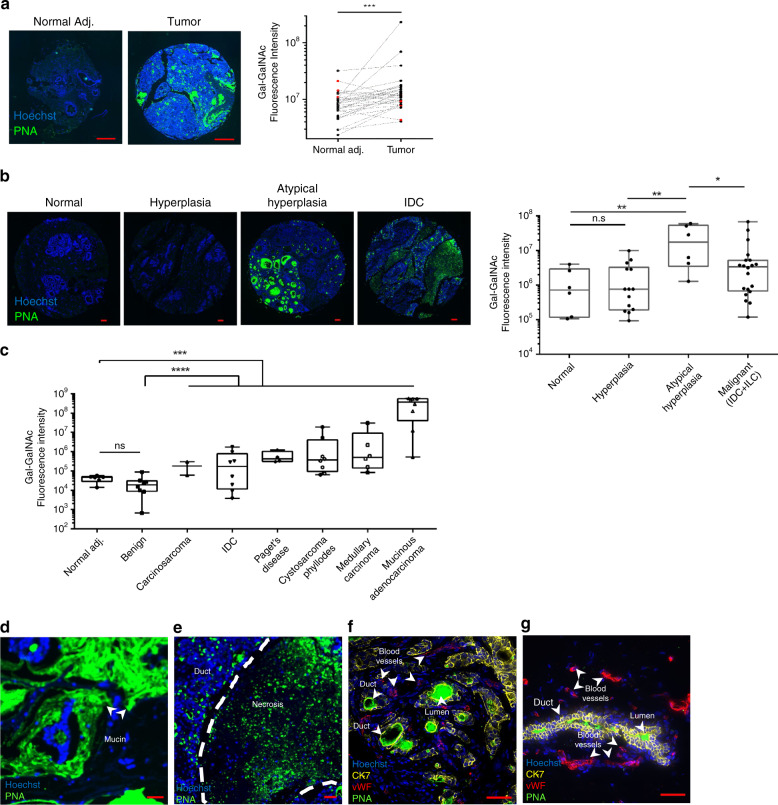
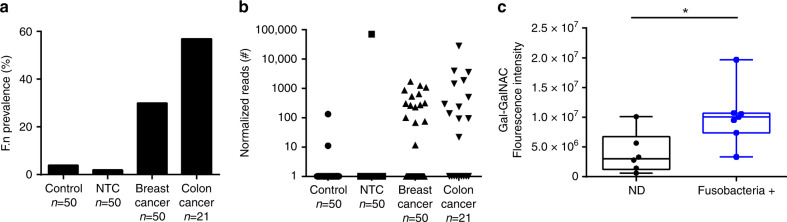
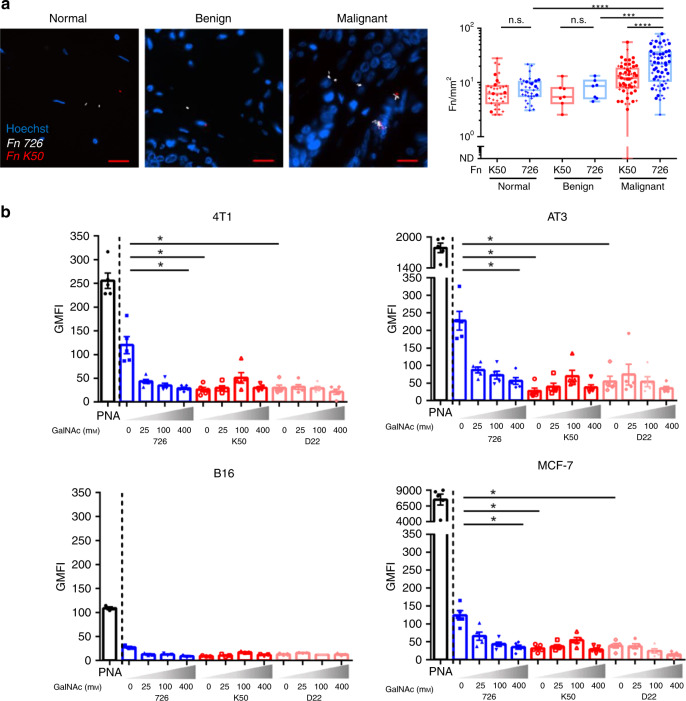
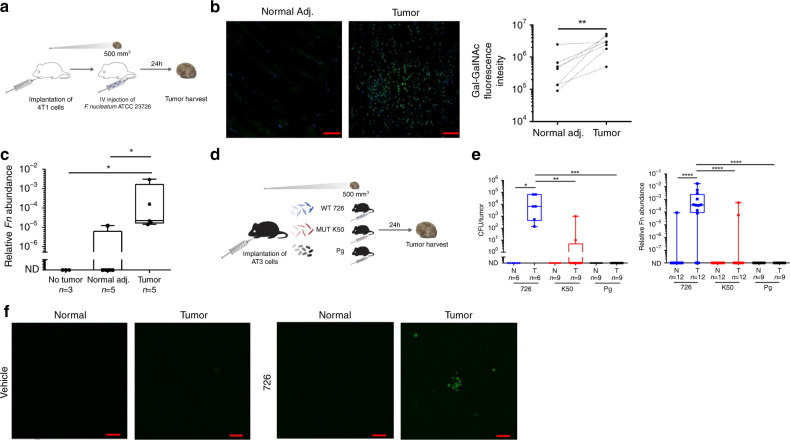
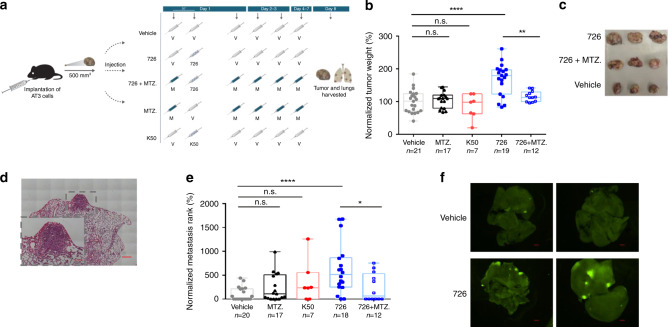
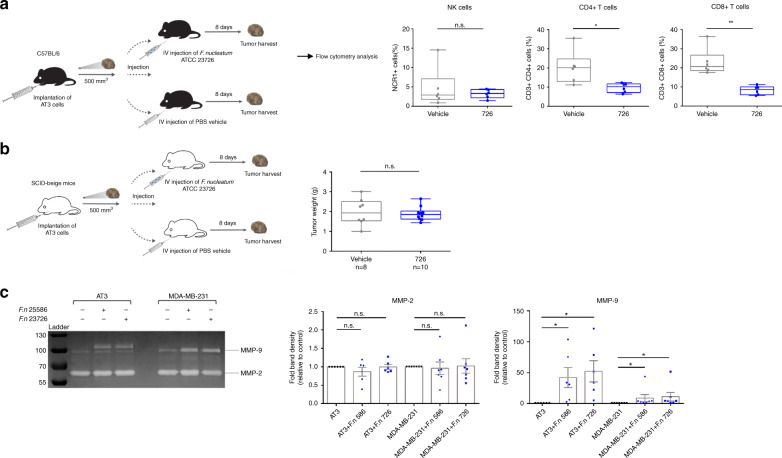
Fusobacterium nucleatum is an oral anaerobe recently found to be prevalent in human colorectal cancer (CRC) where it is associated with poor treatment outcome. In mice, hematogenous F. nucleatum can colonize CRC tissue using its lectin Fap2, which attaches to tumor-displayed Gal-GalNAc. Here, we show that Gal-GalNAc levels increase as human breast cancer progresses, and that occurrence of F. nucleatum gDNA in breast cancer samples correlates with high Gal-GalNAc levels. We demonstrate Fap2-dependent binding of the bacterium to breast cancer samples, which is inhibited by GalNAc. Intravascularly inoculated Fap2-expressing F. nucleatum ATCC 23726 specifically colonize mice mammary tumors, whereas Fap2-deficient bacteria are impaired in tumor colonization. Inoculation with F. nucleatum suppresses accumulation of tumor infiltrating T cells and promotes tumor growth and metastatic progression, the latter two of which can be counteracted by antibiotic treatment. Thus, targeting F. nucleatum or Fap2 might be beneficial during treatment of breast cancer.
Overview
The claims and statistics of this paper haven’t been checked yet.
Free: it reads the open-access text and checks the first 5 claims that cite a source we can check. Create a free account to check every claim.
Integrity signals
Registry
Cites
Statistics
Figures
Verification
Claims the paper makes
The claims and statistics of this paper haven’t been checked yet.
Free: it reads the open-access text and checks the first 5 claims that cite a source we can check. Create a free account to check every claim.
Claims other papers make about this one
Each is checked against this paper’s own text: does it say what the citing paper says it does?
The source backs part of the claim, not all of it — or backs it for a different population, condition or comparison.
In the citing paper
“Mechanistic studies of live microbiota within diverse tumor types have been limited, particularly outside the aerodigestive tract, but many of their effects on the TME appear to suppress local antitumor immunity (15, 23, 34, 46, 75, 101, 102).”
From The microbiome and human cancer (2021) · cites this paper as [34]
Experimental — accuracy not yet measuredThe source backs part of the claim, not all of it — or backs it for a different population, condition or comparison.
In the citing paper
“Immunologically, intratumor microbes often create tolerogenic programming through PRR ligation with lower proportions of TILs, including CD8+ T cells, and occasionally more CD4+CD25+FoxP3+ Tregs, as observed in colorectal, pancreatic, breast, and lung cancers (18, 23, 34, 46, 75, 101, 102).”
From The microbiome and human cancer (2021) · cites this paper as [34]
Experimental — accuracy not yet measuredThe cited source says what the claim attributes to it.
In the citing paper
“Parhi et al. found that F. nucleatum accumulated specifically within tumors and reduced the number of tumor-infiltrating CD4+ and CD8+ T cells, indicating that F. nucleatum-mediated changes in the TIME contributed significantly to tumor growth.336”
From Drug repurposing for cancer therapy (2024) · cites this paper as [336]
In the citing paper
“Emerging evidence also suggests the existence and functional activity of intratumoral bacteria, with overlapping immunohistochemistry, immunofluorescence, electron microscopy, and sequencing data on them in ~10 cancer types.”
From The microbiome and human cancer (2021) · cites this paper as [34]
In the citing paper
“In breast cancer, experiments comparing SCID-beige and C57BL/6 mice with intratumor Fusobacterium suggested lymphoid-lineage cells as key mediators of intratumor microbiota-derived effects on tumor immunosurveillance (34).”
From The microbiome and human cancer (2021) · cites this paper as [34]
2 more claims about this paper
Create a free account to see every claim other papers make about this one.
Self-check
Percentages, sums and reported differences re-computed from the paper’s own numbers.
The self-check needs the paper’s full text.
Citations
Cites
Bray, F., Ferlay, J., Soerjomataram, I., Siegel, R. L., Torre, L. A., & Jemal, A. (2018) · CA: A Cancer Journal for Clinicians · doi:10.3322/caac.21492 · Cited by 84,109
Subramanian, A., Tamayo, P., Mootha, V. K., Mukherjee, S., Ebert, B. L., Gillette, M. A., Paulovich, A., Pomeroy, S. L., Golub, T. R., Lander, E. S., et al. (2005) · Proceedings of the National Academy of Sciences · doi:10.1073/pnas.0506580102 · Cited by 53,625
Robinson, M. D., McCarthy, D. J., & Smyth, G. K. (2010) · Bioinformatics · doi:10.1093/bioinformatics/btp616 · Cited by 41,364
A Simple Sequentially Rejective Multiple Test Procedure
(1979) · Scandinavian Journal of Statistics · doi:10.2307/4615733 · Cited by 21,526
Siegel, R. L., Miller, K. D., & Jemal, A. (2016) · CA: A Cancer Journal for Clinicians · doi:10.3322/caac.21332 · Cited by 16,003
Mootha, V. K., Lindgren, C. M., Eriksson, K.-F., Subramanian, A., Sihag, S., Lehar, J., Puigserver, P., Carlsson, E., Ridderstråle, M., Laurila, E., et al. (2003) · Nature Genetics · doi:10.1038/ng1180 · Cited by 10,197
McCarthy, D. J., Chen, Y., & Smyth, G. K. (2012) · Nucleic Acids Research · doi:10.1093/nar/gks042 · Cited by 5,195
Kostic, A. D., Chun, E., Robertson, L., Glickman, J. N., Gallini, C. A., Michaud, M., Clancy, T. E., Chung, D. C., Lochhead, P., Hold, G. L., et al. (2013) · Cell Host & Microbe · doi:10.1016/j.chom.2013.07.007 · Cited by 2,718
Rubinstein, M. R., Wang, X., Liu, W., Hao, Y., Cai, G., & Han, Y. W. (2013) · Cell Host & Microbe · doi:10.1016/j.chom.2013.07.012 · Cited by 2,476
The human tumor microbiome is composed of tumor type–specific intracellular bacteria
Nejman, D., Livyatan, I., Fuks, G., Gavert, N., Zwang, Y., Geller, L. T., Rotter-Maskowitz, A., Weiser, R., Mallel, G., Gigi, E., et al. (2020) · Science · doi:10.1126/science.aay9189 · Cited by 2,464
Self-citation
Cited by
Items 101–200 of 785
Bacterial‐Mediated Tumor Therapy: Old Treatment in a New Context
Liu, Y., Niu, L., Li, N., Wang, Y., Liu, M., Su, X., Bao, X., Yin, B., & Shen, S. (2023) · Advanced Science · doi:10.1002/advs.202205641 · Cited by 60
From DNA Damage to Cancer Progression: Potential Effects of Cytolethal Distending Toxin
Lai, Y.-R., Chang, Y., Ma, J., Chiu, C., Kuo, M., & Lai, C. (2021) · Frontiers in Immunology · doi:10.3389/fimmu.2021.760451 · Cited by 60
Fusobacterium nucleatum and Colorectal Cancer
Li, R., Shen, J., & Xu, Y. (2022) · Infection and Drug Resistance · doi:10.2147/idr.s357922 · Cited by 59
Chen, L., Shen, J., Kang, Z., Zhang, Z., Zheng, Z., Zhang, L., Xiao, Z., Zhang, Q., Fang, H., Zhou, J., et al. (2024) · Chem · doi:10.1016/j.chempr.2024.01.030 · Cited by 58
A host–microbiota interactome reveals extensive transkingdom connectivity
Sonnert, N. D., Rosen, C. E., Ghazi, A. R., Franzosa, E. A., Lowey, B., González-Hernández, J. A., Huck, J. D., Yang, Y., Dai, Y., Rice, T., et al. (2024) · Nature · doi:10.1038/s41586-024-07162-0 · Cited by 58
Salvucci, M., Crawford, N., Stott, K. J., Bullman, S., Longley, D. B., & Prehn, J. H. M. (2021) · Gut · doi:10.1136/gutjnl-2021-325193 · Cited by 58
The intratumoral microbiome: Characterization methods and functional impact
Heymann, C. J. F., Bard, J.-M., Heymann, M.-F., Heymann, D., & Bobin-Dubigeon, C. (2021) · Cancer Letters · doi:10.1016/j.canlet.2021.09.009 · Cited by 57
Periodontal bacteria influence systemic diseases through the gut microbiota
Xi, M., Ruan, Q., Zhong, S., Li, J., Qi, W., Xie, C., Wang, X., Abuduxiku, N., & Ni, J. (2024) · Frontiers in Cellular and Infection Microbiology · doi:10.3389/fcimb.2024.1478362 · Cited by 57
Jiang, S., Ma, W., Ma, C., Zhang, Z., Zhang, W., & Zhang, J. (2024) · Gut Microbes · doi:10.1080/19490976.2024.2341717 · Cited by 57
The onco-immunological implications of Fusobacterium nucleatum in breast cancer
van der Merwe, M., van Niekerk, G., Botha, A., & Engelbrecht, A. (2021) · Immunology Letters · doi:10.1016/j.imlet.2021.02.007 · Cited by 56
T cell exhaustion in human cancers
Kang, K., Lin, X., Chen, P., Liu, H., Liu, F., Xiong, W., Li, G., Yi, M., Li, X., Wang, H., et al. (2024) · Biochimica et Biophysica Acta (BBA) - Reviews on Cancer · doi:10.1016/j.bbcan.2024.189162 · Cited by 56
RNA landscape of the emerging cancer-associated microbe Fusobacterium nucleatum
Ponath, F., Tawk, C., Zhu, Y., Barquist, L., Faber, F., & Vogel, J. (2021) · Nature Microbiology · doi:10.1038/s41564-021-00927-7 · Cited by 56
Self-citationKabwe, M., Dashper, S. G., Bachrach, G., & Tucci, J. (2021) · FEMS Microbiology Reviews · doi:10.1093/femsre/fuab017 · Cited by 55
Self-citationZhao, F., An, R., Ma, Y., Yu, S., Gao, Y., Wang, Y., Yu, H., Xie, X., & Zhang, J. (2025) · Clinical and Translational Medicine · doi:10.1002/ctm2.70273 · Cited by 55
Fusobacterium in the microbiome: from health to disease across the oral–gut axis and beyond
Li, Z., Liu, J., Li, J., Zhou, Z., Huang, X., Gopinath, D., Luo, P., Wang, Q., & Shan, D. (2025) · npj Biofilms and Microbiomes · doi:10.1038/s41522-025-00838-z · Cited by 55
Desai, S., Dharavath, B., Manavalan, S., Rane, A., Redhu, A. K., Sunder, R., Butle, A. B., Mishra, R., Joshi, A., Togar, T., et al. (2022) · NAR Cancer · doi:10.1093/narcan/zcac006 · Cited by 55
Li, W., Zhang, Z., Wu, R., Mao, M., Ji, Y., Wang, X., Dou, S., Yan, M., & Chen, W. (2025) · Journal of Extracellular Vesicles · doi:10.1002/jev2.70070 · Cited by 54
Intratumoral bacteria are an important “accomplice” in tumor development and metastasis
Wang, G., He, X., & Wang, Q. (2022) · Biochimica et Biophysica Acta (BBA) - Reviews on Cancer · doi:10.1016/j.bbcan.2022.188846 · Cited by 52
Filippou, C., Themistocleous, S., Marangos, G., Panayiotou, Y., Fyrilla, M., Kousparou, C. A., Pana, Z. D., Tsioutis, C., Johnson, E. O., & Yiallouris, A. (2024) · International Journal of Molecular Sciences · doi:10.3390/ijms25021110 · Cited by 52
The conundrum of breast cancer and microbiome - A comprehensive review of the current evidence
Papakonstantinou, A., Nuciforo, P. G., Borrell, M., Zamora, E., Pimentel, I., Saura, C., & Oliveira, M. (2022) · Cancer Treatment Reviews · doi:10.1016/j.ctrv.2022.102470 · Cited by 51
Microbiota in cancer: molecular mechanisms and therapeutic interventions
Chen, Z., Guan, D., Wang, Z., Li, X., Dong, S., Huang, J., & Zhou, W. (2023) · MedComm · doi:10.1002/mco2.417 · Cited by 50
Gut Microbiota and Tumor Immune Escape: A New Perspective for Improving Tumor Immunotherapy
He, Y., Huang, J., Li, Q., Xia, W., Zhang, C., Liu, Z., Xiao, J., Yi, Z., Deng, H., Xiao, Z., et al. (2022) · Cancers · doi:10.3390/cancers14215317 · Cited by 50
Lu, Y., Xu, L., Chen, W., Liu, W., Zhang, Y., Zhou, Q., Wang, N., Zhang, Y., Bai, H., Xu, S. Q., et al. (2025) · Cancer Discovery · doi:10.1158/2159-8290.cd-24-1259 · Cited by 50
Antimicrobial exposure is associated with decreased survival in triple-negative breast cancer
Ransohoff, J. D., Ritter, V., Purington, N., Andrade, K., Han, S. S., Liu, M., Liang, S., John, E. M., Gomez, S. L., Telli, M. L., et al. (2023) · Nature Communications · doi:10.1038/s41467-023-37636-0 · Cited by 49
Fu, Y., Li, J., Cai, W., Huang, Y., Liu, X., Ma, Z., Tang, Z., Bian, X., Zheng, J., Jiang, J., et al. (2024) · Acta Pharmaceutica Sinica B · doi:10.1016/j.apsb.2023.11.018 · Cited by 48
Conde‐Pérez, K., Aja‐Macaya, P., Buetas, E., Trigo‐Tasende, N., Nasser‐Ali, M., Rumbo‐Feal, S., Nión, P., Arribas, E. M., Estévez, L. S., Otero‐Alén, B., et al. (2024) · Molecular Oncology · doi:10.1002/1878-0261.13604 · Cited by 48
The Underlying Mechanisms and Emerging Strategies to Overcome Resistance in Breast Cancer
Kannan, K., Srinivasan, A., Kannan, A., & Ali, N. (2025) · Cancers · doi:10.3390/cancers17172938 · Cited by 47
Tumor microenvironment‐regulating nanomedicine design to fight multi‐drug resistant tumors
Xu, Q., Lan, X., Lin, H., Xi, Q., Wang, M., Quan, X., Yao, G., Yu, Z., Wang, Y., & Yu, M. (2022) · Wiley Interdisciplinary Reviews Nanomedicine and Nanobiotechnology · doi:10.1002/wnan.1842 · Cited by 46
Common Pathogenetic Mechanisms Underlying Aging and Tumor and Means of Interventions
Shen, W., He, J., Hou, T., Si, J., & Chen, S. (2022) · Aging and Disease · doi:10.14336/ad.2021.1208 · Cited by 45
Intratumour microbiome of pancreatic cancer
Guan, S.-W., Lin, Q., & Yu, H. (2023) · World Journal of Gastrointestinal Oncology · doi:10.4251/wjgo.v15.i5.713 · Cited by 45
Current Understanding of Microbiomes in Cancer Metastasis
Liu, J., Luo, F., Wen, L., Zhao, Z., & Sun, H. (2023) · Cancers · doi:10.3390/cancers15061893 · Cited by 45
Unveiling the intratumoral microbiota within cancer landscapes
Che, S., Yan, Z., Feng, Y., & Hai, Z. (2024) · iScience · doi:10.1016/j.isci.2024.109893 · Cited by 44
Gut microbiota interact with breast cancer therapeutics to modulate efficacy
Arnone, A. A., Ansley, K. C., Heeke, A. L., Howard-McNatt, M. M., & Cook, K. L. (2025) · EMBO Molecular Medicine · doi:10.1038/s44321-024-00185-0 · Cited by 44
Emerging Role of Gut Microbiota in Breast Cancer Development and Its Implications in Treatment
Mir, R., Albarqi, S., Albalawi, W., Alatwi, H. E., Alatawy, M., Bedaiwi, R. I., Almotairi, R., Husain, E., Zubair, M., Alanazi, G. B., et al. (2024) · Metabolites · doi:10.3390/metabo14120683 · Cited by 44
Circulating tumor cells clusters and their role in Breast cancer metastasis; a review of literature
Sayed, Z. S., Khattap, M. G., Madkour, M. A., Yasen, N. S., Elbary, H. A., Elsayed, R. A., Abdelkawy, D. A., Wadan, A. S., Omar, I., & Nafady, M. H. (2024) · Discover Oncology · doi:10.1007/s12672-024-00949-7 · Cited by 44
New Roles for Fusobacterium nucleatum in Cancer: Target the Bacteria, Host, or Both?
Slade, D. J. (2020) · Trends in cancer · doi:10.1016/j.trecan.2020.11.006 · Cited by 44
Galaski, J., Rishiq, A., Liu, M., Bsoul, R., Bergson, A., Lux, R., Bachrach, G., & Mandelboim, O. (2024) · iScience · doi:10.1016/j.isci.2024.110157 · Cited by 43
Self-citationPeriodontal Medicine Rewired: Mechanisms Linking Periodontitis to Systemic Diseases
Romandini, M., Hajishengallis, G., Curtis, M. A., & Baima, G. (2026) · Journal of Periodontal Research · doi:10.1111/jre.70099 · Cited by 43
Modulation of the Host Cell Transcriptome and Epigenome by Fusobacterium nucleatum
Despins, C. A., Brown, S. D., Robinson, A. V., Mungall, A. J. J., Allen‐Vercoe, E., & Holt, R. A. (2021) · mBio · doi:10.1128/mbio.02062-21 · Cited by 43
Periodontal pathogens and cancer development
Zhou, Y., Meyle, J., & Groeger, S. E. (2024) · Periodontology 2000 · doi:10.1111/prd.12590 · Cited by 43
Mai, Z., Fu, L., Su, J., To, K. K. W., Yang, C., & Xia, C. (2025) · Molecular Cancer · doi:10.1186/s12943-024-02202-9 · Cited by 43
The Role of Fusobacterium nucleatum in Colorectal Cancer Cell Proliferation and Migration
Wu, Z., Ma, Q., Guo, Y., & You, F. (2022) · Cancers · doi:10.3390/cancers14215350 · Cited by 43
Lei, J., Xu, F., Deng, C., Nie, X., Zhong, L., Wu, Z., Li, J., Wu, X., He, S., & Chen, Y. (2023) · Cancer Science · doi:10.1111/cas.15787 · Cited by 43
The role of oral microbiota in cancer
Lan, Z., Liu, W.-J., Cui, H., Zou, K., Chen, H. H., Zhao, Y., & Yu, G. (2023) · Frontiers in Microbiology · doi:10.3389/fmicb.2023.1253025 · Cited by 42
Microbial Associations with Pancreatic Cancer: A New Frontier in Biomarkers
Stasiewicz, M., Kwaśniewski, M., & Karpiński, T. M. M. (2021) · Cancers · doi:10.3390/cancers13153784 · Cited by 42
Bacterial endotoxin-lipopolysaccharide role in inflammatory diseases: An overview.
Arya, P., Sharma, V., Singh, P., Thapliyal, S., & Sharma, M. (2025) · Europe PMC (PubMed Central) · doi:10.22038/ijbms.2025.82302.17799 · Cited by 42
Schöpf, F., Marongiu, G. L., Milaj, K., Sprink, T., Kikhney, J., Moter, A., & Roderer, D. (2025) · Nature Communications · doi:10.1038/s41467-025-63451-w · Cited by 41
Parida, S., Siddharth, S., Gatla, H. R., Wu, S., Wang, G., Gabrielson, K. L., Sears, C. L., Ladle, B. H., & Sharma, D. (2023) · Frontiers in Immunology · doi:10.3389/fimmu.2023.1194931 · Cited by 41
Nutrition Intervention and Microbiome Modulation in the Management of Breast Cancer
Jiang, Y., & Li, Y. (2024) · Nutrients · doi:10.3390/nu16162644 · Cited by 41
Exploring the Role of the Gut and Intratumoral Microbiomes in Tumor Progression and Metastasis
Ševčíková, A., Mladosievičová, B., Mego, M., & Čierniková, S. (2023) · International Journal of Molecular Sciences · doi:10.3390/ijms242417199 · Cited by 40
Human intestinal microbiome: Role in health and disease
Cantón, R., Ramos, P. D. L., Botella, A. G., García‐Lledó, A., Hernández‐Sampelayo, T., Gómez‐Pavón, J., del Castillo, J. M. G., Martín-Delgado, M. C., Martín‐Sánchez, F. J., Martínez‐Sellés, M., et al. (2024) · Revista Española de Quimioterapia · doi:10.37201/req/056.2024 · Cited by 40
Liao, K., Wen, J., Liu, Z., Zhang, B., Zhang, X., Fu, Y., Zhang, W., Hu, H., Ai, K., Zhu, W., et al. (2025) · Ageing Research Reviews · doi:10.1016/j.arr.2025.102820 · Cited by 40
Deciphering mechanisms and implications of bacterial translocation in human health and disease
Jin, S., Wetzel, D., & Schirmer, M. (2022) · Current Opinion in Microbiology · doi:10.1016/j.mib.2022.102147 · Cited by 39
Multi-omics analysis reveals the interplay between intratumoral bacteria and glioma
Li, T., Zhao, Z., Peng, M., Zhang, L., Wang, C., Luo, F., Zeng, M., Sun, K., Fang, Z., Luo, Y., et al. (2024) · mSystems · doi:10.1128/msystems.00457-24 · Cited by 39
Jiang, M., Yang, Z., Dai, J., Wu, T., Jiao, Z., Yu, Y., Kang, N., Chen, W., & Yang, A. (2023) · MedComm · doi:10.1002/mco2.376 · Cited by 39
The role of the symbiotic microecosystem in cancer: gut microbiota, metabolome, and host immunome
Xue, X., Li, R., Chen, Z., Li, G., Liu, B., Guo, S., Yue, Q., Yang, S., Xie, L., Zhang, Y., et al. (2023) · Frontiers in Immunology · doi:10.3389/fimmu.2023.1235827 · Cited by 39
The link among microbiota, epigenetics, and disease development
El-Sayed, A., Aleya, L., & Kamel, M. S. (2021) · Environmental Science and Pollution Research · doi:10.1007/s11356-021-13862-1 · Cited by 39
Bacteria and tumor: Understanding the roles of bacteria in tumor genesis and immunology
Zhao, M., Chen, X., Yang, Z., Yang, X., & Peng, Q. (2022) · Microbiological Research · doi:10.1016/j.micres.2022.127082 · Cited by 39
Ponath, F., Zhu, Y., Cosi, V., & Vogel, J. (2022) · Proceedings of the National Academy of Sciences · doi:10.1073/pnas.2201460119 · Cited by 39
Self-citationProal, A. D., & VanElzakker, M. B. (2020) · Immunometabolism · doi:10.20900/immunometab20210003 · Cited by 40
Fusobacterium nucleatum: a new player in regulation of cancer development and therapeutic response
Zhao, T., Wang, X., Fu, L., & Yang, K. (2022) · Cancer Drug Resistance · doi:10.20517/cdr.2021.144 · Cited by 39
Targeting butyrophilins for cancer immunotherapy
Rigau, M., Uldrich, A. P., & Behren, A. (2021) · Trends in Immunology · doi:10.1016/j.it.2021.06.002 · Cited by 38
Liu, R., Yang, H., Qu, S., Yang, P., Zhi, X., Xu, Y., Dai, Z., & Qian, L. (2023) · Aggregate · doi:10.1002/agt2.423 · Cited by 38
Incognito, D., Ciappina, G., Gelsomino, C., Picone, A., Consolo, P., Scano, A., Franchina, T., Maurea, N., Quagliariello, V., Berretta, S., et al. (2025) · International Journal of Molecular Sciences · doi:10.3390/ijms26199710 · Cited by 38
Computational methods and challenges in analyzing intratumoral microbiome data
Wang, Q., Liu, Z., Ma, A., Li, Z., Liu, B., & Ma, Q. (2023) · Trends in Microbiology · doi:10.1016/j.tim.2023.01.011 · Cited by 37
“Conversely, intratumoral microbes have been observed in multiple cancer types, such as colorectal [19], pancreatic [20], breast [21,22], and lung cancer [23–25].”
BackgroundInfluence of Microbiota on Tumor Immunotherapy
Yu, X., Li, W., Li, Z., Wu, Q., & Sun, S. (2024) · International Journal of Biological Sciences · doi:10.7150/ijbs.91771 · Cited by 37
Li, X., Wu, T., Zhang, Z., Liu, S., Cui, H., Fan, Z., Wang, B., & Hai, J. (2022) · Chemical Engineering Journal · doi:10.1016/j.cej.2022.139939 · Cited by 37
Reexamining the role of Fusobacterium nucleatum subspecies in clinical and experimental studies
Krieger, M., Guo, M., & Merritt, J. L. (2024) · Gut Microbes · doi:10.1080/19490976.2024.2415490 · Cited by 37
Smoking related environmental microbes affecting the pulmonary microbiome in Chinese population
Liu, X., Sun, W., Ma, W., Wang, H., Xu, K., Zhao, L., & He, Y. (2022) · The Science of The Total Environment · doi:10.1016/j.scitotenv.2022.154652 · Cited by 37
The Link Between the Microbiota and HER2+ Breast Cancer: The New Challenge of Precision Medicine
Modica, M. D., Arlotta, V., Sfondrini, L., Tagliabue, E., & Triulzi, T. (2022) · Frontiers in Oncology · doi:10.3389/fonc.2022.947188 · Cited by 36
Liu, S., Phillips, S., Northrup, S. A., & Levi, N. (2023) · Pharmaceutics · doi:10.3390/pharmaceutics15102466 · Cited by 36
Queen, J., Shaikh, F. Y., & Sears, C. L. (2023) · Nature Cancer · doi:10.1038/s43018-023-00602-2 · Cited by 36
Engineering nanoplatforms of bacterial outer membrane vesicles to overcome cancer therapy resistance
Chai, Q., Li, D., Zhang, M., Gu, Y., Li, A., Wu, X., Liu, X., & Liu, J. (2025) · Drug Resistance Updates · doi:10.1016/j.drup.2025.101277 · Cited by 36
Guo, X., & Shao, Y. (2025) · Molecular Medicine · doi:10.1186/s10020-025-01166-w · Cited by 36
Fusobacterium nucleatum : a novel immune modulator in breast cancer?
Little, A., Tangney, M., Tunney, M. M., & Buckley, N. E. (2023) · Expert Reviews in Molecular Medicine · doi:10.1017/erm.2023.9 · Cited by 35
Spatial Heterogeneity of Intratumoral Microbiota: A New Frontier in Cancer Immunotherapy Resistance
Tan, Q., Cao, X., Zou, F., Wang, H., Xiong, L., & Deng, S. (2025) · Biomedicines · doi:10.3390/biomedicines13051261 · Cited by 35
Ma, X., Sun, T., Zhou, J., Zhi, M., Shen, S., Wang, Y., Gu, X., Li, Z., Gao, H., Wang, P., et al. (2023) · Microbiology Spectrum · doi:10.1128/spectrum.05184-22 · Cited by 35
Feng, Q., Zakaria, S., Morrison, D., Tram, K., Gu, J., Salena, B. J., & Li, Y. (2023) · Angewandte Chemie International Edition · doi:10.1002/anie.202306272 · Cited by 35
Cell membrane-coated nanoparticles for targeting carcinogenic bacteria
Sun, L., Wang, D., Feng, K., Zhang, J. A., Gao, W., & Zhang, L. (2024) · Advanced Drug Delivery Reviews · doi:10.1016/j.addr.2024.115320 · Cited by 34
Characterizing microbiota and metabolomics analysis to identify candidate biomarkers in lung cancer
Liu, B., Li, Y., Suo, L., Zhang, W., Cao, H., Wang, R., Luan, J., Xiaofeng, Y., Dong, L., Wang, W., et al. (2022) · Frontiers in Oncology · doi:10.3389/fonc.2022.1058436 · Cited by 34
Safety Level of Microorganism-Bearing Products Applied in Soil-Plant Systems
Vassilev, N. B., Mocali, S., Canfora, L., Malusà, E., del Moral, L. F. G., Martos, V., Flor-Peregrín, E., & Vassilev, N. B. (2022) · Frontiers in Plant Science · doi:10.3389/fpls.2022.862875 · Cited by 34
Sepich‐Poore, G. D., Guccione, C., Laplane, L., Pradeu, T., Curtius, K., & Knight, R. (2022) · BioEssays · doi:10.1002/bies.202100252 · Cited by 33
“Additionally, although cf-mbDNA’s origins remain unknown, possible sources include oral, gut, and intratumoral microbiomes.[53,61,62,91,92]”
BackgroundUnderstanding and harnessing triple-negative breast cancer-related microbiota in oncology
Devoy, C., Bueso, Y. F., & Tangney, M. (2022) · Frontiers in Oncology · doi:10.3389/fonc.2022.1020121 · Cited by 33
Huang, J., Gong, C., & Zhou, A. (2023) · Therapeutic Advances in Medical Oncology · doi:10.1177/17588359231204854 · Cited by 33
Redrawing therapeutic boundaries: microbiota and cancer
Sholl, J., Sepich‐Poore, G. D., Knight, R. D., & Pradeu, T. (2021) · Trends in cancer · doi:10.1016/j.trecan.2021.10.008 · Cited by 33
Microbiome in Cancer Development and Treatment
Čierniková, S., Ševčíková, A., Mladosievičová, B., & Mego, M. (2023) · Microorganisms · doi:10.3390/microorganisms12010024 · Cited by 33
Awareness of intratumoral bacteria and their potential application in cancer treatment
Liang, Y., Li, Q., Liu, Y., Guo, Y., & Li, Q. (2023) · Discover Oncology · doi:10.1007/s12672-023-00670-x · Cited by 33
He, Z., Tian, W., Wei, Q., & Xu, J. (2022) · Frontiers in Immunology · doi:10.3389/fimmu.2022.968649 · Cited by 33
Intratumoral Microbiome: Foe or Friend in Reshaping the Tumor Microenvironment Landscape?
Kyriazi, A. A., Karaglani, M., Agelaki, S., & Baritaki, S. (2024) · Cells · doi:10.3390/cells13151279 · Cited by 33
Kabwe, M., Meehan-Andrews, T., Ku, H., Petrovski, S., Batinovic, S., Chan, H. T., & Tucci, J. (2021) · Frontiers in Microbiology · doi:10.3389/fmicb.2021.650849 · Cited by 33
Ding, N., Cheng, Y., Liu, H., Wu, Y., Weng, Y., Cui, H., Chen, C., Zhang, W., & Cui, Y. (2023) · Microbiology Spectrum · doi:10.1128/spectrum.02759-22 · Cited by 32
A polyvalent vaccine for selectively killing tumor-associated bacteria to prevent cancer metastasis
Kang, Z., Chen, L., Li, P., Zheng, Z., Shen, J., Xiao, Z., Yu, M., Yang, Y., & Chen, Q. (2025) · Science Advances · doi:10.1126/sciadv.adt0341 · Cited by 32
Bacteriocins: Curial guardians of gastrointestinal tract
Gu, Q., Yan, J., Lou, Y., Zhang, Z., Li, Y., Zhu, Z., Liu, M., Wu, D., Liang, Y., Pu, J., et al. (2024) · Comprehensive Reviews in Food Science and Food Safety · doi:10.1111/1541-4337.13292 · Cited by 32
Unveiling the Hidden Links: Periodontal Disease, Fusobacterium Nucleatum, and Cancers
Akbari, E., Epstein, J. B., & Samim, F. (2024) · Current Oncology Reports · doi:10.1007/s11912-024-01591-w · Cited by 32
Oral Microbiota and Tumor—A New Perspective of Tumor Pathogenesis
Li, S., He, M., Lei, Y., Liu, Y., Li, X., Xiang, X., Wu, Q., & Wang, Q. (2022) · Microorganisms · doi:10.3390/microorganisms10112206 · Cited by 32
Duan, X., Chen, P., Xu, X., Han, M., & Li, J. (2022) · BioMed Research International · doi:10.1155/2022/6263423 · Cited by 32
Combination gut microbiota modulation and chemotherapy for orthotopic colorectal cancer therapy
Chen, Z., Li, J.-L., Pan, P., Bao, P., Zeng, X., & Zhang, X. (2021) · Nano Today · doi:10.1016/j.nantod.2021.101329 · Cited by 32
Advancements in understanding tumor‑resident bacteria and their application in cancer therapy
Luo, Y., Huang, X., Wang, R., Lin, Y., Sun, J., Li, K., Wang, D. Y., Yan, Y., & Qiao, Y. (2025) · Military Medical Research · doi:10.1186/s40779-025-00623-1 · Cited by 31
Untangling the web of intratumor microbiota in lung cancer
Liu, W. L., Xu, J., Pi, Z., Chen, Y., Jiang, G., Wan, Y., & Mao, W. (2023) · Biochimica et Biophysica Acta (BBA) - Reviews on Cancer · doi:10.1016/j.bbcan.2023.189025 · Cited by 31
Oral Pathobiont-Derived Outer Membrane Vesicles in the Oral–Gut Axis
Catalán, E. A., Seguel-Fuentes, E., Fuentes, B., Aranguiz-Varela, F., Castillo-Godoy, D. P., Rivera-Asín, E., Bocaz, E., Fuentes, J. A., Bravo, D., Schinnerling, K., et al. (2024) · International Journal of Molecular Sciences · doi:10.3390/ijms252011141 · Cited by 31
Metadata
- Authors
- Parhi, L., Alon-Maimon, T., Sol, A., Nejman, D., Shhadeh, A., Fainsod-Levi, T., Yajuk, O., Isaacson, B., Abed, J., Maalouf, N., Nissan, A., Sandbank, J., Yehuda-Shnaidman, E., Ponath, F., Vogel, J., Mandelboim, O., Granot, Z., Straussman, R., & Bachrach, G.
- Affiliations
- Hebrew University of Jerusalem (IL)
- Weizmann Institute of Science (IL)
- Sheba Medical Center (IL)
- Maccabi Healthcare Services (IL)
- Helmholtz Institute for RNA-based Infection Research (DE)
- University of Würzburg (DE)
- Corresponding author
- Bachrach, Gilad
- ORCID
- Venue
- Nature Communications
- Published
- 2020-06-26
- Volume
- 11
- Issue
- 1
- Pages
- 3259-3259
- ISSN
- 2041-1723 (ISSN-L)
- PMC
- PMC7320135
- OpenAlex
- W3037222958
- Cited by
- 716
- References
- 57
- Citations by year
- 2026: 106 · 2025: 173 · 2024: 156 · 2023: 123 · 2022: 107 · 2021: 45 · 2020: 6
- FWCI
- 36.62
- Type
- journal article
- Language
- en
- Open access
- gold
- doi.org
- Licence
- cc-by
- creativecommons.org/licenses/by/4.0 (tdm)
- creativecommons.org/licenses/by/4.0 (vor)
- Locations
- Nature Communications (publishedVersion, cc-by)
- PubMed Central (publishedVersion, cc-by)
- PubMed (publishedVersion)
- RePEc: Research Papers in Economics (submittedVersion)
- DOAJ (DOAJ: Directory of Open Access Journals) (submittedVersion, cc-by-sa)
- HZI (Helmholtz Centre for Infection Research) (submittedVersion, cc-by-nc-sa)
- Funders
- Israel Cancer Research Fund (Project grant)
- Israel Science Foundation (Moked grant)
- Israel Ministry of Science and Technology Personalized Medicine grant
- Topics
- Life Sciences › Biochemistry, Genetics and Molecular Biology › Biotechnology › Bacterial Cancer Therapy
- Life Sciences › Biochemistry, Genetics and Molecular Biology › Molecular Biology › Gut microbiota and health
- Health Sciences › Dentistry › Periodontics › Oral microbiology and periodontitis research
- Keywords
- Fusobacterium nucleatum, breast cancer, tumor colonization, tumor-associated bacteria, tumor growth, metastasis, tumor-infiltrating T cells, antibiotic therapy, oral microbiota
- MeSH terms
- Animals, Anti-Bacterial Agents, Bacterial Proteins, Breast Neoplasms, Disease Models, Animal, DNA, Bacterial, Female, Galactosamine, Galactose, Humans, Immunity, Lung Neoplasms, Mice, Inbred BALB C, Neoplasm Metastasis, Colony Count, Microbial, Genome, Bacterial, Fusobacterium nucleatum, Disease Progression, Cell Line, Tumor, Cell Proliferation
About these checks
Registry, retraction, Cites and statistics results are computed, not judged, with one exception: a printed reference that no index lists is read once by a model before it counts as a citation error. Claims are extracted by a model and kept only when their quote appears verbatim in the text; each cited source is then checked, with a model’s help, for whether it says what the claim relies on. Those verdicts can be wrong — read the claim’s quote and the cited source before relying on one.
Statistics and arithmetic are recomputed, not judged.
Confidence bands are shown only for fields calibrated on our annotated test set. None is calibrated yet, so no band is shown.
What counts as a claim ›How we measure confidence ›How we check this ›
Are you an author, or do you see a problem with this page? Request a review
Data sources
Bibliographic data: Semantic Scholar, OpenAlex, Crossref.
Contains information from the Semantic Scholar Academic Graph Datasets, made available under the ODC Attribution License (ODC-BY 1.0).
Semantic Scholar’s data is described in: Kinney, R., et al. (2023). The Semantic Scholar Open Data Platform. arXiv:2301.10140.
