

Mechano-modulatory synthetic niches for liver organoid derivation
Open accessPublished version of a preprint
The DOI matches its Crossref record; 55 of the 55 references it cites were found in a registry or an index.
Abstract
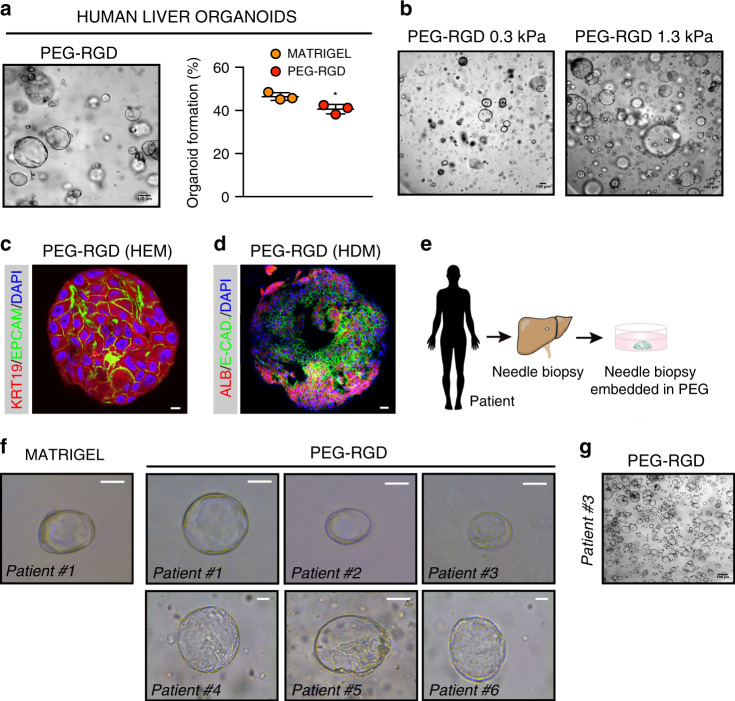
The recent demonstration that primary cells from the liver can be expanded in vitro as organoids holds enormous promise for regenerative medicine and disease modelling. The use of three-dimensional (3D) cultures based on ill-defined and potentially immunogenic matrices, however, hampers the translation of liver organoid technology into real-life applications. We here use chemically defined hydrogels for the efficient derivation of both mouse and human hepatic organoids. Organoid growth is found to be highly stiffness-sensitive, a mechanism independent of acto-myosin contractility and requiring instead activation of the Src family of kinases (SFKs) and yes-associated protein 1 (YAP). Aberrant matrix stiffness, on the other hand, results in compromised proliferative capacity. Finally, we demonstrate the establishment of biopsy-derived human liver organoids without the use of animal components at any step of the process. Our approach thus opens up exciting perspectives for the establishment of protocols for liver organoid-based regenerative medicine.
Overview
The claims and statistics of this paper haven’t been checked yet.
Free: it reads the open-access text and checks the first 5 claims that cite a source we can check. Create a free account to check every claim.
Integrity signals
Registry
Cites
Statistics
Figures
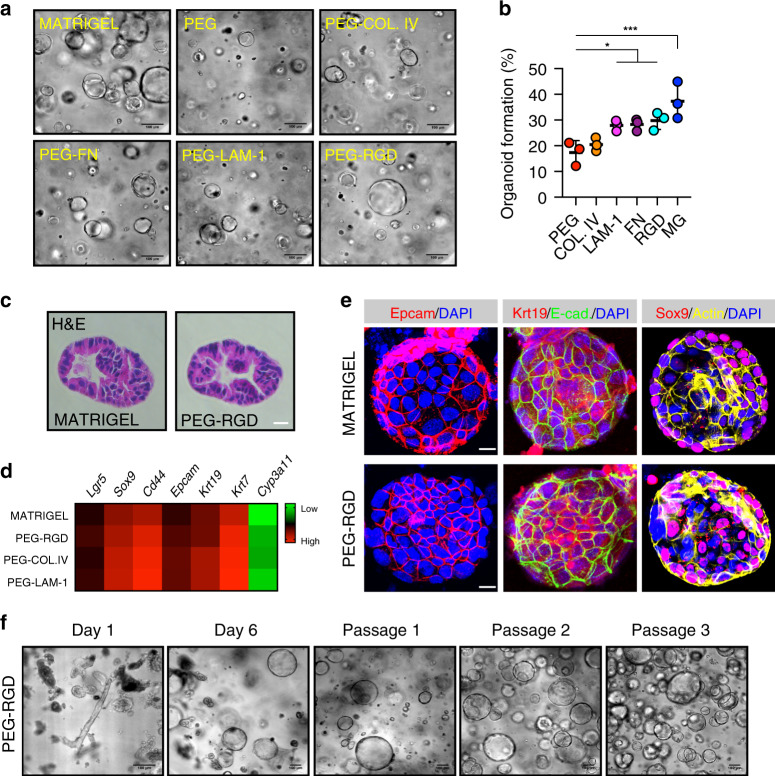
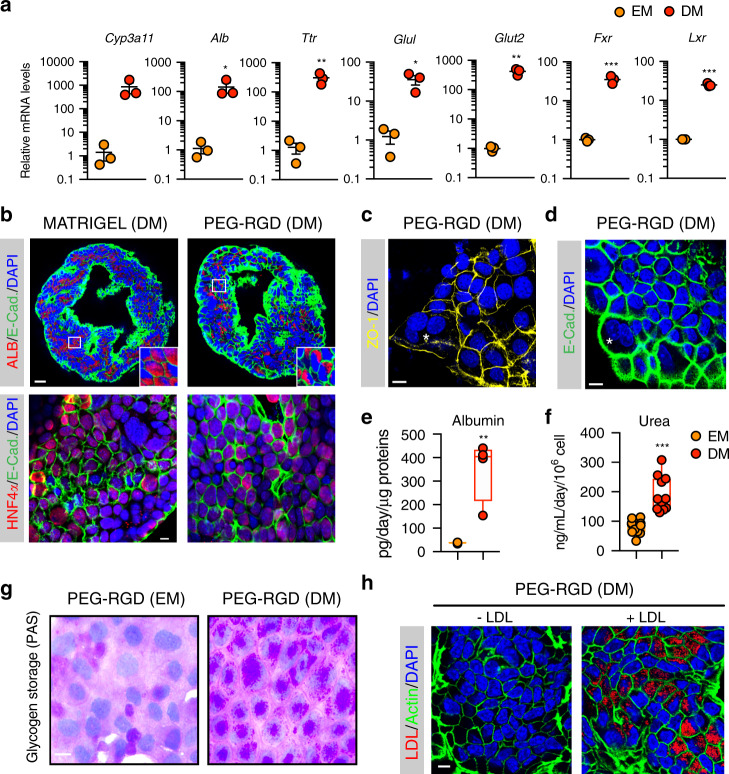
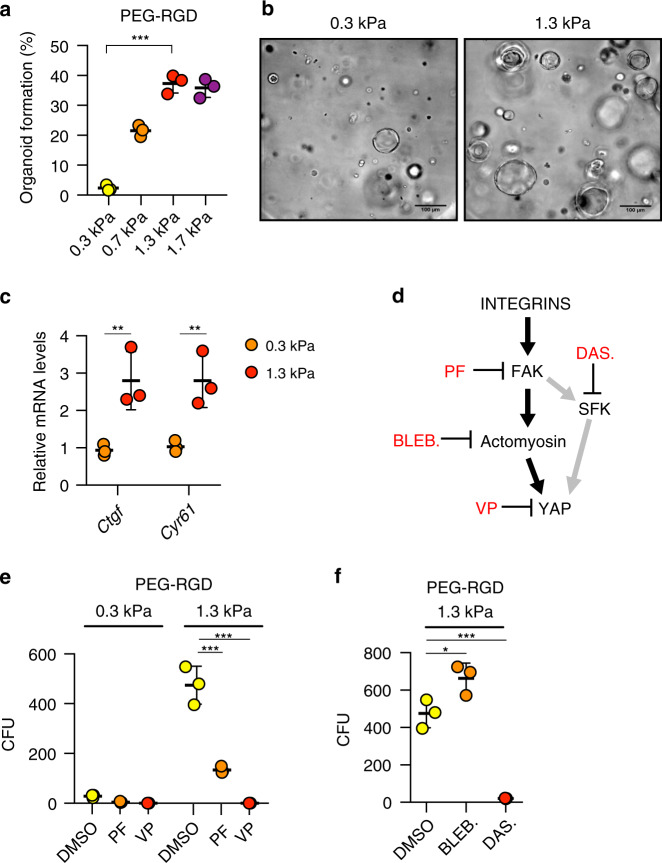
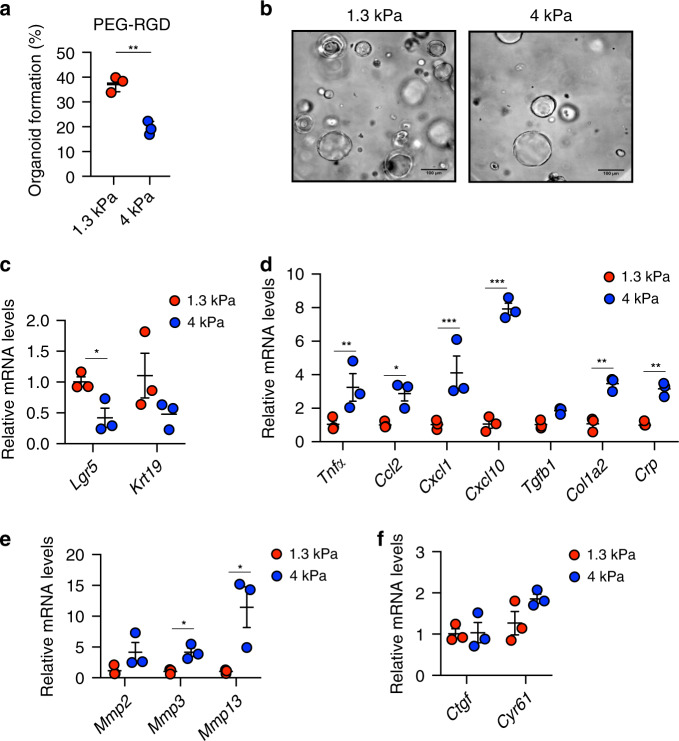
Verification
Claims the paper makes
The claims and statistics of this paper haven’t been checked yet.
Free: it reads the open-access text and checks the first 5 claims that cite a source we can check. Create a free account to check every claim.
Claims other papers make about this one
Each is checked against this paper’s own text: does it say what the citing paper says it does?
The source backs part of the claim, not all of it — or backs it for a different population, condition or comparison.
In the citing paper
“To overcome the limitations of these 2D in vitro models, three-dimensional (3D) cell cultures-especially organoids-have been proposed for mimicking the architecture and genetic expression of native human liver tissue (Akbari et al., 2019;Sorrentino et al., 2020).”
From Fast formation and maturation enhancement of human liver organoids using a liver-organoid-on-a-chip (2024) · cites this paper as Sorrentino et al., 2020
Experimental — accuracy not yet measured
Self-check
Percentages, sums and reported differences re-computed from the paper’s own numbers.
The self-check needs the paper’s full text.
Citations
Cites
Molecular Mechanisms of Stress-Responsive Changes in Collagen and Elastin Networks in Skin
Aziz, J., Shezali, H., Radzi, Z., Yahya, N. A., Abu Kassim, N. H., Czernuszka, J., & Rahman, M. T. (2016) · Skin Pharmacology and Physiology · doi:10.1159/000447017 · Cited by 7,323
Role of YAP/TAZ in mechanotransduction
Dupont, S., Morsut, L., Aragona, M., Enzo, E., Giulitti, S., Cordenonsi, M., Zanconato, F., Le Digabel, J., Forcato, M., Bicciato, S., et al. (2011) · Nature · doi:10.1038/nature10137 · Cited by 5,979
Organoid Models and Applications in Biomedical Research
Xinaris, C., Brizi, V., & Remuzzi, G. (2015) · Nephron · doi:10.1159/000433566 · Cited by 3,515
Mechanotransduction and extracellular matrix homeostasis
Humphrey, J. D., Dufresne, E. R., & Schwartz, M. A. (2014) · Nature Reviews Molecular Cell Biology · doi:10.1038/nrm3896 · Cited by 2,124
Long-Term Culture of Genome-Stable Bipotent Stem Cells from Adult Human Liver
Huch, M., Gehart, H., van Boxtel, R., Hamer, K., Blokzijl, F., Verstegen, M. M. A., Ellis, E., van Wenum, M., Fuchs, S. A., de Ligt, J., et al. (2015) · Cell · doi:10.1016/j.cell.2014.11.050 · Cited by 1,619
In vitro expansion of single Lgr5+ liver stem cells induced by Wnt-driven regeneration
Huch, M., Dorrell, C., Boj, S. F., van Es, J. H., Li, V. S. W., van de Wetering, M., Sato, T., Hamer, K., Sasaki, N., Finegold, M. J., et al. (2013) · Nature · doi:10.1038/nature11826 · Cited by 1,555
Calvo, F., Ege, N., Grande-Garcia, A., Hooper, S., Jenkins, R. P., Chaudhry, S. I., Harrington, K., Williamson, P., Moeendarbary, E., Charras, G., et al. (2013) · Nature Cell Biology · doi:10.1038/ncb2756 · Cited by 1,478
Liu-Chittenden, Y., Huang, B., Shim, J. S., Chen, Q., Lee, S.-J., Anders, R. A., Liu, J. O., & Pan, D. (2012) · Genes & Development · doi:10.1101/gad.192856.112 · Cited by 1,452
Designer matrices for intestinal stem cell and organoid culture
Gjorevski, N., Sachs, N., Manfrin, A., Giger, S., Bragina, M. E., Ordóñez-Morán, P., Clevers, H., & Lutolf, M. P. (2016) · Nature · doi:10.1038/nature20168 · Cited by 1,426
Michalopoulos, G. K. (2007) · Journal of Cellular Physiology · doi:10.1002/jcp.21172 · Cited by 1,384
Cited by
Items 101–200 of 225
Engineered Hydrogels for Organoid Models of Human Nonalcoholic Fatty Liver Disease
Liu, Y., Gilchrist, A. E., Johansson, P. K., Guan, Y., Deras, J. D., Liu, Y., Ceva, S., Huang, M. S., Navarro, R. S., Enejder, A. M. K., et al. (2025) · Advanced Science · doi:10.1002/advs.202417332 · Cited by 29
New developments and applications of human organoids
Andersson-Rolf, A., & Clevers, H. C. (2026) · Nature Reviews Molecular Cell Biology · doi:10.1038/s41580-026-00974-0 · Cited by 39
“For example, modulating the stiffness of synthetic matrices enables investigation of intestinal stem cell expansion 97 and liver organoid formation 109 .”
Advances in organoid-on-a-chip for recapitulation of human physiological events
Park, B. J., Park, J., Han, S., Kwon, T., Sung, J. Y., Kim, J., Safarkhani, M., Min, K.-H., Lee, E.-H., Kang, S., et al. (2025) · Materials Today · doi:10.1016/j.mattod.2025.02.002 · Cited by 23
Rational design matrix materials for organoid development and application in biomedicine
Huang, Y. F., Zhang, X., Zhang, W., Tang, J., & Liu, J. (2025) · Regenerative Biomaterials · doi:10.1093/rb/rbaf038 · Cited by 23
“For instance, polyethylene glycol (PEG) is a promising synthetic productive matrix with deformable backbone and modifiable terminal groups, supporting expansion of murine and human organoids [107], such as intestinal [31, 108, 109], lung [110], liver [111] and pancreatic ductal [56].”
Organoids/organs-on-chips towards biomimetic human artificial skin
Huang, Y., Wu, X., Xu, Y., Yang, N., Xi, P., Wang, Y., Zhu, Y., & Chen, X. (2025) · Burns & Trauma · doi:10.1093/burnst/tkaf029 · Cited by 28
“This customization allows researchers to optimize according to specific tissue microenvironments, which has been done with some success in liver, kidney, and brain organoid models [214, 215].”
Biomaterials and bioengineering to guide tissue morphogenesis in epithelial organoids
Jeon, E. Y., Sorrells, L., & Abaci, H. E. (2022) · Frontiers in Bioengineering and Biotechnology · doi:10.3389/fbioe.2022.1038277 · Cited by 22
“Enzymatically crosslinked inert PEG hydrogel was engineered to mimic the physiological stiffness of the liver (Sorrentino et al., 2020).”
BackgroundChi, K. Y., Kim, G., Kim, H., Kim, H., Jo, S., Lee, J., Lee, Y., Yoon, H., Cho, S.-H., Kim, J., et al. (2024) · Biomaterials · doi:10.1016/j.biomaterials.2024.122898 · Cited by 23
Liver organoids: From fabrication to application in liver diseases
Liu, Q., Zeng, A., Liu, Z., Wu, C., & Song, L. (2022) · Frontiers in Physiology · doi:10.3389/fphys.2022.956244 · Cited by 19
“In addition to the benefits of complete chemical synthesis and avoidance of immunological factors, the stable cross-linking of the PEG gel matrix allowed for the stable culture of liver organoids for more than 14 days (Sorrentino et al., 2020).”
BackgroundEmerging biotechnologies for engineering liver organoids
Zhao, J., Zhi, Y., Ren, H., Wang, J., & Zhao, Y. (2024) · Bioactive Materials · doi:10.1016/j.bioactmat.2024.11.002 · Cited by 34
Yoo, G., Park, D., Kim, Y., & Chung, C. (2021) · Cancers · doi:10.3390/cancers13123069 · Cited by 19
“Mechano-sensitive growth coordination by the integrin–Src family kinase–YAP pathway is also essential for liver organoid formation [96].”
BackgroundMa, Y., Yang, X., Xin, R., Wu, T., Shi, Y., Zhang, D. D., Wang, H., Wang, P., Liu, J., & Fu, D. (2021) · Translational Oncology · doi:10.1016/j.tranon.2021.101126 · Cited by 19
Potential Roles of YAP/TAZ Mechanotransduction in Spaceflight-Induced Liver Dysfunction
Li, W., Shu, X., Zhang, X., Zhang, Z., Sun, S., Li, N., & Long, M. (2023) · International Journal of Molecular Sciences · doi:10.3390/ijms24032197 · Cited by 17
“For example, YAP/YAZ was localized in the cytoplasm of cells attached to a confined adhesive area or to a soft ECM matrix [100,101], but transferred to the nucleus for cells experiencing laminar flow or mechanical stretch [102,103].”
BackgroundYu, H., Yan, Z., Dreiss, C. A., González‐Gaitano, G., Jarvis, J. A., Gentleman, E., da Silva, R. M. P., & Grigoriadis, A. E. (2024) · Advanced Healthcare Materials · doi:10.1002/adhm.202400472 · Cited by 16
Liu, Y., Zhou, Z., Lu, G., Zhang, X., Shi, D., Tong, L., Chen, C., Tuan, R. S., & Li, Z. A. (2025) · Acta Biomaterialia · doi:10.1016/j.actbio.2025.05.037 · Cited by 18
Song, Y., Seitz, M., Kowalczewski, A. C., Mai, N. Y., Jain, E., Yang, H., & Ma, Z. (2025) · Advanced Healthcare Materials · doi:10.1002/adhm.202403997 · Cited by 21
Schaafsma, P., Kracht, L., Baanstra, M., Bruin, A. L. J.-D., & Coppes, R. P. (2023) · Frontiers in Molecular Biosciences · doi:10.3389/fmolb.2023.1100541 · Cited by 18
“Although, in these hydrogels the presence of cell adhesion peptide RGD, a motif that is found in many ECM proteins and known to enhance cell binding and biocompatibility, is necessary (Gjorevski et al., 2016; Sorrentino et al., 2020).”
BackgroundNam, D., Park, M. R., Lee, H.-A., Bae, S. C., Daniela Gerovska, D., Araúzo-Bravo, M. J., Zaehres, H., Schöler, H. R., & Kim, J. B. (2022) · Cells · doi:10.3390/cells11142242 · Cited by 18
“Most previous studies on organoids were focused on discovering methods of generating organoids and applying organoids in disease modeling or drug discovery [72,73].”
MethodEl-Derby, A. M., Khedr, M. A., Ghoneim, N. I., Gabr, M. M., Khater, S. M., & El‐Badri, N. (2024) · Journal of Translational Medicine · doi:10.1186/s12967-024-05230-7 · Cited by 17
“The residual RNA in the Matrigel also compromised RNA integrity and significantly impacted the resultant gene expression data [13, 14].”
BackgroundInvasin-functionalized PIC hydrogels enable long-term 3D culture of epithelial organoids
Wijnakker, J. J. A. P. M., Lim, S., Schreurs, R., Faria, J., Korving, J., Begthel, H., Iyer, K. K., Kouwer, P. H. J., & Clevers, H. C. (2025) · Proceedings of the National Academy of Sciences · doi:10.1073/pnas.2507500122 · Cited by 21
“These observations are consistent with findings from Schneeberger et al, who also failed to culture human ductal liver organoids in PIC - RGD hydrogels ( 28 ), in contrast to a PEG - RGD hydrogel study ( 32 ).”
Li, P., Liu, Y., Liu, S., Zhou, M., Wang, X., & Yu, F. (2025) · Frontiers in Bioengineering and Biotechnology · doi:10.3389/fbioe.2025.1710978 · Cited by 16
“Organoids are unique 3D cellular models with multicellular structures that resemble organs and can replicate some of the functions of the corresponding tissues, such as the intestine, liver, and brain (Sorrentino et al., 2020).”
InfluentialBiohybrid Hydrogels for Tumoroid Culture
Castellote‐Borrell, M., Merlina, F., Rodríguez, A. R., & Guasch, J. (2023) · Advanced Biology · doi:10.1002/adbi.202300118 · Cited by 13
Liu, T., Ge, Y., Chen, Z., Wu, L., Tian, T., Yao, W., & Zhao, J. (2023) · ACS Biomaterials Science & Engineering · doi:10.1021/acsbiomaterials.3c00213 · Cited by 13
Soft Polyethylene Glycol Hydrogels Support Human PSC Pluripotency and Morphogenesis
Seitz, M. P., Song, Y., Lian, X. L., Ma, Z., & Jain, E. (2024) · ACS Biomaterials Science & Engineering · doi:10.1021/acsbiomaterials.4c00923 · Cited by 14
“29,50,51 Their role in iPSC lumenogenesis, however, remains unclear.”
Xue, T., Zhang, J., Li, F., Chen, G., Yi, K., Chen, X., Zhang, Y., Xu, Y., Wang, H., Ju, E., et al. (2025) · Biomaterials · doi:10.1016/j.biomaterials.2025.123458 · Cited by 16
Fast formation and maturation enhancement of human liver organoids using a liver-organoid-on-a-chip
Byeon, J. H., Jung, D. J., Han, H.-J., Son, W.-C., & Jeong, G. S. (2024) · Frontiers in Cell and Developmental Biology · doi:10.3389/fcell.2024.1452485 · Cited by 15
“To overcome the limitations of these 2D in vitro models, three-dimensional (3D) cell cultures — especially organoids — have been proposed for mimicking the architecture and genetic expression of native human liver tissue (Akbari et al., 2019; Sorrentino et al., 2020).”
Wu, G., Wu, D., Hu, W., Lu, Q., Zhou, Y., Liu, J., Du, Q., Luo, Z., Hu, H., Jiang, H., et al. (2025) · Lab on a Chip · doi:10.1039/d5lc00030k · Cited by 13
Béghin, A., Grenci, G., Rajendiran, H., Delaire, T., Raffi, S. B. M., Blanc, D., Mets, R. D. M. D., Ong, H. T., Acharya, V., Sahini, G., et al. (2021) · bioRxiv (Cold Spring Harbor Laboratory) · doi:10.1101/2021.03.26.437121 · Cited by 13
Toward Transplantation of Liver Organoids: From Biology and Ethics to Cost-effective Therapy
ten Dam, M. J. M., Frederix, G., ten Ham, R. M. T., van der Laan, L. J. W., & Schneeberger, K. (2023) · Transplantation · doi:10.1097/tp.0000000000004520 · Cited by 15
“77-79 Yet, there are also ethical implications that must be considered for nonanimal–derived biomaterials.”
Xue, T., Wei, H., Li, F., Zhang, Y., Jin, Y., Xu, Y., Chan, H. F., Xu, Y., Li, Y., Li, M., et al. (2024) · Advanced Functional Materials · doi:10.1002/adfm.202402339 · Cited by 17
Atta, D., Abou‐Shanab, A. M., Kamar, S. S., Soliman, M. W., Magdy, S., & El‐Badri, N. (2025) · Journal of Biomedical Materials Research Part A · doi:10.1002/jbm.a.37882 · Cited by 11
Wang, A. J.-S., Allen, A., Sofman, M., Sphabmixay, P., Yıldız, E., & Griffith, L. G. (2021) · Advanced NanoBiomed Research · doi:10.1002/anbr.202100049 · Cited by 12
Engineering Biomimetic Microenvironment for Organoid
Chen, S., Wang, L., Yang, L., Rana, A. S., & He, C. (2023) · Macromolecular Bioscience · doi:10.1002/mabi.202300223 · Cited by 10
Chemically Defined Organoid Culture System for Cholangiocyte Differentiation
Wang, Z., Ye, S., van der Laan, L. J. W., Schneeberger, K., Masereeuw, R., & Spee, B. (2024) · Advanced Healthcare Materials · doi:10.1002/adhm.202401511 · Cited by 13
Implantable 3D printed hydrogels with intrinsic channels for liver tissue engineering
Lieberthal, T. J., Sahakyants, T., Szabo-Wexler, N. R., HANCOCK, M. J., Spann, A. P., Oliver, M. S., Grindy, S. C., Neville, C. M., & Vacanti, J. P. (2024) · Proceedings of the National Academy of Sciences · doi:10.1073/pnas.2403322121 · Cited by 11
“…may offer greater benefits to the development of tissue - like architecture; for example, inclusion of fibrin is often used to enhance endothelial tubule formation ( 24 , 25 ), and optimization of matrix stiffness may be important for coordinating liver tissue development and function ( 26 ).”
Colorectal Organoids: Models, Imaging, Omics, Therapy, Immunology, and Ethics
Taglieri, M., Gregorio, L. D., Matis, S., Uras, C. R. M., Ardy, M., Casati, S., Marchese, M., Poggi, A. D., Raffaghello, L., & Benelli, R. (2025) · Cells · doi:10.3390/cells14060457 · Cited by 14
“Despite the advent of intestinal organoid culture technology almost 15 years ago, the (pre-) clinical implementation of organoids is still hampered by non-standardized procedures and ill-defined protocols [248].”
Modeling hepatic steatosis with human adult stem cell-derived liver organoids
Zhu, L., Liu, S., Wang, Z., Yang, Y., Han, P., Tong, W., Zhao, T., Wang, L., Cui, T., Yang, L., et al. (2025) · iScience · doi:10.1016/j.isci.2025.112344 · Cited by 13
Global trends and hotspots in research on organoids between 2011 and 2020: a bibliometric analysis
Zhang, Y., Yin, P., Liu, Y., Hu, Y., Hu, Z., & Miao, Y. (2022) · Annals of Palliative Medicine · doi:10.21037/apm-22-290 · Cited by 10
Mechanobiological engineering strategies for organoid culture
Taghizadeh, M., Taghizadeh, A. A., & Kim, H. S. (2025) · APL Bioengineering · doi:10.1063/5.0275439 · Cited by 14
Tanida, S., Fuji, K., Lu, L., Guyomar, T., Lee, B. H., Honigmann, A., Grapin‐Botton, A., Riveline, D., Hiraiwa, T., Nonomura, M., et al. (2025) · PLoS Computational Biology · doi:10.1371/journal.pcbi.1012090 · Cited by 12
Cell and tissue reprogramming: Unlocking a new era in medical drug discovery
Sen, C. K., Friday, A. J., & Roy, S. (2025) · Pharmacological Reviews · doi:10.1016/j.pharmr.2025.100077 · Cited by 11
Spatially defined microenvironment for engineering organoids
Zhang, Y., Qi, F., Chen, P., Liu, B., & Li, Y. (2024) · Biophysics Reviews · doi:10.1063/5.0198848 · Cited by 10
Li, L., Ji, J., Ren, H. J., Gao, L., Li, X., Li, N., Zhang, S., Tang, K., Li, Z., Ren, W., et al. (2026) · The Innovation · doi:10.1016/j.xinn.2026.101307 · Cited by 25
“(4) Can the in-depth exploration of the complex mechanical microenvironments be coupled with the application of emerging technologies, such as organ-on-a-chip 192,230,231 and or-ganoids, 232,233 to promote a comprehensive understanding of the mechanical regulation in the liver?”
Hepatic lipid overload triggers biliary epithelial cell activation via E2Fs
Yıldız, E., Alam, G. E., Perino, A., Jalil, A., Denechaud, P., Huber, K., Fajas, L., Auwerx, J. H., Sorrentino, G., & Schoonjans, K. (2023) · eLife · doi:10.7554/elife.81926 · Cited by 10
“BECderived organoids (BECorganoids) can be established from intrahepatic bile duct progenitors and can proliferate, representing a promising in vitro approach to study regenerative mechanisms and therapies (Huch et al., 2015; Huch et al., 2013; Li et al., 2017; Okabe et al., 2009; Shin et al., 2011; Sorrentino et al.,…”
BackgroundMethodSelf-citationEsophageal organoids: applications and future prospects
Liu, H., & Wang, X. (2023) · Journal of Molecular Medicine · doi:10.1007/s00109-023-02340-5 · Cited by 10
“In addition to animal-drived and plant-derived ECM, a team [57] has successfully prepared a fully chemically synthesized matrix.”
BackgroundHuman induced pluripotent stem cell-derived kidney organoids toward clinical implementations
Garreta, E., Nauryzgaliyeva, Z., & Montserrat, N. (2021) · Current Opinion in Biomedical Engineering · doi:10.1016/j.cobme.2021.100346 · Cited by 8
Challenges of in vitro modelling of liver fibrosis
Ros-Tárraga, P., Villanueva-Bádenas, E., Sanchez-Gonzalez, E., Ferrer, G. G., Donato, M. T., & Tolosa, L. (2025) · Frontiers in Cell and Developmental Biology · doi:10.3389/fcell.2025.1567916 · Cited by 13
Babboni, S., Vacca, P. G., Simonini, L., Pezzati, D., Martinelli, C., Frongillo, F., Bianco, G., Marciano, E., Basta, G., Ghinolfi, D., et al. (2024) · Journal of Clinical Medicine · doi:10.3390/jcm13061804 · Cited by 10
“Table 3 resumes these multifaceted issues and recommends measures that need to be taken to ensure the clinical application of this technology.”
BackgroundMastering Organoid Growth: A Complete Guide to Overcoming Methodological Challenges
Jiao, C., Karakaya, O. F., Dadgar, N., Wehrle, C. J., Massoud, Z., Hong, H., Fairchild, R. L., Leipzig, N. D., Aucejo, F., Ma, W. W., et al. (2026) · MedComm · doi:10.1002/mco2.70571 · Cited by 12
“Ligand density, degradability and stiffness can be independently adjusted to mimic liver-specific microenvironments or to guide lineage specification, for example, enabling chemically defined expansion of human bipotent hepatic progenitors in PEG–RGD matrices [ 98 ].”
Recent Advances in Three-Dimensional In Vitro Models for Studies of Liver Fibrosis
Chi, K. Y., Kim, G., Son, J. S., Han, J., & Kim, J. (2025) · Tissue Engineering and Regenerative Medicine · doi:10.1007/s13770-025-00719-8 · Cited by 13
“A recent study using liver organoids demonstrated that modulating ECM stiffness alone can induce fibrotic phenotypes, emphasizing the pivotal role of mechanical cues in fibrotic progression [24].”
Narrative engineering of the liver
Lee, I. S., & Takebe, T. (2022) · Current Opinion in Genetics & Development · doi:10.1016/j.gde.2022.101925 · Cited by 7
Chi, K. Y., & Kim, J. (2022) · Organoid · doi:10.51335/organoid.2022.2.e6 · Cited by 6
“Similar protocols [37] have been used for the large-scale production of liver organoids [38] to investigate the basic mechanisms underlying liver development and regeneration [39] and”
MethodAdvances in Organoid Culture Research
Xie, Z., Wang, L., & Zhang, Y. (2022) · Global Medical Genetics · doi:10.1055/s-0042-1756662 · Cited by 10
Ahmed, T. A., Eldaly, B., Eldosuky, S., Elkhenany, H. A., El-Derby, A. M., Elshazly, M. F., & El‐Badri, N. (2023) · Stem Cell Research & Therapy · doi:10.1186/s13287-023-03341-4 · Cited by 6
Septiana, W. L., Ayudyasari, W., Gunardi, H., Pawitan, J. A., Balachander, G. M., Yu, H., & Antarianto, R. D. (2023) · In Vitro Cellular & Developmental Biology - Animal · doi:10.1007/s11626-023-00817-8 · Cited by 9
The native liver as inspiration to create superior in vitro hepatic models
Carpentier, N., Urbani, L., Dubruel, P., & Vlierberghe, S. V. (2023) · Biomaterials Science · doi:10.1039/d2bm01646j · Cited by 7
Engineering liver organoids-on-a-chip
Zhu, J., Dressman, A. S., Gall, K., & Park, S. E. (2026) · Frontiers in Lab on a Chip Technologies · doi:10.3389/frlct.2025.1719128 · Cited by 9
“They are also being used to assess biomaterials such as hydrogels and scaffolds that support organoid survival and function (Sorrentino et al., 2020).”
Zhang, X., Zhao, Y., Mao, L., Wang, Q., & Huang, P. (2026) · Materials Today Bio · doi:10.1016/j.mtbio.2026.102782 · Cited by 17
“Sorrentino et al. employed chemically defined hydrogels to replicate the liver's mechanical microenvironment and demonstrated that increased stiffness enhances liver organoid formation[72].”
Liver-on-a-Chip (LoC) Models: Case Studies of Academic Platforms and Commercial Products
Benzait, Z., Tomsuk, Ö., Ebrahimi, A., Ghorbanpoor, H., Özel, C., Didarian, R., Cevizlidere, B. D., Kaya, M., Gür, T., Gasimzade, N., et al. (2026) · Molecular Pharmaceutics · doi:10.1021/acs.molpharmaceut.5c01122 · Cited by 7
Patient-derived organoid models to decode liver pathophysiology
Dwyer, B. J., & Tirnitz‐Parker, J. E. E. (2024) · Trends in Endocrinology and Metabolism · doi:10.1016/j.tem.2024.07.019 · Cited by 6
Xu, Z.-Y., Wang, M., Shi, J.-Y., Liu, Y., Yu, C., Zhang, X.-Y., Zhang, C.-W., He, Q.-F., Pan, C., Zhou, J., et al. (2025) · Materials Today Bio · doi:10.1016/j.mtbio.2025.101700 · Cited by 5
“Previous studies have shown that matrix stiffness promotes liver organoid formation through FAK and YAP [51].”
Wu, H., Wang, J., Liu, S., Wang, Y., Xie, J., Zhang, X., Zhang, S., Gu, W., Zhou, Y., & Duan, Y. (2025) · Biomaterials Research · doi:10.34133/bmr.0280 · Cited by 5
“Due to the animal-derived origin of MG, there is growing interest in developing synthetic bioactive hydrogels as sub-stitutes for MG [ 14 – 16 ].”
Giri, S., & Rajesh, P. (2026) · Biomedicines · doi:10.3390/biomedicines14020485 · Cited by 6
“The stiffer hydrogel (1.3 kPa) was found to enhance the hepatocyte functions in terms of albumin secretion and CYP450 activity, compared to that of softer hydrogels (0.3 kPa) [249].”
InfluentialRecapitulating the liver niche in vitro
Yap, K. K., & Mitchell, G. M. (2022) · Advances in stem cells and their niches · doi:10.1016/bs.asn.2021.10.002 · Cited by 8
Organ Chips and Visualization of Biological Systems
Tian, T., Liu, J., & Zhu, H. (2023) · Advances in experimental medicine and biology · doi:10.1007/978-981-32-9902-3_8 · Cited by 4
Human kidney organoids for modeling the development of different diseases
Ceccotti, E., Semnani, A., Bussolati, B., & Bruno, S. (2025) · Current topics in developmental biology/Current Topics in Developmental Biology · doi:10.1016/bs.ctdb.2024.12.001 · Cited by 5
The development of artificial livers
Misra, A. C., & Eckhoff, D. (2021) · Current Opinion in Organ Transplantation · doi:10.1097/mot.0000000000000907 · Cited by 5
Organoids: generation strategies, applications, and future challenges
Yin, H., Zhu, G., Hai-zhan, W., Yang, B., Wang, Z., & Xie, H. (2026) · Stem Cell Research & Therapy · doi:10.1186/s13287-026-05045-x · Cited by 4
“They also exhibit a dual lineage structure composed of hepatocytes and bile duct cells [49].”
3D hepatic organoid production from human pluripotent stem cells
Jin, Z., Xu, K., Kim, J., Guo, H., Yao, X., Li, Y., Li, Y.-H., Ryu, D., Kim, K.-P., Hong, K., et al. (2023) · Differentiation · doi:10.1016/j.diff.2023.100742 · Cited by 3
Miyamoto, Y., Koshidaka, Y., Murase, K., Kanno, S., Noguchi, H., Miyado, K., Ikeya, T., Suzuki, S. O., Yagi, T., Teramoto, N., et al. (2022) · Materials · doi:10.3390/ma15217823 · Cited by 6
Engineered hydrogels for mechanobiology
(2022) · Nature Reviews Methods Primers · doi:10.1038/s43586-022-00189-5 · Cited by 3
Shepherd, E. L., Northall, E., Papakyriacou, P., Szafranska, K., Sørensen, K. K., & Lalor, P. F. (2023) · Methods in molecular biology · doi:10.1007/978-1-0716-3207-9_14 · Cited by 3
The influence of tissue spatial geometry and functional organisation on liver regeneration
Aloia, L. (2021) · Seminars in Cell and Developmental Biology · doi:10.1016/j.semcdb.2021.09.011 · Cited by 5
“However, in vitro exposure to chemically defined hydrogels that resemble the stiffness of the diseased liver, reduces progenitor proliferation and expression of stem-cell genes [84].”
Ju, R., Tian, S., Shang, Y., Ma, S., Zhang, M., Liu, J., Sun, K., Cui, L., Zhou, X., & Han, Y. (2024) · Materials Advances · doi:10.1039/d4ma00373j · Cited by 4
Perikamana, S. K. M., Kumar, V., Mogha, P., Duncan, L., Angel, N., Tata, A., Jabba, S. V., Jordt, S. E., Tata, P. R., & Varghese, S. (2025) · Biomaterials Science · doi:10.1039/d5bm00552c · Cited by 2
Kiamehr, M., Manzini, S., Toprakhisar, B., da Costa, R. M., García-Llorens, G., Belay, B., Najimi, M., Castell, J. V., Moritz, W., Chiesa, G., et al. (2026) · Biofabrication · doi:10.1088/1758-5090/ae5fd8 · Cited by 2
“This configuration distinguishes the OBs from both classical epithelial organoids generated from adult stem cell-derived LGR5 + cells [52, 58, 59, 68] or 3D cellular aggregates generated from PSCs such as iPSCs with a compact cellular organization.”
Next-Generation Hydrogels for Biliary Organoid Engineering
Marfoglia, A., & Sorrentino, G. (2025) · Pharmaceuticals · doi:10.3390/ph18121781 · Cited by 2
“…synthetic hydrogels composed of clinically relevant materials like PEG and PIC enable robust expansion of human biliary organoids under defined and tunable conditions and recapitulate the mechanical properties of healthy or fibrotic liver tissue, inducing disease-relevant phenotypes [155,156,165].”
Self-citationExtracellular matrix cues as drivers of liver zonation: A framework for in vitro biomaterial design
Criel, H., Grootaert, C., & Camp, J. V. (2025) · Acta Biomaterialia · doi:10.1016/j.actbio.2025.12.015 · Cited by 2
Pai, R. R., Muthusamy, S., Velayudhan, S., & Anil Kumar, P. R. (2025) · Biofabrication · doi:10.1088/1758-5090/ae302d · Cited by 2
“Sorrentino et al developed an RGD-conjugated PEG hydrogel with tunable mechanical properties for the derivation of primary mouse and human liver organoids [10].”
Kaymak, T., & Niess, J. H. (2024) · Journal of Visualized Experiments · doi:10.3791/66503 · Cited by 2
Hydrogel innovations for 3D organoid culture
Feng, Y., He, D., & An, X. (2025) · Biomedical Materials · doi:10.1088/1748-605x/add82d · Cited by 6
“Building upon the successful application of PEG-RGD hydrogels for in vitro derivation and maintenance of liver organoids, Sorrentino et al [51] demonstrated that the mechanical properties of both normal and fibrotic liver tissues can be precisely recapitulated through modulation of the synthetic…”
Tanida, S., Fuji, K., Lu, L., Guyomar, T., Lee, B. H., Honigmann, A., Grapin‐Botton, A., Riveline, D., Hiraiwa, T., Nonomura, M., et al. (2023) · bioRxiv (Cold Spring Harbor Laboratory) · doi:10.1101/2023.08.17.553655 · Cited by 2
Current advances and prospects in biomaterials-guided tools for liver organoids research
Ahmed, S. G., Alshehri, E., Nazneen, S., Attia, F., Obeid, D. A., Almuzaini, H., Alzahrani, A., Salma, J., Fujitsuka, I., Assiri, A. M., et al. (2025) · Engineered Regeneration · doi:10.1016/j.engreg.2025.07.004 · Cited by 4
Jain, I., Grenci, B., Ryoo, H., Yuan, Y., Khetani, S. R., & Underhill, G. H. (2025) · Advanced Healthcare Materials · doi:10.1002/adhm.202501370 · Cited by 1
Kangarshahi, B. M., Vosoughi, P., Naghib, S. M., Sharifianjazi, F., Tavamaishvilid, K., & Zhang, W. (2026) · International Journal of Biological Macromolecules · doi:10.1016/j.ijbiomac.2026.150268 · Cited by 2
Engineering strategies for the clinical translation of organoids
Liao, L., Meng, Y., Shi, Y., Wang, B., Liu, C., Qiao, W., & Shen, J. (2026) · Journal of Advanced Research · doi:10.1016/j.jare.2026.03.049 · Cited by 4
Mostafa, A., Khalil, S. M., Shaheraldin, A. A., Alahmadi, H. A., Mattar, Y., El-Bahrawy, N. R., Issa, I. K., El-fiki, R. A., Elazim, N. M. A., Attia, A. M., et al. (2026) · Stem cell biology and regenerative medicine · doi:10.1007/978-3-032-12705-1_4 · Cited by 1
Patient-Derived Organoids in Clinical Medicine: Proven Impact and Future Directions
Skowrońska, M., Yıldız, E., Grosch, J., & Coto‐Llerena, M. (2026) · Organoids · doi:10.3390/organoids5020015 · Cited by 1
Mu, R., Liu, J., Luo, D., Huang, H., Jiang, Y., Yuan, J., Chioh, F. W., Su, Z., Lin, C., Li, B., et al. (2026) · Cell Reports · doi:10.1016/j.celrep.2026.117644 · Cited by 1
Liver Organoids: From Disease Modelling to Regenerative Medicine
Wang, T., Qu, X., Si, J., Meng, J., Zhang, T., & Niu, S. (2026) · Cell Proliferation · doi:10.1111/cpr.70268 · Cited by 2
“Sorrentino et al. used special gels to make liver cells from mice and humans without using any animal products [27].”
Microengineered organoids: reconstituting organ-level functions in vitro
Park, S., Sharma, H., Kim, W., Gwon, Y., Kim, H., Choung, Y., & Kim, J. (2023) · Organoid · doi:10.51335/organoid.2023.3.e5 · Cited by 2
“[92] created mechano-modulatory synthetic niches for liver organoids to mimic their native microenvironment.”
BackgroundAccelerating vein-to-vein cell therapy workflows with new bioanalytical strategies
Flint, G. T., Drake, P. R., Goetz, J. P., Albaker, M. M., & Rosenberg, J. N. (2021) · Current Opinion in Biotechnology · doi:10.1016/j.copbio.2021.07.007 · Cited by 2
Dynamic Interactions Between Stem Cells and Biomaterials
Virdi, J. K., & Pethe, P. S. (2021) · Springer eBooks · doi:10.1007/978-981-16-4420-7_15 · Cited by 1
Yaqing, W. A. N. G., Tao, T., & Qin, J. (2022) · Scientia Sinica Vitae · doi:10.1360/ssv-2022-0027 · Cited by 2
Vasko Popa a diez años de su muerte
Prenz, J. O. (2001) · Cuadernos hispanoamericanos · Cited by 2
Hepatic lipid overload potentiates biliary epithelial cell activation via E2FsPreprint
Yıldız, E., Alam, G. E., Perino, A., Jalil, A., Denechaud, P., Huber, K., Lluis Fajas, A., Auwerx, J. H., Sorrentino, G., & Schoonjans, K. (2022) · doi:10.7554/elife.81926.1 · Cited by 1
Self-citationPancreas organoid development, behaviour and structural maintenance: a multiscale analysis
Seeberger, T. (2022) · Publication Server of Goethe University Frankfurt am Main (Goethe University Frankfurt) · doi:10.21248/gups.69184
Serum-Free Production of Three-Dimensional Hepatospheres from Pluripotent Stem Cells
Rashidi, H., & Hay, D. C. (2021) · Methods in molecular biology · doi:10.1007/7651_2021_430
Metadata
- Authors
- Sorrentino, G., Rezakhani, S., Yildiz, E., Nuciforo, S., Heim, M. H., Lutolf, M. P., & Schoonjans, K.
- Affiliations
- École Polytechnique Fédérale de Lausanne (CH)
- University of Basel (CH)
- Corresponding author
- Schoonjans, Kristina
- ORCID
- Venue
- Nature Communications
- Published
- 2020-07-10
- Volume
- 11
- Issue
- 1
- Pages
- 3416-3416
- ISSN
- 2041-1723 (ISSN-L)
- PMC
- PMC7351772
- OpenAlex
- W3041739049
- Cited by
- 224
- References
- 55
- Citations by year
- 2026: 27 · 2025: 42 · 2024: 35 · 2023: 34 · 2022: 40 · 2021: 40 · 2020: 5
- FWCI
- 27.17
- Type
- journal article
- Language
- en
- Open access
- gold
- doi.org
- Licence
- cc-by
- creativecommons.org/licenses/by/4.0 (tdm)
- creativecommons.org/licenses/by/4.0 (vor)
- Locations
- Nature Communications (publishedVersion, cc-by)
- bioRxiv (Cold Spring Harbor Laboratory) (acceptedVersion)
- PubMed Central (publishedVersion, cc-by)
- PubMed (publishedVersion)
- ArTS Archivio della ricerca di Trieste (University of Trieste https://www.units.it/) (submittedVersion, cc-by)
- Infoscience (Ecole Polytechnique Fédérale de Lausanne) (submittedVersion, cc-by-nc-nd)
- RePEc: Research Papers in Economics (submittedVersion)
- DOAJ (DOAJ: Directory of Open Access Journals) (submittedVersion, cc-by-sa)
- Funders
- National Science Foundation
- Stiftelsen Kristian Gerhard Jebsen
- European Commission (HORIZON2020, 668294)
- École Polytechnique Fédérale de Lausanne (31003A_166695)
- Schweizerischer Nationalfonds zur Förderung der Wissenschaftlichen Forschung (160798, 125487, 179447, 166695, 310030)
- Vienna Science and Technology Fund
- Board of the Swiss Federal Institutes of Technology
- Topics
- Health Sciences › Medicine › Surgery › Tissue Engineering and Regenerative Medicine
- Life Sciences › Biochemistry, Genetics and Molecular Biology › Cell Biology › Cellular Mechanics and Interactions
- Physical Sciences › Engineering › Biomedical Engineering › 3D Printing in Biomedical Research
- Keywords
- liver organoids, extracellular matrix stiffness, mechanotransduction, Src family kinases, YAP, actomyosin contractility, 3D cell culture, disease modeling
- MeSH terms
- Humans, Liver, Organoids, Transcription Factors, src-Family Kinases, Hydrogels, Tissue Engineering
About these checks
Registry, retraction, Cites and statistics results are computed, not judged, with one exception: a printed reference that no index lists is read once by a model before it counts as a citation error. Claims are extracted by a model and kept only when their quote appears verbatim in the text; each cited source is then checked, with a model’s help, for whether it says what the claim relies on. Those verdicts can be wrong — read the claim’s quote and the cited source before relying on one.
Statistics and arithmetic are recomputed, not judged.
Confidence bands are shown only for fields calibrated on our annotated test set. None is calibrated yet, so no band is shown.
What counts as a claim ›How we measure confidence ›How we check this ›
Are you an author, or do you see a problem with this page? Request a review
Data sources
Bibliographic data: Semantic Scholar, OpenAlex, Crossref.
Contains information from the Semantic Scholar Academic Graph Datasets, made available under the ODC Attribution License (ODC-BY 1.0).
Semantic Scholar’s data is described in: Kinney, R., et al. (2023). The Semantic Scholar Open Data Platform. arXiv:2301.10140.
