

Mechano-modulatory synthetic niches for liver organoid derivation
Open accessPublished version of a preprint
The DOI matches its Crossref record; 55 of the 55 references it cites were found in a registry or an index.
Abstract
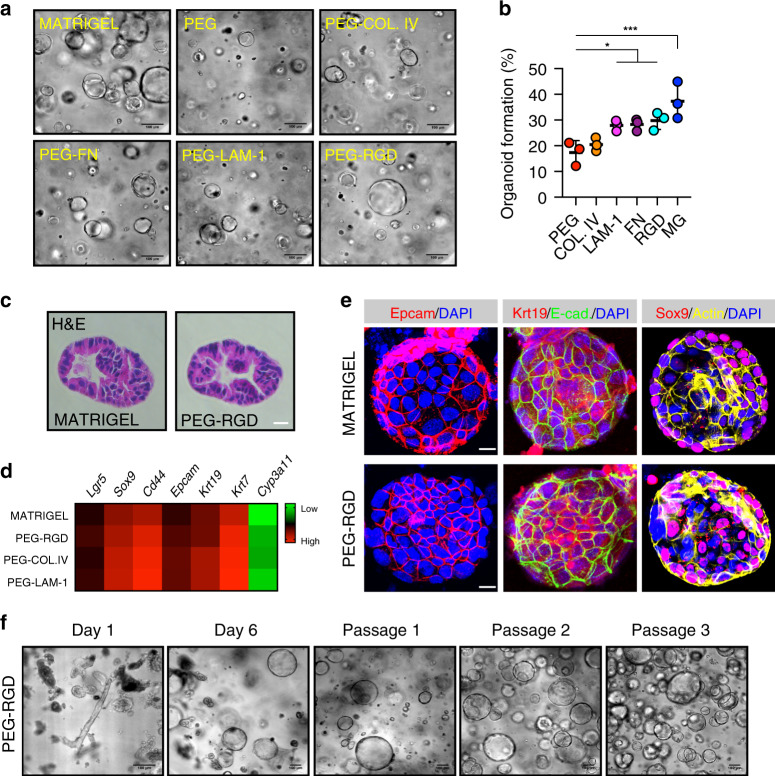
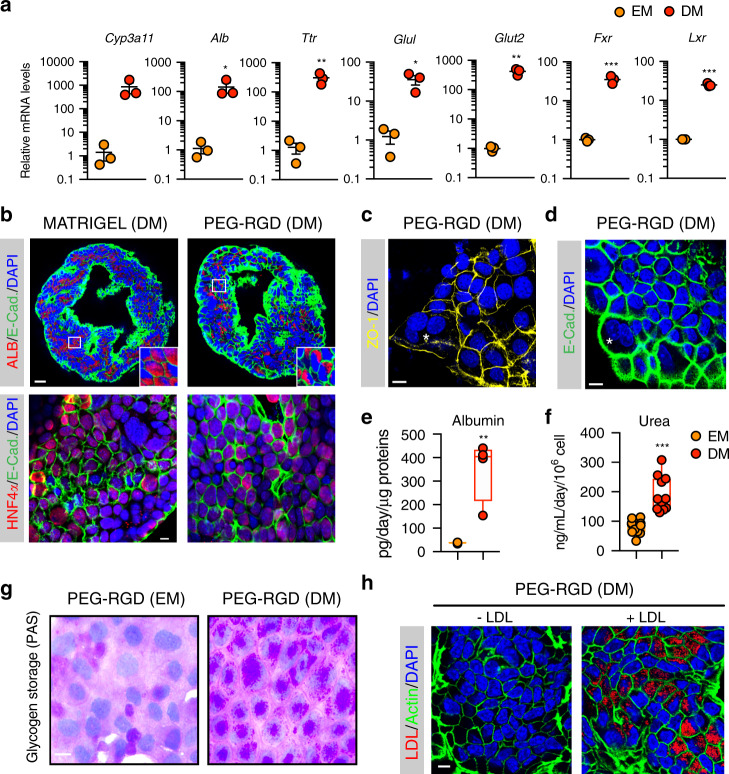
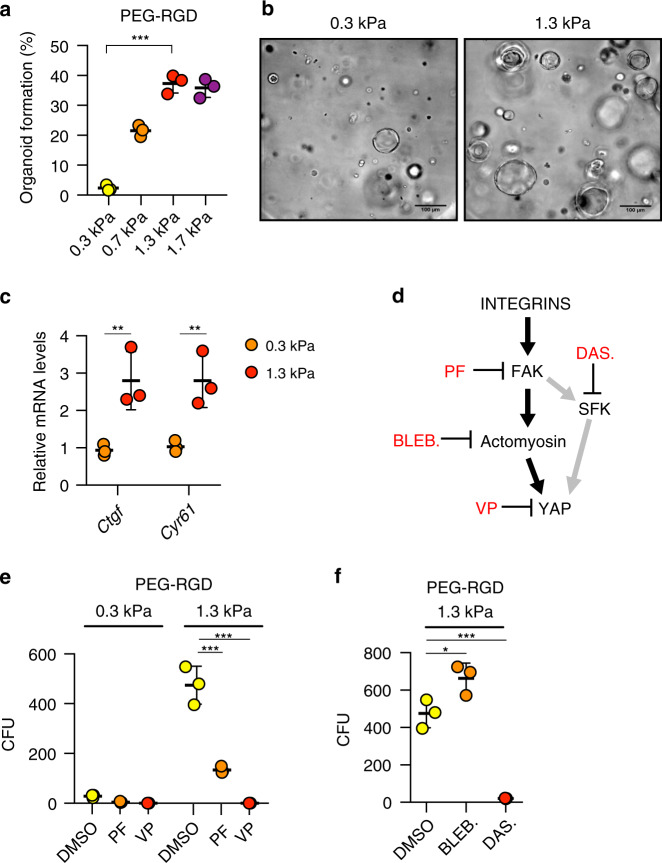
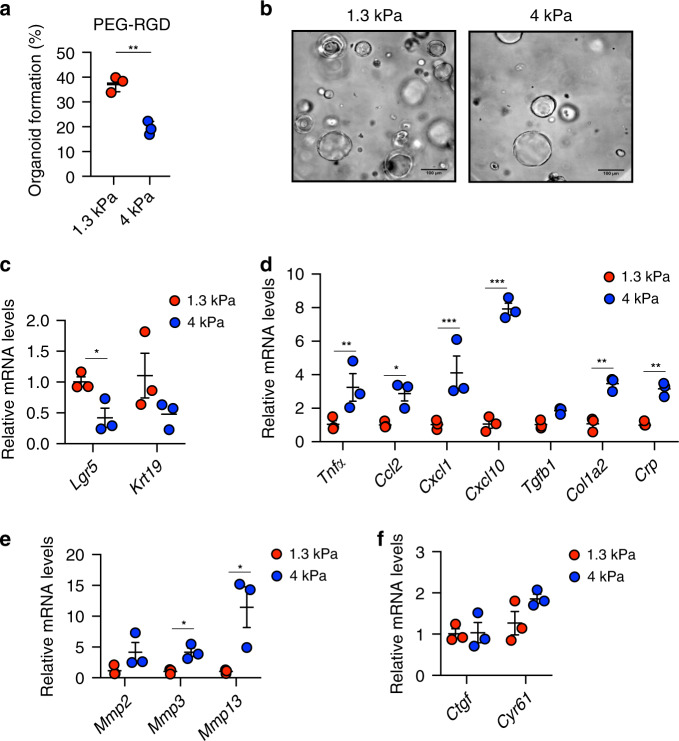
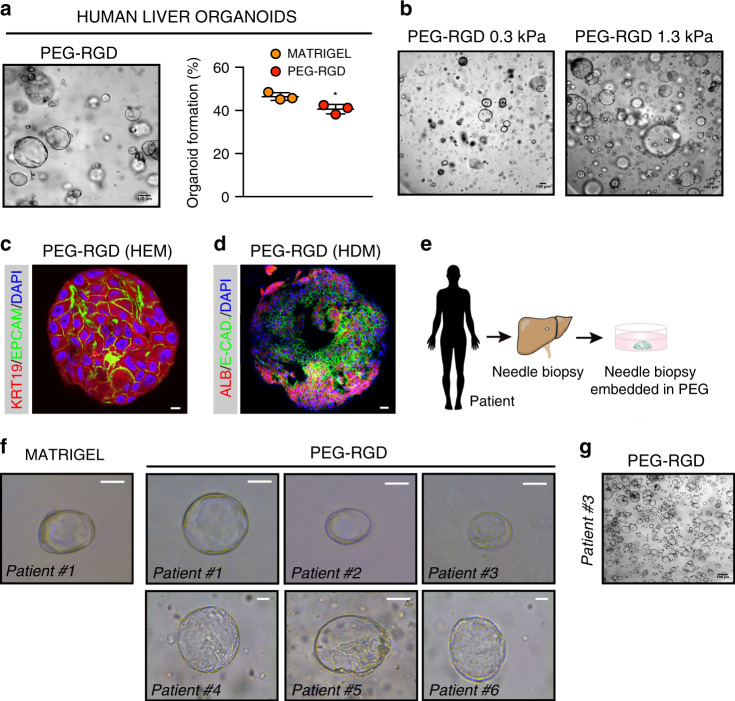
The recent demonstration that primary cells from the liver can be expanded in vitro as organoids holds enormous promise for regenerative medicine and disease modelling. The use of three-dimensional (3D) cultures based on ill-defined and potentially immunogenic matrices, however, hampers the translation of liver organoid technology into real-life applications. We here use chemically defined hydrogels for the efficient derivation of both mouse and human hepatic organoids. Organoid growth is found to be highly stiffness-sensitive, a mechanism independent of acto-myosin contractility and requiring instead activation of the Src family of kinases (SFKs) and yes-associated protein 1 (YAP). Aberrant matrix stiffness, on the other hand, results in compromised proliferative capacity. Finally, we demonstrate the establishment of biopsy-derived human liver organoids without the use of animal components at any step of the process. Our approach thus opens up exciting perspectives for the establishment of protocols for liver organoid-based regenerative medicine.
Overview
The claims and statistics of this paper haven’t been checked yet.
Free: it reads the open-access text and checks the first 5 claims that cite a source we can check. Create a free account to check every claim.
Integrity signals
Registry
Cites
Statistics
Figures
Verification
Claims the paper makes
The claims and statistics of this paper haven’t been checked yet.
Free: it reads the open-access text and checks the first 5 claims that cite a source we can check. Create a free account to check every claim.
Claims other papers make about this one
Each is checked against this paper’s own text: does it say what the citing paper says it does?
The source backs part of the claim, not all of it — or backs it for a different population, condition or comparison.
In the citing paper
“To overcome the limitations of these 2D in vitro models, three-dimensional (3D) cell cultures-especially organoids-have been proposed for mimicking the architecture and genetic expression of native human liver tissue (Akbari et al., 2019;Sorrentino et al., 2020).”
From Fast formation and maturation enhancement of human liver organoids using a liver-organoid-on-a-chip (2024) · cites this paper as Sorrentino et al., 2020
Experimental — accuracy not yet measured
Self-check
Percentages, sums and reported differences re-computed from the paper’s own numbers.
The self-check needs the paper’s full text.
Citations
Cites
Molecular Mechanisms of Stress-Responsive Changes in Collagen and Elastin Networks in Skin
Aziz, J., Shezali, H., Radzi, Z., Yahya, N. A., Abu Kassim, N. H., Czernuszka, J., & Rahman, M. T. (2016) · Skin Pharmacology and Physiology · doi:10.1159/000447017 · Cited by 7,323
Role of YAP/TAZ in mechanotransduction
Dupont, S., Morsut, L., Aragona, M., Enzo, E., Giulitti, S., Cordenonsi, M., Zanconato, F., Le Digabel, J., Forcato, M., Bicciato, S., et al. (2011) · Nature · doi:10.1038/nature10137 · Cited by 5,979
Organoid Models and Applications in Biomedical Research
Xinaris, C., Brizi, V., & Remuzzi, G. (2015) · Nephron · doi:10.1159/000433566 · Cited by 3,515
Mechanotransduction and extracellular matrix homeostasis
Humphrey, J. D., Dufresne, E. R., & Schwartz, M. A. (2014) · Nature Reviews Molecular Cell Biology · doi:10.1038/nrm3896 · Cited by 2,124
Long-Term Culture of Genome-Stable Bipotent Stem Cells from Adult Human Liver
Huch, M., Gehart, H., van Boxtel, R., Hamer, K., Blokzijl, F., Verstegen, M. M. A., Ellis, E., van Wenum, M., Fuchs, S. A., de Ligt, J., et al. (2015) · Cell · doi:10.1016/j.cell.2014.11.050 · Cited by 1,619
In vitro expansion of single Lgr5+ liver stem cells induced by Wnt-driven regeneration
Huch, M., Dorrell, C., Boj, S. F., van Es, J. H., Li, V. S. W., van de Wetering, M., Sato, T., Hamer, K., Sasaki, N., Finegold, M. J., et al. (2013) · Nature · doi:10.1038/nature11826 · Cited by 1,555
Calvo, F., Ege, N., Grande-Garcia, A., Hooper, S., Jenkins, R. P., Chaudhry, S. I., Harrington, K., Williamson, P., Moeendarbary, E., Charras, G., et al. (2013) · Nature Cell Biology · doi:10.1038/ncb2756 · Cited by 1,478
Liu-Chittenden, Y., Huang, B., Shim, J. S., Chen, Q., Lee, S.-J., Anders, R. A., Liu, J. O., & Pan, D. (2012) · Genes & Development · doi:10.1101/gad.192856.112 · Cited by 1,452
Designer matrices for intestinal stem cell and organoid culture
Gjorevski, N., Sachs, N., Manfrin, A., Giger, S., Bragina, M. E., Ordóñez-Morán, P., Clevers, H., & Lutolf, M. P. (2016) · Nature · doi:10.1038/nature20168 · Cited by 1,426
Michalopoulos, G. K. (2007) · Journal of Cellular Physiology · doi:10.1002/jcp.21172 · Cited by 1,384
Cited by
Cell–extracellular matrix mechanotransduction in 3D
Saraswathibhatla, A., Indana, D., & Chaudhuri, O. (2023) · Nature Reviews Molecular Cell Biology · doi:10.1038/s41580-023-00583-1 · Cited by 814
Next-generation cancer organoids
LeSavage, B. L., Suhar, R. A., Broguiere, N., Lutolf, M. P., & Heilshorn, S. C. (2022) · Nature Materials · doi:10.1038/s41563-021-01057-5 · Cited by 468
Zhang, K., Feng, Q., Fang, Z., Gu, L., & Bian, L. (2021) · Chemical Reviews · doi:10.1021/acs.chemrev.1c00071 · Cited by 394
Patient-derived organoids as a predictive biomarker for treatment response in cancer patients
Wensink, G. E., Elias, S. G., Mullenders, J., Koopman, M., Boj, S. F., Kranenburg, O. W., & Roodhart, J. M. L. (2021) · npj Precision Oncology · doi:10.1038/s41698-021-00168-1 · Cited by 323
Building consensus on definition and nomenclature of hepatic, pancreatic, and biliary organoids
Marsee, A., Roos, F. J. M., Verstegen, M. M. A., Marsee, A., Roos, F., Verstegen, M., Clevers, H., Vallier, L., Takebe, T., Huch, M., et al. (2021) · Cell Stem Cell · doi:10.1016/j.stem.2021.04.005 · Cited by 310
Self-citationBernal, P. N., Bouwmeester, M., Madrid‐Wolff, J., Falandt, M., Florczak, S., Rodriguez, N. G., Li, Y., Größbacher, G., Samsom, R., van Wolferen, M., et al. (2022) · Advanced Materials · doi:10.1002/adma.202110054 · Cited by 258
Engineered hydrogels for mechanobiology
Blache, U., Ford, E. M., Ha, B., Rijns, L., Chaudhuri, O., Dankers, P. Y. W., Kloxin, A. M., Snedeker, J. G., & Gentleman, E. (2022) · Nature Reviews Methods Primers · doi:10.1038/s43586-022-00179-7 · Cited by 227
Organoids to model liver disease
Nuciforo, S., & Heim, M. H. (2021) · JHEP Reports · doi:10.1016/j.jhepr.2020.100198 · Cited by 164
Self-citationA Chemically Defined Hydrogel for Human Liver Organoid Culture
Ye, S., Boeter, J. W. B., Mihajlovic, M., van Steenbeek, F. G., van Wolferen, M. E., Oosterhoff, L. A., Marsee, A., Caiazzo, M., van der Laan, L. J. W., Penning, L. C., et al. (2020) · Advanced Functional Materials · doi:10.1002/adfm.202000893 · Cited by 164
Automated high-speed 3D imaging of organoid cultures with multi-scale phenotypic quantification
Béghin, A., Grenci, G., Sahni, G., Guo, S., Rajendiran, H., Delaire, T., Raffi, S. B. M., Blanc, D., Mets, R. D. M. D., Ong, H. T., et al. (2022) · Nature Methods · doi:10.1038/s41592-022-01508-0 · Cited by 167
Indana, D., Agarwal, P., Bhutani, N., & Chaudhuri, O. (2021) · Advanced Materials · doi:10.1002/adma.202101966 · Cited by 146
Human organoids-on-chips for biomedical research and applications
Wang, H., Ning, X., Zhao, F. H., Zhao, H., & Li, D. (2024) · Theranostics · doi:10.7150/thno.90492 · Cited by 159
“In addition, ill-defined matrices ignore the important role of individual ECM factors in recapitulating key events in organogenesis and reorganization [107, 115, 171].”
BackgroundResearch Progress, Challenges, and Breakthroughs of Organoids as Disease Models
Huang, Y., Huang, Z., Tang, Z., Chen, Y., Huang, M., Liu, H., Huang, W., Ye, Q., & Jia, B. (2021) · Frontiers in Cell and Developmental Biology · doi:10.3389/fcell.2021.740574 · Cited by 124
Recent advances in defined hydrogels in organoid research
Gan, Z., Qin, X., Liu, H., Liu, J., & Qin, J. (2023) · Bioactive Materials · doi:10.1016/j.bioactmat.2023.06.004 · Cited by 173
“Indeed, the PEG hydrogel just described can also be also used to study the separation morphology outcomes in artificial ECMs [144,145].”
BackgroundInfluentialWillemse, J., van Tienderen, G., van Hengel, E., Schurink, I., van der Ven, D., Kan, Y., de Ruiter, P., Rosmark, O., Westergren-Thorsson G, G., Schneeberger, K., et al. (2022) · Biomaterials · doi:10.1016/j.biomaterials.2022.121473 · Cited by 106
Extracellular matrix requirements for gastrointestinal organoid cultures
Rezakhani, S., Gjorevski, N., & Lutolf, M. P. (2021) · Biomaterials · doi:10.1016/j.biomaterials.2021.121020 · Cited by 100
Self-citationAdvanced 3D imaging and organoid bioprinting for biomedical research and therapeutic applications
Maharjan, S., Ma, C., Singh, B., Kang, H., Orive, G., Yao, J., & Zhang, Y. S. (2024) · Advanced Drug Delivery Reviews · doi:10.1016/j.addr.2024.115237 · Cited by 114
Controllable fusion of human brain organoids using acoustofluidics
Ao, Z., Cai, H., Wu, Z., Ott, J., Wang, H., Mackie, K., & Guo, F. (2021) · Lab on a Chip · doi:10.1039/d0lc01141j · Cited by 99
Microfluidic Organoids-on-a-Chip: Quantum Leap in Cancer Research
Duzagac, F., Saorin, G., Memeo, L., Canzonieri, V., & Rizzolio, F. (2021) · Cancers · doi:10.3390/cancers13040737 · Cited by 96
“The soluble factors which are present in the hepatic niche such as hepatocyte growth factor (HGF) [52], the Wnt agonist R-Spondin [5,21] and fibroblast growth factor 10 (FGF10) [22]; the ECM proteins such as laminin-111, collagen IV and fibronectin have also been added to media combined with PEG hydrogel [72,73].”
BackgroundEvolution of the Experimental Models of Cholangiocarcinoma
Massa, A., Varamo, C., Vita, F., Tavolari, S., Neia, C. P., Brandi, G., Rizzo, A., Cavalloni, G., & Aglietta, M. (2020) · Cancers · doi:10.3390/cancers12082308 · Cited by 97
Kim, S. K., Kim, Y. H., Park, S., & Cho, S.-W. (2021) · Acta Biomaterialia · doi:10.1016/j.actbio.2021.03.002 · Cited by 94
Landscape of human organoids: Ideal model in clinics and research
Han, X., Cai, C., Deng, W., Shi, Y., Li, L., Wang, C., Zhang, J., Rong, M., Liu, J., Fang, B., et al. (2024) · The Innovation · doi:10.1016/j.xinn.2024.100620 · Cited by 163
Cellulose Nanofibril Hydrogel Promotes Hepatic Differentiation of Human Liver Organoids
Krüger, M., Oosterhoff, L. A., van Wolferen, M. E., Schiele, S. A., Walther, A., Geijsen, N., De Laporte, L., van der Laan, L. J. W., Kock, L. M., & Spee, B. (2020) · Advanced Healthcare Materials · doi:10.1002/adhm.201901658 · Cited by 91
Multiscale biomechanics and mechanotransduction from liver fibrosis to cancer
Li, N., Zhang, X., Zhou, J., Li, W., Shu, X., Wu, Y. C., & Long, M. (2022) · Advanced Drug Delivery Reviews · doi:10.1016/j.addr.2022.114448 · Cited by 102
Organoid bioprinting: from cells to functional tissues
Huang, M. S., Christakopoulos, F., Roth, J. G., & Heilshorn, S. C. (2024) · Nature Reviews Bioengineering · doi:10.1038/s44222-024-00268-0 · Cited by 115
Generation of human iPSCs derived heart organoids structurally and functionally similar to heart
Lee, S.-G., Kim, Y.-J., Son, M.-Y., Oh, M.-S., Kim, J., Ryu, B., Kang, K.-R., Baek, J., Chung, G., Woo, D. H., et al. (2022) · Biomaterials · doi:10.1016/j.biomaterials.2022.121860 · Cited by 80
Rajendran, A. K., Sankar, D., Amirthalingam, S., Kim, H. D., Jayakumar, R., & Hwang, N. S.-Y. (2023) · Biomaterials Research · doi:10.1186/s40824-023-00393-8 · Cited by 97
“7 kPa, whereas differentiation capacity is unaffected by the matrix stiffness [122].”
BackgroundHydrogels for bone organoid construction: From a materiobiological perspective
Wu, S., Wu, X., Wang, X., & Su, J. (2022) · Journal of Material Science and Technology · doi:10.1016/j.jmst.2022.07.008 · Cited by 78
Huang, D., Zhao, C., Wen, B., Fu, X., Shang, L., Kong, W., & Zhao, Y. (2022) · Chemical Engineering Journal · doi:10.1016/j.cej.2022.134871 · Cited by 66
Prasad, M., Kumar, R., Buragohain, L., Kumari, A., & Ghosh, M. (2021) · Frontiers in Cell and Developmental Biology · doi:10.3389/fcell.2021.696668 · Cited by 63
“Thus, considerable attention has been directed toward the development of liver organoids as a model for analyzing hepatic disorders and preclinical evaluation of DILI (Xu et al., 2018a; Cox et al., 2020; Nuciforo and Heim, 2020; Sorrentino et al., 2020; Sun and Hui, 2020; Harrison et al., 2021; Nguyen et al., 2021).”
BackgroundInfluentialContext-dependent roles of YAP/TAZ in stem cell fates and cancer
LeBlanc, L., Ramirez, N., & Kim, J. (2021) · Cellular and Molecular Life Sciences · doi:10.1007/s00018-021-03781-2 · Cited by 81
“Similarly, matrix stiffness promotes liver organoid formation via focal adhesion kinase and YAP [97].”
BackgroundHu, W., Shi, J., Lv, W., Jia, X., & Ariga, K. (2022) · Science and Technology of Advanced Materials · doi:10.1080/14686996.2022.2082260 · Cited by 61
Strategies to overcome the limitations of current organoid technology - engineered organoids
Fan, X., Hou, K., Liu, G., Shi, R., Wang, W., & Liang, G. (2025) · Journal of Tissue Engineering · doi:10.1177/20417314251319475 · Cited by 79
“10 In addition to brain orga-noids, kidney organoids, 63 and liver organoids 120 are also affected by shear stress.”
Effects of hydrogel stiffness and viscoelasticity on organoid culture: a comprehensive review
Wei, L., Hu, G., Xu, B., & Wang, W. (2025) · Molecular Medicine · doi:10.1186/s10020-025-01131-7 · Cited by 70
Engineered organoids for biomedical applications
de Barros, N. R., Wang, C., Maity, S., Peirsman, A., Nasiri, R., Herland, A., Ermis, M., Kawakita, S., de Carvalho, B. G., Kouchehbaghi, N. H., et al. (2023) · Advanced Drug Delivery Reviews · doi:10.1016/j.addr.2023.115142 · Cited by 64
Advancing Organoid Engineering for Tissue Regeneration and Biofunctional Reconstruction
Jin, H., Xue, Z., Liu, J., Ma, B., Yang, J., & Lei, L. (2024) · Biomaterials Research · doi:10.34133/bmr.0016 · Cited by 60
“Sorrentino et al. [153] demonstrated that organoid growth is highly sensitive to stiffness, a mechanism independent of actin contraction.”
BackgroundThe cell as matter: Connecting molecular biology to cellular functions
Li, Y., Tang, W., & Guo, M. (2021) · Matter · doi:10.1016/j.matt.2021.03.013 · Cited by 60
Organoids and regenerative hepatology
Jalan‐Sakrikar, N., Brevini, T., Huebert, R. C., & Sampaziotis, F. (2023) · Hepatology · doi:10.1002/hep.32583 · Cited by 49
Ravichandran, A., Murekatete, B., Moedder, D., Meinert, C., & Bray, L. J. (2021) · Scientific Reports · doi:10.1038/s41598-021-94990-z · Cited by 46
Living biobank-based cancer organoids: prospects and challenges in cancer research
Li, H., Liu, H., & Chen, K. (2022) · Cancer Biology and Medicine · doi:10.20892/j.issn.2095-3941.2021.0621 · Cited by 55
Engineered biomimetic hydrogels for organoids
Li, Y., Saiding, Q., Wang, Z., & Cui, W. (2023) · Progress in Materials Science · doi:10.1016/j.pmatsci.2023.101216 · Cited by 48
Recent advances in organoid engineering: A comprehensive review
Unagolla, J. M., & Jayasuriya, A. C. (2022) · Applied Materials Today · doi:10.1016/j.apmt.2022.101582 · Cited by 51
Human liver model systems in a dish
Thompson, W. L., & Takebe, T. (2021) · Development Growth & Differentiation · doi:10.1111/dgd.12708 · Cited by 60
“…chemically defined synthetic hydrogels to culture stem cell derived human intestinal and liver organoids that result in organoids that are comparable to those embedded in Matrigel and in some cases can be frozen and thawed (Gjorevski et al., 2016; Kruger et al., 2020; Sorrentino et al., 2020).”
BackgroundHydrogels to engineer tumor microenvironments in vitro
Fernando, K., Kwang, L. G., Lim, J. T. C., & Fong, E. L. S. (2021) · Biomaterials Science · doi:10.1039/d0bm01943g · Cited by 48
Recent advances in chemically defined and tunable hydrogel platforms for organoid culture
Agarwal, T., Celikkin, N., Costantini, M., Maiti, T. K., & Makvandi, P. (2021) · Bio-Design and Manufacturing · doi:10.1007/s42242-021-00126-7 · Cited by 49
Biomaterials for intestinal organoid technology and personalized disease modeling
Hirota, A., AlMusawi, S., Nateri, A. S., Ordóñez‐Morán, P., & Imajo, M. (2021) · Acta Biomaterialia · doi:10.1016/j.actbio.2021.05.010 · Cited by 43
Viscoelastic Notch Signaling Hydrogel Induces Liver Bile Duct Organoid Growth and Morphogenesis
Rizwan, M., Ling, C., Guo, C., Liu, T. W. B., Jiang, J., Bear, C. E., Ogawa, S., & Shoichet, M. S. (2022) · Advanced Healthcare Materials · doi:10.1002/adhm.202200880 · Cited by 44
Bioactive peptides for boosting stem cell culture platform: Methods and applications
Dayem, A. A., Lee, S. B., Lim, K. M., Kim, A., Shin, H. J., Vellingiri, B., Kim, Y. B., & Cho, S. (2023) · Biomedicine & Pharmacotherapy · doi:10.1016/j.biopha.2023.114376 · Cited by 44
Biomaterial-assisted organoid technology for disease modeling and drug screening
Shao, Y., Wang, J., Jin, A., Jiang, S., Lei, L., & Liu, L. (2024) · Materials Today Bio · doi:10.1016/j.mtbio.2024.101438 · Cited by 49
Examining the gut-liver axis in liver cancer using organoid models
Shek, D., Chen, D., Read, S. A., & Ahlenstiel, G. (2021) · Cancer Letters · doi:10.1016/j.canlet.2021.04.008 · Cited by 40
Rethinking Matrigel: The Complex Journey to Matrix Alternatives in Organoid Culture
Wolff, L., & Hendrix, S. (2025) · Advanced Science · doi:10.1002/advs.202508734 · Cited by 57
Ma, P., Chen, Y., Lai, X., Zheng, J., Ye, E., Loh, X. J., Zhao, Y., Parikh, B. H., Su, X., You, M., et al. (2021) · Macromolecular Bioscience · doi:10.1002/mabi.202100191 · Cited by 40
Review: 3D cell models for organ-on-a-chip applications
Żuchowska, A., Baranowska, P., Flont, M., Brzózka, Z., & Jastrzębska, E. (2024) · Analytica Chimica Acta · doi:10.1016/j.aca.2024.342413 · Cited by 44
Liver spheroids on chips as emerging platforms for drug screening
Huang, D., Zhang, X., Fu, X., Zu, Y., Sun, W., & Zhao, Y. (2021) · Engineered Regeneration · doi:10.1016/j.engreg.2021.10.003 · Cited by 45
Işık, M., Okesola, B. O., Eylem, C. C., Koçak, E., Nemutlu, E., D’Este, M., Mata, Á., & Derkuş, B. (2023) · Acta Biomaterialia · doi:10.1016/j.actbio.2023.09.040 · Cited by 40
Kim, D., Youn, J., Kim, J., Lee, J., Yoon, J., & Kim, D. S. (2026) · npj Biomedical Innovations. · doi:10.1038/s44385-025-00054-6 · Cited by 53
“Such biofunctionalization strategies have expanded the applicability of PEG hydrogels across diverse orga-noid types, including intestinal 56 – 59 , liver 60,61 , neural 62,63 , bone marrow 64 , and pancreatic cancer organoids 65 .”
Squaramide‐Based Supramolecular Materials Drive HepG2 Spheroid Differentiation
Liu, T., van den Berk, L., Wondergem, J. A. J., Tong, C., Kwakernaak, M. C., ter Braak, B., Heinrich, D., van de Water, B., & Kieltyka, R. E. (2021) · Advanced Healthcare Materials · doi:10.1002/adhm.202001903 · Cited by 34
Engineered extracellular matrices facilitate brain organoids from human pluripotent stem cells
Muñiz, A. J., Topal, T., Brooks, M. D., Sze, A., Kim, D. H., Jordahl, J. H., Nguyen, J. T., Krebsbach, P. H., Savelieff, M. G., Feldman, E. L., et al. (2023) · Annals of Clinical and Translational Neurology · doi:10.1002/acn3.51820 · Cited by 38
“generated liver organoids using enzymatically crosslinked poly(ethylene glycol) (PEG) hydrogels infused with laminin-111, collagen IV, and fibronectin.(57) They found that PEG hydrogel stiffness controlled liver organoid growth, which could even be tuned to model fibrotic liver by increasing matrix stiffness.”
Gelatin-Based Hybrid Hydrogels as Matrices for Organoid Culture
Carpentier, N., Ye, S., Delemarre, M. D., der Meeren, L. V., Skirtach, A. G., van der Laan, L. J. W., Schneeberger, K., Spee, B., Dubruel, P., & Vlierberghe, S. V. (2024) · Biomacromolecules · doi:10.1021/acs.biomac.2c01496 · Cited by 36
Liang, C., Huang, M. L., Li, T., Li, L., Sussman, H., Dai, Y., Siemann, D. W., Xie, M., & Tang, X. (2022) · Soft Matter · doi:10.1039/d1sm01618k · Cited by 34
Telles-Silva, K. A., Pacheco, L. V. B., Komatsu, S., Chianca, F., de Caires-Junior, L. C., Araújo, B. H. S., Goulart, E., & Zatz, M. (2022) · Frontiers in Bioengineering and Biotechnology · doi:10.3389/fbioe.2022.845360 · Cited by 36
Advances of Engineered Hydrogel Organoids within the Stem Cell Field: A Systematic Review
Li, Z., Yue, M., Liu, Y., Zhang, P., Qing, J., Liu, H., & Zhou, Y. (2022) · Gels · doi:10.3390/gels8060379 · Cited by 40
“Liver Liver progenitor cells PEG-RGD Synthetic hydrogel Organoid growth is stiffness-sensitive, independent of actomyosin contractility, and requiring instead activation of the SFKs and YAP [33]”
BackgroundInfluentialLi, Y., Wong, I. Y., & Guo, M. (2022) · Small · doi:10.1002/smll.202107305 · Cited by 43
Pharmacotherapy of Liver Fibrosis and Hepatitis: Recent Advances
Zhao, L., Tang, H., & Cheng, Z. (2024) · Pharmaceuticals · doi:10.3390/ph17121724 · Cited by 40
“By mimicking the complexity of the human liver, these technologies can provide a more nuanced understanding of drug interactions and efficacy, ultimately accelerating the drug development process [206–208].”
Organoids in modelling infectious diseases
Shpichka, A. I., Bikmulina, P. Y., Peshkova, M., Heydari, Z., Kosheleva, N. V., Vosough, M., & Timashev, P. S. (2021) · Drug Discovery Today · doi:10.1016/j.drudis.2021.08.005 · Cited by 37
Challenges for the Applications of Human Pluripotent Stem Cell-Derived Liver Organoids
Chang, M., Bogacheva, M. S., & Lou, Y. (2021) · Frontiers in Cell and Developmental Biology · doi:10.3389/fcell.2021.748576 · Cited by 37
Advances in biomimetic hydrogels for organoid culture
Luo, L., Liu, L., Ding, Y., Dong, Y., & Ma, M. (2023) · Chemical Communications · doi:10.1039/d3cc01274c · Cited by 41
Liver organoid culture methods
Hu, Y., Hu, X., Luo, J. C., Huang, J., Sun, Y., Li, H., Qiao, Y., Wu, H., Li, J., Zhou, L., et al. (2023) · Cell & Bioscience · doi:10.1186/s13578-023-01136-x · Cited by 42
“Although it present in most organoid DM formulations, dexamethasone was added only during the last 3 days of differentiation in some studies [13, 41, 98], but was used throughout the process in other studies [42, 44, 45].”
BackgroundResultInfluentialMechanical Control of Cell Differentiation: Insights from the Early Embryo
Nelson, C. M. (2022) · Annual Review of Biomedical Engineering · doi:10.1146/annurev-bioeng-060418-052527 · Cited by 36
Hydrogel-Based Strategies for Liver Tissue Engineering
Zhang, Y., Li, L., Dong, L., Cheng, Y., Huang, X., Xue, B., Jiang, C., Cao, Y., & Yang, J. (2024) · Chem & Bio Engineering · doi:10.1021/cbe.4c00079 · Cited by 39
Dynamic hydrogel mechanics in organoid engineering: From matrix design to translational paradigms
Zhang, C., Shen, Y. C., Huang, M.-Y., Wang, G., Miao, Q., Shi, H., Gao, R., Wang, K., & Luo, M. B. (2025) · Bioactive Materials · doi:10.1016/j.bioactmat.2025.09.021 · Cited by 96
“Critical involvement of the integrin/SFK/YAP axis in mecha-noregulated proliferation of liver progenitor cells has been confirmed [56].”
InfluentialOrganoids as preclinical models of human disease: progress and applications
Chen, B., Du, C., Wang, M., Guo, J., & Liu, X. (2024) · Medical Review · doi:10.1515/mr-2023-0047 · Cited by 34
“It was successfully employed for liver organoid culture [22].”
MethodEngineering organoids-on-chips for drug testing and evaluation
Wang, H., Zhu, W., Xu, C., Su, W., & Li, Z. (2024) · Metabolism · doi:10.1016/j.metabol.2024.156065 · Cited by 32
Zhang, J., Xu, Y., Zhuo, C., Shi, R., Wang, H., Hu, Z., Chan, H. F., Kim, H.-W., Tao, Y., & Li, M. (2023) · Biomaterials · doi:10.1016/j.biomaterials.2023.122014 · Cited by 29
Using Biosensors to Study Organoids, Spheroids and Organs-on-a-Chip: A Mechanobiology Perspective
Yousafzai, M. S., & Hammer, J. A. (2023) · Biosensors · doi:10.3390/bios13100905 · Cited by 31
“…along with adult stem cells, have been used extensively to create organoid cultures for various tissues including intestine [56,125], stomach [130,131], kidney [132,133], lung [134,135], liver [136,137], pancreas [138,139], breast [140,141], brain [142,143], and optic cup [129,144] (Figure 5).”
BackgroundDirect mechanical exposure initiates hepatocyte proliferation
Li, W., Wu, Y. C., Hu, W., Zhou, J., Shu, X., Zhang, X., Zhang, Z., Wu, H. C., Du, Y. M., Lü, D., et al. (2023) · JHEP Reports · doi:10.1016/j.jhepr.2023.100905 · Cited by 34
Mechanobiology of 3D cell confinement and extracellular crowding
André, G. D. S., & Labouesse, C. (2024) · Biophysical Reviews · doi:10.1007/s12551-024-01244-z · Cited by 37
“On the other hand, liver organoids formed best in stiffer gels of G´ ~ 1.3 kPa rather than in softer gels (Sorrentino et al. 2020).”
InfluentialPrimate Organoids and Gene-Editing Technologies toward Next-Generation Biomedical Research
Chen, C., Ji, W., & Niu, Y. (2021) · Trends in biotechnology · doi:10.1016/j.tibtech.2021.03.010 · Cited by 28
Ma, W., Zheng, Y., Yang, G.-Z., Zhang, H., Lu, M., Ma, H., Wu, C., & Lu, H. (2024) · Materials Horizons · doi:10.1039/d4mh00228h · Cited by 30
The promise of human organoids in the digestive system
Funata, M., Nio, Y., Erion, D. M., Thompson, W. L., & Takebe, T. (2020) · Cell Death and Differentiation · doi:10.1038/s41418-020-00661-3 · Cited by 30
Engineered Human Organoids for Biomedical Applications
Zhu, Y., Sun, L., Wu, X., Gu, Z., & Zhao, Y. (2023) · Advanced Functional Materials · doi:10.1002/adfm.202310961 · Cited by 32
Zhao, Y., Gong, J., Liu, H., Huang, H., Tan, W., & Cai, H. (2024) · International Journal of Biological Macromolecules · doi:10.1016/j.ijbiomac.2024.136707 · Cited by 30
Guttenplan, A. P. M., Birgani, Z. N. T., Giselbrecht, S., Truckenmüller, R. K., & Habibović, P. (2021) · Advanced Healthcare Materials · doi:10.1002/adhm.202100371 · Cited by 34
Liver Organoids: Updates on Disease Modeling and Biomedical Applications
Caiazza, C., Parisi, S., & Caiazzo, M. (2021) · Biology · doi:10.3390/biology10090835 · Cited by 29
“Interestingly, the organoid promoting action of stiffness is not dependent on cytoskeletal dynamics but is sensitive to YAP1 phosphorylation by Src family of kinases (SFK) [22].”
BackgroundResultInfluentialWillemse, J., van der Laan, L. J. W., de Jonge, J., & Verstegen, M. M. A. (2022) · Bioengineering · doi:10.3390/bioengineering9030110 · Cited by 28
“Similar synthetic hydrogels also support expansion and differentiation of human ICO, but still required the addition of ECM components or cell-adhesion motifs [79].”
BackgroundAdvances in application and innovation of microfluidic platforms for pharmaceutical analysis
Ma, L., Li, N., Wang, J., Ma, C., Hu, X., Li, M., & Wu, Z. (2023) · TrAC Trends in Analytical Chemistry · doi:10.1016/j.trac.2023.116951 · Cited by 27
Lemine, A. S., Ahmad, Z., Al-Thani, N. J., Hasan, A., & Bhadra, J. (2023) · Biomechanics and Modeling in Mechanobiology · doi:10.1007/s10237-023-01785-4 · Cited by 30
“The American Society for Testing and Materials (ASTM) has developed ASTM testing standards to enhance these products’ consistency, safety, and quality (Johnson et al. 2021; Sorrentino et al. 2020).”
BackgroundExploiting Matrix Stiffness to Overcome Drug Resistance
Aydın, H. B., Özçelikkale, A., & Acar, A. (2024) · ACS Biomaterials Science & Engineering · doi:10.1021/acsbiomaterials.4c00445 · Cited by 27
Collective behaviours in organoids
Yang, Q., & Liberali, P. (2021) · Current Opinion in Cell Biology · doi:10.1016/j.ceb.2021.06.006 · Cited by 25
Three-dimensional in vitro tissue culture models of brain organoids
Gong, J., Meng, T., Yang, J., Hu, N., Zhao, H., & Tian, T. (2021) · Experimental Neurology · doi:10.1016/j.expneurol.2021.113619 · Cited by 24
Dynamic Hydrogels with Tunable Mechanics for 3D Organoid Derivation
Xie, X., Chen, X., Zhou, J. X., Wang, T., Yang, G., Han, F., & Zhao, W. (2025) · Small · doi:10.1002/smll.202501862 · Cited by 30
Zhang, W., Li, J., Zhou, J., Rastogi, A., & Ma, S. (2022) · Trends in biotechnology · doi:10.1016/j.tibtech.2022.03.003 · Cited by 24
Engineered human liver based on pullulan-dextran hydrogel promotes mice survival after liver failure
Guilcher, C. L., Merlen, G., Dellaquila, A., Labour, M.-N., Aid, R., Tordjmann, T., Letourneur, D., & Simón‐Yarza, T. (2023) · Materials Today Bio · doi:10.1016/j.mtbio.2023.100554 · Cited by 29
Yang, H., Li, J., Wang, Z., Khutsishvili, D., Tang, J., Zhu, Y., Cai, Y., Dai, X., & Ma, S. (2024) · Life Medicine · doi:10.1093/lifemedi/lnae016 · Cited by 28
Microenvironmental control of the ductular reaction: balancing repair and disease progression
Sorrentino, G. (2025) · Cell Death and Disease · doi:10.1038/s41419-025-07590-4 · Cited by 28
“We were able to accurately model the aberrant mechanical properties of the fi brotic liver, providing evidence that, while physiological elasticity of the microenvironment is required for full HPC activation, an aberrantly stiff ECM negatively impacts liver progenitor proliferation [145].”
Self-citationFowler, E. W., Ravikrishnan, A., Witt, R. L., Pradhan-Bhatt, S., & Jia, X. (2021) · ACS Biomaterials Science & Engineering · doi:10.1021/acsbiomaterials.1c00745 · Cited by 22
Sun, X., Zhang, Z., Zhao, W., Xu, S., Zhang, J., ZhuanSun, X.-M., Ye, J., Han, Y., Gu, Z., & Chen, Z. (2025) · Small · doi:10.1002/smll.202503384 · Cited by 35
Advances in liver and pancreas organoids: how far we have come and where we go next
Sljukic, A., Jenkinson, J. G., Niksic, A., Prior, N., & Huch, M. (2025) · Nature Reviews Gastroenterology & Hepatology · doi:10.1038/s41575-025-01116-1 · Cited by 27
“Ductal liver organoids have been demonstrated in polyethylene glycol–RGD hydrogels 182 , the properties of which could be modulated to recapitulate aberrant liver stiffness associated with fibrosis, opening up new avenues in disease modelling.”
Material Engineering in Gut Microbiome and Human Health
Yang, L., Hung, L. Y., Zhu, Y., Ding, S., Margolis, K. G., & Leong, K. W. (2022) · Research · doi:10.34133/2022/9804014 · Cited by 31
Organoids: Principle, application and perspective
Liu, K., Fang, X., Aazmi, A., Wang, Q., Gong, X., Chen, Z., Qin, M., Pu, C., Zhao, Y., Qiu, X., et al. (2024) · The Innovation Life · doi:10.59717/j.xinn-life.2024.100088 · Cited by 23
Metadata
- Authors
- Sorrentino, G., Rezakhani, S., Yildiz, E., Nuciforo, S., Heim, M. H., Lutolf, M. P., & Schoonjans, K.
- Affiliations
- École Polytechnique Fédérale de Lausanne (CH)
- University of Basel (CH)
- Corresponding author
- Schoonjans, Kristina
- ORCID
- Venue
- Nature Communications
- Published
- 2020-07-10
- Volume
- 11
- Issue
- 1
- Pages
- 3416-3416
- ISSN
- 2041-1723 (ISSN-L)
- PMC
- PMC7351772
- OpenAlex
- W3041739049
- Cited by
- 224
- References
- 55
- Citations by year
- 2026: 27 · 2025: 42 · 2024: 35 · 2023: 34 · 2022: 40 · 2021: 40 · 2020: 5
- FWCI
- 27.17
- Type
- journal article
- Language
- en
- Open access
- gold
- doi.org
- Licence
- cc-by
- creativecommons.org/licenses/by/4.0 (tdm)
- creativecommons.org/licenses/by/4.0 (vor)
- Locations
- Nature Communications (publishedVersion, cc-by)
- bioRxiv (Cold Spring Harbor Laboratory) (acceptedVersion)
- PubMed Central (publishedVersion, cc-by)
- PubMed (publishedVersion)
- ArTS Archivio della ricerca di Trieste (University of Trieste https://www.units.it/) (submittedVersion, cc-by)
- Infoscience (Ecole Polytechnique Fédérale de Lausanne) (submittedVersion, cc-by-nc-nd)
- RePEc: Research Papers in Economics (submittedVersion)
- DOAJ (DOAJ: Directory of Open Access Journals) (submittedVersion, cc-by-sa)
- Funders
- National Science Foundation
- Stiftelsen Kristian Gerhard Jebsen
- European Commission (HORIZON2020, 668294)
- École Polytechnique Fédérale de Lausanne (31003A_166695)
- Schweizerischer Nationalfonds zur Förderung der Wissenschaftlichen Forschung (160798, 125487, 179447, 166695, 310030)
- Vienna Science and Technology Fund
- Board of the Swiss Federal Institutes of Technology
- Topics
- Health Sciences › Medicine › Surgery › Tissue Engineering and Regenerative Medicine
- Life Sciences › Biochemistry, Genetics and Molecular Biology › Cell Biology › Cellular Mechanics and Interactions
- Physical Sciences › Engineering › Biomedical Engineering › 3D Printing in Biomedical Research
- Keywords
- liver organoids, extracellular matrix stiffness, mechanotransduction, Src family kinases, YAP, actomyosin contractility, 3D cell culture, disease modeling
- MeSH terms
- Humans, Liver, Organoids, Transcription Factors, src-Family Kinases, Hydrogels, Tissue Engineering
About these checks
Registry, retraction, Cites and statistics results are computed, not judged, with one exception: a printed reference that no index lists is read once by a model before it counts as a citation error. Claims are extracted by a model and kept only when their quote appears verbatim in the text; each cited source is then checked, with a model’s help, for whether it says what the claim relies on. Those verdicts can be wrong — read the claim’s quote and the cited source before relying on one.
Statistics and arithmetic are recomputed, not judged.
Confidence bands are shown only for fields calibrated on our annotated test set. None is calibrated yet, so no band is shown.
What counts as a claim ›How we measure confidence ›How we check this ›
Are you an author, or do you see a problem with this page? Request a review
Data sources
Bibliographic data: Semantic Scholar, OpenAlex, Crossref.
Contains information from the Semantic Scholar Academic Graph Datasets, made available under the ODC Attribution License (ODC-BY 1.0).
Semantic Scholar’s data is described in: Kinney, R., et al. (2023). The Semantic Scholar Open Data Platform. arXiv:2301.10140.
