

Pre-clinical study of induced pluripotent stem cell-derived dopaminergic progenitor cells for Parkinson’s disease
Open accessThe DOI matches its Crossref record; 47 of the 48 references it cites were found in a registry or an index.
Abstract
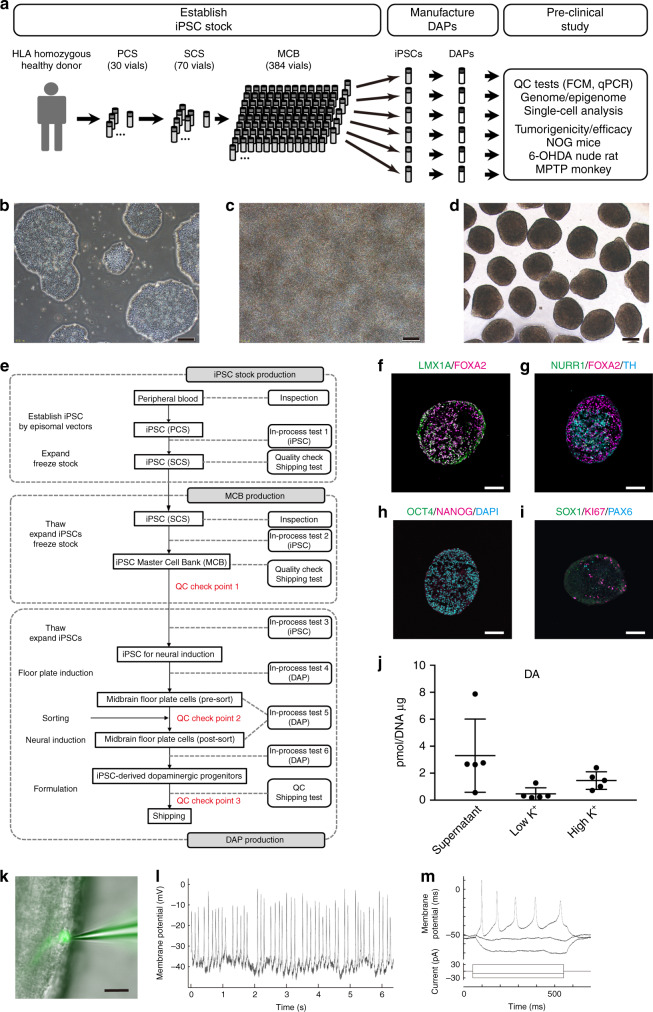
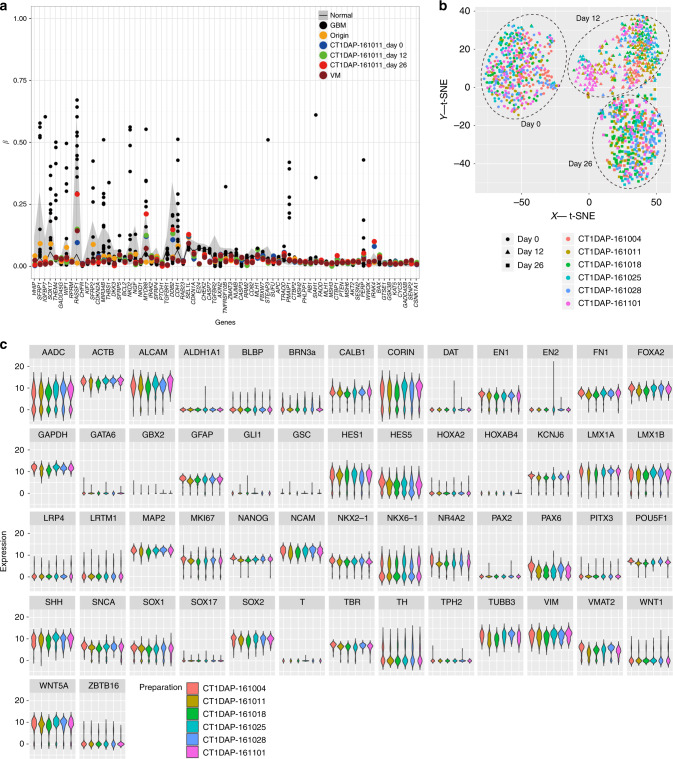
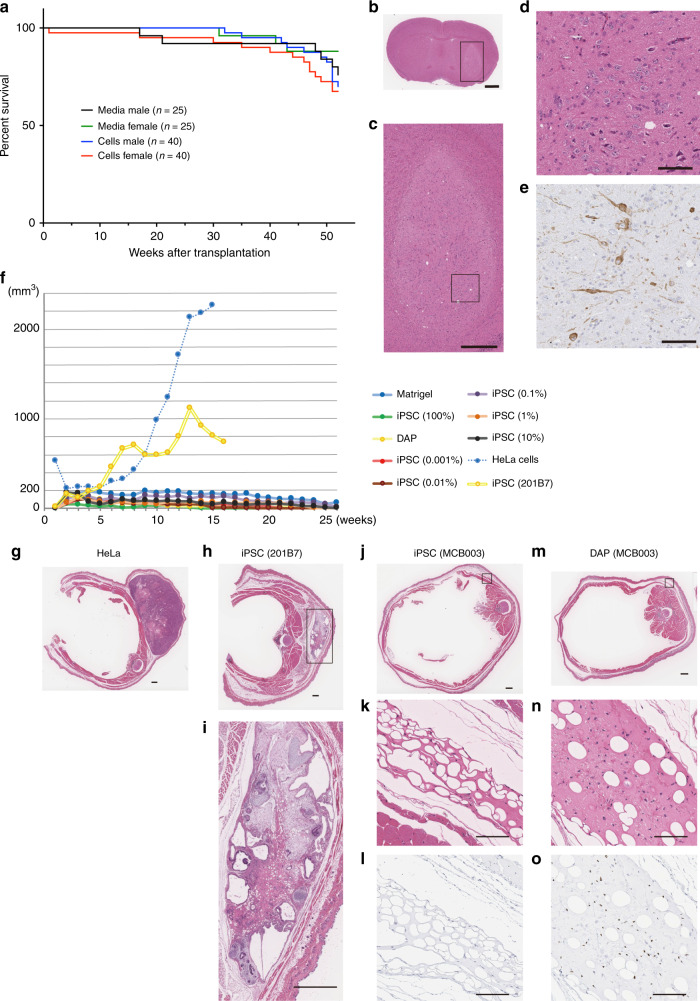
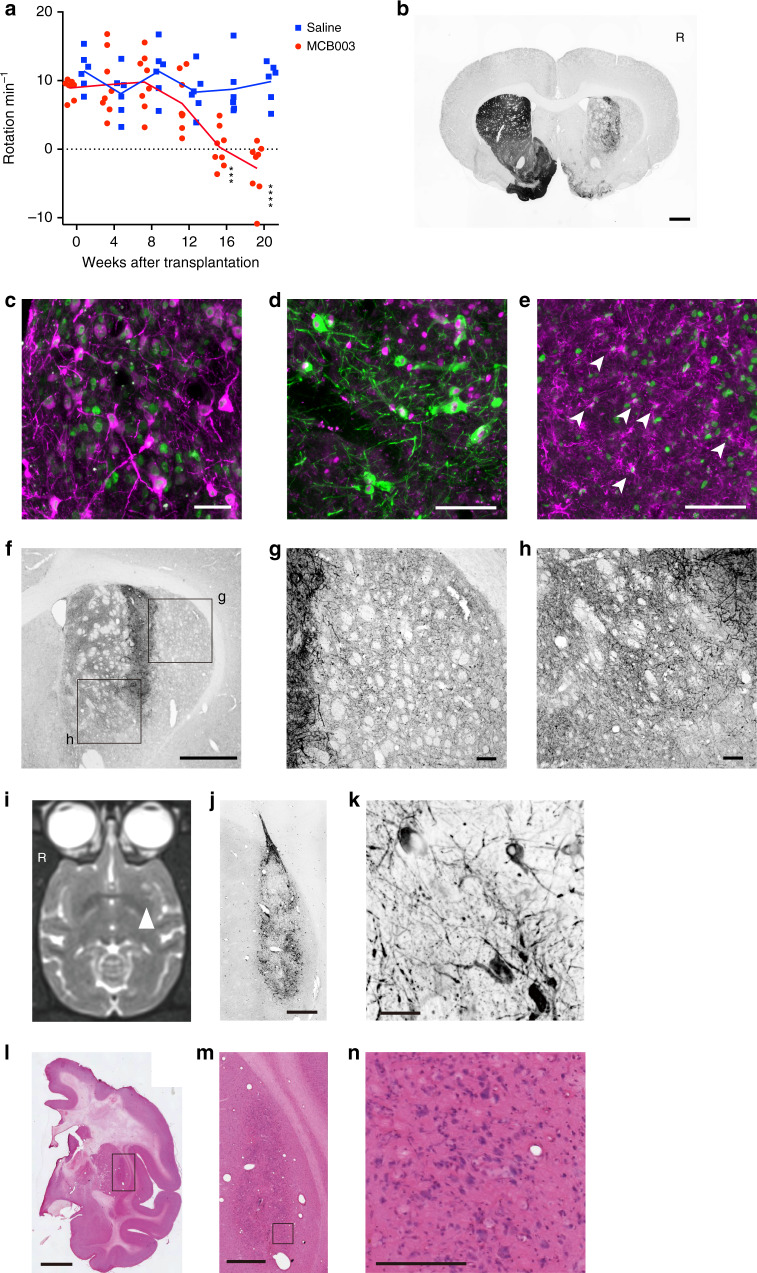
Induced pluripotent stem cell (iPSC)-derived dopaminergic (DA) neurons are an expected source for cell-based therapies for Parkinson's disease (PD). The regulatory criteria for the clinical application of these therapies, however, have not been established. Here we show the results of our pre-clinical study, in which we evaluate the safety and efficacy of dopaminergic progenitors (DAPs) derived from a clinical-grade human iPSC line. We confirm the characteristics of DAPs by in vitro analyses. We also verify that the DAP population include no residual undifferentiated iPSCs or early neural stem cells and have no genetic aberration in cancer-related genes. Furthermore, in vivo studies using immunodeficient mice reveal no tumorigenicity or toxicity of the cells. When the DAPs are transplanted into the striatum of 6-OHDA-lesioned rats, the animals show behavioral improvement. Based on these results, we started a clinical trial to treat PD patients in 2018.
Overview
The claims and statistics of this paper haven’t been checked yet.
Free: it reads the open-access text and checks the first 5 claims that cite a source we can check. Create a free account to check every claim.
Integrity signals
Registry
Cites
Statistics
Figures
Verification
Claims the paper makes
The claims and statistics of this paper haven’t been checked yet.
Free: it reads the open-access text and checks the first 5 claims that cite a source we can check. Create a free account to check every claim.
Claims other papers make about this one
Each is checked against this paper’s own text: does it say what the citing paper says it does?
The source backs part of the claim, not all of it — or backs it for a different population, condition or comparison.
In the citing paper
“In their preclinical mouse model, they showed behavioral improvement and no tumorgenicity or toxicity of the cells [90].”
From Utility of iPSC-Derived Cells for Disease Modeling, Drug Development, and Cell Therapy (2022) · cites this paper as [90]
Experimental — accuracy not yet measuredThe check wasn’t confident either way, so it gives no verdict — never disputed.
In the citing paper
“their preclinical studies on ischemic cardiomyopathy pig models have shown improved cardiac function along with the identification of molecular factors to aid the electro-functional coupling between the transplanted cells and recipient heart [90].”
From Utility of iPSC-Derived Cells for Disease Modeling, Drug Development, and Cell Therapy (2022) · cites this paper as [90]
Experimental — accuracy not yet measured
Self-check
Percentages, sums and reported differences re-computed from the paper’s own numbers.
The self-check needs the paper’s full text.
Citations
Cites
The Sequence Alignment/Map format and SAMtools
Li, H., Handsaker, B., Wysoker, A., Fennell, T., Ruan, J., Homer, N., Marth, G., Abecasis, G., Durbin, R., & 1000 Genome Project Data Processing Subgroup (2009) · Bioinformatics · doi:10.1093/bioinformatics/btp352 · Cited by 62,041
Fast and accurate short read alignment with Burrows-Wheeler transform
Li, H., & Durbin, R. (2009) · Bioinformatics · doi:10.1093/bioinformatics/btp324 · Cited by 58,607
A Threshold Selection Method from Gray-Level Histograms
Otsu, N. (1979) · IEEE Transactions on Systems, Man, and Cybernetics · doi:10.1109/tsmc.1979.4310076 · Cited by 43,398
Cutadapt removes adapter sequences from high-throughput sequencing reads
Martin, M. (2011) · EMBnet.journal · doi:10.14806/ej.17.1.200 · Cited by 33,889
Induction of Pluripotent Stem Cells from Adult Human Fibroblasts by Defined Factors
Takahashi, K., Tanabe, K., Ohnuki, M., Narita, M., Ichisaka, T., Tomoda, K., & Yamanaka, S. (2007) · Cell · doi:10.1016/j.cell.2007.11.019 · Cited by 20,221
ANNOVAR: functional annotation of genetic variants from high-throughput sequencing data
Wang, K., Li, M., & Hakonarson, H. (2010) · Nucleic Acids Research · doi:10.1093/nar/gkq603 · Cited by 14,621
ggplot2: Elegant Graphics for Data Analysis
Wickham, H. (2009) · doi:10.1007/978-0-387-98141-3 · Cited by 14,447
VarScan 2: Somatic mutation and copy number alteration discovery in cancer by exome sequencing
Koboldt, D. C., Zhang, Q., Larson, D. E., Shen, D., McLellan, M. D., Lin, L., Miller, C. A., Mardis, E. R., Ding, L., & Wilson, R. K. (2012) · Genome Research · doi:10.1101/gr.129684.111 · Cited by 4,905
DELLY: structural variant discovery by integrated paired-end and split-read analysis
Rausch, T., Zichner, T., Schlattl, A., Stütz, A. M., Benes, V., & Korbel, J. O. (2012) · Bioinformatics · doi:10.1093/bioinformatics/bts378 · Cited by 2,459
Transplantation of Embryonic Dopamine Neurons for Severe Parkinson's Disease
Freed, C. R., Greene, P. E., Breeze, R. E., Tsai, W.-Y., DuMouchel, W., Kao, R., Dillon, S., Winfield, H., Culver, S., Trojanowski, J. Q., et al. (2001) · New England Journal of Medicine · doi:10.1056/nejm200103083441002 · Cited by 2,366
A more efficient method to generate integration-free human iPS cells
Okita, K., Matsumura, Y., Sato, Y., Okada, A., Morizane, A., Okamoto, S., Hong, H., Nakagawa, M., Tanabe, K., Tezuka, K.-I., et al. (2011) · Nature Methods · doi:10.1038/nmeth.1591 · Cited by 2,061
Self-citationFrequent pathway mutations of splicing machinery in myelodysplasia
Yoshida, K., Sanada, M., Shiraishi, Y., Nowak, D., Nagata, Y., Yamamoto, R., Sato, Y., Sato-Otsubo, A., Kon, A., Nagasaki, M., et al. (2011) · Nature · doi:10.1038/nature10496 · Cited by 2,029
Self-citationKriks, S., Shim, J.-W., Piao, J., Ganat, Y. M., Wakeman, D. R., Xie, Z., Carrillo-Reid, L., Auyeung, G., Antonacci, C., Buch, A., et al. (2011) · Nature · doi:10.1038/nature10648 · Cited by 1,907
Wang, K., Li, M., Hadley, D., Liu, R., Glessner, J., Grant, S. F. A., Hakonarson, H., & Bucan, M. (2007) · Genome Research · doi:10.1101/gr.6861907 · Cited by 1,792
Teschendorff, A. E., Marabita, F., Lechner, M., Bartlett, T., Tegner, J., Gomez-Cabrero, D., & Beck, S. (2013) · Bioinformatics · doi:10.1093/bioinformatics/bts680 · Cited by 1,683
The COSMIC Cancer Gene Census: describing genetic dysfunction across all human cancers
Sondka, Z., Bamford, S., Cole, C. G., Ward, S. A., Dunham, I., & Forbes, S. A. (2018) · Nature Reviews Cancer · doi:10.1038/s41568-018-0060-1 · Cited by 1,597
Hotspots of aberrant epigenomic reprogramming in human induced pluripotent stem cells
Lister, R., Pelizzola, M., Kida, Y. S., Hawkins, R. D., Nery, J. R., Hon, G., Antosiewicz-Bourget, J., O’Malley, R., Castanon, R., Klugman, S., et al. (2011) · Nature · doi:10.1038/nature09798 · Cited by 1,549
NOD/SCID/γcnull mouse: an excellent recipient mouse model for engraftment of human cells
Ito, M., Hiramatsu, H., Kobayashi, K., Suzue, K., Kawahata, M., Hioki, K., Ueyama, Y., Koyanagi, Y., Sugamura, K., Tsuji, K., et al. (2002) · Blood · doi:10.1182/blood-2001-12-0207 · Cited by 1,476
Stem Cell Therapies in Clinical Trials: Progress and Challenges
Trounson, A., & McDonald, C. (2015) · Cell Stem Cell · doi:10.1016/j.stem.2015.06.007 · Cited by 1,468
Embryonic stem cell trials for macular degeneration: a preliminary report
Schwartz, S. D., Hubschman, J.-P., Heilwell, G., Franco-Cardenas, V., Pan, C. K., Ostrick, R. M., Mickunas, E., Gay, R., Klimanskaya, I., & Lanza, R. (2012) · The Lancet · doi:10.1016/s0140-6736(12)60028-2 · Cited by 1,409
Stenson, P. D., Mort, M., Ball, E. V., Evans, K., Hayden, M., Heywood, S., Hussain, M., Phillips, A. D., & Cooper, D. N. (2017) · Human Genetics · doi:10.1007/s00439-017-1779-6 · Cited by 1,345
A double‐blind controlled trial of bilateral fetal nigral transplantation in Parkinson's disease
Olanow, C. W., Goetz, C. G., Kordower, J. H., Stoessl, A. J., Sossi, V., Brin, M. F., Shannon, K. M., Nauert, G. M., Perl, D. P., Godbold, J., et al. (2003) · Annals of Neurology · doi:10.1002/ana.10720 · Cited by 1,307
Somatic coding mutations in human induced pluripotent stem cells
Gore, A., Li, Z., Fung, H.-L., Young, J. E., Agarwal, S., Antosiewicz-Bourget, J., Canto, I., Giorgetti, A., Israel, M. A., Kiskinis, E., et al. (2011) · Nature · doi:10.1038/nature09805 · Cited by 1,273
Induction of Pluripotent Stem Cells From Adult Human Fibroblasts by Defined Factors
Takahashi, K., Tanabe, K., Ohnuki, M., Narita, M., Ichisaka, T., Tomoda, K., & Yamanaka, S. (2008) · Obstetrical & Gynecological Survey · doi:10.1097/01.ogx.0000305204.97355.0d · Cited by 1,174
TRANSPLANTATION OF EMBRYONIC DOPAMINE NEURONS FOR SEVERE PARKINSON'S DISEASE
Reed, R., Reene, P. A. E. G., Reeze, R. O. E. B., Ei, W., Ouchel, W. I. D. U. M., Ao, R. I. K., Infield, W., Ulver, S. H. C., Rojanowski, J. O. Q. T., Idelberg, D. A. E., et al. (2001) · Cited by 999
Copy number variation and selection during reprogramming to pluripotency
Hussein, S. M., Batada, N. N., Vuoristo, S., Ching, R. W., Autio, R., Närvä, E., Ng, S., Sourour, M., Hämäläinen, R., Olsson, C., et al. (2011) · Nature · doi:10.1038/nature09871 · Cited by 954
Kordower, J. H., Freeman, T. B., Snow, B. J., Vingerhoets, F. J. G., Mufson, E. J., Sanberg, P. R., Hauser, R. A., Smith, D. A., Nauert, G. M., Perl, D. P., et al. (1995) · New England Journal of Medicine · doi:10.1056/nejm199504273321702 · Cited by 860
Human iPS cell-derived dopaminergic neurons function in a primate Parkinson’s disease model
Kikuchi, T., Morizane, A., Doi, D., Magotani, H., Onoe, H., Hayashi, T., Mizuma, H., Takara, S., Takahashi, R., Inoue, H., et al. (2017) · Nature · doi:10.1038/nature23664 · Cited by 702
Self-citationDevelopment and functions of the choroid plexus–cerebrospinal fluid system
Lun, M. P., Monuki, E. S., & Lehtinen, M. K. (2015) · Nature Reviews Neuroscience · doi:10.1038/nrn3921 · Cited by 678
Kirkeby, A., Grealish, S., Wolf, D. A., Nelander, J., Wood, J., Lundblad, M., Lindvall, O., & Parmar, M. (2012) · Cell Reports · doi:10.1016/j.celrep.2012.04.009 · Cited by 662
Doi, D., Samata, B., Katsukawa, M., Kikuchi, T., Morizane, A., Ono, Y., Sekiguchi, K., Nakagawa, M., Parmar, M., & Takahashi, J. (2014) · Stem Cell Reports · doi:10.1016/j.stemcr.2014.01.013 · Cited by 431
Self-citationOno, Y., Nakatani, T., Sakamoto, Y., Mizuhara, E., Minaki, Y., Kumai, M., Hamaguchi, A., Nishimura, M., Inoue, Y., Hayashi, H., et al. (2007) · Development · doi:10.1242/dev.02879 · Cited by 330
Self-citationHuman Trials of Stem Cell-Derived Dopamine Neurons for Parkinson’s Disease: Dawn of a New Era
Barker, R. A., Parmar, M., Studer, L., & Takahashi, J. (2017) · Cell Stem Cell · doi:10.1016/j.stem.2017.09.014 · Cited by 329
Self-citationLi, W., Englund, E., Widner, H., Mattsson, B., van Westen, D., Lätt, J., Rehncrona, S., Brundin, P., Björklund, A., Lindvall, O., et al. (2016) · Proceedings of the National Academy of Sciences · doi:10.1073/pnas.1605245113 · Cited by 313
Gogarten, S. M., Bhangale, T., Conomos, M. P., Laurie, C. A., McHugh, C. P., Painter, I., Zheng, X., Crosslin, D. R., Levine, D., Lumley, T., et al. (2012) · Bioinformatics · doi:10.1093/bioinformatics/bts610 · Cited by 206
An empirical Bayesian framework for somatic mutation detection from cancer genome sequencing data
Shiraishi, Y., Sato, Y., Chiba, K., Okuno, Y., Nagata, Y., Yoshida, K., Shiba, N., Hayashi, Y., Kume, H., Homma, Y., et al. (2013) · Nucleic Acids Research · doi:10.1093/nar/gkt126 · Cited by 200
Self-citationKuroda, T., Yasuda, S., Kusakawa, S., Hirata, N., Kanda, Y., Suzuki, K., Takahashi, M., Nishikawa, S.-I., Kawamata, S., & Sato, Y. (2012) · PLoS ONE · doi:10.1371/journal.pone.0037342 · Cited by 153
Pluripotent stem cell-based therapy for Parkinson’s disease: Current status and future prospects
Sonntag, K.-C., Song, B., Lee, N., Jung, J. H., Cha, Y., Leblanc, P., Neff, C., Kong, S. W., Carter, B. S., Schweitzer, J., et al. (2018) · Progress in Neurobiology · doi:10.1016/j.pneurobio.2018.04.005 · Cited by 143
Wang, Y.-K., Zhu, W.-W., Wu, M.-H., Wu, Y.-H., Liu, Z.-X., Liang, L.-M., Sheng, C., Hao, J., Wang, L., Li, W., et al. (2018) · Stem Cell Reports · doi:10.1016/j.stemcr.2018.05.010 · Cited by 132
Priest, C. A., Manley, N. C., Denham, J., Wirth, E. D., & Lebkowski, J. S. (2015) · Regenerative Medicine · doi:10.2217/rme.15.57 · Cited by 122
Garitaonandia, I., Gonzalez, R., Christiansen-Weber, T., Abramihina, T., Poustovoitov, M., Noskov, A., Sherman, G., Semechkin, A., Snyder, E., & Kern, R. (2016) · Scientific Reports · doi:10.1038/srep34478 · Cited by 79
Kim, J. G., Takeshima, H., Niwa, T., Rehnberg, E., Shigematsu, Y., Yoda, Y., Yamashita, S., Kushima, R., Maekita, T., Ichinose, M., et al. (2012) · Cancer Letters · doi:10.1016/j.canlet.2012.11.022 · Cited by 65
González, J. R., Rodríguez-Santiago, B., Cáceres, A., Pique-Regi, R., Rothman, N., Chanock, S. J., Armengol, L., & Pérez-Jurado, L. A. (2011) · BMC Bioinformatics · doi:10.1186/1471-2105-12-166 · Cited by 56
Katsukawa, M., Nakajima, Y., Fukumoto, A., Doi, D., & Takahashi, J. (2016) · Stem Cells and Development · doi:10.1089/scd.2015.0394 · Cited by 48
Self-citationKusakawa, S., Machida, K., Yasuda, S., Takada, N., Kuroda, T., Sawada, R., Okura, H., Tsutsumi, H., Kawamata, S., & Sato, Y. (2015) · Regenerative Therapy · doi:10.1016/j.reth.2014.12.001 · Cited by 47
Donor Recruitment and Eligibility Criteria for HLA-Homozygous iPS Cell Bank in Japan
Saito, M. K., Matsunaga, A., Takasu, N., & Yamanaka, S. (2014) · Stem cell biology and regenerative medicine · doi:10.1007/978-1-4939-0585-0_7 · Cited by 17
Doi, D., Kikuchi, T., Morizane, A., & Takahashi, J. B. (2020) · doi:10.21203/rs.3.pex-954/v1 · Cited by 4
Self-citation
Cited by
Challenges and hopes for Alzheimer’s disease
Tatulian, S. A. (2022) · Drug Discovery Today · doi:10.1016/j.drudis.2022.01.016 · Cited by 291
Treatment Options for Motor and Non-Motor Symptoms of Parkinson’s Disease
Church, F. C. (2021) · Biomolecules · doi:10.3390/biom11040612 · Cited by 290
Piao, J., Zabierowski, S., Dubose, B. N., Hill, E. J., Navare, M., Claros, N., Rosen, S., Ramnarine, K., Horn, C., Fredrickson, C., et al. (2021) · Cell Stem Cell · doi:10.1016/j.stem.2021.01.004 · Cited by 240
Regenerative Stem Cell Therapy for Neurodegenerative Diseases: An Overview
Sivandzade, F., & Cucullo, L. (2021) · International Journal of Molecular Sciences · doi:10.3390/ijms22042153 · Cited by 224
Kim, T. W., Piao, J., Koo, S. Y., Kriks, S., Chung, S. Y., Betel, D., Socci, N. D., Choi, S. J., Zabierowski, S., Dubose, B. N., et al. (2021) · Cell Stem Cell · doi:10.1016/j.stem.2021.01.005 · Cited by 210
Metadata
- Authors
- Doi, D., Magotani, H., Kikuchi, T., Ikeda, M., Hiramatsu, S., Yoshida, K., Amano, N., Nomura, M., Umekage, M., Morizane, A., & Takahashi, J.
- Affiliations
- Kyoto University (JP)
- Corresponding author
- Takahashi, Jun
- ORCID
- Venue
- Nature Communications
- Published
- 2020-07-06
- Volume
- 11
- Issue
- 1
- Pages
- 3369-3369
- ISSN
- 2041-1723 (ISSN-L)
- PMC
- PMC7338530
- OpenAlex
- W3039614810
- Cited by
- 350
- References
- 48
- Citations by year
- 2026: 47 · 2025: 60 · 2024: 63 · 2023: 48 · 2022: 51 · 2021: 71 · 2020: 10
- FWCI
- 14.53
- Type
- journal article
- Language
- en
- Open access
- gold
- doi.org
- Licence
- cc-by
- creativecommons.org/licenses/by/4.0 (tdm)
- creativecommons.org/licenses/by/4.0 (vor)
- Locations
- Nature Communications (publishedVersion, cc-by)
- PubMed Central (publishedVersion, cc-by)
- PubMed (publishedVersion)
- Institutional Repositories DataBase (IRDB) (submittedVersion, cc-by)
- RePEc: Research Papers in Economics (submittedVersion)
- DOAJ (DOAJ: Directory of Open Access Journals) (submittedVersion, cc-by-sa)
- Kyoto University Research Information Repository (Kyoto University) (submittedVersion, cc-by)
- Funders
- Japan Agency for Medical Research and Development
- Topics
- Life Sciences › Biochemistry, Genetics and Molecular Biology › Molecular Biology › Pluripotent Stem Cells Research
- Health Sciences › Medicine › Clinical Neurology › Parkinson's Disease Mechanisms and Treatments
- Life Sciences › Biochemistry, Genetics and Molecular Biology › Molecular Biology › Nuclear Receptors and Signaling
- Keywords
- Parkinson's disease, induced pluripotent stem cells, dopaminergic neurons, cell therapy, tumorigenicity, striatal transplantation, 6-hydroxydopamine lesion, clinical trials
- MeSH terms
- Animals, Cell Differentiation, Cell Line, Disease Models, Animal, Dopamine, Humans, Macaca fascicularis, Male, Parkinson Disease, Rats, Nude, Transplantation, Heterologous, Mice, SCID, Mice, Inbred NOD, Outcome Assessment, Health Care, Mice, Knockout, Stem Cell Transplantation, Induced Pluripotent Stem Cells, Neural Stem Cells, Dopaminergic Neurons
About these checks
Registry, retraction, Cites and statistics results are computed, not judged, with one exception: a printed reference that no index lists is read once by a model before it counts as a citation error. Claims are extracted by a model and kept only when their quote appears verbatim in the text; each cited source is then checked, with a model’s help, for whether it says what the claim relies on. Those verdicts can be wrong — read the claim’s quote and the cited source before relying on one.
Statistics and arithmetic are recomputed, not judged.
Confidence bands are shown only for fields calibrated on our annotated test set. None is calibrated yet, so no band is shown.
What counts as a claim ›How we measure confidence ›How we check this ›
Are you an author, or do you see a problem with this page? Request a review
Data sources
Bibliographic data: Semantic Scholar, OpenAlex, Crossref.
Contains information from the Semantic Scholar Academic Graph Datasets, made available under the ODC Attribution License (ODC-BY 1.0).
Semantic Scholar’s data is described in: Kinney, R., et al. (2023). The Semantic Scholar Open Data Platform. arXiv:2301.10140.
