

The DOI matches its Crossref record; 73 of the 75 references it cites were found in a registry or an index.
HIV-1 replication complexes accumulate in nuclear speckles and integrate into speckle-associated genomic domains
Open accessAbstract
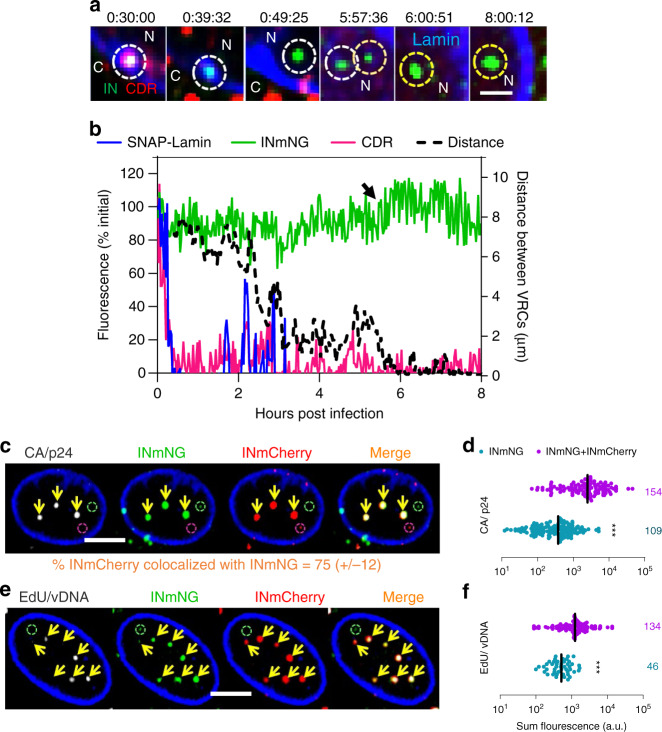
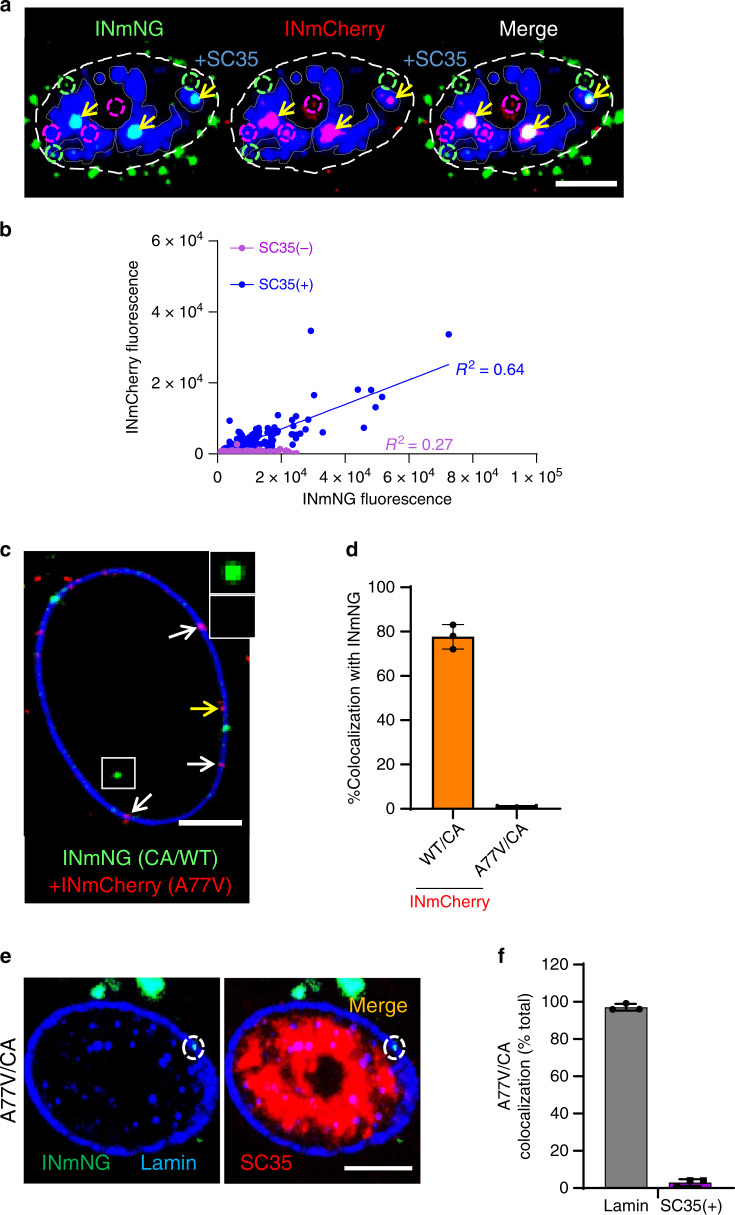
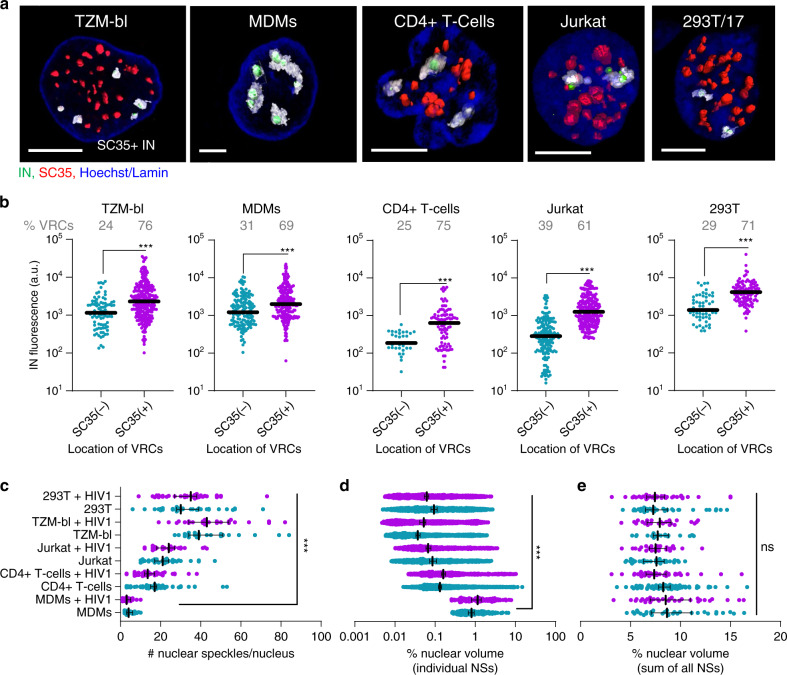
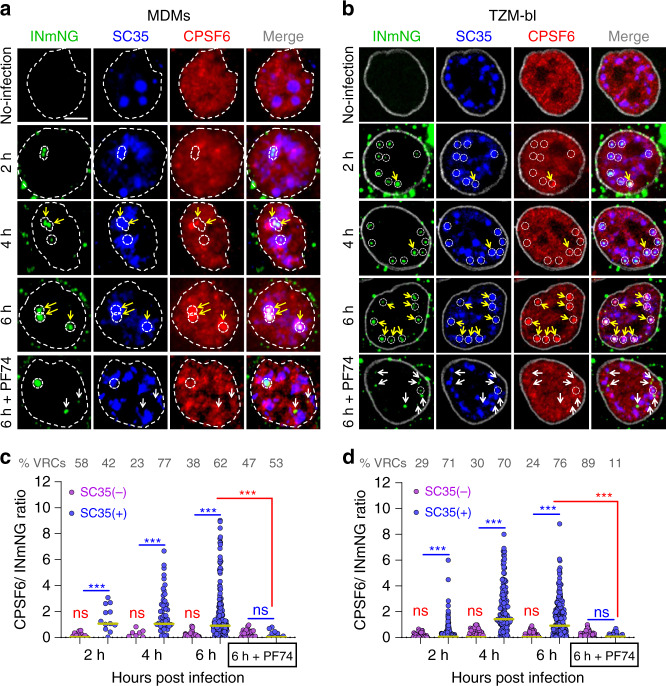
The early steps of HIV-1 infection, such as uncoating, reverse transcription, nuclear import, and transport to integration sites are incompletely understood. Here, we imaged nuclear entry and transport of HIV-1 replication complexes in cell lines, primary monocyte-derived macrophages (MDMs) and CD4 + T cells. We show that viral replication complexes traffic to and accumulate within nuclear speckles and that these steps precede the completion of viral DNA synthesis. HIV-1 transport to nuclear speckles is dependent on the interaction of the capsid proteins with host cleavage and polyadenylation specificity factor 6 (CPSF6), which is also required to stabilize the association of the viral replication complexes with nuclear speckles. Importantly, integration site analyses reveal a strong preference for HIV-1 to integrate into speckle-associated genomic domains. Collectively, our results demonstrate that nuclear speckles provide an architectural basis for nuclear homing of HIV-1 replication complexes and subsequent integration into associated genomic loci.
Overview
The claims and statistics of this paper haven’t been checked yet.
Run the check — free, no account needed. It reads the open-access text and checks the sources it cites.
Integrity signals
Registry
Cites
Statistics
Figures
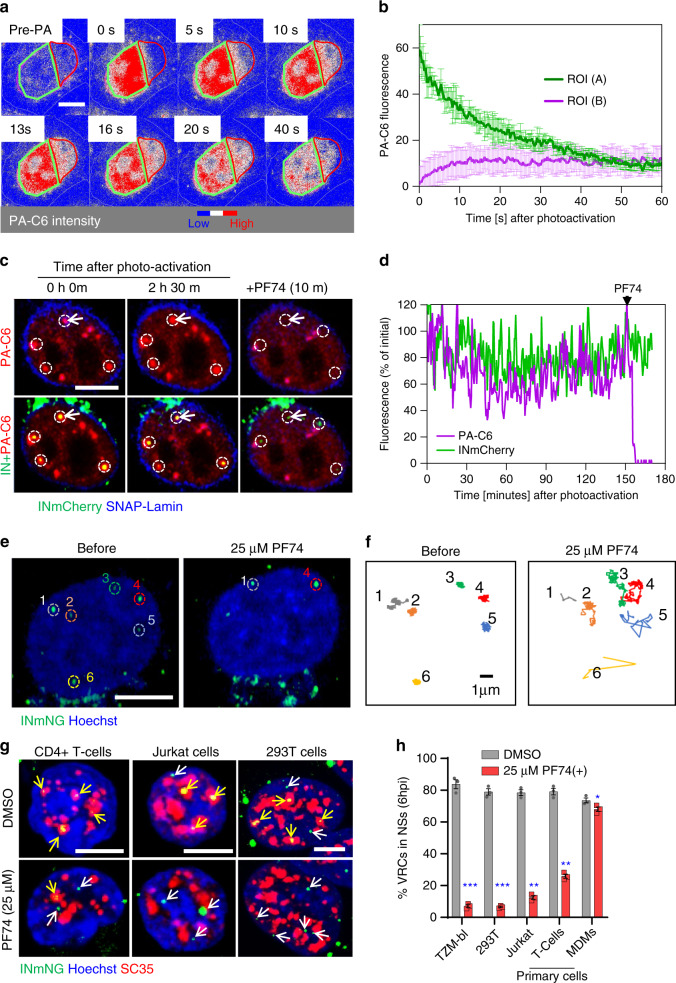
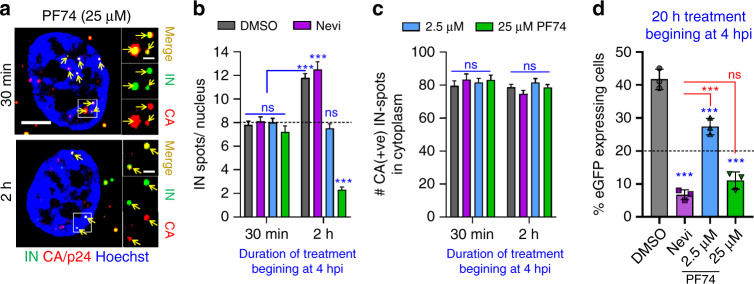
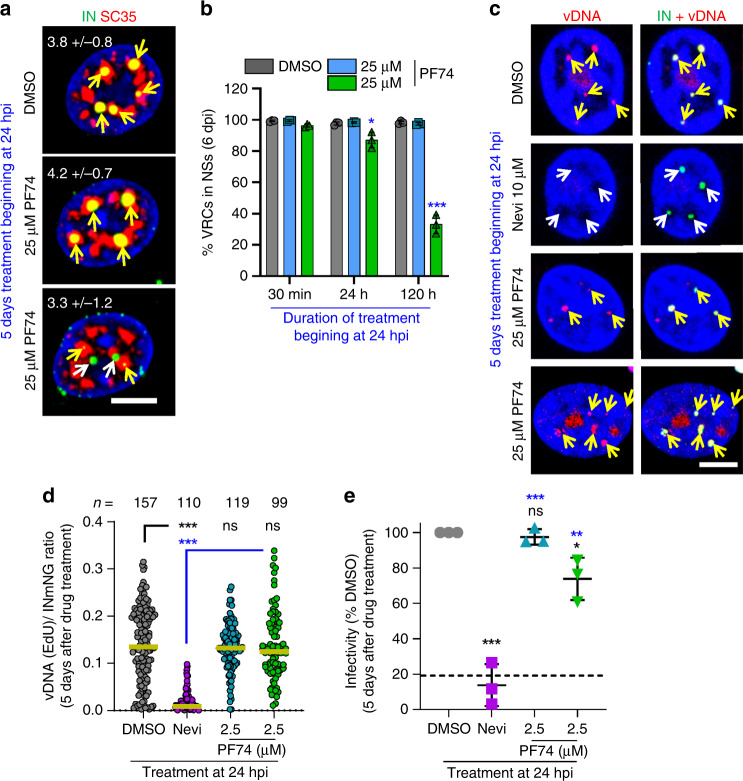
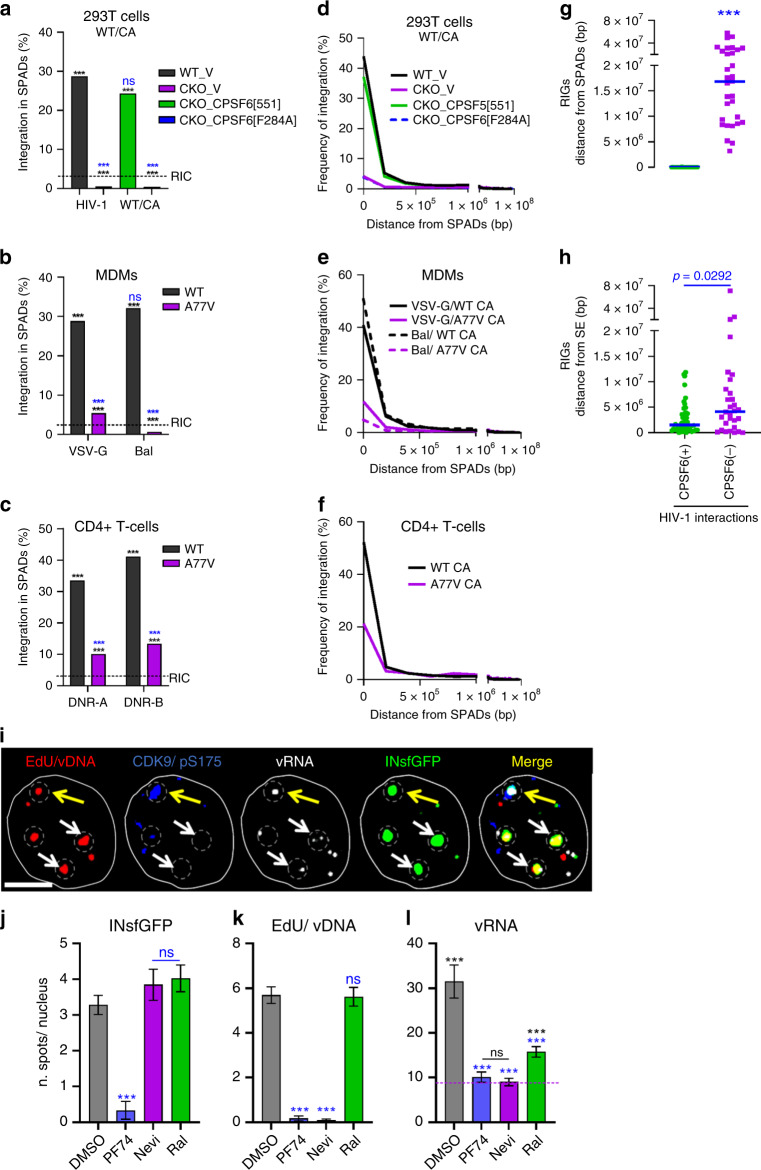
Verification
Claims the paper makes
The claims and statistics of this paper haven’t been checked yet.
Run the check — free, no account needed. It reads the open-access text and checks the sources it cites.
Claims other papers make about this one
Each is checked against this paper’s own text: does it say what the citing paper says it does?
The source backs part of the claim, not all of it — or backs it for a different population, condition or comparison.
In the citing paper
“Under normal infection conditions, HIV-1 PICs colocalized with nuclear speckles and strongly favoured SPADs for integration while avoiding LADs84.”
From Structure and function of retroviral integrase (2022) · cites this paper as [84]
Experimental — accuracy not yet measuredThe source backs part of the claim, not all of it — or backs it for a different population, condition or comparison.
In the citing paper
“In addition to its role in nuclear import, CPSF6 plays a critical role in regulating nuclear PIC incursion.”
From Structure and function of retroviral integrase (2022) · cites this paper as [84]
Experimental — accuracy not yet measuredThe source backs part of the claim, not all of it — or backs it for a different population, condition or comparison.
In the citing paper
“In CPSF6 knockout cells, PICs congregated at the nuclear periphery and uncharacteristically targeted LADs for integration while losing the preference for SPADs84,85.”
From Structure and function of retroviral integrase (2022) · cites this paper as [84]
Experimental — accuracy not yet measured
Self-check
Percentages, sums and reported differences re-computed from the paper’s own numbers.
The self-check needs the paper’s full text.
Citations
Cites
Fast gapped-read alignment with Bowtie 2
Langmead, B., & Salzberg, S. L. (2012) · Nature Methods · doi:10.1038/nmeth.1923 · Cited by 56,400
BEDTools: a flexible suite of utilities for comparing genomic features
Quinlan, A. R., & Hall, I. M. (2010) · Bioinformatics · doi:10.1093/bioinformatics/btq033 · Cited by 27,437
HISAT: a fast spliced aligner with low memory requirements
Kim, D., Langmead, B., & Salzberg, S. L. (2015) · Nature Methods · doi:10.1038/nmeth.3317 · Cited by 24,112
<tt>BLAT</tt> —The <tt>BLAST</tt> -Like Alignment Tool
Kent, W. J. (2002) · Genome Research · doi:10.1101/gr.229202 · Cited by 8,480
HIV-1 Integration in the Human Genome Favors Active Genes and Local Hotspots
Schröder, A. R. W., Shinn, P., Chen, H., Berry, C., Ecker, J. R., & Bushman, F. (2002) · Cell · doi:10.1016/s0092-8674(02)00864-4 · Cited by 1,832
A Photoactivatable GFP for Selective Photolabeling of Proteins and Cells
Patterson, G. H., & Lippincott‐Schwartz, J. (2002) · Science · doi:10.1126/science.1074952 · Cited by 1,612
Icy: an open bioimage informatics platform for extended reproducible research
de Chaumont, F., Dallongeville, S., Chenouard, N., Hervé, N., Pop, S., Provoost, T., Meas‐Yedid, V., Pankajakshan, P., Lecomte, T., Montagner, Y. L., et al. (2012) · Nature Methods · doi:10.1038/nmeth.2075 · Cited by 1,538
Connor, R. I., Chen, B. K., Choe, S., & Landau, N. R. (1995) · Virology · doi:10.1006/viro.1995.1016 · Cited by 1,253
Platt, E. J., Wehrly, K., Kuhmann, S. E., Chesebro, B. W., & Kabat, D. (1998) · Journal of Virology · doi:10.1128/jvi.72.4.2855-2864.1998 · Cited by 1,223
Controlling the elongation phase of transcription with P-TEFb
Peterlin, B. M., & Price, D. H. (2006) · Molecular Cell · doi:10.1016/j.molcel.2006.06.014 · Cited by 1,144
Research works printed but not linked: 1
- Hulme, A. E., Kelley, Z., Foley, D. & Hope, T. J. Complementary assays reveal a low level of CA associated with viral complexes in the nuclei of HIV-1-infected cells. J. Virol. 89, 5350–5361 (2015). · DOI
Cited by
Sorted by citations
HIV-1 cores retain their integrity until minutes before uncoating in the nucleus
Li, C., Burdick, R. C., Nagashima, K., Hu, W.-S., & Pathak, V. K. (2021) · Proceedings of the National Academy of Sciences · doi:10.1073/pnas.2019467118 · Cited by 168
Structure and function of retroviral integrase
Maertens, G. N., Engelman, A. N., & Cherepanov, P. (2022) · Nature Reviews Microbiology · doi:10.1038/s41579-021-00586-9 · Cited by 124
Self-citationMüller, T. G., Žíla, V., Peters, K., Schifferdecker, S., Stanić, M., Lucic, B., Laketa, V., Lušić, M., Müller, B., & Kräusslich, H. (2021) · eLife · doi:10.7554/elife.64776 · Cited by 129
Nuclear speckles – a driving force in gene expression
Faber, G. P., Nadav-Eliyahu, S., & Shav‐Tal, Y. (2022) · Journal of Cell Science · doi:10.1242/jcs.259594 · Cited by 114
Nuclear Capsid Uncoating and Reverse Transcription of HIV-1
Müller, T. G., Žíla, V., Müller, B., & Kräusslich, H. (2022) · Annual Review of Virology · doi:10.1146/annurev-virology-020922-110929 · Cited by 109
Metadata
- Authors
- Francis, A. C., Marin, M., Singh, P. K., Achuthan, V., Prellberg, M. J., Palermino-Rowland, K., Lan, S., Tedbury, P. R., Sarafianos, S. G., Engelman, A. N., & Melikyan, G. B.
- Affiliations
- Emory University (US)
- Harvard University (US)
- Corresponding author
- Francis, Ashwanth C.
- Melikyan, Gregory B.
- ORCID
- Venue
- Nature Communications
- Published
- 2020-07-14
- Volume
- 11
- Issue
- 1
- Pages
- 3505-3505
- ISSN
- 2041-1723 (ISSN-L)
- PMC
- PMC7360574
- OpenAlex
- W3042510281
- Cited by
- 159
- References
- 75
- Citations by year
- 2026: 15 · 2025: 29 · 2024: 27 · 2023: 20 · 2022: 32 · 2021: 29 · 2020: 7
- FWCI
- 11.73
- Type
- journal article
- Language
- en
- Update notices
- correction (2020-11-26)
- Open access
- gold
- doi.org
- Locations
- Nature Communications (publishedVersion, cc-by)
- PubMed Central (publishedVersion, cc-by)
- PubMed (publishedVersion)
- RePEc: Research Papers in Economics (submittedVersion)
- DOAJ (DOAJ: Directory of Open Access Journals) (submittedVersion, cc-by-sa)
- Funders
- U.S. Department of Health & Human Services | NIH | National Institute of Allergy and Infectious Diseases (R01 AI129862, R01 AI052014, R01 AI148382, R01 AI120860, U54 AI150472)
- Topics
- Life Sciences › Immunology and Microbiology › Virology › HIV Research and Treatment
- Life Sciences › Biochemistry, Genetics and Molecular Biology › Genetics › Virus-based gene therapy research
- Health Sciences › Medicine › Infectious Diseases › HIV/AIDS drug development and treatment
- Keywords
- HIV-1, nuclear speckles, viral replication complex, viral integration, CPSF6, capsid protein, nuclear transport, monocyte-derived macrophages, CD4+ T cells, nuclear organization, viral uncoating, reverse transcription
- MeSH terms
- Cell Nucleus, Humans, Microscopy, Fluorescence, Virology, Virus Replication, CD4-Positive T-Lymphocytes, HIV-1, HIV Infections, Virus Integration, Genome, Viral, Capsid Proteins, Host-Pathogen Interactions, HEK293 Cells
About these checks
Registry, retraction, Cites and statistics results are computed, not judged, with one exception: a printed reference that no index lists is read once by a model before it counts as a citation error. Claims are extracted by a model and kept only when their quote appears verbatim in the text; each cited source is then checked, with a model’s help, for whether it says what the claim relies on. Those verdicts can be wrong — read the claim’s quote and the cited source before relying on one.
Statistics and arithmetic are recomputed, not judged.
Confidence bands are shown only for fields calibrated on our annotated test set. None is calibrated yet, so no band is shown.
What counts as a claim ›How we measure confidence ›How we check this ›
Are you an author, or do you see a problem with this page? Request a review
