

Improving the accuracy of medical diagnosis with causal machine learning
Open accessThe DOI matches its Crossref record; 92 of the 92 references it cites were found in a registry or an index.
Abstract
Machine learning promises to revolutionize clinical decision making and diagnosis. In medical diagnosis a doctor aims to explain a patient’s symptoms by determining the diseases causing them. However, existing machine learning approaches to diagnosis are purely associative, identifying diseases that are strongly correlated with a patients symptoms. We show that this inability to disentangle correlation from causation can result in sub-optimal or dangerous diagnoses. To overcome this, we reformulate diagnosis as a counterfactual inference task and derive counterfactual diagnostic algorithms. We compare our counterfactual algorithms to the standard associative algorithm and 44 doctors using a test set of clinical vignettes. While the associative algorithm achieves an accuracy placing in the top 48% of doctors in our cohort, our counterfactual algorithm places in the top 25% of doctors, achieving expert clinical accuracy. Our results show that causal reasoning is a vital missing ingredient for applying machine learning to medical diagnosis.
Overview
The claims and statistics of this paper haven’t been checked yet.
Free: it reads the open-access text and checks the first 5 claims that cite a source we can check. Create a free account to check every claim.
Integrity signals
Registry
Cites
Statistics
Figures
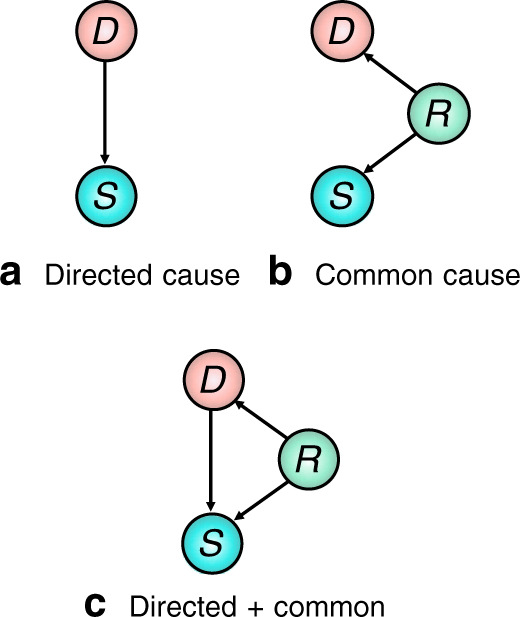
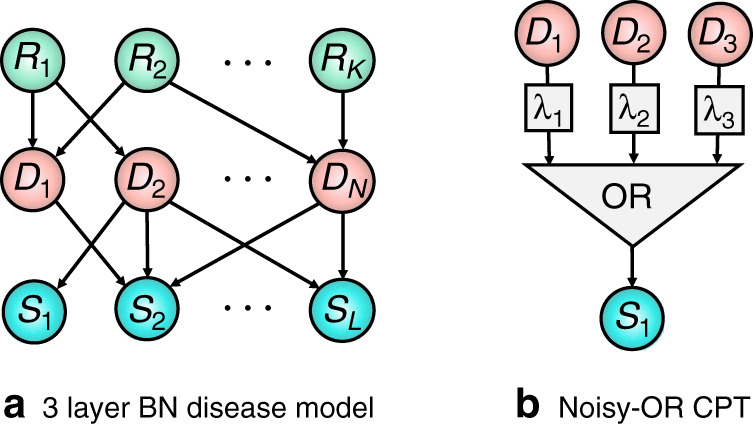
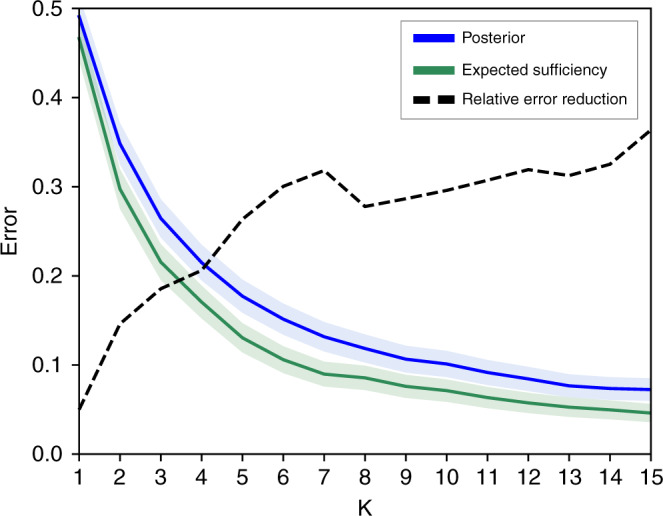
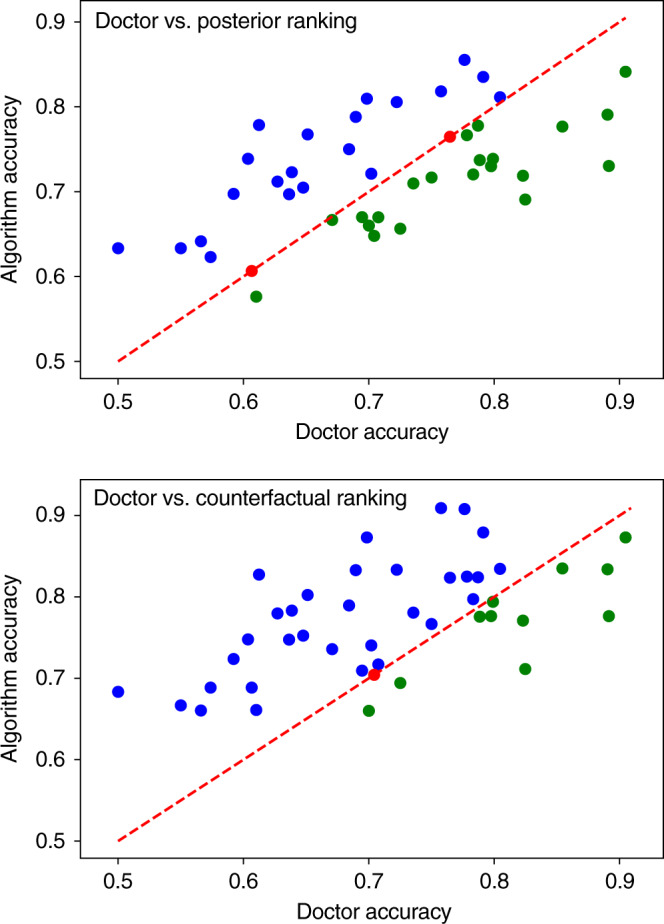
Verification
Claims the paper makes
The claims and statistics of this paper haven’t been checked yet.
Free: it reads the open-access text and checks the first 5 claims that cite a source we can check. Create a free account to check every claim.
Claims other papers make about this one
Each is checked against this paper’s own text: does it say what the citing paper says it does?
The source backs part of the claim, not all of it — or backs it for a different population, condition or comparison.
In the citing paper
“The inadequate evaluation of deep learning systems can have significant consequences, including risks to patient well-being [165] and safety [208].”
From A 2030 Roadmap for Software Engineering (2025) · cites this paper as [165]
Experimental — accuracy not yet measured
Self-check
Percentages, sums and reported differences re-computed from the paper’s own numbers.
The self-check needs the paper’s full text.
Citations
Cites
Causality: Models, Reasoning, and Inference
Pearl, J. (2009) · doi:10.1017/cbo9780511803161 · Cited by 11,653
High-performance medicine: the convergence of human and artificial intelligence
Topol, E. J. (2019) · Nature Medicine · doi:10.1038/s41591-018-0300-7 · Cited by 10,450 · cited 13×
“In Supplementary Note 3 we describe how these counterfactual probabilities are calculated.”
InfluentialMastering the game of Go without human knowledge
Silver, D., Schrittwieser, J., Simonyan, K., Antonoglou, I., Huang, A., Guez, A., Hubert, T., Baker, L., Lai, M., Bolton, A., et al. (2017) · Nature · doi:10.1038/nature24270 · Cited by 9,084
A guide to deep learning in healthcare
Esteva, A., Robicquet, A., Ramsundar, B., Kuleshov, V., DePristo, M., Chou, K., Cui, C., Corrado, G., Thrun, S., & Dean, J. (2019) · Nature Medicine · doi:10.1038/s41591-018-0316-z · Cited by 5,312
Artificial intelligence in healthcare: past, present and future
Jiang, F., Jiang, Y., Zhi, H., Dong, Y., Li, H., Ma, S., Wang, Y., Dong, Q., Shen, H., & Wang, Y. (2017) · Stroke and Vascular Neurology · doi:10.1136/svn-2017-000101 · Cited by 4,837
Causal Diagrams for Epidemiologic Research
Greenland, S., Pearl, J., & Robins, J. M. (1999) · Epidemiology · doi:10.1097/00001648-199901000-00008 · Cited by 3,728
Air Pollution and Hospital Admissions for Heart Disease in Eight U.S. Counties
Schwartz, J. (1999) · Epidemiology · doi:10.1097/00001648-199901000-00005 · Cited by 3,038
A theory of diagnosis from first principles
Reiter, R. (1987) · Artificial Intelligence · doi:10.1016/0004-3702(87)90062-2 · Cited by 3,031
Lauritzen, S. L. (1996) · doi:10.1093/oso/9780198522195.001.0001 · Cited by 2,976
Artificial intelligence in healthcare
Yu, K.-H., Beam, A. L., & Kohane, I. S. (2018) · Nature Biomedical Engineering · doi:10.1038/s41551-018-0305-z · Cited by 2,817
Clinically applicable deep learning for diagnosis and referral in retinal disease
De Fauw, J., Ledsam, J. R., Romera-Paredes, B., Nikolov, S., Tomasev, N., Blackwell, S., Askham, H., Glorot, X., O’Donoghue, B., Visentin, D., et al. (2018) · Nature Medicine · doi:10.1038/s41591-018-0107-6 · Cited by 2,639
Causal inference in statistics: An overview
Pearl, J. (2009) · Statistics Surveys · doi:10.1214/09-ss057 · Cited by 2,336
Maternal Pesticide Exposure from Multiple Sources and Selected Congenital Anomalies
Shaw, G. M., Wasserman, C. R., OʼMalley, C. D., Nelson, V., & Jackson, R. J. (1999) · Epidemiology · doi:10.1097/00001648-199901000-00011 · Cited by 1,784
A clinically applicable approach to continuous prediction of future acute kidney injury
Tomašev, N., Glorot, X., Rae, J. W., Zielinski, M., Askham, H., Saraiva, A., Mottram, A., Meyer, C., Ravuri, S., Protsyuk, I., et al. (2019) · Nature · doi:10.1038/s41586-019-1390-1 · Cited by 1,086 · cited 2×
“In recent years, arti fi cial intelligence and machine learning have emerged as powerful tools for solving complex problems in diverse domains 5 – 7 .”
BackgroundDeep learning as a tool for increased accuracy and efficiency of histopathological diagnosis
Litjens, G., Sánchez, C. I., Timofeeva, N., Hermsen, M., Nagtegaal, I., Kovacs, I., Hulsbergen - van de Kaa, C., Bult, P., van Ginneken, B., & van der Laak, J. (2016) · Scientific Reports · doi:10.1038/srep26286 · Cited by 1,069 · cited 1×
“…and using Bayes rule to estimate the posterior, P ð D jE ; θ Þ ¼ P ðEj D ; θ Þ P ð D ; θ Þ P ðE ; θ Þ : Examples of discriminative diagnostic models include neural network and deep learning models 8,10,15,33,34 , whereas generative models are typically Bayesian networks 18,19,21,22,27,35,36 .”
MethodCounterfactuals and Causal Inference: Methods and Principles for Social Research
Morgan, S. L., & Winship, C. (2014) · Cambridge University Press · doi:10.1017/cbo9781107587991 · Cited by 1,037
Ledley, R. S., & Lusted, L. B. (1959) · Science · doi:10.1126/science.130.3366.9 · Cited by 991
Readings in Qualitative Reasoning About Physical Systems
(1990) · Elsevier eBooks · doi:10.1016/c2013-0-08298-9 · Cited by 803
Deep Learning for Identifying Metastatic Breast Cancer
Wang, D., Khosla, A., Gargeya, R., Irshad, H., & Beck, A. H. (2016) · arXiv (Cornell University) · doi:10.48550/arxiv.1606.05718 · Cited by 756
Peabody, J. W., Luck, J., Glassman, P., Jain, S., Hansen, J., Spell, M., & Lee, M. (2004) · Annals of Internal Medicine · doi:10.7326/0003-4819-141-10-200411160-00008 · Cited by 714
Singh, H., Meyer, A. N. D., & Thomas, E. J. (2014) · BMJ Quality & Safety · doi:10.1136/bmjqs-2013-002627 · Cited by 677
Evaluation and accurate diagnoses of pediatric diseases using artificial intelligence
Liang, H., Tsui, B. Y., Ni, H., Valentim, C. C. S., Baxter, S. L., Liu, G., Cai, W., Kermany, D. S., Sun, X., Chen, J., et al. (2019) · Nature Medicine · doi:10.1038/s41591-018-0335-9 · Cited by 659
The incidence of diagnostic error in medicine
Graber, M. L. (2013) · BMJ Quality & Safety · doi:10.1136/bmjqs-2012-001615 · Cited by 626
Superhuman AI for multiplayer poker
Brown, N., & Sandholm, T. (2019) · Science · doi:10.1126/science.aay2400 · Cited by 592
Types and Origins of Diagnostic Errors in Primary Care Settings
Singh, H., Giardina, T. D., Meyer, A. N. D., Forjuoh, S. N., Reis, M. D., & Thomas, E. J. (2013) · JAMA Internal Medicine · doi:10.1001/jamainternmed.2013.2777 · Cited by 559
Early diagnosis of Alzheimer's disease with deep learning
Liu, S., Liu, S., Cai, W., Pujol, S., Kikinis, R., & Feng, D. (2014) · 2014 IEEE 11th International Symposium on Biomedical Imaging (ISBI) · doi:10.1109/isbi.2014.6868045 · Cited by 523
Evaluation of symptom checkers for self diagnosis and triage: audit study
Semigran, H. L., Linder, J. A., Gidengil, C., & Mehrotra, A. (2015) · BMJ · doi:10.1136/bmj.h3480 · Cited by 489 · cited 1×
“…real data sets such as EHRs, as the task of simulating a disease given its known properties is simpler than performing a differential diagnosis, and has been found to be effective for evaluating human doctors 73 – 76 and comparing the accuracy of doctors to symptom checker algorithms 17,23,77,78 .”
MethodBayesian Networks in Fault Diagnosis
Cai, B., Huang, L., & Xie, M. (2017) · IEEE Transactions on Industrial Informatics · doi:10.1109/tii.2017.2695583 · Cited by 474
How Scientists Explain Disease
Thagard, P. (1999) · Princeton University Press eBooks · doi:10.1515/9780691187303 · Cited by 459
Explaining Medically Unexplained Symptoms
Kirmayer, L. J., Groleau, D., Looper, K. J., & Dao, M. D. (2004) · The Canadian Journal of Psychiatry · doi:10.1177/070674370404901003 · Cited by 415
The Oxford Handbook of Causal Reasoning
(2017) · Oxford Handbooks Online · doi:10.1093/oxfordhb/9780199399550.001.0001 · Cited by 399
The Global Burden of Diagnostic Errors in Primary Care
Singh, H., Schiff, G. D., Graber, M. L., Onakpoya, I., & Thompson, M. J. (2017) · BMJ Quality & Safety · doi:10.1136/bmjqs-2016-005401 · Cited by 395
Beck, M. A., Shi, Q., Morris, V. C., & Levander, O. A. (1995) · Nature Medicine · doi:10.1038/nm0595-433 · Cited by 384
Clinical Vignette-Based Surveys: A Tool for Assessing Physician Practice Variation
Veloski, J., Tai, S., Evans, A. S., & Nash, D. B. (2005) · American Journal of Medical Quality · doi:10.1177/1062860605274520 · Cited by 381
Toward Normative Expert Systems: Part I The Pathfinder Project
Heckerman, D. E., Horvitz, E. J., & Nathwani, B. N. (1992) · Methods of Information in Medicine · doi:10.1055/s-0038-1634867 · Cited by 364
Theoretical Impediments to Machine Learning With Seven Sparks from the Causal Revolution
Pearl, J. (2018) · Proceedings of the Eleventh ACM International Conference on Web Search and Data Mining · doi:10.1145/3159652.3176182 · Cited by 338
Learning Bayesian network parameters from small data sets: application of Noisy-OR gates
Oniśko, A., Druzdzel, M. J., & Wasyluk, H. (2001) · International Journal of Approximate Reasoning · doi:10.1016/s0888-613x(01)00039-1 · Cited by 330
Cai, B., Liu, Y., Fan, Q., Zhang, Y., Liu, Z., Yu, S., & Ji, R. (2014) · Applied Energy · doi:10.1016/j.apenergy.2013.09.043 · Cited by 329
CausalGAN: Learning Causal Implicit Generative Models with Adversarial TrainingPreprint
Kocaoglu, M., Snyder, C., Dimakis, A. G., & Vishwanath, S. (2017) · arXiv (Cornell University) · doi:10.48550/arxiv.1709.02023 · Cited by 314
Pathologist-level interpretable whole-slide cancer diagnosis with deep learning
Zhang, Z., Chen, P., McGough, M., Xing, F., Wang, C., Bui, M., Xie, Y., Sapkota, M., Cui, L., Dhillon, J., et al. (2019) · Nature Machine Intelligence · doi:10.1038/s42256-019-0052-1 · Cited by 311
Shwe, M., Blackford Middleton, A., Heckerman, D. E., Henrion, M., Horvitz, E., Lehmann, H. P., & Cooper, G. F. (1991) · PubMed · Cited by 293
Deep learning predicts hip fracture using confounding patient and healthcare variables
Badgeley, M. A., Zech, J. R., Oakden-Rayner, L., Glicksberg, B. S., Liu, M., Gale, W., McConnell, M. V., Percha, B., Snyder, T. M., & Dudley, J. T. (2019) · npj Digital Medicine · doi:10.1038/s41746-019-0105-1 · Cited by 290
Bayesian Networks-Based Approach for Power Systems Fault Diagnosis
Yongli, Z., Limin, H., & Jinling, L. (2006) · IEEE Transactions on Power Delivery · doi:10.1109/tpwrd.2005.858774 · Cited by 264
A Review of Challenges and Opportunities in Machine Learning for Health
Ghassemi, M., Naumann, T., Schulam, P., Beam, A. L., Chen, I. Y., & Ranganath, R. (2018) · PubMed · doi:10.48550/arxiv.1806.00388 · Cited by 248
Halpern, J. Y. (2016) · The MIT Press eBooks · doi:10.7551/mitpress/10809.001.0001 · Cited by 239
Surrogate Science: The Idol of a Universal Method for Scientific Inference
Gigerenzer, G., & Marewski, J. N. (2015) · Journal of Management · doi:10.1177/0149206314547522 · Cited by 215
Probabilities Of Causation: Three Counterfactual Interpretations And Their Identification
Pearl, J. (1999) · Synthese · doi:10.1023/a:1005233831499 · Cited by 207
Comment: understanding Simpson’s paradox
Pearl, J. (2014) · The American Statistician · doi:10.1080/00031305.2014.876829 · Cited by 206
Causal Understanding of Patient Illness in Medical Diagnosis
Patil, R. S., Szolovits, P., & Schwartz, W. B. (1985) · Computers and Medicine · doi:10.1007/978-1-4612-5108-8_16 · Cited by 202
Nikovski, D. (2000) · IEEE Transactions on Knowledge and Data Engineering · doi:10.1109/69.868904 · Cited by 193
The INTERNIST-1/QUICK MEDICAL REFERENCE project--status report.
Miller, R. A., McNeil, M., Challinor, S. M., Masarie, F. E., & Myers, J. D. (1986) · PubMed Central · Cited by 191
Construction of a Bayesian network for mammographic diagnosis of breast cancer
Kahn, C. E., Roberts, L. M., Shaffer, K. A., & Haddawy, P. (1997) · Computers in Biology and Medicine · doi:10.1016/s0010-4825(96)00039-x · Cited by 177
A Bayesian network approach to root cause diagnosis of process variations
Dey, S., & Stori, J. A. (2005) · International Journal of Machine Tools and Manufacture · doi:10.1016/j.ijmachtools.2004.06.018 · Cited by 177
Shwe, M. A., Heckerman, D. E., Henrion, M., Horvitz, E. J., Lehmann, H. P., Cooper, G. F., & Middleton, B. (1991) · Methods of Information in Medicine · doi:10.1055/s-0038-1634846 · Cited by 172
Counterfactual Probabilities: Computational Methods, Bounds and Applications
Balke, A., & Pearl, J. (1994) · Uncertainty Proceedings 1994 · doi:10.1016/b978-1-55860-332-5.50011-0 · Cited by 168
A Comparison of Artificial Intelligence and Human Doctors for the Purpose of Triage and Diagnosis
Baker, A., Perov, Y., Middleton, K., Baxter, J., Mullarkey, D., Sangar, D., Butt, M., DoRosario, A., & Johri, S. (2020) · Frontiers in Artificial Intelligence · doi:10.3389/frai.2020.543405 · Cited by 157
Self-citationA Tractable Inference Algorithm for Diagnosing Multiple Diseases
Heckerman, D. E. (1990) · Machine intelligence and pattern recognition · doi:10.1016/b978-0-444-88738-2.50020-8 · Cited by 155
Heckerman, E. D., & Nathwani, N. B. (1992) · Methods of Information in Medicine · doi:10.1055/s-0038-1634868 · Cited by 153
Comparison of Physician and Computer Diagnostic Accuracy
Semigran, H. L., Levine, D. M., Nundy, S., & Mehrotra, A. (2016) · JAMA Internal Medicine · doi:10.1001/jamainternmed.2016.6001 · Cited by 145
Bayesian Network Approach for Gas Path Fault Diagnosis
Romessis, C., & Mathioudakis, K. (2004) · Journal of Engineering for Gas Turbines and Power · doi:10.1115/1.1924536 · Cited by 138
Methods of Observing Variations in Physicians’ Decisions: The Opportunities of Clinical Vignettes
Converse, L., Barrett, K. A., Rich, E. C., & Reschovsky, J. D. (2015) · Journal of General Internal Medicine · doi:10.1007/s11606-015-3365-8 · Cited by 128
Using crude probability estimates to guide diagnosis
de Kleer, J. (1990) · Artificial Intelligence · doi:10.1016/0004-3702(90)90012-o · Cited by 122
An evaluation of vignettes for predicting variation in the quality of preventive care
Dresselhaus, T. R., Peabody, J. W., Luck, J., & Bertenthal, D. (2004) · Journal of General Internal Medicine · doi:10.1007/s11606-004-0003-2 · Cited by 113
Liberman, A. L., & Newman-Toker, D. E. (2018) · BMJ Quality & Safety · doi:10.1136/bmjqs-2017-007032 · Cited by 110
Halpern, J. Y. (2016) · Cited by 105
Counterfactuals uncover the modular structure of deep generative modelsPreprint
Besserve, M., Mehrjou, A., Sun, R., & Schölkopf, B. (2018) · arXiv (Cornell University) · doi:10.48550/arxiv.1812.03253 · Cited by 105
Reasoning Foundations of Medical Diagnosis
Ledley, R. S., & Lusted, L. B. (1985) · Computers and medicine · doi:10.1007/978-1-4613-8554-7_2 · Cited by 96
For and Against Methodologies: Some Perspectives on Recent Causal and Statistical Inference Debates
Greenland, S. (2017) · European Journal of Epidemiology · doi:10.1007/s10654-017-0230-6 · Cited by 86
DIAGNOSIS VIA CAUSAL REASONING: PATHS OF INTERACTION AND THE LOCALITY PRINCIPLE
Davis, R. (1990) · Elsevier eBooks · doi:10.1016/b978-1-4832-1447-4.50052-3 · Cited by 76
The Logic of Medical Diagnosis
Stanley, D. E., & Campos, D. G. (2013) · Perspectives in biology and medicine · doi:10.1353/pbm.2013.0019 · Cited by 72
What Counterfactuals Can Be TestedPreprint
Shpitser, I., & Pearl, J. (2012) · arXiv (Cornell University) · doi:10.48550/arxiv.1206.5294 · Cited by 67
Predicting dire outcomes of patients with community acquired pneumonia
Cooper, G. F., Abraham, V., Aliferis, C., Aronis, J. M., Buchanan, B. G., Caruana, R. A., Fine, M. J., Janosky, J. E., Livingston, G. R., Mitchell, T. M., et al. (2005) · Journal of Biomedical Informatics · doi:10.1016/j.jbi.2005.02.005 · Cited by 65
Lee, C. M., & Spekkens, R. W. (2017) · Journal of Causal Inference · doi:10.1515/jci-2016-0013 · Cited by 62
Self-citationAchieving Robustness in the Wild via Adversarial Mixing With Disentangled Representations
Gowal, S., Qin, C., Huang, P.-S., Cemgil, T., Dvijotham, K., Mann, T., & Kohli, P. (2020) · 2020 IEEE/CVF Conference on Computer Vision and Pattern Recognition (CVPR) · doi:10.1109/cvpr42600.2020.00129 · Cited by 46
An adversarial approach for the robust classification of pneumonia from chest radiographs
Janizek, J. D., Erion, G., DeGrave, A. J., & Lee, S. (2020) · ACM Conference on Health, Inference, and Learning (CHIL) · doi:10.1145/3368555.3384458 · Cited by 46
Razzaki, S., Baker, A., Perov, Y., Middleton, K., Baxter, J., Mullarkey, D., Sangar, D., Taliercio, M., Butt, M., Majeed, A., et al. (2018) · arXiv (Cornell University) · doi:10.48550/arxiv.1806.10698 · Cited by 45
Self-citationEffects of Treatment on the Treated: Identification and Generalization
Shpitser, I., & Pearl, J. (2012) · arXiv (Cornell University) · doi:10.48550/arxiv.1205.2615 · Cited by 42
Accuracy vs. efficiency trade-offs in probabilistic diagnosis
Rish, I., Brodie, M. S., & Ma, S. (2002) · National Conference on Artificial Intelligence · doi:10.5555/777092.777179 · Cited by 38
Causal explanatory pluralism and medically unexplained physical symptoms
Cournoyea, M., & Kennedy, A. G. (2014) · Journal of Evaluation in Clinical Practice · doi:10.1111/jep.12238 · Cited by 34
Causal reasoning and the diagnostic process
Rizzi, D. A. (1994) · Metamedicine · doi:10.1007/bf01313345 · Cited by 32
Miller, R. A. (2010) · Yearbook of Medical Informatics · doi:10.1055/s-0038-1638702 · Cited by 31
Unsupervised Learning of Noisy-Or Bayesian NetworksPreprint
Halpern, Y., & Sontag, D. A. (2013) · arXiv (Cornell University) · doi:10.48550/arxiv.1309.6834 · Cited by 24
Sorting out symptoms: design and evaluation of the 'babylon check' automated triage systemPreprint
Middleton, K., Butt, M., Hammerla, N., Hamblin, S., Mehta, K., & Parsa, A. (2016) · arXiv (Cornell University) · doi:10.48550/arxiv.1606.02041 · Cited by 19
MultiVerse: Causal Reasoning using Importance Sampling in Probabilistic ProgrammingPreprint
Perov, Y., Graham, L., Gourgoulias, K., Richens, J. G., Lee, C. M., Baker, A., & Johri, S. (2019) · arXiv (Cornell University) · doi:10.48550/arxiv.1910.08091 · Cited by 18
Self-citationRecognition Networks for Approximate Inference in BN20 NetworksPreprint
Morris, Q. (2013) · arXiv (Cornell University) · doi:10.48550/arxiv.1301.2295 · Cited by 17
The diagnostic process as a statistical-causal analysis
Westmeyer, H. (1975) · Theory and Decision · doi:10.1007/bf00139821 · Cited by 17
Provable learning of noisy-OR networks
Arora, S., Ge, R., Ma, T., & Risteski, A. (2017) · ACM Symposium on Theory of Computing (STOC) · doi:10.1145/3055399.3055482 · Cited by 17
Learning medical triage from clinicians using Deep Q-LearningPreprint
Buchard, A., Bouvier, B., Prando, G., Beard, R., Livieratos, M., Busbridge, D., Thompson, D. H., Richens, J. G., Zhang, Y., Baker, A., et al. (2020) · arXiv (Cornell University) · doi:10.48550/arxiv.2003.12828 · Cited by 11
Self-citationHalpern, J. Y. (2017) · The MIT Press · doi:10.7551/mitpress/9780262035026.001.0001 · Cited by 11
Models of explanation and explanation in medicine
Qiu, R. (1989) · International Studies in the Philosophy of Science · doi:10.1080/02698598908573336 · Cited by 8
babylonhealth/counterfactual-diagnosis: v1.0.0
Lucas, C., & jonathanrichens (2021) · Zenodo (CERN European Organization for Nuclear Research) · doi:10.5281/zenodo.4575649 · Cited by 1
babylonhealth/counterfactual-diagnosis: v1.0.0
Lucas, C., & Jonathanrichens (2021) · Zenodo (CERN European Organization for Nuclear Research) · doi:10.5281/zenodo.4575648 · Cited by 1
Research works printed but not linked: 4
- Heckerman, D. E., Horvitz, E. J. & Nathwani, B. N. Toward normative expert systems: Part i the pathfinder project. Methods Inf. Med. 31, 90–105 (1992). · DOI · Paper page
- Benzi, M. Medical diagnosis and actual causation. LPS-Log. Philos. Sci. 9, 365–372 (2011).
- Peters, J., Janzing, D. & Schölkopf, B. Elements of Causal Inference-Foundations and Learning Algorithms (The MIT Press, 2017).
- Higgs, J., Jones, M. A., Loftus, S. & Christensen, N. Clinical Reasoning in the Health Professions E-Book (Elsevier Health Sciences, 2008).
Cited by
Toward Causal Representation Learning
Scholkopf, B., Locatello, F., Bauer, S., Ke, N. R., Kalchbrenner, N., Goyal, A., & Bengio, Y. (2021) · Proceedings of the IEEE · doi:10.1109/jproc.2021.3058954 · Cited by 1,170
AI for radiographic COVID-19 detection selects shortcuts over signal
DeGrave, A. J., Janizek, J. D., & Lee, S.-I. (2021) · Nature Machine Intelligence · doi:10.1038/s42256-021-00338-7 · Cited by 631
Deep Learning for Medical Anomaly Detection – A Survey
Fernando, T., Gammulle, H., Denman, S., Sridharan, S., & Fookes, C. (2022) · ACM Computing Surveys · doi:10.1145/3464423 · Cited by 399
Artificial intelligence for clinical oncology
Kann, B. H., Hosny, A., & Aerts, H. J. W. L. (2021) · Cancer Cell · doi:10.1016/j.ccell.2021.04.002 · Cited by 370
A Survey of Decision Trees: Concepts, Algorithms, and Applications
Mienye, I. D., & Jere, N. (2024) · IEEE Access · doi:10.1109/access.2024.3416838 · Cited by 353
Metadata
- Authors
- Richens, J. G., Lee, C. M., & Johri, S.
- Affiliations
- Babylon Health (GB)
- Corresponding author
- Richens, Jonathan G.
- Venue
- Nature Communications
- Published
- 2020-08-11
- Volume
- 11
- Issue
- 1
- Pages
- 3923-3923
- ISSN
- 2041-1723 (ISSN-L)
- PMC
- PMC7419549
- OpenAlex
- W3048817558
- Cited by
- 598
- References
- 84
- Citations by year
- 2026: 59 · 2025: 128 · 2024: 126 · 2023: 124 · 2022: 90 · 2021: 68 · 2020: 3
- FWCI
- 62.43
- Type
- journal article
- Language
- en
- Update notices
- Open access
- gold
- doi.org
- Licence
- cc-by
- creativecommons.org/licenses/by/4.0 (tdm)
- creativecommons.org/licenses/by/4.0 (vor)
- Locations
- Nature Communications (publishedVersion, cc-by)
- PubMed Central (publishedVersion, cc-by)
- PubMed (publishedVersion)
- RePEc: Research Papers in Economics (submittedVersion)
- DOAJ (DOAJ: Directory of Open Access Journals) (submittedVersion, cc-by-sa)
- Topics
- Health Sciences › Health Professions › Health Information Management › Artificial Intelligence in Healthcare
- Physical Sciences › Computer Science › Artificial Intelligence › Machine Learning in Healthcare
- Health Sciences › Medicine › Health Informatics › Artificial Intelligence in Healthcare and Education
- Keywords
- diagnosis, causal inference, counterfactual reasoning, correlation versus causation, clinical decision support, clinical vignettes, clinical reasoning
- MeSH terms
- Data Accuracy, Machine Learning, Algorithms, Bayes Theorem, Data Collection, Decision Making, Diagnosis, Diagnosis, Computer-Assisted, Disease, Humans, Models, Statistical
About these checks
Registry, retraction, Cites and statistics results are computed, not judged, with one exception: a printed reference that no index lists is read once by a model before it counts as a citation error. Claims are extracted by a model and kept only when their quote appears verbatim in the text; each cited source is then checked, with a model’s help, for whether it says what the claim relies on. Those verdicts can be wrong — read the claim’s quote and the cited source before relying on one.
Statistics and arithmetic are recomputed, not judged.
Confidence bands are shown only for fields calibrated on our annotated test set. None is calibrated yet, so no band is shown.
What counts as a claim ›How we measure confidence ›How we check this ›
Are you an author, or do you see a problem with this page? Request a review
Data sources
Bibliographic data: Semantic Scholar, OpenAlex, Crossref.
Contains information from the Semantic Scholar Academic Graph Datasets, made available under the ODC Attribution License (ODC-BY 1.0).
Semantic Scholar’s data is described in: Kinney, R., et al. (2023). The Semantic Scholar Open Data Platform. arXiv:2301.10140.
