

Structural basis of ion transport and inhibition in ferroportin
Open accessPublished version of a preprint
The DOI matches its Crossref record; 62 of the 62 references it cites were found in a registry or an index.
Abstract
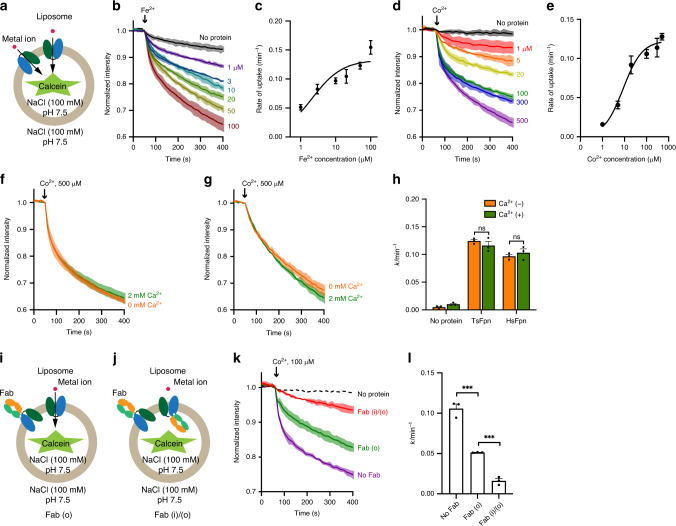
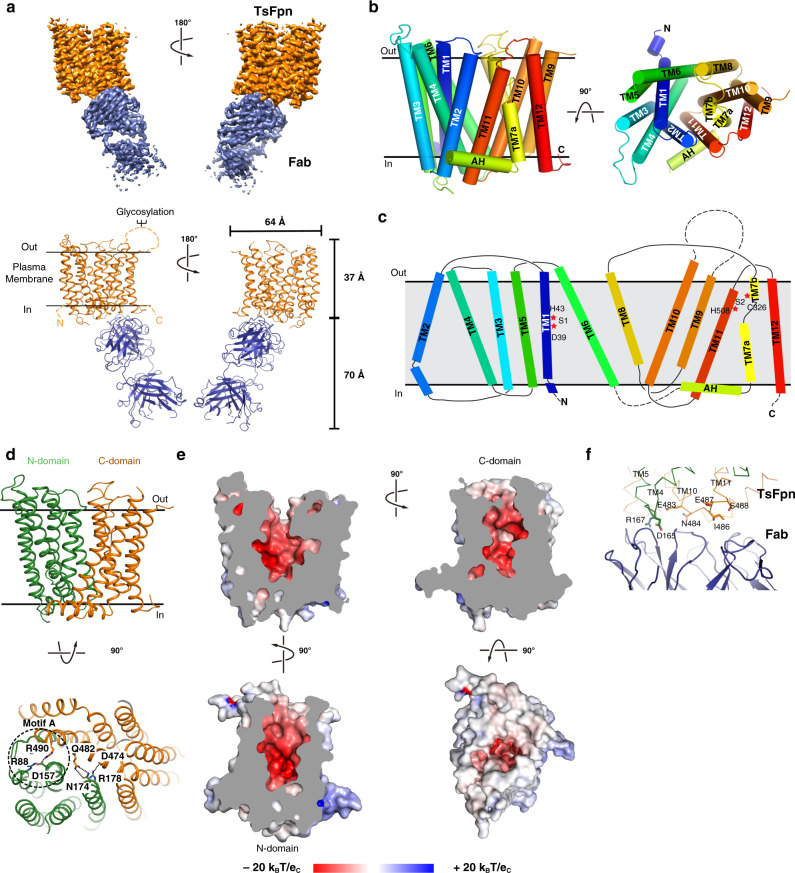
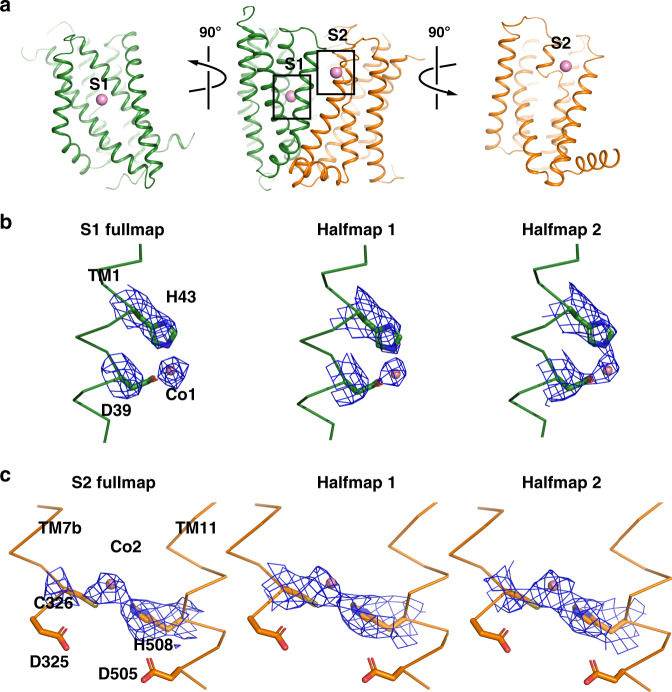
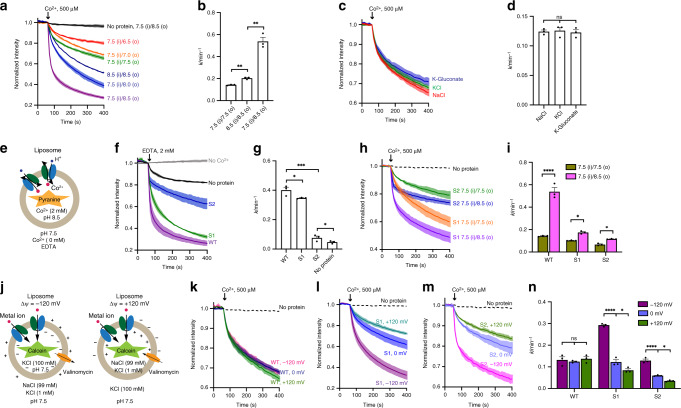
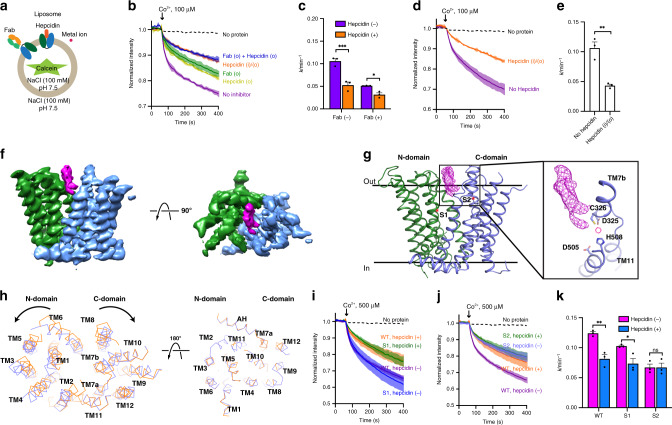
Abstract Ferroportin is an iron exporter essential for releasing cellular iron into circulation. Ferroportin is inhibited by a peptide hormone, hepcidin. In humans, mutations in ferroportin lead to ferroportin diseases that are often associated with accumulation of iron in macrophages and symptoms of iron deficiency anemia. Here we present the structures of the ferroportin from the primate Philippine tarsier (TsFpn) in the presence and absence of hepcidin solved by cryo-electron microscopy. TsFpn is composed of two domains resembling a clamshell and the structure defines two metal ion binding sites, one in each domain. Both structures are in an outward-facing conformation, and hepcidin binds between the two domains and reaches one of the ion binding sites. Functional studies show that TsFpn is an electroneutral H + /Fe 2+ antiporter so that transport of each Fe 2+ is coupled to transport of two H + in the opposite direction. Perturbing either of the ion binding sites compromises the coupled transport of H + and Fe 2+ . These results establish the structural basis of metal ion binding, transport and inhibition in ferroportin and provide a blueprint for targeting ferroportin in pharmacological intervention of ferroportin diseases.
Overview
The claims and statistics of this paper haven’t been checked yet.
Free: it reads the open-access text and checks the first 5 claims that cite a source we can check. Create a free account to check every claim.
Integrity signals
Registry
Cites
Statistics
Figures
Verification
Claims the paper makes
The claims and statistics of this paper haven’t been checked yet.
Free: it reads the open-access text and checks the first 5 claims that cite a source we can check. Create a free account to check every claim.
Claims other papers make about this one
Each is checked against this paper’s own text: does it say what the citing paper says it does?
The source backs part of the claim, not all of it — or backs it for a different population, condition or comparison.
In the citing paper
“Recent structural analyses revealed that the binding between hepcidin and FPN is coupled to iron binding, with iron significantly increasing the binding affinity, thus explaining why only iron-loaded FPN molecules are targeted for degradation.10,53”
From RNF217 regulates iron homeostasis through its E3 ubiquitin ligase activity by modulating ferroportin degradation (2021) · cites this paper as [53]
Experimental — accuracy not yet measured
Self-check
Percentages, sums and reported differences re-computed from the paper’s own numbers.
The self-check needs the paper’s full text.
Citations
Cites
UCSF Chimera—A visualization system for exploratory research and analysis
Pettersen, E. F., Goddard, T. D., Huang, C. C., Couch, G. S., Greenblatt, D. M., Meng, E. C., & Ferrin, T. E. (2004) · Journal of Computational Chemistry · doi:10.1002/jcc.20084 · Cited by 45,828
Features and development of Coot
Emsley, P., Lohkamp, B., Scott, W. G., & Cowtan, K. (2010) · Acta Crystallographica Section D Biological Crystallography · doi:10.1107/s0907444910007493 · Cited by 29,915
PHENIX : a comprehensive Python-based system for macromolecular structure solution
Adams, P. D., Afonine, P. V., Bunkóczi, G., Chen, V. B., Davis, I. W., Echols, N., Headd, J. J., Hung, L.-W., Kapral, G. J., Grosse-Kunstleve, R. W., et al. (2010) · Acta Crystallographica Section D Biological Crystallography · doi:10.1107/s0907444909052925 · Cited by 23,716
Fast, scalable generation of high‐quality protein multiple sequence alignments using Clustal Omega
Sievers, F., Wilm, A., Dineen, D., Gibson, T. J., Karplus, K., Li, W., Lopez, R., McWilliam, H., Remmert, M., Söding, J., et al. (2011) · Molecular Systems Biology · doi:10.1038/msb.2011.75 · Cited by 15,355
MotionCor2: anisotropic correction of beam-induced motion for improved cryo-electron microscopy
Zheng, S. Q., Palovcak, E., Armache, J.-P., Verba, K. A., Cheng, Y., & Agard, D. A. (2017) · Nature Methods · doi:10.1038/nmeth.4193 · Cited by 7,777
PHENIX: a comprehensive Python-based system for macromolecular structure solution
Adams, P. D., Afonine, P. V., Bunkóczi, G., Chen, V. B., Davis, I. W., Echols, N., Headd, J. J., Hung, L.-W., Kapral, G. J., Grosse-Kunstleve, R. W., et al. (2012) · International Tables for Crystallography · doi:10.1107/97809553602060000865 · Cited by 7,334
Electrostatics of nanosystems: Application to microtubules and the ribosome
Baker, N. A., Sept, D., Joseph, S., Holst, M. J., & McCammon, J. A. (2001) · Proceedings of the National Academy of Sciences · doi:10.1073/pnas.181342398 · Cited by 7,172
Deciphering key features in protein structures with the new ENDscript server
Robert, X., & Gouet, P. (2014) · Nucleic Acids Research · doi:10.1093/nar/gku316 · Cited by 7,053
RELION: Implementation of a Bayesian approach to cryo-EM structure determination
Scheres, S. H. W. (2012) · Journal of Structural Biology · doi:10.1016/j.jsb.2012.09.006 · Cited by 5,446
Automated electron microscope tomography using robust prediction of specimen movements
Mastronarde, D. N. (2005) · Journal of Structural Biology · doi:10.1016/j.jsb.2005.07.007 · Cited by 5,336
Cited by
Mechanisms controlling cellular and systemic iron homeostasis
Galy, B., Conrad, M., & Muckenthaler, M. (2024) · Nature Reviews Molecular Cell Biology · doi:10.1038/s41580-023-00648-1 · Cited by 785
Molecular Mechanisms of Iron and Heme Metabolism
Dutt, S., Hamza, I., & Bartnikas, T. B. (2022) · Annual Review of Nutrition · doi:10.1146/annurev-nutr-062320-112625 · Cited by 316
Hemochromatosis classification: update and recommendations by the BIOIRON Society
Girelli, D., Busti, F., Brissot, P., Cabantchik, I., Muckenthaler, M. U., & Porto, G. (2022) · Blood · doi:10.1182/blood.2021011338 · Cited by 187
Jiang, L., Wang, J., Wang, K., Wang, H., Wu, Q., Yang, C., Yu, Y., Ni, P., Zhong, Y., Song, Z., et al. (2021) · Blood · doi:10.1182/blood.2020008986 · Cited by 138
“Rnf217 Rnf217(1-384) Rnf217(384-515) Empty Vector Fpn”
Self-citationCryo-EM structure of human glucose transporter GLUT4
Yuan, Y., Kong, F., Xu, H., Zhu, A., Yan, N., & Yan, C. (2022) · Nature Communications · doi:10.1038/s41467-022-30235-5 · Cited by 82
Self-citationIron-Induced Oxidative Stress in Human Diseases
Kawabata, T. (2022) · Cells · doi:10.3390/cells11142152 · Cited by 101
“Hepcidin binds the upward-open structure and contacts the single iron-binding site [68,69].”
BackgroundEhsani, S. (2020) · Biology Direct · doi:10.1186/s13062-020-00275-2 · Cited by 100
Iron metabolism in infections: Focus on COVID-19
Girelli, D., Marchi, G., Busti, F., & Vianello, A. (2021) · Seminars in Hematology · doi:10.1053/j.seminhematol.2021.07.001 · Cited by 91
Xie, T., Yao, L., & Li, X. (2024) · Antioxidants · doi:10.3390/antiox13060659 · Cited by 66
“FPN is characterized by two 6-membrane-helix bundles to form a channel for iron exportation [62,63].”
BackgroundIron Absorption: Molecular and Pathophysiological Aspects
Correnti, M., Gammella, E., Cairo, G., & Recalcati, S. (2024) · Metabolites · doi:10.3390/metabo14040228 · Cited by 60
“…absorption is represented by the efflux of Fe 2+ at the basolateral surface, which is accomplished through conformational changes in ferroportin [58] (Figure 2). mobilization provided a molecular basis for the fi ndings of earlier elegant studies showing that a copper-de fi cient diet leads to…”
BackgroundBrain iron acquisition: An overview of homeostatic regulation and disease dysregulation
Baringer, S. L., Simpson, I. A., & Connor, J. R. (2023) · Journal of Neurochemistry · doi:10.1111/jnc.15819 · Cited by 44
Redox mechanism of glycerophospholipids and relevant targeted therapy in ferroptosis
Chang, S., Zhang, M., Liu, C., Li, M., Lou, Y., & Tan, H. (2025) · Cell Death Discovery · doi:10.1038/s41420-025-02654-y · Cited by 36
“Structurally, FPN functions as an electroneutral H ⁺ /Fe² ⁺ antiporter, coupling each Fe² ⁺ export to counter-transport of two protons; perturbation of either ion binding site uncouples this co-transport [118].”
Iron Availability in Tissue Microenvironment: The Key Role of Ferroportin
Gammella, E., Correnti, M., Cairo, G., & Recalcati, S. (2021) · International Journal of Molecular Sciences · doi:10.3390/ijms22062986 · Cited by 35
“Moreover, analysis of the interaction between hepcidin and FPN showed preferential targeting of FPN molecules actively engaged in iron export, whereas in the absence of iron the binding affinity of hepcidin remained well below its physiological concentration [20,21].”
BackgroundTian, S., Wang, B., Ding, Y., Zhang, Y. L., Yu, P., Chang, Y.-Z., & Gao, G. (2024) · Biomedicine & Pharmacotherapy · doi:10.1016/j.biopha.2024.117419 · Cited by 32
The versatile biochemistry of iron in macrophage effector functions
Behmoaras, J. V. (2021) · FEBS Journal · doi:10.1111/febs.15682 · Cited by 33
Structures and coordination chemistry of transporters involved in manganese and iron homeostasis
Ray, S., & Gaudet, R. (2023) · Biochemical Society Transactions · doi:10.1042/bst20210699 · Cited by 32
Molecular Mechanisms of Iron Metabolism and Overload
Tayal, A., Kaur, J., Sadeghi, P., & Maitta, R. W. (2025) · Biomedicines · doi:10.3390/biomedicines13092067 · Cited by 31
“Iron is later exported to the bloodstream by FPN in a process coupled with H + exchange and hephaestin, an iron regulatory protein that oxidizes iron to its ferric form [49].”
20 years of Hepcidin: How far we have come
Colucci, S., Marques, O., & Altamura, S. (2021) · Seminars in Hematology · doi:10.1053/j.seminhematol.2021.05.001 · Cited by 30
Extracellular domain of PepT1 interacts with TM1 to facilitate substrate transport
Shen, J., Hu, M., Fan, X., Ren, Z., Portioli, C., Yan, X., Rong, M., & Zhou, M. (2022) · Structure · doi:10.1016/j.str.2022.04.011 · Cited by 29
Self-citationStructures of ferroportin in complex with its specific inhibitor vamifeport
Lehmann, E. F., Liziczai, M., Drożdżyk, K., Altermatt, P., Langini, C., Manolova, V., Sundström, H., Dürrenberger, F., Dutzler, R., & Manatschal, C. (2023) · eLife · doi:10.7554/elife.83053 · Cited by 29
ECD of PepT1 interacts with TM1 to facilitate substrate transport
Shen, J., Hu, M., Ren, Z., Fan, X., Portioli, C., Yan, X., Rong, M., & Zhou, M. (2022) · doi:10.1101/2022.03.01.482558 · Cited by 29
Self-citationMembrane Transporters Involved in Iron Trafficking: Physiological and Pathological Aspects
Pasquadibisceglie, A., di Patti, M. C. B., Musci, G., & Polticelli, F. (2023) · Biomolecules · doi:10.3390/biom13081172 · Cited by 27
“It has been demonstrated that FPN acts through an electroneutral export mechanism by coupling the export of one Fe2+ ion to the import of two H+ [51], although other data suggest that FPN may be a Fe2+/H+ symporter [52].”
BackgroundNing, J., Wen, L., & Qiao, L. (2026) · Cell Biology and Toxicology · doi:10.1007/s10565-026-10150-x · Cited by 25
“Through this mechanism, hepcidin establishes a direct link between cellular iron efflux and systemic iron homeostasis (Pan et al. 2020).”
Feng, R., Wang, D., Li, T., Liu, X., Peng, T., Liu, M., Ren, G., Xu, H., Luo, H., Lu, D., et al. (2023) · International Journal of Biological Sciences · doi:10.7150/ijbs.89368 · Cited by 24
“It functions as an exporter of iron in the form of Fe 2+ [19], which plays a crucial role in facilitating the transport of absorbed, stored, and recycled iron from duodenal cells, hepatocytes, and macrophages to plasma [17].”
BackgroundEvidence for a trap-and-flip mechanism in a proton-dependent lipid transporter
Lambert, E., Mehdipour, A. R., Schmidt, A., Hummer, G., & Perez, C. (2022) · Nature Communications · doi:10.1038/s41467-022-28361-1 · Cited by 24
“MFS transporters that participate in the uptake of water-soluble molecules and extrusion of 50 drugs has contributed to a broad understanding of their transport mechanism [4, 8-17].”
BackgroundMechanism of Ca2+ transport by ferroportin
Shen, J., Wilbon, A. S., Zhou, M., & Pan, Y. (2023) · eLife · doi:10.7554/elife.82947 · Cited by 23
“This result is in line with the effect of the S1 mutation(Asp39Ala) on Co2+ binding (Pan et al. 2020), as competition between Ca2+ and Co2+ at S1 does not affect transition metal ion binding at S2.”
BackgroundMethodResultInfluentialSelf-citationLi, T., Du, Y., Yao, H., Zhao, B., Wang, Z., Chen, R., Ji, Y., & Du, M. (2024) · Biochemical Pharmacology · doi:10.1016/j.bcp.2024.116202 · Cited by 22
Elbahnsi, A., Dudás, B., Callebaut, I., Hinzpeter, A., & Miteva, M. A. (2024) · Pharmaceuticals · doi:10.3390/ph17121602 · Cited by 20
“They confirmed two iron-binding sites and demonstrated that Fe 2+ export is coupled with proton (H + ) transport, supporting the hypothesis that FPN1 may function as an Fe 2+ /H + antiporter [276].”
Iron Dyshomeostasis in COVID-19: Biomarkers Reveal a Functional Link to 5-Lipoxygenase Activation
Dufrusine, B., Valentinuzzi, S., Bibbò, S., Damiani, V., Lanuti, P., Pieragostino, D., Boccio, P. D., D’Alessandro, E., Rabottini, A., Berghella, A., et al. (2022) · International Journal of Molecular Sciences · doi:10.3390/ijms24010015 · Cited by 19
“Cellular iron efflux is modulated by hepcidin, an hepatic hormone that binds FPN, thus favoring an increase in intracellular iron and lowering plasma levels of iron [36,39–41].”
BackgroundInfluentialAlfonso, D., de la Torre, V. S. G., Fernández, R. R., Barreau, L., & Merlot, S. (2024) · Physiologia Plantarum · doi:10.1111/ppl.14261 · Cited by 17
Structural basis of ferroportin inhibition by minihepcidin PR73
Wilbon, A. S., Shen, J., Ruchala, P. P., Zhou, M., & Pan, Y. (2023) · PLoS Biology · doi:10.1371/journal.pbio.3001936 · Cited by 17
“Results Structure of HsFpn in complex with 11F9 Fab In a previous study, we reported the structure of the Tarsius syrichta ferroportin (TsFpn) in complex with an Fab from the mouse monoclonal antibody (11F9) (Pan et al., 2020).”
BackgroundMethodInfluentialSelf-citationBrix, K. V., Baken, S., Poland, C. A., Blust, R., Pope, L. J., & Tyler, C. R. (2023) · Environmental Toxicology and Chemistry · doi:10.1002/etc.5741 · Cited by 16
“Ferroportin is responsible for the export of Fe from cells including basolateral membrane of enterocytes in the intestine involved in dietary Fe absorption and macrophages that break down Fe ‐ rich red blood cells (Pan et al., 2020).”
BackgroundUguen, K., Tertre, M. L., Tchernitchko, D., Elbahnsi, A., Maestri, S., Gourlaouen, I., Férec, C., Ka, C., Callebaut, I., & Gac, G. L. (2024) · Human Genetics and Genomics Advances · doi:10.1016/j.xhgg.2024.100335 · Cited by 15
“36,39 The second site is different from the first one in that it exploits a structural feature that is not found in all MFS proteins 18 : a non-helical stretch of six residues in the center of TM7 that separates the helix into a longer TM7a and a shorter TM7b.”
InfluentialThe SLC-ome of membrane transport: from molecular discovery to physiology and clinical applications
Gyimesi, G., Tweedie, S., Bruford, E. A., & Hediger, M. A. (2025) · Physiological Reviews · doi:10.1152/physrev.00001.2024 · Cited by 15
Cryo-EM as a powerful tool for drug discovery: recent structural based studies of SARS-CoV-2
Kim, H., & Jung, H. S. (2021) · Han-guk hyeonmigyeong hakoeji/Applied microscopy · doi:10.1186/s42649-021-00062-x · Cited by 15
Chang, Z.-X., Li, C., Chang, Y., Huang, C. F., Chan, M., & Hsiao, M. (2021) · Nanoscale Advances · doi:10.1039/d1na00613d · Cited by 14
Zhen, C., Zhang, G., Wang, S., Wang, J., Fang, Y., & Shang, P. (2024) · Progress in Biophysics and Molecular Biology · doi:10.1016/j.pbiomolbio.2024.03.001 · Cited by 13
Zhou, F., Yang, Y., Chemuru, S., Cui, W., Liu, S., Gross, M. L., & Li, W. (2021) · Analytical Chemistry · doi:10.1021/acs.analchem.1c02325 · Cited by 13
Using deep-learning predictions of inter-residue distances for model validation
Sánchez Rodríguez, F., Chojnowski, G., Keegan, R. M., & Rigden, D. J. (2022) · Acta Crystallographica Section D Structural Biology · doi:10.1107/s2059798322010415 · Cited by 11
The efficiency and safety evaluation of hemoglobin hydrolysate as a non-heme iron fortifier
Xue, D., Jiang, S., Zhang, M., Shan, K., Lametsch, R., & Li, C. (2023) · Food Science and Human Wellness · doi:10.26599/fshw.2022.9250086 · Cited by 10
Structure and mechanism of human vesicular polyamine transporter
Guo, Y. C., Yang, G., Liu, H., Chai, J. L., Chen, J., Shanklin, J., Liu, Q., Liu, B., & Lu, M. (2025) · Nature Communications · doi:10.1038/s41467-025-59549-w · Cited by 9
Trace metal nutrition and response to deficiency
Blaby, C., & Merchant, S. (2023) · Elsevier eBooks · doi:10.1016/b978-0-12-821430-5.00002-x · Cited by 9
Tertre, M. L., Elbahnsi, A., Ka, C., Callebaut, I., & Gac, G. L. (2021) · International Journal of Molecular Sciences · doi:10.3390/ijms22126412 · Cited by 8
“This probably includes FPN1 in its IF conformation when the cytoplasmic iron comes to be exported, as very recently suggested by various groups using proteoliposome systems [21,29].”
BackgroundInfluentialOUTLINE OF IRON METABOLISM, WITH EMPHASIS TO ERYTHROID CELLS
Testa, U., Pelosi, E., & Castelli, G. (2025) · Mediterranean Journal of Hematology and Infectious Diseases · doi:10.4084/mjhid.2025.067 · Cited by 7
Comparative analysis of the functional properties of human and mouse ferroportin
Azucenas, C. R., Ruwe, T. A., Bonamer, J. P., Qiao, B., Ganz, T., Jormakka, M., Nemeth, E., & Mackenzie, B. (2023) · American Journal of Physiology-Cell Physiology · doi:10.1152/ajpcell.00063.2023 · Cited by 7
c-di-AMP determines the hierarchical organization of bacterial RCK proteins
Rocha, R., Jorge, J. M. P., Teixeira‐Duarte, C. M., Figueiredo-Costa, I. R., Cereija, T., Ferreira-Teixeira, P. F., Herzberg, C., Stülke, J., & Morais-Cabral, J. H. (2024) · Proceedings of the National Academy of Sciences · doi:10.1073/pnas.2318666121 · Cited by 7
Debbiche, R., Elbahnsi, A., Uguen, K., Ka, C., Callebaut, I., & Gac, G. L. (2024) · The FASEB Journal · doi:10.1096/fj.202400337r · Cited by 7
“14,15,18,37,38 Plasma membrane lipids certainly also regulate the stability and functional activity of SLC40A1, as it is now suggested for a growing number of MFS proteins, 12 but no direct evidence has been reported yet.”
InfluentialIn vitro reconstitution of transition metal transporters
Ongey, E. L., & Banerjee, A. (2024) · Journal of Biological Chemistry · doi:10.1016/j.jbc.2024.107589 · Cited by 7
“TsFPN demonstrates a different mode of transport where the transport of Fe 2+ is coupled to the transport of two protons in the opposite direction (antiporter) (70).”
BackgroundMethodPotential of ferroptosis and ferritinophagy in migraine pathogenesis
Fila, M., Przysło, Ł., Derwich, M., Łuniewska‐Bury, J., Pawłowska, E., & Błasiak, J. (2024) · Frontiers in Molecular Neuroscience · doi:10.3389/fnmol.2024.1427815 · Cited by 7
“Solute carrier family 40 member 1 (ferroportin, FPN, FPN1) is the key protein facilitating ferrous iron efflux (Pan et al., 2020).”
BackgroundTertre, M. L., Elbahnsi, A., Ged, C., Uguen, K., Gourlaouen, I., Férec, C., Ka, C., Gac, G. L., & Callebaut, I. (2025) · The FASEB Journal · doi:10.1096/fj.202500790rr · Cited by 5
Autophagic regulation of ferroportin 1 induces developmental ferroptosis in rice blast
Long, R., Liang, M., Shen, Q., Liu, Q., Wang, X., Naqvi, N. I., Liang, Z., & Deng, Y. (2025) · Autophagy · doi:10.1080/15548627.2025.2545471 · Cited by 5
“Alignment and comparison of amino acid sequences of the iron binding regions of bacterial or mammalian Fpn1/SLC40A1 orthologs [33,34] along with MoFpn1 identified 2 conserved residues, S48 and S226, that may potentially contribute to iron binding for MoFpn1 (Figure S1C).”
Structural insights into ferroportin mediated iron transport
Jormakka, M. (2023) · Biochemical Society Transactions · doi:10.1042/bst20230594 · Cited by 5
The Ferroxidase–Permease System for Transport of Iron Across Membranes: From Yeast to Humans
Amadei, M., Polticelli, F., Musci, G., & di Patti, M. C. B. (2025) · International Journal of Molecular Sciences · doi:10.3390/ijms26030875 · Cited by 5
“Structural studies of mammalian Fpn evidenced the presence of two metal binding sites [91,94,96,97], the first composed by D39 and H43 and the second by C326 and H507 (Figure 5).”
Structural and functional characterisation of HepTH1-5 peptide as a potential hepcidin replacement
Azemin, W.-A., Alias, N., Ali, A. M., & Shamsir, M. S. (2021) · Journal of Biomolecular Structure and Dynamics · doi:10.1080/07391102.2021.2011415 · Cited by 5
“…in the recent studies, it can be concluded that hepcidin could inhibit Fe2þ (ferrous ion) transport by interrupting the binding of ions or impeding the outward-facing to inward-facing conformational changes, or both (Billesbølle et al., 2020; Bonaccorsi di Patti et al., 2014; Pan et al., 2020).”
BackgroundSakuma, Y., Ogino, J., Iwai, R., Inoue, T., Takahashi, H., Suzuki, Y., Kinoshita, D., Takemura, K., Takahashi, H., Shimura, H., et al. (2021) · Journal of Clinical Medicine Research · doi:10.14740/jocmr4635 · Cited by 5
“Dietary iron restriction or iron chelation is protective against diabetes and loss of β-cell function in obese mice [18], and recent studies of iron metabolism in hemochromatosis have focused on the roles of hepcidin, ferroportin and HFE [14, 19-21].”
BackgroundPietrangelo, A. (2025) · Advances in experimental medicine and biology · doi:10.1007/978-3-031-92033-2_10 · Cited by 4
A Systems Biology Approach Towards a Comprehensive Understanding of Ferroptosis
Arbatskiy, M. S., Balandin, D. E., Akberdin, I. R., & Churov, A. V. (2024) · International Journal of Molecular Sciences · doi:10.3390/ijms252111782 · Cited by 4
Iron metabolism: pathways and proteins in homeostasis
Arora, E. K., & Sharma, V. (2022) · Reviews in Inorganic Chemistry · doi:10.1515/revic-2022-0031 · Cited by 4
Amadei, M., Niro, A., Fullone, M. R., Miele, R., Polticelli, F., Musci, G., & di Patti, M. C. B. (2023) · International Journal of Molecular Sciences · doi:10.3390/ijms241511919 · Cited by 4
“An open question regards the molecular mechanism of iron translocation by Fpn; in fact, conflicting data have been reported suggesting that Fpn is a uniporter [9], a proton-coupled symporter [10], or a proton-coupled antiporter [11,12].”
BackgroundStimuli-Responsive Delivery of Ions through Layered Materials-Based Triangular Nanofluidic Device
Mayawad, K., Gogoi, R., & Raidongia, K. (2024) · Nano Letters · doi:10.1021/acs.nanolett.4c01136 · Cited by 3
Link, C. J., Marques, O., Knopf, J. D., Lemberg, M. K., & Muckenthaler, M. U. (2024) · Biochimica et Biophysica Acta (BBA) - Molecular Cell Research · doi:10.1016/j.bbamcr.2024.119803 · Cited by 2
Amadei, M., Lauro, A. D., Polticelli, F., Musci, G., & di Patti, M. C. B. (2025) · BioMetals · doi:10.1007/s10534-025-00725-2 · Cited by 2
“All the structures presently available for mammalian Fpn capture the protein in the outward-open state (Billesbølle et al. 2020; Pan et al. 2020; Shen et al. 2023; Wilbon et al. 2023), except for one in a partially occluded conformation with the inhibitor vamifeport (Lehmann et al. 2023).”
InfluentialSoni, B., Shivgotra, R., Kashyap, K. K., Bakrey, H., Kaur, A., Saini, P., & Jain, S. K. (2026) · Drug Development and Industrial Pharmacy · doi:10.1080/03639045.2026.2613687 · Cited by 2
“Ferroportin utilizes conformational changes to export Fe 2 at the basolateral surface, which constitutes the final phase of intestinal iron absorption [19].”
Zhu, Y., Chen, M., Chen, J., Wang, J., Zhou, R., Cui, Y., & Li, G. (2026) · Cancers · doi:10.3390/cancers18111832 · Cited by 2
The Mosaic Landscape of Algal Metal Transport and Usage
Blaby, C. (2022) · Advances in environmental microbiology · doi:10.1007/978-3-030-97185-4_3 · Cited by 1
Forged in O2: Transition metal ions and the rise of aerobic life
Uyeda, K. S., & Borovik, A. S. (2025) · Journal of Inorganic Biochemistry · doi:10.1016/j.jinorgbio.2025.113147 · Cited by 1
Jiang, S., Song, G., Zhu, H., Wang, X., Pan, T., & Dai, Z. (2026) · CytoJournal · doi:10.25259/cytojournal_68_2025 · Cited by 1
Piccolo, V., Cuomo, P., Vivo, M. D., Ciampaglia, R., Pagano, C., Capparelli, R., Maisto, M., & Tenore, G. C. (2026) · Scientific Reports · doi:10.1038/s41598-026-64996-6 · Cited by 1
“Accordingly, a co-culture model of differentiated Caco-2 and HT-29 monolayers cultured on Transwell inserts was exposed to the respective bioaccessible fractions at a final concentration of 500 µg/mL. Iron concentrations were then quantified in the apical (AP) and basolateral (BL) compartments…”
Annamalai, C., & Viswanathan, P. (2026) · International Journal of Molecular Sciences · doi:10.3390/ijms27093802 · Cited by 1
“Any interventional approach in AKI should be biomarker-guided and context-specific (e.g., hemolysis-dominant states) [135].”
Lees, J. A., & Han, S. (2022) · Medicinal chemistry reviews · doi:10.1021/mc-2022-vol57.ch20 · Cited by 1
González, A., Sabio, L., & Dominguez-Vera, J. M. (2023) · Anales de química · doi:10.62534/rseq.aq.1830 · Cited by 1
Lactoferrin: A Multifaceted Glycoprotein in Milk
Maheshwari, A., Kumar, G. D., & Mohammadabadi, T. (2025) · Newborn · doi:10.5005/jp-journals-11002-0125 · Cited by 1
Author response: Structures of ferroportin in complex with its specific inhibitor vamifeport
Lehmann, E. F., Liziczai, M., Drożdżyk, K., Altermatt, P., Langini, C., Manolova, V., Sundström, H., Dürrenberger, F., Dutzler, R., & Manatschal, C. (2022) · eLife · doi:10.7554/elife.83053.sa2 · Cited by 1
Debbiche, R. (2024) · theses.fr (ABES) · doi:10.70675/f312b511za98dz47e2z80c8z6500b5c29011 · Cited by 1
Kostić, M., & Jones, L. H. (2022) · Wiley eBooks · doi:10.1002/9781119774198.ch15
Author response: Mechanism of Ca2+ transport by ferroportin
Shen, J., Wilbon, A. S., Zhou, M., & Pan, Y. (2022) · eLife · doi:10.7554/elife.82947.sa2
Self-citationHognon, C., Froux, A., Grandemange, S., & Monari, A. (2025) · Physical Chemistry Chemical Physics · doi:10.1039/d5cp02185e
Vemparala, B., Chowdhury, S., Tiwari, A., Venu Prasad, S., Prabhudesai, K. S., Lomore, K., Shah, K., Rahul, P., Karkera, P. H., Dixit, N. M., et al. (2026) · medRxiv · doi:10.64898/2026.01.02.26343339
Overexpression of GmCSY3 Enhances Soybean Tolerance to Excess Iron and Aluminum
Liu, Z., Lv, H., Yang, L., Wang, Y., Zhu, X., Chang, M., Liang, W., Wang, S., Yang, Y., Pan, Y., et al. (2026) · Biology · doi:10.3390/biology15010105
Self-citationPharmacological intervention of Chinese medicine via regulating ferroptosis in gastric cancer
Zhang, H., Du, X., Chen, J., & Xu, L. (2026) · Chinese Medicine · doi:10.1186/s13020-025-01314-8
“The intracellular Fe 3 + is subsequently reduced to ferrous iron (Fe 2 + ) by six-transmembrane epithelial antigen of prostate 3 (STEAP3), followed by cytosolic transport through divalent metal transporter 1 (DMT1) or extracellular export via ferroportin (FPN) [9].”
Self-citationLeVine, S. M. (2026) · International Journal of Molecular Sciences · doi:10.3390/ijms27031485
“Ferroportin is a transmembrane protein that functions as an antiporter; two protons are coupled with the exchange of one ferrous iron, resulting in the export iron from the cytoplasm to the surface of the cellular membrane [42].”
Optimized bacterial expression of a synthetic BRIL antibody
Cooper, B. F., & Isom, G. L. (2026) · Acta Crystallographica Section F Structural Biology Communications · doi:10.1107/s2053230x26001548
Rôle de l'hepcidine macrophagique sur l'homéostasie des cellules de Kupffer
Blanchet, M. (2024) · theses.fr (ABES) · doi:10.70675/f7274b84zd4b3z4dd7z9153z7318f5faa8ec
Aguilera, R. F. I. (2025) · theses.fr (ABES) · doi:10.70675/0c412a4ez1ac8z4f49z9605z0e94e5edb492
ZHANG, Y., Gao, Q., Yin, C., Wu, Y., Gu, D., Huang, M., Zhu, D., Chen, D., & Wu, A. (2026) · Frontiers in Veterinary Science · doi:10.3389/fvets.2026.1834338
Anaplasma phagocytophilum subversion of host hepcidin-ferroportin iron nutritional immunity
Denton, S. L., Lin, M., Nemeth, E., & Rikihisa, Y. (2026) · mBio · doi:10.1128/mbio.01134-26
DAQplugin: Interactive deep learning-based validation of Cryo-EM protein models in ChimeraX
Terashi, G., Zhu, H., & Kihara, D. (2026) · Structure · doi:10.1016/j.str.2026.10.012
Wu, A., Lee, D., Nadgauda, A., Arzola, E. P., Xiong, L., & Xiong, W. (2026) · Cell & Bioscience · doi:10.1186/s13578-026-01602-2
Guo, Y., Yang, G., Chai, J. L., Shanklin, J., Liu, B., & Lu, M. (2026) · Nature Communications · doi:10.1038/s41467-026-75564-x
Zhan, Q.-T., Zhao, Z., Cai, J.-H., Ge, X.-M., Chen, S., Tang, X., Ma, X., Fan, L.-P., Amadou, I., & Cheng, X. (2026) · Food Frontiers · doi:10.1002/fft2.70347
Dai, J., Wang, Y., Jin, C., Song, L., Xie, Y., Jia, L., & Xiang, M. (2026) · Cells · doi:10.3390/cells15171507
“Knockdown of Fpn leads to an abnormal accumulation of Fe 2+ within the intracellular LIP, which intensifies the Fenton reaction and results in excessive ROS production, thereby promoting ferrop-tosis [27,28].”
Vulterini, S., di Patti, M. C. B., Musci, G., & Polticelli, F. (2026) · Biomolecules · doi:10.3390/biom16101382
“…inward–open conformation of hFPN and the Cryo-EM structures of the occluded and outward–open conformations do not include the two intracellular and extracellular loops, while both regions seem to be essential for the degradation of hFPN [4] and the final phase of the iron export [31], respectively.”
InfluentialFerroptosis in skin diseases and cutaneous immunology
Cheng, Y., Lei, H., Deng, G., Li, D., Meng, Y., Guo, Z., Zhou, Q., & Zeng, F. (2026) · Seminars in Immunology · doi:10.1016/j.smim.2026.102069
Metadata
- Authors
- Pan, Y., Ren, Z., Gao, S., Shen, J., Wang, L., Xu, Z., Yu, Y., Bachina, P., Zhang, H., Fan, X., Laganowsky, A., Yan, N., & Zhou, M.
- Affiliations
- Baylor College of Medicine (US)
- Princeton University (US)
- Texas A&M University (US)
- Corresponding author
- Pan, Yaping
- Gao, Shuai
- Zhou, Ming
- ORCID
- Venue
- Nature Communications
- Published
- 2020-11-10
- Volume
- 11
- Issue
- 1
- Pages
- 5686-5686
- ISSN
- 2041-1723 (ISSN-L)
- PMC
- PMC7655804
- OpenAlex
- W3105570731
- Semantic Scholar
- f3d7c78668cea32752e5a44faaf05818ee07c71d
- Cited by
- 81
- References
- 62
- Citations by year
- 2026: 14 · 2025: 13 · 2024: 15 · 2023: 14 · 2022: 11 · 2021: 12 · 2020: 2
- FWCI
- 6.15
- Type
- journal article
- Language
- en
- Open access
- gold
- doi.org
- Licence
- cc-by
- creativecommons.org/licenses/by/4.0 (tdm)
- creativecommons.org/licenses/by/4.0 (vor)
- Locations
- Nature Communications (publishedVersion, cc-by)
- bioRxiv (Cold Spring Harbor Laboratory) (acceptedVersion, cc-by-nc-nd)
- PubMed Central (publishedVersion, cc-by)
- PubMed (publishedVersion)
- Digital Commons-TMC (Texas Medical Center) (submittedVersion)
- RePEc: Research Papers in Economics (submittedVersion)
- DOAJ (DOAJ: Directory of Open Access Journals) (submittedVersion, cc-by-sa)
- Funders
- U.S. Department of Health & Human Services | NIH | National Institute of Diabetes and Digestive and Kidney Diseases (DK122784)
- U.S. Department of Health & Human Services | NIH | National Heart, Lung, and Blood Institute (HL086392)
- U.S. Department of Health & Human Services | NIH | National Institute of General Medical Sciences (GM098878)
- Cancer Prevention and Research Institute of Texas (R1223)
- Topics
- Health Sciences › Medicine › Hematology › Iron Metabolism and Disorders
- Life Sciences › Biochemistry, Genetics and Molecular Biology › Molecular Biology › Protein Structure and Dynamics
- Life Sciences › Biochemistry, Genetics and Molecular Biology › Cancer Research › Ferroptosis and cancer prognosis
- Keywords
- ferroportin, hepcidin, iron export, metal binding sites, ferroportin disease, iron deficiency anemia, Philippine tarsier, protein structure, ion transport inhibition, pharmacological targeting
- MeSH terms
- Ferroportin, Animals, Binding Sites, Humans, Iron, Protein Binding, Ion Transport, Anemia, Iron-Deficiency, Cryoelectron Microscopy, Cation Transport Proteins, Hepcidins
About these checks
Registry, retraction, Cites and statistics results are computed, not judged, with one exception: a printed reference that no index lists is read once by a model before it counts as a citation error. Claims are extracted by a model and kept only when their quote appears verbatim in the text; each cited source is then checked, with a model’s help, for whether it says what the claim relies on. Those verdicts can be wrong — read the claim’s quote and the cited source before relying on one.
Statistics and arithmetic are recomputed, not judged.
Confidence bands are shown only for fields calibrated on our annotated test set. None is calibrated yet, so no band is shown.
What counts as a claim ›How we measure confidence ›How we check this ›
Are you an author, or do you see a problem with this page? Request a review
Data sources
Bibliographic data: Semantic Scholar, OpenAlex, Crossref.
Contains information from the Semantic Scholar Academic Graph Datasets, made available under the ODC Attribution License (ODC-BY 1.0).
Semantic Scholar’s data is described in: Kinney, R., et al. (2023). The Semantic Scholar Open Data Platform. arXiv:2301.10140.
