

Stretchable, dynamic covalent polymers for soft, long-lived bioresorbable electronic stimulators designed to facilitate neuromuscular regeneration
Open accessThe DOI matches its Crossref record; 67 of the 67 references it cites were found in a registry or an index.
Abstract
Bioresorbable electronic stimulators are of rapidly growing interest as unusual therapeutic platforms, i.e., bioelectronic medicines, for treating disease states, accelerating wound healing processes and eliminating infections. Here, we present advanced materials that support operation in these systems over clinically relevant timeframes, ultimately bioresorbing harmlessly to benign products without residues, to eliminate the need for surgical extraction. Our findings overcome key challenges of bioresorbable electronic devices by realizing lifetimes that match clinical needs. The devices exploit a bioresorbable dynamic covalent polymer that facilitates tight bonding to itself and other surfaces, as a soft, elastic substrate and encapsulation coating for wireless electronic components. We describe the underlying features and chemical design considerations for this polymer, and the biocompatibility of its constituent materials. In devices with optimized, wireless designs, these polymers enable stable, long-lived operation as distal stimulators in a rat model of peripheral nerve injuries, thereby demonstrating the potential of programmable long-term electrical stimulation for maintaining muscle receptivity and enhancing functional recovery.
Overview
The claims and statistics of this paper haven’t been checked yet.
Free: it reads the open-access text and checks the first 5 claims that cite a source we can check. Create a free account to check every claim.
Integrity signals
Registry
Cites
Statistics
Figures
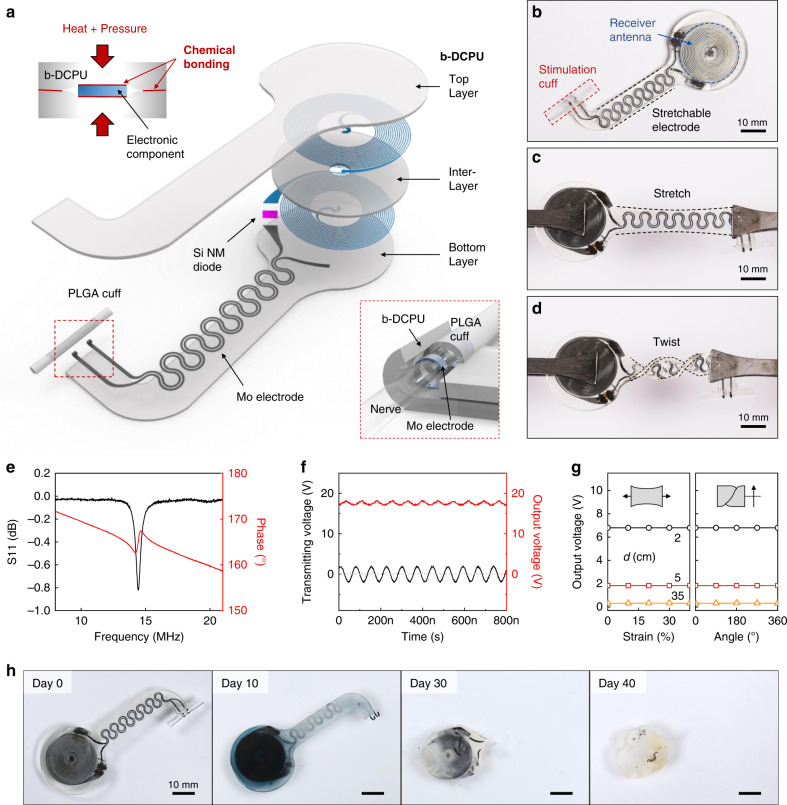
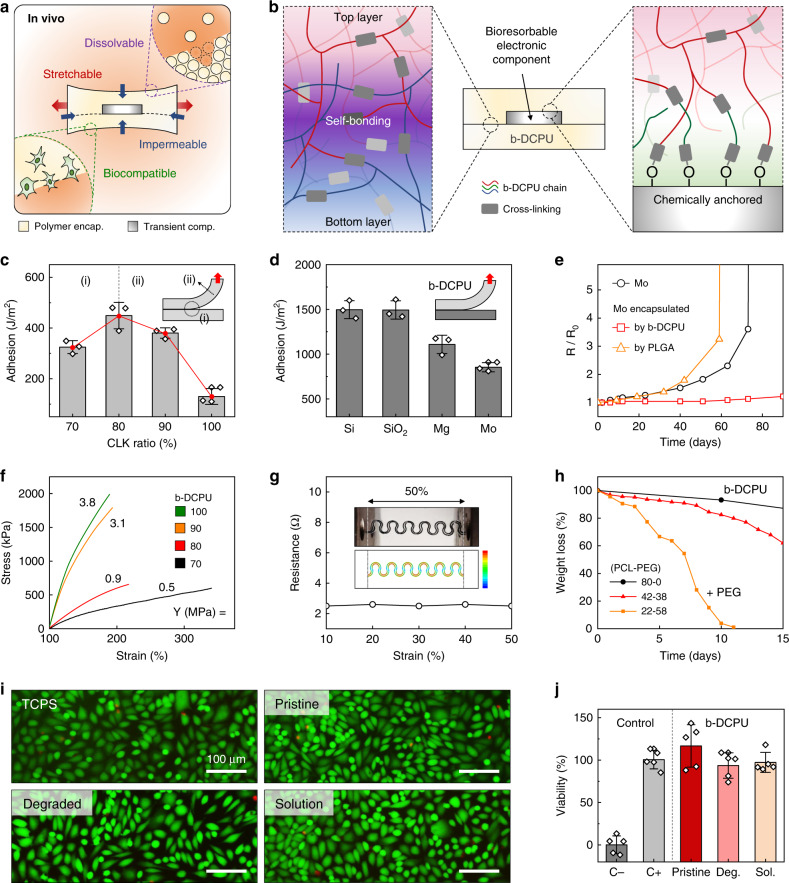
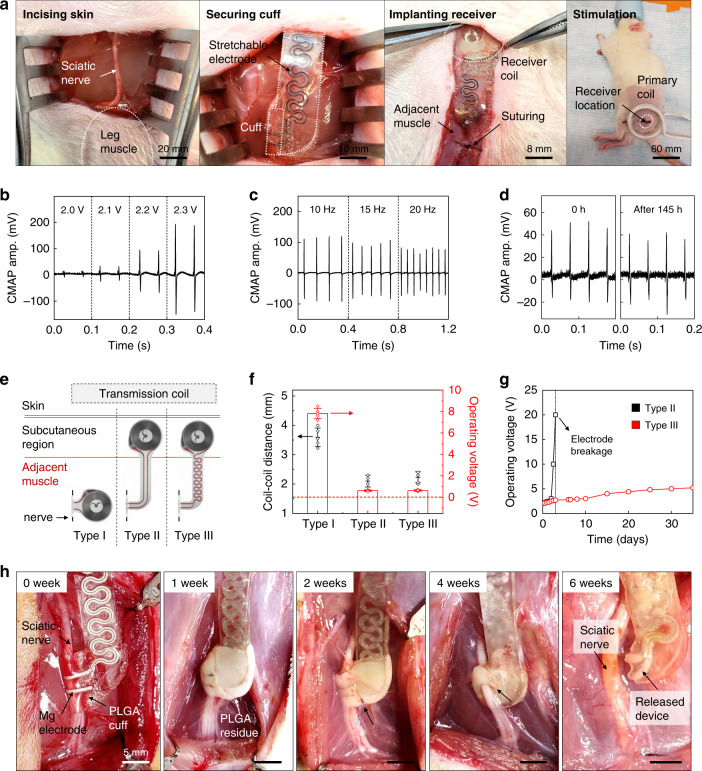
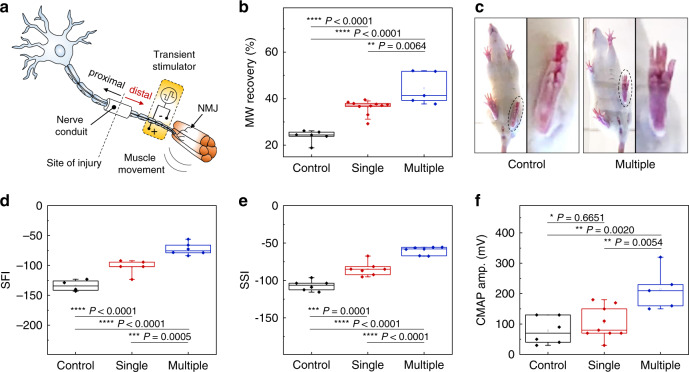
Verification
Claims the paper makes
The claims and statistics of this paper haven’t been checked yet.
Free: it reads the open-access text and checks the first 5 claims that cite a source we can check. Create a free account to check every claim.
Claims other papers make about this one
Each is checked against this paper’s own text: does it say what the citing paper says it does?
The source backs part of the claim, not all of it — or backs it for a different population, condition or comparison.
In the citing paper
“Furthermore, stimulation of the spine can suppress pain and restore movement in paralyzed patients.[549]”
From Flexible Electronics and Devices as Human–Machine Interfaces for Medical Robotics (2022) · cites this paper as [549]
Experimental — accuracy not yet measured
Self-check
Percentages, sums and reported differences re-computed from the paper’s own numbers.
The self-check needs the paper’s full text.
Citations
Cites
Silica-Like Malleable Materials from Permanent Organic Networks
Montarnal, D., Capelot, M., Tournilhac, F., & Leibler, L. (2011) · Science · doi:10.1126/science.1212648 · Cited by 3,625
Ruhland, K. (2020) · Catalysis from A to Z · doi:10.1002/9783527809080.cataz06077 · Cited by 1,724
Tough adhesives for diverse wet surfaces
Li, J., Celiz, A. D., Yang, J., Yang, Q., Wamala, I., Whyte, W., Seo, B. R., Vasilyev, N. V., Vlassak, J. J., Suo, Z., et al. (2017) · Science · doi:10.1126/science.aah6362 · Cited by 1,598
Self-citationA Physically Transient Form of Silicon Electronics
Hwang, S.-W., Tao, H., Kim, D.-H., Cheng, H., Song, J.-K., Rill, E., Brenckle, M. A., Panilaitis, B., Won, S. M., Kim, Y.-S., et al. (2012) · Science · doi:10.1126/science.1226325 · Cited by 1,286
Self-citationThe cellular and molecular basis of peripheral nerve regeneration
Fu, S. Y., & Gordon, T. (1997) · Molecular Neurobiology · doi:10.1007/bf02740621 · Cited by 1,202
Metal-Catalyzed Transesterification for Healing and Assembling of Thermosets
Capelot, M., Montarnal, D., Tournilhac, F., & Leibler, L. (2012) · Journal of the American Chemical Society · doi:10.1021/ja302894k · Cited by 1,198
Dynamic Covalent Polymer Networks: from Old Chemistry to Modern Day Innovations
Zou, W., Dong, J., Luo, Y., Zhao, Q., & Xie, T. (2017) · Advanced Materials · doi:10.1002/adma.201606100 · Cited by 1,014
Self-citationBioresorbable silicon electronic sensors for the brain
Kang, S.-K., Murphy, R. K. J., Hwang, S.-W., Lee, S. M., Harburg, D. V., Krueger, N. A., Shin, J., Gamble, P., Cheng, H., Yu, S., et al. (2016) · Nature · doi:10.1038/nature16492 · Cited by 998
Self-citationScheutz, G. M., Lessard, J. J., Sims, M. B., & Sumerlin, B. S. (2019) · Journal of the American Chemical Society · doi:10.1021/jacs.9b07922 · Cited by 934
Brief Electrical Stimulation Promotes the Speed and Accuracy of Motor Axonal Regeneration
Al-Majed, A. A., Neumann, C. M., Brushart, T. M., & Gordon, T. (2000) · The Journal of Neuroscience · doi:10.1523/jneurosci.20-07-02602.2000 · Cited by 849
Research works printed but not linked: 1
- Riss, T. L. et al. Cell Viability Assays. in Assay Guidance Manual (ed. Minor, L.) 1–25 (Eli Lilly & Company and the National Center for Advancing Translational Sciences, Bethesda (MD):, 2004). 22553861
Cited by
Items 101–200 of 292
Transient electronics: new opportunities for implantable neurotechnology
Fanelli, A., & Ghezzi, D. (2021) · Current Opinion in Biotechnology · doi:10.1016/j.copbio.2021.08.011 · Cited by 37
Yu, M., Wang, C., Cui, H., Huang, J., Yu, Q., Wang, P., Huang, C., Li, G., Zhao, Y., Du, X., et al. (2023) · ACS Applied Materials & Interfaces · doi:10.1021/acsami.2c15808 · Cited by 35
Bioresorbable polymers for electronic medicine
Hwangbo, J., Seo, H., Sim, G., Avila, R. O., Nair, M., Kim, B., & Choi, Y. S. (2024) · Cell Reports Physical Science · doi:10.1016/j.xcrp.2024.102099 · Cited by 40
Self-citationYue, O., Wang, X., Long, X., Bai, Z., Zou, X., & Liu, X. (2024) · Advanced Science · doi:10.1002/advs.202307369 · Cited by 37
Implantable Passive Sensors for Biomedical Applications
Kassanos, P., & Hourdakis, E. (2024) · Sensors · doi:10.3390/s25010133 · Cited by 35
Wireless Acousto‐Piezoelectric Conduit with Aligned Nanofibers for Neural Regeneration
Jeon, S., Kim, D., Jo, M.-Y., Ryu, C., Cho, D. S., Choi, B., Kim, J. K., Kim, M., & Kim, S. (2025) · Advanced Materials · doi:10.1002/adma.202503343 · Cited by 40
The use of electrical stimulation to enhance recovery following peripheral nerve injury
Hardy, P. B., Wang, B. Y., Chan, K. M., Webber, C. A., & Senger, J. B. (2024) · Muscle & Nerve · doi:10.1002/mus.28262 · Cited by 33
“123,124 In the future, it will be interesting to evaluate the effects of altering these parameters to optimize stimulation of different sensory fiber types.”
Qiu, Y., Munna, D. R., Wang, F., Xi, J., Wang, Z., & Wu, D. (2021) · Macromolecules · doi:10.1021/acs.macromol.1c00758 · Cited by 31
Zhang, Y., Su, B., Tian, Y., Yu, Z., Wu, X., Ding, J., Wu, C., Wei, D., Yin, H., Sun, J., et al. (2023) · Acta Biomaterialia · doi:10.1016/j.actbio.2023.07.029 · Cited by 31
Prospects of Using Chitosan-Based Biopolymers in the Treatment of Peripheral Nerve Injuries
Zhang, M., An, H., Zhang, F., Jiang, H., Wan, T., Wen, Y., Han, N., & Zhang, P. (2023) · International Journal of Molecular Sciences · doi:10.3390/ijms241612956 · Cited by 35
“By controlling the electrospinning par meters and chitosan concentration, the diameter of the fiber scaffolds, fiber spacing, and pore size can be tailored to meet the specific requirements of peripheral nerve tissues [134].”
BackgroundHighly Elastic, Bioresorbable Polymeric Materials for Stretchable, Transient Electronic Systems
Shin, J., Kim, D., Jang, T., Han, W. B., Lee, J. H., Ko, G., Yang, S. M., Rajaram, K., Han, S., Kang, H., et al. (2024) · Nano-Micro Letters · doi:10.1007/s40820-023-01268-2 · Cited by 42
“…absence of the key material, recent researches introduced man-made or nature-derived dissolvable stretchable polymers such as poly(lactide-co - ε -caprolactone) (PLCL) [33], polyure-thanes (PU) [34, 35], and citric acid, gelatin, or polyethylene glycol (PEG)-based synthetic polymers [25, 36–38].”
BackgroundNanoscale Strategies for Enhancing the Performance of Adhesive Dry Electrodes for the Skin
Yang, S., & Jiang, X. (2024) · ACS Nano · doi:10.1021/acsnano.4c09477 · Cited by 31
Karunasagara, S., Bayarkhangai, B., Shim, H.-W., Bae, H.-J., Lee, H., Taghizadeh, A., Ji, Y., Mandakhbayar, N., Kim, H. S., Hyun, J., et al. (2024) · Biomaterials · doi:10.1016/j.biomaterials.2024.122854 · Cited by 29
Symbiotic biodegradable flexible supercapacitor in vivo
Wang, E., Wu, M., Luo, L., Cui, X. J., Xu, L., Luo, R., Zou, Y., Le, T., Shan, Y., Quan, Y., et al. (2025) · Device · doi:10.1016/j.device.2025.100724 · Cited by 29
Nguyen, T., Barton, M., Ashok, A., Truong, T., Yadav, S., Leitch, M., Nguyen, T., Kashaninejad, N., Dinh, T., Hold, L., et al. (2022) · Proceedings of the National Academy of Sciences · doi:10.1073/pnas.2203287119 · Cited by 31
“Due to the minimized thickness requirement of constructing elements to facilitate mechanical flexibility, most existing material systems for soft electronics are bound for degradable devices with limited lifetimes due to hydrolysis degradations when implanted inside the human body (8, 21).”
BackgroundXu, S., Li, C., Wei, C., Kang, X., Shu, S., Liu, G., Xu, Z., Han, M., Luo, J., & Tang, W. (2024) · Advanced Science · doi:10.1002/advs.202304763 · Cited by 30
Yu, B., Bai, J., Guan, Y., Huang, X., Liang, L., Ren, Z., Song, X., Zhang, T., Yang, C. H., Dai, F., et al. (2024) · Biosensors and Bioelectronics · doi:10.1016/j.bios.2024.116578 · Cited by 28
Unveiling Trends: Nanoscale Materials Shaping Emerging Biomedical Applications
Hughes, K. J., Cheng, J., Iyer, K. A., Ralhan, K., Ganesan, M., Hsu, C., Zhan, Y., Wang, X., Zhu, B., Gao, M., et al. (2024) · ACS Nano · doi:10.1021/acsnano.4c04514 · Cited by 31
Synthesis of shape-programmable elastomer for a bioresorbable, wireless nerve stimulator
Lim, J. H., Han, W. B., Jang, T., Ko, G., Shin, J., Han, S., Kang, H., Eom, C., Choi, S. J., Rajaram, K., et al. (2024) · Biosensors and Bioelectronics · doi:10.1016/j.bios.2024.116222 · Cited by 29
Transient Implantable Electronics for Postsurgery Preventive Medicine
Mirzajani, H., Zolfaghari, P., Nakhjavani, S. A., Koca, B. Y., Khodapanahandeh, M., & Ürey, H. (2024) · Advanced Functional Materials · doi:10.1002/adfm.202413324 · Cited by 31
Shi, G., Su, T., Li, J., Wang, A., Gao, G., Tao, B., Chen, N., Tian, L., Yan, J., Zhao, L., et al. (2025) · Theranostics · doi:10.7150/thno.108329 · Cited by 31
“However, traditional electrical stimulation methods necessitate the use of multiple devices, wired connections, and implantable electrodes [18].”
Pathway of transient electronics towards connected biomedical applications
Dutta, A., & Cheng, H. (2023) · Nanoscale · doi:10.1039/d2nr06068j · Cited by 27
Recent advances in bio-integrated electrochemical sensors for neuroengineering
Chen, S., Liu, T.-L., Jia, Y., & Li, J. (2023) · Fundamental Research · doi:10.1016/j.fmre.2023.11.012 · Cited by 33
“Another strategy involves the creation of material complexes, where the combination of different materials can influence the overall degradation rate [93] .”
Rajaram, K., Yang, S. M., & Hwang, S. (2022) · Advanced Energy and Sustainability Research · doi:10.1002/aesr.202100223 · Cited by 30
Physical Stimulation Combined with Biomaterials Promotes Peripheral Nerve Injury Repair
Zeng, Z., Yang, Y., Deng, J., Rahman, M. S. U., Sun, C., & Xu, S. (2022) · Bioengineering · doi:10.3390/bioengineering9070292 · Cited by 28
“It ran reliably for more than 30 days and significantly reduced the effects of muscle atrophy and loss of function caused by denervation [33].”
BackgroundQian, L., Jin, F., Li, T., Wei, Z., Ma, X., Zheng, W., Javanmardi, N., Wang, Z., Ma, J., Lai, C., et al. (2024) · Advanced Materials · doi:10.1002/adma.202406636 · Cited by 24
Micropatterned Elastomeric Composites for Encapsulation of Transient Electronics
Han, W. B., Ko, G., Yang, S. M., Kang, H., Lee, J. H., Shin, J., Jang, T., Han, S., Kim, D., Lim, J. H., et al. (2023) · ACS Nano · doi:10.1021/acsnano.3c03063 · Cited by 24
Toward Stretchable Flexible Integrated Sensor Systems
Cui, S., Han, D., Chen, G., Liu, S., Xu, Y., Yu, Y., & Peng, L. (2024) · ACS Applied Materials & Interfaces · doi:10.1021/acsami.4c12429 · Cited by 26
Self-citationImplantable bioresorbable electronic systems for sustainable precision medicine
Corsi, M., Bellotti, E., Surdo, S., & Barillaro, G. (2025) · Nature Reviews Electrical Engineering · doi:10.1038/s44287-025-00190-6 · Cited by 34
Materials advances for distributed environmental sensor networks at scale
Madsen, K. E., Flavin, M. T., & Rogers, J. A. (2025) · Nature Reviews Materials · doi:10.1038/s41578-025-00838-7 · Cited by 35
“Simple transient antennas have been demonstrated for receiving power 341–343 and transmitting sensor data 344–346 over short distances (~1 m), but they cannot support longer range data transmission protocols.”
Self-citationJeon, S., Meng, X., Rubab, N., Kim, D., Mo, H., Xiao, X., Park, M. J., Cho, D. S., Kim, S. M., Choi, B., et al. (2024) · Advanced Materials Technologies · doi:10.1002/admt.202400317 · Cited by 25
Park, Y.-J., Ryu, Y., Choi, M.-K., Kim, K., & Kang, S. (2024) · Soft Science · doi:10.20517/ss.2024.06 · Cited by 29
Lee, J., Choi, Y.-S., Song, J., Seong, D., Jin, S., Ju, J., Son, D., & Shin, M. (2024) · ACS Nano · doi:10.1021/acsnano.4c13097 · Cited by 23
Self-citationBiodegradable power sources for transient bioelectronics
Dong, L., Shan, L., Wang, Y., & Liu, J. (2024) · Supramolecular Materials · doi:10.1016/j.supmat.2024.100082 · Cited by 30
Stretchable and biodegradable triboelectric nanogenerator based on elastomeric nanocomposites
Kang, H., Han, W. B., Yang, S. M., Ko, G., Ryu, Y., Lee, J. H., Shin, J., Jang, T., Rajaram, K., Han, S., et al. (2023) · Chemical Engineering Journal · doi:10.1016/j.cej.2023.146208 · Cited by 22
Maglev-fabricated long and biodegradable stent for interventional treatment of peripheral vessels
Zhang, W.-Q., Gao, X., Zhang, H., Sun, G., Zhang, G., Li, X., Qi, H., Guo, J., Qin, L., Shi, D., et al. (2024) · Nature Communications · doi:10.1038/s41467-024-52288-4 · Cited by 24
Recent Progress on Bioresorbable Passive Electronic Devices and Systems
Wei, Z., Xue, Z., & Guo, Q. (2021) · Micromachines · doi:10.3390/mi12060600 · Cited by 21
“More recently, the same group developed a long-lived, stretchable, and wireless bioresorbable electrical stimulator [102].”
BackgroundPak, A., Nanbakhsh, K., Hölck, O., Ritasalo, R., Sousa, M., Gompel, M. V., Pahl, B., Wilson, J., Kallmayer, C., & Giagka, V. (2022) · Micromachines · doi:10.3390/mi13040544 · Cited by 20
Tran, V. V., Phung, V., & Lee, D. (2024) · Bio-Design and Manufacturing · doi:10.1007/s42242-024-00297-z · Cited by 24
“…are the most important parameters for materials used in wearable biosensors attached to internal organs, skin tissue, and the alimentary canal [260], whereas implantable biosensors in the brain require novel materials with special mechanical features (similar flexibility and characteristics to…”
Multiple pathways to stretchable electronics
Rafeedi, T., & Lipomi, D. J. (2022) · Science · doi:10.1126/science.adf2322 · Cited by 20
Recent advances in wireless energy transfer technologies for body-interfaced electronics
Park, W., Lee, J., Chung, W. G., Jeong, I., Kim, E., Kwon, Y. W., Seo, H., Kim, E., Kim, E., & Park, J. (2024) · Nano Energy · doi:10.1016/j.nanoen.2024.109496 · Cited by 21
Recent advances in soft, implantable electronics for dynamic organs
Han, W. B., Jang, T., Shin, B., Naganaboina, V. R., Yeo, W., & Hwang, S. (2024) · Biosensors and Bioelectronics · doi:10.1016/j.bios.2024.116472 · Cited by 21
Fluffy sponge-reinforced electrospun conduits with biomimetic structures for peripheral nerve repair
Zhao, R., Jiang, L., Du, J., Xu, B., Li, A., Wang, W., Zhao, S., & Li, X. (2021) · Composites Part B Engineering · doi:10.1016/j.compositesb.2021.109482 · Cited by 21
Resorbable elastomers for implantable medical devices: highlights and applications
Turner, B. L., Ramesh, S., Menegatti, S., & Daniele, M. A.-A. (2021) · Polymer International · doi:10.1002/pi.6349 · Cited by 20
Zhang, Z., Wang, Y., Chen, Z., Xu, D., Zhang, D., Wang, F., & Zhao, Y. (2022) · Journal of Nanobiotechnology · doi:10.1186/s12951-022-01340-w · Cited by 19
“Thus, the neuronic injury and retrogression can lead to permanent tissue injury and severe functional damage, which is unavoidable to human beings [4, 5].”
BackgroundIsotropic conductive paste for bioresorbable electronics
Kim, K. S., Maeng, W., Kim, S., Lee, G., Hong, M., Kim, G., Kim, J., Kim, S., Han, S., Yoo, J., et al. (2023) · Materials Today Bio · doi:10.1016/j.mtbio.2023.100541 · Cited by 27
Self-citationLee, S.-M., Lee, W., Bae, J., Gu, J., Lee, S., Yeo, K. B., Lee, J., Kim, J., Lee, J., Kim, J., et al. (2023) · Advanced Functional Materials · doi:10.1002/adfm.202310612 · Cited by 24
Self-citationZhang, S., Tan, R., Zhang, K., Meng, S., Xu, X., Zhang, Q., Zhi, C., Wang, Z., Liang, X., Zhu, S., et al. (2024) · Nano Energy · doi:10.1016/j.nanoen.2024.109548 · Cited by 21
Evaluation methods for long-term reliability of polymer-based implantable biomedical devices
Lee, D. H., Kim, C. H., Youn, J., & Jeong, J. (2021) · Biomedical Engineering Letters · doi:10.1007/s13534-021-00188-7 · Cited by 25
“Another interesting approach regarding polymer-based implantable devices, which may be a kind of “reverse approach” to long-term reliability is use of bioresorbable materials for biomedical implants [65, 66].”
BackgroundHigh-precision neural stimulation through optoacoustic emitters
Shi, L., Jiang, Y., Zheng, N., Cheng, J., & Yang, C. (2022) · Neurophotonics · doi:10.1117/1.nph.9.3.032207 · Cited by 24
“Biocompatible films have been shown as an essential platform for bioelectronics(58,59) and bases for tissue scaffold.(60) By integrating optoacoustic agents in the biocompatible materials, flexible, and biocompatible optoacoustic films can be designed and developed.”
BackgroundOn-demand catalyst-regulated distinctive topological transformations in a dynamic covalent network
Yang, B., Miao, W., Feng, H., Zhao, Q., Xie, T., & Zheng, N. (2022) · Journal of Materials Chemistry A · doi:10.1039/d2ta05256c · Cited by 18
Self-citationSoft Bioelectronics for Neuroengineering: New Horizons in the Treatment of Brain Tumor and Epilepsy
Yoo, S., Kim, M.-J., Choi, C., Kim, D., & Cha, G. D. (2023) · Advanced Healthcare Materials · doi:10.1002/adhm.202303563 · Cited by 23
3D printable and myoelectrically sensitive hydrogel for smart prosthetic hand control
Lai, J., Xiao, L., Zhu, B., Xie, L., & Jiang, H. (2025) · Microsystems & Nanoengineering · doi:10.1038/s41378-024-00825-y · Cited by 23
“Numerous soft electronic devices have been developed in recent years 1 – 5 , which offer a range of capabilities including biosignal detection 4,6 , health monitoring 7,8 , nerve stimulation 1,9 – 11 , brain – computer interfaces 12 , neuromuscular junctions 13 and cyborg tissues 14 – 16 .”
Leveraging biomimetic materials for bioelectronics
Yin, J., Wang, S., Xiao, X., Manshaii, F., Scott, K., & Chen, J. (2025) · Matter · doi:10.1016/j.matt.2025.101961 · Cited by 22
Kim, H., Rahaman, K. A., Kwon, J., Cho, S., Chung, S. H., Han, H., & Kim, Y.-C. (2025) · Biomaterials Research · doi:10.34133/bmr.0219 · Cited by 18
“According to Choi et al. [ 75 ], magnesium-based bioresorbable electronic stimulators enhance peripheral nerve regeneration through electrical conductivity .”
Bai, H., Zhang, S., Yang, H., Wang, J., Chen, H., Li, J., Li, L., Yang, Q., Peng, B., Zhu, Z., et al. (2024) · Bioactive Materials · doi:10.1016/j.bioactmat.2024.05.033 · Cited by 25
“Wireless stimulation emerges as a potential solution, with current attempts including wireless sleeve electrodes, scaffolds based on glucose fuel cells, and inductively coupled radio stimulators [35,36].”
BackgroundSelf-citationWang, L., Chen, K., Fan, Y., & Yin, L. (2022) · Medicine in Novel Technology and Devices · doi:10.1016/j.medntd.2022.100146 · Cited by 17
Bioelectronics for targeted pain management
Flavin, M. T., Foppiani, J., Paul, M. A., Alvarez, A. H., Foster, L., Gavlasova, D., Ma, H., Rogers, J. A., & Lin, S. J. (2025) · Nature Reviews Electrical Engineering · doi:10.1038/s44287-025-00177-3 · Cited by 21
“…may evolve into chronic pain if it is not managed effectively from the beginning 171 For acute postoperative pain, bioresorbable neurostimulators can be utilized that resorb into the body after a deterministic period of time 165 Pain can be broadly categorized into acute and chronic conditions.”
Self-citationBioimplantable and bioresorbable zinc-ion batteries based on biomacromolecule hydrogel electrolytes
Zhou, J., Lu, X., Li, C., Zhang, T., Li, T., Wu, X., He, Y., Zhao, H., Zhou, H., Liu, H., et al. (2025) · Chemical Engineering Journal · doi:10.1016/j.cej.2025.164927 · Cited by 18
Tissue-like Bioelectronic Material Strategies for Personalized Closed-Loop Neuroprostheses
Kim, Y., Lee, H., Lee, J., Shin, M., & Son, D. (2025) · ACS Nano · doi:10.1021/acsnano.5c07150 · Cited by 21
Chen, X., Chen, S., Chen, X., Zheng, H., Fu, Y., Liu, F., Liu, Q., Zhang, G., & Liu, L. (2023) · Surfaces and Interfaces · doi:10.1016/j.surfin.2023.103270 · Cited by 19
Coppola, M. E., Petritz, A., Irimia, C. V., Yumusak, C., Mayr, F., Bednorz, M., Matković, A., Aslam, M. A., Saller, K. M., Schwarzinger, C., et al. (2023) · Global Challenges · doi:10.1002/gch2.202300062 · Cited by 16
Recent Progress in Advanced Polyester Elastomers for Tissue Engineering and Bioelectronics
Zhao, Y., & Zhong, W. (2023) · Molecules · doi:10.3390/molecules28248025 · Cited by 18
Flexible and stretchable implantable devices for peripheral neuromuscular electrophysiology
Li, H., Zhao, H., Song, K., Han, F., Liu, Z., & Tian, Q. (2024) · Nanoscale · doi:10.1039/d3nr05488h · Cited by 18
Kim, J. H., Roh, H., Moon, S., Jeon, C., Baek, S., Cho, W., Sim, J., & Jeong, U. (2024) · Biomaterials · doi:10.1016/j.biomaterials.2024.122579 · Cited by 16
Stretchable Electrodes for Interconnects in Soft Electronics
Jeon, J., & Park, J. (2024) · Nano Letters · doi:10.1021/acs.nanolett.4c02107 · Cited by 17
Xu, W., Wang, F., Stein, J., Wang, S., Jiang, P., Yang, L., Cheng, L., & Lee, K. (2025) · Advanced Functional Materials · doi:10.1002/adfm.202508435 · Cited by 17
Biodegradable Implantable Electronics with Wireless Technology for Real‐Time Clinical Applications
Cho, M., Chae, J. W., Park, Y., Yu, K. J., & Won, S. M. (2025) · Advanced Healthcare Materials · doi:10.1002/adhm.202503424 · Cited by 19
Wu, L., Zheng, T., Guan, W., Han, Q., Su, H., Wu, N., Zhang, L., & Li, G. (2022) · Surfaces and Interfaces · doi:10.1016/j.surfin.2022.102414 · Cited by 15
Fully Recyclable Liquid‐Metal‐Based Multi‐Layer Thermally Triggered Transient Electronic Devices
Teng, L., Li, L., Huang, J., Li, S., Hu, R., Zhou, X., & Wang, H. (2022) · Advanced Materials Technologies · doi:10.1002/admt.202201031 · Cited by 18
Self-citationA Hybrid Strategy‐Based Ultra‐Narrow Stretchable Microelectrodes with Cell‐Level Resolution
Li, H., Han, F., Wang, L., Huang, L., Samuel, O. W., Zhao, H., Xie, R., Wang, P., Tian, Q., Li, Q., et al. (2023) · Advanced Functional Materials · doi:10.1002/adfm.202300859 · Cited by 17
Crabtree, J. R., Mulenga, C., Tran, K. D., Feinberg, K., Santerre, J. P., & Borschel, G. H. (2024) · Bioengineering · doi:10.3390/bioengineering11080776 · Cited by 18
Wireless bioelectronic devices for next-generation electrotherapy
Chen, L., Chen, S., Sun, B., Chen, J., & Zhang, Y. (2025) · Cell Biomaterials · doi:10.1016/j.celbio.2025.100054 · Cited by 17
Li, J., Liu, J., Lu, W., Wu, Z., Yu, J., Wang, B., Ma, Z., Huo, W., & Huang, X. L. (2021) · ACS Applied Materials & Interfaces · doi:10.1021/acsami.1c07102 · Cited by 15
3D conductive material strategies for modulating and monitoring cells
Li, X., Mao, M., Han, K., Yao, C., Gu, B., He, J., & Li, D. (2022) · Progress in Materials Science · doi:10.1016/j.pmatsci.2022.101041 · Cited by 16
Trowbridge, A. J., Bennett, N. T., Reimer, T. M., & Fu, K. X. (2024) · Polymer · doi:10.1016/j.polymer.2024.127230 · Cited by 14
Yuan, S., Wang, G., Fan, Z., Wang, Y., Zhang, J., Yu, G., Chai, Z., Zhao, D., & Lu, X. (2025) · Advanced Functional Materials · doi:10.1002/adfm.202423987 · Cited by 13
Fu, J., Chen, Z., Xu, G., Zi, Y., Li, X., Liang, J., Chen, F., Huang, Q., Yu, X., & Zheng, Z. (2025) · ACS Nano · doi:10.1021/acsnano.4c15200 · Cited by 15
Tordi, P., Tamayo, A., Jeong, Y., Han, B., Kayal, T. A., Cavallo, A., Bonini, M., & Samorí, P. (2025) · Advanced Functional Materials · doi:10.1002/adfm.202520762 · Cited by 23
A Comprehensive Review on Biodegradable Materials and Technologies for Transient Electronics
Ding, Z., Qiao, J., Gao, W., Wang, C., & Guan, Y. (2025) · Advanced Materials Technologies · doi:10.1002/admt.202501928 · Cited by 15
Li, L. K., Huang, W., Hsueh, Y., Yamauchi, K., Olivares, N., Davila, R., Fang, J., Ding, X., Zhao, W., Soto, J., et al. (2022) · Stem Cell Research & Therapy · doi:10.1186/s13287-022-02877-1 · Cited by 15
Self-citationHighly dispersed nanomaterials in polymer matrix via aerosol-jet-based multi-material 3D printing
Hwang, H., Park, S., Smith, M. E., Bose, S., Peringath, A. R., Zhang, J., Kim, J. T., Jing, Q., Kar‐Narayan, S., & Choi, Y. S. (2024) · Nano Energy · doi:10.1016/j.nanoen.2024.109803 · Cited by 12
Self-citationAdvances in Symbiotic Bioabsorbable Devices
Zhu, C., Wang, E., Li, Z., & Ouyang, H. (2025) · Advanced Science · doi:10.1002/advs.202410289 · Cited by 16
Evolution of Musculoskeletal Electronics
Li, J., Zhang, F., Lyu, H., Yin, P., Shi, L., Li, Z., Zhang, L., Di, C., & Tang, P. (2024) · Advanced Materials · doi:10.1002/adma.202303311 · Cited by 16
Stretchable Encapsulation for Implantable Strain Sensors
Huang, X., Yang, L., Jacobsen, R., Seo, J., Wu, M., & Zhao, H. (2025) · ACS Applied Materials & Interfaces · doi:10.1021/acsami.5c06101 · Cited by 11
Central and peripheral neural circuits regulating glucose homeostasis
Espinoza, D., Seibold, F., & Stanley, S. A. (2025) · npj Biomedical Innovations. · doi:10.1038/s44385-025-00036-8 · Cited by 17
“In animal models, this approach has been used for peripheral nerve modulation for up to a month 223 .”
Kim, H. J., Sunwoo, S., Koo, J. H., & Kim, D. (2024) · Korean Journal of Chemical Engineering · doi:10.1007/s11814-024-00318-8 · Cited by 13
Self-citationWang, H., Kou, H., Pan, J., Wang, X., Liu, D., & Yang, R. (2025) · Small · doi:10.1002/smll.202412767 · Cited by 13
Bioresorbable neural interfaces for bioelectronic medicine
Wang, X., Aziz, A., Sheng, X., Wang, L., & Yin, L. (2024) · Current Opinion in Biomedical Engineering · doi:10.1016/j.cobme.2024.100565 · Cited by 15
Soft sensory-neuromorphic system for closed-loop neuroprostheses
Kim, J., Lee, S., Yoon, J., & Son, D. (2025) · International Journal of Extreme Manufacturing · doi:10.1088/2631-7990/adb9aa · Cited by 18
Self-citationAdvances in mechanically active materials for soft wearable electronics
Wu, K., He, W. H., Zhong, R., Nie, Z., Lin, X., & Han, M. (2025) · Materials Horizons · doi:10.1039/d5mh00563a · Cited by 15
Zhang, M., An, H., Gu, Z., Zhang, Y.-C., Wan, T., Jiang, H.-R., Zhang, F., Jiang, B., Han, N., Wen, Y., et al. (2023) · International Journal of Biological Macromolecules · doi:10.1016/j.ijbiomac.2023.126793 · Cited by 11
Liu, C., Wang, Z., Zhang, Y., Lü, H., & Zhang, Y. (2022) · Advanced Materials Interfaces · doi:10.1002/admi.202201477 · Cited by 11
Self-citationDesign and applications of conductive polymers in wearable electrophysiological sensing
Zhou, N., Zhang, L., Cui, T., Wu, P., & Lei, Z. (2025) · Science China Technological Sciences · doi:10.1007/s11431-025-3114-6 · Cited by 14
“Bioresorbable dynamic covalent polyurethane (b-DCPU) can also serve as a soft and elastic substrate and biofluid barrier for deformable, filamentary serpentine gold electrodes (Figure 3(b)) [28].”
Recent advances in encapsulation strategies for flexible transient electronics
Han, W. B., Hwang, S., & Yeo, W. (2024) · Flexible and Printed Electronics · doi:10.1088/2058-8585/ad6a6c · Cited by 11
Wei, Z., Jin, F., Li, T., He, Y., Qian, L., Ma, J., Yuan, T., Yu, X., Zheng, W., Javanmardi, N., et al. (2025) · ACS Nano · doi:10.1021/acsnano.4c14320 · Cited by 11
Zhang, S., Meng, S., Tan, R., Zhang, K., Wang, Z., Xu, X., Zhi, C., Liang, X., & Hu, J. (2025) · Nano Letters · doi:10.1021/acs.nanolett.4c05245 · Cited by 10
Theoretical Model of the Island Effect in Flexible Electronics under Equal Biaxial Stretching
Ma, Z. Y., Li, T., Liu, X., Wu, J. J., Luo, H., & Yang, Y. (2025) · Small · doi:10.1002/smll.202409632 · Cited by 11
Lin, C.-W., Chen, S.-H., Cheng, S. M., Chung, T.-C., Liu, W., Hwang, D., Li, S., Lin, S.-C., & Hsueh, Y. (2025) · Stem Cell Research & Therapy · doi:10.1186/s13287-025-04459-3 · Cited by 12
Self-citationWu, Z., Jin, Y. Q., Li, G., Zhang, M., & Du, J. (2021) · Macromolecular Rapid Communications · doi:10.1002/marc.202100663 · Cited by 12
Metadata
- Authors
- Choi, Y. S., Hsueh, Y.-Y., Koo, J., Yang, Q., Avila, R., Hu, B., Xie, Z., Lee, G., Ning, Z., Liu, C., Xu, Y., Lee, Y. J., Zhao, W., Fang, J., Deng, Y., Lee, S. M., Vázquez-Guardado, A., Stepien, I., Yan, Y., Song, J. W., Haney, C., Oh, Y. S., Liu, W., Yoon, H.-J., Banks, A., MacEwan, M. R., Ameer, G. A., Ray, W. Z., Huang, Y., Xie, T., Franz, C. K., Li, S., & Rogers, J. A.
- Affiliations
- Northwestern University (US)
- University of California, Los Angeles (US)
- Dalian University of Technology (CN)
- State Key Laboratory of Chemical Engineering (CN)
- Washington University in St. Louis (US)
- Corresponding author
- Rogers, John A.
- ORCID
- Choi, Yeon Sik
- Hsueh, Yuan-Yu
- Koo, Jahyun
- Yang, Quansan
- Avila, Raudel
- Hu, Buwei
- Xie, Zhaoqian
- Lee, Geumbee
- Liu, Claire
- Xu, Yameng
- Lee, Young Joong
- Zhao, Weikang
- Fang, Jun
- Deng, Yujun
- Lee, Seung Min
- Vázquez-Guardado, Abraham
- Yan, Ying
- Song, Joseph W.
- Haney, Chad
- Oh, Yong Suk
- Liu, Wentai
- Yoon, Hong-Joon
- Banks, Anthony
- MacEwan, Matthew R.
- Ameer, Guillermo A.
- Ray, Wilson Z.
- Huang, Yonggang
- Xie, Tao
- Franz, Colin K.
- Rogers, John A.
- Venue
- Nature Communications
- Published
- 2020-11-25
- Volume
- 11
- Issue
- 1
- Pages
- 5990-5990
- ISSN
- 2041-1723 (ISSN-L)
- PMC
- PMC7688647
- OpenAlex
- W3109528011
- Semantic Scholar
- 3d7428fd7cc47e3c90cedf8ab562bc0fe8ad7d70
- Cited by
- 292
- References
- 66
- Citations by year
- 2026: 28 · 2025: 61 · 2024: 74 · 2023: 49 · 2022: 45 · 2021: 35
- FWCI
- 14.78
- Type
- journal article
- Language
- en
- Update notices
- correction (2021-01-12)
- Open access
- gold
- doi.org
- Licence
- cc-by
- creativecommons.org/licenses/by/4.0 (tdm)
- creativecommons.org/licenses/by/4.0 (vor)
- Locations
- Nature Communications (publishedVersion, cc-by)
- PubMed Central (publishedVersion, cc-by)
- PubMed (publishedVersion)
- Digital Commons@Becker (Washington University School of Medicine) (submittedVersion, cc-by)
- eScholarship (California Digital Library) (submittedVersion, cc-by)
- RePEc: Research Papers in Economics (submittedVersion)
- DOAJ (DOAJ: Directory of Open Access Journals) (submittedVersion, cc-by-sa)
- eScholarship (California Digital Library) (submittedVersion)
- Funders
- National Science Foundation (1635443, 1842165, DMR-1720,139, 1720139, 1542205, HL121450)
- W. M. Keck Foundation (DMR-1720139)
- Northwestern University (DMR-1720139, NSF DMR‐1720139, NSF ECCS-1542205, ECCS-1542205)
- National Research Foundation
- National Natural Science Foundation of China (12072057, DMR-1720139)
- National Research Foundation of Korea
- National Cheng Kung University
- National Institutes of Health
- Materials Research Science and Engineering Center, Harvard University (1720139, DMR-1720139, NSF DMR-1720139, ECCS-1542205)
- International Institute for Nanotechnology, Northwestern University
- Fundamental Research Funds for the Central Universities (DUT20RC(3)032, DUT20RC)
- National Heart, Lung, and Blood Institute (R01HL121450)
- Division of Materials Research (DMR-1720139, NSF DMR-1720139, NSF ECCS-1542205, 1720139)
- Division of Civil, Mechanical and Manufacturing Innovation (CMMI-1635443)
- Division of Electrical, Communications and Cyber Systems (1542205, ECCS-1542205, NSF ECCS-1542205)
- Topics
- Life Sciences › Neuroscience › Cellular and Molecular Neuroscience › Neuroscience and Neural Engineering
- Physical Sciences › Materials Science › Biomaterials › biodegradable polymer synthesis and properties
- Physical Sciences › Materials Science › Polymers and Plastics › Polymer composites and self-healing
- Keywords
- dynamic covalent polymers, stretchable polymers, peripheral nerve injury, wireless stimulation, biocompatibility, bioelectronic medicine, biomedical implants
- MeSH terms
- Animals, Disease Models, Animal, Electric Stimulation Therapy, Female, Humans, Materials Testing, Polyurethanes, Regeneration, Sciatic Nerve, Muscle, Skeletal, Absorbable Implants, Rats, Wireless Technology, Peripheral Nerve Injuries
About these checks
Registry, retraction, Cites and statistics results are computed, not judged, with one exception: a printed reference that no index lists is read once by a model before it counts as a citation error. Claims are extracted by a model and kept only when their quote appears verbatim in the text; each cited source is then checked, with a model’s help, for whether it says what the claim relies on. Those verdicts can be wrong — read the claim’s quote and the cited source before relying on one.
Statistics and arithmetic are recomputed, not judged.
Confidence bands are shown only for fields calibrated on our annotated test set. None is calibrated yet, so no band is shown.
What counts as a claim ›How we measure confidence ›How we check this ›
Are you an author, or do you see a problem with this page? Request a review
Data sources
Bibliographic data: Semantic Scholar, OpenAlex, Crossref.
Contains information from the Semantic Scholar Academic Graph Datasets, made available under the ODC Attribution License (ODC-BY 1.0).
Semantic Scholar’s data is described in: Kinney, R., et al. (2023). The Semantic Scholar Open Data Platform. arXiv:2301.10140.
