

The DOI matches its Crossref record; 81 of the 81 references it cites were found in a registry or an index.
Integration of Alzheimer’s disease genetics and myeloid genomics identifies disease risk regulatory elements and genes
Open accessAbstract
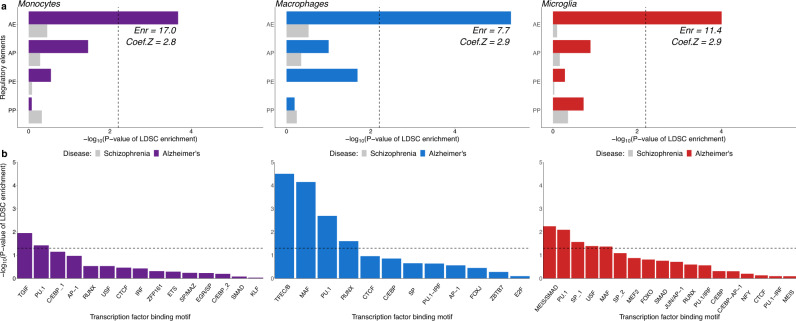
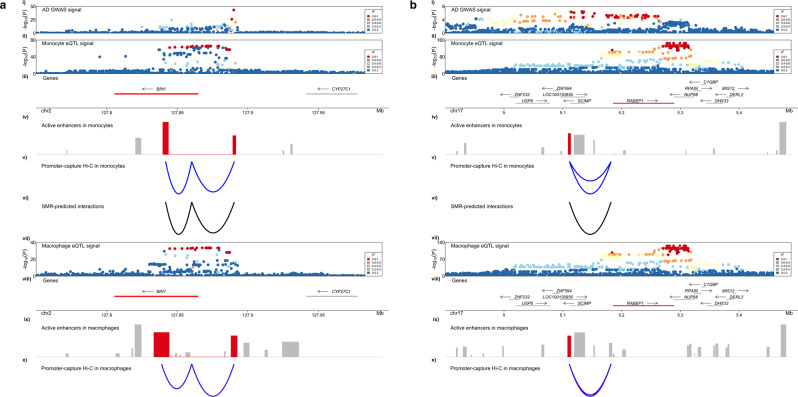
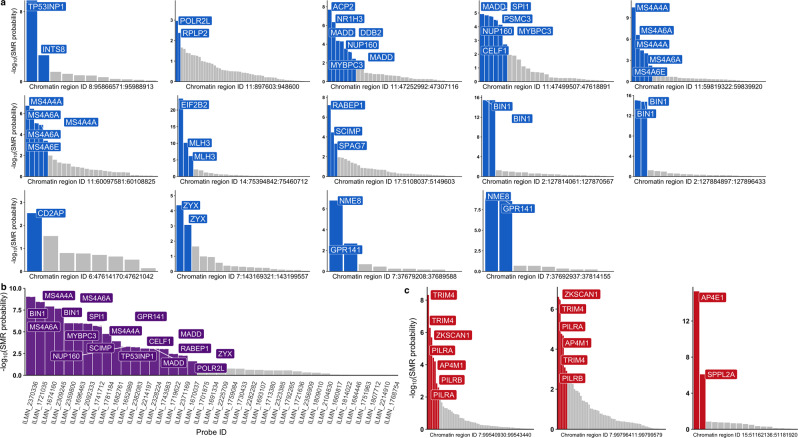
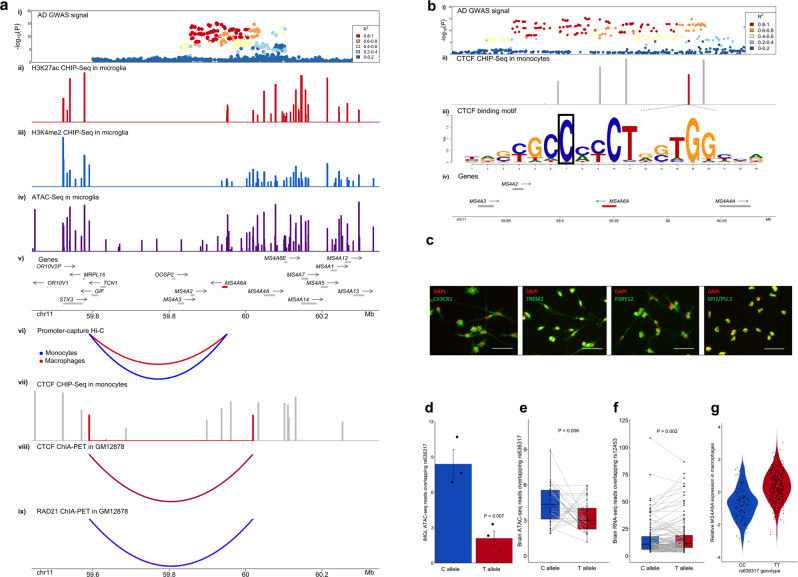
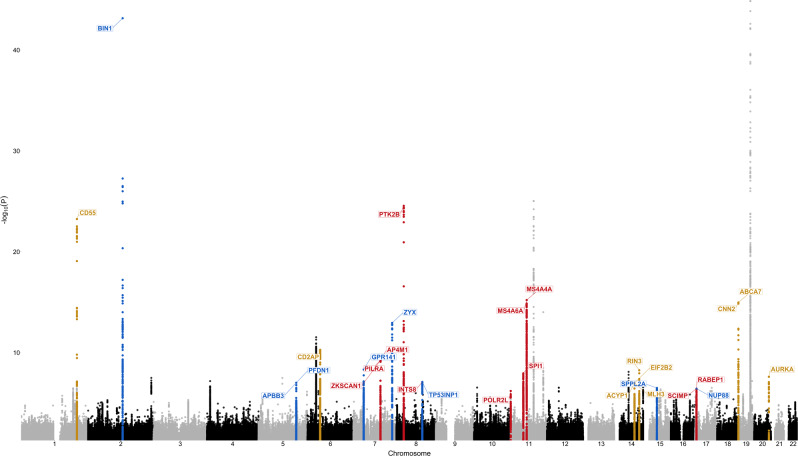
Genome-wide association studies (GWAS) have identified more than 40 loci associated with Alzheimer’s disease (AD), but the causal variants, regulatory elements, genes and pathways remain largely unknown, impeding a mechanistic understanding of AD pathogenesis. Previously, we showed that AD risk alleles are enriched in myeloid-specific epigenomic annotations. Here, we show that they are specifically enriched in active enhancers of monocytes, macrophages and microglia. We integrated AD GWAS with myeloid epigenomic and transcriptomic datasets using analytical approaches to link myeloid enhancer activity to target gene expression regulation and AD risk modification. We identify AD risk enhancers and nominate candidate causal genes among their likely targets (including AP4E1, AP4M1, APBB3, BIN1, MS4A4A, MS4A6A, PILRA, RABEP1, SPI1, TP53INP1 , and ZYX ) in twenty loci. Fine-mapping of these enhancers nominates candidate functional variants that likely modify AD risk by regulating gene expression in myeloid cells. In the MS4A locus we identified a single candidate functional variant and validated it in human induced pluripotent stem cell (hiPSC)-derived microglia and brain. Taken together, this study integrates AD GWAS with multiple myeloid genomic datasets to investigate the mechanisms of AD risk alleles and nominates candidate functional variants, regulatory elements and genes that likely modulate disease susceptibility.
Overview
The claims and statistics of this paper haven’t been checked yet.
Run the check — free, no account needed. It reads the open-access text and checks the sources it cites.
Integrity signals
Registry
Cites
Statistics
Figures
Verification
Claims the paper makes
The claims and statistics of this paper haven’t been checked yet.
Run the check — free, no account needed. It reads the open-access text and checks the sources it cites.
Claims other papers make about this one
Each is checked against this paper’s own text: does it say what the citing paper says it does?
The cited source says what the claim attributes to it.
In the citing paper
“Notably, AD risk alleles were recently shown to be enriched in PU.1-binding motifs (Novikova et al., 2021).”
From A novel molecular class that recruits HDAC/MECP2 complexes to PU.1 motifs reduces neuroinflammation (2023) · cites this paper as Novikova et al., 2021
The cited source says what the claim attributes to it.
In the citing paper
“PU.1-binding motifs are enriched in AD risk alleles (Novikova et al., 2021)”
From A novel molecular class that recruits HDAC/MECP2 complexes to PU.1 motifs reduces neuroinflammation (2023) · cites this paper as Novikova et al., 2021
The cited source says what the claim attributes to it.
In the citing paper
“Our iMG and iAst cells were epigenetically similar to hMGs6 and other reported iMGs22 and Ast (hAst)6 cells (Extended Data Fig. 1i).”
From PICALM Alzheimer’s risk allele causes aberrant lipid droplets in microglia (2025) · cites this paper as [22]
The check wasn’t confident either way, so it gives no verdict — never disputed.
In the citing paper
“MS4A6A, a gene related to AD risk22,68,69, was one of the genes that showed a region-specific effect of age68,70.”
From Genetic analysis of the human microglial transcriptome across brain regions, aging and disease pathologies (2022) · cites this paper as [70]
Experimental — accuracy not yet measuredIn the citing paper
“Consistent with previous studies,55,56 linked peaks identified in microglia were significantly enriched for heritability of AD across five different studies2,3,4,5,6”
From Single nucleus multiomics identifies ZEB1 and MAFB as candidate regulators of Alzheimer’s disease-specific cis-regulatory elements (2023) · cites this paper as [56]
Self-check
Percentages, sums and reported differences re-computed from the paper’s own numbers.
The self-check needs the paper’s full text.
Citations
Cites
The Sequence Alignment/Map format and SAMtools
Li, H., Handsaker, B., Wysoker, A., Fennell, T., Ruan, J., Homer, N., Marth, G., Abecasis, G., Durbin, R., & 1000 Genome Project Data Processing Subgroup (2009) · Bioinformatics · doi:10.1093/bioinformatics/btp352 · Cited by 62,041
Fast gapped-read alignment with Bowtie 2
Langmead, B., & Salzberg, S. L. (2012) · Nature Methods · doi:10.1038/nmeth.1923 · Cited by 56,400
PLINK: a tool set for whole-genome association and population-based linkage analyses.
Purcell, S., Neale, B., Todd-Brown, K., Thomas, L., Ferreira, M. A. R., Bender, D., Maller, J., Sklar, P., de Bakker, P. I. W., Daly, M. J., et al. (2007) · The American Journal of Human Genetics · doi:10.1086/519795 · Cited by 34,089
Model-based Analysis of ChIP-Seq (MACS)
Zhang, Y., Liu, T., Meyer, C. A., Eeckhoute, J., Johnson, D. S., Bernstein, B. E., Nusbaum, C., Myers, R. M., Brown, M., Li, W., et al. (2008) · Genome Biology · doi:10.1186/gb-2008-9-9-r137 · Cited by 18,386
An integrated encyclopedia of DNA elements in the human genome
The ENCODE Project Consortium (2012) · Nature · doi:10.1038/nature11247 · Cited by 18,072
Buenrostro, J. D., Giresi, P. G., Zaba, L. C., Chang, H. Y., & Greenleaf, W. J. (2013) · Nature Methods · doi:10.1038/nmeth.2688 · Cited by 6,422
Integrative analysis of 111 reference human epigenomes
Roadmap Epigenomics Consortium, Kundaje, A., Meuleman, W., Ernst, J., Bilenky, M., Yen, A., Heravi-Moussavi, A., Kheradpour, P., Zhang, Z., Wang, J., et al. (2015) · Nature · doi:10.1038/nature14248 · Cited by 6,368
Self-citationA Unique Microglia Type Associated with Restricting Development of Alzheimer’s Disease
Keren-Shaul, H., Spinrad, A., Weiner, A., Matcovitch-Natan, O., Dvir-Szternfeld, R., Ulland, T. K., David, E., Baruch, K., Lara-Astaiso, D., Toth, B., et al. (2017) · Cell · doi:10.1016/j.cell.2017.05.018 · Cited by 5,493
Meta-Analysis of 74,046 Individuals Identifies 11 New Susceptibility Loci for Alzheimer’s Disease
(EADI), E. A. D. I., Lambert, J.-C., (GERAD), G. A. E. R. I. A. D., Alzheimer's Disease Genetic Consortium (ADGC), (CHARGE), C. F. H. A. A. R. I. G. E., Ibrahim-Verbaas, C. A., Harold, D., Naj, A. C., Sims, R., Bellenguez, C., et al. (2013) · Nature Genetics · doi:10.1038/ng.2802 · Cited by 4,336
Self-citationGiambartolomei, C., Vukcevic, D., Schadt, E. E., Franke, L., Hingorani, A. D., Wallace, C., & Plagnol, V. (2014) · PLoS Genetics · doi:10.1371/journal.pgen.1004383 · Cited by 4,261
Cited by
Sorted by citations
Items 101–200 of 213
Rapid phagosome isolation enables unbiased multiomic analysis of human microglial phagosomes
Wogram, E., Sümpelmann, F., Dong, W., Rawat, E. S., Fernández-Maestre, I., Fu, D., Braswell, B., Khalil, A. S., Buescher, J. M., Mittler, G., et al. (2024) · Immunity · doi:10.1016/j.immuni.2024.07.019 · Cited by 11
He, X., Zhao, X., & Wang, H. (2024) · Annals of Medicine · doi:10.1080/07853890.2024.2407525 · Cited by 11
Holmes, B. B., Weigel, T. K., Chung, J. M., Kaufman, S. K., Apresa, B. I., Byrnes, J. R., Kumru, K. S., Vaquer‐Alicea, J., Gupta, A., Rose, I. V. L., et al. (2025) · Molecular Neurodegeneration · doi:10.1186/s13024-025-00883-4 · Cited by 14
Potential Alzheimer’s disease drug targets identified through microglial biology research
Lepiarz‐Raba, I., Hidayat, T., Hannan, A. J., & Jawaid, A. (2024) · Expert Opinion on Drug Discovery · doi:10.1080/17460441.2024.2335210 · Cited by 9
Jiang, J., Zhao, K., Li, W., Zheng, P., Jiang, S., Ren, Q., Duan, Y., Yu, H., Kang, X., Li, J., et al. (2024) · Biological Psychiatry · doi:10.1016/j.biopsych.2024.08.027 · Cited by 10
Self-citationCao, J., Zhang, C., Lo, C. Z., Guo, Q., Ding, J., Luo, X., Zhang, Z., Chen, F., Cheng, T., Chen, J., et al. (2024) · Alzheimer s & Dementia · doi:10.1002/alz.14444 · Cited by 11
Ishihara, K., Takata, K., & Mizutani, K. (2023) · Life · doi:10.3390/life13010221 · Cited by 10
Matsumoto, M. W., Gómez‐Soler, M., Lombardi, S., Lechtenberg, B. C., & Pasquale, E. B. (2024) · Journal of Biological Chemistry · doi:10.1016/j.jbc.2024.108099 · Cited by 9
Chromatin accessibility provides a window into the genetic etiology of human brain disease
Bendl, J. M., Fullard, J. F., Girdhar, K., Dong, P., Kosoy, R., Zeng, B., Hoffman, G. E., & Roussos, P. (2025) · Trends in Genetics · doi:10.1016/j.tig.2025.01.001 · Cited by 9
Self-citationThe brain neurovascular epigenome and its association with dementia
Ziegler, K. C., Askarova, A., Gergian, C., Yaa, R. M., van Dalen, J. D., Transfeld, J. L., Zoppi, F., Du, J., Clode, D., Rahbar, F., et al. (2025) · Neuron · doi:10.1016/j.neuron.2025.10.001 · Cited by 17
Cardona, C. L., Wei, L., Kim, J., Angeles, E., Singh, G., Chen, S., Patel, R., Ifediora, N., Canoll, P., Teich, A. F., et al. (2025) · Journal of Neuroinflammation · doi:10.1186/s12974-025-03562-9 · Cited by 8
Self-citationGenetic Counselling Improves the Molecular Characterisation of Dementing Disorders
Zampatti, S., Ragazzo, M., Peconi, C., Luciano, S., Gambardella, S., Caputo, V., Strafella, C., Cascella, R., Caltagirone, C., & Giardina, E. (2021) · Journal of Personalized Medicine · doi:10.3390/jpm11060474 · Cited by 8
Genetic insights into the association between inflammatory bowel disease and Alzheimer’s disease
Zeng, L., White, C. C., Bennett, D. A., Klein, H., & Jager, P. L. D. (2025) · Genes and Immunity · doi:10.1038/s41435-025-00344-4 · Cited by 8
Mostaghimi, H., Cohen, D. A., Okhravi, H. R., Niknejad, B., & Audette, M. A. (2025) · Archives of Gerontology and Geriatrics Plus · doi:10.1016/j.aggp.2025.100207 · Cited by 7
Moura, S., Nasciben, L. B., Ramírez, A. M., Coombs, L. E., Rivero, J., Booven, D. J. V., DeRosa, B. A., Hamilton‐Nelson, K. L., Whitehead, P. L., Adams, L. D., et al. (2025) · Alzheimer s & Dementia · doi:10.1002/alz.70031 · Cited by 6
Towards elucidating disease-relevant states of neurons and glia by CRISPR-based functional genomics
Leng, K., & Kampmann, M. (2022) · Genome Medicine · doi:10.1186/s13073-022-01134-7 · Cited by 7
Ayoub, C. A., Wagner, C. S., & Kuret, J. (2023) · PLoS Genetics · doi:10.1371/journal.pgen.1010681 · Cited by 8
Chen, J. W., Zhao, X., Huang, C. B., & Lin, J. (2023) · Functional & Integrative Genomics · doi:10.1007/s10142-023-01270-2 · Cited by 7
Richards, T., Perron, J. C., Patel, K., Wurpel, J., Reznik, S. E., & Schanne, F. (2023) · doi:10.21203/rs.3.rs-3399248/v1 · Cited by 6
Monroe, K. M., Weerakkody, T. N., Sabelström, H., Tatarakis, D., Suh, J. H., Chin, M. Y., Andrews, S. V., Propson, N. E., Balasundar, S., Davis, S. S., et al. (2024) · Research Square · doi:10.21203/rs.3.rs-3954863/v1 · Cited by 7
Holtman, I. R., Glass, C. K., & Nott, A. (2024) · Advances in neurobiology · doi:10.1007/978-3-031-55529-9_29 · Cited by 6
Podlesny‐Drabiniok, A., Romero‐Molina, C., Patel, T., See, W. Y., Liu, Y., Marcora, E. M., & Goate, A. (2025) · Cell Reports · doi:10.1016/j.celrep.2025.115909 · Cited by 7
Self-citationYuan, B., Li, J., Shu, Q., Wang, X., Luo, G., & Ma, R. (2025) · The Journal of Headache and Pain · doi:10.1186/s10194-025-02090-4 · Cited by 6
Ms4a4a deficiency ameliorates plaque pathology in a mouse model of amyloid accumulation
Danhash, E., Verbeck, A. C., Western, D., Díaz‐Pacheco, A. S., Galasso, G., You, S., Huang, G., Starr, E., Miller, N., Nadarajah, C. J., et al. (2025) · Alzheimer s & Dementia · doi:10.1002/alz.70580 · Cited by 6
Lillo, A., Serrano‐Marín, J., Lillo, J., Raïch, I., Navarro, G., & Franco, R. (2023) · Cells · doi:10.3390/cells12182213 · Cited by 6
Murphy, K. B., Ye, Y., Tsalenchuk, M., Nott, A., & Marzi, S. J. (2021) · bioRxiv (Cold Spring Harbor Laboratory) · doi:10.1101/2021.09.06.459142 · Cited by 6
Podleśny-Drabiniok, A., Novikova, G., Liu, Y.-Y., Dunst, J., Temizer, R., Giannarelli, C., Marro, S. G., Kreslavsky, T., Marcora, E., & Goate, A. (2023) · bioRxiv · doi:10.1101/2023.02.13.528372 · Cited by 5
Self-citationRationale and emerging evidence for microglial replacement in Alzheimer’s disease
Bang, J. Y., & Yoo, Y. (2025) · Molecules and Cells · doi:10.1016/j.mocell.2025.100265 · Cited by 6
Astrocytic and microglial cell functions in neuroinflammatory diseases and their animal models
Hashimoto, K., Gotoh, M., & Ikeshima‐Kataoka, H. (2025) · Frontiers in Cellular Neuroscience · doi:10.3389/fncel.2025.1708775 · Cited by 8
Advances in Alzheimer’s disease: mechanistic insights and therapeutic targets
Jia, Y.-J., Ge, Y., Li, B., Yang, Y., Chen, H., Liu, J., Guo, J., Yu, J., Ye, K., Wang, J., et al. (2026) · Science China Life Sciences · doi:10.1007/s11427-025-2991-7 · Cited by 6
Chaar, D., Li, Z., Shang, L., Ratliff, S. M., Mosley, T. H., Kardia, S. L. R., Zhao, W., Zhou, X., & Smith, J. A. (2025) · International Journal of Molecular Sciences · doi:10.3390/ijms26062443 · Cited by 7
Prasad, S. K., Singh, V. V., Acharjee, A., & Acharjee, P. (2024) · Experimental Brain Research · doi:10.1007/s00221-024-06853-4 · Cited by 5
Wang, W., Kong, W., Wang, S., & Wei, K. (2022) · Journal of Molecular Neuroscience · doi:10.1007/s12031-021-01963-y · Cited by 5
Khullar, S., & Wang, D. (2021) · bioRxiv (Cold Spring Harbor Laboratory) · doi:10.1101/2021.06.21.449165 · Cited by 5
Humphrey, J., Brophy, E., Kosoy, R., Zeng, B., Coccia, E., Mattei, D., Ravi, A., Efthymiou, A. G., Navarro, E., Muller, B. Z., et al. (2023) · medRxiv · doi:10.1101/2023.12.01.23299073 · Cited by 5
Self-citationFurther elucidation of GMPPB as a risk gene for depression through integrative multi-omics analyses
Du, Y., Gao, Y., Du, X., An, T., Zhang, H., Wang, B., Cao, H., Li, W. S., Ren, Z. J., & Liu, S. (2025) · Journal of Affective Disorders · doi:10.1016/j.jad.2025.05.013 · Cited by 4
Macrophage polarization in tumors: The impact of efferocytosis
Zhang, Y., Zang, H., & Wen, Q. (2025) · International Immunopharmacology · doi:10.1016/j.intimp.2025.115807 · Cited by 6
Cary, G. A., Li, Q., Wiley, J. C., Paisie, C. A., Du, Y., Zoeller, E. L., Duong, D. M., Fu, H., Seyfried, N. T., Levey, A. I., et al. (2025) · Alzheimer s & Dementia · doi:10.1002/alz.71008 · Cited by 4
Lutz, M. W., & Chiba‐Falek, O. (2023) · Alzheimer s & Dementia · doi:10.1002/alz.13168 · Cited by 4
Murphy, K. B., Ye, Y., Tsalenchuk, M., Nott, A., & Marzi, S. J. (2025) · Cell Reports Methods · doi:10.1016/j.crmeth.2025.101032 · Cited by 9
Neuroimmune Dysfunction in Alzheimer’s Disease and Other Forms of Dementia
Yamane, T., Yoshioka, T., & Shimo, Y. (2024) · Chemical and Pharmaceutical Bulletin · doi:10.1248/cpb.c23-00464 · Cited by 4
Ramamurthy, E., Agarwal, S., Toong, N., Sestili, H. H., Kaplow, I. M., Chen, Z., Phan, B. N., & Pfenning, A. R. (2024) · PLoS Computational Biology · doi:10.1371/journal.pcbi.1012356 · Cited by 4
Orlowski, A., Karippaparambil, J., Paumier, J., Ghanta, S., Pallares, E., Chandran, R., Edmison, D., Tandukar, J., Gao, R., & Gowrishankar, S. (2024) · eNeuro · doi:10.1523/eneuro.0445-24.2024 · Cited by 4
Chen, J., Wang, L., Jager, P. L. D., Bennett, D. A. A., Buchman, A. S., & Yang, J. (2022) · Human Genetics and Genomics Advances · doi:10.1016/j.xhgg.2022.100143 · Cited by 4
Early microglial priming in Alzheimer’s disease revealed by ME-seqPreprint
Zhu, B., Ghosh, A., Wang, Z., Liao, Z., Appiah, M. G., Li, J., Zhang, M., Tullio, F. D., Kurowski, A., Fullard, J. F., et al. (2026) · bioRxiv (Cold Spring Harbor Laboratory) · doi:10.64898/2026.01.30.702946 · Cited by 4
Self-citationWang, X., Yang, H., Zhan, D., Sun, H., Huang, Q., Zhang, Y., Lin, Y., Wei, G., Hua, F., Liu, L., et al. (2024) · Heliyon · doi:10.1016/j.heliyon.2024.e39013 · Cited by 4
Self-citationMustafa, Y., Main, L. R., Mews, M., Janve, V. A., Hohman, T. J., Haines, J. L., Song, Y. E., Griswold, A. J., Pericak‐Vance, M. A., Scott, W. K., et al. (2025) · Translational Psychiatry · doi:10.1038/s41398-025-03698-5 · Cited by 4
Hudgins, A. D., Zhou, S., Arey, R. N., Rosenfeld, M. G., Murphy, C. T., & Suh, Y. (2024) · Neuron · doi:10.1016/j.neuron.2024.04.009 · Cited by 4
Non-coding variation in dementias: mechanisms, insights, and challenges
Rogers, B. B., & Cochran, J. N. (2025) · npj Dementia · doi:10.1038/s44400-025-00012-4 · Cited by 3
Integrated genomic analysis and CRISPRi implicates EGFR in Alzheimer’s disease risk
Leung, Y. Y., Kuksa, P. P., Carter, L., Cifello, J., Greenfest‐Allen, E., Valladares, O., Boateng, L., Laub, S., Tulina, N. M., Moura, S., et al. (2025) · npj Dementia · doi:10.1038/s44400-025-00049-5 · Cited by 4
Improving mouse models for the study of Alzheimer's disease
Reagan, A. M., Onos, K. D., Heuer, S. E., Sasner, M., & Howell, G. R. (2022) · Current topics in developmental biology/Current Topics in Developmental Biology · doi:10.1016/bs.ctdb.2021.12.005 · Cited by 5
Modifiable Innate Biology within the Gut–Brain Axis for Alzheimer’s Disease
Marcos-Pasero, H., García-Tejedor, A., Giménez‐Bastida, J. A., & Laparra, J. M. (2022) · Biomedicines · doi:10.3390/biomedicines10092098 · Cited by 3
Histone mRNA polyadenylation‐mediated inflammation underlies various virus infections and cancers
Guo, M., Zhu, J., Hu, Z., Wang, Q., Songyang, Z., & Xiong, Y. (2023) · Journal of Medical Virology · doi:10.1002/jmv.28826 · Cited by 4
Context-dependent regulatory variants in Alzheimer’s diseasePreprint
Chen, Z., Liu, Y., Brown, A. R., Sestili, H. H., Ramamurthy, E., Xiong, X., Prokopenko, D., Phan, B. N., Gadey, L., van de Weerd, R., et al. (2025) · bioRxiv (Cold Spring Harbor Laboratory) · doi:10.1101/2025.07.11.659973 · Cited by 3
Self-citationStructural insights into human signal peptide peptidase
Huang, G., Guo, X.-F., Wang, J., Ge, X.-F., Kong, F., Shen, Z.-L., Wang, X., Yan, C.-Y., Lei, J.-L., Shi, Y., et al. (2025) · Proceedings of the National Academy of Sciences of the United States of America · doi:10.1073/pnas.2528340122 · Cited by 3
FANS Unfixed: Isolation and Proteomic Analysis of Mouse Cell Type-Specific Brain Nuclei
Bedwell, L., Mavrotas, M., Demchenko, N., Yaa, R. M., Willis, B., Demianová, Z., Syed, N., Whitwell, H. J., & Nott, A. (2024) · Journal of Proteome Research · doi:10.1021/acs.jproteome.4c00161 · Cited by 3
Emerging Microglial Therapies and Targets in Clinical Trial
Yan, L., & Crotti, A. (2024) · Advances in neurobiology · doi:10.1007/978-3-031-55529-9_35 · Cited by 2
Silencer variants are key drivers of gene up-regulation in Alzheimer’s disease
Huang, D., & Ovcharenko, I. (2026) · Science Advances · doi:10.1126/sciadv.adz3323 · Cited by 3
Zhou, X., Xu, R., Lu, T., Xu, R., Wang, C., Peng, B., Chang, X., Shen, Z., Wang, K., Shi, J., et al. (2023) · Aging · doi:10.18632/aging.204957 · Cited by 2
Mishra, P., Silva, A., Sharma, J., Nguyen, J., Pizzo, D. P., Sahoo, D., & Cherqui, S. (2022) · Research Square · doi:10.21203/rs.3.rs-1602615/v1 · Cited by 2
MAPT expression is mediated by long-range interactions with cis -regulatory elementsPreprint
Rogers, B. B., Anderson, A. G., Lauzon, S. N., Davis, M. N., Hauser, R. M., Roberts, S. C., Rodríguez-Nunez, I., Trausch‐Lowther, K., Barinaga, E. A., Taylor, J. W., et al. (2023) · bioRxiv (Cold Spring Harbor Laboratory) · doi:10.1101/2023.03.07.531520 · Cited by 2
Zhu, B., Wangzhou, A., Yu, D., Li, T., Schmidt, R., Florencio, S. L. D., Chao, L., Perez, Y., Grinberg, L. T., Spina, S., et al. (2024) · bioRxiv (Cold Spring Harbor Laboratory) · doi:10.1101/2024.10.15.618329 · Cited by 2
A proteogenomic tool uncovers protein markers for human microglial statesPreprint
Haage, V. C., Bautista, A. R., Tuddenham, J. F., Marshe, V. S., Chiu, R., Liu, Y., Lama, T., Kelly, S. S., Parghi, N., Park, J., et al. (2025) · bioRxiv (Cold Spring Harbor Laboratory) · doi:10.1101/2025.03.31.646212 · Cited by 3
Self-citationRegulatory landscape of Alzheimer’s disease variants in human microgliaPreprint
Lee, C.-Y. J., Ravi, A., Huang, T.-C., Wyman, B., Liu, Z., Chriss, A., Humphrey, J., Knowles, D. A., Cotsapas, C. J., Huckins, L. M., et al. (2025) · medRxiv · doi:10.1101/2025.10.13.25337902 · Cited by 2
Patel, B., Walker, R., Capó, M., Cusimano, N., Comas, J., Garcia, D., Cruickshank, G. S., & Ginn, C. (2023) · Medical Research Archives · doi:10.18103/mra.v11i7.2.3971 · Cited by 1
Alcohol and Alzheimer's—Is there a link?
ZEIDAN, H. M., & ZEIDAN, I. H. (2025) · Elsevier eBooks · doi:10.1016/b978-0-443-21632-9.00009-1 · Cited by 1
Duckhorn, J. C., Kim, D. K., & Huang, Y. A. (2025) · Neural Regeneration Research · doi:10.4103/nrr.nrr-d-25-00243 · Cited by 2
CellSP enables module discovery and visualization for subcellular spatial transcriptomics data
Aggarwal, B., & Sinha, S. (2025) · Communications Biology · doi:10.1038/s42003-025-08891-2 · Cited by 1
Proteome-wide association study identifies novel Alzheimer's disease-associated proteins
Sun, L., Wei, G., Ji, F., Ding, Y., Fan, J., Xu, Y., He, C., Zhou, Y., Liu, Z., Sun, Z., et al. (2025) · Journal of Alzheimer s Disease · doi:10.1177/13872877251409352 · Cited by 1
Karson, J., Chesnel, L., & Acton, S. L. (2026) · Molecular Neurodegeneration Advances · doi:10.1186/s44477-025-00015-8 · Cited by 1
From correlation to causation: cell‐type‐specific gene regulatory networks in Alzheimer's disease
Liu, D., Jiang, Z., Kim, H., Tukker, A. M., Dalvi, A., Xie, J., Li, Y., Yuan, C., Bowman, A. B., Zhang, D., et al. (2026) · Alzheimer s & Dementia · doi:10.1002/alz.71053 · Cited by 2
Roy, D., Kundu, S., & Mukherjee, S. (2023) · Current Alzheimer Research · doi:10.2174/0115672050261526231013095933 · Cited by 1
Shi, J., & Zhang, L. (2025) · Current Medicinal Chemistry · doi:10.2174/0109298673364730250721151447 · Cited by 1
Guo, L., Liu, Y., & Wang, J. (2021) · Frontiers in Aging Neuroscience · doi:10.3389/fnagi.2021.727928 · Cited by 1
Self-citationA multiple-causal-gene-cluster model underlying GWAS signals of Alzheimer’s diseasePreprint
Xu, M., Liu, Q., Bi, R., Li, Y., Zeng, C., Yan, Z., Zheng, Q., Li, X., Sun, C., Ye, M., et al. (2021) · bioRxiv (Cold Spring Harbor Laboratory) · doi:10.1101/2021.05.14.444131 · Cited by 1
Litke, R. R., Vicari, J. M., Huang, B. T., Shapiro, L. R., Roh, K.-H., Silver, A. E., Talreja, P., Palacios, N., Yoon, Y., Kellner, C. P., et al. (2023) · bioRxiv (Cold Spring Harbor Laboratory) · doi:10.1101/2023.06.12.544352 · Cited by 1
Prasad, S. K., Singh, V. V., Acharjee, A., & Acharjee, P. (2023) · Research Square · doi:10.21203/rs.3.rs-3025503/v1 · Cited by 1
Choi, J., Ehrlich, M. E., Roussos, P., Wang, P., Yuan, G., & Song, X. (2023) · bioRxiv (Cold Spring Harbor Laboratory) · doi:10.1101/2023.12.04.570019 · Cited by 1
Self-citationFitzsimons, L. A., Atif-Sheikh, M., Mueth, M. G., Rice, M., Howell, G. R., & Harrison, B. J. (2024) · bioRxiv (Cold Spring Harbor Laboratory) · doi:10.1101/2024.07.24.604961 · Cited by 1
Rodríguez-Nunez, I., Bartley, S. C., Taylor, J. W., Johnston, S. Q., Rogers, B. B., Meadows, S. K., Newberry, K. M., Cochran, J. N., & Myers, R. (2025) · bioRxiv (Cold Spring Harbor Laboratory) · doi:10.1101/2025.05.30.657077 · Cited by 1
Exciting new tools for studying TREM2 in dementia
Menzies, G. E., & Torvell, M. (2021) · Structure · doi:10.1016/j.str.2021.10.009
Crawford, K. L., Leonenko, G., Baker, E. A., Grozeva, D., Lan-Leung, B., Holmans, P., Williams, J. H., O’Donovan, M. C., Escott‐Price, V., & Ivanov, D. K. (2022) · medRxiv · doi:10.1101/2022.06.29.22276952
Role of the membrane spanning 4A (MS4A) gene family in lung adenocarcinomaPreprint
Zheng, Z., Li, H., & Guo, H. (2022) · Research Square · doi:10.21203/rs.3.rs-2228081/v1
Multiomic Phagosome Profiling as a New Tool to Study Human Microglia BiologyPreprint
Wogram, E., Sümpelmann, F., Dong, W., Rawat, E. S., Fernández-Maestre, I., Fu, D., Braswell, B., Khalil, A. S., Buescher, J. M., Borner, G. H. H., et al. (2023) · SSRN Electronic Journal · doi:10.2139/ssrn.4585843
Sanadgol, N., Feriz, A. M., Ravanjoo, L., Haddadi, M., Beyer, C., Zendedel, A., & Safarpour, H. (2024) · Research Square · doi:10.21203/rs.3.rs-3796551/v1
Walz, W. (2023) · Springer eBooks · doi:10.1007/978-3-031-48105-5_13
DiGAS: Differential gene allele spectrum as a descriptor in genetic studies
Aparo, A., Bonnici, V., Avesani, S., Cascione, L., & Giugno, R. (2024) · Computers in Biology and Medicine · doi:10.1016/j.compbiomed.2024.108924
Moura, S., Nasciben, L. B., Ramírez, A. M., Coombs, L. E., Rivero, J., Booven, D. J. V., DeRosa, B. A., Hamilton‐Nelson, K. L., Whitehead, P. L., Adams, L. D., et al. (2024) · bioRxiv (Cold Spring Harbor Laboratory) · doi:10.1101/2024.08.27.609943
Genomics of Alzheimer’s disease
Rosenberg, R. N., Lambracht‐Washington, D., Yu, G., & Xia, W. (2024) · Elsevier eBooks · doi:10.1016/b978-0-443-19176-3.00035-2
Podleśny-Drabiniok, A., Romero-Molina, C., Patel, T., Wen, Y.-S., Liu, Y.-Y., Marcora, E., & Goate, A. (2024) · bioRxiv · doi:10.1101/2024.10.24.619910 · Cited by 7
Self-citationNovel Approaches for Treating Alzheimer’s Disease and Other Dementias
Silva, M. C., Butler, D. C., Temple, S., & Haggarty, S. J. (2025) · Oxford University Press eBooks · doi:10.1093/med/9780197640654.003.0059
Genetics of Alzheimer’s Disease, Parkinson’s Disease, and Lewy Body Dementia
Renton, A. E., Fulton‐Howard, B., Andrews, S. J., Marcora, E. M., & Goate, A. (2025) · Oxford University Press eBooks · doi:10.1093/med/9780197640654.003.0053
Self-citationA proteogenomic tool uncovers protein markers for human microglial statesPreprint
Jager, P. L. D., Haage, V. C., Bautista, A. R., Tuddenham, J. F., Marshe, V. S., Chiu, R., Liu, Y., Lama, T., Kelly, S. S., Parghi, N., et al. (2025) · Research Square · doi:10.21203/rs.3.rs-6380446/v1
Self-citationLong, Y., Liu, J., Guo, J., Jiang, J., Wang, X., & Sun, R. (2025) · BMC Neurology · doi:10.1186/s12883-025-04278-2
Epigenetics and pharmacoepigenetics of age-related neurodegenerative disorders
Cacabelos, R., Martínez-Iglesias, O. A., Cacabelos, N., Cacabelos, P., & Naidoo, V. (2025) · Elsevier eBooks · doi:10.1016/b978-0-443-18722-3.00032-3
Pei, Y. (2025) · International Conference on Biomedical and Intelligent Systems (IC-BIS) · doi:10.1145/3745034.3745040
A Modification to Two‐Stage Least Squares With Genetic Applications
Fang, L., & Pan, W. (2025) · Statistics in Medicine · doi:10.1002/sim.70308
Seto, M., Klinger, H. M., Clifton, M. J., Janve, V. A., Brown, J. A., Birkenbihl, C., Coughlan, G., Townsend, D. L., Wang, T., Properzi, M. J., et al. (2025) · bioRxiv (Cold Spring Harbor Laboratory) · doi:10.1101/2025.11.21.689770
Lakhani, C. M., Cavalca, G., Liu, A., Nidumbur, R., Feng, R., Raj, T., Jager, P. L. D., Wang, G., & Knowles, D. A. (2025) · medRxiv · doi:10.64898/2025.12.03.25341562
Alzheimer’s Disease Risk Variants Interact with Amyloid-Beta to Modulate Monocyte Function
Chatila, Z. K., & Bradshaw, E. M. (2025) · Cells · doi:10.3390/cells14241990
Metadata
- Authors
- Novikova, G., Kapoor, M., TCW, J., Abud, E. M., Efthymiou, A. G., Chen, S. X., Cheng, H., Fullard, J. F., Bendl, J., Liu, Y., Roussos, P., Björkegren, J. L., Liu, Y., Poon, W. W., Hao, K., Marcora, E., & Goate, A. M.
- Affiliations
- Icahn School of Medicine at Mount Sinai (US)
- University of California, Irvine (US)
- Indiana University Indianapolis (US)
- Karolinska University Hospital (SE)
- Corresponding author
- Marcora, Edoardo
- Goate, Alison M.
- ORCID
- Venue
- Nature Communications
- Published
- 2021-03-12
- Volume
- 12
- Issue
- 1
- Pages
- 1610-1610
- ISSN
- 2041-1723 (ISSN-L)
- PMC
- PMC7955030
- OpenAlex
- W3134303686
- Cited by
- 214
- References
- 80
- Citations by year
- 2026: 17 · 2025: 55 · 2024: 38 · 2023: 41 · 2022: 41 · 2021: 21
- FWCI
- 22.05
- Type
- journal article
- Language
- en
- Open access
- gold
- doi.org
- Locations
- Nature Communications (publishedVersion, cc-by)
- PubMed Central (publishedVersion, cc-by)
- PubMed (publishedVersion)
- eScholarship (California Digital Library) (submittedVersion, cc-by)
- RePEc: Research Papers in Economics (submittedVersion)
- DOAJ (DOAJ: Directory of Open Access Journals) (submittedVersion, cc-by-sa)
- IUScholarWorks (Indiana University) (submittedVersion, cc-by)
- Funders
- U.S. Department of Health & Human Services | NIH | National Institute on Aging (K01AG062683, F31 AG059337-01, R01AG050986)
- Topics
- Life Sciences › Neuroscience › Cellular and Molecular Neuroscience › Alzheimer's disease research and treatments
- Life Sciences › Biochemistry, Genetics and Molecular Biology › Genetics › Genetic Associations and Epidemiology
- Health Sciences › Medicine › Psychiatry and Mental health › Dementia and Cognitive Impairment Research
- Keywords
- Alzheimer's disease, genetic susceptibility loci, myeloid cells, regulatory elements, enhancers, microglia, macrophages, monocytes, epigenomics, transcriptomics, causal variants, fine mapping, BIN1, MS4A4A, MS4A6A, PU.1, TP53INP1, disease susceptibility, gene expression regulation
- MeSH terms
- Alleles, Alzheimer Disease, Gene Expression Regulation, Humans, Macrophages, Regulatory Sequences, Nucleic Acid, Microglia, Genetic Predisposition to Disease, Myeloid Cells, Genomics, Genome-Wide Association Study, Induced Pluripotent Stem Cells, Transcriptome
About these checks
Registry, retraction, Cites and statistics results are computed, not judged, with one exception: a printed reference that no index lists is read once by a model before it counts as a citation error. Claims are extracted by a model and kept only when their quote appears verbatim in the text; each cited source is then checked, with a model’s help, for whether it says what the claim relies on. Those verdicts can be wrong — read the claim’s quote and the cited source before relying on one.
Statistics and arithmetic are recomputed, not judged.
Confidence bands are shown only for fields calibrated on our annotated test set. None is calibrated yet, so no band is shown.
What counts as a claim ›How we measure confidence ›How we check this ›
Are you an author, or do you see a problem with this page? Request a review
