

The DOI matches its Crossref record; 81 of the 81 references it cites were found in a registry or an index.
Integration of Alzheimer’s disease genetics and myeloid genomics identifies disease risk regulatory elements and genes
Open accessAbstract
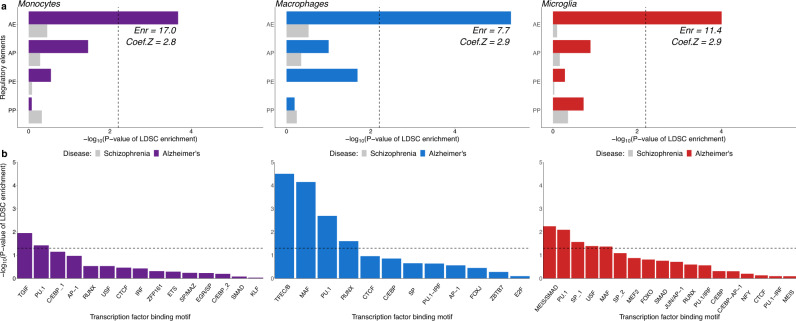
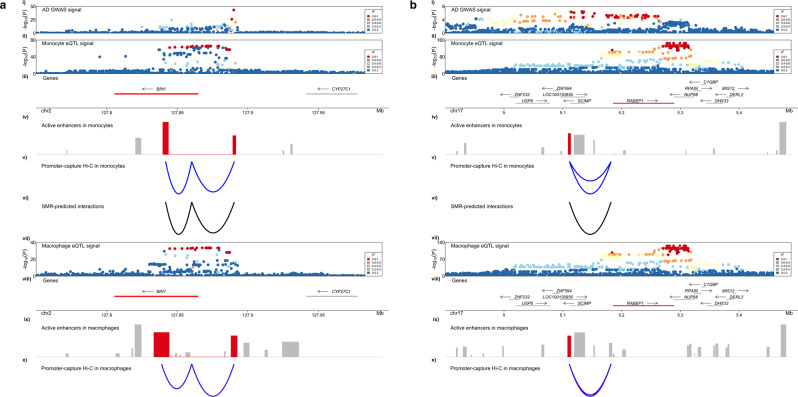
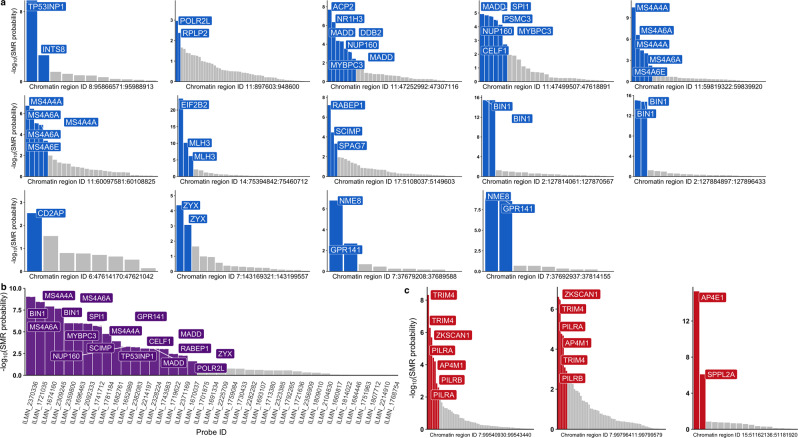
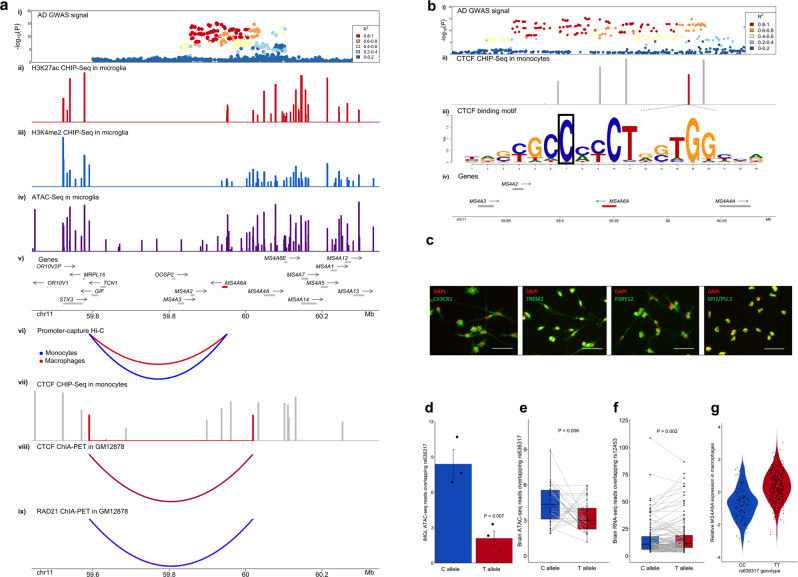
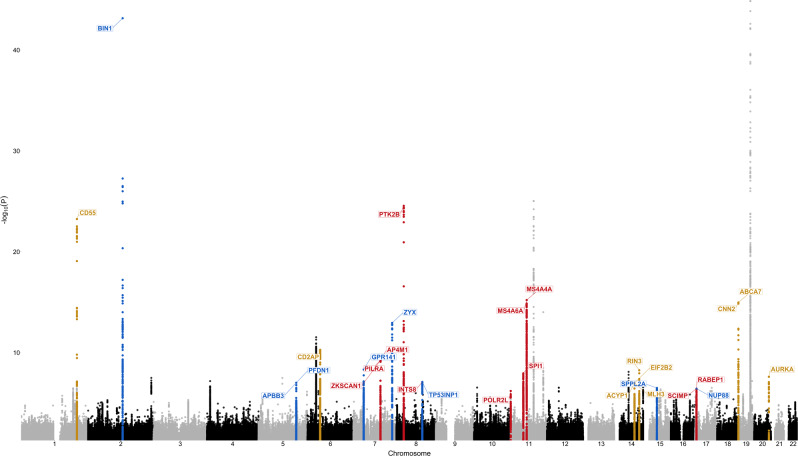
Genome-wide association studies (GWAS) have identified more than 40 loci associated with Alzheimer’s disease (AD), but the causal variants, regulatory elements, genes and pathways remain largely unknown, impeding a mechanistic understanding of AD pathogenesis. Previously, we showed that AD risk alleles are enriched in myeloid-specific epigenomic annotations. Here, we show that they are specifically enriched in active enhancers of monocytes, macrophages and microglia. We integrated AD GWAS with myeloid epigenomic and transcriptomic datasets using analytical approaches to link myeloid enhancer activity to target gene expression regulation and AD risk modification. We identify AD risk enhancers and nominate candidate causal genes among their likely targets (including AP4E1, AP4M1, APBB3, BIN1, MS4A4A, MS4A6A, PILRA, RABEP1, SPI1, TP53INP1 , and ZYX ) in twenty loci. Fine-mapping of these enhancers nominates candidate functional variants that likely modify AD risk by regulating gene expression in myeloid cells. In the MS4A locus we identified a single candidate functional variant and validated it in human induced pluripotent stem cell (hiPSC)-derived microglia and brain. Taken together, this study integrates AD GWAS with multiple myeloid genomic datasets to investigate the mechanisms of AD risk alleles and nominates candidate functional variants, regulatory elements and genes that likely modulate disease susceptibility.
Overview
The claims and statistics of this paper haven’t been checked yet.
Run the check — free, no account needed. It reads the open-access text and checks the sources it cites.
Integrity signals
Registry
Cites
Statistics
Figures
Verification
Claims the paper makes
The claims and statistics of this paper haven’t been checked yet.
Run the check — free, no account needed. It reads the open-access text and checks the sources it cites.
Claims other papers make about this one
Each is checked against this paper’s own text: does it say what the citing paper says it does?
The cited source says what the claim attributes to it.
In the citing paper
“Notably, AD risk alleles were recently shown to be enriched in PU.1-binding motifs (Novikova et al., 2021).”
From A novel molecular class that recruits HDAC/MECP2 complexes to PU.1 motifs reduces neuroinflammation (2023) · cites this paper as Novikova et al., 2021
The cited source says what the claim attributes to it.
In the citing paper
“PU.1-binding motifs are enriched in AD risk alleles (Novikova et al., 2021)”
From A novel molecular class that recruits HDAC/MECP2 complexes to PU.1 motifs reduces neuroinflammation (2023) · cites this paper as Novikova et al., 2021
The cited source says what the claim attributes to it.
In the citing paper
“Our iMG and iAst cells were epigenetically similar to hMGs6 and other reported iMGs22 and Ast (hAst)6 cells (Extended Data Fig. 1i).”
From PICALM Alzheimer’s risk allele causes aberrant lipid droplets in microglia (2025) · cites this paper as [22]
The check wasn’t confident either way, so it gives no verdict — never disputed.
In the citing paper
“MS4A6A, a gene related to AD risk22,68,69, was one of the genes that showed a region-specific effect of age68,70.”
From Genetic analysis of the human microglial transcriptome across brain regions, aging and disease pathologies (2022) · cites this paper as [70]
Experimental — accuracy not yet measuredIn the citing paper
“Consistent with previous studies,55,56 linked peaks identified in microglia were significantly enriched for heritability of AD across five different studies2,3,4,5,6”
From Single nucleus multiomics identifies ZEB1 and MAFB as candidate regulators of Alzheimer’s disease-specific cis-regulatory elements (2023) · cites this paper as [56]
Self-check
Percentages, sums and reported differences re-computed from the paper’s own numbers.
The self-check needs the paper’s full text.
Citations
Cites
The Sequence Alignment/Map format and SAMtools
Li, H., Handsaker, B., Wysoker, A., Fennell, T., Ruan, J., Homer, N., Marth, G., Abecasis, G., Durbin, R., & 1000 Genome Project Data Processing Subgroup (2009) · Bioinformatics · doi:10.1093/bioinformatics/btp352 · Cited by 62,041
Fast gapped-read alignment with Bowtie 2
Langmead, B., & Salzberg, S. L. (2012) · Nature Methods · doi:10.1038/nmeth.1923 · Cited by 56,400
PLINK: a tool set for whole-genome association and population-based linkage analyses.
Purcell, S., Neale, B., Todd-Brown, K., Thomas, L., Ferreira, M. A. R., Bender, D., Maller, J., Sklar, P., de Bakker, P. I. W., Daly, M. J., et al. (2007) · The American Journal of Human Genetics · doi:10.1086/519795 · Cited by 34,089
Model-based Analysis of ChIP-Seq (MACS)
Zhang, Y., Liu, T., Meyer, C. A., Eeckhoute, J., Johnson, D. S., Bernstein, B. E., Nusbaum, C., Myers, R. M., Brown, M., Li, W., et al. (2008) · Genome Biology · doi:10.1186/gb-2008-9-9-r137 · Cited by 18,386
An integrated encyclopedia of DNA elements in the human genome
The ENCODE Project Consortium (2012) · Nature · doi:10.1038/nature11247 · Cited by 18,072
Buenrostro, J. D., Giresi, P. G., Zaba, L. C., Chang, H. Y., & Greenleaf, W. J. (2013) · Nature Methods · doi:10.1038/nmeth.2688 · Cited by 6,422
Integrative analysis of 111 reference human epigenomes
Roadmap Epigenomics Consortium, Kundaje, A., Meuleman, W., Ernst, J., Bilenky, M., Yen, A., Heravi-Moussavi, A., Kheradpour, P., Zhang, Z., Wang, J., et al. (2015) · Nature · doi:10.1038/nature14248 · Cited by 6,368
Self-citationA Unique Microglia Type Associated with Restricting Development of Alzheimer’s Disease
Keren-Shaul, H., Spinrad, A., Weiner, A., Matcovitch-Natan, O., Dvir-Szternfeld, R., Ulland, T. K., David, E., Baruch, K., Lara-Astaiso, D., Toth, B., et al. (2017) · Cell · doi:10.1016/j.cell.2017.05.018 · Cited by 5,493
Meta-Analysis of 74,046 Individuals Identifies 11 New Susceptibility Loci for Alzheimer’s Disease
(EADI), E. A. D. I., Lambert, J.-C., (GERAD), G. A. E. R. I. A. D., Alzheimer's Disease Genetic Consortium (ADGC), (CHARGE), C. F. H. A. A. R. I. G. E., Ibrahim-Verbaas, C. A., Harold, D., Naj, A. C., Sims, R., Bellenguez, C., et al. (2013) · Nature Genetics · doi:10.1038/ng.2802 · Cited by 4,336
Self-citationGiambartolomei, C., Vukcevic, D., Schadt, E. E., Franke, L., Hingorani, A. D., Wallace, C., & Plagnol, V. (2014) · PLoS Genetics · doi:10.1371/journal.pgen.1004383 · Cited by 4,261
Cited by
Sorted by citations
Neuroinflammation in Alzheimer disease
Heneka, M. T., van der Flier, W. M., Jessen, F., Hoozemanns, J., Thal, D. R., Boche, D., Brosseron, F., Teunissen, C., Zetterberg, H., Jacobs, A. H., et al. (2025) · Nature Reviews Immunology · doi:10.1038/s41577-024-01104-7 · Cited by 638
Alzheimer’s Patient Microglia Exhibit Enhanced Aging and Unique Transcriptional Activation
Srinivasan, K., Friedman, B. A., Etxeberria, A., Huntley, M. A., van der Brug, M. P., Foreman, O., Paw, J. S., Modrusan, Z., Beach, T. G., Serrano, G. E., et al. (2020) · Cell Reports · doi:10.1016/j.celrep.2020.107843 · Cited by 427
Cholesterol and matrisome pathways dysregulated in astrocytes and microglia
TCW, J., Qian, L., Pipalia, N. H., Chao, M. J., Liang, S. A., Shi, Y., Jain, B. R., Bertelsen, S. E., Kapoor, M., Marcora, E., et al. (2022) · Cell · doi:10.1016/j.cell.2022.05.017 · Cited by 411
Self-citationThe complex genetic architecture of Alzheimer's disease: novel insights and future directions
Andrews, S. J., Renton, A. E., Fulton-Howard, B., Podlesny-Drabiniok, A., Marcora, E., & Goate, A. M. (2023) · eBioMedicine · doi:10.1016/j.ebiom.2023.104511 · Cited by 377
Self-citationLopes, K. D. P., Snijders, G. J. L., Humphrey, J., Allan, A., Sneeboer, M. A. M., Navarro, E., Schilder, B. M., Vialle, R. A., Parks, M., Missall, R., et al. (2022) · Nature Genetics · doi:10.1038/s41588-021-00976-y · Cited by 273
Epigenomic dissection of Alzheimer’s disease pinpoints causal variants and reveals epigenome erosion
Xiong, X., James, B. T., Boix, C. A., Park, Y. P., Galani, K., Victor, M. B., Sun, N., Hou, L., Ho, L.-L., Mantero, J., et al. (2023) · Cell · doi:10.1016/j.cell.2023.08.040 · Cited by 205
Advancing cell therapy for neurodegenerative diseases
Temple, S. (2023) · Cell stem cell · doi:10.1016/j.stem.2023.03.017 · Cited by 221
TREM2 dependent and independent functions of microglia in Alzheimer’s disease
Hou, J., Chen, Y., Grajales-Reyes, G., & Colonna, M. (2022) · Molecular Neurodegeneration · doi:10.1186/s13024-022-00588-y · Cited by 191
Genetics of the human microglia regulome refines Alzheimer’s disease risk loci
Kosoy, R., Fullard, J. F., Zeng, B., Bendl, J., Dong, P., Rahman, S., Kleopoulos, S. P., Shao, Z., Girdhar, K., Humphrey, J., et al. (2022) · Nature Genetics · doi:10.1038/s41588-022-01149-1 · Cited by 168
Self-citationMicroglial amyloid beta clearance is driven by PIEZO1 channels
Jäntti, H., Sitnikova, V., Ishchenko, Y., Shakirzyanova, A., Giudice, L., Ugidos, I. F., Gómez‐Budia, M., Korvenlaita, N., Ohtonen, S., Belaya, I., et al. (2022) · Journal of Neuroinflammation · doi:10.1186/s12974-022-02486-y · Cited by 164
Insights into Alzheimer’s disease from single-cell genomic approaches
Murdock, M. H., & Tsai, L.-H. (2023) · Nature Neuroscience · doi:10.1038/s41593-022-01222-2 · Cited by 148
Humphrey, J., Venkatesh, S., Hasan, R., Herb, J. T., de Paiva Lopes, K., Küçükali, F., Byrska-Bishop, M., Evani, U. S., Narzisi, G., Fagegaltier, D., et al. (2023) · Nature Neuroscience · doi:10.1038/s41593-022-01205-3 · Cited by 138
Inflammatory aspects of Alzheimer’s disease
Lucena, P. B., & Heneka, M. T. (2024) · Acta Neuropathologica · doi:10.1007/s00401-024-02790-2 · Cited by 152
Functional regulatory variants implicate distinct transcriptional networks in dementia
Cooper, Y. A., Teyssier, N., Dräger, N. M., Guo, Q., Davis, J. E., Sattler, S. M., Yang, Z., Patel, A. M., Wu, S. J., Kosuri, S., et al. (2022) · Science · doi:10.1126/science.abi8654 · Cited by 121
Microglial efferocytosis: Diving into the Alzheimer’s disease gene pool
Romero-Molina, C., Garretti, F., Andrews, S. J., Marcora, E., & Goate, A. M. (2022) · Neuron · doi:10.1016/j.neuron.2022.10.015 · Cited by 111
Self-citationNeuronal and glial 3D chromatin architecture informs the cellular etiology of brain disorders
Hu, B., Won, H., Mah, W., Park, R. B., Kassim, B., Spiess, K., Kozlenkov, A., Crowley, C. A., Pochareddy, S., The PsychENCODE Consortium, et al. (2021) · Nature Communications · doi:10.1038/s41467-021-24243-0 · Cited by 103
Self-citationHistone Modifications in Alzheimer’s Disease
Santana, D. A., Smith, M. D. A. C., & Chen, E. (2023) · Genes · doi:10.3390/genes14020347 · Cited by 113
A neurodegenerative cellular stress response linked to dark microglia and toxic lipid secretion
Flury, A. G., Aljayousi, L., Park, H.-J., Khakpour, M., Mechler, J., Aziz, S., McGrath, J. D., Deme, P., Sandberg, C., Ibáñez, F. G., et al. (2024) · Neuron · doi:10.1016/j.neuron.2024.11.018 · Cited by 102
Microglia-mediated synaptic pruning as a key deficit in neurodevelopmental disorders: Hype or hope?
Mordelt, A., & de Witte, L. D. (2023) · Current Opinion in Neurobiology · doi:10.1016/j.conb.2022.102674 · Cited by 100
Genomics of Alzheimer’s disease implicates the innate and adaptive immune systems
Li, Y., Laws, S. M., Miles, L. A., Wiley, J. S., Huang, X., Masters, C. L., & Gu, B. J. (2021) · Cellular and Molecular Life Sciences · doi:10.1007/s00018-021-03986-5 · Cited by 96
Step by step: towards a better understanding of the genetic architecture of Alzheimer’s disease
Lambert, J.-C., Ramirez, A., Grenier-Boley, B., & Bellenguez, C. (2023) · Molecular Psychiatry · doi:10.1038/s41380-023-02076-1 · Cited by 87
Neuroinflammation as a Potential Therapeutic Target in Alzheimer’s Disease
Liu, P., Wang, Y., Sun, Y., & Peng, G. (2022) · Clinical Interventions in Aging · doi:10.2147/cia.s357558 · Cited by 94
Ritzel, R. M., Li, Y., Jiao, Y., Lei, Z., Doran, S. J., He, J., Shahror, R. A., Henry, R. J., Khan, R., Tan, C., et al. (2023) · Science Advances · doi:10.1126/sciadv.add1101 · Cited by 90
Anderson, A. G., Rogers, B. B., Loupe, J. M., Rodriguez-Nunez, I., Roberts, S. C., White, L. M., Brazell, J. N., Bunney, W. E., Bunney, B. G., Watson, S. J., et al. (2023) · Cell Genomics · doi:10.1016/j.xgen.2023.100263 · Cited by 82
Chadarevian, J. P., Hasselmann, J., Lahian, A., Capocchi, J. K., Escobar, A., Lim, T. E., Le, L., Tu, C., Nguyen, J., Kiani Shabestari, S., et al. (2024) · Neuron · doi:10.1016/j.neuron.2024.05.023 · Cited by 83
The role of Alzheimer's disease risk genes in endolysosomal pathways
Szabo, M. P., Mishra, S., Knupp, A., & Young, J. E. (2021) · Neurobiology of Disease · doi:10.1016/j.nbd.2021.105576 · Cited by 87
Current challenges in understanding the role of enhancers in disease
Zaugg, J. B., Sahlén, P., Andersson, R., Alberich-Jordà, M., de Laat, W. L., Deplancke, B., Ferrer, J. P., Mandrup, S., Natoli, G., Plewczyński, D., et al. (2022) · Nature Structural & Molecular Biology · doi:10.1038/s41594-022-00896-3 · Cited by 86
APOE4 confers transcriptomic and functional alterations to primary mouse microglia
Machlovi, S. I., Neuner, S. M., Hemmer, B. M., Khan, R., Liu, Y., Huang, M., Zhu, J. D., Castellano, J. M., Cai, D., Marcora, E., et al. (2022) · Neurobiology of Disease · doi:10.1016/j.nbd.2022.105615 · Cited by 73
Self-citationDissecting the human leptomeninges at single-cell resolution
Kearns, N. A., Iatrou, A., Flood, D. J., De Tissera, S., Mullaney, Z. M., Xu, J., Gaiteri, C., Bennett, D. A., & Wang, Y. (2023) · Nature Communications · doi:10.1038/s41467-023-42825-y · Cited by 75
Genomics and Functional Genomics of Alzheimer's Disease
Kamboh, M. I. (2022) · Neurotherapeutics · doi:10.1007/s13311-021-01152-0 · Cited by 73
Translational approaches to understanding resilience to Alzheimer’s disease
Neuner, S. M., Telpoukhovskaia, M., Menon, V., O’Connell, K. M. S., Hohman, T. J., & Kaczorowski, C. C. (2022) · Trends in Neurosciences · doi:10.1016/j.tins.2022.02.005 · Cited by 68
“For example, microglia, the resident immune cells of the brain, have been identified as cells involved in disease progression [62].”
BackgroundGRaNIE and GRaNPA: inference and evaluation of enhancer‐mediated gene regulatory networks
Kamal, A., Arnold, C., Claringbould, A., Moussa, R., Servaas, N. H., Kholmatov, M. M., Daga, N., Nogina, D., Müller‐Dott, S., Reyes‐Palomares, A., et al. (2023) · Molecular Systems Biology · doi:10.15252/msb.202311627 · Cited by 69
Liu, Z., Zhang, S., James, B. T., Galani, K., Mangan, R. J., Fass, S. B., Liang, C., Wagle, M. M., Boix, C. A., Tanigawa, Y., et al. (2025) · Cell · doi:10.1016/j.cell.2025.06.031 · Cited by 75
Mishra, P., Silva, A., Sharma, J., Nguyen, J., Pizzo, D. P., Hinz, D., Sahoo, D., & Cherqui, S. (2023) · Cell Reports · doi:10.1016/j.celrep.2023.112956 · Cited by 64
Washer, S. J., Perez‐Alcantara, M., Chen, Y., Steer, J., James, W., Trynka, G., Bassett, A. R., & Cowley, S. A. (2022) · Scientific Reports · doi:10.1038/s41598-022-23477-2 · Cited by 60
Omics-based biomarkers discovery for Alzheimer's disease
Aerqin, Q., Wang, Z.-T., Wu, K., He, X., Dong, Q., & Yu, J. (2022) · Cellular and Molecular Life Sciences · doi:10.1007/s00018-022-04614-6 · Cited by 56
PICALM Alzheimer’s risk allele causes aberrant lipid droplets in microglia
Kozlova, A., Zhang, S., Sudwarts, A., Zhang, H., Smirnou, S., Byeon, S. K., Thapa, C., Sun, X., Stephenson, K., Zhao, X., et al. (2025) · Nature · doi:10.1038/s41586-025-09486-x · Cited by 53
“210,833 peaks from the previous studies 6,22 were used for PCA.”
InfluentialPrimary Hypothyroidism and Alzheimer’s Disease: A Tale of Two
Alanazi, F., Al-Kuraishy, H. M., Alexiou, A. T., Papadakis, M., Ashour, M. H. M., Alnaaim, S. A., Elhussieny, O., Saad, . M., & Batiha, G. E. (2023) · Cellular and Molecular Neurobiology · doi:10.1007/s10571-023-01392-y · Cited by 55
Lynall, M.-E., Soskic, B., Hayhurst, J. D., Schwartzentruber, J., Levey, D. F., Pathak, G. A., Polimanti, R. A., Gelernter, J. E., Stein, M. B., Trynka, G., et al. (2022) · Nature Communications · doi:10.1038/s41467-022-33885-7 · Cited by 53
Podleśny-Drabiniok, A., Novikova, G., Liu, Y., Dunst, J., Temizer, R., Giannarelli, C., Marro, S., Kreslavsky, T., Marcora, E., & Goate, A. M. (2024) · Nature Communications · doi:10.1038/s41467-024-46315-7 · Cited by 52
Self-citationBalagué-Dobón, L., Cáceres, A., & González, J. R. (2022) · Briefings in Bioinformatics · doi:10.1093/bib/bbac043 · Cited by 50
Patel, D., Zhang, X., Farrell, J. J., Chung, J., Stein, T. D., Lunetta, K. L., & Farrer, L. A. (2021) · Translational Psychiatry · doi:10.1038/s41398-021-01373-z · Cited by 51
Role of adaptin protein complexes in intracellular trafficking and their impact on diseases
Shin, J., Nile, A. S., & Oh, J. (2021) · Bioengineered · doi:10.1080/21655979.2021.1982846 · Cited by 54
Deep learning-based cell-specific gene regulatory networks inferred from single-cell multiome data
Xu, J., Lu, C., Jin, S., Meng, Y., Fu, X., Zeng, X., Nussinov, R., & Cheng, F. (2025) · Nucleic Acids Research · doi:10.1093/nar/gkaf138 · Cited by 54
SARS-CoV-2 infection increases the gene expression profile for Alzheimer’s disease risk
Green, R. J., Mayilsamy, K., McGill, A. R., Martinez, T. E., Chandran, B., Blair, L. J., Bickford, P. C., Mohapatra, S. S., & Mohapatra, S. (2022) · Molecular Therapy — Methods & Clinical Development · doi:10.1016/j.omtm.2022.09.007 · Cited by 42
Takata, K., Ginhoux, F., & Shimohama, S. (2021) · Biochemical Pharmacology · doi:10.1016/j.bcp.2021.114754 · Cited by 40
Gao, C., Shen, X., Tan, Y., & Chen, S. (2022) · Journal of Neuroinflammation · doi:10.1186/s12974-022-02580-1 · Cited by 48
Self-citationChen, L., Xu, S., Shen, Q., Yu, H., Pei, S., Zhang, Y., He, X., Wang, Q., & Li, D. (2021) · Journal of Alzheimer s Disease · doi:10.3233/jad-215217 · Cited by 38
Bi, X.-A., Chen, K., Jiang, S., Luo, S., Zhou, W., Xing, Z., Xu, L., Liu, Z., & Liu, T. (2023) · IEEE Transactions on Neural Networks and Learning Systems · doi:10.1109/tnnls.2023.3269446 · Cited by 37
Pyroptosis as a candidate therapeutic target for Alzheimer’s disease
Huang, Y., Li, X., Luo, G., Wang, J., Li, R., Zhou, C., Wan, T., & Yang, F. (2022) · Frontiers in Aging Neuroscience · doi:10.3389/fnagi.2022.996646 · Cited by 37
CUT&Tag recovers up to half of ENCODE ChIP-seq histone acetylation peaks
Abbasova, L., Urbanaviciute, P., Hu, D., Ismail, J. N., Schilder, B. M., Nott, A., Skene, N., & Marzi, S. J. (2025) · Nature Communications · doi:10.1038/s41467-025-58137-2 · Cited by 32
Infection and inflammation: New perspectives on Alzheimer's disease
Whitson, H. E., Colton, C. A., Khoury, J. B. E., Gate, D., Goate, A., Heneka, M. T., Kaddurah‐Daouk, R., Klein, R. S., Shinohara, M. L., Sisodia, S. S., et al. (2022) · Brain Behavior & Immunity - Health · doi:10.1016/j.bbih.2022.100462 · Cited by 34
Self-citationHumphrey, J., Brophy, E., Kosoy, R., Zeng, B., Coccia, E., Mattei, D., Ravi, A., Naito, T., Efthymiou, A. G., Navarro, E., et al. (2025) · Nature Genetics · doi:10.1038/s41588-025-02099-0 · Cited by 37
Self-citationRedefining the hypotheses driving Parkinson’s diseases research
Farrow, S. L., Cooper, A. A., & O'Sullivan, J. M. (2022) · npj Parkinson s Disease · doi:10.1038/s41531-022-00307-w · Cited by 36
A novel molecular class that recruits HDAC/MECP2 complexes to PU.1 motifs reduces neuroinflammation
Ralvenius, W. T., Mungenast, A. E., Woolf, H., Huston, M. M., Gillingham, T. Z., Godin, S. K., Penney, J., Cam, H. P., Gao, F., Fernandez, C. G., et al. (2023) · Journal of Experimental Medicine · doi:10.1084/jem.20222105 · Cited by 29
“…AD (Cao et al., 2022; Huang et al., 2017), PU.1 activity is increased in mouse models of neurodegeneration (Crotti et al., 2014; Gjoneska et al., 2015), and PU.1-binding motifs are enriched in AD risk alleles (Novikova et al., 2021), PU.1 has emerged as a promising target for drug development.”
Self-citationThe Microbiota and Evolution of Obesity
Saad, M. J. A., & Santos, A. (2024) · Endocrine Reviews · doi:10.1210/endrev/bnae033 · Cited by 37
Wang, Z., Zhang, Q., Lin, J.-R., Jabalameli, M. R., Mitra, J., Nguyen, N., & Zhang, Z. D. (2021) · Scientific Reports · doi:10.1038/s41598-021-99352-3 · Cited by 29
Early microglial and astrocyte reactivity in preclinical Alzheimer's disease
Fernández‐Matarrubia, M., Barrero, A. V., Renuncio‐García, M., Aguilella, M., Lage, C., López‐García, S., Ocejo-Vinyals, J. G., Martínez‐Dubarbie, F., Molfetta, G. D., Pozueta‐Cantudo, A., et al. (2025) · Alzheimer s & Dementia · doi:10.1002/alz.70502 · Cited by 37
Genetic insights into immune mechanisms of Alzheimer’s and Parkinson’s disease
Nott, A., & Holtman, I. R. (2023) · Frontiers in Immunology · doi:10.3389/fimmu.2023.1168539 · Cited by 33
Whole exome sequencing analyses identified novel genes for Alzheimer's disease and related dementia
Zhang, Y.-R., Wu, B., Chen, S., Yang, L., Deng, Y., Guo, Y. X., Wu, X., Liu, W., Kang, J., Feng, J., et al. (2024) · Alzheimer s & Dementia · doi:10.1002/alz.14181 · Cited by 29
Self-citationImmune dysfunction in Alzheimer disease
Butovsky, O., Rosenzweig, N., Kleemann, K. L., Jorfi, M., Kuchroo, V. K., Tanzi, R. E., & Weiner, H. L. (2025) · Nature reviews. Neuroscience · doi:10.1038/s41583-025-00997-0 · Cited by 41
Whole genome deconvolution unveils Alzheimer’s resilient epigenetic signature
Berson, E., Sreenivas, A., Phongpreecha, T., Perna, A., Grandi, F. C., Xue, L., Ravindra, N. G., Payrovnaziri, S. N., Mataraso, S. J., Kim, Y., et al. (2023) · Nature Communications · doi:10.1038/s41467-023-40611-4 · Cited by 25
You, S., Brase, L., Filipello, F., Iyer, A. K., Del‐Aguila, J. L., He, J., Albanus, R. D., Budde, J., Norton, J. B., Gentsch, J., et al. (2023) · medRxiv · doi:10.1101/2023.02.06.23285545 · Cited by 26
Bykova, M., Hou, Y., Eng, C., & Cheng, F. (2022) · Human Molecular Genetics · doi:10.1093/hmg/ddac208 · Cited by 24
The effect of Abi3 locus deletion on the progression of Alzheimer’s disease-related pathologies
Karahan, H., Smith, D. C., Kim, B., McCord, B., Mantor, J., John, S. K., Al-Amin, M. M., Dabin, L. C., & Kim, J. (2023) · Frontiers in Immunology · doi:10.3389/fimmu.2023.1102530 · Cited by 20
Cell type-specific functions of Alzheimer's disease endocytic risk genes
Maninger, J.-K., Nowak, K., Goberdhan, S., O'Donoghue, R., & Connor-Robson, N. (2024) · Philosophical Transactions of the Royal Society B: Biological Sciences · doi:10.1098/rstb.2022.0378 · Cited by 22
Xu, M., Liu, Q., Bi, R., Li, Y., Li, H., Kang, W.-B., Yan, Z., Zheng, Q., Sun, C., Ye, M., et al. (2023) · Biological Psychiatry · doi:10.1016/j.biopsych.2023.05.020 · Cited by 21
Neuronal MAPT expression is mediated by long-range interactions with cis-regulatory elements
Rogers, B. B., Anderson, A. G., Lauzon, S. N., Davis, M. N., Hauser, R. M., Roberts, S. C., Rodríguez-Nunez, I., Trausch‐Lowther, K., Barinaga, E. A., Hall, P. I., et al. (2024) · The American Journal of Human Genetics · doi:10.1016/j.ajhg.2023.12.015 · Cited by 21
Deep joint learning diagnosis of Alzheimer’s disease based on multimodal feature fusion
Wang, J., Wen, S., Liu, W., Meng, X., & Jiao, Z. (2024) · BioData Mining · doi:10.1186/s13040-024-00395-9 · Cited by 25
van Zundert, B., & Montecino, M. A. (2022) · International Journal of Molecular Sciences · doi:10.3390/ijms232012081 · Cited by 21
Crawford, K., Leonenko, G., Baker, E. A., Grozeva, D., Lan-Leung, B., Holmans, P., Williams, J. H., O’Donovan, M. C., Escott‐Price, V., & Ivanov, D. K. (2022) · Molecular Psychiatry · doi:10.1038/s41380-022-01926-8 · Cited by 21
Evans, F., Alí‐Ruiz, D., Rego, N., Negro‐Demontel, M. L., Lago, N., Cawen, F. A., Pannunzio, B., Sanchez-Molina, P., Reyes, L., Paolino, A., et al. (2023) · Cell Reports · doi:10.1016/j.celrep.2023.113269 · Cited by 18
A review and analysis of key biomarkers in Alzheimer’s disease
Zhang, Z., Liu, X., Zhang, S., Song, Z., Lu, K., & Yang, W. (2024) · Frontiers in Neuroscience · doi:10.3389/fnins.2024.1358998 · Cited by 22
Microglia networks within the tapestry of alzheimer’s disease through spatial transcriptomics
Zhou, Y. F., & Glass, C. K. (2025) · Molecular Neurodegeneration · doi:10.1186/s13024-025-00897-y · Cited by 21
Targeting Progranulin as an Immuno-Neurology Therapeutic Approach
Boylan, M. A., Pincetic, A., Romano, G. J., Tatton, N. A., Kenkare-Mitra, S., & Rosenthal, A. (2023) · International Journal of Molecular Sciences · doi:10.3390/ijms242115946 · Cited by 19
Pratt, H., Andrews, G., Shedd, N., Phalke, N. N., Li, T., Pampari, A., Jensen, M., Wen, C. H., Gandal, M. J., Geschwind, D. H., et al. (2024) · Science Advances · doi:10.1126/sciadv.adj4452 · Cited by 21
Genetic risk for neurodegenerative conditions is linked to disease-specific microglial pathways
Askarova, A., Yaa, R. M., Marzi, S. J., & Nott, A. (2025) · PLoS Genetics · doi:10.1371/journal.pgen.1011407 · Cited by 21
Advances in Genetic and Molecular Understanding of Alzheimer’s Disease
Ibáñez, L., Cruchaga, C., & Fernández, M. V. (2021) · Genes · doi:10.3390/genes12081247 · Cited by 20
Chen, D., Wang, X., Huang, T., & Huang, T. (2022) · Frontiers in Genetics · doi:10.3389/fgene.2022.794202 · Cited by 20
Li, H., Initiative, F. T. A. D. N., Liu, H., Lutz, M. W., & Luo, S. (2023) · Journal of Alzheimer's Disease · doi:10.3233/jad-220680 · Cited by 17
Rosner, D., Sun, J., Cacace, R., Yee, A., Wagh, C., Rychkova, A., Dunlap, M., Gulbranson, D. R., Ibrahim, A., Wang, X., et al. (2025) · Neuron · doi:10.1016/j.neuron.2025.11.022 · Cited by 20
Neuroepigenetic Mechanisms of Action of Ultrashort Peptides in Alzheimer’s Disease
Ilina, A., Khavinson, V., Linkova, N. S., & Petukhov, M. (2022) · International Journal of Molecular Sciences · doi:10.3390/ijms23084259 · Cited by 18
Fixemer, S., de la Maza, M. M., Hammer, G. P., Jeannelle, F., Schreiner, S., Gérardy, J., Boluda, S., Mirault, D., Mechawar, N., Mittelbronn, M. G. A., et al. (2025) · Acta Neuropathologica · doi:10.1007/s00401-025-02857-8 · Cited by 22
Deep learning approaches for noncoding variant prioritization in neurodegenerative diseases
Lan, A. Y., & Corces, M. R. (2022) · Frontiers in Aging Neuroscience · doi:10.3389/fnagi.2022.1027224 · Cited by 16
Paradigm Shift: Multiple Potential Pathways to Neurodegenerative Dementia
Perna, A., Montine, K. S., White, L. R., Montine, T. J., & Cholerton, B. (2023) · Neurotherapeutics · doi:10.1007/s13311-023-01441-w · Cited by 16
Wang, J., Luo, G.-Y., Tian, T., Zhao, Y.-Q., Meng, S., Wu, J., Han, W., Deng, B., & Ni, J. (2024) · Psychological Medicine · doi:10.1017/s0033291724000771 · Cited by 15
Alzheimer’s disease rewires gene coexpression networks coupling different brain regions
Mitra, S., Kailash, B. P., Srivatsan, C. R., Saikumar, N. V., Philip, P., & Narayanan, M. (2024) · npj Systems Biology and Applications · doi:10.1038/s41540-024-00376-y · Cited by 19
Martá-Ariza, M., Leitner, D. F., Kanshin, E., Suazo, J., Giusti Pedrosa, A., Thierry, M., Lee, E. B., Devinsky, O., Drummond, E., Fortea, J., et al. (2025) · Acta Neuropathologica · doi:10.1007/s00401-025-02844-z · Cited by 15
Integrated bioinformatics-based identification of diagnostic markers in Alzheimer disease
Chen, D., Zhang, Y., Qiao, R., Kong, X., Zhong, H., Wang, X., Zhu, J., & Li, B. (2022) · Frontiers in Aging Neuroscience · doi:10.3389/fnagi.2022.988143 · Cited by 17
Missing lnc(RNAs) in Alzheimer’s Disease?
Policarpo, R., & d’Ydewalle, C. V. O. (2021) · Genes · doi:10.3390/genes13010039 · Cited by 14
Leveraging the Genetic Diversity of Human Stem Cells in Therapeutic Approaches
Tegtmeyer, M., & Nehme, R. (2021) · Journal of Molecular Biology · doi:10.1016/j.jmb.2021.167221 · Cited by 12
Identification of Leukocyte Surface P2X7 as a Biomarker Associated with Alzheimer’s Disease
Li, Y., Huang, X., Fowler, C. J., Lim, Y. Y., Laws, S. M., Faux, N. G., Doecke, J. D., Trounson, B. O., Pertile, K. K., Rumble, R. L., et al. (2022) · International Journal of Molecular Sciences · doi:10.3390/ijms23147867 · Cited by 14
Le, M. U. T., Shon, H. K., Nguyen, H.-P., Lee, C., Kim, K., Na, H., & Lee, T. G. (2022) · Analytical Chemistry · doi:10.1021/acs.analchem.2c00676 · Cited by 13
Zhou, S., Ma, G., Luo, H., Shan, S., Xiong, J., & Cheng, G. (2022) · The Journals of Gerontology Series A · doi:10.1093/gerona/glac179 · Cited by 13
Deciphering microglia phenotypes in health and disease
Balak, C. D., Han, C. Z., & Glass, C. K. (2024) · Current Opinion in Genetics & Development · doi:10.1016/j.gde.2023.102146 · Cited by 14
Shaw, B. C., Katsumata, Y., Simpson, J. F., Fardo, D. W., & Estus, S. (2021) · Genes · doi:10.3390/genes12071008 · Cited by 16
An Integrated Molecular Atlas of Alzheimer’s DiseasePreprint
Wörheide, M. A., Krumsiek, J., Nataf, S., Nho, K. T., Greenwood, A. K., Wiley, J. C., Willruth, L.-L., Wu, T., Bellur, O., Marella, B., et al. (2021) · medRxiv · doi:10.1101/2021.09.14.21263565 · Cited by 12
Kamal, A., Arnold, C., Claringbould, A., Moussa, R., Servaas, N. H., Kholmatov, M., Daga, N., Nogina, D., Mueller-Dott, S., Reyes-Palomares, A., et al. (2021) · doi:10.1101/2021.12.18.473290 · Cited by 12
Jiao, H., Ge, Y., Huang, L.-Y., Liu, Y., Wu, B., Lian, P., Hao, Y., Han, S., Li, Y., Wu, K., et al. (2025) · Molecular Neurodegeneration · doi:10.1186/s13024-025-00887-0 · Cited by 11
Self-citationCoburn, M., Eskandari‐Sedighi, G., Hasselmann, J., England, W., Shabestari, S. K., Mansour, K., McQuade, A., Mgerian, M., Chadarevian, J. P., Tu, C. H., et al. (2025) · Alzheimer s & Dementia · doi:10.1002/alz.70930 · Cited by 12
Metadata
- Authors
- Novikova, G., Kapoor, M., TCW, J., Abud, E. M., Efthymiou, A. G., Chen, S. X., Cheng, H., Fullard, J. F., Bendl, J., Liu, Y., Roussos, P., Björkegren, J. L., Liu, Y., Poon, W. W., Hao, K., Marcora, E., & Goate, A. M.
- Affiliations
- Icahn School of Medicine at Mount Sinai (US)
- University of California, Irvine (US)
- Indiana University Indianapolis (US)
- Karolinska University Hospital (SE)
- Corresponding author
- Marcora, Edoardo
- Goate, Alison M.
- ORCID
- Venue
- Nature Communications
- Published
- 2021-03-12
- Volume
- 12
- Issue
- 1
- Pages
- 1610-1610
- ISSN
- 2041-1723 (ISSN-L)
- PMC
- PMC7955030
- OpenAlex
- W3134303686
- Cited by
- 214
- References
- 80
- Citations by year
- 2026: 17 · 2025: 55 · 2024: 38 · 2023: 41 · 2022: 41 · 2021: 21
- FWCI
- 22.05
- Type
- journal article
- Language
- en
- Open access
- gold
- doi.org
- Locations
- Nature Communications (publishedVersion, cc-by)
- PubMed Central (publishedVersion, cc-by)
- PubMed (publishedVersion)
- eScholarship (California Digital Library) (submittedVersion, cc-by)
- RePEc: Research Papers in Economics (submittedVersion)
- DOAJ (DOAJ: Directory of Open Access Journals) (submittedVersion, cc-by-sa)
- IUScholarWorks (Indiana University) (submittedVersion, cc-by)
- Funders
- U.S. Department of Health & Human Services | NIH | National Institute on Aging (K01AG062683, F31 AG059337-01, R01AG050986)
- Topics
- Life Sciences › Neuroscience › Cellular and Molecular Neuroscience › Alzheimer's disease research and treatments
- Life Sciences › Biochemistry, Genetics and Molecular Biology › Genetics › Genetic Associations and Epidemiology
- Health Sciences › Medicine › Psychiatry and Mental health › Dementia and Cognitive Impairment Research
- Keywords
- Alzheimer's disease, genetic susceptibility loci, myeloid cells, regulatory elements, enhancers, microglia, macrophages, monocytes, epigenomics, transcriptomics, causal variants, fine mapping, BIN1, MS4A4A, MS4A6A, PU.1, TP53INP1, disease susceptibility, gene expression regulation
- MeSH terms
- Alleles, Alzheimer Disease, Gene Expression Regulation, Humans, Macrophages, Regulatory Sequences, Nucleic Acid, Microglia, Genetic Predisposition to Disease, Myeloid Cells, Genomics, Genome-Wide Association Study, Induced Pluripotent Stem Cells, Transcriptome
About these checks
Registry, retraction, Cites and statistics results are computed, not judged, with one exception: a printed reference that no index lists is read once by a model before it counts as a citation error. Claims are extracted by a model and kept only when their quote appears verbatim in the text; each cited source is then checked, with a model’s help, for whether it says what the claim relies on. Those verdicts can be wrong — read the claim’s quote and the cited source before relying on one.
Statistics and arithmetic are recomputed, not judged.
Confidence bands are shown only for fields calibrated on our annotated test set. None is calibrated yet, so no band is shown.
What counts as a claim ›How we measure confidence ›How we check this ›
Are you an author, or do you see a problem with this page? Request a review
