

The origins and genetic interactions of KRAS mutations are allele- and tissue-specific
Open accessThe DOI matches its Crossref record; 106 of the 109 references it cites were found in a registry or an index; 32 of the 99 sources its claims cite were checked for support.
Abstract
Mutational activation of KRAS promotes the initiation and progression of cancers, especially in the colorectum, pancreas, lung, and blood plasma, with varying prevalence of specific activating missense mutations. Although epidemiological studies connect specific alleles to clinical outcomes, the mechanisms underlying the distinct clinical characteristics of mutant KRAS alleles are unclear. Here, we analyze 13,492 samples from these four tumor types to examine allele- and tissue-specific genetic properties associated with oncogenic KRAS mutations. The prevalence of known mutagenic mechanisms partially explains the observed spectrum of KRAS activating mutations. However, there are substantial differences between the observed and predicted frequencies for many alleles, suggesting that biological selection underlies the tissue-specific frequencies of mutant alleles. Consistent with experimental studies that have identified distinct signaling properties associated with each mutant form of KRAS, our genetic analysis reveals that each KRAS allele is associated with a distinct tissue-specific comutation network. Moreover, we identify tissue-specific genetic dependencies associated with specific mutant KRAS alleles. Overall, this analysis demonstrates that the genetic interactions of oncogenic KRAS mutations are allele- and tissue-specific, underscoring the complexity that drives their clinical consequences.
Overview
CoChat Summary
TL;DR
This study analyzes 13,492 COAD, LUAD, MM, and PAAD samples to show that oncogenic KRAS allele frequencies are shaped partly by tissue-specific mutational processes but also by biological selection. It finds that each KRAS allele has distinct tissue-specific comutation networks and genetic dependencies, with some dependencies explained by comutating partner genes.
Key findings
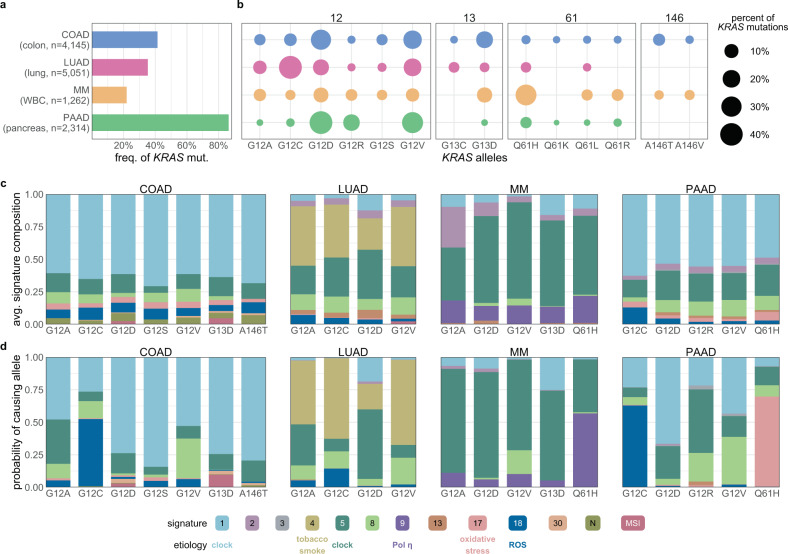
- KRAS mutation prevalence varied by cancer: PAAD 86%, COAD 41%, LUAD 35%, and MM 22%. Across hotspots, codon 12 accounted for 72.2% of mutations, codon 13 for 9.8%, codon 61 for 14.8%, and codon 146 for 3.2%; incidence-adjusted distribution was 76.8%, 11.4%, 8.1%, and 3.7%, respectively.
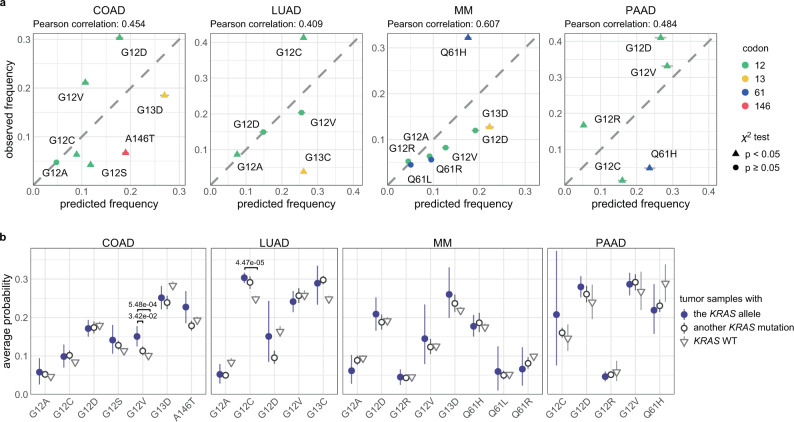
- Mutational signatures only partially explained allele frequencies. Examples: COAD G13D was predicted at 27% but observed at 20%; MM Q61H was predicted at 15.0% but observed at 35.7%; PAAD G12R was expected at 5.2% but observed at 16.7%. Pearson correlations between observed and predicted frequencies were 0.4–0.6 overall and 0.7–0.9 when restricted to G12 alleles.
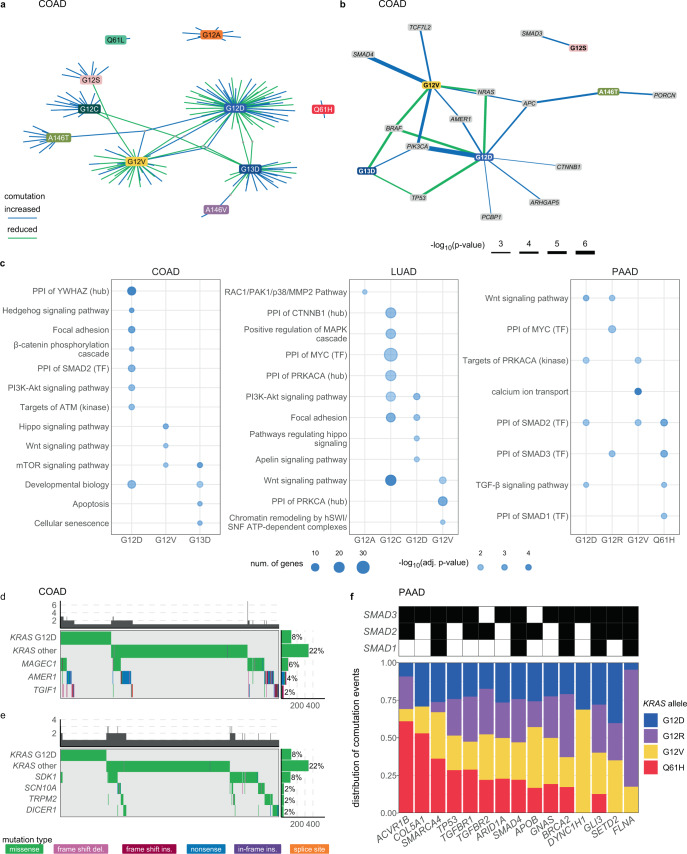
- Each KRAS allele had a distinct tissue-specific comutation network. In MM, NRAS had reduced comutation with KRAS G12D, Q61L, and Q61R, but 18.5% comutation with Q61H, just below the 23.6% NRAS mutation rate in KRAS WT tumors. In COAD, TP53 comutation was reduced with KRAS G12D and G13D.
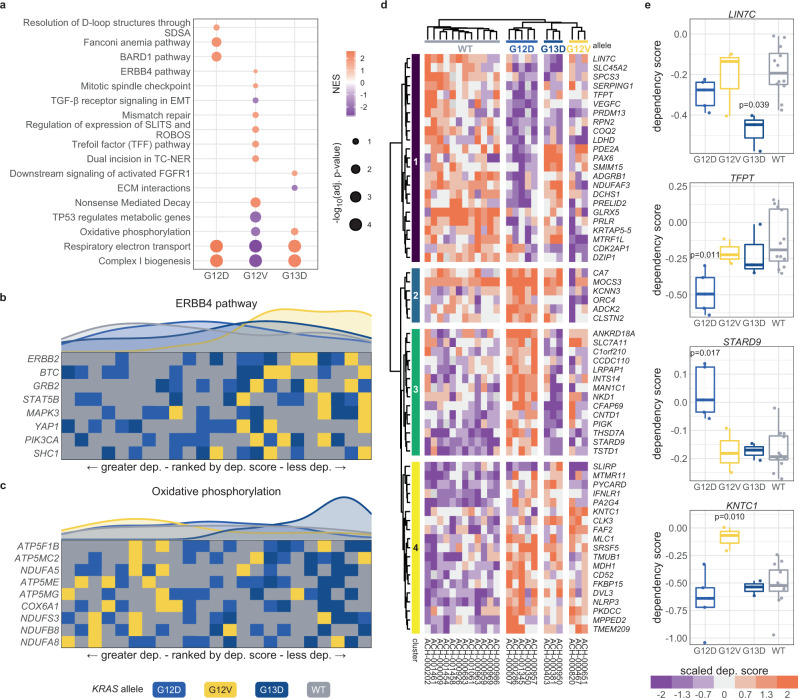
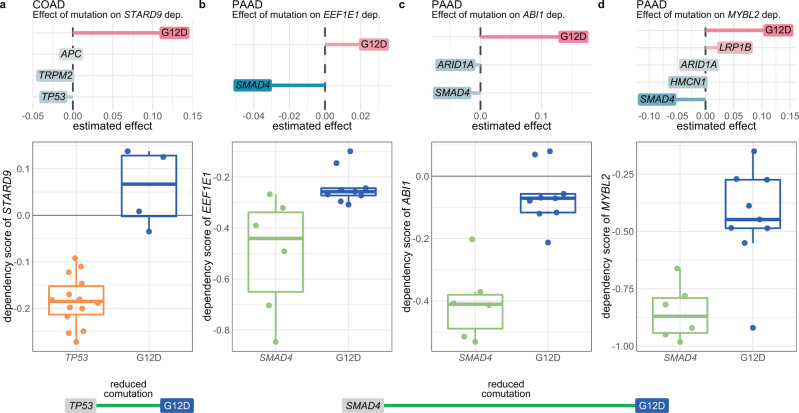
- Allele-specific genetic dependencies were identified in cell lines: 62 genes in COAD and 130 genes in PAAD. Examples include stronger LIN7C dependency in KRAS G13D COAD lines, greater TFPT dependency in G12D lines, and reduced STARD9 dependency in G12D lines. Integrated models showed some dependencies could be attributed to comutation partners, such as STARD9 with TP53 and EEF1E1, ABI1, and MYBL2 with SMAD4.
Methods
- Public WGS, WES, and targeted-sequencing data were collected for COAD, LUAD, MM, and PAAD from cBioPortal, ICGC, MMRF-CoMMpass, and AACR GENIE v5, totaling 13,492 samples. Hypermutated COAD samples were identified with a Gaussian mixed model and excluded from comutation analysis.
- Mutational signatures were discovered with SigProfiler NMF and quantified by nonnegative least squares. Predicted KRAS allele frequencies were calculated from same-trinucleotide-context mutation frequencies genome-wide and compared with observed frequencies using χ-squared tests with Benjamini–Hochberg FDR. Comutation was tested with one-sided Fisher’s exact tests for increased comutation and the Leiserson row-column exclusivity test for reduced comutation.
- Genetic dependencies were analyzed using DepMap 2020Q1 CERES CRISPR scores, restricted to KRAS alleles present in at least three cell lines. Differential dependency was tested by ANOVA (p < 0.01) and t tests (FDR-adjusted p < 0.05), with GSEA and elastic net linear models incorporating comutation covariates and RNA expression.
Limitations
- The paper states that MM comutation analysis was hampered by frequent multiclonality, so it was limited to genes known to be recurrently mutated in MM to reduce false positives. It also notes that reduced-comutation analysis required WGS/WES data and could not use targeted-sequencing data.
- The paper states that hypermutated COAD samples were excluded from comutation analysis because passenger mutations would add noise, and that genetic dependency analysis was restricted to COAD and PAAD cell lines and to KRAS alleles with at least three cell lines; PAAD lacked enough WT KRAS cell lines for inclusion.
- Evident from the text: comutation and dependency analyses are observational and correlational, and the authors note that some allele-specific dependency signals could instead be attributed to comutating partner genes. The cell-line dependency models also had limited numbers of cell lines relative to covariates and used elastic net regularization.
Model-written summary. Check it against the paper before relying on it.
Integrity signals
Registry
Cites
Statistics
Figures
Verification
Claims the paper makes
15 Valid · 0 Not valid · 28 Not checked · 125 Own results and interpretations
Every source the paper cites for this claim was checked and supports it.
In the paper
“SBS17, also of uncertain etiology though linked to oxidative stress in other cancers33, was likely the primary cause for Q61H mutations in PAAD”
§ The origins and genetic interactions of KRAS mutations are allele- and tissue-specific > Results > The KRAS alleles have different mutagenic origins
What the sources say
- Supportedcites [33] Tomkova M Tomek J Kriaucionis S Schuster-Böckler B Mutational signature distribution varies with DNA replication timing and strand asymmetry Genome Biol. 2018 19 129 10.1186/s13059-018-1509-y 30201020 PMC6130095 source
The citation is attached to the description of SBS17 as having uncertain etiology but a proposed link to oxidative stress in other cancers, not to the citing authors’ conclusion about Q61H mutations in PAAD. In Results and discussion, under “Signatures linked to environmental mutagens” (page unavailable), the paper says the process causing signature 17 is unclear and discusses oxidative damage as a possible cause, particularly in esophageal adenocarcinoma. (LLM, conf=0.90)
hedgedstates a possible cause- Asserted: passes — The authors put it forward as true.
- Checkable: passes — It can be checked against evidence.
- Load-bearing: passes — The paper’s conclusions depend on it.
- Based: passes — The paper gives a reason why it holds.
- Supported
Every source the paper cites for this claim was checked and supports it.
In the paper
“forced expression of KRAS A146T in mouse pancreas does not induce pancreatic intraepithelial neoplasia4”
§ The origins and genetic interactions of KRAS mutations are allele- and tissue-specific > Results > The frequency of most KRAS alleles cannot be solely attributed to the prevalence of detected mutagens
What the sources say
- Supportedcites [4] Poulin EJ Tissue-specific oncogenic activity of KRASA146T Cancer Discov. 2019 9 738 755 10.1158/2159-8290.CD-18-1220 30952657 PMC6548671 source
The Results section (‘Tissue-specific phenotypes of K-Ras alleles’) reports that pancreases expressing K-RasA146T showed no histologic evidence of PanIN at eight weeks, and none was observed in the followed cohort, including four mice older than 300 days. This supports the claim for the mouse model studied. (LLM, conf=0.94)
plain- Asserted: passes — The authors put it forward as true.
- Checkable: passes — It can be checked against evidence.
- Load-bearing: passes — The paper’s conclusions depend on it.
- Based: passes — The paper gives a reason why it holds.
- Supported
The cited sources support only part of this claim — read each source’s verdict below.
In the paper
“KRAS G12V had an increased rate of comutation with TCF7L2, which encodes TCF4, a regulator of Wnt signaling often dysregulated in COAD49–51, specifically the R488C mutation.”
§ The origins and genetic interactions of KRAS mutations are allele- and tissue-specific > Results > The KRAS alleles have distinct comutation networks
What the sources say
- Partly supportedcites [49] Cancer Genome Atlas Network. Comprehensive molecular characterization of human colon and rectal cancer Nature 2012 487 330 337 10.1038/nature11252 22810696 PMC3401966 sourceExperimental — accuracy not yet measured
The Results sections on gene mutations and altered pathways identify KRAS and TCF7L2 mutations in colorectal cancer and place TCF7L2 alterations in the WNT pathway. The Translocations section identifies TCF7L2 as encoding TCF4. Our copy does not report an increased co-mutation rate between KRAS G12V and TCF7L2 R488C; searches for both variant names found no such passage. Page numbers were not available in the indexed copy. (LLM, conf=0.85)
- Not checked yetcites [50] Roose J Clevers H TCF transcription factors: molecular switches in carcinogenesis Biochim. Biophys. Acta 1999 1424 M23 M37 10528152
- Could not verifycites [51] van de Wetering M The beta-catenin/TCF-4 complex imposes a crypt progenitor phenotype on colorectal cancer cells Cell 2002 111 241 250 10.1016/S0092-8674(02)01014-0 12408868 sourceExperimental — accuracy not yet measured
The Introduction (p. 1) describes TCF proteins as Wnt effectors, and the Summary (p. 1) discusses Wnt-pathway mutations in colorectal cancer. Neither passage addresses KRAS G12V co-mutation with TCF7L2 or the R488C variant; a further search for those terms found no supporting passage in our copy. (LLM, conf=0.77)
plainstates an association- Asserted: passes — The authors put it forward as true.
- Checkable: passes — It can be checked against evidence.
- Load-bearing: passes — The paper’s conclusions depend on it.
- Based: passes — The paper gives a reason why it holds.
- Rests on 2 assumptions not shown here.
- Partly supported
Every source the paper cites for this claim was checked and supports it.
In the paper
“knocking out LIN7C, a gene that maintains the asymmetric distribution of membrane proteins in polarized epithelial cells67, had a more severe reduction on growth in KRAS G13D cell lines compared to the others”
§ The origins and genetic interactions of KRAS mutations are allele- and tissue-specific > Results > KRAS allele-specific genetic dependencies reveal potential synthetic lethal vulnerabilities
What the sources say
- Supportedcites [67] Monastyrskaya K miR-199a-5p regulates urothelial permeability and may play a role in bladder pain syndrome Am. J. Pathol. 2013 182 431 448 10.1016/j.ajpath.2012.10.020 23201090 source
Citation 67 is attached to the description of LIN7C, not the subsequent claim about growth in KRAS G13D cell lines. The section on LIN7C expression in human bladder identifies LIN7C as important for maintaining epithelial membrane polarity, supporting that description. The copy does not address the KRAS growth comparison. (LLM, conf=0.90)
plainstates a cause- Asserted: passes — The authors put it forward as true.
- Checkable: passes — It can be checked against evidence.
- Load-bearing: passes — The paper’s conclusions depend on it.
- Based: passes — The paper gives a reason why it holds.
- Supported
The cited sources support only part of this claim — read each source’s verdict below.
In the paper
“the kinetochore-associated protein (KNTC1), a regulator of the mitotic checkpoint70,71, which demonstrated moderate to strong lethal effects when knocked out in almost every cell line except for those with a KRAS G12V allele”
§ The origins and genetic interactions of KRAS mutations are allele- and tissue-specific > Results > KRAS allele-specific genetic dependencies reveal potential synthetic lethal vulnerabilities
What the sources say
- Not checked yetcites [70] Chan GKT Jablonski SA Starr DA Goldberg ML Yen TJ Human Zw10 and ROD are mitotic checkpoint proteins that bind to kinetochores Nat. Cell Biol. 2000 2 944 947 10.1038/35046598 11146660 source
- Partly supportedcites [71] Kops GJPL ZW10 links mitotic checkpoint signaling to the structural kinetochore J. Cell Biol. 2005 169 49 60 10.1083/jcb.200411118 15824131 PMC1351127 sourceExperimental — accuracy not yet measured
Our copy of Kops et al. (2005) supports only that loss of ZW10 (the human ortholog of KNTC1) is lethal/toxic: the Results section 'ZW10 recruits Mad1–Mad2 to unattached human kinetochores' states that ZW10-deficient cells 'underwent aberrant mitoses, which resulted in cell death after several divisions, as indicated by markedly diminished colony formation' (Fig. 6 e) plus chromatin bridges and micronuclei, and the Methods 'Colony outgrowth assay' frames this as measuring general toxicity. However, this was measured by siRNA/plasmid-based depletion in HeLa cells (and Xenopus CSF extracts, Fig. 4) — the paper reports no knockout screen across a panel of cancer cell lines, no 'moderate to strong' effect-size classification, and no mention of KRAS or KRAS G12V (searched: KRAS G12V cell line knockout lethal; ZW10 depletion viability across cell lines). The pan-cell-line lethality with a KRAS G12V exception is therefore not attributable to this source; only the general identity of KNTC1/ZW10 as a mitotic-checkpoint regulator whose depletion kills cells is supported. (LLM, conf=0.70)
boostedstates a cause- Asserted: passes — The authors put it forward as true.
- Checkable: passes — It can be checked against evidence.
- Load-bearing: passes — The paper’s conclusions depend on it.
- Based: passes — The paper gives a reason why it holds.
110 more claims · 2 with their cited sources checked
Create a free account to see all 168 claims and to verify the 67 references still open.
- Probably not a substantial claim. 21
- It may state two separate claims as one. 34
Claims other papers make about this one
Each is checked against this paper’s own text: does it say what the citing paper says it does?
The source backs part of the claim, not all of it — or backs it for a different population, condition or comparison.
In the citing paper
“G12D and G12V mutations are the most common in PDAC, followed by G12R.”
From KRAS: Biology, Inhibition, and Mechanisms of Inhibitor Resistance (2024) · cites this paper as [30]
Experimental — accuracy not yet measuredThe source backs part of the claim, not all of it — or backs it for a different population, condition or comparison.
In the citing paper
“KRAS G12R, G13D, Q61H, Q61L, and A146T mutations have increased intrinsic exchange relative to wildtype, but G12C and G12V do not display large changes [4,29,30,31,32].”
From KRAS: Biology, Inhibition, and Mechanisms of Inhibitor Resistance (2024) · cites this paper as [30]
Experimental — accuracy not yet measuredThe source backs part of the claim, not all of it — or backs it for a different population, condition or comparison.
In the citing paper
“KRAS A146 mutations are primarily found in colorectal cancer and are rarely reported in other types.”
From KRAS: Biology, Inhibition, and Mechanisms of Inhibitor Resistance (2024) · cites this paper as [30]
Experimental — accuracy not yet measuredThe source backs part of the claim, not all of it — or backs it for a different population, condition or comparison.
In the citing paper
“G12C and G12V mutations are predominant in lung adenocarcinomas with smoking-associated mutational signatures [30,32].”
From KRAS: Biology, Inhibition, and Mechanisms of Inhibitor Resistance (2024) · cites this paper as [30]
Experimental — accuracy not yet measuredThe cited source says what the claim attributes to it.
In the citing paper
“genetic studies have revealed that specific mutant KRAS alleles are associated with distinct tissue-specific genetic dependencies [46]”
From Feedback activation of EGFR/wild-type RAS signaling axis limits KRASG12D inhibitor efficacy in KRASG12D-mutated colorectal cancer (2023) · cites this paper as [46]
Experimental — accuracy not yet measured
2 more claims about this paper
Create a free account to see every claim other papers make about this one.
Self-check
Percentages, sums and reported differences re-computed from the paper’s own numbers.
Each contradiction between two passages listed here was confirmed by an independent check.
Rated minor: it would not touch a result — a value no result rests on, a p-value that stays on the same side of the significance level, or a conflict that is clerical, resolved elsewhere in the paper, or outside its own findings.
In the paper
§ The origins and genetic interactions of KRAS mutations are allele- and tissue-specific > Results > An integrated analysis of allele-specific comutation and genetic dependencies
“A similar effect was found between KRAS G12D and SMAD4 in PAAD cell lines for the dependency on EEF1E1, ABI1, and MYBL2 (Fig. 5b–d).”
§ The origins and genetic interactions of KRAS mutations are allele- and tissue-specific > Results > An integrated analysis of allele-specific comutation and genetic dependencies
“b–d The nonzero coefficients for the models of b EEF1E1, c ABL1, and d MYBL2 dependency in PAAD cell lines”
Citations
Cites
Subramanian, A., Tamayo, P., Mootha, V. K., Mukherjee, S., Ebert, B. L., Gillette, M. A., Paulovich, A., Pomeroy, S. L., Golub, T. R., Lander, E. S., et al. (2005) · Proceedings of the National Academy of Sciences · doi:10.1073/pnas.0506580102 · Cited by 53,625
Regularization and Variable Selection Via the Elastic Net
Zou, H., & Hastie, T. (2005) · Journal of the Royal Statistical Society Series B: Statistical Methodology · doi:10.1111/j.1467-9868.2005.00503.x · Cited by 20,957
Siegel, R. L., Miller, K. D., & Jemal, A. (2020) · CA: A Cancer Journal for Clinicians · doi:10.3322/caac.21590 · Cited by 20,444
Cerami, E., Gao, J., Dogrusoz, U., Gross, B. E., Sumer, S. O., Aksoy, B. A., Jacobsen, A., Byrne, C. J., Heuer, M. L., Larsson, E., et al. (2012) · Cancer Discovery · doi:10.1158/2159-8290.cd-12-0095 · Cited by 17,455
Integrative Analysis of Complex Cancer Genomics and Clinical Profiles Using the cBioPortal
Gao, J., Aksoy, B. A., Dogrusoz, U., Dresdner, G., Gross, B., Sumer, S. O., Sun, Y., Jacobsen, A., Sinha, R., Larsson, E., et al. (2013) · Science Signaling · doi:10.1126/scisignal.2004088 · Cited by 15,160
A method and server for predicting damaging missense mutations.
Adzhubei, I. A., Schmidt, S., Peshkin, L., Ramensky, V. E., Gerasimova, A., Bork, P., Kondrashov, A. S., & Sunyaev, S. R. (2010) · Nature Methods · doi:10.1038/nmeth0410-248 · Cited by 13,194
Enrichr: a comprehensive gene set enrichment analysis web server 2016 update
Kuleshov, M. V., Jones, M. R., Rouillard, A. D., Fernandez, N. F., Duan, Q., Wang, Z., Koplev, S., Jenkins, S. L., Jagodnik, K. M., Lachmann, A., et al. (2016) · Nucleic Acids Research · doi:10.1093/nar/gkw377 · Cited by 10,799
Signatures of mutational processes in human cancer
Initiative, A. P. C. G., Alexandrov, L. B., ICGC Breast Cancer Consortium, ICGC MMML-Seq Consortium, PedBrain, I., Nik-Zainal, S., Wedge, D. C., Aparicio, S. A. J. R., Behjati, S., Biankin, A. V., et al. (2013) · Nature · doi:10.1038/nature12477 · Cited by 9,660
KEGG: new perspectives on genomes, pathways, diseases and drugs
Kanehisa, M., Furumichi, M., Tanabe, M., Sato, Y., & Morishima, K. (2017) · Nucleic Acids Research · doi:10.1093/nar/gkw1092 · Cited by 8,865
Comprehensive molecular characterization of human colon and rectal cancer
The Cancer Genome Atlas Network (2012) · Nature · doi:10.1038/nature11252 · Cited by 8,499
Cited by
Items 101–200 of 209
Dişel, U., Sivakumar, S., Pham, T. V., Fleischmann, Z., I, A. R., Sokol, E. S., & Kurzrock, R. (2023) · The Oncologist · doi:10.1093/oncolo/oyad230 · Cited by 7
“,29-31 Along with the increased mutational burden, PD-L1 IHC expression was also evaluated as one of the markers predicting the immune response.”
BackgroundCPA4 overexpression correlates with poor prognosis and tumor progression in endometrial cancer
He, K., Zheng, J., Zhang, T., Lv, H., Wang, K., Wang, Z., Wang, L., Wu, S., & Zhao, L. (2025) · European journal of medical research · doi:10.1186/s40001-025-02293-0 · Cited by 5
“CPA4’s association with this pathway suggests it may influence the tumorigenesis process, particularly since KRAS mutations lead to uncontrolled cell proliferation and are present in a significant fraction of cancers [69, 70].”
Synthetic approaches and clinical application of KRAS inhibitors for cancer therapy
Jiang, M., Ma, S., Xuan, Y., & Chen, K. (2025) · European Journal of Medicinal Chemistry · doi:10.1016/j.ejmech.2025.117626 · Cited by 6
PANDA: PAN Cancer Data Analysis Web Tool
Pepe, G., Granieri, C. N., Appierdo, R., Ausiello, G., Helmer‐Citterich, M., & Gherardini, P. F. (2025) · Journal of Molecular Biology · doi:10.1016/j.jmb.2025.169158 · Cited by 6
Silverman, I., Gerber, M. A., Shaykevich, A., Stein, Y. F., Siegman, A., Goel, S., & Maitra, R. (2024) · Frontiers in Molecular Biosciences · doi:10.3389/fmolb.2024.1436976 · Cited by 7
Ding, K., Li, Z., Tu, T., Luo, J., & Luo, Y. (2026) · bioRxiv (Cold Spring Harbor Laboratory) · doi:10.64898/2026.02.03.703560 · Cited by 8
“These hidden sites are of particular interest because they can render previously “undruggable” proteins amenable to small-molecule targeting, expanding opportunities in structure-based drug discovery.”
Burge, R. A., Roux, Ö. L., Popow, O., Spadafora, V. K., Rajesh, C., Adair, S. J., Bialousow, L., Murphy, C., Saberi, S., Vaena, S. G., et al. (2026) · Cancer Research · doi:10.1158/0008-5472.can-25-2630 · Cited by 7
“…studies compared projected KRAS mutational frequencies based on observed DNA mutation frequencies versus actual frequencies found in patients with cancer and concluded that there is a strong biological basis for the occurrence of specific KRAS mutations across a range of RAS -mutant cancers (8, 9).”
Self-citationPre-clinical modelling of ROS1+ non-small cell lung cancer
Terrones, M., de Beeck, K. O., Camp, G. V., & Vandeweyer, G. (2023) · Lung Cancer · doi:10.1016/j.lungcan.2023.107192 · Cited by 9
TRIP13 protects pancreatic cancer cells against intrinsic and therapy-induced DNA replication stress
Anand, J. R., Droby, G. N., Joseph, S., Patel, U., Zhang, X., Klomp, J. A., Der, C. J., Purvis, J. E., Wolff, S. C., Bowser, J. L., et al. (2025) · NAR Cancer · doi:10.1093/narcan/zcaf009 · Cited by 5
“Effects of KRAS signaling are notoriously tissue-and context-specific [ 32 , 38–42 ] and cellular models for studying responses to KRAS must be chosen carefully to correspond to the disease model.”
Role of silent mutations in KRAS-mutant tumors
Lu, J. G., Zhou, C., Pan, F., Liu, H., Jiang, H., Zhong, H., & Han, B. (2024) · Chinese Medical Journal · doi:10.1097/cm9.0000000000003405 · Cited by 6
Mutant KRAS-Associated Proteome Is Mainly Controlled by Exogenous Factors
Carvalho, P. D., Martins, F., Carvalho, J., Oliveira, M. J., & Velho, S. (2022) · Cells · doi:10.3390/cells11131988 · Cited by 7
“Likewise, KRAS downstream effects have been reported to be context-dependent, showing allele and tissue/tumor specificities [11,12].”
BackgroundKumar, M., Kumar, A., Srivastav, A., Ghosh, A. K., & Kumar, D. (2024) · Mutation research. Fundamental and molecular mechanisms of mutagenesis · doi:10.1016/j.mrfmmm.2024.111896 · Cited by 9
John, F., Ruge, L., Verheyen, M., Scharpenseel, H., Michels, S. Y. F., Riedel, R. F., Fischer, R. N., Jakob, C. E. M., Siemanowski, J., Fassunke, J., et al. (2025) · Clinical Cancer Research · doi:10.1158/1078-0432.ccr-25-2581 · Cited by 6
Moore, A. R., Biehs, B., Kljavin, N. M., Nguyen, T. T. T., Shah, A. M., Burton, J., Jiang, H., Tan, J., Chakroborty, D., Wang, L., et al. (2026) · Nature Genetics · doi:10.1038/s41588-026-02611-0 · Cited by 5
“In contrast, KRAS codon 61 mutations in other cancers, such as multiple myeloma and pancreatic cancer, result from DNA polymerase η mutational signatures or oxidative stress 63 .”
Venegas-Rodríguez, J. L., Hernández-Sandoval, J. A., Angulo, M. G., Moreno-Ortíz, J. M., González‐Mercado, A., Peregrina-Sandoval, J., Ramírez-Plascencia, H. H. F., Flores-López, B. A., Alvizo-Rodríguez, C. R., Valenzuela-Pérez, J. A., et al. (2024) · Cancers · doi:10.3390/cancers16132323 · Cited by 4
“…detected in cancer types characterized by frequent KRAS gene mutations predominantly involve the substitutions of guanine with adenine in codon 12 (c.35G>A, p.Gly12Asp) in pancreatic and colorectal adenocarcinomas and guanine with thymine (c.34G>T, p.Gly12Cys) in lung adenocarcinoma [46,47].”
BackgroundJung, O., Soto, A., Wolfe, A. L., & Mahajan, S. S. (2025) · PLoS ONE · doi:10.1371/journal.pone.0329946 · Cited by 5
“KRAS mutations are most commonly found in non-small cell lung cancer (NSCLC), colorectal cancer, and pancreatic cancer [7,8].”
KRAS Inhibition Activates an Actionable CD24 “Do Not Eat Me” Signal in Pancreatic Cancer
Wei, Y., Liu, M., Yen, E.-Y., Yao, J., Xun, Z., Nguyen, P. T.-M., Wang, X., Yang, Z., Yousef, A. M. G., Pan, D. N., et al. (2025) · Cancer Research · doi:10.1158/0008-5472.can-25-2024 · Cited by 7
The RAS Signaling Network and Cancer
Hibshman, P. S., & Der, C. J. (2024) · Springer eBooks · doi:10.1007/978-3-031-62945-7_17 · Cited by 4
Alsulami, A. F. (2024) · Computers in Biology and Medicine · doi:10.1016/j.compbiomed.2024.109588 · Cited by 4
Non-canonical genomic driver mutations of urethane carcinogenesis
Li, S., & Counter, C. M. (2022) · PLoS ONE · doi:10.1371/journal.pone.0267147 · Cited by 4
“Recent analysis of human cancer genomes also showed that in addition to mutational processes, functional selection based on tissue-of-origin, signaling property of KRAS allele, as well as cooperating genetic events, also shape the mutational bias of KRAS gene across cancer types [33].”
Pranoto, I. K. A., Lee, J., & Kwon, Y. V. (2023) · Cell Reports · doi:10.1016/j.celrep.2023.113245 · Cited by 6
“Oncogenes do not elicit the same tumorigenicity and tumor-related phenotypes across different tissues, 29-38 implying that the characteristics of cancers cannot be attributed entirely to the alterations in their genome.”
Kasper, S., & Sebastian, M. (2025) · Deutsches Ärzteblatt international · doi:10.3238/arztebl.m2025.0002 · Cited by 4
Lu, Y., Stoof, J., Tanoé, Y. R., Walsh, N., Bijlsma, M. F., Lei, H., Chen, T., Grahovac, J., Grützmann, R., & Pilarsky, C. P. (2025) · Seminars in Cancer Biology · doi:10.1016/j.semcancer.2025.07.004 · Cited by 3
CDCP1-targeting ADC outperforms standard therapies in Ras-mutant pancreatic cancer
Um, Y. J., Noh, H.-D., Cho, J. G., Ko, H., Wi, T. M., Kim, J.-O., & Park, S. G. (2025) · Molecular Therapy Oncology · doi:10.1016/j.omton.2025.201024 · Cited by 3
“Although the overall frequency of Ras mutations in pan-cancer is approximately 10%–30%, it rises dramatically to ∼ 90% in pancreatic cancer, 5,36 suggesting that this cancer type may be effectively treated using antibody-based therapeutics targeting CDCP1 in an RAS mutation-agnostic manner, without…”
Han, D., Kim, S., Lee, S., Moon, Y., Kang, S. J., Yoo, J., Jeong, H. Y., Cho, H. J., Jeon, J. Y., Sim, B. C., et al. (2024) · Genome Medicine · doi:10.1186/s13073-024-01376-7 · Cited by 3
“In contrast, KRAS mutation contexts decreased the survival of TCF7L2 -mutant cells with TCF7L2 knockout, suggestive of potential synthetic lethality [61].”
BackgroundAl-Hussaniy, H. A., Oraibi, A. I., Al-Tameemi, Z. S., Alburghaif, A. H., Naji, M. A., & Naji, F. (2025) · Current Cancer Drug Targets · doi:10.2174/0115680096349198250407100724 · Cited by 4
Sorafenib in Molecularly Selected Cancer Patients: Final Analysis of the MOST-Plus Sorafenib Cohort
Trédan, O., Toulmonde, M., Tourneau, C. L., Montané, L., Italiano, A., Ray-Coquard, I. L., de la Fouchardière, C., Bertucci, F., Gonçalvès, A., Gomez‐Roca, C., et al. (2023) · Cancers · doi:10.3390/cancers15133441 · Cited by 4
“In line with this, several studies have shown that the activation of the MAP kinase pathway downstream of a RAS mutation is mutationand tissue-specific [25].”
ResultSi, Y., Wang, X., Su, X., Weng, Z., Hu, Q., Li, Q., Fan, C., Zhang, D. Y., Wang, Y., Luo, S., et al. (2024) · Angewandte Chemie · doi:10.1002/ange.202400551 · Cited by 4
Limited role of KRAS mutation in guiding immunotherapy in advanced non-small-cell lung cancer
Li, H., Liu, C., & Wang, Y. (2022) · Future Oncology · doi:10.2217/fon-2021-1488 · Cited by 3
Damianou, A., Liang, Z., Lassen, F. H., Vere, G., Hester, S., Charles, P. D., Pinto-Fernández, A., Santos-Delgado, A., Fischer, R., & Kessler, B. M. (2021) · bioRxiv (Cold Spring Harbor Laboratory) · doi:10.1101/2021.11.23.469679 · Cited by 3
“DISCUSSION Oncogenic KRAS G12D G13D and Q61H are amongst the most common point mutations found in human cancer (Cook et al., 2021; Liu et al., 2019).”
BackgroundLi, H., Hu, X., Ning, M. S., Fuller, G. N., Stewart, J., Gilliam, J. C., Wu, J., Le, X., Vaporciyan, A. A., Lee, J. J., et al. (2024) · Frontiers in Oncology · doi:10.3389/fonc.2024.1324057 · Cited by 2
“KRAS is one of the most common mutated oncogenes and frequently detected in colorectal adenocarcinoma, lung adenocarcinoma, multiple myeloma and pancreatic adenocarcinoma (20, 21).”
BackgroundEvaluating the ‘ARID’ landscape of SWI/SNF complexes with relevance to cancer
Hore, P., Sarkar, S., & Bashyam, M. D. (2025) · Gene · doi:10.1016/j.gene.2025.149664 · Cited by 4
Burge, R. A., Bialousow, L., McFall, T. B., Bamonte, L., Johnson, G., Smith, M., Vaena, S. G., Comte‐Walters, S., Ball, L. E., Berto, S., et al. (2025) · Cancer Research Communications · doi:10.1158/2767-9764.crc-25-0281 · Cited by 3
“KRAS Q61L , which encodes a constitutively active mutant, is found at higher-than-expected frequencies in lung and colon cancers and is notably absent in PDAC (16, 49).”
The application of experimental models for the drug discovery for digestive tumors
Zheng, L., Shuai, W., Liu, Y., Deng, Y., Bao, J., Hu, X., & Wang, G. (2026) · Molecular Cancer · doi:10.1186/s12943-025-02558-6 · Cited by 4
“These mutations lock RAS proteins in an active GTP-bound state, amplifying oncogenic signaling and promoting downstream pathway activation that fuels tumor growth and metastasis [378, 379].”
Ai, X., Song, Z., Wu, L., Zhou, A., Cheng, D., Zong, H., Wu, H., Niu, Z., Sun, Y., Zhu, L., et al. (2026) · Nature Medicine · doi:10.1038/s41591-026-04559-4 · Cited by 3
“The genetic alterations co-occurring with the KRAS G12D mutation are generally tumor specific 47 . ctDNA analysis revealed that TP53 comutations were most common in all tumor types in this trial.”
Gong, J., Zhao, Y., Heng, X., Chen, Y., Sun, P., He, F., Ma, Z., & Ren, Z. (2023) · Electronic Research Archive · doi:10.3934/era.2023253 · Cited by 2
Solid lipid nanoparticle-based drug delivery for pancreatic cancer
Ghosh, D., Dutta, G., Chatterjee, A., Sugumaran, A., Chakrabarti, G., & Manickam, S. (2023) · Elsevier eBooks · doi:10.1016/b978-0-443-19142-8.00005-x · Cited by 2
The prominent pervasive oncogenic role and tissue specific permissiveness of RAS gene mutations
Yi, M., Soppet, D. R., McCormick, F. P., & Nissley, D. V. (2024) · Scientific Reports · doi:10.1038/s41598-024-76591-8 · Cited by 3
Could Drug Delivery Systems Be Enhancers for Therapy against KRAS-driven Cancers?
Khusnutdinov, R. (2024) · Reviews and Advances in Chemistry · doi:10.1134/s2634827624600312 · Cited by 2
Shen, S., Zhang, Q., Wang, Y., Chen, H., Gong, S., Liu, Y., Gai, C., Chen, H., Zhu, E., Yang, B. H., et al. (2025) · Journal of Clinical Investigation · doi:10.1172/jci185278 · Cited by 2
KRAS (Kirsten rat sarcoma) in modern oncology—The molecular pathological point of view
Schmitz, K., Schatz, C., & Knabl, L. (2024) · memo - Magazine of European Medical Oncology · doi:10.1007/s12254-024-00986-6 · Cited by 3
Baseline expression of c-Myc defines the tissue specificity of oncogenic K-RasPreprint
Popow, O., Yu, Q., Yapp, C., Hull, S., Paulo, J. A., Hanna, B., Xu, S., Kuang, Y., Sigel, C., Paweletz, C. P., et al. (2025) · bioRxiv (Cold Spring Harbor Laboratory) · doi:10.1101/2025.07.21.665965 · Cited by 2
Self-citationClustering Digestive Tract Tumors Using Transcriptomic and Mutation Data
Tally, D. G., Bombina, P., Reed, J., Kinne, J., Abruzzo, L. V., Coombes, K. R., & Abrams, Z. B. (2026) · Cancers · doi:10.3390/cancers18091427 · Cited by 1
“KRAS mutations are known to be relatively common in pancreatic cancer and colorectal cancer [45,46].”
Pane, K., Zanfardino, M., Grimaldi, A., Leone, I., Nuzzo, S., Salvatore, M., & Franzese, M. (2025) · Cancer Medicine · doi:10.1002/cam4.70468 · Cited by 1
“Several studies on the RAS oncogene family have shown that hotspot mutations occur differentially across cancers [7].”
InfluentialNovel paradigms in KRAS targeting: Unveiling strategies to combat drug resistance
Luo, X., Zhou, F., Tang, Y., Liu, X., Xiao, R., Gu, M., Bai, J., Jiang, D., Yang, G., You, L., et al. (2025) · Chinese Medical Journal · doi:10.1097/cm9.0000000000003776 · Cited by 2
“[106] This may partly explain the conflicting results in different studies.”
Sindi, I. A., Abu-Elsaoud, A. M., Almars, A. I., Ghouth, N. M., Shaheen, S. Y., Basri, A. M., Hakami, Z. H., Juraybi, T. N., Alqasem, A. A., Abumansour, I. S., et al. (2025) · Lung Cancer · doi:10.1016/j.lungcan.2025.108848 · Cited by 1
Clinical and Molecular Characterization of KRAS-Mutated Renal Cell Carcinoma
Sanmiguel, A. L., Khandwala, Y. S., Kuo, F., Dawidek, M. T., Tse, E., Barbakoff, D., Calderon, L. P., Carlo, M. I., Coleman, J., Russo, P., et al. (2025) · Cancers · doi:10.3390/cancers17233832 · Cited by 1
“The presence of additional co-mutations in these patients suggests a role for cooperative genetic alterations in driving aggressive disease behavior [13].”
Clinicopathological features and outcomes for colorectal carcinomas with KRAS codon 146 mutations
Yang, R. K., Rashid, A., Roy-Chowdhuri, S., Hong, D. S., & Bryan, J. (2025) · ESMO Gastrointestinal Oncology · doi:10.1016/j.esmogo.2025.100244 · Cited by 1
Miao, S., Sun, Y., Qu, Y., Zhu, L., Zhong, Z., & Meng, F. (2025) · Acta Biomaterialia · doi:10.1016/j.actbio.2025.12.045 · Cited by 1
Forkgen, J., Masle‐Farquhar, E., Fontaine, Y., Russell, A., Ji, S., Peters, T. J., Qiao, Z., Geaghan, M. P., Jackson, K., Hammond, J. W., et al. (2026) · Journal of Allergy and Clinical Immunology · doi:10.1016/j.jaci.2026.01.018 · Cited by 2
Jin, H., Huang, H., Wu, Y., Zhang, Y., Xu, J., Liu, T., Zhong, H., Miao, Q., & Zhong, R. (2026) · International Journal of Cancer · doi:10.1002/ijc.70362 · Cited by 1
“9,10,13,14 Prior studies evaluating ICI-based therapies in KRAS-mutant NSCLC have yielded inconsistent findings.”
Zhang, X., Ma, H., He, Y., He, W., Chen, N., Li, Y., Zhong, W., Wu, G. S., Zhou, X., Hua, H., et al. (2024) · Therapeutic Advances in Medical Oncology · doi:10.1177/17588359231225035 · Cited by 2
Bedau, T., Heydt, C., Siebolts, U., Zander, T., Kraemer, M., Loeser, H., Buettner, R., & Quaas, A. (2024) · Diagnostic Pathology · doi:10.1186/s13000-024-01478-1 · Cited by 1
“In CRC, KRAS is mutated in around 40% of cases [13].”
BackgroundMickler, E. A., Zhou, H., Phang, T. L., Geraci, M. W., Stearman, R. S., & Sears, C. R. (2021) · International Journal of Molecular Sciences · doi:10.3390/ijms222112034 · Cited by 2
“Kras is an important oncogene target in human lung cancer, as well as other cancers, including colorectal adenocarcinoma and pancreatic adenocarcinoma, with each having different Kras mutational profiles [7].”
BackgroundAdeno-to-squamous transition drives resistance to KRAS inhibition in LKB1 mutant lung cancerPreprint
Tong, X., Patel, A. S., Kim, E., Li, H., Chen, Y., Li, S., Liu, S., Dilly, J., Kapner, K. S., Xue, Y., et al. (2023) · bioRxiv (Cold Spring Harbor Laboratory) · doi:10.1101/2023.09.07.556567 · Cited by 1
The Landscape and Function of Tissue-Biased Expressed Genes Across Human CancersPreprint
Chen, Z., Lin, Z., Sun, H., Bao, X., Tang, L., Yang, A., Zuo, Z., & Hu, K. (2024) · SSRN Electronic Journal · doi:10.2139/ssrn.4875100 · Cited by 1
Arango-Argoty, G., Haghighi, M., Sun, G. J., Markovets, A. A., Barrett, J. C., Lai, Z., & Jacob, E. (2024) · bioRxiv (Cold Spring Harbor Laboratory) · doi:10.1101/2024.12.11.627785 · Cited by 1
Phosphoinositide 3-kinase regulates wild-type RAS signaling to confer resistance to KRAS inhibitionPreprint
Ge, X., Singh, J., Li, W., Bishop, C. S., Ruiz, C. F., Bhattacharyya, M., Liu, Y., & Muzumdar, M. D. (2025) · bioRxiv (Cold Spring Harbor Laboratory) · doi:10.1101/2025.06.20.660715 · Cited by 1
Brain I3 Binding Protein regulates K-Ras4B membrane localization and signalingPreprint
McCabe, I. P., Zhang, H., Cooper, J. A., Turner, D. L., & Vojtek, A. B. (2021) · bioRxiv (Cold Spring Harbor Laboratory) · doi:10.1101/2021.09.21.461216
“Intriguingly, BRI3BP was identified as a K-Ras G12R allele-specific genetic dependency in CRISPR/Cas9 knockout analyses of cancer cell lines, providing further support for a role for BRI3BP in K-Ras signaling (46).”
BackgroundPranoto, I. K. A., Lee, J., & Kwon, Y. V. (2022) · bioRxiv (Cold Spring Harbor Laboratory) · doi:10.1101/2022.06.01.494390
“Oncogenes do not elicit the same tumorigenicity and tumor-related phenotypes across different tissues (Cook et al., 2021; Figueroa-Clarevega and Bilder, 2015; Kwon et al., 2015; Lee et al., 2020; Lowell et al., 2000; Pagliarini and Xu, 1991; Rangarajan et al., 2001; Tu et al., 2019; Weng et al.,…”
BackgroundKinase Activities in Pancreatic Ductal Adenocarcinoma with Prognostic and Therapeutic AvenuesPreprint
Vallés‐Martí, A., de Haas, R. R. D. G., Henneman, A. A., Piersma, S. R., Pham, T. V., Knol, J. C., Verheij, J., Dijk, F., Halfwerk, H., Giovannetti, E., et al. (2023) · SSRN Electronic Journal · doi:10.2139/ssrn.4506560
Miyamoto, N., Sugito, N., Kitade, Y., & Akao, Y. (2023) · Journal of Drug Delivery Science and Technology · doi:10.1016/j.jddst.2023.104902 · Cited by 1
Linscott, M. P., Ren, J. R., Gestl, S. A., & Gunther, E. J. (2024) · American Journal Of Pathology · doi:10.1016/j.ajpath.2024.02.018
Ruban, M. S., Болотина, Л. В., Karagodina, Y. B., Игоревна, Д. Т., Kornietskaya, A. L., & Феденко, А. А. (2024) · Medical alphabet · doi:10.33667/2078-5631-2024-7-46-54
Forkgen, J., Masle‐Farquhar, E., Fontaine, Y., Russell, A. J., Ji, S., Peters, T. J., Qiao, Z., Geaghan, M. P., Jackson, K., Hammond, J. W., et al. (2024) · medRxiv · doi:10.1101/2024.08.07.24311150
“While KRAS G12S was not in the original diagnostic panel, it is a well-established GoF cancer driver variant, including pancreatic cancer, multiple myeloma and intestinal T cell lymphoma 12,17 .”
BackgroundLee, J. W., Chen, E. Y., Hu, T., Perret, R., Chaffee, M. E., Martinov, T., Mureli, S., McCurdy, C., Jones, L. A., Gafken, P. R., et al. (2024) · bioRxiv (Cold Spring Harbor Laboratory) · doi:10.1101/2024.09.18.612965
Der, C. J., & McCormick, F. P. (2024) · Elsevier eBooks · doi:10.1016/b978-0-443-21861-3.00003-6
Case report: A panorama gene profile of ovarian cancer metastasized to axillary lymph node
Xia, Y., Huang, Y., Liu, Z., Song, S., Wang, Y., & Luo, J. (2025) · Frontiers in Immunology · doi:10.3389/fimmu.2025.1548102 · Cited by 1
TRIP13 protects pancreatic cancer cells against intrinsic and therapy-induced DNA replication stressPreprint
Anand, J. R., Droby, G. N., Joseph, S., Patel, U., Zhang, X., Klomp, J. A., Der, C. J., Purvis, J. E., Wolff, S. C., Bowser, J. L., et al. (2025) · bioRxiv (Cold Spring Harbor Laboratory) · doi:10.1101/2025.01.26.634889
“Effects of KRAS signaling are notoriously tissue and context-specific (32,38-42) and cellular models for studying responses to KRAS must be chosen carefully to correspond to the disease model.”
Wu, J., Jiang, S., Shen, Q., & Gong, H. (2025) · Oncology Letters · doi:10.3892/ol.2025.15008 · Cited by 1
Cooperativity between Ras pathway mutations in colonic tumorigenesisPreprint
Johnson, C. W., Idelevich, A., Shui, B., Tisdale, A. W., O’Donoghue, E., Cook, J., Hull, S., Yang, M. H., Sheth, S., Terrell, E. M., et al. (2025) · bioRxiv (Cold Spring Harbor Laboratory) · doi:10.1101/2025.09.05.673994
Self-citationComputational Tools for Identifying Cancer Driver Genes and Mutations: A Comprehensive Review
Alsulami, A. F. (2025) · Current Bioinformatics · doi:10.2174/0115748936405959250911064633
Kim, M., Lamlertthon, W., Jo, H., Cui, Y., Choi, H. Y., Hoadley, K. A., Smeltzer, M. P., Hayward, M. C., Wilkerson, M. D., Makowski, L., et al. (2025) · bioRxiv (Cold Spring Harbor Laboratory) · doi:10.1101/2025.09.19.677365
Evaluating docetaxel effectiveness in KRAS G12C-mutated NSCLC: insights from a Real-World cohort
Scheffler, M., Tzala, L., Louie, K. S., Persigehl, T., Lennartz, S., Öhrling, K., Gehrman, J., Ruge, L., John, F., Rasokat, A., et al. (2025) · Lung Cancer · doi:10.1016/j.lungcan.2025.108768 · Cited by 1
Cho, N., Kwon, E., Kim, S.-E., & Kim, K. K. (2025) · Animal Cells and Systems · doi:10.1080/19768354.2025.2598971
“Somatic mutations of the KRAS gene at hotspot codons are well-established drivers of cancer development (Cook et al. 2021).”
Widespread Epistasis between Cancer Driver Mutations and Allele-Specific Copy Number VariationsPreprint
Merzliakov, S., Dong, G., Castro, A., Bihie, M., Nichols-Evans, Y., Carter, H. K., & Huang, K. (2025) · bioRxiv (Cold Spring Harbor Laboratory) · doi:10.64898/2025.12.11.693698
“CNA-impacted mutations in NRAS and KRAS , including p.G12A, p.G12C, p.G12D, p.G12R, p.G13D, p. Q61K, and p. Q61R, were predominantly associated with increased VAF, where their positive selection by amplifications aligns with previous studies 32 .”
Lo, A., McSharry, M. V., & Berger, A. H. (2023) · Figshare · doi:10.6084/m9.figshare.22614178
Lo, A., McSharry, M. V., & Berger, A. H. (2023) · Figshare · doi:10.6084/m9.figshare.22614181
Bedau, T., Heydt, C., Siebolts, U., Zander, T., Kraemer, M., Loeser, H., Buettner, R., & Quaas, A. (2024) · Figshare · doi:10.6084/m9.figshare.26698742
Lo, A., McSharry, M. V., & Berger, A. H. (2023) · Figshare · doi:10.6084/m9.figshare.22614169
Lo, A., McSharry, M. V., & Berger, A. H. (2023) · Figshare · doi:10.6084/m9.figshare.22614172
Lo, A., McSharry, M. V., & Berger, A. H. (2023) · Figshare · doi:10.6084/m9.figshare.22614187
Amgalan, B., Wójtowicz, D., Kim, Y.-A., & Przytycka, T. M. (2023) · Figshare · doi:10.6084/m9.figshare.22625971
Barua, A., Kundu, S. T., Garza, S. G., Fradette, J. J., Choudhary, B. S., Peng, D. H., Diao, L., Wang, J., & Gibbons, D. L. (2025) · bioRxiv (Cold Spring Harbor Laboratory) · doi:10.64898/2025.12.22.696060 · Cited by 1
Gulkovskyi, R. V., Gerashchenko, G. V., Bezverkhiy, A. M., Melnichuk, N., Mankovska, O., Marchyshak, T., Karaman, H., Krotevych, M. S., Trokhymych, S., Ruban, O., et al. (2025) · Experimental Oncology · doi:10.15407/exp-oncology.2025.03.288
“The predominance of Q61h in our cohort aligns with the findings that this allele is more frequent in melanoma compared to other cancers, where codon 12 mutations (like G12d) are more common [21]. d57G is less common but has been reported as an activating mutation [21].”
Phosphorylation Protects Oncogenic RAS from LZTR1-Mediated Degradation
Zhang, L., Bolomsky, A., Al‐Odat, O. S., VanWinkle, C. K., Battle, A., Chakraborty, P., Holewinski, R. J., Andrésson, Þ., Häupl, B., Oellerich, T., et al. (2026) · Blood Cancer Discovery · doi:10.1158/2643-3230.bcd-26-0028 · Cited by 1
“Direct targeting of KRAS and NRAS activity remains challenging, and resistance in solid tumors to approved KRAS inhibitors (22, 23) emerges quickly (24).”
Discovery of potent KRASG12D inhibitors disrupting RAS-Raf interaction to block activation
Li, Z., Liu, J., Yan, Y., Shi, X., Cao, B., Wang, Y. L., Huang, F., Feng, J., Yao, Q., Liu, B., et al. (2026) · Results in Chemistry · doi:10.1016/j.rechem.2026.103069
Pooled single-cell screen in colorectal cancer defines transcriptional modules linked to oncogenes
Hollek, V., Böhning, F., Vargas, C. F., Sieber, A., Morkel, M., & Blüthgen, N. (2026) · Molecular Systems Biology · doi:10.1038/s44320-025-00186-2
“Cancer driver effects on signaling networks are speci fi c to tissue, as shown in mouse models (Young and Jacks, 2010), cell lines (Yi et al, 2024), and clinical studies (Schneider et al, 2017; Cook et al, 2021).”
Zhang, Y., Zhao, J., Gao, Q., & Kong, M. (2026) · Archiv für Pathologische Anatomie und Physiologie und für Klinische Medicin · doi:10.1007/s00428-026-04475-5 · Cited by 1
“In addition, systematic analyses of different KRAS mutation types have shown that the oncogenicity and signaling output of KRAS alterations are modulated by allele-specific and tissue-specific contexts, highlighting the complex genetic interactions that influence clinical behavior [30].”
Lu, S., Ai, X., Li, Z., Wu, L., Chen, P., Niu, Z., Sun, Y., Song, Z., Yao, W., He, J., et al. (2026) · Research Square · doi:10.21203/rs.3.rs-8540837/v1
The role of inflammation in the immune evasion of KRas
Homan, E. J., & Bremel, R. D. (2026) · Frontiers in Immunology · doi:10.3389/fimmu.2026.1831303 · Cited by 1
“…binding to two sites: the so-called switch-I (amino acids 30-40) The vast majority of KRas mutations occur at positions G12 or G13 located in the P loop, which links the beta-1 strand to the fi rst alpha helix of the molecule, and lies on the N terminal side of the GDP-GTP binding site (1, 20, 22).”
Torrini, C., Nayyar, N., Wojtkiewicz, G. R., Giobbie‐Hurder, A., de Sauvage, M. A., Migliarese, C., Summers, E., Ijad, N., Yamazawa, E., Zhang, B. S., et al. (2026) · Neuro-Oncology Advances · doi:10.1093/noajnl/vdag107
Lü, S., Ai, X., Li, Z., Wu, L., Chen, P., Niu, Z., Sun, Y., Song, Z., Yao, W., He, J. S., et al. (2026) · Research Square · doi:10.21203/rs.3.rs-8540837/v2
Dual-degenerate TCRs target multiple KRAS hotspot and HLA-A3 family combinationsPreprint
Zhang, M., Rausseo, B. N., Jiang, P., Bontekoe, E., Alves, A. M., Slone, J. K., Rinsurongkawong, W., Rinsurongkawong, V., Patel, A., Lewis, J., et al. (2026) · Research Square · doi:10.21203/rs.3.rs-10030408/v1
Addis, A. G., Jakubec, J. L., Sanchez, J., Pagba, C. V., Sianoya, A. C., & Gorfe, A. A. (2026) · Journal of Chemical Information and Modeling · doi:10.1021/acs.jcim.6c01372
Benchmarking docking and ML re-scoring screening performance for KRAS G12D in pancreatic cancer
Elaraby, A. R., Shahin, M. I., Elaasser, M. M., Elsaady, M. T., Al-Ansary, G. H., Ella, D. A. A. E., & Ibrahim, T. M. (2026) · Molecular Diversity · doi:10.1007/s11030-026-11627-x
“KRAS is a GTPase that has two cycles, an inactive GDP bound state (inactive) and GTP bound state (active) [7].”
KRAS-mediated CCDC6 degradation drives xCT upregulation and ferroptosis evasion
Criscuolo, D., Catalano, R., Baviello, C., Fioravanti, C., Vigliar, E., Morra, F., Marotta, M., Mimura, J., Iaccarino, A., Pepe, F., et al. (2026) · APOPTOSIS · doi:10.1007/s10495-026-02400-4
“This sustained signaling collectively drives neoplastic transformation and tumor growth [4, 5].”
Yang, X., Tao, X., Qi, W., Luo, R., Lan, T., Xie, K., Cai, Y., Gao, F., Lv, Y., Liu, C., et al. (2026) · Journal of Pharmaceutical Analysis · doi:10.1016/j.jpha.2026.101718
Jin, S., Zhang, Z., Liang, F., Yang, Y., Lü, A., & Liang, C. (2026) · Biomarker Research · doi:10.1186/s40364-026-00981-5
“Q61 mutations account for approximately 14.8% of all KRAS mutations, with the predominant subtypes including Q61H, Q61R, Q61L, and Q61K [73].”
Influential
Metadata
- Authors
- Cook, J. H., Melloni, G. E. M., Gulhan, D. C., Park, P. J., & Haigis, K. M.
- Affiliations
- Brigham and Women's Hospital (US)
- Harvard University (US)
- Broad Institute (US)
- Corresponding author
- Park, Peter J.
- Haigis, Kevin M.
- Venue
- Nature Communications
- Published
- 2021-03-22
- Volume
- 12
- Issue
- 1
- Pages
- 1808-1808
- ISSN
- 2041-1723 (ISSN-L)
- PMC
- PMC7985210
- OpenAlex
- W3138323180
- Semantic Scholar
- 110dfb79c828547f8a3e3d51d5fae5303fecc59d
- Cited by
- 208
- References
- 109
- Citations by year
- 2026: 30 · 2025: 45 · 2024: 48 · 2023: 39 · 2022: 35 · 2021: 11
- FWCI
- 13.33
- Type
- journal article
- Language
- en
- Open access
- gold
- doi.org
- Licence
- cc-by
- creativecommons.org/licenses/by/4.0 (tdm)
- creativecommons.org/licenses/by/4.0 (vor)
- Locations
- Nature Communications (publishedVersion, cc-by)
- PubMed Central (publishedVersion, cc-by)
- PubMed (publishedVersion)
- DOAJ (DOAJ: Directory of Open Access Journals) (submittedVersion, cc-by-sa)
- Funders
- American Association for Cancer Research
- Multiple Myeloma Research Foundation
- Cancer Research UK (27144)
- National Institutes of Health
- National Cancer Institute (R01CA232372, U01CA199252)
- Topics
- Life Sciences › Biochemistry, Genetics and Molecular Biology › Cancer Research › Cancer Genomics and Diagnostics
- Life Sciences › Biochemistry, Genetics and Molecular Biology › Molecular Biology › Protein Kinase Regulation and GTPase Signaling
- Health Sciences › Medicine › Oncology › Pancreatic and Hepatic Oncology Research
- Keywords
- KRAS mutation, colorectal cancer, pancreatic cancer, lung cancer, missense mutations, gene dependency, mutagenic mechanisms
- MeSH terms
- Alleles, Gene Frequency, Humans, Mutation, Neoplasms, Organ Specificity, Gene Expression Regulation, Neoplastic, Proto-Oncogene Proteins p21(ras), Gene Regulatory Networks
About these checks
Registry, retraction, Cites and statistics results are computed, not judged, with one exception: a printed reference that no index lists is read once by a model before it counts as a citation error. Claims are extracted by a model and kept only when their quote appears verbatim in the text; each cited source is then checked, with a model’s help, for whether it says what the claim relies on. Those verdicts can be wrong — read the claim’s quote and the cited source before relying on one.
The claim verdicts this report counts are experimental: their accuracy is not yet measured.
A language model drew the claims from the paper on 2026-09-29, under version 3 of the claim definition (model deepseek-v4.1-flash, prompt extract-v3).
A second model labelled each claim on 2026-09-29 (model jev-1.13-20260917, definition revision gold-guideline-v0.2).
Cited sources are checked with a language model’s help (gpt-6-sol and qwen3.8-omni-flash).
Statistics and arithmetic are recomputed, not judged.
Confidence bands are shown only for fields calibrated on our annotated test set. None is calibrated yet, so no band is shown.
What counts as a claim ›How we measure confidence ›How we check this ›
Are you an author, or do you see a problem with this page? Request a review
Data sources
Bibliographic data: Semantic Scholar, OpenAlex, Crossref.
Contains information from the Semantic Scholar Academic Graph Datasets, made available under the ODC Attribution License (ODC-BY 1.0).
Semantic Scholar’s data is described in: Kinney, R., et al. (2023). The Semantic Scholar Open Data Platform. arXiv:2301.10140.
