

The origins and genetic interactions of KRAS mutations are allele- and tissue-specific
Open accessThe DOI matches its Crossref record; 106 of the 109 references it cites were found in a registry or an index; 32 of the 99 sources its claims cite were checked for support.
Abstract
Mutational activation of KRAS promotes the initiation and progression of cancers, especially in the colorectum, pancreas, lung, and blood plasma, with varying prevalence of specific activating missense mutations. Although epidemiological studies connect specific alleles to clinical outcomes, the mechanisms underlying the distinct clinical characteristics of mutant KRAS alleles are unclear. Here, we analyze 13,492 samples from these four tumor types to examine allele- and tissue-specific genetic properties associated with oncogenic KRAS mutations. The prevalence of known mutagenic mechanisms partially explains the observed spectrum of KRAS activating mutations. However, there are substantial differences between the observed and predicted frequencies for many alleles, suggesting that biological selection underlies the tissue-specific frequencies of mutant alleles. Consistent with experimental studies that have identified distinct signaling properties associated with each mutant form of KRAS, our genetic analysis reveals that each KRAS allele is associated with a distinct tissue-specific comutation network. Moreover, we identify tissue-specific genetic dependencies associated with specific mutant KRAS alleles. Overall, this analysis demonstrates that the genetic interactions of oncogenic KRAS mutations are allele- and tissue-specific, underscoring the complexity that drives their clinical consequences.
Overview
CoChat Summary
TL;DR
This study analyzes 13,492 COAD, LUAD, MM, and PAAD samples to show that oncogenic KRAS allele frequencies are shaped partly by tissue-specific mutational processes but also by biological selection. It finds that each KRAS allele has distinct tissue-specific comutation networks and genetic dependencies, with some dependencies explained by comutating partner genes.
Key findings
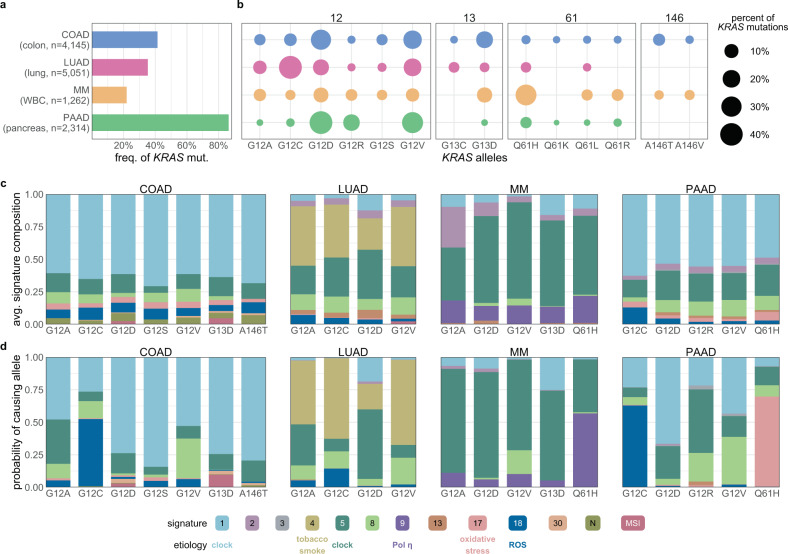
- KRAS mutation prevalence varied by cancer: PAAD 86%, COAD 41%, LUAD 35%, and MM 22%. Across hotspots, codon 12 accounted for 72.2% of mutations, codon 13 for 9.8%, codon 61 for 14.8%, and codon 146 for 3.2%; incidence-adjusted distribution was 76.8%, 11.4%, 8.1%, and 3.7%, respectively.
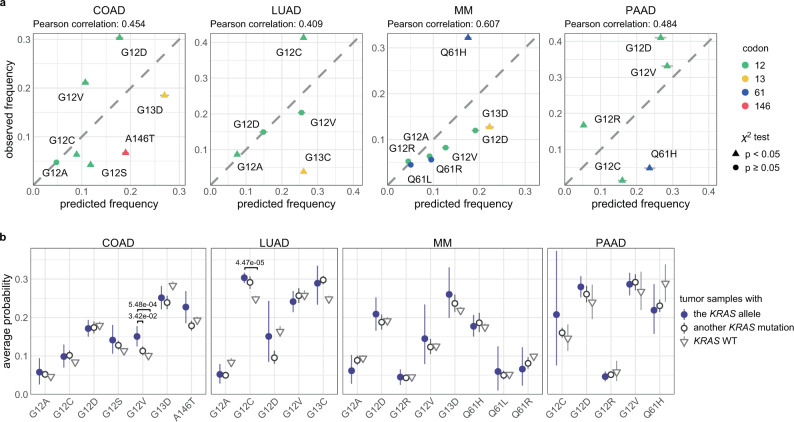
- Mutational signatures only partially explained allele frequencies. Examples: COAD G13D was predicted at 27% but observed at 20%; MM Q61H was predicted at 15.0% but observed at 35.7%; PAAD G12R was expected at 5.2% but observed at 16.7%. Pearson correlations between observed and predicted frequencies were 0.4–0.6 overall and 0.7–0.9 when restricted to G12 alleles.
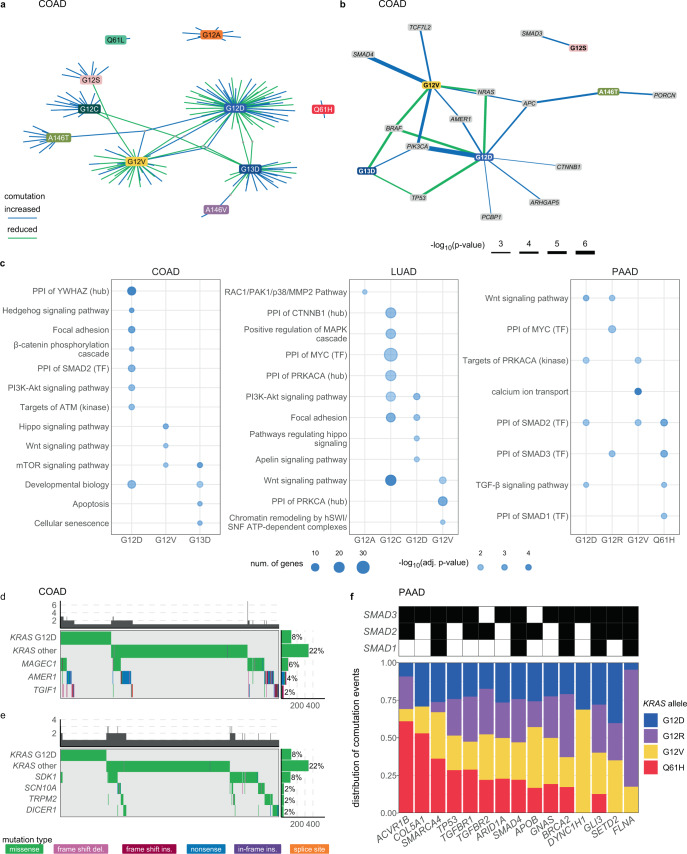
- Each KRAS allele had a distinct tissue-specific comutation network. In MM, NRAS had reduced comutation with KRAS G12D, Q61L, and Q61R, but 18.5% comutation with Q61H, just below the 23.6% NRAS mutation rate in KRAS WT tumors. In COAD, TP53 comutation was reduced with KRAS G12D and G13D.
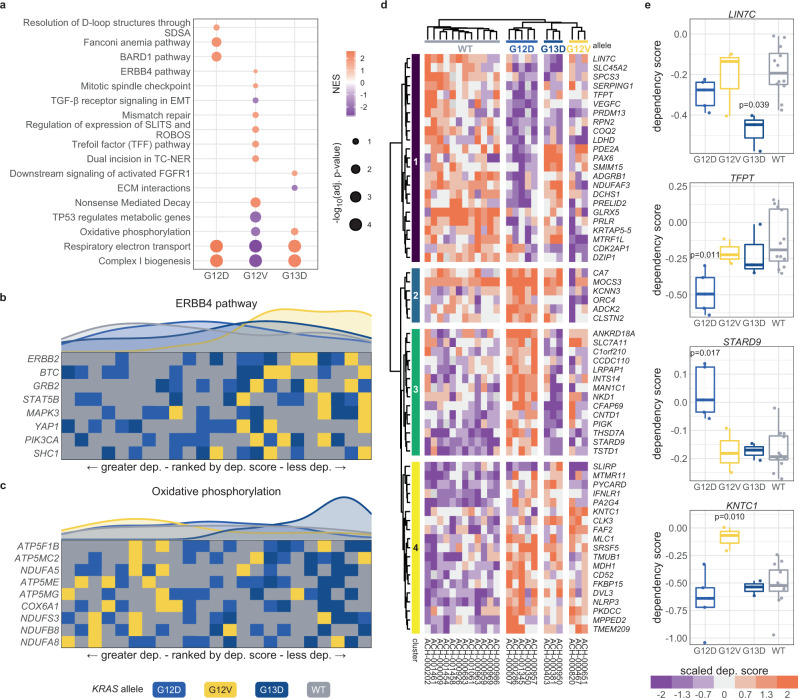
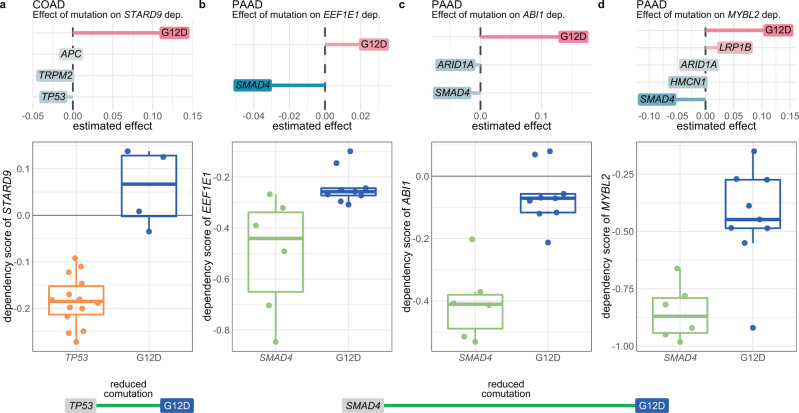
- Allele-specific genetic dependencies were identified in cell lines: 62 genes in COAD and 130 genes in PAAD. Examples include stronger LIN7C dependency in KRAS G13D COAD lines, greater TFPT dependency in G12D lines, and reduced STARD9 dependency in G12D lines. Integrated models showed some dependencies could be attributed to comutation partners, such as STARD9 with TP53 and EEF1E1, ABI1, and MYBL2 with SMAD4.
Methods
- Public WGS, WES, and targeted-sequencing data were collected for COAD, LUAD, MM, and PAAD from cBioPortal, ICGC, MMRF-CoMMpass, and AACR GENIE v5, totaling 13,492 samples. Hypermutated COAD samples were identified with a Gaussian mixed model and excluded from comutation analysis.
- Mutational signatures were discovered with SigProfiler NMF and quantified by nonnegative least squares. Predicted KRAS allele frequencies were calculated from same-trinucleotide-context mutation frequencies genome-wide and compared with observed frequencies using χ-squared tests with Benjamini–Hochberg FDR. Comutation was tested with one-sided Fisher’s exact tests for increased comutation and the Leiserson row-column exclusivity test for reduced comutation.
- Genetic dependencies were analyzed using DepMap 2020Q1 CERES CRISPR scores, restricted to KRAS alleles present in at least three cell lines. Differential dependency was tested by ANOVA (p < 0.01) and t tests (FDR-adjusted p < 0.05), with GSEA and elastic net linear models incorporating comutation covariates and RNA expression.
Limitations
- The paper states that MM comutation analysis was hampered by frequent multiclonality, so it was limited to genes known to be recurrently mutated in MM to reduce false positives. It also notes that reduced-comutation analysis required WGS/WES data and could not use targeted-sequencing data.
- The paper states that hypermutated COAD samples were excluded from comutation analysis because passenger mutations would add noise, and that genetic dependency analysis was restricted to COAD and PAAD cell lines and to KRAS alleles with at least three cell lines; PAAD lacked enough WT KRAS cell lines for inclusion.
- Evident from the text: comutation and dependency analyses are observational and correlational, and the authors note that some allele-specific dependency signals could instead be attributed to comutating partner genes. The cell-line dependency models also had limited numbers of cell lines relative to covariates and used elastic net regularization.
Model-written summary. Check it against the paper before relying on it.
Integrity signals
Registry
Cites
Statistics
Figures
Verification
Claims the paper makes
15 Valid · 0 Not valid · 28 Not checked · 125 Own results and interpretations
Every source the paper cites for this claim was checked and supports it.
In the paper
“SBS17, also of uncertain etiology though linked to oxidative stress in other cancers33, was likely the primary cause for Q61H mutations in PAAD”
§ The origins and genetic interactions of KRAS mutations are allele- and tissue-specific > Results > The KRAS alleles have different mutagenic origins
What the sources say
- Supportedcites [33] Tomkova M Tomek J Kriaucionis S Schuster-Böckler B Mutational signature distribution varies with DNA replication timing and strand asymmetry Genome Biol. 2018 19 129 10.1186/s13059-018-1509-y 30201020 PMC6130095 source
The citation is attached to the description of SBS17 as having uncertain etiology but a proposed link to oxidative stress in other cancers, not to the citing authors’ conclusion about Q61H mutations in PAAD. In Results and discussion, under “Signatures linked to environmental mutagens” (page unavailable), the paper says the process causing signature 17 is unclear and discusses oxidative damage as a possible cause, particularly in esophageal adenocarcinoma. (LLM, conf=0.90)
hedgedstates a possible cause- Asserted: passes — The authors put it forward as true.
- Checkable: passes — It can be checked against evidence.
- Load-bearing: passes — The paper’s conclusions depend on it.
- Based: passes — The paper gives a reason why it holds.
- Supported
Every source the paper cites for this claim was checked and supports it.
In the paper
“forced expression of KRAS A146T in mouse pancreas does not induce pancreatic intraepithelial neoplasia4”
§ The origins and genetic interactions of KRAS mutations are allele- and tissue-specific > Results > The frequency of most KRAS alleles cannot be solely attributed to the prevalence of detected mutagens
What the sources say
- Supportedcites [4] Poulin EJ Tissue-specific oncogenic activity of KRASA146T Cancer Discov. 2019 9 738 755 10.1158/2159-8290.CD-18-1220 30952657 PMC6548671 source
The Results section (‘Tissue-specific phenotypes of K-Ras alleles’) reports that pancreases expressing K-RasA146T showed no histologic evidence of PanIN at eight weeks, and none was observed in the followed cohort, including four mice older than 300 days. This supports the claim for the mouse model studied. (LLM, conf=0.94)
plain- Asserted: passes — The authors put it forward as true.
- Checkable: passes — It can be checked against evidence.
- Load-bearing: passes — The paper’s conclusions depend on it.
- Based: passes — The paper gives a reason why it holds.
- Supported
The cited sources support only part of this claim — read each source’s verdict below.
In the paper
“KRAS G12V had an increased rate of comutation with TCF7L2, which encodes TCF4, a regulator of Wnt signaling often dysregulated in COAD49–51, specifically the R488C mutation.”
§ The origins and genetic interactions of KRAS mutations are allele- and tissue-specific > Results > The KRAS alleles have distinct comutation networks
What the sources say
- Partly supportedcites [49] Cancer Genome Atlas Network. Comprehensive molecular characterization of human colon and rectal cancer Nature 2012 487 330 337 10.1038/nature11252 22810696 PMC3401966 sourceExperimental — accuracy not yet measured
The Results sections on gene mutations and altered pathways identify KRAS and TCF7L2 mutations in colorectal cancer and place TCF7L2 alterations in the WNT pathway. The Translocations section identifies TCF7L2 as encoding TCF4. Our copy does not report an increased co-mutation rate between KRAS G12V and TCF7L2 R488C; searches for both variant names found no such passage. Page numbers were not available in the indexed copy. (LLM, conf=0.85)
- Not checked yetcites [50] Roose J Clevers H TCF transcription factors: molecular switches in carcinogenesis Biochim. Biophys. Acta 1999 1424 M23 M37 10528152
- Could not verifycites [51] van de Wetering M The beta-catenin/TCF-4 complex imposes a crypt progenitor phenotype on colorectal cancer cells Cell 2002 111 241 250 10.1016/S0092-8674(02)01014-0 12408868 sourceExperimental — accuracy not yet measured
The Introduction (p. 1) describes TCF proteins as Wnt effectors, and the Summary (p. 1) discusses Wnt-pathway mutations in colorectal cancer. Neither passage addresses KRAS G12V co-mutation with TCF7L2 or the R488C variant; a further search for those terms found no supporting passage in our copy. (LLM, conf=0.77)
plainstates an association- Asserted: passes — The authors put it forward as true.
- Checkable: passes — It can be checked against evidence.
- Load-bearing: passes — The paper’s conclusions depend on it.
- Based: passes — The paper gives a reason why it holds.
- Rests on 2 assumptions not shown here.
- Partly supported
Every source the paper cites for this claim was checked and supports it.
In the paper
“knocking out LIN7C, a gene that maintains the asymmetric distribution of membrane proteins in polarized epithelial cells67, had a more severe reduction on growth in KRAS G13D cell lines compared to the others”
§ The origins and genetic interactions of KRAS mutations are allele- and tissue-specific > Results > KRAS allele-specific genetic dependencies reveal potential synthetic lethal vulnerabilities
What the sources say
- Supportedcites [67] Monastyrskaya K miR-199a-5p regulates urothelial permeability and may play a role in bladder pain syndrome Am. J. Pathol. 2013 182 431 448 10.1016/j.ajpath.2012.10.020 23201090 source
Citation 67 is attached to the description of LIN7C, not the subsequent claim about growth in KRAS G13D cell lines. The section on LIN7C expression in human bladder identifies LIN7C as important for maintaining epithelial membrane polarity, supporting that description. The copy does not address the KRAS growth comparison. (LLM, conf=0.90)
plainstates a cause- Asserted: passes — The authors put it forward as true.
- Checkable: passes — It can be checked against evidence.
- Load-bearing: passes — The paper’s conclusions depend on it.
- Based: passes — The paper gives a reason why it holds.
- Supported
The cited sources support only part of this claim — read each source’s verdict below.
In the paper
“the kinetochore-associated protein (KNTC1), a regulator of the mitotic checkpoint70,71, which demonstrated moderate to strong lethal effects when knocked out in almost every cell line except for those with a KRAS G12V allele”
§ The origins and genetic interactions of KRAS mutations are allele- and tissue-specific > Results > KRAS allele-specific genetic dependencies reveal potential synthetic lethal vulnerabilities
What the sources say
- Not checked yetcites [70] Chan GKT Jablonski SA Starr DA Goldberg ML Yen TJ Human Zw10 and ROD are mitotic checkpoint proteins that bind to kinetochores Nat. Cell Biol. 2000 2 944 947 10.1038/35046598 11146660 source
- Partly supportedcites [71] Kops GJPL ZW10 links mitotic checkpoint signaling to the structural kinetochore J. Cell Biol. 2005 169 49 60 10.1083/jcb.200411118 15824131 PMC1351127 sourceExperimental — accuracy not yet measured
Our copy of Kops et al. (2005) supports only that loss of ZW10 (the human ortholog of KNTC1) is lethal/toxic: the Results section 'ZW10 recruits Mad1–Mad2 to unattached human kinetochores' states that ZW10-deficient cells 'underwent aberrant mitoses, which resulted in cell death after several divisions, as indicated by markedly diminished colony formation' (Fig. 6 e) plus chromatin bridges and micronuclei, and the Methods 'Colony outgrowth assay' frames this as measuring general toxicity. However, this was measured by siRNA/plasmid-based depletion in HeLa cells (and Xenopus CSF extracts, Fig. 4) — the paper reports no knockout screen across a panel of cancer cell lines, no 'moderate to strong' effect-size classification, and no mention of KRAS or KRAS G12V (searched: KRAS G12V cell line knockout lethal; ZW10 depletion viability across cell lines). The pan-cell-line lethality with a KRAS G12V exception is therefore not attributable to this source; only the general identity of KNTC1/ZW10 as a mitotic-checkpoint regulator whose depletion kills cells is supported. (LLM, conf=0.70)
boostedstates a cause- Asserted: passes — The authors put it forward as true.
- Checkable: passes — It can be checked against evidence.
- Load-bearing: passes — The paper’s conclusions depend on it.
- Based: passes — The paper gives a reason why it holds.
110 more claims · 2 with their cited sources checked
Create a free account to see all 168 claims and to verify the 67 references still open.
- Probably not a substantial claim. 21
- It may state two separate claims as one. 34
Claims other papers make about this one
Each is checked against this paper’s own text: does it say what the citing paper says it does?
The source backs part of the claim, not all of it — or backs it for a different population, condition or comparison.
In the citing paper
“G12D and G12V mutations are the most common in PDAC, followed by G12R.”
From KRAS: Biology, Inhibition, and Mechanisms of Inhibitor Resistance (2024) · cites this paper as [30]
Experimental — accuracy not yet measuredThe source backs part of the claim, not all of it — or backs it for a different population, condition or comparison.
In the citing paper
“KRAS G12R, G13D, Q61H, Q61L, and A146T mutations have increased intrinsic exchange relative to wildtype, but G12C and G12V do not display large changes [4,29,30,31,32].”
From KRAS: Biology, Inhibition, and Mechanisms of Inhibitor Resistance (2024) · cites this paper as [30]
Experimental — accuracy not yet measuredThe source backs part of the claim, not all of it — or backs it for a different population, condition or comparison.
In the citing paper
“KRAS A146 mutations are primarily found in colorectal cancer and are rarely reported in other types.”
From KRAS: Biology, Inhibition, and Mechanisms of Inhibitor Resistance (2024) · cites this paper as [30]
Experimental — accuracy not yet measuredThe source backs part of the claim, not all of it — or backs it for a different population, condition or comparison.
In the citing paper
“G12C and G12V mutations are predominant in lung adenocarcinomas with smoking-associated mutational signatures [30,32].”
From KRAS: Biology, Inhibition, and Mechanisms of Inhibitor Resistance (2024) · cites this paper as [30]
Experimental — accuracy not yet measuredThe cited source says what the claim attributes to it.
In the citing paper
“genetic studies have revealed that specific mutant KRAS alleles are associated with distinct tissue-specific genetic dependencies [46]”
From Feedback activation of EGFR/wild-type RAS signaling axis limits KRASG12D inhibitor efficacy in KRASG12D-mutated colorectal cancer (2023) · cites this paper as [46]
Experimental — accuracy not yet measured
2 more claims about this paper
Create a free account to see every claim other papers make about this one.
Self-check
Percentages, sums and reported differences re-computed from the paper’s own numbers.
Each contradiction between two passages listed here was confirmed by an independent check.
Rated minor: it would not touch a result — a value no result rests on, a p-value that stays on the same side of the significance level, or a conflict that is clerical, resolved elsewhere in the paper, or outside its own findings.
In the paper
§ The origins and genetic interactions of KRAS mutations are allele- and tissue-specific > Results > An integrated analysis of allele-specific comutation and genetic dependencies
“A similar effect was found between KRAS G12D and SMAD4 in PAAD cell lines for the dependency on EEF1E1, ABI1, and MYBL2 (Fig. 5b–d).”
§ The origins and genetic interactions of KRAS mutations are allele- and tissue-specific > Results > An integrated analysis of allele-specific comutation and genetic dependencies
“b–d The nonzero coefficients for the models of b EEF1E1, c ABL1, and d MYBL2 dependency in PAAD cell lines”
Citations
Cites
Subramanian, A., Tamayo, P., Mootha, V. K., Mukherjee, S., Ebert, B. L., Gillette, M. A., Paulovich, A., Pomeroy, S. L., Golub, T. R., Lander, E. S., et al. (2005) · Proceedings of the National Academy of Sciences · doi:10.1073/pnas.0506580102 · Cited by 53,625
Regularization and Variable Selection Via the Elastic Net
Zou, H., & Hastie, T. (2005) · Journal of the Royal Statistical Society Series B: Statistical Methodology · doi:10.1111/j.1467-9868.2005.00503.x · Cited by 20,957
Siegel, R. L., Miller, K. D., & Jemal, A. (2020) · CA: A Cancer Journal for Clinicians · doi:10.3322/caac.21590 · Cited by 20,444
Cerami, E., Gao, J., Dogrusoz, U., Gross, B. E., Sumer, S. O., Aksoy, B. A., Jacobsen, A., Byrne, C. J., Heuer, M. L., Larsson, E., et al. (2012) · Cancer Discovery · doi:10.1158/2159-8290.cd-12-0095 · Cited by 17,455
Integrative Analysis of Complex Cancer Genomics and Clinical Profiles Using the cBioPortal
Gao, J., Aksoy, B. A., Dogrusoz, U., Dresdner, G., Gross, B., Sumer, S. O., Sun, Y., Jacobsen, A., Sinha, R., Larsson, E., et al. (2013) · Science Signaling · doi:10.1126/scisignal.2004088 · Cited by 15,160
A method and server for predicting damaging missense mutations.
Adzhubei, I. A., Schmidt, S., Peshkin, L., Ramensky, V. E., Gerasimova, A., Bork, P., Kondrashov, A. S., & Sunyaev, S. R. (2010) · Nature Methods · doi:10.1038/nmeth0410-248 · Cited by 13,194
Enrichr: a comprehensive gene set enrichment analysis web server 2016 update
Kuleshov, M. V., Jones, M. R., Rouillard, A. D., Fernandez, N. F., Duan, Q., Wang, Z., Koplev, S., Jenkins, S. L., Jagodnik, K. M., Lachmann, A., et al. (2016) · Nucleic Acids Research · doi:10.1093/nar/gkw377 · Cited by 10,799
Signatures of mutational processes in human cancer
Initiative, A. P. C. G., Alexandrov, L. B., ICGC Breast Cancer Consortium, ICGC MMML-Seq Consortium, PedBrain, I., Nik-Zainal, S., Wedge, D. C., Aparicio, S. A. J. R., Behjati, S., Biankin, A. V., et al. (2013) · Nature · doi:10.1038/nature12477 · Cited by 9,660
KEGG: new perspectives on genomes, pathways, diseases and drugs
Kanehisa, M., Furumichi, M., Tanabe, M., Sato, Y., & Morishima, K. (2017) · Nucleic Acids Research · doi:10.1093/nar/gkw1092 · Cited by 8,865
Comprehensive molecular characterization of human colon and rectal cancer
The Cancer Genome Atlas Network (2012) · Nature · doi:10.1038/nature11252 · Cited by 8,499
Cited by
Exploring treatment options in cancer: tumor treatment strategies
Liu, B., Zhou, H., Tan, L., Siu, K. T. H., & Guan, X.-Y. (2024) · Signal Transduction and Targeted Therapy · doi:10.1038/s41392-024-01856-7 · Cited by 1,201
The current state of the art and future trends in RAS-targeted cancer therapies
Punekar, S. R., Velcheti, V., Neel, B. G., & Wong, K.-K. (2022) · Nature Reviews Clinical Oncology · doi:10.1038/s41571-022-00671-9 · Cited by 549
Concurrent inhibition of oncogenic and wild-type RAS-GTP for cancer therapy
Holderfield, M., Lee, B. J., Jiang, J., Tomlinson, A., Seamon, K. J., Mira, A., Patrucco, E., Goodhart, G., Dilly, J., Gindin, Y., et al. (2024) · Nature · doi:10.1038/s41586-024-07205-6 · Cited by 369
Translational and therapeutic evaluation of RAS-GTP inhibition by RMC-6236 in RAS-driven cancers
Jiang, J., Jiang, L., Maldonato, B. J., Wang, Y., Holderfield, M., Aronchik, I., Winters, I. P., Salman, Z., Blaj, C., Menard, M., et al. (2024) · Cancer Discovery · doi:10.1158/2159-8290.cd-24-0027 · Cited by 343
“The relative representation of oncogenic RAS variants is highly variable across cancer types, likely due to an interplay between allele-specific biochemical, structural, and signaling distinctions and tissue (indication)-specific properties (3, 5).”
Translational advances in pancreatic ductal adenocarcinoma therapy
Hosein, A. N., Dougan, S. K., Aguirre, A. J., & Maitra, A. (2022) · Nature Cancer · doi:10.1038/s43018-022-00349-2 · Cited by 250
Targeting KRAS mutant cancers: from druggable therapy to drug resistance
Zhu, C., Guan, X., Zhang, X., Luan, X., Song, Z., Cheng, X., Zhang, W., & Qin, J.-J. (2022) · Molecular Cancer · doi:10.1186/s12943-022-01629-2 · Cited by 231
“Importantly, these mechanisms of drug resistance appear to be tissue-specific [31].”
BackgroundKRAS inhibitors: resistance drivers and combinatorial strategies
Isermann, T., Sers, C., Der, C. J., & Papke, B. (2025) · Trends in Cancer · doi:10.1016/j.trecan.2024.11.009 · Cited by 196
Progress on Ras/MAPK Signaling Research and Targeting in Blood and Solid Cancers
Dillon, M., Lopez, A., Lin, E., Sales, D., Perets, R., & Jain, P. (2021) · Cancers · doi:10.3390/cancers13205059 · Cited by 158
The energetic and allosteric landscape for KRAS inhibition
Weng, C., Faure, A. J., Escobedo, A., & Lehner, B. (2024) · Nature · doi:10.1038/s41586-023-06954-0 · Cited by 155
“An initial single round of nicking mutagenesis using equimolar mixes of degenerate KRAS primers (Supplementary Table 3) was obtained for two reasons: (1) To obtain random single mutants to use as template for another round of nicking mutagenesis (by randomly selecting single colonies and verified by Sanger sequencing)…”
Adeno-to-squamous transition drives resistance to KRAS inhibition in LKB1 mutant lung cancer
Tong, X., Patel, A. S., Kim, E., Li, H., Chen, Y., Li, S., Liu, S., Dilly, J., Kapner, K. S., Zhang, N., et al. (2024) · Cancer Cell · doi:10.1016/j.ccell.2024.01.012 · Cited by 142
Impact of risk factors on early cancer evolution
Weeden, C. E., Hill, W., Lim, E. L., Gronroos, E. C., & Swanton, C. (2023) · Cell · doi:10.1016/j.cell.2023.03.013 · Cited by 195
Classification of KRAS -Activating Mutations and the Implications for Therapeutic Intervention
Johnson, C., Burkhart, D. L., & Haigis, K. M. (2022) · Cancer Discovery · doi:10.1158/2159-8290.cd-22-0035 · Cited by 121
Self-citationNext batter up! Targeting cancers with KRAS-G12D mutations
Zeissig, M. N., Ashwood, L. M., Kondrashova, O., & Sutherland, K. D. (2023) · Trends in Cancer · doi:10.1016/j.trecan.2023.07.010 · Cited by 128
Ricciuti, B., Alessi, J. V., Elkrief, A., Wang, X., Cortellini, A., Li, Y. Y., Vaz, V. R., Gupta, H., Pecci, F., Barrichello, A., et al. (2022) · Annals of Oncology · doi:10.1016/j.annonc.2022.07.005 · Cited by 112
Feng, J., Hu, Z., Xia, X., Liu, X., Lian, Z., Wang, H., Wang, L., Wang, C., Zhang, X., & Pang, X. (2023) · Oncogene · doi:10.1038/s41388-023-02676-9 · Cited by 95
“In addition to distinct signaling properties linked to each mutant form of KRAS, genetic studies have revealed that specific mutant KRAS alleles are associated with distinct tissue-specific genetic dependencies [46], highlighting the complexity that drives the divergent clinical outcomes of KRAS allele-specific inhibi…”
BackgroundKhoshkhoo, S., Wang, Y., Chahine, Y., Erson-Omay, E. Z., Robert, S. M., Kiziltug, E., Damisah, E. C., Nelson-Williams, C., Zhu, G., Kong, W., et al. (2023) · JAMA Neurology · doi:10.1001/jamaneurol.2023.0473 · Cited by 82
“7%) were female, and the median (IQR) age was 37 (18-53) years.”
BackgroundOncogenic KRAS blockade therapy: renewed enthusiasm and persistent challenges
Tang, D., Kroemer, G., & Kang, R. (2021) · Molecular Cancer · doi:10.1186/s12943-021-01422-7 · Cited by 80
MYC and KRAS cooperation: from historical challenges to therapeutic opportunities in cancer
Casacuberta‐Serra, S., González-Larreategui, Í., Capitán-Leo, D., & Soucek, L. (2024) · Signal Transduction and Targeted Therapy · doi:10.1038/s41392-024-01907-z · Cited by 100
“7,10 Multiple studies have demonstrated the potential in fl uence of KRAS mutations on cancer patient prognoses, albeit with some con fl icting fi ndings.”
BackgroundThe genomic landscape across 474 surgically accessible epileptogenic human brain lesions
López-Rivera, J. A., Leu, C., Macnee, M., Khoury, J., Hoffmann, L., Coras, R., Kobow, K., Bhattarai, N., Pérez‐Palma, E., Hamer, H. M., et al. (2022) · Brain · doi:10.1093/brain/awac376 · Cited by 83
A comprehensive review of pancreatic cancer and its therapeutic challenges
Jiang, S., Fagman, J. B., Ma, Y., Liu, J., Vihav, C., Engström, C., Liu, B., & Chen, C. (2022) · Aging · doi:10.18632/aging.204310 · Cited by 88
Rocca, A., Braga, L., Volpe, M. C., Maiocchi, S., & Generali, D. (2022) · Cancers · doi:10.3390/cancers14215306 · Cited by 79
“The reasons for such differences are not entirely clear, possibly related to tissue-specific mutational processes, as highlighted by studies on mutational signatures [6].”
BackgroundKRAS: Biology, Inhibition, and Mechanisms of Inhibitor Resistance
Ash, L. J., Busia-Bourdain, O., Okpattah, D., Kamel, A., Liberchuk, A., & Wolfe, A. L. (2024) · Current Oncology · doi:10.3390/curroncol31040150 · Cited by 68
Stress granules in cancer: Adaptive dynamics and therapeutic implications
Jia, Y., Jia, R., Dai, Z., Zhou, J., Ruan, J., Chng, W. J., Cai, Z., & Zhang, X. (2024) · iScience · doi:10.1016/j.isci.2024.110359 · Cited by 72
“160,161 Research demonstrates that mutant KRAS regulates prostaglandin metabolism, particularly by enhancing the expression of cyclooxygenase-2(COX-2)anddecreasingthedegradation of 15-deoxy-D 12,14-prostaglandin J2 (15-d-PGJ2).”
BackgroundCancer immune evasion through KRAS and PD-L1 and potential therapeutic interventions
Watterson, A., & Coelho, M. A. (2023) · Cell Communication and Signaling · doi:10.1186/s12964-023-01063-x · Cited by 68
“However, KRAS driver mutation and allelic frequency vary between tissue types [13].”
BackgroundKRAS: the Achilles’ heel of pancreas cancer biology
Drizyte‐Miller, K., Talabi, T., Somasundaram, A., Cox, A. D., & Der, C. J. (2025) · Journal of Clinical Investigation · doi:10.1172/jci191939 · Cited by 73
“There is evidence for both DNA mutagenic mechanisms as well as biological properties as influencing these frequencies (55, 56).”
KRAS: A Druggable Target in Colon Cancer Patients
Negri, F., Bottarelli, L., de’Angelis, G. L., & Gnetti, L. (2022) · International Journal of Molecular Sciences · doi:10.3390/ijms23084120 · Cited by 62
“The complex genetic interactions of oncogenic KRAS mutations are allele- and tissuespecific and may influence individual responses to targeted drugs [82].”
BackgroundKaragiannakos, A., Adamaki, M., Tsintarakis, A., Vojtěšek, B., Fåhræus, R., Zoumpourlis, V. C., & Karakostis, K. (2022) · Cancers · doi:10.3390/cancers14030664 · Cited by 64
“Both mechanisms lead to increased levels of the activated GTP-bound form of the KRAS protein, resulting in uncontrolled mitogenic processes via a constitutively active signal transduction [80,83].”
BackgroundÁlvarez-Prado, Á. F., Maas, R. R., Soukup, K., Klemm, F., Kornete, M., Krebs, F. S., Zoete, V., Berezowska, S., Brouland, J., Hottinger, A. F., et al. (2023) · Cell Reports Medicine · doi:10.1016/j.xcrm.2022.100900 · Cited by 56
“For KRAS, by contrast, most SNVs that we identified correspond to well-known gain-of-function mutations including G12C, G13D, and G12V (Figure 1B, central panel(35)), representing the most frequent KRAS mutations in lung adenocarcinomas.(36) In order to identify other potential driver genes, we looked for evidence of…”
BackgroundFunctional and biological heterogeneity of KRAS Q61 mutations
Huynh, M. V., Hobbs, G. A., Schaefer, A., Pierobon, M., Carey, L. M., Diehl, J. N., DeLiberty, J. M., Thurman, R. D., Cooke, A. R., Goodwin, C. M., et al. (2022) · Science Signaling · doi:10.1126/scisignal.abn2694 · Cited by 46
“Our previous studies comparing mutational profiles suggested that biological selection plays a substantial role in the underlying tissue-specific mutation frequencies observed (41).”
BackgroundMethodInfluentialSelf-citationBreakthrough in RAS targeting with pan-RAS(ON) inhibitors RMC-7977 and RMC-6236
Filis, P., Salgkamis, D., Matikas, A., & Zerdes, I. (2024) · Drug Discovery Today · doi:10.1016/j.drudis.2024.104250 · Cited by 55
Research progress on KRAS mutations in colorectal cancer
Cefalì, M., Epistolio, S., Palmarocchi, M. C., Frattini, M., & Dosso, S. D. (2021) · Journal of Cancer Metastasis and Treatment · doi:10.20517/2394-4722.2021.61 · Cited by 63
Guo, Y., Li, T., Gong, B., Hu, Y., Wang, S., Yang, L., & Zheng, C. (2024) · Advanced Science · doi:10.1002/advs.202408069 · Cited by 62
The role of wild-type RAS in oncogenic RAS transformation
Sheffels, E., & Kortum, R. L. (2021) · Genes · doi:10.3390/genes12050662 · Cited by 42
“In LUAD, 40% of KRAS mutations are G12C, whereas KRASG12C mutations occur less frequently in COAD (7%) and PAAD (1%) [8,11,14].”
BackgroundInfluentialRicciuti, B., Son, J., Okoro, J. J., Mira, A., Patrucco, E., Eum, Y., Wang, X., Paranal, R., Wang, H., Lin, M., et al. (2022) · Clinical Cancer Research · doi:10.1158/1078-0432.ccr-21-2719 · Cited by 42
Burge, R. A., & Hobbs, G. A. (2022) · Advances in cancer research · doi:10.1016/bs.acr.2021.07.004 · Cited by 48
Discovery of Orally Bioavailable SOS1 Inhibitors for Suppressing KRAS-Driven Carcinoma
He, H., Zhang, Y., Xu, J., Li, Y., Fang, H., Liu, Y., & Zhang, S. (2022) · Journal of Medicinal Chemistry · doi:10.1021/acs.jmedchem.2c00986 · Cited by 42
RHOA takes the RHOad less traveled to cancer
Schaefer, A., & Der, C. J. (2022) · Trends in cancer · doi:10.1016/j.trecan.2022.04.005 · Cited by 43
KRAS G12C-mutant driven non-small cell lung cancer (NSCLC)
Rosell, R., Codony‐Servat, J., González, J., Santarpía, M., Jain, A. S., Shivamallu, C., Wang, Y., Giménez-Capitán, A. A., Molina‐Vila, M. Á., Nilsson, J. A., et al. (2023) · Critical Reviews in Oncology/Hematology · doi:10.1016/j.critrevonc.2023.104228 · Cited by 47
The current landscape of using direct inhibitors to target KRASG12C-mutated NSCLC
Batrash, F., Kutmah, M., & Zhang, J. (2023) · Experimental Hematology and Oncology · doi:10.1186/s40164-023-00453-8 · Cited by 43
“Once ON (activated), KRAS then activates multiple downstream pathways including the RAF–MEK–MAPK and PI3K–AKT–mTOR pathways which stimulate cell growth and survival [3–8].”
BackgroundMcDaid, W. J., Wilson, L., Adderley, H., Martinez-Lopez, A., Baker, M. J., Searle, J., GINN, L. H., Budden, T., Aldea, M. D., Marinello, A., et al. (2024) · Molecular Cancer · doi:10.1186/s12943-024-02157-x · Cited by 50
Wang, F., Ugai, T., Haruki, K., Wan, Y., Akimoto, N., Arima, K., Zhong, R., Twombly, T. S., Wu, K., Yin, K., et al. (2022) · Clinical and Translational Medicine · doi:10.1002/ctm2.893 · Cited by 43
The transcriptional landscape of glycosylation-related genes in cancer
Rodríguez, E., Lindijer, D., van Vliet, S. J., García-Vallejo, J. J., & van Kooyk, Y. (2024) · iScience · doi:10.1016/j.isci.2024.109037 · Cited by 39
Zhang, D., Lindstrom, A. R., Kim, E. J.-H., Hwang, C., Hall, M. L., Lin, T., & Li, Y. (2022) · Frontiers in Oncology · doi:10.3389/fonc.2022.890154 · Cited by 40
“Furthermore, evidence shows that the origins and genetic interactions of KRAS mutations are allele and tissue specific (10).”
BackgroundKRAS mutations and endometriosis burden of disease
Orr, N. L., Albert, A., Liu, Y. D., Lum, A. M., Hong, J., Ionescu, C. L., Senz, J., Nazeran, T. M., Lee, A. F., Noga, H. L., et al. (2023) · The Journal of Pathology Clinical Research · doi:10.1002/cjp2.317 · Cited by 42
Hepatic FGF21: Its Emerging Role in Inter-Organ Crosstalk and Cancers
Sui, Y., & Chen, J. (2022) · International Journal of Biological Sciences · doi:10.7150/ijbs.76924 · Cited by 36
“Moreover, KRAS, the most frequently mutated RAS isoform, happens not only in pancreatic cancer but also in lung cancer, multiple myeloma, and colorectal cancer [105].”
Natural TCRs targeting KRASG12V display fine specificity and sensitivity to human solid tumors
Bear, A. S., Nadler, R. B., O’Hara, M. H., Stanton, K. L., Xu, C. B., Saporito, R., Rech, A. J., Baroja, M. L., Blanchard, T., Elliott, M. H., et al. (2024) · Journal of Clinical Investigation · doi:10.1172/jci175790 · Cited by 38
“(8).”
KRAS Mutations in Squamous Cell Carcinomas of the Lung
Acker, F., Stratmann, J., Aspacher, L., Nguyen, T., Wagner, S., Serve, H. L., Wild, P. J., & Sebastian, M. (2021) · Frontiers in Oncology · doi:10.3389/fonc.2021.788084 · Cited by 39
Palacios-Acedo, A.-L., Langiu, M., Crescence, L., Mège, D., Dubois, C., & Panicot‐Dubois, L. (2022) · Cancers · doi:10.3390/cancers14030730 · Cited by 35
“These genes all have different functions and effects: KRAS is a tumor-specific mutation that promotes the initiation and progression of cancers, and STK11 is a tumor suppressor that loses function after mutations [13,14].”
BackgroundEvaluation of KRAS inhibitor-directed therapies for pancreatic cancer treatment
Long, S.-A., Amparo, A. M., Goodhart, G., Ahmad, S. A., & Waters, A. M. (2024) · Frontiers in Oncology · doi:10.3389/fonc.2024.1402128 · Cited by 31
GINN, L. H., Maltas, J., Baker, M. J., Chaturvedi, A., Wilson, L., Guilbert, R., Amaral, F. M. R., Priest, L. J. C., Mole, H., Blackhall, F. H., et al. (2023) · Proceedings of the National Academy of Sciences · doi:10.1073/pnas.2300489120 · Cited by 33
A saturation-mutagenesis analysis of the interplay between stability and activation in Ras
Hidalgo, F., Nocka, L. M., Shah, N. H., Gorday, K., Latorraca, N. R., Bandaru, P., Templeton, S., Lee, D., Karandur, D., Pelton, J. G., et al. (2022) · eLife · doi:10.7554/elife.76595 · Cited by 28
“The distribution of cancer mutations reflects the mutagenic ability of specific carcinogens and the context- specific effects of Ras isoforms in different mammalian cells (Cook et al., 2021; Li et al., 2018; Prior et al., 2020).”
Dorard, C., Madry, C., Buhard, O., Toifl, S., Didusch, S., Ratovomanana, T., Letourneur, Q., Dolznig, H., Garnett, M. J., Duval, A., et al. (2023) · Oncogene · doi:10.1038/s41388-023-02683-w · Cited by 33
“Here, we demonstrate a positive correlation between RAF1 expression and STAT3 activation in CRC and LUAD, suggesting that RAF1 interaction partners and functions are cell-type and tissue specific [61, 62].”
BackgroundBansod, S., Dodhiawala, P. B., & Lim, K. (2021) · Cancers · doi:10.3390/cancers13215481 · Cited by 31
“Much of this discrepancy is probably attributed to co-existing cancer-specific genetic or epigenetic aberrations of each cancer type, which can form different genetic and signaling networks with oncogenic KRAS [44].”
BackgroundUllah, A., Pulliam, S., Karki, N. R., Khan, J., Jogezai, S., Sultan, S., Muhammad, L., Khan, M., Jamil, N., Waheed, A., et al. (2022) · Clinics and Practice · doi:10.3390/clinpract12050068 · Cited by 31
Potential role of Marine Bioactive Compounds in cancer signaling pathways: A review
Manoharan, S., & Perumal, E. (2022) · European Journal of Pharmacology · doi:10.1016/j.ejphar.2022.175330 · Cited by 29
Lokhandwala, J., Smalley, T. B., & Tran, T. H. (2024) · Frontiers in Oncology · doi:10.3389/fonc.2024.1394702 · Cited by 29
“Due to its high prevalence in various cancers-40% in colorectal, 17% in lung adenocarcinomas, and a staggering 51% in pancreatic ductal adenocarcinoma (PDAC)- the G12D mutant has emerged as a major target of interest (35 – 37).”
BackgroundArdalan, B., Ciner, A., Baca, Y., Hinton, A. C., Darabi, S., Kasi, A., Lou, E., Azqueta, J. I., Xiu, J., Datta, J., et al. (2025) · Clinical Cancer Research · doi:10.1158/1078-0432.ccr-24-3149 · Cited by 32
“Although carcinogen-related exposures may partially explain these findings, they do not fully account for the observed imbalance in allelic variants (6).”
Proteolysis targeting chimeras in non-small cell lung cancer
Hagopian, G. G., Grant, C., & Nagasaka, M. (2023) · Cancer Treatment Reviews · doi:10.1016/j.ctrv.2023.102561 · Cited by 27
Huang, Z., Huang, X., Huang, Y., Liang, K., Chen, L., Zhong, C., Chen, Y., Chen, C., Wang, Z., He, F., et al. (2024) · Microbiology Spectrum · doi:10.1128/spectrum.02720-23 · Cited by 24
“Previous studies have illustrated that KRAS mutation activates the epidermal growth factor receptor signaling pathway, resulting in the persistent activation of the KRAS protein and disrupting the normal cell growth pattern while promoting abnormal cell proliferation (11).”
BackgroundOrigin and Evolution of RAS Membrane Targeting
García‐España, A., & Philips, M. R. (2023) · Oncogene · doi:10.1038/s41388-023-02672-z · Cited by 27
“This revised view is consistent with recent analysis of tumors driven by oncogenic RAS mutations where differences are observed not only among the isoforms but also among different mutations of the same isoform [49, 50].”
ResultSi, Y., Wang, X., Su, X., Weng, Z., Hu, Q., Li, Q., Fan, C., Zhang, D. Y., Wang, Y., Luo, S., et al. (2024) · Angewandte Chemie International Edition · doi:10.1002/anie.202400551 · Cited by 23
Zhang, F., Wang, B., Wu, M., Zhang, L., & Ji, M. Q. (2025) · Frontiers in Immunology · doi:10.3389/fimmu.2025.1509173 · Cited by 28
Marasco, M., Kumar, D., Borrego, S. G., Seale, T. S., Maddalena, G., Mezzadra, R., Belanger, K., Cole, S., Perez, B., Luan, W., et al. (2025) · Cancer Discovery · doi:10.1158/2159-8290.cd-24-0614 · Cited by 21
Early-stage lung cancer is driven by a transitional cell state dependent on a KRAS-ITGA3-SRC axis
Moye, A. L., Dost, A. F. M., Ietswaart, R., Sengupta, S., Ya, V., Aluya, C., Fahey, C. G., Louie, S. M., Paschini, M., & Kim, C. F. (2024) · The EMBO Journal · doi:10.1038/s44318-024-00113-5 · Cited by 22
“Oncogenic mutations in KRAS are present in 30% of LUAD patients (Cancer Genome Atlas Research Network, 2014; Cook et al, 2021).”
Ge, J., Cai, J., Zhang, G., Li, D., & Tao, L. (2025) · Journal of Translational Medicine · doi:10.1186/s12967-025-06711-z · Cited by 18
“Lys-117 represented a frequently mutated residue in KRAS across various malignancies, including non-small cell lung cancer, colorectal cancer, and multiple myeloma [50, 51].”
Endometriosis through an immunological lens: a pathophysiology based in immune dysregulation
McCallion, A., Sisnett, D. J., Zutautas, K. B., Hayati, D., Spiess, K. G., Aleksieva, S., Lingegowda, H., Koti, M., & Tayade, C. (2022) · Exploration of Immunology · doi:10.37349/ei.2022.00062 · Cited by 21
“Adding to this complexity is the presence of allelic variations in mutations, thus while the presence of one may influence tumor leukocyte infiltration and correlate with positive patient outcomes, another may not [147, 159].”
BackgroundRerouting the drug response: Overcoming metabolic adaptation in KRAS-mutant cancers
Moss, D., McCann, C. K., & Kerr, E. M. (2022) · Science Signaling · doi:10.1126/scisignal.abj3490 · Cited by 19
“INTRODUCTION The guanosine triphosphatase KRAS transduces various extracellular signals to downstream effector pathways, including the mitogenactivated protein kinase (MAPK) pathway—a major driver of oncogenic phenotypes (1)—and the phosphatidylinositol 3-kinase (PI3K) and the kinase Akt pathway, eliciting a diverse r…”
BackgroundOncogenic KRAS alters splicing factor phosphorylation and alternative splicing in lung cancer
Lo, A., McSharry, M. V., & Berger, A. H. (2022) · BMC Cancer · doi:10.1186/s12885-022-10311-1 · Cited by 22
“Since G12V, G12C, and Q61H are all KRAS activating variants that promote deregulated downstream MAPK signaling [47], we took advantage of our parallel analyses of multiple KRAS variants across both AALE and A549 cellular contexts to identify cassette exon splicing variants that are differentially…”
Nasioudis, D., Llauradó, M., Wong, N. K. Y., Powell, D. J., Mills, G. B., Westin, S. N., Fader, A. N., Carey, M. S., & Simpkins, F. A. (2023) · Gynecologic Oncology · doi:10.1016/j.ygyno.2023.08.007 · Cited by 19
Loi, P., Schade, A. E., Rodriguez, C. L., Krishnan, A., Perurena, N., Nguyen, V. T. M., Xu, Y., Watanabe, M., Davis, R. A., Gardner, A., et al. (2024) · Cancer Discovery · doi:10.1158/2159-8290.cd-23-0866 · Cited by 21
“However, KRAS G12D accounts for 33% of KRAS mutations in this tumor type (28).”
Self-citationGraham, S., Dmitrieva, M., Costa, D. B. V., Francescone, R., Trujillo, M. A. M., Cukierman, E., & Wood, L. D. (2024) · Carcinogenesis · doi:10.1093/carcin/bgae064 · Cited by 21
Bironzo, P., Cani, M., Jacobs, F., Napoli, V. M., Listì, A., Passiglia, F., Righi, L., Maïo, M. D., Novello, S., & Scagliotti, G. V. (2023) · Cancer · doi:10.1002/cncr.34731 · Cited by 19
The Next Frontier in Pancreatic Cancer: Targeting the Tumor Immune Milieu and Molecular Pathways
Yin, C., Alqahtani, A. J., & Noel, M. S. (2022) · Cancers · doi:10.3390/cancers14112619 · Cited by 15
“Activating rat sarcoma vial oncogene (RAS) mutations, including KRAS, are the most commonly mutated oncogenes in all cancers, although they are unevenly distributed among different types of cancers [138].”
BackgroundThe Evolutionary Landscape of Colorectal Tumorigenesis: Recent Paradigms, Models, and Hypotheses
van Ginkel, J. Q., Tomlinson, I. P. M., & Soriano, I. (2023) · Gastroenterology · doi:10.1053/j.gastro.2022.11.049 · Cited by 19
KRASG12R-Independent Macropinocytosis in Pancreatic Cancer
Hobbs, G. A., & Der, C. J. (2022) · Sub-cellular biochemistry/Subcellular biochemistry · doi:10.1007/978-3-030-94004-1_11 · Cited by 12
Kinase activities in pancreatic ductal adenocarcinoma with prognostic and therapeutic avenues
Vallés‐Martí, A., Haas, R. R. D. G., Henneman, A. A., Piersma, S. R., Pham, T. V., Knol, J. C., Verheij, J., Dijk, F., Halfwerk, H., Giovannetti, E., et al. (2024) · Molecular Oncology · doi:10.1002/1878-0261.13625 · Cited by 12
Arango-Argoty, G., Haghighi, M., Sun, G. J., Choe, E. Y., Markovets, A. A., Barrett, J. C., Lai, Z., & Jacob, E. (2025) · npj Precision Oncology · doi:10.1038/s41698-025-00921-w · Cited by 22
Source, co-occurrence, and prognostic value of PTEN mutations or loss in colorectal cancer
Serebriiskii, I. G., Pavlov, V. A., Andrianov, G. V., Litwin, S., Basickes, S., Newberg, J. Y., Frampton, G. M., Meyer, J. E., & Golemis, E. A. (2023) · npj Genomic Medicine · doi:10.1038/s41525-023-00384-7 · Cited by 13
“13 , Supplementary Table S5) to predict the nucleotide substitution spectrum and frequency across the PTEN coding sequence in MT-L and MT-H tumors.”
Kwon, J. J., Dilly, J., Liu, S., Kim, E., Bian, Y., Dharmaiah, S., Tran, T. H., Kapner, K. S., Ly, S. H., Yang, X., et al. (2024) · bioRxiv (Cold Spring Harbor Laboratory) · doi:10.1101/2024.10.22.618529 · Cited by 15
“Indeed, recent studies have demonstrated that mutational processes contribute to KRAS mutations in a tissue-specific manner, likely causing their uneven distribution across cancers 46 .”
BackgroundSelf-citationUnraveling and targeting RAS-driven metabolic signaling for therapeutic gain
DeLiberty, J. M., Robb, R. N., Gates, C. E., & Bryant, K. L. (2022) · Advances in cancer research · doi:10.1016/bs.acr.2021.07.010 · Cited by 11
Li, Y., Yang, X., Han, T., Zhou, J., Liu, Y., Guo, J., Liu, Z., Bai, Y., Xing, Y., Ding, X., et al. (2024) · Translational Oncology · doi:10.1016/j.tranon.2024.102095 · Cited by 11
Genetic Alterations Predict Long-Term Survival in Ductal Adenocarcinoma of the Pancreatic Head
Safi, S. A., Häberle, L., Goering, W., Keitel, V., Fluegen, G., Stoecklein, N. H., Rehders, A., Knoefel, W. T., & Esposito, I. (2022) · Cancers · doi:10.3390/cancers14030850 · Cited by 11
“For example, in PDAC, the most frequently observed pathogenic variant, the G12D KRAS mutation (the replacement of nucleotide sequence GGT with GAT in codon 12 of exon 2 of the KRAS gene), is linked to a clock-like mutational event (intrinsic, related to the patient’s age), while Q61H KRAS mutations are linked to oxida…”
BackgroundOncogenic mutations of KRAS modulate its turnover by the CUL3/LZTR1 E3 ligase complex
Damianou, A., Liang, Z., Lassen, F. H., Vendrell, I., Vere, G., Hester, S., Charles, P. D., Pinto-Fernández, A., Santos, A., Fischer, R., et al. (2024) · Life Science Alliance · doi:10.26508/lsa.202302245 · Cited by 12
“Oncogenic KRAS G12D, G13D, and Q61H are among the most common driver mutations found in human cancer (Liu et al, 2019; Cook et al, 2021).”
BackgroundQiang, H., Wang, Y., Zhang, Y., Li, J., Zhang, L., Du, H., Ling, X., Cao, S., Zhou, Y., Zhong, R., et al. (2025) · Translational Oncology · doi:10.1016/j.tranon.2025.102317 · Cited by 11
“KRAS mutations are extremely heterogeneous, and it has been demonstrated that isoforms differ functionally in terms of downstream oncogenic signals [5].”
AZD4625 is a Potent and Selective Inhibitor of KRASG12C
Chakraborty, A., Hanson, L. L., Robinson, D. M., Lewis, H. J., Bickerton, S., Davies, M., Polański, R., Whiteley, R., Koers, A., Atkinson, J. M., et al. (2022) · Molecular Cancer Therapeutics · doi:10.1158/1535-7163.mct-22-0241 · Cited by 10
“Oncogenic KRAS mutation are predominantly found at glycine 12 (G12), glycine 13 (G13), or glutamine 61 (Q61), with G12 mutations accounting for the majority (3, 4).”
Effects of KRAS Genetic Interactions on Outcomes in Cancers of the Lung, Pancreas, and Colorectum
Grabski, I. N., Heymach, J. V., Kehl, K. L., Kopetz, S., Lau, K. S., Riely, G. J., Schrag, D., Yaeger, R. D., Irizarry, R. A., & Haigis, K. M. (2023) · Cancer Epidemiology Biomarkers & Prevention · doi:10.1158/1055-9965.epi-23-0262 · Cited by 8
Self-citationKRAS G12 mutations as adverse prognostic factors in KMT2A-rearranged acute myeloid leukemia
Iyoda, S., Yoshida, K., Shoji, K., Ito, N., Tanaka, M., Nannya, Y., Yamato, G., Tsujimoto, S., Shiba, N., Hayashi, Y., et al. (2024) · Leukemia · doi:10.1038/s41375-024-02244-4 · Cited by 8
Identification of USP2 as a novel target to induce degradation of KRAS in myeloma cells
Wang, Y., Zhang, Y., Luo, H., Wei, W., Liu, W., Wang, W., Wu, Y., Peng, C., Ji, Y., Zhang, J., et al. (2024) · Acta Pharmaceutica Sinica B · doi:10.1016/j.apsb.2024.08.019 · Cited by 11
“Notably, in MM, KRAS is the most frequently mutated protein, identified in approximately 22% of patients 10 .”
Stella, G. M., Bertuccio, F. R., Novy, C., Bortolotto, C., Salzillo, I., Perrotta, F., D’Agnano, V., Conio, V., Arici, V., Cerveri, P., et al. (2025) · Cells · doi:10.3390/cells14161225 · Cited by 7
“The KRAS alleles have distinct co-mutation networks with mutual exclusion with EGFR mutations [102,103].”
Influence network model uncovers relations between biological processes and mutational signatures
Amgalan, B., Wójtowicz, D., Kim, Y.-A., & Przytycka, T. M. (2023) · Genome Medicine · doi:10.1186/s13073-023-01162-x · Cited by 7
“In addition, a mutagenic process can cause a cancer-driving mutation [11, 12, 13 which can, in turn, cause changes in gene expression.”
BackgroundRHOAL57Vdrives the development of diffuse gastric cancer through IGF1R-PAK1-YAP1 signaling
Schaefer, A., Hodge, R. G., Zhang, H., Hobbs, G. A., Dilly, J., Huynh, M. V., Goodwin, C. M., Zhang, F., Diehl, J. N., Pierobon, M., et al. (2023) · Science Signaling · doi:10.1126/scisignal.adg5289 · Cited by 10
“Missense mutations in RAS occur predominantly at codons encoding Gly 12 , Gly 13 , and Gln 61 (commonly known and referred to here-after as G12, G13, and Q61, respectively) with mutation-and tissue-specific differences in their frequencies and biological functions ( 10 – 12 ).”
BackgroundYu, K., & Wang, Y. (2021) · Pathology & Oncology Research · doi:10.3389/pore.2021.1609906 · Cited by 8
“Different mutant KRAS proteins have unique biochemical behaviors in intrinsic/GAPs-stimulated GTPase activities and interactions with effectors (39, 42).”
BackgroundCRISPR-Cas9 Screening Identifies Resistance Mechanisms to KRAS Inhibition in Pancreatic Cancer
Lim, S.-A., Todd, H., Goodhart, G., Chang, W.-H., Amparo, A. M., Bridgens, R., Dilly, J., Park, S. J., Beal, R. M., Shehadeh, S. M., et al. (2025) · Cancer Research · doi:10.1158/0008-5472.can-25-1835 · Cited by 13
Unraveling the Oncogenic Potential of VAV1 in Human Cancer: Lessons from Mouse Models
Shalom, B., Salaymeh, Y., Risling, M., & Katzav, S. (2023) · Cells · doi:10.3390/cells12091276 · Cited by 8
“For example, the KRAS mutation G12C is associated with an increased risk of lung cancer, and G12D is associated with an increased risk of pancreatic cancer [107].”
BackgroundHeterogeneity in RAS mutations: One size does not fit all
Sealover, N. E., & Kortum, R. L. (2022) · Science Signaling · doi:10.1126/scisignal.adc9816 · Cited by 7
“KRASQ61-mutated cancers occur much less frequently than would be expected on the basis of mutational signatures (6).”
Billena, C., Lobbous, M., Cordova, C. A., Peereboom, D. M., Torres-Trejo, A., Chan, T. A.-T., Murphy, E. S., Chao, S. T., Suh, J. H., & Yu, J. S. (2023) · Frontiers in Oncology · doi:10.3389/fonc.2023.1110440 · Cited by 7
“KRAS is a GTPase, activation of which leads to downstream signaling that promotes cell growth and proliferation (88).”
BackgroundYB-1 activating cascades as potential targets in KRAS-mutated tumors
Khozooei, S., Veerappan, S., & Toulany, M. (2023) · Strahlentherapie und Onkologie · doi:10.1007/s00066-023-02092-8 · Cited by 6
“The differences in the biochemical properties of the allelic variants of KRAS also give rise to diverse clinical outcomes [152, 155] and these outcomes have been assessed to be tissue-specific [156].”
BackgroundAbolfathi, H., Kordahi, M., Armero, V. E. S., Gagné, A., Desmeules, P., Orain, M., Fiset, P., Boudreau, D. K., Gaudreault, N., Lamaze, F. C., et al. (2025) · Lung Cancer · doi:10.1016/j.lungcan.2025.108596 · Cited by 8
Wild-type RAS signaling is an essential therapeutic target in RAS -mutated cancers
Sealover, N. E., Finniff, B. A., Hughes, J. M., Sheffels, E., Lee, H., LaMorte, J. P., Gambhir, V., Beckley, Z., Linke, A. J., Wilkerson, M. D., et al. (2025) · Science Signaling · doi:10.1126/scisignal.adx5186 · Cited by 7
Alanazi, F. E., Alatawi, Y. M., Alattar, A., Alshaman, R., Kotb, A. A., & Hetta, H. F. (2025) · Pharmaceuticals · doi:10.3390/ph18121788 · Cited by 9
“This molecular characteristic makes them particularly susceptible to inhibitors designed to bind RAS in its active conformation [19].”
Metadata
- Authors
- Cook, J. H., Melloni, G. E. M., Gulhan, D. C., Park, P. J., & Haigis, K. M.
- Affiliations
- Brigham and Women's Hospital (US)
- Harvard University (US)
- Broad Institute (US)
- Corresponding author
- Park, Peter J.
- Haigis, Kevin M.
- Venue
- Nature Communications
- Published
- 2021-03-22
- Volume
- 12
- Issue
- 1
- Pages
- 1808-1808
- ISSN
- 2041-1723 (ISSN-L)
- PMC
- PMC7985210
- OpenAlex
- W3138323180
- Semantic Scholar
- 110dfb79c828547f8a3e3d51d5fae5303fecc59d
- Cited by
- 208
- References
- 109
- Citations by year
- 2026: 30 · 2025: 45 · 2024: 48 · 2023: 39 · 2022: 35 · 2021: 11
- FWCI
- 13.33
- Type
- journal article
- Language
- en
- Open access
- gold
- doi.org
- Licence
- cc-by
- creativecommons.org/licenses/by/4.0 (tdm)
- creativecommons.org/licenses/by/4.0 (vor)
- Locations
- Nature Communications (publishedVersion, cc-by)
- PubMed Central (publishedVersion, cc-by)
- PubMed (publishedVersion)
- DOAJ (DOAJ: Directory of Open Access Journals) (submittedVersion, cc-by-sa)
- Funders
- American Association for Cancer Research
- Multiple Myeloma Research Foundation
- Cancer Research UK (27144)
- National Institutes of Health
- National Cancer Institute (R01CA232372, U01CA199252)
- Topics
- Life Sciences › Biochemistry, Genetics and Molecular Biology › Cancer Research › Cancer Genomics and Diagnostics
- Life Sciences › Biochemistry, Genetics and Molecular Biology › Molecular Biology › Protein Kinase Regulation and GTPase Signaling
- Health Sciences › Medicine › Oncology › Pancreatic and Hepatic Oncology Research
- Keywords
- KRAS mutation, colorectal cancer, pancreatic cancer, lung cancer, missense mutations, gene dependency, mutagenic mechanisms
- MeSH terms
- Alleles, Gene Frequency, Humans, Mutation, Neoplasms, Organ Specificity, Gene Expression Regulation, Neoplastic, Proto-Oncogene Proteins p21(ras), Gene Regulatory Networks
About these checks
Registry, retraction, Cites and statistics results are computed, not judged, with one exception: a printed reference that no index lists is read once by a model before it counts as a citation error. Claims are extracted by a model and kept only when their quote appears verbatim in the text; each cited source is then checked, with a model’s help, for whether it says what the claim relies on. Those verdicts can be wrong — read the claim’s quote and the cited source before relying on one.
The claim verdicts this report counts are experimental: their accuracy is not yet measured.
A language model drew the claims from the paper on 2026-09-29, under version 3 of the claim definition (model deepseek-v4.1-flash, prompt extract-v3).
A second model labelled each claim on 2026-09-29 (model jev-1.13-20260917, definition revision gold-guideline-v0.2).
Cited sources are checked with a language model’s help (gpt-6-sol and qwen3.8-omni-flash).
Statistics and arithmetic are recomputed, not judged.
Confidence bands are shown only for fields calibrated on our annotated test set. None is calibrated yet, so no band is shown.
What counts as a claim ›How we measure confidence ›How we check this ›
Are you an author, or do you see a problem with this page? Request a review
Data sources
Bibliographic data: Semantic Scholar, OpenAlex, Crossref.
Contains information from the Semantic Scholar Academic Graph Datasets, made available under the ODC Attribution License (ODC-BY 1.0).
Semantic Scholar’s data is described in: Kinney, R., et al. (2023). The Semantic Scholar Open Data Platform. arXiv:2301.10140.
