

Input-specific modulation of murine nucleus accumbens differentially regulates hedonic feeding
Open accessThe DOI matches its Crossref record; 58 of the 59 references it cites were found in a registry or an index.
Abstract
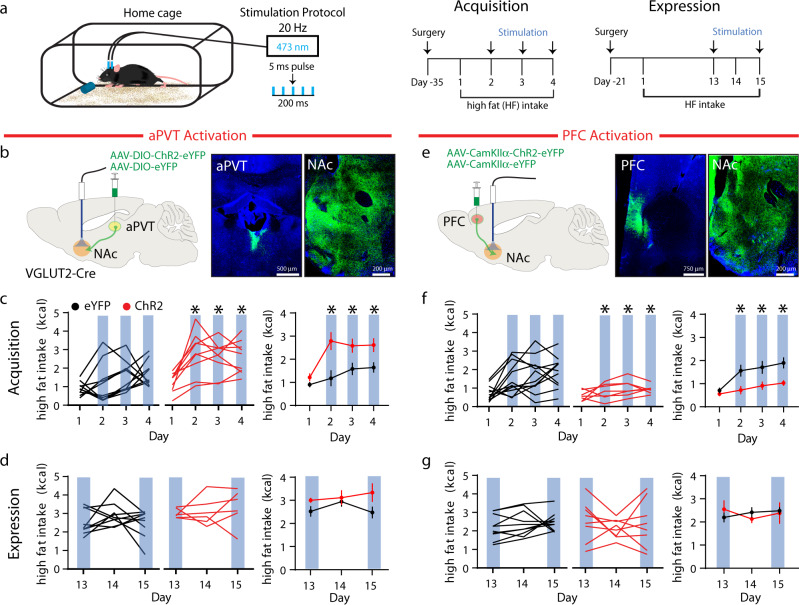
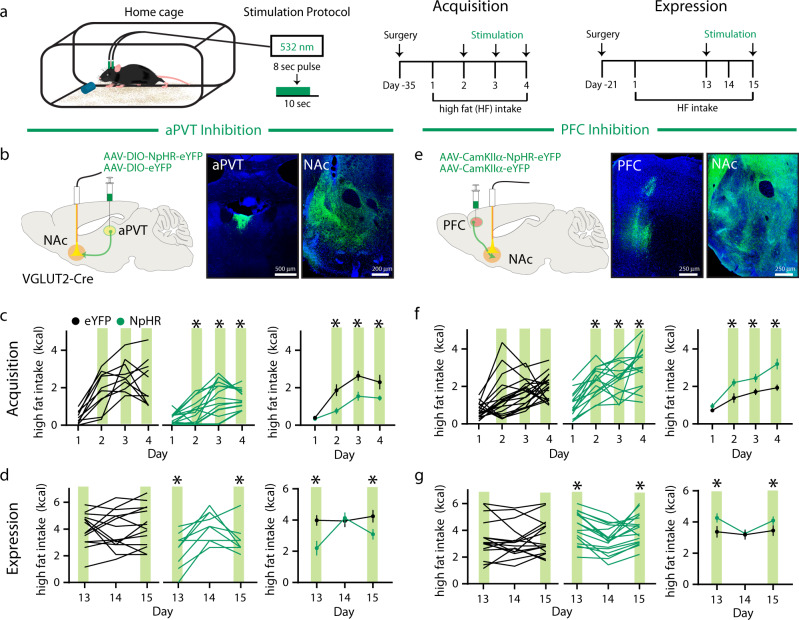
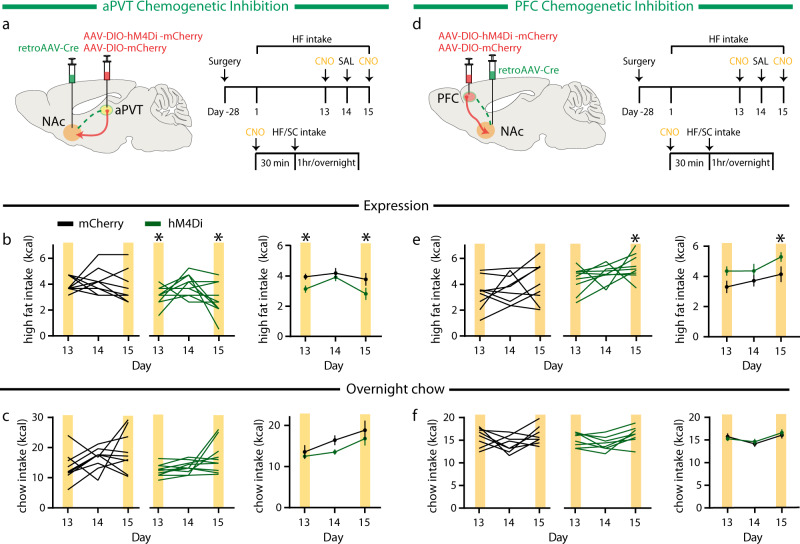
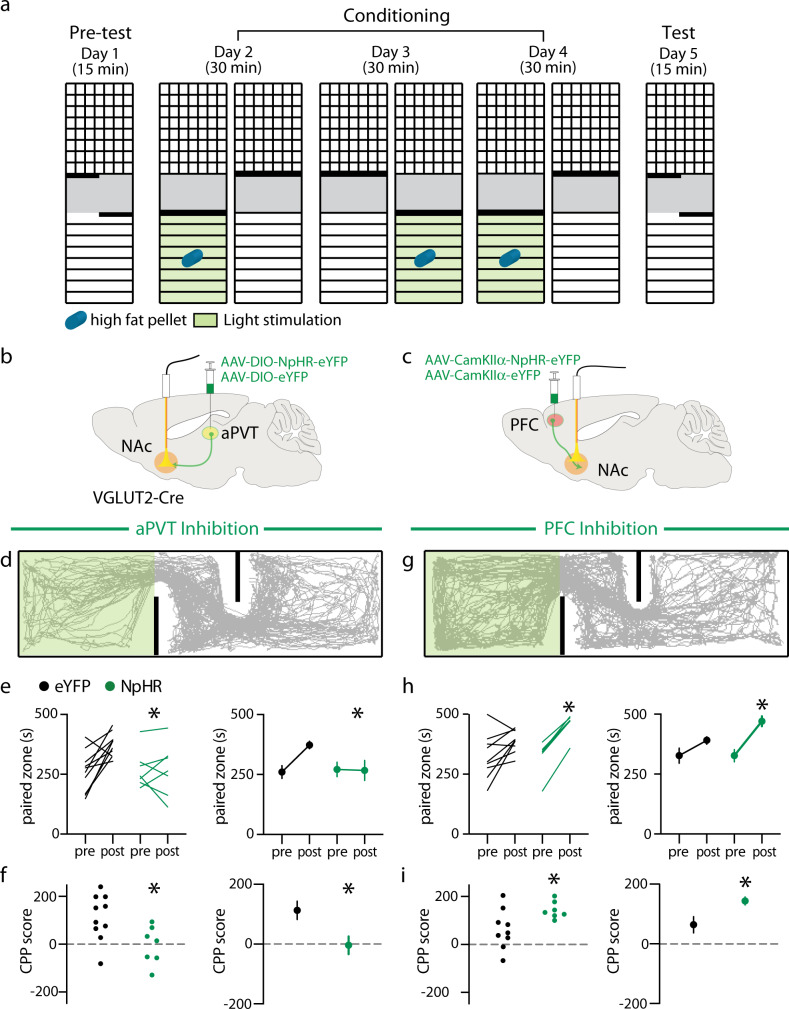
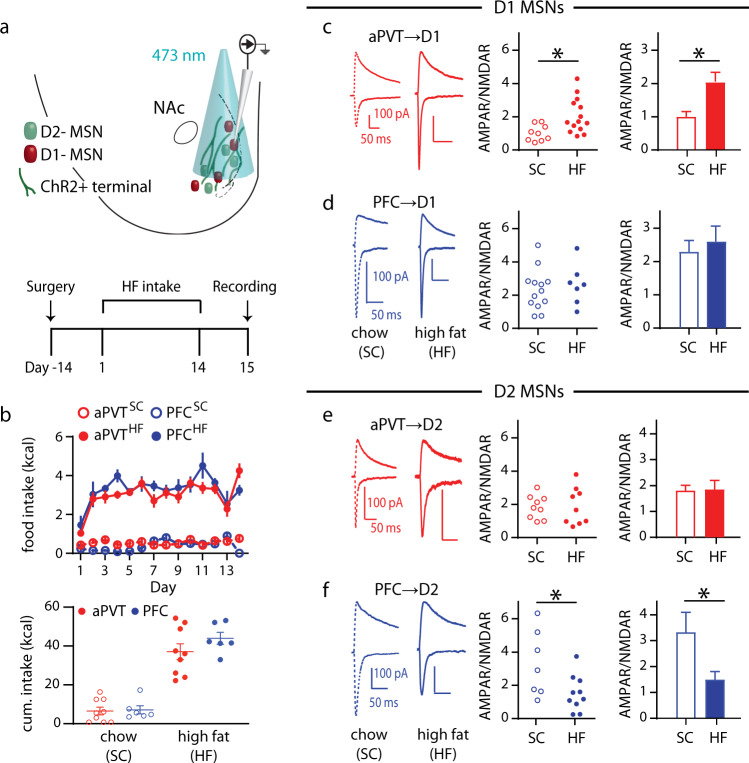
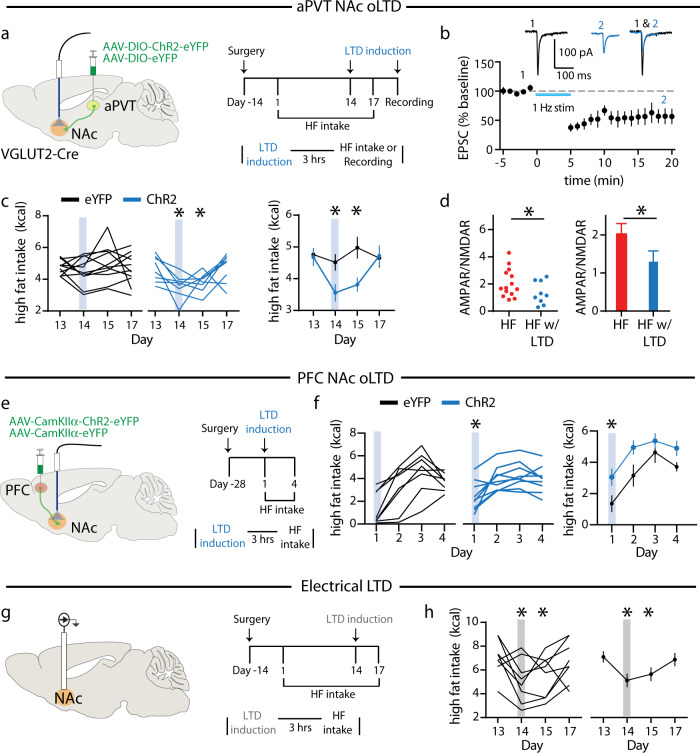
Hedonic feeding is driven by the “pleasure” derived from consuming palatable food and occurs in the absence of metabolic need. It plays a critical role in the excessive feeding that underlies obesity. Compared to other pathological motivated behaviors, little is known about the neural circuit mechanisms mediating excessive hedonic feeding. Here, we show that modulation of prefrontal cortex (PFC) and anterior paraventricular thalamus (aPVT) excitatory inputs to the nucleus accumbens (NAc), a key node of reward circuitry, has opposing effects on high fat intake in mice. Prolonged high fat intake leads to input- and cell type-specific changes in synaptic strength. Modifying synaptic strength via plasticity protocols, either in an input-specific optogenetic or non-specific electrical manner, causes sustained changes in high fat intake. These results demonstrate that input-specific NAc circuit adaptations occur with repeated exposure to a potent natural reward and suggest that neuromodulatory interventions may be therapeutically useful for individuals with pathologic hedonic feeding.
Overview
The claims and statistics of this paper haven’t been checked yet.
Free: it reads the open-access text and checks the first 5 claims that cite a source we can check. Create a free account to check every claim.
Integrity signals
Registry
Cites
Statistics
Figures
Verification
Claims the paper makes
The claims and statistics of this paper haven’t been checked yet.
Free: it reads the open-access text and checks the first 5 claims that cite a source we can check. Create a free account to check every claim.
Claims other papers make about this one
Each is checked against this paper’s own text: does it say what the citing paper says it does?
The source backs part of the claim, not all of it — or backs it for a different population, condition or comparison.
In the citing paper
“Neuromodulators, including dopamine itself, serotonin, and enkephalins are also likely to play a significant role in gating synaptic strength and the balance between D1 and D2 MSN activity [217,233,237].”
From Plasticity of synapses and reward circuit function in the genesis and treatment of depression (2023) · cites this paper as [237]
Experimental — accuracy not yet measured
Self-check
Percentages, sums and reported differences re-computed from the paper’s own numbers.
The self-check needs the paper’s full text.
Citations
Cites
Bardo, M. T., & Hammer, R. P. (1991) · Neuroscience · doi:10.1016/0306-4522(91)90226-e · Cited by 3,219
From motivation to action: Functional interface between the limbic system and the motor system
MOGENSON, G., JONES, D., & YIM, C. (1980) · Progress in Neurobiology · doi:10.1016/0301-0082(80)90018-0 · Cited by 2,331
Synaptic plasticity and addiction
Kauer, J. A., & Malenka, R. C. (2007) · Nature Reviews Neuroscience · doi:10.1038/nrn2234 · Cited by 1,397
Self-citationRapid regulation of depression-related behaviours by control of midbrain dopamine neurons
Chaudhury, D., Walsh, J. J., Friedman, A. K., Juarez, B., Ku, S. M., Koo, J. W., Ferguson, D., Tsai, H.-C., Pomeranz, L., Christoffel, D. J., et al. (2013) · Nature · doi:10.1038/nature11713 · Cited by 1,156
Self-citationProgressive Ratio as a Measure of Reward Strength
Hodos, W. (1961) · Science · doi:10.1126/science.134.3483.943 · Cited by 1,147
Dopamine neurons modulate neural encoding and expression of depression-related behaviour
Tye, K. M., Mirzabekov, J. J., Warden, M. R., Ferenczi, E. A., Tsai, H.-C., Finkelstein, J., Kim, S.-Y., Adhikari, A., Thompson, K. R., Andalman, A. S., et al. (2013) · Nature · doi:10.1038/nature11740 · Cited by 1,073
The dopamine motive system: implications for drug and food addiction
Volkow, N. D., Wise, R. A., & Baler, R. (2017) · Nature Reviews Neuroscience · doi:10.1038/nrn.2017.130 · Cited by 939 · cited 1×
“, was lateral of anterior commissure or tip was in the dorsal striatum, and/or (4) loss of headcap during the course of the experiment.”
BackgroundCorticostriatal-hypothalamic circuitry and food motivation: Integration of energy, action and reward
KELLEY, A., BALDO, B., PRATT, W., & WILL, M. (2005) · Physiology & Behavior · doi:10.1016/j.physbeh.2005.08.066 · Cited by 755
The addicted synapse: mechanisms of synaptic and structural plasticity in nucleus accumbens
Russo, S. J., Dietz, D. M., Dumitriu, D., Morrison, J. H., Malenka, R. C., & Nestler, E. J. (2010) · Trends in Neurosciences · doi:10.1016/j.tins.2010.02.002 · Cited by 654
Self-citationA Neural Circuit Mechanism for Encoding Aversive Stimuli in the Mesolimbic Dopamine System
de Jong, J. W., Afjei, S. A., Pollak Dorocic, I., Peck, J. R., Liu, C., Kim, C. K., Tian, L., Deisseroth, K., & Lammel, S. (2019) · Neuron · doi:10.1016/j.neuron.2018.11.005 · Cited by 511
Research works printed but not linked: 1
- Paxinos, G. & Franklin, K. B. The Mouse Brain in Stereotaxic Coordinates. 4th edition (Academic, 2012).
Cited by
Reward and aversion processing by input-defined parallel nucleus accumbens circuits in mice
Zhou, K., Xu, H. Z., Lu, S., Jiang, S., Hou, G., Deng, X., He, M., & Zhu, Y. (2022) · Nature Communications · doi:10.1038/s41467-022-33843-3 · Cited by 129
Pilot study of responsive nucleus accumbens deep brain stimulation for loss-of-control eating
Shivacharan, R. S., Rolle, C. E., Barbosa, D. A. N., Cunningham, T. N., Feng, A. Y., Johnson, N. D., Safer, D. L., Bohon, C., Keller, C. J., Buch, V., et al. (2022) · Nature Medicine · doi:10.1038/s41591-022-01941-w · Cited by 112
Self-citationGlucagon-like peptide 1 agonist and effects on reward behaviour: A systematic review
Badulescu, S., Tabassum, A., Le, G. H., Wong, S., Phan, L., Gill, H., Llach, C.-D., McIntyre, R. S., Rosenblat, J., & Mansur, R. (2024) · Physiology & Behavior · doi:10.1016/j.physbeh.2024.114622 · Cited by 90
“Similarly, the nucleus accumbens is associated with several feeding areas, and GLP-1R stimulation suppresses food intake and reward behaviours [20,23,24].”
BackgroundThe nucleus accumbens in reward and aversion processing: insights and implications
Xu, Y., Lin, Y., Yu, M., & Zhou, K. (2024) · Frontiers in Behavioral Neuroscience · doi:10.3389/fnbeh.2024.1420028 · Cited by 106
A circuit from lateral septum neurotensin neurons to tuberal nucleus controls hedonic feeding
Chen, Z., Chen, G., Zhong, J., Jiang, S., Lai, S., Xu, H. Z., Deng, X., Li, F., Lu, S., Zhou, K., et al. (2022) · Molecular Psychiatry · doi:10.1038/s41380-022-01742-0 · Cited by 66
“This feeding protocol consisted of daily intermittent access to high-sucrose food for 2 hours, while standard laboratory chow food was always provided [15, 17].”
BackgroundMethodBrain control of energy homeostasis: implications for anti-obesity pharmacotherapy
Johansen, V. B. I., Petersen, J., Lund, J., Mathiesen, C. V., Fenselau, H., & Clemmensen, C. (2025) · Cell · doi:10.1016/j.cell.2025.06.010 · Cited by 53
Brain circuits for promoting homeostatic and non-homeostatic appetites
Ahn, B. H., Kim, M., & Kim, S.-Y. (2022) · Experimental & Molecular Medicine · doi:10.1038/s12276-022-00758-4 · Cited by 50
Matikainen‐Ankney, B. A., Legaria, A. A., Pan, Y., Vachez, Y. M., Murphy, C. A., Schaefer, R. F., McGrath, Q., Wang, J. G., Bluitt, M. N., Ankney, K. C., et al. (2022) · Biological Psychiatry · doi:10.1016/j.biopsych.2022.10.003 · Cited by 46
Plasticity of synapses and reward circuit function in the genesis and treatment of depression
Thompson, S. M. (2023) · Neuropsychopharmacology · doi:10.1038/s41386-022-01422-1 · Cited by 40
Thalamo-Nucleus Accumbens Projections in Motivated Behaviors and Addiction
Groote, A. D., & d’Exaerde, A. D. K. (2021) · Frontiers in Systems Neuroscience · doi:10.3389/fnsys.2021.711350 · Cited by 37
Extinction blunts paraventricular thalamic contributions to heroin relapse
Giannotti, G., Gong, S., Fayette, N., Heinsbroek, J. A., Orfila, J. E., Herson, P. S., Ford, C., & Peters, J. (2021) · Cell Reports · doi:10.1016/j.celrep.2021.109605 · Cited by 38
“…(Giannotti et al., 2018; Hamlin et al., 2009; James et al., 2010; Kuhn et al., 2018; Matzeu and Martin Fardon, 2018; Zhou et al., 2021) and food seeking (Christoffel et al., 2021; Engelke et al., 2021), depending on specific PVT inputs and outputs (Millan et al., 2017; Penzo and Gao, 2021).”
Cheng, J., Ma, X., Li, C., Ullah, R., Wang, X., Long, J., Yuan, Z., Liu, S., Fu, J., Chen, Z., et al. (2022) · Nature Neuroscience · doi:10.1038/s41593-022-01129-y · Cited by 34
Hartmann, M. C., & Pleil, K. E. (2021) · Neuropharmacology · doi:10.1016/j.neuropharm.2021.108748 · Cited by 32
The Role of the Endocannabinoid System in Binge Eating Disorder
Bourdy, R., & Befort, K. (2023) · International Journal of Molecular Sciences · doi:10.3390/ijms24119574 · Cited by 33
“Animal studies showing the involvement of the PFC-NAc pathway and reduced PFC-NAc D2 pathway activity in binge-eating behavior and impulsivity are in line with this hypothesis [99,106].”
BackgroundResultAnversa, R. G., Campbell, E. J., Walker, L. C., Ch’ng, S. S., Muthmainah, M., Kremer, F. S., Guimarães, A. M., O'Shea, M. J., He, S., Dayas, C. V., et al. (2023) · Neuropsychopharmacology · doi:10.1038/s41386-023-01665-6 · Cited by 30
Wu, H., Kakusa, B. W., Neuner, S., Christoffel, D. J., Heifets, B. D., Malenka, R. C., & Halpern, C. H. (2021) · Proceedings of the National Academy of Sciences · doi:10.1073/pnas.2109269118 · Cited by 25
“the NAc after limited HF food exposure (33) and, therefore, differences in reported neuronal responses may reflect altered neuronal network dynamics (34).”
Self-citationAberrant impulse control circuitry in obesity
Barbosa, D. A. N., Kuijper, F. M., Duda, J., Wang, A. R., Cartmell, S. C. D., Saluja, S., Cunningham, T. N., Shivacharan, R. S., Bhati, M. T., Safer, D. L., et al. (2022) · Molecular Psychiatry · doi:10.1038/s41380-022-01640-5 · Cited by 22
Self-citationCui, X., Tong, Q., Xu, H., Xie, C., & Xiao, L. (2023) · Progress in Neurobiology · doi:10.1016/j.pneurobio.2023.102503 · Cited by 16
Fetterly, T. L., Catalfio, A. M., & Ferrario, C. R. (2023) · Neuropharmacology · doi:10.1016/j.neuropharm.2023.109772 · Cited by 18
“…focused on mPFC-to-NAc and BLA-to-NAc inputs because these provide direct inputs to the NAc core and because these regions influence food-motivated behavior via interactions with the NAc (Cardinal et al., 2002; Christoffel et al., 2021; Domingo-Rodriguez et al., 2020; Holland and Petrovich, 2005).”
BackgroundHe, Y., Ren, Y., Chen, X., Wang, Y., Yu, H., Cai, J., Wang, P., Ren, Y., & Xie, P. (2024) · Journal of Advanced Research · doi:10.1016/j.jare.2024.10.025 · Cited by 17
Sex differences in activation of extra-hypothalamic forebrain areas during hedonic eating
Parsons, W. S., Greiner, E. M., Buczek, L., Migliaccio, J., Corbett, E., Madden, A. M. K., & Petrovich, G. D. (2022) · Brain Structure and Function · doi:10.1007/s00429-022-02580-0 · Cited by 17
“The PVT has been shown to exert behavioral control via the ACB, and optogenetic stimulation of the aPVT-ACB pathway increased palatable (high-fat) food consumption but not chow in sated (male) mice (Christoffel et al. 2021).”
BackgroundYe, Q., Nunez, J., & Zhang, X. (2022) · Molecular Metabolism · doi:10.1016/j.molmet.2022.101634 · Cited by 19
Historical and Modern Evidence for the Role of Reward Circuitry in Emergence
Heshmati, M., & Bruchas, M. R. (2022) · Anesthesiology · doi:10.1097/aln.0000000000004148 · Cited by 16
A Nucleus Accumbens Tac1 Neural Circuit Regulates Avoidance Responses to Aversive Stimuli
He, Z., Xi, K., Liu, K.-J., Yue, M.-H., Wang, Y., Yin, Y.-Y., Liu, L., He, X., Yu, H., Xing, Z., et al. (2023) · International Journal of Molecular Sciences · doi:10.3390/ijms24054346 · Cited by 18
Li, L., Zhang, H., Zheng, Z., Ma, N., Zhang, Y., Liu, Y., Zhang, J., Su, S., Zang, W., Shao, J., et al. (2022) · Frontiers in Neuroanatomy · doi:10.3389/fnana.2022.1074310 · Cited by 14
“In addition, the PVT regulates negative emotions by integrating the mPFC cognitive signals and internal state signals of the hypothalamus and brainstem (Christoffel et al., 2021; Dumont et al., 2022).”
BackgroundPractical considerations in an era of multicolor optogenetics
Rindner, D. J., & Lür, G. (2023) · Frontiers in Cellular Neuroscience · doi:10.3389/fncel.2023.1160245 · Cited by 13
“Two strategies exist to minimize crosstalk, which have been applied to opsin combinations including Chronos/ChrimsonR (Klapoetke et al., 2014; Bauer et al., 2021; Christoffel et al., 2021), CheRiff/ChrimsonR (Anisimova et al., 2023), ChR2/ReaChR (Hooks et al., 2015), and ChR2(H134R)/ChrimsonR (Chiu et al., 2018; Birds…”
BackgroundMethodInfluentialKulbay, M., Tuli, N., Akdag, A., Ali, S. K., & Qian, C. X. (2024) · Journal of Clinical Medicine · doi:10.3390/jcm13144224 · Cited by 13
Sleep deprivation engages the orexin/hypocretin system to regulate food reward seeking
Rojo, A. L. A., Barnhardt, T. R., Pham, T. Q., Heim, B., Cai, L., Tseng, G. C., & Huang, Y. H. (2025) · The International Journal of Neuropsychopharmacology · doi:10.1093/ijnp/pyaf047 · Cited by 12
“194,195 In particular, PVTp Ox2R signaling potentiates NAc core responding to food reward-predictivecuesandincreasesfoodintake.”
Hunger dampens a nucleus accumbens circuit to drive persistent food seeking
Smith, N. K., Plotkin, J. M., & Grueter, B. A. (2022) · Current Biology · doi:10.1016/j.cub.2022.02.034 · Cited by 12
Hippocampal-evoked inhibition of cholinergic interneurons in the nucleus accumbens
Baimel, C., Jang, E. V., Scudder, S. L., Manoocheri, K., & Carter, A. G. (2022) · Cell Reports · doi:10.1016/j.celrep.2022.111042 · Cited by 12
“…other hand, the PVT and vHPC represent two glutamatergic inputs to the NAc that are known to strongly contact MSNs in the NAcMS (Baimel et al., 2019; Britt et al., 2012; Christoffel et al., 2021; MacAskill et al., 2012, 2014; Zhu et al., 2016) but whose connections with ChIs have not been examined.”
Gaspari, S., Quenneville, S., Sánchez-Archidona, A. R., Thorens, B., & Croizier, S. (2022) · The Journal of Comparative Neurology · doi:10.1002/cne.25312 · Cited by 10
Reward System Dysfunction and the Motoric-Cognitive Risk Syndrome in Older Persons
Lauretani, F., Testa, C., Salvi, M., Zucchini, I., Lorenzi, B., Tagliaferri, S., Cattabiani, C., & Maggio, M. G. (2022) · Biomedicines · doi:10.3390/biomedicines10040808 · Cited by 12
“Additional projections are directed to the nucleus accumbens, one of the brain hotsp ts of the sensation of pleasure, directly linked to the reward system [11].”
BackgroundLiu, H., Bean, J. C., Li, Y., Yu, M., Ginnard, O. Z. B., Conde, K., Wang, M., Fang, X., Liu, H., Tu, L., et al. (2024) · Nature Metabolism · doi:10.1038/s42255-024-01099-4 · Cited by 8
“Conventionally, the management of hedonic feeding was attributed to the mesolimbic dopamine system, which is composed of dopamine neurons in the ventral tegmental area and the downstream nucleus accumbens 61,62 .”
Cryo-EM structure of a blue-shifted channelrhodopsin from Klebsormidium nitens
Wang, Y., Natsume, K., Tanaka, T., Hososhima, S., Tashiro, R., Sano, F. K., Akasaka, H., Tsunoda, S. P., Shihoya, W., Kandori, H., et al. (2025) · Nature Communications · doi:10.1038/s41467-025-59299-9 · Cited by 8
Efferent and Afferent Connections of Neuropeptide Y Neurons in the Nucleus Accumbens of Mice
Yamada, S., van Kooten, N. J. T., Mori, T., Taguchi, K., Tsujimura, A., & Tanaka, M. (2021) · Frontiers in Neuroanatomy · doi:10.3389/fnana.2021.741868 · Cited by 8
“The NAc receives glutamatergic inputs from the PVT, and these inputs modulate hedonic feeding (Christoffel et al., 2021).”
BackgroundQiu, L., Nho, Y., Seilheimer, R. L., Kim, M. J., Tufanoglu, A., Williams, N., Wexler, A., Oslin, D. W., Millet, B., Scangos, K. W., et al. (2026) · Nature Communications · doi:10.1038/s41467-026-68758-w · Cited by 7
Self-citationDivergent Roles of Nucleus Accumbens D1- and D2-MSNs in Regulating Hedonic Feeding
Carter, C. A., Pudipeddi, S. S., Llorach, P., Walsh, J. J., & Christoffel, D. J. (2026) · Journal of Neuroscience · doi:10.1523/jneurosci.1422-25.2026 · Cited by 5
Self-citationEffects of gastric bypass surgery on brain connectivity responses to hypoglycemia
Fanni, G., Kagios, C., Roman, E., Sundbom, M., Wikström, J., Haller, S., & Eriksson, J. W. (2022) · Endocrine · doi:10.1007/s12020-022-03253-y · Cited by 5
Huang, H., Yang, Y., Yiwei, L., Li, Y., Liling, X., & Dongguang, Z. (2025) · BMC Pediatrics · doi:10.1186/s12887-025-05702-9 · Cited by 4
“Although these forms are considered distinct, research on the mechanisms of both monogenic and polygenic obesity indicates [13, 14] that the central nervous system and neurons controlling “hedonic feeding” are the primary drivers in both types.”
Dogra, S., Aguayo, C., Xiang, Z., Putnam, J., Smith, J., Johnston, C., Foster, D. J., Lindsley, C. W., Niswender, C. M., & Conn, P. J. (2023) · Biological Psychiatry · doi:10.1016/j.biopsych.2023.11.023 · Cited by 4
Endogenous opioid receptors and the feast or famine of maladaptive feeding
Hickey, A. K. S., & Matikainen‐Ankney, B. A. (2025) · Nature Communications · doi:10.1038/s41467-025-57515-0 · Cited by 4
“Activating or inhibiting the two primary projection neuron populations in the NAc, D1-SPNs or D2-SPNs, or their inputs, bidirectionally modulates food seeking or consumption 47 – 50 .”
Yamada, S., Kojima, K., & Tanaka, M. (2025) · Frontiers in Cellular Neuroscience · doi:10.3389/fncel.2025.1565939 · Cited by 4
Xiang, J., Shi, M., Kang, J., Zhang, X., Ling, J., Zhan, W., Li, D., Hu, R. K., & Xu, H. (2026) · Cell Discovery · doi:10.1038/s41421-025-00857-2 · Cited by 4
Li, Z. F., Chometton, S., Guèvremont, G., Timofeeva, E., & Timofeev, I. (2021) · Frontiers in Neuroscience · doi:10.3389/fnins.2021.777572 · Cited by 3
Valdivia, S., Agostino, P. V., Reynaldo, M., Singh, S., Carrasquillo, Y., Perelló, M., & Kasanetz, F. (2026) · Journal of Pain · doi:10.1016/j.jpain.2026.106204 · Cited by 2
Translational Perspectives on Binge-Eating: Insights from Animal Models
Azevedo, E. P., & Stern, S. A. (2026) · Current Psychiatry Reports · doi:10.1007/s11920-026-01661-9 · Cited by 2
“Activa - tion of both inhibitory and glutamatergic PFC projections to the nucleus accumbens and lateral hypothalamus, respec - tively, can suppress binge eating and fat consumption [ 77, 91 , 95 , 96].”
Duan, Y., Zheng, M., Wu, J., Ma, J., Xing, X., Ma, Z., Li, S., Li, Y., Xue, X., Hua, X., et al. (2022) · Obesity · doi:10.1002/oby.23553 · Cited by 2
Endocannabinoids facilitate reward engagement through retrograde gain control
Marcus, D. J., English, A. E., Chun, G., Seth, E. F., Oommen, R., Hwang, S., Wells, B. A., Piantadosi, S. C., Suko, A. V., Kenmochi, S. J., et al. (2026) · Nature · doi:10.1038/s41586-026-10967-w · Cited by 2
“…example, the NAc receives glutamatergic input from over half a dozen brain structures, yet it is unclear why such diverse sources of this single neurotransmitter exist and how each input is ultimately filtered in real time into useful information downstream by local neuromodulatory signals 23–25 .”
Deep Brain Stimulation for Obesity: Targets and Mechanisms of Neuromodulation in Clinical Practice
Kim, B., Seilheimer, R. L., & Halpern, C. H. (2024) · Oxford University Press eBooks · doi:10.1093/oso/9780190671051.003.0047 · Cited by 1
Self-citationTanabe, J., Hickman, J. L., Tekriwal, A., Sakai, J. T., Abosch, A., Ojemann, S. G., Schacht, J. P., & Thompson, J. A. (2025) · Biological Psychiatry Global Open Science · doi:10.1016/j.bpsgos.2025.100622 · Cited by 1
“PFC activation suppressed hedonic feeding while anterior paraventricular thalamus activation excitatory inputs promoted it (45).”
Zhang, Z., Gong, Y., Su, X.-Y., Deng, Y., Du, R., Li, C.-L., Wang, Y., Song, X.-L., Jiang, Q., Li, Y., et al. (2025) · Science Advances · doi:10.1126/sciadv.ady1944 · Cited by 2
Zhang, X. O., Aquino-Miranda, G., Cho, C. E., Wang, Y., Ha, D. H., Elinson-Watson, N., Dong, A., Kemere, C. T., & Monte, F. H. D. (2025) · Nature Communications · doi:10.1038/s41467-025-65347-1 · Cited by 1
Aranäs, C., Caffrey, A., Edvardsson, C. E., Witley, S., Zhang, Q., Schmidt, H. D., & Jerlhag, E. (2026) · Neuropharmacology · doi:10.1016/j.neuropharm.2026.110888 · Cited by 2
Olivares-Barraza, R., Marcos, J. L., Escobar-Luna, J., Covarrubias, M. J., Renard, G. M., Iturriaga‐Vásquez, P., Gysling, K., Bravo, J. A., Fuenzalida, M., & Sotomayor‐Zárate, R. (2026) · Frontiers in Pharmacology · doi:10.3389/fphar.2026.1781720 · Cited by 1
“The reduction in glutamate in the NAcc of HFD females (Figure 7H) limits hedonic excitation, modulating reward seeking (Christoffel et al., 2021).”
Progress of neural circuits mechanism underlying metabolic and hedonic feeding
Wu, X., Wang, J. J., Wang, X., & Wang, H. (2022) · Stress and Brain · doi:10.26599/sab.2022.9060021 · Cited by 1
Jiang, S., Song, B., Liu, Z., Shen, S., Qian, W., Sun, J., Chen, G., & Zhu, Y. (2024) · Neuroscience Research · doi:10.1016/j.neures.2024.02.002 · Cited by 1
“The aPVT exerts its functions by connecting to downstream brain regions through multiple pathways, Christoffel, et al. (Christoffel et al., 2021) demonstrated that the aPVT → NAc projection plays a pivotal role in reward-seeking behavior, acting as an interface for reward processing by integrating various inputs.”
BackgroundInfluentialFacilitated binge-like eating following chronic ethanol exposure in females
Stine, S. M., & Barker, J. M. (2022) · iDEA - Drexel University Institutional Repository · doi:10.17918/00001186
Taste perceptual circuit for the generation of autonomous responses in virtual creatures
Toledo, D., Meza, D., Gómez-Martínez, D. G., & Rosales, J.-H. (2022) · Cognitive Systems Research · doi:10.1016/j.cogsys.2022.09.003
Inputs to midbrain dopamine neurons control nicotine aversion and motivated feeding
Tose, A. J. (2022) · eScholarship (California Digital Library)
Bedenbaugh, M. N., Doyle, M. A., Edwards, C. M., Petersen, N., Srisai, D., Hawkins, S., Thomas-Low, N. D., Mendoza-Romero, H. N., Brown, J. A., Vardy, A. S., et al. (2026) · bioRxiv (Cold Spring Harbor Laboratory) · doi:10.64898/2026.02.08.702109 · Cited by 1
The influence of HINT1 protein in nucleus accumbens on aggressive behavior and anxiety-like behavior
Ma, Y., Liu, D., Wen, R., Li, S., Zhang, L., Hu, H., Xu, J., Li, Z., Su, T., Akhtar, S., et al. (2026) · Psychopharmacology · doi:10.1007/s00213-026-07102-y
Carter, C. A., Weaver, M. T., Pudipeddi, S. S., Llorach, P., Walsh, J. J., & Christoffel, D. J. (2026) · Neuropsychopharmacology · doi:10.1038/s41386-026-02530-y
Self-citation
Metadata
- Authors
- Christoffel, D. J., Walsh, J. J., Heifets, B. D., Hoerbelt, P., Neuner, S., Sun, G., Ravikumar, V. K., Wu, H., Halpern, C. H., & Malenka, R. C.
- Affiliations
- Stanford University (US)
- Stanford Medicine (US)
- Corresponding author
- Malenka, Robert C.
- ORCID
- Venue
- Nature Communications
- Published
- 2021-04-09
- Volume
- 12
- Issue
- 1
- Pages
- 2135-2135
- ISSN
- 2041-1723 (ISSN-L)
- PMC
- PMC8035198
- OpenAlex
- W3145324943
- Cited by
- 65
- References
- 59
- Citations by year
- 2026: 11 · 2025: 10 · 2024: 8 · 2023: 8 · 2022: 22 · 2021: 6
- FWCI
- 5.07
- Type
- journal article
- Language
- en
- Open access
- gold
- doi.org
- Licence
- cc-by
- creativecommons.org/licenses/by/4.0 (tdm)
- creativecommons.org/licenses/by/4.0 (vor)
- Locations
- Nature Communications (publishedVersion, cc-by)
- PubMed Central (publishedVersion, cc-by)
- PubMed (publishedVersion)
- RePEc: Research Papers in Economics (submittedVersion)
- DOAJ (DOAJ: Directory of Open Access Journals) (submittedVersion, cc-by-sa)
- Funders
- National Institutes of Health
- National Institute of Mental Health (K08MH110610, F32MH106206, F32MH103949)
- National Institute on Drug Abuse (T32DA035165, P50DA042012)
- National Institute of Diabetes and Digestive and Kidney Diseases (R00DK115895, K99DK115895)
- Topics
- Life Sciences › Neuroscience › Cellular and Molecular Neuroscience › Neurotransmitter Receptor Influence on Behavior
- Life Sciences › Neuroscience › Endocrine and Autonomic Systems › Regulation of Appetite and Obesity
- Life Sciences › Neuroscience › Cellular and Molecular Neuroscience › Neuroscience and Neuropharmacology Research
- Keywords
- hedonic feeding, nucleus accumbens, prefrontal cortex, obesity, synaptic plasticity, reward systems, optogenetics, electrical stimulation, neuromodulation
- MeSH terms
- Animals, Animal Feed, Dietary Fats, Eating, Feeding Behavior, Male, Mice, Transgenic, Motivation, Neural Pathways, Neuronal Plasticity, Neurons, Nucleus Accumbens, Reward, Stereotaxic Techniques, Prefrontal Cortex, Patch-Clamp Techniques, Microscopy, Confocal, Midline Thalamic Nuclei, Models, Animal, Vesicular Glutamate Transport Protein 2, Mice, Optogenetics
About these checks
Registry, retraction, Cites and statistics results are computed, not judged, with one exception: a printed reference that no index lists is read once by a model before it counts as a citation error. Claims are extracted by a model and kept only when their quote appears verbatim in the text; each cited source is then checked, with a model’s help, for whether it says what the claim relies on. Those verdicts can be wrong — read the claim’s quote and the cited source before relying on one.
Statistics and arithmetic are recomputed, not judged.
Confidence bands are shown only for fields calibrated on our annotated test set. None is calibrated yet, so no band is shown.
What counts as a claim ›How we measure confidence ›How we check this ›
Are you an author, or do you see a problem with this page? Request a review
Data sources
Bibliographic data: Semantic Scholar, OpenAlex, Crossref.
Contains information from the Semantic Scholar Academic Graph Datasets, made available under the ODC Attribution License (ODC-BY 1.0).
Semantic Scholar’s data is described in: Kinney, R., et al. (2023). The Semantic Scholar Open Data Platform. arXiv:2301.10140.
