

Input-specific modulation of murine nucleus accumbens differentially regulates hedonic feeding
Open accessThe DOI matches its Crossref record; 58 of the 59 references it cites were found in a registry or an index.
Abstract
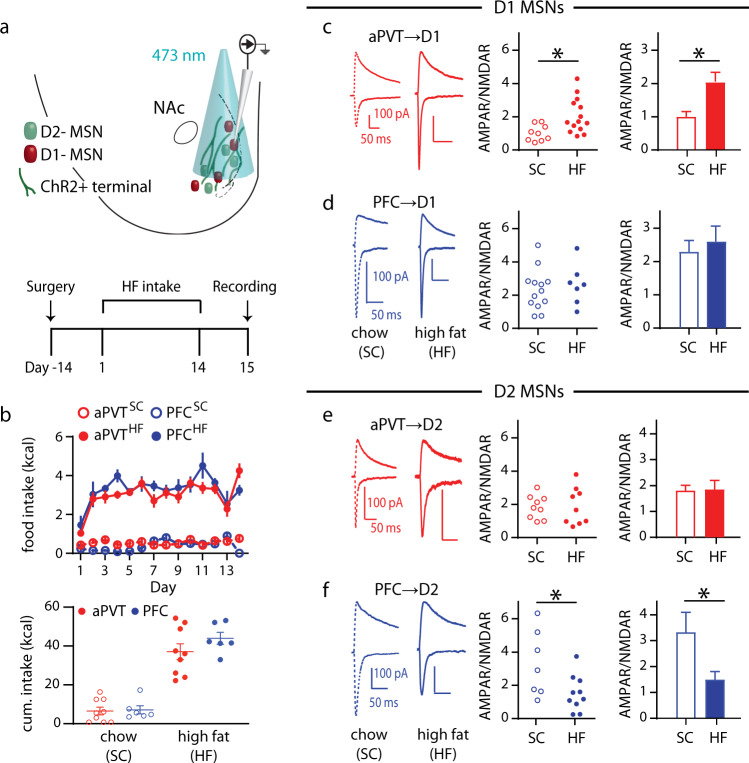
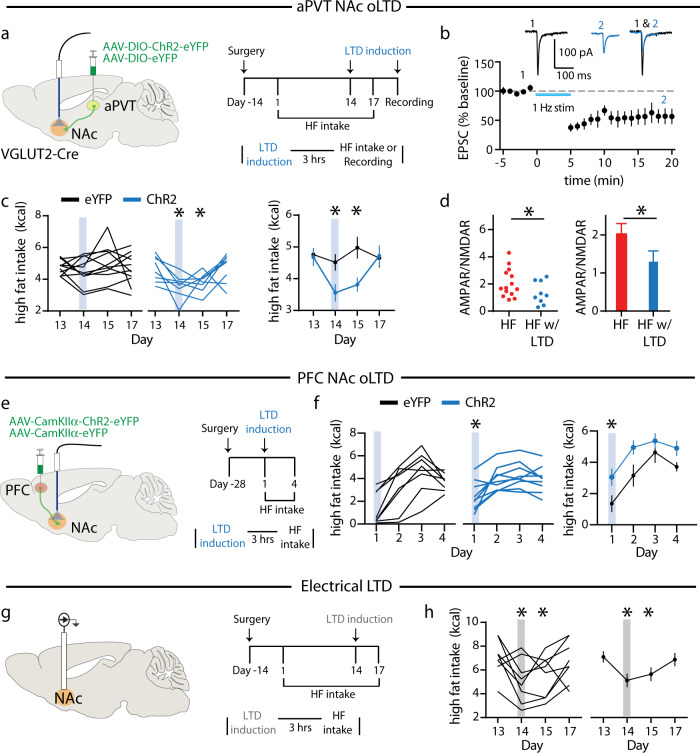
Hedonic feeding is driven by the “pleasure” derived from consuming palatable food and occurs in the absence of metabolic need. It plays a critical role in the excessive feeding that underlies obesity. Compared to other pathological motivated behaviors, little is known about the neural circuit mechanisms mediating excessive hedonic feeding. Here, we show that modulation of prefrontal cortex (PFC) and anterior paraventricular thalamus (aPVT) excitatory inputs to the nucleus accumbens (NAc), a key node of reward circuitry, has opposing effects on high fat intake in mice. Prolonged high fat intake leads to input- and cell type-specific changes in synaptic strength. Modifying synaptic strength via plasticity protocols, either in an input-specific optogenetic or non-specific electrical manner, causes sustained changes in high fat intake. These results demonstrate that input-specific NAc circuit adaptations occur with repeated exposure to a potent natural reward and suggest that neuromodulatory interventions may be therapeutically useful for individuals with pathologic hedonic feeding.
Overview
The claims and statistics of this paper haven’t been checked yet.
Free: it reads the open-access text and checks the first 5 claims that cite a source we can check. Create a free account to check every claim.
Integrity signals
Registry
Cites
Statistics
Figures
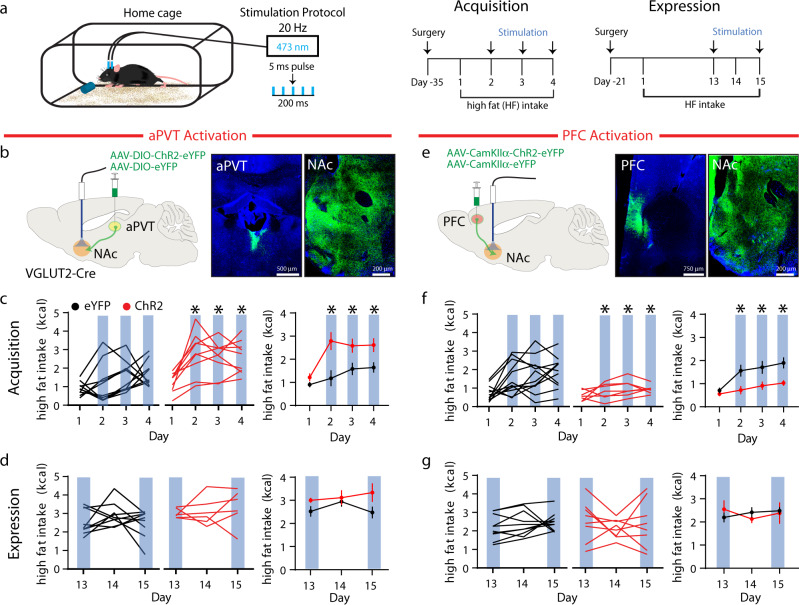
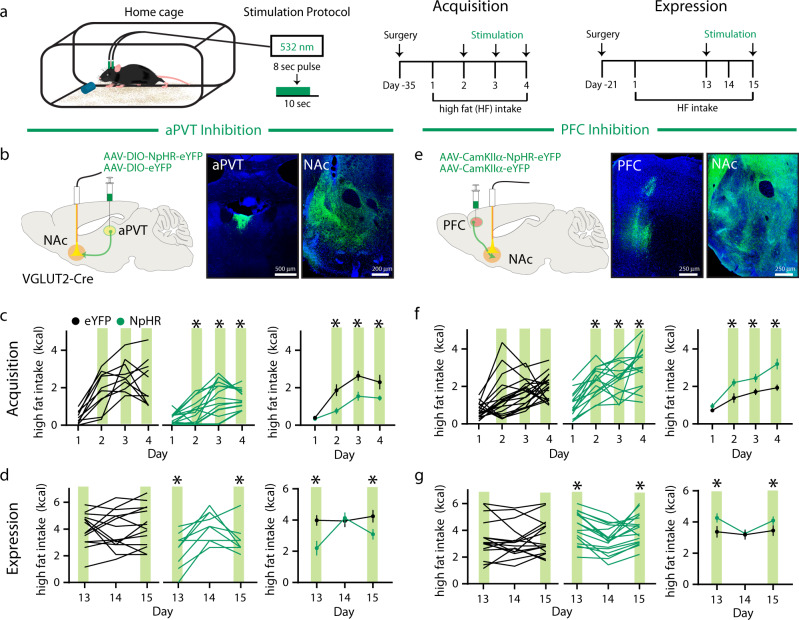
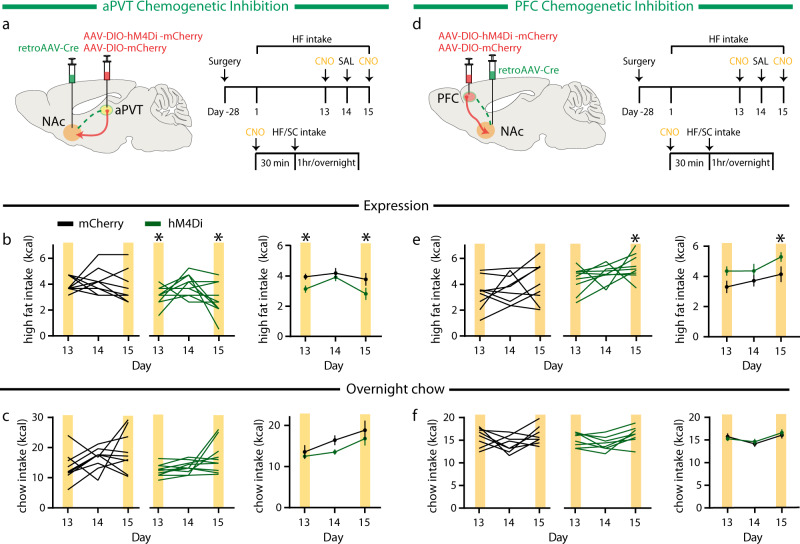
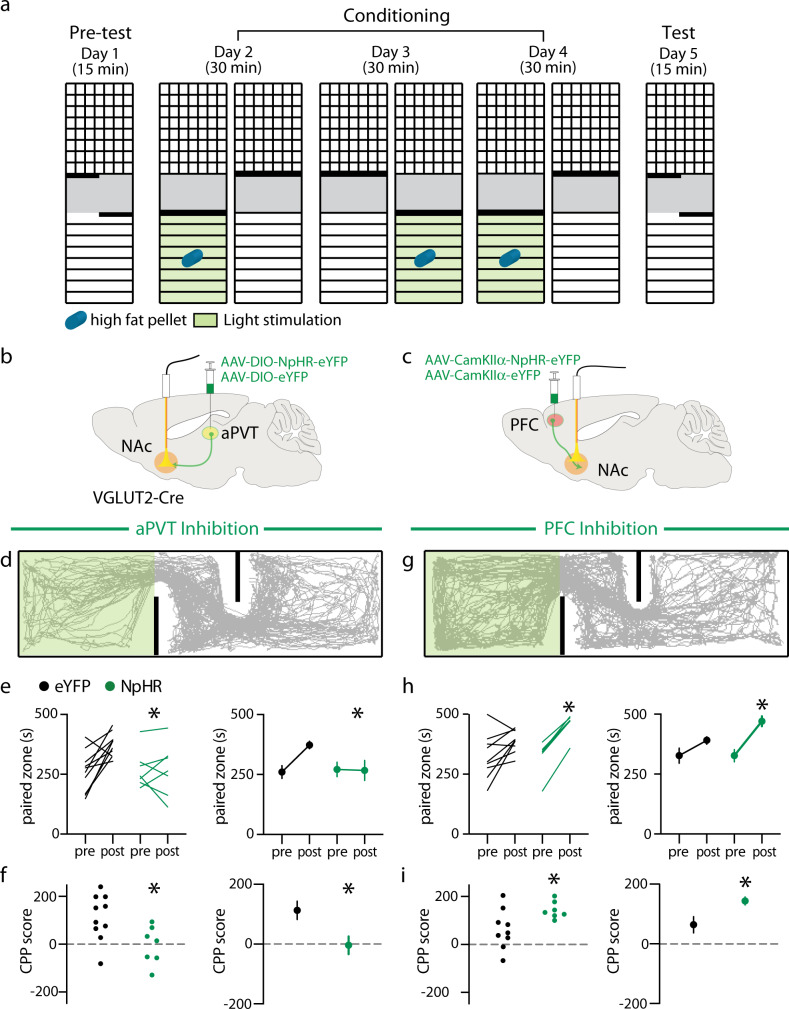
Verification
Claims the paper makes
The claims and statistics of this paper haven’t been checked yet.
Free: it reads the open-access text and checks the first 5 claims that cite a source we can check. Create a free account to check every claim.
Claims other papers make about this one
Each is checked against this paper’s own text: does it say what the citing paper says it does?
The source backs part of the claim, not all of it — or backs it for a different population, condition or comparison.
In the citing paper
“Neuromodulators, including dopamine itself, serotonin, and enkephalins are also likely to play a significant role in gating synaptic strength and the balance between D1 and D2 MSN activity [217,233,237].”
From Plasticity of synapses and reward circuit function in the genesis and treatment of depression (2023) · cites this paper as [237]
Experimental — accuracy not yet measured
Self-check
Percentages, sums and reported differences re-computed from the paper’s own numbers.
The self-check needs the paper’s full text.
Citations
Cites
Bardo, M. T., & Hammer, R. P. (1991) · Neuroscience · doi:10.1016/0306-4522(91)90226-e · Cited by 3,219
From motivation to action: Functional interface between the limbic system and the motor system
MOGENSON, G., JONES, D., & YIM, C. (1980) · Progress in Neurobiology · doi:10.1016/0301-0082(80)90018-0 · Cited by 2,331
Synaptic plasticity and addiction
Kauer, J. A., & Malenka, R. C. (2007) · Nature Reviews Neuroscience · doi:10.1038/nrn2234 · Cited by 1,397
Self-citationRapid regulation of depression-related behaviours by control of midbrain dopamine neurons
Chaudhury, D., Walsh, J. J., Friedman, A. K., Juarez, B., Ku, S. M., Koo, J. W., Ferguson, D., Tsai, H.-C., Pomeranz, L., Christoffel, D. J., et al. (2013) · Nature · doi:10.1038/nature11713 · Cited by 1,156
Self-citationProgressive Ratio as a Measure of Reward Strength
Hodos, W. (1961) · Science · doi:10.1126/science.134.3483.943 · Cited by 1,147
Dopamine neurons modulate neural encoding and expression of depression-related behaviour
Tye, K. M., Mirzabekov, J. J., Warden, M. R., Ferenczi, E. A., Tsai, H.-C., Finkelstein, J., Kim, S.-Y., Adhikari, A., Thompson, K. R., Andalman, A. S., et al. (2013) · Nature · doi:10.1038/nature11740 · Cited by 1,073
The dopamine motive system: implications for drug and food addiction
Volkow, N. D., Wise, R. A., & Baler, R. (2017) · Nature Reviews Neuroscience · doi:10.1038/nrn.2017.130 · Cited by 939 · cited 1×
“, was lateral of anterior commissure or tip was in the dorsal striatum, and/or (4) loss of headcap during the course of the experiment.”
BackgroundCorticostriatal-hypothalamic circuitry and food motivation: Integration of energy, action and reward
KELLEY, A., BALDO, B., PRATT, W., & WILL, M. (2005) · Physiology & Behavior · doi:10.1016/j.physbeh.2005.08.066 · Cited by 755
The addicted synapse: mechanisms of synaptic and structural plasticity in nucleus accumbens
Russo, S. J., Dietz, D. M., Dumitriu, D., Morrison, J. H., Malenka, R. C., & Nestler, E. J. (2010) · Trends in Neurosciences · doi:10.1016/j.tins.2010.02.002 · Cited by 654
Self-citationA Neural Circuit Mechanism for Encoding Aversive Stimuli in the Mesolimbic Dopamine System
de Jong, J. W., Afjei, S. A., Pollak Dorocic, I., Peck, J. R., Liu, C., Kim, C. K., Tian, L., Deisseroth, K., & Lammel, S. (2019) · Neuron · doi:10.1016/j.neuron.2018.11.005 · Cited by 511
Rescuing cocaine-induced prefrontal cortex hypoactivity prevents compulsive cocaine seeking
Chen, B. T., Yau, H.-J., Hatch, C., Kusumoto-Yoshida, I., Cho, S. L., Hopf, F. W., & Bonci, A. (2013) · Nature · doi:10.1038/nature12024 · Cited by 498
Reversal of cocaine-evoked synaptic potentiation resets drug-induced adaptive behaviour
Pascoli, V., Turiault, M., & Lüscher, C. (2012) · Nature · doi:10.1038/nature10709 · Cited by 431
Demos, K. E., Heatherton, T. F., & Kelley, W. M. (2012) · The Journal of Neuroscience · doi:10.1523/jneurosci.5958-11.2012 · Cited by 410
Yang, H., de Jong, J. W., Tak, Y., Peck, J., Bateup, H. S., & Lammel, S. (2018) · Neuron · doi:10.1016/j.neuron.2017.12.022 · Cited by 407
Contrasting forms of cocaine-evoked plasticity control components of relapse
Pascoli, V., Terrier, J., Espallergues, J., Valjent, E., O’Connor, E. C., & Lüscher, C. (2014) · Nature · doi:10.1038/nature13257 · Cited by 396
Maldonado-Irizarry, C., Swanson, C., & Kelley, A. (1995) · The Journal of Neuroscience · doi:10.1523/jneurosci.15-10-06779.1995 · Cited by 390
A thalamic input to the nucleus accumbens mediates opiate dependence
Zhu, Y., Wienecke, C. F. R., Nachtrab, G., & Chen, X. (2016) · Nature · doi:10.1038/nature16954 · Cited by 388
Common cellular and molecular mechanisms in obesity and drug addiction
Kenny, P. J. (2011) · Nature Reviews Neuroscience · doi:10.1038/nrn3105 · Cited by 382
Anhedonia requires MC4R-mediated synaptic adaptations in nucleus accumbens
Lim, B. K., Huang, K. W., Grueter, B. A., Rothwell, P. E., & Malenka, R. C. (2012) · Nature · doi:10.1038/nature11160 · Cited by 368
Self-citationPlacing the paraventricular nucleus of the thalamus within the brain circuits that control behavior
Kirouac, G. J. (2015) · Neuroscience & Biobehavioral Reviews · doi:10.1016/j.neubiorev.2015.08.005 · Cited by 357
Kelley, A. E., Baldo, B. A., & Pratt, W. E. (2005) · Journal of Comparative Neurology · doi:10.1002/cne.20769 · Cited by 352
Accumbal D1R Neurons Projecting to Lateral Hypothalamus Authorize Feeding
O’Connor, E. C., Kremer, Y., Lefort, S., Harada, M., Pascoli, V., Rohner, C., & Lüscher, C. (2015) · Neuron · doi:10.1016/j.neuron.2015.09.038 · Cited by 322
Refining deep brain stimulation to emulate optogenetic treatment of synaptic pathology
Creed, M., Pascoli, V. J., & Lüscher, C. (2015) · Science · doi:10.1126/science.1260776 · Cited by 280
Rapid binge-like eating and body weight gain driven by zona incerta GABA neuron activation
Zhang, X., & van den Pol, A. N. (2017) · Science · doi:10.1126/science.aam7100 · Cited by 276
The Emergence of a Circuit Model for Addiction
Lüscher, C. (2016) · Annual Review of Neuroscience · doi:10.1146/annurev-neuro-070815-013920 · Cited by 260
Shuen, J. A., Chen, M., Gloss, B., & Calakos, N. (2008) · The Journal of Neuroscience · doi:10.1523/jneurosci.5492-07.2008 · Cited by 242
Taha, S. A., & Fields, H. L. (2005) · The Journal of Neuroscience · doi:10.1523/jneurosci.3975-04.2005 · Cited by 217
Bubier, J. A., Wilcox, T. D., Jay, J. J., Langston, M. A., Baker, E. J., & Chesler, E. J. (2016) · Frontiers in Behavioral Neuroscience · doi:10.3389/fnbeh.2016.00001 · Cited by 198
Medial prefrontal D1 dopamine neurons control food intake
Land, B. B., Narayanan, N. S., Liu, R.-J., Gianessi, C. A., Brayton, C. E., M Grimaldi, D., Sarhan, M., Guarnieri, D. J., Deisseroth, K., Aghajanian, G. K., et al. (2014) · Nature Neuroscience · doi:10.1038/nn.3625 · Cited by 180
Thalamic Regulation of Sucrose Seeking during Unexpected Reward Omission
Do-Monte, F. H., Minier-Toribio, A., Quiñones-Laracuente, K., Medina-Colón, E. M., & Quirk, G. J. (2017) · Neuron · doi:10.1016/j.neuron.2017.03.036 · Cited by 177
A Pause in Nucleus Accumbens Neuron Firing Is Required to Initiate and Maintain Feeding
Krause, M., German, P. W., Taha, S. A., & Fields, H. L. (2010) · The Journal of Neuroscience · doi:10.1523/jneurosci.0197-10.2010 · Cited by 167
Paraventricular thalamus: Gateway to feeding, appetitive motivation, and drug addiction
Millan, E. Z., Ong, Z. Y., & McNally, G. P. (2017) · Progress in brain research · doi:10.1016/bs.pbr.2017.07.006 · Cited by 157
Kelley, A. E., & Swanson, C. J. (1997) · Behavioural Brain Research · doi:10.1016/s0166-4328(97)00054-5 · Cited by 147
Halpern, C. H., Tekriwal, A., Santollo, J., Keating, J. G., Wolf, J. A., Daniels, D., & Bale, T. L. (2013) · The Journal of Neuroscience · doi:10.1523/jneurosci.3237-12.2013 · Cited by 134
Self-citationGlucose-responsive neurons of the paraventricular thalamus control sucrose-seeking behavior
Labouèbe, G., Boutrel, B., Tarussio, D., & Thorens, B. (2016) · Nature Neuroscience · doi:10.1038/nn.4331 · Cited by 129
The rising prevalence of comorbid obesity and eating disorder behaviors from 1995 to 2005
Darby, A., Hay, P., Mond, J., Quirk, F., Buttner, P., & Kennedy, L. (2009) · International Journal of Eating Disorders · doi:10.1002/eat.20601 · Cited by 126 · cited 1×
“A small percentage of animals (<5%) were excluded based on the following criteria: (1) off-target transgene expression (clearly visualized substantial somatic expression of opsin outside the boundaries of the region of interest, either unilaterally or bilaterally), (2) weak transgene expression (clearly visualized low…”
BackgroundNatsubori, A., Tsutsui-Kimura, I., Nishida, H., Bouchekioua, Y., Sekiya, H., Uchigashima, M., Watanabe, M., de Kerchove d'Exaerde, A., Mimura, M., Takata, N., et al. (2017) · The Journal of Neuroscience · doi:10.1523/jneurosci.3377-16.2017 · Cited by 117
Nair, S. G., Adams-Deutsch, T., Epstein, D. H., & Shaham, Y. (2009) · Progress in Neurobiology · doi:10.1016/j.pneurobio.2009.05.003 · Cited by 112 · cited 1×
“A small percentage of animals (<5%) were excluded based on the following criteria: (1) off-target transgene expression (clearly visualized substantial somatic expression of opsin outside the boundaries of the region of interest, either unilaterally or bilaterally), (2) weak transgene expression (clearly visualized low…”
BackgroundOng, Z. Y., Liu, J.-J., Pang, Z. P., & Grill, H. J. (2017) · Neuropsychopharmacology · doi:10.1038/npp.2017.150 · Cited by 112
Excitatory transmission at thalamo-striatal synapses mediates susceptibility to social stress
Christoffel, D. J., Golden, S. A., Walsh, J. J., Guise, K. G., Heshmati, M., Friedman, A. K., Dey, A., Smith, M., Rebusi, N., Pfau, M., et al. (2015) · Nature Neuroscience · doi:10.1038/nn.4034 · Cited by 101
Self-citationClosing the loop on impulsivity via nucleus accumbens delta-band activity in mice and man
Wu, H., Miller, K. J., Blumenfeld, Z., Williams, N. R., Ravikumar, V. K., Lee, K. E., Kakusa, B., Sacchet, M. D., Wintermark, M., Christoffel, D. J., et al. (2018) · Proceedings of the National Academy of Sciences · doi:10.1073/pnas.1712214114 · Cited by 100
Self-citationCocaine-Induced Synaptic Alterations in Thalamus to Nucleus Accumbens Projection
Neumann, P. A., Wang, Y., Yan, Y., Wang, Y., Ishikawa, M., Cui, R., Huang, Y. H., Sesack, S. R., Schlüter, O. M., & Dong, Y. (2016) · Neuropsychopharmacology · doi:10.1038/npp.2016.52 · Cited by 99
Addiction-like Synaptic Impairments in Diet-Induced Obesity
Brown, R. M., Kupchik, Y. M., Spencer, S., Garcia-Keller, C., Spanswick, D. C., Lawrence, A. J., Simonds, S. E., Schwartz, D. J., Jordan, K. A., Jhou, T. C., et al. (2017) · Biological Psychiatry · doi:10.1016/j.biopsych.2015.11.019 · Cited by 96
Coordinated Reductions in Excitatory Input to the Nucleus Accumbens Underlie Food Consumption
Reed, S. J., Lafferty, C. K., Mendoza, J. A., Yang, A. K., Davidson, T. J., Grosenick, L., Deisseroth, K., & Britt, J. P. (2018) · Neuron · doi:10.1016/j.neuron.2018.07.051 · Cited by 92
Opioid and Psychostimulant Plasticity: Targeting Overlap in Nucleus Accumbens Glutamate Signaling
Hearing, M., Graziane, N., Dong, Y., & Thomas, M. J. (2018) · Trends in Pharmacological Sciences · doi:10.1016/j.tips.2017.12.004 · Cited by 89
Subcellular connectivity underlies pathway-specific signaling in the nucleus accumbens
MacAskill, A. F., Little, J. P., Cassel, J. M., & Carter, A. G. (2012) · Nature Neuroscience · doi:10.1038/nn.3254 · Cited by 82
Nucleus Accumbens Cell Type- and Input-Specific Suppression of Unproductive Reward Seeking
Lafferty, C. K., Yang, A. K., Mendoza, J. A., & Britt, J. P. (2020) · Cell Reports · doi:10.1016/j.celrep.2020.02.095 · Cited by 82
Zhu, X., Ottenheimer, D., & DiLeone, R. J. (2016) · Frontiers in Behavioral Neuroscience · doi:10.3389/fnbeh.2016.00066 · Cited by 78
Calu, D. J., Kawa, A. B., Marchant, N. J., Navarre, B. M., Henderson, M. J., Chen, B., Yau, H.-J., Bossert, J. M., Schoenbaum, G., Deisseroth, K., et al. (2013) · The Journal of Neuroscience · doi:10.1523/jneurosci.2016-12.2013 · Cited by 74
Depression of Accumbal to Lateral Hypothalamic Synapses Gates Overeating
Thoeni, S., Loureiro, M., O’Connor, E. C., & Lüscher, C. (2020) · Neuron · doi:10.1016/j.neuron.2020.03.029 · Cited by 74
Cheng, J., Wang, J., Ma, X., Ullah, R., Shen, Y., & Zhou, Y. (2018) · Frontiers in Molecular Neuroscience · doi:10.3389/fnmol.2018.00202 · Cited by 68
Progressive-ratio Responding for Palatable High-fat and High-sugar Food in Mice
Sharma, S., Hryhorczuk, C., & Fulton, S. (2012) · Journal of Visualized Experiments · doi:10.3791/3754 · Cited by 65
Dopamine and diet-induced obesity
DiFeliceantonio, A. G., & Small, D. M. (2018) · Nature Neuroscience · doi:10.1038/s41593-018-0304-0 · Cited by 65 · cited 1×
“A small percentage of animals (<5%) were excluded based on the following criteria: (1) off-target transgene expression (clearly visualized substantial somatic expression of opsin outside the boundaries of the region of interest, either unilaterally or bilaterally), (2) weak transgene expression (clearly visualized low…”
BackgroundClosing the Gate in the Limbic Striatum: Prefrontal Suppression of Hippocampal and Thalamic Inputs
Calhoon, G. G., & O’Donnell, P. (2013) · Neuron · doi:10.1016/j.neuron.2013.01.032 · Cited by 50
Prado, L., Luis-Islas, J., Sandoval, O. I., Purón-Sierra, L., Gil, M. M., Luna, A., Arias-García, M. A., Galarraga, E., Simon, S. A., & Gutiérrez, R. (2016) · Journal of Neuroscience · doi:10.1523/jneurosci.1605-16.2016 · Cited by 46
Hippocampal Input to the Nucleus Accumbens Shell Enhances Food Palatability
Yang, A. K., Mendoza, J. A., Lafferty, C. K., Lacroix, F., & Britt, J. P. (2019) · Biological Psychiatry · doi:10.1016/j.biopsych.2019.09.007 · Cited by 43
Cortically Activated Interneurons Shape Spatial Aspects of Cortico-Accumbens Processing
Gruber, A. J., Powell, E. M., & O'Donnell, P. (2009) · Journal of Neurophysiology · doi:10.1152/jn.91002.2008 · Cited by 40
Carr, K. D. (2015) · Current Opinion in Behavioral Sciences · doi:10.1016/j.cobeha.2015.11.019 · Cited by 22
Research works printed but not linked: 1
- Paxinos, G. & Franklin, K. B. The Mouse Brain in Stereotaxic Coordinates. 4th edition (Academic, 2012).
Cited by
Reward and aversion processing by input-defined parallel nucleus accumbens circuits in mice
Zhou, K., Xu, H. Z., Lu, S., Jiang, S., Hou, G., Deng, X., He, M., & Zhu, Y. (2022) · Nature Communications · doi:10.1038/s41467-022-33843-3 · Cited by 129
Pilot study of responsive nucleus accumbens deep brain stimulation for loss-of-control eating
Shivacharan, R. S., Rolle, C. E., Barbosa, D. A. N., Cunningham, T. N., Feng, A. Y., Johnson, N. D., Safer, D. L., Bohon, C., Keller, C. J., Buch, V., et al. (2022) · Nature Medicine · doi:10.1038/s41591-022-01941-w · Cited by 112
Self-citationGlucagon-like peptide 1 agonist and effects on reward behaviour: A systematic review
Badulescu, S., Tabassum, A., Le, G. H., Wong, S., Phan, L., Gill, H., Llach, C.-D., McIntyre, R. S., Rosenblat, J., & Mansur, R. (2024) · Physiology & Behavior · doi:10.1016/j.physbeh.2024.114622 · Cited by 90
“Similarly, the nucleus accumbens is associated with several feeding areas, and GLP-1R stimulation suppresses food intake and reward behaviours [20,23,24].”
BackgroundThe nucleus accumbens in reward and aversion processing: insights and implications
Xu, Y., Lin, Y., Yu, M., & Zhou, K. (2024) · Frontiers in Behavioral Neuroscience · doi:10.3389/fnbeh.2024.1420028 · Cited by 106
A circuit from lateral septum neurotensin neurons to tuberal nucleus controls hedonic feeding
Chen, Z., Chen, G., Zhong, J., Jiang, S., Lai, S., Xu, H. Z., Deng, X., Li, F., Lu, S., Zhou, K., et al. (2022) · Molecular Psychiatry · doi:10.1038/s41380-022-01742-0 · Cited by 66
“This feeding protocol consisted of daily intermittent access to high-sucrose food for 2 hours, while standard laboratory chow food was always provided [15, 17].”
BackgroundMethod
Metadata
- Authors
- Christoffel, D. J., Walsh, J. J., Heifets, B. D., Hoerbelt, P., Neuner, S., Sun, G., Ravikumar, V. K., Wu, H., Halpern, C. H., & Malenka, R. C.
- Affiliations
- Stanford University (US)
- Stanford Medicine (US)
- Corresponding author
- Malenka, Robert C.
- ORCID
- Venue
- Nature Communications
- Published
- 2021-04-09
- Volume
- 12
- Issue
- 1
- Pages
- 2135-2135
- ISSN
- 2041-1723 (ISSN-L)
- PMC
- PMC8035198
- OpenAlex
- W3145324943
- Cited by
- 65
- References
- 59
- Citations by year
- 2026: 11 · 2025: 10 · 2024: 8 · 2023: 8 · 2022: 22 · 2021: 6
- FWCI
- 5.07
- Type
- journal article
- Language
- en
- Open access
- gold
- doi.org
- Licence
- cc-by
- creativecommons.org/licenses/by/4.0 (tdm)
- creativecommons.org/licenses/by/4.0 (vor)
- Locations
- Nature Communications (publishedVersion, cc-by)
- PubMed Central (publishedVersion, cc-by)
- PubMed (publishedVersion)
- RePEc: Research Papers in Economics (submittedVersion)
- DOAJ (DOAJ: Directory of Open Access Journals) (submittedVersion, cc-by-sa)
- Funders
- National Institutes of Health
- National Institute of Mental Health (K08MH110610, F32MH106206, F32MH103949)
- National Institute on Drug Abuse (T32DA035165, P50DA042012)
- National Institute of Diabetes and Digestive and Kidney Diseases (R00DK115895, K99DK115895)
- Topics
- Life Sciences › Neuroscience › Cellular and Molecular Neuroscience › Neurotransmitter Receptor Influence on Behavior
- Life Sciences › Neuroscience › Endocrine and Autonomic Systems › Regulation of Appetite and Obesity
- Life Sciences › Neuroscience › Cellular and Molecular Neuroscience › Neuroscience and Neuropharmacology Research
- Keywords
- hedonic feeding, nucleus accumbens, prefrontal cortex, obesity, synaptic plasticity, reward systems, optogenetics, electrical stimulation, neuromodulation
- MeSH terms
- Animals, Animal Feed, Dietary Fats, Eating, Feeding Behavior, Male, Mice, Transgenic, Motivation, Neural Pathways, Neuronal Plasticity, Neurons, Nucleus Accumbens, Reward, Stereotaxic Techniques, Prefrontal Cortex, Patch-Clamp Techniques, Microscopy, Confocal, Midline Thalamic Nuclei, Models, Animal, Vesicular Glutamate Transport Protein 2, Mice, Optogenetics
About these checks
Registry, retraction, Cites and statistics results are computed, not judged, with one exception: a printed reference that no index lists is read once by a model before it counts as a citation error. Claims are extracted by a model and kept only when their quote appears verbatim in the text; each cited source is then checked, with a model’s help, for whether it says what the claim relies on. Those verdicts can be wrong — read the claim’s quote and the cited source before relying on one.
Statistics and arithmetic are recomputed, not judged.
Confidence bands are shown only for fields calibrated on our annotated test set. None is calibrated yet, so no band is shown.
What counts as a claim ›How we measure confidence ›How we check this ›
Are you an author, or do you see a problem with this page? Request a review
Data sources
Bibliographic data: Semantic Scholar, OpenAlex, Crossref.
Contains information from the Semantic Scholar Academic Graph Datasets, made available under the ODC Attribution License (ODC-BY 1.0).
Semantic Scholar’s data is described in: Kinney, R., et al. (2023). The Semantic Scholar Open Data Platform. arXiv:2301.10140.
