

The DOI matches its Crossref record; 148 of the 148 references it cites were found in a registry or an index.
Real-world stress resilience is associated with the responsivity of the locus coeruleus
Open accessAbstract
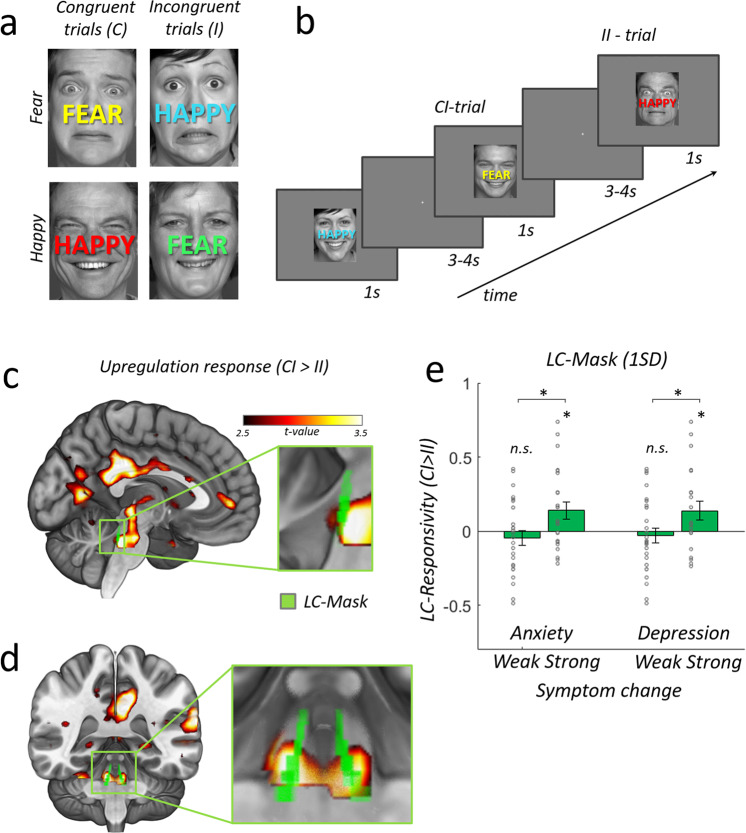
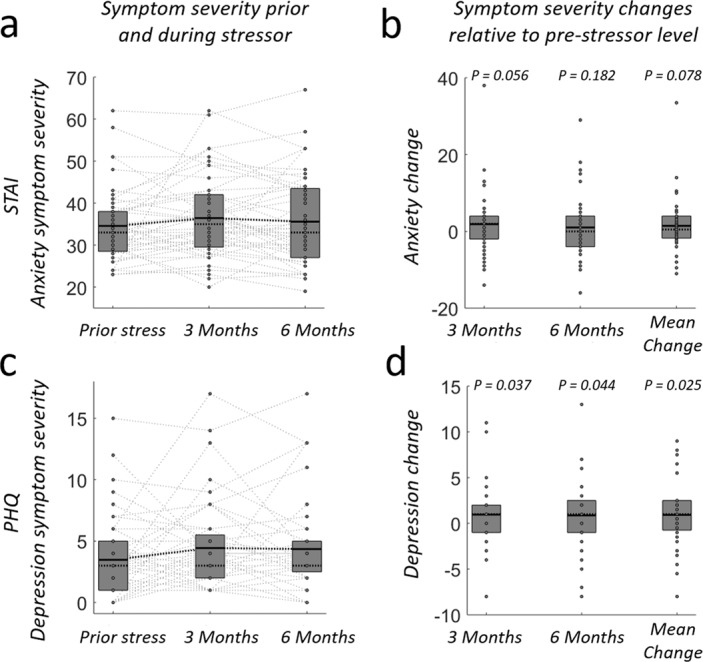
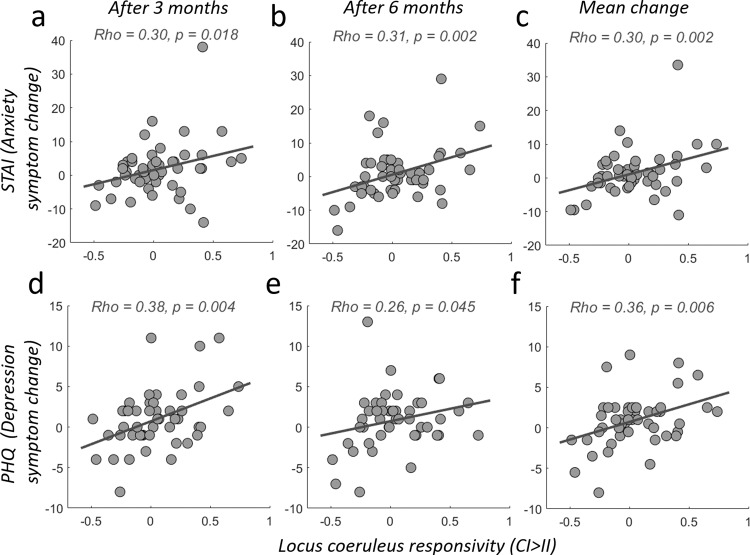
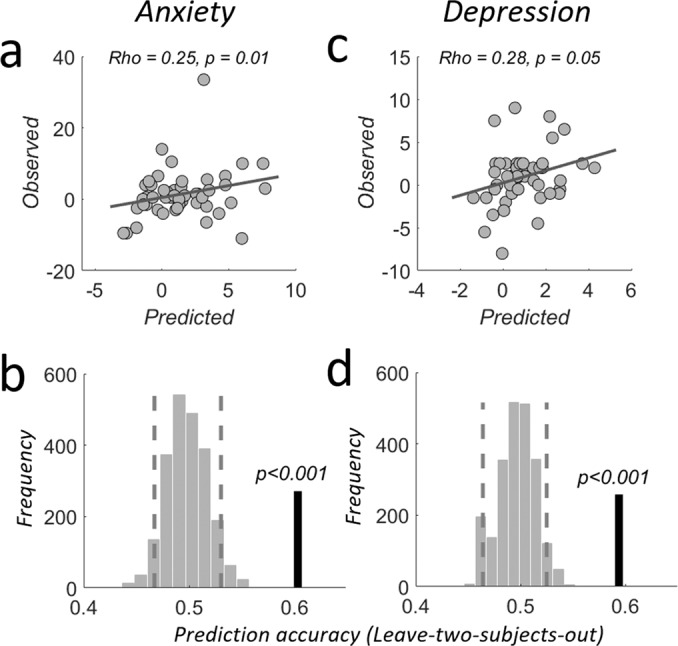
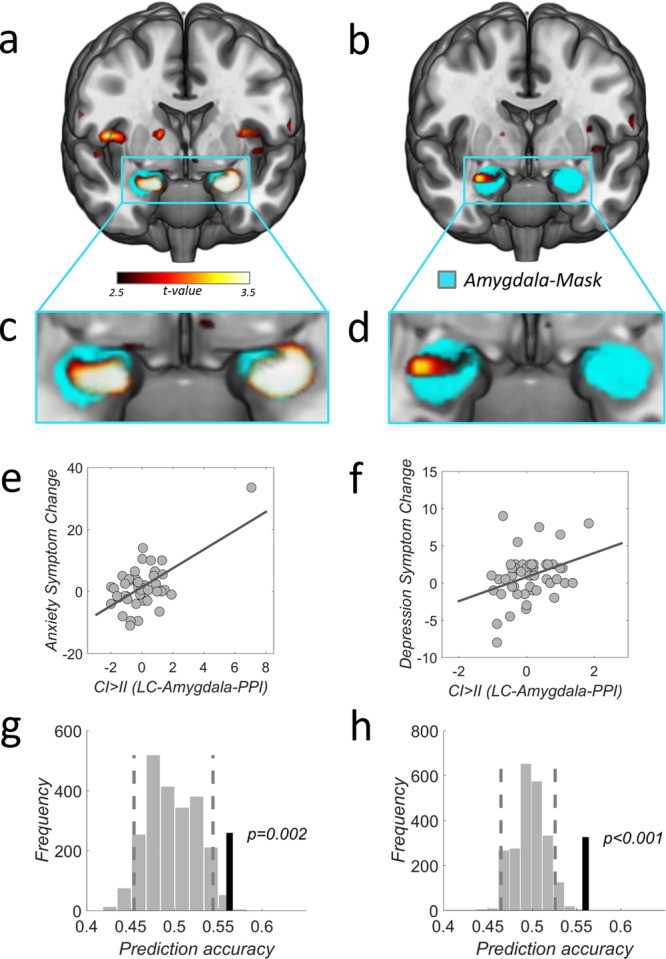
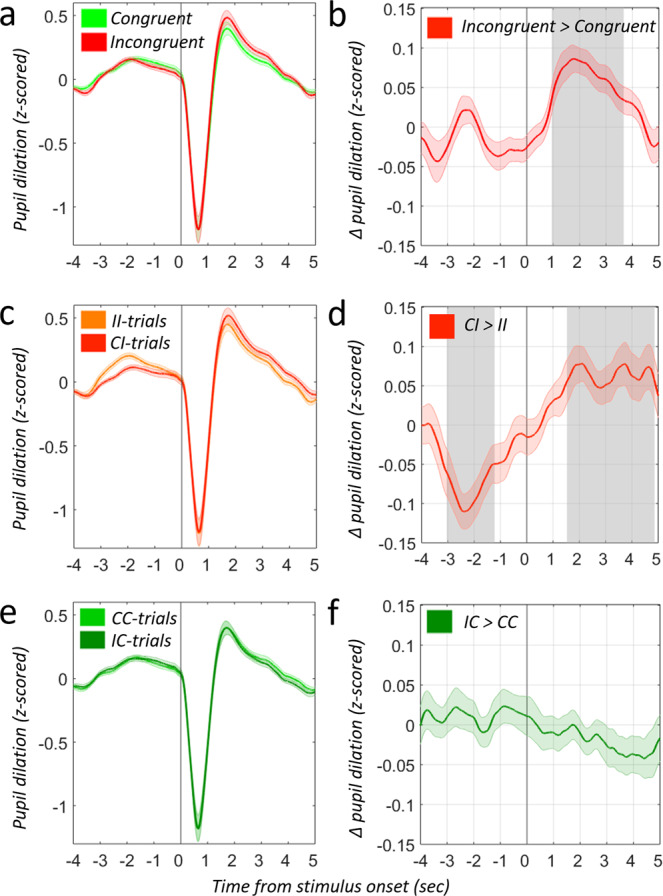
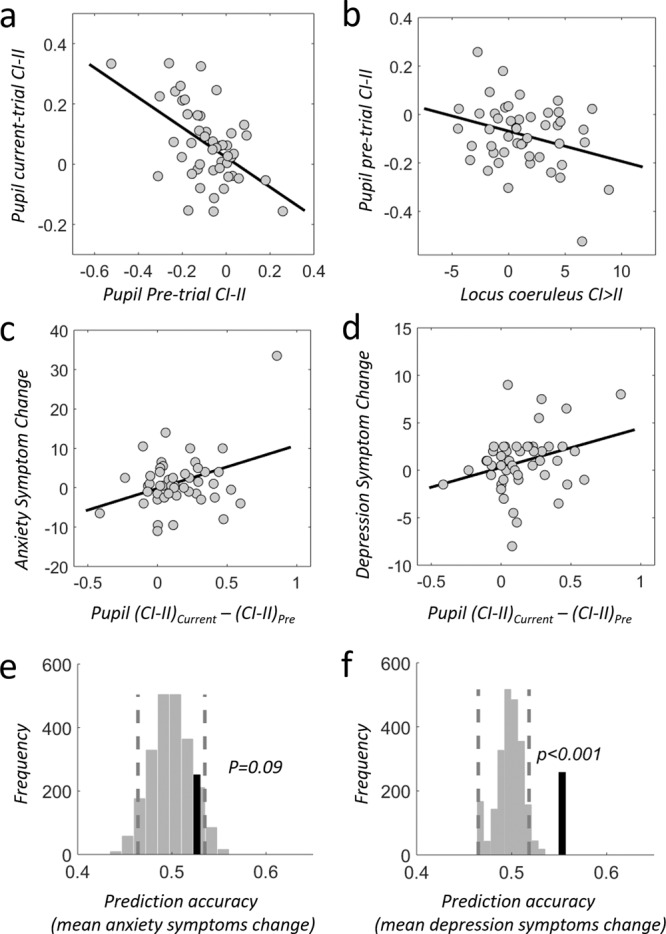
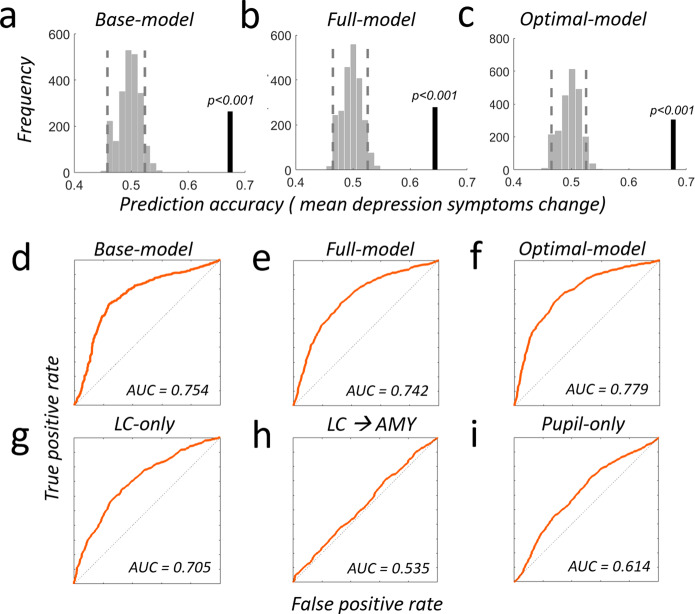
Individuals may show different responses to stressful events. Here, we investigate the neurobiological basis of stress resilience, by showing that neural responsitivity of the noradrenergic locus coeruleus (LC-NE) and associated pupil responses are related to the subsequent change in measures of anxiety and depression in response to prolonged real-life stress. We acquired fMRI and pupillometry data during an emotional-conflict task in medical residents before they underwent stressful emergency-room internships known to be a risk factor for anxiety and depression. The LC-NE conflict response and its functional coupling with the amygdala was associated with stress-related symptom changes in response to the internship. A similar relationship was found for pupil-dilation, a potential marker of LC-NE firing. Our results provide insights into the noradrenergic basis of conflict generation, adaptation and stress resilience.
Overview
The claims and statistics of this paper haven’t been checked yet.
Run the check — free, no account needed. It reads the open-access text and checks the sources it cites.
Integrity signals
Registry
Cites
Statistics
Figures
Verification
Claims the paper makes
The claims and statistics of this paper haven’t been checked yet.
Run the check — free, no account needed. It reads the open-access text and checks the sources it cites.
Claims other papers make about this one
Each is checked against this paper’s own text: does it say what the citing paper says it does?
The cited source says what the claim attributes to it.
In the citing paper
“As stressful events are inherently highly emotional (Southwick et al., 2011) and can increase vulnerability to psychopathology (Grueschow et al., 2021), the ability to regulate emotions may be a critically important factor in determining stress resilience (Barzilay et al., 2020; Kaldewaij et al., 2021) and mental wellbeing (Satchit et al., 2011; Silton et al., 2020).”
From Mindfulness-Based Stress Reduction Increases Mental Wellbeing and Emotion Regulation During the First Wave of the COVID-19 Pandemic: A Synchronous Online Intervention Study (2021) · cites this paper as Grueschow et al., 2021
Self-check
Percentages, sums and reported differences re-computed from the paper’s own numbers.
The self-check needs the paper’s full text.
Citations
Cites
Spitzer, R. L. (1999) · JAMA · doi:10.1001/jama.282.18.1737 · Cited by 9,802
Conflict monitoring and cognitive control
Botvinick, M. M., Braver, T. S., Barch, D. M., Carter, C. S., & Cohen, J. D. (2001) · Psychological Review · doi:10.1037/0033-295x.108.3.624 · Cited by 7,351
Aston-Jones, G., & Cohen, J. D. (2005) · Annual Review of Neuroscience · doi:10.1146/annurev.neuro.28.061604.135709 · Cited by 4,472
The reorienting system of the human brain: from environment to theory of mind
Corbetta, M., Patel, G., & Shulman, G. L. (2008) · Neuron · doi:10.1016/j.neuron.2008.04.017 · Cited by 3,889
Conflict monitoring and anterior cingulate cortex: an update
Botvinick, M. M., Cohen, J. D., & Carter, C. S. (2004) · Trends in Cognitive Sciences · doi:10.1016/j.tics.2004.10.003 · Cited by 3,623
State-Trait Anxiety Inventory for Adults
Spielberger, C. D. (2012) · PsycTESTS Dataset · doi:10.1037/t06496-000 · Cited by 3,479
Etkin, A., & Wager, T. D. (2007) · American Journal of Psychiatry · doi:10.1176/appi.ajp.2007.07030504 · Cited by 3,391
Neural regulation of endocrine and autonomic stress responses
Ulrich-Lai, Y. M., & Herman, J. P. (2009) · Nature Reviews Neuroscience · doi:10.1038/nrn2647 · Cited by 3,318
Anterior Cingulate Conflict Monitoring and Adjustments in Control
Kerns, J. G., Cohen, J. D., MacDonald, A. W., Cho, R. Y., Stenger, V. A., & Carter, C. S. (2004) · Science · doi:10.1126/science.1089910 · Cited by 2,891
Foa, E. B., Cashman, L., Jaycox, L., & Perry, K. (1997) · Psychological Assessment · doi:10.1037/1040-3590.9.4.445 · Cited by 2,709
Research works printed but not linked: 7
- Laeng, B., Orbo, M., Holmlund, T. & Miozzo, M. Pupillary Stroop effects. Cogn. Process 12, 13–21 (2011). · DOI
- van Steenbergen, H. & Band, G. P. Pupil dilation in the Simon task as a marker of conflict processing. Front. Hum. Neurosci. 7, 215 (2013). · DOI
- van der Wel, P. & van Steenbergen, H. Pupil dilation as an index of effort in cognitive control tasks: a review. Psychon. Bull. Rev. 25, 2005–2015 (2018). · DOI
- Loewenfeld, I. The Pupil: Anatomy, Physiology, and Clinical Applications (Iowa State University Press, 1991).
- Beatty, J. & Lucero-Wagoner, B. in Handbook of Psychophysiology (ed Tassinary, L.G., Cacioppo, J.T. Berntson, G.) 142–162 (Cambridge University Press, 2000).
- Buddeberg-Fischer, B., Klaghofer, F. C. & Buddeberg, C. Stress at work and well-being in junior residents. Z. Psychosomatische Med. Psychotherapie 51, 163–178 (2005).
- Buddeberg-Fischer, B., Stamm, M., Buddeberg, C. & Klaghofer, R. Anxiety and depression in residents—Results of a Swiss longitudinal study. Z. Psychosomatishce Med. Psychotherapie 55, 37–50 (2009).
Cited by
Sorted by citations
Egroo, M. V., Koshmanova, E., Vandewalle, G., & Jacobs, H. I. L. (2022) · Sleep Medicine Reviews · doi:10.1016/j.smrv.2022.101592 · Cited by 146
Neurobiology and systems biology of stress resilience
Kalisch, R., Russo, S. J., & Müller, M. B. (2024) · Physiological Reviews · doi:10.1152/physrev.00042.2023 · Cited by 149
Neural contributors to trauma resilience: a review of longitudinal neuroimaging studies
Roeckner, A. R., Oliver, K. I., Lebois, L. A. M., van Rooij, S. J. H., & Stevens, J. S. (2021) · Translational Psychiatry · doi:10.1038/s41398-021-01633-y · Cited by 103
Neurobehavioral meaning of pupil size
Grujic, N., Polanía, R., & Burdakov, D. (2024) · Neuron · doi:10.1016/j.neuron.2024.05.029 · Cited by 108
Ehrenberg, A. J., Kelberman, M. A., Liu, K. Y., Dahl, M. J., Weinshenker, D., Falgàs, N., Dutt, S., Mather, M., Ludwig, M., Betts, M. J., et al. (2023) · Alzheimer s & Dementia · doi:10.1002/alz.12937 · Cited by 74
Metadata
- Authors
- Grueschow, M., Stenz, N., Thörn, H., Ehlert, U., Breckwoldt, J., Brodmann Maeder, M., Exadaktylos, A. K., Bingisser, R., Ruff, C. C., & Kleim, B.
- Affiliations
- University of Zurich (CH)
- University Hospital of Bern (CH)
- University Hospital of Basel (CH)
- Corresponding author
- Grueschow, Marcus
- Kleim, Birgit
- ORCID
- Venue
- Nature Communications
- Published
- 2021-04-15
- Volume
- 12
- Issue
- 1
- Pages
- 2275-2275
- ISSN
- 2041-1723 (ISSN-L)
- PMC
- PMC8050280
- OpenAlex
- W3155821888
- Cited by
- 116
- References
- 147
- Citations by year
- 2026: 18 · 2025: 31 · 2024: 18 · 2023: 18 · 2022: 20 · 2021: 11
- FWCI
- 10.72
- Type
- journal article
- Language
- en
- Open access
- gold
- doi.org
- Locations
- Nature Communications (publishedVersion, cc-by)
- PubMed Central (publishedVersion, cc-by)
- PubMed (publishedVersion)
- Zurich Open Repository and Archive (University of Zurich) (acceptedVersion, cc-by)
- RePEc: Research Papers in Economics (submittedVersion)
- Bern Open Repository and Information System (University of Bern) (submittedVersion, cc-by)
- DOAJ (DOAJ: Directory of Open Access Journals) (submittedVersion, cc-by-sa)
- Zurich Open Repository and Archive (University of Zurich) (submittedVersion, cc-by)
- Zurich Open Repository and Archive (University of Zurich)
- Funders
- Richard-Büchner-Foundation
- Schweizerischer Nationalfonds zur Förderung der Wissenschaftlichen Forschung (PZ00P1_126597, PZ00P1_150812)
- Topics
- Life Sciences › Neuroscience › Behavioral Neuroscience › Stress Responses and Cortisol
- Life Sciences › Neuroscience › Cellular and Molecular Neuroscience › Neurotransmitter Receptor Influence on Behavior
- Life Sciences › Neuroscience › Cognitive Neuroscience › Neural and Behavioral Psychology Studies
- Keywords
- stress resilience, locus coeruleus, noradrenergic system, pupil dilation, amygdala, emotional conflict, anxiety, depression, medical residents, functional connectivity
- MeSH terms
- Occupational Stress, Adult, Amygdala, Anxiety, Depression, Emergency Service, Hospital, Female, Humans, Internship and Residency, Locus Coeruleus, Magnetic Resonance Imaging, Male, Predictive Value of Tests, Risk Factors, Students, Medical, Resilience, Psychological, Young Adult, Connectome
About these checks
Registry, retraction, Cites and statistics results are computed, not judged, with one exception: a printed reference that no index lists is read once by a model before it counts as a citation error. Claims are extracted by a model and kept only when their quote appears verbatim in the text; each cited source is then checked, with a model’s help, for whether it says what the claim relies on. Those verdicts can be wrong — read the claim’s quote and the cited source before relying on one.
Statistics and arithmetic are recomputed, not judged.
Confidence bands are shown only for fields calibrated on our annotated test set. None is calibrated yet, so no band is shown.
What counts as a claim ›How we measure confidence ›How we check this ›
Are you an author, or do you see a problem with this page? Request a review
