

A multicentre validation study of the diagnostic value of plasma neurofilament light.
Open accessPublished version of a preprint
The DOI matches its Crossref record; 69 of the 69 references it cites were found in a registry or an index.
Abstract
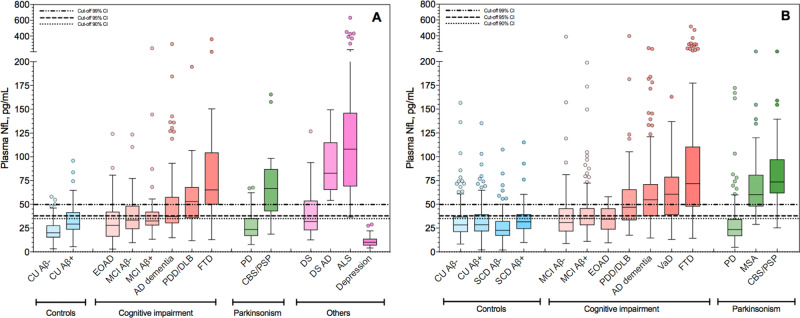
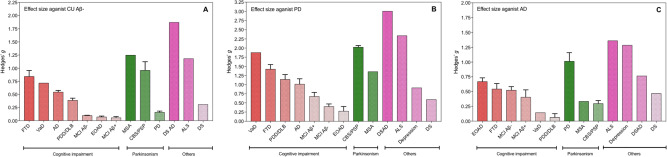
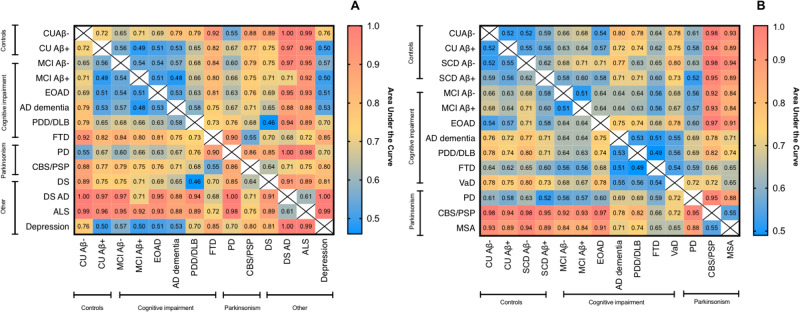
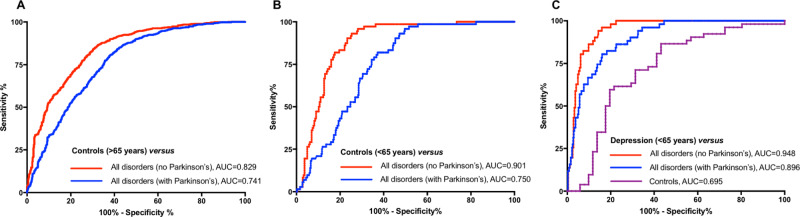
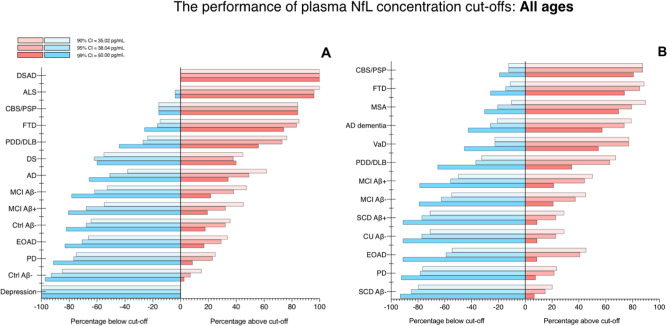
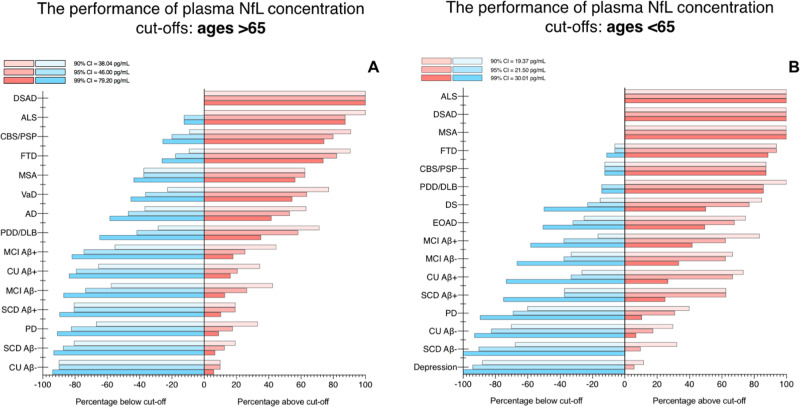
Increased cerebrospinal fluid neurofilament light (NfL) is a recognized biomarker for neurodegeneration that can also be assessed in blood. Here, we investigate plasma NfL as a marker of neurodegeneration in 13 neurodegenerative disorders, Down syndrome, depression and cognitively unimpaired controls from two multicenter cohorts: King’s College London ( n = 805) and the Swedish BioFINDER study ( n = 1,464). Plasma NfL was significantly increased in all cortical neurodegenerative disorders, amyotrophic lateral sclerosis and atypical parkinsonian disorders. We demonstrate that plasma NfL is clinically useful in identifying atypical parkinsonian disorders in patients with parkinsonism, dementia in individuals with Down syndrome, dementia among psychiatric disorders, and frontotemporal dementia in patients with cognitive impairment. Data-driven cut-offs highlighted the fundamental importance of age-related clinical cut-offs for disorders with a younger age of onset. Finally, plasma NfL performs best when applied to indicate no underlying neurodegeneration, with low false positives, in all age-related cut-offs.
Overview
The claims and statistics of this paper haven’t been checked yet.
Free: it reads the open-access text and checks the first 5 claims that cite a source we can check. Create a free account to check every claim.
Integrity signals
Registry
Cites
Statistics
Figures
Verification
Claims the paper makes
The claims and statistics of this paper haven’t been checked yet.
Free: it reads the open-access text and checks the first 5 claims that cite a source we can check. Create a free account to check every claim.
Claims other papers make about this one
Each is checked against this paper’s own text: does it say what the citing paper says it does?
The source backs part of the claim, not all of it — or backs it for a different population, condition or comparison.
In the citing paper
“Phosphorylated tau (p-tau) is the leading blood biomarker candidate, demonstrating superior diagnostic accuracy and disease specificity compared with other candidates.3,4”
From Diagnostic Accuracy of a Plasma Phosphorylated Tau 217 Immunoassay for Alzheimer Disease Pathology (2024) · cites this paper as [3]
Experimental — accuracy not yet measuredThe source backs part of the claim, not all of it — or backs it for a different population, condition or comparison.
In the citing paper
“Indeed, blood measures of p-tau181, p-tau217, p-tau231, glial fibrillary acid protein (GFAP), neurofilament light (NfL) and Aβ42/40 have been shown to change in preclinical AD and can discriminate this state from CU individuals with non-AD pathological changes1,3,6–13.”
From Plasma p-tau231 and p-tau217 as state markers of amyloid-β pathology in preclinical Alzheimer’s disease (2022) · cites this paper as [13]
Experimental — accuracy not yet measuredThe cited source says what the claim attributes to it.
In the citing paper
“As expected, plasma NfL had relatively lower PPV and NPV for AD, as NfL is a nonspecific biomarker of neurodegeneration, elevated in multiple different neurodegenerative diseases44.”
From Diagnosis of Alzheimer's disease using plasma biomarkers adjusted to clinical probability (2024) · cites this paper as [44]
Self-check
Percentages, sums and reported differences re-computed from the paper’s own numbers.
The self-check needs the paper’s full text.
Citations
Cites
NIA‐AA Research Framework: Toward a biological definition of Alzheimer's disease
Jack, C. R., Bennett, D. A., Blennow, K., Carrillo, M. C., Dunn, B., Haeberlein, S. B., Holtzman, D. M., Jagust, W., Jessen, F., Karlawish, J., et al. (2018) · Alzheimer's & Dementia · doi:10.1016/j.jalz.2018.02.018 · Cited by 10,537
Self-citationBrown, R. H., & Al-Chalabi, A. (2017) · New England Journal of Medicine · doi:10.1056/nejmra1603471 · Cited by 2,125
Self-citationNeurofilaments as biomarkers in neurological disorders
Khalil, M., Teunissen, C. E., Otto, M., Piehl, F., Sormani, M. P., Gattringer, T., Barro, C., Kappos, L., Comabella, M., Fazekas, F., et al. (2018) · Nature Reviews Neurology · doi:10.1038/s41582-018-0058-z · Cited by 1,988
Self-citationHigh performance plasma amyloid-β biomarkers for Alzheimer's disease
Nakamura, A., Kaneko, N., Villemagne, V. L., Kato, T., Doecke, J., Doré, V., Fowler, C., Li, Q.-X., Martins, R., Rowe, C., et al. (2018) · Nature · doi:10.1038/nature25456 · Cited by 1,681
Palmqvist, S., Janelidze, S., Quiroz, Y. T., Zetterberg, H., Lopera, F., Stomrud, E., Su, Y., Chen, Y., Serrano, G. E., Leuzy, A., et al. (2020) · JAMA · doi:10.1001/jama.2020.12134 · Cited by 1,603
Self-citationKarikari, T. K., Pascoal, T. A., Ashton, N. J., Janelidze, S., Benedet, A. L., Rodriguez, J. L., Chamoun, M., Savard, M., Kang, M. S., Therriault, J., et al. (2020) · The Lancet Neurology · doi:10.1016/s1474-4422(20)30071-5 · Cited by 1,316
Self-citationJanelidze, S., Mattsson, N., Palmqvist, S., Smith, R., Beach, T. G., Serrano, G. E., Chai, X., Proctor, N. K., Eichenlaub, U., Zetterberg, H., et al. (2020) · Nature Medicine · doi:10.1038/s41591-020-0755-1 · Cited by 1,247
Self-citationAssociation of plasma neurofilament light with neurodegeneration in patients with Alzheimer disease
Mattsson, N., Andreasson, U., Zetterberg, H., Blennow, K., & Initiative, F. T. A. D. N. (2017) · JAMA Neurology · doi:10.1001/jamaneurol.2016.6117 · Cited by 1,070
Self-citationBiomarkers for Alzheimer's disease: current status and prospects for the future
Blennow, K., & Zetterberg, H. (2018) · Journal of Internal Medicine · doi:10.1111/joim.12816 · Cited by 1,000
Self-citationDominantly Inherited Alzheimer Network, Preische, O., Schultz, S. A., Apel, A., Kuhle, J., Kaeser, S. A., Barro, C., Gräber, S., Kuder-Buletta, E., LaFougere, C., et al. (2019) · Nature Medicine · doi:10.1038/s41591-018-0304-3 · Cited by 927
Research works printed but not linked: 1
- Palmqvist S Discriminative accuracy of plasma phospho-tau217 for Alzheimer disease vs other neurodegenerative disorders J. Am. Med. Assoc. 2020 324 772 781 10.1001/jama.2020.12134 PMC7388060 32722745 · DOI · Paper page
Cited by
Items 101–200 of 607
Witzel, S., Huss, A. M., Nagel, G., Rosenbohm, A., Rothenbacher, D., Peter, R. S., Bäzner, H., Börtlein, A., Dempewolf, S., Schabet, M., et al. (2024) · Annals of Neurology · doi:10.1002/ana.27054 · Cited by 52
IGF1 deficiency integrates stunted growth and neurodegeneration in Down syndrome
Araya, P., Kinning, K. T., Coughlan, C., Smith, K. P., Granrath, R. E., Enriquez-Estrada, B. A., Worek, K., Sullivan, K. D., Rachubinski, A. L., Wolter-Warmerdam, K., et al. (2022) · Cell Reports · doi:10.1016/j.celrep.2022.111883 · Cited by 50
Vascular Dementia: From Pathophysiology to Therapeutic Frontiers
Yang, H. (2025) · Journal of Clinical Medicine · doi:10.3390/jcm14186611 · Cited by 52
“Plasma NfL levels serve as an accessible prognostic tool because patients with levels above 40 pg/mL experience accelerated cognitive deterioration and elevated death risk [117].”
Gleerup, H. S., Jensen, C. S., Høgh, P., Hasselbalch, S. G., & Simonsen, A. H. (2021) · EBioMedicine · doi:10.1016/j.ebiom.2021.103361 · Cited by 50
Promising Blood Biomarkers for Clinical Use in Alzheimer’s Disease: A Focused Update
Park, S. A., Jang, Y. J., Kim, M. K., Lee, S. M., & Moon, S. Y. (2022) · Journal of Clinical Neurology · doi:10.3988/jcn.2022.18.4.401 · Cited by 47
Ferreira, P. C. L., Zhang, Y., Snitz, B. E., Chang, C. H., Bellaver, B., Jacobsen, E. P., Kamboh, M. I., Zetterberg, H., Blennow, K., Pascoal, T. A., et al. (2023) · Alzheimer s & Dementia · doi:10.1002/alz.12986 · Cited by 50
Self-citationBlomqvist, M., Zetterberg, H., Blennow, K., & Månsson, J. (2021) · Molecular and Cellular Neuroscience · doi:10.1016/j.mcn.2021.103670 · Cited by 50
Self-citationArtificial intelligence for dementia drug discovery and trials optimization
Doherty, T., Yao, Z., Khleifat, A. A. L., Tantiangco, H., Tamburin, S., Albertyn, C., Thakur, L., Llewellyn, D. J., Oxtoby, N. P., Lourida, I., et al. (2023) · Alzheimer's & Dementia · doi:10.1002/alz.13428 · Cited by 48
“43,44 Although 10%–20% of patients have a relevant family history, in most cases the condition appears sporadic.”
Biomarker discovery and development for frontotemporal dementia and amyotrophic lateral sclerosis
Katzeff, J. S., Bright, F., Phan, K., Kril, J. J., Ittner, L. M., Kassiou, M., Hodges, J. R., Piguet, O., Kiernan, M. C., Halliday, G. M., et al. (2022) · Brain · doi:10.1093/brain/awac077 · Cited by 48
“dementias especially when aged-related concentration cut-offs are considered.(84) Overall, NfL is so far the most established biomarker in frontotemporal dementia and amyotrophic lateral sclerosis, al-”
BackgroundHarnessing the potential of machine learning and artificial intelligence for dementia research
Ranson, J. M., Bucholc, M., Lyall, D. M., Newby, D., Winchester, L. M., Oxtoby, N. P., Veldsman, M., Rittman, T., Marzi, S. J., Skene, N., et al. (2023) · Brain Informatics · doi:10.1186/s40708-022-00183-3 · Cited by 51
Giangrande, C., Delatour, V., Andréasson, U., Blennow, K., Gobom, J., & Zetterberg, H. (2023) · Alzheimer s & Dementia Diagnosis Assessment & Disease Monitoring · doi:10.1002/dad2.12465 · Cited by 48
“73 Several studies rely on in-house developed assays or commercial “for research use only” ELISAs for NfL measurements, although the limit of quantification of most of them is insufficient to measure clinically relevant NfL levels in CSF of control patients or in blood samples of patients affected…”
Self-citationMeyer, T., Salkic, E., Grehl, T., Weyen, U., Kettemann, D., Weydt, P., Günther, R., Lingor, P., Koch, J. C., Petri, S., et al. (2023) · European Journal of Neurology · doi:10.1111/ene.15773 · Cited by 48
“Despite the potential of NfL, important unsolved issues limit the interpretation of the biomarker as previous studies were based on small sNfL sample sizes and included low numbers of individuals in the longer course of the disease [10, 14].”
ResultFrigerio, I., Bouwman, M. M. A., Noordermeer, R. T. G. M. M., Podobnik, E., Popovic, M. M., Timmermans, E., Rozemüller, A. J. M., van de Berg, W. D. J., & Jonkman, L. E. (2024) · Acta Neuropathologica Communications · doi:10.1186/s40478-023-01711-w · Cited by 47
“Increased NfL levels in biofluids are commonly used as a proxy of axonal degeneration in neurodegenerative disorders [30], but evidence of how NfL levels relate to synaptic markers is still limited.”
BackgroundDistinguishing Frontotemporal Lobar Degeneration Tau From TDP-43 Using Plasma Biomarkers
Cousins, K. A. Q., Shaw, L. M., Chen-Plotkin, A., Wolk, D. A., Van Deerlin, V. M., Lee, E. B., McMillan, C. T., Grossman, M., & Irwin, D. J. (2022) · JAMA Neurology · doi:10.1001/jamaneurol.2022.3265 · Cited by 45
Association of neurofilament light chain with renal function: mechanisms and clinical implications
Tang, R., Panizzon, M. S., Elman, J. A., Gillespie, N. A., Hauger, R. L., Rissman, R. A., Lyons, M. J., Neale, M. C., Reynolds, C. A., Franz, C. E., et al. (2022) · Alzheimer s Research & Therapy · doi:10.1186/s13195-022-01134-0 · Cited by 46
“However, renal function and potentially other health conditions (see [5] for an example approach) should be accounted for when plasma NfL is compared to a cutoff to classify individuals as positive or negative for neurodegeneration [13, 14, 36].”
BackgroundMethodTau protein profiling in tauopathies: a human brain study
Lantero‐Rodriguez, J., Camporesi, E., Montoliu‐Gaya, L., Gobom, J., Piotrowska, D., Olsson, M., Matečko‐Burmann, I., Becker, B., Brinkmalm, A., Burmann, B. M., et al. (2024) · Molecular Neurodegeneration · doi:10.1186/s13024-024-00741-9 · Cited by 49
“Thus, despite tau pathology being at the very core of all non-AD tauopathies, these disorders are limited to markers of global neurodegeneration (e.g., neurofilament light) [34] as no disease-specific biomarkers are currently available.”
BackgroundSelf-citationSong, J., Cho, E., Lee, H., Lee, S., Kim, S., & Kim, J. (2025) · Biosensors · doi:10.3390/bios15020102 · Cited by 47
Biomarkers for amyotrophic lateral sclerosis
Witzel, S., Mayer, K., & Oeckl, P. (2022) · Current Opinion in Neurology · doi:10.1097/wco.0000000000001094 · Cited by 46
Hirota, Y., Sakakibara, Y., Ibaraki, K., Takei, K., Iijima, K., & Sekiya, M. (2022) · Brain Communications · doi:10.1093/braincomms/fcac286 · Cited by 46
Ashton, N. J., Benedet, A. L., Molfetta, G. D., Pola, I., Anastasi, F., Fernández‐Lebrero, A., Puig‐Pijoan, A., Keshavan, A., Schott, J. M., Tan, K., et al. (2025) · Alzheimer s & Dementia · doi:10.1002/alz.14621 · Cited by 46
Self-citationHuber, H., Montoliu‐Gaya, L., Brum, W. S., Vávra, J., Yakoub, Y., Weninger, H., Braun-Wohlfahrt, L. S., Simrén, J., Boada, M., Ruiz, A., et al. (2026) · Nature Medicine · doi:10.1038/s41591-025-04080-0 · Cited by 46
“…(GFAP), a marker of astrogliosis, has been associated with the onset of Aβ deposition 12,13 ; and neurofilament light (NfL), a marker for axonal degeneration across neurodegenerative diseases 14 , has also been developed and is widely deployed in research and some clinical and therapeutic settings.”
Self-citationPlasma neurofilament light is a predictor of neurological outcome 12 h after cardiac arrest
Levin, H., Lybeck, A., Frigyesi, A., Arctaedius, I., Þorgeirsdóttir, B., Annborn, M., Knappe, M. M., Nielsen, N., Cronberg, T., Ashton, N. J., et al. (2023) · Critical Care · doi:10.1186/s13054-023-04355-3 · Cited by 43
Self-citationNovel blood‐based proteomic signatures across multiple neurodegenerative diseases
Durcan, R., Heslegrave, A., Swann, P., Goddard, J., Chouliaras, L., Murley, A. G., Savulich, G., Bevan-Jones, W. R., Swann, O., Ashton, N. J., et al. (2025) · Alzheimer s & Dementia · doi:10.1002/alz.70116 · Cited by 44
Self-citationWong, Y. Y., Wu, C., Yu, D., Kim, E., Wong, M., Elez, R., Zebarth, J., Ouk, M., Tan, J., Liao, J., et al. (2022) · Parkinsonism & Related Disorders · doi:10.1016/j.parkreldis.2022.06.004 · Cited by 43
Chong, J. R., Hilal, S., Ashton, N. J., Karikari, T. K., Reilhac, A., Vrooman, H. A., Schöll, M., Zetterberg, H., Blennow, K., Chen, C., et al. (2023) · Alzheimer s & Dementia Diagnosis Assessment & Disease Monitoring · doi:10.1002/dad2.12396 · Cited by 43
Self-citationHu, Y., Cho, M., Sachdev, P., Dage, J., Hendrix, S., Hansson, O., Bateman, R. J., & Hampel, H. (2024) · Med · doi:10.1016/j.medj.2024.08.004 · Cited by 42
Self-citationShahim, P., Norato, G., Sinaii, N., Zetterberg, H., Blennow, K., Chan, L. E., & Grunseich, C. (2024) · Genes · doi:10.3390/genes15040496 · Cited by 42
“…studies that assessed neuro fi la-ments across ALS and/or FTD, higher NfL was shown in patients with ALS or FTD-ALS compared to FTD alone [23,35–37]. few studies that assessed neurofilaments across ALS and/or FTD, higher NfL was shown in patients with ALS or FTD-ALS compared to FTD alone [23,35–37].”
ResultSelf-citationHuang, Z., Zhang, L., Dou, Y., Liu, X., Song, S., Jiang, H., & Fan, C. (2024) · Analytical Chemistry · doi:10.1021/acs.analchem.4c01278 · Cited by 43
Plasma neuregulin 1 as a synaptic biomarker in Alzheimer’s disease: a discovery cohort study
Vrillon, A., Mouton‐Liger, F., Martinet, M., Cognat, E., Hourrègue, C., Dumurgier, J., Bouaziz-Amar, É., Brinkmalm, A., Blennow, K., Zetterberg, H., et al. (2022) · Alzheimer s Research & Therapy · doi:10.1186/s13195-022-01014-7 · Cited by 43
Self-citationAlzheimer Disease Blood Biomarkers in Patients With Out-of-Hospital Cardiac Arrest
Ashton, N. J., Knappe, M. M., Benedet, A. L., Grötschel, L., Lantero‐Rodriguez, J., Karikari, T. K., Hassager, C., Wise, M. P., Stammet, P., Kjærgaard, J., et al. (2023) · JAMA Neurology · doi:10.1001/jamaneurol.2023.0050 · Cited by 42
Self-citationEratne, D., Kang, M. J., Malpas, C. B., Simpson, S., Lewis, C. C., Dang, C., Grewal, J. K., Coe, A., Dobson, H., Keem, M. H., et al. (2023) · Australian & New Zealand Journal of Psychiatry · doi:10.1177/00048674231187312 · Cited by 41
“Findings have been mixed from the few studies that investigated blood NfL in PPD. Higher levels were seen in major depressive disorder (MDD) compared to controls in one study (Bavato et al., 2021), but not in another (Ashton et al., 2021).”
BackgroundResultInfluentialSelf-citationVrillon, A., Bousiges, O., Götze, K., Demuynck, C., Muller, C., Ravier, A., Schorr, B., Philippi, N., Hourrègue, C., Cognat, E., et al. (2024) · Alzheimer s Research & Therapy · doi:10.1186/s13195-024-01502-y · Cited by 41
“Previous findings regarding plasma NfL in DLB have been ambiguous, which may partly be because of small sample studies, discrepancies in design, and variability of cohorts, combining sometimes DLB with Parkinson’s disease dementia [31].”
ResultSanchez, E., Coughlan, G., Wilkinson, T., Ramirez, J., Mirza, S. S., Baril, A., Dilliott, A. A., Frank, A. R., Lang, A. E., Hassan, A. A., et al. (2025) · Neurology · doi:10.1212/wnl.0000000000213438 · Cited by 42
Self-citationKarikari, T. K. (2022) · Journal of Alzheimer's Disease · doi:10.3233/jad-215730 · Cited by 33
Self-citationWang, X., Cui, B., Chen, Y., Feng, T., Li, Z., & Fang, G. (2024) · Journal of Environmental Management · doi:10.1016/j.jenvman.2024.120198 · Cited by 40
Meyer, T., Dreger, M., Grehl, T., Weyen, U., Kettemann, D., Weydt, P., Günther, R., Lingor, P., Petri, S., Koch, J. C., et al. (2024) · European Journal of Neurology · doi:10.1111/ene.16379 · Cited by 40
Gust, J., Rawlings-Rhea, S. D., Wilson, A. L., Tulberg, N., Sherman, A. L., Seidel, K. D., Wu, Q. V., Park, J. R., Gardner, R. A., & Annesley, C. (2022) · Blood Advances · doi:10.1182/bloodadvances.2022008119 · Cited by 40
“Single-molecule array (Simoa) assays have become prevalent for NfL quantification in recent years.(42) A direct comparison of Simoa and ECLIA showed similar performance but higher sensitivity in the very low range of values for Simoa.”
BackgroundNeurofilaments contribution in clinic: state of the art
Delaby, C., Bousiges, O., Bouvier, D., Fillée, C., Fourier, A., Mondésert, E., Nezry, N., Omar, S., Quadrio, I., Rucheton, B., et al. (2022) · Frontiers in Aging Neuroscience · doi:10.3389/fnagi.2022.1034684 · Cited by 39
“amyloid− subjects (defined on the basis of Aβ1–42 assays in CSF or amyloid PET imaging, N = 805; Ashton et al., 2021) and the second being based on a pathology cohort (N = 312) comparing Braak 0_II vs.”
BackgroundPlasma GFAP associates with secondary Alzheimer's pathology in Lewy body disease
Cousins, K. A. Q., Irwin, D. J., Chen‐Plotkin, A. S., Shaw, L. M. J., Arezoumandan, S., Lee, E. B., Wolk, D. A., Weintraub, D. A., Spindler, M., Deik, A., et al. (2023) · Annals of Clinical and Translational Neurology · doi:10.1002/acn3.51768 · Cited by 40
Gibson, L. L., Ruiz, C. A., Chong, J. R., Ballard, C. G., & Aarsland, D. (2023) · Current Opinion in Neurology · doi:10.1097/wco.0000000000001173 · Cited by 38
Self-citationJain, S. K., Stevens, C. M., Margret, J. J., & Levine, S. N. (2024) · Antioxidants and Redox Signaling · doi:10.1089/ars.2023.0245 · Cited by 39
“Studies that examined the plasma concentration of NFL in two different cohorts, one from King’s College in London ( n = 805) and other from the Swedish BioFINDER study ( n = 1464), concluded that plasma NFL was helpful in detecting cognitive impairment in these individuals (Ashton et al., 2021).”
Disease-modifying therapies for Parkinson disease: lessons from multiple sclerosis
Kalia, L. V., Asis, A., Arbour, N., Bar‐Or, A., Bove, R. M., Luca, D. G. D., Fon, E. A., Fox, S. H., Gan‐Or, Z., Gommerman, J. L., et al. (2024) · Nature Reviews Neurology · doi:10.1038/s41582-024-01023-0 · Cited by 38
“Although an increase in NfL levels is not specific to any particular disease or pathogenesis, this change can be useful to monitor or prog-nosticate disease progression and track response to therapy 143 .”
Benussi, A., Huber, H., Tan, K., Cantoni, V., Rivolta, J., Cotelli, M. S., Benedet, A. L., Blennow, K., Zetterberg, H., Ashton, N. J., et al. (2025) · Alzheimer s & Dementia · doi:10.1002/alz.14482 · Cited by 39
“For instance, NfL tends to be higher in FTLD and amyotrophic lateral sclerosis compared to AD 23–25 ; thus, the distinct differences in their levels between these diseases can be leveraged in diagnostic algorithms.”
Self-citationLan, G., Wang, M., González‐Ortiz, F., Zhang, L., Li, A., Li, B., Jiang, M., Yang, J., Chen, X., Shi, D., et al. (2025) · Nature Aging · doi:10.1038/s43587-025-00904-3 · Cited by 38
Self-citationA new generation of AD biomarkers: 2019 to 2021
Hawksworth, J. I., Fernández, E., & Gevaert, K. (2022) · Ageing Research Reviews · doi:10.1016/j.arr.2022.101654 · Cited by 37
Akel, S., Asztély, F., Banote, R. K., Axelsson, M., Zetterberg, H., & Zelano, J. (2023) · Epilepsia · doi:10.1111/epi.17713 · Cited by 37
Self-citationGötze, K., Vrillon, A., Dumurgier, J., Indart, S., Ortiz, M. S., Slimi, H., Raynaud-Simon, A., Cognat, E., Martinet, M., Zetterberg, H., et al. (2024) · Alzheimer s Research & Therapy · doi:10.1186/s13195-024-01593-7 · Cited by 37
“More consistently, plasma NfL was suggested as an accurate biomarker to discriminate neuro-degenerative from non-neurodegenerative conditions, as well as to differentiate rapidly from slowly progressing diseases [9, 13].”
BackgroundResultSelf-citationMielke, M. M., Evans, J. K., Neiberg, R. H., Molina‐Henry, D. P., Marcovina, S. M., Johnson, K., Carmichael, O. T., Rapp, S. R., Sachs, B. C., Ding, J., et al. (2025) · JAMA Network Open · doi:10.1001/jamanetworkopen.2024.58149 · Cited by 36
Pan, F., Huang, L., Wang, Y., Huang, Q., Guan, Y., Li, Y., Xie, F., & Guo, Q. (2025) · Alzheimer s & Dementia · doi:10.1002/alz.70987 · Cited by 36
“16 However, due to the non-specific character of NfL as a biomarker for AD-related neuronal injury and the common presence of comorbidities alongside AD progression, 17,18 it remains unclear whether these associations directly contribute to AD or are a consequence of comorbid conditions.”
Dissociable contribution of plasma NfL and p-tau181 to cognitive impairment in Parkinson's disease
Pagonabarraga, J., Pérez‐González, R., Bejr‐Kasem, H., Marín‐Lahoz, J., Horta‐Barba, A., Martínez‐Horta, S., Aracil‐Bolaños, I., Sampedro, F., Campolongo, A., Rivas, E. I., et al. (2022) · Parkinsonism & Related Disorders · doi:10.1016/j.parkreldis.2022.05.020 · Cited by 37
Simrén, J., Ashton, N. J., Blennow, K., & Zetterberg, H. (2021) · Alzheimer s & Dementia Diagnosis Assessment & Disease Monitoring · doi:10.1002/dad2.12145 · Cited by 35
Self-citationFrigerio, I., Laansma, M. A., Lin, C., Hermans, E. J. M., Bouwman, M. M. A., Bol, J. G. J. M., Graaf, Y. G.-D., Hepp, D. H., Rozemüller, A. J. M., Barkhof, F., et al. (2023) · Translational Neurodegeneration · doi:10.1186/s40035-022-00328-8 · Cited by 36
“Taken together, we provide evidence for increased phosphorylation of NfM/H, suggesting axonal stress across the cortex of PD, PDD and DLB donors.”
BackgroundInfluentialDittrich, A., Ashton, N. J., Zetterberg, H., Blennow, K., Simrén, J., Geiger, F., Zettergren, A., Shams, S., Machado, A., Westman, E., et al. (2022) · Alzheimer s & Dementia Diagnosis Assessment & Disease Monitoring · doi:10.1002/dad2.12295 · Cited by 35
“Stroke was diagnosed if (1) reported by the participant or a close relative, (2) diagnosed in the Swedish National In-patient register, or (3) there were findings specific for stroke on MRI scan also without symptoms.”
BackgroundSelf-citationEmerging Trends: Neurofilament Biomarkers in Precision Neurology
Sharma, P., Giri, A., & Tripathi, P. N. (2024) · Neurochemical Research · doi:10.1007/s11064-024-04244-3 · Cited by 33
“However, NF has been implicated in the development of ALS for over 20 years [130].”
Eratne, D., Janelidze, S., Malpas, C. B., Loi, S. M., Walterfang, M., Merritt, A. H., Diouf, I., Blennow, K., Zetterberg, H., Cilia, B.-J., et al. (2021) · Australian & New Zealand Journal of Psychiatry · doi:10.1177/00048674211058684 · Cited by 33
“Elevated levels in cerebrospinal fluid (CSF) and blood have been demonstrated in a wide range of neurological and neurodegenerative conditions, with NfL functioning as a biomarker to identify and grade neuroaxonal injury, as well as for staging, prognosis and treatment response in many conditions (Ashton et al., 2021;…”
BackgroundSelf-citationButt, O. H., Zhou, A. Y., Caimi, P. F., Luckett, P. H., Wisch, J. K., Derenoncourt, P.-R., Lee, K., Wu, G. F., Lima, M. J. G. D., Campian, J. L., et al. (2022) · JAMA Oncology · doi:10.1001/jamaoncol.2022.3738 · Cited by 33
González‐Escalante, A., Milà‐Alomà, M., Brum, W. S., Ashton, N. J., Ortiz-Romero, P. L., Shekari, M., del Campo, M., Anastasi, F., Quijano‐Rubio, C., Kollmorgen, G., et al. (2025) · EBioMedicine · doi:10.1016/j.ebiom.2025.105741 · Cited by 35
“9 Glial fi brillary acidic protein (GFAP), 10 a biomarker indicating astrocytic reactivity, and neuro fi lament light (NfL), 11 a biomarker of neuro-axonal injury, are not AD-speci fi c but they may also incorporate useful information.”
Self-citationEdlow, B. L., Bodien, Y. G., Baxter, T., Belanger, H. G., Cali, R. J., Deary, K. B., Fischl, B. R., Foulkes, A. S., Gilmore, N., Greve, D. N., et al. (2022) · Journal of Neurotrauma · doi:10.1089/neu.2022.0030 · Cited by 32
A critical appraisal of blood-based biomarkers for Alzheimer’s disease
Lista, S., Mapstone, M. E., Caraci, F., Emanuele, E., López‐Ortiz, S., Martín-Hernández, J., Triaca, V., Imbimbo, C., Gabelle, A., Mielke, M. M., et al. (2024) · Ageing Research Reviews · doi:10.1016/j.arr.2024.102290 · Cited by 33
Maschio, V. P. D., Roveta, F., Bonino, L., Boschi, S., Rainero, I., & Rubino, E. (2025) · International Journal of Molecular Sciences · doi:10.3390/ijms26178564 · Cited by 32
Butterfield, D. A. (2021) · Free Radical Biology and Medicine · doi:10.1016/j.freeradbiomed.2021.10.036 · Cited by 31
Autoantibodies targeting neuronal proteins as biomarkers for neurodegenerative diseases
Kocurova, G., Říčný, J., & Ovsepian, S. V. (2022) · Theranostics · doi:10.7150/thno.72126 · Cited by 32
Chen, X., Zuo, X., Becker, A., Head, E., & Mobley, W. C. (2022) · Alzheimer s & Dementia · doi:10.1002/alz.12835 · Cited by 31
Plasma neurofilament light chain in memory clinic practice: Evidence from a real-life study
Götze, K., Vrillon, A., Bouaziz-Amar, É., Mouton‐Liger, F., Hugon, J., Martinet, M., Dumurgier, J., Cognat, E., Zetterberg, H., Blennow, K., et al. (2022) · Neurobiology of Disease · doi:10.1016/j.nbd.2022.105937 · Cited by 31
Self-citationEratne, D., Kang, M. J., Lewis, C. C., Dang, C., Malpas, C. B., Keem, M. H., Grewal, J. K., Marinov, V., Coe, A., Kaylor‐Hughes, C., et al. (2024) · Alzheimer s & Dementia · doi:10.1002/alz.14278 · Cited by 31
“Most studies have focused on comparing NfL levels between different NDs and controls [8–13] Some studies have investigated CSF and blood NfL for broad ND diagnosis in clinical settings, finding elevated concentrations of NfL in ND, diagnostic utility and/or increasing diagnostic certainty [14–20].”
BackgroundSelf-citationArtificial intelligence for dementia genetics and omics
Bettencourt, C., Skene, N., Bandres‐Ciga, S., Anderson, E., Winchester, L. M., Foote, I. F., Schwartzentruber, J., Botia, J. A., Nalls, M., Singleton, A., et al. (2023) · Alzheimer's & Dementia · doi:10.1002/alz.13427 · Cited by 30
“74 Targeted biomarkers such as NfL have begun to be translated into clinical settings but the use of multi-omics data has so far been limited.”
BackgroundTsoy, E., Joie, R. L., VandeVrede, L. A., Rojas, J. C., Yballa, C., Chan, B., Lago, A. L., Rodriguez, A., Goode, C. A., Erlhoff, S. J., et al. (2024) · Alzheimer s & Dementia · doi:10.1002/alz.13686 · Cited by 31
Self-citationPilotto, A., Parigi, M., Bonzi, G., Battaglio, B., Ferrari, E., Mensi, L., Benussi, A., Caratozzolo, S., Cosseddu, M., Turrone, R., et al. (2022) · Journal of Alzheimer s Disease · doi:10.3233/jad-215646 · Cited by 30
Self-citationBauer, A., Rudzki, D., Berek, K., Dinoto, A., Lechner, C., Wendel, E., Hegen, H., Deisenhammer, F., Berger, T., Höftberger, R., et al. (2022) · Frontiers in Immunology · doi:10.3389/fimmu.2022.1037812 · Cited by 30
“For other blood-based markers like neurofilament light chain, also limited comparability between assays was published showing strong correlations but differing absolute concentrations (48).”
BackgroundPeptide-Based Vaccines for Neurodegenerative Diseases: Recent Endeavors and Future Perspectives
Vassilakopoulou, V., Karachaliou, C., Evangelou, A., Zikos, C. C., & Livaniou, E. (2021) · Vaccines · doi:10.3390/vaccines9111278 · Cited by 30
Levels of Neurofilament Light at the Preataxic and Ataxic Stages of Spinocerebellar Ataxia Type 1
Wilke, C., Mengel, D., Schöls, L. J., Hengel, H., Rakowicz, M., Klockgether, T., Dürr, A., Filla, A., Melegh, B., Schüle, R., et al. (2022) · Neurology · doi:10.1212/wnl.0000000000200257 · Cited by 29
The association between personality and plasma biomarkers of astrogliosis and neuronal injury
Terracciano, A., Walker, K. A., An, Y., Luchetti, M., Stéphan, Y., Moghekar, A., Sutin, A. R., Ferrucci, L., & Resnick, S. M. (2023) · Neurobiology of Aging · doi:10.1016/j.neurobiolaging.2023.04.011 · Cited by 29
“, 2019) because it is altered in neurological disorders, including in patients with AD and other dementias (Ashton et al., 2021; Bridel et al., 2019; Chouliaras et al., 2022; Preische et al., 2019).”
Self-citationPreanalytical stability of plasma biomarkers for Alzheimer's disease pathology
Sunde, A. L., Alsnes, I. V., Aarsland, D., Ashton, N. J., Tovar, D., Santis, G. D., Blennow, K., Zetterberg, H., & Kjosavik, S. R. (2023) · Alzheimer s & Dementia Diagnosis Assessment & Disease Monitoring · doi:10.1002/dad2.12439 · Cited by 29
Self-citationArnold, M. L., Cooper, J. F., Androwski, R. J., Ardeshna, S., Melentijevic, I., Smart, A. J., Guasp, R. J., Nguyen, K. C. Q., Bai, G., Hall, D. H., et al. (2023) · Nature Communications · doi:10.1038/s41467-023-39700-1 · Cited by 30
Comparison of CSF and plasma NfL and pNfH for Alzheimer's disease diagnosis: a memory clinic study
Vrillon, A., Ashton, N. J., Karikari, T. K., Götze, K., Cognat, E., Dumurgier, J., Lilamand, M., Zetterberg, H., Blennow, K., & Paquet, C. (2024) · Journal of Neurology · doi:10.1007/s00415-023-12066-6 · Cited by 28
Self-citationFocusing on earlier diagnosis of Alzheimer's disease
Frederiksen, K. S., Morató, X., Zetterberg, H., Gauthier, S. G., Boada, M., Pytel, V., Hahn-Pedersen, J. H., Tarazona, L. R. S., & Mattke, S. (2024) · Future Neurology · doi:10.2217/fnl-2023-0024 · Cited by 28
Self-citationAgah, E., Mojtabavi, H., Behkar, A., Heidari, A., Ajdari, A., Shaka, Z., Mousavi, S. V., Firoozeh, N., Tafakhori, A., & Rezaei, N. (2024) · Journal of Translational Medicine · doi:10.1186/s12967-024-05767-7 · Cited by 28
“Similarly, the highest concentrations of plasma NfL were found in patients with ALS, FTD, and Down syndrome Alzheimer’s disease (DSAD) [40].”
BackgroundInfluentialAerobic exercise-induced changes in fluid biomarkers in Parkinson’s disease
Luthra, N., Mehta, N., Munoz, M. J., Fantuzzi, G., Lamotte, G. J., Haus, J. M., McFarland, N. R., Tansey, M. G., González-Latapí, P., Caraveo, G., et al. (2025) · npj Parkinson's Disease · doi:10.1038/s41531-025-01042-8 · Cited by 28
Ferreira, P. C. L., Ferrari‐Souza, J. P., Tissot, C., Bellaver, B., Leffa, D. T., Lussier, F. Z., Povala, G., Therriault, J., Benedet, A. L., Ashton, N. J., et al. (2023) · Neurology · doi:10.1212/wnl.0000000000207115 · Cited by 28
Self-citationMuir, R. T., Ismail, Z., Black, S. E., & Smith, E. E. (2023) · Alzheimer s & Dementia · doi:10.1002/alz.13510 · Cited by 29
Sarto, J., Esteller, D., Tort‐Merino, A., Guillén, N., Pérez‐Millan, A., Falgàs, N., Borrego‐Écija, S., Fernández‐Villullas, G., Bosch, B., Juncà‐Parella, J., et al. (2023) · Journal of Neurology · doi:10.1007/s00415-023-12153-8 · Cited by 28
“…with age irrespective of brain pathology, as was the case with our study where age had one of the strongest impacts on NfL levels (even greater than Aβ status) so that age-specific cut-offs or age-adjusted NfL levels have been recommended when using this plasma biomarker [24, 27, 45, 46].”
Mendes, A. J., Ribaldi, F., Lathuilière, A., Ashton, N. J., Zetterberg, H., Abramowicz, M., Scheffler, M., Assal, F., Garibotto, V., Blennow, K., et al. (2024) · Alzheimer s Research & Therapy · doi:10.1186/s13195-024-01478-9 · Cited by 28
“Nonetheless, this is of particular interest because both NfL and GFAP were shown to be increased also in non-AD neurodegenerative disorders [13, 34] such as frontotemporal dementia [35].”
BackgroundSelf-citationValidating blood tests as a possible routine diagnostic assay of Alzheimer’s disease
Kodosaki, E., Zetterberg, H., & Heslegrave, A. (2023) · Expert Review of Molecular Diagnostics · doi:10.1080/14737159.2023.2289553 · Cited by 27
“NfL has been shown to be marker of axonal injury and has been found elevated in the blood in a variety of neurodegenerative and neuroinflammatory conditions, including MS, FTD, ALS, and AD [59].”
BackgroundSelf-citationRecent Advances in Frontotemporal Dementia
Tartaglia, M. C., & Mackenzie, I. R. (2022) · Canadian Journal of Neurological Sciences / Journal Canadien des Sciences Neurologiques · doi:10.1017/cjn.2022.69 · Cited by 27
Katisko, K., Huber, N., Kokkola, T., Hartikainen, P. H., Krüger, J., Heikkinen, A.-L., Paananen, V., Leinonen, V., Korhonen, V. E., Helisalmi, S., et al. (2022) · Alzheimer s Research & Therapy · doi:10.1186/s13195-022-01091-8 · Cited by 27
“However, it should be noted that neither NfL nor GFAP are specific markers for FTD patients only but rather represent indicators of neurodegeneration and glial cell activation or neuroinflammation generally in different neurodegenerative diseases [9, 11].”
BackgroundGonzalez‐Robles, C., Weil, R. S., van Wamelen, D. J., Bartlett, M., Burnell, M., Clarke, C. S., Hu, M. T., Huxford, B., Jha, A., Lambert, C., et al. (2023) · Journal of Parkinson s Disease · doi:10.3233/jpd-230051 · Cited by 27
Self-citationvan Amerongen, S., Pulukuri, S. V., Tuz‐Zahra, F., Tripodis, Y., Cherry, J. D., Bernick, C. B., Geda, Y. E., Wethe, J. V., Katz, D. I., Alosco, M. L., et al. (2024) · Journal of Neuroinflammation · doi:10.1186/s12974-024-03034-6 · Cited by 28
“In these disorders, NfL levels demonstrate good discriminative ability in both plasma and CSF, along with correlations to clinical performance [57–59].”
BackgroundSelf-citationÁlvarez‐Sánchez, L., Peña‐Bautista, C., Baquero, M., & Cháfer‐Pericás, C. (2022) · Journal of Alzheimer s Disease · doi:10.3233/jad-215093 · Cited by 26
Wang, K., Barton, D. J., McQuillan, L. E., Kobeissy, F. H., Cai, G., Xu, H., Yang, Z., Trifilio, E. R., Williamson, J. B., Rubenstein, R., et al. (2024) · Journal of Neurotrauma · doi:10.1089/neu.2023.0449 · Cited by 26
Parvizi, T., König, T., Wurm, R., Silvaieh, S., Altmann, P., Klotz, S., Rommer, P. S., Furtner, J., Regelsberger, G., Lehrner, J., et al. (2022) · Frontiers in Aging Neuroscience · doi:10.3389/fnagi.2022.887498 · Cited by 25
“Cerebrospinal fluid (CSF) and blood NfL levels are increased in the vast majority of neurological conditions with the highest concentrations in individuals with human immunodeficiency virus (HIV)associated dementia, frontotemporal dementia (FTD), and amyotrophic lateral sclerosis (ALS; Bridel et al., 2019; Ashton et a…”
BackgroundLadang, A., Kovacs, S., Lengelé, L., Locquet, M., Beaudart, C., Reginster, J., Bruyère, O., & Cavalier, E. (2023) · Aging Clinical and Experimental Research · doi:10.1007/s40520-023-02521-9 · Cited by 25
“NF-L specificity to neurons even enables a distinction between neurological and psychiatric disorders [23].”
BackgroundPlasma biomarkers of neurodegeneration in patients and high risk subjects with Lewy body disease
Hiraga, K., Hattori, M., Satake, Y., Tamakoshi, D., Fukushima, T., Uematsu, T., Tsuboi, T., Sato, M., Yokoi, K., Suzuki, K., et al. (2024) · npj Parkinson s Disease · doi:10.1038/s41531-024-00745-8 · Cited by 27
Blood Biomarkers for the Diagnosis of Neurodegenerative Dementia: A Systematic Review
Santos, F., Cabreira, V., Rocha, S., & Massano, J. (2023) · Journal of Geriatric Psychiatry and Neurology · doi:10.1177/08919887221141651 · Cited by 24
Kang, M. J., Grewal, J. K., Eratne, D., Malpas, C. B., Chiu, W.-H. M., Katisko, K., Solje, E., Santillo, A. F., Mitchell, P. B., Hopwood, M., et al. (2024) · Brain Behavior and Immunity · doi:10.1016/j.bbi.2024.11.001 · Cited by 24
“However, Ashton et al. (2021) appeared as a noticeable outlier on the left side of the plot, with a large negative SMD, likely due to the substantial age difference between the depression and control groups in this study (mean difference = 31.7 years).”
BackgroundResultInfluentialSelf-citationDigital Immunoassay for Proteins: Theory, Methodology, and Clinical Applications
Liu, X., Zhang, Q., Zong, C., & Gai, H. (2025) · Analytical Chemistry · doi:10.1021/acs.analchem.4c05421 · Cited by 24
Comeau, D., Martin, M., Robichaud, G. A., & Chamard-Witkowski, L. (2023) · Frontiers in Neurology · doi:10.3389/fneur.2023.1233192 · Cited by 25
Sogorb‐Esteve, A., Weiner, S., Simrén, J., Swift, I. J., Bocchetta, M., Todd, E. G., Cash, D. M., Bouzigues, A., Russell, L. L., Foster, P. H., et al. (2025) · Science Translational Medicine · doi:10.1126/scitranslmed.adm9654 · Cited by 23
Self-citationGiuffrè, G. M., Quaranta, D., Costantini, E. M., Citro, S., Martellacci, N., Ninno, G. D., Vita, M. G., Guglielmi, V., Rossini, P. M., Calabresi, P., et al. (2023) · Neurobiology of Disease · doi:10.1016/j.nbd.2023.106267 · Cited by 27
Simonsen, A. H., Gleerup, H. S., Musaeus, C. S., Sellebjerg, F. T., Hansen, M. B., Søndergaard, H. B., Waldemar, G., & Hasselbalch, S. G. (2023) · Alzheimer s & Dementia Diagnosis Assessment & Disease Monitoring · doi:10.1002/dad2.12512 · Cited by 23
“Age has been described previously as highly correlated with increasing NfL levels in both CSF 7 and blood, 10 whereas results on other biological factors in large real-world elderly populations are scarce.”
BackgroundClergue‐Duval, V., Vrillon, A., Jeanblanc, J., Questel, F., Azuar, J., Fouquet, G., Mouton‐Liger, F., Rollet, D., Hispard, É., Bouaziz-Amar, É., et al. (2022) · Addiction Biology · doi:10.1111/adb.13232 · Cited by 23
Metadata
- Authors
- Ashton, N. J., Janelidze, S., Al Khleifat, A., Leuzy, A., van der Ende, E. L., Karikari, T. K., Benedet, A. L., Pascoal, T. A., Lleó, A., Parnetti, L., Galimberti, D., Bonanni, L., Pilotto, A., Padovani, A., Lycke, J., Novakova, L., Axelsson, M., Velayudhan, L., Rabinovici, G. D., Miller, B., Pariante, C., Nikkheslat, N., Resnick, S. M., Thambisetty, M., Schöll, M., Fernández-Eulate, G., Gil-Bea, F. J., López de Munain, A., Al-Chalabi, A., Rosa-Neto, P., Strydom, A., Svenningsson, P., Stomrud, E., Santillo, A., Aarsland, D., van Swieten, J. C., Palmqvist, S., Zetterberg, H., Blennow, K., Hye, A., & Hansson, O.
- Affiliations
- King's College London (GB)
- Lund University (SE)
- University of Gothenburg (SE)
- Montreal Neurological Institute and Hospital (CA)
- Instituto de Salud Carlos III (ES)
- University of Perugia (IT)
- University of Milan (IT)
- University of Chieti-Pescara (IT)
- Fondazione Europea Ricerca Biomedica (IT)
- University of Brescia (IT)
- Sahlgrenska University Hospital (SE)
- University of Leicester (GB)
- University of California, San Francisco (US)
- National Institutes of Health (US)
- UCL Queen Square Institute of Neurology (GB)
- Corresponding author
- Ashton, Nicholas J.
- Hansson, Oskar
- ORCID
- Ashton, Nicholas J.
- Janelidze, Shorena
- Al Khleifat, Ahmad
- Leuzy, Antoine
- Karikari, Thomas K.
- Pascoal, Tharick A.
- Lleó, Alberto
- Parnetti, Lucilla
- Galimberti, Daniela
- Bonanni, Laura
- Pilotto, Andrea
- Padovani, Alessandro
- Lycke, Jan
- Novakova, Lenka
- Axelsson, Markus
- Velayudhan, Latha
- Rabinovici, Gil D.
- Miller, Bruce
- Pariante, Carmine
- Nikkheslat, Naghmeh
- Resnick, Susan M.
- Thambisetty, Madhav
- Schöll, Michael
- Fernández-Eulate, Gorka
- Gil-Bea, Francisco J.
- Al-Chalabi, Ammar
- Svenningsson, Per
- Stomrud, Erik
- Santillo, Alexander
- Aarsland, Dag
- Palmqvist, Sebastian
- Zetterberg, Henrik
- Blennow, Kaj
- Hye, Abdul
- Hansson, Oskar
- Venue
- Nature Communications
- Published
- 2021-06-07
- Volume
- 12
- Issue
- 1
- Pages
- 3400-3400
- ISSN
- 2041-1723 (ISSN-L)
- PMC
- PMC8185001
- OpenAlex
- W3167068736
- Semantic Scholar
- c363f4ffad1fed319633d626e7eb0cb8aaf7562e
- Cited by
- 545
- References
- 69
- Citations by year
- 2026: 74 · 2025: 116 · 2024: 125 · 2023: 102 · 2022: 92 · 2021: 35
- FWCI
- 65.23
- Type
- journal article
- Language
- en
- Open access
- gold
- doi.org
- Licence
- cc-by
- creativecommons.org/licenses/by/4.0 (tdm)
- creativecommons.org/licenses/by/4.0 (vor)
- Locations
- Nature Communications (publishedVersion, cc-by)
- Research Square (acceptedVersion, cc-by)
- PubMed Central (publishedVersion, cc-by)
- PubMed (publishedVersion)
- Research Portal (King's College London) (publishedVersion, other-oa)
- EUR Research Repository (Erasmus University Rotterdam) (publishedVersion, other-oa)
- Archivio Istituzionale della Ricerca (Universita Degli Studi Di Milano) (submittedVersion, other-oa)
- Dipòsit Digital de Documents de la UAB (Universitat Autònoma de Barcelona) (submittedVersion, cc-by)
- EUR Research Repository (Erasmus University Rotterdam) (submittedVersion, other-oa)
- RePub (Erasmus University Rotterdam) (submittedVersion, other-oa)
- RePEc: Research Papers in Economics (submittedVersion)
- DOAJ (DOAJ: Directory of Open Access Journals) (submittedVersion, cc-by-sa)
- UCL Discovery (University College London) (submittedVersion)
- eScholarship (California Digital Library) (submittedVersion)
- eScholarship (California Digital Library) (submittedVersion, cc-by)
- Institutional Research Information System (Università degli Studi di Brescia) (submittedVersion)
- Lund University Publications (Lund University) (submittedVersion)
- Funders
- Parkinson Research Foundation
- Eli Lilly and Company
- Sanofi
- Biogen
- Alexion Pharmaceuticals
- Torsten Söderbergs Stiftelse
- South London and Maudsley NHS Foundation Trust (MR/L501529/1, ES/L008238/1, 633413)
- Wellcome Trust (MR/S005145/1, FP7/2007–2013, MR/R024901/1, 098330, 098330/Z/12/Z)
- Health Research Board (JPI-JPND-2017-1)
- EU Joint Programme – Neurodegenerative Disease Research (MR/L501529/1)
- Cytokinetics
- Australian Government
- Apellis Pharmaceuticals
- National Institute for Health and Care Research (ES/L008238/1, FP7/2007–2013, MR/L501529/1, NIHR202421)
- Motor Neurone Disease Association (ALCHALABI-TALBOT/APR14/926-794, 633413, 259867, 772376, ALCHALABI-DOBSON/APR14/829-791, MR/L501529/1, Al-Chalabi/Apr19/870-791, FP7/2007-2013, ES/L008238/1)
- King's College London
- European Commission (2007–2013, FP7 2007-2013, HORIZON2020, H2020, FP7/2007, H2020-PHC-2014, 633413, H2020-PHC, 772376, 259867)
- Agence Nationale de la Recherche (ANR-18-COEN-0002, ANR-17-JPCD-0001)
- Stiftelsen för Strategisk Forskning
- Lunds Universitet
- Kommunfullmäktige, Stockholms Stad
- Hjärnfonden
- Knut och Alice Wallenbergs Stiftelse (681712)
- Vetenskapsrådet (FP7/2007-2013, 681712, 02532, 2018-, ALFGBG-720931, 2018-02532)
- Göteborgs Universitet
- Alzheimerfonden
- Skånes universitetssjukhus
- Marcus och Amalia Wallenbergs minnesfond
- Mitsubishi Tanabe Pharma Corporation
- UK Dementia Research Institute
- Demensfonden
- National Institutes of Health (FP7/2007-2013, 2018-02532, H2020)
- Parkinsonfonden
- Horizon 2020 Framework Programme (FP7/2007-2013, 633413, 772376, H2020-PHC-2014)
- Sanofi Genzyme
- Avid Radiopharmaceuticals
- NIHR Maudsley Biomedical Research Centre (ES/L008238/1, MR/L501529/1, 633413)
- Medical Research Council (FP7/20072013, 259867, ES/L008238/1, MRC S011277/1, MR/S011277/1, MR/S005145/1, MR/R024901/1, MR/R024804/1, MR/L501529/1)
- Economic and Social Research Council (ES/L008238/1, L008238, MR/L501529/1, 633413, FP7/2007-2013)
- National Institute on Aging (P30AG066507)
- H2020 European Research Council (681712)
- Topics
- Health Sciences › Medicine › Psychiatry and Mental health › Dementia and Cognitive Impairment Research
- Health Sciences › Medicine › Clinical Neurology › Amyotrophic Lateral Sclerosis Research
- Health Sciences › Medicine › Clinical Neurology › Parkinson's Disease Mechanisms and Treatments
- Keywords
- plasma neurofilament light, neurodegeneration biomarkers, neurodegenerative diseases, atypical parkinsonism, Down syndrome, dementia, depression, frontotemporal dementia, amyotrophic lateral sclerosis, diagnostic accuracy, neurofilaments
- MeSH terms
- Age Factors, Aged, Depression, Down Syndrome, False Positive Reactions, Female, Humans, Male, Middle Aged, Predictive Value of Tests, Reference Values, Sex Factors, Cohort Studies, Biomarkers, Neurofilament Proteins, Neurodegenerative Diseases, Cognitive Dysfunction
About these checks
Registry, retraction, Cites and statistics results are computed, not judged, with one exception: a printed reference that no index lists is read once by a model before it counts as a citation error. Claims are extracted by a model and kept only when their quote appears verbatim in the text; each cited source is then checked, with a model’s help, for whether it says what the claim relies on. Those verdicts can be wrong — read the claim’s quote and the cited source before relying on one.
Statistics and arithmetic are recomputed, not judged.
Confidence bands are shown only for fields calibrated on our annotated test set. None is calibrated yet, so no band is shown.
What counts as a claim ›How we measure confidence ›How we check this ›
Are you an author, or do you see a problem with this page? Request a review
Data sources
Bibliographic data: Semantic Scholar, OpenAlex, Crossref.
Contains information from the Semantic Scholar Academic Graph Datasets, made available under the ODC Attribution License (ODC-BY 1.0).
Semantic Scholar’s data is described in: Kinney, R., et al. (2023). The Semantic Scholar Open Data Platform. arXiv:2301.10140.
