

A multicentre validation study of the diagnostic value of plasma neurofilament light.
Open accessPublished version of a preprint
The DOI matches its Crossref record; 69 of the 69 references it cites were found in a registry or an index.
Abstract
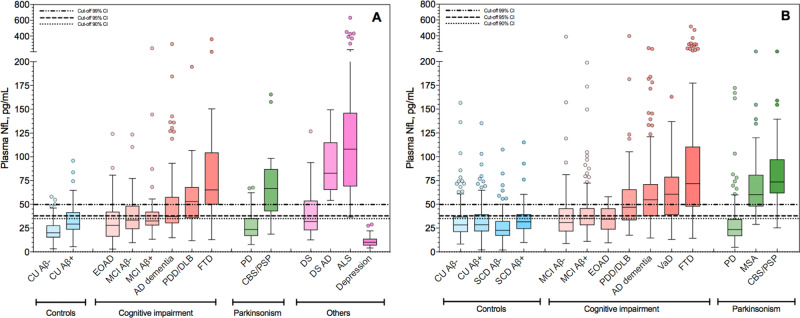
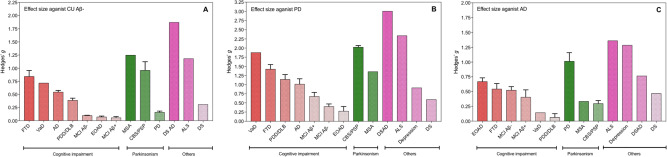
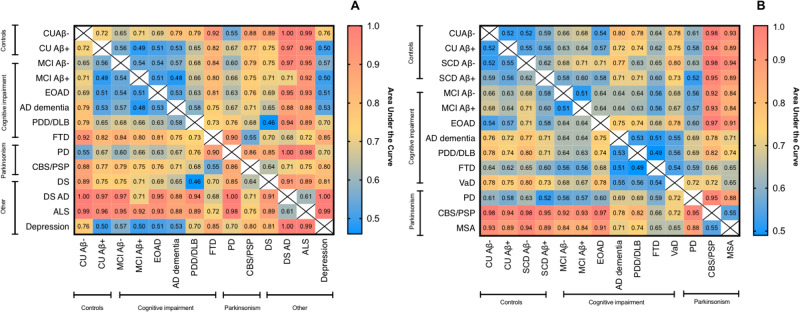
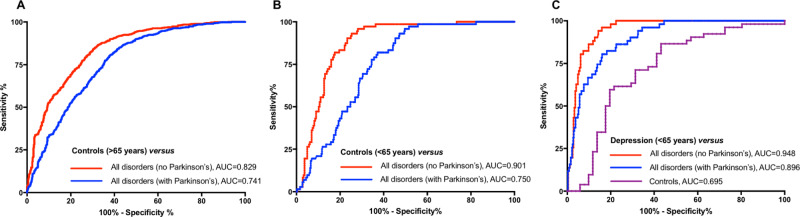
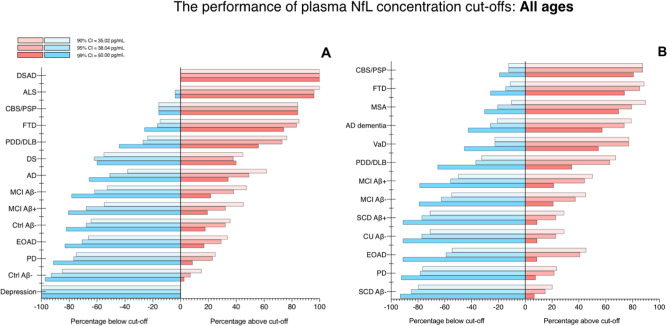
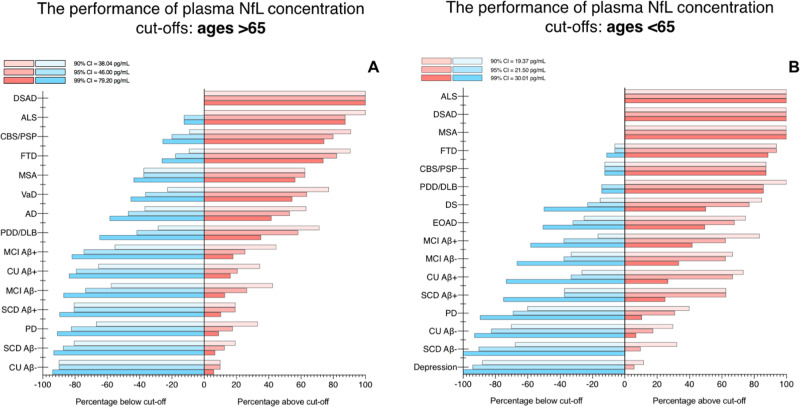
Increased cerebrospinal fluid neurofilament light (NfL) is a recognized biomarker for neurodegeneration that can also be assessed in blood. Here, we investigate plasma NfL as a marker of neurodegeneration in 13 neurodegenerative disorders, Down syndrome, depression and cognitively unimpaired controls from two multicenter cohorts: King’s College London ( n = 805) and the Swedish BioFINDER study ( n = 1,464). Plasma NfL was significantly increased in all cortical neurodegenerative disorders, amyotrophic lateral sclerosis and atypical parkinsonian disorders. We demonstrate that plasma NfL is clinically useful in identifying atypical parkinsonian disorders in patients with parkinsonism, dementia in individuals with Down syndrome, dementia among psychiatric disorders, and frontotemporal dementia in patients with cognitive impairment. Data-driven cut-offs highlighted the fundamental importance of age-related clinical cut-offs for disorders with a younger age of onset. Finally, plasma NfL performs best when applied to indicate no underlying neurodegeneration, with low false positives, in all age-related cut-offs.
Overview
The claims and statistics of this paper haven’t been checked yet.
Free: it reads the open-access text and checks the first 5 claims that cite a source we can check. Create a free account to check every claim.
Integrity signals
Registry
Cites
Statistics
Figures
Verification
Claims the paper makes
The claims and statistics of this paper haven’t been checked yet.
Free: it reads the open-access text and checks the first 5 claims that cite a source we can check. Create a free account to check every claim.
Claims other papers make about this one
Each is checked against this paper’s own text: does it say what the citing paper says it does?
The source backs part of the claim, not all of it — or backs it for a different population, condition or comparison.
In the citing paper
“Phosphorylated tau (p-tau) is the leading blood biomarker candidate, demonstrating superior diagnostic accuracy and disease specificity compared with other candidates.3,4”
From Diagnostic Accuracy of a Plasma Phosphorylated Tau 217 Immunoassay for Alzheimer Disease Pathology (2024) · cites this paper as [3]
Experimental — accuracy not yet measuredThe source backs part of the claim, not all of it — or backs it for a different population, condition or comparison.
In the citing paper
“Indeed, blood measures of p-tau181, p-tau217, p-tau231, glial fibrillary acid protein (GFAP), neurofilament light (NfL) and Aβ42/40 have been shown to change in preclinical AD and can discriminate this state from CU individuals with non-AD pathological changes1,3,6–13.”
From Plasma p-tau231 and p-tau217 as state markers of amyloid-β pathology in preclinical Alzheimer’s disease (2022) · cites this paper as [13]
Experimental — accuracy not yet measuredThe cited source says what the claim attributes to it.
In the citing paper
“As expected, plasma NfL had relatively lower PPV and NPV for AD, as NfL is a nonspecific biomarker of neurodegeneration, elevated in multiple different neurodegenerative diseases44.”
From Diagnosis of Alzheimer's disease using plasma biomarkers adjusted to clinical probability (2024) · cites this paper as [44]
Self-check
Percentages, sums and reported differences re-computed from the paper’s own numbers.
The self-check needs the paper’s full text.
Citations
Cites
NIA‐AA Research Framework: Toward a biological definition of Alzheimer's disease
Jack, C. R., Bennett, D. A., Blennow, K., Carrillo, M. C., Dunn, B., Haeberlein, S. B., Holtzman, D. M., Jagust, W., Jessen, F., Karlawish, J., et al. (2018) · Alzheimer's & Dementia · doi:10.1016/j.jalz.2018.02.018 · Cited by 10,537
Self-citationBrown, R. H., & Al-Chalabi, A. (2017) · New England Journal of Medicine · doi:10.1056/nejmra1603471 · Cited by 2,125
Self-citationNeurofilaments as biomarkers in neurological disorders
Khalil, M., Teunissen, C. E., Otto, M., Piehl, F., Sormani, M. P., Gattringer, T., Barro, C., Kappos, L., Comabella, M., Fazekas, F., et al. (2018) · Nature Reviews Neurology · doi:10.1038/s41582-018-0058-z · Cited by 1,988
Self-citationHigh performance plasma amyloid-β biomarkers for Alzheimer's disease
Nakamura, A., Kaneko, N., Villemagne, V. L., Kato, T., Doecke, J., Doré, V., Fowler, C., Li, Q.-X., Martins, R., Rowe, C., et al. (2018) · Nature · doi:10.1038/nature25456 · Cited by 1,681
Palmqvist, S., Janelidze, S., Quiroz, Y. T., Zetterberg, H., Lopera, F., Stomrud, E., Su, Y., Chen, Y., Serrano, G. E., Leuzy, A., et al. (2020) · JAMA · doi:10.1001/jama.2020.12134 · Cited by 1,603
Self-citationKarikari, T. K., Pascoal, T. A., Ashton, N. J., Janelidze, S., Benedet, A. L., Rodriguez, J. L., Chamoun, M., Savard, M., Kang, M. S., Therriault, J., et al. (2020) · The Lancet Neurology · doi:10.1016/s1474-4422(20)30071-5 · Cited by 1,316
Self-citationJanelidze, S., Mattsson, N., Palmqvist, S., Smith, R., Beach, T. G., Serrano, G. E., Chai, X., Proctor, N. K., Eichenlaub, U., Zetterberg, H., et al. (2020) · Nature Medicine · doi:10.1038/s41591-020-0755-1 · Cited by 1,247
Self-citationAssociation of plasma neurofilament light with neurodegeneration in patients with Alzheimer disease
Mattsson, N., Andreasson, U., Zetterberg, H., Blennow, K., & Initiative, F. T. A. D. N. (2017) · JAMA Neurology · doi:10.1001/jamaneurol.2016.6117 · Cited by 1,070
Self-citationBiomarkers for Alzheimer's disease: current status and prospects for the future
Blennow, K., & Zetterberg, H. (2018) · Journal of Internal Medicine · doi:10.1111/joim.12816 · Cited by 1,000
Self-citationDominantly Inherited Alzheimer Network, Preische, O., Schultz, S. A., Apel, A., Kuhle, J., Kaeser, S. A., Barro, C., Gräber, S., Kuder-Buletta, E., LaFougere, C., et al. (2019) · Nature Medicine · doi:10.1038/s41591-018-0304-3 · Cited by 927
Research works printed but not linked: 1
- Palmqvist S Discriminative accuracy of plasma phospho-tau217 for Alzheimer disease vs other neurodegenerative disorders J. Am. Med. Assoc. 2020 324 772 781 10.1001/jama.2020.12134 PMC7388060 32722745 · DOI · Paper page
Cited by
Biomarkers for neurodegenerative diseases
Hansson, O. (2021) · Nature Medicine · doi:10.1038/s41591-021-01382-x · Cited by 1,159
Self-citationDiagnostic Accuracy of a Plasma Phosphorylated Tau 217 Immunoassay for Alzheimer Disease Pathology
Ashton, N. J., Brum, W. S., Di Molfetta, G., Benedet, A. L., Arslan, B., Jonaitis, E., Langhough, R. E., Cody, K., Wilson, R., Carlsson, C. M., et al. (2024) · JAMA Neurology · doi:10.1001/jamaneurol.2023.5319 · Cited by 884
Self-citationPlasma p-tau231: a new biomarker for incipient Alzheimer’s disease pathology.
Ashton, N. J., Pascoal, T. A., Karikari, T. K., Benedet, A. L., Lantero-Rodriguez, J., Brinkmalm, G., Snellman, A., Schöll, M., Troakes, C., Hye, A., et al. (2021) · Acta Neuropathologica · doi:10.1007/s00401-021-02275-6 · Cited by 719
Self-citationHansson, O., Edelmayer, R. M., Boxer, A. L., Carrillo, M. C., Mielke, M. M., Rabinovici, G. D., Salloway, S., Sperling, R., Zetterberg, H., & Teunissen, C. E. (2022) · Alzheimer's & Dementia · doi:10.1002/alz.12756 · Cited by 607
“40,42 Familial AD mutation carriers show a gradual change in blood NfL levels ≈ 1 decade before expected clinical onset, which probably marks the onset of neurodegeneration, and the higher the increase, the more rapid clinical disease progression.”
BackgroundSelf-citationBlood biomarkers for Alzheimer’s disease in clinical practice and trials
Hansson, O., Blennow, K., Zetterberg, H., & Dage, J. (2023) · Nature Aging · doi:10.1038/s43587-023-00403-3 · Cited by 522
Self-citationNeurofilaments as biomarkers in neurological disorders — towards clinical application
Khalil, M., Teunissen, C. E., Lehmann, S., Otto, M., Piehl, F., Ziemssen, T., Bittner, S., Sormani, M. P., Gattringer, T., Abu-Rumeileh, S., et al. (2024) · Nature Reviews Neurology · doi:10.1038/s41582-024-00955-x · Cited by 446
“At the group level, people with Alzheimer disease can be differentiated from healthy control individuals based on NfL levels in CSF 73,131 and blood 132,133 with fair accuracy (area under the curve (AUC) ~0.7).”
InfluentialSelf-citationAshton, N. J., Janelidze, S., Mattsson-Carlgren, N., Binette, A. P., Strandberg, O., Brum, W. S., Karikari, T. K., González-Ortiz, F., Di Molfetta, G., Meda, F. J., et al. (2022) · Nature Medicine · doi:10.1038/s41591-022-02074-w · Cited by 436
“Recently, blood biomarkers reflecting Aβ 3,4 , tau 5–8 , neurodegeneration 9,10 and astrogliosis 11,12 , have been developed and validated.”
Self-citationEmerging diagnostics and therapeutics for Alzheimer disease
Self, W. K., & Holtzman, D. M. (2023) · Nature Medicine · doi:10.1038/s41591-023-02505-2 · Cited by 381
Milà-Alomà, M., Ashton, N. J., Shekari, M., Salvadó, G., Ortiz-Romero, P., Montoliu-Gaya, L., Benedet, A. L., Karikari, T. K., Lantero-Rodriguez, J., Vanmechelen, E., et al. (2022) · Nature Medicine · doi:10.1038/s41591-022-01925-w · Cited by 353
Self-citationBlood‐based biomarkers for Alzheimer's disease
Leuzy, A., Mattsson‐Carlgren, N., Palmqvist, S., Janelidze, S., Dage, J. L., & Hansson, O. (2022) · EMBO Molecular Medicine · doi:10.15252/emmm.202114408 · Cited by 351
Self-citationThe diagnostic and prognostic capabilities of plasma biomarkers in Alzheimer's disease
Simrén, J., Leuzy, A., Karikari, T. K., Hye, A., Benedet, A. L., Lantero‐Rodriguez, J., Mattsson‐Carlgren, N., Schöll, M., Mecocci, P., Vellas, B., et al. (2021) · Alzheimer's & Dementia · doi:10.1002/alz.12283 · Cited by 340
Self-citationChatterjee, P., Pedrini, S., Doecke, J. D., Thota, R., Villemagne, V. L., Doré, V., Singh, A. K., Wang, P., Rainey‐Smith, S., Fowler, C., et al. (2023) · Alzheimer's & Dementia · doi:10.1002/alz.12724 · Cited by 312
Neurofilament Proteins as Biomarkers to Monitor Neurological Diseases and the Efficacy of Therapies
Yuan, A., & Nixon, R. A. (2021) · Frontiers in Neuroscience · doi:10.3389/fnins.2021.689938 · Cited by 290
Brain-derived tau: a novel blood-based biomarker for Alzheimer’s disease-type neurodegeneration
Gonzalez-Ortiz, F., Turton, M., Kac, P. R., Smirnov, D., Premi, E., Ghidoni, R., Benussi, L., Cantoni, V., Saraceno, C., Rivolta, J., et al. (2023) · Brain · doi:10.1093/brain/awac407 · Cited by 252
“21,56,64 Consequently, the dementia research fi eld currently lacks a blood biomarker that is speci fi cally altered as a result of Alzheimer-type neurodegenerative changes, such as how plasma p-tau is to tau phosphorylation/pathology in the AT(N) framework.”
Self-citationAshton, N. J., Puig‐Pijoan, A., Milà‐Alomà, M., Fernández‐Lebrero, A., García‐Escobar, G., González‐Ortiz, F., Kac, P. R., Brum, W. S., Benedet, A. L., Lantero‐Rodriguez, J., et al. (2023) · Alzheimer's & Dementia · doi:10.1002/alz.12841 · Cited by 230
Self-citationPichet Binette, A., Janelidze, S., Cullen, N., Dage, J. L., Bateman, R. J., Zetterberg, H., Blennow, K., Stomrud, E., Mattsson‐Carlgren, N., & Hansson, O. (2023) · Alzheimer's & Dementia · doi:10.1002/alz.12787 · Cited by 226
Self-citationPlasma biomarkers for Alzheimer’s Disease in relation to neuropathology and cognitive change
Smirnov, D. S., Ashton, N. J., Blennow, K., Zetterberg, H., Simrén, J., Lantero-Rodriguez, J., Karikari, T. K., Hiniker, A., Rissman, R. A., Salmon, D. P., et al. (2022) · Acta Neuropathologica · doi:10.1007/s00401-022-02408-5 · Cited by 221
“In our series, the Low Pathology group had a mean plasma NfL level of 32 pg/mL, whereas in the multicenter study [1] an NfL level of 35 pg/mL was at the 90th percentile, and 38 pg/mL at the 95th percentile, when amyloid-negative controls were used to derive cutoffs.”
BackgroundMethodInfluentialSelf-citationPlasma phospho-tau in Alzheimer’s disease: towards diagnostic and therapeutic trial applications
Gonzalez-Ortiz, F., Kac, P. R., Brum, W. S., Zetterberg, H., Blennow, K., & Karikari, T. K. (2023) · Molecular Neurodegeneration · doi:10.1186/s13024-023-00605-8 · Cited by 214
Self-citationChouliaras, L., Thomas, A., Malpetti, M., Donaghy, P., Kane, J., Mak, E., Savulich, G., Prats-Sedano, M. A., Heslegrave, A. J., Zetterberg, H., et al. (2022) · Journal of Neurology, Neurosurgery & Psychiatry · doi:10.1136/jnnp-2021-327788 · Cited by 199
Self-citationPais, M. V., Forlenza, O. V., & Diniz, B. S. (2023) · Journal of Alzheimer's Disease Reports · doi:10.3233/adr-230029 · Cited by 156
Simrén, J., Andreasson, U., Gobom, J., Suarez Calvet, M., Borroni, B., Gillberg, C., Nyberg, L., Ghidoni, R., Fernell, E., Johnson, M., et al. (2022) · Brain Communications · doi:10.1093/braincomms/fcac174 · Cited by 194
Self-citationBaiardi, S., Quadalti, C., Mammana, A., Dellavalle, S., Zenesini, C., Sambati, L., Pantieri, R., Polischi, B., Romano, L., Suffritti, M., et al. (2022) · Alzheimer's Research & Therapy · doi:10.1186/s13195-022-01093-6 · Cited by 193
Frontotemporal lobar degeneration
Grossman, M., Seeley, W. W., Boxer, A. L., Hillis, A. E., Knopman, D. S., Ljubenov, P. A., Miller, B., Piguet, O., Rademakers, R., Whitwell, J. L., et al. (2023) · Nature Reviews Disease Primers · doi:10.1038/s41572-023-00447-0 · Cited by 178
Self-citationKanberg, N., Simrén, J., Edén, A., Andersson, L.-M., Nilsson, S., Ashton, N. J., Sundvall, P.-D., Nellgård, B., Blennow, K., Zetterberg, H., et al. (2021) · EBioMedicine · doi:10.1016/j.ebiom.2021.103512 · Cited by 164
Self-citationChallenges in the practical implementation of blood biomarkers for Alzheimer’s disease
Schöll, M., Verberk, I. M. W., del Campo, M., Delaby, C., Therriault, J., Chong, J. R., Palmqvist, S., & Alcolea, D. A. (2024) · The Lancet Healthy Longevity · doi:10.1016/j.lanhl.2024.07.013 · Cited by 164
“Cross-disease or disease-unspeci fi c biomarker of neurodegeneration 29 and increases in Alzheimer ’ s disease and other neurodegenerative diseases.”
Self-citationAlzheimer disease blood biomarkers: Considerations for population-level use
Mielke, M. M., & Fowler, N. R. (2024) · Nature Reviews Neurology · doi:10.1038/s41582-024-00989-1 · Cited by 120
“NfL is considered to be a nonspecific neurodegeneration bio-marker because its levels are elevated in many neurodegenerative diseases 25 .”
Vermunt, L., Otte, M., Verberk, I. M. W., Killestein, J., Lemstra, A. W., van der Flier, W. M., Pijnenburg, Y. A. L., Vijverberg, E. G. B., Bouwman, F. H., Gravesteijn, G., et al. (2022) · Annals of Clinical and Translational Neurology · doi:10.1002/acn3.51676 · Cited by 135
Ashton, N. J., Leuzy, A., Karikari, T. K., Mattsson-Carlgren, N., Dodich, A., Boccardi, M., Corre, J., Drzezga, A., Nordberg, A., Ossenkoppele, R., et al. (2021) · European Journal of Nuclear Medicine and Molecular Imaging · doi:10.1007/s00259-021-05253-y · Cited by 142
Self-citationOssenkoppele, R., Singleton, E. H., Groot, C., Dijkstra, A. A., Eikelboom, W. S., Seeley, W. W., Miller, B., Laforce, R. J., Scheltens, P., Papma, J. M., et al. (2022) · JAMA Neurology · doi:10.1001/jamaneurol.2021.4417 · Cited by 122
Self-citationPeripheral GFAP and NfL as early biomarkers for dementia: longitudinal insights from the UK Biobank
Wang, X., Shi, Z., Qiu, Y., Sun, D., & Zhou, H. (2024) · BMC Medicine · doi:10.1186/s12916-024-03418-8 · Cited by 141
“Elevation of peripheral GFAP and NfL can be observed in other conditions, including traumatic, degenerative, vascular, and autoimmune disorders of the CNS [14, 19].”
BackgroundThe accuracy and robustness of plasma biomarker models for amyloid PET positivity
Benedet, A. L., Brum, W. S., Hansson, O., Initiative, A. D. N., Karikari, T. K., Zimmer, E. R., Zetterberg, H., Blennow, K., & Ashton, N. J. (2022) · Alzheimer's Research & Therapy · doi:10.1186/s13195-021-00942-0 · Cited by 138
“Contrasting to Aβ and p-tau, NfL is not specific to AD pathology and is increased in many other neurodegenerative disorders [23] and acute neurological conditions [24].”
BackgroundSelf-citationAshton, N. J., Suárez‐Calvet, M., Karikari, T. K., Lantero‐Rodriguez, J., Snellman, A., Sauer, M., Simrén, J., Minguillon, C., Fauria, K., Blennow, K., et al. (2021) · Alzheimer's & Dementia: Diagnosis, Assessment & Disease Monitoring · doi:10.1002/dad2.12168 · Cited by 121
Self-citationAlzheimer's disease outlook: controversies and future directions
Frisoni, G. B., Aho, E., Brayne, C., Ciccarelli, O., Dubois, B., Fox, N. C., Frederiksen, K. S., Gabay, C., Garibotto, V., Hofmarcher, T., et al. (2025) · The Lancet · doi:10.1016/s0140-6736(25)01389-3 · Cited by 135
Self-citationDiagnosis of Alzheimer's disease using plasma biomarkers adjusted to clinical probability
Therriault, J., Janelidze, S., Benedet, A. L., Ashton, N. J., Arranz Martínez, J., Gonzalez-Escalante, A., Bellaver, B., Alcolea, D., Vrillon, A., Karim, H., et al. (2024) · Nature Aging · doi:10.1038/s43587-024-00731-y · Cited by 131
Self-citationArtificial intelligence for biomarker discovery in Alzheimer's disease and dementia
Winchester, L. M., Harshfield, E. L., Shi, L., Badhwar, A., Khleifat, A. A., Clarke, N., Dehsarvi, A., Lengyel, I., Lourida, I., Madan, C. R., et al. (2023) · Alzheimer's & Dementia · doi:10.1002/alz.13390 · Cited by 130
“67 For example, Ashton et al. 67 used data from multiple cohorts to explore the accuracy of plasmaNfLassay’sdiagnosticperformanceacrossdiseases.”
BackgroundMethodPlasma phosphorylated tau 217 in preclinical Alzheimer’s disease
Jonaitis, E. M., Janelidze, S., Cody, K. A., Langhough, R., Du, L., Chin, N. A., Mattsson-Carlgren, N., Hogan, K. J., Christian, B. T., Betthauser, T. J., et al. (2023) · Brain Communications · doi:10.1093/braincomms/fcad057 · Cited by 124
Self-citationDementia with Lewy bodies: Impact of co‐pathologies and implications for clinical trial design
Toledo, J. B., Ruiz, C. A., Weil, R. S., Ferreira, D., Rodriguez‐Porcel, F. E., Pilotto, A., Wyman‐Chick, K. A., Grothe, M. J., Kane, J. P. M., Taylor, A., et al. (2022) · Alzheimer s & Dementia · doi:10.1002/alz.12814 · Cited by 122
Self-citationAlawode, D. O. T., Heslegrave, A. J., Ashton, N. J., Karikari, T. K., Simrén, J., Montoliu‐Gaya, L., Pannee, J., O´Connor, A., Weston, P. S. J., Lantero‐Rodriguez, J., et al. (2021) · Journal of Internal Medicine · doi:10.1111/joim.13332 · Cited by 104
Self-citationChong, J. R., Ashton, N. J., Karikari, T. K., Tanaka, T., Schöll, M., Zetterberg, H., Blennow, K., Chen, C., & Lai, M. K. P. (2021) · Journal of Neurology Neurosurgery & Psychiatry · doi:10.1136/jnnp-2021-327370 · Cited by 116
“65 73 75–77 Unlike P-tau181, which was associated with cognitive decline and prospective neurodegeneration that are characteristic for AD, the associations of blood NfL were not AD specific.”
BackgroundInfluentialSelf-citationPost-acute blood biomarkers and disease progression in traumatic brain injury
Newcombe, V., Ashton, N. J., Posti, J. P., Glocker, B., Manktelow, A. E., Chatfield, D. A., Winzeck, S., Needham, E., Correia, M., Williams, G. B., et al. (2022) · Brain · doi:10.1093/brain/awac126 · Cited by 114
“degenerative diseases, and some are now being explored as markers of diagnosis and disease progression in patients with chronic neurodegenerative and neuroinflammatory diseases.(8) In particular, GFAP,”
BackgroundSelf-citationAshton, N. J., Keshavan, A., Brum, W. S., Andréasson, U., Arslan, B., Droescher, M., Barghorn, S., Vanbrabant, J., Lambrechts, C., Loo, M. V., et al. (2025) · Alzheimer s & Dementia · doi:10.1002/alz.14508 · Cited by 109
“2,3 Plasma A β peptides (A β 42/A β 40), 4–6 neurofilament light (NfL), 7,8 and glial fibrillary acidic protein (GFAP) 9,10 have all been shown to associate with certain AD features, but none can demonstrate the high disease specificity of plasma phosphorylated tau (p-tau).”
Self-citationGrothe, M. J., Moscoso, A., Ashton, N. J., Karikari, T. K., Lantero-Rodriguez, J., Snellman, A., Zetterberg, H., Blennow, K., Schöll, M., & Initiative, F. T. A. D. N. (2021) · Neurology · doi:10.1212/wnl.0000000000012513 · Cited by 93
Self-citationFluid biomarkers for amyotrophic lateral sclerosis: a review
Irwin, K. E., Sheth, U., Wong, P. C., & Gendron, T. F. (2024) · Molecular Neurodegeneration · doi:10.1186/s13024-023-00685-6 · Cited by 105
“Some studies [10, 36, 39, 45, 47, 50, 54, 73], but not all [38, 43, 52, 54, 58, 79], found that neurofilament protein concentrations inversely correlate with ALSFRS-R scores at time of diagnosis or at sample collection albeit sometimes only weakly.”
BackgroundInfluentialPlasma brain-derived tau is an amyloid-associated neurodegeneration biomarker in Alzheimer’s disease
González‐Ortiz, F., Kirsebom, B., Contador, J., Tanley, J. E., Selnes, P., Gísladóttir, B., Pålhaugen, L., Hemminghyth, M. S., Jarholm, J. A., Skogseth, R. E., et al. (2024) · Nature Communications · doi:10.1038/s41467-024-47286-5 · Cited by 107
“Neuro fi lament light chain (NfL) in blood is a general marker of neurodegeneration/axonal injury across multiple disorders 15 .”
BackgroundSelf-citationLongitudinal blood biomarker trajectories in preclinical Alzheimer's disease
Yakoub, Y., Ashton, N. J., Strikwerda‐Brown, C., Montoliu‐Gaya, L., Karikari, T. K., Kac, P. R., González‐Ortiz, F., Gallego-Rudolf, J., Meyer, P., St‐Onge, F., et al. (2023) · Alzheimer s & Dementia · doi:10.1002/alz.13318 · Cited by 102
“42 A principal strength of our study is its reliance on a unique enriched longitudinal observational cohort of cognitively unimpaired older adultswithafamilyhistoryofADdementia,whichisknowntoincrease theriskofsubsequentdementiabytwo-tofourfold.”
Self-citationBavato, F., Barro, C., Schnider, L. K., Simrén, J., Zetterberg, H., Seifritz, E., & Quednow, B. B. (2024) · Molecular Psychiatry · doi:10.1038/s41380-024-02524-6 · Cited by 101
“However, the overlap of blood NfL levels between elderly patients with MDD and patients with mild cognitive impairment or AD is substantial (AUC = 0.50 – 0.57) [ 27].”
BackgroundResultInfluentialSelf-citationIturria-Medina, Y., Adewale, Q., Khan, A. F., Ducharme, S., Rosa-Neto, P., O’Donnell, K., Petyuk, V. A., Gauthier, S., De Jager, P. L., Breitner, J., et al. (2022) · Science Advances · doi:10.1126/sciadv.abo6764 · Cited by 100
Self-citationBlood-based biomarkers in Alzheimer’s disease – moving towards a new era of diagnostics
Arslan, B., Zetterberg, H., & Ashton, N. J. (2024) · Clinical Chemistry and Laboratory Medicine (CCLM) · doi:10.1515/cclm-2023-1434 · Cited by 99
Self-citationZeng, X., Lafferty, T. K., Sehrawat, A., Chen, Y., Ferreira, P. C. L., Bellaver, B., Povala, G., Kamboh, M. I., Klunk, W. E., Cohen, A. D., et al. (2024) · Molecular Neurodegeneration · doi:10.1186/s13024-024-00753-5 · Cited by 99
“Our study identified several plasma biomarkers with strong associations with neurodegeneration assessed based on cortical thickness, including NEFL, which is a proven general marker of neuronal injury [97, 98].”
BackgroundSelf-citationMultipronged diagnostic and therapeutic strategies for Alzheimer's disease
Ramesh, M., & Govindaraju, T. (2022) · Chemical Science · doi:10.1039/d2sc03932j · Cited by 94
Zeng, X., Chen, Y., Sehrawat, A., Lee, J., Lafferty, T. K., Kofler, J., Berman, S., Sweet, R. A., Tudorascu, D. L., Klunk, W. E., et al. (2024) · Molecular Neurodegeneration · doi:10.1186/s13024-024-00711-1 · Cited by 94
“Although non-AD specific, NfL is an excellent biomarker for neurodegeneration to monitor the disease progression of AD patients [105, 106].”
BackgroundSelf-citationDittrich, A., Ashton, N. J., Zetterberg, H., Blennow, K., Zettergren, A., Simrén, J., Skillbäck, T. B., Shams, S., Machado, A., Westman, E., et al. (2023) · Neurology · doi:10.1212/wnl.0000000000207419 · Cited by 91
Self-citationCarling, G. K., Fan, L., Foxe, N. R., Norman, K., Wong, M. Y., Zhu, D., Corona, C., Razzoli, A., Yu, F., Yarahmady, A., et al. (2024) · Neuron · doi:10.1016/j.neuron.2024.09.006 · Cited by 89
Vacchiano, V., Mastrangelo, A., Zenesini, C., Masullo, M., Quadalti, C., Avoni, P., Polischi, B., Cherici, A., Capellari, S., Salvi, F., et al. (2021) · Frontiers in Aging Neuroscience · doi:10.3389/fnagi.2021.753242 · Cited by 89
P-tau217 as a Reliable Blood-Based Marker of Alzheimer’s Disease
Lai, R., Li, B., & Bishnoi, R. J. (2024) · Biomedicines · doi:10.3390/biomedicines12081836 · Cited by 90
“Plasma A β 42/A β 40 is correlated with pathologically identified A β in the brain, while plasma NfL is associated with neurodegeneration in AD [60,79].”
BackgroundSchroyen, G., Blommaert, J., van Weehaeghe, D., Sleurs, C., Vandenbulcke, M., Dedoncker, N., Hatse, S., Goris, A., Koole, M., Smeets, A., et al. (2021) · Cancers · doi:10.3390/cancers13164198 · Cited by 71
“Promising markers to investigate neurotoxicity in humans are neurofilaments, which demonstrate high prognostic and diagnostic accuracy for neurodegenerative diseases, such as amyotrophic lateral sclerosis [22] and Alzheimer’s disease [23], even in their earlier stages.”
BackgroundBiomarker-guided decision making in clinical drug development for neurodegenerative disorders
Cummings, J. L., Teunissen, C. E., Fiske, B. K., Ber, I. L., Wildsmith, K. R., Schöll, M., Dunn, B., & Scheltens, P. (2025) · Nature Reviews Drug Discovery · doi:10.1038/s41573-025-01165-w · Cited by 91
“Neurofilament light (NfL) is elevated in multiple NDDs and had a key role in the accelerated approval of tofersen for the treatment of ALS 112,252,253 .”
Self-citationZhu, N., Santos-Santos, M., Illán-Gala, I., Montal, V., Estellés, T., Barroeta, I., Altuna, M., Arranz, J., Muñoz, L., Belbin, O., et al. (2021) · Translational Neurodegeneration · doi:10.1186/s40035-021-00275-w · Cited by 86
“Recently, some studies have shown that the concentrations of neurofilament light chain (NfL), a marker of axonal damage, are increased in the cerebrospinal fluid (CSF) and blood of FTD patients [6].”
BackgroundResultSelf-citationKivisäkk, P., Sweeney, T., Carlyle, B. C., Trombetta, B. A., LaCasse, K., El‐Mufti, L. H., Tuncali, I., Chibnik, L. B., Das, S., Scherzer, C. R., et al. (2023) · Frontiers in Neurology · doi:10.3389/fneur.2023.1069411 · Cited by 85
Biological variation estimates of Alzheimer's disease plasma biomarkers in healthy individuals
Brum, W. S., Ashton, N. J., Simrén, J., di Molfetta, G., Karikari, T. K., Benedet, A. L., Zimmer, E. R., Lantero‐Rodriguez, J., Montoliu‐Gaya, L., Jeromin, A., et al. (2024) · Alzheimer's & Dementia · doi:10.1002/alz.13518 · Cited by 76
“1,2 22–26 Furthermore,allofthese biomarker candidates have beenevaluated as potential surrogate end-points in disease-modifying clinical trials in AD, with a recent example beingreductionsinplasmap-tau217asearlyasafter12weeksoftreat-ment with a promising anti-A β monoclonal antibody, donanemab.”
BackgroundInfluentialSelf-citationAPOE ε4 carriers share immune-related proteomic changes across neurodegenerative diseases
Shvetcov, A., Johnson, E. C. B., Winchester, L. M., Walker, K. A., Wilkins, H. M., Thompson, T. G., Rothstein, J. D., Krish, V., Imam, F. B., The Global Neurodegeneration Proteomics Consortium (GNPC), et al. (2025) · Nature Medicine · doi:10.1038/s41591-025-03835-z · Cited by 78
“An unexpected finding of our study was that plasma neurofilament light (NEFL) levels were lower in APOE ε4 carriers across neurodegenerative diseases, despite NEFL’s growing recognition as a biomarker of neurodegeneration 37 .”
Truffi, M., Garofalo, M., Ricciardi, A., Ramusino, M. C., Perini, G., Scaranzin, S., Gastaldi, M., Albasini, S., Costa, A. C., Chiavetta, V., et al. (2023) · Scientific Reports · doi:10.1038/s41598-023-29704-8 · Cited by 79
Plasma p-tau181, neurofilament light chain and association with cognition in Parkinson’s disease
Batzu, L., Rota, S., Hye, A., Heslegrave, A., Trivedi, D., Gibson, L. L., Farrell, C. M., Zinzalias, P., Rizos, A., Zetterberg, H., et al. (2022) · npj Parkinson's Disease · doi:10.1038/s41531-022-00384-x · Cited by 78
Self-citationNeurofilament light levels predict clinical progression and death in multiple system atrophy
Chelban, V., Nikram, E., Pérez‐Soriano, A., Wilke, C., Foubert‐Samier, A., Vijiaratnam, N., Guo, T., Jabbari, E., Olufodun, S., Gonzalez, M., et al. (2022) · Brain · doi:10.1093/brain/awac253 · Cited by 77
“6 In axonal injury or during neurodegeneration, NfL is released into the interstitial fluid; consequently, the NfL levels in CSF and blood increase, 7 thus making it possible to easily and repeatedly measure NfL for monitoring neuronal decay in the disease course.”
Self-citationAlzheimer’s disease clinical trial update 2019–2021
Pleen, J., & Townley, R. A. (2021) · Journal of Neurology · doi:10.1007/s00415-021-10790-5 · Cited by 75
“A biomarker of neurodegeneration, plasma neurofilament light (NfL), has also shown promise in distinguishing psychiatric illness from neurodegenerative disease in two multicenter cohorts [31].”
BackgroundNeurofilament light chain concentration in an aging population
Ladang, A., Kovacs, S., Lengelé, L., Locquet, M., Reginster, J., Bruyère, O., & Cavalier, E. (2022) · Aging Clinical and Experimental Research · doi:10.1007/s40520-021-02054-z · Cited by 73
Use of plasma biomarkers for AT(N) classification of neurodegenerative dementias
Alcolea, D., Delaby, C., Muñoz, L., Torres, S., Estellés, T., Zhu, N., Barroeta, I., Carmona-Iragui, M., Illán-Gala, I., Santos-Santos, M. Á., et al. (2021) · Journal of Neurology, Neurosurgery & Psychiatry · doi:10.1136/jnnp-2021-326603 · Cited by 66
Self-citationSarto, J., Ruiz-García, R., Guillén, N., Ramos-Campoy, Ó., Falgàs, N., Esteller, D., Contador, J., Fernández, G., González, Y., Tort-Merino, A., et al. (2023) · Neurology · doi:10.1212/wnl.0000000000201597 · Cited by 71
“First, the LBD group had relatively low NfL levels, as in previous studies with LBD/Parkinson disease dementia, and second, as seen in a recent study plasma NfL accuracy was better in younger (<65 years) participants if specific cutoffs for this age range were calculated.(21) In our cohort, plasma p-tau181 had greater…”
BackgroundResultElevated Plasma Phosphorylated Tau 181 in Amyotrophic Lateral Sclerosis
Cousins, K. A. Q., Shaw, L. M. J., Shellikeri, S., Dratch, L., Rosario, L., Elman, L. B., Quinn, C. C., Amado, D. A., Wolk, D. A., Tropea, T. F., et al. (2022) · Annals of Neurology · doi:10.1002/ana.26462 · Cited by 70
“Prior work shows that plasma NfL was elevated in presymptomatic patients with ALS who were less than 5 years from disease onset,(13) and is sensitive to ALS disease processes.(14,49) Future studies should test whether plasma p-tau181 is elevated in presymptomatic individuals with a familial history of ALS.”
BackgroundFundaun, J., Kolski, M. C., Álvarez, M. M., Baskozos, G., & Schmid, A. B. (2022) · JAMA Network Open · doi:10.1001/jamanetworkopen.2022.48593 · Cited by 70
Plasma biomarkers for Alzheimer’s disease: a field-test in a memory clinic
Altomare, D., Stampacchia, S., Ribaldi, F., Tomczyk, S., Chevalier, C., Poulain, G., Asadi, S., Bancila, B., Marizzoni, M., Martins, M., et al. (2023) · Journal of Neurology, Neurosurgery & Psychiatry · doi:10.1136/jnnp-2022-330619 · Cited by 62
“40 (3) Specific strategies need to be developed to minimise the impact of errors.”
BackgroundSelf-citationFluid-based biomarkers for neurodegenerative diseases
Cao, Y., Xu, Y., Cao, M., Chen, N., Zeng, Q., Lai, M. K. P., Fan, D., Sethi, G., & Cao, Y. (2025) · Ageing Research Reviews · doi:10.1016/j.arr.2025.102739 · Cited by 69
Menopause hormone therapy significantly alters pathophysiological biomarkers of Alzheimer's disease
Depypere, H. T., Vergallo, A., Lemercier, P., Lista, S., Benedet, A. L., Ashton, N. J., Cavedo, E., Zetterberg, H., Blennow, K., Vanmechelen, E., et al. (2022) · Alzheimer s & Dementia · doi:10.1002/alz.12759 · Cited by 70
“28,36 The primary objective of the present study was to investigate whether women receiving MHT show significantly different longitudinal changes of core pathophysiological AD plasma biomarkers compared with women who opted out of MHT.”
BackgroundSelf-citationCooper, J. G., Stukas, S. K., Ghodsi, M., Ahmed, N., Diaz-Arrastia, R. R., Holmes, D. T., & Wellington, C. L. (2023) · Clinical Biochemistry · doi:10.1016/j.clinbiochem.2023.110680 · Cited by 68
“Neurofilament light (NfL) is an axonal intermediate filament protein that, when measured in plasma, is elevated in AD [5], other neurological conditions such as multiple sclerosis (MS) [6], frontotemporal dementia [7], and neurotrauma [8].”
BackgroundBlood Biomarkers of Alzheimer’s Disease and Cognition: A Literature Review
García‐Escobar, G., Manero, R. M., Fernández‐Lebrero, A., Ois, Á., Navalpotro‐Gómez, I., Puente, V., Muñana, J. C., Estragués-Gázquez, I., Puig‐Pijoan, A., & Jiménez-Baladó, J. (2024) · Biomolecules · doi:10.3390/biom14010093 · Cited by 67
“Higher levels of NfL are present in multiple neurological conditions such as traumatic brain injury, atypical parkinsonian disorders, and amyotrophic lateral sclerosis, among others [74].”
The Road to Personalized Medicine in Alzheimer’s Disease: The Use of Artificial Intelligence
Silva‐Spínola, A., Baldeiras, I., Arrais, J. P., & Santana, I. J. (2022) · Biomedicines · doi:10.3390/biomedicines10020315 · Cited by 67
Plasma biomarkers for neurodegenerative disorders: ready for prime time?
Balogun, W. G., Zetterberg, H., Blennow, K., & Karikari, T. K. (2023) · Current Opinion in Psychiatry · doi:10.1097/yco.0000000000000851 · Cited by 66
Self-citationPlasma NfL, clinical subtypes and motor progression in Parkinson's disease
Pilotto, A., Imarisio, A., Conforti, F., Scalvini, A., Masciocchi, S., Nocivelli, S., Turrone, R., Gipponi, S., Cottini, E., Borroni, B., et al. (2021) · Parkinsonism & Related Disorders · doi:10.1016/j.parkreldis.2021.04.016 · Cited by 66
Self-citationBrain Injury Biomarkers for Predicting Outcome After Cardiac Arrest
Humaloja, J., Ashton, N. J., & Skrifvars, M. B. (2022) · Critical Care · doi:10.1186/s13054-022-03913-5 · Cited by 65
“, fronto-temporal dementia or amyotrophic lateral sclerosis [25]).”
BackgroundInfluentialSelf-citationComparison of plasma and CSF biomarkers in predicting cognitive decline
Aschenbrenner, A. J., Li, Y., Henson, R. L., Volluz, K., Hassenstab, J., Verghese, P., West, T., Meyer, M. R., Kirmess, K. M., Fagan, A. M., et al. (2022) · Annals of Clinical and Translational Neurology · doi:10.1002/acn3.51670 · Cited by 55
“Therefore, NfL may indicate risk of cognitive decline from one of many etiologies, including dementia caused by mixed etiologies.(51,52) Importantly, the variance explained by each biomarker was independent; each biomarker was a significant predictor, and the interaction of Ab42/Ab40, NfL, and time was not significant.”
BackgroundOverview of the blood biomarkers in Alzheimer's disease: Promises and challenges
Delaby, C., Hirtz, C., & Lehmann, S. (2022) · Revue Neurologique · doi:10.1016/j.neurol.2022.09.003 · Cited by 66
Relationship of serum beta‐synuclein with blood biomarkers and brain atrophy
Oeckl, P., Anderl‐Straub, S., Danek, A., Diehl‐Schmid, J., Fassbender, K., Fliessbach, K., Halbgebauer, S., Huppertz, H., Jahn, H., Kassubek, J., et al. (2023) · Alzheimer's & Dementia · doi:10.1002/alz.12790 · Cited by 62
Sanchez, E., Wilkinson, T., Coughlan, G., Mirza, S., Baril, A., Ramirez, J., Binns, M. A., Black, S. E., Borrie, M., Dilliott, A. A., et al. (2024) · Alzheimer's & Dementia · doi:10.1002/alz.13560 · Cited by 62
Self-citationMontoliu‐Gaya, L., Alcolea, D. A., Ashton, N. J., Pegueroles, J., Levin, J., Bosch, B., Lantero‐Rodriguez, J., Carmona‐Iragui, M., Wagemann, O., Balasa, M., et al. (2023) · EBioMedicine · doi:10.1016/j.ebiom.2023.104547 · Cited by 62
Self-citationTau‐PET is superior to phospho‐tau when predicting cognitive decline in symptomatic AD patients
Smith, R., Cullen, N. C., Pichet Binette, A., Leuzy, A., Blennow, K., Zetterberg, H., Klein, G., Borroni, E., Ossenkoppele, R., Janelidze, S., et al. (2023) · Alzheimer's & Dementia · doi:10.1002/alz.12875 · Cited by 60
“In light of the recently published Phase II study of donanemab in early AD, 38 where cognitive decline continued despite the clearance of A β plaques as assessed by A β -PET, it may be argued that including patients based on tau-positivity, as assessed by tau-PET, may be too late, since the treatment may not be able t…”
InfluentialSelf-citationBlood Biomarkers for Alzheimer’s Disease in Down Syndrome
Montoliu‐Gaya, L., Strydom, A., Blennow, K., Zetterberg, H., & Ashton, N. J. (2021) · Journal of Clinical Medicine · doi:10.3390/jcm10163639 · Cited by 60
“37 pg/mL) could identify all DS dementia cases in this study [97].”
BackgroundSelf-citationBornhorst, J. A., Figdore, D. J., Campbell, M. R., Pazdernik, V., Mielke, M. M., Petersen, R. C., & Algeciras‐Schimnich, A. (2022) · Clinica Chimica Acta · doi:10.1016/j.cca.2022.08.017 · Cited by 60
Monti, E., Tagliaferri, S., Zampieri, S., Sarto, F., Sirago, G., Franchi, M. V., Ticinesi, A., Longobucco, Y., Adorni, E., Lauretani, F., et al. (2023) · Journal of Cachexia Sarcopenia and Muscle · doi:10.1002/jcsm.13173 · Cited by 61
Khalil, K., Mamun, M. M. R. K., Sherif, A., Elsersy, M. S., Imam, A. A.-A., Mahmoud, M. M. E. A., & Alsabaan, M. (2023) · Sensors · doi:10.3390/s23198272 · Cited by 60
Fluid biomarkers in Alzheimer's disease
Simrén, J., Elmgren, A., Blennow, K., & Zetterberg, H. (2023) · Advances in Clinical Chemistry · doi:10.1016/bs.acc.2022.09.006 · Cited by 58
Self-citationPasławski, W., Khosousi, S., Hertz, E., Markaki, I., Boxer, A. L., & Svenningsson, P. (2023) · Translational Neurodegeneration · doi:10.1186/s40035-023-00374-w · Cited by 59
“However, the NfL changes are not disease-specific [8] and NfL level is also increased in many other neurodegenerative disorders [9, 10].”
BackgroundSelf-citationHuber, H., Blennow, K., Zetterberg, H., Boada, M., Jeromin, A., Weninger, H., Núñez‐Llaves, R., Aguilera, N., Ramis, M., Simrén, J., et al. (2024) · Alzheimer s & Dementia · doi:10.1002/alz.13697 · Cited by 57
“8 Therefore, adapting this method to AD-specific biomarkers would be of great value.”
BackgroundMethodSelf-citationCronjé, H. T., Liu, X., Odden, M. C., Moseholm, K. F., Seshadri, S. S., Satizábal, C. L., López, O. L., Bis, J. C., Djoussé, L., Fohner, A. E., et al. (2023) · Alzheimer s & Dementia · doi:10.1002/alz.13367 · Cited by 56
Neurodegenerative disease of the brain: a survey of interdisciplinary approaches
Davenport, F., Gallacher, J., Kourtzi, Z., Koychev, I. G., Matthews, P. M., Oxtoby, N. P., Parkes, L. M., Priesemann, V., Rowe, J. B., Smye, S. W., et al. (2023) · Journal of The Royal Society Interface · doi:10.1098/rsif.2022.0406 · Cited by 55
“This allows identification of neurodegenerative diseases in general, including early onset genetic forms of Alzheimer’s [39] and Down’s syndrome dementia [40].”
BackgroundSelf-citationPilotto, A., Imarisio, A., Carrarini, C., Russo, M., Masciocchi, S., Gipponi, S., Cottini, E., Aarsland, D., Zetterberg, H., Ashton, N. J., et al. (2021) · Journal of Alzheimer s Disease · doi:10.3233/jad-210342 · Cited by 55
Self-citationHuber, H., Ashton, N. J., Schieren, A., Montoliu‐Gaya, L., Molfetta, G. D., Brum, W. S., Lantero‐Rodriguez, J., Grötschel, L., Stoffel‐Wagner, B., Coenen, M., et al. (2023) · Alzheimer s & Dementia · doi:10.1002/alz.13163 · Cited by 55
“10 Recent studiesvalidatedahighperformanceofplasmaconcentrationsofA β 40 and A β 42, 11–14 phosphorylated tau (p-tau) 181, 14–19 p-tau231, 20 neurofilament light (NfL), 21 and glial fibrillary acidic protein (GFAP) 22,23 in confirming AD pathologies, axonal injury, and astrocytic activation.”
Self-citationPlasma p‐tau231 and p‐tau217 inform on tau tangles aggregation in cognitively impaired individuals
Ferreira, P. C. L., Therriault, J., Tissot, C., Ferrari‐Souza, J. P., Benedet, A. L., Povala, G., Bellaver, B., Leffa, D. T., Brum, W. S., Lussier, F. Z., et al. (2023) · Alzheimer s & Dementia · doi:10.1002/alz.13393 · Cited by 54
Self-citationBiernacki, T., Kokas, Z., Sandi, D., Füvesi, J., Fricska‐Nagy, Z., Faragó, P., Kincses, Z. T., Klivènyi, P., Bencsik, K., & Vécsei, L. (2022) · International Journal of Molecular Sciences · doi:10.3390/ijms23063383 · Cited by 54
Cano, A. C., Capdevila, M., Puerta, R., Arranz, J., Montrreal, L., de Rojas, I., García‐González, P., Olivé, C., García‐Gutiérrez, F., Sotolongo‐Grau, Ó., et al. (2024) · EBioMedicine · doi:10.1016/j.ebiom.2024.105345 · Cited by 53
Self-citationTiming of Changes in Alzheimer's Disease Plasma Biomarkers as Assessed by Amyloid and Tau PET Clocks
Milà‐Alomà, M., Tosun, D., Schindler, S. E., Hausle, I., Petersen, K. K., Li, Y., Dage, J. L., Du‐Cuny, L., Saad, Z. S., Saef, B. A., et al. (2025) · Annals of Neurology · doi:10.1002/ana.27285 · Cited by 52
“3 6 Available BBMs include A β 42/A β 40, 7 p-tau181, 8 p-tau217, 9 the ratio of p-tau217 to non-phosphorylated tau (%p-tau217), 10 neuro fi lament light (NfL), 11 and glial fi brillary acidic protein (GFAP).”
Self-citation
Metadata
- Authors
- Ashton, N. J., Janelidze, S., Al Khleifat, A., Leuzy, A., van der Ende, E. L., Karikari, T. K., Benedet, A. L., Pascoal, T. A., Lleó, A., Parnetti, L., Galimberti, D., Bonanni, L., Pilotto, A., Padovani, A., Lycke, J., Novakova, L., Axelsson, M., Velayudhan, L., Rabinovici, G. D., Miller, B., Pariante, C., Nikkheslat, N., Resnick, S. M., Thambisetty, M., Schöll, M., Fernández-Eulate, G., Gil-Bea, F. J., López de Munain, A., Al-Chalabi, A., Rosa-Neto, P., Strydom, A., Svenningsson, P., Stomrud, E., Santillo, A., Aarsland, D., van Swieten, J. C., Palmqvist, S., Zetterberg, H., Blennow, K., Hye, A., & Hansson, O.
- Affiliations
- King's College London (GB)
- Lund University (SE)
- University of Gothenburg (SE)
- Montreal Neurological Institute and Hospital (CA)
- Instituto de Salud Carlos III (ES)
- University of Perugia (IT)
- University of Milan (IT)
- University of Chieti-Pescara (IT)
- Fondazione Europea Ricerca Biomedica (IT)
- University of Brescia (IT)
- Sahlgrenska University Hospital (SE)
- University of Leicester (GB)
- University of California, San Francisco (US)
- National Institutes of Health (US)
- UCL Queen Square Institute of Neurology (GB)
- Corresponding author
- Ashton, Nicholas J.
- Hansson, Oskar
- ORCID
- Ashton, Nicholas J.
- Janelidze, Shorena
- Al Khleifat, Ahmad
- Leuzy, Antoine
- Karikari, Thomas K.
- Pascoal, Tharick A.
- Lleó, Alberto
- Parnetti, Lucilla
- Galimberti, Daniela
- Bonanni, Laura
- Pilotto, Andrea
- Padovani, Alessandro
- Lycke, Jan
- Novakova, Lenka
- Axelsson, Markus
- Velayudhan, Latha
- Rabinovici, Gil D.
- Miller, Bruce
- Pariante, Carmine
- Nikkheslat, Naghmeh
- Resnick, Susan M.
- Thambisetty, Madhav
- Schöll, Michael
- Fernández-Eulate, Gorka
- Gil-Bea, Francisco J.
- Al-Chalabi, Ammar
- Svenningsson, Per
- Stomrud, Erik
- Santillo, Alexander
- Aarsland, Dag
- Palmqvist, Sebastian
- Zetterberg, Henrik
- Blennow, Kaj
- Hye, Abdul
- Hansson, Oskar
- Venue
- Nature Communications
- Published
- 2021-06-07
- Volume
- 12
- Issue
- 1
- Pages
- 3400-3400
- ISSN
- 2041-1723 (ISSN-L)
- PMC
- PMC8185001
- OpenAlex
- W3167068736
- Semantic Scholar
- c363f4ffad1fed319633d626e7eb0cb8aaf7562e
- Cited by
- 545
- References
- 69
- Citations by year
- 2026: 74 · 2025: 116 · 2024: 125 · 2023: 102 · 2022: 92 · 2021: 35
- FWCI
- 65.23
- Type
- journal article
- Language
- en
- Open access
- gold
- doi.org
- Licence
- cc-by
- creativecommons.org/licenses/by/4.0 (tdm)
- creativecommons.org/licenses/by/4.0 (vor)
- Locations
- Nature Communications (publishedVersion, cc-by)
- Research Square (acceptedVersion, cc-by)
- PubMed Central (publishedVersion, cc-by)
- PubMed (publishedVersion)
- Research Portal (King's College London) (publishedVersion, other-oa)
- EUR Research Repository (Erasmus University Rotterdam) (publishedVersion, other-oa)
- Archivio Istituzionale della Ricerca (Universita Degli Studi Di Milano) (submittedVersion, other-oa)
- Dipòsit Digital de Documents de la UAB (Universitat Autònoma de Barcelona) (submittedVersion, cc-by)
- EUR Research Repository (Erasmus University Rotterdam) (submittedVersion, other-oa)
- RePub (Erasmus University Rotterdam) (submittedVersion, other-oa)
- RePEc: Research Papers in Economics (submittedVersion)
- DOAJ (DOAJ: Directory of Open Access Journals) (submittedVersion, cc-by-sa)
- UCL Discovery (University College London) (submittedVersion)
- eScholarship (California Digital Library) (submittedVersion)
- eScholarship (California Digital Library) (submittedVersion, cc-by)
- Institutional Research Information System (Università degli Studi di Brescia) (submittedVersion)
- Lund University Publications (Lund University) (submittedVersion)
- Funders
- Parkinson Research Foundation
- Eli Lilly and Company
- Sanofi
- Biogen
- Alexion Pharmaceuticals
- Torsten Söderbergs Stiftelse
- South London and Maudsley NHS Foundation Trust (MR/L501529/1, ES/L008238/1, 633413)
- Wellcome Trust (MR/S005145/1, FP7/2007–2013, MR/R024901/1, 098330, 098330/Z/12/Z)
- Health Research Board (JPI-JPND-2017-1)
- EU Joint Programme – Neurodegenerative Disease Research (MR/L501529/1)
- Cytokinetics
- Australian Government
- Apellis Pharmaceuticals
- National Institute for Health and Care Research (ES/L008238/1, FP7/2007–2013, MR/L501529/1, NIHR202421)
- Motor Neurone Disease Association (ALCHALABI-TALBOT/APR14/926-794, 633413, 259867, 772376, ALCHALABI-DOBSON/APR14/829-791, MR/L501529/1, Al-Chalabi/Apr19/870-791, FP7/2007-2013, ES/L008238/1)
- King's College London
- European Commission (2007–2013, FP7 2007-2013, HORIZON2020, H2020, FP7/2007, H2020-PHC-2014, 633413, H2020-PHC, 772376, 259867)
- Agence Nationale de la Recherche (ANR-18-COEN-0002, ANR-17-JPCD-0001)
- Stiftelsen för Strategisk Forskning
- Lunds Universitet
- Kommunfullmäktige, Stockholms Stad
- Hjärnfonden
- Knut och Alice Wallenbergs Stiftelse (681712)
- Vetenskapsrådet (FP7/2007-2013, 681712, 02532, 2018-, ALFGBG-720931, 2018-02532)
- Göteborgs Universitet
- Alzheimerfonden
- Skånes universitetssjukhus
- Marcus och Amalia Wallenbergs minnesfond
- Mitsubishi Tanabe Pharma Corporation
- UK Dementia Research Institute
- Demensfonden
- National Institutes of Health (FP7/2007-2013, 2018-02532, H2020)
- Parkinsonfonden
- Horizon 2020 Framework Programme (FP7/2007-2013, 633413, 772376, H2020-PHC-2014)
- Sanofi Genzyme
- Avid Radiopharmaceuticals
- NIHR Maudsley Biomedical Research Centre (ES/L008238/1, MR/L501529/1, 633413)
- Medical Research Council (FP7/20072013, 259867, ES/L008238/1, MRC S011277/1, MR/S011277/1, MR/S005145/1, MR/R024901/1, MR/R024804/1, MR/L501529/1)
- Economic and Social Research Council (ES/L008238/1, L008238, MR/L501529/1, 633413, FP7/2007-2013)
- National Institute on Aging (P30AG066507)
- H2020 European Research Council (681712)
- Topics
- Health Sciences › Medicine › Psychiatry and Mental health › Dementia and Cognitive Impairment Research
- Health Sciences › Medicine › Clinical Neurology › Amyotrophic Lateral Sclerosis Research
- Health Sciences › Medicine › Clinical Neurology › Parkinson's Disease Mechanisms and Treatments
- Keywords
- plasma neurofilament light, neurodegeneration biomarkers, neurodegenerative diseases, atypical parkinsonism, Down syndrome, dementia, depression, frontotemporal dementia, amyotrophic lateral sclerosis, diagnostic accuracy, neurofilaments
- MeSH terms
- Age Factors, Aged, Depression, Down Syndrome, False Positive Reactions, Female, Humans, Male, Middle Aged, Predictive Value of Tests, Reference Values, Sex Factors, Cohort Studies, Biomarkers, Neurofilament Proteins, Neurodegenerative Diseases, Cognitive Dysfunction
About these checks
Registry, retraction, Cites and statistics results are computed, not judged, with one exception: a printed reference that no index lists is read once by a model before it counts as a citation error. Claims are extracted by a model and kept only when their quote appears verbatim in the text; each cited source is then checked, with a model’s help, for whether it says what the claim relies on. Those verdicts can be wrong — read the claim’s quote and the cited source before relying on one.
Statistics and arithmetic are recomputed, not judged.
Confidence bands are shown only for fields calibrated on our annotated test set. None is calibrated yet, so no band is shown.
What counts as a claim ›How we measure confidence ›How we check this ›
Are you an author, or do you see a problem with this page? Request a review
Data sources
Bibliographic data: Semantic Scholar, OpenAlex, Crossref.
Contains information from the Semantic Scholar Academic Graph Datasets, made available under the ODC Attribution License (ODC-BY 1.0).
Semantic Scholar’s data is described in: Kinney, R., et al. (2023). The Semantic Scholar Open Data Platform. arXiv:2301.10140.
