

A multicentre validation study of the diagnostic value of plasma neurofilament light.
Open accessPublished version of a preprint
The DOI matches its Crossref record; 69 of the 69 references it cites were found in a registry or an index.
Abstract
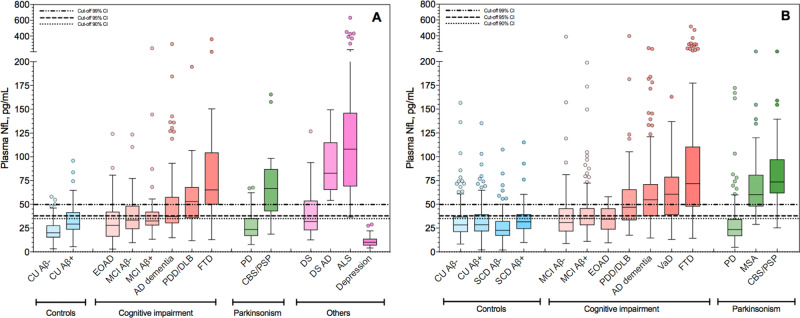
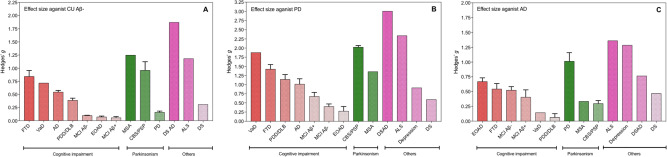
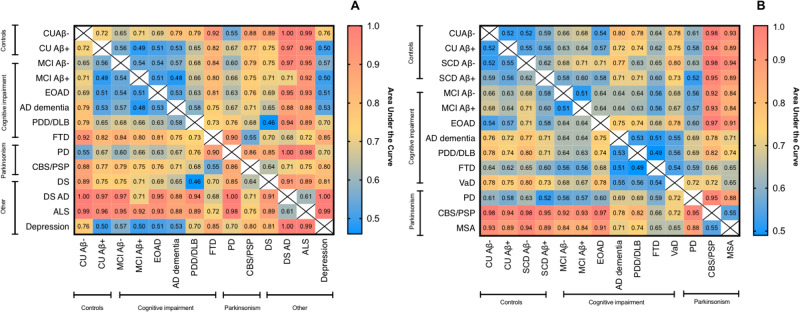
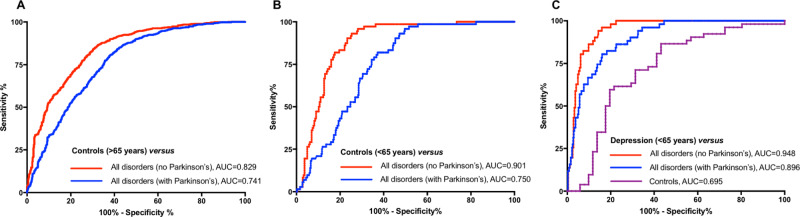
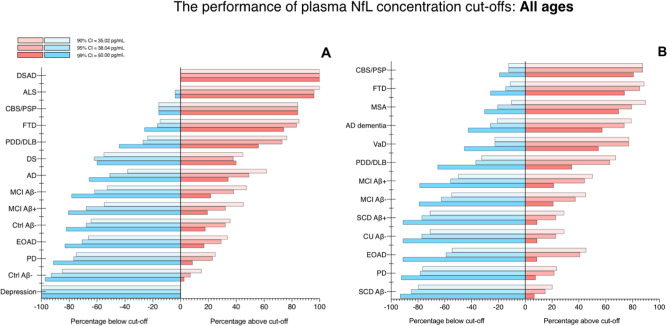
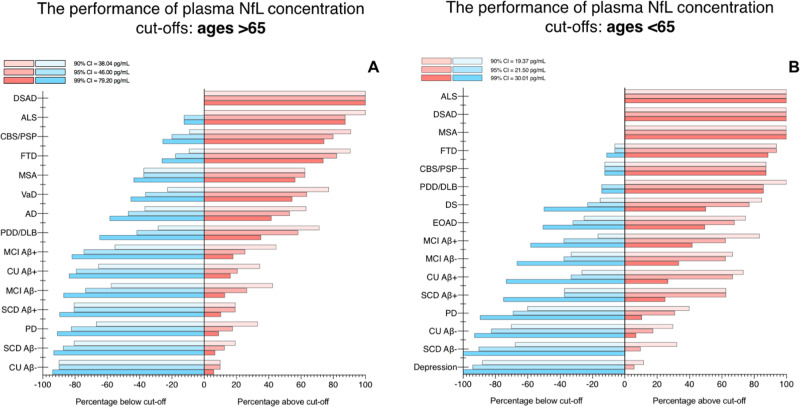
Increased cerebrospinal fluid neurofilament light (NfL) is a recognized biomarker for neurodegeneration that can also be assessed in blood. Here, we investigate plasma NfL as a marker of neurodegeneration in 13 neurodegenerative disorders, Down syndrome, depression and cognitively unimpaired controls from two multicenter cohorts: King’s College London ( n = 805) and the Swedish BioFINDER study ( n = 1,464). Plasma NfL was significantly increased in all cortical neurodegenerative disorders, amyotrophic lateral sclerosis and atypical parkinsonian disorders. We demonstrate that plasma NfL is clinically useful in identifying atypical parkinsonian disorders in patients with parkinsonism, dementia in individuals with Down syndrome, dementia among psychiatric disorders, and frontotemporal dementia in patients with cognitive impairment. Data-driven cut-offs highlighted the fundamental importance of age-related clinical cut-offs for disorders with a younger age of onset. Finally, plasma NfL performs best when applied to indicate no underlying neurodegeneration, with low false positives, in all age-related cut-offs.
Overview
The claims and statistics of this paper haven’t been checked yet.
Free: it reads the open-access text and checks the first 5 claims that cite a source we can check. Create a free account to check every claim.
Integrity signals
Registry
Cites
Statistics
Figures
Verification
Claims the paper makes
The claims and statistics of this paper haven’t been checked yet.
Free: it reads the open-access text and checks the first 5 claims that cite a source we can check. Create a free account to check every claim.
Claims other papers make about this one
Each is checked against this paper’s own text: does it say what the citing paper says it does?
The source backs part of the claim, not all of it — or backs it for a different population, condition or comparison.
In the citing paper
“Phosphorylated tau (p-tau) is the leading blood biomarker candidate, demonstrating superior diagnostic accuracy and disease specificity compared with other candidates.3,4”
From Diagnostic Accuracy of a Plasma Phosphorylated Tau 217 Immunoassay for Alzheimer Disease Pathology (2024) · cites this paper as [3]
Experimental — accuracy not yet measuredThe source backs part of the claim, not all of it — or backs it for a different population, condition or comparison.
In the citing paper
“Indeed, blood measures of p-tau181, p-tau217, p-tau231, glial fibrillary acid protein (GFAP), neurofilament light (NfL) and Aβ42/40 have been shown to change in preclinical AD and can discriminate this state from CU individuals with non-AD pathological changes1,3,6–13.”
From Plasma p-tau231 and p-tau217 as state markers of amyloid-β pathology in preclinical Alzheimer’s disease (2022) · cites this paper as [13]
Experimental — accuracy not yet measuredThe cited source says what the claim attributes to it.
In the citing paper
“As expected, plasma NfL had relatively lower PPV and NPV for AD, as NfL is a nonspecific biomarker of neurodegeneration, elevated in multiple different neurodegenerative diseases44.”
From Diagnosis of Alzheimer's disease using plasma biomarkers adjusted to clinical probability (2024) · cites this paper as [44]
Self-check
Percentages, sums and reported differences re-computed from the paper’s own numbers.
The self-check needs the paper’s full text.
Citations
Cites
NIA‐AA Research Framework: Toward a biological definition of Alzheimer's disease
Jack, C. R., Bennett, D. A., Blennow, K., Carrillo, M. C., Dunn, B., Haeberlein, S. B., Holtzman, D. M., Jagust, W., Jessen, F., Karlawish, J., et al. (2018) · Alzheimer's & Dementia · doi:10.1016/j.jalz.2018.02.018 · Cited by 10,537
Self-citationBrown, R. H., & Al-Chalabi, A. (2017) · New England Journal of Medicine · doi:10.1056/nejmra1603471 · Cited by 2,125
Self-citationNeurofilaments as biomarkers in neurological disorders
Khalil, M., Teunissen, C. E., Otto, M., Piehl, F., Sormani, M. P., Gattringer, T., Barro, C., Kappos, L., Comabella, M., Fazekas, F., et al. (2018) · Nature Reviews Neurology · doi:10.1038/s41582-018-0058-z · Cited by 1,988
Self-citationHigh performance plasma amyloid-β biomarkers for Alzheimer's disease
Nakamura, A., Kaneko, N., Villemagne, V. L., Kato, T., Doecke, J., Doré, V., Fowler, C., Li, Q.-X., Martins, R., Rowe, C., et al. (2018) · Nature · doi:10.1038/nature25456 · Cited by 1,681
Palmqvist, S., Janelidze, S., Quiroz, Y. T., Zetterberg, H., Lopera, F., Stomrud, E., Su, Y., Chen, Y., Serrano, G. E., Leuzy, A., et al. (2020) · JAMA · doi:10.1001/jama.2020.12134 · Cited by 1,603
Self-citationKarikari, T. K., Pascoal, T. A., Ashton, N. J., Janelidze, S., Benedet, A. L., Rodriguez, J. L., Chamoun, M., Savard, M., Kang, M. S., Therriault, J., et al. (2020) · The Lancet Neurology · doi:10.1016/s1474-4422(20)30071-5 · Cited by 1,316
Self-citationJanelidze, S., Mattsson, N., Palmqvist, S., Smith, R., Beach, T. G., Serrano, G. E., Chai, X., Proctor, N. K., Eichenlaub, U., Zetterberg, H., et al. (2020) · Nature Medicine · doi:10.1038/s41591-020-0755-1 · Cited by 1,247
Self-citationAssociation of plasma neurofilament light with neurodegeneration in patients with Alzheimer disease
Mattsson, N., Andreasson, U., Zetterberg, H., Blennow, K., & Initiative, F. T. A. D. N. (2017) · JAMA Neurology · doi:10.1001/jamaneurol.2016.6117 · Cited by 1,070
Self-citationBiomarkers for Alzheimer's disease: current status and prospects for the future
Blennow, K., & Zetterberg, H. (2018) · Journal of Internal Medicine · doi:10.1111/joim.12816 · Cited by 1,000
Self-citationDominantly Inherited Alzheimer Network, Preische, O., Schultz, S. A., Apel, A., Kuhle, J., Kaeser, S. A., Barro, C., Gräber, S., Kuder-Buletta, E., LaFougere, C., et al. (2019) · Nature Medicine · doi:10.1038/s41591-018-0304-3 · Cited by 927
Research works printed but not linked: 1
- Palmqvist S Discriminative accuracy of plasma phospho-tau217 for Alzheimer disease vs other neurodegenerative disorders J. Am. Med. Assoc. 2020 324 772 781 10.1001/jama.2020.12134 PMC7388060 32722745 · DOI · Paper page
Cited by
Items 201–300 of 607
Blūma, M., Chiotis, K., Bucci, M., Savitcheva, I., Matton, A., Kivipelto, M., Jeromin, A., Santis, G. D., Molfetta, G. D., Ashton, N. J., et al. (2024) · EBioMedicine · doi:10.1016/j.ebiom.2024.105504 · Cited by 23
“29 32 Notably, NfL was found to rise years before symptoms onset in autosomal dominant AD mutation carriers.”
Self-citationDelaby, C., Ladang, A., Martinez‐Yriarte, J., Zecca, C., Logroscino, G., Körtvelyessy, P., Tumani, H., Parchi, P., Quadrio, I., Hart, M., et al. (2025) · Alzheimer s & Dementia · doi:10.1002/alz.70343 · Cited by 22
Self-citationThomas, K., Spin, P. J., Sir, N., Hou, K. Y., Ashton, N. J., Zetterberg, H., Miller, S., Pringle, C., Stefanacci, R. G., Wischik, C. M., et al. (2025) · Journal of Alzheimer s Disease Reports · doi:10.1177/25424823251379878 · Cited by 22
Self-citationEratne, D., Keem, M. H., Lewis, C., Kang, M. J., Walterfang, M., Farrand, S., Loi, S. M., Kelso, W. M., Cadwallader, C. J., Berkovic, S. F., et al. (2022) · Journal of the Neurological Sciences · doi:10.1016/j.jns.2022.120439 · Cited by 22
Self-citationKhosousi, S., Hye, A., Velayudhan, L., Bloth, B., Tsitsi, P., Markaki, I., & Svenningsson, P. (2023) · Parkinsonism & Related Disorders · doi:10.1016/j.parkreldis.2023.105313 · Cited by 22
Self-citationPredicting amyloid PET positivity using plasma p‐tau181 and other blood‐based biomarkers
Kwon, H. S., Lee, E., Kim, H., Park, S., Park, H., Jeong, J. H., Koh, S., Choi, S. H., & Lee, J. (2023) · Alzheimer s & Dementia Diagnosis Assessment & Disease Monitoring · doi:10.1002/dad2.12502 · Cited by 22
Plasma p-tau181 and amyloid markers in Alzheimer’s disease: A comparison between Lumipulse and SIMOA
Quaresima, V., Pilotto, A., Trasciatti, C., Tolassi, C., Parigi, M., Bertoli, D., Mordenti, C., Galli, A., Rizzardi, A., Caratozzolo, S., et al. (2024) · Neurobiology of Aging · doi:10.1016/j.neurobiolaging.2024.08.007 · Cited by 22
“This highlights, again, the general validity of Lumipulse as a promising alternative technique to SIMOA and Mesoscale, especially when considering the shift from research to clinical use (Ashton et al., 2021a; Karikari et al., 2020; O ’ Connor et al., 2021; Pilotto et al., 2022).”
Self-citationBlood biomarkers in Down syndrome: Facilitating Alzheimer's disease detection and monitoring
Petersen, M. E., Aguilar, L. F., Head, E., Montoliu‐Gaya, L., Strydom, A., Pape, S. E., Fortea, J., Ashton, N. J., Udeh‐Momoh, C. T., O’Bryant, S. E., et al. (2024) · Alzheimer s & Dementia · doi:10.1002/alz.14364 · Cited by 22
“…showntoincreasewithdiseaseseverity,withhigherlevelsfoundinDS-AD compared to MCI-AD or asymptomatic DS. 23,35,46,47 This supports previous findings that show that plasma NfL levels correlate with AD-relatedimagingbiomarkers, 48 includingamyloiddeposition.”
Self-citationChen, Y., Wang, Y., Tao, Q., Lu, P., Meng, F., Zhuang, L., Qiao, S., Zhang, Y., Luo, B., Liu, Y., et al. (2024) · Clinica Chimica Acta · doi:10.1016/j.cca.2024.118784 · Cited by 21
“Released neurofilament light chains (NfL) as a biomarker for axonal injury [7 – 9], and free glial fibrillary acidic protein (GFAP) as a biomarker for reactive astrocytosis have also been detected in blood, with elevated levels in AD patients [1,10].”
InfluentialEvaluating Plasma p-tau217 as an Endpoint for Alzheimer Disease Clinical Trials
Ferreira, P. C. L., Bellaver, B., Povala, G., Bauer‐Negrini, G., Aguzzoli, C. S., Ferrari‐Souza, J. P., Leffa, D. T., Soares, C., Lussier, F. Z., Medeiros, M. S., et al. (2025) · Neurology · doi:10.1212/wnl.0000000000214441 · Cited by 22
Self-citationFu, W., & Ho, P. C. (2026) · Ageing Research Reviews · doi:10.1016/j.arr.2026.103058 · Cited by 21
Serrano‐Pozo, A., Escott‐Price, V., Grinberg, L. T., Pascoal, T. A., Suárez‐Calvet, M., Dubois, B., & Sperling, R. A. (2026) · The Lancet · doi:10.1016/s0140-6736(26)00198-4 · Cited by 23
Self-citationGleerup, H. S., Sanna, F., Høgh, P., Simrén, J., Blennow, K., Zetterberg, H., Hasselbalch, S. G., Ashton, N. J., & Simonsen, A. H. (2021) · Frontiers in Aging Neuroscience · doi:10.3389/fnagi.2021.659898 · Cited by 21
Self-citationRäuber, S. J., Schroeter, C. B., Strippel, C., Nelke, C., Ruland, T., Dik, A., Golombeck, K. S., Regner-Nelke, L., Paunovic, M., Esser, D., et al. (2023) · Journal of Autoimmunity · doi:10.1016/j.jaut.2022.102985 · Cited by 21
Relationship of plasma biomarkers to digital cognitive tests in Alzheimer's disease
Toniolo, S., Zhao, S., Scholcz, A., Amein, B., Ganse‐Dumrath, A., Heslegrave, A., Thompson, S., Manohar, S., Zetterberg, H., & Husain, M. (2024) · Alzheimer s & Dementia Diagnosis Assessment & Disease Monitoring · doi:10.1002/dad2.12590 · Cited by 22
“HighGFAPandNfLlevelshavealsobeenlinkedtoworsecognitiveper-formanceonstandardtestsofcognition, 17,28,29 toadeclineincognition over time, 19,21,30,31 and clinical conversion to AD.”
Self-citationKoivumäki, M., Ekblad, L. L., Lantero‐Rodriguez, J., Ashton, N. J., Karikari, T. K., Helin, S., Parkkola, R. K., Lötjönen, J. M. P., Zetterberg, H., Blennow, K., et al. (2024) · Alzheimer s Research & Therapy · doi:10.1186/s13195-024-01477-w · Cited by 21
“NfL concentrations measured from blood are elevated in AD and other neurodegenerative diseases [16, 17].”
BackgroundSelf-citationHu, Q., Shi, M., Li, Y., & Zhao, X. (2024) · BMC Neurology · doi:10.1186/s12883-024-03728-7 · Cited by 21
“Furthermore, the NfL cutoff for identifying neurodegenerative disorders across all ages was determined to be 35.02 pg/mL (90% CI), as established in a multicenter validation study evaluating the diagnostic value of plasma NfL [36].”
MethodInfluentialNavigating the Alzheimer’s Biomarker Landscape: A Comprehensive Analysis of Fluid-Based Diagnostics
Abiad, E. E., Al-Kuwari, A., Al-Aani, U., Jaidah, Y. A., & Châari, A. (2024) · Cells · doi:10.3390/cells13221901 · Cited by 21
Imaging and Fluid Biomarkers of Alzheimer Disease: Complementation Rather Than Competition
Drzezga, A. E., & Barthel, H. (2025) · Journal of Nuclear Medicine · doi:10.2967/jnumed.125.270152 · Cited by 20
Hok‐A‐Hin, Y. S., Vermunt, L., Peeters, C. F. W., van der Ende, E. L., de Boer, S. C. M., Meeter, L. H. H., Houwer, J. F. H. D., Seelaar, H., Swieten, J. C. V., Hu, W. T., et al. (2025) · Molecular Neurodegeneration · doi:10.1186/s13024-025-00882-5 · Cited by 20
“The concentrations of Neurofilament light (NfL) in CSF and blood are strongly increased in FTD but also in other neurodegenerative disorders since it reflects neuroaxonal damage [18, 19].”
Self-citationAssociations of Alzheimer's-related plasma biomarkers with cognitive decline in Parkinson's disease
Mizutani, Y., Ohdake, R., Tatebe, H., Higashi, A., Shima, S., Ueda, A., Ito, M., Tokuda, T., & Watanabe, H. (2023) · Journal of Neurology · doi:10.1007/s00415-023-11875-z · Cited by 21
“Plasma NfL is a component of the neuronal cytoskeleton, and increased plasma NfL has been shown to serve as a biomarker for a variety of neurodegenerative diseases [11].”
BackgroundHabibzadeh, A., Ostovan, V. R., Ghezel, M. A., Kavari, K., Kardeh, S., & Tabrizi, R. (2024) · BMC Psychiatry · doi:10.1186/s12888-024-06051-0 · Cited by 20
“Also, plasma NfL demonstrated superior capabilities in detecting neurode-generation among younger individuals compared to older individuals [6].”
BackgroundInfluentialPachner, A. R. (2022) · Biomedicines · doi:10.3390/biomedicines10092099 · Cited by 20
“Having a blood biomarker for neuroaxonal damage also has relevance to other CNS diseases such as dementias [106], stroke [107], and amyotrophic lateral sclerosis [108].”
BackgroundRequena-Ocaña, N., Araos, P. F., Serrano-Castro, P. J., Flores-López, M., García‐Marchena, N., Oliver‐Martos, B., Ruiz, J. J., Gavito, A., Pavón, F. J., Serrano, A., et al. (2023) · International Journal of Molecular Sciences · doi:10.3390/ijms24021183 · Cited by 19
“Clinical studies have recognized Neurofilament Light chain protein (NfL), a structural component of the axonal cytoskeleton, as a promising biomarker for several neurodegenerative diseases, including mild cognitive impairment, Alzheimer’s disease, frontotemporal dementia, Parkinson’s disease, and amyotrophic lateral s…”
BackgroundResultUnraveling the role of proteins in dementia: insights from two UK cohorts with causal evidence
Gong, J., Williams, D. M., Scholes, S., Assaad, S., Bu, F., Hayat, S. A., Zaninotto, P., & Steptoe, A. (2025) · Brain Communications · doi:10.1093/braincomms/fcaf097 · Cited by 19
“17 NEFL is a marker of axonal injury 61,62 and is implicated in several biological mechanisms related to dementia, 63,64 including neurodegeneration, 65,66 inflammation, 67 central nervous system (CNS) injury 68-70 and atherosclerosis.”
Kang, M. J., Eratne, D., Dean, O. M., Berk, M., Walker, A. J., Wannan, C., Malpas, C. B., Cicognola, C., Janelidze, S., Hansson, O., et al. (2025) · Bipolar Disorders · doi:10.1111/bdi.70029 · Cited by 19
“This contrasts with the markedly elevated concentrations (at least two-fold) seen in neurodegenerative disorders such as dementia and multiple sclerosis [31, 32], suggesting that the subtle increase in bipolar disorder may be due to a different or less intense process.”
Self-citationNFL strongly correlates with TNF-R1 in the plasma of AD patients, but not with cognitive decline
Delaby, C., Julian, A. G., Page, G., Ragot, S., Lehmann, S., & Paccalin, M. (2021) · Scientific Reports · doi:10.1038/s41598-021-89749-5 · Cited by 19
Reyes‐Leiva, D., Dols‐Icardo, O., Sirisi, S., Cortés‐Vicente, E., Turón‐Sans, J., de Luna, N., Blesa, R., Belbin, O., Montal, V., Alcolea, D. A., et al. (2022) · Frontiers in Neurology · doi:10.3389/fneur.2021.750543 · Cited by 19
“Because biofluid levels of NfL are strongly correlated with age, recent multicenter studies have determined highly specific age-adjusted cut-offs (154).”
BackgroundSelf-citationBiomarker panel increases accuracy for identification of an MS relapse beyond sNfL
Gawde, S., Agasing, A. M., Bhatt, N., Toliver, M., Kumar, G., Massey, K., Nguyen, A., Mao‐Draayer, Y., Macwana, S., DeJager, W., et al. (2022) · Multiple Sclerosis and Related Disorders · doi:10.1016/j.msard.2022.103922 · Cited by 19
Neurofilaments in neurologic disorders and beyond
Mak, G. K., Menon, S., & Lu, J. (2022) · Journal of the Neurological Sciences · doi:10.1016/j.jns.2022.120380 · Cited by 19
Towards biomarker-based diagnosis of Parkinson disease
Tolosa, E. S., Poewe, W. H., Noyce, A. J., Svenningsson, P., Mahlknecht, P., & Martí, M. J. (2026) · Nature Reviews Neurology · doi:10.1038/s41582-026-01185-z · Cited by 19
Self-citationImarisio, A., Pilotto, A., Garrafa, E., Conforti, F., Masciocchi, S., Turrone, R., Gipponi, S., Cottini, E., Rizzetti, M. C., Porrini, V., et al. (2021) · Neurodegenerative Diseases · doi:10.1159/000523982 · Cited by 18
Self-citationParkin, G. M., Thomas, E. A., & Corey‐Bloom, J. (2024) · EBioMedicine · doi:10.1016/j.ebiom.2024.105173 · Cited by 18
Chen, Y., Zeng, X., Diaz, J. L., Sehrawat, A., Lafferty, T. K., Boslett, J. J., Klunk, W. E., Pascoal, T. A., Villemagne, V. L., Cohen, A. D., et al. (2024) · Journal of Neurochemistry · doi:10.1111/jnc.16130 · Cited by 18
“…al., 2021 ; Janelidze, Berron, et al., 2021 ; Karikari et al., 2020; Lantero Rodriguez et al., 2020 ; Merluzzi et al., 2018 ), plasma NfL and GFAP have shown utility in AD (Chatterjee et al., 2022 ; Zetterberg & Blennow, 2021 ) and in other neurodegenerative diseases such as frontotemporal…”
Self-citationKritikos, M., Diminich, E. D., Meliker, J. R., Mielke, M. M., Bennett, D. A., Finch, C. E., Gandy, S., Carr, M. A., Yang, X., Kotov, R., et al. (2023) · Alzheimer s & Dementia Diagnosis Assessment & Disease Monitoring · doi:10.1002/dad2.12409 · Cited by 18
Buonocore, J., Fratto, E., Arcuri, F., Vescio, B., Calomino, C., Talarico, M., Cristiani, C. M., Quattrone, A., & Quattrone, A. (2025) · Journal of Neurology · doi:10.1007/s00415-025-13498-y · Cited by 17
“NfL is a structural axonal protein released in response to neuronal injury, elevated across a broad spectrum of neurodegenerative disorders, including multiple sclerosis, dementia, amyotrophic lateral sclerosis (ALS), and atypical parkinsonian disorders (APD) [7, 8].”
Miteva, D., Vasilev, G., & Velikova, T. V. (2023) · Antibodies · doi:10.3390/antib12040081 · Cited by 18
Longitudinal FDG-PET Metabolic Change Along the Lewy Body Continuum
Ferreira, D., Przybelski, S. A., Lesnick, T. G., Diaz‐Galvan, P., Schwarz, C. G., Murray, M. M., Dickson, D. W., Nguyen, A. T., Reichard, R. R., Senjem, M. L., et al. (2025) · JAMA Neurology · doi:10.1001/jamaneurol.2024.4643 · Cited by 18
Snellman, A., Ekblad, L. L., Koivumäki, M., Lindgrén, N., Tuisku, J., Perälä, M., Kallio, L., Lehtonen, R., Saunavaara, V., Saunavaara, J. P., et al. (2022) · Frontiers in Neurology · doi:10.3389/fneur.2022.826423 · Cited by 17
“Ultrasensitive immunoassays and immunoprecipitation combined with mass spectrometry have made it possible to measure various proteins characteristic for AD pathophysiology from blood, including different soluble Aβ species (27), soluble tau and phosphorylated tau species (28–32), neurodegeneration by plasma neurofilam…”
BackgroundSelf-citationPeng, L., Wan, L., Liu, M., Long, Z., Chen, D., Yuan, X., Tang, Z., Fu, Y., Zhu, S., Lei, L., et al. (2023) · Journal of Neurology · doi:10.1007/s00415-023-11741-y · Cited by 17
Slota, J. A., Medina, S. J., Frost, K. L., & Booth, S. A. (2022) · Frontiers in Neuroscience · doi:10.3389/fnins.2022.918811 · Cited by 16
Recent advances in Alzheimer’s disease: From molecular mechanisms to therapeutic strategies
Rudman, M. D., Ulrich, J. D., & Holtzman, D. M. (2026) · Cell · doi:10.1016/j.cell.2026.06.006 · Cited by 21
Arthur, E., Ravichandran, S., Snyder, P. J., Alber, J., Strenger, J. R., Bittner, A. K., Khankan, R., Adams, S. L., Putnam, N., Lypka, K. R., et al. (2023) · Alzheimer s Research & Therapy · doi:10.1186/s13195-023-01312-8 · Cited by 16
“These blood-based biomarkers for AD include Aβ42/Aβ40 ratio [10], p-tau 181 [11], p-tau 217 [77], p-tau 231 [78], neurofilament light protein (NfL) [12], and glial fibrillary acidic protein (GFAP) [13]. p-tau 217 shows better results at detecting AD pathology (including preclinical AD) and for…”
BackgroundAPOE ε4 carrier status modifies plasma p‐tau181 concentrations in cognitively healthy super‐seniors
Cooper, J. G., Ghodsi, M., Stukas, S. K., Leach, S. R., Brooks-Wilson, A. R., & Wellington, C. L. (2024) · Alzheimer s & Dementia · doi:10.1002/alz.13804 · Cited by 17
Li, C., Wang, Y., Wu, Y., Yu, Y. H., Liu, Y., & Liu, Q. (2025) · TrAC Trends in Analytical Chemistry · doi:10.1016/j.trac.2025.118173 · Cited by 17
Suárez‐Calvet, M., Ruiz, C. A., Alcolea, D. A., Mendióroz, M., Balasa, M., Morenas‐Rodríguez, E., Puig‐Pijoan, A., Sánchez‐Juan, P., Villarejo‐Galende, A., & Sánchez‐Valle, R. (2025) · Neurología (English Edition) · doi:10.1016/j.nrleng.2025.07.004 · Cited by 17
Mondésert, E., Schraen‐Maschke, S., Quadrio, I., Bousiges, O., Bouvier, D., Delaby, C., Bedel, A., Lehmann, S., & Fourier, A. (2024) · Clinica Chimica Acta · doi:10.1016/j.cca.2024.120007 · Cited by 15
A Review of Artificial Intelligence-Based Down Syndrome Detection Techniques
Shaikh, M. A., Al-Rawashdeh, H. S., & Sait, A. R. W. (2025) · Life · doi:10.3390/life15030390 · Cited by 15
Zhou, Y., Cai, G., Wang, Y., Guo, Y., Yang, Z., Wang, A., Chen, Y.-S., Li, X., Chen, X., Hu, Z., et al. (2024) · ACS Nano · doi:10.1021/acsnano.3c09642 · Cited by 14
Zhou, Y., Sheehan, R., Guo, L., & Strydom, A. (2025) · Alzheimer s & Dementia · doi:10.1002/alz.70135 · Cited by 14
“68 Of these, we were able to obtain data from nine studies 8,39–41, We were therefore able to conduct a meta-analysis on data from 18 studies 8,16,39–41, 43, Themeta-analysisincludedatotalof3844adultparticipantswhowere above the age of 18.”
InfluentialSelf-citationBorelli, W. V., Ferreira, P. C. L., Brum, W. S., Ferrari‐Souza, J. P., Carello‐Collar, G., Holz, M. R., Souza, V. T., Strelow, M. Z., Formoso, C., Chaves, M. L. F., et al. (2025) · Molecular Psychiatry · doi:10.1038/s41380-025-03192-w · Cited by 14
Self-citationWischik, C. M., Stefanacci, R. G., Bentham, P., Gauthier, S. G., Zetterberg, H., Wilcock, G. K., Froelich, L., Burns, A. S., MacSweeney, E., Ballard, C. G., et al. (2026) · The Journal of Prevention of Alzheimer s Disease · doi:10.1016/j.tjpad.2026.100480 · Cited by 14
Self-citationEratne, D., Li, Q.-X., Lewis, C. C., Dang, C., Kang, M. J., Grewal, J. K., Loi, S. M., Walterfang, M., Evans, A. H., Malpas, C. B., et al. (2024) · Journal of Neurology · doi:10.1007/s00415-024-12732-3 · Cited by 14
“Other promising biomarkers include glial fibrillary acidic protein (GFAP) in AD and other disorders, [6, 11] and neurofilament light chain (NfL) in neurodegenerative disorders broadly and in distinguishing neurodegenerative from non-neurodegenerative and neuroinflammatory disorders [12–19].”
Self-citationValverde, A., Pidal, J. M. G., Montero‐Calle, A., Arévalo, B., Serafín, V., Calero, M., Moreno‐Guzmán, M., López, M. Á., Escarpa, A., Yáñez‐Sedeño, P., et al. (2022) · ChemElectroChem · doi:10.1002/celc.202200055 · Cited by 14
A Dementia Diagnosis Technique Based on AI and Hardware Acceleration
Khalil, K., Mamun, M. M. R. K., Sherif, A., Elsersy, M. S., Imam, A. A.-A., & Abouzaid, K. (2023) · International Conference on Artificial Intelligence, Blockchain, and Internet of Things (AIBThings) · doi:10.1109/aibthings58340.2023.10292463 · Cited by 13
Jellinger, K. A. (2025) · Diseases · doi:10.3390/diseases13020039 · Cited by 13
“…rhythm slowing, cerebrospinal fluid (CSF) amyloid (A β -40), Val66Met polymorphism, APOE ε 4 and ε 2 alleles [194], GFAP and neurofilament light chain (NfL) levels in CSF and plasma [195], the latter being significantly increased in all cortical neurodegenerative disorders including APs [8,196].”
Titze-de-Almeida, S. S., Marina, C. L., Ramos, M. V., Silva, L. D. D. S., Brandão, P. R. D. P., Bispo, D. D. D. C., von Glehn, F., & Titze‐de‐Almeida, R. (2025) · International Journal of Molecular Sciences · doi:10.3390/ijms26178246 · Cited by 13
“Additionally, elevated levels of p-tau in CSF and tau deposition in brain parenchyma in PET scans serve as effective indicators for AD pathology [56,57].”
Neurofilament light chain in Alzheimer’s disease
Fuloria, N. K., Sekar, M., Porwal, O., Ansari, M. T., Biswas, A., Narain, K., Biswas, S., Bhatia, S., Dhanalekshmi, U. M., & Fuloria, S. (2025) · Clinica Chimica Acta · doi:10.1016/j.cca.2025.120580 · Cited by 14
Mgaieth, F., Baksh, R. A., Startin, C. M., Hamburg, S., Hithersay, R., Pape, S. E., Zetterberg, H., Ashton, N. J., Tamayo‐Elizalde, M., Saini, F., et al. (2023) · Alzheimer s & Dementia · doi:10.1002/alz.13097 · Cited by 13
Self-citationBalayssac, D., Busserolles, J., Broto, C., Dalbos, C., Prival, L., Lamoine, S., Richard, D., Quintana, M., Herbet, A., Hilairet, S., et al. (2023) · Biomedicine & Pharmacotherapy · doi:10.1016/j.biopha.2023.115535 · Cited by 13
Carmona‐Iragui, M., O’Connor, A., Llibre‐Guerra, J. J., Lao, P. J., Ashton, N. J., Fortea, J., & Sánchez‐Valle, R. (2024) · EBioMedicine · doi:10.1016/j.ebiom.2024.105327 · Cited by 13
“NfL can be measured accurately in CSF and blood, 43 correlating with disease progression (cortical thinning and declining cognitive performance).”
Self-citationAli, F., Syrjanen, J. A., Figdore, D. J., Kremers, W. K., Mielke, M. M., Jack, C. R., Knopman, D. S., Vemuri, P., Graff‐Radford, J., Windham, B. G., et al. (2025) · Communications Medicine · doi:10.1038/s43856-024-00713-6 · Cited by 13
microRNA‐based predictor for diagnosis of frontotemporal dementia
Magen, I., Yacovzada, N., Warren, J. D., Heller, C., Swift, I., Bobeva, Y., Malaspina, A., Rohrer, J. D., Fratta, P., & Hornstein, E. (2023) · Neuropathology and Applied Neurobiology · doi:10.1111/nan.12916 · Cited by 12
Quantification of neurofilament light and glial fibrillary acidic protein in finger-prick blood
Kolanko, M., Huber, H., David, M., Montoliu‐Gaya, L., Simrén, J., Blennow, K., Zetterberg, H., Nilforooshan, R., Malhotra, P., Sharp, D. J., et al. (2024) · Brain Communications · doi:10.1093/braincomms/fcae151 · Cited by 12
Self-citationSuárez‐Calvet, M., Ruiz, C. A., Alcolea, D. A., Mendióroz, M., Balasa, M., Morenas‐Rodríguez, E., Puig‐Pijoan, A., Sánchez‐Juan, P., Villarejo‐Galende, A., & Sánchez‐Valle, R. (2024) · Neurología · doi:10.1016/j.nrl.2024.08.002 · Cited by 12
Wang, Y., Zhou, J., Chen, X., Liu, R., & Lv, Y. (2024) · Analytical Chemistry · doi:10.1021/acs.analchem.4c05865 · Cited by 12
Plasma N‐terminal tau fragment is an amyloid‐dependent biomarker in Alzheimer's disease
Lan, G., Zhang, L., Li, A., Ran, W., Lv, J., González‐Ortiz, F., Cai, Y. Q., Sun, P., Liu, L., Yang, J., et al. (2025) · Alzheimer s & Dementia · doi:10.1002/alz.14550 · Cited by 12
“12,13 Regarding total tau, the large overlap between AD and control groups and close association with p-tau pro-pose some concerns about its usage as an N biomarker.”
Self-citationSuresh, S., Maffei, L., Bauermeister, S., & Raymont, V. (2025) · Journal of Alzheimer s Disease · doi:10.1177/13872877251408510 · Cited by 13
A deep joint-learning proteomics model for diagnosis of six conditions associated with dementia
An, L., Binette, A. P., Hristovska, I., Vilkaite, G., Xiao, Y., Zendehdel, R., Dong, Z., Smets, B., Saloner, R., Tasaki, S., et al. (2026) · Nature Medicine · doi:10.1038/s41591-026-04303-y · Cited by 12
Self-citationSerum Cystatin C is a potential biomarker for predicting amyotrophic lateral sclerosis survival
Zhu, Y., Huo, Y., Bai, J., Mao, L., Wang, H., Wang, J., & Huang, X. (2023) · Neurological Sciences · doi:10.1007/s10072-023-06957-9 · Cited by 12
“NfL is a highly reliable biomarker of neuronal damage [20, 21].”
Evidence that minocycline treatment confounds the interpretation of neurofilament as a biomarker
Gentile, J. E., Heiss, C. N., Corridon, T. L., Mortberg, M. A., Fruhwürth, S., Guzman, K., Grötschel, L., Montoliu‐Gaya, L., Chan, K., Herring, N. C., et al. (2025) · Brain Communications · doi:10.1093/braincomms/fcaf175 · Cited by 12
“2,3 Although NfL is not diagnostically specific, it can potentially provide information on patient prognoses and treatment responses, 4 for example, NfL is reduced by treatment in spinal muscular atrophy 5 and multiple sclerosis.”
Self-citationEpigenetic profiles of tissue informative CpGs inform ALS disease status and progression
Caggiano, C., Morselli, M., Qian, X., Celona, B., Thompson, M., Wani, S., Tosevska, A., Taraszka, K., Heuer, G., Ngo, S. T., et al. (2025) · Genome Medicine · doi:10.1186/s13073-025-01542-5 · Cited by 12
“Since initiating these studies, other proposed blood-based biomarkers for ALS, like neurofilaments [75, 90, 91], proteomics [92], or miRNA [13] have demonstrated promise and future studies will need to benchmark with at least one of these.”
Schroyen, G., Sleurs, C., Bartsoen, E., Smeets, D., Weehaeghe, D. V., Laere, K. V., Smeets, A., Deprez, S., & Sunaert, S. G. (2022) · The Breast · doi:10.1016/j.breast.2022.02.001 · Cited by 12
“This marker demonstrates high prognostic and diagnostic accuracy for axonal damage in cortical neurodegenerative disorders [14].”
BackgroundBlood-based biomarkers of Alzheimer’s disease—A guideline for clinical use
Shi, J., Ou, Q., & Chen, X. (2024) · Medicine Plus · doi:10.1016/j.medp.2024.100057 · Cited by 11
Heritability of Alzheimer's disease plasma biomarkers: A nuclear twin family design
Rousset, R. Z., den Braber, A., Verberk, I. M. W., Boonkamp, L., Wilson, D. H., Ligthart, L., Teunissen, C. E., & de Geus, E. J. C. (2024) · Alzheimer s & Dementia · doi:10.1002/alz.14269 · Cited by 11
“16,17 Therefore, the high heritability observed here might not entirely be a reflection of the heritability of AD (60%– 80%).”
Plasma Biomarkers in the Distinction of Alzheimer’s Disease and Frontotemporal Dementia
Gómez‐Tortosa, E., Agüero, P., Ruiz-González, A., Wagner, S., Téllez, R., Mahíllo, I., Ruiz-Calvo, A., Sainz, M. J., Nystrom, A. L., del Ser, T., et al. (2025) · International Journal of Molecular Sciences · doi:10.3390/ijms26031231 · Cited by 12
Reijner, N., Frigerio, I., Bouwman, M. M. A., Boon, B. D. C., Guizard, N., Jubault, T., Hoozemans, J. J. M., Rozemüller, A. J. M., Bouwman, F. H., Barkhof, F., et al. (2025) · Alzheimer s Research & Therapy · doi:10.1186/s13195-025-01727-5 · Cited by 11
“Neuro-axonal degeneration has been especially well characterized by studies focusing on the neuro-cytoskeletal protein marker neurofilament light (NfL) [19–21].”
Yan, S., Sahoo, A., Zerenner, T., MAREK, K. L., Sommerauer, M., Oertel, W. H., Hu, M. T., & Tofaris, G. K. (2025) · Annals of Neurology · doi:10.1002/ana.78109 · Cited by 11
“10,11 In synucleinopathies, NfL levels are most prominently increased in MSA, and to a lesser extent in DLB, but not in idiopathic PD. 12,13 However, in PD, serum NfL levels were shown to correlate with disease severity and motor deterioration.”
Lockhart, S. N., Sutphen, C. L., Tanley, J. E., González‐Ortiz, F., Kac, P. R., Habes, M., Heckbert, S. R., Ashton, N. J., Mielke, M. M., Koeppe, R. A., et al. (2026) · Alzheimer s & Dementia · doi:10.1002/alz.71131 · Cited by 11
Self-citationWelton, T., Tan, Y. J., Saffari, S. E., Ng, S. Y., Chia, N. S. Y., Yong, A. C. W., Choi, X., Heng, D. L., Shih, Y., Hartono, S., et al. (2022) · Journal of Parkinson s Disease · doi:10.3233/jpd-223414 · Cited by 11
The altered expression of cytoskeletal and synaptic remodeling proteins during epilepsy
Xin, Y., Lin, G., Hua, T., Liang, J., Sun, T., & Wu, X. (2023) · Open Life Sciences · doi:10.1515/biol-2022-0595 · Cited by 11
“NFs are intermediate filaments found in neurons and axons that play important roles in maintaining the morphology of neurons and intercellular transmission [30].”
BackgroundMulti-Omic Blood Biomarkers as Dynamic Risk Predictors in Late-Onset Alzheimer’s Disease
Bhalala, O. G., Watson, R., & Yassi, N. (2024) · International Journal of Molecular Sciences · doi:10.3390/ijms25021231 · Cited by 11
“Moreover, cut-off values have not been well established for clinical use, though NfL levels increase in an age-dependent manner [82,83] and age-adjusted models have been proposed [84].”
BackgroundTang, R., Buchholz, E. J., Dale, A. M., Rissman, R. A., Fennema‐Notestine, C., Gillespie, N. A., Hagler, D. J., Lyons, M. J., Neale, M. C., Panizzon, M. S., et al. (2024) · Alzheimer s Research & Therapy · doi:10.1186/s13195-024-01464-1 · Cited by 11
“Because blood-based NfL is less invasive and more cost-effective compared to neuro-imaging and CSF measures of neurodegeneration, studies have evaluated blood-based NfL as a potential biomarker of neurodegeneration for monitoring and predicting neurodegenerative disease progression [1, 2, 8].”
BackgroundAltomare, D., Libri, I., Alberici, A., Rivolta, J., Padovani, A., Ashton, N. J., Zetterberg, H., Blennow, K., & Borroni, B. (2024) · Alzheimer s Research & Therapy · doi:10.1186/s13195-024-01474-z · Cited by 11
“…both plasma p-tau 181 and plasma p-tau 231 are specific to AD [9, 10], and distinguish AD from FTD with very high accuracy [9]; and that plasma NfL reflects neurodegeneration (being elevated both in AD and in other neurodegenerative diseases), and discriminate FTD from psychiatric disorders [12].”
BackgroundSelf-citationSaraceno, C., Cervellati, C., Trentini, A., Crescenti, D., Longobardi, A., Geviti, A., Bonfiglio, N. S., Bellini, S., Nicsanu, R., Fostinelli, S., et al. (2024) · International Journal of Molecular Sciences · doi:10.3390/ijms25158354 · Cited by 11
Plasma NfL, GFAP, and pTau181 in patients with isolated REM sleep behavior disorder
Liguori, C., Fernandes, M., Zatti, C., Carpi, M., Tolassi, C., Testone, G., Cirillo, F., Antonucci, M., Bergamo, G., Risino, I., et al. (2025) · SLEEP · doi:10.1093/sleep/zsaf163 · Cited by 11
Self-citationEvidence that minocycline treatment confounds the interpretation of neurofilament as a biomarker
Gentile, J. E., Heiss, C., Corridon, T. L., Mortberg, M. A., Fruhwürth, S., Guzman, K., Grötschel, L., Chan, K., Herring, N. C., Janicki, T., et al. (2024) · doi:10.1101/2024.05.01.24306384 · Cited by 11
“As neuronal damage causes leakage of these proteins from the cytosol into biofluids, NfL in cerebrospinal fluid and blood are elevated, to various degrees, in virtually all neurological disorders 2,3 .”
Self-citationResetting the aging clock through epigenetic reprogramming: Insights from natural products
Liu, X., Feng, J. H., Guo, M., Chen, C., Zhao, T., Sun, X., & Zhang, Y. (2025) · Pharmacology & Therapeutics · doi:10.1016/j.pharmthera.2025.108850 · Cited by 10
Yao, W., Zhou, H., Zhang, X., Chen, H., Bai, F., & Initiative, A. D. N. (2023) · CNS Neuroscience & Therapeutics · doi:10.1111/cns.14391 · Cited by 10
“42 NFL is a dynamic biomarker that is released into the circulation and eventually into the bloodstream following axonal injury.”
Woo, M. S., Nilsson, J., Therriault, J., Rahmouni, N., Brinkmalm, A., Benedet, A. L., Ashton, N. J., Macedo, A. C., Servaes, S., Wang, Y.-T., et al. (2023) · Journal of Neuroinflammation · doi:10.1186/s12974-023-02962-z · Cited by 10
“Thus far, neuronal injury quantified by Neurofilament light chain (NfL) or hippocampal atrophy has been considered a late event in AD pathology which appears years after amyloid and tau load [34–36].”
BackgroundSelf-citationLyon, A. C., Lippa, C. F., & Eiser, A. R. (2024) · Journal of Integrative and Complementary Medicine · doi:10.1089/jicm.2023.0583 · Cited by 10
“Similarly, plasma neurofilament light chain (NfL) is a general biomarker of neurodegeneration 2 and affords no insight into pathogenic factors.”
Azcue, N., Tijero, B., Acera, M., Pérez-Garay, R., Fernández‐Valle, T., Ayo-Mentxakatorre, N., Ruíz-López, M., Lafuente, J. V., Gómez‐Esteban, J. C., & Pino, R. D. (2024) · Biomedicines · doi:10.3390/biomedicines12071539 · Cited by 11
“NfL, a protein component exclusive to the neurons’ cytoskeleton, is released into extracellular fluids during axonal damage, a predominant feature of numerous neurodegenerative processes leading to irreversible impairment [18].”
BackgroundPilotto, A., Zanusso, G., Antelmi, E., Okuzumi, A., Zatti, C., Lupini, A., Bongianni, M., Padovani, A., & Hattori, N. (2024) · Journal of Parkinson s Disease · doi:10.3233/jpd-240007 · Cited by 10
“104 , 105 In DLB, NfL is associated with severity and is an important potential predictor of progression in the prodromal MCI phase.”
BackgroundResultSelf-citationColombo, E., Doretti, A., Rao, R., Verde, F., Sodano, M., Gobbi, A. D., di Cola, F. S., Ceccardi, G., Fiducia, B., Quaresima, V., et al. (2025) · Neurological Sciences · doi:10.1007/s10072-025-08011-2 · Cited by 10
Self-citationYao, W., Initiative, A. D. N., Zhang, X., Zhao, H., Xu, Y., & Bai, F. (2022) · Journal of Alzheimer s Disease · doi:10.3233/jad-220475 · Cited by 10
Neurofilament Light Protein as a Biomarker in Severe Mental Disorders: A Systematic Review
Squitti, R., Fiorenza, A., Martinelli, A., Brembati, V., Crescenti, D., Rongioletti, M. C. A., & Ghidoni, R. (2024) · International Journal of Molecular Sciences · doi:10.3390/ijms26010061 · Cited by 9
Blood biomarker profiles in young-onset neurocognitive disorders: A cohort study
Bhalala, O. G., Beamish, J., Eratne, D., Summerell, P., Porter, T., Laws, S. M., Kang, M. J., Huq, A. J., Chiu, W.-H. M., Cadwallader, C. J., et al. (2025) · Australian & New Zealand Journal of Psychiatry · doi:10.1177/00048674241312805 · Cited by 9
Alberti, G., Portelli, D., Polito, F., Graceffa, A. M. S., Licitri, L., Loteta, S., Torre, M. M., Gasparo, I., Rizzo, V., Aguennouz, M., et al. (2025) · Journal of Clinical Medicine · doi:10.3390/jcm14030672 · Cited by 9
Qiu, Y., Jacobs, D. M., Messer, K. S., Salmon, D. P., Wellington, C. L., Stukas, S. K., Revta, C., Brewer, J. B., Léger, G. C., Askew, B., et al. (2025) · Alzheimer s Research & Therapy · doi:10.1186/s13195-025-01745-3 · Cited by 9
“NfL is, however, a nonspecific marker of neuroaxonal integrity [24, 25], and it is unclear how NfL relates to amyloid or tau pathology in AD.”
Czimmeck, C., Nee, J., Hinrichs, C., Endisch, C., Körtvelyessy, P., Ploner, C. J., Leithner, C., & Kenda, M. (2025) · Resuscitation · doi:10.1016/j.resuscitation.2025.110650 · Cited by 9
Metadata
- Authors
- Ashton, N. J., Janelidze, S., Al Khleifat, A., Leuzy, A., van der Ende, E. L., Karikari, T. K., Benedet, A. L., Pascoal, T. A., Lleó, A., Parnetti, L., Galimberti, D., Bonanni, L., Pilotto, A., Padovani, A., Lycke, J., Novakova, L., Axelsson, M., Velayudhan, L., Rabinovici, G. D., Miller, B., Pariante, C., Nikkheslat, N., Resnick, S. M., Thambisetty, M., Schöll, M., Fernández-Eulate, G., Gil-Bea, F. J., López de Munain, A., Al-Chalabi, A., Rosa-Neto, P., Strydom, A., Svenningsson, P., Stomrud, E., Santillo, A., Aarsland, D., van Swieten, J. C., Palmqvist, S., Zetterberg, H., Blennow, K., Hye, A., & Hansson, O.
- Affiliations
- King's College London (GB)
- Lund University (SE)
- University of Gothenburg (SE)
- Montreal Neurological Institute and Hospital (CA)
- Instituto de Salud Carlos III (ES)
- University of Perugia (IT)
- University of Milan (IT)
- University of Chieti-Pescara (IT)
- Fondazione Europea Ricerca Biomedica (IT)
- University of Brescia (IT)
- Sahlgrenska University Hospital (SE)
- University of Leicester (GB)
- University of California, San Francisco (US)
- National Institutes of Health (US)
- UCL Queen Square Institute of Neurology (GB)
- Corresponding author
- Ashton, Nicholas J.
- Hansson, Oskar
- ORCID
- Ashton, Nicholas J.
- Janelidze, Shorena
- Al Khleifat, Ahmad
- Leuzy, Antoine
- Karikari, Thomas K.
- Pascoal, Tharick A.
- Lleó, Alberto
- Parnetti, Lucilla
- Galimberti, Daniela
- Bonanni, Laura
- Pilotto, Andrea
- Padovani, Alessandro
- Lycke, Jan
- Novakova, Lenka
- Axelsson, Markus
- Velayudhan, Latha
- Rabinovici, Gil D.
- Miller, Bruce
- Pariante, Carmine
- Nikkheslat, Naghmeh
- Resnick, Susan M.
- Thambisetty, Madhav
- Schöll, Michael
- Fernández-Eulate, Gorka
- Gil-Bea, Francisco J.
- Al-Chalabi, Ammar
- Svenningsson, Per
- Stomrud, Erik
- Santillo, Alexander
- Aarsland, Dag
- Palmqvist, Sebastian
- Zetterberg, Henrik
- Blennow, Kaj
- Hye, Abdul
- Hansson, Oskar
- Venue
- Nature Communications
- Published
- 2021-06-07
- Volume
- 12
- Issue
- 1
- Pages
- 3400-3400
- ISSN
- 2041-1723 (ISSN-L)
- PMC
- PMC8185001
- OpenAlex
- W3167068736
- Semantic Scholar
- c363f4ffad1fed319633d626e7eb0cb8aaf7562e
- Cited by
- 545
- References
- 69
- Citations by year
- 2026: 74 · 2025: 116 · 2024: 125 · 2023: 102 · 2022: 92 · 2021: 35
- FWCI
- 65.23
- Type
- journal article
- Language
- en
- Open access
- gold
- doi.org
- Licence
- cc-by
- creativecommons.org/licenses/by/4.0 (tdm)
- creativecommons.org/licenses/by/4.0 (vor)
- Locations
- Nature Communications (publishedVersion, cc-by)
- Research Square (acceptedVersion, cc-by)
- PubMed Central (publishedVersion, cc-by)
- PubMed (publishedVersion)
- Research Portal (King's College London) (publishedVersion, other-oa)
- EUR Research Repository (Erasmus University Rotterdam) (publishedVersion, other-oa)
- Archivio Istituzionale della Ricerca (Universita Degli Studi Di Milano) (submittedVersion, other-oa)
- Dipòsit Digital de Documents de la UAB (Universitat Autònoma de Barcelona) (submittedVersion, cc-by)
- EUR Research Repository (Erasmus University Rotterdam) (submittedVersion, other-oa)
- RePub (Erasmus University Rotterdam) (submittedVersion, other-oa)
- RePEc: Research Papers in Economics (submittedVersion)
- DOAJ (DOAJ: Directory of Open Access Journals) (submittedVersion, cc-by-sa)
- UCL Discovery (University College London) (submittedVersion)
- eScholarship (California Digital Library) (submittedVersion)
- eScholarship (California Digital Library) (submittedVersion, cc-by)
- Institutional Research Information System (Università degli Studi di Brescia) (submittedVersion)
- Lund University Publications (Lund University) (submittedVersion)
- Funders
- Parkinson Research Foundation
- Eli Lilly and Company
- Sanofi
- Biogen
- Alexion Pharmaceuticals
- Torsten Söderbergs Stiftelse
- South London and Maudsley NHS Foundation Trust (MR/L501529/1, ES/L008238/1, 633413)
- Wellcome Trust (MR/S005145/1, FP7/2007–2013, MR/R024901/1, 098330, 098330/Z/12/Z)
- Health Research Board (JPI-JPND-2017-1)
- EU Joint Programme – Neurodegenerative Disease Research (MR/L501529/1)
- Cytokinetics
- Australian Government
- Apellis Pharmaceuticals
- National Institute for Health and Care Research (ES/L008238/1, FP7/2007–2013, MR/L501529/1, NIHR202421)
- Motor Neurone Disease Association (ALCHALABI-TALBOT/APR14/926-794, 633413, 259867, 772376, ALCHALABI-DOBSON/APR14/829-791, MR/L501529/1, Al-Chalabi/Apr19/870-791, FP7/2007-2013, ES/L008238/1)
- King's College London
- European Commission (2007–2013, FP7 2007-2013, HORIZON2020, H2020, FP7/2007, H2020-PHC-2014, 633413, H2020-PHC, 772376, 259867)
- Agence Nationale de la Recherche (ANR-18-COEN-0002, ANR-17-JPCD-0001)
- Stiftelsen för Strategisk Forskning
- Lunds Universitet
- Kommunfullmäktige, Stockholms Stad
- Hjärnfonden
- Knut och Alice Wallenbergs Stiftelse (681712)
- Vetenskapsrådet (FP7/2007-2013, 681712, 02532, 2018-, ALFGBG-720931, 2018-02532)
- Göteborgs Universitet
- Alzheimerfonden
- Skånes universitetssjukhus
- Marcus och Amalia Wallenbergs minnesfond
- Mitsubishi Tanabe Pharma Corporation
- UK Dementia Research Institute
- Demensfonden
- National Institutes of Health (FP7/2007-2013, 2018-02532, H2020)
- Parkinsonfonden
- Horizon 2020 Framework Programme (FP7/2007-2013, 633413, 772376, H2020-PHC-2014)
- Sanofi Genzyme
- Avid Radiopharmaceuticals
- NIHR Maudsley Biomedical Research Centre (ES/L008238/1, MR/L501529/1, 633413)
- Medical Research Council (FP7/20072013, 259867, ES/L008238/1, MRC S011277/1, MR/S011277/1, MR/S005145/1, MR/R024901/1, MR/R024804/1, MR/L501529/1)
- Economic and Social Research Council (ES/L008238/1, L008238, MR/L501529/1, 633413, FP7/2007-2013)
- National Institute on Aging (P30AG066507)
- H2020 European Research Council (681712)
- Topics
- Health Sciences › Medicine › Psychiatry and Mental health › Dementia and Cognitive Impairment Research
- Health Sciences › Medicine › Clinical Neurology › Amyotrophic Lateral Sclerosis Research
- Health Sciences › Medicine › Clinical Neurology › Parkinson's Disease Mechanisms and Treatments
- Keywords
- plasma neurofilament light, neurodegeneration biomarkers, neurodegenerative diseases, atypical parkinsonism, Down syndrome, dementia, depression, frontotemporal dementia, amyotrophic lateral sclerosis, diagnostic accuracy, neurofilaments
- MeSH terms
- Age Factors, Aged, Depression, Down Syndrome, False Positive Reactions, Female, Humans, Male, Middle Aged, Predictive Value of Tests, Reference Values, Sex Factors, Cohort Studies, Biomarkers, Neurofilament Proteins, Neurodegenerative Diseases, Cognitive Dysfunction
About these checks
Registry, retraction, Cites and statistics results are computed, not judged, with one exception: a printed reference that no index lists is read once by a model before it counts as a citation error. Claims are extracted by a model and kept only when their quote appears verbatim in the text; each cited source is then checked, with a model’s help, for whether it says what the claim relies on. Those verdicts can be wrong — read the claim’s quote and the cited source before relying on one.
Statistics and arithmetic are recomputed, not judged.
Confidence bands are shown only for fields calibrated on our annotated test set. None is calibrated yet, so no band is shown.
What counts as a claim ›How we measure confidence ›How we check this ›
Are you an author, or do you see a problem with this page? Request a review
Data sources
Bibliographic data: Semantic Scholar, OpenAlex, Crossref.
Contains information from the Semantic Scholar Academic Graph Datasets, made available under the ODC Attribution License (ODC-BY 1.0).
Semantic Scholar’s data is described in: Kinney, R., et al. (2023). The Semantic Scholar Open Data Platform. arXiv:2301.10140.
