

Commercial afforestation can deliver effective climate change mitigation under multiple decarbonisation pathways
Open accessThe DOI matches its Crossref record; 49 of the 50 references it cites were found in a registry or an index.
Abstract
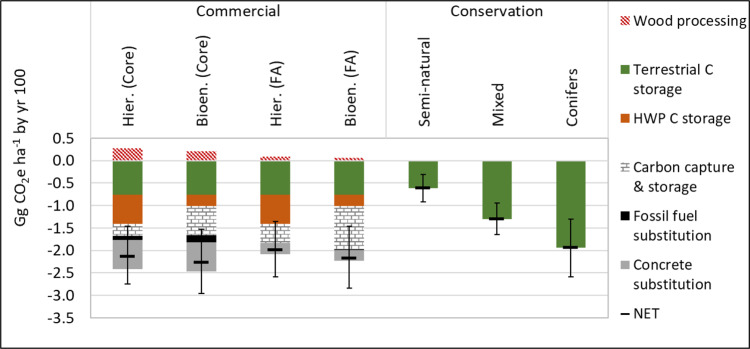
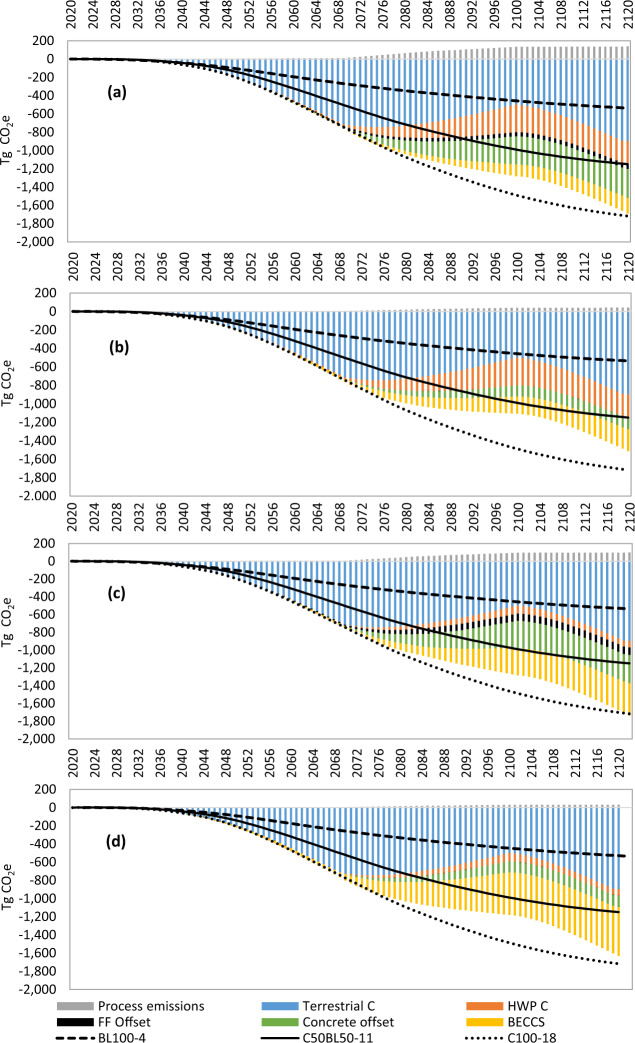
Afforestation is an important greenhouse gas (GHG) mitigation strategy but the efficacy of commercial forestry is disputed. Here, we calculate the potential GHG mitigation of a UK national planting strategy of 30,000 ha yr −1 from 2020 to 2050, using dynamic life cycle assessment. What-if scenarios vary: conifer-broadleaf composition, harvesting, product breakouts, and decarbonisation of substituted energy and materials, to estimate 100-year GHG mitigation. Here we find forest growth rate is the most important determinant of cumulative mitigation by 2120, irrespective of whether trees are harvested. A national planting strategy of commercial forest could mitigate 1.64 Pg CO 2 e by 2120 (cumulative), compared with 0.54–1.72 Pg CO 2 e for planting only conservation forests, depending on species composition. Even after heavy discounting of future product substitution credits based on industrial decarbonisation projections, GHG mitigation from harvested stands typically surpasses unharvested stands. Commercial afforestation can deliver effective GHG mitigation that is robust to future decarbonisation pathways and wood uses.
Overview
The claims and statistics of this paper haven’t been checked yet.
Free: it reads the open-access text and checks the first 5 claims that cite a source we can check. Create a free account to check every claim.
Integrity signals
Registry
Cites
Statistics
Figures
Verification
Claims the paper makes
The claims and statistics of this paper haven’t been checked yet.
Free: it reads the open-access text and checks the first 5 claims that cite a source we can check. Create a free account to check every claim.
Claims other papers make about this one
Each is checked against this paper’s own text: does it say what the citing paper says it does?
The source backs part of the claim, not all of it — or backs it for a different population, condition or comparison.
In the citing paper
“For instance, commercial AR for wood production in tropical regions is less favorable than protection AR for carbon removal (26), but commercial AR in temperate regions show greater GHG mitigation potential (18).”
From Climate-smart forestry through innovative wood products and commercial afforestation and reforestation on marginal land (2023) · cites this paper as [18]
Experimental — accuracy not yet measuredThe cited source says what the claim attributes to it.
In the citing paper
“The GHG mitigation potential of commercial and protection AR has been highlighted in the literature (3, 18–25), but their GHG mitigation efficacy has been debated (18, 26, 27).”
From Climate-smart forestry through innovative wood products and commercial afforestation and reforestation on marginal land (2023) · cites this paper as [18]
The cited source says what the claim attributes to it.
In the citing paper
“GHG mitigation efficacy of AR depends on regional contexts, such as local climate conditions (18, 26), forest plantation management strategies (3, 19, 27–30), tree species (28, 31), and wood product types and their life cycle activities [e.g., manufacturing processes, use phase, substitution benefits, and end of life (EOL)] (18, 19, 29, 30).”
From Climate-smart forestry through innovative wood products and commercial afforestation and reforestation on marginal land (2023) · cites this paper as [18]
The cited source says what the claim attributes to it.
In the citing paper
“Previous studies have compared protection and commercial forest plantations for traditional wood products (18) or compared different product combinations in existing forests (19).”
From Climate-smart forestry through innovative wood products and commercial afforestation and reforestation on marginal land (2023) · cites this paper as [18]
Self-check
Percentages, sums and reported differences re-computed from the paper’s own numbers.
The self-check needs the paper’s full text.
Citations
Cites
The ecoinvent database version 3 (part I): overview and methodology
Wernet, G., Bauer, C., Steubing, B., Reinhard, J., Moreno-Ruiz, E., & Weidema, B. (2016) · The International Journal of Life Cycle Assessment · doi:10.1007/s11367-016-1087-8 · Cited by 5,564
Options for keeping the food system within environmental limits
Springmann, M., Clark, M., Mason-D’Croz, D., Wiebe, K., Bodirsky, B. L., Lassaletta, L., de Vries, W., Vermeulen, S. J., Herrero, M., Carlson, K. M., et al. (2018) · Nature · doi:10.1038/s41586-018-0594-0 · Cited by 3,380
The global tree restoration potential
Bastin, J.-F., Finegold, Y., Garcia, C., Mollicone, D., Rezende, M., Routh, D., Zohner, C. M., & Crowther, T. W. (2019) · Science · doi:10.1126/science.aax0848 · Cited by 2,197
Old-growth forests as global carbon sinks
Luyssaert, S., Schulze, E. D., Börner, A., Knohl, A., Hessenmöller, D., Law, B. E., Ciais, P., & Grace, J. (2008) · Nature · doi:10.1038/nature07276 · Cited by 1,875
IPCC (2022) · Cambridge University Press eBooks · doi:10.1017/9781009157940 · Cited by 1,482
Higher levels of multiple ecosystem services are found in forests with more tree species
Gamfeldt, L., Snäll, T., Bagchi, R., Jonsson, M., Gustafsson, L., Kjellander, P., Ruiz-Jaen, M. C., Fröberg, M., Stendahl, J., Philipson, C. D., et al. (2013) · Nature Communications · doi:10.1038/ncomms2328 · Cited by 1,477
Restoring natural forests is the best way to remove atmospheric carbon
Lewis, S. L., Wheeler, C. E., Mitchard, E. T. A., & Koch, A. (2019) · Nature · doi:10.1038/d41586-019-01026-8 · Cited by 946
Local cooling and warming effects of forests based on satellite observations
Li, Y., Zhao, M., Motesharrei, S., Mu, Q., Kalnay, E., & Li, S. (2015) · Nature Communications · doi:10.1038/ncomms7603 · Cited by 733 · cited 1×
“HWP carbon storage of 69 (53-85) Tg C by 2120 in the Hierarchical value chains (Supplementary Data 1) is likely to increase further following subsequent harvests and cascading use of the circa 140 Tg of wood dry matter remaining within the built environment at the end of the studied time horizon.”
BackgroundAlternative pathways to the 1.5 °C target reduce the need for negative emission technologies
van Vuuren, D. P., Stehfest, E., Gernaat, D. E. H. J., van den Berg, M., Bijl, D. L., de Boer, H. S., Daioglou, V., Doelman, J. C., Edelenbosch, O. Y., Harmsen, M., et al. (2018) · Nature Climate Change · doi:10.1038/s41558-018-0119-8 · Cited by 662
A reassessment of carbon content in wood: variation within and between 41 North American species
Lamlom, S. H., & Savidge, R. A. (2003) · Biomass and Bioenergy · doi:10.1016/s0961-9534(03)00033-3 · Cited by 640
Research works printed but not linked: 7
- Nabuurs, G. J. et al. Forestry. In Climate Change 2007: Mitigation. Contribution of Working Group III to the Fourth Assessment Report of the Intergovernmental Panel on Climate Change (ed. Nabuurs, G. J.) 1–44 (Cambridge University Press, 2007).
- Weidema, B. P., Ekvall, T. & Heijungs, R. Guidelines for Application of Deepened and Broadened LCA. https://pdfs.semanticscholar.org/8be5/9252f6790328a6360d506df522de78bbce4c.pdf (2009).
- Kurz WA Smyth C Lempriere T Climate change mitigation through forest sector activities: principles, potential and prioritiese Unasylva 2016 67 61 67
- European Commission. Directive 2009/31/EC of the European Parliament and of the Council of 23 April 2009 on the geological storage of carbon dioxide and amending Council Directive 85/337/EEC, European Parliament and Council Directives 2000/60/EC, 2001/80/EC, 2004/35/EC, 2006/. Official Journal of the European Union vol. L140/114 114–135 (2009).
- IPCC. 2006IPCC Guidelines for National Greenhouse Gas InventoriesVolume 4 Chapter 4. http://www.ipcc-nggip.iges.or.jp/public/2006gl/pdf/4_Volume4/V4_04_Ch4_Forest_Land.pdf (2006).
- Timber Trade Federation. TTF Statistical Review 2017: Industry Facts and Figures for the Year 2016. https://ttf.co.uk/download/ttf-statistical-review-2017/ (2017).
- IPCC. 2006IPCC Guidelines for National Greenhouse Gas InventoriesVolume 4 Chapter 2. http://www.ipcc-nggip.iges.or.jp/public/2006gl/pdf/4_Volume4/V4_02_Ch2_Generic.pdf (2006).
Cited by
Technologies and perspectives for achieving carbon neutrality
Wang, F., Harindintwali, J. D., Yuan, Z., Wang, M., Wang, F., Li, S., Yin, Z., Huang, L., Fu, Y., Li, L., et al. (2021) · The Innovation · doi:10.1016/j.xinn.2021.100180 · Cited by 1,330
Global warming accelerates soil heterotrophic respiration
Nissan, A., Alcolombri, U., Peleg, N., Galili, N., Jimenez-Martinez, J., Molnar, P., & Holzner, M. (2023) · Nature Communications · doi:10.1038/s41467-023-38981-w · Cited by 188
“Land-use changes, such as deforestation 48 , reforestation 49 , afforestation 50 , and changes in agriculture and land management 51 – 53 , can have a signi fi cant impact on the terrestrial carbon cycle by affecting carbon storage in soil and vegetation.”
Climate Resilient Development Pathways
(IPCC), I. P. O. C. C. (2023) · Cambridge University Press eBooks · doi:10.1017/9781009325844.027 · Cited by 152
Li, S., Brandt, M., Fensholt, R., Kariryaa, A., Igel, C., Gieseke, F. C., Nord‐Larsen, T., Oehmcke, S., Carlsen, A. H., Junttila, S., et al. (2023) · PNAS Nexus · doi:10.1093/pnasnexus/pgad076 · Cited by 134
“Sustainable forest management can mitigate these crises by building carbon stocks, providing materials for a green economy, and develop - ing habitats representing the most important reservoir for biodiversity in the world (3, 4).”
BackgroundYoung mixed planted forests store more carbon than monocultures—a meta-analysis
Warner, E. A., Cook‐Patton, S. C., Lewis, O. T., Brown, N., Koricheva, J., Eisenhauer, N., Ferlian, O., Gravel, D., Hall, J. S., Jactel, H., et al. (2023) · Frontiers in Forests and Global Change · doi:10.3389/ffgc.2023.1226514 · Cited by 122
“Restoration of forest cover can store substantial carbon within the forest (Cook-Patton et al., 2020), as well as potentially in harvested wood products that are substituted for fossil fuels and/or carbon-intensive products such as concrete or steel (Forster et al., 2021).”
Managing existing forests can mitigate climate change
Kauppi, P. E., Stål, G., Ceder, L. A., Hallberg‐Sramek, I., Hoen, H. F., Svensson, A., Wernick, I. K., Högberg, P., Lundmark, T., & Nordin, A. (2022) · Forest Ecology and Management · doi:10.1016/j.foreco.2022.120186 · Cited by 102
Shadman, S., Khalid, P. A., Hanafiah, M. M., Koyande, A. K., Islam, M. A., Bhuiyan, S. A., Woon, K. S., & Show, P.-L. (2022) · Sustainable Energy Technologies and Assessments · doi:10.1016/j.seta.2022.102064 · Cited by 100
Carbon Capture and Storage: Application in the Oil and Gas Industry
Yasemi, S., Khalili, Y., Sanati, A. M., & Bagheri, M. (2023) · Sustainability · doi:10.3390/su151914486 · Cited by 97
Assessing SDG Synergies and Trade-Offs of Diverging Paris-Compliant Mitigation Strategies
Moreno, J., de Ven, D.-J. V., Sampedro, J., Gambhir, A., Woods, J., & González‐Eguino, M. (2021) · Global Environmental Change · doi:10.1016/j.gloenvcha.2022.102624 · Cited by 81
Millinger, M., Reichenberg, L., Hedenus, F., Berndes, G., Zeyen, E., & Brown, T. (2022) · Applied Energy · doi:10.1016/j.apenergy.2022.120016 · Cited by 82
Gayathiri, E., Prakash, P., Kumaravel, P., Jayaprakash, J., Ragunathan, M. G., Sankar, S., Pandiaraj, S., Thirumalaivasan, N., Thiruvengadam, M., & Rajakumar, G. (2023) · Progress in Biophysics and Molecular Biology · doi:10.1016/j.pbiomolbio.2023.08.002 · Cited by 84
The crucial interactions between climate and soil
Certini, G., & Scalenghe, R. (2022) · The Science of The Total Environment · doi:10.1016/j.scitotenv.2022.159169 · Cited by 78
Bishop, G. D., Styles, D., & Lens, P. N. L. (2022) · Resources Conservation and Recycling · doi:10.1016/j.resconrec.2022.106185 · Cited by 61
Self-citationMénard, I., Thiffault, É., Kurz, W. A., & Boucher, J. (2022) · New Forests · doi:10.1007/s11056-022-09955-5 · Cited by 54
“It has been widely used in forest carbon science to identify mitigation strategies by the forest sector in Canada and other countries (Smyth et al. 2014; Drever et al. 2021; Forster et al. 2021).”
BackgroundIs tree planting an effective strategy for climate change mitigation?
Kirschbaum, M. U. F., Cowie, A. L., Peñuelas, J., Smith, P., Conant, R. T., Sage, R. F., Brandão, M., Cotrufo, M. F., Luo, Y., Way, D. A., et al. (2024) · Science of The Total Environment · doi:10.1016/j.scitotenv.2023.168479 · Cited by 53
“…managed for production of long-lived timber products, where residues are used for energy production, can provide greater long-term climate-change mitigation benefits than forests that are not harvested (e.g., Nabuurs et al., 2007; Ximenes et al., 2012; Smyth et al., 2020; Forster et al., 2021).”
BackgroundAnalysis of the Scale of Global Human Needs and Opportunities for Sustainable Catalytic Technologies
Taseska, T., Yu, W., Wilsey, M. K., Cox, C. P., Meng, Z., Ngarnim, S. S., & Müller, A. M. (2023) · Topics in Catalysis · doi:10.1007/s11244-023-01799-3 · Cited by 56
Janus, J., & Ertunç, E. (2023) · The Science of The Total Environment · doi:10.1016/j.scitotenv.2023.162391 · Cited by 49
Randomized national land management strategies for net-zero emissions
Duffy, C. P., Prudhomme, R., Duffy, B., Gibbons, J., Iannetta, P. P. M., O’Donoghue, C., Ryan, M., & Styles, D. (2022) · Nature Sustainability · doi:10.1038/s41893-022-00946-0 · Cited by 48
“Recent research by Forster et al 19 highlights that, via supply of wood into an expanding future bioeconomy, commercial afforestation is a highly effective option for long-term climate mitigation – through HWP C storage, the displacement of carbon intensive products, and, potentially, through permanent biogenic CO 2 s…”
InfluentialSelf-citationNambiar, E. K. S. (2021) · Trees Forests and People · doi:10.1016/j.tfp.2021.100154 · Cited by 56
Climate mitigation efficacy of anaerobic digestion in a decarbonising economy
Styles, D., Yesufu, J., Bowman, M., Williams, A. P., Duffy, C. P., & Luyckx, K. (2022) · Journal of Cleaner Production · doi:10.1016/j.jclepro.2022.130441 · Cited by 48
Self-citationReconciling climate action with the need for biodiversity protection, restoration and rehabilitation
Gorman, C. E., Torsney, A., Gaughran, A., McKeon, C. M., Farrell, C. A., White, C. D., Donohue, I., Stout, J. C., & Buckley, Y. M. (2022) · The Science of The Total Environment · doi:10.1016/j.scitotenv.2022.159316 · Cited by 54
“Commercial monocultures may be effective at carbon sequestration in temperate environments (Forster et al., 2021), but depends on the soils (JovaniSancho et al., 2021).”
BackgroundCircular wood use can accelerate global decarbonisation but requires cross-sectoral coordination
Forster, E. J., Healey, J. R., Newman, G., & Styles, D. (2023) · Nature Communications · doi:10.1038/s41467-023-42499-6 · Cited by 42
“The forestry value chain is a key pillar of the ‘ circular economy ’ (CE) 1 – 5 as a major source of renewable biomaterial and can deliver multi-faceted climate-change mitigation bene fi ts, including carbon sequestration and avoided emissions from fossil-fuel-derived product substitution 6 .”
InfluentialSelf-citationPeng, D., Zhang, B., Zheng, S., Ju, W., Chen, J. M., Ciais, P., Guo, H., Pan, Y., Yu, L., Xu, Y., et al. (2025) · Nature Communications · doi:10.1038/s41467-025-61956-y · Cited by 54
“Tropical rainforest nations, such as Indo-nesia,Brazil,and Colombia,whichfacethe highestdeforestation rates, mustprioritizeforestrestorationthroughnaturalregeneration,native/ commercial forest plantations 45,46 , and protected area establishment 25 .”
Climate Smart Forestry in the Southern United States
Shephard, N. T., Narine, L. L., Peng, Y., & Maggard, A. (2022) · Forests · doi:10.3390/f13091460 · Cited by 41
“We contend, along with others [110,155], that non-management is not the most effective strategy to store additional carbon to combat rising atmospheric carbon.”
Zhang, B., Lan, K., Harris, T. B., Ashton, M. S., & Yao, Y. (2023) · Proceedings of the National Academy of Sciences · doi:10.1073/pnas.2221840120 · Cited by 36
Yang, S., Kong, F., Yin, H., Zhang, N., Tan, T., Middel, A., & Liu, H. (2023) · Sustainable Cities and Society · doi:10.1016/j.scs.2023.104913 · Cited by 36
“These financial investments will further promote the implementation of GRs and thus can fully exploit their value in a sustainable and low-carbon future (Forster et al., 2021).”
BackgroundKobayashi, Y., Seidl, R., Rammer, W., Suzuki, K., & Mori, A. (2022) · Restoration Ecology · doi:10.1111/rec.13681 · Cited by 35
“In the context of forest restoration, tree planting has increasingly come into focus, particularly since the carbon capture and storage by trees plays a vital role in mitigating climate change (Forster et al. 2021).”
BackgroundLand availability and policy commitments limit global climate mitigation from forestation
Wang, Y., Zhu, Y., Cook‐Patton, S. C., Sun, W., Zhang, W. J., Ciais, P., Li, T., Smith, P., Wenping, Y., Zhu, X., et al. (2025) · Science · doi:10.1126/science.adj6841 · Cited by 39
Githumbi, E. N., Pirzamanbein, B., Lindström, J., Poska, A., Fyfe, R., Mazier, F., Nielsen, A. B., Sugita, S., Trondman, A., Woodbridge, J., et al. (2022) · Frontiers in Ecology and Evolution · doi:10.3389/fevo.2022.795794 · Cited by 34
“Many mitigation strategies involve considerable changes in global land use, such as largescale afforestation of former agrarian lands as well as natural and semi-natural grasslands in order to increase the carbon uptake and storage capacity of terrestrial land cover (Law et al., 2018; Forster et al., 2021).”
BackgroundBrook, R. M., Forster, E. J., Styles, D., Mazzetto, A. M., Arndt, C., Esquivel, M. J., & Chadwick, D. R. (2022) · Agronomy for Sustainable Development · doi:10.1007/s13593-022-00834-z · Cited by 33
“…any harvested trees removed would need to be planted as cuttings or incorporated into articles with a long lifespan, and/or used to substitute emission-intensive products and fuels, and/or undergo (future, end-of-life) bioenergy use coupled with carbon capture and storage (Forster et al. 2021).”
BackgroundSelf-citationFinch, T., Bradbury, R. B., Bradfer‐Lawrence, T., Buchanan, G. M., Copping, J. P., Massimino, D., Smith, P., Peach, W. J., & Field, R. H. (2023) · One Earth · doi:10.1016/j.oneear.2023.09.005 · Cited by 35
Duffy, C. P., Prudhomme, R., Duffy, B., Gibbons, J., O’Donoghue, C., Ryan, M., & Styles, D. (2022) · Geoscientific model development · doi:10.5194/gmd-15-2239-2022 · Cited by 31
“…with future use of harvested wood products, possibly in cascading value chains that store carbon in wood products before end-of-life use for bioenergy carbon with capture and storage (BECCS) that can transform forestry CO2 sequestration into potentially permanent offsets (Forster et al., 2021).”
BackgroundInfluentialSelf-citationBaig, A. R., Fentaw, J. W., Hajiyev, E., Watson, M., Emadi, H., Eissa, B., & Shahin, A. (2025) · Sustainability · doi:10.3390/su17198619 · Cited by 30
Thibault, M., Thiffault, É., Bergeron, Y., Ouimet, R., & Tremblay, S. (2022) · Plant and Soil · doi:10.1007/s11104-022-05396-3 · Cited by 30
“Before doing any plantation project, it is important to verify whether afforestation can indeed increase ecosystem C sequestration and storage compared with a counterfactual (baseline) scenario (Forster et al. 2021).”
BackgroundGoverning Carbon Dioxide Removal in the UK: Lessons Learned and Challenges Ahead
Lezaun, J., Healey, P., Kruger, T., & Smith, S. M. (2021) · Frontiers in Climate · doi:10.3389/fclim.2021.673859 · Cited by 29
“If carbon capture becomes the preeminent consideration in forest management, it is possible that, under certain conditions, commercial afforestation might deliver better outcomes than woodland expansion (Forster et al., 2021).”
BackgroundAlivand, M. S., Mazaheri, O., Wu, Y., Zavabeti, A., Stevens, G. W., Scholes, C. A., & Mumford, K. A. (2021) · ACS Applied Materials & Interfaces · doi:10.1021/acsami.1c17678 · Cited by 27
Deng, Y., Liu, J., Xie, W., Liu, X., Lv, J., Zhang, R., Wu, W., Geng, Y., & Boulangé, J. (2024) · Environmental Impact Assessment Review · doi:10.1016/j.eiar.2023.107409 · Cited by 29
Best practices and innovations in carbon capture and storage (CCS) for effective CO2 storage
Esiri, A. E., Jambol, D. D., & Ozowe, C. (2024) · International Journal of Applied Research in Social Sciences · doi:10.51594/ijarss.v6i6.1212 · Cited by 27
Defining national net zero goals is critical for food and land use policy
Bishop, G., Duffy, C. P., Prudhomme, R., Cowie, A., O’Donoghue, C., Cain, M. L., Lanigan, G. J., & Styles, D. (2024) · Communications Earth & Environment · doi:10.1038/s43247-024-01275-0 · Cited by 28
“It has been shown that cascading use of wood from commercial forestry could support 39 .”
Self-citationCurrent and potential carbon stock in the forest communities of the Białowieża Biosphere Reserve
Matuszkiewicz, J., Affek, A. N., & Kowalska, A. (2021) · Forest Ecology and Management · doi:10.1016/j.foreco.2021.119702 · Cited by 25
Bazmi, M., Rashidi, A., Naderifar, A., Tabarkhoon, F., Alivand, M. S., Tabarkhoon, F., Farahani, M. V., & Esrafili, M. D. (2024) · Journal of CO2 Utilization · doi:10.1016/j.jcou.2024.102809 · Cited by 23
Forster, E. J., Styles, D., & Healey, J. R. (2025) · Nature Communications · doi:10.1038/s41467-025-58463-5 · Cited by 26
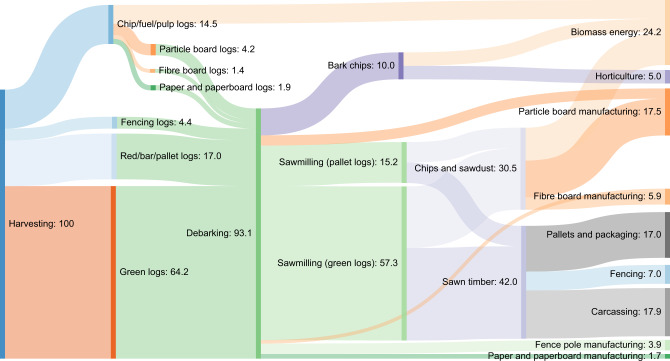
“The assumptions and methodology for calculating the GWP impact of processing and use of HWP under this hierarchical value chain are taken from Forster et al. 27 (Supplementary Data 1), including the decarbonisation projections and productsubstitution effects.”
InfluentialSelf-citationUnderstanding the benefits and challenges of harvested wood products in response to climate change
Xue, M., Dai, M., Li, H., Deng, H., Wang, S., Sun, M., & Wang, Y. (2024) · Resources Conservation and Recycling · doi:10.1016/j.resconrec.2024.107739 · Cited by 23
Alivio, M. B., Bezak, N., & Mikoš, M. (2023) · Urban forestry & urban greening · doi:10.1016/j.ufug.2023.127971 · Cited by 21
Land Cover Changes of Atewa Forest Reserve, a Biodiversity Hotspot in Ghana
Amponsah, A., Nasare, L. I., Tom-Dery, D., & Baatuuwie, B. N. (2022) · Trees Forests and People · doi:10.1016/j.tfp.2022.100301 · Cited by 20
Formulating Zwitterionic, Responsive Polymers for Designing Smart Soils
Zhang, D., Tang, Y., Zhang, C., Huhe, F., Wu, B., Gong, X., Chuang, S. S. C., & Zheng, J. (2022) · Small · doi:10.1002/smll.202203899 · Cited by 21
Soil and vegetation factors affecting carbon storage in a coastal forest in NE Germany
Buczko, U., Cruz‐García, R., Harmuth, J., Kalbe, J., Scharnweber, T., Stoll, A., Wilmking, M., & Jurasinski, G. (2023) · Geoderma Regional · doi:10.1016/j.geodrs.2023.e00629 · Cited by 21
Waring, B. G., Gurgel, A., Köberle, A. C., Paltsev, S., & Rogelj, J. (2023) · Frontiers in Climate · doi:10.3389/fclim.2023.1216175 · Cited by 20
Zhang, J., Zhang, Y., Wang, X., He, T., Xia, H., Zhang, K., & Zhang, Q. (2024) · Earth s Future · doi:10.1029/2024ef004976 · Cited by 24
“Furthermore, commercial logging and reforestation, alongside timber recycling, will further enhance FRP's carbon sequestration cost‐efficiency (Forster et al., 2021, 2023).”
McNicol, L. C., Williams, N. G., Chadwick, D., Styles, D., Rees, R. M., Ramsey, R., & Williams, A. P. (2024) · Agricultural Systems · doi:10.1016/j.agsy.2024.103852 · Cited by 19
Self-citationMénard, I., Thiffault, É., Boulanger, Y., & Boucher, J. (2022) · Ecological Modelling · doi:10.1016/j.ecolmodel.2022.110144 · Cited by 21
Kumar, D., Thakur, C. L., Bhardwaj, D. R., Sharma, N. K., Sharma, P., & Sankhyan, N. (2022) · Frontiers in Environmental Science · doi:10.3389/fenvs.2022.981608 · Cited by 17
“Defining the C storage/ sequestration capacity of forest ecosystems always remains a major strategy for reducing CO2 concentrations in the atmosphere (Forster et al., 2021).”
BackgroundCarbon balance of plywood from a social reforestation program in Indonesia
Müller, D. P., Szemkus, N., & Hiete, M. (2023) · Scientific Reports · doi:10.1038/s41598-023-40580-0 · Cited by 17
Yi, C., Guan, B., Zhuang, Z., Chen, J., Guo, J., Chen, Y., Ma, Z., Zhu, C., Zhao, S., Dang, H., et al. (2024) · Industrial & Engineering Chemistry Research · doi:10.1021/acs.iecr.4c00684 · Cited by 19
Jones, A. G., Cridge, A. G., Fraser, S., Holt, L., Klinger, S., McGregor, K. F., Paul, T., Payn, T. W., Scott, M. B., Yao, R., et al. (2023) · Biological reviews/Biological reviews of the Cambridge Philosophical Society · doi:10.1111/brv.12941 · Cited by 21
“…free up land for uses such as native forest restoration, thereby enhancing both the climate change mitigation potential of commercial forestry and a future bioeconomy (Forster et al., 2021), together with the long-term carbon storage potential of restored native forests (Lewis et al., 2019).”
BackgroundForest certification and economic insights: a European perspective
Corticeiro, S. C., Brás, G. R., Tomé, M., Lillebø, A. I., & Vieira, H. (2024) · Frontiers in Forests and Global Change · doi:10.3389/ffgc.2024.1464837 · Cited by 20
Zhang, B., Lan, K., Yang, F., Xu, Y., Piotto, D., Ashton, M. S., & Yao, Y. (2025) · One Earth · doi:10.1016/j.oneear.2025.101306 · Cited by 15
Water and Temperature Ecophysiological Challenges of Forests Plantations under Climate Change
Rubilar, R. A., Valverde, J. C., Barrientos, G., & Campoe, O. C. (2024) · Forests · doi:10.3390/f15040654 · Cited by 12
Bussotti, F., & Pollastrini, M. (2025) · Forests · doi:10.3390/f16050810 · Cited by 12
“…more rapidly than naturally regenerating forests, especially during the early phases of their establishment, and under optimal cultivation conditions, can constitute an effective sink [59–61] because they can store carbon products (cellulose, lignin) in their woody tissues for a long time [62].”
InfluentialZhu, X., Wang, T., Skidmore, A. K., Lee, S. J., & Duporge, I. (2024) · International Journal of Applied Earth Observation and Geoinformation · doi:10.1016/j.jag.2024.104244 · Cited by 11
Role of Forest Carbon Change in Shaping Future Land Use and Land Cover Change
Luo, M., Zhao, X., Hao, D., Bond‐Lamberty, B., Daigneault, A., Patel, P., Kou‐Giesbrecht, S., Reyer, C., Dashti, H., & Chen, M. (2025) · Global Change Biology · doi:10.1111/gcb.70219 · Cited by 13
“Note that there are alternative approaches, such as improved forest management practices, that could effectively enhance forest carbon (Yu et al. 2024; Forster et al. 2021) and further mitigate nat-ural land loss in the future (Favero et al. 2020; Luo et al. 2024).”
Lang‐Quantzendorff, L., & Beermann, M. (2025) · Journal of Industrial Ecology · doi:10.1111/jiec.70068 · Cited by 12
He, Y., Mao, D., Zhang, W., Qi, H., Wang, Y., Chen, X., Dong, X., & Yao, Z. (2024) · Scientific Reports · doi:10.1038/s41598-024-80808-1 · Cited by 10
Xie, X., Zhang, X., Shen, J., & Du, K. (2022) · Frontiers in Plant Science · doi:10.3389/fpls.2022.821365 · Cited by 11
“A considerable number of studies have shown that afforestation can weaken the impact of global warming and effectively reduce the risk of river flooding (Hong et al., 2018, 2020; Liu X. et al., 2018; Forster et al., 2021).”
BackgroundTulio, R. H., Rachwal, M. F. G., Zanatta, J. A., da SILVA, K., & Kaschuk, G. (2022) · Soil Use and Management · doi:10.1111/sum.12864 · Cited by 11
“There have been several studies showing the influence of soil physical and chemical attributes on GHGs fluxes, for example in China (Liu et al., 2017; Wu et al., 2022; Zhao et al., 2019; Zhuang & Tian, 2021), in Africa (Iddris et al., 2021; MacCarthy et al., 2018; Tchiofo Lontsi et al., 2020; Wanyama et al., 2019), in…”
BackgroundForsman, A., Sunde, J., Salis, R. K., & Franzén, M. (2024) · Geography and sustainability · doi:10.1016/j.geosus.2024.09.002 · Cited by 15
Aryal, J. P. (2022) · doi:10.56506/wdbc4659 · Cited by 14
Solar radiation modification: evidence review report
SAPEA (2024) · Wageningen University & Research Publications · doi:10.5281/zenodo.14283095 · Cited by 10
Spear, M. J., & Hart, J. (2025) · Forests · doi:10.3390/f16071162 · Cited by 9
Climate Change Mitigation: Policies and Lessons for Asia
Azhgaliyeva, D., & Rahut, D. (2022) · Asian Development Bank Institute eBooks · doi:10.56506/ojyg4210 · Cited by 12
Liu, J., Gou, X., Liu, J., Yin, D., & Zhang, D. (2023) · Journal of soil science and plant nutrition · doi:10.1007/s42729-023-01540-9 · Cited by 10
“The area of global planted forests have been risen by 123 million ha since 1990 (FAO 2020), leading to raised terrestrial carbon sinks that were crucial for greenhouse gas balance and alleviating climate change (Forster et al. 2021; Hong et al. 2020).”
Cropland expansion reduces biogenic secondary organic aerosol and associated radiative cooling
Zhu, J., Penner, J. E., Hong, C., Liu, H., Zhao, X. J., Deng, J., Liu, C., Zhang, Q., & Fu, P. (2025) · Nature Geoscience · doi:10.1038/s41561-025-01718-z · Cited by 8
Cowie, A., Koponen, K., Benoist, A., Berndes, G., Brandão, M., Gustavsson, L., Lamers, P., Marland, E., Rüter, S., Soimakallio, S., et al. (2025) · GCB Bioenergy · doi:10.1111/gcbb.70070 · Cited by 9
“Forster et al. (2021) applied prospective LCA with a 100-year time horizon into the future to explore the climate effects of forest planting decisions in the context of national afforestation targets, considering the effect of, inter alia , species choice, cascading uses of harvested wood and…”
Self-citationTimber carbon stocks and influencing factors in the “Belt and Road Initiative” region
Li, R., Wei, Y., Yi, M., Zhang, L., Cheng, B., & Yu, C. (2022) · Journal of Cleaner Production · doi:10.1016/j.jclepro.2022.132026 · Cited by 8
Zampieri, M., Luong, T. M., Ashok, K., Dasari, H. P., Pistocchi, A., & Hoteit, I. (2024) · Regional Environmental Change · doi:10.1007/s10113-024-02284-7 · Cited by 9
“Afforestation and reforestation can potentially mitigate climate change by storing more carbon on land (Doelman et al. 2020), increasing biodiversity (Hua et al. 2016), and providing food and materials through agroforestry (Ullah et al. 2022) and controlled harvest (Forster et al. 2021).”
Exploring the frontier of bovine protein production within territorial net zero emission targets
Henn, D., Duffy, C. P., Humphreys, J., Gibbons, J., Buckley, E., Byrne, K. A., & Styles, D. (2025) · The Science of The Total Environment · doi:10.1016/j.scitotenv.2025.179115 · Cited by 7
Self-citationBartels, L. E., Kesternich, M., & Löschel, A. (2024) · Land Economics · doi:10.3368/le.100.4.070523-0060r1 · Cited by 10
“While forest carbon sinks are considered to have a large potential to support climate stabilization (Lewis et al. 2019; Austin et al. 2020; Cook-Patton et al. 2020; Forster et al. 2021), they are not a panacea in the fight against climate change.”
Bauhaus Earth: Sustainable Use of Wood in the Construction Sector
Schellnhuber, H. J. (2024) · Springer eBooks · doi:10.1007/978-3-031-58144-1_8 · Cited by 7
Improving carbon storage and greenhouse gas emissions avoidance through harvested wood products use
Ménard, I., Thiffault, É., Magnan, M., Kurz, W. A., Hébert, F., & Boucher, J. (2024) · Trees Forests and People · doi:10.1016/j.tfp.2024.100757 · Cited by 9
A synthesis of harvested wood product carbon models
Lucey, T., Tase, N. A., Nepal, P., Bergman, R. D., Nicholls, D. L., Khatri, P., Sahoo, K., & Gray, A. N. (2023) · doi:10.2737/pnw-gtr-1020 · Cited by 8
Yang, Y., & Cao, T. (2023) · Environmental Science and Pollution Research · doi:10.1007/s11356-023-30208-1 · Cited by 6
“…absorption is the change in land use structure during the construction process, accompanied by changes in soil carbon storage (Kang et al., 2023; Post and Kwon, 2000; Forster et al., 2021) and the carbon sequestration effect of improving farmland ecosystems after construction (Li et al., 2023).”
BackgroundMoth biomass and diversity in coniferous plantation woodlands
Shewring, M. P., Vaughan, I. P., & Thomas, R. J. (2021) · Forest Ecology and Management · doi:10.1016/j.foreco.2021.119881 · Cited by 6
Buechel, M., Berthou, S., Slater, L. J., Keat, W., Lewis, H., & Dadson, S. (2024) · Environmental Research Letters · doi:10.1088/1748-9326/ad4bf6 · Cited by 6
“Its proposed societal benefits include reducing atmospheric CO 2 and pollution (Bonan 2008, Forster et al 2021), improving biodiversity (Vanessa et al 2018), and mitigating floods (Carrick et al 2019).”
BackgroundZhang, X., Fleskens, L., Zhang, N., Zhang, L., & Huang, Y. (2025) · Communications Earth & Environment · doi:10.1038/s43247-025-02103-9 · Cited by 5
“Third, previous research assumptions that the afforestation areas are static and overlooked spatial equilibrium 65 – 69 ; here, our fi ndings indicated notable variations in cost-optimal areas over different periods, driven by variations in equilibrium carbon prices.”
Zhu, X., Wang, T., Skidmore, A. K., & Duporge, I. (2025) · Remote Sensing of Environment · doi:10.1016/j.rse.2025.115055 · Cited by 5
Cobo, S., Galán‐Martín, Á., & Guillén‐Gosálbez, G. (2026) · Communications Earth & Environment · doi:10.1038/s43247-026-03348-8 · Cited by 5
Bishop, G. D., Duffy, C. P., Berndes, G., Brandão, M., Cowie, A., Healey, J. R., Hennig, C., Koponen, K., Gaffey, J., & Styles, D. (2026) · Communications Earth & Environment · doi:10.1038/s43247-026-03333-1 · Cited by 6
Self-citationTurchetto, F., Araújo, M. M., Griebeler, A. M., Ferreira, P. A. A., Berghetti, Á. L. P., Aimi, S. C., & Costella, C. (2024) · Journal of Forest Research · doi:10.1080/13416979.2024.2428519 · Cited by 5
“This is mainly because the capture and storage of carbon by trees play a vital role in mitigating climate (Forster et al. 2021).”
Analysis of a wood production strategy from expert perspectives
Canuel, C., Bernard, A., Thiffault, N., Gélinas, N., Drapeau, P., Thiffault, É., & Bélanger, N. (2022) · The Forestry Chronicle · doi:10.5558/tfc2022-004 · Cited by 5
Early Dynamics of Carbon Accumulation as Influenced by Spacing of a Populus deltoides Planting
Gardiner, E. S., Poudel, K. P., Leininger, T. D., Souter, R. A., Rousseau, R. J., & Dahal, B. (2024) · Forests · doi:10.3390/f15020226 · Cited by 6
Land use changes in Klaipeda, Kaunas and Vilnius (Lithuania) functional urban areas
Pereira, P. A. D. S., Pinto, L. V., Gomes, E., & Inácio, M. (2025) · Geocarto International · doi:10.1080/10106049.2025.2511156 · Cited by 5
“This land use transition can support the EU Biodiversity, Soil Strategy and Nature Restoration Law, since afforestation increases vegetation cover and soil quality and contributes to mitigating climate change impacts (Forster et al. 2021; Guo et al. 2021).”
Translucent Biocomposites from Hot-Pressed Wood Fibers and Poly(limonene acrylate)
Oliaei, E., Montanari, C., Li, L., Chen, H., Olsén, P., & Berglund, L. A. (2025) · ACS Applied Materials & Interfaces · doi:10.1021/acsami.5c07130 · Cited by 4
Ma, H., Yue, H., zhu, H., Jiang, Q., & Chen, T. (2026) · Polymers · doi:10.3390/polym18030408 · Cited by 4
“Therefore, developing efficient conversion technologies offers substantial environmental benefits and is essential for meeting global bioenergy requirements, which are projected to reach 100–400 EJ every year to achieve climate goals [2].”
Kobayashi, Y., Haga, C., Shinohara, N., Nishizawa, K., & Mori, A. (2023) · Global Ecology and Biogeography · doi:10.1111/geb.13636 · Cited by 4
Life cycle assessment of sitka spruce forest products grown in Ireland
Dolan, D., O’Ceallaigh, C., Gil-Moreno, D., McGetrick, P. J., & Harte, A. M. (2023) · The International Journal of Life Cycle Assessment · doi:10.1007/s11367-023-02222-5 · Cited by 4
“…the land use impacts in the LCA methodology (Antón et al. 2007; Forster et al. 2021; Mattila et al. 2012; Michelsen et al. 2012) or more specifically how to quantify the inclusion of biodiversity from land use activities (Forster et al. 2021; Michelsen et al. 2008; Milà I Canals et al. 2007).”
Wang, Y., Qu, R., Deng, X., Huang, Z., Xiang, W., & Ouyang, S. (2021) · Forests · doi:10.3390/f12121721 · Cited by 4
Potential of an Area in Terms of Pro-Climate Solutions in a Land Consolidation Project
Kocur-Bera, K., Rapiński, J., Siejka, M. M., Leń, P., & Małek, A. (2023) · Sustainability · doi:10.3390/su15129306 · Cited by 5
Zhu, J., Penner, J. E., Liu, H., Guo, Q., Liu, Y., Deng, J., Zhao, X. J., Liu, C., & Fu, P. (2025) · National Science Review · doi:10.1093/nsr/nwaf323 · Cited by 3
Attention needed in forest carbon projects: An analysis of initiatives in Colombia
Lozano‐Baez, S. E., Boeni, A. F., Valderrama, P. D., & Rodrigues, R. R. (2024) · Forest Ecology and Management · doi:10.1016/j.foreco.2024.122354 · Cited by 6
Forsman, A., Isaksson, J., Franzén, M., & Edvardsson, J. (2024) · Trees Forests and People · doi:10.1016/j.tfp.2024.100733 · Cited by 4
Metadata
- Authors
- Forster, E. J., Healey, J. R., Dymond, C., & Styles, D.
- Affiliations
- Bangor University (GB)
- Government of British Columbia (CA)
- Corresponding author
- Styles, David
- Venue
- Nature Communications
- Published
- 2021-06-22
- Volume
- 12
- Issue
- 1
- Pages
- 3831-3831
- ISSN
- 2041-1723 (ISSN-L)
- PMC
- PMC8219817
- OpenAlex
- W3174242269
- Semantic Scholar
- d7775678124ec647467a63c327b320f331eafb72
- Cited by
- 169
- References
- 50
- Citations by year
- 2026: 26 · 2025: 33 · 2024: 29 · 2023: 29 · 2022: 34 · 2021: 18
- FWCI
- 11.27
- Type
- journal article
- Language
- en
- Open access
- gold
- doi.org
- Licence
- cc-by
- creativecommons.org/licenses/by/4.0 (tdm)
- creativecommons.org/licenses/by/4.0 (vor)
- Locations
- Nature Communications (publishedVersion, cc-by)
- PubMed Central (publishedVersion, cc-by)
- PubMed (publishedVersion)
- Arrow@dit (Dublin Institute of Technology) (acceptedVersion)
- University of Limerick Institutional Repository (University of Limerick) (acceptedVersion, cc-by-nc-sa)
- RePEc: Research Papers in Economics (submittedVersion)
- DOAJ (DOAJ: Directory of Open Access Journals) (submittedVersion, cc-by-sa)
- Figshare (submittedVersion, cc-by-nc-sa)
- Bangor University Research Portal (Bangor University) (submittedVersion, other-oa)
- University of Limerick Institutional Repository (University of Limerick) (submittedVersion, cc-by-nc-sa)
- University of Limerick Institutional Repository (University of Limerick)
- Funders
- RCUK | Natural Environment Research Council (ENVISION Studentship)
- Topics
- Life Sciences › Agricultural and Biological Sciences › Forestry › Forest Management and Policy
- Life Sciences › Agricultural and Biological Sciences › Forestry › Forest ecology and management
- Social Sciences › Economics, Econometrics and Finance › Economics and Econometrics › Climate Change Policy and Economics
- Keywords
- climate change mitigation, greenhouse gas emissions reduction, dynamic life cycle assessment, forest growth rate, logging, industrial decarbonization, conservation forest
About these checks
Registry, retraction, Cites and statistics results are computed, not judged, with one exception: a printed reference that no index lists is read once by a model before it counts as a citation error. Claims are extracted by a model and kept only when their quote appears verbatim in the text; each cited source is then checked, with a model’s help, for whether it says what the claim relies on. Those verdicts can be wrong — read the claim’s quote and the cited source before relying on one.
Statistics and arithmetic are recomputed, not judged.
Confidence bands are shown only for fields calibrated on our annotated test set. None is calibrated yet, so no band is shown.
What counts as a claim ›How we measure confidence ›How we check this ›
Are you an author, or do you see a problem with this page? Request a review
Data sources
Bibliographic data: Semantic Scholar, OpenAlex, Crossref.
Contains information from the Semantic Scholar Academic Graph Datasets, made available under the ODC Attribution License (ODC-BY 1.0).
Semantic Scholar’s data is described in: Kinney, R., et al. (2023). The Semantic Scholar Open Data Platform. arXiv:2301.10140.
