

Super enhancer regulation of cytokine-induced chemokine production in alcoholic hepatitis
Open accessThe DOI matches its Crossref record; 68 of the 68 references it cites were found in a registry or an index.
Abstract
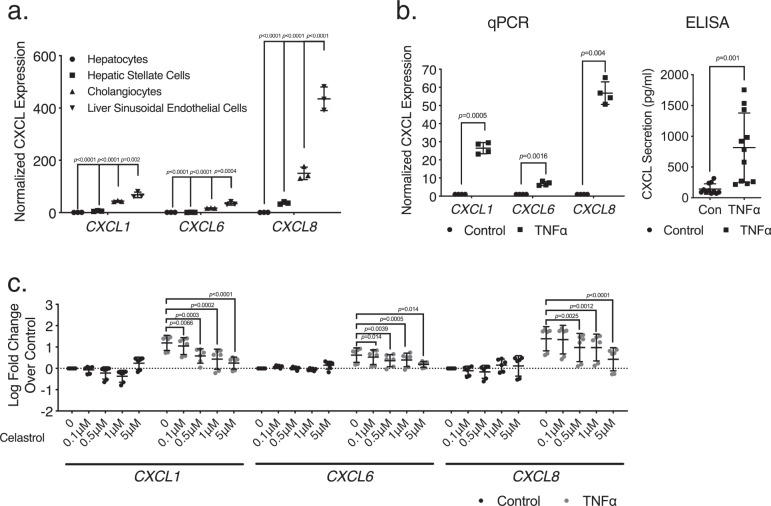
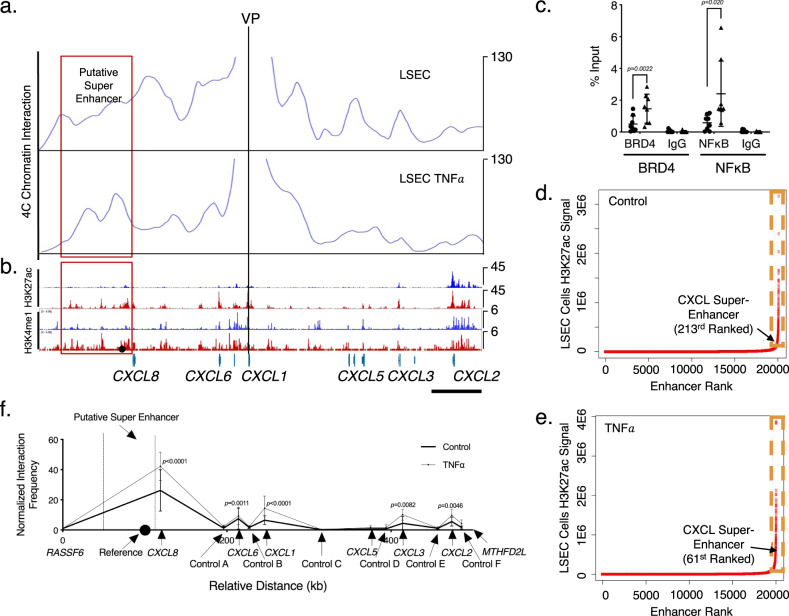
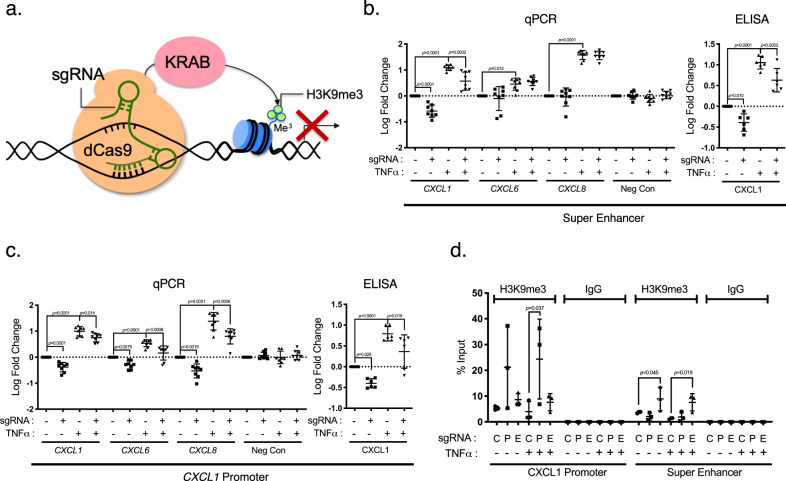
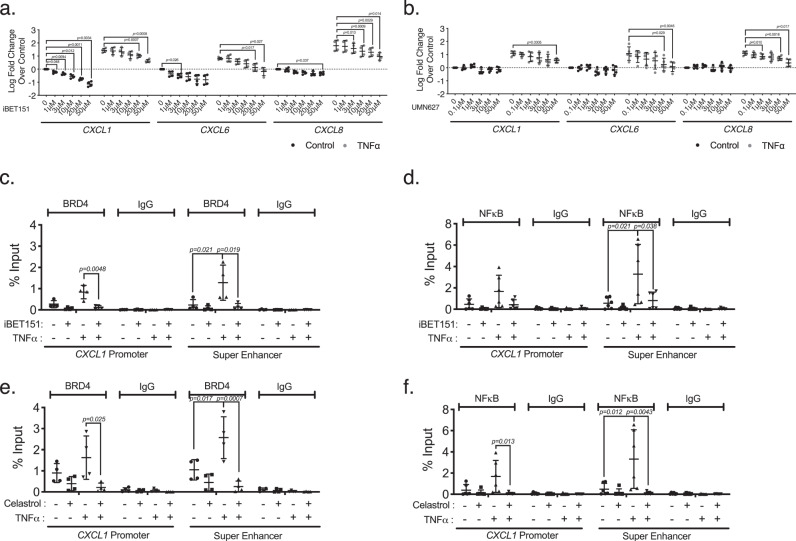
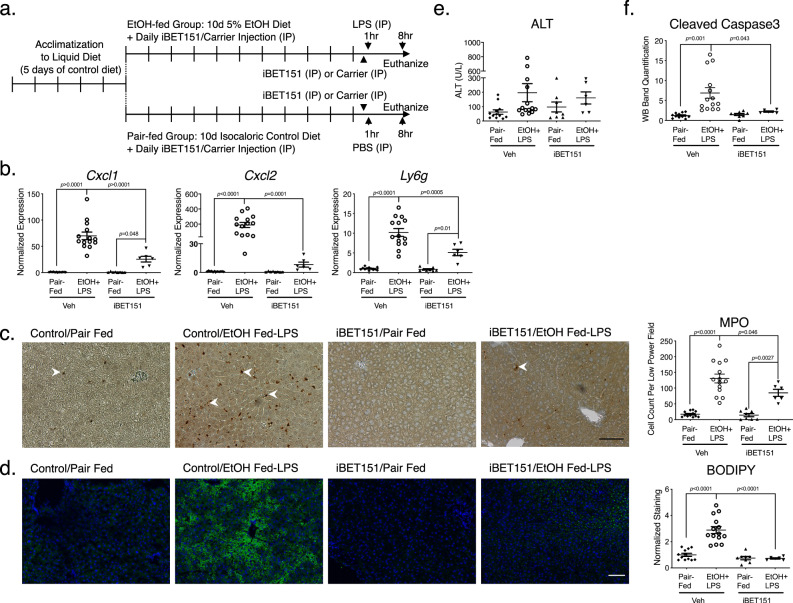
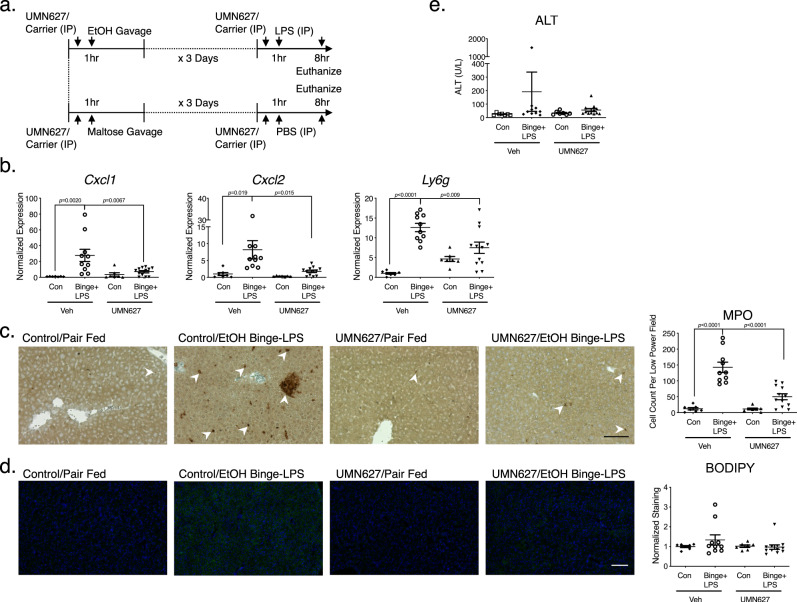
Alcoholic hepatitis (AH) is associated with liver neutrophil infiltration through activated cytokine pathways leading to elevated chemokine expression. Super-enhancers are expansive regulatory elements driving augmented gene expression. Here, we explore the mechanistic role of super-enhancers linking cytokine TNFα with chemokine amplification in AH. RNA-seq and histone modification ChIP-seq of human liver explants show upregulation of multiple CXCL chemokines in AH. Liver sinusoidal endothelial cells (LSEC) are identified as an important source of CXCL expression in human liver, regulated by TNFα/NF-κB signaling. A super-enhancer is identified for multiple CXCL genes by multiple approaches. dCas9-KRAB-mediated epigenome editing or pharmacologic inhibition of Bromodomain and Extraterminal (BET) proteins, transcriptional regulators vital to super-enhancer function, decreases chemokine expression in vitro and decreases neutrophil infiltration in murine models of AH. Our findings highlight the role of super-enhancer in propagating inflammatory signaling by inducing chemokine expression and the therapeutic potential of BET inhibition in AH treatment.
Overview
The claims and statistics of this paper haven’t been checked yet.
Free: it reads the open-access text and checks the first 5 claims that cite a source we can check. Create a free account to check every claim.
Integrity signals
Registry
Cites
Statistics
Figures
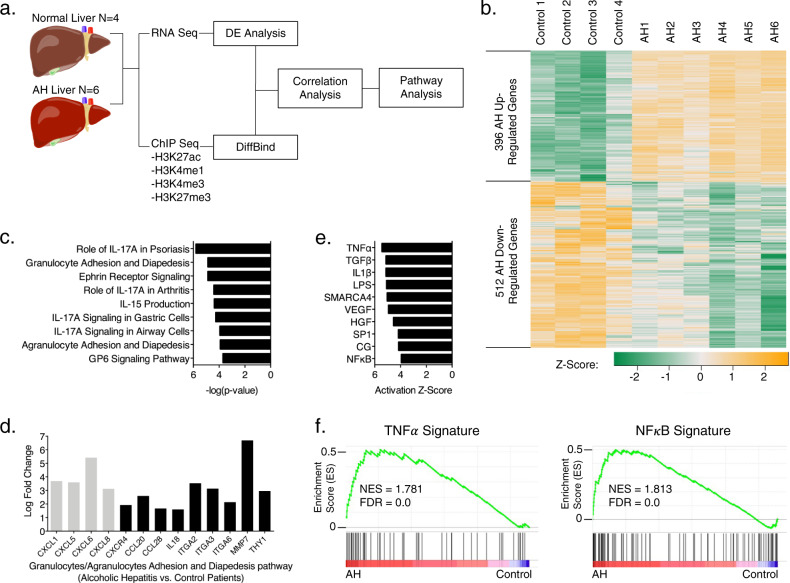
Verification
Claims the paper makes
The claims and statistics of this paper haven’t been checked yet.
Free: it reads the open-access text and checks the first 5 claims that cite a source we can check. Create a free account to check every claim.
Claims other papers make about this one
Each is checked against this paper’s own text: does it say what the citing paper says it does?
In the citing paper
“Pharmacological inhibition of BRD4 in a murine model of AH reduces chemokine expression and neutrophil infiltration in the liver [312].”
From Inflammation and immunity in liver homeostasis and disease: a nexus of hepatocytes, nonparenchymal cells and immune cells (2025) · doi:10.1038/s41423-025-01313-7 · cites this paper as [312]
In the citing paper
“Indeed, tumor necrosis factor alpha (TNFα) augments the expression of several chemokines in LSECs, including CXCL1, CXCL6, and CXCL8, through NF-κB and bromodomain-containing protein 4 (BRD4) binding to a common superenhancer (Fig. 4) [312].”
From Inflammation and immunity in liver homeostasis and disease: a nexus of hepatocytes, nonparenchymal cells and immune cells (2025) · doi:10.1038/s41423-025-01313-7 · cites this paper as [312]
Self-check
Percentages, sums and reported differences re-computed from the paper’s own numbers.
The self-check needs the paper’s full text.
Citations
Cites
An integrated encyclopedia of DNA elements in the human genome
The ENCODE Project Consortium (2012) · Nature · doi:10.1038/nature11247 · Cited by 18,072
A 3D Map of the Human Genome at Kilobase Resolution Reveals Principles of Chromatin Looping
Rao, S. S. P., Huntley, M. H., Durand, N. C., Stamenova, E. K., Bochkov, I. D., Robinson, J. T., Sanborn, A. L., Machol, I., Omer, A. D., Lander, E. S., et al. (2014) · Cell · doi:10.1016/j.cell.2014.11.021 · Cited by 9,212
Neutrophil recruitment and function in health and inflammation
Kolaczkowska, E., & Kubes, P. (2013) · Nature Reviews Immunology · doi:10.1038/nri3399 · Cited by 5,472
Histone H3K27ac separates active from poised enhancers and predicts developmental state
Creyghton, M. P., Cheng, A. W., Welstead, G. G., Kooistra, T., Carey, B. W., Steine, E. J., Hanna, J., Lodato, M. A., Frampton, G. M., Sharp, P. A., et al. (2010) · Proceedings of the National Academy of Sciences · doi:10.1073/pnas.1016071107 · Cited by 4,302
CRISPR-Mediated Modular RNA-Guided Regulation of Transcription in Eukaryotes
Gilbert, L. A., Larson, M. H., Morsut, L., Liu, Z., Brar, G. A., Torres, S. E., Stern-Ginossar, N., Brandman, O., Whitehead, E. H., Doudna, J. A., et al. (2013) · Cell · doi:10.1016/j.cell.2013.06.044 · Cited by 3,696
Epigenetic modifications and human disease
Portela, A., & Esteller, M. (2010) · Nature Biotechnology · doi:10.1038/nbt.1685 · Cited by 2,836
Hilton, I. B., D'Ippolito, A. M., Vockley, C. M., Thakore, P. I., Crawford, G. E., Reddy, T. E., & Gersbach, C. A. (2015) · Nature Biotechnology · doi:10.1038/nbt.3199 · Cited by 1,885
NF-κB, the first quarter-century: remarkable progress and outstanding questions
Hayden, M. S., & Ghosh, S. (2012) · Genes & Development · doi:10.1101/gad.183434.111 · Cited by 1,693
Single cell RNA sequencing of human liver reveals distinct intrahepatic macrophage populations
MacParland, S. A., Liu, J. C., Ma, X.-Z., Innes, B. T., Bartczak, A. M., Gage, B. K., Manuel, J., Khuu, N., Echeverri, J., Linares, I., et al. (2018) · Nature Communications · doi:10.1038/s41467-018-06318-7 · Cited by 1,552
Transcriptional enhancers: from properties to genome-wide predictions
Shlyueva, D., Stampfel, G., & Stark, A. (2014) · Nature Reviews Genetics · doi:10.1038/nrg3682 · Cited by 1,356
Cited by
Items 101–125 of 125
New Approaches to Alcohol-Associated Hepatitis
Wagh, R., Shasthry, S. M., & Sarin, S. K. (2025) · Clinics in Liver Disease · doi:10.1016/j.cld.2025.06.012
Jain, A., Pagé, V., Devost, D., Pétrin, D., Hébert, T. E., & Tanny, J. C. (2025) · International Journal of Molecular Sciences · doi:10.3390/ijms26188904
“Inflammatory genes are highly sensitive to BET inhibition in several physiological contexts; the cluster of chemokine genes activated by G α q signaling in our dataset was previously found to be JQ1-sensitive in liver endothelial cells [3,7,51].”
Wu, Y., Jia, Q., Tang, Q., Chen, L., Deng, H., He, Y., & Tang, F. (2024) · Figshare · doi:10.6084/m9.figshare.26740826
Wu, Y., Jia, Q., Tang, Q., Chen, L., Deng, H., He, Y., & Tang, F. (2024) · Figshare · doi:10.6084/m9.figshare.26129833
Wu, Y., Jia, Q., Tang, Q., Chen, L., Deng, H., He, Y., & Tang, F. (2024) · Figshare · doi:10.6084/m9.figshare.26129705
MSCs-derived CRABP2 regulates Treg/CXCL1 to ameliorate alcohol-induced liver injury
Xiao, C., Liu, H., Jiang, J., Chen, J., Guo, Y., Liu, Q., & Wu, B. (2026) · Cell Communication and Signaling · doi:10.1186/s12964-026-02701-w
“Previous studies have demonstrated that the mRNA expression level of CXCL1 was higher in patients with AH compared to healthy subjects [45, 46].”
Read, S. A., Ramezani–Moghadam, M., Gloss, B., Nguyen, R., Woodham, B. L., Lam, V., Yuen, L., Yoon, J., Qiao, L., Tu, T., et al. (2026) · Frontiers in Immunology · doi:10.3389/fimmu.2025.1642163
Wu, D., Tao, Y., Zhang, Z.-M., & Pan, J. (2026) · Oncology Advances · doi:10.14218/ona.2025.00029
Xie, H., Xiong, Z., Huang, R., Dong, Y., Wang, Y., Chen, T., Zhong, C., Jiang, Y., Tian, D., & Bian, E. (2026) · Journal of Experimental & Clinical Cancer Research · doi:10.1186/s13046-026-03736-0
“To functionally interrogate the necessity of this SE, we employed a CRISPR interference system [18, 19].”
Characterization of a novel synthetic constitutive-active glucocorticoid receptor
Lu, H., Fahy, C., & Wang, G. (2026) · The Journal of Steroid Biochemistry and Molecular Biology · doi:10.1016/j.jsbmb.2026.107044
Zhong, W., Ricci-Azevedo, R., Wang, S., Cooper, S. A., Ma, J., Swartzwelter, B. J., Xhafi, F., Zhao, D., Gao, H., Shah, V. H., et al. (2026) · Hepatology Communications · doi:10.1097/hc9.0000000000000967 · Cited by 1
“[18] Human scRNA-seq data additionally revealed that monocyte-derived macrophages represent a major source of IL15 in the liver under AC and AH conditions, with significantly higher expression compared with HC (Supplemental Figure S10C, http://links.lww.com/HC9/C352). average (n = 3; error bar…”
Self-citationScholtz, C. R., & Pomerantz, W. C. K. (2026) · ChemBioChem · doi:10.1002/cbic.70443
“Moreover, all three proteins, NF-κ B, CBP/p300, and BRD4, can form a complex at super enhancers, driving inflammation, providing additional levels of control and therapeutic targets [97, 98].”
Self-citationCui, Y., Zeng, W., Liang, H., Wang, Y., Weng, L., Qu, M., Wei, Q., Xie, X., & Huang, J. (2026) · Poultry Science · doi:10.1016/j.psj.2026.107403
“Because super-enhancers can coordinate high-level expression of genes that support tissue-specific functions (Hnisz et al., 2013; Liu et al., 2021), H3K27ac profiles were used to identify super-enhancers in con-trol and FLHS ovaries.”
BD1-biased BET inhibition attenuates TXNIP-associated inflammation in diabetic MASH
Hamad, R. S., Saber, S., Elmorsy, E. A., Amer, M. M., Ali, M. M., Eissa, H., Farrag, A. A., AbuoHashish, N. A., Hamed, S. H., Abdelaziz, M. A., et al. (2026) · Tissue and Cell · doi:10.1016/j.tice.2026.103797
IL-26-driven epigenetic remodeling promotes immune evasion in colorectal cancer
Itoh, T., Hatano, R., Hasegawa, Y., Hosokawa, N., Takeda, K., Yamamoto, A., Horimoto, Y., Yu, J., Nakamura, H., Saeki, H., et al. (2026) · Nature Communications · doi:10.1038/s41467-026-75754-7
“16), suggesting broader immune-modulating effects.”
Platelet-derived S100A9 contributes to endotheliopathy in alcohol-associated hepatitis
Kirlin, F., Fattahi, N., García-Milian, R., Collin, F., Wang, W., Kim, Y., Lucien, F., Sun, Z., Lam, T. T., Hwa, J., et al. (2026) · JCI Insight · doi:10.1172/jci.insight.201114
“We utilized the same patient or healthy donor plasma from which we analyzed the PMP, and we performed a Luminex assay to study previously reported (28, 29) mediators of endotheliopathy or endothelial inflammation such as ICAM1, VCAM1, CXCL8, and vWF.”
Lei, C. (2026) · Hepatobiliary Communications · doi:10.1016/j.hbc.2026.100008
Hu, H., Zhu, W., Sun, L., Ren, Y., Li, J., Jin, L., Ji, Y. H., Wang, X., Gu, W., Zhou, C., et al. (2026) · Biochimica et Biophysica Acta (BBA) - Molecular Basis of Disease · doi:10.1016/j.bbadis.2026.168454
Acute Kidney Injury in Alcohol-Associated Hepatitis
Parraga, X., Patel, K. S., Fakhoury, B., Díaz, L. A., Prakash, S., & Arab, J. P. (2026) · Current Hepatology Reports · doi:10.1007/s11901-026-00747-5
“…inflammatory response syndrome (SIRS) is present in over half of sAH cases and drives renal vascular shunting and systemic vaso-dilation by a combination of hepatic secretion of proinflam - matory chemokines such as tumor necrosis factor-alpha (TNF-α) and C-X-C motif chemokine ligand (CXCL) [ 29].”
Self-citationAvances en el manejo farmacológico de la hepatopatía alcohólica
Torbisco, A. B. V., Toaquiza-Toalombo, H. J., Sánchez-Llerena, P. A., & Moina-Veloz, Á. P. (2025) · Revista de Ciencias Médicas de Pinar del Río
Genetic Modulation of ALT Leads to Underestimation of Liver Injury in Male ALDH2*2 Drinkers.
Seike, T., Chen, Y.-H., Chen, W.-C., Huang, P.-R., Wu, I.-C., Wu, M.-T., Harada, K., Yamashita, T., & Mochly‐Rosen, D. (2026) · JHEP Reports · doi:10.1016/j.jhepr.2026.102060
Qiu, Y., Sun, K., Yu, Y., Hou, H., Wu, R., Lu, Q., & Zhao, M. (2026) · Science Advances · doi:10.1126/sciadv.aeh6541
“In alcoholic hepatitis, 4C-seq revealed that an SE in liver sinusoidal endothelial cells induced the expression of multiple CXCL chemokines (CXCL1, CXCL2, CXCL3, CXCL6, and CXCL8), thereby promoting neutrophil infiltration in the liver ( 38 ).”
Metadata
- Authors
- Liu, M., Cao, S., He, L., Gao, J., Arab, J. P., Cui, H., Xuan, W., Gao, Y., Sehrawat, T. S., Hamdan, F. H., Ventura-Cots, M., Argemi, J., Pomerantz, W. C. K., Johnsen, S. A., Lee, J.-H., Gao, F., Ordog, T., Mathurin, P., Revzin, A., Bataller, R., Yan, H., & Shah, V. H.
- Affiliations
- Mayo Clinic (US)
- Tongji Hospital (CN)
- Sichuan University (CN)
- Pontificia Universidad Católica de Chile (CL)
- University of Minnesota (US)
- Université de Lille (FR)
- University of Pittsburgh (US)
- Corresponding author
- Yan, Huihuang
- Shah, Vijay H.
- ORCID
- Venue
- Nature Communications
- Published
- 2021-07-27
- Volume
- 12
- Issue
- 1
- Pages
- 4560-4560
- ISSN
- 2041-1723 (ISSN-L)
- PMC
- PMC8316465
- OpenAlex
- W3186731637
- Semantic Scholar
- c52434a939ec2e1dbb949bf34ee51e9a9e82043d
- Cited by
- 120
- References
- 68
- Citations by year
- 2026: 18 · 2025: 28 · 2024: 26 · 2023: 34 · 2022: 13 · 2021: 1
- FWCI
- 12.50
- Type
- journal article
- Language
- en
- Open access
- gold
- doi.org
- Licence
- cc-by
- creativecommons.org/licenses/by/4.0 (tdm)
- creativecommons.org/licenses/by/4.0 (vor)
- Locations
- Nature Communications (publishedVersion, cc-by)
- PubMed Central (publishedVersion, cc-by)
- PubMed (publishedVersion)
- HAL (submittedVersion, cc-by)
- RePEc: Research Papers in Economics (submittedVersion)
- DOAJ (DOAJ: Directory of Open Access Journals) (submittedVersion, cc-by-sa)
- LillOA (Université de Lille (University Of Lille)) (submittedVersion)
- Funders
- National Institutes of Health (DK59615, R01 DK59615, R01 AA21171)
- National Institute on Alcohol Abuse and Alcoholism (R01AA021171)
- National Institute of Diabetes and Digestive and Kidney Diseases (R01DK059615, P30DK084567)
- Topics
- Health Sciences › Medicine › Pathology and Forensic Medicine › Alcohol Consumption and Health Effects
- Life Sciences › Biochemistry, Genetics and Molecular Biology › Molecular Biology › Genomics and Chromatin Dynamics
- Health Sciences › Medicine › Hepatology › Liver physiology and pathology
- Keywords
- alcoholic hepatitis, super-enhancers, chemokine expression, CXCL chemokines, TNF-α, NF-κB signaling, liver sinusoidal endothelial cells, BET proteins, epigenome editing, dCas9-KRAB, histone modifications, liver inflammation
- MeSH terms
- RNA-Seq, Animals, Disease Models, Animal, Enhancer Elements, Genetic, Gene Expression Regulation, Hepatitis, Alcoholic, Histones, Humans, Lipopolysaccharides, Liver, Mice, Inbred C57BL, Neutrophils, Promoter Regions, Genetic, Transcription Factors, Tumor Necrosis Factor-alpha, Signal Transduction, Cytokines, NF-kappa B, Chemokines, Endothelial Cells, Epigenesis, Genetic, Mice
About these checks
Registry, retraction, Cites and statistics results are computed, not judged, with one exception: a printed reference that no index lists is read once by a model before it counts as a citation error. Claims are extracted by a model and kept only when their quote appears verbatim in the text; each cited source is then checked, with a model’s help, for whether it says what the claim relies on. Those verdicts can be wrong — read the claim’s quote and the cited source before relying on one.
Statistics and arithmetic are recomputed, not judged.
Confidence bands are shown only for fields calibrated on our annotated test set. None is calibrated yet, so no band is shown.
What counts as a claim ›How we measure confidence ›How we check this ›
Are you an author, or do you see a problem with this page? Request a review
Data sources
Bibliographic data: Semantic Scholar, OpenAlex, Crossref.
Contains information from the Semantic Scholar Academic Graph Datasets, made available under the ODC Attribution License (ODC-BY 1.0).
Semantic Scholar’s data is described in: Kinney, R., et al. (2023). The Semantic Scholar Open Data Platform. arXiv:2301.10140.
