

Super enhancer regulation of cytokine-induced chemokine production in alcoholic hepatitis
Open accessThe DOI matches its Crossref record; 68 of the 68 references it cites were found in a registry or an index.
Abstract
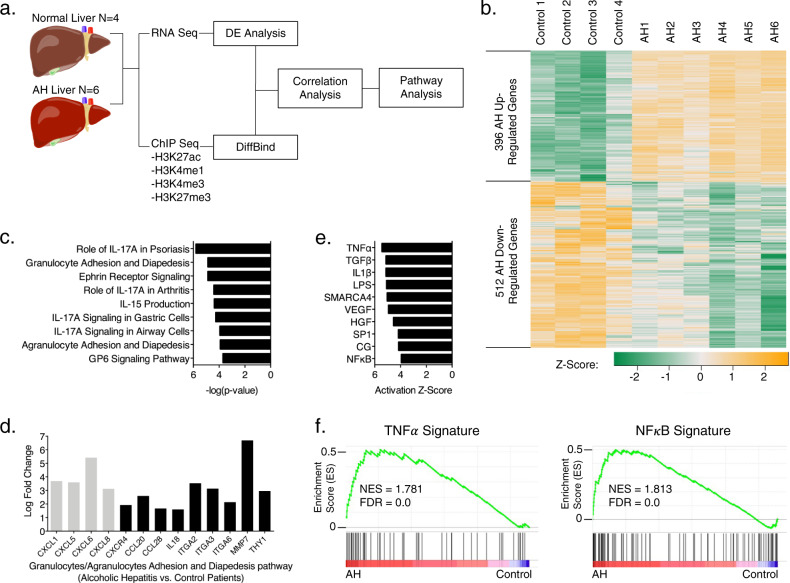
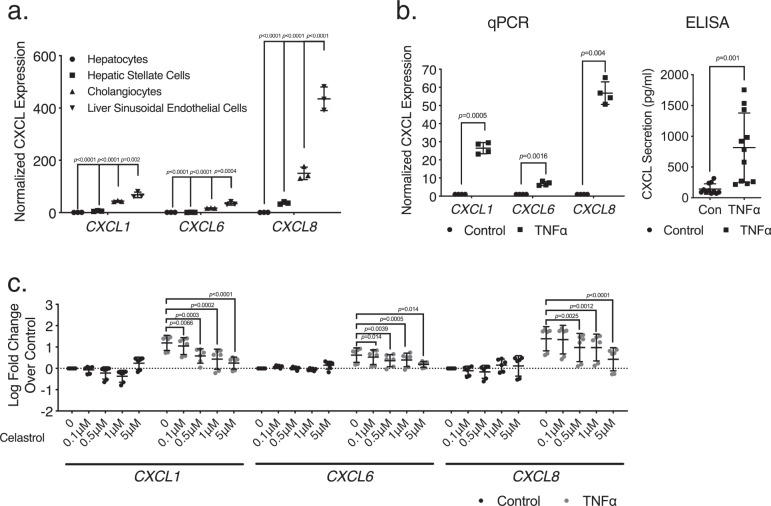
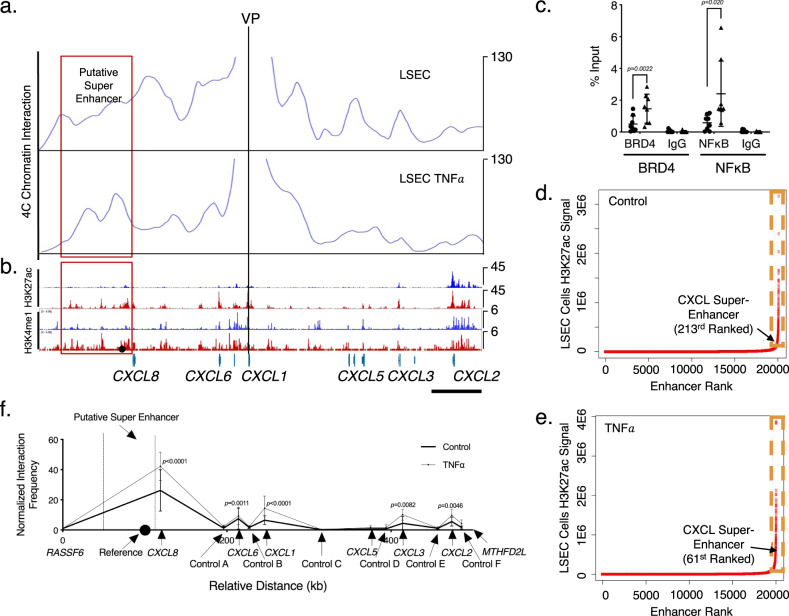
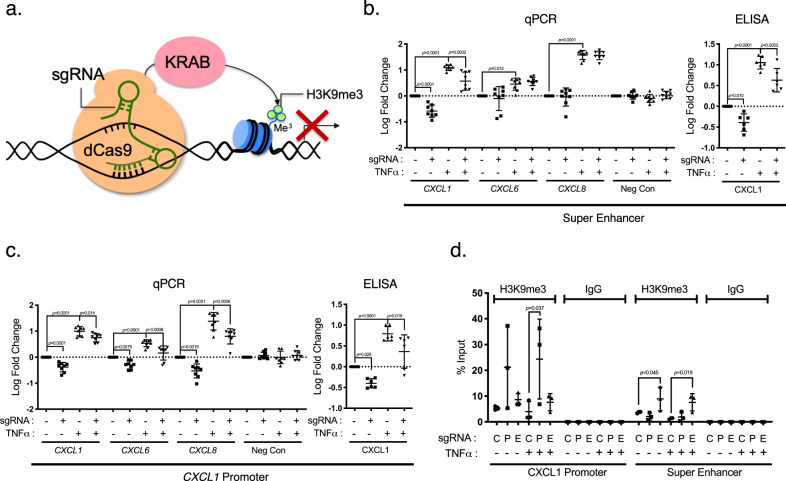
Alcoholic hepatitis (AH) is associated with liver neutrophil infiltration through activated cytokine pathways leading to elevated chemokine expression. Super-enhancers are expansive regulatory elements driving augmented gene expression. Here, we explore the mechanistic role of super-enhancers linking cytokine TNFα with chemokine amplification in AH. RNA-seq and histone modification ChIP-seq of human liver explants show upregulation of multiple CXCL chemokines in AH. Liver sinusoidal endothelial cells (LSEC) are identified as an important source of CXCL expression in human liver, regulated by TNFα/NF-κB signaling. A super-enhancer is identified for multiple CXCL genes by multiple approaches. dCas9-KRAB-mediated epigenome editing or pharmacologic inhibition of Bromodomain and Extraterminal (BET) proteins, transcriptional regulators vital to super-enhancer function, decreases chemokine expression in vitro and decreases neutrophil infiltration in murine models of AH. Our findings highlight the role of super-enhancer in propagating inflammatory signaling by inducing chemokine expression and the therapeutic potential of BET inhibition in AH treatment.
Overview
The claims and statistics of this paper haven’t been checked yet.
Free: it reads the open-access text and checks the first 5 claims that cite a source we can check. Create a free account to check every claim.
Integrity signals
Registry
Cites
Statistics
Figures
Verification
Claims the paper makes
The claims and statistics of this paper haven’t been checked yet.
Free: it reads the open-access text and checks the first 5 claims that cite a source we can check. Create a free account to check every claim.
Claims other papers make about this one
Each is checked against this paper’s own text: does it say what the citing paper says it does?
In the citing paper
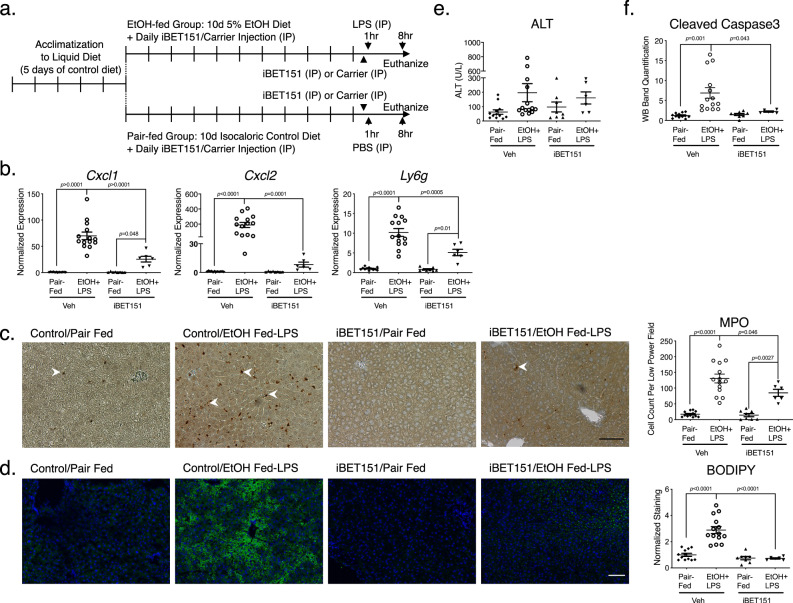
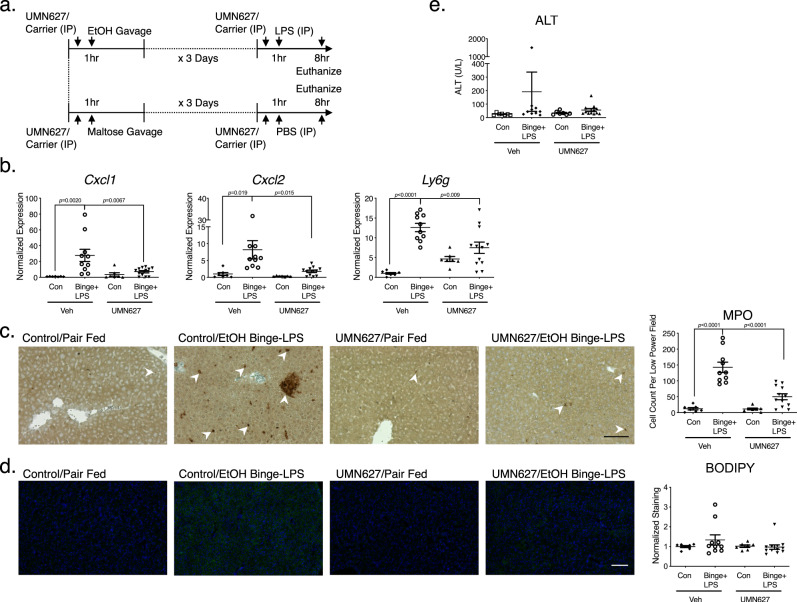
“Pharmacological inhibition of BRD4 in a murine model of AH reduces chemokine expression and neutrophil infiltration in the liver [312].”
From Inflammation and immunity in liver homeostasis and disease: a nexus of hepatocytes, nonparenchymal cells and immune cells (2025) · doi:10.1038/s41423-025-01313-7 · cites this paper as [312]
In the citing paper
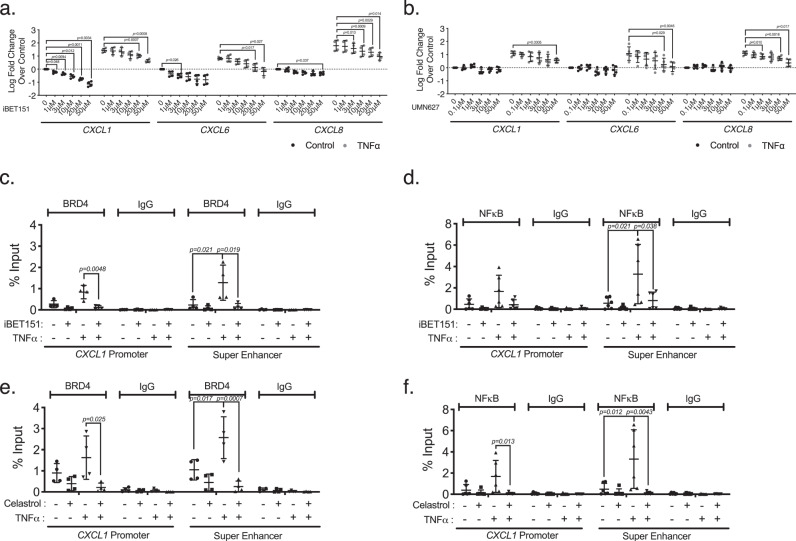
“Indeed, tumor necrosis factor alpha (TNFα) augments the expression of several chemokines in LSECs, including CXCL1, CXCL6, and CXCL8, through NF-κB and bromodomain-containing protein 4 (BRD4) binding to a common superenhancer (Fig. 4) [312].”
From Inflammation and immunity in liver homeostasis and disease: a nexus of hepatocytes, nonparenchymal cells and immune cells (2025) · doi:10.1038/s41423-025-01313-7 · cites this paper as [312]
Self-check
Percentages, sums and reported differences re-computed from the paper’s own numbers.
The self-check needs the paper’s full text.
Citations
Cites
An integrated encyclopedia of DNA elements in the human genome
The ENCODE Project Consortium (2012) · Nature · doi:10.1038/nature11247 · Cited by 18,072
A 3D Map of the Human Genome at Kilobase Resolution Reveals Principles of Chromatin Looping
Rao, S. S. P., Huntley, M. H., Durand, N. C., Stamenova, E. K., Bochkov, I. D., Robinson, J. T., Sanborn, A. L., Machol, I., Omer, A. D., Lander, E. S., et al. (2014) · Cell · doi:10.1016/j.cell.2014.11.021 · Cited by 9,212
Neutrophil recruitment and function in health and inflammation
Kolaczkowska, E., & Kubes, P. (2013) · Nature Reviews Immunology · doi:10.1038/nri3399 · Cited by 5,472
Histone H3K27ac separates active from poised enhancers and predicts developmental state
Creyghton, M. P., Cheng, A. W., Welstead, G. G., Kooistra, T., Carey, B. W., Steine, E. J., Hanna, J., Lodato, M. A., Frampton, G. M., Sharp, P. A., et al. (2010) · Proceedings of the National Academy of Sciences · doi:10.1073/pnas.1016071107 · Cited by 4,302
CRISPR-Mediated Modular RNA-Guided Regulation of Transcription in Eukaryotes
Gilbert, L. A., Larson, M. H., Morsut, L., Liu, Z., Brar, G. A., Torres, S. E., Stern-Ginossar, N., Brandman, O., Whitehead, E. H., Doudna, J. A., et al. (2013) · Cell · doi:10.1016/j.cell.2013.06.044 · Cited by 3,696
Epigenetic modifications and human disease
Portela, A., & Esteller, M. (2010) · Nature Biotechnology · doi:10.1038/nbt.1685 · Cited by 2,836
Hilton, I. B., D'Ippolito, A. M., Vockley, C. M., Thakore, P. I., Crawford, G. E., Reddy, T. E., & Gersbach, C. A. (2015) · Nature Biotechnology · doi:10.1038/nbt.3199 · Cited by 1,885
NF-κB, the first quarter-century: remarkable progress and outstanding questions
Hayden, M. S., & Ghosh, S. (2012) · Genes & Development · doi:10.1101/gad.183434.111 · Cited by 1,693
Single cell RNA sequencing of human liver reveals distinct intrahepatic macrophage populations
MacParland, S. A., Liu, J. C., Ma, X.-Z., Innes, B. T., Bartczak, A. M., Gage, B. K., Manuel, J., Khuu, N., Echeverri, J., Linares, I., et al. (2018) · Nature Communications · doi:10.1038/s41467-018-06318-7 · Cited by 1,552
Transcriptional enhancers: from properties to genome-wide predictions
Shlyueva, D., Stampfel, G., & Stark, A. (2014) · Nature Reviews Genetics · doi:10.1038/nrg3682 · Cited by 1,356
Mouse model of chronic and binge ethanol feeding (the NIAAA model)
Bertola, A., Mathews, S., Ki, S. H., Wang, H., & Gao, B. (2013) · Nature Protocols · doi:10.1038/nprot.2013.032 · Cited by 1,213
A high-resolution map of the three-dimensional chromatin interactome in human cells
Jin, F., Li, Y., Dixon, J. R., Selvaraj, S., Ye, Z., Lee, A. Y., Yen, C.-A., Schmitt, A. D., Espinoza, C. A., & Ren, B. (2013) · Nature · doi:10.1038/nature12644 · Cited by 1,208
A human liver cell atlas reveals heterogeneity and epithelial progenitors
Aizarani, N., Saviano, A., Sagar, Mailly, L., Durand, S., Herman, J. S., Pessaux, P., Baumert, T. F., & Grün, D. (2019) · Nature · doi:10.1038/s41586-019-1373-2 · Cited by 1,147
Javierre, B. M., Burren, O. S., Wilder, S. P., Kreuzhuber, R., Hill, S. M., Sewitz, S., Cairns, J., Wingett, S. W., Várnai, C., Thiecke, M. J., et al. (2016) · Cell · doi:10.1016/j.cell.2016.09.037 · Cited by 1,046
The selection and function of cell type-specific enhancers
Heinz, S., Romanoski, C. E., Benner, C., & Glass, C. K. (2015) · Nature Reviews Molecular Cell Biology · doi:10.1038/nrm3949 · Cited by 1,010
Angiocrine functions of organ-specific endothelial cells
Rafii, S., Butler, J. M., & Ding, B.-S. (2016) · Nature · doi:10.1038/nature17040 · Cited by 941
Enhancer function: new insights into the regulation of tissue-specific gene expression
Ong, C.-T., & Corces, V. G. (2011) · Nature Reviews Genetics · doi:10.1038/nrg2957 · Cited by 929
Regulation of nucleosome dynamics by histone modifications
Zentner, G. E., & Henikoff, S. (2013) · Nature Structural & Molecular Biology · doi:10.1038/nsmb.2470 · Cited by 923
Xiong, X., Kuang, H., Ansari, S., Liu, T., Gong, J., Wang, S., Zhao, X.-Y., Ji, Y., Li, C., Guo, L., et al. (2019) · Molecular Cell · doi:10.1016/j.molcel.2019.07.028 · Cited by 784
Bonnardel, J., T’Jonck, W., Gaublomme, D., Browaeys, R., Scott, C. L., Martens, L., Vanneste, B., De Prijck, S., Nedospasov, S. A., Kremer, A., et al. (2019) · Immunity · doi:10.1016/j.immuni.2019.08.017 · Cited by 631
NF-κB Directs Dynamic Super Enhancer Formation in Inflammation and Atherogenesis
Brown, J. D., Lin, C. Y., Duan, Q., Griffin, G., Federation, A. J., Paranal, R. M., Bair, S., Newton, G., Lichtman, A. H., Kung, A. L., et al. (2014) · Molecular Cell · doi:10.1016/j.molcel.2014.08.024 · Cited by 614
Brd4 Coactivates Transcriptional Activation of NF-κB via Specific Binding to Acetylated RelA
Huang, B., Yang, X.-D., Zhou, M.-M., Ozato, K., & Chen, L.-F. (2009) · Molecular and Cellular Biology · doi:10.1128/mcb.01365-08 · Cited by 579
Structural cells are key regulators of organ-specific immune responses
Krausgruber, T., Fortelny, N., Fife-Gernedl, V., Senekowitsch, M., Schuster, L. C., Lercher, A., Nemc, A., Schmidl, C., Rendeiro, A. F., Bergthaler, A., et al. (2020) · Nature · doi:10.1038/s41586-020-2424-4 · Cited by 434
Selective targeting of BD1 and BD2 of the BET proteins in cancer and immunoinflammation
Gilan, O., Rioja, I., Knezevic, K., Bell, M. J., Yeung, M. M., Harker, N. R., Lam, E. Y. N., Chung, C.-W., Bamborough, P., Petretich, M., et al. (2020) · Science · doi:10.1126/science.aaz8455 · Cited by 422
Inflammatory pathways in alcoholic steatohepatitis
Gao, B., Ahmad, M. F., Nagy, L. E., & Tsukamoto, H. (2019) · Journal of Hepatology · doi:10.1016/j.jhep.2018.10.023 · Cited by 392
SLAM-seq defines direct gene-regulatory functions of the BRD4-MYC axis
Muhar, M., Ebert, A., Neumann, T., Umkehrer, C., Jude, J., Wieshofer, C., Rescheneder, P., Lipp, J. J., Herzog, V. A., Reichholf, B., et al. (2018) · Science · doi:10.1126/science.aao2793 · Cited by 372
BET inhibitors: a novel epigenetic approach
Doroshow, D. B., Eder, J. P., & LoRusso, P. M. (2017) · Annals of Oncology · doi:10.1093/annonc/mdx157 · Cited by 367
Locus-specific editing of histone modifications at endogenous enhancers
Mendenhall, E. M., Williamson, K. E., Reyon, D., Zou, J. Y., Ram, O., Joung, J. K., & Bernstein, B. E. (2013) · Nature Biotechnology · doi:10.1038/nbt.2701 · Cited by 366
A compendium of promoter-centered long-range chromatin interactions in the human genome
Jung, I., Schmitt, A., Diao, Y., Lee, A. J., Liu, T., Yang, D., Tan, C., Eom, J., Chan, M., Chee, S., et al. (2019) · Nature Genetics · doi:10.1038/s41588-019-0494-8 · Cited by 362
Girbl, T., Lenn, T., Perez, L., Rolas, L., Barkaway, A., Thiriot, A., del Fresno, C., Lynam, E., Hub, E., Thelen, M., et al. (2018) · Immunity · doi:10.1016/j.immuni.2018.09.018 · Cited by 357
Mathurin, P., Mendenhall, C. L., Carithers, R. L., Ramond, M.-J., Maddrey, W. C., Garstide, P., Rueff, B., Naveau, S., Chaput, J.-C., & Poynard, T. (2002) · Journal of Hepatology · doi:10.1016/s0168-8278(01)00289-6 · Cited by 353
Self-citationFanucchi, S., Fok, E. T., Dalla, E., Shibayama, Y., Börner, K., Chang, E. Y., Stoychev, S., Imakaev, M., Grimm, D., Wang, K. C., et al. (2019) · Nature Genetics · doi:10.1038/s41588-018-0298-2 · Cited by 298
Regulation of the NF-κB-Mediated Transcription of Inflammatory Genes
Bhatt, D., & Ghosh, S. (2014) · Frontiers in Immunology · doi:10.3389/fimmu.2014.00071 · Cited by 263
Brd4 maintains constitutively active NF-κB in cancer cells by binding to acetylated RelA
Zou, Z., Huang, B., Wu, X., Zhang, H., Qi, J., Bradner, J., Nair, S., & Chen, L.-F. (2014) · Oncogene · doi:10.1038/onc.2013.179 · Cited by 259
Bcl-6 and NF-κB cistromes mediate opposing regulation of the innate immune response
Barish, G. D., Yu, R. T., Karunasiri, M., Ocampo, C. B., Dixon, J., Benner, C., Dent, A. L., Tangirala, R. K., & Evans, R. M. (2010) · Genes & Development · doi:10.1101/gad.1998010 · Cited by 256
Hilscher, M. B., Sehrawat, T., Arab, J. P., Zeng, Z., Gao, J., Liu, M., Kostallari, E., Gao, Y., Simonetto, D. A., Yaqoob, U., et al. (2019) · Gastroenterology · doi:10.1053/j.gastro.2019.03.013 · Cited by 240
Self-citationDominguez, M., Miquel, R., Colmenero, J., Moreno, M., García–Pagán, J., Bosch, J., Arroyo, V., Ginès, P., Caballería, J., & Bataller, R. (2009) · Gastroenterology · doi:10.1053/j.gastro.2009.01.056 · Cited by 238
Self-citationO’Connor, L., Gilmour, J., & Bonifer, C. (2016) · PubMed Central · Cited by 227
Chang, B., Xu, M., Zhou, Z., Cai, Y., Li, M., Wang, W., Feng, D., Bertola, A., Wang, H., Kunos, G., et al. (2015) · Hepatology · doi:10.1002/hep.27921 · Cited by 210
Seal, J., Lamotte, Y., Donche, F., Bouillot, A., Mirguet, O., Gellibert, F., Nicodeme, E., Krysa, G., Kirilovsky, J., Beinke, S., et al. (2012) · Bioorganic & Medicinal Chemistry Letters · doi:10.1016/j.bmcl.2012.02.041 · Cited by 209
Affò, S., Dominguez, M., Lozano, J. J., Sancho-Bru, P., Rodrigo-Torres, D., Morales-Ibanez, O., Moreno, M., Millán, C., Loaeza-del-Castillo, A., Altamirano, J., et al. (2013) · Gut · doi:10.1136/gutjnl-2011-301146 · Cited by 207
Self-citationHol, J., Wilhelmsen, L., & Haraldsen, G. (2009) · Journal of Leukocyte Biology · doi:10.1189/jlb.0809532 · Cited by 206
Inflammation-sensitive super enhancers form domains of coordinately regulated enhancer RNAs
Hah, N., Benner, C., Chong, L.-W., Yu, R. T., Downes, M., & Evans, R. M. (2015) · Proceedings of the National Academy of Sciences · doi:10.1073/pnas.1424028112 · Cited by 192
Chromatin Remodelers: From Function to Dysfunction
Längst, G., & Manelyte, L. (2015) · Genes · doi:10.3390/genes6020299 · Cited by 173
Selective Chemical Modulation of Gene Transcription Favors Oligodendrocyte Lineage Progression
Gacias, M., Gerona-Navarro, G., Plotnikov, A. N., Zhang, G., Zeng, L., Kaur, J., Moy, G., Rusinova, E., Rodriguez, Y., Matikainen, B., et al. (2014) · Chemistry & Biology · doi:10.1016/j.chembiol.2014.05.009 · Cited by 155
Click chemistry enables preclinical evaluation of targeted epigenetic therapies
Tyler, D. S., Vappiani, J., Cañeque, T., Lam, E. Y. N., Ward, A., Gilan, O., Chan, Y.-C., Hienzsch, A., Rutkowska, A., Werner, T., et al. (2017) · Science · doi:10.1126/science.aal2066 · Cited by 146
Roh, Y. S., Zhang, B., Loomba, R., & Seki, E. (2015) · American Journal of Physiology-Gastrointestinal and Liver Physiology · doi:10.1152/ajpgi.00031.2015 · Cited by 145
The knowns and unknowns of treatment for alcoholic hepatitis
Sehrawat, T. S., Liu, M., & Shah, V. H. (2020) · The Lancet Gastroenterology & Hepatology · doi:10.1016/s2468-1253(19)30326-7 · Cited by 126
Self-citationBRD4 directs hematopoietic stem cell development and modulates macrophage inflammatory responses
Dey, A., Yang, W., Gegonne, A., Nishiyama, A., Pan, R., Yagi, R., Grinberg, A., Finkelman, F. D., Pfeifer, K., Zhu, J., et al. (2019) · The EMBO Journal · doi:10.15252/embj.2018100293 · Cited by 125
Targeting Super-Enhancers for Disease Treatment and Diagnosis.
Shin, H. Y. (2018) · PubMed Central · doi:10.14348/molcells.2018.2297 · Cited by 120
Current trials and novel therapeutic targets for alcoholic hepatitis
Singal, A. K., & Shah, V. H. (2019) · Journal of Hepatology · doi:10.1016/j.jhep.2018.10.026 · Cited by 117
Self-citationGoldstein, I., Paakinaho, V., Baek, S., Sung, M.-H., & Hager, G. L. (2017) · Nature Communications · doi:10.1038/s41467-017-02055-5 · Cited by 107
Recent trends in the epidemiology of alcoholic liver disease
Singal, A. K., & Anand, B. S. (2013) · Clinical Liver Disease · doi:10.1002/cld.168 · Cited by 103
The transcriptional regulator network of human inflammatory macrophages is defined by open chromatin
Schmidt, S. V., Krebs, W., Ulas, T., Xue, J., Baßler, K., Günther, P., Hardt, A.-L., Schultze, H., Sander, J., Klee, K., et al. (2016) · Cell Research · doi:10.1038/cr.2016.1 · Cited by 102
Liu, Z., Chen, H., Wang, P., Li, Y., Wold, E. A., Leonard, P. G., Joseph, S., Brasier, A. R., Tian, B., & Zhou, J. (2020) · Journal of Medicinal Chemistry · doi:10.1021/acs.jmedchem.0c00035 · Cited by 95
Beier, J. I., Luyendyk, J. P., Guo, L., von Montfort, C., Staunton, D. E., & Arteel, G. E. (2009) · Hepatology · doi:10.1002/hep.22847 · Cited by 91
Aguilar‐Bravo, B., Rodrigo‐Torres, D., Ariño, S., Coll, M., Pose, E., Blaya, D., Graupera, I., Perea, L., Vallverdú, J., Rubio‐Tomás, T., et al. (2019) · Hepatology · doi:10.1002/hep.30472 · Cited by 89
Self-citationMartin-Mateos, R., De Assuncao, T. M., Arab, J. P., Jalan-Sakrikar, N., Yaqoob, U., Greuter, T., Verma, V. K., Mathison, A. J., Cao, S., Lomberk, G., et al. (2019) · Cellular and Molecular Gastroenterology and Hepatology · doi:10.1016/j.jcmgh.2018.09.005 · Cited by 73
Self-citationNault, R., Fader, K. A., Bhattacharya, S., & Zacharewski, T. R. (2021) · Cellular and Molecular Gastroenterology and Hepatology · doi:10.1016/j.jcmgh.2020.07.012 · Cited by 69
Higashijima, Y., Matsui, Y., Shimamura, T., Nakaki, R., Nagai, N., Tsutsumi, S., Abe, Y., Link, V. M., Osaka, M., Yoshida, M., et al. (2020) · The EMBO Journal · doi:10.15252/embj.2019103949 · Cited by 64
Bautista, A. P. (2000) · Journal of Gastroenterology and Hepatology · doi:10.1046/j.1440-1746.2000.02174.x · Cited by 62
NF-Kappa B Modulation Is Involved in Celastrol Induced Human Multiple Myeloma Cell Apoptosis
Ni, H., Zhao, W., Kong, X.-T., Li, H., & Ouyang, J. (2014) · PLoS ONE · doi:10.1371/journal.pone.0095846 · Cited by 56
BET Inhibition Improves NASH and Liver Fibrosis
Middleton, S. A., Rajpal, N., Cutler, L., Mander, P. K., Rioja, I., Prinjha, R. K., Rajpal, D. K., Agarwal, P., & Kumar, V. (2018) · Scientific Reports · doi:10.1038/s41598-018-35653-4 · Cited by 50
Bigorgne, A. E., John, B., Ebrahimkhani, M. R., Shimizu-Albergine, M., Campbell, J. S., & Crispe, I. N. (2016) · PLOS ONE · doi:10.1371/journal.pone.0151063 · Cited by 47
Cui, H., Divakaran, A., Pandey, A. K., Johnson, J. A., Zahid, H., Hoell, Z. J., Ellingson, M. O., Shi, K., Aihara, H., Harki, D. A., et al. (2021) · Angewandte Chemie International Edition · doi:10.1002/anie.202008625 · Cited by 45
Self-citationKong, X., Yang, Y., Ren, L., Shao, T., Li, F., Zhao, C., Liu, L., Zhang, H., McClain, C. J., & Feng, W. (2017) · Scientific Reports · doi:10.1038/s41598-017-09045-z · Cited by 42
Chemokines and alcoholic hepatitis: are chemokines good therapeutic targets?
Gao, B., & Xu, M. (2014) · Gut · doi:10.1136/gutjnl-2013-306603 · Cited by 27
Super enhancers – new analyses and perspectives on the low hanging fruit
Hamdan, F. H., & Johnsen, S. A. (2017) · Transcription · doi:10.1080/21541264.2017.1372044 · Cited by 16
Self-citation
Cited by
Liver diseases: epidemiology, causes, trends and predictions
Gan, C., Yuan, Y., Shen, H., Gao, J., Kong, X., Che, Z., Guo, Y., Wang, H., Dong, E., & Xiao, J. (2025) · Signal Transduction and Targeted Therapy · doi:10.1038/s41392-024-02072-z · Cited by 310
“358 Growing evidence has emphasized the signi fi - cance of neutrophil in liver diseases, as they are thought to promote liver in fl ammation by releasing cytokines and chemo-kines, along with recruiting various other immune cells and potentially contributing to the formation of microthrombi.”
Self-citationAlcohol-associated liver disease
Mackowiak, B., Fu, Y., Maccioni, L., & Gao, B. (2024) · Journal of Clinical Investigation · doi:10.1172/jci176345 · Cited by 359
“Epigenetics in ALD has also been received much attention in the past (123, 124), while gene splicing is another area that has been investigated recently.”
BackgroundBataller, R., Arab, J. P., & Shah, V. H. (2022) · New England Journal of Medicine · doi:10.1056/nejmra2207599 · Cited by 259
Self-citationThe intersection between alcohol-related liver disease and nonalcoholic fatty liver disease
Díaz, L. A., Arab, J. P., Louvet, A., Bataller, R., & Arrese, M. (2023) · Nature Reviews Gastroenterology & Hepatology · doi:10.1038/s41575-023-00822-y · Cited by 207
“In patients with alcohol-related hepatitis, ethanol can also promote the release of CXCL chemokines from liver sinusoidal endothelial cells and infiltrating immune cells in a process that is regulated by the TNF–nuclear factor-κB (NF-κB) signalling axis 131 .”
BackgroundSelf-citationThe evolving role of liver sinusoidal endothelial cells in liver health and disease
McConnell, M. J., Kostallari, E., Ibrahim, S. H., & Iwakiri, Y. (2023) · Hepatology · doi:10.1097/hep.0000000000000207 · Cited by 189
“Among the differentially expressed genes in this disease, several CXCL chemokines such as CXCL1, 6, and 8, implicated in neutrophil recruitment, show markedly elevated expression in the livers of patients with AH (129, 131).”
Metadata
- Authors
- Liu, M., Cao, S., He, L., Gao, J., Arab, J. P., Cui, H., Xuan, W., Gao, Y., Sehrawat, T. S., Hamdan, F. H., Ventura-Cots, M., Argemi, J., Pomerantz, W. C. K., Johnsen, S. A., Lee, J.-H., Gao, F., Ordog, T., Mathurin, P., Revzin, A., Bataller, R., Yan, H., & Shah, V. H.
- Affiliations
- Mayo Clinic (US)
- Tongji Hospital (CN)
- Sichuan University (CN)
- Pontificia Universidad Católica de Chile (CL)
- University of Minnesota (US)
- Université de Lille (FR)
- University of Pittsburgh (US)
- Corresponding author
- Yan, Huihuang
- Shah, Vijay H.
- ORCID
- Venue
- Nature Communications
- Published
- 2021-07-27
- Volume
- 12
- Issue
- 1
- Pages
- 4560-4560
- ISSN
- 2041-1723 (ISSN-L)
- PMC
- PMC8316465
- OpenAlex
- W3186731637
- Cited by
- 120
- References
- 68
- Citations by year
- 2026: 18 · 2025: 28 · 2024: 26 · 2023: 34 · 2022: 13 · 2021: 1
- FWCI
- 12.50
- Type
- journal article
- Language
- en
- Open access
- gold
- doi.org
- Licence
- cc-by
- creativecommons.org/licenses/by/4.0 (tdm)
- creativecommons.org/licenses/by/4.0 (vor)
- Locations
- Nature Communications (publishedVersion, cc-by)
- PubMed Central (publishedVersion, cc-by)
- PubMed (publishedVersion)
- HAL (submittedVersion, cc-by)
- RePEc: Research Papers in Economics (submittedVersion)
- DOAJ (DOAJ: Directory of Open Access Journals) (submittedVersion, cc-by-sa)
- LillOA (Université de Lille (University Of Lille)) (submittedVersion)
- Funders
- National Institutes of Health (DK59615, R01 DK59615, R01 AA21171)
- National Institute on Alcohol Abuse and Alcoholism (R01AA021171)
- National Institute of Diabetes and Digestive and Kidney Diseases (R01DK059615, P30DK084567)
- Topics
- Health Sciences › Medicine › Pathology and Forensic Medicine › Alcohol Consumption and Health Effects
- Life Sciences › Biochemistry, Genetics and Molecular Biology › Molecular Biology › Genomics and Chromatin Dynamics
- Health Sciences › Medicine › Hepatology › Liver physiology and pathology
- Keywords
- alcoholic hepatitis, super-enhancers, chemokine expression, CXCL chemokines, TNF-α, NF-κB signaling, liver sinusoidal endothelial cells, BET proteins, epigenome editing, dCas9-KRAB, histone modifications, liver inflammation
- MeSH terms
- RNA-Seq, Animals, Disease Models, Animal, Enhancer Elements, Genetic, Gene Expression Regulation, Hepatitis, Alcoholic, Histones, Humans, Lipopolysaccharides, Liver, Mice, Inbred C57BL, Neutrophils, Promoter Regions, Genetic, Transcription Factors, Tumor Necrosis Factor-alpha, Signal Transduction, Cytokines, NF-kappa B, Chemokines, Endothelial Cells, Epigenesis, Genetic, Mice
About these checks
Registry, retraction, Cites and statistics results are computed, not judged, with one exception: a printed reference that no index lists is read once by a model before it counts as a citation error. Claims are extracted by a model and kept only when their quote appears verbatim in the text; each cited source is then checked, with a model’s help, for whether it says what the claim relies on. Those verdicts can be wrong — read the claim’s quote and the cited source before relying on one.
Statistics and arithmetic are recomputed, not judged.
Confidence bands are shown only for fields calibrated on our annotated test set. None is calibrated yet, so no band is shown.
What counts as a claim ›How we measure confidence ›How we check this ›
Are you an author, or do you see a problem with this page? Request a review
Data sources
Bibliographic data: Semantic Scholar, OpenAlex, Crossref.
Contains information from the Semantic Scholar Academic Graph Datasets, made available under the ODC Attribution License (ODC-BY 1.0).
Semantic Scholar’s data is described in: Kinney, R., et al. (2023). The Semantic Scholar Open Data Platform. arXiv:2301.10140.
